
The global demand for Herbal Supplement products continues to grow as more consumers look for natural ways to support their health and wellness. From capsules and tablets to powders and gummies, herbal supplements are now found in pharmacies, supermarkets, and online stores around the world. As the market expands, manufacturers face increasing expectations for consistent quality, efficient production, and reliable packaging that protects sensitive botanical ingredients. Good manufacturing practices and appropriate packaging controls are also essential to ensure product quality and compliance throughout the production process.
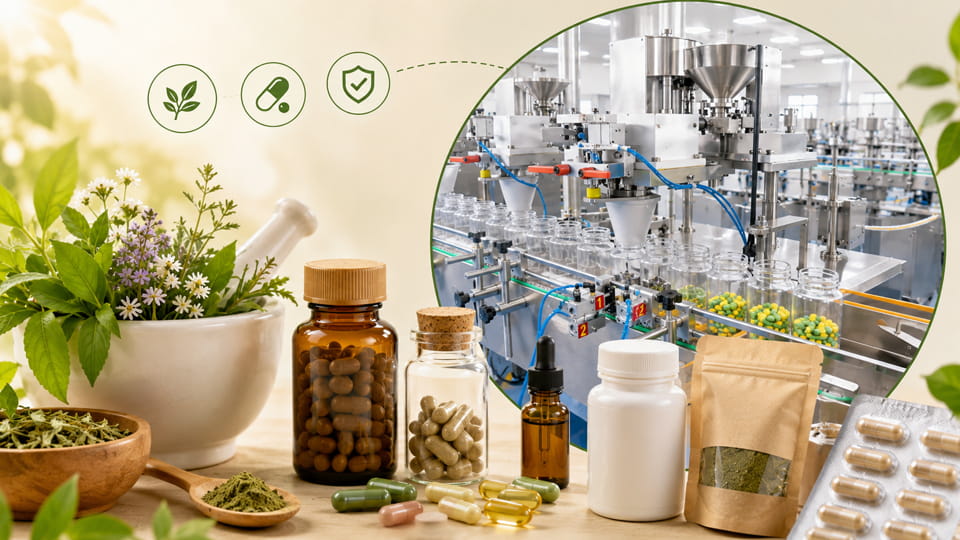
Whether you’re planning a new herbal supplement production line or upgrading existing equipment, understanding the manufacturing process is the first step toward making better decisions. In this guide, we’ll walk through the most common types of herbal supplements, how they’re produced, the equipment involved, and the packaging solutions that help manufacturers improve efficiency, product quality, and shelf life.
Herbal supplements (also called botanical supplements) are a category of dietary supplements made from plant materials (roots, leaves, flowers, seeds, or extracts) intended to support health. Unlike synthetic vitamins, herbal supplements are derived from natural sources. They often harness traditional herbal medicines (e.g. ginger, ginkgo, echinacea) and include concentrated extracts or powders. In regulatory terms, herbal supplements are classified as dietary supplements, not drugs. Under U.S. law they must contain the labeled ingredients and avoid contaminants (pesticides, heavy metals). Typical forms include capsules, tablets, softgels, powders, liquids (tinctures), teas and gummies.
Herbal supplements aim to “supplement the diet” with plant-based nutrients or actives, often for immune support, digestion, stress relief, or energy. For example, ingredients like elderberry, echinacea and vitamin C are popular for immunity, while ashwagandha and green tea are used for stress relief and metabolism. Consumers increasingly prefer herbal supplements for their natural sourcing and clean labels. The global herbal supplements market was about $45.9 billion in 2025 and is projected to grow ~8% annually through 2034, driven by demand for plant-based preventive healthcare.

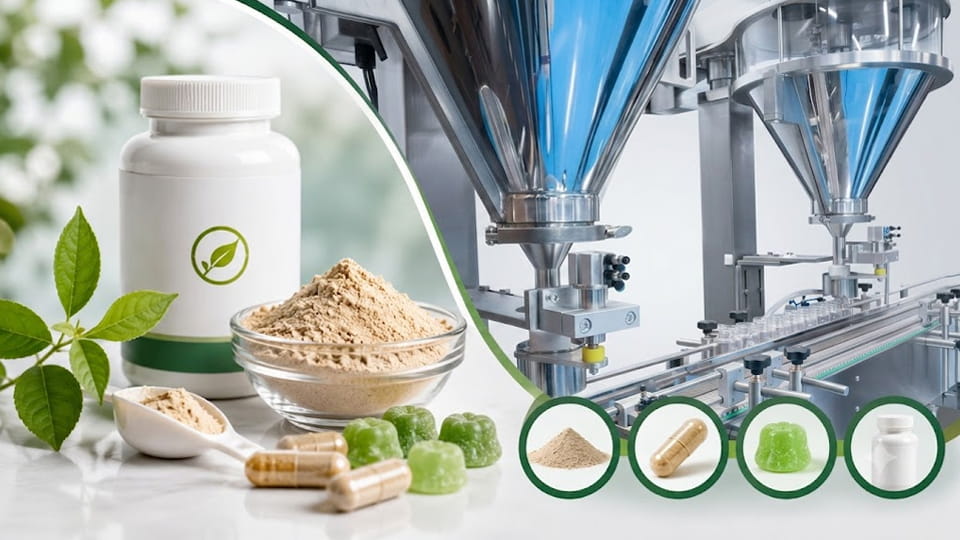
Herbal supplements are made in many dosage forms. Each form has advantages, so manufacturers choose based on the product and market. Common formats include:


Herbal supplements come in many forms: hard capsules, softgels, tablets and powders all use botanical ingredients. Choosing the right form depends on the herbal extract, dosage needs, and consumer preferences.
| Supplement Form | Typical Herbal Ingredients | Key Advantages | Common Packaging | Recommended Manufacturing Equipment |
|---|---|---|---|---|
| Capsules | Ashwagandha, Turmeric, Ginseng | Easy to swallow, accurate dosing, protects sensitive powders | Bottles, blister packs | Capsule Filling Machine, Bottle Filling Line, Blister Packaging Machine |
| Tablets | Spirulina, Garlic, Milk Thistle | Cost-effective, long shelf life, suitable for high-volume production | Bottles, blister packs | Tablet Press Machine, Tablet Coating Machine, Bottle Packaging Line |
| Powders | Matcha, Moringa, Wheatgrass | Flexible serving sizes, ideal for drink mixes and protein blends | Stand-up pouches, stick packs, jars | Powder Mixer, Auger Filling Machine, Premade Pouch Packing Machine |
| Softgels | Garlic Oil, Flaxseed Oil, Evening Primrose Oil | Suitable for oil-based extracts, easy to consume | Bottles, blister packs | Softgel Production Line, Bottle Filling Machine |
| Gummies | Elderberry, Apple Cider Vinegar, Turmeric | Pleasant taste, popular with children and adults | Bottles, pouches | Gummy Counting Machine, Bottle Filling Line, Premade Pouch Packing Machine |
| Liquid Extracts | Echinacea, Ginkgo Biloba, Valerian Root | Fast absorption, convenient for customized dosing | Glass bottles, dropper bottles | Liquid Filling Machine, Capping Machine, Labeling Machine |
| Herbal Tea Bags | Chamomile, Peppermint, Hibiscus | Traditional consumption method, simple preparation | Sachets, cartons | Tea Bag Packing Machine, Cartoning Machine |
Manufacturers may target a specific format for bioavailability or consumer appeal. For instance, capsule-based herbal supplements account for a significant market share (around 39%) because they protect active ingredients and dissolve quickly in the body. Powders (in jars or stick packs) are gaining popularity for protein or green superfood blends, while tablets remain a staple for vitamins and standard herbal extracts. Ultimately, the manufacturing equipment (capsule fillers, tablet presses, pouchers, etc.) must match the chosen form and production volume.
Manufacturers focus on herbs with strong consumer demand and scientific backing. Key botanicals in supplements include:
The comparison below provides a quick overview of some of the most widely used herbal supplements in today’s nutraceutical industry:
| Herbal Supplement | Common Health Purpose* | Common Dosage Forms | Typical Packaging | Manufacturing Notes |
|---|---|---|---|---|
| Turmeric (Curcumin) | Joint and inflammatory support | Capsules, tablets, powder | HDPE bottles, blister packs, stand-up pouches | Often standardized curcumin extract with flow agents |
| Ashwagandha | Stress and sleep support | Capsules, gummies, powder | Plastic bottles, stick packs | Commonly produced as standardized root extract |
| Ginseng | Energy and cognitive support | Capsules, softgels, liquid extracts | Amber bottles, blister packs | Moisture control is important during filling |
| Echinacea | Immune health support | Tablets, capsules, tinctures | Bottles, glass dropper bottles | Frequently manufactured as dry extract or liquid extract |
| Milk Thistle | Liver health support | Capsules, softgels | HDPE bottles, blister packs | Standardized silymarin content is commonly required |
| Garlic | Heart health support | Softgels, tablets | Blister packs, bottles | Odor control and coating are often considered |
| Ginger | Digestive support | Capsules, powders, tea bags | Sachets, pouches, bottles | Powder flowability affects filling accuracy |
| Ginkgo Biloba | Memory and circulation support | Tablets, capsules | Bottles, blister packs | Often standardized to flavonoid content |
| Green Tea Extract | Antioxidant support | Capsules, tablets | Bottles, blister packs | Heat and moisture protection improve stability |
| Elderberry | Immune support | Gummies, syrups, capsules | PET bottles, glass bottles | Gummies require dedicated counting and bottling equipment |
Trends in 2025 highlight supplements formulated for immune health (elderberry, echinacea, zinc), women’s health, and cognitive wellness. For example, UK consumers are increasingly using turmeric, ashwagandha, moringa and elderberry for immunity and stress. Ingredient sourcing and formulation require quality control: each herb must be tested for active potency and absence of contaminants (pesticides, heavy metals) as per GMP standards.

Manufacturing herbal supplements follows a multi-step process, combining standard pharmaceutical techniques with specific care for botanical ingredients. The general flow is: sourcing raw herbs → cleaning → drying/grinding → blending → dosage formation (capsules/tablets) → packaging. Key steps include:
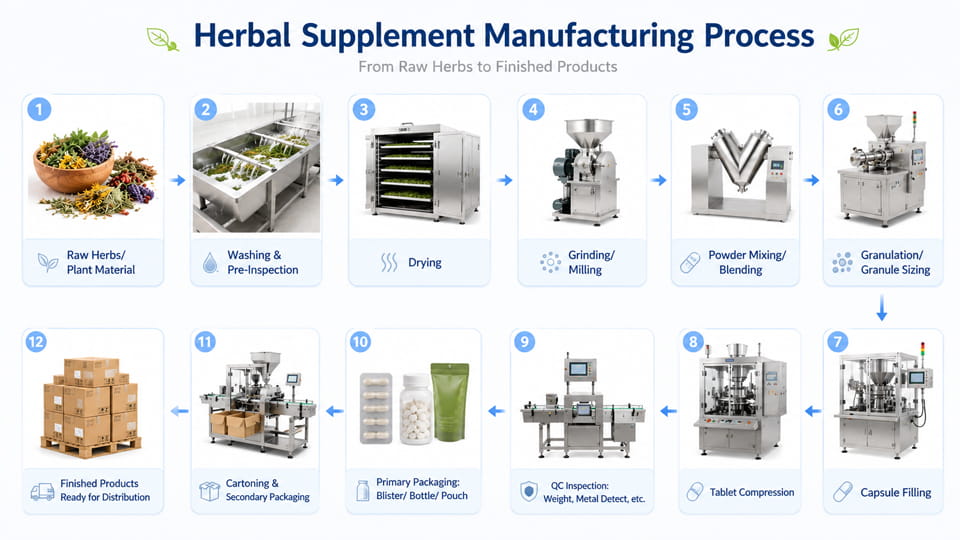
Throughout manufacturing, conditions (temperature, humidity) are closely controlled. Many botanicals are moisture-sensitive, so the entire line may run in a humidity-controlled clean room. High-barrier packaging (aluminum foil blisters, HDPE with desiccant) is selected to preserve shelf life.
Successful supplement production depends on reliable processing and packaging machines. Here’s an overview of key equipment – especially those offered by Jinlu – with their roles:

Figure: Jinlu’s high-speed capsule filling machine (model NJP-1500D, 90K cps/hr). Such automatic fillers orient empty capsules, meter herbal powder, tamp the fill, and assemble each filled capsule with ±3% accuracy.
 Figure: HZP-26D-40D Rotary Tablet Press Machine. Tablet presses compress herbal granules into tablets with exacting weight and hardness. Jinlu’s presses can output over 260,000 tablets/hour while ensuring uniformity.
Figure:Premade Pouch Packaging Machine. Such machines (like Jinlu’s GD series) can automatically open, fill, and seal stand-up or zipper pouches with powders, granules or tablets, achieving very precise fill weights.
Other essential equipment includes bottle washers (for starting empty bottles), labelers, and metal detectors. Jinlu’s machines are designed to meet global certifications (CE, cGMP, FDA) and can be customized (e.g. with vacuum feeders for difficult powders, combination weighers for blends).
Choosing the right primary packaging affects stability, user experience, and compliance. Below we compare common packaging formats for supplements:
| Format | Best for | Advantages | Challenges/Considerations |
| Bottles (HDPE, PET) | Capsules, Tablets, Softgels, Gummies | Strong moisture/oxygen barrier; easy to label; child-resistant closures available; familiar format | Bulky for shipping; often opaque (less recyclable); require CR caps with mixed materials |
| Blister Packs (Alu/PVC) | Tablets, Capsules, Caplets | Unit-dose protection (each pill sealed); excellent barrier (foil); tamper-evident; convenient dosing | More expensive per unit; limited shapes/sizes; foil/PVC recycling is hard |
| Stick Packs | Powders (single-serve), Teas | Pre-measured portable dose; minimal leftover; slim profile | Single-use waste; require laminates (recycle challenges); small volume per pack |
| Sachets | Granules, Effervescent tablets, Powders | Single-portion packets, often water-soluble; low cost | Limited moisture barrier; prone to puncture; single-use waste |
| Stand-up Pouches (resealable) | Powders, Granules, Gummies, Multipacks | Lightweight, space-saving; high barrier laminates; resealable zippers; customizable shapes | Often transparent (light risk); need desiccant for moisture-sensitive content; zipper increases cost |
| Jars / Tins (Glass/Aluminum) | Gummies, Powders, Premium products | Superior recyclability (glass/aluminum); high barrier; reusable; premium look | Heavier (shipping cost); breakable (glass); not child-resistant by default unless added lid mechanisms |
| Secondary Cartons | Capsules/Tablets in bottles or blisters | Enables bulk packaging; adds barrier for multiple products; provides labeling space | Adds cost and material; carton barrier inferior to plastic (may need liners for moisture) |
For herbal supplements, moisture and oxygen control are critical packaging functions. For example, high-barrier blister foil or multi-layer pouches can protect hygroscopic herbs. Child-resistant (CR) closures are often legally required (especially for vitamins). Sustainable options (PCR plastics, recyclable materials, compostable pouches) are growing trends, but must still meet safety and shelf-life requirements.
Packaging machines (bottle fillers, blister lines, pouch packers) must be matched to the chosen format and output. Automated systems (like Jinlu’s model GD pouch packer or PJ series blister machines) handle high speeds with consistent sealing, which is essential for pharmaceutical GMP compliance.
Even with good equipment, supplement production can hit snags. Here are frequent issues and remedies:
In all cases, preventive maintenance and experienced operators are key. Automated error recovery (reject stations, alarms) helps catch issues early. For example, Jinlu’s machines feature “intelligent rejection” to discard misfilled pouches.
Selecting packaging equipment is a strategic decision. Factors to consider include:
In summary, choose machines rated for your desired output and compliance requirements. The right equipment ensures consistent fills/seals, maximizes yield, and avoids costly recalls.
The global shift toward natural health has made herbal supplements a major industry, but it also demands rigorous pharmaceutical-level manufacturing. From carefully testing raw botanicals to automated capsule filling and tamper-proof packaging, each step must be optimized for consistency, compliance, and quality. Advances in equipment (like high-speed capsule fillers, precision blister lines, and flexible pouch machines) allow nutraceutical companies to scale up efficiently while maintaining tight tolerances.
In summary, herbal supplement production is a complex dance of traditional botanical know-how and modern engineering. By following GMP guidelines, using the right machinery, and staying ahead of trends (like sustainable packaging and personalized formulations), manufacturers can deliver safe, effective plant-based products. For companies looking to expand or upgrade their lines, Jinlu Packing offers an integrated lineup of capsules fillers, tablet presses, blister machines, pouch packers and more – all built for nutraceutical production. Contact us to learn how our equipment can help bring your herbal supplement from the herb garden to store shelves with quality and efficiency.
A Herbal Supplement is a dietary supplement made from herbs, botanical extracts, or other plant-derived ingredients. These products are commonly available as capsules, tablets, powders, gummies, teas, or liquid extracts and are designed to supplement the diet rather than replace conventional foods. Depending on the market, herbal supplements are regulated as dietary supplements rather than pharmaceutical drugs.
In the U.S., dietary supplements (including herbal) fall under the FDA’s DSHEA act. Manufacturers must follow FDA cGMP rules (21 CFR 111) to ensure identity, purity, and to avoid contamination. This means thorough testing of raw herbs and in-process checks. In Europe and elsewhere, similar good manufacturing standards (EU GMP, WHO guidelines) apply to nutraceuticals.
They come in many forms: capsules, tablets, powders, liquids/tinctures, gummies, stick packs, teas, etc. The choice depends on the botanical properties and consumer preference. For example, small bitter herbs might go in capsules, while a relaxing tea is sold as tea bags.
The manufacturing process usually includes several key steps:
• Raw herb selection
• Cleaning and drying
• Grinding or milling
• Powder blending
• Granulation (if required)
• Capsule filling or tablet compression
• Quality inspection
• Primary packaging
• Cartoning and secondary packaging
Modern manufacturers often automate these processes to improve consistency, productivity, and product quality.
At minimum, manufacturers need mixing equipment, a capsule filler or tablet press (depending on dosage), and a packaging line. Key machines include: capsule filling machine, rotary tablet press, blister packaging machine, bottle counting/filling line, sachet/stick pack machine, and pouch packing machine. For example, Jinlu Packing offers capsule fillers and pouch packers specifically designed for nutraceuticals.
Most manufacturers use moisture-resistant packaging materials such as blister packs, HDPE bottles with induction seals, aluminum foil laminates, or high-barrier pouches. Controlled production environments, desiccants, proper sealing systems, and routine quality inspections also help protect herbal supplements throughout storage and transportation.
The best packaging depends on the product type and its sensitivity to moisture, oxygen, and light.
Common packaging options include:
• Bottles for capsules and tablets
• Blister packs for unit-dose protection
• Stand-up pouches for powders
• Stick packs and sachets for single servings
• Glass bottles for liquid extracts
Choosing appropriate barrier packaging helps maintain product quality and extend shelf life.
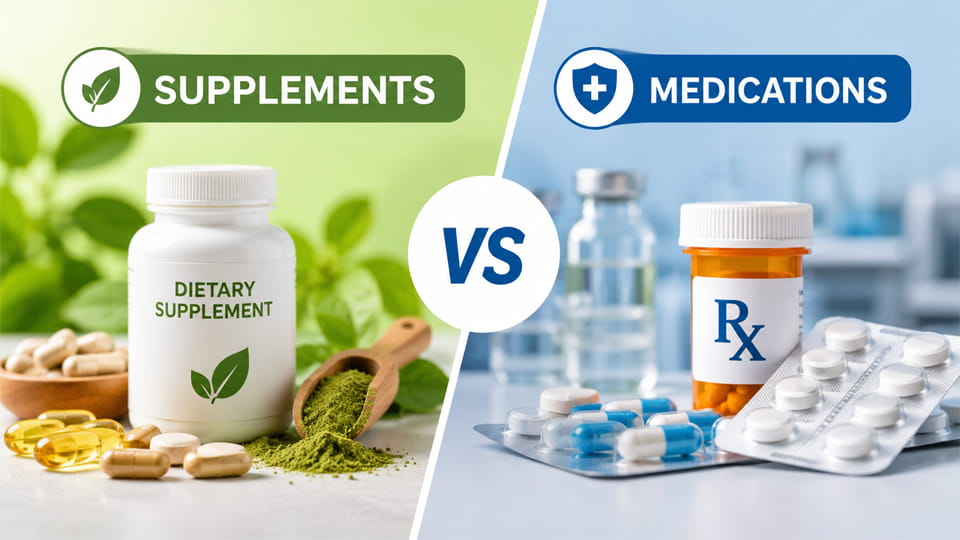
Herbal supplements are classified as dietary supplements and can be sold without prescriptions, focusing on nutritional support. Herbal medicines (like Ayurvedic or traditional Chinese medicines) are often regulated as drugs or medical products, with claims of treating ailments. Supplements can promote general wellness (e.g. “supports immunity”) but cannot claim to cure diseases.
References:
1.Dietary Supplements Guidance Documents & Regulatory Information—— U.S. Food and Drug Administration
2.Dietary Supplements —— U.S. Food and Drug Administration
3.Herbal Supplements —— U.S. Department of Agriculture
4.Development of Safe and Effective Botanical Dietary Supplements —— National Library of Medicine
5.Quality assurance and safety of herbal dietary supplements —— National Library of Medicine
6.Dietary and Herbal Supplements —— NCCIH