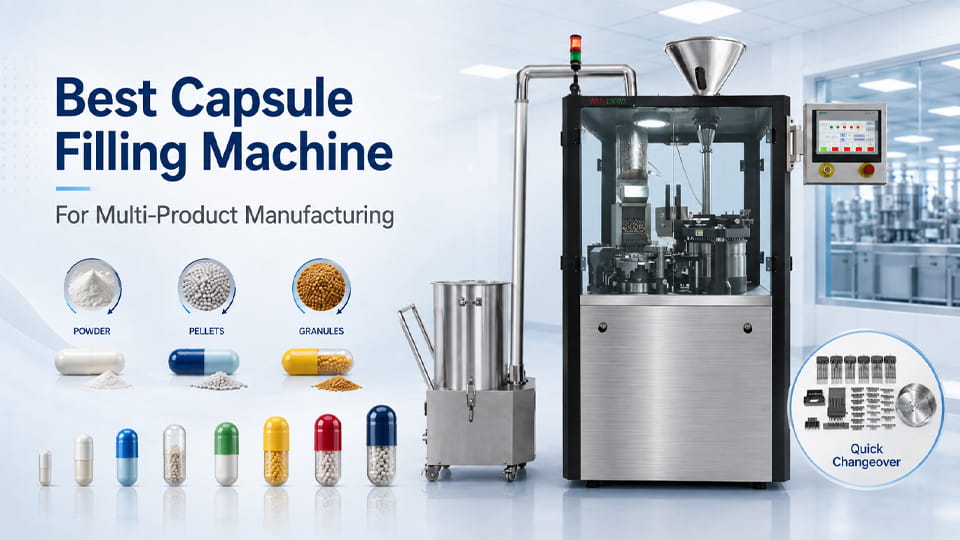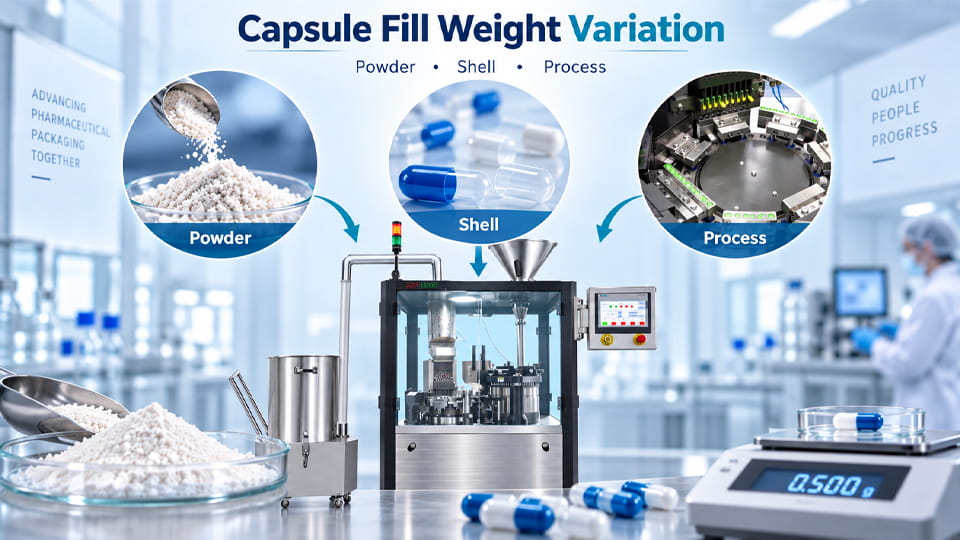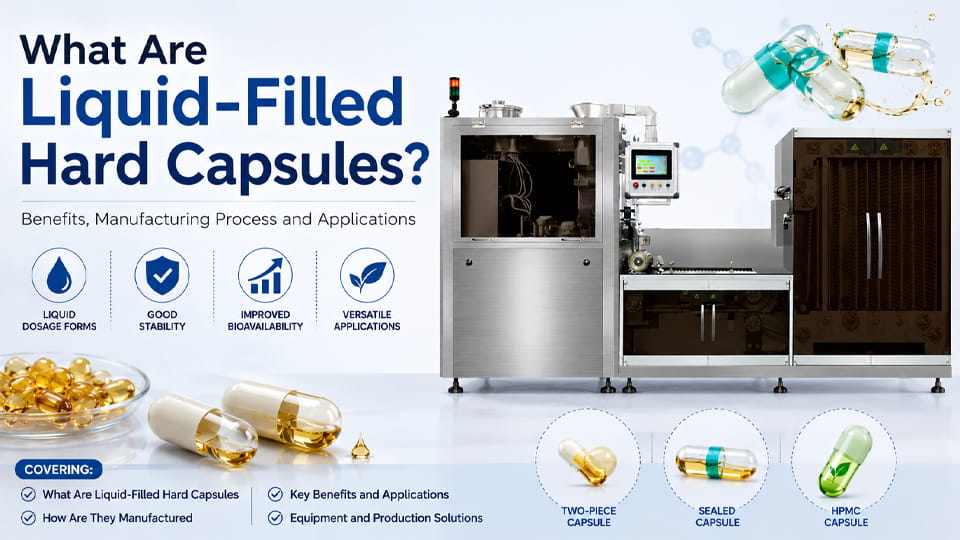

Capsules and tablets are the two most common oral dosage forms used to deliver medications to patients, but they differ significantly in composition, manufacturing, and how they release the drug. Choosing the right form can greatly affect patient compliance, drug effectiveness, and production costs. Capsules typically consist of a gelatin or polymer shell filled with medication (which may be powders, liquids, or gels). Tablets are solid pills made by compressing drug powder and excipients into a solid dose. Each form has unique advantages and disadvantages that influence which is best for a given product.
A capsule is a small container that encloses medication, usually consisting of a dissolvable shell made from gelatin or a vegetable-based polymer. Capsules are typically of two types: hard-shelled capsules (two-piece) and softgel capsules. Hard capsules are made of two halves that snap together around dry powders or pellets. Softgel capsules are one-piece shells filled with liquid or oil-based formulations. The shell material dissolves or disintegrates in the digestive tract, releasing the medication quickly.
Capsules accommodate a wide range of formulations. They can contain not only powders, but also liquids, gels, and multiparticulate beadlets. This flexibility allows encapsulating certain drugs that are difficult to compress into a tablet. Some advanced capsules have specialized coatings or shell compositions to target where in the gut the medication is released or to provide extended or delayed release. Capsules are often used for combination therapies: for example, a single capsule can hold layered beads or pellets that contain different ingredients without mixing prematurely.
Capsules are popular in both pharmaceuticals and nutritional supplements. Many vitamins, probiotics, and prescription drugs (like certain antibiotics or rapid-acting pain relievers) are delivered in capsule form. Their drawbacks include sensitivity to moisture (gelatin shells can become sticky) and dietary restrictions (animal gelatin is not vegetarian-friendly, although plant-based capsules exist). However, when fast onset of action, taste-masking, or formulation flexibility is needed, capsules are often chosen.

Tablets are solid pills formed by compressing powdered medication with binders and fillers into a compact dose. They can be round, oval (caplets), or custom shapes, and often have coatings or textures to serve specific functions. For example, an enteric coating prevents the tablet from dissolving in stomach acid, ensuring the drug releases in the intestine. Sugar or film coatings can mask bitter tastes and make tablets smoother and easier to swallow. Specialized forms include chewable tablets, orally disintegrating tablets (ODTs that dissolve on the tongue), and effervescent tablets that dissolve in water.
Manufacturing tablets is generally straightforward and highly efficient. The active drug powder is mixed with excipients (binders, disintegrants, fillers) and pressed under high pressure into a uniform tablet. By adjusting compression force and formulation, manufacturers control tablet hardness and disintegration time. This process is very scalable and cost-effective. Widely used medications (e.g. common pain relievers, antibiotics, vitamins) are typically tablets because production at high volume is economical and reliable.
Tablets offer dosing flexibility that capsules do not. Many tablets have a scored line so they can be split into two equal doses. This is useful for titrating a dose or adjusting therapy. Tablets generally have excellent stability: they tolerate heat and humidity better than capsules, giving them a longer shelf life. However, because tablets must be broken apart in the body, their dissolution is typically slower, so manufacturers include disintegrants (like starch) and special coatings to ensure they release the drug properly.


In practice, both capsules and tablets can be packaged in blister packs or bottles, depending on product requirements. Blister packs (strip packs) seal each pill in a pocket of plastic and foil, protecting the dose from moisture, oxygen, and light. This ensures individual unit doses remain uncontaminated until use. Blister strips can also be designed to improve safety; for example, they can be made child-resistant, since each dose must be accessed separately.
Bottles (plastic or glass) are another common format for pills. They are versatile and commonly used for bulk dispensing. Bottles often include coil inserts or padding to prevent pills from breaking during shipping, and usually contain a desiccant pack to keep the contents dry. Modern bottling lines use sensors and air jets to accurately count tablets or capsules as they fill and prevent spillage. The choice between blister or bottle packaging depends on factors like the drug’s moisture sensitivity, dosing schedule, and regulatory requirements.
The optimal choice depends on many factors. Consider:
Additional considerations include release goals (fast vs. sustained delivery) and combination products. For example, sustained-release therapies often use extended-release tablets, whereas rapid-relief drugs may use capsules. Fixed-dose combination pills (two or more active ingredients) are typically made as tablets, since mixing multiple drugs in one capsule can be difficult. Blister packaging can also improve adherence – calendar blister packs (with days marked) help patients track doses, a feature more often used with tablets in chronic regimens.
Ultimately, there is no one-size-fits-all answer. Capsules excel when quick drug release and ease of swallowing are priorities, whereas tablets excel when cost, stability, and high-volume manufacturing are key. In drug development, fixed-dose combination pills or special formats (like orally disintegrating tablets) may tip the choice one way. It’s also important to note that switching a product from capsule to tablet (or vice versa) can require new bioequivalence studies; as JinLuPacking notes, “transitioning from a capsule to a tablet without altering the formulation can be a daunting challenge”. By carefully evaluating all these factors, manufacturers can select the dosage form that ensures optimal efficacy, safety, and patient acceptance.
A capsule is typically a shell (gelatin or polymer-based) filled with active drug powders, liquids or gels, and it dissolves in the gastrointestinal tract to release the drug. A tablet is a solid dose form created by compressing the active drug together with excipients (binders, fillers) into a pill, sometimes coated for taste-masking or modified release. Capsules generally offer quicker dissolution whereas tablets offer higher dose capacity, split-ability and improved stability.
The key advantages of capsules include faster dissolution and absorption (especially liquid-filled forms), smoother swallowing (due to shell shape), effective taste and odor masking, and greater flexibility in formulation (powders, liquids, semi-solids) which makes them useful for drugs difficult to compress.
Tablets offer several advantages: they are cost-effective to manufacture at high volumes, have longer shelf life and stability under conditions (heat/humidity) in many cases, allow dosage flexibility (e.g., scored tablets for splitting), and can incorporate extended-release, chewable or orodispersible formats.
Some drawbacks of capsules include sensitivity to moisture or heat (especially gelatin shells), shorter shelf life compared to tablets, typically higher manufacturing cost, limited dose per shell size, and inability to split the dose easily. Also, many gelatin capsules use animal-derived material, which may be a concern for vegetarian/vegan or religious diets.
Tablets may have slower dissolution and absorption compared to capsules, may be harder to swallow (especially large or uncoated ones), may leave an unpleasant after-taste, and sometimes contain more excipients or fillers (which may affect patient sensitivities). Tablets with special coatings (enteric/extended-release) require correct handling and cannot always be crushed or split safely.
Generally, capsules dissolve more quickly than standard tablets because the shell disintegrates faster in the GI tract and the contents are released immediately. However, absorption also depends on the drug’s formulation, particle size, solubility and whether the tablet is designed for modified release.
Tablets usually offer better manufacturing efficiency and lower cost for high-volume production. Tablet compression presses are highly automated and standardized. Capsule filling may involve more steps and specialized equipment, making them generally more expensive per unit.
To choose the right form for a pharmaceutical product, one should evaluate several factors: the physicochemical properties of the active drug (solubility, stability, dose size), the target patient population (age, swallowing ability, compliance), manufacturing and cost constraints, regulatory and market preferences, and desired release profile (immediate vs sustained).
Tablets, especially those with a score line, can often be split to adjust dose (though this must be confirmed for each drug). Capsules usually cannot be opened or split without altering the release profile, which may lead to under- or over-dosing, especially if the formulation is extended- or delayed-release. Always consult formulation guidance.
Yes — patient compliance can be influenced by factors like ease of swallowing, taste/odor, dosing convenience, and perceived simplicity. Capsules often win on ease of swallowing and taste masking, which may improve compliance. Tablets offer dosing flexibility and familiar format but may be harder to swallow if large or uncoated. The best choice depends on the specific patient population and drug regimen.
References:
1.“Comparative Bioequivalence of Tablet and Capsule Formulations of Ulotaront and the Effect of Food on the Pharmacokinetics of the Tablet Form in Humans” — National Library of Medicine
2.“Unsure About Capsules or Tablets? Here’s What to Know” — VerywellHealth
3.Size, Shape, and Other Physical Attributes of Generic Tablets and Capsules …” — U.S. Food & Drug Administration (FDA)