
Capsules represent a critical segment of Oral Solid Dosage (OSD) forms, serving as a highly effective delivery system for pharmaceutical active ingredients (APIs) and nutraceutical supplements. The modern Capsule Manufacturing industry operates under stringent regulatory requirements, demanding technological sophistication and absolute precision to ensure patient safety and product efficacy. The production methodology is complex, often spanning raw material sourcing, shell creation, precise formulation, and high-speed encapsulation.
This guide provides a detailed analysis of the industrial Capsule manufacturing process, focusing specifically on hard-shell capsules—the two-piece systems designed primarily for filling powders and pellets. Hard capsules are distinct from softgels, which are single, hermetically sealed units manufactured using methods like the rotary die process to contain liquids or semi-solids. Success in high-volume production hinges on mastering seven critical steps, particularly the efficient operation and selection of the central machinery: the capsule filler.

The structural integrity and functional performance of the capsule are determined by the shell material. Historically, capsules have relied heavily on gelatin, a natural polymer sourced from animal collagen. However, the market has seen a substantial shift towards plant-based alternatives, most notably Hydroxypropyl Methylcellulose (HPMC).
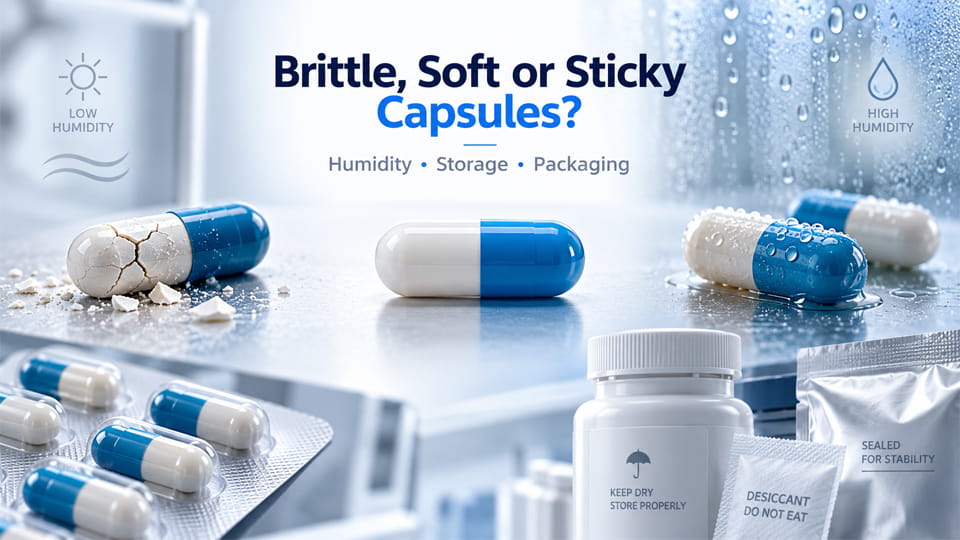
HPMC, derived from plant cellulose, provides a viable vegetarian and vegan-friendly option, catering to health-conscious consumers and meeting kosher or halal dietary laws. Beyond ethical considerations, the material science of HPMC offers distinct advantages for specific formulations. HPMC capsules possess lower inherent moisture content, significantly reducing the risk of degradation for moisture-sensitive APIs and affording them improved stability and shelf life compared to gelatin. This material property allows HPMC shells to maintain integrity across a broader storage humidity range (up to 70% RH), whereas gelatin requires stricter control (35-65% RH). This difference influences the necessary complexity and cost of environmental control systems within a manufacturing facility.
The industrial production of empty hard capsules involves several precise sub-steps: heating the raw materials (gelatin or HPMC) with purified water and colorants (Melting and Coloring); dipping stainless steel molds into the solution to form the two capsule halves (Molding and Drying); and finally, precisely Cutting and Trimming the hardened capsules to their final dimensions. Errors in this initial phase, such as improper drying or material handling, can result in fragile shells that are prone to breakage or defects (e.g., bubbles or dark spots) during the subsequent high-speed filling operation.
Table 1: Comparison of Industrial Hard Capsule Shell Materials
| Feature | Hard Gelatin Capsules | HPMC (Vegetarian) Capsules |
| Source Material | Animal Collagen | Plant cellulose (Hydroxypropyl Methylcellulose) |
| Stability/Storage RH | Sensitive; requires 35-65% RH for stability | Stable; tolerates 35-70% RH; ideal for moisture-sensitive APIs |
| Dissolution Profile | Rapid dissolution (Immediate Release) | Can offer resistance to gastric acid (Delayed Release) |
| Cost Implications | Generally lower production cost | Generally higher initial cost |
The success of the encapsulation step is heavily reliant on the quality and preparation of the fill material.
Prior to blending, all components—including the API and excipients—must undergo rigorous testing. Adherence to regulatory standards, such as those set by the FDA under Current Good Manufacturing Practice (CGMP), mandates verification of identity, purity, strength, and composition. This strict quality control ensures that the final product meets all established quality and safety standards.
The preparation of the powder mix, often involving granulation or pelletization , is followed by precision blending. This step is crucial for achieving uniform distribution of the active ingredient throughout the entire batch. Inconsistent blending leads directly to inconsistent dosage uniformity, which is a critical violation of pharmaceutical quality standards and poses regulatory risk.
Furthermore, the physical properties of the powder blend, specifically its flow dynamics, are paramount. Powders that exhibit excessive humidity or irregular granule size will negatively affect the performance of the capsule filler. These issues cause powder leakage or clogging within the machinery’s feeding systems, leading to reduced production efficiency and increased mechanical wear. Therefore, managing the blend’s moisture content and particle characteristics is a vital prerequisite for high-speed automated encapsulation.
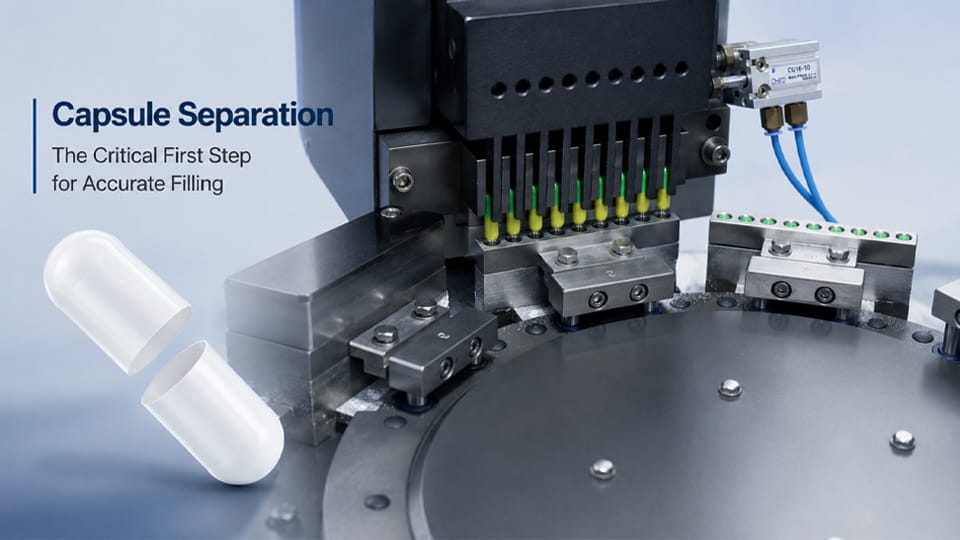
The encapsulation stage involves filling the separated capsule shells with the precise dose of the prepared powder or pellet blend. This is accomplished using specialized capsule filler machines, which vary significantly in their level of automation and dosing technology.
The required production scale dictates the selection of machinery. Manual or hand-operated machines are typically reserved for R&D or very small-scale specialty batches. Semi-automatic capsule filler machines are suitable for mid-sized production runs or formula testing, offering outputs between 10,000 and 20,000 capsules per hour, though they require considerable operator input for tasks like capsule placement or material loading.
For pharmaceutical manufacturers targeting mass production, fully automatic capsule filling machines are the industry standard. These systems operate with minimal human intervention and achieve high outputs, ranging from 12,000 up to 450,000 capsules per hour. While the initial capital cost of automatic equipment is higher, the superior speed, continuous operation, and guaranteed consistency translate into significant savings in labor and reduced operational costs over time.
The core of the Capsule Manufacturing process in automatic systems is the dosing mechanism, which dictates accuracy and the machine’s suitability for different formulation types.
The Tamping Pin technology utilizes a series of pins to sequentially compress the powder blend into a compact slug inside a dosing chamber. This mechanism is highly favored for the rapid, high-speed filling of standard powder doses in high-volume applications.
Alternatively, Dosator technology employs a piston to create the powder plug. Dosator fillers are particularly valued for their versatility, as they can accurately dispense complex fill materials, including pellets, tablets, or liquids. Critically, Dosator machines are uniquely suited for micro-dosing applications, capable of dispensing dosages as small as one milligram by adjusting the nozzle size. Given that consistent dosing is a non-negotiable regulatory requirement, automatic capsule filler machines, regardless of mechanism, must be regularly calibrated and maintained to ensure precise output and prevent product non-compliance. Investing in high-precision automatic systems is viewed not just as a production upgrade, but as essential insurance against costly batch rejection due to quality variations.
Table 2: Comparison of Hard Capsule Filler Machinery
| Type of Capsule Filler | Approximate Output Range (Capsules/Hour) | Best Application Scale | Key Dosing Mechanisms |
| Manual | Hundreds | R&D, Small Specialty Batches | Manual Dosing |
| Semi-Automatic | 10,000 – 20,000 | Mid-sized Batches, Formula Testing | Operator dependent; Requires hands-on help |
| Fully Automatic | 12,000 – 450,000+ | High-Volume Mass Production | Tamping Pin (Standard/Speed), Dosator (Micro-Dosing/Versatility) |

Once the capsules are filled and closed, they enter the refinement phase.
Newly filled capsules typically have powder residue adhering to the outside of the shell. They must be polished to ensure a clean finish.Quality assessment follows, involving exhaustive laboratory Quality Testing (e.g., dissolution and content uniformity tests) and visual inspection for defects.Modern production lines integrate automatic 100% capsule check-weighing systems to monitor and verify that every capsule meets the established weight tolerance, ensuring maximum consistency and compliance with dose accuracy standards.The highest efficiency is achieved when thecapsule filleris integrated seamlessly with downstream systems like check-weighers, printing, and packaging equipment, minimizing manual handling and maximizing traceability.

Approved capsules are often printed with identification information, such as dosage strength, manufacturer details, and batch numbers. The final step involves placing the capsules into protective packaging, such as blister packs or bottles. Proper storage conditions, specifically controlled temperature and relative humidity, are essential to maintain the structural integrity and stability of the capsule shell throughout the product’s shelf life.
Quality is not just achieved in a single step; it must be maintained through adherence to the regulatory standard of Current Good Manufacturing Practice (CGMP).
CGMP mandates the establishment of robust quality management systems, comprehensive documented procedures (SOPs), and rigorous quality control checks throughout the entire Capsule manufacturing process. This formalized system is designed to prevent instances of contamination, deviation, and error, thereby assuring the identity, strength, and purity of the drug products.
Even with automated equipment, challenges arise. Frequent problems include inconsistent fill weight, capsule breakage, and machine downtime. Inconsistent dosage uniformity, for example, is typically addressed by routine machine calibration and improving the powder blend’s flow properties. Capsule breakage can be mitigated by optimizing machine pressure settings and ensuring that high-quality, properly stored empty shells are used.
Minimizing machine downtime is crucial for commercial viability. Production interruptions, often caused by aging equipment, a lack of preventative maintenance, or inadequate cleaning protocols, can lead to substantial financial losses and jeopardize supply schedules. Therefore, a manufacturer’s investment in modern, reliable capsule filler machinery must be complemented by a proactive, rigorous maintenance schedule and comprehensive staff training to guarantee consistent long-term operation.
Mastering the Capsule Manufacturing process requires a disciplined approach that synthesizes material science, advanced automation, and strict regulatory adherence. The industry continues to evolve, driven by demands for plant-based options (HPMC) and increasingly complex, precise dosing requirements (often addressed by specialized Dosator capsule filler technology). For pharmaceutical and nutraceutical manufacturers aiming for optimal throughput, guaranteed dose uniformity, and full CGMP compliance, the strategic investment in and effective management of high-speed, precision encapsulation machinery is non-negotiable.
A: Hard capsules consist of two separable shells (cap and body) and are typically filled with powders or granular materials. Softgels are single, hermetically sealed units, usually spherical or oval, used to contain liquids, emulsions, or semi-solids, and are formed in a single encapsulation process.
HPMC (Hydroxypropyl Methylcellulose) capsules are popular because they are plant-based, making them vegetarian and vegan-friendly. They also have a lower moisture content than gelatin, offering improved stability for moisture-sensitive active ingredients.
A capsule filler machine is specialized equipment used in the encapsulation stage to precisely separate empty capsule shells and fill them with the blended pharmaceutical powder, pellets, or other formulations, before sealing them shut.
Semi-automatic machines are suitable for mid-sized production or formula testing, producing around 10,000 to 20,000 capsules per hour and requiring operator input. Fully automatic machines are the industry standard for mass production, achieving outputs from 12,000 up to 450,000+ capsules per hour with minimal human intervention.
The two main mechanisms are Tamping Pin and Dosator technology. Tamping Pin technology compresses the powder into a slug using a series of pins and is highly favored for high-speed filling of standard powder doses. Dosator technology uses a piston to create the plug and is valued for versatility, especially for micro-dosing applications (as low as 1 milligram).
Precision blending is crucial to ensure the uniform distribution of the active pharmaceutical ingredient (API) throughout the entire powder mix. Failure to blend uniformly leads directly to inconsistent dosage uniformity, which violates critical pharmaceutical quality standards.
CGMP stands for Current Good Manufacturing Practice. These regulations, enforced by bodies like the FDA, assure the identity, strength, quality, and purity of drug products by requiring robust quality management systems, rigorous procedures (SOPs), and quality control checks to prevent contamination and error.
If the powder blend has excessive humidity or moisture, it can negatively affect the performance of the capsule filler, causing powder leakage or clogging within the machine’s feeding systems, leading to reduced efficiency and machine wear.
Frequent machine downtime is often caused by aging equipment, a lack of preventative maintenance, or inadequate training of machine operators. Addressing this requires investing in modern, reliable machinery and establishing a proactive maintenance schedule.
After filling, capsules undergo polishing to remove residue. Quality is assessed through laboratory Quality Testing (e.g., dissolution and content uniformity tests) and visual inspection. Modern lines also integrate automatic 100% capsule check-weighing systems to verify that every capsule meets the established weight tolerance.
References:
1.U.S. Food and Drug Administration (FDA): Current Good Manufacturing Practice for Finished Pharmaceuticals (21 CFR Part 211)
2.Caps Canada Blog: Differences Between Gelatin Capsules and HPMC Capsules
3.Indian Journal of Health Care, Medical & Pharmacy Practice (IJHMP): A Review on Gelatin Production and a Special Type of Hard Gelatin Capsules