
Small-batch capsule production is common in nutraceuticals, herbal supplements, clinical trials, R&D, pilot runs and contract manufacturing. Choosing the right capsule filling machine is crucial for early-stage brands and labs balancing cost, flexibility, and GMP compliance. Unlike high-volume pharmaceutical lines, these operations often handle limited runs, multiple SKUs, and evolving formulas. The right capsule filler boosts throughput and consistency without over-investing. Compared to hand-filling (manual capsule trays), a machine can multiply output from a few hundred to tens of thousands of capsules per hour, while improving dosage accuracy. But automation comes in many forms. Some manufacturers start with a manual capsule filler (no electricity needed, low cost) or a semi-automatic capsule filling machine (assisted operation) before moving to full automation as volumes grow. This guide cuts through the jargon, explaining how to match encapsulation machinery type and specs to your small-batch needs.
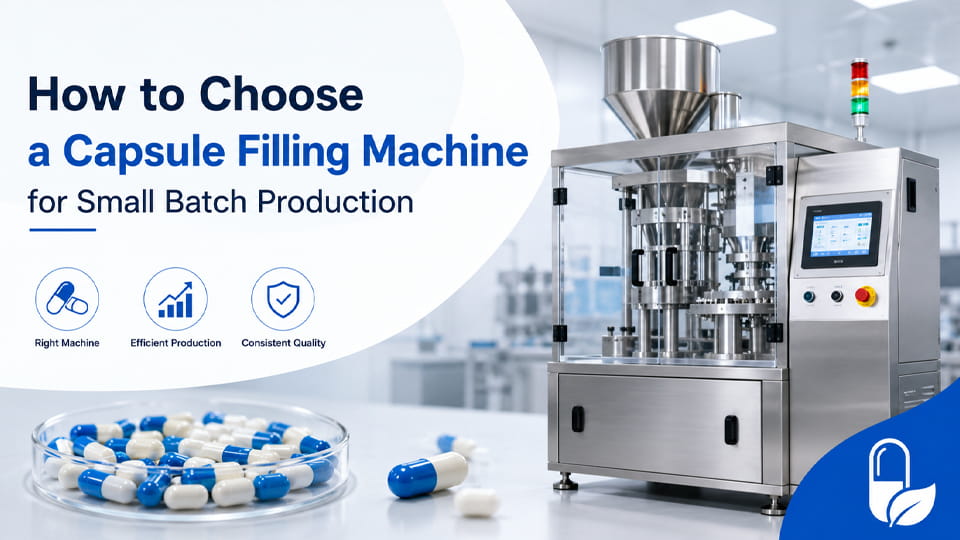
Capsule filling machines are used across pharmaceuticals, supplements, and herbal products, for powders, pellets, and even liquids. We’ll explore their capabilities and design features to help you decide which is right for your scale. We also cover regulatory factors like GMP hygiene and operator requirements, since even small lines must meet quality standards.
“Small batch” generally refers to relatively low volume or flexible production runs. Definitions vary, but one practical benchmark is output per run or per hour. For example, manual fillers are typically used for very small batches (under ~500 capsules per run). Semi-automatic machines suit small-to-medium runs (on the order of 1,000–5,000 capsules per hour). Automatic fillers become justified when output needs exceed ~5,000–10,000 capsules per hour. These rules of thumb match industry observations: once daily demand climbs above roughly 15,000 capsules, many manufacturers upgrade from manual to semi-auto equipment to cut labor costs.
In practical terms, we can categorize scale as: R&D/Lab scale (hundreds per day), Small Batch (thousands per day), Medium/Commercial (tens of thousands per day), High Volume (100k+ per hour). Small-batch producers often handle multiple SKUs or changing formulas, so they need flexibility. This guide focuses on the manual and semi-automatic equipment that thrive in the sub-50,000 caps/day regime, while still touching on the automatic machines if you plan to scale up.
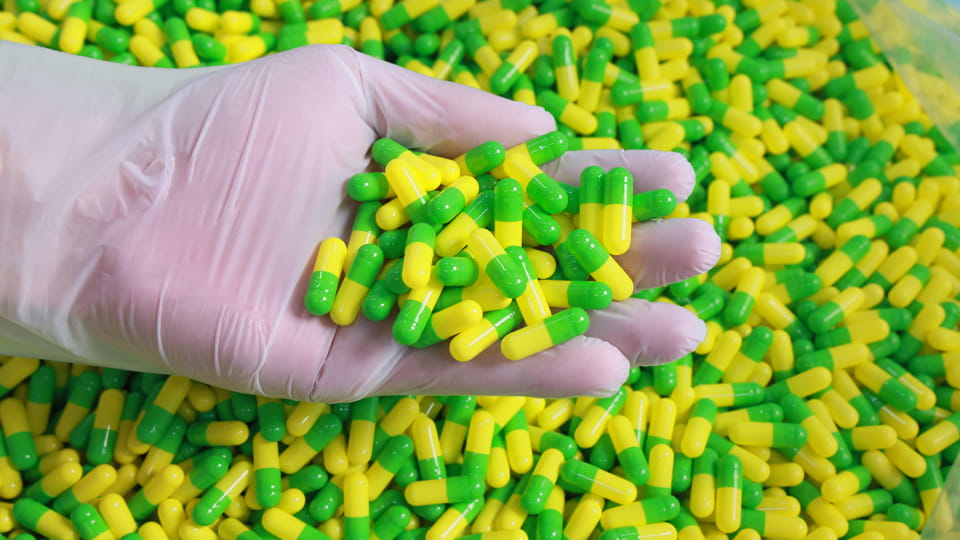
Capsule filling machines fall into three broad categories: Manual, Semi-Automatic, and Fully Automatic. Each has distinct trade-offs of speed, cost, labor, and complexity. (Specialized variants exist, e.g. liquid capsule fillers or softgel encapsulators, but here we focus on hard two-piece capsule equipment.)
Manual capsule fillers (sometimes called capsule trays or plate fillers) require no electricity and use simple tamping tools. Operators spread powder in trays of capsule bodies, tamp by hand, and cap by hand.
In summary, manual filling is extremely affordable and easy to learn, but beyond a few hundred capsules per run it quickly becomes impractical due to operator fatigue and inconsistency.
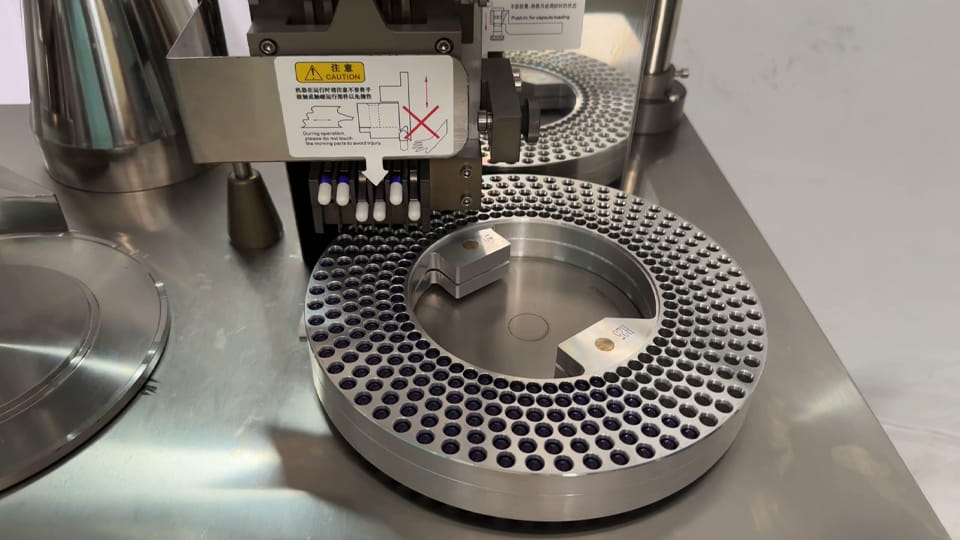
Semi-automatic capsule fillers blend operator control with machine assistance. Typically, an operator loads empty capsules into hoppers and powders into the dosing system, but the machine automates key steps like capsule orientation, filling, and sometimes capping. For example, many models use a vibrating capsule hopper and pneumatic vacuum to separate and present the capsule bodies and caps, then an auger or tamping pin doses powder, and a mechanical system locks the capsules.

Figure: A Jinlu CGNT-209 semi-automatic capsule filling machine, compatible with capsule sizes #000–#5 and capable of ~40,000 capsules/hour.
Fully automatic capsule fillers perform every step continuously with minimal human involvement. They auto-load empty capsules, separate and orient them, dose the fill material precisely, recombine the halves, inspect defects, and eject finished capsules. These machines often use complex rotary tables with many dosing stations.

Figure: A high-speed automatic capsule filling machine (Jinlu NJP-3800D) rated at ~228,000 capsules/hour. These units offer unmatched throughput but are best for large-scale production.
Liquid Capsule Fillers (Special Note): Some capsule machines are designed for liquid or oil fills. They use micro-pumps or nozzles to dose liquids into hard-shell capsules. These machines are still typically rotary and may achieve tens of thousands per hour. While valuable for oils and suspensions, they require careful cleaning and often specialty gelatin or HPMC capsules to prevent leaks. We will focus on the dry-powder filling machines here, but keep in mind a liquid-capable machine is an option if your formula demands it.
In summary, the choice of machine type hinges on your production scale and budget. Manual fillers (<~500/day) are simplest and cheapest; semi-automatic (up to ~40k/hour) serve most small producers; and automatic machines (>~50k/hour) are for high-volume needs.
When evaluating capsule filling machines, focus on the specifications and design features that matter most for small-batch production. The key factors include:
Match machine speed to your throughput requirements. Manual fillers top out at only a few hundred to a couple thousand capsules per hour. Semi-automatic machines jump to the tens of thousands: many models run 10,000–40,000 caps/hour in continuous use. Fully automated equipment surpasses 100,000 capsules/hour.
Keeping headroom is wise: if demand might double, consider a faster model or one with modular upgrades. But avoid oversizing (see Mistakes below).
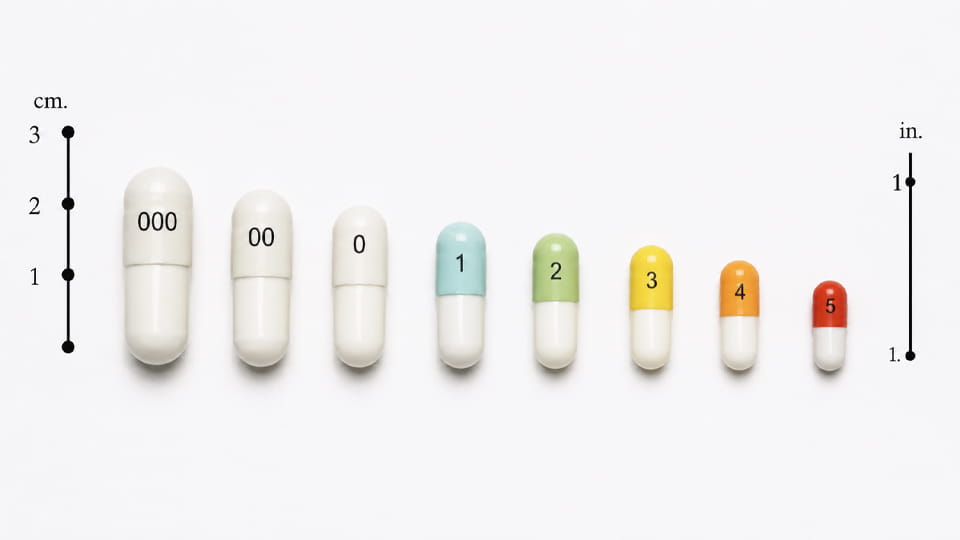
Your filler must handle the capsule sizes you use. Hard capsules range from 000 (largest) to 5 (smallest). Nutrition and pharma often use #00, 0, 1, 2, etc. Ensure the machine supports your sizes out of the box.
Sizing flexibility is crucial for small producers with multiple products. In a buyer’s guide Jinlu notes that multi-size compatibility is a big plus, saving cost and space.
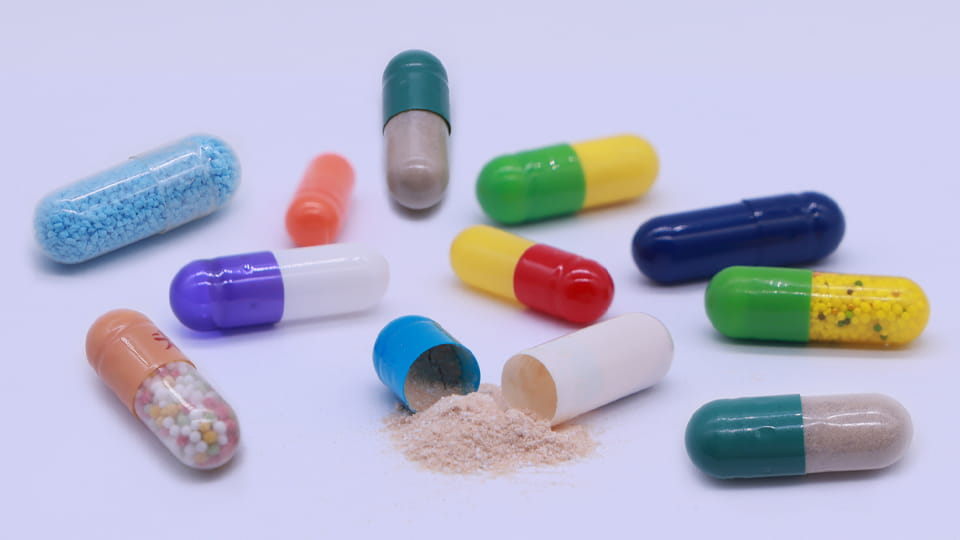
Capsule fill materials vary greatly in flow, density, and stickiness. Your machine should handle the specific powders or granules you use.
In short: ask the vendor if they’ve filled formulas like yours, and consider requesting a sample test run or demonstration if possible.
Accurate fill weight is non-negotiable in capsule production. Look for machines with precise dosing control:
Always ask for data or testimonials on fill consistency. Even a small weight error in a capsule can mean an off-spec product. Remember, speeding up should not sacrifice accuracy – the best machines balance high speed with tight control.
Pharma/supplement production demands cleanability and contamination control:
For small producers, downtime for cleaning matters. A machine that’s a pain to clean will slow production and risk cross-contamination. Make cleanability a key buying factor.
Assess the human element:
In short, compare the total labor cost (wages + overhead) versus machine cost. Remember that semi-automatic machines do trade operator effort for capital expenditure.
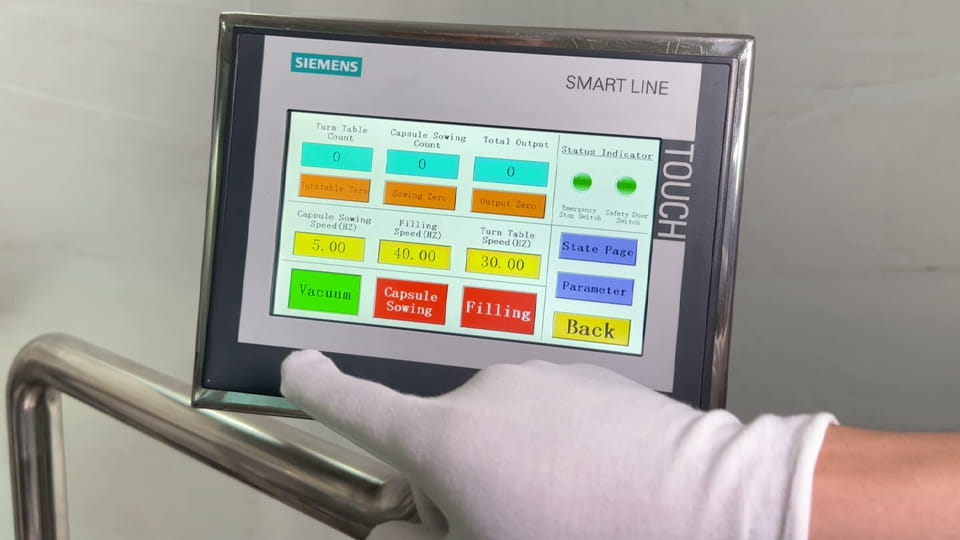
Even for small batches today, think ahead:
Plan to grow gracefully. Many small companies outgrow their first capsule filler; choosing one with an upgrade path or buying slightly larger than today’s need can save costs down the road.
| Feature | Manual Capsule Filler | Semi-Automatic Filler | Automatic Filler |
| Typical Investment | Very low (hundreds of $) | Medium (~$5,000–$20,000+) | High (six figures) |
| Output (capsules/hr) | 500–2,000 (max) | 10,000–40,000 (stable range) | 30,000+ to 200,000+ |
| Labor Required | High (one person per tray) | Moderate (1 operator per machine) | Low (1–2 operators per line) |
| User Skill | Very low | Moderate (some training) | High (requires technical training) |
| Accuracy & Consistency | Variable (operator-dependent) | Good (machine-regulated) | Excellent (tight control) |
| GMP Compliance | Basic (open trays, acrylic) | Good (enclosed dosing, SS parts) | Excellent (fully enclosed, SS316) |
| Best For | R&D, lab, hobby, <500/day | Small-to-medium factories (~thousands/day) | Large-scale production (>100k/hr) |
| Example Products | Hand trays, 300/400-hole plates | Jinlu CGN-208D (30k/hr), CGNT-209 (40k/hr) | Jinlu NJP-3800D (228k/hr) |
For most small-scale supplement or pharma startups, a semi-automatic capsule filling machine hits the sweet spot. These machines cost far less than large automatics but deliver much higher speed and consistency than manual methods. A semi-auto (30–40k caps/hour) can handle growing production needs without the manpower drain of manual filling. They also tend to meet GMP design requirements (stainless parts, enclosed hoppers) important for first-time manufacturers.
Manual fillers still have a place if your volumes are extremely low (custom compounding or specialty formulas) or budget is the main constraint. But be aware of the tipping point: as JinluPacking notes, once daily output exceeds ~15,000 capsules, the hidden costs of manual (rework, overtime) often make a semi-auto machine pay for itself.
Automatic machines usually exceed the needs of a startup; only consider them if you foresee very rapid scaling or already have high-volume contracts. For example, a contract manufacturer servicing multiple clients might justify a small automatic unit (<$50k) or a used machine to meet large orders.
In summary: Manual for tiny, occasional batches; Semi-Auto for most growing companies; Automatic for high-volume. Talk to suppliers about your forecasts—some can suggest mid-tier models. JinluPacking, for instance, encourages businesses to “step up” with their semi-auto lines for next-level production goals.
Avoid these pitfalls by carefully matching a machine to your production plan and working closely with reputable suppliers who can guide you. As one Jinlu guide concludes, this decision should be a partnership – pick equipment that will grow with your business.
Selecting a capsule filling machine is a crucial decision for any small-scale manufacturer. It will affect your efficiency, product quality, and scalability. Summarizing the key points:
Above all, work with experienced suppliers and seek references or case studies (Jinlu’s site offers news and case studies) when finalizing your selection. With the right machine, your small-batch capsule production will run smoothly, producing consistent, high-quality capsules that meet regulations and delight your customers.
For most small-batch scenarios, a semi-automatic capsule filler offers the best balance of cost and performance. It provides high throughput (~30k–40k caps/hour) without the expense of a full automatic line. Manual fillers are only optimal for very tiny volumes (dozens to a few hundred capsules). Fully automatic machines are generally intended for high-volume operations.
Manual capsule fillers are generally NOT recommended beyond very small-scale or R&D use. They lack the speed and consistency needed for commercial runs. Industry experience shows that once output needs exceed a few thousand capsules per day, manual filling becomes a bottleneck. For consistent quality and efficiency in a production setting, upgrading to a semi-automatic filler is advised.
Most hard-capsule machines accept capsules sizes 000 (largest) down to 5 (smallest). Common sizes in nutraceuticals are 00, 0, 1, and 2. For instance, both the semi-auto and automatic machines from Jinlu cover all sizes #000 through #5. Check the product spec to be sure; switching sizes usually requires changing the filling tray or mold, but many designs make this change fast.
Reputable capsule fillers for pharma use are built to cGMP standards. They usually feature SUS304/316 stainless steel frames, enclosed dosing chambers, and smooth surfaces for easy cleaning. Look for CE/FDA certifications or cGMP compliance claims. Machines from quality suppliers (like JinluPacking) are designed with rounded corners, hygienic enclosures, and often come with validation support. Always verify the materials and design against GMP requirements.
Automatic machines tend to have the highest accuracy (often within ±1–3% of target weight) due to precise auger systems and feedback controls. Semi-automatics usually achieve similar or slightly less precision. Manual filling has the most variation (operator-dependent). If exact dosing is critical, choose a machine with a fine-adjustment dosing system and consider models with in-line weight checks. Always ask the vendor for typical weight variation data.
At minimum, have accurate capsule counters and compliance testing (e.g. weight checks, disintegration testers). You may also need blister or bottle packagers, sealers, and labeling machines. Jinlu offers capsule counting machines and blister packers, for example. Don’t forget HSE equipment (dust masks, vacuum cleaners) to handle any powder spillage.
Specifications (e.g. “100,000 capsules/hour”) depend heavily on conditions. Always request a factory acceptance test (FAT) or sample run using your actual capsules and powder. This real-world test is the surest way to confirm capacity, accuracy, and compatibility. It’s standard practice for reputable suppliers to allow buyer testing before final purchase.
References:
1. Dosage Form Drug Manufacturers cGMPs (10/93) —— U.S. Food and Drug Administration
2.Drug Information – Capsule Manufacturing Guidelines —— WHO
3.The filling of powders into two-piece hard capsules —— National Library of Medicine
4.Investigation of various factors affecting encapsulation on the in-cap automatic capsule-filling machine —— National Library of Medicine