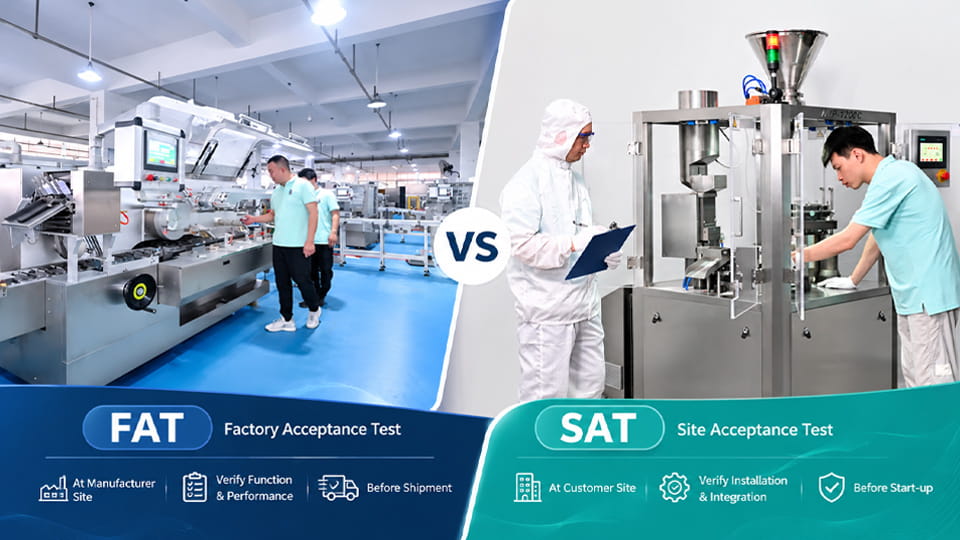
การทดสอบการยอมรับของโรงงาน (อ้วน) และการทดสอบการยอมรับไซต์ (นั่ง) เป็นขั้นตอนการตรวจสอบเสริมสองขั้นตอนสำหรับอุปกรณ์ทางเภสัชกรรม. FAT ดำเนินการที่โรงงานของผู้ผลิตอุปกรณ์ (ก่อนจัดส่ง) เพื่อตรวจสอบคุณสมบัติและฟังก์ชั่นทั้งหมดตรงตามความต้องการของลูกค้า. SAT จะดำเนินการหลังจากการติดตั้งที่ไซต์ของลูกค้าเพื่อยืนยันว่าเครื่องจักรทำงานได้อย่างถูกต้องในสภาพแวดล้อมการผลิตจริง. ด้วยกัน, FAT และ SAT ช่วยตรวจจับปัญหาได้ตั้งแต่เนิ่นๆ (ประหยัดเวลาและค่าใช้จ่าย) และมั่นใจ การปฏิบัติตามมาตรฐาน GMP. บทความนี้จะอธิบายรายละเอียด FAT และ SAT ซึ่งครอบคลุมสิ่งที่การทดสอบแต่ละรายการตรวจสอบได้, ความแตกต่างที่สำคัญ, สิ่งเหล่านี้เหมาะสมกับวงจรชีวิตของ IQ/OQ/PQ อย่างไร, รายการตรวจสอบตัวอย่างสำหรับ สายการบรรจุ (พุพอง, แคปซูล, แท็บเล็ต, การบรรจุกล่อง), และคำถามเกี่ยวกับแนวทางปฏิบัติที่ดีที่สุดของผู้ซื้อ.
การทดสอบการยอมรับจากโรงงานคืออะไร (อ้วน)?
ก การทดสอบการยอมรับจากโรงงาน (อ้วน) เป็นทางการ, การประเมินอุปกรณ์ที่จัดทำเป็นเอกสาร ณ สถานที่ของผู้ผลิต, ดำเนินการก่อนจัดส่งเครื่องให้กับลูกค้า. เป็นการตรวจสอบว่าเครื่องจักรได้ถูกสร้างขึ้นตามที่ตกลงกันไว้ ข้อกำหนดความต้องการของผู้ใช้ (สสส) และทำงานได้อย่างถูกต้อง. ในช่วงไขมัน, ผู้ขายและลูกค้า (หรือตัวแทนของพวกเขา) ดำเนินการโปรโตคอล FAT ที่ได้รับอนุมัติของกรณีทดสอบและรายการตรวจสอบ. วัตถุประสงค์ทั่วไปรวมถึงการแสดงให้เห็นถึงการปฏิบัติตามข้อกำหนด, จับข้อบกพร่องได้เร็ว, และทำให้ผู้ซื้อมั่นใจว่า “มีอุปกรณ์พร้อมส่ง”.
FAT ตรวจสอบอะไร?
ในไขมัน, มุ่งเน้นไปที่ประสิทธิภาพแบบสแตนด์อโลนและการยึดมั่นในการออกแบบ. โดยทั่วไปจะประกอบด้วย:
- การตรวจสอบการมองเห็นและการก่อสร้าง: ตรวจสอบการประกอบเครื่องจักรกล, การจัดตำแหน่งเฟรม, สายไฟ, และสร้างคุณภาพเทียบกับแบบ. ยืนยันหมายเลขซีเรียลและรหัสรุ่น.
- การทดสอบไฟฟ้าและการควบคุม: ตรวจสอบการเชื่อมต่อสายไฟ, เวอร์ชันซอฟต์แวร์ PLC/HMI, เซ็นเซอร์และแอคชูเอเตอร์. ตรวจสอบหน้าจอควบคุมนั้น, สูตรอาหาร, และสัญญาณเตือนตอบสนองอย่างถูกต้อง.
- การทดสอบฟังก์ชัน (ไม่มีโหลดหรือวิ่งแบบแห้ง): เรียกใช้ฟังก์ชันหลักแต่ละฟังก์ชันของเครื่องจักร (มอเตอร์, ไดรฟ์, เครื่องให้อาหาร, เครื่องทำความร้อน) ทั่วทุกช่วง. ตัวอย่างเช่น, ความเร็วรอบที่ต่ำสุดและสูงสุด, ทดสอบเครื่องทำความร้อน/ทางลาดแรงดัน, และกระตุ้นการประสานอย่างจงใจ.
- การตรวจสอบประสิทธิภาพ: ใช้วัสดุการผลิตที่เป็นตัวแทนหากเป็นไปได้. สำหรับไส้หรือ เครื่องบรรจุภัณฑ์, ดำเนินการตัวอย่างผลิตภัณฑ์และตรวจสอบปริมาณงาน, ความแม่นยำ, การเปลี่ยนแปลง, และเป้าหมายการปฏิบัติงานอื่นๆ. (แนะนำให้ใช้ผลิตภัณฑ์จริงของลูกค้าในช่วง FAT เพื่อเปิดเผยปัญหาเฉพาะของวัสดุ)
- ความปลอดภัยและลูกโซ่: ทดสอบการหยุดฉุกเฉิน, ม่านแสง, ยาม, วาล์วระบายความดัน, ฯลฯ, เพื่อยืนยันว่าระบบความปลอดภัยทั้งหมดตอบสนองตามที่ตั้งใจไว้ภายใต้สภาวะความผิดปกติ.
- การทบทวนเอกสาร: ยืนยันว่าเอกสารที่จำเป็นทั้งหมดพร้อมแล้ว: คู่มือการใช้งาน, ไดอะแกรมไฟฟ้าและนิวแมติก, คู่มือการบำรุงรักษา, รายการอะไหล่, ใบรับรองการสอบเทียบ, ฯลฯ.
- เกณฑ์การยอมรับ: การทดสอบทั้งหมดได้รับการประเมินตามเกณฑ์การยอมรับที่ตกลงไว้ล่วงหน้า (มักดึงมาจาก URS). การเบี่ยงเบนหรือจุดเปิดใดๆ จะถูกบันทึกไว้ในรายการเจาะลึกเพื่อการแก้ไข.
FAT ที่ประสบความสำเร็จจะจบลงด้วยการลงนามรายงาน FAT, แสดงรายการการทดสอบที่ผ่านการทดสอบและแสดงรายการปัญหาใดๆ ที่ต้องแก้ไขก่อนจัดส่ง. โดยพื้นฐานแล้ว, FAT ช่วยให้มั่นใจได้ว่า “ระบบพร้อมที่จะจัดส่ง” โดยการตรวจสอบการทำงานหลักภายใต้เงื่อนไขของโรงงานที่ได้รับการควบคุม.
FAT เกิดขึ้นเมื่อไหร่และใคร?
โดยทั่วไป FAT จะเกิดขึ้นหลังจากประกอบเครื่องจักรเสร็จสมบูรณ์ แต่ก่อนที่จะออกจากพื้นของผู้ผลิต. เป็นไปตามคุณสมบัติการออกแบบ (ถ้ามี) และก่อนส่งมอบ. ผู้เข้าร่วมหลักมักประกอบด้วยวิศวกรผู้ขายและช่างเทคนิค, และตัวแทนจากบริษัทจัดซื้อ (วิศวกรควบคุมคุณภาพ/ตรวจสอบความถูกต้อง, พนักงานฝ่ายผลิต). ทีมผู้ซื้อควรมาถึงพร้อม, มักจะนำ URS มาด้วย, โปรโตคอลทดสอบ, และวัสดุพิเศษใดๆ ในการทำงาน. FAT เป็นโอกาสสุดท้ายของผู้ซื้อในการตรวจจับความคลาดเคลื่อนที่สำคัญภายใต้การควบคุมของซัพพลายเออร์.
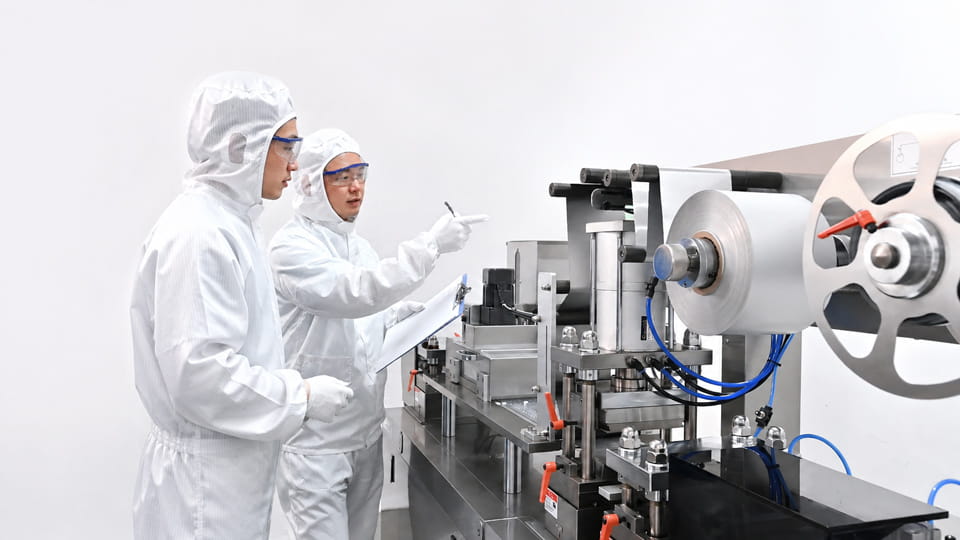
รูป: เภสัชภัณฑ์ เครื่องบรรจุหีบห่อ อยู่ระหว่างการทดสอบการยอมรับ. ใน FAT ที่เข้มงวด, ทุกระบบย่อย (การขึ้นรูป, การปิดผนึก, การให้อาหาร, การควบคุม) ได้รับการตรวจสอบกับ URS. SAT ที่ตามมาจะทำการทดสอบการทำงานที่สำคัญซ้ำหลังจากการติดตั้งในสภาพแวดล้อมการใช้งานปลายทาง.
การทดสอบการยอมรับไซต์คืออะไร (นั่ง)?
ก การทดสอบการยอมรับไซต์ (นั่ง) เป็นเอกสารการทดสอบที่ดำเนินการที่สถานที่ของลูกค้าหลังจากส่งมอบและติดตั้งอุปกรณ์ แต่ก่อนปล่อยสู่การผลิต. SAT จะตรวจสอบอีกครั้งว่าเครื่องจักรมีคุณสมบัติตรงตามข้อกำหนดในบริบทการทำงานจริงหรือไม่. ในวันเสาร์, มีการตรวจสอบอุปกรณ์ว่ามีการติดตั้งถูกต้องหรือไม่, การเชื่อมต่อสาธารณูปโภค, บูรณาการระบบ, และการแสดงครั้งสุดท้าย.
SAT ตรวจสอบอะไร?
โดยทั่วไป SAT จะรวมถึง:
- คุณสมบัติการติดตั้ง (ไอคิว) เช็ค: ตรวจสอบว่ามีการติดตั้งอุปกรณ์ตามแผนที่ได้รับอนุมัติ. รวมถึงการยืนยันตำแหน่งที่ถูกต้อง, การปรับระดับ, สาธารณูปโภค (แรงดันไฟฟ้า, แรงดันลม, น้ำ, ฯลฯ), สายดิน, และสภาพแวดล้อม. ส่วนประกอบและเอกสารทั้งหมดของเครื่องจักรต้องมีและติดตั้งอย่างถูกต้อง.
- การตรวจสอบยูทิลิตี้: ตรวจสอบให้แน่ใจว่ายูทิลิตี้ไซต์ตรงตามข้อกำหนดของเครื่อง. ตัวอย่างเช่น, วัดแรงดันไฟฟ้าจริง, ความดันอากาศ/การไหล, อุณหภูมิน้ำเย็น, หรือแรงดันไอน้ำจากแหล่งจ่ายของโรงงาน. ยืนยันว่าอยู่ภายในช่วงที่เครื่องระบุไว้.
- การทดสอบบูรณาการ: ตรวจสอบส่วนต่อประสานกับอุปกรณ์ต้นน้ำ/ปลายน้ำ และระบบอาคาร. ตรวจสอบการเชื่อมโยงการสื่อสาร (E.G. ถึงลิมส์, MES, สกาด้า) ถ้ามี. ยืนยันว่าสายพานลำเลียงอยู่ในแนวเดียวกัน, การส่งต่อระหว่างเครื่องเป็นไปอย่างราบรื่น, และการแจ้งเตือนบนเครือข่ายหรือการรวบรวมข้อมูลจะทำงานภายใต้สภาพของสถานที่.
- ทำซ้ำการทดสอบการทำงานภายใต้สภาวะจริง: ทำหน้าที่หลักอีกครั้ง, ขณะนี้มีเครื่องจักรเชื่อมต่อกับสาธารณูปโภคและใช้วัสดุการผลิตจริงหากเป็นไปได้. ตัวอย่างเช่น, รันชุดของจริง แท็บเล็ตหรือแคปซูล ผ่านเครื่องเพื่อยืนยันว่ายังคงเป็นไปตามเกณฑ์ความเร็วและคุณภาพ. ตรวจสอบให้แน่ใจว่าการปรับเปลี่ยนใด ๆ ที่ทำขึ้นสำหรับสภาพไซต์นั้นมีประสิทธิภาพ.
- การตรวจสอบความปลอดภัยและสิ่งแวดล้อม: ทดสอบอินเทอร์ล็อคนิรภัยและอุปกรณ์ป้องกันอีกครั้งภายใต้การตั้งค่าการติดตั้งจริง. ตรวจสอบข้อกำหนดด้านสิ่งแวดล้อม (คลาสคลีนรูม, อุณหภูมิ, ความชื้น) เป็นไปตามมาตรฐานและไม่ส่งผลเสียต่อการทำงานของเครื่องจักร.
- เกณฑ์การยอมรับขั้นสุดท้าย: ยืนยันว่าเกณฑ์การรับ SAT ทั้งหมด (มักดึงมาจาก URS และโปรโตคอลของไซต์) มีความพึงพอใจ. บันทึกการเบี่ยงเบนที่เหลืออยู่ในรายการเจาะ. รวบรวมการลงนามของผู้ปฏิบัติงานและเอกสารการยอมรับอย่างเป็นทางการ.
SAT ที่ประสบความสำเร็จจะจบลงด้วยรายงาน SAT หรือใบรับรองที่ลงนามโดยทั้งผู้ขายและลูกค้า. โดยให้หลักฐานที่เป็นเอกสารว่า “อุปกรณ์/ระบบได้รับการส่งมอบในสภาพดีและไม่ได้รับผลกระทบจากการขนส่ง” และขณะนี้ทำงานได้อย่างถูกต้องที่ไซต์งาน. ในทางปฏิบัติ, SAT อย่างละเอียดช่วยให้มั่นใจว่าเครื่องพร้อมสำหรับการตรวจสอบขั้นตอนต่อไป (IR/WH/PQ) หรือการผลิตประจำ.
FAT กับ SAT: 10 ความแตกต่างที่สำคัญ
- ที่ตั้ง: FAT ดำเนินการที่ไซต์ของผู้ผลิต; SAT ที่เจ้าของ (ของลูกค้า) เว็บไซต์.
- การกำหนดเวลา: ไขมันเกิดขึ้น ก่อนจัดส่ง (หลังการประกอบ), ในขณะที่ SAT เป็น หลังการติดตั้ง (การว่าจ้างล่วงหน้า).
- สิ่งแวดล้อม: FAT อยู่ในโรงงานที่ได้รับการควบคุม (บางครั้งไม่อยู่ภายใต้สภาพห้องคลีนรูม); SAT อยู่ในสภาพแวดล้อมการผลิตจริงพร้อมสภาพแวดล้อมจริง.
- สาธารณูปโภค: ในไขมัน, สาธารณูปโภค (อากาศ, น้ำ, พลัง) ผู้ขายอาจจำลองตามค่าที่ระบุ; ในวันเสาร์, เครื่องใช้ยูทิลิตีไซต์สด (อากาศจริง, น้ำ, แหล่งจ่ายไฟ).
- การรวมเข้าด้วยกัน: FAT ทดสอบเครื่องแบบแยกส่วน (บางครั้งก็มีโหลดจำลอง). การทดสอบ SAT รวมถึงการบูรณาการกับอุปกรณ์โดยรอบ (E.G. ตัวโหลดต้นน้ำ, เครื่องบรรจุหีบห่อปลายน้ำ, ระบบข้อมูล).
- ขอบเขตการทดสอบ: สคริปต์ FAT มีแนวโน้มที่จะละเอียดถี่ถ้วนมากกว่า (การตรวจสอบการทำงานเต็มรูปแบบ, ความเร็วสูงสุด) เพื่อ "สะเทือน" ปัญหาบนพื้นผู้ขาย. สคริปต์ SAT มุ่งเน้นไปที่การยืนยันประสิทธิภาพหลักภายใต้สภาพไซต์และตรวจสอบการแก้ไขจาก FAT.
- รายละเอียดเอกสาร: โปรโตคอล FAT มักจะมีรายละเอียดมากกับการทดสอบรายการโฆษณา (มักจะเขียนถึง UW). โปรโตคอล SAT อาจอ้างอิงผลลัพธ์ URS และ FAT, เพื่อให้มีประสิทธิภาพมากขึ้น.
- เกณฑ์การยอมรับ: การยอมรับ FAT จะขึ้นอยู่กับเกณฑ์การทดสอบจากโรงงานที่ตกลงไว้ล่วงหน้าอย่างเคร่งครัด. การยอมรับ SAT รวมถึงเกณฑ์ไซต์เพิ่มเติม (E.G. บูรณาการเต็มรูปแบบ, ปัจจัยด้านสิ่งแวดล้อม).
- วัตถุประสงค์: เป้าหมายของ FAT คือการ "พิสูจน์" เครื่องจักรถูกสร้างขึ้นอย่างถูกต้อง. เป้าหมายของ SAT คือการ "ยืนยัน" ว่ายังคงใช้งานได้หลังจากการขนส่งและการติดตั้ง.
- ผลกระทบ: ปัญหาที่พบใน FAT สามารถแก้ไขได้จากผู้ขาย (ต้นทุนที่ต่ำกว่า). ปัญหาที่พบใน SAT มักต้องหยุดทำงานและอาจส่งผลให้การผลิตล่าช้า. FAT อย่างละเอียดจะช่วยลดค่าใช้จ่ายที่น่าประหลาดใจของ SAT.
ในระยะสั้น, FAT และ SAT เป็นจุดตรวจตามลำดับ: FAT ตรวจพบข้อบกพร่องตั้งแต่เนิ่นๆ ในโรงงาน; SAT จะตรวจจับปัญหาที่เหลืออยู่เมื่อเครื่องอยู่ที่ไซต์งาน. ทั้งสองอย่างมีความสำคัญต่อการปฏิบัติตามมาตรฐาน GMP และการบริหารความเสี่ยง.
สรุป FAT กับ SAT
| คุณสมบัติ |
อ้วน (การทดสอบการยอมรับจากโรงงาน) |
นั่ง (การทดสอบการยอมรับไซต์) |
| ที่ไหน & เมื่อไร |
ที่สถานที่ของผู้ขาย, ก่อนจัดส่ง. |
ที่ไซต์ของลูกค้า, หลังการติดตั้ง. |
| วัตถุประสงค์ |
ตรวจสอบว่าเครื่องตรงตามข้อกำหนดการออกแบบ/URS และทำงานแบบสแตนด์อโลน. |
ตรวจสอบเครื่องจักรทำงานอย่างถูกต้องในสายการผลิตจริง (สาธารณูปโภค, สิ่งแวดล้อม, บูรณาการ). |
| สิ่งแวดล้อม |
ควบคุมสภาพโรงงาน (สาธารณูปโภคของผู้ขาย). |
สภาพพืชจริง (อากาศจริง, พลัง, อุณหภูมิ). |
| ขอบเขตการทดสอบ |
การทดสอบการทำงานโดยละเอียดเทียบกับข้อกำหนดของสัญญา; จำลองกระบวนการโดยใช้วัสดุที่เป็นตัวแทนหากเป็นไปได้. |
ตรวจสอบการติดตั้ง (ไอคิว), จากนั้นทำซ้ำฟังก์ชันหลักและประสิทธิภาพกับผลิตภัณฑ์/การตั้งค่าขั้นสุดท้าย; ทดสอบบูรณาการกับอุปกรณ์ต้นน้ำ/ปลายน้ำ. |
| เกณฑ์การยอมรับ |
ตามความต้องการของผู้ใช้และแผนการทดสอบที่ตกลงกันไว้ (E.G. ความเร็ว, ความแม่นยำ). |
ยืนยันประสิทธิภาพที่ปรับไซต์แล้ว (E.G. คุณภาพการผลิตที่สม่ำเสมอ, พารามิเตอร์ยูทิลิตี้) ตรงตามเกณฑ์. |
| เอกสาร |
โปรโตคอล FAT อย่างเป็นทางการ, บันทึกการทดสอบ, รายการหมัด, รายงาน FAT ขั้นสุดท้าย. |
โปรโตคอล SAT อย่างเป็นทางการ (มักจะง่ายกว่า), บันทึกการเบี่ยงเบน/รายการเจาะ, ออกจากระบบ, และการตรวจสอบย้อนกลับไปยัง URS. |
| ผล |
“อุปกรณ์ที่ได้รับอนุมัติสำหรับการจัดส่ง” (หรือรายการแก้ไข). |
“เครื่องได้รับการยอมรับในสถานที่” (หรือรายการปัญหาที่เหลืออยู่เพื่อแก้ไข). |
ตารางนี้เน้นความแตกต่างที่สำคัญ: FAT คือการพิสูจน์ว่าเครื่องจักรถูกสร้างขึ้นตามข้อกำหนดเฉพาะ ก่อน มันออกจากโรงงาน, ในขณะที่ SAT พิสูจน์ว่ายังคงเป็นไปตามข้อกำหนด หลังจาก การติดตั้งในสภาพแวดล้อมการทำงาน. โดยทั่วไปแล้วทั้งสองข้อกำหนดจะต้องอยู่ภายใต้ GMP/ภาคผนวก 15 คำแนะนำ.
FAT กับ SAT กับ IQ กับ OQ กับ PQ
FAT และ SAT เป็นส่วนหนึ่งของวงจรการรับรองที่ใหญ่ขึ้นสำหรับอุปกรณ์ GMP. ในกระแสโครงการทั่วไป, คุณเริ่มต้นด้วยข้อกำหนดข้อกำหนดของผู้ใช้ (สสส) และคุณสมบัติการออกแบบ (ดีคิว), จากนั้นไปที่ FAT, จัดส่ง, การติดตั้ง, นั่ง, และสุดท้ายคือ IQ/OQ/PQ บนไซต์งาน. แผนภาพนางเงือกด้านล่างแสดงลำดับนี้:
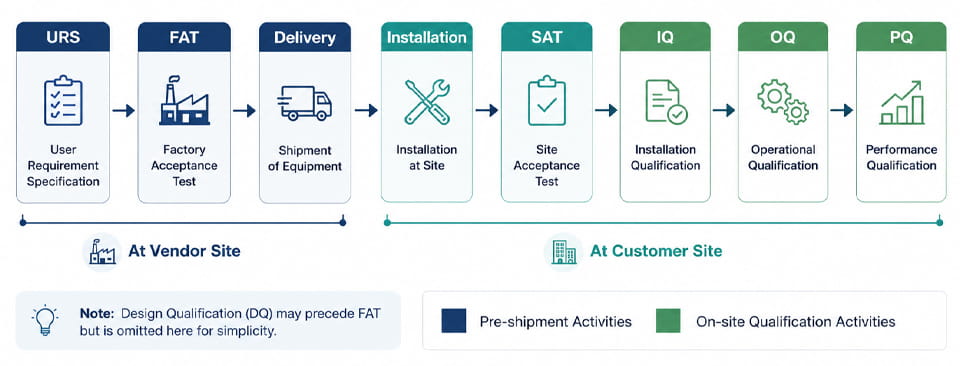
รูป: โฟลว์วงจรคุณสมบัติ. หลังจากกำหนด สสส, การทดสอบการยอมรับจากโรงงาน (อ้วน) ดำเนินการที่ไซต์ผู้ขาย. จากนั้นจึงจัดส่งและติดตั้งอุปกรณ์, ตามด้วยการทดสอบการยอมรับไซต์ (นั่ง). ในที่สุด, คุณสมบัติการติดตั้ง (ไอคิว), คุณสมบัติการปฏิบัติงาน (โอคิว), และคุณสมบัติการปฏิบัติงาน (PQ) จะดำเนินการบนเว็บไซต์ (บันทึก: DQ อาจนำหน้า FAT แต่ละไว้ที่นี่เพื่อความเรียบง่าย).
ขั้นตอนนี้ได้รับการสนับสนุนโดยคำแนะนำของ GMP. ตัวอย่างเช่น, ภายใต้ภาคผนวก EU GMP 15 และ ISPE C&การปฏิบัติเกี่ยวกับคำถาม, ผลลัพธ์ FAT ที่บันทึกไว้มักจะสามารถนำไปใช้ใน IQ/OQ ได้, ลดความซ้ำซ้อน. ในความเป็นจริง, แนวทางปฏิบัติของ ISO/ISPE โปรดทราบว่ากิจกรรมของ FAT “มีส่วนสนับสนุนโดยตรงต่อคุณสมบัติการออกแบบ (ดีคิว) และคุณสมบัติการติดตั้ง (ไอคิว) หลักฐาน,” ช่วยบีบอัดเวลาคุณสมบัติโดยรวม. ในทางปฏิบัติ, FAT ที่เข้มงวดพร้อมเอกสารประกอบที่เหมาะสมหมายความว่าทีม IQ ของคุณสามารถนำสิ่งที่ค้นพบเหล่านั้นกลับมาใช้ใหม่ได้ (E.G. การตรวจสอบการติดตั้งเสร็จสิ้นแล้ว) แทนที่จะทดสอบจุดเดิมซ้ำอีกครั้ง.
รายการตรวจสอบโปรโตคอล FAT (บรรจุภัณฑ์ยา)
โปรโตคอล FAT ที่ครอบคลุมสำหรับเครื่องจักรบรรจุภัณฑ์ยาโดยทั่วไปจะมีองค์ประกอบดังต่อไปนี้:
- โปรโตคอล FAT ที่ได้รับการอนุมัติล่วงหน้า: เอกสารที่เป็นลายลักษณ์อักษร (ขึ้นอยู่กับ URS) ซึ่งแสดงรายการกรณีทดสอบแต่ละกรณี, เกณฑ์การยอมรับ, และความรับผิดชอบ. สิ่งนี้ได้รับการอนุมัติจากทั้งผู้ซื้อและผู้ขายก่อนการทดสอบ.
- การตรวจสอบภาพ: ตรวจสอบว่าเครื่องตรงกับแบบที่ได้รับการอนุมัติขั้นสุดท้าย, โดยไม่มีชิ้นส่วนที่ขาดหายไปหรือความเสียหาย. ตรวจสอบหมายเลขซีเรียลและรุ่นของส่วนประกอบ.
- เครื่องกล & การตรวจสอบไฟฟ้า: ยืนยันส่วนประกอบโครงสร้างทั้งหมด (เฟรม, ยาม, สายพานลำเลียง) และอุปกรณ์ไฟฟ้า (มอเตอร์, สายเคเบิล, แผง) ได้รับการติดตั้งและติดฉลากอย่างถูกต้อง.
- การทดสอบสัญญาณเตือนและลูกโซ่: กระตุ้นแต่ละเงื่อนไขการแจ้งเตือนและตรวจสอบการตอบสนองที่เหมาะสม. เปิดใช้งานอินเตอร์ล็อคนิรภัยแต่ละอัน (E-หยุด, ยามประตู, ม่านแสง) เพื่อให้แน่ใจว่าเครื่องหยุดหรือแจ้งเตือนตามที่ออกแบบไว้.
- การควบคุม/การตรวจสอบซอฟต์แวร์: ยืนยันการตั้งค่า PLC/HMI, เวอร์ชันซอฟต์แวร์, การจัดการสูตร, และระดับการเข้าถึงของผู้ใช้ทำงานได้. ทดสอบอินเทอร์เฟซของผู้ปฏิบัติงานและตรรกะควบคุมตามข้อกำหนด.
- การตรวจสอบการสอบเทียบเครื่องมือ: ตรวจสอบว่าเซ็นเซอร์และเครื่องมือทั้งหมดมีใบรับรองการสอบเทียบที่ถูกต้องและอยู่ภายในข้อกำหนดก่อนใช้งาน.
- ประสิทธิภาพการทำงานพร้อมกับผลิตภัณฑ์: เดินเครื่องจักรด้วยความเร็วการทำงานที่ระบุทั้งหมดโดยใช้ผลิตภัณฑ์ตัวแทนหรือวัสดุที่แย่ที่สุด. วัดเอาต์พุตที่สำคัญ (เติมน้ำหนัก, ปริมาณงาน, คุณภาพการปิดผนึก, นับความแม่นยำ, ฯลฯ) เทียบกับเกณฑ์การยอมรับ.
- การสาธิตการเปลี่ยนแปลง: หากจำเป็นต้องใช้หลายรูปแบบ/SKU, สาธิต การเปลี่ยนแปลง ขั้นตอนและระยะเวลาตามสัญญา.
- การจำลองยูทิลิตี้: จำลองสภาพสาธารณูปโภคของไซต์ (E.G. ทำงานมอเตอร์ด้วยแรงดันไฟฟ้าต่ำ, ใช้แรงดันอากาศต่ำลง) เพื่อให้แน่ใจว่าเครื่องสามารถรองรับความแปรปรวนของยูทิลิตี้ที่คาดหวังได้.
- การทบทวนเอกสาร: มั่นใจในคู่มือทั้งหมด, แผนงาน, คู่มือการบำรุงรักษา, และรายการอะไหล่เสร็จสมบูรณ์และส่งมอบแล้ว.
- รายการเจาะและการลงชื่อออก: บันทึกปัญหาที่เปิดอยู่ไว้ใน Punch List. หลังจากทดสอบการแก้ไขอีกครั้ง, รวมหน้าลายเซ็น "การยอมรับ FAT" สุดท้ายในรายงาน FAT.
การปฏิบัติตามรายการตรวจสอบนี้จะช่วยตรวจจับความเบี่ยงเบนในโรงงานได้. ตัวอย่างเช่น, ผู้เชี่ยวชาญในอุตสาหกรรมเตือนถึงบันทึก FAT ที่คลุมเครือ – เป็นเพียงเชิงปริมาณเท่านั้น, ควรยอมรับข้อมูลการทดสอบเฉพาะอุปกรณ์. การยอมรับเพียงข้อความ "ผ่าน" ของซัพพลายเออร์หรือรายการตรวจสอบที่ไม่สมบูรณ์สามารถปกปิดปัญหาได้. บันทึกค่าที่วัดได้และติดตามไปยังหมายเลขประจำเครื่องเฉพาะเสมอ.
รายการตรวจสอบโปรโตคอล SAT (บรรจุภัณฑ์ยา)
โดยทั่วไปโปรโตคอล SAT สำหรับเครื่องบรรจุยาจะครอบคลุมถึง:
- การตรวจสอบก่อนการติดตั้ง: ตรวจสอบว่าไซต์พร้อมแล้ว (ห้องสะอาด, ระดับรากฐาน), มีสาธารณูปโภคครบครัน (พลัง, อากาศอัด, ว่างเปล่า, น้ำ), และแบบการติดตั้งตรงกับตัวเครื่อง.
- การตรวจสอบการติดตั้ง: ยืนยันว่าส่วนประกอบทางกลทั้งหมดได้รับการประกอบอย่างเหมาะสมที่ไซต์งาน (ไม่มีความเสียหายจากการขนส่ง). ตรวจสอบว่ายูทิลิตี้เชื่อมต่ออย่างถูกต้อง (แรงดันไฟฟ้า, ความดัน, ไหล) และสภาพแวดล้อมนั้น (อุณหภูมิ, ความชื้น, การจำแนกประเภท) ตอบสนองความต้องการของอุปกรณ์.
- การทดสอบฟังก์ชันขณะไม่มีโหลด: เรียกใช้ฟังก์ชันหลักให้ว่างเปล่าหรือใช้ผลิตภัณฑ์จำลองเพื่อให้แน่ใจว่าสายไฟและมอเตอร์ยังคงสภาพเดิมหลังการขนส่ง. ตรวจสอบการเชื่อมต่อด้านความปลอดภัยอีกครั้งภายใต้สภาพไซต์งาน (E.G. อากาศจากพืชมากกว่าอากาศในโรงงาน).
- การทดสอบการเชื่อมต่อยูทิลิตี้: วัดพารามิเตอร์อรรถประโยชน์จริงที่เครื่องจักร (E.G. ยืนยันความดันอากาศและการไหลจริงตามข้อกำหนด).
- การทดสอบบูรณาการ: ถ้ามี, ทดสอบการสื่อสารระหว่างเครื่องนี้กับอุปกรณ์ต้นน้ำ/ปลายน้ำ (E.G. ตรวจสอบว่าเครื่องนับส่งสัญญาณให้ผู้บรรจุกล่องทำดัชนีอย่างถูกต้อง).
- การทดสอบประสิทธิภาพการผลิต: เดินเครื่องด้วยสินค้าจริงหรือสินค้าจำลอง (ตาม URS). ตัวอย่างเช่น, ป้อนตุ่มเม็ดยาหรือแคปซูลจริงผ่านทางสายเพื่อยืนยันผลผลิตและคุณภาพตามที่ต้องการ. นี่คือการดำเนินการ PQ ของไซต์โดยพื้นฐานแล้ว.
- การฝึกอบรมผู้ประกอบการ & ส่งมอบ: ตรวจสอบให้แน่ใจว่าผู้ปฏิบัติงานสามารถเดินเครื่องได้. ทบทวนขั้นตอนการปฏิบัติงานและให้ผู้ปฏิบัติงานปฏิบัติงานพื้นฐานภายใต้การสังเกต.
- การแก้ไขปัญหา: บันทึกการเบี่ยงเบนหรือการค้นพบ SAT ใด ๆ ลงในบันทึกและตรวจสอบการดำเนินการแก้ไข. หลังจากปิดจุดวิกฤติทั้งหมดแล้วเท่านั้น เครื่องจึงจะได้รับการยอมรับอย่างเป็นทางการ.
- การลงนามครั้งสุดท้าย: กรอกรายงาน SAT หรือใบรับรอง, ลงชื่อ, และรวมข้อมูลการรันขั้นสุดท้าย. นี่เป็นหลักฐานการปฏิบัติตาม.
ในระยะสั้น, โปรโตคอล SAT จะยืนยันการทำงานที่สำคัญทั้งหมดอีกครั้งภายใต้สภาวะจริง. เป็นจุดตรวจสุดท้ายก่อนเริ่มเดินเครื่อง. ตัวอย่างเช่น, Jinlupacking ตั้งข้อสังเกตว่า SAT อย่างละเอียดมักจะสร้างข้อมูลพื้นฐานที่สามารถตรงไปยังโปรโตคอล IQ/OQ, หลีกเลี่ยงการทดสอบระบบสาธารณูปโภคและสภาพแวดล้อมซ้ำ.
FAT และ SAT สำหรับเครื่องบรรจุภัณฑ์ยา
สายการบรรจุยา (พุพอง, แคปซูล, แท็บเล็ต, เครื่องเขียนกล่อง) มีการเน้น FAT/SAT เป็นของตัวเอง. ต่อไปนี้เป็นจุดทั่วไปบางประการ:
- เครื่องบรรจุตุ่ม: FAT ควรตรวจสอบสถานีขึ้นรูปและปิดผนึก. ตัวอย่างเช่น, ตรวจวัดความสม่ำเสมอของอุณหภูมิบนแผ่นเทอร์โมฟอร์มมิ่ง (±2°C ทั่วทั้งแม่พิมพ์) และการปิดผนึกแม่พิมพ์ (±3°ซ) ภายใต้ความเร็วที่เลวร้ายที่สุด. ทดสอบความสมบูรณ์ของซีล (การทดสอบการลอกตาม ASTM F88). ตรวจสอบความแม่นยำในการป้อนตุ่ม, การจัดทำดัชนี, การจัดตำแหน่งฟิล์ม, และระบบคัดแยกจะขจัดตุ่มน้ำที่มีรูปร่างผิดปกติออก. นั่ง จากนั้นจะทำการทดสอบเหล่านี้ซ้ำด้วยฟอยล์และเม็ดพลาสติกจริงที่ไซต์งาน และยืนยันว่าเครื่องยังคงมีคุณสมบัติตรงตามความแข็งแรงของซีลและข้อกำหนดปริมาณงานภายใต้ความชื้น/อุณหภูมิในท้องถิ่น.
- เครื่องบรรจุแคปซูล: จุดตรวจ FAT ได้แก่ การวางแนวแคปซูลและการป้อนอาหาร (ตรวจสอบปริมาณแคปและตัวถังอย่างเหมาะสม), ความแม่นยำในการเติมผง (วัดน้ำหนักเติมในช่วงต่ำ/สูง), ระบบตรวจจับ (ตรวจสอบการจัดตำแหน่งเซ็นเซอร์ว่าว่างเปล่า, สองเท่า, หรือการวางแนวที่ผิด), และล็อคความสมบูรณ์ (ตรวจสอบให้แน่ใจว่าปิดแคปซูลอย่างแน่นหนา). ตรวจสอบการจัดตำแหน่งป้อมปืนและความแม่นยำของเซอร์โวโดยไม่มีผลิตภัณฑ์. นั่ง จากนั้นจะทดสอบความแม่นยำในการเติมด้วยแคปซูลและส่วนผสมผงของลูกค้า, และยืนยันว่ากลไกการคัดแยกที่ปลายบรรทัดทำงานได้เมื่อมีการคัดแยกจริงเกิดขึ้น.
- เครื่องกดแท็บเล็ต: ในช่วงไขมัน, การทดสอบรวมถึงการสอบเทียบเครื่องมือ (น้ำหนักแท็บเล็ต, ความหนา, ความแข็งทั่วตำแหน่งป้อมปืน), การทำงานของเฟรมฟีดและถังพัก, และความสม่ำเสมอของแรงกด. ดำเนินการกดภายใต้ภาระที่แรงอัดต่ำสุดและสูงสุดเพื่อตรวจสอบความเร็วของ RAM. นั่ง ตรวจสอบข้อมูลจำเพาะของแท็บเล็ตอีกครั้งโดยใช้แกรนูเลชั่นตามขนาดแบทช์ที่ต้องการ, ยืนยันว่าระดับการหล่อลื่นและเสียงเป็นที่ยอมรับได้, และตรวจสอบประตูนิรภัยและรีเลย์โอเวอร์โหลด ณ สถานที่ปฏิบัติงาน.
- เครื่องนับและบรรจุกล่อง: สำหรับเครื่องนับ, FAT เน้นความถูกต้องและรวดเร็วด้วยผลิตภัณฑ์จำลอง, การตรวจสอบเซ็นเซอร์และรางปฏิเสธ. สำหรับกล่องกระดาษ, FAT ตรวจสอบการขึ้นรูปกล่อง, ระยะเวลาในการป้อน, ความเร็วเอาต์พุต, และคุณภาพการซีล. นั่ง จะทดสอบการทำงานต่อเนื่อง: ป้อนบรรจุภัณฑ์พลาสติกหรือขวดจริงลงในกล่องบรรจุและตรวจสอบให้แน่ใจว่ากล่องส่งออกถูกต้อง. นอกจากนี้ยังตรวจสอบว่าเครื่องนับและเครื่องบรรจุกล่องประสานกันอย่างถูกต้องหรือไม่ (E.G. ไม่มีขวดที่พลาด).
ในทุกกรณี, ทั้ง FAT และ SAT ตรวจสอบว่าเครื่องจักรทำงานด้วยความเร็วที่กำหนดและให้จำนวน/น้ำหนัก/คุณภาพที่ถูกต้อง กับสินค้าจริง. ข้ามการทดสอบ (ตัวอย่างเช่น, ไม่ได้ใช้ผลิตภัณฑ์จริงที่ FAT) อาจนำไปสู่ความล้มเหลวใน SAT. ดังที่ผู้เชี่ยวชาญคนหนึ่งเตือน, “การรัน FAT ด้วยวัสดุทั่วไปของ OEM นั้นไม่เหมือนกับการรันกับวัสดุของคุณ” – หากคุณไม่ได้ทดสอบวัสดุจริงใน FAT, ปัญหาเกี่ยวกับไซต์มักเกิดขึ้นในภายหลัง.
เหตุใดเครื่องจึงสามารถผ่าน FAT แต่ FAT SAT?
แม้ว่าเครื่องจะผ่านทุกรายการในรายการตรวจสอบ FAT ก็ตาม, มันยังคงสามารถล้มเหลว SAT ได้หากเงื่อนไขเปลี่ยนแปลง. สาเหตุทั่วไปได้แก่:
- ความแตกต่างด้านอรรถประโยชน์: แรงดันไฟฟ้า, ความกดอากาศ, หรือคุณภาพการจัดหาที่โรงงานอาจอยู่นอกช่วงที่ใช้ใน FAT. มอเตอร์สายพานลำเลียงอาจเคลื่อนที่ที่ SAT หากแรงดันไฟฟ้าของสายต่ำเล็กน้อย, ตัวอย่างเช่น.
- การเปลี่ยนแปลงสิ่งแวดล้อม: ความแตกต่างของอุณหภูมิหรือความชื้นอาจส่งผลต่อกระบวนการ. กรณีหนึ่งมีเครื่องตุ่มผ่าน FAT ที่ความชื้นปานกลาง (45% RH) แต่ล้มเหลวในการประทับตราความสมบูรณ์ที่ไซต์งาน 80% RH.
- รูปแบบผลิตภัณฑ์: หากซัพพลายเออร์ไม่ได้ใช้ผลิตภัณฑ์หรือวัสดุบรรจุภัณฑ์ที่แน่นอนในการดำเนินการ FAT, เครื่องอาจมีพฤติกรรมแตกต่างไปจากสินค้าจริง. (เราแนะนำให้ผลักดัน OEM เพื่อดำเนินการวัสดุของคุณที่ FAT)
- ปัญหาการติดตั้ง: ข้อผิดพลาดในการตั้งค่า, การจัดตำแหน่ง, หรือการยึดระหว่างการขนส่งอาจทำให้เกิดข้อบกพร่องใหม่ที่ SAT ต้องจับได้. ตัวอย่างเช่น, อาจไม่สังเกตเห็นตัวเข้ารหัสที่หลวมหรือรางนำทางที่ถูกกระแทกจนกว่าจะมีการทดสอบไซต์.
- ปัญหาบูรณาการ: เครื่องจักรอาจไม่สื่อสารอย่างถูกต้องกับอุปกรณ์สายอื่นๆ หรือระบบควบคุมของโรงงาน เว้นแต่จะมีการทดสอบอินเทอร์เฟซเหล่านั้นที่ SAT.
- รายการหมัดที่ไม่เปิดเผย: หากผู้ขายทำการปล่อยบางส่วน (E.G. “เราจะแก้ไขปัญหานี้หลังคลอด”), ปัญหา FAT ที่ยังไม่ได้รับการแก้ไขอาจปรากฏเฉพาะที่ SAT เท่านั้น.
ในระยะสั้น, FAT ทดสอบเครื่องแบบแยกส่วน; SAT ทดสอบในบริบท. ความแตกต่างในสภาพไซต์หรือการตั้งค่าคือโหมดความล้มเหลวที่อาจเกิดขึ้น. SAT ที่ดำเนินการอย่างดี, อย่างไรก็ตาม, เป็นการตรวจสอบขั้นสุดท้ายเพื่อค้นหาปัญหาดังกล่าวก่อนการผลิตเต็มรูปแบบ.
สิ่งที่ผู้ซื้อควรถามซัพพลายเออร์เกี่ยวกับ FAT และ SAT?
เมื่อเลือกผู้จำหน่ายเครื่องจักร, ผู้ซื้อในอุตสาหกรรมมักใช้ความพร้อมของ FAT/SAT เป็นตัวระบุหลัก. ตัวอย่างเช่น, คู่มือการตรวจสอบซัพพลายเออร์ของ Jinlu แนะนำให้ถาม:
- ความพร้อมของเอกสาร: “คุณสามารถจัดหาเอกสารประกอบอุปกรณ์ทั้งหมดได้หรือไม่, รวมถึงคู่มือ, ภาพวาด, รายงาน FAT/SAT, และเทมเพลต IQ/OQ?-. (ผู้จำหน่ายที่ปฏิบัติตามข้อกำหนดจะจัดเตรียมสิ่งเหล่านี้ในเชิงรุก)
- การสนับสนุนการตรวจสอบ: “คุณจะช่วยด้วย การติดตั้งและคุณสมบัติ? คุณให้การสนับสนุนนอกสถานที่หรือการฝึกอบรมในช่วง FAT/SAT?-. (ตรวจสอบให้แน่ใจว่าพวกเขาส่งวิศวกรไปที่ FAT และ SAT)
- การมีส่วนร่วมในกระบวนการ: “ใครจะเป็นผู้นำ FAT และ SAT? ทีมประกันคุณภาพ/ตรวจสอบของฉันสามารถเข้าร่วมหรือเป็นสักขีพยานในการทดสอบได้หรือไม่?-
- การใช้ตัวอย่าง: “คุณจะดำเนินการผลิตภัณฑ์และวัสดุบรรจุภัณฑ์จริงของฉันในรูปแบบ FAT หรือไม่?- (ตามที่ระบุไว้, การใช้วัสดุจริงเป็นสิ่งสำคัญ)
- การจัดการความเบี่ยงเบน: “หากมีอะไรล้มเหลวที่ FAT, จะแก้ไขอย่างไร? คุณจะทดสอบซ้ำในสถานที่ก่อนจัดส่งหรือไม่?-
- การควบคุมการเปลี่ยนแปลง: “คุณจัดการการเปลี่ยนแปลงหลังการสั่งซื้ออย่างไร? สามารถอัปเดต URS เล็กน้อยในโปรโตคอลได้หรือไม่?-.
- ประสบการณ์ & อ้างอิง: “คุณได้ส่งมอบแบบจำลองนี้ให้กับลูกค้ายารายอื่นแล้วหรือยัง? เราเห็นได้ไหม กรณีศึกษา หรือติดต่ออ้างอิง?-.
- อะไหล่และบริการ: “นโยบายการสนับสนุนอะไหล่ของคุณคืออะไร? คุณมีการรับประกันเพิ่มเติมหรือบริการในท้องถิ่นหรือไม่?-.
คำถามเหล่านี้ช่วยวัดความสมบูรณ์ในการตรวจสอบความถูกต้องของซัพพลายเออร์. ผู้จำหน่ายที่มีประสบการณ์ควรตอบทันทีว่าพวกเขาส่งมอบเครื่องจักรที่ “พร้อมสำหรับการตรวจสอบ” พร้อมด้วยแพ็คเกจ FAT/SAT/IQ/OQ ที่สมบูรณ์.
รายการตรวจสอบการยอมรับ FAT/SAT
เพื่อให้กระบวนการยอมรับเป็นไปอย่างราบรื่น, ผู้ซื้อสามารถใช้รายการตรวจสอบ FAT/SAT ฉบับย่อนี้ได้:
- เห็นด้วยกับขอบเขตล่วงหน้า: รวมแผน FAT และ SAT ในใบสั่งซื้อหรือ URS, กำหนดอย่างชัดเจนว่าการทดสอบใดที่จะดำเนินการและเกณฑ์ใดที่ต้องปฏิบัติตาม.
- การทดสอบพยาน: เข้าร่วม FAT (เป็นการส่วนตัว) เพื่อตรวจสอบการทดสอบแต่ละครั้ง. หากเป็นพยานทางไกล, ตรวจสอบให้แน่ใจว่าวิดีโอการอ่านข้อมูลสด.
- ใช้ภาพวาด/ข้อมูลจำเพาะขั้นสุดท้าย: ยืนยันว่าเครื่องได้รับการทดสอบกับ URS และภาพวาดล่าสุด (ไม่ใช่การแก้ไขที่เก่ากว่า).
- นำหลักฐานการสอบเทียบมาด้วย: ตรวจสอบให้แน่ใจว่าเครื่องมือที่ใช้ใน FAT/SAT ได้รับการสอบเทียบแล้ว และใบรับรองอยู่ในชุดเอกสารประกอบ.
- รวบรวมข้อมูลดิบ: กำหนดให้ทุกค่าที่วัดได้ (น้ำหนัก, กองกำลัง, แรงดันไฟฟ้า, ฯลฯ) ถูกบันทึกไว้, ไม่ใช่แค่เครื่องหมาย "ผ่าน/ไม่ผ่าน".
- ปิดการเบี่ยงเบนทันที: ความคลาดเคลื่อนใดๆ ที่พบควรได้รับการแก้ไขตามที่ตกลงกันไว้และทดสอบใหม่ก่อนที่จะยอมรับ. อย่ายอมรับว่า “เราจะแก้ไขปัญหานี้ในภายหลัง” โดยไม่มีหลักฐาน.
- การตรวจสอบย้อนกลับ: รักษาเมทริกซ์การตรวจสอบย้อนกลับที่เชื่อมโยงแต่ละจุด URS กับกรณีทดสอบและผลลัพธ์ของ FAT/SAT.
- การลงนามครั้งสุดท้าย: อย่าปล่อยเครื่องจนกว่ารายการหมัด FAT ทั้งหมดจะได้รับการแก้ไขและลงนามในรายงาน FAT แล้ว. ทำซ้ำสำหรับ SAT.
- การตรวจสอบก่อนการจัดส่งหลัง FAT: ไม่จำเป็น, ดำเนินการตรวจสอบก่อนการจัดส่งเพื่อยืนยันว่าไม่มีอะไรเปลี่ยนแปลงหลังจาก FAT (เราขอแนะนำให้ตรวจสอบครั้งสุดท้ายนี้หลังจากบรรจุเครื่องแล้ว).
- คลังเอกสาร: เก็บสำเนาโปรโตคอลและรายงาน FAT และ SAT ทั้งหมดไว้ในไฟล์การตรวจสอบของคุณ. สิ่งเหล่านี้กลายเป็นส่วนหนึ่งของบันทึกคุณสมบัติอุปกรณ์.
การทำตามรายการตรวจสอบดังกล่าวจะหลีกเลี่ยงเรื่องไม่คาดคิดได้. เช่น, การดูรูปถ่ายการบรรจุหีบห่อของซัพพลายเออร์หรือบันทึกการควบคุมคุณภาพทั่วไปหลังจากเกิดข้อเท็จจริงแล้ว ไม่ หลักฐานการปฏิบัติตาม. หลักฐานที่ชัดเจนที่สุดคือชุดบันทึก FAT/SAT ที่เชื่อมโยงกับเครื่องนั้นๆ.
บทสรุป
FAT และ SAT เป็นการตรวจสอบที่จำเป็นเพื่อให้แน่ใจว่าเครื่องบรรจุภัณฑ์ยาของคุณทำงานได้อย่างน่าเชื่อถือและปฏิบัติตาม GMP. โดยการทดสอบอุปกรณ์อย่างละเอียดที่ไซต์ผู้ขาย (อ้วน) และอีกครั้งหลังการติดตั้ง (นั่ง), คุณลดความประหลาดใจที่มีค่าใช้จ่ายสูงและตรวจสอบว่าบรรลุคะแนน URS ทั้งหมดแล้ว.
พร้อมที่จะปรับปรุงการทดสอบการยอมรับของคุณ? Jinlu Packing ส่งมอบ อุปกรณ์เกรดยา (เครื่องบรรจุตุ่ม, ฟิลเลอร์แคปซูล, แท็บเล็ตกด, เส้นการนับและการบรรจุหีบห่อ, ฯลฯ) พร้อมรองรับ FAT/SAT เต็มรูปแบบ. เครื่องจักรทุกเครื่องจัดส่งมาพร้อมกับโปรโตคอล FAT/SAT และชุด IQ/OQ/PQ ที่สมบูรณ์เพื่อให้การรับรองของคุณรวดเร็วและราบรื่นยิ่งขึ้น. ติดต่อ Jinlu วันนี้เพื่อหารือเกี่ยวกับ URS ของคุณและตั้งค่าแผน FAT/SAT สำหรับอุปกรณ์ใหม่ของคุณ, หรือเยี่ยมชมหน้าผลิตภัณฑ์ของเราสำหรับ เครื่องบรรจุแคปซูล, เครื่องบรรจุตุ่ม, เครื่องอัดแท็บเล็ต, เครื่องนับ, เครื่องบรรจุกล่อง และอีกมากมาย. ทีมงานของเราจะช่วยคุณวางแผนขั้นตอน FAT/SAT และจัดเตรียมเอกสารการตรวจสอบแบบเบ็ดเสร็จเพื่อให้โครงการของคุณตรงเวลาและเป็นไปตามข้อกำหนด.
สนใจติดต่อ กับผู้เชี่ยวชาญของ Jinlu สำหรับคำแนะนำ FAT/SAT และให้แน่ใจว่าสายการผลิตบรรจุภัณฑ์ใหม่ของคุณพร้อมสำหรับการตรวจสอบความถูกต้องตั้งแต่วันแรก.
คำถามที่พบบ่อยเกี่ยวกับ FAT กับ SAT ในร้านขายยา
ความแตกต่างระหว่าง FAT และ SAT คืออะไร?
อ้วน (การทดสอบการยอมรับจากโรงงาน) ดำเนินการที่โรงงานของผู้ผลิตอุปกรณ์ก่อนจัดส่งเพื่อตรวจสอบว่าเครื่องจักรมีคุณสมบัติตรงตามข้อกำหนดและข้อกำหนดด้านการทำงานที่ตกลงไว้. นั่ง (การทดสอบการยอมรับไซต์) ดำเนินการที่สถานที่ของลูกค้าหลังการติดตั้งเพื่อยืนยันว่าอุปกรณ์ทำงานอย่างถูกต้องกับยูทิลิตี้ไซต์จริง, สิ่งแวดล้อม, และระบบเชื่อมต่อ.
ทำไม FAT จึงมีความสำคัญก่อนจัดส่งอุปกรณ์ทางเภสัชกรรม?
FAT ช่วยให้ผู้ซื้อและซัพพลายเออร์สามารถระบุการออกแบบได้, การผลิต, ควบคุม, หรือปัญหาด้านประสิทธิภาพก่อนที่เครื่องจะออกจากโรงงานของผู้ผลิต. ปัญหาที่พบในขั้นตอนนี้โดยทั่วไปจะตรวจสอบและแก้ไขได้ง่ายกว่าเนื่องจากอุปกรณ์, ทีมวิศวกร, เครื่องมือ, และสภาพแวดล้อมการทดสอบพร้อมใช้งาน. FAT ที่วางแผนไว้อย่างดีจึงสามารถลดความล่าช้าในการทดสอบเดินเครื่องและหลีกเลี่ยงการทำงานซ้ำที่ไม่จำเป็นที่ไซต์งานของลูกค้าได้.
จำเป็นต้องมี FAT ก่อน SAT?
โดยทั่วไปแล้ว FAT จะดำเนินการก่อน SAT, แต่จะบังคับหรือไม่นั้นก็ขึ้นอยู่กับโครงการ, สัญญา, อุปกรณ์, และข้อกำหนดด้านคุณภาพ. FAT ตรวจสอบอุปกรณ์ก่อนจัดส่ง, ขณะที่ SAT ตรวจสอบอุปกรณ์หลังการติดตั้งที่หน้างานของลูกค้า. สำหรับเครื่องจักรด้านเภสัชกรรม, การทดสอบทั้งสองสามารถเสริมซึ่งกันและกันแทนที่จะแทนที่กัน.
อุปกรณ์สามารถผ่าน FAT แต่ไม่ผ่าน SAT?
ใช่. การผ่าน FAT ไม่ได้รับประกันว่าอุปกรณ์จะผ่าน SAT. โดยปกติ FAT จะดำเนินการภายใต้เงื่อนไขของโรงงานที่ได้รับการควบคุม, ขณะที่ SAT ประเมินเครื่องหลังการขนส่ง, การติดตั้ง, การเชื่อมต่อกับสาธารณูปโภคที่แท้จริง, และบูรณาการกับอุปกรณ์อื่น ๆ. ความแตกต่างของแหล่งจ่ายไฟ, อากาศอัด, สภาพแวดล้อม, การให้อาหารผลิตภัณฑ์, หรือการรวมสายสามารถสร้างปัญหาที่ไม่สามารถมองเห็นได้ในช่วง FAT.
รายการตรวจสอบ FAT ควรประกอบด้วยอะไรบ้าง?
รายการตรวจสอบ FAT ของอุปกรณ์ทางเภสัชกรรมควรเป็นไปตามข้อกำหนดที่ตกลงไว้ และอาจรวมถึงการระบุอุปกรณ์ด้วย, การตรวจสอบทางกล, ระบบไฟฟ้า, ฟังก์ชั่น PLC/HMI, สัญญาณเตือน, ลูกโซ่ความปลอดภัย, การทำงานของเครื่องจักร, การทดสอบประสิทธิภาพ, เอกสารประกอบ, และตกลงเกณฑ์การยอมรับ. สำหรับเครื่องจักรบรรจุภัณฑ์, รายการตรวจสอบอาจครอบคลุมถึงความเร็วในการผลิตด้วย, ความแม่นยำในการป้อนอาหาร, การปิดผนึก, การเข้ารหัส, การปฏิเสธ, และฟังก์ชันเฉพาะอื่นๆ ของเครื่อง.
Checklist SAT ควรประกอบด้วยอะไรบ้าง?
รายการตรวจสอบ SAT ควรเน้นที่อุปกรณ์หลังการติดตั้งที่ไซต์ของลูกค้า. ขึ้นอยู่กับเครื่อง, อาจรวมถึงสถานะการติดตั้งด้วย, การเชื่อมต่อไฟฟ้า, อากาศอัดและสาธารณูปโภคอื่น ๆ, การทำงานของเครื่องจักร, อุปกรณ์ความปลอดภัย, สัญญาณเตือน, การสื่อสารกับอุปกรณ์ต้นน้ำและปลายน้ำ, ประสิทธิภาพการผลิต, และฟังก์ชันตัวดำเนินการ. SAT ควรใช้เกณฑ์การยอมรับที่ตกลงกันก่อนการทดสอบ แทนที่จะอาศัยการสาธิตเครื่องจักรอย่างไม่เป็นทางการเท่านั้น.
ใครควรเข้าเรียน FAT และ SAT?
FAT มักจะเกี่ยวข้องกับวิศวกรของซัพพลายเออร์และตัวแทนของผู้ซื้อ (การประกันคุณภาพ/การตรวจสอบความถูกต้อง, วิศวกรรม, การดำเนินงาน). SAT ควรรวมผู้ขายการติดตั้งหรือทีมบริการด้วย, การประกันคุณภาพ/การตรวจสอบความถูกต้อง, และพนักงานปฏิบัติการของลูกค้า. บางครั้งอาจมีที่ปรึกษาหรือผู้ตรวจสอบจากบุคคลที่สามรวมอยู่ด้วย.
ต้องใช้เอกสารอะไรบ้างสำหรับ FAT และ SAT?
แต่ละรายการต้องมีเกณฑ์วิธีที่ได้รับอนุมัติล่วงหน้าซึ่งสรุปการทดสอบทั้งหมด, เกณฑ์การยอมรับ, และความรับผิดชอบ. ในระหว่างการทดสอบ, กรอกโปรโตคอลด้วยข้อมูลและการสังเกตแบบเรียลไทม์. สิ่งที่ส่งมอบรวมถึงโปรโตคอลที่ดำเนินการ, รายการเจาะของการเบี่ยงเบนใด ๆ, และรายงานหรือใบรับรองขั้นสุดท้ายที่ลงนาม. สำหรับวันเสาร์, ยังจัดเตรียมเมทริกซ์การตรวจสอบย้อนกลับที่เชื่อมโยงการทดสอบกลับไปยังข้อกำหนด URS.
อะไรคือความแตกต่างระหว่าง FAT, นั่ง, ไอคิว, และโอคิว?
FAT และ SAT เป็นการทดสอบการยอมรับ, ในขณะที่ IQ และ OQ โดยทั่วไปเป็นส่วนหนึ่งของกลยุทธ์การตรวจสอบคุณสมบัติอุปกรณ์. FAT ตรวจสอบอุปกรณ์ที่โรงงานของผู้ผลิตก่อนจัดส่ง; SAT ตรวจสอบหลังติดตั้งที่หน้างานลูกค้า. ไอคิว (คุณสมบัติการติดตั้ง) มุ่งเน้นไปที่ว่าอุปกรณ์ได้รับการติดตั้งตามข้อกำหนดที่ได้รับอนุมัติหรือไม่, ในขณะที่ OQ (คุณสมบัติการปฏิบัติงาน) ตรวจสอบว่าทำงานตามที่ตั้งใจไว้ในช่วงการทำงานที่ระบุ. ลำดับและเอกสารประกอบที่แน่นอนขึ้นอยู่กับกลยุทธ์การตรวจสอบความถูกต้องของบริษัทและข้อกำหนดของโครงการ.
FAT เป็นส่วนหนึ่งของการตรวจสอบ GMP หรือไม่?
FAT สามารถสนับสนุนคุณสมบัติและกลยุทธ์การตรวจสอบอุปกรณ์ทางเภสัชกรรมได้, แต่ FAT เองไม่ควรได้รับการปฏิบัติเทียบเท่ากับคุณสมบัติ GMP โดยอัตโนมัติ. บทบาทของมันขึ้นอยู่กับอุปกรณ์, ข้อกำหนดของโครงการ, การประเมินความเสี่ยง, และระบบคุณภาพที่บังคับใช้. ในบางโครงการ, การทดสอบ FAT ที่เหมาะสมสามารถจัดเตรียมหลักฐานที่เป็นเอกสารซึ่งจะถูกนำไปใช้ในระหว่างกิจกรรมการรับรองคุณสมบัติในภายหลัง, อาจลดความซ้ำซ้อนที่ไม่จำเป็นเมื่อถูกต้อง.
อ้างอิง:
1.ระบบอัตโนมัติในอุตสาหกรรมกระบวนการ – การทดสอบการยอมรับจากโรงงาน (อ้วน), การทดสอบการยอมรับไซต์ (นั่ง), และการทดสอบการรวมไซต์ (นั่ง) —— ANSI/ISA-62381-2026 / ไออีซี 62381:2024
2.วิศวกรรม SOP -FAT : การทดสอบการยอมรับจากโรงงาน & นั่ง : การทดสอบการยอมรับไซต์ —— pharmastate.academy
3.การทดสอบ FAT และ SAT ในอุปกรณ์ยา —— เขียนแล้ว
4.การศึกษาคุณสมบัติในขั้นตอนการรับ SAT ของเครื่องซักผ้าบรรจุภัณฑ์ยา —— รีเสิร์ชเกท
5.รายการตรวจสอบการทดสอบการยอมรับของโรงงานและไซต์ —— เขียนแล้ว


หนึ่งคำตอบ
สิ่งที่น่าสนใจคือความแตกต่างระหว่าง FAT และ SAT สามารถส่งผลกระทบต่อการดำเนินงานด้านเภสัชกรรมได้อย่างไร. ระหว่างการตรวจสอบลูกค้าของเรา, เรามักพบปัญหาความชื้นที่อาจส่งผลต่อประสิทธิภาพของอุปกรณ์. เมื่อเราใช้การถ่ายภาพความร้อน, เราพบรอยรั่วที่ซ่อนอยู่ซึ่งอาจนำไปสู่การหยุดทำงานที่มีค่าใช้จ่ายสูง. เราแนะนำให้เจ้าของทรัพย์สินพิจารณาการประเมินอย่างละเอียดก่อนที่จะสรุปการยอมรับอุปกรณ์. คุณสังเกตเห็นแนวโน้มที่บริษัทต่างๆ จัดการกับความท้าทายเหล่านี้ในระหว่างขั้นตอนการทดสอบการยอมรับหรือไม่?