

แนวปฏิบัติที่ดีในการผลิต (GMP) แนวทางกำหนดกฎเกณฑ์ที่เข้มงวดสำหรับ อุปกรณ์บรรจุภัณฑ์ยา เพื่อให้มั่นใจในคุณภาพของผลิตภัณฑ์และความปลอดภัยของผู้ป่วย. ข้อกำหนดหลัก ได้แก่ การออกแบบเครื่องจักรที่ถูกสุขลักษณะ, วัสดุที่ไม่ทำปฏิกิริยา, คุณสมบัติอุปกรณ์ครบครัน (IR/WH/PQ), การทำความสะอาดที่ผ่านการตรวจสอบแล้ว, ระบบอัตโนมัติเพื่อลดข้อผิดพลาด, ความสมบูรณ์ของข้อมูล (21 CFR ตอนที่ 11) และการติดตามผลิตภัณฑ์ (การทำให้เป็นอนุกรม). คู่มือนี้ครอบคลุมถึง FDA, มาตรฐาน EMA/EU และ WHO, นำเสนอรายการตรวจสอบ GMP และอธิบายวิธีการเลือกและบำรุงรักษา เครื่องบรรจุภัณฑ์ที่ได้มาตรฐาน GMP.
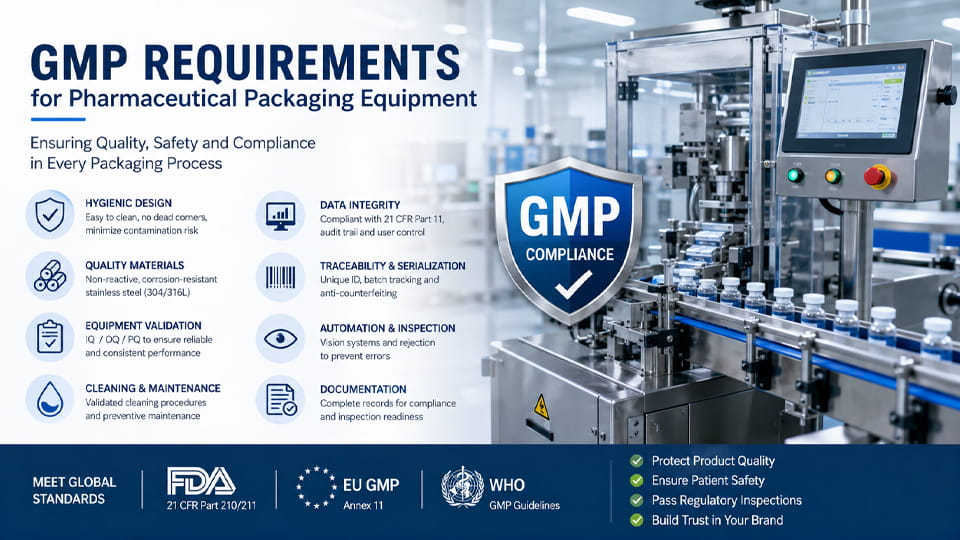
GMP (แนวปฏิบัติที่ดีในการผลิต) เป็นกรอบการทำงานด้านคุณภาพที่ทำให้มั่นใจได้ว่าเภสัชภัณฑ์ได้รับการผลิตและควบคุมอย่างสม่ำเสมอ. ในบรรจุภัณฑ์, GMP หมายถึงการออกแบบและกระบวนการที่ป้องกันการปะปนหรือการปนเปื้อน. หน่วยงานกำกับดูแลเช่นอย (21 CFR210/211), EMA (EU GMP ส่วนที่ 1, ภาคผนวก) และใคร (แนวทางคุณภาพยา) ทั้งหมดต้องใช้อุปกรณ์ที่ใช้ในบรรจุภัณฑ์เพื่อให้เป็นไปตามหลักการ GMP. เป้าหมายคือการปกป้องผลิตภัณฑ์ ตัวตน, ความแข็งแกร่ง, คุณภาพและความบริสุทธิ์ (ไม่มีปฏิกิริยาเคมีหรือการปนเปื้อนที่ไม่พึงประสงค์). หน่วยงานกำกับดูแลระดับโลกยังเน้นย้ำว่ากระบวนการและอุปกรณ์บรรจุภัณฑ์จะต้องเป็นไปตามนั้น ตรวจสอบ/ผ่านการรับรองแล้ว เช่นเดียวกับขั้นตอนการผลิตยา, และมีเพียงพนักงานที่ได้รับการฝึกอบรมเท่านั้นที่ปฏิบัติงานภายใต้ขั้นตอนที่เป็นลายลักษณ์อักษร.
เครื่องบรรจุภัณฑ์ต้องมี สุขาภิบาล, การออกแบบที่ทำความสะอาดได้. นี่หมายความว่า สแตนเลส (E.G. 304 หรือเกรดอาหาร 316L) การก่อสร้าง, พื้นผิวเรียบ, ระนาบลาดเอียงเพื่อหลีกเลี่ยงกับดักฝุ่น, และไม่มีขาตายหรือฟันผุที่ซ่อนอยู่. บันทึกแนวทางปฏิบัติของ FDA “ควรสร้างและจัดวางเพื่อความสะดวกในการทำความสะอาด” และ “ป้องกันการปนเปื้อนจาก...การปฏิบัติงานอื่นๆ”. EU GMP กำหนดให้อุปกรณ์การผลิต "ทำความสะอาดได้ง่ายและทั่วถึง" ในทำนองเดียวกัน โดยมีขั้นตอนการเขียนโดยละเอียด. ในทางปฏิบัติ, เครื่อง GMP สมัยใหม่มักใช้คานยื่นออกมา ("ระเบียง") การออกแบบที่แยกมอเตอร์และระบบหล่อลื่นออกจากพื้นที่ผลิตภัณฑ์. ต้องเข้าถึงทุกโซนเพื่อตรวจสอบได้, เช็ด, และการเช็ด. ตัวอย่างเช่น, Jinlupacking ตั้งข้อสังเกตว่าเครื่องบรรจุภัณฑ์พลาสติกที่เป็นไปตามข้อกำหนดนั้นใช้พื้นผิวลาดเอียงและเหล็ก SUS316L บนชิ้นส่วนที่สัมผัสกับผลิตภัณฑ์ทั้งหมดเพื่อหลีกเลี่ยงการดักจับอนุภาค.
ชิ้นส่วนที่สัมผัสกับผลิตภัณฑ์ทั้งหมดจะต้องเป็น ไม่เกิดปฏิกิริยา และไม่ดูดซึม, จึงไม่ชะล้างหรือผูกมัดส่วนผสมออกฤทธิ์. CGMP ของ FDA กำหนดให้ “อุปกรณ์ใดๆ ที่สัมผัสกับ...ผลิตภัณฑ์ยาจะมีปฏิกิริยา, สารเติมแต่ง, หรือดูดซึมไปทำให้...คุณภาพของยาเปลี่ยนแปลงไป”. เช่นเดียวกัน, EU GMP กล่าวว่าส่วนสัมผัส "ต้องไม่เกิดปฏิกิริยา, สารเติมแต่งหรือสารดูดซับ…ที่จะส่งผลต่อคุณภาพของผลิตภัณฑ์”. ในทางปฏิบัติ, ซึ่งหมายถึงการใช้สแตนเลสเกรดสะอาด (SUS316L) หรือพลาสติกเกรดยา, และน้ำมันหล่อลื่นเกรดอาหาร. อุปกรณ์ทั้งหมด, ซีลและท่อต้องเข้ากันได้กับยาและสารทำความสะอาดที่ใช้. เช่น, แนะนำให้ใช้ปะเก็นเกรดโรงพยาบาลและท่อ PTFE เพื่อหลีกเลี่ยงการกัดกร่อนหรือสารตกค้าง. ผลลัพธ์ที่ได้คืออุปกรณ์บรรจุภัณฑ์ที่ไม่สามารถปนเปื้อนหรือทำให้ผลิตภัณฑ์เสื่อมคุณภาพได้.
GMP กำหนดคุณสมบัติของอุปกรณ์อย่างครบถ้วน. หลังการติดตั้ง, ต้องผ่านเครื่องจักรใหม่หรือดัดแปลง คุณสมบัติการติดตั้ง (ไอคิว), คุณสมบัติการปฏิบัติงาน (โอคิว), และ คุณสมบัติการปฏิบัติงาน (PQ).
ผู้ตรวจสอบ FDA เน้นย้ำว่า “ต้องติดตั้งอุปกรณ์ใหม่อย่างเหมาะสม…และทำความสะอาดก่อนใช้งานตามขั้นตอนที่เป็นลายลักษณ์อักษร” โดยมี “การทำความสะอาดเป็นเอกสารและตรวจสอบ”. การส่งมอบอุปกรณ์ตามมาตรฐาน GMP หมายถึง การจัดหาแพ็คเกจเอกสารการตรวจสอบความถูกต้องครบถ้วน (เช่น, โปรโตคอลและรายงาน IQ/OQ/PQ). ซึ่งมักดำเนินการผ่าน FAT/SAT และการสนับสนุนจากซัพพลายเออร์ที่แข็งแกร่ง. ตัวอย่างเช่น, บล็อกของ Hikma ตั้งข้อสังเกตว่าเครื่องจักรที่เป็นไปตามข้อกำหนดของ FDA ต้องใช้ "สแตนเลส SUS316L สำหรับชิ้นส่วนที่สัมผัสทั้งหมด" และ "เอกสาร IQ/OQ/PQ แบบกันกระสุน" เพื่อความสำเร็จในการตรวจสอบ. กล่าวอีกนัยหนึ่ง, โดยไม่มีเอกสาร IQ/OQ/PQ, อุปกรณ์ไม่ถือว่าผ่านการตรวจสอบมาตรฐาน GMP.
(แผนภาพนางเงือก: การไหลของขั้นตอนการตรวจสอบ IQ → OQ → PQ)
สายการบรรจุภัณฑ์ต้องมี กระบวนการทำความสะอาดที่ผ่านการตรวจสอบแล้ว. หลังจากดำเนินการแต่ละผลิตภัณฑ์หรือชุดงานแล้ว, อุปกรณ์ได้รับการทำความสะอาดตามขั้นตอนการปฏิบัติงานมาตรฐาน (จิบ). หน่วยงานกำกับดูแลกำหนดให้ต้องจัดทำเอกสารขั้นตอนการทำความสะอาด, ตรวจสอบแล้ว, และตรวจทานใหม่เป็นระยะๆ. คำแนะนำ GMP ของ WHO ระบุว่าการออกแบบอุปกรณ์ควรได้รับการพิจารณาเมื่อวางแผนการตรวจสอบความถูกต้องในการทำความสะอาด, เนื่องจากการออกแบบสามารถส่งผลต่อประสิทธิภาพได้. เฉพาะพื้นผิวสัมผัสเท่านั้นที่ต้องได้รับการตรวจสอบอย่างละเอียด โดยสามารถยกเว้นพื้นที่ที่ไม่มีการสัมผัสได้. รายการที่สำคัญ (เช่น กรวยหรือหัวฉีดแบบใช้ซ้ำได้) มักต้องใช้ผลิตภัณฑ์เฉพาะหรือผลิตภัณฑ์เดียวเพื่อทำให้การทำความสะอาดง่ายขึ้น. ในทางปฏิบัติ, บริษัทกำหนดขีดจำกัดการยอมรับสารตกค้างและดำเนินการทดสอบโดยใช้สำลีหรือล้าง. คำถามที่พบบ่อยของ FDA แนะนำให้ใช้วิธีการ เช่น ปริมาณคาร์บอนอินทรีย์รวม (สารบัญ) หรือการตรวจวิเคราะห์เฉพาะเพื่อยืนยันการกำจัดสารตกค้าง.
การบำรุงรักษาและการสอบเทียบก็ได้รับคำสั่งเช่นกัน. GMP คาดหวังการบำรุงรักษาเชิงป้องกันอย่างสม่ำเสมอ: ชิ้นส่วนที่ชำรุดหรือสึกหรอต้องได้รับการซ่อมแซมก่อนที่จะก่อให้เกิดความเสี่ยงต่อการปนเปื้อน. การสอบเทียบอุปกรณ์ (น้ำหนัก, ตาชั่ง, เซ็นเซอร์) ต้องปฏิบัติตามขั้นตอนที่เป็นลายลักษณ์อักษรพร้อมบันทึก (21 CFR211.68). ตัวอย่างเช่น, คำแนะนำของ FDA ระบุว่าอุปกรณ์วัดและควบคุม “ควรได้รับการสอบเทียบและตรวจสอบตามช่วงเวลาที่กำหนด” พร้อมบันทึกข้อมูลไว้. สิ่งนี้ทำให้มั่นใจได้ว่าเครื่องจักรจะทำงานต่อไปตามข้อกำหนด (เช่น, ปริมาณการเติมที่ถูกต้อง, ตำแหน่งฉลาก).
คุณสมบัติอัตโนมัติรองรับ GMP โดยการลดข้อผิดพลาดของมนุษย์. เครื่องจักรสมัยใหม่มักมีระบบการมองเห็นด้วย, เครื่องสแกนบาร์โค้ด, หรือเครื่องตรวจสอบน้ำหนักบนสายพานสำหรับการตรวจสอบในสายการผลิต. เช่น, เครื่องสแกนฉลาก/บาร์โค้ดอัตโนมัติจะตรวจสอบว่าแต่ละบรรจุภัณฑ์มีการติดฉลากและสามารถระบุตัวตนได้อย่างถูกต้อง ซึ่งเป็นขั้นตอนหลักของ GMP. การผสานรวมกับระบบ MES/ERP สามารถบันทึกข้อมูลเป็นชุดได้. การคัดแยกอัตโนมัติช่วยกำจัดบรรจุภัณฑ์ที่บรรจุน้อยเกินไปหรือมีข้อบกพร่อง. วิทยาการหุ่นยนต์ (สำหรับการจัดการขวดหรือหยิบและวาง) เพิ่มความสม่ำเสมอ. ในทางปฏิบัติ, GMP หลายสายมีคุณสมบัติของอุปกรณ์เช่นลูกโซ่ (เช่น, เครื่องจะไม่ทำงานหากประตูเปิดอยู่), การ์ดเปลี่ยนอัตโนมัติ, และเซ็นเซอร์ตรวจจับกระดาษติด. ซอฟต์แวร์ทั้งหมดควรมีบัญชีผู้ใช้ที่ปลอดภัย (ดูหัวข้อถัดไป).
GMP ทางเภสัชกรรมต้องการความสมบูรณ์ของข้อมูลที่เข้มงวด. ในสหรัฐอเมริกาและตลาดหลายแห่ง, การควบคุมด้วยคอมพิวเตอร์ต้องเป็นไปตาม 21CFRPart11: ซึ่งรวมถึงการเข้าสู่ระบบที่ไม่ซ้ำกัน, เส้นทางการตรวจสอบ, และลายเซ็นอิเล็กทรอนิกส์. บันทึกชุดทั้งหมด, การแจ้งเตือนและการเปลี่ยนแปลงจะต้องประทับเวลาและป้องกันไม่ให้มีการปลอมแปลง. ตัวอย่างเช่น, FDA เตือนว่าเครื่องชั่งที่มีการสอบเทียบอัตโนมัติยังต้องมีการตรวจสอบจากภายนอก, และซอฟต์แวร์ควบคุมจะต้องติดตามว่าใครเปลี่ยนพารามิเตอร์และเมื่อใด. ข้อกำหนดที่สำคัญ ได้แก่ การเข้าถึงตามบทบาท (ผู้ปฏิบัติงานกับผู้จัดการ), บันทึกการตรวจสอบการเปลี่ยนแปลงพารามิเตอร์ที่ไม่สามารถเปลี่ยนแปลงได้, และการลงชื่อออกดิจิทัลในขั้นตอนสำคัญ. EU Annex11 เรียกร้องระบบที่ได้รับการตรวจสอบและเส้นทางการตรวจสอบสำหรับระบบคอมพิวเตอร์ที่เกี่ยวข้องกับ GMP ในทำนองเดียวกัน. ในสาระสำคัญ, HMI/PLC ของเครื่องจะต้องป้องกันการเปลี่ยนแปลงโดยไม่ได้รับอนุญาต. ความสมบูรณ์ถูกต้องของข้อมูลที่เหมาะสมยังหมายถึงสำเนา SOP แบบอิเล็กทรอนิกส์ด้วย, บันทึกแบทช์และบันทึกการบำรุงรักษา.
กฎระเบียบล่าสุด (E.G. คำสั่งยาปลอมของสหภาพยุโรป, สหรัฐอเมริกา DSCSA) ต้องมีตัวระบุที่ไม่ซ้ำกันในแต่ละแพ็คเกจหลัก. อุปกรณ์บรรจุภัณฑ์ GMP ต้องสนับสนุนสิ่งนี้โดยการพิมพ์/แกะสลักบาร์โค้ด 2D หรือรหัส QR. ความสามารถในการตรวจสอบย้อนกลับหมายถึงการเชื่อมโยงรหัสซีเรียลไลซ์แต่ละรหัสเข้ากับชุดการผลิต. อุปกรณ์ควรทำงานร่วมกับซอฟต์แวร์การออกหมายเลขกำกับหรือกล้องเพื่อให้แน่ใจว่าทุกหน่วยได้รับรหัสเฉพาะที่สอดคล้องกับกฎเกณฑ์ของประเทศ. นี่ไม่ใช่แค่ GMP เท่านั้น แต่ยังรวมถึงกฎหมายตลาดด้วย. ในทางปฏิบัติ, ผู้ผลิตมักจะติดตั้งเลเซอร์หรืออิงค์เจ็ทโค้ดเดอร์และเชื่อมต่อกับฐานข้อมูลที่ตรวจสอบความถูกต้องของแต่ละโค้ด. สายการบรรจุขั้นสุดท้ายควรอนุญาตให้มีการเรียกคืนหรือติดตามชุดงานใดๆ โดยใช้รหัส.
GMP ไม่เพียงแต่ครอบคลุมถึงเครื่องจักรเท่านั้น แต่ยังรวมถึงการดำเนินการบรรจุภัณฑ์ทั้งหมดด้วย. การควบคุมที่สำคัญได้แก่:
โดยปฏิบัติตามการควบคุมกระบวนการเหล่านี้, บริษัทต่างๆ รับรองว่าจะไม่มีการปะปนหรือการปนเปื้อนเกิดขึ้นระหว่างการบรรจุ.
| ความต้องการ | ประเด็นสำคัญ |
| ออกแบบ | ถูกสุขลักษณะ, การออกแบบคานเท้าแขนหรือระเบียง; ไม่มีโซนตาย; ลาด, พื้นผิวที่สามารถเข้าถึงได้ |
| วัสดุ | เกรดยา (316ล) สแตนเลส; ซีล/สารหล่อลื่นที่ไม่ทำปฏิกิริยา; รอยเชื่อมเรียบ |
| การตรวจสอบ | ไอคิวที่สมบูรณ์, โอคิว, PQ (การติดตั้ง, คุณสมบัติการปฏิบัติงานและการปฏิบัติงาน) |
| การทำความสะอาด | ขั้นตอนการทำความสะอาดที่ผ่านการตรวจสอบแล้ว; เอกสาร/SOPs; ทำความสะอาดในสถานที่ถ้ามี |
| การซ่อมบำรุง | ตารางการบำรุงรักษาเชิงป้องกัน; บันทึกอะไหล่; การสอบเทียบ (พร้อมบันทึก) |
| ระบบอัตโนมัติ | ระบบการมองเห็น, เครื่องตรวจจับโลหะ, ปฏิเสธประตู, เครื่องสแกนฉลากเพื่อลดการปะปนและข้อผิดพลาด |
| ความสมบูรณ์ถูกต้องของข้อมูล | 21 การปฏิบัติตาม CFRPart11: เส้นทางการตรวจสอบ, ลายเซ็นอิเล็กทรอนิกส์, การควบคุมการเข้าถึงของผู้ใช้ |
| การตรวจสอบย้อนกลับ | การทำให้เป็นอนุกรม (2D บาร์โค้ด/UID); การเข้ารหัสเป็นกลุ่ม; การเชื่อมโยงรหัสกับชุดข้อมูล |
เครื่องจักรแต่ละเครื่องมีความท้าทายด้าน GMP ที่แตกต่างกัน:
เครื่องบรรจุหีบห่อ: แบบฟอร์มเหล่านี้และปิดผนึกช่องพลาสติก/อลูมิเนียม. คะแนน GMP ที่สำคัญ: พื้นที่ขึ้นรูปและปิดผนึกด้วยความร้อนควรปิดล้อมหรืออยู่ในโซนสะอาดเพื่อป้องกันการปนเปื้อน. ลูกกลิ้งและแม่พิมพ์ซีลด้วยความร้อนจะต้องไม่มีขอบคม, และระบบสุญญากาศ (ถ้ามี) ต้องไม่ปล่อยฝุ่นละอองเข้าไปในตุ่ม. สำหรับยาที่แพ้ง่าย, เครื่องตุ่มอาจทำงานในสภาพแวดล้อมที่มีการควบคุม (เครื่องดูดควันไหลแบบลามิเนตหรือห้องคลีนรูม).
เครื่องบรรจุกล่อง: กล่องตั้งตรงเหล่านี้, ใส่ผลิตภัณฑ์ (แผลพุพอง, ขวด, ซอง), และปิดกล่องต่างๆ. ความต้องการ GMP: การพิมพ์และการสแกนรหัสชุดงานที่แม่นยำบนกล่องทุกกล่อง (100% การตรวจสอบ), และการควบคุมนิตยสารกล่องอย่างเข้มงวด (เพื่อหลีกเลี่ยงการผสมผสานระหว่างผลิตภัณฑ์ที่แตกต่างกัน). การควบคุมฝุ่นอาจเป็นปัญหาได้เมื่อป้อนกล่องและใบปลิว; ดังนั้นจึงมีการใช้ตัวกรองหรือกรวยปิด.
เครื่องติดฉลาก: พวกเขาติดฉลากหรือแผ่นพับกับบรรจุภัณฑ์. ปัญหาเกี่ยวกับ GMP: การซิงโครไนซ์ (ดังนั้นฉลากจึงตรงกับผลิตภัณฑ์ที่เหมาะสม); กล้องตรวจสอบเพื่อตรวจจับฉลากที่ใช้ผิดหรือฉลากหายไป; และทำความสะอาดพื้นผิวฉลาก (กาวไม่ควรปนเปื้อนผลิตภัณฑ์).
การนับ & เครื่องบรรจุ: เคาน์เตอร์แท็บเล็ต, ฟิลเลอร์แคปซูล, และเครื่องบรรจุขวดจัดการกับของแข็งหรือของเหลวจำนวนมาก. GMP กำหนดให้ชิ้นส่วนสัมผัสทั้งหมดต้องทำความสะอาดได้ (บางครั้ง CIP สำหรับระบบของเหลว), และเติมให้ถูกต้องทั้งหมด. ข้อบกพร่องเช่นการเติมน้อยเกินไปจะต้องถูกปฏิเสธโดยอัตโนมัติ (ผ่านเครื่องตรวจสอบน้ำหนักบนสายพาน). สำหรับของเหลว, หัวฉีดที่ปิดสนิทและการไล่ก๊าซสามารถป้องกันฟองอากาศได้.
เครื่องซอง/ซอง: สำหรับผงหรือเม็ด. พวกเขามักต้องการคุณสมบัติการทำความสะอาดซอง (เพื่อขจัดผงที่หกเลอะเทอะ), และการตรวจสอบแรงดึงของความแข็งแรงของซีล. มีดตัดขอบต้องได้รับการปกป้อง.
ในทุกกรณี, มองหา การตรวจสอบเฉพาะอุปกรณ์: เช่น, เครื่องตุ่มต้องมีการทดสอบการรั่วของสุญญากาศ (เพื่อให้แน่ใจว่ามีตุ่มที่ปิดสนิทอย่างแท้จริง), และผู้บรรจุกล่องจำเป็นต้องมีการตรวจสอบการทดสอบการตกกระแทก (เพื่อแสดงกล่องที่ถืออยู่). ผู้ผลิตมักจะจัดเตรียมเอกสารให้ (E.G. ตัวอย่างแผน OQ) สำหรับแต่ละประเภทเครื่อง. เมื่อพิจารณาก สายเบ็ดเสร็จ, ตรวจสอบให้แน่ใจว่าซัพพลายเออร์มีประสบการณ์ในการบูรณาการเครื่องจักรเหล่านี้ในลักษณะที่สอดคล้องกับมาตรฐาน GMP (E.G. Jinlu สาธิตการรวมตุ่ม+กล่องบรรจุ+เครื่องติดฉลากเข้ากับการควบคุมที่ราบรื่น).
[jl_youtube src=”https://www.youtube.com/embed/1Bb_J6rluac”]
เมื่อเลือกเครื่องจักรสำหรับสายการผลิตยาของคุณ, ตรวจสอบให้แน่ใจว่าได้รับการออกแบบและรองรับการดำเนินงาน GMP:
👉 สำหรับโซลูชันที่ตรงตามมาตรฐาน GMP แบบกำหนดเอง, ติดต่อ Jinlu บรรจุ หรือขอใบเสนอราคาโดยละเอียด. เราเสนอการรับรอง เครื่องบรรจุพุพอง, เครื่องเขียนกล่อง, เครื่องติดฉลาก และแพ็คเกจเอกสารครบถ้วน. อุปกรณ์ของเราได้รับการออกแบบให้ตรงตามมาตรฐาน cGMP และผสานรวมคุณสมบัติต่างๆ เช่น สายพานลำเลียงสแตนเลส, เครื่องมือที่เปลี่ยนแปลงอย่างรวดเร็ว, และโมดูลการซีเรียลไลซ์อัตโนมัติ.
ข้อกำหนด GMP สำหรับอุปกรณ์บรรจุภัณฑ์ยาครอบคลุมทุกแง่มุมของเครื่องจักรและกระบวนการ ตั้งแต่เกรดเหล็กและการออกแบบที่ถูกสุขลักษณะไปจนถึงการตรวจสอบความถูกต้อง, ทำความสะอาด, ระบบอัตโนมัติ, และการควบคุมข้อมูล. การใช้สิ่งเหล่านี้อย่างเหมาะสมจะทำให้ผลิตภัณฑ์ของคุณปลอดภัย, ติดตามได้, และพร้อมสำหรับการตรวจสอบ. การลงทุนในอุปกรณ์และกระบวนการที่ปฏิบัติตามกฎระเบียบไม่เพียงแต่เป็นไปตามกฎระเบียบเท่านั้น (อย./EMA/องค์การอนามัยโลก) แต่ยังย่อให้เล็กลงอีกด้วย เรียกคืน และเสริมสร้างการประกันคุณภาพ. เลือกเครื่องจักรที่สร้างขึ้นสำหรับ GMP, และสายการผลิตของคุณจะมีประสิทธิภาพและพร้อมสำหรับการตรวจสอบ.
ข้อกำหนด GMP ที่สำคัญ ได้แก่ การออกแบบที่ถูกสุขลักษณะ (สแตนเลส, ไม่มีโซนตาย), การตรวจสอบ (IR/WH/PQ), ขั้นตอนการทำความสะอาดที่ผ่านการตรวจสอบแล้ว, การบำรุงรักษาและการสอบเทียบเป็นประจำ, การควบคุมอัตโนมัติเพื่อป้องกันข้อผิดพลาด, และความสมบูรณ์ของข้อมูลที่แข็งแกร่ง (21 ซีเอฟอาร์ 11) และการตรวจสอบย้อนกลับ (การทำให้เป็นอนุกรม) มาตรการ. สิ่งเหล่านี้ทำให้มั่นใจได้ว่าไม่มีการปนเปื้อนหรือปะปนกันของผลิตภัณฑ์.
การตรวจสอบ IQ/OQ/PQ เป็นเอกสารหลักฐานว่าอุปกรณ์ถูกสร้างขึ้นและทำงานได้ตามที่ตั้งใจไว้. IQ ตรวจสอบการติดตั้งที่เหมาะสม; OQ ทดสอบทุกฟังก์ชันและขีดจำกัด; PQ แสดงให้เห็นว่าเครื่องจักรผลิตเอาต์พุตที่สม่ำเสมอภายใต้สภาวะจริง. หากไม่มีเอกสารนี้, หน่วยงานกำกับดูแลมองว่าอุปกรณ์ดังกล่าว “ไม่ผ่านการตรวจสอบ” และข้อมูลแบทช์ใดๆ ที่น่าสงสัย.
อุปกรณ์ GMP ใช้เกรดสูง, วัสดุที่ไม่กัดกร่อน (เช่น สแตนเลส 316L) สำหรับชิ้นส่วนที่สัมผัสกับผลิตภัณฑ์ทั้งหมด. มีความเรียบ, รอยเชื่อมและพื้นผิวที่ทำความสะอาดได้. มีคุณสมบัติรวมถึงตัวป้องกันที่ถอดออกได้ง่าย, ความสามารถของ CIP, และแบริ่งที่ปิดสนิท. แผงควบคุมควรปิดผนึกหรือหุ้มฉนวน. โดยพื้นฐานแล้ว, ไม่มีสิ่งใดในการออกแบบที่ควรทำให้เกิดการปนเปื้อนหรือความเสี่ยงต่อการกัดกร่อน.
ส่วนที่ 11 ควบคุมบันทึกและลายเซ็นอิเล็กทรอนิกส์. สำหรับเครื่องบรรจุภัณฑ์, หมายความว่าซอฟต์แวร์/HMI ต้องบังคับใช้การเข้าสู่ระบบของผู้ใช้, มีแนวทางการตรวจสอบที่ปลอดภัยสำหรับการเปลี่ยนแปลงใดๆ (ใครทำอะไร, เมื่อไร), และเปิดใช้งานการลงนามทางอิเล็กทรอนิกส์ของรายงานชุดงาน. ช่วยให้มั่นใจได้ถึงข้อมูลแบทช์ (กรอกจำนวนเงิน, หมายเลขล็อต, ฯลฯ) ไม่สามารถเปลี่ยนแปลงได้โดยไร้ร่องรอย. ระบบ PLC สมัยใหม่มักจะมี 21 ซีเอฟอาร์ 11 โหมดในตัวสำหรับการใช้ยา.
การทำให้เป็นอนุกรมกำลังกำหนดตัวระบุเฉพาะให้กับแต่ละหน่วยแพ็กเกจ (โดยปกติจะเป็นโค้ด 2D) และบันทึกไว้ในฐานข้อมูล. กฎระเบียบ (เช่น, สหภาพยุโรป เอฟเอ็มดี, สหรัฐอเมริกา DSCSA) ขณะนี้จำเป็นต้องมีการซีเรียลไลซ์บนแพ็คหลักและแพ็ครองเพื่อป้องกันการปลอมแปลงและเปิดใช้งานการเรียกคืน. บรรทัด GMP ต้องมีผู้เขียนโค้ดและเครื่องสแกนเพื่อใช้และตรวจสอบรหัสเหล่านี้. ช่วยให้สามารถตรวจสอบย้อนกลับทุกกล่อง/ขวดกลับไปยังชุดการผลิตได้อย่างสมบูรณ์.
การปฏิบัติตามมาตรฐาน GMP ช่วยให้มั่นใจได้ว่ายาได้รับการบรรจุอย่างถูกต้อง, ป้องกันการปนเปื้อน, การผสมผสาน, และข้อผิดพลาดในการติดฉลาก. ช่วยรักษาคุณภาพของผลิตภัณฑ์และปกป้องความปลอดภัยของผู้ป่วยตลอดห่วงโซ่อุปทาน.
กฎระเบียบ GMP ที่สำคัญ ได้แก่:
• อย 21 ส่วนซีเอฟอาร์ 210/211 (สหรัฐอเมริกา)
• EU GMP (ปริมาณ EudraLex 4)
• หลักเกณฑ์ GMP ของ WHO
ผู้ผลิตจะต้องปฏิบัติตามกฎระเบียบของตลาดเป้าหมายของตน.
เมื่อเลือกอุปกรณ์, พิจารณา:
• การออกแบบและวัสดุที่ได้มาตรฐาน GMP
• ความพร้อมของเอกสารการตรวจสอบ (IR/WH/PQ)
• คุณสมบัติความสมบูรณ์ของข้อมูลและการตรวจสอบย้อนกลับ
• เป็นไปตามมาตรฐาน FDA/EU/WHO
การเลือกซัพพลายเออร์ที่เหมาะสมช่วยให้มั่นใจได้ว่าการตรวจสอบจะราบรื่นยิ่งขึ้นและการปฏิบัติตามข้อกำหนดในระยะยาว.
อ้างอิง:
1.คำถามและคำตอบเกี่ยวกับข้อกำหนดหลักปฏิบัติที่ดีในการผลิตในปัจจุบัน | อุปกรณ์ -- เรา. สำนักงานคณะกรรมการอาหารและยา
2.ภาคผนวก 9 แนวปฏิบัติเกี่ยวกับบรรจุภัณฑ์สำหรับผลิตภัณฑ์ยา —— gmp-compliance.org
3.21 ส่วนซีเอฟอาร์ 211 – แนวทางปฏิบัติที่ดีในการผลิตยาสำเร็จรูปในปัจจุบัน —— สถาบันข้อมูลทางกฎหมาย
4.หลักการหลักของ GMP สำหรับผลิตภัณฑ์ยา -- WHO