
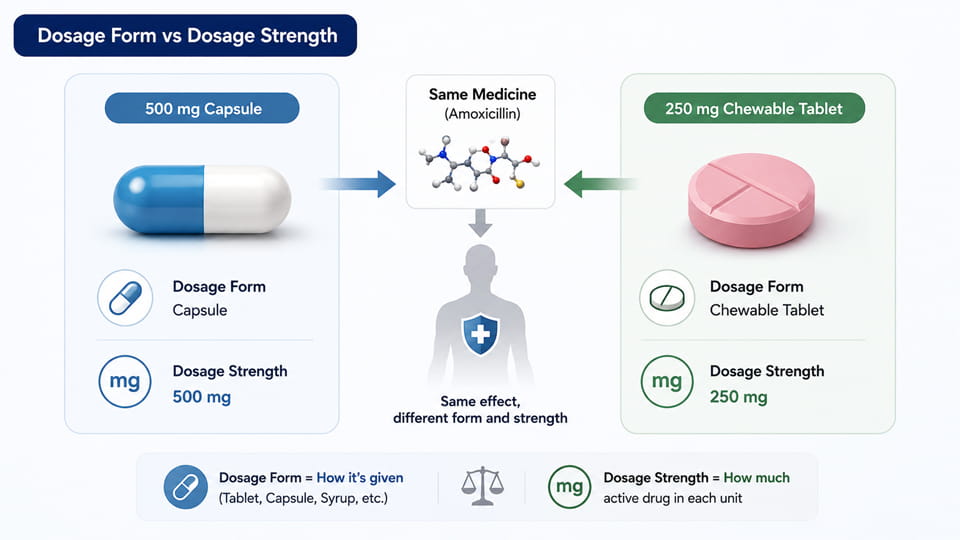
Medicine doesn’t just come in bottles or boxes – it arrives in dosage forms. A dosage form is the physical form in which a drug is prepared and administered. In pharmacy, this means the drug’s active ingredient is combined with other materials (excipients) and shaped into a tablet, capsule, liquid, cream, or other format. In simple terms, the dosage form definition is “how a medication is formulated and delivered” so the right dose reaches your body safely. For example, one common drug might be sold as a 500 mg capsule or a 250 mg chewable tablet – same medicine, different dosage form.
Understanding dosage forms is key for anyone in pharma manufacturing or procurement. The choice of form affects patient use, drug stability, and production methods. In this guide, we’ll break down what a dosage form means in pharmacy, why it matters, and the types of dosage forms you’ll encounter. We’ll also touch on how modern equipment (like tablet presses and capsule fillers) makes producing and packaging these forms easier.
By definition, a dosage form is the physical form of a pharmaceutical product. In other words, it’s how the active drug and any inert ingredients are combined and presented for administration. The NIH gloss defines it simply as “the physical form in which a drug is manufactured or administered”. Another source explains that dosage forms are drug products “presented in a specific form for use,” containing a mixture of active and inactive components, configured into a particular form.
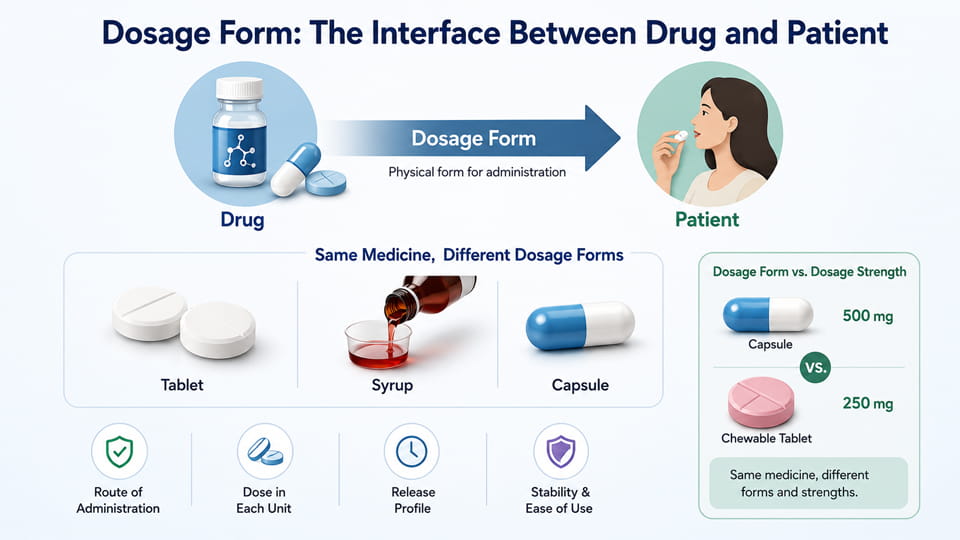
Think of dosage form as the interface between the drug and the patient. For example, paracetamol comes as tablets, syrup, and even suppositories; these are all different dosage forms of the same active ingredient. Each form is a dosage formulation – a specific recipe of active drug + excipients shaped into something convenient. As one JinLuPacking guide puts it, making a solid dosage form is about “turning drug molecules into a stable solid form” by mixing active ingredients with binders and fillers. The finished form could be a round tablet, a capsule shell, or a packet of powder – each designed so the medicine can be delivered effectively.
In practice, when pharmacists or manufacturers talk about dosage form, they’re considering factors like:
For example, the same medication (say, amoxicillin) may come in “dosage forms” like a 500 mg capsule or a 250 mg chewable tablet”. Both deliver amoxicillin, but the form and dose differ. This highlights the difference between dosage form (capsule vs tablet) and dosage strength (500 mg vs 250 mg).
Choosing the proper dosage form is crucial for several reasons:
In short, dosage forms are more than “just packaging.” They play a crucial role in how well a medicine works and how easily it can be made and used safely.
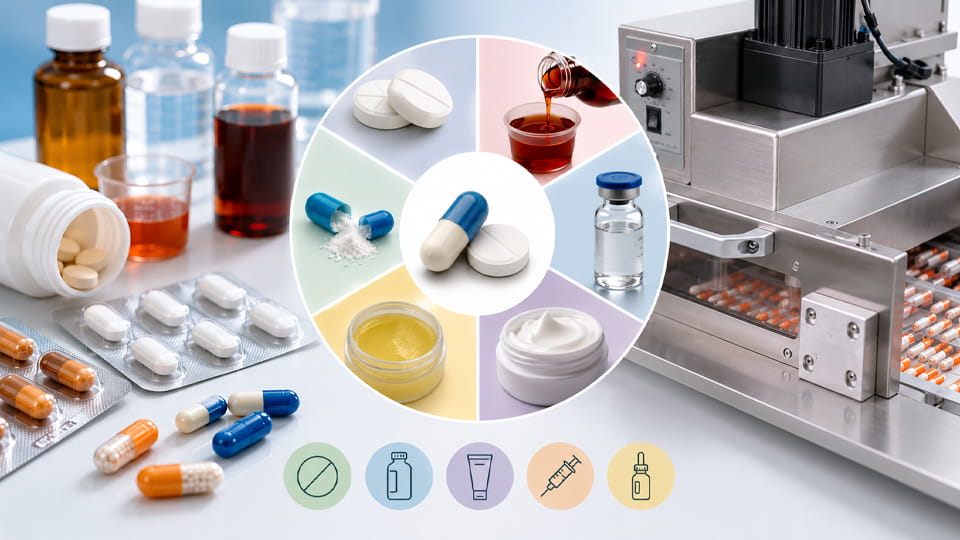
Medication can be formulated into many forms, each suited to specific purposes. Below are the main categories:
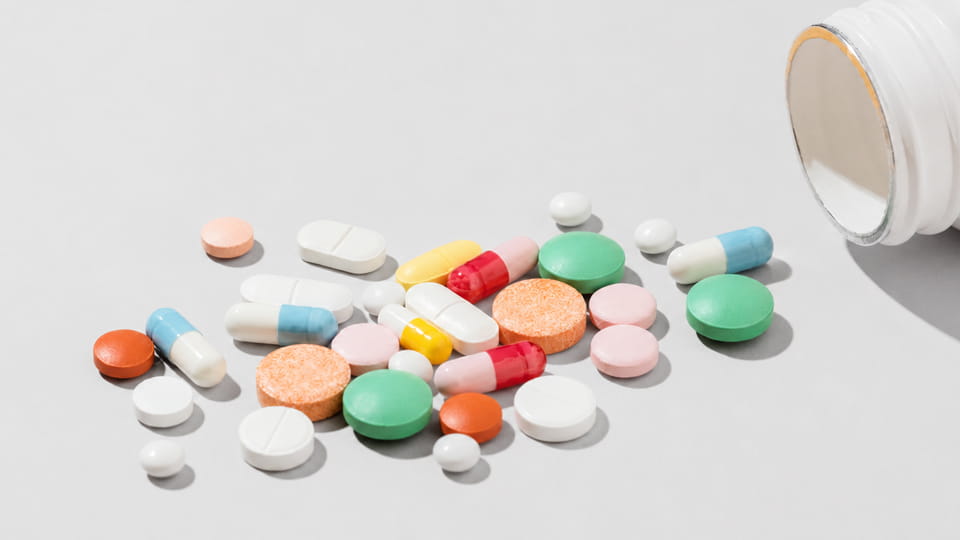
Figure: Capsules and tablets are examples of solid dosage forms used for oral delivery.
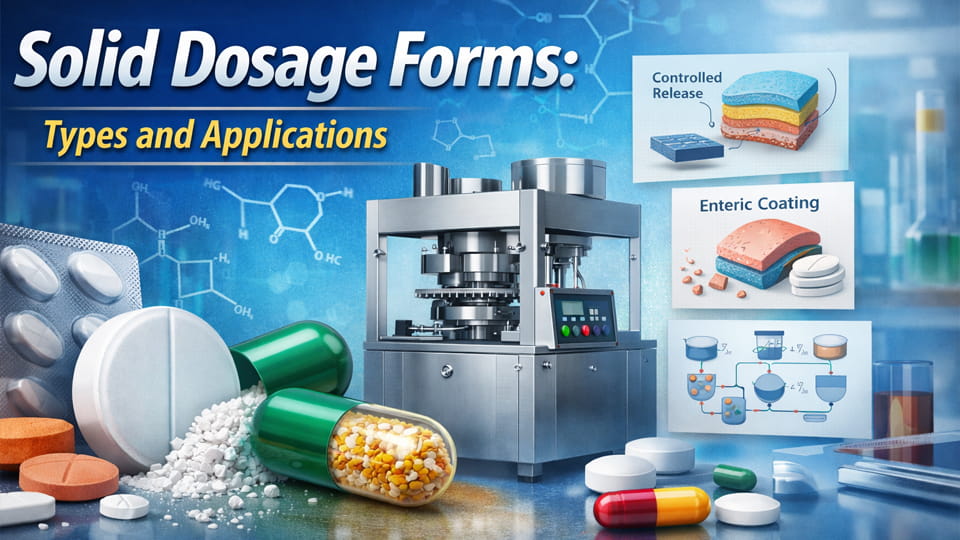
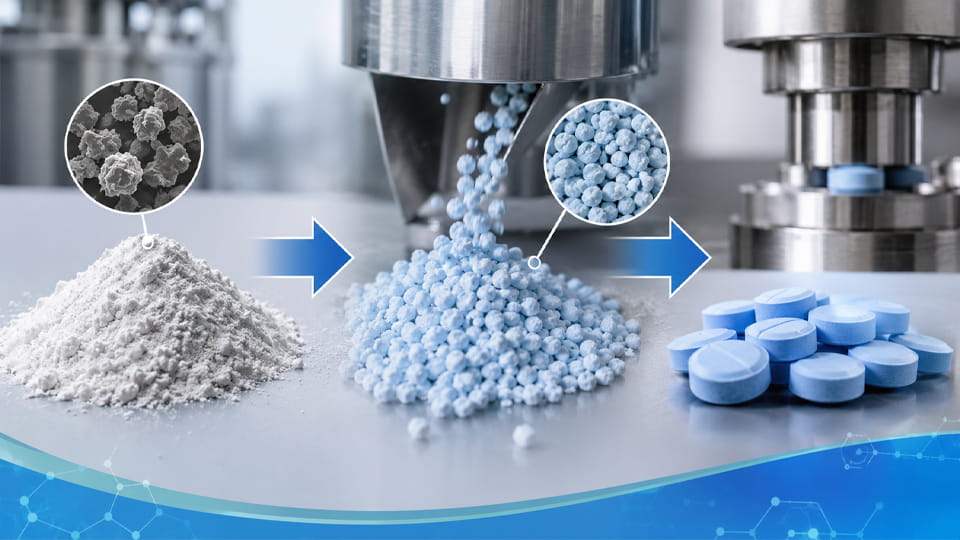
Solid dosage forms are the most common in the pharmaceutical industry. These include tablets (compressed powder pills), capsules (gelatin or HPMC shells filled with powder or pellets), and bulk powders or granules. Tablets can be designed in many varieties (e.g. chewable, effervescent, extended-release) to control how quickly the drug is released into the body. Capsules often use a dissolving shell that breaks down in the stomach to release the medication.
Why solids? They are stable and convenient. Solid pills generally last longer on the shelf and don’t require refrigeration. Each unit contains a precise dose of drug, so dosing is accurate. For manufacturing, solid forms are efficient: modern tablet press machines and capsule filling machines (like those by JinLu) can produce hundreds of thousands of pills per hour. Blister packing machines and bottle-filling lines then package these tablets or capsules into final products (blister cards, bottles, strips, etc.).
Examples of Solid Dosage Forms:
Equipment Note: Producing solid forms requires specialized machinery. For example, a rotary tablet press (like JinLu’s Tablet Press Machine) compresses powder into tablets. Capsule filling machines (manual or automatic) drop powder into capsule shells. After forming, tablets/capsules may go through coating, counting, and packaging equipment.
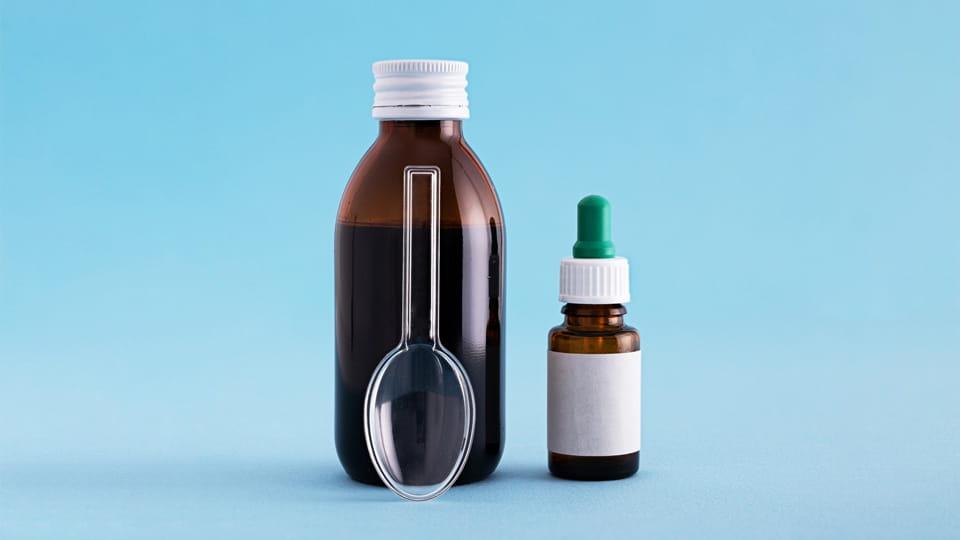
Figure: Syrup is a common liquid dosage form, useful for patients who have trouble swallowing solids.
Liquid dosage forms include solutions, suspensions, emulsions, and syrups. These are ideal when swallowing solids is difficult (such as for children or the elderly) or when a rapid onset is needed. Examples are cough syrups (sweetened to mask drug taste), oral drops, and IV solutions.
Why liquids? They allow flexible dosing (you can measure out a spoonful) and work well when rapid absorption is needed. For instance, a drug in solution form enters the bloodstream faster than a tablet. Liquids also help ensure smaller patients get accurate smaller doses.
Equipment Note: Liquid forms often require mixing vats and filling machines. After mixing (e.g. in a High-Speed Mixer Granulator or fluid bed dryer), the liquid medicine is filled by bottle filling machines or pumped into vials (like ampoules). For example, JinLuPacking offers bottle filling lines that can rinse, fill, and cap hundreds of bottles per minute for syrups or solutions.

Figure: Creams and ointments are semi-solid topical dosage forms applied to skin.
Semi-solid dosage forms are mostly for topical use – that is, applied on the skin or mucous membranes. These include creams, ointments, gels, lotions, and pastes. For example, an antifungal cream or hydrocortisone ointment lets the drug work directly on a skin issue. Many cosmetics (skin lotions) are also topical dosage forms for active ingredients.
Why semisolids? They deliver drug locally with minimal systemic effects. The medication goes to the affected area without traveling through the whole body, reducing side effects. For example, skin creams stay mostly on the skin.
Formulation and Equipment: Making creams and lotions requires mixing oil and water phases with emulsifiers. JinLu’s vacuum emulsifier mixer is designed to combine these immiscible liquids into a stable cream or lotion. After mixing, a tube filling machine or jar-filling line packages the product into tubes, bottles, or jars. As JinLu explains, a vacuum emulsifier “combines immiscible liquids (oil & water) into a stable emulsion” under vacuum. This step is essential for consistent creams and gels.
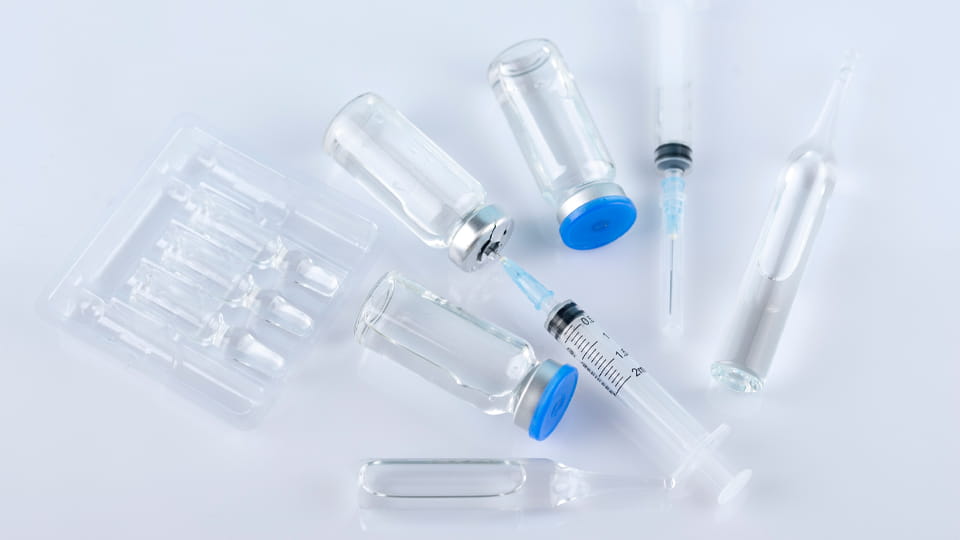
Figure: Injectable prepared in vials or ampoules.
Apart from oral and topical, parenteral (injectable) forms are critical. Injectables include intravenous (IV), intramuscular (IM), subcutaneous (SC) injections and infusions. These liquid dosage forms are sterile and designed to bypass digestion for fast action. Many life-saving drugs (e.g. vaccines, insulin, certain antibiotics) use injectable forms.
Each of these is a specialized dosage form chosen for specific advantages (speed, local effect, convenience). The overall design of a dosage form is a core part of pharmaceutical formulations – engineers and pharmacists will tailor the formulation (dosage and form) to fit patient needs and drug properties.
Pharmacists and engineers consider many factors when selecting a dosage form for a drug:
No wonder there are so many dosage form options. Each balances convenience, effectiveness, and feasibility. Good pharmaceutical formulation finds the “sweet spot” between patient need and drug characteristics.
It’s important not to confuse dosage form with dosage strength. The dosage form is what the medicine looks like and how it’s taken (tablet, syrup, etc.), while the dosage strength is how much active drug is in each unit. For example, two versions of the antibiotic amoxicillin could be: 500 mg capsule and 250 mg chewable tablet. Here, the capsule/tablet is the dosage form, and the numbers (500 mg, 250 mg) are the dosage strengths. Both deliver amoxicillin to the patient, but in different forms and strengths.
In practice, manufacturers make multiple strengths for each form so doctors can adjust doses easily. The form (solid, liquid, etc.) mainly answers the “how is it given?” question, while the strength answers “how much drug each dose contains.”
Dosage forms are the bridge between drug development and patient use. In pharmacy, they mean the specific formulations – tablets, capsules, syrups, creams, injections, and more – that carry active ingredients to the body. Choosing the right form is crucial: it affects how the drug is absorbed, how easy it is for patients, and how efficiently it can be produced and packaged.
Modern pharmaceutical equipment makes it possible to manufacture any dosage form reliably. For example, JinLuPacking offers complete solutions: high-speed tablet presses for oral solids, capsule filling machines for granules, liquid filling lines for syrups and injectables, and packaging machines (blister packers, bottle cappers, counting machines) to finish the job. With the right expertise and machinery, any dosage form – whether a stable tablet or a complex cream – can be produced to high quality.
In conclusion, understanding dosage form definition in pharmacy means recognizing that the form matters. It determines patient experience, drug action, and manufacturing methods. By designing and choosing effective dosage forms, pharmaceutical engineers help ensure medicines are both safe and convenient for users.
Ready to discuss your pharmaceutical production needs? Whether you’re making tablets, capsules, creams, or syrups, our team can help. Contact JinLuPacking to explore customized production lines and packaging solutions for any dosage form. We offer turnkey equipment from high-speed tablet presses to automated blister packing and bottle filling lines – all designed to deliver consistent, high-quality dosage forms for your products.
A dosage form is the physical form in which a medicine is produced and administered to patients. It combines the active pharmaceutical ingredient (API) with excipients to create products such as tablets, capsules, liquids, creams, injections, or powders. The right dosage form helps ensure accurate dosing, product stability, and effective drug delivery.
Many people confuse these two terms.
• Dosage form refers to the physical form of the medicine, such as a tablet, capsule, syrup, or cream.
• Dosage strength refers to the amount of active ingredient contained in each unit, such as 250 mg or 500 mg.
For example, a 500 mg tablet and a 500 mg capsule have the same dosage strength but different dosage forms.
Pharmaceutical dosage forms are generally divided into several categories:
• Solid dosage forms (tablets, capsules, powders)
• Liquid dosage forms (solutions, suspensions, syrups)
• Semi-solid dosage forms (creams, ointments, gels)
• Injectable dosage forms
• Inhalation and transdermal dosage forms
Each type is designed to meet different therapeutic and patient needs.
The correct dosage form directly affects:
• Drug absorption
• Patient compliance
• Dosage accuracy
• Product stability
• Manufacturing efficiency
For example, children may prefer liquid dosage forms, while adults often choose tablet or capsule dosage forms for convenience.
Common pharmaceutical dosage form examples include:
• Tablet dosage form
• Capsule dosage form
• Oral solution
• Syrup
• Suspension
• Injectable solution
• Cream
• Ointment
• Gel
• Powder for reconstitution
Each pharmaceutical formulation is developed based on the drug’s properties and intended route of administration.
The oral solid dosage form is the most widely used pharmaceutical dosage form worldwide.
Tablet and capsule dosage forms are popular because they offer:
• High production efficiency
• Long shelf life
• Accurate dosing
• Easy transportation
• Cost-effective manufacturing
This is why most pharmaceutical production lines are designed for oral solid dosage manufacturing.
A typical oral solid dosage manufacturing line may include:
• Tablet manufacturing equipment
• Capsule filling machine
• High shear mixer
• Fluid bed dryer
• Tablet coating machine
• Tablet counting machine
• Blister packing machine
• Bottle filling line
• Cartoning machine
Modern pharmaceutical production lines integrate these machines for automated and GMP-compliant production.
forms meet different needs. For example, an antibiotic might be available as a tablet (for adults), a suspension (for children), and an injectable form (for hospitalized patients). Each form optimizes stability, convenience, or absorption for the intended use.
dose is the amount of drug taken at one time (e.g. 250 mg). The dosage form is the physical form containing that drug (e.g. a 250 mg tablet or a 250 mg capsule). In other words, dose = quantity of drug; dosage form = tablets, liquid, etc.
how quickly a drug dissolves. Tablets must disintegrate before the drug is absorbed, whereas liquids act faster. Controlled-release tablets slow dissolution to extend effect. Topicals are absorbed through the skin, while injectables bypass barriers entirely. The choice of form is matched to the drug’s properties and therapeutic goal.
References:
1.Dosage Forms —— U.S. Food and Drug Administration
2.Dosage Form and Route of Administration —— U.S. Food and Drug Administration
3.Pharmaceutical Dosage Forms —— usp.org
4.Formulation design, challenges, and development considerations for fixed dose combination (FDC) of oral solid dosage forms —— tandfonline.com
5.Dosage Form —— Wikipedia
6.Orodispersible dosage forms: biopharmaceutical improvements and regulatory requirements —— ScienceDirect