

ก สายการบรรจุขวด เป็นระบบอัตโนมัติแบบ end-to-end ที่จะเปลี่ยนขวดเปล่าให้เป็นฉลาก, บรรจุผลิตภัณฑ์. สำหรับผู้ผลิตยาและโภชนเภสัช, เส้นเหล่านี้ช่วยเพิ่มปริมาณงาน, ลดต้นทุนแรงงาน, และมั่นใจ เป็นไปตามมาตรฐาน GMP เอาท์พุท. คู่มือนี้จะอธิบายว่าสายการบรรจุขวดคืออะไร, มันทำงานอย่างไร, และเครื่องสำคัญที่เกี่ยวข้อง. เราครอบคลุมประเภทเส้นที่แตกต่างกัน (แท็บเล็ต, ของเหลว, เกี่ยวกับสารอาหาร, ฯลฯ), แสดงรายการประโยชน์หลักของระบบอัตโนมัติ, และให้คำแนะนำที่เป็นประโยชน์ในการเลือกเส้นที่ถูกต้อง. ไม่ว่าคุณต้องการก โซลูชันการบรรจุขวดแบบครบวงจร หรือกำลังเปรียบเทียบแบบแมนนวลกับ. อัตโนมัติ, บทความนี้ครอบคลุมคุณแล้ว.
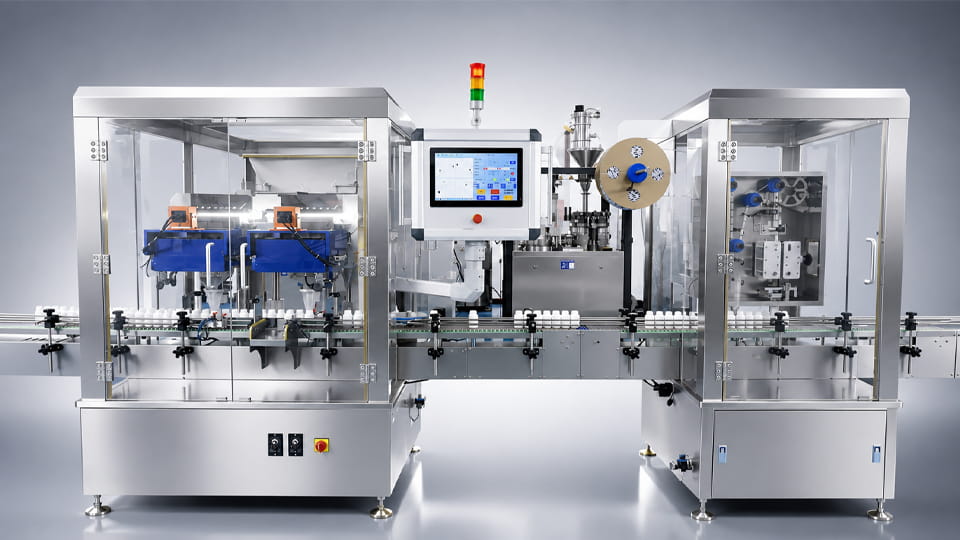
รูป:สายการบรรจุขวดยาทั่วไป.
สายการบรรจุขวดคือ ชุดเครื่องจักรและสายพานลำเลียง ที่ประมวลผลขวดเปล่าให้เป็นขวดสำเร็จรูปโดยอัตโนมัติ, สินค้าบรรจุกล่อง. ในเภสัชกรรม, นี่หมายถึงการหยิบยาเม็ดเปล่าหรือขวดของเหลวและทำตามขั้นตอนต่างๆ เช่น การนับ/การเติม, สูงสุดที่กำหนด, การปิดผนึก (การปิดผนึกฟอยล์), การติดฉลาก, และบรรจุกล่องสุดท้าย. ในทางปฏิบัติ, เส้น “ทำให้กระบวนการทั้งหมดเป็นอัตโนมัติอย่างสมบูรณ์, ตั้งแต่การแกะขวดไปจนถึงการนับ, การใส่สารดูดความชื้น, สูงสุดที่กำหนด, การปิดผนึกอลูมิเนียมฟอยล์, และการติดฉลาก”.
กล่าวอีกนัยหนึ่ง, แทนที่จะหยิบขวดและเติมทีละขวดด้วยตนเอง, อัตโนมัติ สายการบรรจุขวด ป้อนขวดผ่านแต่ละสถานีตามลำดับ. เส้นทั่วไป เริ่มต้นด้วยเครื่องถอดรหัสขวด (ซึ่งวางขวดให้ตั้งตรงบนสายพานลำเลียง), แล้วไหลผ่านการเติม/การนับ, การใส่สำลีหรือสารดูดความชื้น (ถ้าจำเป็น), สูงสุดที่กำหนด, การปิดผนึก, การติดฉลาก, และสุดท้ายก็บรรจุกล่อง. เครื่องจักรเหล่านี้ทำงานพร้อมกันภายใต้การควบคุมของ PLC, กลายเป็นสายครบวงจรที่สามารถวิ่งได้อย่างต่อเนื่อง. ตัวอย่างเช่น, ซัพพลายเออร์อุปกรณ์รายหนึ่งตั้งข้อสังเกตว่าสายการนับและการบรรจุ "สามารถเชื่อมต่อกับเครื่องถอดรหัสขวดได้, เครื่องแทรกสารดูดซับ, เครื่องปิดฝา, เครื่องซีลและเครื่องปิดฉลากอลูมิเนียมฟอยล์”, ครอบคลุมทุกขั้นตอนหลัก.
ที่ ขวดเอง สามารถเป็นพลาสติกได้ (สัตว์เลี้ยง, เอชดีพีอี), กระจก, หรือวัสดุอื่นๆ (แก้วสีเหลืองอำพันสำหรับผลิตภัณฑ์ที่ไวต่อแสง, ฯลฯ). โดยปกติแล้วสายการผลิตจะถูกสร้างขึ้นเพื่อรองรับขวดขนาดต่างๆ (E.G. 30–เส้นผ่านศูนย์กลาง –150 มม, 40–ความสูง 300 มม) และประเภทหมวก (ฝาเกลียว, หมวกสแน็ป, การปิดป้องกันเด็ก). ชิ้นส่วนที่สัมผัสกับผลิตภัณฑ์ทั้งหมดทำจากสแตนเลสเกรด GMP พร้อมดีไซน์ที่ถูกสุขลักษณะ (พื้นผิวเรียบ, ไม่มีขาตาย) เพื่อให้เป็นไปตามมาตรฐานการกำกับดูแล. เครื่องจักรจำนวนมากมีเซ็นเซอร์และสายพานลำเลียงสำหรับการตรวจสอบคุณภาพ (E.G. การตรวจสอบระดับการเติม, แรงบิดสูงสุด, การมีฉลาก) และรองรับการซีเรียลไลซ์ (การพิมพ์บาร์โค้ด / รหัส QR) เพื่อการตรวจสอบย้อนกลับ.
ในระยะสั้น, อัน สายการบรรจุขวดยา เป็นการบูรณาการ, ระบบที่ผ่านการตรวจสอบแล้วซึ่งจัดการทุกอย่างตั้งแต่การป้อนขวดเปล่าไปจนถึงการบรรจุลงในกล่องขั้นสุดท้าย, มั่นใจได้ถึงความเร็วสูง, ความแม่นยำ, และการปฏิบัติตาม.
ขั้นตอนการทำงานของสายการบรรจุขวดเกี่ยวข้องกับลำดับขั้นตอนที่เตรียมไว้, เติม, ผนึก, และบรรจุขวด. ผังงานด้านล่างแสดงลำดับขั้นตอนทั่วไป:
รูป: ขั้นตอนการทำงานของสายการบรรจุขวดทั่วไป.
ในทางปฏิบัติ, ไม่ใช่ทุกสายจะมีทุกสถานี. ตัวอย่างเช่น, เส้นสำหรับของแข็งที่ไม่ไวต่อความชื้นอาจข้ามการใส่สำลีได้, ในขณะที่ไลน์ของเหลวจะไม่ใช้ตัวนับแท็บเล็ต. นี่เป็นบทสรุปโดยย่อของแต่ละขั้นตอน:
แต่ละสถานีเชื่อมโยงกันด้วยสายพานลำเลียงและควบคุมโดยระบบ PLC/HMI ส่วนกลาง. โดยทั่วไปแล้วสายการผลิตทั้งหมดจะถูกตั้งค่าในสภาพแวดล้อมห้องปลอดเชื้อ, สร้างขึ้นเพื่อ CGMP มาตรฐาน: โครงสแตนเลส (SUS304/316L), ท่อที่ผ่านการรับรองจาก FDA, มอเตอร์ชะล้าง, และรอยเชื่อมเรียบ. ระบบอัตโนมัติของ PLC (ซีเมนส์, ประเทศพานาโซนิค, ออมตรอน, ฯลฯ) ประสานความเร็วและการทำงานของเครื่องจักรต่างๆ.
[jl_youtube src=”https://www.youtube.com/embed/tSrCmYZ-OQ0″]
นี่คือ เครื่องจักรที่สำคัญ คุณจะพบได้ในสายการบรรจุขวดทั่วไป (พร้อมสเปกหรือคุณประโยชน์โดยย่อ):
ป้อนและปรับทิศทางขวดเปล่าบนสายพานลำเลียง. มีคุณภาพสูง ผู้ถอดรหัส ส่งมอบ 50–120 ขวด/นาที, การจัดการขวดพลาสติกกลมหรือขวด PET. ใช้เครื่องป้อนชามแบบสั่นและรางเพื่อหมุนขวดให้ตั้งตรง. Unscrambler สมัยใหม่ถูกปิดล้อมไว้อย่างสมบูรณ์ (ปราศจากฝุ่น, CGMP) และติดตั้งระบบควบคุม PLC ของ Siemens และเซ็นเซอร์ออปติคัล/นิวแมติกส์, เพื่อให้ขวดได้รับการวางตำแหน่งอย่างถูกต้อง (100% ความแม่นยำ) โดยไม่ต้องโหลดด้วยตนเอง. ชิ้นส่วนที่เปลี่ยนได้อย่างรวดเร็วช่วยให้ผู้ปฏิบัติงานคนหนึ่งเปลี่ยนขนาดขวดได้ภายในไม่กี่นาที.
สำหรับปริมาณที่เป็นของแข็ง, หนึ่ง เครื่องนับอัตโนมัติ (เรียกอีกอย่างว่า เครื่องนับแท็บเล็ต/แคปซูล หรือฟิลเลอร์) หยดยาตามจำนวนที่แน่นอนลงในแต่ละขวด. สิ่งเหล่านี้ใช้เซ็นเซอร์ออปติคอลความเร็วสูงหรือหัวนับ. เคาน์เตอร์ของ JinLu, เช่น, รับมือ 3–40 มม. ของแข็ง, บรรลุผลสำเร็จถึง 100 ขวด/ชั่วโมง กับ >99.98% ความแม่นยำ. (รุ่นหลายหัวและหลายเลนสามารถเพิ่มปริมาณงานได้) พวกมันบูรณาการได้อย่างลงตัว: “ตั้งแต่การคัดแยกขวดไปจนถึงการติดฉลาก... สายการบรรจุขวดนับสามารถเชื่อมต่อกับเครื่องถอดรหัสขวดได้, เครื่องแทรกสารดูดซับ, เครื่องปิดฝา, [และ] เครื่องติดฉลาก”. ในระยะสั้น, เคาน์เตอร์ช่วยให้แน่ใจว่าแต่ละขวดได้รับการนับเม็ดยาที่ถูกต้อง.
สำหรับน้ำเชื่อม, ฉีด, หรือของเหลวอื่นๆ, หนึ่ง เครื่องบรรจุของเหลวอัตโนมัติ จ่ายแต่ละโดส. ตัวเติมของเหลวของ Jinlu ใช้ปั๊มที่ขับเคลื่อนด้วยเซอร์โวและ หัวฉีดใต้น้ำ ออกแบบ, ซึ่งหลีกเลี่ยงการเกิดฟองและหยดน้ำกลับ. พวกเขาวิ่งไปที่ 20–80 ขวดต่อนาที ด้วยความแม่นยำ ±0.2 กรัม, และปรับให้เข้ากับปริมาตรขวดตั้งแต่ไม่กี่มล. จนถึงลิตร. สถานีเติมน้ำมันมักมีโต๊ะดัชนีหรือท่อร่วมหลายหัวฉีดเพื่อเพิ่มความเร็ว. อย่างมีวิจารณญาณ, เครื่องจักรเหล่านี้ควบคุมโดย PLC/HMI เพื่อการควบคุมการไหลที่แม่นยำและการบรรจุตามสูตร.
หลังจากเติมแล้ว, ผู้ปิดหมวกจะวางและยึดหมวกไว้. ดี เครื่องปิดฝา จะจัดการกับสไตล์หมวกที่แตกต่างกัน (ฝาเกลียว, หมวกสแน็ป, ทนต่อเด็ก, ฯลฯ) โดยใช้หัวหมวกเฉพาะ. มันจะเรียงลำดับโดยอัตโนมัติ, ฟีด, และใช้ฝาปิดด้วยแรงบิดที่ถูกต้อง. เครื่องปิดฝาเซอร์โวของ Jinlu (E.G. รุ่น XG-120) ปรับให้เข้ากับขวดและฝาที่หลากหลายแล้ววิ่งขึ้นไป 120 ขวด/นาที. คุณสมบัติต่างๆ ได้แก่ การปรับแรงบิดแบบเรียลไทม์ (ผ่านพวงมาลัยหรือเซอร์โวมอเตอร์) และการตรวจสอบการมีฝาปิด. หากฝาครอบไม่ตรงหรือหายไป, ระบบจะปฏิเสธขวดนั้น, มั่นใจ 100% เอาต์พุตที่สอดคล้อง.
เรียกอีกอย่างว่าอัน เครื่องซีลอลูมิเนียมฟอยล์. สถานีนี้ใช้แผ่นฟอยล์ปิดผนึกด้วยความร้อนใต้ฝาครอบเพื่อสร้างการปิดผนึกสุญญากาศ. เครื่องปิดผนึกแบบเหนี่ยวนำทั่วไปสามารถดำเนินการได้ถึง 120 ขวด/นาที. โดยจะเดินขวดบนสายพานลำเลียงภายใต้ขดลวดความถี่สูง, ให้ความร้อนและติดฟอยล์เป็นเวลาสั้นๆ. ขั้นตอนนี้จะแสดงหลักฐานการงัดแงะและป้องกันการรั่วไหล. เครื่องซีลสมัยใหม่มีหัวแบบสองโหมดเพื่อปรับให้เข้ากับเส้นผ่านศูนย์กลางขวดที่แตกต่างกันและมีพัดลมระบายความร้อนในตัวเพื่อการทำงานที่ต่อเนื่อง.
ติดฉลากที่พิมพ์ไว้กับขวด. โรตารี่ความเร็วสูง ผู้ติดฉลาก (เหมือนซีรีย์ TBJ ของ JinLu) สามารถติดฉลากได้ถึง 120 ขวด/นาที ด้วยความแม่นยำ ±1 มม. พวกเขารวมถึงก ตัวแบ่งขวด เพื่อให้ขวดมีช่องว่างเท่ากันและ ระบบตรวจจับอัจฉริยะ เพื่อจัดตำแหน่งฉลากแต่ละอันให้เหมาะสม. เครื่องติดฉลากแบบหลายโหมดสามารถรองรับการห่อด้านหน้าได้, ล้อมรอบ, และการติดฉลากหลายด้าน. หัวพิมพ์โค้ดในตัวมักจะวางอยู่ข้างๆ เครื่องติดฉลากสำหรับการพิมพ์เป็นชุด/ล็อต. หลังจากติดฉลากแล้ว, วิชันซิสเต็มอาจตรวจสอบบาร์โค้ดและข้อความเพื่อให้เป็นไปตามข้อกำหนดการออกหมายเลขกำกับ.
เมื่อติดฉลากขวดแล้ว, กลุ่มขวด (พร้อมคำแนะนำหรือแผ่นพับหากจำเป็น) จะถูกใส่ลงในกล่องโดยอัตโนมัติ. เครื่องแพ็คกล่อง สามารถสร้างและปิดได้ 400–450 กล่องต่อนาที. ในสายขวด, แนวนอน (ไซด์โหลด) กล่องกระดาษเป็นเรื่องธรรมดา. หลังจากขึ้นรูปกล่องแล้ว, ผู้บรรจุกล่องหรือเครื่องจัดเรียงพาเลทสามารถรวมกลุ่มผลิตภัณฑ์เพิ่มเติมได้. เครื่องจักรที่สิ้นสุดสายการผลิตเหล่านี้จะทำให้ระบบสมบูรณ์ และมักจะมี PLC ของตัวเองสำหรับการซิงโครไนซ์กับอุปกรณ์อัปสตรีม.
แต่ละเครื่องเหล่านี้เป็นตัวอย่างของ อุปกรณ์บรรจุภัณฑ์ขวด. เมื่อเชื่อมต่อเข้าด้วยกันบนสายพานลำเลียงด้วยการควบคุม PLC ส่วนกลาง, พวกเขาสร้างสายการบรรจุขวดแบบอัตโนมัติขั้นสูง.
โดยทั่วไปสายการบรรจุขวดจะถูกแบ่งประเภทตาม ประเภทผลิตภัณฑ์หลัก และการประยุกต์ใช้. ด้านล่างนี้เป็นตัวอย่างประเภทเส้นทั่วไป:
| ประเภทเส้น | สินค้า/การใช้งาน |
| สายขวดแท็บเล็ต/แคปซูล | ของแข็งในช่องปาก: แท็บเล็ต, แคปซูล, ผง (ยา & อาหารเสริม) |
| สายขวดของเหลว | ของเหลว: น้ำเชื่อม, น้ำเชื่อม, โทนิค, การฉีดยา (ยา & เกี่ยวกับสารอาหาร) |
| วิตามิน & สายโภชนาการ | ผลิตภัณฑ์เสริมอาหาร, วิตามิน, ยาสมุนไพร (อาหาร/อาหารเสริมเพื่อสุขภาพ) |
| สายขวดเครื่องสำอาง | การดูแลส่วนบุคคล: ครีม, โลชั่น, เซรั่ม, น้ำมัน (เครื่องสำอาง) |
| สายขวดเคมี | สารเคมีอุตสาหกรรม/ครัวเรือน, รีเอเจนต์ (สารเคมี) |
| เข็มฉีดยา/โบลท์ที่เติมไว้ล่วงหน้า | การบรรจุยาฆ่าเชื้อแบบพิเศษ (ฉีด) |
สายการผลิตเหล่านี้ใช้สถาปัตยกรรมที่คล้ายคลึงกัน แต่ใช้เครื่องบรรจุ/ปิดฝาที่แตกต่างกันเพื่อให้เหมาะสมกับผลิตภัณฑ์. ตัวอย่างเช่น, อัน สายขวดแท็บเล็ต ใช้เครื่องนับเม็ดยา, ในขณะที่ก สายน้ำเชื่อม ใช้ปั๊มของเหลว. กลุ่มผลิตภัณฑ์โภชนเภสัชมักมีคุณสมบัติสำหรับผลิตภัณฑ์ที่ละเอียดอ่อน (แคปซูลอ่อน, วิตามินเหนียว), ในขณะที่ไลน์เครื่องสำอางอาจผสานเข้าด้วยกัน ปลอกหด หรือแคปเปอร์ความเร็วสูง. ในแต่ละกรณี, สามารถปรับแต่งเส้นได้ (ประเภทหัวฉีด, สายพานลำเลียง) ตามรูปทรงขวดและความต้องการของกระบวนการ.
การลงทุนในสายการบรรจุขวดแบบอัตโนมัติเต็มรูปแบบให้ประโยชน์มากกว่าการบรรจุแบบแมนนวลหลายประการ. ข้อดีที่สำคัญ ได้แก่:
โดยสรุป, สายการบรรจุขวดอัตโนมัตินำเสนอความสามารถในการขยายขนาดและการควบคุม. ด้วยเครื่องจักรที่เหมาะสม, ผู้ผลิตบรรลุความเร็วที่เร็วขึ้น, แรงงานลดลง, และคุณภาพของผลิตภัณฑ์ที่สูงขึ้นไปพร้อมๆ กัน. ดังที่ผู้เชี่ยวชาญด้านบรรจุภัณฑ์รายหนึ่งระบุไว้, ระบบเหล่านี้ช่วยให้บริษัทต่างๆ “จัดการผลิตภัณฑ์ในปริมาณมากได้ในเวลาอันสั้น” ในขณะเดียวกันก็ลดข้อผิดพลาดไปด้วย.
สายการบรรจุขวดมีความสำคัญในหลายภาคส่วน:
อุตสาหกรรมใดก็ตามที่บรรจุผลิตภัณฑ์ลงในขวดจะได้รับประโยชน์จากสายการผลิตอัตโนมัติ. แม้แต่ผลิตภัณฑ์เฉพาะกลุ่ม (ยาขี้ผึ้ง, น้ำมัน CBD) ใช้เส้นที่กำหนดเอง. หลักการชี้นำคือว่าปริมาณงานสูงและการควบคุมคุณภาพสามารถปรับปรุงการผลิตในอุตสาหกรรมเหล่านี้ทั้งหมดได้หรือไม่, เส้นขวดอัตโนมัติมีบทบาทสำคัญ.
การเลือกสายการบรรจุขวดในอุดมคตินั้นขึ้นอยู่กับหลายปัจจัย. นี่คือสิ่งที่ต้องพิจารณา:
โดยสรุป, ระบุของคุณ ประเภทขวด, รูปแบบผลิตภัณฑ์, เป้าหมายเอาท์พุท, และงบประมาณ. จากนั้นทำงานร่วมกับผู้ผลิตที่เชื่อถือได้เพื่อกำหนดค่าสายการผลิตแบบกำหนดเอง. พวกเขาควรจัดเตรียมเค้าโครงโดยละเอียด, ข้อกำหนดทางไฟฟ้า, และระยะเวลารอคอยที่คาดหวัง. (เครื่องจักรกึ่งอัตโนมัติมาตรฐานอาจจัดส่งได้ภายในไม่กี่สัปดาห์; สายการผลิตแบบครบวงจรมักใช้เวลา 2-4 เดือนในการสร้างและทดสอบ) ตรวจสอบประสิทธิภาพของอุปกรณ์ด้วยการทดลองตัวอย่างก่อนสรุปเสมอ.
| บรรจุภัณฑ์ด้วยตนเอง | สายการบรรจุอัตโนมัติ |
| ช้า (บ่อยครั้ง <20 บีพีเอ็ม) | ความเร็วสูง (50–120 ครั้งต่อนาทีหรือมากกว่า) |
| ใช้แรงงานเข้มข้น (ผู้ประกอบการจำนวนมาก) | แรงงานขั้นต่ำ (ช่างเทคนิคคนหนึ่ง) |
| ความแม่นยำของตัวแปร (ความผิดพลาดของมนุษย์) | มีความแม่นยำสูง (>99.9% ความแม่นยำ) |
| คุณภาพไม่สม่ำเสมอ (การเติมที่ไม่สอดคล้องกัน) | เอาท์พุทที่สม่ำเสมอ (คุณภาพที่ทำซ้ำได้) |
| ลดต้นทุนเริ่มต้น (แต่มี OPEX สูง) | รายจ่ายฝ่ายทุนที่สูงขึ้น (แต่ OPEX ต่ำกว่า) |
| จำเป็นต้องมีการรวมอุปกรณ์น้อยที่สุด | การบูรณาการแบบครบวงจร (ออลอินวัน) |
| ยากที่จะขยายขนาดได้อย่างรวดเร็ว | ปรับขนาดได้อย่างง่ายดายโดยการเพิ่มเลน/โมดูล |
โต๊ะ: การเปรียบเทียบการบรรจุแบบแมนนวลกับการบรรจุแบบแมนนวล. สายการบรรจุขวดอัตโนมัติ.
ดังตารางที่แสดง, ระบบอัตโนมัติให้ปริมาณงานและความสม่ำเสมอที่สูงขึ้นมาก. นอกจากนี้ยังช่วยลดการตรวจสอบย้อนกลับ (บาร์โค้ดทุกขวด) และมักจะสามารถจ่ายเองได้ภายในไม่กี่ปีจากการเพิ่มประสิทธิภาพ.
มีความทันสมัย สายการบรรจุขวด เป็นแกนหลักของเภสัชภัณฑ์ที่มีประสิทธิภาพ (และโภชนเภสัช) การผลิต. โดยการเติมอัตโนมัติ, สูงสุดที่กำหนด, การปิดผนึก, และการติดฉลาก, กลุ่มผลิตภัณฑ์เหล่านี้เพิ่มผลผลิตสูงสุดในขณะเดียวกันก็รับประกันคุณภาพและการปฏิบัติตามกฎระเบียบ. เมื่อเลือกเส้น, จัดการออกแบบให้สอดคล้องกับประเภทผลิตภัณฑ์ของคุณ (แท็บเล็ตเทียบกับ. ของเหลว), ความต้องการปริมาณงาน, และมาตรฐานคุณภาพ (GMP, การทำให้เป็นอนุกรม, ฯลฯ). มองหาซัพพลายเออร์ที่มีชื่อเสียงเช่น Jinlu Packing ที่นำเสนอโซลูชั่นแบบครบวงจรและการสนับสนุนที่แข็งแกร่ง.
โดยสรุป: สายการบรรจุขวดอัตโนมัติจะเปลี่ยนขวดเปล่าให้เป็นกล่องสุดท้ายในการดำเนินการที่ราบรื่นเพียงครั้งเดียว. สามารถรองรับปริมาณมากได้ (มักจะหลายร้อยต่อนาที) ด้วยความแม่นยำเป็นพิเศษ. สำหรับผู้จัดการโรงงานและวิศวกร, ประโยชน์ที่ได้รับ – ปริมาณงานที่สูงขึ้น, แรงงานลดลง, ความสม่ำเสมอที่ดีขึ้น – มีความชัดเจน.
พร้อมที่จะทำให้บรรจุภัณฑ์ของคุณเป็นแบบอัตโนมัติ? ติดต่อทีมขายของ Jinlu Packing เพื่อหารือเกี่ยวกับสายการผลิตขวดแบบกำหนดเองสำหรับผลิตภัณฑ์ของคุณ. เรานำเสนอการออกแบบแบบครบวงจร, การว่าจ้างในสถานที่, และการรับประกัน 3 ปี. อย่างมาก 30 ปีในการผลิตอุปกรณ์ยา, Jinlu สามารถช่วยคุณเลือกความเร็วที่เหมาะสมได้, รูปแบบ, และระดับอัตโนมัติ – ทำให้มั่นใจว่าสายการผลิตใหม่ของคุณมอบ ROI ที่รวดเร็ว. เยี่ยม www.jinlupacking.com หรือขอใบเสนอราคาเพื่อเริ่มต้นใช้งาน.
สายการบรรจุขวดเป็นระบบบูรณาการของเครื่องจักรที่ทำให้การบรรจุผลิตภัณฑ์บรรจุขวดเป็นแบบอัตโนมัติ. โดยทั่วไปจะมีตัวถอดรหัสขวดด้วย, สถานีเติมหรือนับ, แคปเปอร์, เครื่องปิดผนึก, เครื่องติดฉลาก, และมักเป็นกล่องใส่กล่อง. ขั้นตอนเหล่านี้ร่วมกันนำขวดเปล่ามาแปลงเป็นขวดสำเร็จรูป, สินค้าบรรจุ.
สายการผลิตอัตโนมัติเป็นไปตามขั้นตอนการทำงานที่กำหนดไว้: ขวดเปล่าถูกป้อนตั้งตรง (ไม่มีการรบกวน), แล้วจึงย้ายไปเติมฟิลเลอร์ (สำหรับของเหลว) หรือเครื่องนับ (สำหรับยาเม็ด/แคปซูล). ต่อไป, รายการเพิ่มเติมใด ๆ (ผ้าฝ้ายหรือสารดูดความชื้น) จะถูกเพิ่ม. จากนั้นปิดฝาขวด, การเหนี่ยวนำปิดผนึก, และติดป้ายกำกับ. ในที่สุด, กลุ่มขวดบรรจุเป็นกล่อง. แต่ละเครื่องจะซิงโครไนซ์โดยการควบคุม PLC. เส้นสมัยใหม่สามารถปรับได้แบบเรียลไทม์ (E.G. แก้ไขน้ำหนักเติม) เพื่อรักษาคุณภาพ.
ขึ้นอยู่กับรุ่นและรูปแบบ. ความเร็วโดยทั่วไปคือ 50–120 ขวดต่อนาทีต่อเลน. ตัวอย่างเช่น, บรรทัดการนับแท็บเล็ตของ Jinlu ทำงานได้ถึง ~70 BPM, และเครื่องปิดฝา/ติดฉลากหลายเครื่องสามารถจัดการได้ 120 บีพีเอ็ม. เส้นหลายเลนสามารถคูณเอาต์พุตได้ (เคาน์เตอร์ 6 เลน, เช่น, สามารถทำได้ 6 เท่าของอัตราเลนเดียว). สำหรับของเหลว, ความเร็วประมาณ 20–80 BPM เป็นเรื่องปกติ. ตรวจสอบเอกสารข้อมูลจำเพาะของผู้จำหน่ายเสมอเพื่อดูอัตราที่แน่นอนภายใต้การกำหนดค่าที่คุณเลือก.
ส่วนประกอบสำคัญคือ: Unscrambler ขวด, เครื่องบรรจุ/นับ, ไส้ฝ้าย/สารดูดความชื้น, เครื่องปิดฝาอัตโนมัติ, เครื่องซีลแบบเหนี่ยวนำ, เครื่องติดฉลาก, สถานีตรวจ, และเครื่องแพ็คกล่อง/กล่อง. แต่ละชิ้นได้รับการจัดหาโดย OEM และรวมอยู่ในโครงสายพานลำเลียงทั่วไป. บางบรรทัดอาจเพิ่มเครื่องพิมพ์อินไลน์สำหรับรหัสชุดงานและเครื่องคัดแยกขยะ. กลุ่มผลิตภัณฑ์ที่แน่นอนขึ้นอยู่กับว่าผลิตภัณฑ์ของคุณเป็นของแข็งหรือของเหลว, ประเภทขวดของคุณ, และความต้องการบรรจุภัณฑ์.
ใช่, สายขวดสามารถรองรับทั้งแท็บเล็ตและแคปซูล, เนื่องจากทั้งสองเป็นของแข็งนับได้. รายการดังกล่าวจะรวมสารตัวนับเม็ดยา/แคปซูลด้วย, ซึ่งโดยทั่วไปจะใช้ได้กับรูปทรงแข็งขนาดเล็กใดๆ (แคปซูล, ลูกอมเหนียว, ฯลฯ) ของช่วงขนาดที่กำหนด. การสลับระหว่างแท็บเล็ตและแคปซูลมักเป็นเรื่องของการปรับหัวนับและพารามิเตอร์. ผู้ผลิตหลายรายออกแบบเครื่องนับเพื่อจัดการทั้งสองอย่างโดยเพียงแค่เปลี่ยนสูตร. ดังนั้นบรรทัดเดียวจึงสามารถเรียกใช้ SKU ที่แตกต่างกันได้ (E.G. วิตามินเม็ดฟู่ในคราวเดียว, แคปซูลต่อไป) โดยใช้เวลาเปลี่ยนน้อยที่สุด.
ใช่ เครื่องจักรทั้งหมดในสายการบรรจุขวดยาถูกสร้างขึ้นตามมาตรฐาน cGMP. สร้างขึ้นจากสแตนเลสเกรดยา (SS316L), ด้วยการออกแบบที่ถูกสุขลักษณะ (ไม่มีรอยแยก, ทำความสะอาดง่าย). ระบบควบคุมรองรับอย 21 ส่วนซีเอฟอาร์ 11 (บันทึกอิเล็กทรอนิกส์) และมักจะมาพร้อมกับเอกสารการตรวจสอบ. ตัวอย่างเช่น, ซัพพลายเออร์ระบุอย่างชัดเจนถึงสายการผลิตขวดของตน “สอดคล้องกับแนวปฏิบัติที่ดีในการผลิต (GMP) และข้อกำหนดของอย.”. เมื่อเลือกอุปกรณ์, มองหาเครื่องหมาย CE, การรับรองมาตรฐาน ISO, และยืนยันว่าผู้ขายจัดเตรียมโปรโตคอล IQ/OQ สำหรับการปฏิบัติตามกฎระเบียบ.
ราคาแตกต่างกันอย่างมากตามความเร็วและการกำหนดค่า. การตั้งค่าการนับและสูงสุดที่กำหนดแบบกึ่งอัตโนมัติแบบง่ายๆ อาจมีราคาไม่กี่พันเหรียญสหรัฐ, ในขณะที่สายความเร็วสูงแบบครบวงจรมีราคาสูงถึงหลายสิบหรือหลายแสนดอลลาร์. ปัจจัยรวมถึงจำนวนสถานี (E.G. หัวติดฉลากพิเศษจะเพิ่มต้นทุน), เครื่องมือที่กำหนดเอง, และข้อกำหนดพิเศษเพิ่มเติม (E.G. ระบบการมองเห็น). ขอใบเสนอราคาสำหรับความต้องการที่แน่นอนของคุณเสมอ. อย่าลืมพิจารณาต้นทุนรวมในการเป็นเจ้าของ: สายการผลิตคุณภาพสูงที่มีราคาแพงกว่าเล็กน้อยมักจะช่วยประหยัดเงินเมื่อเวลาผ่านไปโดยลดการสิ้นเปลืองและการหยุดทำงาน.
สายผลิตภัณฑ์ขวดแบบครบวงจรมีความซับซ้อน. หลังจากการผลิตและการทดสอบที่โรงงาน, โดยทั่วไปการติดตั้งที่ไซต์งานจะใช้เวลา 2–7 วันต่อโมดูลเครื่อง (ขึ้นอยู่กับการเตรียมสถานที่, สาธารณูปโภค, และการฝึกอบรม). ไลน์เล็กๆ อาจจะเริ่มใช้งานได้ภายในสองสามสัปดาห์, ในขณะที่สายการผลิตหลายเครื่องขนาดใหญ่อาจต้องใช้เวลาถึงไซต์งาน 4-6 สัปดาห์ (รวมถึงการตรวจสอบ IQ/OQ). ซัพพลายเออร์ของคุณควรจัดการการติดตั้งทางกลไก, การเชื่อมต่อไฟฟ้า, และวุฒิการศึกษาเบื้องต้น. วางแผนเวลาเพิ่มเติมสำหรับการฝึกอบรมผู้ปฏิบัติงานและการตรวจสอบกระบวนการ.
อย่างแน่นอน. ผู้ผลิตชั้นนำ (เหมือนจินลู่) เชี่ยวชาญในโซลูชันแบบกำหนดเองและแบบครบวงจร. คุณสามารถปรับแต่งได้เกือบทุกด้าน: ความยาวสายพานลำเลียง, ระยะห่างของเครื่อง, ภาษาบมจ, สีภาพวาด, วัสดุชิ้นส่วน (E.G. SS304 กับ SS316), และแม้แต่รวมส่วนเพิ่มเติมเฉพาะของลูกค้าด้วย (เครื่องตรวจจับโลหะ, แอปพลิเคชั่น RFID, ฯลฯ). เนื่องจากพื้นที่และขั้นตอนการทำงานของโรงงานแต่ละแห่งแตกต่างกัน, เค้าโครงได้รับการปรับแต่งให้เหมาะสม. หากคุณต้องการส่วนขยายแบบโมดูลาร์ (E.G. เพิ่มหัวเติมครั้งที่ 2 ในภายหลัง) หรือการจัดการผลิตภัณฑ์ที่เป็นเอกลักษณ์ (ผลิตภัณฑ์ที่เปราะบาง, หมวกพิเศษ), หารือเรื่องนี้ล่วงหน้า. โดยปกติแล้ว OEM จะเสนอเค้าโครงและการจำลองโรงงาน 3 มิติก่อนสร้าง.
ใช่ – ซัพพลายเออร์หลายรายเสนอสายการผลิตแบบครบวงจรแบบครบวงจร, หมายความว่าพวกเขาส่งมอบระบบทางวิศวกรรมเต็มรูปแบบที่พร้อมใช้งาน. โครงการแบบครบวงจรรวมถึงการออกแบบ, การผลิต, การทดสอบ, การส่งสินค้า, การติดตั้ง, และคุณสมบัติขั้นสุดท้าย. วิธีนี้เหมาะอย่างยิ่งหากคุณต้องการให้ซัพพลายเออร์รายเดียวรับผิดชอบทั้งสายการผลิต. ตามคำแนะนำของอุตสาหกรรม, กลุ่มผลิตภัณฑ์ขวดแบบครบวงจรทำงาน "ทีละขั้นตอน" ตั้งแต่การจัดการขวดไปจนถึงการปิดฝาและการติดฉลาก. บริษัทอย่าง Jinlu จะทำงานร่วมกับคุณในการจัดวางเลย์เอาต์ จากนั้นจึงเสนอราคาตามสัญญาราคาเดียวสำหรับทั้งสายการผลิต. สิ่งนี้ทำให้การตรวจสอบและการสนับสนุนง่ายขึ้นเนื่องจากทีมเดียวรู้ทั้งระบบ.
อ้างอิง:
1.ระบบปิดภาชนะสำหรับบรรจุภัณฑ์ยาและชีววิทยาของมนุษย์ -- เรา. สำนักงานคณะกรรมการอาหารและยา
2.คู่มือแนวปฏิบัติที่ดี: การบรรจุหีบห่อ, การติดฉลาก, & สิ่งอำนวยความสะดวกด้านคลังสินค้า —— ispe.org
3.ส่วนที่ 211 แนวทางปฏิบัติที่ดีในการผลิตยาสำเร็จรูปในปัจจุบัน —— ecfr.gov
4.ทรัพยากรการติดฉลากกล่องและคอนเทนเนอร์ -- เรา. สำนักงานคณะกรรมการอาหารและยา
5.แนวปฏิบัติเกี่ยวกับบรรจุภัณฑ์สำหรับผลิตภัณฑ์ยา -- WHO