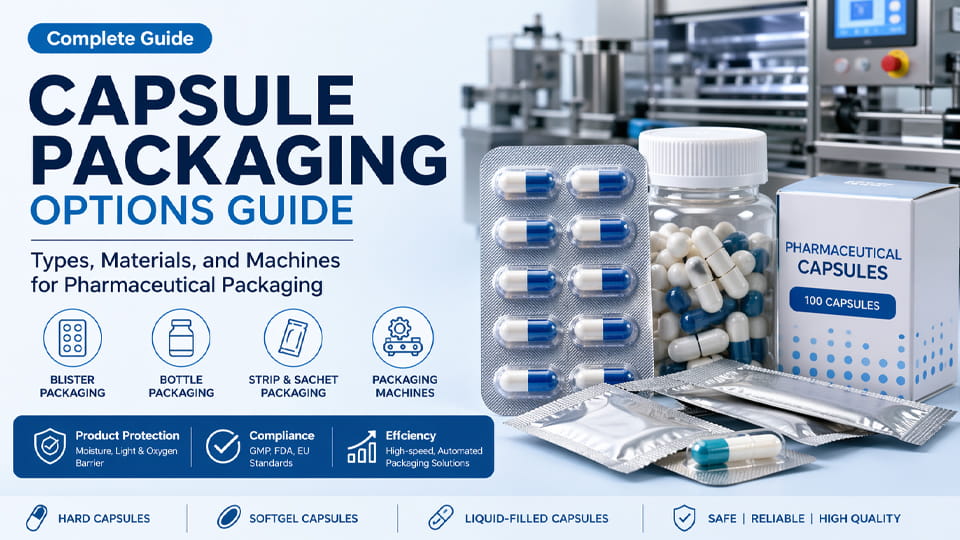
Complete Guide to Capsule Packaging Options: Types, Materials, and Machines for Pharmaceutical Packaging
Complete Guide to Capsule Packaging Options: Types, Materials, and Machines for Pharmaceutical Packaging
April 25, 2026
No Comments
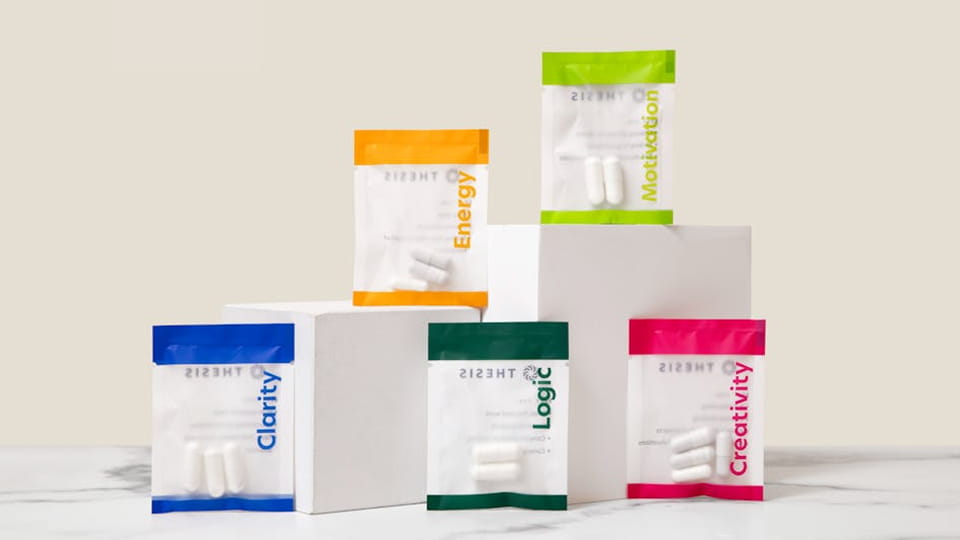
Capsule packaging refers to how pharmaceutical capsules (hard-shell or softgel) are enclosed for distribution and use. It includes primary packaging (the immediate container in contact with the capsules, e.g. blister cavities or bottles) and secondary packaging (outer cartons, boxes, and labels that further protect and identify the product). Good capsule packaging must protect the drug from moisture, light, and contamination, ensure stability through shelf-life, and meet regulatory requirements. For example, WHO notes that “packaging components surround the product from production until use,” and must satisfy functions like protection, stability, and identification. FDA’s GMP regulations (21 CFR 211) require written procedures for inspecting and testing packaging materials upon receipt, and mandate secure labeling and tamper controls. In practice, we must match the capsule product (dosage form, sensitivity, dosage, etc.) to the appropriate packaging format and material.
The primary packaging of pharmaceutical capsules – is critical for product protection, compliance, and patient safety: It keeps capsules dry, uncontaminated, and clearly labeled. For instance, blister packs and amber bottles are known to be ideal for moisture-sensitive medicines. The right packaging also supports patient compliance (unit-dose blister dosing, child-resistant bottles, clear labeling) and supply-chain needs (serialization, logistics). Below we review each option in detail.
Types of Capsule Packaging
Blister Packaging for Capsules
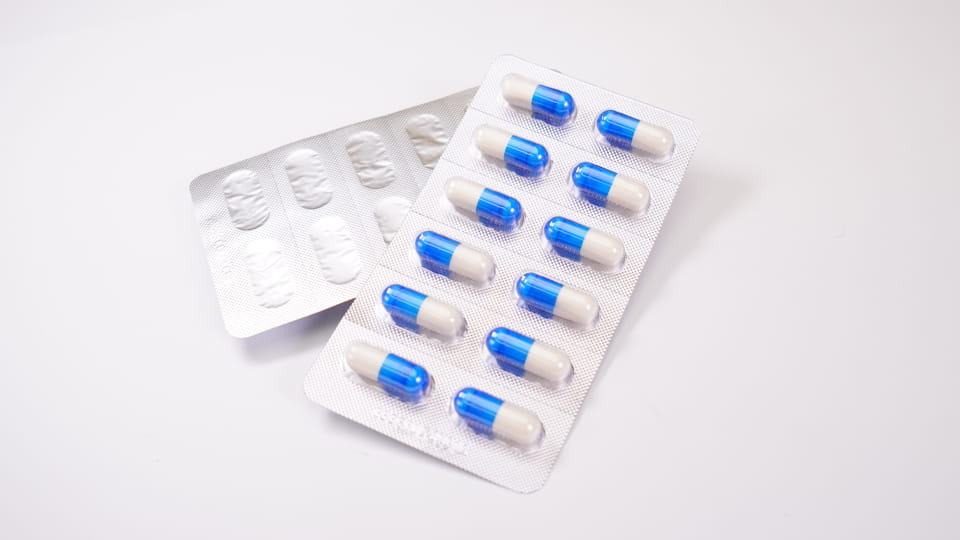
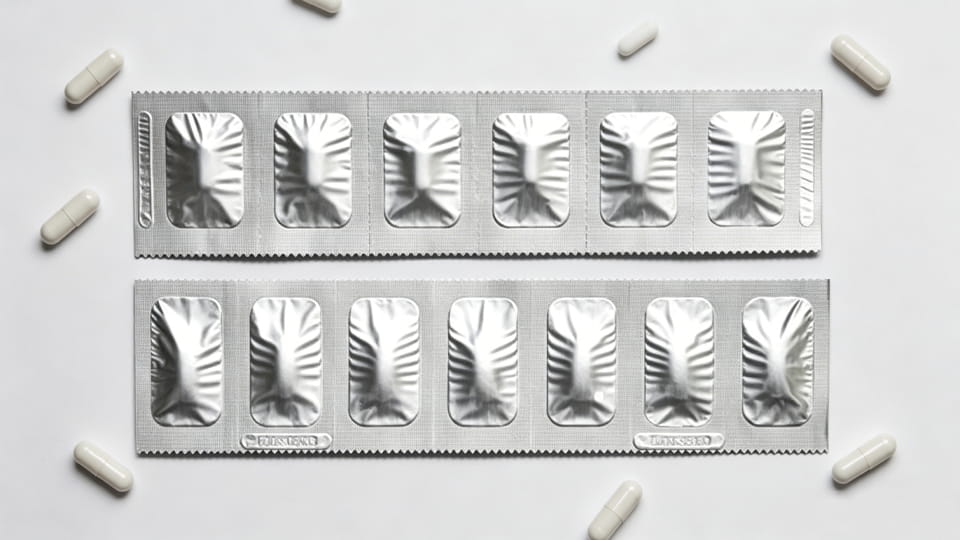
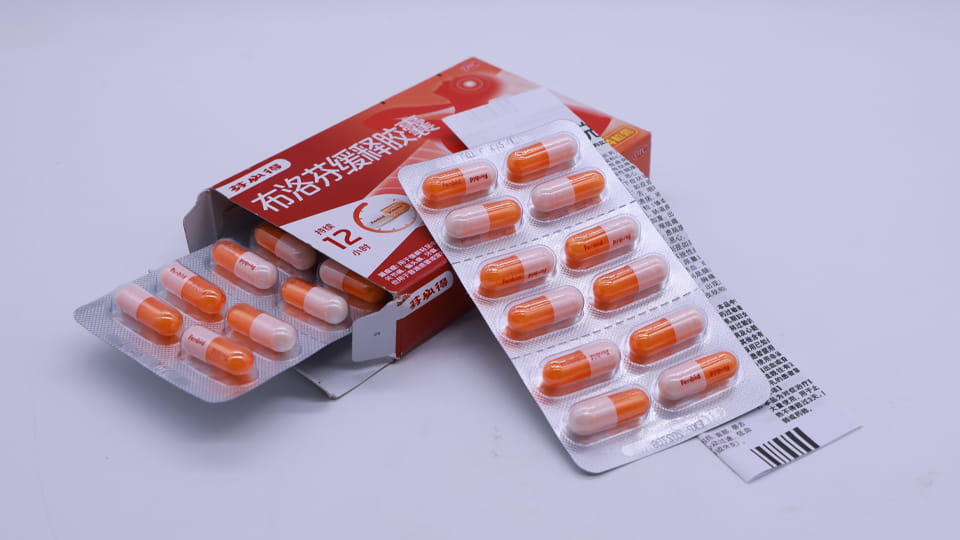
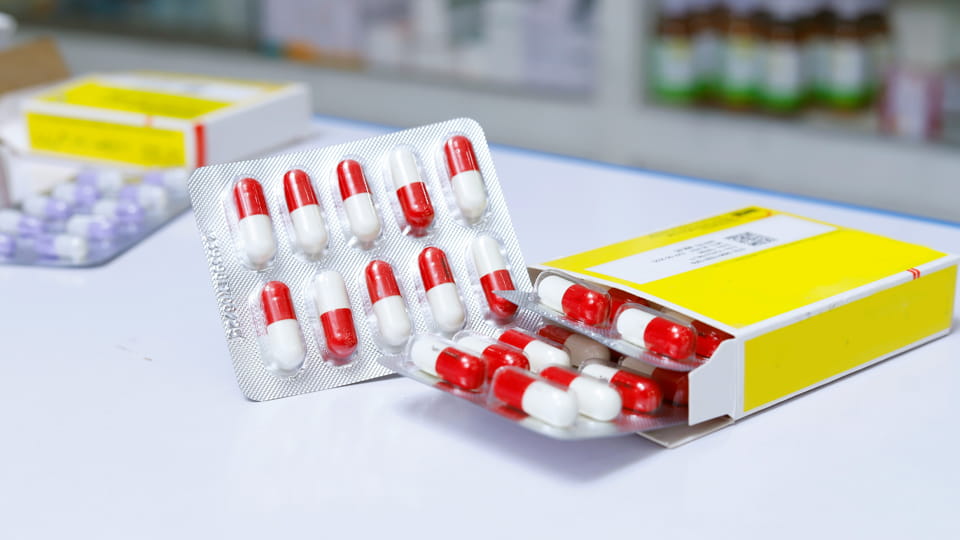
Blister packs consist of pre-formed plastic cavities (“blisters”) that hold individual capsules, sealed with a backing (foil or plastic). This primary packaging offers unit-dose protection. Blisters provide excellent barrier properties: they can be made with materials like PVC/PVDC or foil (Alu-PVC, Alu-Alu) to block moisture, oxygen and light. For example, Jinlu’s DPP-180Pro blister machine can form and seal up to 4,800 capsule blisters per hour in Alu-PVC or Alu-Alu laminates. Key features of capsule blister packaging include:
Protection: Each cavity is hermetically sealed, shielding the capsule from humidity, oxygen and light. As one study notes, blisters “provide superior protection against moisture and light” (better than bottles). High-barrier foils (e.g. Alu-Alu) extend shelf life for hygroscopic or oxygen-sensitive capsules.
Tamper Evidence: A blister clearly shows if a dose has been removed or the seal broken. This ensures product integrity and patient safety.
Convenience: Unit-dose blisters let patients take one capsule at a time, reducing dosing errors and waste. They are especially helpful for short dosing schedules or pediatric formulations.
Customization: Blister packs can be made in various cavity shapes and sizes to fit different capsule dimensions. Modern machinery (like thermoforming or plug-assist machines) easily adapts to capsule sizes.
Space Efficiency: Blisters are compact and stackable. They minimize empty space compared to bottles, saving on shipping and shelf space.
Jinlu’s blister machines (e.g. the DPP-180Pro) can automatically form cavities, feed capsules, seal, cut plates, and even print lot codes. They typically run at medium-high speed (thousands of cavities per hour), ideal for mass production. Different blister formats (Alu-PVC vs Alu-Alu) are selected by product: Alu-Alu (foil-foil) offers the highest barrier (best for very moisture-sensitive drugs), whereas PVC/PVDC is common for standard capsules. Blister packaging also simplifies counting and inspection: most lines easily integrate camera inspection or tablet-counting machines to verify capsule fill.
Bottle (Bottle/Capsule Jar) Packaging
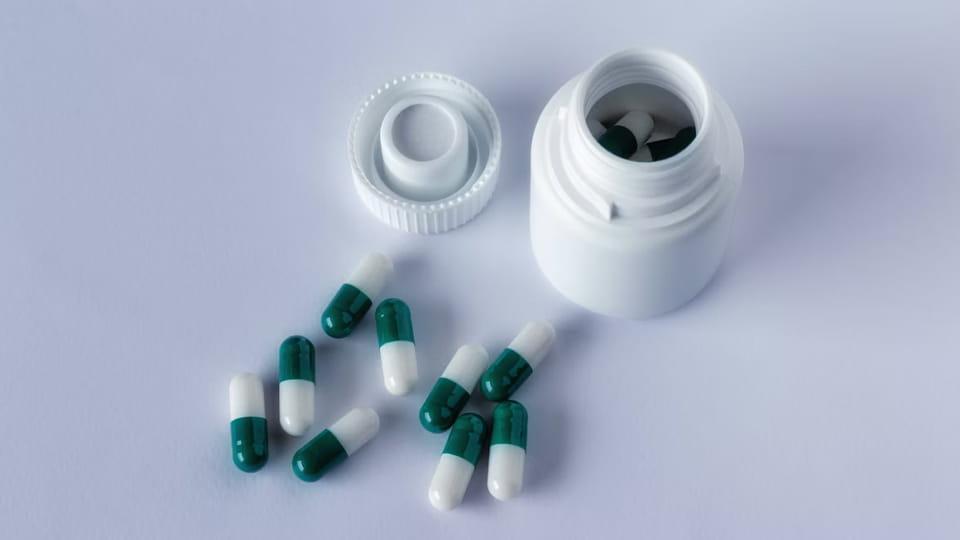
Bottles are the classic multi-dose container. Capsules are filled into bottles (plastic or glass) which are then capped. This format is well known for vitamins, supplements, and many prescription pills. Key features:
Versatility: Bottles can hold large quantities (50–1000+ capsules) and a variety of products (tablets, capsules, powders, even liquids). They are usually made from HDPE or PET plastic, or glass (for strong chemical inertness).
Bulk Packaging: For capsules intended to be taken repeatedly (daily vitamins, long-term therapies), bottles are convenient. Patients can dispense multiple doses at once.
Cost Efficiency: Bottle filling lines are relatively simple. Machines count or weigh out doses faster (e.g. Jinlu’s JL-16H can fill up to 100 bottles/minute). Per-unit material cost is often lower than blister, especially at scale.
Easy Handling: Consumers know how to open bottles. It may be easier for elderly patients to open a bottle (especially with easy-open or child-resistant caps) than peel blisters.
Secondary Packaging: Bottles allow inclusion of auxiliary items like desiccant packets (for moisture control) or cotton. They also accommodate full product labels around the bottle body, and can be packed into cartons.
Figure: Jinlu JL-16H capsule/tablet bottling line (100 bottles/min) with unscrambler, filler, capper, and labeler.
Capsule bottling lines integrate multiple machines: a bottle unscrambler (or feed hopper), a counting-filling machine (that drops X capsules into each bottle), a capping/sealing machine (apply and tighten caps), and a labeling machine. For example, Jinlu’s JL-16H line can handle 3–40 mm capsules, achieving ~100 bottles/min with >99.8% counting accuracy. Bottles can be filled in bulk very rapidly. To meet regulations, bottle lines often include a station for inserting desiccants (e.g. silica packs) and a tamper-evident seal station. Child-resistant caps are another common feature for pediatric meds.
In choosing bottle packaging, consider product volume and stability: high-volume products (e.g. daily vitamins) suit bottles, whereas low-volume or highly sensitive capsules may prefer blisters. Note bottles generally offer less inherent moisture/oxygen protection than high-barrier blisters. Amber glass or opaque containers can add light protection, and inner seals (aluminum foil liners) can improve barrier.
Sachets & Stick Packs (Single-dose Pouches)
Sachets (and stick packs) are flexible packetsthat hold one dose of powder, granules or liquid. While not as common for capsules, they are relevant for related dosage forms (e.g. nutraceutical capsules broken into powder, or powder filler itself). Nonetheless, sachets and stick packs deserve mention in a capsule packaging guide:
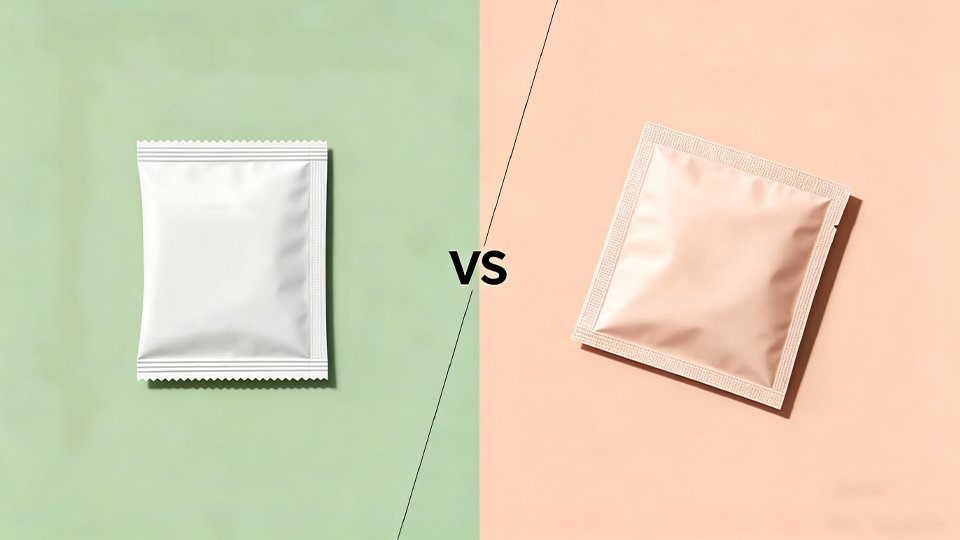
Sachets are usually flat or pillow-shaped packets sealed on 3 or 4 sides. They are often used for single-dose powders (e.g. effervescent granules) or very small capsules (some pharmacies dispense capsules in sachets for pediatric dosing). Modern form-fill-seal machines can fill sachets with exact small volumes. Advantages include portability (fits in pocket), convenience, and precise dosing (no partial waste). Sachets also provide good sealing: the hermetic seal extends shelf life and prevents contamination. Many pharmaceuticals (powders, gels, ointments, single-dose pills) use sachets; for example, emergency injectable rehydration solutions or single-use antibiotic powders.
Stick Packs are long, narrow sachets (often sealed along one long seam plus an end seam). They are popular for powdered supplements (e.g. instant drink mixes) and can be used for capsule powders. Stick packs generally use less material than sachets and machine throughput is higher (30–50% faster). They are ideal for free-flowing powders due to the slender opening.
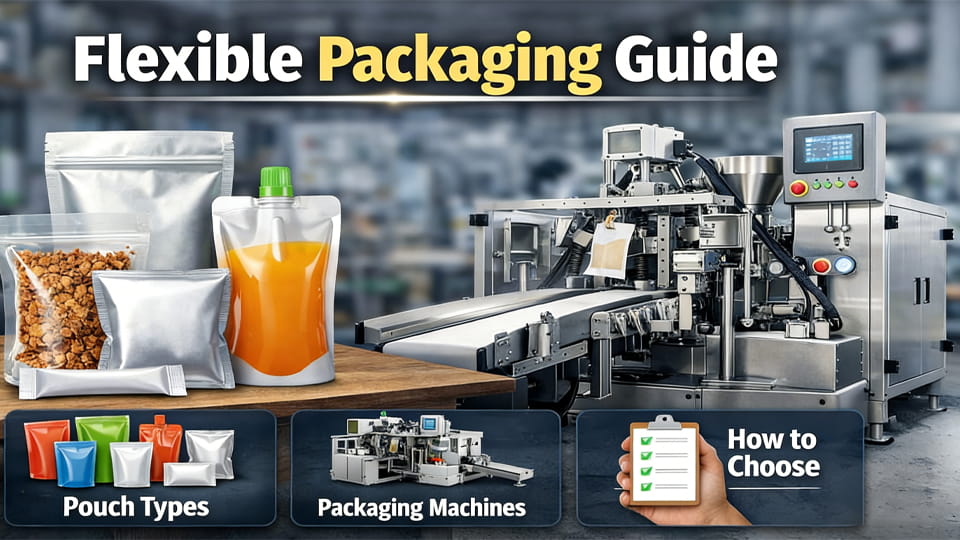
Both sachets and stick packs are produced by vertical form-fill-seal (VFFS) or horizontal FFS machines. Jinlu’s JL-VP series, for instance, is a multi-lane stick/sachet FFS machine (40 bags/min/lane, ±0.02g accuracy) for powders, granules, liquids or gels. If capsules themselves were to be packaged in sachets, one would open the sachet to retrieve the dose – but more commonly, capsules are packaged intact in blister or bottle, while sachets/stick packs handle powdered contents.
Regulatory note: sachets and stick packs are allowed for solid and semisolid drugs (per WHO definitions). They are considered primary packaging if they directly contain the product. Like blisters, sachets can be designed child-resistant or with tear notches.
Strip Packaging
Strip packs (also called foil strips or “dose bands”) are another form of unit-dose primary pack. A strip is typically a narrow web of material (often aluminum or multi-layer laminate) folded over and sealed, with perforations between doses. Unlike blisters, strip packs don’t form deep cavities – instead, the capsule is sandwiched between two layers of film. Strip packs are widely used in Asia and for products where high moisture protection is needed but blisters are too bulky. Key points:
Excellent Barrier: Strip packs often use aluminum foil which is impermeable to moisture and oxygen. This makes them ideal for moisture-sensitive capsules or pediatric meds where long shelf life is needed. WHO even defines strip packs as suitable for “single doses… of solid or semi-solid preparations”.
Compact & Unit-dose: Like blisters, strip packs allow one-dose-at-a-time usage. They are lighter and flatter than blisters, saving space.
Equipment: Strip packing machines form and seal the foil around each capsule. Jinlu offers strip packing machines as well. For example, Rich Packing notes strip packs use aluminum or plastic lamination and can achieve lengths of many doses.
Figure:Strip Packing Machine
From a selection standpoint, strip packs occupy a middle ground between bottle (bulk) and blister (rigidity). They are often chosen when very high moisture barrier is needed but in a thin, lightweight form. (Note: strip packs may not provide tamper evidence as clearly as blisters unless additional seals are used.)
Secondary Packaging & Labeling
After choosing a primary pack, capsules are usually placed into secondary packaging like carton boxes or shrink-wrapped cases. Cartons provide extra protection during shipping, allow additional labeling (drug info, branding, tamper-evident seals), and help organize multi-pack products. Key considerations for secondary packaging:
Cartons & Inserts: Medical cartons must include product inserts (Leaflets with dosage instructions, batch number, expiry, manufacturer info, etc.). These are often paper leaflets inserted into the box.
Tamper Seals: Secondary packaging commonly has tamper-evident seals (e.g. security tapes, shrink bands) to show if the box has been opened.
Serialization/Track & Trace: In many markets (US DSCSA, EU FMD), individual packages must bear unique serial codes (barcodes/QR) for anti-counterfeiting. A robust packaging solution includes label printers or inkjet coders to print lot/batch numbers and 2D codes on cartons.
Child-resistant and Safety Features: For certain drugs, regulations (e.g. 21 CFR 211) mandate child-resistant packaging. This can include blister films that are hard for children to open, or special caps on bottles. Secondary boxes may also have locks or require two-step opening if needed.
Stability and Compliance: The combined primary+secondary system must keep the product stable under labeled storage conditions. For example, ICH stability studies explicitly require testing the final packaged dosage form.
In summary, secondary packaging wraps up the product for final distribution and ensures all labeling and compliance features are in place. Good design here enhances brand image and user convenience (easy-open cartons, clear labeling).
Materials for Capsule Packaging
Choosing the right packaging material is critical for protecting capsules. Materials must be compatible with the drug, meet barrier needs, and comply with regulations (ISO 15378 GMP for packaging materials, etc.). Common materials include:
Blister Films:
PVC (Polyvinyl Chloride): Low-cost, clear plastic often used for blisters. PVC is moisture-permeable (not as protective) unless coated.
PVC/PVDC: PVC coated with PVDC (polyvinylidene chloride) dramatically reduces moisture ingress (common Alu-PVC blister uses a PVDC barrier).
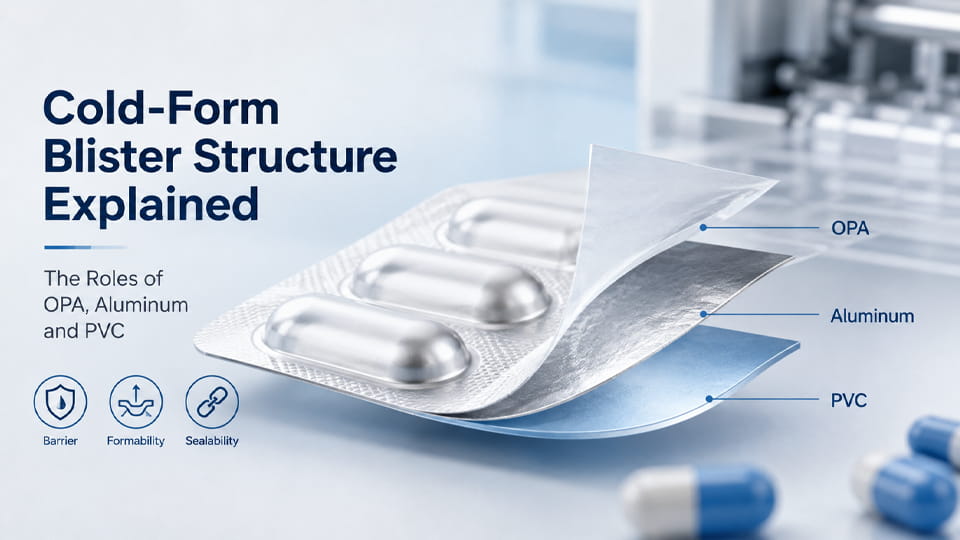
Alu-PVC or Alu-Alu: Aluminum foil laminated to PVC or PET. Alu-PVC provides good barrier to moisture/oxygen (common), while Alu-Alu (foil-foil) provides the highest barrier (used for very hygroscopic or light-sensitive capsules).
Polypropylene (PP): Emerging as a sustainable alternative. PP blisters (monomaterial) can be fully recycled, as with Südpack’s PharmaGuard liner, and still perform well in automated lines.
Bottle Materials:
HDPE (High-Density Polyethylene): Common plastic for pharmaceutical bottles; relatively inert and cost-effective.
PET (Polyethylene Terephthalate): Offers better clarity and rigidity; good barrier vs gases. Often used for nutraceuticals/supplements.
Glass (Type I borosilicate): Used for very moisture-sensitive or parenteral products; glass offers excellent barrier to moisture and chemical inertness. Amber glass also blocks UV light.
Other Films: For sachets and stick packs, multi-layer laminated films (e.g. PET/Alu/PE) are used to control moisture and sealing.
Generally, choose the highest barrier that makes sense for your capsule. For example, a moisture-sensitive gelatin capsule may warrant Alu-Alu blister or an amber glass bottle with desiccant. In contrast, non-sensitive capsules might use standard PVC blister or HDPE bottle. Consider also shelf life: longer-term products need more robust barrier.
Safety/recycle notes: Sustainable trends favor mono-material packs (e.g. PP blisters, recyclable PET bottles). Testing materials for extractables, compatibility, and meeting FDA/EU limits (e.g. USP <661> for plasticizers) is part of packaging compliance.
Capsule Types and Packaging Impact
Capsules come in various types and their formulation dictates packaging needs:
Hard Gelatin Capsules: The most common two-piece shells. They contain dry powders/granules. Gelatin shells hold a bit of moisture and become brittle if too dry, or soft if too wet. Generally, hard gelatin capsules require moderate moisture control. A widely cited storage condition is 15–25°C and 35–65% relative humidity. Packaging should maintain this environment: for example, blister packs with PVDC or Alu-Alu liners, or bottles with desiccants, help stabilize capsules.
HPMC (Vegetarian) Capsules: Made from plant cellulose, these shells usually have lower inherent moisture than gelatin and tolerate up to ~70% RH. They are often used for moisture-sensitive APIs. However, even HPMC capsules require barrier packaging for very hygroscopic or light-sensitive fills. In practice, HPMC capsules + PVC blisters often suffice, but high-barrier still adds safety.
Softgel Capsules (Liquid-Filled):Softgels have a gelatin (or modified gelatin) shell filled with oil or other liquids. They contain significant water (often ~5–10%) in the shell and can lose moisture or become oxidized. Softgels are very moisture-sensitive: they typically require amber glass bottles (with desiccant) or high-barrier blister packs to prevent water loss and maintain potency. Because softgel shells are sensitive to temperature/humidity during manufacturing, cold-chain and specialized packaging are sometimes needed.
Enteric/Modified-Release Capsules: These have special coatings to delay release in the GI tract. The coating adds another layer of sensitivity (it can be pH-sensitive or more fragile). Such capsules should still be kept dry and typically packaged in blister or bottle like any other capsule. The coating demands consistent conditions; hence packaging that assures temperature/RH control during distribution is important.
In short, the capsule shell material and fill type will affect packaging choice. Highly moisture-sensitive formulations always favor the tightest barrier (Alu-Alu blister, foil sachet, or sealed bottle with desiccant). Less sensitive formulations have more options. Always test stability of the final packaged capsule (ICH Q1A requires stability in the proposed container).
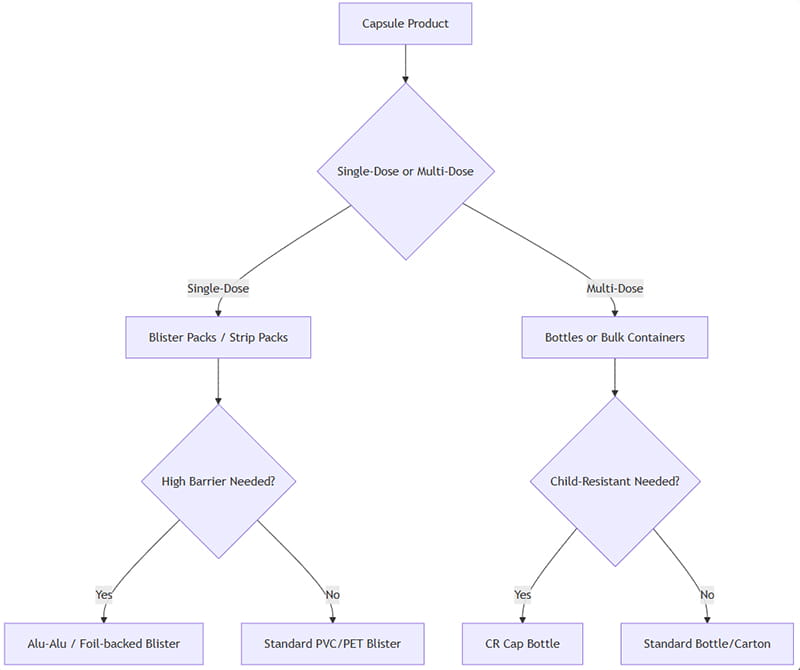
Choosing the Right Packaging (Decision Flowchart)
Selecting an optimal capsule packaging involves evaluating multiple factors: dosage form, patient compliance, product sensitivity, shelf-life, regulatory requirements, and cost. Below is a simplified decision framework:
How to apply this: If the capsules are intended as single units (e.g. tight dosing or retail blister cards), blisters/strips are preferred. For multi-dose (e.g. supplements or high-use drugs), bottles are more efficient. If moisture/light protection is critical, select high-barrier options (Alu-Alu, amber bottle). If pediatric safety is needed, use child-resistant bottle closures or tamper-evident blister designs.
Production scale: Blister machines are high-speed (medium volume), bottle lines excel at large batches, sachet machines handle flexible line rates.
Cost: Balance material vs machine costs. For example, bottles may have lower per-unit labor but higher plastic cost; stick packs use very little film per dose.
Ultimately, pilot testing (stability studies, consumer studies) and total-cost analysis will guide the final decision. The flowchart above is a starting point for typical scenarios.
Capsule Packaging Equipment
Packaging capsules requires specialized machinery. After capsules are filled (by capsule fillers), these are transferred to packaging lines:
Blister Machines: We already noted Jinlu’s DPP-180Pro, a high-speed thermoforming blister machine. It forms cavities (PVC or PET film), feeds capsules (or tablets), and seals with foil, all automatically. Jinlu offers machines (e.g. DPP-180, DPP-270Max) up to 4,800–11,200 cavities/hour. Blister machines are paired with counting feeders to drop exactly one capsule per pocket, and often have punch-cutters to separate blisters into cards. Additional modules (printing/inspection) ensure each blister is legible and correct.
Counting & Filling Lines (Bottle Lines): These turn loose capsules into bottles. A typical line has: a bottle unscrambler (organizes empty bottles), a tablet/capsule counter (vibratory bowl or optical system that counts and drops a set number into each bottle), a capping/sealing machine, and a labeling station. Jinlu’s JL-16H line, for example, scrambles bottles, counts 3–40 mm capsules into them, applies caps, and labels up to 100 bottles/min with 99.98% accuracy. For high volume (bulk packing) operations, modular lines with multiple counting heads or auger fillers can reach higher speeds. Induction or shrink-sealers may also be added for foil-lidding.
Sachet/Stick-Pack Machines: These are form-fill-seal (FFS) machines. Jinlu’s JL-VP series is a multi-lane VFFS system that can produce 30–40 sachets or stick packs per minute per lane. It precisely doses powder or liquid (auger screws for powder, pumps for liquid) and seals 3- or 4-side sachets or 3-side stick packs. Machines include PLC controls for bag length, servo feeders for accuracy (±0.02 g), and hermetic heat sealing. Such machines are ideal for single-dose products, though capsules themselves are rarely “sachet-packed” intact.
Strip Packing Machines: Strip packs are made on specialized machines that heat-seal overlapping foil or film. These often resemble blister machines but use flat film. (If Jinlu offers strip packers, similar integration as sachet machines.)
Secondary Packaging Machines:Cartoning machines can erect cartons, insert blisters or bottles and leaflets, and close boxes. Pharmaceutical cartoners often handle foil blister boards or bags of capsules. Case packers (for outer cases) and palletizers complete the line for mass production.
Equipment compliance: All packaging machines for pharmaceuticals must meet GMP design (stainless steel, cleanable surfaces, validated performance). Jinlu’s machines are CE/cGMP certified, often with configurable guardings and reject systems for out-of-spec pills. Integration is key: for example, a blister machine can feed directly into a cartoner that erects boxes and packs each blister card. Comprehensive systems (from filling to final box) allow end-to-end automation of capsule packaging.
Regulatory and Compliance Considerations
Capsule packaging for pharmaceuticals must adhere to strict regulations. Key points include:
GMP Requirements: FDA’s 21 CFR 211 Subpart G requires written procedures for receipt and testing of all packaging materials before use. This means blisters, bottles, labels, cartons etc. must meet specifications (no defects). Separate storage of packaging materials by product is mandated to prevent mix-ups. WHO’s GMP Annex 9 likewise details packaging controls. Good Manufacturing Practice demands traceability (lot numbers on packaging) and clean handling.
Stability and ICH Guidelines: ICH Q1A(R2) stipulates that stability studies be done on product in its final container closure system. In practice, this means you must package test batches of capsules exactly as planned (same blister foil, same bottle type) and expose them to real/time stability conditions. Any change in packaging may require new stability testing.
Serialization & Traceability: In many markets, unique identifiers (barcodes/2D codes) on secondary packaging (and sometimes primary blisters) are required to track drugs through the supply chain. Lines must include printers or applicators for these codes. Packaging design also often includes tamper-evidence (per US/EU law).
Child-Resistant and Senior-Friendly Packaging: Controlled substances or certain meds require child-resistant features. This often means special caps on bottles (e.g. push-and-turn) or difficult peel blisters. However, patient accessibility must also be considered (easy-open for seniors). Consulting the Poison Prevention Packaging Act (US) or similar regional rules is necessary.
ISO Standards: Primary packaging suppliers should follow ISO 15378 (GMP for primary packaging materials) to ensure quality. Although not directly cited here, this is a commonly recognized standard for packaging manufacturers. Machines themselves should comply with pharmaceutical machinery standards (CE, UL, etc.) and 21 CFR Part 11 if there’s data recording.
Labeling Regulations: Capsules must be labeled with product name, dosage, expiration date, manufacturer, etc. This extends to cartons and blisters (sometimes each blister segment carries some printed info). FDA and EMA have specific requirements on what information must appear on primary and secondary labels.
Overall, meeting FDA, EMA and WHO guidelines is essential. Many packagers work with regulated suppliers (like Jinlu) who can provide validated machines and documentation (IQ/OQ/PQ).
Conclusion
Choosing the right capsule packaging requires balancing protection, usability, and cost. Blister packs, bottles, sachets, and strips each have their place in pharmaceutical packaging. Factors like moisture sensitivity, dose form, and patient needs guide the decision. Alongside, stringent regulatory and GMP requirements must be met.
At Jinlu Packing, we specialize in end-to-end pharmaceutical packaging solutions. Our equipment – from high-speed blister machines to fully automated counting & bottling lines – helps you package capsules efficiently and compliantly. We also support sustainable choices (e.g. machines that run new recyclable films) and offer one-stop service (customization, validation). Our team can help you evaluate the best capsule packaging system for your product.
Ready to optimize your capsule packaging?Contact Jinlu Packing today for expert guidance and quotes. Our solutions are backed by global quality standards and over 3,000 satisfied customers worldwide. Let’s package your capsules for success!
FAQs on Capsule Packaging
What is capsule packaging?
Capsule packaging refers to the process of enclosing pharmaceutical capsules in protective materials to maintain stability, safety, and compliance. Common formats include blister packs, bottles, and strip packaging. In pharmaceutical practice, packaging is not just containment—it protects capsules from moisture, oxygen, and contamination, which directly affects drug quality and shelf life.
What is the best packaging for pharmaceutical capsules?
There is no single “best” option—it depends on your product and market. • Blister packaging → best for moisture-sensitive or high-value drugs • Bottle packaging → best for bulk storage and supplements • Strip packaging → common in cost-sensitive markets Blister packaging is often preferred because it provides unit-dose protection and better environmental isolation.
What materials should I use to protect my capsule product?
Use materials that block the key threats (moisture, oxygen, light). For example, Alu-Alu foil blisters or amber glass bottles offer excellent barrier for moisture-sensitive capsules. PVC or PET blisters with PVDC coating are common and cheaper for stable products. HDPE bottles are standard but may need a desiccant pouch if the capsules are sensitive. Evaluate the water vapor transmission rates (WVTR) of films. In sustainability-conscious production, consider recyclable monomaterials (e.g. PP blisters). Always test packaging compatibility via stability studies.
How does capsule packaging protect drug stability?
Capsules are sensitive to environmental factors such as humidity, oxygen, and light. Proper packaging: • Prevents moisture absorption • Reduces oxidation • Maintains chemical stability Blister packaging, in particular, creates sealed micro-environments for each capsule, significantly extending shelf life.
Which packaging machines do I need for capsules?
It depends on format. For blisters, you need a blister forming/sealing machine (with cavity molds to fit your capsule) plus possibly a cartoner. For bottles, you need a bottle filling/capping line (unscrambler, counter-filler, capper, labeler). For stick packs, use a vertical form-fill-seal sachet machine. Jinlu offers all these: e.g. our DPP series blisters, JL-16H counting line, and JL-VP sachet packer. Selecting the right machine involves capacity, capsule size, and required integrations (vision systems, reject stations, etc.).
How do I decide between blister packs and bottles for a capsule?
Consider factors like dosage (single vs. multiple), stability needs, and patient use. For single-dose convenience and high protection (especially for moisture/light sensitive capsules), blisters are often preferred. For large-volume or economic reasons, bottles are usually chosen. Also, if child-resistant or elderly-friendly features are needed, bottles may offer more options. As a rule, match your capsule’s properties to packaging: e.g. very hygroscopic capsules → Alu-Alu blister; high-demand supplements → bottles.
Petty Fu, Founder of Jinlupacking, brings over 20 years of expertise to the pharmaceutical machinery sector. Under his leadership, Jinlu has grown into a trusted supplier integrating design, production, and sales. Petty is passionate about sharing his deep industry knowledge to help clients navigate the complexities of pharma packaging, ensuring they receive not just equipment, but a true one-stop service partnership tailored to their production goals.