Đặc tả yêu cầu người dùng là gì (URS) trong ngành dược?Hướng dẫn đầy đủ về thiết bị dược phẩm
Đặc tả yêu cầu người dùng là gì (URS) trong ngành dược?Hướng dẫn đầy đủ về thiết bị dược phẩm
Tháng tám 17, 2026
Không có bình luận
MỘT Đặc điểm kỹ thuật yêu cầu người dùng (URS) TRONG sản xuất dược phẩm là tài liệu cơ bản xác định Gì một hệ thống hoặc một phần thiết bị phải hoàn thành để đáp ứng chất lượng, hiệu suất, và nhu cầu pháp lý. Nó được viết bởi chủ sở hữu thiết bị (công ty dược phẩm) và phác thảo các chức năng cần thiết, năng lực, nguyên vật liệu, và tính năng GMP của thiết bị. URS đảm bảo rằng tất cả các bên liên quan (sản xuất, kỹ thuật, QA) đồng ý về các yêu cầu trước khi bắt đầu mua sắm hoặc thiết kế. Nó cung cấp cơ sở cho các đề xuất của nhà cung cấp và trở thành tài liệu tham khảo trong suốt quá trình thiết kế, kiểm tra, và xác nhận.
Bài học chính
URS xác định những gì thiết bị dược phẩm cần đạt được, bao gồm cả mục đích sử dụng của nó, dung tích, hiệu suất, chất lượng, sự an toàn, và yêu cầu vận hành.
tốt URS dược phẩm phải có các yêu cầu rõ ràng và có thể đo lường được điều đó có thể được xác minh sau.
Đối với máy đóng gói, URS có thể bao gồm các thông số kỹ thuật của sản phẩm, định dạng gói, tốc độ sản xuất, nguyên vật liệu, tiện ích, tự động hóa, dọn dẹp, sự an toàn, và tài liệu.
URS không giống như thông số kỹ thuật thiết kế. URS xác định kết quả cần thiết; nhà sản xuất thiết bị phát triển giải pháp kỹ thuật.
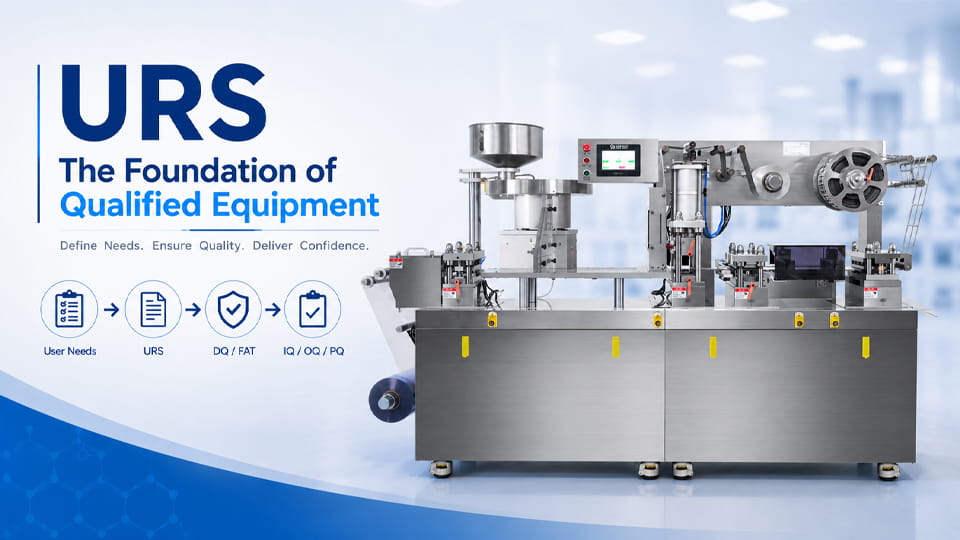
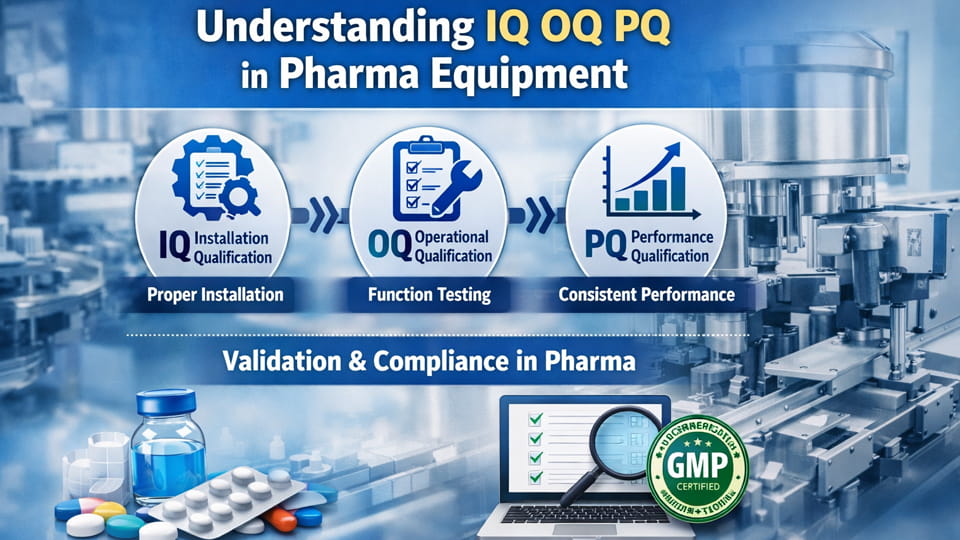
URS có thể cung cấp tài liệu tham khảo cho mua sắm thiết bị, đánh giá nhà cung cấp, ĐQ, MỠ/SAT, chỉ số IQ, OQ, và PQ.
URS rõ ràng giúp giảm bớt hiểu lầm giữa nhà sản xuất dược phẩm và nhà cung cấp thiết bị trước khi thiết kế và chế tạo máy.
Đối với dự án máy đóng gói, người mua càng xác định sớm các yêu cầu như loại sản phẩm, định dạng bao bì, tốc độ mục tiêu, và kỳ vọng của GMP, việc đánh giá thiết bị phù hợp càng trở nên dễ dàng hơn.
Đặc tả yêu cầu người dùng là gì (URS) trong ngành dược?
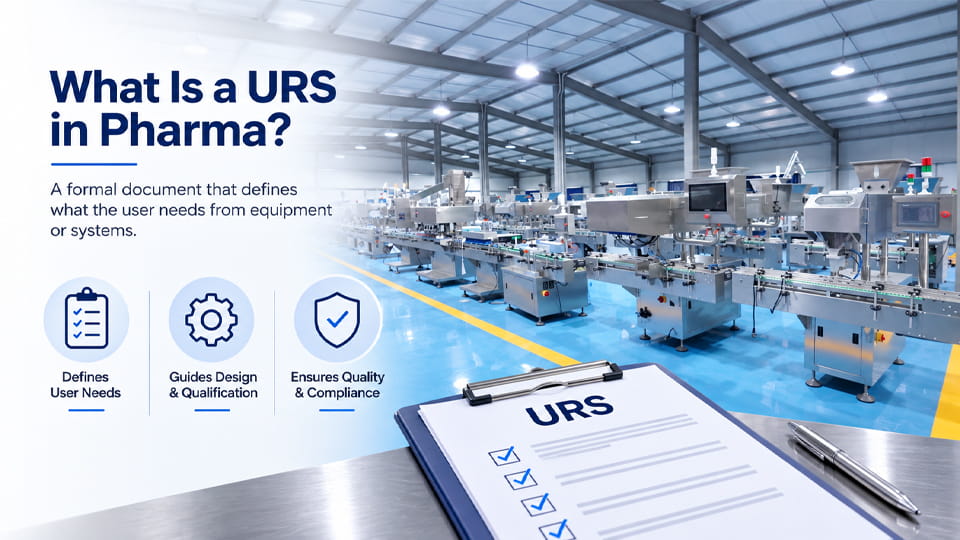
MỘT Đặc điểm kỹ thuật yêu cầu người dùng (URS) là một tài liệu chính thức nắm bắt nhu cầu và mong đợi của người dùng cho một thiết bị hoặc hệ thống trong ngành dược phẩm. Nó mô tả Gì thiết bị phải làm – ví dụ. mục tiêu tỷ lệ sản xuất, định dạng sản phẩm, sự chính xác, và chức năng điều tiết – không cần kê đơn Làm sao để đạt được nó. URS đóng vai trò là cầu nối giữa các kỹ sư quy trình hoặc người dùng sản xuất và nhà cung cấp thiết bị. Nó truyền đạt tầm nhìn và những hạn chế của người dùng để các nhà cung cấp có thể thiết kế, trích dẫn, và xây dựng một hệ thống để đáp ứng những nhu cầu đó.
Ví dụ, URS có thể chỉ định:
Các mục đích sử dụng (ví dụ. “Đóng gói 10–60 vỉ thuốc viên”).
Tiêu chí thực hiện (ví dụ. “ ≥ 100,000 mụn nước mỗi giờ”).
Yêu cầu về quy định và GMP (ví dụ. “Thiết kế hợp vệ sinh, khả năng làm sạch để <10 dư lượng ppm”).
Vật liệu xây dựng (ví dụ. “Tất cả các bộ phận tiếp xúc với sản phẩm bằng thép không gỉ 316L”).
Tiện ích và môi trường (ví dụ. “Hoạt động trong phòng sạch loại C, cần nguồn điện 380V, 6 quán nước”).
Bằng cách xác định rõ ràng các yêu cầu ngay từ đầu, URS trở thành nền tảng cho tất cả các giai đoạn sau – đánh giá thiết kế, đánh giá nhà cung cấp, kiểm tra, và xác nhận. Hướng dẫn quy định (ví dụ. Phụ lục EU 15, FDA 21 Phần CFR 11, GAMP5) rõ ràng mong đợi các yêu cầu được ghi lại của người dùng là điểm khởi đầu cho việc đánh giá chất lượng thiết bị. Trong thực tế, viết URS buộc các nhóm đa chức năng (sản xuất, QA, xác nhận, kỹ thuật) để căn chỉnh chính xác những gì thiết bị phải làm để sản phẩm được sản xuất chính xác.
Tại sao URS lại quan trọng trong sản xuất dược phẩm?
Một URS được xây dựng tốt là rất quan trọng cho sự thành công của dự án tuân thủ GMP. Những lý do chính bao gồm:
Sự rõ ràng của các yêu cầu: URS ghi lại mọi kỳ vọng (đầu ra, chất lượng, sự an toàn, vân vân.) ở một nơi. Điều này tránh nhầm lẫn và đảm bảo nhà cung cấp biết chính xác những gì cần thiết. Không có URS, yêu cầu có thể mơ hồ hoặc bị bỏ qua, dẫn đến việc thiết kế lại tốn kém.
Cơ sở cho việc thẩm định thiết kế (ĐQ): URS đóng vai trò là cơ sở để đánh giá chất lượng thiết kế. Nó cho phép bạn xác minh rằng thiết kế được đề xuất đáp ứng tất cả các yêu cầu. Phụ lục EU GMP 15 tuyên bố rõ ràng rằng “các yêu cầu của đặc tả yêu cầu người dùng phải được xác minh trong quá trình đánh giá thiết kế”.
Xác thực & Kiểm tra: Mọi hoạt động chứng nhận đều quay trở lại URS. Hướng dẫn của FDA giải thích rằng Chứng chỉ Lắp đặt (chỉ số IQ) xác minh việc cài đặt thiết bị theo các thông số kỹ thuật đã được phê duyệt “được xác định trong URS (VÍ DỤ., vật liệu xây dựng)”. Trình độ chuyên môn hoạt động (OQ) kiểm tra xem thiết bị có hoạt động như dự định không, và trình độ thực hiện (PQ) xác nhận nó luôn đáp ứng các thông số kỹ thuật được xác định trong Giai đoạn 1 (URS). Tóm lại, dù ở FAT, ĐÃ NGỒI, chỉ số IQ, OQ hoặc PQ, mỗi bài kiểm tra xác minh một hoặc nhiều yêu cầu URS.
Quản lý rủi ro & Tuân thủ GMP: Bằng cách bao gồm các thuộc tính chất lượng quan trọng (CQA), Đặc điểm thiết kế của GMP, và các yêu cầu quy định trong URS, các đội có thể giải quyết rủi ro sớm. Ví dụ, xác định trước các tiêu chí thiết kế hợp vệ sinh nhằm ngăn ngừa các vấn đề ô nhiễm sau này. Thực tiễn tốt nhất trong ngành nhấn mạnh đến việc kết hợp QA, sự an toàn, và nhu cầu tuân thủ trong URS để “hệ thống cuối cùng đáp ứng cả nhu cầu kinh doanh và tuân thủ”.
Giao tiếp & Lựa chọn nhà cung cấp: URS là tài liệu tham khảo chung giữa công ty dược phẩm và nhà cung cấp thiết bị. Nó cho phép các nhà cung cấp chuẩn bị các đề xuất phù hợp trực tiếp với nhu cầu của người dùng. Nó cũng giúp đánh giá giá thầu – máy có thể được kiểm tra theo URS (thông qua FAT/SAT) để xem cái nào đáp ứng yêu cầu của bạn tốt nhất.
Kiểm soát chi phí và tiến độ: Yêu cầu rõ ràng có nghĩa là ít có khả năng phạm vi phạm vi hoặc các tính năng bị bỏ lỡ. Điều này làm giảm nguy cơ chậm trễ dự án và làm lại tốn kém.
Ví dụ – Danh mục nội dung URS:
Danh mục URS
Yêu cầu ví dụ
Mục đích sử dụng
Thiết bị xử lý những quy trình và sản phẩm nào.
Công suất/Hiệu suất
Tỷ lệ đầu ra (VÍ DỤ., mụn nước/phút), kích thước lô, sự chính xác.
Sản phẩm & Bao bì
Loại sản phẩm, Liều dùng, kích thước gói, vật liệu (VÍ DỤ., PVC).
Nguyên vật liệu (Danh bạ)
Tất cả các bộ phận tiếp xúc với sản phẩm (VÍ DỤ., 316L SS, bề mặt hoàn thiện).
GMP & Làm sạch
Thiết kế hợp vệ sinh, khả năng làm sạch (không có chân cụt), CIP dễ dàng.
Môi trường/Tiện ích
Lớp phòng sạch, nhiệt độ/độ ẩm, quyền lực, không khí, trống, vân vân.
Điều khiển & dữ liệu
Nhu cầu PLC/HMI, lưu trữ công thức nấu ăn, ghi dữ liệu, kiểm soát truy cập.
Sự an toàn
Vệ binh, Dừng lại, khóa liên động, báo động, tiêu chuẩn an toàn.
Tài liệu
Hướng dẫn sử dụng, bản vẽ, giấy chứng nhận, tài liệu đào tạo.
Trình độ chuyên môn
Kế hoạch FAT/SAT, và các sản phẩm IQ/OQ/PQ đạt tiêu chí đạt.
Ghi chú xác minh: Mỗi mục URS phải rõ ràng và có thể đo lường được. Ví dụ, xác định con số chính xác (ví dụ. “100 chai/phút” hoặc “nhiệt độ buồng tối đa 30°C”) để các bài kiểm tra như FAT/OQ có thể xác minh chúng một cách khách quan. Luôn bao gồm các tiêu chí chấp nhận (ví dụ. “con dấu phải giữ 0,01MPa cho 5 giây”) nếu có thể áp dụng.
URS dược phẩm nên bao gồm những gì?
URS dược phẩm thường bao gồm các lĩnh vực này:
Mục đích sử dụng & Phạm vi: Mô tả các bước của quá trình (điền vào, niêm phong, ghi nhãn, vân vân.), sản phẩm và hình thức đóng gói, và cách thiết bị phù hợp với quy trình tổng thể. Điều này đặt bối cảnh cho mọi thứ khác.
Công suất và thông lượng: Xác định đầu ra mục tiêu (đơn vị/giờ hoặc kích thước lô). Ví dụ: "Đóng gói 50,000 gói vỉ theo đơn vị mỗi ca 8 giờ.” Bao gồm mọi điều kiện khởi động/tắt máy hoặc phạm vi tắt máy.
Chi tiết sản phẩm và bao bì: Xác định đặc tính sản phẩm (kích thước máy tính bảng, cân nặng, độ nhạy ẩm) và hình thức đóng gói (loại chai, kích thước thẻ vỉ, kích thước thùng carton). Nếu sử dụng nhiều sản phẩm hoặc kích cỡ, liệt kê từng.
Vật liệu xây dựng: Liệt kê các vật liệu và tiêu chuẩn cần thiết. Trong dược phẩm, Thép không gỉ (304/316L) và polyme cấp FDA thường dùng cho các bộ phận tiếp xúc. Bao gồm các yêu cầu hoàn thiện bề mặt (ví dụ. Ra .80,8 mm) và bất kỳ lớp lót hoặc lớp phủ nào.
Tính năng thiết kế và GMP: Bao gồm các tiêu chí thiết kế hợp vệ sinh (ví dụ. không có chân chết hoặc kẽ hở, khả năng thoát nước). Tham chiếu mọi tiêu chuẩn hoặc hướng dẫn hiện hành (Phụ lục EU GMP 11, ISO, ASTM). Đối với hệ thống máy tính, lưu ý nhu cầu toàn vẹn dữ liệu (dấu vết kiểm toán, chữ ký điện tử theo 21CFR11).
Tiện ích và Môi trường: Chi tiết các tiện ích cần thiết (quyền lực: điện áp/pha, áp suất/lưu lượng khí nén, nước làm mát, trống, vân vân.) và điều kiện môi trường (lớp học phòng sạch, phạm vi nhiệt độ / độ ẩm).
Kiểm soát và dữ liệu: Mô tả nhu cầu tự động hóa: Nền tảng PLC/HMI, ngôn ngữ, quản lý công thức nấu ăn, báo động, và kết nối (Ethernet/SCADA/MES). Nêu rõ mọi yêu cầu về lưu trữ hoặc báo cáo dữ liệu (hồ sơ hàng loạt, Theo dõi OEE).
Yêu cầu an toàn: Liệt kê các tính năng an toàn (ví dụ. rèm cửa nhẹ, dừng khẩn cấp, bảo vệ khóa liên động) và các tiêu chuẩn an toàn liên quan (CN, UL). Bao gồm mọi yêu cầu về công thái học hoặc an toàn cho người vận hành (khóa/gắn thẻ, khu vực LOTO).
Tài liệu và Dịch vụ: Yêu cầu cung cấp hướng dẫn sử dụng, bản vẽ hoàn công, hồ sơ hiệu chuẩn, giấy chứng nhận vật chất, sao lưu phần mềm, và đào tạo cho người vận hành/nhân viên bảo trì.
Kiểm tra và đánh giá chất lượng: Chỉ định FAT (Kiểm tra nghiệm thu tại nhà máy) tiêu chí và phạm vi của IR/WH/PQ. Ví dụ: “Nhà cung cấp phải thực hiện FAT tại cơ sở của mình để chứng minh sự tuân thủ tất cả các điểm URS và cung cấp báo cáo FAT.”
Yêu cầu URS đối với thiết bị đóng gói dược phẩm
Máy móc đóng gói có một số cân nhắc đặc biệt về URS. Ngoài các mục chung trên, bao gồm:
Tốc độ đóng gói: Chỉ định tỷ lệ mục tiêu (ví dụ. 200 chai/phút, 50 thùng/phút, 80 mụn nước/phút). Nếu nhiều máy/dây chuyền được tích hợp, làm rõ thông lượng cho từng.
Phạm vi sản phẩm: Liệt kê tất cả các biến thể sản phẩm phải được xử lý (máy tính bảng vs. viên nang, đường kính chai khác nhau, phong cách mũ lưỡi trai, vân vân.). Nếu dòng xử lý nhiều định dạng, bao gồm yêu cầu lần chuyển đổi và bất kỳ phần định dạng nào cần thiết.
Định dạng gói: Đối với mụn nước, chỉ định kích thước thẻ, bố trí khoang, loại giấy bạc (Độ dày PVC/PVDC, Alu/PVdC). Đối với chai, cung cấp các loại container và khối lượng điền. Đối với thùng carton, chỉ định kích thước và loại đóng cửa. Những chi tiết này đảm bảo máy được cấu hình đúng.
Xử lý vật liệu: Chi tiết bất kỳ nguồn cấp dữ liệu nào, dải phân cách, hoặc sàng cần thiết cho liều lượng rắn. Đối với bột/chất lỏng, chỉ định dung sai liều lượng và nhu cầu hồ chứa.
Nguyên vật liệu: Như mọi khi, tất cả các bộ phận tiếp xúc với sản phẩm phải phù hợp với dược phẩm (ví dụ. SS316L). Nếu có liên quan đến các sản phẩm ăn mòn hoặc có tính axit, lưu ý bất kỳ lớp phủ hoặc vật liệu đặc biệt nào.
Làm sạch & Chuyển đổi: Nếu dự kiến sẽ thay đổi sản phẩm thường xuyên, yêu cầu các bộ phận giải phóng nhanh hoặc CIP (Vệ sinh tại chỗ) đặc trưng. Đối với dòng vô trùng, quy định cách phân loại phòng sạch và phương pháp khử trùng.
Điều khiển: ví dụ. “Đường dây sẽ sử dụng PLC Allen-Bradley với giao diện SCADA, hỗ trợ kiểm soát công thức.” Chỉ định bất kỳ sự xê-ri hóa hoặc kết nối nhãn nào với thiết bị ngược dòng/hạ lưu.
Tích hợp: Nếu một phần của một dòng lớn hơn, yêu cầu khả năng tương thích (ví dụ. băng tải, theo dõi hàng loạt, máy quét mã vạch). Ghi lại bất kỳ giao diện nào (điện, cơ khí, giao tiếp) cần thiết.
Tiện ích: Dây chuyền đóng gói thường xuyên cần khí nén (ví dụ. 5 thanh ở X NL/phút) và có thể sử dụng chân không hoặc nitơ. Đưa ra yêu cầu tối thiểu.
Sự an toàn: Với nhiều nhà khai thác xung quanh, bao gồm rèm chắn sáng hoặc điều khiển bằng hai tay tại trạm nạp/loại bỏ. URS phải phản ánh các quy tắc an toàn trên trang web của bạn (ví dụ. Tuân thủ CE).
Ví dụ, máy đóng vỉ URS có thể bao gồm: “Khả năng giữ nhiệt lên tới 200°C, chứa màng PVC/PVDC dày 300µm, tích hợp bộ nạp vỉ và băng tải trang trí, 4-theo dõi định dạng vỉ với sự thay đổi <15 phút, tất cả các bộ phận tiếp xúc trong SS316L, đầu ra ≥80 vỉ/phút tại 100% hiệu quả." Những chi tiết cụ thể như vậy cho phép người chế tạo máy đáp ứng được nhu cầu chính xác của bạn.
URS phù hợp như thế nào với quy trình đánh giá năng lực?
URS là điểm khởi đầu của vòng đời đánh giá chất lượng thiết bị. Một luồng đơn giản hóa là:
URS → DQ: Sau khi URS được phê duyệt, thiết kế thiết bị (bản vẽ, thông số kỹ thuật) được xem xét trong Tiêu chuẩn thiết kế để đảm bảo đáp ứng tất cả các yêu cầu của URS. Trong một đánh giá thiết kế, các kỹ sư và QA xem xét các kết quả đầu ra của thiết kế, so sánh chúng với từng hạng mục URS.
URS → FAT/SAT: Kiểm tra chấp nhận tại nhà máy (MẬP) được thực hiện tại địa điểm của nhà cung cấp để chứng minh máy đáp ứng URS trước khi vận chuyển. Phụ lục 15 thậm chí còn đề nghị xác minh việc tuân thủ URS tại địa điểm của nhà cung cấp nếu hợp lý. Sau khi cài đặt, Kiểm tra chấp nhận trang web (ĐÃ NGỒI) xác nhận mọi thứ vẫn hoạt động tại chỗ (đôi khi các bước FAT và SAT trùng nhau).
URS → IQ: Chứng chỉ Cài đặt kiểm tra xem thiết bị đã cài đặt có khớp với thông số kỹ thuật URS không. Ví dụ, Hướng dẫn của FDA nêu rõ IQ phải xác minh rằng “tất cả các khía cạnh của cơ sở, tính thiết thực, hoặc thiết bị có thể ảnh hưởng đến chất lượng sản phẩm… tuân thủ các thông số kỹ thuật đã được phê duyệt như được xác định trong URS (VÍ DỤ., vật liệu xây dựng)”. Trong thực tế điều này có nghĩa là kiểm tra đường ống, điện, và các chi tiết cấu trúc chống lại URS.
URS → OQ/PQ: Kiểm tra trình độ vận hành rằng máy hoạt động như dự định. FDA lưu ý OQ xác minh thiết bị “vận hành[S] như dự định trong phạm vi hoạt động dự kiến”. Sau đó, Chứng chỉ Hiệu suất sẽ hiển thị đầu ra nhất quán đáp ứng các tiêu chí do URS xác định. Nói cách khác, theo OQ/PQ, bạn chạy máy bằng vật liệu thực và xác nhận số liệu (tốc độ, năng suất, tỷ lệ lỗi, vân vân.) theo URS.
Ở mỗi giai đoạn, các giao thức kiểm tra được truy nguyên theo yêu cầu của URS. Nếu URS thông báo “Phân phối 100 ml ±2%,” thì các xét nghiệm OQ sẽ đo thể tích phân phối để đáp ứng điều đó. URS biến các mục tiêu mơ hồ thành các thử nghiệm khách quan.
URS so với thông số chức năng so với thông số thiết kế
Điều quan trọng là phải biết những tài liệu này khác nhau như thế nào:
Tài liệu
Định nghĩa (Phạm vi)
Tác giả
Đặc điểm kỹ thuật yêu cầu người dùng (URS)
Người dùng cần hệ thống làm gì (nhu cầu chức năng và quy định).
Công ty dược phẩm (người sở hữu)
Đặc điểm chức năng (FS)
Hệ thống sẽ đáp ứng URS như thế nào (chức năng, module phần mềm, đặc trưng).
Kỹ thuật/Nhà cung cấp
Đặc điểm thiết kế (DS)
Giải pháp chi tiết (bản vẽ, BOM, mã số, cấu hình).
Kỹ thuật/Nhà cung cấp
Các URS câu trả lời Gì câu hỏi: “Hiệu suất nào, sự an toàn, và các tính năng tuân thủ được yêu cầu?” Nó để ngỏ các phương pháp giải.
Các Thông số chức năng chia URS thành các chức năng hệ thống (ví dụ. “Hệ thống điều khiển sẽ tự động dừng khi có cảnh báo và ghi lại mã lỗi”).
Các Thông số thiết kế cung cấp thiết kế thực tế (bản vẽ cad, Mã PLC, chi tiết nhà cung cấp/nhà sản xuất).
Tránh chỉ định quá mức trong URS. Ví dụ, không bắt buộc sử dụng nhãn hiệu PLC hoặc loại động cơ cụ thể trừ khi thực sự cần thiết. URS nên tập trung vào nhu cầu, không thiết kế chi tiết. Như các chuyên gia trong ngành lưu ý, bao gồm quá nhiều chi tiết kỹ thuật trong URS có thể hạn chế các giải pháp linh hoạt. Thay vào đó, những chi tiết đó thuộc về thông số kỹ thuật Chức năng/Thiết kế.
Ai chịu trách nhiệm chuẩn bị URS?
Nói chung là, các người sử dụng dược phẩm (người mua) chịu trách nhiệm về URS. Một nhóm đa chức năng thường soạn thảo nó:
Kỹ sư sản xuất/quy trình: Xác định mục đích sử dụng, thông lượng, và tích hợp quy trình.
Đảm bảo chất lượng/Xác nhận: Cung cấp các yêu cầu GMP, nhu cầu toàn vẹn dữ liệu, và tiêu chí quy định.
Bảo trì/Kỹ thuật: Chỉ định tiện ích, phụ tùng thay thế, quyền truy cập bảo trì, và không gian lắp đặt.
Quy định/QA: Đảm bảo các phụ lục hoặc hướng dẫn (Phụ lục 15, Phụ lục 1 cho vô trùng, vân vân.) được giải quyết.
Mua sắm: Điều phối định dạng tài liệu và có thể làm rõ các điểm kỹ thuật.
Nhà cung cấp thiết bị có thể cung cấp đầu vào (điều gì khả thi, hiệu suất điển hình, vân vân.), nhưng URS cuối cùng phải đến từ người dùng. Thu hút sự tham gia sớm của tất cả các bên liên quan (sản xuất, QA, kỹ thuật, xác nhận) là một cách thực hành tốt nhất. Ví dụ, QA có thể đáp ứng yêu cầu vệ sinh, và Quy trình có thể chỉ định kích thước nguồn cấp dữ liệu. URS nên tích hợp những quan điểm này để phản ánh thực sự nhu cầu của bạn.
Cách viết một URS dược phẩm tốt
Thực hiện theo các bước sau để tạo sự rõ ràng, URS có thể kiểm tra được:
Xác định mục đích sử dụng: Bắt đầu với mô tả và mục đích hệ thống ngắn gọn (ví dụ. “URS cho máy rót chất lỏng thuộc dòng sản phẩm ABC”). Điều này tạo tiền đề.
Liệt kê các quy định/tiêu chuẩn áp dụng: Bao gồm hướng dẫn có liên quan (Phụ lục EU GMP 15/11, 21 Phần CFR 11, THỂ THAO 5, vân vân.) vì vậy nhu cầu tuân thủ không bị bỏ qua.
Hãy cụ thể và có thể đo lường được: Yêu cầu của nhà nước với các giá trị hoặc thử nghiệm chính xác. Thay vì “tốc độ cao”, chỉ định “tối thiểu 500 chai/giờ tại 80% đổ đầy". Mỗi yêu cầu phải được kiểm chứng một cách khách quan.
Chi tiết nhu cầu về sản phẩm và quy trình: Mô tả các biến thể của sản phẩm, tính chất vật chất, điều kiện môi trường. Ví dụ: “Đường kính viên 6–10mm; hoạt động ở 20–25°C, 40–60% RH.”
Chỉ định tiêu chí vật liệu và thiết kế: Xác định rõ ràng vật liệu liên lạc (ví dụ. SS316L), kết thúc (Ra), lớp học sạch sẽ, vân vân. Điều này cho phép kiểm tra IQ xác nhận thông số kỹ thuật “được xây dựng”.
Bao gồm các tiện ích và yêu cầu về không gian: Nguồn điện tài liệu, áp suất/lưu lượng không khí, chất lượng nước, trọng lượng, và bất kỳ yêu cầu đặc biệt nào về nền tảng hoặc phòng.
Mô tả các biện pháp kiểm soát và xử lý dữ liệu: Chỉ định tùy chọn hệ thống điều khiển (thương hiệu PLC, ngôn ngữ HMI), số công thức nấu ăn, ghi nhật ký cảnh báo/sự kiện (lộ trình kiểm toán cho CFR 21Part 11), vân vân. Nếu đường dây phải tích hợp với MES, lưu ý nó.
Tóm tắt các tính năng an toàn: Liệt kê các khóa liên động an toàn cần thiết, canh gác, dừng khẩn cấp, và tuân thủ các tiêu chuẩn an toàn (CN, UL). Đừng bỏ qua sự an toàn của người vận hành (ví dụ. thắp sáng, thang, khóa/gắn thẻ).
Kế hoạch cho FAT/SAT: Cho biết máy sẽ trải qua FAT và SAT, và tiêu chí chấp nhận nào sẽ được kiểm tra (ví dụ. “Tất cả các điểm URS sẽ được đưa vào giao thức FAT với kết quả đo được”).
Xem xét và sửa đổi: Đảm bảo mọi yêu cầu đều rõ ràng, rõ ràng, và có thể truy nguyên. Chỉ định ID duy nhất nếu hữu ích cho việc theo dõi. Tham gia QA/Xác thực để xác minh không có gì quan trọng bị thiếu.
Các phương pháp hay nhất chính: thu hút người dùng từ tất cả các nhóm, sử dụng ngôn ngữ đơn giản, và tránh những thuật ngữ mơ hồ. Một URS tốt sử dụng danh sách dấu đầu dòng hoặc bảng, và mỗi mục đều có tiêu chí để kiểm tra. Như một nguồn tin trong ngành đưa ra: mỗi yêu cầu phải “cụ thể và có thể kiểm tra được”. Lối này, bạn có thể liên kết trực tiếp từng bước FAT/IQ/OQ với một mục URS.
Những lỗi thường gặp khi viết URS
Quá mơ hồ: Những yêu cầu như “dễ sử dụng” hay “tốc độ cao” không có số là không thể kiểm chứng được. Luôn định lượng hoặc chỉ định tiêu chí chấp nhận.
Ngôn ngữ lấy thiết kế làm trung tâm: Viết “PLC phải là Siemens” hoặc “dùng ba động cơ” vượt quá URS. Giữ sự tập trung vào nhu cầu (Gì, không phải thế nào).
Thiếu phương pháp xác minh: Nếu bạn không thể nói cách kiểm tra nó, nó cần được làm rõ. Ví dụ, “phải bịt kín đúng cách” phải bao gồm thông số kiểm tra rò rỉ.
Xem xét tính toàn vẹn của dữ liệu/GMP: Quên đề cập đến báo động, sao lưu dữ liệu, hoặc một phần 11 việc tuân thủ có thể gây ra các vấn đề về kiểm toán.
Bỏ qua tiện ích/môi trường: Thiếu sót phổ biến là áp suất không khí, pha điện, hạng phòng, hoặc thậm chí tổng trọng lượng (tải trọng sàn).
Bỏ qua việc dọn dẹp/chuyển đổi: Trong dược phẩm, CIP và chuyển đổi nhanh thường rất quan trọng. Việc bỏ qua chúng có thể dẫn đến việc phải thiết kế lại sau này.
Không có sự tham gia của tất cả các bên liên quan: Nếu QA hoặc sản xuất không liên quan, yêu cầu (ví dụ. khả năng làm sạch, nhu cầu điều hành) có thể bị bỏ lỡ.
Kỳ vọng không thực tế: Hứa hẹn quá mức hoặc đánh giá thấp nhiệt độ có thể gây tác dụng ngược. Số cơ sở trên dữ liệu quá trình thực tế.
Không kiểm soát phiên bản: Việc coi URS như một bản nháp có thể chỉnh sửa có thể khiến các nhóm bối rối. Sau khi hoàn thành, nó phải là một tài liệu được kiểm soát.
URS quá chung chung hoặc quá chi tiết đều có thể gây rắc rối. Mục tiêu rõ ràng, nhu cầu người dùng rõ ràng.
Ví dụ về máy đóng gói dược phẩm URS
Dưới đây là ví dụ đơn giản về các mục nhập URS cho một Máy đóng gói phồng rộp. (Giá trị thực tế sẽ đến từ các sản phẩm và mục tiêu cụ thể của bạn.)
Yêu cầu
Ví dụ (Máy đóng gói phồng rộp)
Loại máy
Máy đóng gói vỉ quay tự động
Các sản phẩm
Máy tính bảng (6–10mm Ø) và viên nang (8–12mm Ø)
Vật liệu vỉ
Phim PVC/PVDC 300 μm, hoặc lá Alu/PVdC 20/30 μm
Số lượng bài hát
4-máy theo dõi (cho chu kỳ phồng rộp)
Tốc độ đầu ra
≥ 80 đầy mụn nước mỗi phút
Niêm phong
Phớt nhiệt với dụng cụ trên/dưới; nhiệt độ niêm phong 170–200°C; lực niêm phong 3kN
Chuyển đổi
Thay đổi định dạng trong < 30 phút giữa các sản phẩm
Sự thi công
Thép không gỉ SS316L cho các bộ phận tiếp xúc với sản phẩm, Ra ≤ 0.8 μm
Hệ thống điều khiển
PLC Allen-Bradley với 10″ HMI; lưu trữ công thức lên đến 20 định dạng
Tiện ích
400 VAC, 5 thanh khí nén (100 NL/phút), 50 Công suất Hz
Sự an toàn
Bộ phận bảo vệ và E-stop tuân thủ tiêu chuẩn CE; cửa truy cập khóa liên động
Tài liệu
Hướng dẫn sử dụng, sơ đồ nối dây, Giao thức FAT/IQ/OQ, tài liệu hiệu chuẩn
Hỗ trợ trình độ chuyên môn
FAT tại trang web của nhà cung cấp bao gồm tất cả các điểm URS; nhà cung cấp cung cấp tài liệu IQ/OQ/PQ
Ghi chú: Đây là những ví dụ minh họa. URS thực tế của bạn sẽ bao gồm các giá trị liên quan đến kích thước sản phẩm của bạn, cấp phòng sạch, yêu cầu quy định, và kế hoạch xác nhận.
Máy đóng gói Blister chất lỏng DPP-270PRO
Danh sách kiểm tra URS để mua sắm thiết bị
Trước khi hoàn tất URS, đảm bảo bạn đã bảo hiểm:
Mục đích sử dụng / bước xử lý
Loại sản phẩm và hình thức đóng gói
Năng lực sản xuất và phạm vi hoạt động
Vật liệu xây dựng và hoàn thiện bề mặt
Tính năng thiết kế vệ sinh/GMP
Yêu cầu làm sạch và CIP
Tiện ích và điều kiện môi trường
Kiểm soát và tính toàn vẹn dữ liệu (HMI, SCADA, Phần CFR21 11)
Yêu cầu về an toàn và bảo vệ
Tài liệu (hướng dẫn sử dụng, bản vẽ, giấy chứng nhận)
FAT/SAT và các sản phẩm đạt tiêu chuẩn
BẢO TRÌ, phụ tùng thay thế, và nhu cầu đào tạo
Tài liệu tham khảo quy định (ví dụ. Phụ lục 15, Phụ lục 1)
Danh sách kiểm tra đầy đủ giúp nắm bắt những phần còn thiếu trước khi nhà cung cấp đấu thầu dự án.
Phần kết luận
MỘT Đặc điểm kỹ thuật yêu cầu người dùng (URS) là điểm khởi đầu cho bất kỳ dự án thiết bị dược phẩm nào. Nó xác định nhu cầu của người dùng và trở thành nền tảng cho việc xác nhận và thiết kế thiết bị tuân thủ. Bằng cách đánh vần Gì thiết bị phải làm – rõ ràng, tiêu chí có thể đo lường được – URS hướng dẫn việc mua sắm, đề xuất nhà cung cấp, và kiểm tra trình độ.
Đối với dây chuyền đóng gói dược phẩm, URS mạnh đảm bảo cho bạn máy đóng gói vỉ, quầy máy tính bảng, thùng giấy, và máy đóng chai cung cấp sản lượng cần thiết và đáp ứng tiêu chuẩn thiết kế GMP. Khi sản xuất của bạn, QA, và các nhóm kỹ thuật cộng tác trên URS, bạn giảm thiểu những hiểu lầm và thiết lập một con đường suôn sẻ đến FAT, chỉ số IQ, OQ, và PQ.
Nếu bạn đang chuẩn bị URS cho máy hoặc dây chuyền đóng gói, nhớ: xác định những gì bạn cần, làm cho nó có thể đo lường được, và liên kết nó với các yêu cầu của GMP. Jinlu Bao bì chuyên máy móc đóng gói dược phẩm – từ đóng gói theo vỉ và đóng viên nang đến dây chuyền đóng thùng và đóng chai. Với URS rõ ràng trong tay, chúng tôi có thể điều chỉnh các đề xuất thiết bị và hỗ trợ xác nhận theo yêu cầu chính xác của bạn.
Liên hệ với Jinlu Đóng gói để được hỗ trợ từ chuyên gia trong việc xác định và xác định chất lượng máy đóng gói dược phẩm tiếp theo của bạn. Đội ngũ giàu kinh nghiệm của chúng tôi có thể giúp chuyển URS của bạn thành một tài liệu tuân thủ, giải pháp hiệu suất cao.
Câu hỏi thường gặp về Đặc tả yêu cầu của người dùng (URS) trong ngành dược
Đặc tả yêu cầu người dùng là gì (URS) trong dược phẩm?
URS là tài liệu bằng văn bản nêu chi tiết những mong đợi của người dùng đối với máy hoặc hệ thống trước khi nó được thiết kế hoặc mua. Nó liệt kê hiệu suất, chức năng, và nhu cầu tuân thủ mà thiết bị phải đáp ứng. Nói cách khác, nó cho nhà cung cấp biết chính xác quy trình yêu cầu gì.
Tại sao URS lại quan trọng trong ngành dược phẩm?
URS đảm bảo rằng thiết bị được phát triển theo tiêu chuẩn GMP, sự an toàn, và yêu cầu về tính toàn vẹn dữ liệu. Nó cung cấp sự rõ ràng về những gì cần thiết để các nhà thiết kế có thể xây dựng, hệ thống chất lượng cao. Không có URS rõ ràng, thiết bị có thể thiếu các yêu cầu chính, dẫn đến việc làm lại tốn kém hoặc không tuân thủ quy định.
Ai thường viết URS?
Thông thường những người điều hành quá trình (chuyên gia sản xuất hoặc sản phẩm) soạn thảo URS, với đầu vào từ kỹ thuật, QA, và các nhóm xác nhận. Điều này đảm bảo tất cả các quan điểm được bao phủ. Việc xem xét và phê duyệt cuối cùng phải có sự tham gia của QA để xác nhận các nhu cầu pháp lý được đáp ứng.
Khi nào nên tạo URS?
Cần chuẩn bị URS trước khi mua hoặc chế tạo thiết bị – ngay sau khi có quyết định rằng cần có hệ thống mới, và trước khi thiết kế chi tiết hoặc lựa chọn nhà cung cấp.
Những gì nên có trong URS?
Các phần chính của URS dược phẩm thường bao gồm phạm vi dự án, yêu cầu chức năng (nó làm gì), yêu cầu về hiệu suất (nó làm tốt thế nào), nhu cầu tuân thủ quy định, tính toàn vẹn dữ liệu, và tiêu chí chấp nhận. Nó cũng có thể bao gồm các phần về an toàn, BẢO TRÌ, tài liệu, đào tạo, vân vân.
Sự khác biệt giữa URS và Thông số yêu cầu chức năng là gì (FRS)?
URS xác định những gì người dùng cần (nhu cầu kinh doanh, chức năng cấp cao). FRS (hoặc thông số chức năng) đến sau và mô tả cách hệ thống sẽ thực hiện điều đó. Hãy nghĩ về URS như “chúng tôi cần đầu ra X và độ chính xác Y”, trong khi FRS sẽ nêu chi tiết giải pháp kỹ thuật hoặc quy trình làm việc để đạt được điều đó. Nói chung là, không trùng lặp các thông số chức năng trong URS.
Làm cách nào để liên kết URS với xác thực (IR/WH/PQ)?
URS là cơ sở cho tất cả các thử nghiệm xác nhận. Mỗi hoạt động đánh giá đều truy ngược lại các yêu cầu trong URS. Ví dụ, nếu URS yêu cầu 10,000 chai/giờ, PQ (Trình độ chuyên môn) sẽ kiểm tra đầu ra đó. Phụ lục 15 nêu rõ các yêu cầu URS phải được xác minh trong DQ và dùng làm tài liệu tham khảo trong suốt IQ/OQ/PQ.
Nhà cung cấp có thể viết URS cho chúng tôi không?
Trong khi nhà cung cấp có thể làm rõ cách họ sẽ đáp ứng các yêu cầu, URS phải vẫn thuộc sở hữu của người dùng. Nó phải phản ánh quy trình cụ thể của bạn và các ưu tiên của GMP, không chỉ là những gì nhà cung cấp đã xây dựng trước đây. Bạn có thể nhận được ý kiến đóng góp của nhà cung cấp về tính khả thi về mặt kỹ thuật, nhưng URS cuối cùng phải được nhóm của bạn xác thực (QA/xác nhận) để tránh sự thiên vị.
Là URS được cơ quan quản lý yêu cầu?
Đúng. hướng dẫn GMP (Phụ lục EU 15, FDA 21 CFR, vân vân.) yêu cầu các thông số kỹ thuật được ghi lại cho thiết bị. Phụ lục 15 yêu cầu rõ ràng về URS hoặc thông số kỹ thuật tương tự khi bắt đầu vòng loại. Tương tự, Phần của FDA 11 và GAMP5 nhấn mạnh việc có các yêu cầu được ghi chép rõ ràng. Trong quá trình kiểm toán, cơ quan quản lý sẽ mong đợi thấy URS hoặc thông số kỹ thuật cho từng máy quan trọng.
Điều gì xảy ra nếu chúng ta bỏ qua URS?
Việc bỏ qua hoặc viết URS kém thường dẫn đến các lỗ hổng trong thiết kế và các vấn đề về tuân thủ. Bạn có thể gặp phải những máy móc không đáp ứng được nhu cầu sản xuất hoặc thiếu các tính năng quan trọng của GMP. Pharmaguideline cảnh báo rằng URS mơ hồ gây ra “chi phí quá cao liên quan đến việc thiết kế lại và đủ tiêu chuẩn thiết bị do thiếu sự rõ ràng”. Luôn bắt đầu với URS tốt – đó là con đường hiệu quả nhất để tuân thủ, hệ thống theo thông số kỹ thuật.
Petty fu, Người sáng lập Jinlupacking, mang lại 20 năm kinh nghiệm trong lĩnh vực máy móc dược phẩm. Dưới sự lãnh đạo của ông, Jinlu đã phát triển thành một nhà cung cấp thiết kế tích hợp đáng tin cậy, sản xuất, và bán hàng. Petty đam mê chia sẻ kiến thức chuyên sâu về ngành của mình để giúp khách hàng giải quyết sự phức tạp của bao bì dược phẩm, đảm bảo họ không chỉ nhận được thiết bị, mà là mối quan hệ đối tác dịch vụ một cửa thực sự phù hợp với mục tiêu sản xuất của họ.