Cách chọn máy ép viên cho các loại máy tính bảng khác nhau: Hướng dẫn hoàn chỉnh dành cho người mua (2026)
Cách chọn máy ép viên cho các loại máy tính bảng khác nhau: Hướng dẫn hoàn chỉnh dành cho người mua (2026)
Tháng tư 22, 2026
Không có bình luận
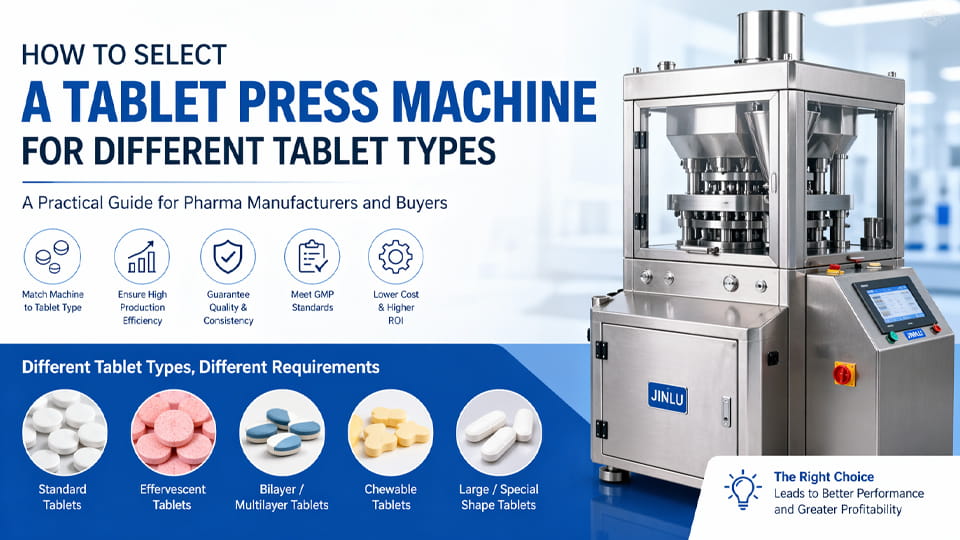
Lựa chọn quyền máy ép viên là rất quan trọng đối với bất kỳ nhà sản xuất dược phẩm hoặc dinh dưỡng nào. Máy ép viên có nhiều loại (cú đấm đơn, quay, hai lớp, vân vân.) và tốc độ, mỗi loại phù hợp với công thức máy tính bảng và khối lượng sản xuất nhất định. Bản thân các viên thuốc rất khác nhau – từ viên tròn đơn giản đến viên sủi hoặc viên hai lớp – và mỗi loại đều có những yêu cầu cụ thể về dụng cụ, lực nén, cho ăn, và kiểm soát môi trường.
Hướng dẫn này giúp người mua trong ngành kết hợp loại máy tính bảng của họ với chiếc máy lý tưởng. Chúng tôi bao gồm các danh mục máy tính bảng (tiêu chuẩn, sủi bọt, hai lớp, nhai được, lớn/không đều), loại máy (cú đấm đơn, quay, tốc độ cao, máy ép hai lớp/nhiều lớp), và các yếu tố lựa chọn chính như công suất đầu ra, kích thước máy tính bảng, Khả năng tương thích dụng cụ, thiết kế trung chuyển, lực nén, và tuân thủ GMP. Chúng tôi bao gồm bảng so sánh ánh xạ các loại máy tính bảng với các máy và tính năng được đề xuất, những cạm bẫy phổ biến cần tránh, và lời khuyên về lựa chọn nhà cung cấp đáng tin cậy. Đến cuối, bạn sẽ biết cách cân bằng tốc độ, tính linh hoạt và chất lượng – đồng thời tìm máy in phù hợp với máy tính bảng và nhu cầu về năng suất của bạn.
Hiểu các loại máy tính bảng và yêu cầu của chúng
Các sản phẩm máy tính bảng khác nhau yêu cầu các tính năng báo chí khác nhau. Dưới đây là phổ biến danh mục máy tính bảng và ý nghĩa của chúng đối với thiết bị:
Máy tính bảng tiêu chuẩn (Một lớp, Tròn, viên nhỏ, vân vân.): Đây là những loại thuốc dược phẩm hoặc thuốc bổ sung điển hình. Họ sử dụng dụng cụ B (19 cú đấm mm, máy tính bảng lên tới ~ 13mm) trên hầu hết các máy ép quay. Lực nén vừa phải (khoảng 60–100kN) thường cần thiết cho độ cứng đồng đều. Máy tiêu chuẩn xử lý nhiều hình dạng (tròn, hình bầu dục, thuôn dài) không có phần cứng đặc biệt. Ví dụ, máy ép Jinlu ZP-17D (một mô hình đa năng) sản xuất lên đến 37,800 viên/giờ với một 25 đường kính tối đa mm Và 100 lực kN, bao gồm hầu hết các máy tính bảng tiêu chuẩn.
Viên thuốc sủi bọt (Có ga, Sủi bọt): Những viên thuốc này (được sử dụng trong thuốc, hỗn hợp đồ uống, chất tẩy rửa) chứa tác nhân axit-bazơ (axit citric + natri bicarbonate) phản ứng với độ ẩm. Họ yêu cầu Nén cao (để giữ cho máy tính bảng nguyên vẹn) và thường xuyên khuôn lớn hơn. Máy ép quay hạng nặng (thường xuyên với dụng cụ D) được khuyến khích. Phê bình, bột sủi bọt hút ẩm nhanh chóng, vì vậy kiểm soát môi trường là chìa khóa. Máy ép sủi bọt chuyên dụng bao gồm các tính năng như máy hút ẩm nội tuyến, buồng nén kín, và các thành phần chống ăn mòn để ngăn ngừa phản ứng sớm. Ví dụ, Máy ép cỡ lớn của Jinlu (lên đến 400 kN lực lượng, 60 đường kính mm) được thiết kế đặc biệt để xử lý các viên sủi bọt và chất tẩy rửa.
hai lớp / Máy tính bảng nhiều lớp: Khi máy tính bảng có hai lớp trở lên (các loại thuốc khác nhau, màu sắc, hoặc phát hành hồ sơ), bạn cần một máy ép hai lớp hoặc nhiều lớp. Những máy này có hai hoặc nhiều phễu và bộ cấp liệu tiếp liệu tuần tự vào một tháp pháo. Họ nén lớp đầu tiên, sau đó thêm cái thứ hai (và thứ ba, nếu cần). Các tính năng chính bao gồm bộ nạp lực kép (để tránh trộn lớp), trạm nén độc lập, và các cổng lấy mẫu trong quá trình. Ví dụ, máy ép ba lớp JL ZP-27/73D cho ra kết quả lên tới 395,000 viên/giờ (với 50 mm đường kính) và áp suất 150kN. Ba phễu đồng bộ của nó cho phép tối đa ba lớp trên mỗi máy tính bảng (công thức mã màu hoặc đa dạng). Hình ảnh máy ép nhiều lớp (xem bên dưới) minh họa tháp pháo và phễu.
Nhân vật: Máy ép viên quay nhiều lớp (ví dụ. JL ZP-27/73D) có thể nhấn 2-3 lớp trên mỗi viên ở tốc độ rất cao (lên đến 395,000 viên/giờ). Bộ cấp liệu chuyên dụng và buồng kín giúp đổ đầy từng lớp đồng đều.
nhai được / Viên mềm: Máy tính bảng có thể nhai (Vitamin, thuốc kháng axit) cần một kết cấu mềm hơn và hương vị tốt hơn. Chúng thường nén dưới áp suất thấp hơn để tránh độ cứng, và thường xuyên sử dụng Dụng cụ BB (cú đấm ngắn hơn 19mm cho máy tính bảng nhỏ). Công thức bột (ví dụ. manitol, chất làm ngọt, chất bôi trơn) có xu hướng dính hoặc mềm. Yêu cầu của máy bao gồm nén nhẹ nhàng (kN thấp hơn), tốc độ tháp pháo chậm (thời gian dừng cao hơn), và lớp phủ dụng cụ chống dính. Trong thực tế, một máy ép quay tiêu chuẩn với dụng cụ thích hợp (hoặc một “máy ép viên nhai” chuyên dụng) được sử dụng. Những cú đấm thường có hình dạng đặc biệt (trái tim, vân vân.) để tiếp thị.
Viên nén lớn hoặc không đều: Một số sản phẩm (viên sủi bọt làm sạch, viên thú y lớn) rất lớn – có chiều ngang lên tới 60mm hoặc hình dạng kỳ lạ. Những yêu cầu này dụng cụ D (25.4 cú đấm tối đa mm) và máy ép rất chắc chắn (mô-men xoắn cao, lên tới 400kN). Tốc độ phải thấp hơn; phạm vi đầu ra rất khiêm tốn (ví dụ. 20,000–45.000 tab/giờ) để đảm bảo chất lượng. Những chiếc máy ép “máy tính bảng lớn” này thường có kích thước tháp pháo đặc biệt và cam chịu lực cao. Họ cũng có thể xử lý một số màu nhiều màu hoặc nhiều lớp như một phần thưởng. Máy ép cỡ lớn của Jinlu được sử dụng làm chất tạo bọt/chất tẩy rửa. Sự đánh đổi là năng lực: một máy tính bảng 60mm ở tốc độ 400kN chỉ có thể tạo ra ~ 30k/giờ, nhưng đó là cách duy nhất để tạo thành một viên thuốc như vậy mà không bị nứt.
Tóm lại, xác định sản phẩm của bạn trước tiên: đường kính máy tính bảng, Độ dày, lớp, và công thức (tính dễ chảy, độ nhạy ẩm, tính dễ vỡ). Mỗi kích thước và thuộc tính thu hẹp sự lựa chọn máy. Một quy tắc chung: kích thước và kích thước máy truyền động độ cứng, không chỉ là đầu ra mục tiêu. Đừng mua theo biểu ngữ “100k tab/giờ”; bắt đầu bằng cách kết hợp thông số kỹ thuật của máy tính bảng với tháp pháo và dụng cụ.
Các loại máy ép viên
Máy ép viên thường được chia thành hai loại chính: cú đấm đơn (lập dị) Và quay (đa trạm), với các biến thể chuyên dụng.
cú đấm đơn (lập dị) Máy ép: Những cỗ máy đơn giản này chỉ cần một cú đấm là chết, bằng tay hoặc bằng động cơ. Chúng lý tưởng cho R&D, lô thí điểm, và sản xuất quy mô nhỏ. Máy ép một trạm yêu cầu nạp bột thủ công (thông qua phễu hoặc khuôn) và đấm từng viên một. Những lợi ích: chi phí rất thấp, bảo trì dễ dàng, và không cần hệ thống điều khiển phức tạp. Nhược điểm: thông lượng cực thấp (vài trăm viên/giờ) và giới hạn ở những công thức đơn giản. Chúng tôi bao gồm loại này cho đầy đủ, nhưng hầu hết người mua công nghiệp sẽ nghiêng về máy quay trừ khi nhu cầu đầu ra rất nhỏ.
Máy ép viên quay: Đây là những con ngựa cho sản xuất vừa và lớn. Máy ép quay có một tháp xoay chứa nhiều chày/khuôn (kích thước tháp pháo phổ biến là 8, 16, 20, 37, 45, 62, 80 trạm). Bột được nạp từ phễu thông qua khung cấp liệu quay. Một vòng quay có thể nén được hàng chục viên. Máy quay công nghiệp đạt được khoảng từ ~20.000 đến hàng trăm nghìn viên mỗi giờ. Vòng quay tiêu chuẩn có thể xử lý máy tính bảng thông thường: chúng cung cấp thông lượng cao liên tục và kiểm soát chính xác trọng lượng/độ cứng. Hai kiểu con là:
Máy ép quay tiêu chuẩn: Mang lại hiệu quả cao và kết quả nhất quán cho khối lượng trung bình. Chúng thường bao gồm nén trước con lăn (để làm đặc bột trước khi nén lần cuối), và có thể chạy ở tốc độ vừa phải (ví dụ. 60–120 vòng/phút trên tháp pháo 45 trạm mang lại ~162k–243k tab/giờ).
Máy ép quay tốc độ cao hoặc nhiều lớp: Dành cho sản xuất số lượng lớn. Chúng thường có động cơ servo, tháp pháo đôi (một văn phòng phẩm, một vòng quay để tăng gấp đôi công suất), và các tính năng nâng cao như hệ thống ép ăn (đẩy bột dính vào khuôn). Chúng cũng có thể được cấu hình cho hai lớp/nhiều lớp trong một lần. Ví dụ, RichPacking lưu ý máy ép tốc độ cao bao gồm nén nhiều lớp và kiểm soát tốc độ chính xác để tối đa hóa sản lượng. Dòng “ZP-26-40D” của Jinlu là một ví dụ về máy quay tốc độ cao.
hai lớp / Máy ép nhiều lớp: Đây là những máy quay chuyên dụng được thiết kế với hai hoặc nhiều phễu và các trạm nén đồng bộ. Một cấu hình phổ biến là các trạm ép kép ở mỗi vị trí tháp pháo – một trạm nén lớp đầu tiên, cái khác thêm lớp thứ hai, sau đó phóng ra. Họ thường có thêm máy quay và máy ép ăn. Sử dụng những thứ này khi bạn phải kết hợp hai công thức trong một viên (ví dụ. lớp giải phóng ngay lập tức trên lớp giải phóng kéo dài). Các tính năng chính bao gồm kiểm soát trọng lượng lớp độc lập và lấy mẫu tự động của từng lớp. ZP-27/73D của Jinlu và các mẫu tương tự có thể xuất ra ba lớp máy tính bảng (thậm chí là một thiết kế ba màu) trong một máy. Nếu sản phẩm của bạn có bất kỳ thiết kế lớp nào, máy ép nhiều lớp là bắt buộc.
hai mặt (Báo chí máy tính bảng) / Tháp pháo phân đoạn: Một biến thể nâng cao ít phổ biến hơn. Những máy này có trạm đột ở hai bên tháp pháo, cho phép hai viên mỗi lần quay (tăng gấp đôi công suất một cách hiệu quả). Chúng là những cỗ máy tốc độ cao chủ yếu được tìm thấy trong các nhà máy dược phẩm rất lớn. Chúng thường bao gồm các phễu riêng biệt cho mỗi bên tháp pháo, nhưng mặt khác trông giống như hai máy ép quay liên tục.
Máy ép viên nhai: Đây thường chỉ là những máy quay tiêu chuẩn được trang bị các thiết bị đặc biệt. dụng cụ máy tính bảng nhai. JinLuPacking lưu ý máy ép nhai sử dụng công cụ đặc biệt để tạo ra máy tính bảng có kết cấu mềm hơn và hương vị dễ chịu. Trong thực tế, bạn có thể chỉ cần điều chỉnh công thức và sử dụng lớp phủ cao su, nhưng bản thân máy có thể có cài đặt lực nén thấp hơn và có thêm lớp che bụi để xử lý bột làm từ đường.
Trong mọi trường hợp, tìm kiếm hiện đại tự động hóa và điều khiển đặc trưng: màn hình cảm ứng PLC/HMI, cảm biến áp suất/trọng lượng, lưu trữ công thức nấu ăn, và tự động loại bỏ trọng lượng, đặc biệt nếu bạn cần tuân thủ quy định. Máy tốt còn có khóa liên động an toàn, hút bụi, và cửa ra vào dễ dàng (chúng tôi đề cập đến những yếu tố lựa chọn dưới đây).
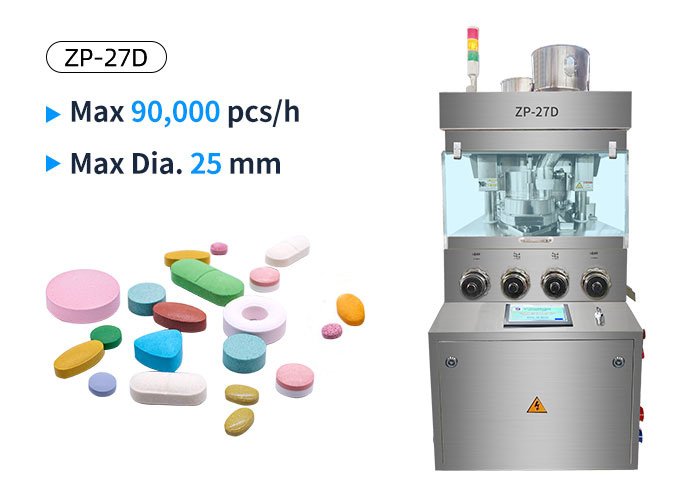
Máy nén viên quay ZP-27D
Các yếu tố lựa chọn chính
Một khi bạn biết máy tính bảng của mình, tiếp theo là đánh giá thông số kỹ thuật máy cụ thể. Các yếu tố chính bao gồm:
năng lực sản xuất (Thông lượng): Bạn cần bao nhiêu viên mỗi giờ? Máy ép quay được đánh giá bằng viên/giờ hoặc vòng/phút của tháp pháo. Nhiều trạm đấm hơn = thông lượng cao hơn. Ví dụ, Một 45-nhấn trạm tại 60 vòng/phút ≈ 162,000 tab/giờ. Nhưng hãy cẩn thận với sự đánh đổi: tốc độ đẩy quá cao có thể gây ra sự thay đổi trọng lượng/lấp đầy. Cân bằng tốc độ tháp pháo với thời gian dừng (máy tính bảng dày hơn cần tốc độ chậm hơn cho độ cứng). Cho tiền boa: Nếu bạn cần >50k/giờ hoặc lô nhiều SKU, Nên sử dụng máy ép quay có ≥45 trạm để có hiệu suất ổn định. Các đơn vị đục lỗ đơn hoặc vòng quay nhỏ chỉ có ý nghĩa đối với <10k/giờ hoặc R&D.
Kích thước và hình dạng máy tính bảng: Máy tính bảng đường kính và độ dày về cơ bản xác định loại máy. Mỗi mô hình có lỗ khuôn và độ sâu lấp đầy tối đa. Ví dụ, máy ép để bàn nhỏ (ví dụ. “ZP-7”) đậy nắp khoảng 6–12 mm viên, trong khi các tháp pháo lớn hơn có thể xử lý lên tới 60mm (với công cụ D). Luôn luôn phù hợp với kích thước khuôn và khả năng tương thích của tháp pháo trước tiên: “chọn máy in mà không có kích thước máy tính bảng cũng giống như mua một chiếc ô tô mà không biết số lượng hành khách”. Cũng, Máy tính bảng rất dày cần nhiều lực hơn và thường có nhiều thời gian dừng hơn; một máy ép nhỏ có thể không nén được viên nén dày 8 mm đúng cách ngay cả khi đường kính vừa vặn.
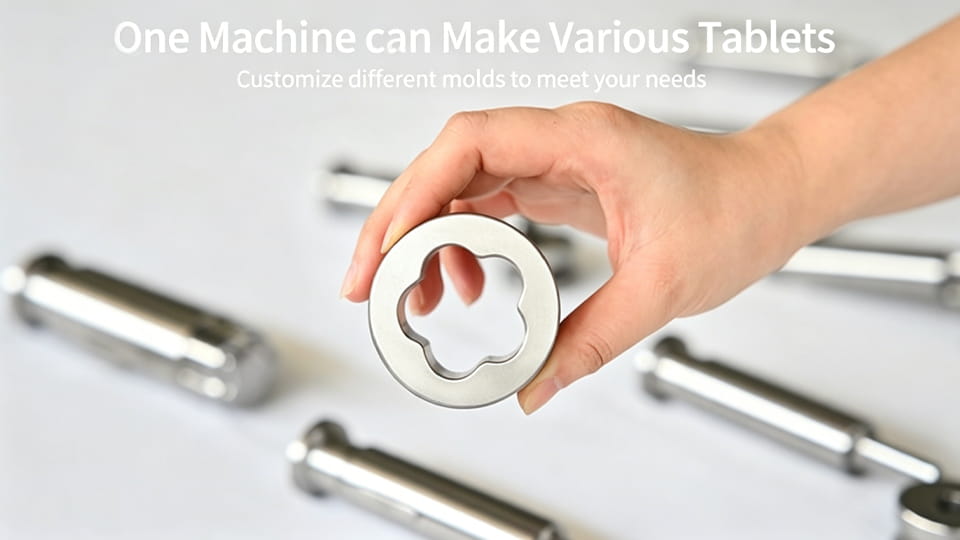
Khả năng tương thích dụng cụ: Các cú đột và khuôn xác định hình dạng của máy tính bảng. Kiểm tra cái gì dụng cụ tiêu chuẩn báo chí sử dụng (tiêu chuẩn chung là B, D, và dụng cụ BB). Ví dụ, nếu bạn cần làm vitamin dạng nhai (bé nhỏ, 6–8mm), Công cụ BB là lý tưởng; nếu bạn có viên thuốc tiêu chuẩn 12–13mm, B-công cụ đủ. Thuốc thú y hoặc chất tẩy rửa lớn (25 máy tính bảng mm+) yêu cầu công cụ D. Cũng xem xét vật liệu/lớp phủ dụng cụ: thép cứng (ví dụ. GCR-15) được sử dụng cho hầu hết, nhưng hỗn hợp ướt hoặc có tính axit có thể cần dụng cụ không gỉ hoặc phủ TiN. Công dụng máy ép ZP-17D của Jinlu Dụng cụ thép GCR-15 có thể chịu được 100kN. Chúng tôi khuyên dùng lớp phủ chống dính (TiN/CrN) và những kẻ ép ăn, đặc biệt nếu bạn tạo ra các công thức sủi bọt hoặc dính.
Nhân vật: Đấm và chết (dụng cụ máy tính bảng) có nhiều kích cỡ/vật liệu khác nhau. Ví dụ, Máy ép tiêu chuẩn của Jinlu sử dụng chày thép GCR-15 có áp suất lên tới 100kN. Dụng cụ phải phù hợp với kích thước máy tính bảng: ví dụ. Dụng cụ BB dành cho viên nhai 6–8mm, Dụng cụ B cho viên thuốc ~12mm, D-tooling dành cho máy tính bảng lớn 25+mm.
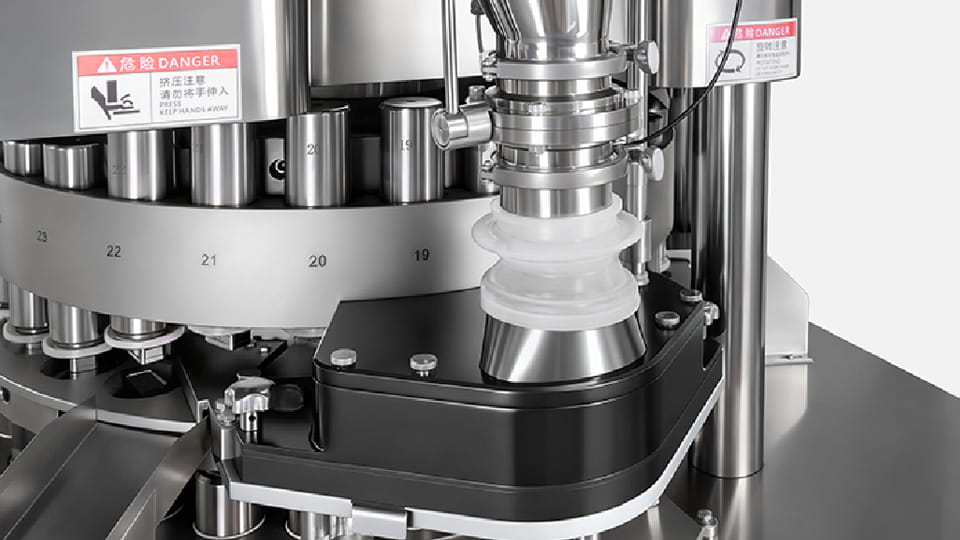
Dòng bột và cho ăn: Bột đầy thử thách (rất ổn, gắn kết, hoặc mật độ khối thấp) có thể không chảy tốt bởi trọng lực. Kiểm tra xem máy có lực lượng trung chuyển (máy khuấy hoặc cánh khuấy đẩy bột vào khuôn). Lực ép ngăn chặn sự thay đổi trọng lượng khi tháp pháo di chuyển nhanh. Bột dính hoặc ẩm (ví dụ. chiết xuất thảo dược) đặc biệt được hưởng lợi từ bộ nạp lực và thiết kế phễu trơn tru. Cũng xem xét nén trước: một con lăn nén trước nhỏ có thể khử khí hoặc nén trước vật liệu để giảm việc đóng nắp/cán màng. Tóm lại, đảm bảo phễu của máy ép và khung cấp liệu phù hợp với dòng bột của bạn; hỏi xem trước đây họ đã chạy công thức của bạn chưa.
Lực nén: Độ cứng của máy tính bảng và mật độ công thức quyết định lực cần thiết. Máy tính bảng dược phẩm tiêu chuẩn cần xung quanh 60–100kN. Máy tính bảng rất cứng hoặc lớn (như sủi bọt 60mm) có thể cần hàng trăm của kN (Máy lớn của JL lên tới 400kN). Lực lượng xác định quá mức tốt hơn so với dưới; lực quá ít sẽ mềm mại, máy tính bảng dễ bị hỏng. Ghi chú RichPacking 60–100kN là điển hình, và “lực cao hơn cải thiện độ cứng và tính đồng nhất.” Đồng thời kiểm tra xem máy có bộ chuyển đổi áp suất để theo dõi quá trình nén thời gian thực hay không. Nếu bạn cần cả viên nhai mềm và viên cứng trên cùng một máy, đảm bảo phạm vi lực có thể được điều chỉnh xuống thấp và lên cao.
Tự động hóa & Điều khiển (PLC/HMI): Trong cơ sở vật chất hiện đại, quay số thủ công đã lỗi thời. Một máy in tốt sẽ có PLC và màn hình cảm ứng HMI để ghi công thức nấu ăn và ghi dữ liệu. Tìm kiếm các tính năng như tự động loại bỏ thừa/thiếu cân, cảm biến áp suất, và chỉ số kỹ thuật số của vị trí cú đấm. Theo dõi dữ liệu (tập tin hàng loạt, Phần CMS21 CFR 11 Tuân thủ) quan trọng đối với hệ thống chất lượng dược phẩm. Truy cập từ xa hoặc mô-đun IoT cho phép hỗ trợ kỹ thuật và cảnh báo bảo trì dự đoán. Máy ép Jinlu ZP-27/73D, Ví dụ, đi kèm với HMI màn hình cảm ứng của Siemens để lưu trữ các công thức nén và giúp điều khiển dễ dàng.
Tuân thủ GMP & Nguyên vật liệu: Đặc biệt đối với dược phẩm, thiết kế báo chí phải đạt cGMP. Điều đó có nghĩa bề mặt tiếp xúc nên Thép không gỉ (thường là 316L) và có thể đánh bóng, với các góc chết tối thiểu để làm sạch. Bịt kín, vùng nén kín ngăn bột thoát ra ngoài. Phễu và tháp tháo nhanh giúp tăng tốc độ làm sạch và giảm nguy cơ lây nhiễm chéo. Kiểm tra có sẵn Tài liệu IQ/OQ/PQ từ nhà cung cấp. Máy thường đi kèm CE, cGMP, hoặc chứng chỉ thiết kế của FDA. Đối với sản phẩm nhạy cảm (như sủi bọt), tìm kiếm vật liệu chống ăn mòn (mạ crom hoặc không gỉ) trên báo chí nội bộ.
Chuyển đổi & BẢO TRÌ: Thời gian ngừng hoạt động rất tốn kém. Hãy xem việc thay đổi dụng cụ hoặc vệ sinh máy dễ dàng như thế nào. Các tính năng cần kiểm tra: thiết kế mô-đun, tháo gỡ không cần dụng cụ, và hệ thống bôi trơn. RichPacking chỉ ra rằng tháp pháo có thể tháo rời, cái phễu, và người cho ăn, cộng thêm tự động bôi trơn theo thời gian, có thể cắt giảm đáng kể thời gian bảo trì. Một hệ thống thay đổi khuôn nhanh sẽ cho phép hoán đổi các chày ở bên dưới 20 phút. Cửa an toàn trong suốt và cách bố trí tiện dụng giúp người vận hành. Một ví dụ: một số máy ép hiện đại sử dụng đũa chân không bên trong tháp pháo để hút bột còn sót lại giữa các lần chạy. Hỏi xem nhà cung cấp có hợp đồng dịch vụ không, đào tạo, và sự sẵn có của phụ tùng thay thế.
Tổng chi phí sở hữu (TCO): Ngoài giá nhãn dán, tính toán chi phí vòng đời. Máy rẻ hơn có thể mòn nhanh hơn hoặc cần nhiều lao động hơn. Yếu tố sử dụng năng lượng, nhu cầu phụ tùng, và tuổi thọ dự kiến. Ví dụ, một máy ép được xây dựng tốt với các bộ phận sẵn có có thể tiết kiệm lên đến 20% mỗi năm chi phí ngừng hoạt động. Đồng thời hỏi về thời hạn bảo hành và những gì được bảo hành.
Chuyên môn của nhà cung cấp & Dịch vụ: Mua máy tính bảng là sự hợp tác lâu dài. Kiểm tra hồ sơ theo dõi của nhà cung cấp (10+ kinh nghiệm nhiều năm trong lĩnh vực thiết bị dược phẩm là lý tưởng). Họ có tài liệu tham khảo về thị trường mục tiêu của bạn không (Châu Âu, CHÚNG TA, vân vân.)? Họ có thể hỗ trợ bố trí nhà máy không, thử nghiệm công thức nấu ăn, và xác nhận? Hỗ trợ sau bán hàng (cài đặt, vận hành thử, đào tạo, 24/7 trợ giúp từ xa) là rất quan trọng. Ví dụ, Jinlu Packing cung cấp thử nghiệm công thức miễn phí và bảo hành 3 năm cho nhiều máy. Mua từ nhà cung cấp đầy đủ (chất độn viên nang, quầy, máy vỉ) có thể đơn giản hóa việc tích hợp và xác thực – như ghi chú của RichPacking, có một nhà cung cấp giúp đơn giản hóa việc quản lý bảo trì. Trang web của Jinlu cho thấy họ cũng cung cấp Máy làm đầy viên nang, máy đếm, máy đóng gói vỉ, vân vân., điều này có thể hữu ích nếu bạn lên kế hoạch cho một dây chuyền sản xuất đầy đủ.
Tiếng ồn, Bụi và An toàn: Máy ép máy tính bảng có thể ồn ào và bụi bặm. Kiểm tra mức độ tiếng ồn (nên <80 dB) và liệu máy ép có bộ lọc bụi HEPA và máng trượt kín hay không. Khóa liên động an toàn (cửa dừng chuyển động, Dừng lại) và cảm biến quá tải bảo vệ người vận hành và thiết bị. Rung quá mức hoặc đổ bụi có thể gây hại cho tình trạng GMP.
Chứng minh tương lai: Tìm đường dẫn nâng cấp. Ngành đang hướng tới Pharma 4.0: độ chính xác điều khiển bằng servo, Kết nối Ethernet/IP cho MES, bảo trì dự đoán, và các tiện ích bổ sung theo mô-đun. Mua một chiếc máy ép có kiến trúc mở nghĩa là sau này nó có thể lắp được các cảm biến hoặc phần mềm mới, tiết kiệm chi phí trang bị thêm. Ví dụ, một số máy ép hiện nay cung cấp mô-đun kiểm tra bằng camera hoặc lấy mẫu tự động. Đảm bảo ít nhất những điều cơ bản: khả năng tích hợp vào SCADA hoặc MES.
Kết hợp các loại máy tính bảng với máy được đề xuất
Bảng dưới đây tóm tắt loại máy ép và tính năng phù hợp với từng loại máy tính bảng:
Loại máy tính bảng
Máy được đề xuất
Tính năng máy chính
Máy tính bảng tiêu chuẩn
Máy ép quay (dụng cụ B) hoặc máy ép tốc độ cao
19 mm (B) dụng cụ, 60–Lực 100kN, 30k–250k tab/giờ, nén trước, điều khiển PLC. Hoàn thiện gương, thiết kế GMP. Thích hợp cho máy tính bảng tròn/hình bầu dục.
Sủi bọt / chất tẩy rửa
Máy ép công cụ D quay hoặc công cụ D lớn
25 mm (D) dụng cụ, lực rất cao (lên tới 150–400kN), buồng kín, lực lượng trung chuyển, tùy chọn hút ẩm. Các bộ phận không gỉ hoặc tráng (chịu axit). Tốc độ thấp hơn, trung chuyển chuyên dụng.
hai lớp / Nhiều lớp
Máy ép hai lớp hoặc ba lớp (quay đặc sản)
2+ rầy & người cho ăn, cam nén kép, lấy mẫu trọng lượng nội tuyến. Nén trước cho từng lớp, Kiểm soát VFD, tháp pháo đồng bộ. Có khả năng xử lý các lớp trung gian mỏng. Sử dụng hình dạng cú đấm tiêu chuẩn hoặc tùy chỉnh.
nhai được / Mềm mại
Máy quay tiêu chuẩn (Dụng cụ B hoặc BB)
Dụng cụ BB (cú đấm ngắn, ~6–8mm), lực nén thấp (~30–60kN), hồ sơ nén nhẹ nhàng, lớp phủ chống dính. Có thể thời gian dừng lớn hơn (vòng tua chậm). Thức ăn mịn và che bụi (bụi đường).
Lớn/Không đều
Máy ép quay khuôn lớn (dụng cụ D)
25+ cú đấm mm (Dụng cụ D), lực rất cao (100–400kN), khung chắc chắn, tốc độ tháp pháo thấp (~10–60 vòng/phút), camera chuyên dụng. Tháp pháo cam thường nặng để phù hợp với hành trình khuôn lớn. Xử lý các hình dạng phức tạp.
Bằng cách kết hợp kích thước và loại máy tính bảng của bạn với các thông tin trên, bạn có thể đưa vào danh sách rút gọn các mô hình. Luôn kiểm tra chéo: ví dụ. một viên sủi 40mm đi vào Máy ép công cụ D lớn hàng ngang, không phải là một máy ép tiêu chuẩn.
Những sai lầm phổ biến cần tránh
Ngay cả những người mua có kinh nghiệm cũng mắc sai lầm. Dưới đây là những cạm bẫy cần chú ý:
Chọn theo sản lượng/giá trước: Đừng chọn máy chỉ vì nó có “200.000 tab/giờ” hoặc giá thấp. Nếu máy tính bảng của bạn quá lớn hoặc dày, máy nhanh sẽ không chấp nhận khuôn hoặc sẽ làm quá tải hệ thống. Nhớ: kích thước máy tính bảng quyết định máy, không phải ngược lại. Luôn bắt đầu với đường kính và độ dày của máy tính bảng.
Bỏ qua kích thước máy tính bảng: liên quan, không bao giờ bỏ qua các thông số kỹ thuật quan trọng. Việc không cung cấp cho nhà cung cấp của bạn đường kính và độ dày của máy tính bảng có thể khiến họ đề xuất máy ép có kích thước nhỏ hơn. Tự mình xác nhận lỗ khuôn tối đa của máy ép và độ sâu lấp đầy tối đa.
Công suất quá khổ: Một số người mua nghĩ rằng “thà cỡ lớn còn hơn cỡ nhỏ”. Nhưng một chiếc máy ép khổ lớn có thể đắt hơn 2–3×, tiêu thụ nhiều không gian sàn hơn, và chạy không hiệu quả tại 10% trọng tải. Tệ hơn, nó có thể có khoảng trống dài hơn (thời gian dừng ngắn hơn) làm viên thuốc mỏng quá mềm. Một nhà cung cấp cạnh tranh nên giới thiệu nhỏ nhất đủ người mẫu, hoặc nhiều nhất là tăng một cỡ để tăng trưởng trong tương lai.
Bỏ qua công cụ & Xây dựng: Kiểm tra xem máy ép có thể sử dụng chính xác dụng cụ bạn cần không. Lỗi thiết kế dụng cụ gây ra sự thay đổi trọng lượng hoặc dính. Cũng đánh giá bột của bạn: nếu nó dính (thảo dược, làm từ đường), đảm bảo các chày được phủ và bộ nạp lực được chỉ định.
Đánh giá thấp việc bảo trì và phụ tùng: Máy ép mới yêu cầu bôi trơn và tân trang thường xuyên. Đảm bảo bạn có đủ ngân sách cho những cú đấm dự phòng, con lăn, thắt lưng, vân vân. Như RichPacking cảnh báo, Không lập kế hoạch mua phụ tùng thay thế là lỗi thường gặp. Ngoài ra, hãy xem xét việc có được các bộ phận thay thế trong khu vực của bạn dễ dàng như thế nào.
Bỏ qua việc tuân thủ & Cài đặt: Đừng quên giấy tờ xác nhận (IR/WH/PQ) nếu bạn là nhà điều hành dược phẩm. Đảm bảo bạn có kế hoạch cài đặt, đào tạo, và kiểm tra xác nhận. Dựa vào sự hỗ trợ của nhà cung cấp ở đây an toàn hơn.
Không kiểm tra đầu tiên: Lý tưởng nhất, chạy thử nghiệm hoặc thí điểm với công thức thực tế của bạn trên mẫu máy. Nhiều nhà cung cấp tốt (bao gồm cả đóng gói Jinlu) cung cấp thử nghiệm miễn phí hoặc dùng thử công thức. Nếu bạn bỏ qua việc kiểm tra, bạn chỉ có thể phát hiện ra vấn đề sau khi vận chuyển, lãng phí hàng tháng trời.
Tóm lại, tập trung vào hồ sơ máy tính bảng và mục tiêu sản phẩm của bạn, không chỉ là thông số kỹ thuật bóng loáng. Những sai lầm như “Tôi chỉ muốn chiếc máy nhanh nhất” thường gây phản tác dụng.
Cách chọn nhà cung cấp phù hợp (và tại sao đóng gói Jinlu)
Kinh nghiệm & Tài liệu tham khảo: Lý tưởng nhất là chọn nhà cung cấp có hơn 5–10 năm kinh nghiệm về thiết bị máy tính bảng và khách hàng trong ngành/khu vực của bạn. Yêu cầu nghiên cứu trường hợp hoặc tài liệu tham khảo (đặc biệt là các tên tuổi dược phẩm lớn toàn cầu). Đóng gói Jinlu, Ví dụ, là nhà cung cấp Fortune-500 với 30+ năm kinh nghiệm máy móc (xem logo khách hàng của họ).
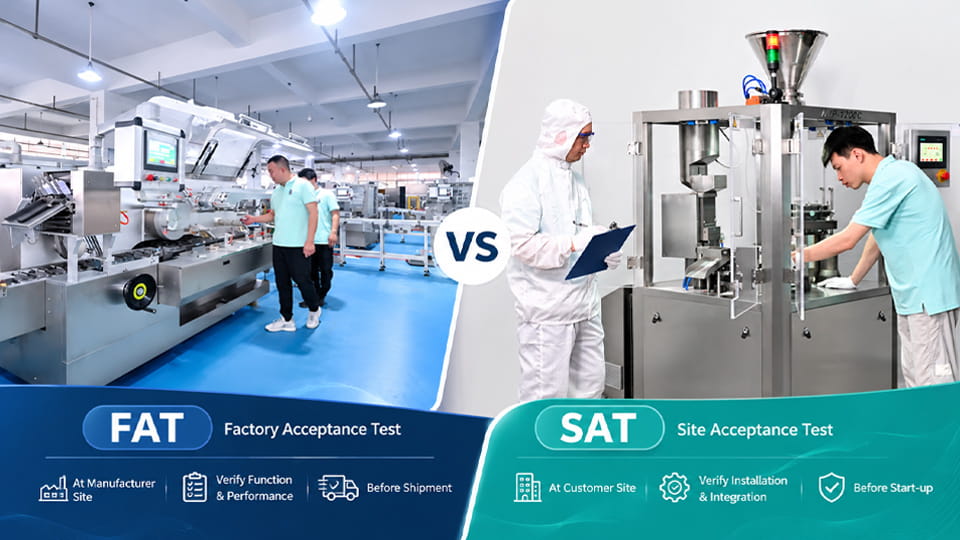
Hỗ trợ kỹ thuật: Họ sẽ giúp xác định mô hình phù hợp? Một nhà cung cấp tốt sẽ yêu cầu thông số kỹ thuật của máy tính bảng (đường kính, Độ dày, chi tiết công thức) trước khi trích dẫn – như LinCi nhấn mạnh, một nhà sản xuất không bao giờ nên đoán. Kiểm tra xem họ có cung cấp các bài kiểm tra chấp nhận tại nhà máy không (MẬP) và sẵn sàng gửi dụng cụ mẫu để xác nhận sự phù hợp.
Dịch vụ sau bán hàng: Vận hành tại chỗ, đào tạo, và vận chuyển phụ tùng kịp thời là rất quan trọng. Một số nhà cung cấp hứa hẹn từ xa 24/7 ủng hộ. Ưu tiên các nhà cung cấp có đại diện địa phương hoặc mạng lưới các trung tâm dịch vụ. Làm rõ các điều khoản bảo hành (ít nhất 1 năm trên toàn bộ máy, 3 năm trên các phần chính là tốt).
Khả năng tích hợp: Nếu bạn đang xây dựng một dòng, xem liệu máy ép có thể tích hợp với thiết bị thượng nguồn/hạ nguồn không. Ví dụ, nó có thể liên kết với máy tính bảng hoặc vỉ thuốc không? Ghi chú của RichPacking Máy ép Rich’s kết nối với máy đếm và ép vỉ. Jinlu tương tự cung cấp một bộ đầy đủ (quầy, thùng giấy, máy đóng gói vỉ), để họ có thể tư vấn về đường chìa khóa trao tay.
Uy tín của công ty: Kiểm tra chứng chỉ (CN, ISO). Đồng thời xác nhận sự ổn định tài chính.
Ví dụ và tài liệu tham khảo: Trang web của Jinlu có nghiên cứu trường hợp (ví dụ. Một máy ép máy tính bảng ở Pakistan) và chứng nhận (cGMP, CN, Rohs, Logo UL được hiển thị). Sử dụng những điều này để đánh giá năng lực. Đồng thời xem xét phản hồi của diễn đàn thương mại hoặc hỏi đồng nghiệp.
Báo giá dùng thử/Liên hệ: Cuối cùng, khi liên hệ với nhà cung cấp, cung cấp một bảng thông số kỹ thuật ngắn gọn: hình dạng/kích thước máy tính bảng, sản lượng dự kiến, đơn vị trọng lượng, thành phần chính (để mài mòn/ăn mòn), và bất kỳ tá dược đồng xử lý nào. Yêu cầu họ xác nhận kích thước lỗ khuôn và tháp pháo cần thiết cho sản phẩm của bạn. Cờ đỏ là nhà cung cấp báo giá ngay một mẫu máy mà không hỏi thông số kỹ thuật của bạn.
Bất cứ khi nào có thể, chọn nhà cung cấp có hiện diện tại địa phương hoặc nhà phân phối được biết đến - điều này giúp đơn giản hóa dịch vụ bảo hành. Nhiều nhà cung cấp dược phẩm cấp 1 như Fette, Bosch (Milstein), hoặc Cadmach cho máy ép; giữa các nhà sản xuất Trung Quốc, Đóng gói Jinlu, Phong phúĐóng gói, và những người khác cạnh tranh trên quy mô toàn cầu. Điều quan trọng là xác minh khiếu nại: Ví dụ, Jinlu quảng cáo phạm vi và áp suất đầu ra, nhưng bạn nên kiểm tra chéo những điều này với yêu cầu của bạn.
Kết luận và các bước tiếp theo
Chọn máy ép viên phù hợp là việc điều chỉnh công nghệ phù hợp với chiến lược sản xuất của bạn. Để đáng tin cậy, sản xuất máy tính bảng tuân thủ, tập trung vào tổng hiệu suất – độ chính xác, độ bền, và hỗ trợ – không chỉ ở mức giá. Jinlu Packing cung cấp nhiều loại máy ép quay tuân thủ tiêu chuẩn GMP (đơn, nhiều lớp, tốc độ cao) và thiết bị hỗ trợ. Liên hệ với chúng tôi về thông số kỹ thuật máy tính bảng của bạn (đường kính, Độ dày, lớp, đầu ra) để nhận được đề xuất và báo giá tùy chỉnh. Hãy để các chuyên gia của chúng tôi hướng dẫn bạn loại máy và dụng cụ phù hợp, và giúp bạn tránh những cạm bẫy thường gặp. Chúng tôi thậm chí có thể chạy thử nghiệm mẫu với công thức của bạn. Để nhận báo giá chi tiết hoặc tư vấn dự án, yêu cầu báo giá hoặc nói chuyện với đội ngũ bán hàng của chúng tôi Hôm nay.
Tìm hiểu thêm về dòng sản phẩm của Jinlu: Máy làm đầy viên nang, Máy đóng gói vỉ, Và Máy đếm viên tất cả đều có thể được tích hợp với máy tính bảng của bạn. Kiểm tra của chúng tôi máy làm đầy viên nang trang hoặc máy đếm viên để biết chi tiết.
Câu hỏi thường gặp về Cách chọn máy ép viên
Máy ép viên là gì và nó hoạt động như thế nào?
Máy ép viên là thiết bị dược phẩm dùng để nén bột hoặc hạt thành viên có hình dạng xác định, cân nặng, và độ cứng. Nó hoạt động bằng cách đổ đầy vật liệu vào khoang khuôn và tác dụng lực nén bằng cách sử dụng các cú đấm trên và dưới để tạo thành một viên thuốc rắn.
Một máy ép viên có thể xử lý cả dược phẩm và dinh dưỡng không? (ví dụ. Vitamin) các sản phẩm?
Thường thì có, nếu bột có dòng chảy và bôi trơn tương tự. Tuy nhiên, bột thảo dược dính hoặc đường cần có lớp phủ đặc biệt hoặc bộ nạp cưỡng bức. Đảm bảo có thể thay đổi cài đặt dụng cụ và bộ nạp cho các công thức nấu ăn khác nhau.
Làm cách nào để chọn máy ép viên phù hợp cho các loại máy tính bảng khác nhau?
Điều quan trọng là phải kết hợp máy với đặc điểm máy tính bảng của bạn, bao gồm cả kích thước, hình dạng, xây dựng, và khối lượng sản xuất. Ví dụ, viên sủi yêu cầu lực nén cao và dụng cụ lớn hơn, trong khi máy tính bảng hai lớp cần hệ thống cấp liệu nhiều lớp. Việc lựa chọn chỉ dựa vào giá cả thường dẫn đến các vấn đề về sản xuất sau này.
Những yếu tố nào ảnh hưởng đến chất lượng máy tính bảng trong quá trình nén?
Một số yếu tố ảnh hưởng đến chất lượng máy tính bảng, bao gồm: • Khả năng chảy của bột • Lực nén • Tình trạng dụng cụ • Độ ẩm Dòng bột kém hoặc cho ăn không đúng cách có thể dẫn đến trọng lượng viên thuốc không đồng đều và các khuyết tật.
Các vấn đề thường gặp ở máy ép viên là gì?
Các vấn đề điển hình bao gồm: • Trọng lượng viên không đều • Dính hoặc bắt đấm • Máy tính bảng bị nứt hoặc độ cứng thấp • Rò rỉ bột Những vấn đề này thường xảy ra do dòng nguyên liệu kém, cài đặt áp suất không chính xác, hoặc dụng cụ bị mòn.
Những lỗi người mua lần đầu thường mắc phải?
Mua một chiếc máy in cỡ lớn với suy nghĩ “càng nhiều càng tốt”; bỏ qua khả năng tương thích của công cụ; đánh giá thấp nhu cầu bảo trì; và bỏ qua các cuộc kiểm tra hoặc lập ngân sách phụ tùng thay thế. Tránh những điều này bằng cách kết hợp cẩn thận máy với thông số kỹ thuật máy tính bảng của bạn và tổng kế hoạch sản xuất.
Tôi có thể tích hợp máy tính bảng vào một dòng đầy đủ không?
Đúng. Nhà cung cấp tốt (như Jinlu Đóng gói) máy ép thiết kế để giao tiếp với quầy máy tính bảng, chất độn viên nang, vỉ, và thùng carton để sản xuất chìa khóa trao tay. Nếu bạn lập kế hoạch cho một đường dây nhiều bước, thảo luận về việc tích hợp và tự động hóa băng tải với nhà cung cấp trước.
Tôi có nên kiểm tra vật liệu của mình trước khi mua máy ép viên không?
Tuyệt đối. Bạn nên chạy thử bằng cách sử dụng công thức thực tế của mình. Nó cho phép bạn đánh giá độ cứng của máy tính bảng, tính nhất quán của trọng lượng, và tỷ lệ sai sót trong điều kiện sản xuất thực tế trước khi đưa ra quyết định đầu tư cuối cùng.
Sự khác biệt giữa công cụ B và công cụ D?
Công cụ B thường được sử dụng cho máy tính bảng tiêu chuẩn (kích thước nhỏ hơn), trong khi công cụ D được thiết kế cho các viên lớn hơn như sủi bọt hoặc các sản phẩm thú y. Việc chọn đúng dụng cụ là rất quan trọng vì nó ảnh hưởng trực tiếp đến kích thước máy tính bảng, hình dạng, và khả năng tương thích của máy.
Petty fu, Người sáng lập Jinlupacking, mang lại 20 năm kinh nghiệm trong lĩnh vực máy móc dược phẩm. Dưới sự lãnh đạo của ông, Jinlu đã phát triển thành một nhà cung cấp thiết kế tích hợp đáng tin cậy, sản xuất, và bán hàng. Petty đam mê chia sẻ kiến thức chuyên sâu về ngành của mình để giúp khách hàng giải quyết sự phức tạp của bao bì dược phẩm, đảm bảo họ không chỉ nhận được thiết bị, mà là mối quan hệ đối tác dịch vụ một cửa thực sự phù hợp với mục tiêu sản xuất của họ.