
Trong ngôn ngữ đời thường "thuốc" Và "thuốc" thường được sử dụng thay thế cho nhau. Trong ngành dược phẩm, Tuy nhiên, chúng thường ám chỉ các giai đoạn khác nhau của vòng đời sản phẩm. MỘT thuốc nói chung là hoạt chất dược lý (API) mang lại tác dụng chữa bệnh. MỘT thuốc (đôi khi được gọi là dược phẩm) là thành phẩm – thuốc được bào chế và đóng gói để bệnh nhân sử dụng. Sự khác biệt này ảnh hưởng đến cách phát triển sản phẩm, sản xuất, và đóng gói. Nói một cách đơn giản, mọi loại thuốc đều bắt đầu bằng một loại thuốc (hoạt chất), nhưng không phải mọi loại thuốc đều trở thành thuốc có thể bán được trên thị trường. Sự khác biệt trong các điều khoản này có thể ảnh hưởng dạng bào chế thiết kế, tình trạng quy định, Và lựa chọn máy đóng gói.
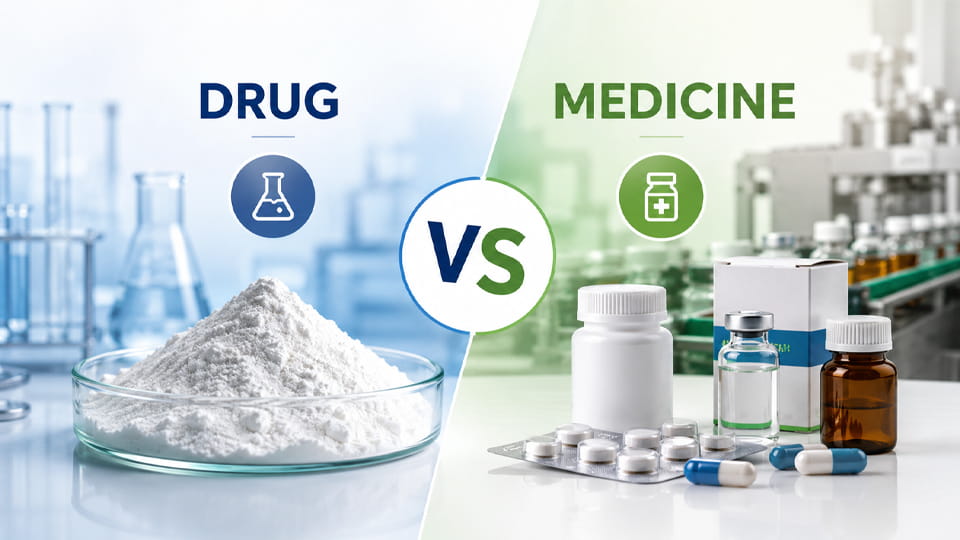
Về mặt dược phẩm, Một thuốc là một hoạt chất hóa học hoặc sinh học được sử dụng để chẩn đoán, sự chữa bệnh, giảm nhẹ, đối xử, hoặc ngăn ngừa bệnh tật. FDA định nghĩa một loại thuốc một cách rộng rãi là “Một chất dùng để chẩn đoán, sự chữa bệnh, giảm nhẹ, sự đối đãi, hoặc phòng ngừa bệnh tật”ở người hoặc động vật. Trong thực tế, "thuốc" thường đề cập đến hoạt chất nguyên chất (API) chính nó. Ví dụ, ibuprofen hoặc amoxicillin ở dạng bột sẽ được gọi là dược chất trước khi được chế biến thành máy tính bảng hoặc viên nang.
Những điểm chính về thuốc trong sản xuất dược phẩm:
Tóm lại, Một thuốc là dược chất thô hoặc API – “cái gì” mang lại tác dụng cho thuốc. Thuật ngữ này phổ biến trong phát triển công thức và quy định.
MỘT thuốc (hoặc dược phẩm) là một dược phẩm thành phẩm dành cho bệnh nhân sử dụng. Nó chứa một hoặc nhiều loại thuốc (API) cộng với các thành phần không hoạt động (tá dược) và được đóng gói để phân phối và sử dụng an toàn. Nói cách khác, khi thuốc được bào chế thành dạng bào chế (viên thuốc, viên nang, chất lỏng, vân vân.) và dán nhãn trong thùng chứa, nó trở thành một loại thuốc sẵn sàng để bán.
Nói một cách đơn giản, Một thuốc là đóng gói, sản phẩm sẵn sàng cho bệnh nhân được sử dụng để chẩn đoán hoặc điều trị một tình trạng. Nó bao gồm thuốc là thành phần chính, mà còn tất cả những thứ khác (tá dược, thùng chứa, nhãn).
Dưới đây là bản tóm tắt của sự khác biệt chính giữa thuốc và thuốc. Sự khác biệt rất nhỏ trong ngôn ngữ đơn giản nhưng quan trọng trong bối cảnh sản xuất và quy định:
| Diện mạo | Thuốc | Thuốc (Sản phẩm thuốc) |
| Ý nghĩa cơ bản | Hoạt chất (API) có tác dụng chữa bệnh | Thành phẩm có chứa thuốc, sẵn sàng cho bệnh nhân sử dụng |
| Sân khấu | Thường đề cập đến thành phần hoặc hợp chất nghiên cứu ở giai đoạn đầu | Đề cập đến dạng bào chế cuối cùng sau khi được pha chế và đóng gói |
| Sáng tác | Hoạt chất tinh khiết (ví dụ. bột aspirin) | Bao gồm API + tá dược, thùng chứa, nhãn (ví dụ. viên aspirin trong vỉ) |
| Sử dụng bối cảnh | Chế tạo, R&D, quy định (quá trình phê duyệt) | Sử dụng lâm sàng, kê đơn, phân phát (trong môi trường chăm sóc sức khỏe) |
| Quy định | Định nghĩa “thuốc” rộng rãi của FDA bao gồm các API | Thành phẩm được quản lý chặt chẽ (Sự chấp thuận của FDA/EMA, GMP) |
| Ví dụ | API Ibuprofen, protein insulin (chất số lượng lớn) | viên Ibuprofen, tiêm insulin vào lọ |
Nói một cách dễ hiểu: MỘT thuốc là hoạt chất hóa học/sinh học có tác dụng dược lý. MỘT thuốc đó là loại thuốc cộng với công thức và bao bì, nhằm mục đích sử dụng an toàn cho bệnh nhân. Như một nguồn dược phẩm đã nói, “Mỗi loại thuốc đều bắt đầu như một loại thuốc, nhưng không phải loại thuốc nào cũng trở thành thuốc”. Ví dụ, Morphin nguyên chất là một loại thuốc; một lần được bào chế thành liều tiêm với nước muối và đóng kín trong lọ, nó trở thành một loại thuốc (một sản phẩm giảm đau).
Điểm mấu chốt là thuốc ngụ ý một quy định, sản phẩm tiêu hao, trong khi thuốc có thể chỉ là hoạt chất thô hoặc một loại hợp chất rộng hơn. Bảng trên nêu bật những khác biệt này.
Để hiểu đầy đủ “thuốc vs thuốc,” nó giúp làm rõ các thuật ngữ liên quan thường được sử dụng trong dược phẩm:
Điểm mấu chốt: Trong sản xuất dược phẩm, “chất ma túy” là API, “sản phẩm thuốc” là dạng bào chế được bào chế (máy tính bảng, viên nang, tiêm, vân vân.), Và "thuốc" là tên mà bạn gọi là sản phẩm thuốc khi nó là sản phẩm trị liệu có sẵn trên thị trường. Ví dụ, metformin là một chất ma túy, viên metformin 500mg là sản phẩm thuốc, và chiếc máy tính bảng đó (trong bao bì của nó) là loại thuốc bệnh nhân dùng.
Hiểu những thuật ngữ này là rất quan trọng: khi chúng ta biết dạng bào chế của một sản phẩm thuốc, chúng ta có thể chọn đúng dây chuyền đóng gói để biến nó thành một loại thuốc ổn định.
Xây dựng & Phát triển dạng bào chế: Một nguyên chất ma túy bản thân nó không sẵn sàng cho bệnh nhân. Phải bào chế thành dạng bào chế phù hợp (viên thuốc, viên nang, xi-rô, tiêm, vân vân.) - đây là một phần quan trọng của sự phát triển sản xuất. Mỗi dạng bào chế có yêu cầu về tá dược và cách chế biến cụ thể (trộn, tạo hạt, khử trùng) để trở thành một sản phẩm thuốc. Ví dụ, API nhạy cảm cho chế phẩm sinh học tiêm cần xử lý vô trùng, trong khi API ổn định cho viên thuốc sẽ trải qua quá trình sấy khô và nén viên thuốc.
Phê duyệt theo quy định: Các cơ quan như FDA hoặc EMA xem xét dữ liệu về dược chất Và sản phẩm thuốc/thuốc. Họ đánh giá độ an toàn của API và hiệu quả của công thức cuối cùng. Thuốc thành phẩm phải đạt tiêu chuẩn nghiêm ngặt (GMP, sự ổn định, ghi nhãn). của FDA cGMP các quy tắc bao gồm rõ ràng các quy trình và thiết bị đóng gói – vậy cách bạn đóng gói thuốc (thậm chí còn hơn cả một loại thuốc thô) được quy định cao.
Đóng gói và dán nhãn: Sự khác biệt quyết định nhu cầu đóng gói. Một dược chất thường có bao bì tối thiểu (trống, lọ để lưu trữ). Một loại thuốc, Tuy nhiên, yêu cầu bao bì sơ cấp bảo vệ liều lượng (ví dụ. Gói vỉ, chai, lọ) Và bao bì thứ cấp (thùng giấy) để biết thông tin và truy xuất nguồn gốc. Ví dụ, máy tính bảng (thành phẩm) cần có vỉ chống ẩm hoặc hệ thống đóng chai để đảm bảo thời hạn sử dụng. Một loại thuốc tiêm cần có lọ hoặc ống thủy tinh vô trùng cộng với con dấu chống giả mạo. Mỗi sự kết hợp giữa API và dạng bào chế đều có giải pháp đóng gói phù hợp.
Lựa chọn thiết bị: Nếu bạn chỉ nghĩ đến API, bạn có thể xem xét lò phản ứng hoặc máy trộn. Nhưng một khi chất là sản phẩm thuốc cần có bao bì, bạn cần dây chuyền đóng gói phù hợp. Máy đóng gói vỉ, Máy làm đầy viên nang, chất độn lỏng, dây chuyền làm đầy lọ, máy đóng thùng – tất cả đều trở nên có liên quan. Nhận biết “thuốc” có nghĩa là sản phẩm đóng gói sẽ thúc đẩy việc mua các máy móc này.
Tóm lại, hiểu rõ “thuốc và thuốc” giúp các nhóm dự án biết khi nào và như thế nào để tích hợp bao bì vào quy trình sản xuất. Nó đảm bảo rằng sản phẩm thuốc không chỉ được bào chế, nhưng được bảo vệ và đưa ra thị trường đúng cách.
Đóng gói là bước quan trọng cuối cùng để biến thuốc có công thức thành thuốc mà bệnh nhân có thể sử dụng an toàn. TRONG bao bì dược phẩm, bao bì sơ cấp tiếp xúc trực tiếp với liều lượng (sản phẩm thuốc) và tạo ra rào cản đầu tiên cho sự suy thoái. Ví dụ, viên nang và viên gelatin cứng thường đi vào nhôm-nhựa Gói vỉ, trong khi xi-rô lỏng đi vào nhựa (PET/HDPE) chai. Thuốc tiêm được điền vào lọ hoặc ống thủy tinh vô trùng. Mỗi thùng chứa chính được chọn vì tính trơ và tính chất rào cản của nó.
Sau khi bao bì chính được niêm phong, bao bì thứ cấp (thùng giấy, nhãn, tờ rơi) cung cấp thông tin bệnh nhân và dữ liệu hàng loạt. Ví dụ, các vỉ hoặc lọ được nhóm vào các thùng các tông có thương hiệu kèm theo tờ rơi hướng dẫn, số lô, và mã vạch – rất quan trọng cho việc tuân thủ và an toàn cho bệnh nhân.
Tại JinLuPacking, máy của chúng tôi tự động hóa các bước này. Tự động máy đóng gói vỉ có thể niêm phong hàng ngàn viên thuốc thành vỉ mỗi giờ; Một máy làm đầy viên nang chia thuốc thành viên nang; Một dây chuyền chiết rót và đóng nắp chai đếm viên thuốc hoặc đổ xi-rô vào chai; và một Máy tính carm bọc và đóng hộp thành phẩm. Tất cả các giai đoạn này – làm đầy, giới hạn, gói - đảm bảo thuốc cuối cùng được định lượng chính xác, an toàn, và sẵn sàng để phân phối.
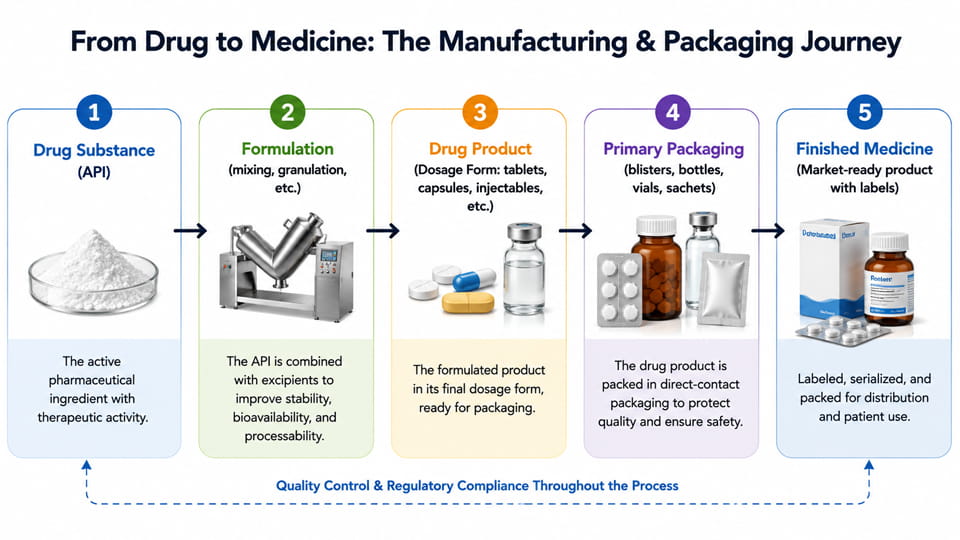
Nhân vật: Sơ đồ thuốc → Thuốc: hoạt động chất ma túy (API) được xây dựng thành một sản phẩm thuốc (dạng bào chế cụ thể). Sau đó nó di chuyển vào bao bì sơ cấp (ví dụ. gói vỉ cho máy tính bảng, chai đựng xi-rô, lọ thủy tinh đựng thuốc tiêm). Cuối cùng, nó trở thành một thuốc thành phẩm với bao bì thứ cấp (thùng/nhãn) cho bệnh nhân sử dụng.
Các dạng bào chế khác nhau yêu cầu các giải pháp đóng gói khác nhau. Bảng dưới đây tóm tắt các cặp đôi điển hình:
| Dạng bào chế | Bao bì chính thông thường | Ví dụ JinLuThiết bị |
| Máy tính bảng (rắn bằng miệng) | Gói vỉ (Lá PVC/PVDC), hoặc nhựa chai có nắp vặn | Máy đóng gói vỉ; Đếm máy tính bảng & Dây chuyền đóng chai |
| Viên nang (Miệng) | Gói vỉ, hoặc chai tương tự như máy tính bảng | Máy làm đầy viên nang tự động; Máy ép vỉ |
| Nước uống (Xi-rô) | Nhựa (PET/HDPE) chai có mũ an toàn cho trẻ em | Hệ thống chiết rót và đóng nắp chất lỏng; Máy giải mã chai |
| bột / gói | Gói gói đơn liều (túi giấy bạc hoặc laminate) | Máy đóng gói gói / gói que; Dòng túi làm sẵn |
| Thuốc tiêm (vô trùng) | Thủy tinh lọ, ống tiêm, hoặc ống tiêm nạp sẵn, cộng với con dấu giấy bạc | Đổ đầy lọ/ống tiêm & Đường dừng; Máy hàn cảm ứng |
| Thuốc mỡ/Kem | Ống nhiều lớp (nhôm hoặc nhựa) | Máy chiết rót và hàn kín ống |
| Viên nang mềm | Chai (THÚ CƯNG) hoặc gói vỉ | Máy ép vỉ viên nang Softgel; Dòng đếm |
Sự lựa chọn phụ thuộc vào các yếu tố như độ ổn định của dạng liều, sự vô sinh, và sự thuận tiện cho bệnh nhân. Ví dụ, viên nén và viên nang thường sử dụng máy vỉ hoặc dây chuyền đóng chai, trong khi chất lỏng cần máy rửa chai, điền vào, và máy đóng nắp. Thuốc tiêm thuốc yêu cầu hệ thống chiết rót vô trùng trong điều kiện phòng sạch. Mỗi giải pháp đều được hỗ trợ bởi máy móc đóng gói chuyên dụng để đảm bảo sản phẩm thuốc trở thành sản phẩm được bảo hộ, dán nhãn thuốc đáp ứng tiêu chuẩn GMP.
Để làm cho nó cụ thể, đây là một vài ví dụ cho thấy các loại thuốc cụ thể biến thành thuốc như thế nào:
Mỗi ví dụ cho thấy: Thuốc (API) → Xây dựng (lập bảng, điền vào, vân vân.) → Bao bì (mụn rộp, cái chai, lọ, gói) → Thuốc (sản phẩm cuối cùng có nhãn).
Không nhất thiết. Thuốc nào cũng bắt đầu từ một loại thuốc, nhưng không phải loại thuốc nào cũng trở thành thuốc. Nhiều hợp chất hóa học hoặc sinh học (thuốc) không bao giờ đến được với bệnh nhân. Một số loại thuốc vẫn còn ở R&D hoặc chỉ được sử dụng cho nghiên cứu, và những thứ khác được sử dụng bên ngoài cơ sở y tế (ví dụ. thuốc giải trí). Chỉ khi thuốc được bào chế, đã thử nghiệm, và được phê duyệt liệu nó có trở thành một loại thuốc không.
Là một ghi chú trả lời Câu hỏi thường gặp, “Aspirin vừa là thuốc vừa là thuốc. Nó là một loại thuốc ở dạng hóa học (axit axetylsalicylic) và trở thành một loại thuốc khi được bào chế và sử dụng để điều trị sốt, nỗi đau, hoặc viêm”. Điều quan trọng là mục đích sử dụng và cách trình bày: sử dụng như một sản phẩm dành cho bệnh nhân và biến nó thành một loại thuốc.
Tóm lại, chỉ được phê duyệt, sản phẩm dành cho bệnh nhân là thuốc. Hiểu được điều này giúp nhà sản xuất và cơ quan quản lý phân biệt giữa chất thử nghiệm và sản phẩm thực tế trên thị trường.
Tóm lại, "thuốc" thường đề cập đến thành phần hoạt chất hoặc bất kỳ tác nhân dược phẩm nào, trong khi "thuốc" (dược phẩm) đề cập đến việc hoàn thành, sản phẩm sẵn sàng cho bệnh nhân có chứa loại thuốc đó. Sự khác biệt này rất quan trọng đối với sản xuất dược phẩm: nó hướng dẫn R&D, tình trạng quy định, và lựa chọn bao bì. Hiểu những thuật ngữ này giúp đảm bảo chúng ta vận chuyển dược chất thông qua công thức và Bao bì đúng cách để trở thành một nơi ổn định, thuốc phù hợp.
Khi phát triển một dạng bào chế mới, nhớ: dây chuyền đóng gói phù hợp (máy đóng vỉ, viên nang phụ, dòng chai, chất độn lọ, thùng carton, vân vân.) là điều cần thiết cho bảo vệ thuốc và đáp ứng GMP. Ví dụ, các nhà sản xuất máy tính bảng dựa vào Máy đóng gói vỉ Và đếm/điền vào dòng, trong khi các sản phẩm tiêm yêu cầu máy chiết rót và đóng nắp lọ/ống và đóng gói thứ cấp an toàn. JinLuĐóng Gói cung cấp đầy đủ các máy móc đóng gói dược phẩm phù hợp với từng dạng bào chế – từ viên thuốc & phồng rộp viên nang ĐẾN đóng gói gói Và đóng thùng.
Sẵn sàng biến thuốc của bạn thành thuốc có sẵn trên thị trường? Khám phá các giải pháp của chúng tôi: viên thuốc & máy đóng gói vỉ viên nang cho liều rắn, máy làm viên nang cho bột/viên nang lỏng, gói & máy đóng túi làm sẵn cho bột, và máy đóng thùng cho sản phẩm đấm bốc cuối cùng. Thiết bị của chúng tôi giúp bảo vệ chất lượng sản phẩm, đảm bảo an toàn cho bệnh nhân, và hợp lý hóa dây chuyền sản xuất của bạn từ thuốc đến thuốc thành phẩm.
Không chính xác. Trong cuộc trò chuyện thông thường, chúng chồng lên nhau, nhưng về mặt kỹ thuật, thuốc thường có nghĩa là thành phần hoạt chất hoặc bất kỳ dược chất nào, trong khi thuốc là thành phẩm được trao cho bệnh nhân. Có thể nói “thuốc nào cũng có thuốc, nhưng bản thân một loại thuốc có thể không phải là thuốc cho đến khi được bào chế”.
Về cơ bản chúng là cùng một khái niệm trong hầu hết các bối cảnh dược phẩm. Sản phẩm thuốc là dạng bào chế hoàn chỉnh (viên thuốc, viên nang, tiêm) sẵn sàng để bán. Thuốc là tên gọi của sản phẩm thuốc khi được đóng gói để bệnh nhân sử dụng. Trong thực tế, sản phẩm thuốc đã được phê duyệt (có ghi nhãn) là thuốc.
Một chất ma túy (hoặc API) là thành phần hoạt chất nguyên chất – hóa chất hoặc sinh học có tác dụng chữa bệnh. Thành phẩm thuốc là công thức cuối cùng có chứa hoạt chất đó, cộng với tá dược, ở dạng liều lượng (thuốc, giải pháp, vân vân.). Hãy nghĩ về muối và lọ muối: muối (chất ma túy) là thành phần; muối với chất chống đóng bánh trong chai (sản phẩm thuốc) là sản phẩm có thể sử dụng được.
Bao bì là yếu tố quan trọng để biến thuốc thành thuốc. Như tài nguyên JinLuPacking lưu ý, bao bì dược phẩm (Gói vỉ, lọ, chai) bảo vệ sự ổn định và liều lượng của sản phẩm thuốc, và đảm bảo tuân thủ các quy định. Đóng gói và dán nhãn thích hợp sẽ biến dược chất rời thành dạng an toàn, thuốc thân thiện với người dùng.
Đúng. Một hợp chất như ibuprofen hoặc acetaminophen là một chất ma túy. Khi nó được làm thành máy tính bảng OTC kèm theo hướng dẫn, nó cũng là một loại thuốc. Nó phụ thuộc vào hình thức và cách sử dụng. Như đã lưu ý ở trên, aspirin về mặt hóa học là một loại thuốc nhưng được gọi là thuốc khi nó ở dạng viên để giảm đau. Điều này cũng tương tự với nhiều loại thuốc giảm đau, kháng sinh, vân vân.
Các bác sĩ thường dùng từ “thuốc” với nghĩa trung tính là bất kỳ đại lý dược phẩm nào. Trong thuật ngữ và luật lâm sàng (như Đạo luật FDA), “Thuốc” là thuật ngữ chính thức cho một chất chữa bệnh. Nó bao gồm mọi thứ từ xi-rô ho đến hóa trị. Trong khi đó, “Thuốc” thân thiện với bệnh nhân hơn. Vì vậy, bác sĩ có thể kê đơn thuốc ibuprofen (thuốc) như một loại thuốc giảm đau (thuốc).
Tài liệu tham khảo:
1.Drugs@FDA Bảng chú giải thuật ngữ -- CHÚNG TA. Cục Quản lý Thực phẩm và Dược phẩm
2.Phân loại sản phẩm là thuốc và thiết bị cũng như các vấn đề bổ sung về phân loại sản phẩm -- CHÚNG TA. Cục Quản lý Thực phẩm và Dược phẩm
3.Thuật ngữ (điều khoản P: dược phẩm, tá dược, nguyên liệu ban đầu) -- AI
4.Thuật ngữ sơ tuyển -- AI
5.Dạng bào chế | FDA -- CHÚNG TA. Cục Quản lý Thực phẩm và Dược phẩm
6.Q7A Hướng dẫn thực hành sản xuất tốt cho hoạt chất dược phẩm -- CHÚNG TA. Cục Quản lý Thực phẩm và Dược phẩm
