

Thực hành sản xuất tốt (GMP) hướng dẫn đưa ra các quy tắc nghiêm ngặt cho thiết bị đóng gói dược phẩm để đảm bảo chất lượng sản phẩm và an toàn cho bệnh nhân. Yêu cầu chính bao gồm thiết kế máy hợp vệ sinh, vật liệu không phản ứng, trình độ thiết bị đầy đủ (IR/WH/PQ), làm sạch xác nhận, tự động hóa để giảm thiểu lỗi, tính toàn vẹn dữ liệu (21 CFR Phần 11) và truy xuất nguồn gốc sản phẩm (tuần tự hóa). Hướng dẫn này bao gồm FDA, Tiêu chuẩn EMA/EU và WHO, trình bày danh sách kiểm tra GMP và giải thích cách lựa chọn và duy trì Máy đóng gói đạt tiêu chuẩn GMP.
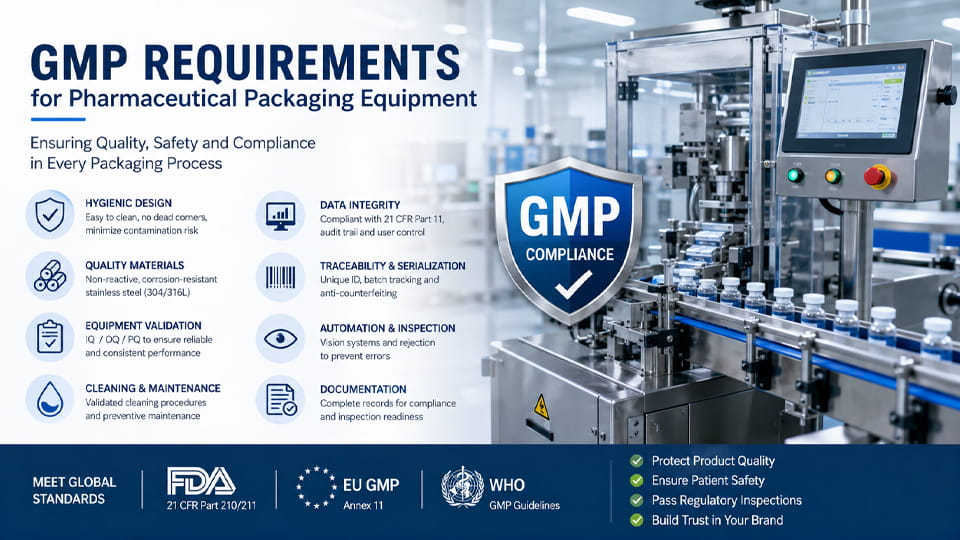
GMP (Thực hành sản xuất tốt) là khuôn khổ chất lượng đảm bảo dược phẩm được sản xuất và kiểm soát một cách nhất quán. Trong bao bì, GMP có nghĩa là các thiết kế và quy trình ngăn chặn sự nhầm lẫn hoặc ô nhiễm. Các cơ quan quản lý như FDA (21 CFR210/211), Ema (Phần I của EU GMP, Phụ lục) và WHO (hướng dẫn chất lượng dược phẩm) tất cả đều yêu cầu thiết bị sử dụng trong đóng gói phải đáp ứng nguyên tắc GMP. Mục đích là bảo vệ sản phẩm danh tính, sức mạnh, chất lượng và độ tinh khiết (không có phản ứng hóa học không mong muốn hoặc ô nhiễm). Các cơ quan quản lý toàn cầu cũng nhấn mạnh rằng quy trình và thiết bị đóng gói phải được được xác nhận/đủ tiêu chuẩn giống như các bước sản xuất thuốc, và chỉ những nhân viên được đào tạo mới hoạt động theo quy trình bằng văn bản.
Máy đóng gói phải có vệ sinh, thiết kế có thể làm sạch. Điều này có nghĩa Thép không gỉ (ví dụ. 304 hoặc cấp thực phẩm 316L) sự thi công, bề mặt nhẵn, mặt phẳng nghiêng để tránh bẫy bụi, và không có chân cụt hoặc sâu răng ẩn. Hướng dẫn của FDA lưu ý rằng thiết bị “phải được xây dựng và bố trí để dễ dàng vệ sinh” và “ngăn ngừa ô nhiễm từ…hoạt động khác”. Tương tự, EU GMP yêu cầu thiết bị sản xuất “được làm sạch dễ dàng và kỹ lưỡng” với các quy trình chi tiết bằng văn bản. Trong thực tế, Các máy GMP hiện đại thường sử dụng đúc hẫng ("ban công") thiết kế cách ly động cơ và hệ thống bôi trơn khỏi khu vực sản phẩm. Tất cả các khu vực phải có thể tiếp cận được để kiểm tra, lau chùi, và lau chùi. Ví dụ, Jinlupacking lưu ý rằng các máy ép vỉ tuân thủ sử dụng bề mặt nghiêng và thép SUS316L trên tất cả các bộ phận tiếp xúc với sản phẩm để tránh bẫy hạt.
Tất cả các bộ phận tiếp xúc với sản phẩm phải được không phản ứng và không hấp thụ, nên chúng không lọc hoặc liên kết các thành phần hoạt tính. CGMP của FDA yêu cầu “bất kỳ bề mặt thiết bị nào tiếp xúc với…sản phẩm thuốc đều phản ứng, phụ gia, hoặc hấp thụ làm thay đổi…chất lượng của thành phẩm thuốc”. Tương tự như vậy, EU GMP cho biết các bộ phận tiếp xúc “không được phản ứng, chất phụ gia hoặc chất hấp thụ…nó sẽ ảnh hưởng đến chất lượng của sản phẩm”. Trong thực tế, điều này có nghĩa là sử dụng thép không gỉ loại sạch (SUS316L) hoặc nhựa cấp dược phẩm, và chất bôi trơn cấp thực phẩm. Tất cả các phụ kiện, các vòng đệm và ống mềm phải tương thích với các loại thuốc và chất tẩy rửa được sử dụng. Ví dụ, các miếng đệm cấp bệnh viện và ống PTFE được ưu tiên để tránh ăn mòn hoặc cặn. Kết quả là thiết bị đóng gói không thể gây ô nhiễm hoặc phân hủy sản phẩm.
GMP yêu cầu trình độ chuyên môn của thiết bị đầy đủ. Sau khi cài đặt, một máy mới hoặc đã được sửa đổi phải trải qua Trình độ lắp đặt (chỉ số IQ), Trình độ chuyên môn hoạt động (OQ), Và Trình độ chuyên môn (PQ).
Các thanh tra viên của FDA nhấn mạnh rằng “thiết bị mới phải được lắp đặt đúng cách…và được làm sạch trước khi sử dụng theo quy trình bằng văn bản” với “việc làm sạch được ghi chép và xác nhận”. Cung cấp thiết bị tuân thủ GMP đồng nghĩa với việc cung cấp gói tài liệu xác nhận đầy đủ (VÍ DỤ., Các giao thức và báo cáo IQ/OQ/PQ). Điều này thường được thực hiện thông qua FAT/SAT và sự hỗ trợ mạnh mẽ của nhà cung cấp. Ví dụ, blog Hikma lưu ý rằng các máy tuân thủ FDA yêu cầu “thép không gỉ SUS316L cho tất cả các bộ phận tiếp xúc” và “tài liệu IQ/OQ/PQ chống đạn” để kiểm tra thành công. Nói cách khác, không có tài liệu IQ/OQ/PQ, thiết bị không được coi là đã được chứng nhận GMP.
(sơ đồ nàng tiên cá: luồng các bước xác thực IQ→OQ→PQ)
Dây chuyền đóng gói phải có quy trình làm sạch được xác nhận. Sau mỗi sản phẩm hoặc đợt chạy, thiết bị được làm sạch theo quy trình vận hành tiêu chuẩn (SOPS). Cơ quan quản lý yêu cầu quy trình làm sạch phải được ghi lại, đã xác minh, và được xác nhận lại định kỳ. Hướng dẫn GMP của WHO lưu ý rằng cần xem xét thiết kế thiết bị khi lập kế hoạch thẩm định vệ sinh, vì thiết kế có thể ảnh hưởng đến hiệu quả. Chỉ các bề mặt tiếp xúc mới cần được xác nhận kỹ lưỡng - có thể loại trừ các khu vực không tiếp xúc. Vật phẩm quan trọng (như phễu hoặc vòi phun có thể tái sử dụng) thường yêu cầu sử dụng chuyên dụng hoặc sử dụng một sản phẩm để đơn giản hóa việc vệ sinh. Trong thực tế, các công ty xác định giới hạn chấp nhận đối với dư lượng và thực hiện kiểm tra bằng tăm bông hoặc rửa sạch. Câu hỏi thường gặp của FDA khuyến nghị sử dụng các phương pháp như Tổng lượng cacbon hữu cơ (TOC) hoặc các xét nghiệm cụ thể để xác nhận việc loại bỏ dư lượng.
Bảo trì và hiệu chuẩn cũng được yêu cầu. GMP yêu cầu bảo trì phòng ngừa thường xuyên: các bộ phận bị lỗi hoặc bị mòn phải được sửa chữa trước khi chúng gây ra rủi ro ô nhiễm. Hiệu chuẩn thiết bị (trọng lượng, cân, cảm biến) phải tuân theo các thủ tục bằng văn bản có hồ sơ (21 CFR211,68). Ví dụ, Hướng dẫn của FDA nói rằng các thiết bị đo lường và điều khiển “cần được hiệu chuẩn và kiểm tra theo những khoảng thời gian xác định” với hồ sơ được lưu giữ. Điều này đảm bảo máy tiếp tục hoạt động trong phạm vi thông số kỹ thuật (VÍ DỤ., khối lượng điền chính xác, vị trí nhãn).
Các tính năng tự động hỗ trợ GMP bằng cách giảm lỗi của con người. Máy móc hiện đại thường bao gồm hệ thống thị giác, máy quét mã vạch, hoặc cân kiểm tra trọng lượng để kiểm tra nội tuyến. Ví dụ, máy quét nhãn/mã vạch tự động xác minh mỗi gói hàng được dán nhãn chính xác và có thể nhận dạng được – một bước cốt lõi của GMP. Tích hợp với hệ thống MES/ERP có thể ghi dữ liệu hàng loạt. Tự động từ chối giúp loại bỏ các gói hàng bị thiếu hoặc bị lỗi. Người máy (để xử lý chai hoặc chọn và đặt) tăng tính nhất quán. Trong thực tế, nhiều dòng GMP bao gồm các tính năng của thiết bị như khóa liên động (VÍ DỤ., máy không chạy nếu cửa mở), bảo vệ chuyển đổi tự động, và cảm biến để bắt kẹt giấy. Tất cả phần mềm phải có tài khoản người dùng an toàn (xem phần tiếp theo).
GMP dược phẩm yêu cầu tính toàn vẹn dữ liệu mạnh mẽ. Tại Mỹ và nhiều thị trường, điều khiển bằng máy tính phải đáp ứng 21CFRPart11: điều này bao gồm thông tin đăng nhập duy nhất, dấu vết kiểm toán, và chữ ký điện tử. Tất cả các bản ghi lô, báo động và thay đổi phải được dán nhãn thời gian và được bảo vệ khỏi sự giả mạo. Ví dụ, FDA cảnh báo cân tự động hiệu chuẩn vẫn cần kiểm tra bên ngoài, và phần mềm điều khiển phải theo dõi xem ai đã thay đổi thông số và khi nào. Các yêu cầu chính bao gồm quyền truy cập dựa trên vai trò (người điều hành vs người quản lý), nhật ký kiểm tra không thể thay đổi của các thay đổi tham số, và xác nhận kỹ thuật số ở các bước quan trọng. Tương tự, Phụ lục 11 của EU cũng yêu cầu các hệ thống được xác nhận và quy trình kiểm tra đối với mọi hệ thống máy tính liên quan đến GMP. Về bản chất, HMI/PLC của máy phải ngăn chặn những thay đổi trái phép. Tính toàn vẹn dữ liệu phù hợp cũng có nghĩa là bản sao điện tử của SOP, hồ sơ lô và nhật ký bảo trì.
Quy định gần đây (ví dụ. Chỉ thị về thuốc giả của EU, DSCSA Hoa Kỳ) yêu cầu số nhận dạng duy nhất trên mỗi gói chính. Thiết bị đóng gói đạt tiêu chuẩn GMP phải hỗ trợ việc này bằng cách in/khắc mã vạch 2D hoặc mã QR. Truy xuất nguồn gốc có nghĩa là liên kết từng mã xê-ri với một lô sản xuất. Thiết bị nên tích hợp với phần mềm xê-ri hóa hoặc camera để đảm bảo mỗi đơn vị đều có một mã duy nhất tuân thủ quy định của quốc gia. Đây không chỉ là GMP mà còn là luật thị trường. Trong thực tế, Các nhà sản xuất thường cài đặt bộ mã hóa bằng laser hoặc máy in phun và kết nối nó với cơ sở dữ liệu để xác minh tính xác thực của từng mã. Dây chuyền đóng gói cuối cùng phải cho phép thu hồi hoặc theo dõi bất kỳ lô nào thông qua mã của lô đó.
GMP không chỉ bao gồm máy móc mà còn bao gồm tất cả các hoạt động đóng gói. Điều khiển chính bao gồm:
Bằng cách làm theo các biện pháp kiểm soát quy trình này, các công ty đảm bảo không có sự nhầm lẫn hoặc ô nhiễm nào xảy ra trong quá trình đóng gói.
| Yêu cầu | Điểm chính |
| Thiết kế | vệ sinh, thiết kế đúc hẫng hoặc ban công; không có vùng chết; dốc, bề mặt có thể truy cập |
| Nguyên vật liệu | Cấp dược phẩm (316L) Thép không gỉ; con dấu/chất bôi trơn không phản ứng; mối hàn mịn |
| Xác thực | IQ hoàn chỉnh, OQ, PQ (cài đặt, trình độ vận hành và hiệu suất) |
| Làm sạch | Quy trình làm sạch đã được xác nhận; tài liệu/SOP; làm sạch tại chỗ nếu có |
| BẢO TRÌ | Lịch trình bảo trì phòng ngừa; nhật ký phụ tùng; sự định cỡ (với hồ sơ) |
| Tự động hóa | Hệ thống tầm nhìn, máy dò kim loại, cổng từ chối, máy quét nhãn để giảm sự nhầm lẫn và lỗi |
| Tính toàn vẹn dữ liệu | 21 Tuân thủ CFRPart11: dấu vết kiểm toán, chữ ký điện tử, kiểm soát truy cập của người dùng |
| Truy xuất nguồn gốc | Tuần tự hóa (2Mã vạch/UID D); mã hóa hàng loạt; liên kết mã với hồ sơ lô |
Các máy khác nhau có những thách thức GMP khác nhau:
Máy đóng gói vỉ: Chúng tạo hình và bịt kín các túi nhựa/nhôm. Các điểm chính của GMP: Khu vực tạo hình và hàn nhiệt phải được bao bọc hoặc ở khu vực sạch sẽ để tránh nhiễm bẩn. Con lăn và khuôn ép nhiệt không được có cạnh sắc, và hệ thống chân không (nếu có) không được thả các hạt vào vỉ. Đối với thuốc nhạy cảm, máy vỉ có thể chạy trong môi trường được kiểm soát (tủ hút dòng chảy tầng hoặc phòng sạch).
Máy đóng thùng: Những thùng carton dựng đứng này, chèn sản phẩm (vỉ, chai, gói), và đóng thùng carton. nhu cầu GMP: in và quét chính xác mã lô trên mỗi thùng carton (100% xác minh), và kiểm soát chặt chẽ tạp chí carton (để tránh nhầm lẫn giữa các sản phẩm khác nhau). Kiểm soát bụi có thể là một vấn đề khi cho hộp giấy và tờ rơi vào; do đó bộ lọc hoặc phễu kèm theo được sử dụng.
Máy dán nhãn: Họ dán nhãn hoặc tờ rơi lên bao bì. vấn đề về GMP: đồng bộ hóa (để nhãn phù hợp với sản phẩm phù hợp); camera xác minh để phát hiện nhãn bị dán sai hoặc bị thiếu; và làm sạch bề mặt ghi nhãn (chất kết dính không được làm ô nhiễm sản phẩm).
Đếm & Máy chiết rót: quầy máy tính bảng, chất độn viên nang, và chất độn chai xử lý chất rắn hoặc chất lỏng số lượng lớn. GMP yêu cầu tất cả các bộ phận tiếp xúc phải được làm sạch (đôi khi CIP cho hệ thống chất lỏng), và tất cả điền vào là chính xác. Các khiếm khuyết như điền thiếu phải được tự động từ chối (thông qua cân kiểm tra). Đối với chất lỏng, vòi phun kín và khử khí có thể ngăn ngừa bong bóng.
Máy đóng gói/túi: Đối với bột hoặc hạt. Họ thường cần tính năng làm sạch gói (để loại bỏ bột tràn), và kiểm tra độ bền kéo của độ bền con dấu. Dao cắt cạnh phải được bảo vệ.
Trong mọi trường hợp, tìm kiếm xác nhận cụ thể của thiết bị: VÍ DỤ., một máy vỉ cần được kiểm tra rò rỉ chân không (để đảm bảo một vỉ thực sự kín), và người đóng thùng cần xác nhận thử nghiệm thả rơi (để hiển thị thùng carton giữ). Các nhà sản xuất thường cung cấp tài liệu (ví dụ. một ví dụ về kế hoạch OQ) cho từng loại máy. Khi xem xét một đường chìa khóa trao tay, đảm bảo nhà cung cấp có kinh nghiệm tích hợp các máy này theo cách tuân thủ GMP (ví dụ. Jinlu đã chứng minh sự tích hợp giữa vỉ+máy đóng thùng+máy dán nhãn với khả năng kiểm soát liền mạch).
[jl_youtube src=”https://www.youtube.com/embed/1Bb_J6rluac”]
Khi lựa chọn máy móc cho dòng dược phẩm của bạn, đảm bảo nó được thiết kế và hỗ trợ cho các hoạt động của GMP:
👉 Dành cho các giải pháp tùy chỉnh tuân thủ tiêu chuẩn GMP, liên hệ với Jinlu Đóng gói hoặc yêu cầu báo giá chi tiết. Chúng tôi cung cấp được chứng nhận máy đóng gói vỉ, máy đóng thùng, máy dán nhãn và gói tài liệu đầy đủ. Thiết bị của chúng tôi được thiết kế đáp ứng tiêu chuẩn cGMP và tích hợp các tính năng như băng tải inox, dụng cụ thay đổi nhanh, và các mô-đun tuần tự hóa tự động.
Yêu cầu của GMP đối với thiết bị đóng gói dược phẩm bao gồm mọi khía cạnh của máy móc và quy trình – từ cấp thép và thiết kế hợp vệ sinh cho đến việc xác nhận, dọn dẹp, tự động hóa, và kiểm soát dữ liệu. Thực hiện đúng những điều này sẽ đảm bảo sản phẩm của bạn được an toàn, có thể theo dõi được, và sẵn sàng kiểm toán. Đầu tư vào thiết bị và quy trình phù hợp không chỉ đáp ứng quy định (FDA/EMA/WHO) mà còn giảm thiểu thu hồi và tăng cường đảm bảo chất lượng. Chọn máy được chế tạo theo tiêu chuẩn GMP, và dây chuyền sản xuất của bạn sẽ hoạt động hiệu quả và sẵn sàng cho việc kiểm tra.
Các yêu cầu chính của GMP bao gồm thiết kế hợp vệ sinh (Thép không gỉ, không có vùng chết), xác nhận (IR/WH/PQ), quy trình làm sạch đã được xác nhận, bảo trì và hiệu chuẩn thường xuyên, điều khiển tự động để ngăn ngừa lỗi, và tính toàn vẹn dữ liệu mạnh mẽ (21 CFR 11) và truy xuất nguồn gốc (tuần tự hóa) đo. Những điều này đảm bảo không gây ô nhiễm hoặc trộn lẫn sản phẩm.
Xác nhận IQ/OQ/PQ cung cấp bằng chứng bằng văn bản rằng thiết bị được chế tạo và hoạt động như dự định. IQ xác minh cài đặt đúng; OQ kiểm tra mọi chức năng và giới hạn; PQ cho thấy máy tạo ra đầu ra ổn định trong điều kiện thực tế. Nếu không có tài liệu này, cơ quan quản lý xem thiết bị là "không được xác thực" và bất kỳ dữ liệu lô nào bị nghi ngờ.
Thiết bị GMP sử dụng chất lượng cao, vật liệu không ăn mòn (như thép không gỉ 316L) cho tất cả các bộ phận tiếp xúc với sản phẩm. Nó có độ mịn, mối hàn và bề mặt có thể làm sạch. Các tính năng bao gồm các tấm bảo vệ dễ tháo lắp, Khả năng CIP, và vòng bi kín. Bảng điều khiển phải được niêm phong hoặc che chắn. Thiết yếu, không có gì trong thiết kế có thể gây ra nguy cơ ô nhiễm hoặc ăn mòn.
Phần 11 quản lý hồ sơ và chữ ký điện tử. Đối với máy đóng gói, điều đó có nghĩa là phần mềm/HMI phải thực thi thông tin đăng nhập của người dùng, có một bản kiểm tra an toàn về bất kỳ thay đổi nào (ai đã làm gì, khi), và cho phép ký điện tử các báo cáo hàng loạt. Nó đảm bảo dữ liệu hàng loạt (điền số tiền, số lô, vân vân.) không thể thay đổi mà không có dấu vết. Các hệ thống PLC hiện đại thường có 21 CFR 11 chế độ tích hợp cho sử dụng dược phẩm.
Việc xê-ri hóa đang gán một mã định danh duy nhất cho mỗi đơn vị đóng gói (thường là mã 2D) và ghi lại nó vào cơ sở dữ liệu. Quy định (VÍ DỤ., Bệnh FMD của EU, DSCSA Hoa Kỳ) hiện yêu cầu xê-ri hóa trên các gói chính và phụ để ngăn chặn hàng giả và cho phép thu hồi. Dây chuyền GMP phải có máy mã hóa và máy quét để áp dụng và kiểm tra các mã này. Điều này cho phép truy xuất nguồn gốc đầy đủ của từng hộp/chai về lô sản xuất của nó.
Tuân thủ GMP đảm bảo thuốc được đóng gói chính xác, ngăn ngừa ô nhiễm, sự pha trộn, và lỗi ghi nhãn. Nó giúp duy trì chất lượng sản phẩm và bảo vệ sự an toàn của bệnh nhân trong suốt chuỗi cung ứng.
Các quy định chính của GMP bao gồm:
• FDA 21 Phần CFR 210/211 (Hoa Kỳ)
• EU GMP (Khối lượng EudraLex 4)
• Hướng dẫn GMP của WHO
Nhà sản xuất phải tuân thủ các quy định của thị trường mục tiêu.
Khi lựa chọn thiết bị, coi như:
• Thiết kế và vật liệu tuân thủ GMP
• Sự sẵn có của các tài liệu xác nhận (IR/WH/PQ)
• Tính toàn vẹn dữ liệu và truy xuất nguồn gốc
• Tuân thủ các tiêu chuẩn FDA/EU/WHO
Việc chọn đúng nhà cung cấp đảm bảo việc kiểm tra suôn sẻ hơn và tuân thủ lâu dài.
Tài liệu tham khảo:
1.Câu hỏi và Câu trả lời về Yêu cầu Thực hành Sản xuất Tốt Hiện hành | Thiết bị -- CHÚNG TA. Cục Quản lý Thực phẩm và Dược phẩm
2.Phụ lục 9 Hướng dẫn về bao bì đối với dược phẩm -- gmp-compliance.org
3.21 Phần CFR 211 – PHƯƠNG PHÁP SẢN XUẤT TỐT HIỆN NAY CHO DƯỢC PHẨM THÀNH PHẦN --- Viện thông tin pháp luật
4.Nguyên tắc chính của GMP cho sản phẩm dược phẩm -- AI