Đưa một sản phẩm dược phẩm mới ra thị trường không chỉ dừng lại ở việc phát triển một công thức hiệu quả. Một trong những quyết định quan trọng nhất mà nhà sản xuất phải đối mặt là lựa chọn bao bì phù hợp. Bao bì được lựa chọn cho một sản phẩm dược phẩm có thể ảnh hưởng trực tiếp đến độ ổn định của nó, hạn sử dụng, tuân thủ quy định, an toàn giao thông, và kinh nghiệm bệnh nhân. Một gói hàng không bảo vệ được khỏi độ ẩm, ôxy, ánh sáng, hoặc sự nhiễm bẩn có thể ảnh hưởng đến chất lượng sản phẩm rất lâu trước khi nó đến tay người dùng cuối. Do đó, bao bì không chỉ đơn giản là vật chứa mà nó là một phần thiết yếu của hệ thống bảo vệ sản phẩm..
Đối với nhà sản xuất dược phẩm, quản lý sản xuất, và các nhóm mua sắm, Lựa chọn bao bì phù hợp đòi hỏi phải cân bằng nhiều yếu tố, bao gồm cả dạng bào chế, khả năng tương thích vật liệu, hiệu suất rào cản, an toàn bệnh nhân, hiệu quả sản xuất, và khả năng mở rộng trong tương lai. Sản phẩm có phải là máy tính bảng hay không, viên nang, bột, chất lỏng, hoặc tiêm, giải pháp đóng gói phù hợp có thể giúp đảm bảo tính toàn vẹn của sản phẩm đồng thời hỗ trợ sản xuất thương mại hiệu quả. Trong hướng dẫn này, Chúng ta sẽ khám phá các yếu tố chính mà mọi nhà sản xuất nên cân nhắc khi lựa chọn bao bì cho một sản phẩm dược phẩm mới.
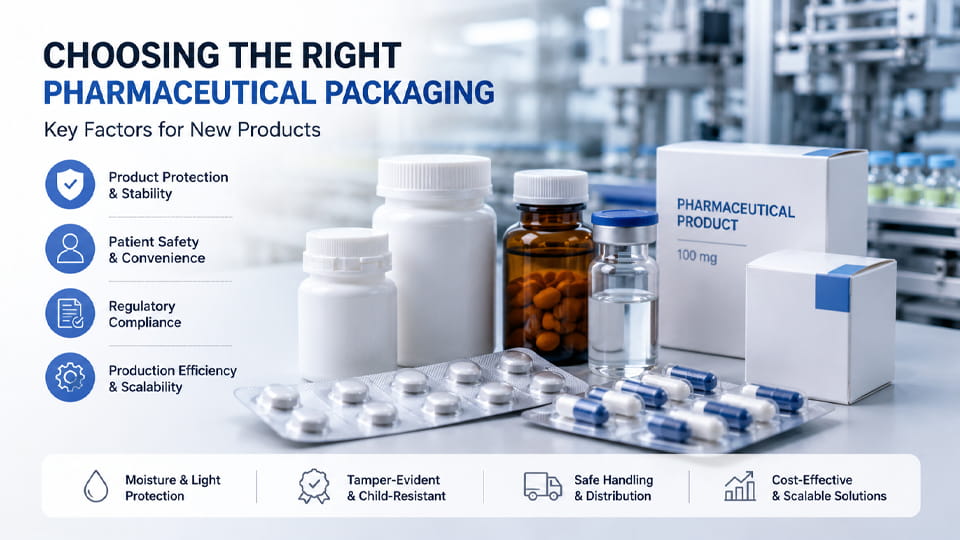
Tại sao việc lựa chọn bao bì lại quan trọng trong dược phẩm
Bao bì dược phẩm là thiết yếu, không tùy chọn. Không giống như bao bì tiêu dùng thông thường, bao bì dược phẩm phải bảo vệ tính toàn vẹn của thuốc trong toàn bộ thời hạn sử dụng. WHO và các hướng dẫn quản lý nhấn mạnh rằng bao bì phải bảo vệ thuốc khỏi độ ẩm, ánh sáng, oxy và các mối đe dọa bên ngoài khác. Nói cách khác, nó “duy trì sự ổn định và chất lượng của sản phẩm thuốc” và ngăn chặn sự hư hỏng hoặc giả mạo.
Các chức năng chính của bao bì bao gồm:
- Bảo vệ sản phẩm: Tránh ẩm, ôxy, ánh sáng, nhiệt độ và chất gây ô nhiễm. Ví dụ, hướng dẫn của USP lưu ý rằng viên thuốc rắn “cần được bảo vệ khỏi hơi nước” vì độ ẩm có thể thay đổi hiệu lực hoặc độ hòa tan của thuốc. Vật liệu có rào cản cao (Lá nhôm, màng tráng, kính màu hổ phách) thường được sử dụng ở nơi có độ nhạy cao.
- Tuân thủ quy định: Bao bì phải đáp ứng FDA, EMA và WHO Yêu cầu GMP. Điều này bao gồm thích hợp tính toàn vẹn đóng cửa container (CCI), tài liệu đã được xác nhận, và các tính năng như rõ ràng là giả mạo con dấu. Bao bì chống trẻ em cần thiết cho nhiều loại thuốc để ngăn chặn việc vô tình nuốt phải. Tuần tự hóa và truy xuất nguồn gốc (mã vạch duy nhất trên mỗi gói) hiện là bắt buộc tại các thị trường lớn (FDA DSCSA, Bệnh FMD của EU).
- An toàn và tuân thủ của bệnh nhân: Thiết kế bao bì phải tránh sai sót về liều lượng và sử dụng sai mục đích. Nhãn chống giả mạo và mũ chống trẻ em “bảo vệ khỏi ngộ độc do tai nạn”. Tính năng thân thiện với người dùng (dễ mở, dụng cụ hỗ trợ định lượng, vỉ lịch) giúp bệnh nhân uống thuốc đúng cách.
- Thương hiệu và truyền thông: Bao bì thứ cấp (thùng giấy, nhãn) cung cấp hướng dẫn, cảnh báo, và thương hiệu. Theo các chuyên gia, nhãn phải bền và rõ ràng để tránh nhầm lẫn. Thực vậy, một phân tích được tìm thấy gần như 50% thu hồi thuốc có liên quan đến các vấn đề về đóng gói/nhãn mác.
Tóm lại, bao bì là một biện pháp bảo vệ tích cực. Không chọn đúng gói có thể dẫn đến API bị xuống cấp, tổn hại bệnh nhân, và đau đầu về quy định. Bao bì phù hợp “bảo vệ chất lượng thuốc” và do đó củng cố hiệu quả và danh tiếng của sản phẩm.

Bước chân 1: Hiểu đặc điểm sản phẩm dược phẩm mới của bạn
Bước đầu tiên là một kiểm tra sản phẩm kỹ lưỡng. Hỏi: Dạng bào chế là gì (viên thuốc, viên nang, bột, chất lỏng, tiêm được, vân vân.)? Thuốc có độ nhạy cảm gì (độ ẩm, ôxy, ánh sáng, nhiệt)? Có cần kiểm soát liều lượng đặc biệt không (ống hít định liều, ống nhỏ giọt, ống tiêm nạp sẵn)?
- Dạng bào chế: Viên nén và viên nang thường liều rắn và thường được đóng gói trong vỉ hoặc chai. Chất lỏng/huyền phù đi vào chai hoặc lọ. Thuốc tiêm yêu cầu lọ vô trùng, ống tiêm hoặc ống tiêm chứa sẵn. Khí/ống hít sử dụng bình chuyên dụng. Bột hoặc hạt có thể được đóng gói trong gói, gói dính hoặc chai.
- Độ nhạy hóa học/vật lý: Thuốc có tính hút ẩm hay dễ bị oxy hóa? Thuốc nhạy cảm với độ ẩm cao (ví dụ. viên sủi) nhu cầu bao bì có rào cản cao như vỉ Alu-Alu hoặc chai có lớp hút ẩm. Các hợp chất nhạy sáng cần thùng chứa mờ đục hoặc nhuốm màu. Thuốc phản ứng yêu cầu vật liệu trơ (ví dụ. thủy tinh, một số polyme).
- Thời hạn sử dụng và độ ổn định: Xem xét mọi biện pháp kiểm soát nhiệt độ cần thiết (điện lạnh) hoặc điều kiện chân không/vô trùng. Một số vắc xin hoặc sinh phẩm có thể yêu cầu đóng gói dây chuyền lạnh hoặc lọ chuyên dụng.
Điểm mấu chốt: Bao bì sơ cấp phải có tính trơ và có tính bảo vệ. Nó không nên lọc hoặc hấp thụ thuốc, và nó phải duy trì một môi trường kín. Ví dụ, FDA lưu ý rằng hộp đựng dạng rắn nên có “tỷ lệ thấm hơi nước thấp, và hệ thống đóng cửa phải thiết lập một con dấu”. Việc thực hiện kiểm tra khả năng tương thích và khả năng trích xuất với các thành phần đóng gói ứng viên là rất quan trọng.
Danh sách kiểm tra để kiểm tra sản phẩm:
- Dạng bào chế/loại (viên thuốc, viên nang, chất lỏng, vân vân.)
- Điều kiện bảo quản/ổn định (nhiệt độ, độ ẩm, ánh sáng)
- Yêu cầu về liều lượng/quản lý (ống nhỏ giọt, bơm, đơn vị liều)
- Cân nhắc sử dụng của bệnh nhân (thuốc trẻ em và thuốc người lớn, tính di động, thân thiện với người cao tuổi)
- Hạn chế về quy định (ví dụ. thông tin bệnh nhân là một phần của gói chính?)
Sự hiểu biết này sẽ thúc đẩy sự lựa chọn của bạn về bao bì chính (bao bì tiếp xúc trực tiếp với thuốc). Kế tiếp, chúng tôi thảo luận về những lựa chọn đó.
Bước chân 2: Chọn bao bì chính phù hợp
Bao bì sơ cấp là vật chứa ngay lập tức chứa thuốc. Nó chạm trực tiếp vào thuốc. Các loại bao bì chính phổ biến bao gồm Gói vỉ, chai (nhựa/thủy tinh), lọ/ống, túi, ống, vân vân. Mỗi cái đều có ưu/nhược điểm:
- Gói vỉ (Alu-Alu hoặc Alu-PVC): Lý tưởng cho các dạng rắn liều lượng đơn vị (máy tính bảng, viên nang). Họ cung cấp rào cản độ ẩm / ánh sáng tuyệt vời, đặc biệt là Mọi thời đại (giấy bạc dạng lạnh) kiểu. Vỉ đảm bảo mỗi liều được đóng kín cho đến khi sử dụng, cải thiện sự tuân thủ và giảm ô nhiễm chéo. Các vết phồng rộp hiện đại có thể được chế tạo để chống lại trẻ em. Thiết bị: Tốc độ cao máy đóng gói vỉ xử lý hình thành, cho ăn, niêm phong nhiệt và cắt (ví dụ. Máy đóng vỉ Alu-Alu của JinluPacking).
- Chai (Nhựa hoặc thủy tinh): Phổ biến cho bao bì nhiều đơn vị (xi-rô, viên nang, máy tính bảng). Chai có hiệu quả chi phí cho khối lượng lớn. chai thủy tinh (Borosilicate loại I) mang lại độ trơ hóa học tuyệt vời và có thể có màu hổ phách để bảo vệ ánh sáng. chai nhựa (HDPE, PP) nhẹ và chống vỡ nhưng thường có độ thấm ẩm cao hơn. Chai thường sử dụng mũ chống trẻ em. Thiết bị: Máy đếm/đóng chai và đóng nắp chai, và có thể chèn chất hút ẩm hoặc con dấu giấy bạc (xem trên dòng đếm). Dây chuyền chiết rót chai và máy đóng nắp tự động của Jinlu tích hợp các bước này.
- Gói & Gói gậy: Được sử dụng cho bột, hạt, hoặc chất lỏng đơn liều (ví dụ. kháng sinh, ORS). Đây là những túi giấy bạc hoặc túi nhựa dẻo được dán kín ở tất cả các mặt. Gói cung cấp rào cản tuyệt vời (thường bằng lá nhôm) và tiện lợi. Thiết bị: Mẫu máy đóng gói dạng gói, đổ đầy, và niêm phong các túi này trong một lần.
- lọ & ống tiêm: Tiêu chuẩn thuốc tiêm vô trùng (giải pháp, bột đông khô). lọ (thủy tinh hoặc nhựa) với nút cao su duy trì vô trùng. ống tiêm (thủy tinh) được niêm phong kín cho đến khi sử dụng. Cả hai đều mang lại độ tinh khiết cao và thích hợp cho kim tiêm/ống tiêm. Thiết bị: Dây chuyền chiết rót lọ, máy đóng nắp và uốn được sử dụng (thường có khu vực dòng chảy tầng để vô trùng).
- Người khác: Ống (kim loại hoặc nhựa) phổ biến đối với thuốc mỡ/kem. Ống tiêm hoặc ống hít chứa đầy thuốc (MDI/DPI) liên quan đến việc đóng gói thiết bị tùy chỉnh. Những điều này thường yêu cầu thiết bị lắp ráp và làm đầy chuyên dụng.
Sự phù hợp của mỗi lựa chọn tùy thuộc vào sản phẩm của bạn:
- Chi phí so với. Sự bảo vệ: Bảng dưới đây so sánh các loại gói chính:
| Kiểu |
Tốt nhất cho |
Cấp độ bảo vệ |
Trị giá |
Thiết bị |
| Gói vỉ |
Máy tính bảng, Viên nang |
Rất cao (Độ ẩm/Ánh sáng) |
Trung bình |
Máy đóng gói vỉ |
| Cái chai |
Máy tính bảng, Xi-rô, thuốc |
Trung bình (tốt với chèn) |
Thấp |
Dây chuyền chiết rót/đóng nắp chai |
| Gói/Thanh |
Bột, Hạt |
Cao (Rào chắn lá) |
Trung bình |
Máy đóng gói gói |
| Lọ/Ống thuốc |
Thuốc tiêm, Huyết thanh |
Rất cao (Kính vô trùng) |
Cao |
Đổ đầy lọ & Dây chuyền niêm phong |
Chọn gói chính phù hợp với dạng bào chế và nhu cầu bảo vệ. Ví dụ, một viên thuốc nhạy cảm với độ ẩm có thể cần một Vỉ Alu-Alu hoặc chai thủy tinh màu hổ phách có hút ẩm. Nhiều viên thuốc OTC thông thường hơn có thể đựng trong chai nhựa có nắp đậy kín (cộng với tính năng chống trẻ em).
Mẹo: Nếu việc tuân thủ liều đơn vị là quan trọng (VÍ DỤ., phân phối bệnh viện hoặc gói du lịch), tấm vỉ hoặc gói dính thường được ưa thích. Để linh hoạt (có thể thay đổi liều lượng), chai tốt hơn.
Bước chân 3: Xem xét các yêu cầu về độ ổn định và thời hạn sử dụng
Quyết định đóng gói không thể tách rời khỏi sự ổn định. Hộp đựng sai có thể gây xuống cấp hoặc hỏng nhãn. Những cân nhắc chính:
- Thuộc tính rào cản: Sử dụng vật liệu ngăn chặn các yếu tố quan trọng. Vì thuốc nhạy cảm với độ ẩm, cần có lá hoặc kính có rào cản cao. Ví dụ, vỉ nhôm dạng lạnh cung cấp độ ẩm về cơ bản bằng không. Hướng dẫn về độ ổn định của FDA/ICH lưu ý rằng các sản phẩm đựng trong thùng chứa thực sự không thấm nước (VÍ DỤ., vỉ giấy bạc hoặc kính kín) có thể được thử nghiệm trong điều kiện bình thường mà không cần nghiên cứu độ ẩm đặc biệt. Ngược lại, gói bán thấm (giống như một số loại nhựa) yêu cầu đánh giá độ ẩm cẩn thận.
- Bảo vệ ánh sáng: API nhạy sáng cần bao bì mờ đục hoặc màu hổ phách. Ví dụ, chai thủy tinh màu hổ phách hoặc túi kim loại che chắn tia cực tím. Một cách thực hành phổ biến là bọc các lọ trong bằng lớp bọc nhôm nếu cần..
- Khả năng tương thích: Đảm bảo vật liệu đóng gói không phản ứng với thuốc. Thủy tinh trơ, nhưng một số loại nhựa có thể lọc hoặc hấp thụ các hợp chất. Thực hiện các nghiên cứu về chất có thể chiết xuất/có thể lọc được trên các thành phần chính. Hướng dẫn quy định (FDA, Ema) trông chờ tính toàn vẹn đóng cửa container (CCI) thử nghiệm trong suốt thời hạn sử dụng.
- Xác định thời hạn sử dụng: Nghiên cứu độ ổn định (Tôi Q1A/R2) phải sử dụng hệ thống đóng container đề xuất. Nếu các thử nghiệm về thời hạn sử dụng cho thấy sự xuống cấp, bạn có thể cần phải điều chỉnh bao bì (ví dụ. chuyển sang một rào cản tốt hơn) hoặc hướng dẫn xử lý/bảo quản nhãn.
- Tính năng nâng cao: Một số gói tích hợp chất hút ẩm hoặc chất hút oxy. Tấm nhiều lớp (PET/nhôm/PE) thường được sử dụng để phân phối toàn cầu. Để bảo vệ có độ chính xác rất cao, bao bì hoạt động (chất hấp thụ độ ẩm nhúng) có thể được sử dụng.
Danh sách kiểm tra tính tương thích về độ ổn định:
- Chọn vật liệu chính có rào cản cao nếu cần (Mọi thời đại, thủy tinh, tấm ép).
- Xác minh phương pháp niêm phong (con dấu nhiệt, mũ lưỡi trai) đạt được sự truyền hơi ẩm thấp (MVTR).
- Tiến hành tăng tốc độ ổn định (40°C/75%RH) theo ICH để đảm bảo không có sự xâm nhập của hơi ẩm hoặc thay đổi hóa học.
- Lập kế hoạch tính toàn vẹn của việc đóng container (thử nghiệm xâm nhập chân không hoặc thuốc nhuộm) đặc biệt đối với các sản phẩm dạng lỏng/vô trùng.
- Đảm bảo bao bì có thể chịu được những cú sốc khi phân phối (thử nghiệm thả rơi/độ rung với bao bì cấp hai/cấp ba).
Bằng cách chọn bao bì đáp ứng các yêu cầu về độ ổn định ngay từ đầu, bạn tránh được việc cải tiến hoặc đóng gói lại tốn kém sau này.
Bước chân 4: Đánh giá sự thuận tiện và tuân thủ của bệnh nhân
Ngoài sự bảo vệ, bao bì hiện đại sẽ giúp bệnh nhân sử dụng thuốc đúng cách. Thiết kế bao bì ảnh hưởng trực tiếp đến sự tuân thủ và an toàn. Coi như:
- Mở/Dễ sử dụng: Bệnh nhân cao tuổi có thể gặp khó khăn khi đội mũ chật. cung cấp mũ thân thiện với người cao tuổi hoặc con dấu dễ bóc có thể có lợi. Đối với thuốc đơn liều, vỉ lịch (ngày hoặc thời gian được gắn nhãn) có thể nhắc nhở bệnh nhân uống thuốc đúng cách.
- Hỗ trợ định lượng: Nếu có thể, bao gồm cốc/thìa đong chất lỏng, ống nhỏ giọt cho nhãn khoa, hoặc máy bơm đo liều. Xóa dấu hiệu trên thùng chứa (lễ tốt nghiệp, dải màu) cải thiện độ chính xác.
- Tính di động: Nếu bệnh nhân đi du lịch hoặc mang theo thuốc, túi nhỏ gọn hoặc chai nhỏ rất hữu ích. Tính năng giả mạo đảm bảo an toàn.
- Tính năng tuân thủ: Một số gói chính được thiết kế để tuân thủ: VÍ DỤ., máy phân phối thuốc có báo động tích hợp, hoặc thẻ vỉ thông minh theo dõi việc sử dụng. Nếu tuân thủ cao là rất quan trọng, xem xét những đổi mới như vậy.
- Nhãn và phụ trang: Đảm bảo rõ ràng, hướng dẫn đa ngôn ngữ trên thùng carton hoặc tờ rơi. Bao bì tốt hỗ trợ dược sĩ và bệnh nhân với nhãn dễ đọc, biểu đồ liều lượng, và biểu tượng lưu trữ.
Thiết yếu, hỏi: Liệu bệnh nhân có thấy gói này dễ sử dụng và an toàn không?? Nếu không, họ có thể sử dụng sai hoặc từ bỏ sản phẩm. Bao gồm các tính năng lấy bệnh nhân làm trung tâm (ổ khóa trẻ em, dễ mở, ghi nhãn rõ ràng) cũng đáp ứng các cơ quan quản lý nhấn mạnh đến sự an toàn của bệnh nhân.
Bước chân 5: Đảm bảo tuân thủ quy định
Bao bì dược phẩm được quản lý chặt chẽ. Các vấn đề tuân thủ chính:
- Chống trẻ em (CR) yêu cầu: Nhiều nước (CHÚNG TA, EU, AU) bắt buộc đóng gói CR đối với thuốc uống có nguy cơ cao. WHO lưu ý rằng “Việc đóng cửa chống trẻ em đã được phát triển” để bảo vệ trẻ em. Đảm bảo rằng thuốc theo toa dạng rắn và dạng lỏng dùng đường uống sử dụng nắp CR hoặc cơ chế xoay đẩy đã được chứng nhận nếu pháp luật yêu cầu. (Ví dụ. CHÚNG TA 16 CFR 1700 vàng tiêu chuẩn EU EN 14375).
- Con dấu chống giả mạo: FDA và những tổ chức khác yêu cầu bằng chứng cho thấy gói hàng chưa được mở. Ban nhạc giả mạo, thu nhỏ kết thúc tốt đẹp, hoặc các con dấu ly khai thường thấy trên chai; con dấu giấy bạc là phổ biến trên lọ. Ngay cả những vỉ thuốc cũng khó mở nếu không có vết thương rõ ràng.
- Ghi nhãn: Gói sơ cấp và thứ cấp phải mang đầy đủ thông tin cần thiết (tên thuốc, sức mạnh, dạng bào chế, số lô/đợt, hết hạn, điều kiện lưu trữ, nhà sản xuất). Phông chữ phải dễ đọc và tuân thủ các nguyên tắc dược điển. Ví dụ, FDA 21 CFR 201.15 bao gồm độ bền nhãn.
- Tuần tự hóa và truy xuất nguồn gốc: Các quy định như DSCSA của FDA (CHÚNG TA) và Chỉ thị về thuốc giả của EU yêu cầu mã duy nhất (ví dụ. 2Mã vạch D) trên mỗi đơn vị có thể bán được. Thiết kế bao bì phải phù hợp với việc in hoặc khắc số seri, mã datamatrix trên vỉ hoặc nhãn chai.. Dây chuyền đóng gói của bạn có thể cần máy in mã hóa và hệ thống quan sát, và tích hợp với cơ sở dữ liệu theo dõi.
- Thực hành sản xuất tốt (GMP): Dây chuyền đóng gói phải đáp ứng GMP (khả năng làm sạch, truy xuất nguồn gốc vật liệu, vân vân.). Tất cả các gói chính được sử dụng phải đạt tiêu chuẩn GMP (ví dụ. ISO 15378 cho vật liệu đóng gói). Máy móc nên được IR/WH/PQ đạt tiêu chuẩn. (Xem bên dưới để biết thiết bị đóng gói Jinlu).
Mẹo quản lý chính: Đừng coi việc tuân thủ là điều cần suy nghĩ lại. Ví dụ, việc không bao gồm tính năng chống giả mạo có thể chặn việc đăng ký sản phẩm. Xem xét sớm các quy tắc dành riêng cho từng quốc gia – ví dụ:. USP <661> cho hộp nhựa, CFR 211 để kiểm soát đóng gói. Luôn xác minh rằng bao bì và thiết bị đóng gói đã chọn có thể đáp ứng các tiêu chuẩn này.
Bước chân 6: Cân bằng chi phí đóng gói và hiệu quả sản xuất
Ở giai đoạn này, đánh giá tổng chi phí sở hữu (TCO) cho các tùy chọn đóng gói. Coi như:
- Chi phí vật liệu: Túi và vỉ linh hoạt có thể có giá cao hơn trên mỗi đơn vị so với chai đơn giản. Lá vỉ Alu-Alu đắt hơn lá PVC. Chai thủy tinh đắt hơn chai nhựa.
- Thông lượng thiết bị: Các định dạng có rào cản cao như vỉ có thể chạy chậm hơn so với dòng chai, ảnh hưởng đến số lượng thiết bị cần thiết. Ngược lại, chất độn chai có thể đạt được tốc độ rất cao (vài nghìn chai/giờ) nhưng cần giải mã, mũ lưỡi trai, và nhãn trong một dòng.
- Độ phức tạp của dòng: Bao bì phức tạp hơn (ví dụ. vỉ đơn vị) yêu cầu máy móc chuyên dụng. Kiểm tra xem đầu tư vốn và bảo trì có phù hợp với ngân sách của bạn không.
- Nhân công: Dây chuyền hoàn toàn tự động giảm lao động thủ công nhưng tăng vốn. Máy bán tự động có giá thành thấp hơn nhưng cần nhiều người vận hành hơn.
- hậu cần: Bao bì cấp 2/ cấp 3 cũng có giá. Chai thủy tinh lớn nặng hơn khi vận chuyển. Thùng carton cồng kềnh làm tăng chi phí vận chuyển.
- Lãng phí và năng suất: Xử lý thêm (ví dụ. đấm phồng rộp) có thể tạo ra phế liệu. Đánh giá vật liệu lãng phí (cắt khỏi mụn nước, chai vỡ, vân vân.).
Thực hiện một cách thô bạo so sánh chi phí: ví dụ. chi phí cho mỗi gói cuối cùng bao gồm cả vật liệu và chế biến. Cũng xem xét tốc độ (đơn vị mỗi giờ) và kích thước lô yêu cầu.
MỘT Danh sách kiểm tra TCO:
- So sánh chi phí vật liệu đóng gói trên mỗi đơn vị.
- Đánh giá thông lượng máy cần thiết so với nhu cầu.
- Tính toán chi phí nhân công và năng lượng cho từng dây chuyền.
- Bao gồm chi phí xử lý/tái chế chất thải.
- Yếu tố nguy cơ làm lại (ví dụ. nếu đóng gói thất bại, chi phí dán nhãn lại hoặc đóng gói lại).
- Mở rộng quy mô trong tương lai: nếu khối lượng tăng gấp đôi, giải pháp này có quy mô không?
Thường thì vật liệu có chi phí thấp nhất không phải là tốt nhất nếu nó dẫn đến việc thu hồi hoặc từ chối. Tạo sự cân bằng là rất quan trọng: đôi khi trả nhiều tiền hơn để có rào cản hoặc tự động hóa tốt hơn sẽ mang lại năng suất và mức độ tuân thủ cao hơn.
Bước chân 7: Đảm bảo bao bì có thể mở rộng theo nhu cầu trong tương lai
Hãy xem xét không chỉ việc ra mắt ngay lập tức, nhưng vòng đời dài hạn của sản phẩm:
- Phi công vs. Thuộc về thương mại: Đối với lô lâm sàng ban đầu hoặc lô thị trường nhỏ, bạn có thể sử dụng dòng thủ công hoặc bán tự động. Cho sản xuất quy mô lớn, sẽ cần một dây chuyền hoàn toàn tự động. Đảm bảo rằng sự lựa chọn của bạn (hoặc đề xuất của nhà cung cấp) cho phép nâng cấp mô-đun.
- Mô-đun thiết bị: Bạn có thể thêm làn đường hoặc đơn vị để tăng tốc độ không? Ví dụ, một số máy vỉ có thể thêm nhiều túi quay. Dây chuyền đóng chai có thể thêm chất độn song song.
- Tích hợp: Hãy suy nghĩ từ đầu đến cuối: đếm/đóng gói → niêm phong → đóng thùng → đóng thùng → xếp hàng. Nếu bạn hợp tác với Jinlu Packing hoặc tương tự, họ có thể thiết kế một dây chuyền đóng gói chìa khóa trao tay bao gồm việc tuần tự hóa, đóng thùng, trường hợp đóng gói, vân vân.
- Chia tỷ lệ theo quy định: Bất kỳ thay đổi nào về thành phần bao bì (ví dụ. nhà cung cấp chai mới) yêu cầu phê duyệt lại theo quy định nếu nó ảnh hưởng đến sự ổn định hoặc tuân thủ. Lập kế hoạch kiểm soát chất lượng nhà cung cấp bao bì và nhà cung cấp dự phòng.
- Sản phẩm tương lai: Nếu công ty của bạn có thể sản xuất các dạng bào chế khác (ví dụ. một loại gel trong tương lai), chọn thiết bị linh hoạt. Máy làm đầy viên nang dạng mô-đun hoặc máy đóng vỉ có thể xử lý nhiều dạng khác nhau có thể là một khoản đầu tư tốt.
Sự tham gia sớm của các kỹ sư đóng gói hoặc nhà tư vấn có thể ngăn ngừa tắc nghẽn sau này. Như một chuyên gia trong ngành lưu ý, “Việc đóng gói cần được xem xét song song với việc phát triển công thức, không phải là một suy nghĩ lại. Những quyết định sớm đúng đắn sẽ giúp việc mở rộng quy mô và mở rộng dây chuyền suôn sẻ hơn.
Những sai lầm phổ biến khi lựa chọn bao bì cần tránh
- Để lại lựa chọn bao bì quá muộn: Đừng chỉ quyết định đóng gói sau khi đã khóa công thức. Các nghiên cứu độ ổn định sớm nên sử dụng bao bì cuối cùng, không phải lọ giả.
- Bỏ qua các bài kiểm tra độ ổn định: Đừng bao giờ cho rằng một container sẽ hoạt động; luôn kiểm tra thuốc của bạn trong hộp/đóng nắp thực tế trong điều kiện ICH. Một công thức ổn định khác có thể bị biến chất nếu bao bì kém.
- Chỉ tập trung vào chi phí: Vật liệu giá rẻ có thể tiết kiệm tiền ban đầu nhưng tốn nhiều chi phí hơn khi thu hồi hoặc rút ngắn thời hạn sử dụng. Cân bằng chi phí với bảo vệ.
- Bỏ qua yếu tố bệnh nhân: Một chai tiêu chuẩn có thể phù hợp với mục tiêu chi phí, nhưng nếu bệnh nhân không thể mở nó hoặc tuân thủ, sản phẩm sẽ kém hiệu quả trên thị trường.
- Đánh giá thấp nhu cầu pháp lý: Việc không bao gồm con dấu chống giả mạo hoặc đóng cửa chống trẻ em khi được yêu cầu có thể khiến việc phê duyệt bị dừng lại. Luôn tham khảo hướng dẫn.
- Bỏ qua chuỗi cung ứng: Xem xét thời gian cung cấp bao bì và thời hạn sử dụng. Một số vật liệu đặc biệt (giống như lớp lót thu hồi oxy) có thể có thời gian thực hiện dài.
Bằng cách tránh những lỗi này và đánh giá liên chức năng (R&D, QA, Sản xuất, quy định), bạn đảm bảo bao bì bạn chọn là khả thi, tuân thủ, và hiệu quả.
Bao bì được đề xuất theo loại sản phẩm dược phẩm mới
| Loại sản phẩm |
Bao bì chính được đề xuất |
| Viên nén/viên nang |
Đơn vị liều Gói vỉ (Alu-Alu hoặc PVC/Alu) hoặc số lượng lớn chai. Nắp chai chống trẻ em. Thiết bị lý tưởng: máy đóng gói vỉ hoặc đếm viên/viên nang & dây chuyền đóng chai. |
| Bột/Hạt uống |
Gói hoặc gói dính (cho liều duy nhất); hoặc chai (cho số lượng lớn). Máy đóng gói dạng gói theo đơn vị liều lượng, chất độn khoan cho chai. |
| Chất lỏng/xi-rô |
Chai nhựa hoặc thủy tinh có nắp vặn (thường có con dấu giấy bạc và nắp chống trẻ em). Để có độ tinh khiết cao, Kính loại I. Thiết bị: dây chuyền làm đầy chất lỏng (máy bơm, giới hạn nội tuyến). |
| Thuốc tiêm |
Lọ thủy tinh hoặc ống tiêm (vô trùng) hoặc ống tiêm đóng sẵn. Sử dụng máy chiết rót và gấp mép lọ vô trùng trong phòng sạch. |
| Kem/Thuốc mỡ (chất bán rắn) |
Ống hoặc lọ (ống nhôm/nhựa, lọ thủy tinh/nhựa). Ống có dấu niêm phong rõ ràng. Máy rót ống bán tự động hoặc tự động. |
| Viên thuốc sủi bọt |
Ống nhôm hoặc chai (để giữ khô); thường xuyên với chất hút ẩm. Vỉ nhôm cũng phổ biến. Máy ống (cho máy tính bảng) hoặc máy vỉ. |
| Thuốc đạn |
khay vỉ (điển hình là Alu/PVC hoặc Alu/Alu) hoặc hộp đựng các sản phẩm được bọc riêng lẻ. Máy đóng gói vỉ hoặc máy ép nhiệt. |
| Thuốc hít/thuốc xịt mũi |
Hộp MDI hoặc hộp mực DVI (thiết bị cụ thể). Phối hợp với nhà sản xuất thiết bị; thiết bị đóng hộp/đóng hộp tùy chỉnh. |
Việc lập bản đồ này giúp đảm bảo mỗi dạng thuốc đều nhận được sự bảo vệ phù hợp. Ví dụ, gói vỉ là tuyệt vời cho liều uống rắn, trong khi lọ thủy tinh là thứ bắt buộc phải có đối với thuốc tiêm vô trùng. Bảng này cũng gợi ý thiết bị: ví dụ. máy đóng gói vỉ, dây chuyền chiết rót và đóng nắp chai, máy đóng gói gói, chất độn lọ, vân vân.
Bao bì Jinlu giúp các công ty dược phẩm như thế nào
Jinlu Đóng gói là hàng đầu nhà sản xuất máy đóng gói dược phẩm. Chúng tôi cung cấp giải pháp chìa khóa trao tay cho dây chuyền đóng gói thuốc mới. Các dịch vụ chính:
- Máy đóng gói vỉ: Máy ép vỉ tốc độ cao cho gói PVC/Alu hoặc Alu-Alu. Thiết kế tùy chỉnh để phù hợp với yêu cầu về tốc độ và định dạng máy tính bảng/viên nang của bạn.
- Đổ đầy chai & Đường đóng nắp: Đổ đầy chai tự động, giới hạn, và hệ thống ghi nhãn. Dây chuyền đếm và điền của chúng tôi có thể tích hợp bộ giải mã, máy hút ẩm, chất bịt kín giấy bạc, và nắp cho chai máy tính bảng/kẹo cao su.
- Máy đóng thùng: Thùng carton ngang và dọc để dựng thùng carton xung quanh vỉ, chai, hoặc gói. Các tính năng như 100% quét mã để tuần tự hóa và chuyển đổi nhanh chóng.
- Hệ thống tuần tự hóa/mã hóa: Chúng tôi có thể trang bị cho các dây chuyền máy in phun/máy mã hóa laser và kiểm tra bằng hình ảnh để in và xác minh lô, hết hạn, và mã số duy nhất.
- Dây chuyền đóng gói hoàn chỉnh: Từ cấp sản phẩm đến đóng thùng, chúng tôi có thể thiết kế một dây chuyền tích hợp đầy đủ đáp ứng nhu cầu về cGMP và số sê-ri. Máy của chúng tôi được thiết kế để dễ dàng vệ sinh (Thép không gỉ SUS316L) và bao gồm tài liệu IQ/OQ.
- Ủng hộ & Sự tuân thủ: Chúng tôi hỗ trợ về trình độ chuyên môn của máy (IR/WH/PQ) và cung cấp đào tạo và lắp đặt tại chỗ trên toàn thế giới.
Bằng cách làm việc với chúng tôi, bạn không chỉ nhận được thiết bị, nhưng chuyên môn về đóng gói. Chúng tôi đảm bảo phương pháp đóng gói bạn đã chọn (đường phồng rộp, dòng chai, vân vân.) được tối ưu hóa cho sản phẩm của bạn và nhu cầu pháp lý, giúp việc ra mắt sản phẩm của bạn suôn sẻ hơn.
Phần kết luận
Việc lựa chọn bao bì phù hợp cho một sản phẩm dược phẩm mới là một quyết định nhiều mặt. Nó đòi hỏi phải cân bằng độ ổn định của thuốc, an toàn bệnh nhân, Tuân thủ, trị giá, và khả năng mở rộng. Nhớ: bao bì tốt nhất là bao bì giữ cho sản phẩm của bạn an toàn và hiệu quả cho đến khi đến tay bệnh nhân. Không chỉ là hấp dẫn hay rẻ tiền mà còn là chất lượng. Bằng cách phân tích cẩn thận các đặc tính của sản phẩm, thử nghiệm các lựa chọn đóng gói, và tuân theo quy định, các nhà sản xuất có thể tránh được việc thu hồi tốn kém và đảm bảo thuốc của họ vẫn có tác dụng, nguyên chất, và an toàn. Với chiến lược đóng gói được lựa chọn kỹ lưỡng (và máy móc phù hợp), bạn bảo vệ cả khách hàng và danh tiếng thương hiệu của mình.
Câu hỏi thường gặp về việc chọn bao bì cho sản phẩm dược phẩm mới
Tại sao bao bì lại quan trọng đối với một sản phẩm dược phẩm mới?
Bao bì không chỉ chứa một loại thuốc. Nó bảo vệ sản phẩm dược phẩm khỏi độ ẩm, ôxy, ánh sáng, sự ô nhiễm, và thiệt hại vật chất. Bao bì phù hợp cũng giúp đảm bảo tuân thủ quy định, an toàn bệnh nhân, sự ổn định của sản phẩm, và thời hạn sử dụng trong suốt quá trình phân phối và bảo quản.
Những yếu tố cần cân nhắc khi lựa chọn bao bì dược phẩm?
Nhà sản xuất nên đánh giá một số yếu tố, bao gồm:
• Dạng bào chế (viên thuốc, viên nang, chất lỏng, bột, tiêm được)
• Độ nhạy cảm với độ ẩm và oxy
• Yêu cầu bảo vệ ánh sáng
• Mục tiêu về thời hạn sử dụng
• Yêu cầu pháp lý
• Sự thuận tiện cho bệnh nhân
• Chi phí đóng gói
• Hiệu quả sản xuất
• Khả năng mở rộng trong tương lai
Giải pháp đóng gói lý tưởng cần cân bằng khả năng bảo vệ sản phẩm, Tuân thủ, và hiệu quả hoạt động.
Bao bì tốt nhất cho máy tính bảng và viên nang là gì?
Vỉ và chai là những lựa chọn phổ biến nhất.
• Bao bì dạng vỉ cung cấp khả năng bảo vệ tuyệt vời chống lại độ ẩm và ô nhiễm đồng thời mang lại sự tiện lợi khi sử dụng theo đơn vị liều lượng.
• Chai có hiệu quả về mặt chi phí khi sản xuất số lượng lớn và thường được sử dụng cho máy tính bảng, viên nang, và thực phẩm bổ sung.
Sự lựa chọn tốt nhất phụ thuộc vào yêu cầu về độ ổn định của sản phẩm và thị trường mục tiêu.
Bao bì ảnh hưởng đến độ ổn định của thuốc như thế nào?
Vật liệu đóng gói ảnh hưởng trực tiếp đến khả năng tiếp xúc của thuốc với các yếu tố môi trường như độ ẩm, ôxy, và ánh sáng. Bao bì kém có thể đẩy nhanh quá trình xuống cấp, giảm hiệu lực, và rút ngắn thời hạn sử dụng. Đó là lý do tại sao việc kiểm tra độ ổn định thường được thực hiện bằng cách sử dụng cấu hình đóng gói cuối cùng dành cho phân phối thương mại.
Làm thế nào các công ty dược phẩm có thể đảm bảo tuân thủ bao bì?
Nhà sản xuất phải xác minh rằng vật liệu đóng gói, nhãn, sự đóng cửa, và thiết bị đóng gói tuân thủ các quy định hiện hành như FDA, EU GMP, tuần tự hóa, và các yêu cầu về đóng gói chống trẻ em. Làm việc với các nhà cung cấp thiết bị đóng gói dược phẩm có kinh nghiệm có thể giúp đơn giản hóa quy trình xác nhận và tuân thủ.
Khi nào nên xem xét đóng gói trong quá trình phát triển sản phẩm dược phẩm?
Bao bì nên được đánh giá càng sớm càng tốt trong quá trình phát triển sản phẩm. Chờ đợi cho đến khi thương mại hóa có thể tạo ra vấn đề về tính ổn định, sự chậm trễ quy định, chi phí thiết kế lại bao bì, và thách thức sản xuất. Lựa chọn bao bì sớm cho phép nhà sản xuất tiến hành nghiên cứu độ ổn định chính xác và phát triển chiến lược đóng gói thương mại hiệu quả hơn.
Làm cách nào để chọn máy đóng gói dược phẩm phù hợp cho sản phẩm mới?
Bắt đầu bằng cách đánh giá:
• Loại sản phẩm và dạng bào chế
• Hình thức đóng gói (mụn rộp, cái chai, gói, lọ)
• Năng lực sản xuất cần thiết
• Mức độ tự động hóa
• Yêu cầu pháp lý
• Kế hoạch mở rộng trong tương lai
Việc lựa chọn thiết bị đóng gói dược phẩm có khả năng mở rộng có thể giúp giảm chi phí đầu tư trong tương lai và hỗ trợ tăng trưởng kinh doanh lâu dài.
Tài liệu tham khảo:
1.Hệ thống đóng thùng chứa để đóng gói thuốc và sinh phẩm dành cho người -- CHÚNG TA. Cục Quản lý Thực phẩm và Dược phẩm
2.Phát triển dược phẩm ICH Q8 --- Cơ sở dữ liệu ICH
3.Thực hành sản xuất tốt cho sản phẩm dược phẩm -- AI
4.USP Q&MỘT: Tiêu chuẩn cho hệ thống bao bì nhựa cho sản phẩm thuốc -- usp.org
5.Kiểm tra tính toàn vẹn của việc đóng thùng chứa—Các khía cạnh và phương pháp tiếp cận thực tế trong ngành dược phẩm —— pda.org
