

MỘT dây chuyền đóng gói chai là một hệ thống tự động từ đầu đến cuối giúp biến các chai rỗng thành các chai được dán nhãn, sản phẩm đóng gói. Dành cho các nhà sản xuất dược phẩm và dinh dưỡng, những dòng này tăng thông lượng, cắt giảm chi phí lao động, và đảm bảo tuân thủ GMP đầu ra. Hướng dẫn này giải thích dây chuyền đóng gói chai là gì, nó hoạt động như thế nào, và các máy chủ chốt liên quan. Chúng tôi bao gồm các loại đường khác nhau (viên thuốc, chất lỏng, Nghĩa hóa dinh dưỡng, vân vân.), liệt kê những lợi ích chính của tự động hóa, và đưa ra những lời khuyên thiết thực về việc chọn đúng dòng. Cho dù bạn muốn một giải pháp đóng gói chai chìa khóa trao tay hoặc đang so sánh thủ công với. tự động, bài viết này bạn đã đề cập đến.
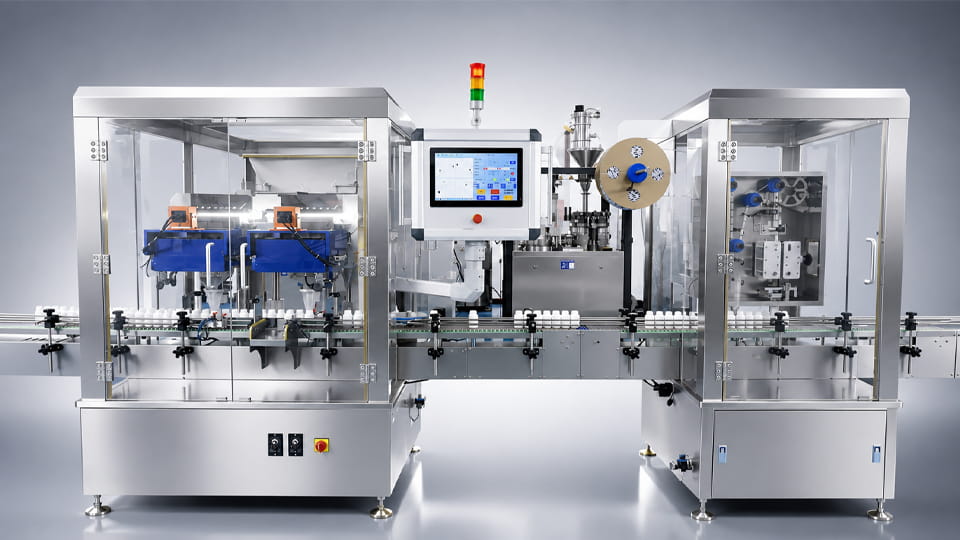
Nhân vật:Dây chuyền đóng gói chai dược phẩm điển hình.
Một dây chuyền đóng gói chai là một loạt máy móc và băng tải tự động xử lý chai rỗng thành chai hoàn thiện, sản phẩm đóng gói. Trong dược phẩm, điều này có nghĩa là lấy những viên thuốc rỗng hoặc chai chất lỏng và thực hiện các bước như đếm/đổ đầy, giới hạn, niêm phong cảm ứng (niêm phong giấy bạc), ghi nhãn, và đóng gói carton cuối cùng. Trong thực tế, một dòng “tự động hóa hoàn toàn toàn bộ quá trình, từ việc sắp xếp lại chai lọ đến việc đếm, chèn chất hút ẩm, giới hạn, niêm phong lá nhôm, và ghi nhãn”.
Nói cách khác, thay vì tự tay nhặt từng chai và đổ đầy từng chai một, một tự động dây chuyền đóng gói chai cho chai ăn qua từng trạm theo trình tự. Một dòng điển hình bắt đầu với một cái chai unscrambler (định hướng chai thẳng đứng trên băng tải), sau đó chảy qua điền/đếm, chèn bông hoặc chất hút ẩm (nếu cần), giới hạn, niêm phong cảm ứng, ghi nhãn, và cuối cùng là đóng thùng. Các máy này hoạt động đồng bộ dưới sự điều khiển của PLC, hình thành dây chuyền chìa khóa trao tay có thể chạy liên tục. Ví dụ, một nhà cung cấp thiết bị lưu ý rằng dây chuyền chiết rót đếm “có thể được kết nối với máy giải mã chai, máy hút ẩm, máy đóng nắp, máy dán nhãn và dán giấy nhôm”, bao gồm tất cả các bước chính.
Các bản thân chai có thể là nhựa (THÚ CƯNG, HDPE), thủy tinh, hoặc các vật liệu khác (kính màu hổ phách cho các sản phẩm nhạy sáng, vân vân.). Dây chuyền thường được thiết kế để xử lý nhiều loại kích cỡ chai (ví dụ. 30–đường kính 150 mm, 40–300 mm chiều cao) và các loại mũ (mũ vít, mũ chụp nhanh, đóng cửa chống trẻ em). Tất cả các bộ phận tiếp xúc với sản phẩm đều được làm từ thép không gỉ đạt tiêu chuẩn GMP với thiết kế hợp vệ sinh (bề mặt nhẵn, không có chân chết) để đáp ứng các tiêu chuẩn quy định. Nhiều máy có cảm biến và băng tải để kiểm tra chất lượng (ví dụ. kiểm tra mức điền, mô-men xoắn nắp, sự hiện diện của nhãn) và hỗ trợ tuần tự hóa (in mã vạch/mã QR) để truy xuất nguồn gốc.
Tóm lại, Một dây chuyền đóng gói chai dược phẩm là một tích hợp, hệ thống đã được xác nhận có thể xử lý mọi việc từ việc cho chai rỗng đến việc đóng thùng cuối cùng, đảm bảo tốc độ cao, sự chính xác, và tuân thủ.
Quy trình làm việc của dây chuyền đóng gói chai bao gồm một chuỗi các giai đoạn chuẩn bị, đổ đầy, niêm phong, và đóng gói các chai. Sơ đồ bên dưới thể hiện trình tự các bước chung:
Nhân vật: Quy trình làm việc của một dây chuyền đóng gói chai điển hình.
Trong thực tế, không phải tất cả các tuyến đều có trạm. Ví dụ, dây chuyền sản xuất chất rắn không nhạy cảm với độ ẩm có thể bỏ qua bước chèn bông, trong khi dòng chất lỏng sẽ không sử dụng bộ đếm máy tính bảng. Dưới đây là tóm tắt ngắn gọn về từng bước:
Mỗi trạm này được liên kết bằng băng tải và được điều khiển bởi hệ thống PLC/HMI trung tâm. Toàn bộ dây chuyền thường được thiết lập trong môi trường phòng sạch, được xây dựng để cGMP tiêu chuẩn: khung thép không gỉ (SUS304/316L), Ống được FDA chấp thuận, động cơ rửa trôi, và mối hàn mịn. Tự động hóa PLC (Siemens, Panasonic, Omron, vân vân.) đồng bộ hóa tốc độ và hoạt động trên các máy.
[jl_youtube src=”https://www.youtube.com/embed/tSrCmYZ-OQ0″]
Đây là máy chìa khóa bạn sẽ tìm thấy trong một dây chuyền đóng gói chai điển hình (với thông số kỹ thuật hoặc lợi ích ngắn gọn):
Nạp và định hướng chai rỗng lên băng tải. Một chất lượng cao người giải mã mang lại 50–120 chai/phút, xử lý chai nhựa tròn hoặc PET. Nó sử dụng bát rung và đường ray để lật chai thẳng đứng. Bộ giải mã hiện đại được bao bọc hoàn toàn (không có bụi, cGMP) và được trang bị bộ điều khiển PLC của Siemens và cảm biến quang học/khí nén, để chai đến đúng hướng (100% sự chính xác) không tải thủ công. Các bộ phận thay đổi nhanh chóng cho phép một người vận hành chuyển đổi kích cỡ chai trong vài phút.
Đối với liều rắn, MỘT máy đếm tự động (còn được gọi là máy đếm viên/viên nang hoặc phụ) nhỏ một lượng thuốc chính xác vào mỗi chai. Chúng sử dụng cảm biến quang học tốc độ cao hoặc đầu đếm. quầy của JinLu, ví dụ, xử lý 3–40 mm chất rắn, đạt sản lượng lên tới 100 chai/giờ với >99.98% sự chính xác. (Phiên bản nhiều đầu và nhiều làn có thể nhân công suất.) Họ tích hợp liền mạch: “từ việc phân loại chai đến dán nhãn…dây chuyền đếm chai có thể được kết nối với máy sắp xếp lại chai, máy hút ẩm, máy đóng nắp, [Và] máy dán nhãn”. Tóm lại, quầy đảm bảo mỗi chai có số lượng thuốc chính xác.
Đối với xi-rô, thuốc tiêm, hoặc chất lỏng khác, MỘT máy nạp chất lỏng tự động phân phát từng liều. Chất làm đầy chất lỏng của Jinlu sử dụng máy bơm điều khiển bằng servo và vòi phun chìm thiết kế, để tránh tạo bọt và nhỏ giọt. Họ chạy ở 20–80 chai mỗi phút với độ chính xác ± 0,2 g, và thích ứng với thể tích chai từ vài ml đến lít. Trạm xăng thường được trang bị bàn định mức hoặc ống góp nhiều vòi để tăng tốc độ. Phê bình, những máy này được điều khiển bởi PLC/HMI để kiểm soát dòng chảy chính xác và chiết rót theo công thức.
Sau khi điền, một capper đặt và cố định nắp. tốt máy đóng nắp sẽ xử lý các kiểu mũ khác nhau (mũ vít, mũ chụp nhanh, chống trẻ em, vân vân.) sử dụng đầu nắp cụ thể. Nó tự động sắp xếp, nguồn cấp dữ liệu, và áp dụng các nắp với mô-men xoắn chính xác. Máy đóng nắp servo của Jinlu (ví dụ. mô hình XG-120) thích ứng với các chai và nắp đa dạng và tiến tới 120 chai/phút. Các tính năng bao gồm điều chỉnh mô-men xoắn theo thời gian thực (thông qua một tay quay hoặc động cơ servo) và kiểm tra sự hiện diện của nắp. Nếu nắp bị lệch hoặc bị thiếu, hệ thống sẽ từ chối chai đó, đảm bảo 100% đầu ra tuân thủ.
Còn được gọi là một keo dán giấy nhôm. Trạm này áp dụng một lớp lót giấy bạc kín nhiệt dưới nắp để tạo ra một lớp kín. Một máy hàn cảm ứng thông thường có thể xử lý tới 120 chai/phút. Nó chạy chai trên băng tải dưới cuộn dây tần số cao, làm nóng nhanh và liên kết giấy bạc. Bước này cung cấp bằng chứng giả mạo và ngăn chặn rò rỉ. Máy bịt kín hiện đại có đầu chế độ kép để thích ứng với các đường kính chai khác nhau và quạt làm mát tích hợp để hoạt động liên tục.
Áp dụng nhãn in cho chai. Quay tốc độ cao người dán nhãn (giống như series TBJ của JinLu) có thể dán nhãn lên đến 120 chai/phút với độ chính xác ±1 mm. Chúng bao gồm một chia chai để các chai có khoảng cách đều nhau và hệ thống phát hiện thông minh để căn chỉnh từng nhãn một cách hoàn hảo. Máy dán nhãn đa chế độ có thể xử lý gói mặt trước, quấn quanh, và ghi nhãn nhiều mặt. Đầu mã hóa tích hợp thường nằm cạnh máy dán nhãn để in theo lô/đợt. Sau khi dán nhãn, hệ thống thị giác có thể xác minh mã vạch và văn bản để đáp ứng yêu cầu xê-ri hóa.
Sau khi chai được dán nhãn, nhóm chai (kèm theo hướng dẫn hoặc tờ rơi nếu cần) được tự động đưa vào thùng carton. Máy đóng thùng có thể dựng lên và đóng lại 400–450 thùng mỗi phút. Trong dòng chai, nằm ngang (sideload) thùng carton là phổ biến. Sau khi thùng carton được hình thành, người đóng thùng hoặc người xếp pallet có thể đóng gói thêm sản phẩm. Các máy cuối dòng này hoàn thiện hệ thống và thường có PLC riêng để đồng bộ hóa với các thiết bị thượng nguồn.
Mỗi chiếc máy này là một ví dụ về thiết bị đóng gói chai. Khi được liên kết với nhau trên băng tải bằng bộ điều khiển PLC trung tâm, họ tạo thành một dây chuyền đóng gói chai tự động hóa cao.
Dây chuyền đóng gói chai thường được phân loại theo loại sản phẩm chính và ứng dụng. Dưới đây là mẫu các loại đường phổ biến:
| Loại đường | Sản phẩm/Ứng dụng |
| Dòng chai dạng viên/viên nang | chất rắn uống: máy tính bảng, viên nang, bột (dược phẩm & chất bổ sung) |
| Dòng chai chất lỏng | Chất lỏng: xi-rô, xi-rô, thuốc bổ, tiêm (dược phẩm & Nghĩa hóa dinh dưỡng) |
| Vitamin & Dòng dinh dưỡng | Thực phẩm bổ sung, Vitamin, thuốc thảo dược (thực phẩm/thực phẩm bổ sung sức khỏe) |
| Dòng chai mỹ phẩm | Chăm sóc cá nhân: kem, nước thơm, huyết thanh, dầu (Mỹ phẩm) |
| Dây chuyền chai hóa chất | Hóa chất công nghiệp/gia dụng, thuốc thử (hóa chất) |
| Ống tiêm/bu lông nạp sẵn | Làm đầy vô trùng dược phẩm chuyên dụng (thuốc tiêm) |
Những dây chuyền này có chung kiến trúc nhưng sử dụng máy chiết rót/đóng nắp khác nhau phù hợp với sản phẩm. Ví dụ, Một dòng chai máy tính bảng sử dụng máy đếm thuốc, trong khi một dòng xi-rô sử dụng máy bơm chất lỏng. Các dòng sản phẩm dinh dưỡng thường bao gồm các tính năng dành cho các sản phẩm tinh tế (Viên nang mềm, vitamin dẻo), trong khi các dòng mỹ phẩm có thể tích hợp co rút tay áo hoặc cappers tốc độ cao hơn. Trong mỗi trường hợp, dòng có thể được tùy chỉnh (các loại vòi phun, băng tải) đến hình dạng chai và nhu cầu xử lý.
Đầu tư dây chuyền đóng gói chai hoàn toàn tự động mang lại nhiều lợi ích so với việc đóng gói thủ công. Ưu điểm chính bao gồm:
Tóm lại, dây chuyền đóng gói chai tự động cung cấp khả năng mở rộng và kiểm soát. Với những chiếc máy phù hợp, các nhà sản xuất đạt được tốc độ nhanh hơn, lao động thấp hơn, và chất lượng sản phẩm cao hơn đồng thời. Như một chuyên gia đóng gói lưu ý, những hệ thống này cho phép các công ty “xử lý khối lượng lớn sản phẩm trong một khoảng thời gian ngắn” đồng thời giảm thiểu sai sót.
Dây chuyền đóng gói chai lọ rất cần thiết trong nhiều lĩnh vực:
Bất kỳ ngành nào đóng chai sản phẩm của mình đều có thể hưởng lợi từ dây chuyền tự động. Ngay cả những sản phẩm thích hợp (viên sáp ong, Dầu CBD) sử dụng các dòng tùy chỉnh. Nguyên tắc hướng dẫn là liệu sản lượng cao và kiểm soát chất lượng có thể cải thiện sản xuất hay không - trong tất cả các ngành này, dây chuyền chai tự động đóng một vai trò quan trọng.
Việc lựa chọn dây chuyền đóng gói chai lý tưởng phụ thuộc vào nhiều yếu tố. Đây là những gì cần xem xét:
Tóm lại, chỉ định của bạn các loại chai, hình thức sản phẩm, mục tiêu đầu ra, và ngân sách. Sau đó làm việc với nhà sản xuất đáng tin cậy để định cấu hình dòng tùy chỉnh. Họ nên cung cấp một bố cục chi tiết, yêu cầu về điện, và thời gian thực hiện dự kiến. (Máy bán tự động tiêu chuẩn có thể xuất xưởng trong vài tuần; một dây chuyền tích hợp đầy đủ thường mất 2-4 tháng để xây dựng và thử nghiệm.) Luôn xác nhận hiệu suất của thiết bị bằng các thử nghiệm mẫu trước khi hoàn thiện.
| Đóng gói thủ công | Dây chuyền đóng gói tự động |
| Chậm (thường <20 BPM) | Tốc độ cao (50–120 BPM trở lên) |
| Cần nhiều lao động (nhiều nhà khai thác) | Lao động tối thiểu (một kỹ thuật viên) |
| Độ chính xác thay đổi (lỗi của con người) | Độ chính xác cao (>99.9% sự chính xác) |
| Chất lượng không đồng đều (điền không nhất quán) | Đầu ra nhất quán (chất lượng lặp lại) |
| Chi phí ban đầu thấp hơn (nhưng OPEX cao) | vốn đầu tư cao hơn (nhưng OPEX thấp hơn) |
| Cần tích hợp thiết bị tối thiểu | Tích hợp chìa khóa trao tay (tất cả trong một) |
| Khó mở rộng quy mô nhanh chóng | Dễ dàng mở rộng quy mô bằng cách thêm làn đường/mô-đun |
Bàn: So sánh đóng gói thủ công và đóng gói thủ công. dây chuyền đóng chai tự động.
Như bảng cho thấy, tự động hóa mang lại thông lượng và tính nhất quán cao hơn nhiều. Nó cũng giúp dễ dàng truy xuất nguồn gốc (mã vạch mỗi chai) và thường có thể tự trang trải chi phí trong một vài năm thông qua việc tăng hiệu quả.
Một hiện đại dây chuyền đóng gói chai là xương sống của dược phẩm hiệu quả (và dinh dưỡng) chế tạo. Bằng cách tự động điền, giới hạn, niêm phong, và ghi nhãn, những dây chuyền này tối đa hóa năng suất trong khi vẫn đảm bảo chất lượng và tuân thủ quy định. Khi chọn đường, căn chỉnh thiết kế với loại sản phẩm của bạn (máy tính bảng vs. chất lỏng), nhu cầu thông lượng, và tiêu chuẩn chất lượng (GMP, tuần tự hóa, vân vân.). Hãy tìm nhà cung cấp uy tín như Jinlu Packing cung cấp các giải pháp tích hợp và hỗ trợ mạnh mẽ.
Tóm lại: dây chuyền đóng gói chai tự động chuyển đổi chai rỗng thành thùng carton cuối cùng một cách trơn tru. Nó có thể xử lý khối lượng lớn (thường hàng trăm mỗi phút) với độ chính xác đặc biệt. Dành cho quản lý nhà máy và kỹ sư, lợi ích – thông lượng cao hơn, lao động thấp hơn, tính nhất quán tốt hơn - rõ ràng.
Sẵn sàng tự động hóa việc đóng gói của bạn? Liên hệ với đội ngũ bán hàng của Jinlu Packaging để thảo luận về dòng chai tùy chỉnh cho sản phẩm của bạn. Chúng tôi cung cấp thiết kế chìa khóa trao tay, vận hành tại chỗ, và bảo hành 3 năm. Với hơn 30 năm trong sản xuất thiết bị dược phẩm, Jinlu có thể giúp bạn chọn tốc độ phù hợp, định dạng, và mức độ tự động hóa – đảm bảo dây chuyền mới của bạn mang lại ROI nhanh. Thăm nom www.jinlupacking.com hoặc yêu cầu báo giá để bắt đầu.
Dây chuyền đóng gói chai là hệ thống tích hợp các máy móc tự động hóa việc đóng gói sản phẩm đóng chai. Nó thường bao gồm một bộ giải mã chai, trạm nạp hoặc trạm đếm, capper, chất bịt kín, máy dán nhãn, và thường là người đóng thùng carton. Các giai đoạn này cùng nhau lấy những chai rỗng và biến chúng thành chai hoàn thiện, hàng hóa đóng gói.
Một dây chuyền tự động tuân theo quy trình làm việc đã định sẵn: chai rỗng được cho ăn thẳng đứng (không bị xáo trộn), sau đó chuyển sang phần phụ (cho chất lỏng) hoặc máy đếm (cho máy tính bảng/viên nang). Kế tiếp, bất kỳ mục bổ sung (bông hoặc chất hút ẩm) được thêm vào. Chai sau đó được đậy nắp, cảm ứng kín, và dán nhãn. Cuối cùng, nhóm chai được đóng gói vào thùng carton. Mỗi máy được đồng bộ hóa bằng điều khiển PLC. Dây chuyền hiện đại thậm chí có thể điều chỉnh theo thời gian thực (ví dụ. điều chỉnh trọng lượng điền) để duy trì chất lượng.
Nó phụ thuộc vào mô hình và định dạng. Tốc độ thông thường là 50–120 chai mỗi phút trên mỗi làn. Ví dụ, Dây chuyền đếm máy tính bảng của Jinlu chạy tới ~70 BPM, và nhiều máy đóng nắp/dán nhãn xử lý 120 BPM. Đường nhiều làn có thể nhân sản lượng (quầy 6 làn, ví dụ, có thể tăng gấp 6 lần tốc độ một làn). Đối với chất lỏng, tốc độ khoảng 20–80 BPM là phổ biến. Luôn kiểm tra bảng thông số kỹ thuật của nhà cung cấp để biết mức giá chính xác theo cấu hình bạn đã chọn.
Các thành phần chính là: một cái chai Unscrambler, Máy chiết rót/đếm, Máy chèn bông/chất hút ẩm, Máy đóng nắp tự động, Máy hàn cảm ứng, Máy dán nhãn, Trạm kiểm tra, và đóng thùng/đóng thùng. Mỗi chiếc được cung cấp bởi OEM và được tích hợp trên một khung băng tải chung. Một số dây chuyền cũng có thể thêm máy in nội tuyến cho mã lô và máy phân loại phế phẩm. Dòng sản phẩm chính xác phụ thuộc vào việc sản phẩm của bạn ở dạng rắn hay lỏng, loại chai của bạn, và nhu cầu đóng gói.
Đúng, dòng chai có thể xử lý cả máy tính bảng và viên nang, vì cả hai đều là chất rắn đếm được. Dây chuyền này sẽ bao gồm một bộ đếm viên/viên nang, thường hoạt động với bất kỳ hình khối nhỏ nào (viên nang, kẹo dẻo, vân vân.) trong phạm vi kích thước được chỉ định. Việc chuyển đổi giữa viên và viên nang thường là vấn đề điều chỉnh đầu đếm và các thông số. Nhiều nhà sản xuất thiết kế máy đếm của họ để xử lý cả hai việc đó bằng cách thay đổi công thức nấu ăn.. Do đó, một dòng có thể chạy các SKU khác nhau (ví dụ. một viên vitamin trong một lần chạy, một viên nang tiếp theo) với thời gian chuyển đổi tối thiểu.
Có – tất cả máy móc trong dây chuyền đóng gói chai dược phẩm đều được chế tạo đáp ứng tiêu chuẩn cGMP. Chúng được chế tạo từ thép không gỉ cấp dược phẩm (SS316L), với thiết kế vệ sinh (không có kẽ hở, dễ dàng làm sạch). Hệ thống kiểm soát hỗ trợ FDA 21 Phần CFR 11 (hồ sơ điện tử) và thường đi kèm với tài liệu xác nhận. Ví dụ, nhà cung cấp nêu rõ dòng sản phẩm chai của họ “tuân thủ Thực hành Sản xuất Tốt (GMP) và các quy định của FDA.”. Khi lựa chọn thiết bị, tìm dấu CE, Chứng chỉ ISO, và xác nhận rằng nhà cung cấp cung cấp các giao thức IQ/OQ để tuân thủ quy định.
Giá cả khác nhau tùy theo tốc độ và cấu hình. Một thiết lập đếm và đóng nắp bán tự động đơn giản có thể tốn vài nghìn USD, trong khi đó, một đường dây tốc độ cao được tích hợp đầy đủ có thể tiêu tốn hàng chục, thậm chí hàng trăm nghìn đô la.. Các yếu tố bao gồm số lượng trạm (ví dụ. một đầu ghi nhãn bổ sung sẽ làm tăng thêm chi phí), dụng cụ tùy chỉnh, và các tính năng bổ sung tuân thủ (ví dụ. hệ thống tầm nhìn). Luôn yêu cầu báo giá cho các yêu cầu chính xác của bạn. Hãy nhớ xem xét tổng chi phí sở hữu: dây chuyền chất lượng cao đắt hơn một chút thường tiết kiệm tiền theo thời gian nhờ giảm lãng phí và thời gian ngừng hoạt động.
Dây chuyền chai chìa khóa trao tay rất phức tạp. Sau khi sản xuất và thử nghiệm tại nhà máy, cài đặt tại chỗ thường mất 2–7 ngày cho mỗi mô-đun máy (tùy thuộc vào việc chuẩn bị trang web, tiện ích, và đào tạo). Các đường dây nhỏ có thể hoạt động trong vài tuần nữa, trong khi các dây chuyền nhiều máy lớn có thể cần 4–6 tuần tại chỗ (bao gồm xác nhận IQ/OQ). Nhà cung cấp của bạn nên xử lý việc lắp đặt cơ khí, nối điện, và trình độ ban đầu. Lên kế hoạch thêm thời gian cho việc đào tạo người vận hành và xác nhận quy trình.
Tuyệt đối. Nhà sản xuất hàng đầu (như Jinlu) chuyên về các giải pháp tùy chỉnh và chìa khóa trao tay. Bạn có thể tùy chỉnh hầu hết mọi khía cạnh: chiều dài băng tải, khoảng cách máy, ngôn ngữ PLC, màu sơn, vật liệu phụ tùng (ví dụ. SS304 và SS316), và thậm chí tích hợp các bổ sung dành riêng cho khách hàng (máy dò kim loại, Thiết bị ứng dụng RFID, vân vân.). Bởi vì không gian và quy trình làm việc của mỗi nhà máy khác nhau, bố cục được điều chỉnh để phù hợp. Nếu bạn cần mở rộng mô-đun (ví dụ. thêm đầu điền thứ 2 sau) hoặc xử lý sản phẩm độc đáo (sản phẩm dễ vỡ, mũ đặc biệt), thảo luận trước về vấn đề này. OEM thường sẽ cung cấp mô phỏng và bố trí nhà máy 3D trước khi xây dựng.
Có – nhiều nhà cung cấp cung cấp dây chuyền tích hợp chìa khóa trao tay, nghĩa là họ cung cấp một hệ thống được thiết kế hoàn chỉnh sẵn sàng hoạt động. Dự án chìa khóa trao tay bao gồm thiết kế, chế tạo, kiểm tra, vận chuyển, cài đặt, và trình độ cuối cùng. Điều này lý tưởng nếu bạn muốn một nhà cung cấp duy nhất chịu trách nhiệm cho toàn bộ dây chuyền. Theo hướng dẫn của ngành, dây chuyền đóng chai chìa khóa trao tay hoạt động “từng giai đoạn” từ xử lý chai cho đến đóng nắp và dán nhãn. Các công ty như Jinlu sẽ làm việc với bạn về cách bố trí và sau đó đưa ra một mức giá hợp đồng cho toàn bộ dây chuyền. Điều này giúp đơn giản hóa việc xác thực và hỗ trợ vì một nhóm biết toàn bộ hệ thống.
Tài liệu tham khảo:
1.Hệ thống đóng thùng chứa để đóng gói thuốc và sinh phẩm dành cho người -- CHÚNG TA. Cục Quản lý Thực phẩm và Dược phẩm
2.Hướng dẫn thực hành tốt: Bao bì, Ghi nhãn, & Cơ sở kho bãi —— ispe.org
3.PHẦN 211—THỰC HÀNH SẢN XUẤT TỐT HIỆN TẠI ĐỐI VỚI DƯỢC PHẨM THÀNH PHẦN -- ecfr.gov
4.Tài nguyên ghi nhãn thùng carton và thùng chứa -- CHÚNG TA. Cục Quản lý Thực phẩm và Dược phẩm
5.Hướng dẫn về bao bì đối với dược phẩm -- AI