การนำผลิตภัณฑ์ยาใหม่ออกสู่ตลาดมีความเกี่ยวข้องมากกว่าการพัฒนาสูตรผสมที่มีประสิทธิภาพ. หนึ่งในการตัดสินใจที่สำคัญที่สุดที่ผู้ผลิตต้องเผชิญคือการเลือกบรรจุภัณฑ์ที่เหมาะสม. บรรจุภัณฑ์ที่เลือกสำหรับผลิตภัณฑ์ยาสามารถส่งผลโดยตรงต่อความเสถียรของผลิตภัณฑ์, อายุการเก็บรักษา, การปฏิบัติตามกฎระเบียบ, ความปลอดภัยในการขนส่ง, และประสบการณ์ผู้ป่วย. บรรจุภัณฑ์ที่ไม่สามารถป้องกันความชื้นได้, ออกซิเจน, แสงสว่าง, หรือการปนเปื้อนอาจทำให้คุณภาพของผลิตภัณฑ์ลดลงก่อนที่จะถึงมือผู้ใช้. บรรจุภัณฑ์จึงไม่ใช่แค่ภาชนะเท่านั้น แต่ยังเป็นส่วนสำคัญของระบบการปกป้องผลิตภัณฑ์.
สำหรับผู้ผลิตยา, ผู้จัดการฝ่ายผลิต, และทีมงานจัดซื้อ, การเลือกบรรจุภัณฑ์ที่เหมาะสมต้องอาศัยปัจจัยหลายประการที่สมดุล, รวมทั้งรูปแบบการให้ยาด้วย, ความเข้ากันได้ของวัสดุ, ประสิทธิภาพของสิ่งกีดขวาง, ความปลอดภัยของผู้ป่วย, ประสิทธิภาพการผลิต, และความสามารถในการขยายขนาดในอนาคต. ไม่ว่าจะเป็นสินค้าที่เป็นแท็บเล็ต, แคปซูล, ผง, ของเหลว, หรือแบบฉีด, โซลูชันการบรรจุที่เหมาะสมสามารถช่วยรับประกันความสมบูรณ์ของผลิตภัณฑ์ในขณะเดียวกันก็สนับสนุนการผลิตเชิงพาณิชย์ที่มีประสิทธิภาพ. ในคู่มือนี้, เราจะสำรวจปัจจัยสำคัญที่ผู้ผลิตทุกรายควรพิจารณาเมื่อเลือกบรรจุภัณฑ์สำหรับผลิตภัณฑ์ยาใหม่.
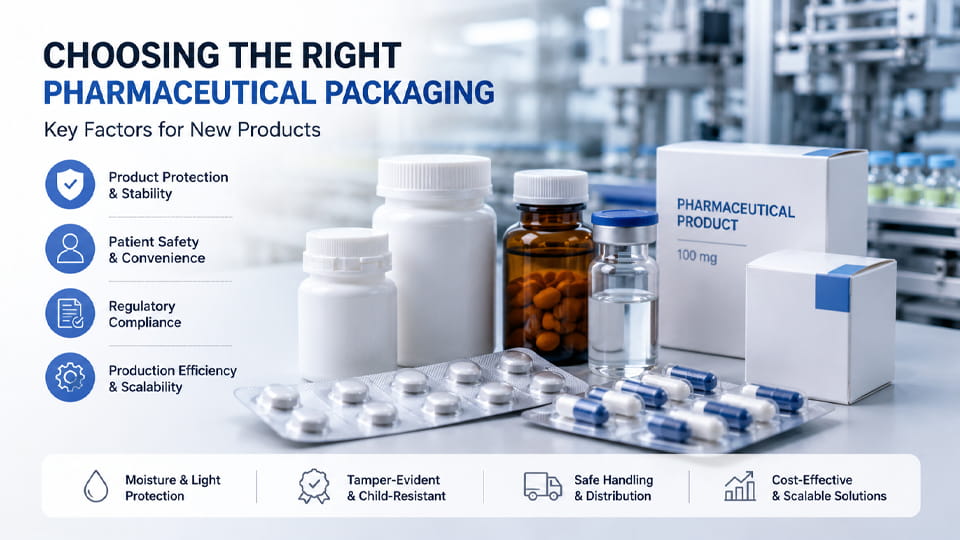
เหตุใดการเลือกบรรจุภัณฑ์จึงมีความสำคัญในเภสัชภัณฑ์
บรรจุภัณฑ์ยา เป็น สำคัญยิ่ง, ไม่ใช่ทางเลือก. แตกต่างจากบรรจุภัณฑ์สำหรับผู้บริโภคทั่วไป, บรรจุภัณฑ์ยาต้อง ปกป้องความสมบูรณ์ของยาตลอดอายุการเก็บรักษา. WHO และแนวปฏิบัติด้านกฎระเบียบเน้นย้ำว่าบรรจุภัณฑ์ต้องป้องกันยาจาก ความชื้น, แสงสว่าง, ออกซิเจนและภัยคุกคามภายนอกอื่นๆ. กล่าวอีกนัยหนึ่ง, มัน “รักษาความมั่นคงและคุณภาพของผลิตภัณฑ์ยา” และ ป้องกันการเน่าเสียหรือการงัดแงะ.
หน้าที่สำคัญของบรรจุภัณฑ์ได้แก่:
- การป้องกันผลิตภัณฑ์: กันความชื้น, ออกซิเจน, แสงสว่าง, ความร้อนและสารปนเปื้อน. ตัวอย่างเช่น, คำแนะนำของ USP ระบุไว้ว่า ยาเม็ดแข็ง “ต้องได้รับการปกป้องจากไอน้ำ” เนื่องจากความชื้นสามารถเปลี่ยนประสิทธิภาพของยาหรือการละลายได้. วัสดุกั้นสูง (อลูมิเนียมฟอยล์, ฟิล์มเคลือบ, แก้วสีเหลืองอำพัน) มักใช้เมื่อมีความไวสูง.
- การปฏิบัติตามกฎระเบียบ: บรรจุภัณฑ์ต้องเป็นไปตามอย, แม่และใคร ข้อกำหนด GMP. รวมถึงความเหมาะสมด้วย ความสมบูรณ์ของการปิดภาชนะ (ซีซีไอ), วัสดุที่ผ่านการตรวจสอบแล้ว, และคุณสมบัติเช่น หลักฐานการงัดแงะ แมวน้ำ. บรรจุภัณฑ์ที่ทนต่อเด็ก จำเป็นสำหรับยาหลายชนิดเพื่อป้องกันการกินโดยไม่ตั้งใจ. การทำให้เป็นอนุกรมและการตรวจสอบย้อนกลับ (บาร์โค้ดที่ไม่ซ้ำกันในแต่ละแพ็ค) มีผลบังคับใช้ในตลาดหลักๆ แล้ว (อย.ดีเอสซีเอสเอ, สหภาพยุโรป เอฟเอ็มดี).
- ความปลอดภัยและการปฏิบัติตามข้อกำหนดของผู้ป่วย: การออกแบบบรรจุภัณฑ์ควรป้องกันข้อผิดพลาดในการจ่ายยาและการใช้ในทางที่ผิด. ฉลากป้องกันการงัดแงะและฝาปิดป้องกันเด็ก “ป้องกันพิษจากอุบัติเหตุ”. คุณสมบัติที่เป็นมิตรต่อผู้ใช้ (เปิดง่าย, เครื่องช่วยในการจ่ายยา, แผลพุพองปฏิทิน) ช่วยให้ผู้ป่วยรับประทานยาได้อย่างถูกต้อง.
- แบรนด์และการสื่อสาร: บรรจุภัณฑ์รอง (กล่อง, ฉลาก) ให้คำแนะนำ, คำเตือน, และการสร้างแบรนด์. ตามที่ผู้เชี่ยวชาญ, ฉลากต้องมีความคงทนและชัดเจนเพื่อหลีกเลี่ยงการปะปนกัน. อย่างแท้จริง, การวิเคราะห์หนึ่งพบว่าเกือบ 50% ของการเรียกคืนยา เชื่อมโยงกับปัญหาบรรจุภัณฑ์/การติดฉลาก.
ในระยะสั้น, บรรจุภัณฑ์คือการป้องกันเชิงรุก. การไม่เลือกแพ็คเกจที่เหมาะสมอาจทำให้ API ลดลงได้, อันตรายต่อผู้ป่วย, และเรื่องน่าปวดหัวด้านกฎระเบียบ. บรรจุภัณฑ์ที่เหมาะสม -ปกป้องคุณภาพยา- และเป็นรากฐานของประสิทธิภาพและชื่อเสียงของผลิตภัณฑ์.

ขั้นตอน 1: ทำความเข้าใจลักษณะเฉพาะของผลิตภัณฑ์ยาใหม่ของคุณ
ขั้นตอนแรกคือก การตรวจสอบผลิตภัณฑ์อย่างละเอียด. ถาม: รูปแบบของยาคืออะไร (แท็บเล็ต, แคปซูล, ผง, ของเหลว, ฉีดได้, ฯลฯ)? ยานี้มีความไวอะไรบ้าง (ความชื้น, ออกซิเจน, แสงสว่าง, ความร้อน)? จำเป็นต้องควบคุมปริมาณยาพิเศษหรือไม่ (เครื่องช่วยหายใจแบบใช้มิเตอร์, หยด, เข็มฉีดยาที่บรรจุไว้ล่วงหน้า)?
- รูปแบบการให้ยา: โดยทั่วไปแล้วจะเป็นยาเม็ดและแคปซูล ปริมาณของแข็ง และมักบรรจุใน ตุ่มหรือขวด. ของเหลว/สารแขวนลอยเข้าไป ขวด หรือขวด. จำเป็นต้องใช้ยาฉีด ขวดปลอดเชื้อ, หลอดบรรจุหรือหลอดฉีดยาที่บรรจุไว้ล่วงหน้า. ก๊าซ/เครื่องช่วยหายใจใช้ถังบรรจุแบบพิเศษ. สามารถบรรจุผงหรือเม็ดได้ ซอง, แพ็คแท่งหรือขวด.
- ความไวต่อสารเคมี/กายภาพ: เป็นยาที่ดูดความชื้นหรือเกิดออกซิเดชันได้ง่าย? ยาที่ไวต่อความชื้นสูง (E.G. เม็ดฟู่) ความต้องการ บรรจุภัณฑ์ที่มีอุปสรรคสูง เช่น ตุ่ม Alu-Alu หรือขวดที่มีสารดูดความชื้น. ต้องการสารประกอบที่ไวต่อแสง ภาชนะทึบแสงหรือสี. ยาที่เกิดปฏิกิริยาต้องใช้วัสดุเฉื่อย (E.G. กระจก, โพลีเมอร์บางชนิด).
- อายุการเก็บรักษาและความมั่นคง: พิจารณาการควบคุมอุณหภูมิที่จำเป็น (เครื่องทำความเย็น) หรือสภาวะสุญญากาศ/ปลอดเชื้อ. วัคซีนหรือชีววิทยาบางชนิดอาจต้องใช้บรรจุภัณฑ์แบบโซ่เย็นหรือขวดแบบพิเศษ.
จุดสำคัญ: บรรจุภัณฑ์หลักจะต้องเฉื่อยและป้องกันได้. ไม่ควรชะล้างหรือดูดซึมยา, และจะต้องรักษาสภาพแวดล้อมที่ปิดสนิท. ตัวอย่างเช่น, FDA ตั้งข้อสังเกตว่าภาชนะปากแข็งควรมี “อัตราการซึมผ่านของไอน้ำต่ำ, และระบบปิดควรสร้างตราประทับ”. การดำเนินการทดสอบความเข้ากันได้และการแยกสารสกัดได้กับส่วนประกอบบรรจุภัณฑ์ที่เป็นตัวเลือกถือเป็นสิ่งสำคัญ.
รายการตรวจสอบสำหรับการตรวจสอบผลิตภัณฑ์:
- รูปแบบการให้ยา/ชนิด (แท็บเล็ต, แคปซูล, ของเหลว, ฯลฯ)
- สภาวะในการเก็บรักษา/ความเสถียร (อุณหภูมิ, ความชื้น, แสงสว่าง)
- ข้อกำหนดในการให้ยา/การบริหาร (หยด, ปั๊ม, หน่วยปริมาณ)
- ข้อควรพิจารณาในการใช้ของผู้ป่วย (ยาเด็กกับยาผู้ใหญ่, ความคล่องตัว, เป็นมิตรกับผู้อาวุโส)
- ข้อจำกัดด้านกฎระเบียบ (E.G. เป็นส่วนหนึ่งของข้อมูลผู้ป่วยในชุดปฐมภูมิ?)
ความเข้าใจนี้จะผลักดันให้คุณเลือกบรรจุภัณฑ์หลัก (แพ็คเกจสัมผัสโดยตรงกับยา). ต่อไป, เราหารือเกี่ยวกับตัวเลือกเหล่านั้น.
ขั้นตอน 2: เลือกบรรจุภัณฑ์หลักที่เหมาะสม
บรรจุภัณฑ์เบื้องต้น คือภาชนะที่บรรจุยาทันที. มันสัมผัสตัวยาโดยตรง. ประเภทบรรจุภัณฑ์หลักทั่วไป ได้แก่ แพ็คแผลพุพอง, ขวด (พลาสติก/แก้ว), ขวด/หลอด, กระเป๋า, หลอด, ฯลฯ. แต่ละคนมีข้อดี/ข้อเสีย:
- แพ็คแผลพุพอง (Alu-Alu หรือ Alu-PVC): เหมาะสำหรับรูปแบบของแข็งขนาดต่อหน่วย (แท็บเล็ต, แคปซูล). พวกเขาให้ กั้นความชื้น/แสงได้ดีเยี่ยม, โดยเฉพาะอย่างยิ่ง อลู-อลู (ฟอยล์แบบเย็น) พิมพ์. แผลพุพองให้แน่ใจว่าแต่ละโดสถูกปิดผนึกจนกระทั่งใช้งาน, ปรับปรุงการปฏิบัติตามกฎระเบียบและลดการปนเปื้อนข้าม. แผลพุพองสมัยใหม่สามารถป้องกันเด็กได้. อุปกรณ์: ความเร็วสูง เครื่องบรรจุพุพอง จัดการการขึ้นรูป, การให้อาหาร, การปิดผนึกด้วยความร้อนและการตัด (E.G. เครื่องตุ่ม Alu-Alu ของ JinluPacking).
- ขวด (พลาสติกหรือแก้ว): ทั่วไปสำหรับบรรจุภัณฑ์หลายหน่วย (น้ำเชื่อม, แคปซูล, แท็บเล็ต). ขวดมีความคุ้มค่าสำหรับปริมาณมาก. ขวดแก้ว (ประเภทที่ 1 บอโรซิลิเกต) ให้ความเฉื่อยทางเคมีที่ดีเยี่ยม และสามารถติดสีอำพันเพื่อป้องกันแสงได้. ขวดพลาสติก (เอชดีพีอี, พีพี) มีน้ำหนักเบาและป้องกันการแตกหัก แต่มักจะมีความสามารถในการซึมผ่านของความชื้นได้สูงกว่า. ขวดมักใช้ หมวกกันเด็ก. อุปกรณ์: เครื่องนับ/บรรจุ เติมและปิดฝาขวด, และสามารถ ใส่สารดูดความชื้น หรือซีลฟอยล์ (ดูบนเส้นการนับ). สายการบรรจุขวดและเครื่องปิดฝาอัตโนมัติของ Jinlu รวมขั้นตอนเหล่านี้เข้าด้วยกัน.
- ซอง & สติ๊กแพ็ค: ใช้สำหรับผง, เม็ด, หรือของเหลวขนาดเดียว (E.G. ยาปฏิชีวนะ, อส). เหล่านี้เป็นถุงฟอยล์หรือลามิเนตที่มีความยืดหยุ่นซึ่งปิดผนึกทุกด้าน. ซองมีอุปสรรคที่ดีเยี่ยม (มักใช้อลูมิเนียมฟอยล์) และความสะดวกสบาย. อุปกรณ์: แบบฟอร์มเครื่องบรรจุซอง, เติม, และปิดผนึกถุงเหล่านี้ในคราวเดียว.
- ขวด & หลอดบรรจุ: มาตรฐานการฉีดฆ่าเชื้อ (โซลูชั่น, ผงไลโอฟิไลซ์). ขวด (แก้วหรือพลาสติก) มีจุกยางคงความปลอดเชื้อ. หลอดบรรจุ (กระจก) ถูกปิดผนึกอย่างแน่นหนาจนกระทั่งใช้งาน. ทั้งสองชนิดมีความบริสุทธิ์สูงและเหมาะสำหรับเข็ม/หลอดฉีดยา. อุปกรณ์: เส้นเติมขวด, มีการใช้เครื่องปิดฝาและจีบ (มักจะมีบริเวณการไหลแบบราบเรียบเพื่อความปลอดเชื้อ).
- คนอื่น: หลอด (โลหะหรือพลาสติก) เป็นเรื่องธรรมดาสำหรับขี้ผึ้ง/ครีม. กระบอกฉีดยาหรือเครื่องช่วยหายใจแบบเติมไว้ล่วงหน้า (MDI/DPI) เกี่ยวข้องกับบรรจุภัณฑ์อุปกรณ์แบบกำหนดเอง. สิ่งเหล่านี้มักต้องใช้อุปกรณ์บรรจุและประกอบแบบพิเศษ.
ความเหมาะสมของแต่ละตัวเลือกขึ้นอยู่กับผลิตภัณฑ์ของคุณ:
- ต้นทุนเทียบกับ. การป้องกัน: ตารางด้านล่างเปรียบเทียบประเภทบรรจุภัณฑ์หลัก:
| พิมพ์ |
ดีที่สุดสำหรับ |
ระดับการป้องกัน |
ค่าใช้จ่าย |
อุปกรณ์ |
| แพ็คแผลพุพอง |
แท็บเล็ต, แคปซูล |
สูงมาก (ความชื้น/แสง) |
ปานกลาง |
เครื่องบรรจุตุ่ม |
| ขวด |
แท็บเล็ต, น้ำเชื่อม, ยาเม็ด |
ปานกลาง (ดีกับการแทรก) |
ต่ำ |
สายการบรรจุขวด / Capping |
| ซอง/สติ๊ก |
ผง, เม็ด |
สูง (สิ่งกีดขวางฟอยล์) |
ปานกลาง |
เครื่องบรรจุซอง |
| ขวด/หลอด |
ฉีด, เซรั่ม |
สูงมาก (แก้วปลอดเชื้อ) |
สูง |
การบรรจุขวด & สายการปิดผนึก |
เลือกชุดหลักที่ตรงกับรูปแบบขนาดยาและความต้องการอุปสรรค. ตัวอย่างเช่น, แท็บเล็ตที่ไวต่อความชื้นอาจจำเป็นต้องมี ตุ่มอลู-อลู หรือขวดแก้วสีเหลืองอำพันที่มีสารดูดความชื้น. แท็บเล็ต OTC ทั่วไปสามารถบรรจุในขวดพลาสติกที่มีฝาปิดแบบไฟเบอร์ได้ (พร้อมคุณสมบัติป้องกันเด็ก).
เคล็ดลับ: หากการปฏิบัติตามขนาดยาต่อหน่วยเป็นสิ่งสำคัญ (เช่น, การแจกจ่ายโรงพยาบาลหรือชุดเดินทาง), มักใช้แผ่นตุ่มหรือแพ็คแบบแท่ง. เพื่อความคล่องตัว (สามารถเปลี่ยนขนาดได้), ขวดจะดีกว่า.
ขั้นตอน 3: พิจารณาข้อกำหนดด้านความเสถียรและอายุการเก็บรักษา
การตัดสินใจเกี่ยวกับบรรจุภัณฑ์แยกออกจากความเสถียรไม่ได้. ภาชนะที่ไม่ถูกต้องอาจทำให้เกิดการย่อยสลายหรือฉลากล้มเหลวได้. ข้อควรพิจารณาที่สำคัญ:
- คุณสมบัติของสิ่งกีดขวาง: ใช้วัสดุที่ปิดกั้นปัจจัยสำคัญ. สำหรับ ยาที่ไวต่อความชื้น, จำเป็นต้องใช้ฟอยล์หรือกระจกที่มีอุปสรรคสูง. เช่น, ตุ่มอลูมิเนียมแบบเย็น ให้ความชื้นเป็นศูนย์. คำแนะนำด้านความเสถียรของ FDA/ICH ระบุไว้ว่าผลิตภัณฑ์ในบรรจุภัณฑ์ที่ไม่สามารถซึมผ่านได้อย่างแท้จริง (เช่น, แผลพุพองฟอยล์หรือแก้วปิดผนึก) สามารถทดสอบได้ภายใต้สภาวะปกติโดยไม่ต้องมีการศึกษาความชื้นเป็นพิเศษ. ในทางกลับกัน, แพ็คเกจกึ่งซึมผ่านได้ (เหมือนพลาสติกบางชนิด) ต้องมีการประเมินความชื้นอย่างระมัดระวัง.
- ป้องกันแสง: API ที่ไวต่อแสงจำเป็นต้องมีบรรจุภัณฑ์ทึบแสงหรือสีเหลืองอำพัน. ตัวอย่างเช่น, ขวดแก้วสีเหลืองอำพันหรือถุงเคลือบโลหะป้องกันรังสียูวี. วิธีปฏิบัติทั่วไปคือการห่อขวดใสด้วยอะลูมิเนียมห่อหุ้มหากจำเป็น.
- ความเข้ากันได้: ตรวจสอบให้แน่ใจว่าวัสดุบรรจุภัณฑ์ไม่ทำปฏิกิริยากับยา. แก้วมีความเฉื่อย, แต่พลาสติกบางชนิดสามารถชะล้างหรือดูดซับสารประกอบได้. ทำการศึกษาสารสกัด/สารชะล้างในส่วนประกอบหลัก. คำแนะนำด้านกฎระเบียบ (อย, EMA) คาดหวัง ความสมบูรณ์ของการปิดภาชนะ (ซีซีไอ) ทดสอบตลอดอายุการเก็บรักษา.
- การกำหนดอายุการเก็บรักษา: การศึกษาความเสถียร (ฉัน Q1A/R2) ต้องใช้ ระบบปิดภาชนะที่นำเสนอ. หากการทดลองอายุการเก็บรักษาแสดงการเสื่อมสภาพ, คุณอาจต้องปรับบรรจุภัณฑ์ (E.G. เปลี่ยนไปใช้สิ่งกีดขวางที่ดีกว่า) หรือคำแนะนำในการจัดการ/จัดเก็บฉลาก.
- คุณสมบัติขั้นสูง: บางแพ็คเกจมีสารดูดความชื้นหรือสารกำจัดออกซิเจน. ลามิเนตหลายชั้น (PET/อะลูมิเนียม/PE) มักใช้เพื่อการจำหน่ายทั่วโลก. เพื่อการป้องกันที่มีความแม่นยำสูงมาก, บรรจุภัณฑ์ที่ใช้งานอยู่ (ตัวดูดซับความชื้นแบบฝัง) สามารถใช้.
รายการตรวจสอบความเข้ากันได้ด้านความเสถียร:
- เลือกวัสดุหลักที่มีอุปสรรคสูงหากจำเป็น (อลู-อลู, กระจก, ลามิเนต).
- ตรวจสอบวิธีการปิดผนึก (ซีลความร้อน, หมวกแก๊ป) บรรลุการส่งผ่านไอความชื้นต่ำ (เอ็มวีทีอาร์).
- ดำเนินการเร่งเสถียรภาพ (40องศาเซลเซียส/75%RH) ตาม ICH เพื่อให้แน่ใจว่าไม่มีความชื้นหรือการเปลี่ยนแปลงทางเคมี.
- วางแผนความสมบูรณ์ของการปิดคอนเทนเนอร์ (การทดสอบการซึมผ่านของสุญญากาศหรือสีย้อม) โดยเฉพาะผลิตภัณฑ์ที่เป็นของเหลว/ปลอดเชื้อ.
- ตรวจสอบให้แน่ใจว่าบรรจุภัณฑ์สามารถทนต่อแรงกระแทกจากการกระจายได้ (การทดสอบการตก/การสั่นสะเทือนด้วยบรรจุภัณฑ์ทุติยภูมิ/ตติยภูมิ).
โดยเลือกบรรจุภัณฑ์ที่ตรงตามข้อกำหนดด้านความมั่นคงล่วงหน้า, คุณหลีกเลี่ยงการปรับรูปแบบใหม่หรือการบรรจุใหม่ในภายหลังซึ่งมีค่าใช้จ่ายสูง.
ขั้นตอน 4: ประเมินความสะดวกสบายและการปฏิบัติตามข้อกำหนดของผู้ป่วย
เกินกว่าการป้องกัน, บรรจุภัณฑ์ที่ทันสมัยควรช่วยให้ผู้ป่วยใช้ยาได้อย่างถูกต้อง. การออกแบบบรรจุภัณฑ์ ส่งผลโดยตรงต่อการยึดเกาะ และความปลอดภัย. พิจารณา:
- การเปิด/ใช้งานง่าย: ผู้ป่วยสูงอายุอาจต้องดิ้นรนกับหมวกที่แน่น. ถวาย หมวกที่เหมาะกับผู้อาวุโส หรือซีลแบบลอกง่ายก็มีประโยชน์. สำหรับยาแบบหน่วยขนาด, แผลพุพองปฏิทิน (วันหรือเวลาที่มีป้ายกำกับ) สามารถเตือนผู้ป่วยให้รับประทานยาที่ถูกต้องได้.
- เครื่องช่วยในการจ่ายยา: ถ้ามี, รวมถึงถ้วยตวง/ช้อนตวงของเหลว, หยดสำหรับจักษุ, หรือปั๊มวัดปริมาณ. มีเครื่องหมายชัดเจนบนภาชนะ (การสำเร็จการศึกษา, แถบสี) ปรับปรุงความแม่นยำ.
- การพกพาได้: หากผู้ป่วยเดินทางหรือพกพายา, ซองเล็กหรือขวดเล็กก็มีประโยชน์. คุณสมบัติป้องกันการงัดแงะทำให้มั่นใจในความปลอดภัย.
- คุณสมบัติการปฏิบัติตามข้อกำหนด: แพ็กหลักบางแพ็กได้รับการออกแบบเพื่อให้เป็นไปตามข้อกำหนด: เช่น, เครื่องจ่ายยาพร้อมสัญญาณเตือนในตัว, หรือบัตรตุ่มอัจฉริยะที่ติดตามการใช้งาน. หากการยึดเกาะสูงเป็นสิ่งสำคัญ, พิจารณานวัตกรรมดังกล่าว.
- ป้ายกำกับและส่วนแทรก: รับรองว่าชัดเจน, คำแนะนำหลายภาษาบนกล่องหรือแผ่นพับ. บรรจุภัณฑ์ที่ดีช่วยให้เภสัชกรและคนไข้มีฉลากอ่านง่าย, แผนภูมิปริมาณ, และไอคอนที่เก็บข้อมูล.
โดยพื้นฐานแล้ว, ถาม: คนไข้จะพบว่าแพ็คเกจนี้ใช้งานง่ายและปลอดภัยหรือไม่? ถ้าไม่, พวกเขาอาจใช้ในทางที่ผิดหรือละทิ้งผลิตภัณฑ์. รวมถึงคุณสมบัติที่เน้นผู้ป่วยเป็นศูนย์กลาง (ล็อคเด็ก, เปิดง่าย, การติดฉลากที่ชัดเจน) ยังสร้างความพึงพอใจให้กับหน่วยงานกำกับดูแลที่เน้นความปลอดภัยของผู้ป่วยอีกด้วย.
ขั้นตอน 5: ตรวจสอบการปฏิบัติตามกฎระเบียบ
บรรจุภัณฑ์ยาได้รับการควบคุมอย่างเข้มงวด. ประเด็นการปฏิบัติตามข้อกำหนดที่สำคัญ:
- ทนต่อเด็ก (CR) ความต้องการ: หลายประเทศ (เรา, สหภาพยุโรป, ออสเตรเลีย) อาณัติบรรจุภัณฑ์ CR สำหรับยารับประทานที่มีความเสี่ยงสูง. WHO ตั้งข้อสังเกตว่า “ตัวปิดป้องกันเด็กได้รับการพัฒนา” เพื่อปกป้องเด็ก ๆ. ตรวจสอบให้แน่ใจว่ายาชนิดแข็งและของเหลวที่ต้องสั่งโดยแพทย์ใช้ฝาปิด CR ที่ได้รับการรับรองหรือกลไกการกลับตัว หากกฎหมายกำหนด. (เช่น. เรา 16 ซีเอฟอาร์ 1700 ทองคำมาตรฐาน EU EN 14375).
- ซีลป้องกันการงัดแงะ: FDA และอื่น ๆ ต้องการหลักฐานว่ายังไม่ได้เปิดบรรจุภัณฑ์. วงงัดแงะ, หดห่อ, หรือซีลที่หลุดออกเป็นเรื่องปกติบนขวด; ฟอยล์ปิดผนึกเป็นเรื่องธรรมดาบนขวดโหล. แม้แต่บรรจุภัณฑ์พลาสติกก็ควรเปิดได้ยากโดยไม่เกิดความเสียหายอย่างเห็นได้ชัด.
- การติดฉลาก: พัสดุหลักและพัสดุรองจะต้องมีข้อมูลที่จำเป็นทั้งหมด (ชื่อยา, ความแข็งแกร่ง, แบบฟอร์มการให้ยา, หมายเลขแบทช์/ล็อต, หมดอายุ, เงื่อนไขการจัดเก็บ, ผู้ผลิต). แบบอักษรต้องอ่านง่ายและสอดคล้องกับหลักเกณฑ์ด้านเภสัชกรรม. ตัวอย่างเช่น, อย 21 ซีเอฟอาร์ 201.15 ครอบคลุมความทนทานของฉลาก.
- การทำให้เป็นอนุกรมและการตรวจสอบย้อนกลับ: กฎระเบียบเช่น DSCSA ของ FDA (เรา) และ EU Falsified Medicines Directive กำหนดให้มีรหัสเฉพาะ (E.G. 2บาร์โค้ด D) ในทุกยูนิตที่ขาย. การออกแบบบรรจุภัณฑ์ต้องรองรับการพิมพ์หรือการแกะสลักหมายเลขซีเรียลและรหัสดาต้าเมทริกซ์บนแถบตุ่มหรือฉลากขวด. สายการบรรจุของคุณอาจต้องใช้เครื่องพิมพ์โค้ดและระบบวิชันซิสเต็ม, และการบูรณาการกับฐานข้อมูลการติดตามและติดตาม.
- แนวทางปฏิบัติที่ดีในการผลิต (GMP): สายการบรรจุ ต้องเป็นไปตามมาตรฐาน GMP (ความสามารถในการทำความสะอาด, การตรวจสอบย้อนกลับของวัสดุ, ฯลฯ). ชุดหลักทั้งหมดที่ใช้ต้องผ่านการรับรอง GMP (E.G. ไอเอสโอ 15378 สำหรับวัสดุบรรจุภัณฑ์). เครื่องจักรควรจะเป็น IR/WH/PQ ผ่านการรับรอง. (ดูด้านล่างสำหรับอุปกรณ์บรรจุ Jinlu).
เคล็ดลับด้านกฎระเบียบที่สำคัญ: อย่าถือว่าการปฏิบัติตามกฎระเบียบเป็นเพียงความคิดในภายหลัง. ตัวอย่างเช่น, การไม่รวมคุณลักษณะป้องกันการงัดแงะอาจบล็อกการลงทะเบียนผลิตภัณฑ์ได้. ตรวจสอบกฎเฉพาะประเทศตั้งแต่เนิ่นๆ เช่น. USP <661> สำหรับภาชนะพลาสติก, ซีเอฟอาร์ 211 สำหรับการควบคุมบรรจุภัณฑ์. ตรวจสอบเสมอว่าอุปกรณ์บรรจุภัณฑ์และบรรจุภัณฑ์ที่เลือกนั้นสามารถตอบสนองมาตรฐานเหล่านี้ได้.
ขั้นตอน 6: สร้างความสมดุลระหว่างต้นทุนบรรจุภัณฑ์และประสิทธิภาพการผลิต
ในขั้นตอนนี้, ประเมิน ต้นทุนการเป็นเจ้าของทั้งหมด (TCO) สำหรับตัวเลือกบรรจุภัณฑ์. พิจารณา:
- ค่าวัสดุ: ถุงและแผลพุพองที่ยืดหยุ่นอาจมีราคาต่อหน่วยมากกว่าขวดธรรมดา. ฟอยล์ตุ่ม Alu-Alu มีราคาแพงกว่าฟอยล์พีวีซี. ขวดแก้วมีราคาสูงกว่าพลาสติก.
- ปริมาณงานของอุปกรณ์: รูปแบบที่มีอุปสรรคสูง เช่น ตุ่มพองอาจทำงานช้ากว่าเส้นบรรจุขวด, ส่งผลกระทบต่อจำนวนอุปกรณ์ที่จำเป็น. ในทางกลับกัน, ฟิลเลอร์ขวดสามารถบรรลุความเร็วที่สูงมาก (หลายพันขวด/ชั่วโมง) แต่ต้องการตัวถอดรหัส, หมวกแก๊ป, และผู้ติดฉลากในบรรทัด.
- ความซับซ้อนของเส้น: บรรจุภัณฑ์ที่ซับซ้อนมากขึ้น (E.G. แผลพุพองขนาดหน่วย) ต้องใช้เครื่องจักรพิเศษ. ตรวจสอบว่าการลงทุนและการบำรุงรักษาเหมาะสมกับงบประมาณของคุณหรือไม่.
- แรงงาน: สายการผลิตอัตโนมัติเต็มรูปแบบช่วยลดการใช้แรงงานคนแต่เพิ่มทุน. เครื่องจักรกึ่งอัตโนมัติมีราคาถูกกว่าแต่ต้องการผู้ปฏิบัติงานมากขึ้น.
- โลจิสติกส์: บรรจุภัณฑ์รอง/ตติยภูมิก็มีค่าใช้จ่ายเช่นกัน. ขวดแก้วขนาดใหญ่มีน้ำหนักในการขนส่งมากกว่า. กล่องขนาดใหญ่ทำให้ค่าขนส่งเพิ่มขึ้น.
- ของเสียและผลผลิต: การประมวลผลมากขึ้น (E.G. การเจาะตุ่ม) อาจสร้างเศษเหล็กได้. ประเมินวัสดุเหลือใช้ (ตัดออกจากแผลพุพอง, ขวดแตก, ฯลฯ).
ดำเนินการคร่าวๆ การเปรียบเทียบต้นทุน: E.G. ราคาต่อแพ็คสุดท้ายรวมถึงวัสดุและการแปรรูป. พิจารณาความเร็วด้วย (หน่วยต่อชั่วโมง) และขนาดชุดที่ต้องการ.
ก รายการตรวจสอบ TCO:
- เปรียบเทียบต้นทุนวัสดุบรรจุภัณฑ์ต่อหน่วย.
- ประเมินปริมาณงานของเครื่องจักรที่ต้องการเทียบกับความต้องการ.
- คำนวณต้นทุนค่าแรงและพลังงานสำหรับแต่ละสายงาน.
- รวมค่าใช้จ่ายในการกำจัด/รีไซเคิลของเสีย.
- ปัจจัยเสี่ยงในการทำงานซ้ำ (E.G. หากบรรจุภัณฑ์ล้มเหลว, ค่าใช้จ่ายในการติดฉลากใหม่หรือบรรจุใหม่).
- การขยายขนาดในอนาคต: ถ้าปริมาณเพิ่มขึ้นสองเท่า, โซลูชันนี้ปรับขนาดได้หรือไม่?
บ่อยครั้ง วัสดุที่มีราคาต่ำที่สุดนั้นไม่ดีที่สุด หากนำไปสู่การเรียกคืนหรือการปฏิเสธ. การสร้างความสมดุลเป็นสิ่งสำคัญ: บางครั้งการจ่ายเงินมากขึ้นเพื่อให้มีสิ่งกีดขวางหรือระบบอัตโนมัติที่ดีขึ้น จะให้ผลตอบแทนและการปฏิบัติตามกฎระเบียบที่สูงขึ้น.
ขั้นตอน 7: ตรวจสอบให้แน่ใจว่าบรรจุภัณฑ์สามารถปรับขนาดตามความต้องการในอนาคตได้
พิจารณาไม่ใช่แค่การเปิดตัวในทันที, แต่ วงจรชีวิตระยะยาว ของผลิตภัณฑ์:
- นักบินกับ. ทางการค้า: สำหรับกลุ่มทางคลินิกเบื้องต้นหรือกลุ่มตลาดขนาดเล็ก, คุณอาจใช้เส้นแบบแมนนวลหรือกึ่งอัตโนมัติ. สำหรับการผลิตขนาดใหญ่, จำเป็นต้องมีสายอัตโนมัติเต็มรูปแบบ. รับรองว่าทางเลือกของคุณ (หรือข้อเสนอของผู้ขาย) อนุญาตให้อัพเกรดโมดูลาร์.
- ความเป็นโมดูลของอุปกรณ์: คุณสามารถเพิ่มเลนหรือหน่วยเพื่อเพิ่มความเร็ว? ตัวอย่างเช่น, เครื่องตุ่มบางเครื่องสามารถเพิ่มช่องหมุนได้มากขึ้น. สายการบรรจุขวดสามารถเพิ่มสารตัวเติมแบบขนานได้.
- การรวมเข้าด้วยกัน: คิดให้จบ: การนับ/การบรรจุ → การปิดผนึก → การบรรจุกล่อง → การบรรจุกล่อง → การวางบนพาเลท. หากคุณเป็นพันธมิตรกับ Jinlu Packing หรือที่คล้ายกัน, พวกเขาสามารถออกแบบ สายการบรรจุภัณฑ์แบบครบวงจร ซึ่งรวมถึงการทำให้เป็นอนุกรม, การบรรจุกล่อง, บรรจุกรณี, ฯลฯ.
- การปรับขนาดตามกฎระเบียบ: การเปลี่ยนแปลงส่วนประกอบของบรรจุภัณฑ์ (E.G. ซัพพลายเออร์ขวดใหม่) ต้องได้รับการอนุมัติตามกฎระเบียบอีกครั้งหากส่งผลกระทบต่อความมั่นคงหรือการปฏิบัติตามข้อกำหนด. วางแผนการควบคุมคุณภาพซัพพลายเออร์บรรจุภัณฑ์และผู้จำหน่ายสำรอง.
- ผลิตภัณฑ์ในอนาคต: หากบริษัทของคุณอาจผลิตยารูปแบบอื่น (E.G. เจลในอนาคต), เลือกอุปกรณ์ที่ยืดหยุ่น. ฟิลเลอร์แคปซูลแบบโมดูลาร์หรือเครื่องตุ่มที่สามารถจัดการรูปแบบต่างๆ ถือเป็นการลงทุนที่ดี.
การให้วิศวกรบรรจุภัณฑ์หรือที่ปรึกษามีส่วนร่วมแต่เนิ่นๆ สามารถป้องกันปัญหาคอขวดได้ในภายหลัง. ดังที่ผู้เชี่ยวชาญในอุตสาหกรรมคนหนึ่งตั้งข้อสังเกต, “บรรจุภัณฑ์ควรพิจารณาควบคู่ไปกับการพัฒนาสูตรผสม, ไม่เป็นอย่างที่คิดในภายหลัง” การตัดสินใจตั้งแต่เนิ่นๆ อย่างถูกต้องจะทำให้การขยายขนาดและการขยายสายการผลิตราบรื่นยิ่งขึ้น.
ข้อผิดพลาดทั่วไปในการเลือกบรรจุภัณฑ์ที่ควรหลีกเลี่ยง
- ปล่อยให้การเลือกบรรจุภัณฑ์สายเกินไป: อย่าตัดสินใจเลือกบรรจุภัณฑ์หลังจากที่สูตรถูกล็อคแล้วเท่านั้น. การศึกษาความคงตัวในระยะเริ่มต้นควรใช้บรรจุภัณฑ์ขั้นสุดท้าย, ไม่ใช่ขวดโหล.
- ข้ามการทดสอบความเสถียร: อย่าถือว่าคอนเทนเนอร์จะทำงานได้; ทดสอบยาของคุณในภาชนะ/ฝาปิดจริงเสมอภายใต้เงื่อนไข ICH. สูตรที่มีความเสถียรอาจสลายตัวได้หากบรรจุภัณฑ์ไม่ดี.
- เน้นแต่ต้นทุนเท่านั้น: วัสดุราคาถูกอาจประหยัดเงินล่วงหน้าแต่มีค่าใช้จ่ายสูงกว่าในการเรียกคืนหรืออายุการเก็บรักษาสั้นลง. ลดต้นทุนด้วยการป้องกัน.
- ละเลยปัจจัยของผู้ป่วย: ขวดมาตรฐานอาจเหมาะกับเป้าหมายต้นทุน, แต่หากผู้ป่วยไม่สามารถเปิดหรือยึดได้, สินค้าจะด้อยประสิทธิภาพในตลาด.
- ประเมินความต้องการด้านกฎระเบียบต่ำเกินไป: การไม่ใส่ซีลป้องกันการงัดแงะหรือการปิดป้องกันเด็กเมื่อจำเป็นอาจทำให้การอนุมัติหยุดชะงักได้. ปรึกษาแนวทางเสมอ.
- การละเลยห่วงโซ่อุปทาน: พิจารณาระยะเวลารอคอยสินค้าและอายุการเก็บรักษาของบรรจุภัณฑ์. วัสดุพิเศษบางอย่าง (เหมือนแผ่นซับไล่ออกซิเจน) อาจมีระยะเวลารอคอยที่ยาวนาน.
โดยการหลีกเลี่ยงข้อผิดพลาดเหล่านี้และการตรวจสอบข้ามสายงาน (ร&ดี, ประกันคุณภาพ, การผลิต, กฎระเบียบ), คุณมั่นใจว่าบรรจุภัณฑ์ที่คุณเลือกนั้นเป็นไปได้, เป็นไปตามข้อกำหนด, และมีประสิทธิภาพ.
บรรจุภัณฑ์ที่แนะนำตามประเภทผลิตภัณฑ์ยาใหม่
| ประเภทผลิตภัณฑ์ |
บรรจุภัณฑ์หลักที่แนะนำ |
| แท็บเล็ต/แคปซูล |
หน่วย-ปริมาณ แพ็คแผลพุพอง (อลู-อลู หรือ พีวีซี/อลู) หรือ เป็นกลุ่ม ขวด. ฝาปิดขวดสำหรับป้องกันเด็ก. อุปกรณ์ในอุดมคติ: เครื่องบรรจุตุ่ม หรือการนับเม็ดยา/แคปซูล & สายการบรรจุขวด. |
| ผง/เม็ดในช่องปาก |
ซอง หรือ แพ็คติด (สำหรับครั้งเดียว); หรือ ขวด (สำหรับจำนวนมาก). เครื่องบรรจุซองสำหรับหน่วย-ปริมาณ, ฟิลเลอร์สว่านสำหรับขวด. |
| ของเหลว/น้ำเชื่อม |
ขวดพลาสติกหรือขวดแก้ว พร้อมฝาเกลียว (มักมีซีลฟอยล์และฝาปิดป้องกันเด็ก). เพื่อความบริสุทธิ์สูง, แก้วพิมพ์ I. อุปกรณ์: สายการบรรจุของเหลว (ปั๊ม, การกำหนดสูงสุดในบรรทัด). |
| ฉีด |
ขวดแก้วหรือหลอดบรรจุ (หมัน) หรือเข็มฉีดยาที่เติมไว้ล่วงหน้า. ใช้เครื่องบรรจุและย้ำขวดที่ปลอดเชื้อในห้องคลีนรูม. |
| ครีม/ขี้ผึ้ง (กึ่งของแข็ง) |
หลอดหรือขวด (ท่ออลูมิเนียม/พลาสติก, ขวดแก้ว/ขวดพลาสติก). ท่อที่มีซีลป้องกันการงัดแงะ. เครื่องบรรจุหลอดกึ่งอัตโนมัติหรืออัตโนมัติ. |
| ยาเม็ด |
หลอดหรือขวดอลูมิเนียม (เพื่อให้แห้ง); มักมีสารดูดความชื้น. ตุ่มอลูมิเนียมฟอยล์ก็พบเห็นได้ทั่วไปเช่นกัน. เครื่องท่อ (สำหรับแท็บเล็ต) หรือเครื่องตุ่ม. |
| เหน็บ |
ถาดตุ่ม (โดยทั่วไปคือ Alu/PVC หรือ Alu/Alu) หรือกล่องแยกหน่วย. เครื่องบรรจุตุ่มหรือเทอร์โมฟอร์มเมอร์. |
| เครื่องพ่นยา/สเปรย์พ่นจมูก |
กระป๋อง MDI หรือคาร์ทริดจ์ DPI (เฉพาะอุปกรณ์). ประสานงานกับผู้ผลิตอุปกรณ์; อุปกรณ์บรรจุ/บรรจุกระป๋องแบบกำหนดเอง. |
การทำแผนที่นี้ช่วยให้แน่ใจว่ารูปแบบยาแต่ละชนิดได้รับการคุ้มครองที่เหมาะสม. ตัวอย่างเช่น, แผงพุพองเหมาะอย่างยิ่งสำหรับการรับประทานในปริมาณมาก, ในขณะที่ขวดแก้วเป็นสิ่งจำเป็นสำหรับยาฉีดฆ่าเชื้อ. ตารางยังแนะนำอุปกรณ์ต่างๆ: E.G. เครื่องบรรจุพุพอง, เส้นบรรจุและปิดฝาขวด, เครื่องบรรจุซอง, ฟิลเลอร์ขวด, และอื่น ๆ.
Jinlu Packing ช่วยบริษัทยาได้อย่างไร
Jinlu Packing เป็นผู้นำ ผู้ผลิตเครื่องจักรบรรจุภัณฑ์ยา. เรานำเสนอโซลูชั่นแบบครบวงจรสำหรับสายการผลิตบรรจุภัณฑ์ยาใหม่. ข้อเสนอที่สำคัญ:
- เครื่องบรรจุหีบห่อ: เครื่องทำพุพองความเร็วสูงสำหรับบรรจุภัณฑ์ PVC/Alu หรือ Alu-Alu. การออกแบบที่กำหนดเองเพื่อให้เหมาะกับรูปแบบแท็บเล็ต/แคปซูลและความเร็วของคุณ.
- การบรรจุขวด & เส้นที่กำหนด: การบรรจุขวดอัตโนมัติ, สูงสุดที่กำหนด, และระบบการติดฉลาก. สายการผลิตการนับและการบรรจุของเราสามารถใช้งานร่วมกับเครื่องถอดรหัสได้, ตัวแทรกสารดูดความชื้น, เครื่องปิดผนึกฟอยล์, และฝาขวดสำหรับแท็บเล็ต/ขวดเยลลี่.
- เครื่องบรรจุกล่อง: เครื่องบรรจุกล่องแนวนอนและแนวตั้งสำหรับตั้งกล่องรอบๆ แผลพุพอง, ขวด, หรือแบบซอง. คุณสมบัติเช่น 100% การสแกนโค้ดเพื่อให้ซีเรียลไลซ์และการเปลี่ยนแปลงอย่างรวดเร็ว.
- ระบบการทำให้เป็นอนุกรม/การเข้ารหัส: เราสามารถติดตั้งสายการผลิตอิงค์เจ็ท/เลเซอร์ และการตรวจสอบด้วยภาพเพื่อพิมพ์และตรวจสอบชุดงานได้, หมดอายุ, และรหัสเฉพาะ.
- สายการบรรจุที่สมบูรณ์: ตั้งแต่การป้อนผลิตภัณฑ์ไปจนถึงการบรรจุลงกล่อง, เราสามารถออกแบบการประชุมสายงาน cGMP และความต้องการด้านซีเรียลไลซ์แบบครบวงจรได้. เครื่องจักรของเราสร้างมาเพื่อให้ทำความสะอาดง่าย (สแตนเลส SUS316L) และรวมเอกสาร IQ/OQ.
- สนับสนุน & การปฏิบัติตาม: เราช่วยเหลือในเรื่องคุณสมบัติของเครื่องจักร (IR/WH/PQ) และเสนอการติดตั้งและการฝึกอบรมนอกสถานที่ทั่วโลก.
โดยร่วมงานกับเรา, คุณจะได้ไม่เพียงแค่อุปกรณ์เท่านั้น, แต่เชี่ยวชาญด้านบรรจุภัณฑ์. เรารับประกันวิธีการบรรจุภัณฑ์ที่คุณเลือก (เส้นตุ่ม, สายขวด, ฯลฯ) ได้รับการปรับให้เหมาะกับผลิตภัณฑ์และความต้องการด้านกฎระเบียบของคุณ, ทำให้การเปิดตัวผลิตภัณฑ์ของคุณราบรื่นยิ่งขึ้น.
บทสรุป
การเลือกบรรจุภัณฑ์ที่เหมาะสมสำหรับผลิตภัณฑ์ยาชนิดใหม่คือ การตัดสินใจหลายแง่มุม. มันต้องมีการรักษาสมดุลของยา, ความปลอดภัยของผู้ป่วย, การปฏิบัติตาม, ค่าใช้จ่าย, และความยืดหยุ่น. จดจำ: บรรจุภัณฑ์ที่ดีที่สุดคือบรรจุภัณฑ์ที่ช่วยให้ผลิตภัณฑ์ของคุณปลอดภัยและมีประสิทธิภาพจนกระทั่งถึงมือคนไข้. ไม่ใช่แค่ความน่าดึงดูดหรือราคาถูกเท่านั้น แต่ยังเกี่ยวกับคุณภาพอีกด้วย. โดยการวิเคราะห์คุณสมบัติของผลิตภัณฑ์อย่างรอบคอบ, การทดสอบตัวเลือกบรรจุภัณฑ์, และข้อบังคับดังต่อไปนี้, ผู้ผลิตสามารถหลีกเลี่ยงการเรียกคืนสินค้าที่มีราคาแพงและมั่นใจได้ว่ายาของตนยังคงมีศักยภาพ, บริสุทธิ์, และปลอดภัย. ด้วยกลยุทธ์บรรจุภัณฑ์ที่คัดสรรมาอย่างดี (และเครื่องจักรที่เหมาะสม), คุณปกป้องทั้งลูกค้าและชื่อเสียงของแบรนด์ของคุณ.
คำถามที่พบบ่อยเกี่ยวกับการเลือกบรรจุภัณฑ์สำหรับผลิตภัณฑ์ยาใหม่
เหตุใดบรรจุภัณฑ์จึงมีความสำคัญสำหรับผลิตภัณฑ์ยาชนิดใหม่?
บรรจุภัณฑ์ทำอะไรได้มากกว่าแค่ตัวยา. ช่วยปกป้องผลิตภัณฑ์ยาจากความชื้น, ออกซิเจน, แสงสว่าง, การปนเปื้อน, และความเสียหายทางกายภาพ. บรรจุภัณฑ์ที่เหมาะสมยังช่วยรับประกันการปฏิบัติตามกฎระเบียบอีกด้วย, ความปลอดภัยของผู้ป่วย, ความมั่นคงของผลิตภัณฑ์, และอายุการเก็บรักษาตลอดการจำหน่ายและการเก็บรักษา.
ปัจจัยใดที่ควรพิจารณาเมื่อเลือกบรรจุภัณฑ์ยา?
ผู้ผลิตควรประเมินปัจจัยหลายประการ, รวมทั้ง:
• รูปแบบการให้ยา (แท็บเล็ต, แคปซูล, ของเหลว, ผง, ฉีดได้)
• ความไวต่อความชื้นและออกซิเจน
• ข้อกำหนดในการป้องกันแสง
• เป้าหมายอายุการเก็บรักษา
• ข้อกำหนดด้านกฎระเบียบ
• ความสะดวกของผู้ป่วย
• ค่าบรรจุภัณฑ์
• ประสิทธิภาพการผลิต
• ความสามารถในการขยายขนาดในอนาคต
โซลูชันการบรรจุที่เหมาะสมที่สุดควรมีความสมดุลในการปกป้องผลิตภัณฑ์, การปฏิบัติตาม, และประสิทธิภาพการดำเนินงาน.
บรรจุภัณฑ์ที่ดีที่สุดสำหรับแท็บเล็ตและแคปซูลคืออะไร?
บรรจุภัณฑ์พลาสติกและขวดเป็นตัวเลือกที่พบบ่อยที่สุด.
• บรรจุภัณฑ์พุพองช่วยป้องกันความชื้นและการปนเปื้อนได้ดีเยี่ยม ขณะเดียวกันก็ให้ความสะดวกต่อปริมาณต่อหน่วย.
• ขวดมีความคุ้มค่าสำหรับการผลิตในปริมาณมาก และมักใช้สำหรับยาเม็ด, แคปซูล, และอาหารเสริมอาหาร.
ทางเลือกที่ดีที่สุดขึ้นอยู่กับข้อกำหนดด้านเสถียรภาพของผลิตภัณฑ์และตลาดเป้าหมาย.
บรรจุภัณฑ์ส่งผลต่อความคงตัวของยาอย่างไร?
วัสดุบรรจุภัณฑ์ส่งผลโดยตรงต่อการสัมผัสยากับปัจจัยด้านสิ่งแวดล้อม เช่น ความชื้น, ออกซิเจน, และแสงสว่าง. บรรจุภัณฑ์ที่ไม่ดีสามารถเร่งการย่อยสลายได้, ลดความแรง, และทำให้อายุการเก็บรักษาสั้นลง. นั่นเป็นสาเหตุที่โดยทั่วไปการทดสอบความเสถียรจะดำเนินการโดยใช้การกำหนดค่าบรรจุภัณฑ์ขั้นสุดท้ายที่มีจุดประสงค์เพื่อการจำหน่ายเชิงพาณิชย์.
บริษัทยาจะรับประกันการปฏิบัติตามข้อกำหนดของบรรจุภัณฑ์ได้อย่างไร?
ผู้ผลิตควรตรวจสอบวัสดุบรรจุภัณฑ์ว่า, ฉลาก, การปิด, และอุปกรณ์บรรจุภัณฑ์เป็นไปตามกฎระเบียบที่เกี่ยวข้องเช่น FDA, GMP ของสหภาพยุโรป, การทำให้เป็นอนุกรม, และข้อกำหนดบรรจุภัณฑ์ที่ทนต่อเด็ก. การทำงานร่วมกับซัพพลายเออร์อุปกรณ์บรรจุภัณฑ์ยาที่มีประสบการณ์จะช่วยลดความซับซ้อนของกระบวนการตรวจสอบและการปฏิบัติตามข้อกำหนดได้.
เมื่อใดควรพิจารณาบรรจุภัณฑ์ในระหว่างการพัฒนาผลิตภัณฑ์ยา?
บรรจุภัณฑ์ควรได้รับการประเมินโดยเร็วที่สุดในระหว่างการพัฒนาผลิตภัณฑ์. การรอจนกระทั่งการค้าขายสามารถสร้างปัญหาด้านเสถียรภาพได้, ความล่าช้าด้านกฎระเบียบ, ต้นทุนการออกแบบบรรจุภัณฑ์ใหม่, และความท้าทายด้านการผลิต. การเลือกบรรจุภัณฑ์ตั้งแต่เนิ่นๆ ช่วยให้ผู้ผลิตสามารถศึกษาความเสถียรได้อย่างแม่นยำ และพัฒนากลยุทธ์บรรจุภัณฑ์เชิงพาณิชย์ที่มีประสิทธิภาพมากขึ้น.
ฉันจะเลือกเครื่องจักรบรรจุภัณฑ์ยาที่เหมาะสมสำหรับผลิตภัณฑ์ใหม่ได้อย่างไร?
เริ่มต้นด้วยการประเมิน:
• ประเภทผลิตภัณฑ์และรูปแบบขนาดยา
• รูปแบบบรรจุภัณฑ์ (พุพอง, ขวด, ซอง, ขวด)
• กำลังการผลิตที่ต้องการ
• ระดับอัตโนมัติ
• ข้อกำหนดด้านกฎระเบียบ
• แผนการขยายธุรกิจในอนาคต
การเลือกอุปกรณ์บรรจุภัณฑ์ยาที่ปรับขนาดได้สามารถช่วยลดต้นทุนการลงทุนในอนาคตและสนับสนุนการเติบโตของธุรกิจในระยะยาว.
อ้างอิง:
1.ระบบปิดภาชนะสำหรับบรรจุภัณฑ์ยาและชีววิทยาของมนุษย์ -- เรา. สำนักงานคณะกรรมการอาหารและยา
2.การพัฒนาเภสัชกรรม ICH Q8 —— ฐานข้อมูล ICH
3.แนวทางปฏิบัติที่ดีในการผลิตผลิตภัณฑ์ยา -- WHO
4.USP ถาม&ก: มาตรฐานระบบบรรจุภัณฑ์พลาสติกสำหรับผลิตภัณฑ์ยา —— usp.org
5.การทดสอบความสมบูรณ์ของการปิดภาชนะ—แง่มุมและแนวทางปฏิบัติในอุตสาหกรรมยา —— pda.org
