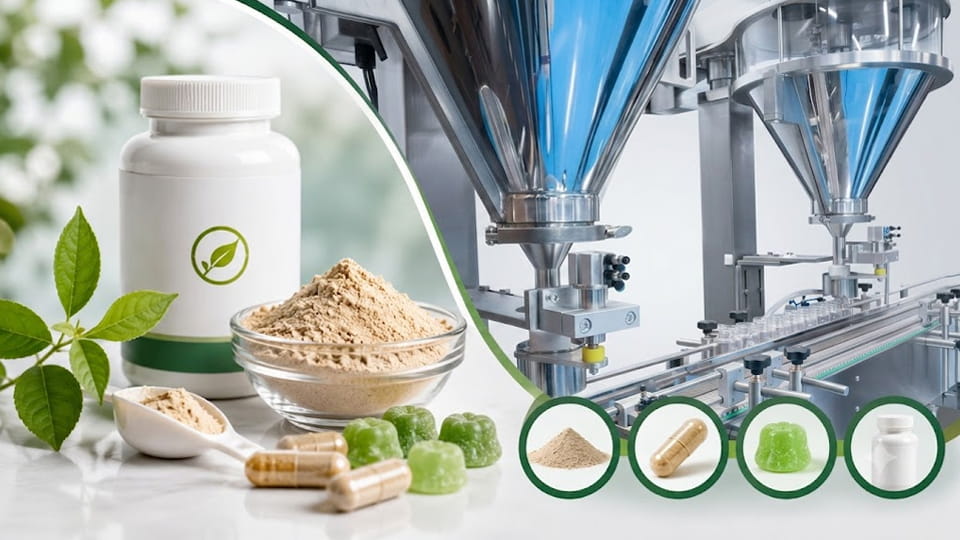

ความต้องการทั่วโลกสำหรับ อาหารเสริมสมุนไพร ผลิตภัณฑ์ยังคงเติบโตอย่างต่อเนื่อง เนื่องจากผู้บริโภคจำนวนมากขึ้นมองหาวิธีธรรมชาติในการส่งเสริมสุขภาพและความสมบูรณ์แข็งแรงของตนเอง. ตั้งแต่แคปซูลและยาเม็ดไปจนถึงแบบผงและกัมมี่, ปัจจุบันพบผลิตภัณฑ์เสริมอาหารสมุนไพรในร้านขายยา, ซูเปอร์มาร์เก็ต, และร้านค้าออนไลน์ทั่วโลก. เมื่อตลาดขยายตัว, ผู้ผลิตเผชิญกับความคาดหวังที่เพิ่มขึ้นในด้านคุณภาพที่สม่ำเสมอ, การผลิตที่มีประสิทธิภาพ, และบรรจุภัณฑ์ที่เชื่อถือได้ซึ่งช่วยปกป้องส่วนผสมทางพฤกษศาสตร์ที่ละเอียดอ่อน. แนวทางปฏิบัติในการผลิตที่ดีและการควบคุมบรรจุภัณฑ์ที่เหมาะสมถือเป็นสิ่งสำคัญเพื่อให้มั่นใจในคุณภาพของผลิตภัณฑ์และความสอดคล้องตลอดกระบวนการผลิต.
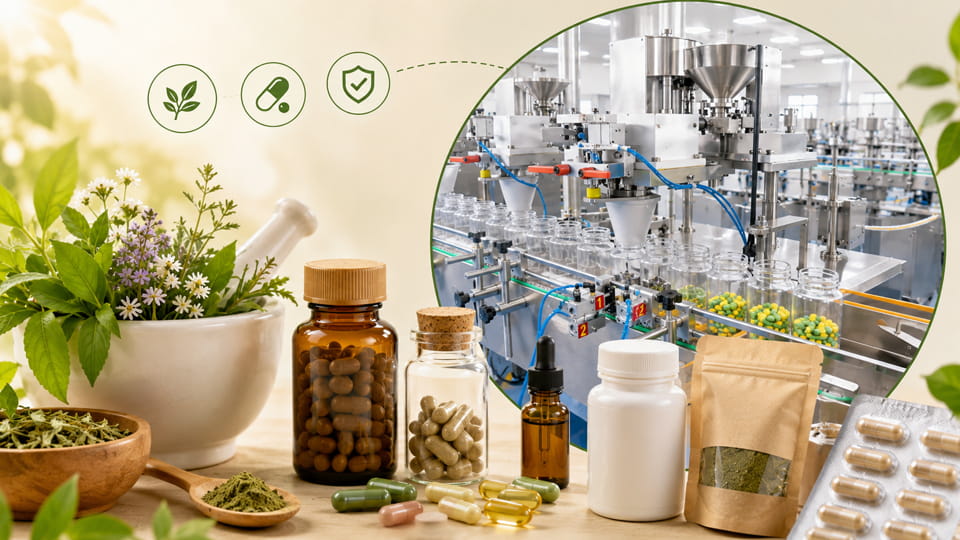
ไม่ว่าคุณกำลังวางแผนสายการผลิตผลิตภัณฑ์เสริมอาหารสมุนไพรใหม่หรืออัพเกรดอุปกรณ์ที่มีอยู่, การทำความเข้าใจกระบวนการผลิตเป็นก้าวแรกสู่การตัดสินใจที่ดีขึ้น. ในคู่มือนี้, เราจะอธิบายผลิตภัณฑ์เสริมอาหารสมุนไพรประเภทที่พบบ่อยที่สุด, วิธีการผลิต, อุปกรณ์ที่เกี่ยวข้อง, และโซลูชั่นบรรจุภัณฑ์ที่ช่วยให้ผู้ผลิตปรับปรุงประสิทธิภาพ, คุณภาพของผลิตภัณฑ์, และอายุการเก็บรักษา.
อาหารเสริมสมุนไพร (เรียกอีกอย่างว่า อาหารเสริมทางพฤกษศาสตร์) เป็นหมวดหมู่ของ ผลิตภัณฑ์เสริมอาหาร ทำจากวัสดุจากพืช (ราก, ออกจาก, ดอกไม้, เมล็ดพืช, หรือสารสกัด) มีวัตถุประสงค์เพื่อส่งเสริมสุขภาพ. ต่างจากวิตามินสังเคราะห์, ผลิตภัณฑ์เสริมอาหารสมุนไพรได้มาจากแหล่งธรรมชาติ. พวกเขามักจะใช้ประโยชน์จากยาสมุนไพรแผนโบราณ (E.G. ขิง, แปะก๊วย, เอ็กไคนาเซีย) และรวมถึงสารสกัดหรือผงเข้มข้น. ในแง่กฎระเบียบ, ผลิตภัณฑ์เสริมอาหารสมุนไพรจัดเป็น ผลิตภัณฑ์เสริมอาหาร, ไม่ใช่ยาเสพติด. ภายใต้สหรัฐอเมริกา. กฎหมายจะต้องมีส่วนผสมที่มีฉลากและหลีกเลี่ยงสารปนเปื้อน (ยาฆ่าแมลง, โลหะหนัก). รูปแบบทั่วไปได้แก่แคปซูล, แท็บเล็ต, ซอฟเจล, ผง, ของเหลว (ทิงเจอร์), ชาและกัมมี่.
อาหารเสริมสมุนไพรมีเป้าหมายเพื่อ “เสริมอาหาร” ด้วยสารอาหารจากพืชหรือสารออกฤทธิ์, บ่อยครั้งเพื่อการสนับสนุนภูมิคุ้มกัน, การย่อยอาหาร, บรรเทาความเครียด, หรือพลังงาน. ตัวอย่างเช่น, ส่วนผสมเช่น Elderberry, เอ็กไคนาเซียและวิตามินซีเป็นที่นิยมสำหรับการสร้างภูมิคุ้มกัน, ในขณะที่ Ashwagandha และชาเขียวถูกนำมาใช้เพื่อบรรเทาความเครียดและการเผาผลาญ. ผู้บริโภคนิยมผลิตภัณฑ์เสริมอาหารสมุนไพรมากขึ้นเนื่องจากการจัดหาจากธรรมชาติและฉลากที่สะอาด. ตลาดอาหารเสริมสมุนไพรทั่วโลกเป็นเรื่องเกี่ยวกับ $45.9 พันล้านใน 2025 และคาดว่าจะเติบโตประมาณ 8% ต่อปีผ่าน 2034, ขับเคลื่อนโดยความต้องการการดูแลสุขภาพเชิงป้องกันโดยใช้พืชเป็นหลัก.

ผลิตภัณฑ์เสริมอาหารสมุนไพรผลิตขึ้นในหลายรูปแบบ. แต่ละรูปแบบมีข้อดี, ผู้ผลิตจึงเลือกตามสินค้าและตลาด. รูปแบบทั่วไปได้แก่:


อาหารเสริมสมุนไพรมีหลายรูปแบบ: แคปซูลแข็ง, ซอฟเจล, เม็ดและผงล้วนใช้ส่วนผสมทางพฤกษศาสตร์. การเลือกรูปแบบที่เหมาะสมขึ้นอยู่กับสารสกัดสมุนไพร, ความต้องการปริมาณ, และความชอบของผู้บริโภค.
| แบบฟอร์มเสริม | ส่วนผสมสมุนไพรทั่วไป | ข้อได้เปรียบที่สำคัญ | บรรจุภัณฑ์ทั่วไป | อุปกรณ์การผลิตที่แนะนำ |
|---|---|---|---|---|
| แคปซูล | Ashwagandha, ขมิ้น, โสม | กลืนง่าย, การให้ยาที่แม่นยำ, ปกป้องแป้งที่ละเอียดอ่อน | ขวด, แพ็คแผลพุพอง | เครื่องบรรจุแคปซูล, สายการบรรจุขวด, เครื่องบรรจุตุ่ม |
| แท็บเล็ต | สาหร่ายเกลียวทอง, กระเทียม, ดอกธิสเซิลนม | คุ้มค่า, อายุการเก็บรักษาที่ยาวนาน, เหมาะสำหรับการผลิตปริมาณมาก | ขวด, แพ็คแผลพุพอง | เครื่องกดแท็บเล็ต, เครื่องเคลือบแท็บเล็ต, สายการบรรจุขวด |
| ผง | มัทฉะ, มะรุม, ต้นข้าวสาลี | ขนาดการให้บริการที่ยืดหยุ่น, เหมาะสำหรับผสมเครื่องดื่มและผสมโปรตีน | กระเป๋ายืนขึ้น, แพ็คติด, ไห | เครื่องผสมผง, เครื่องบรรจุสว่าน, เครื่องบรรจุกระเป๋า Premade |
| ซอฟท์เจล | น้ำมันกระเทียม, น้ำมันเมล็ดแฟลกซ์, น้ำมันอีฟนิ่งพริมโรส | เหมาะสำหรับสารสกัดที่เป็นน้ำมัน, ง่ายต่อการบริโภค | ขวด, แพ็คแผลพุพอง | สายการผลิตซอฟเจล, เครื่องบรรจุขวด |
| กัมมี่ | ต้นเอลเดอร์เบอร์รี่, น้ำส้มสายชูแอปเปิ้ลไซเดอร์, ขมิ้น | รสชาติถูกใจ, เป็นที่นิยมของเด็กและผู้ใหญ่ | ขวด, กระเป๋า | เครื่องนับเหนียว, สายการบรรจุขวด, เครื่องบรรจุกระเป๋า Premade |
| สารสกัดเหลว | เอ็กไคนาเซีย, แปะก๊วย biloba, สืบราก | ดูดซึมได้รวดเร็ว, สะดวกสำหรับการกำหนดขนาดยาเอง | ขวดแก้ว, ขวดหยด | เครื่องบรรจุของเหลว, เครื่องตัดแต่ง, เครื่องติดฉลาก |
| ถุงชาสมุนไพร | ดอกคาโมไมล์, สะระแหน่, ชบา | วิธีการบริโภคแบบดั้งเดิม, การเตรียมการง่ายๆ | ซอง, กล่อง | เครื่องบรรจุถุงชา, เครื่องบรรจุกล่อง |
ผู้ผลิตอาจกำหนดเป้าหมายรูปแบบเฉพาะสำหรับการดูดซึมหรือการอุทธรณ์ของผู้บริโภค. เช่น, ผลิตภัณฑ์เสริมอาหารสมุนไพรชนิดแคปซูลมีส่วนแบ่งการตลาดที่สำคัญ (รอบๆ 39%) เพราะปกป้องสารออกฤทธิ์และละลายในร่างกายได้อย่างรวดเร็ว. ผง (ในขวดหรือแพ็คแท่ง) กำลังได้รับความนิยมสำหรับการผสมผสานโปรตีนหรือซุปเปอร์ฟู้ดสีเขียว, ในขณะที่ยาเม็ดยังคงเป็นวัตถุดิบหลักของวิตามินและสารสกัดสมุนไพรมาตรฐาน. ในที่สุด, ที่ อุปกรณ์การผลิต (ฟิลเลอร์แคปซูล, แท็บเล็ตกด, กระเป๋า, ฯลฯ) ต้องตรงกับรูปแบบและปริมาณการผลิตที่เลือก.
ผู้ผลิตมุ่งเน้นไปที่สมุนไพรซึ่งมีความต้องการของผู้บริโภคอย่างมากและได้รับการสนับสนุนทางวิทยาศาสตร์. สารพฤกษศาสตร์ที่สำคัญในผลิตภัณฑ์เสริมอาหารได้แก่:
การเปรียบเทียบด้านล่างแสดงภาพรวมโดยย่อของผลิตภัณฑ์เสริมอาหารสมุนไพรบางชนิดที่ใช้กันอย่างแพร่หลายมากที่สุดในอุตสาหกรรมโภชนเภสัชในปัจจุบัน:
| อาหารเสริมสมุนไพร | วัตถุประสงค์ด้านสุขภาพทั่วไป* | แบบฟอร์มการให้ยาทั่วไป | บรรจุภัณฑ์ทั่วไป | หมายเหตุการผลิต |
|---|---|---|---|---|
| ขมิ้น (เคอร์คูมิน) | การสนับสนุนข้อต่อและการอักเสบ | แคปซูล, แท็บเล็ต, ผง | ขวดเอชดีพีอี, แพ็คแผลพุพอง, กระเป๋ายืนขึ้น | สารสกัดเคอร์คูมินที่ได้มาตรฐานมักมีสารไหล |
| Ashwagandha | ความเครียดและการสนับสนุนการนอนหลับ | แคปซูล, กัมมี่, ผง | ขวดพลาสติก, แพ็คติด | นิยมผลิตเป็นสารสกัดรากที่ได้มาตรฐาน |
| โสม | การสนับสนุนด้านพลังงานและความรู้ความเข้าใจ | แคปซูล, ซอฟเจล, สารสกัดเหลว | ขวดอำพัน, แพ็คแผลพุพอง | การควบคุมความชื้นเป็นสิ่งสำคัญระหว่างการเติม |
| เอ็กไคนาเซีย | การสนับสนุนด้านสุขภาพภูมิคุ้มกัน | แท็บเล็ต, แคปซูล, ทิงเจอร์ | ขวด, ขวดหยดแก้ว | มักผลิตเป็นสารสกัดแห้งหรือสารสกัดเหลว |
| ดอกธิสเซิลนม | การสนับสนุนด้านสุขภาพตับ | แคปซูล, ซอฟเจล | ขวดเอชดีพีอี, แพ็คแผลพุพอง | โดยทั่วไปจำเป็นต้องมีเนื้อหาไซลิมารินที่ได้มาตรฐาน |
| กระเทียม | การสนับสนุนด้านสุขภาพหัวใจ | ซอฟท์เจล, แท็บเล็ต | แพ็คแผลพุพอง, ขวด | มักพิจารณาถึงการควบคุมกลิ่นและการเคลือบ |
| ขิง | การสนับสนุนทางเดินอาหาร | แคปซูล, ผง, ถุงชา | ซอง, กระเป๋า, ขวด | ความสามารถในการไหลของผงส่งผลต่อความแม่นยำในการเติม |
| แปะก๊วย biloba | รองรับหน่วยความจำและการไหลเวียน | แท็บเล็ต, แคปซูล | ขวด, แพ็คแผลพุพอง | มักมีเนื้อหาเป็นฟลาโวนอยด์ที่เป็นมาตรฐาน |
| สารสกัดจากชาเขียว | การสนับสนุนสารต้านอนุมูลอิสระ | แคปซูล, แท็บเล็ต | ขวด, แพ็คแผลพุพอง | การป้องกันความร้อนและความชื้นช่วยเพิ่มความมั่นคง |
| ต้นเอลเดอร์เบอร์รี่ | การสนับสนุนภูมิคุ้มกัน | กัมมี่, น้ำเชื่อม, แคปซูล | ขวด PET, ขวดแก้ว | Gummies ต้องใช้อุปกรณ์นับและบรรจุขวดโดยเฉพาะ |
แนวโน้มใน 2025 เน้นอาหารเสริมสูตรเพื่อสุขภาพภูมิคุ้มกัน (ต้นเอลเดอร์เบอร์รี่, เอ็กไคนาเซีย, สังกะสี), สุขภาพของผู้หญิง, และสุขภาพทางปัญญา. ตัวอย่างเช่น, ผู้บริโภคในสหราชอาณาจักรใช้ขมิ้นมากขึ้น, Ashwagandha, มะรุมและเอลเดอร์เบอร์รี่เพื่อภูมิคุ้มกันและความเครียด. การจัดหาส่วนผสมและการกำหนดสูตรจำเป็นต้องมีการควบคุมคุณภาพ: สมุนไพรแต่ละชนิดจะต้องได้รับการทดสอบประสิทธิภาพการทำงานและไม่มีสารปนเปื้อน (ยาฆ่าแมลง, โลหะหนัก) ตามมาตรฐาน GMP.

การผลิตผลิตภัณฑ์เสริมอาหารสมุนไพรต้องอาศัยกระบวนการหลายขั้นตอน, ผสมผสานเทคนิคทางเภสัชกรรมมาตรฐานเข้ากับการดูแลส่วนผสมทางพฤกษศาสตร์โดยเฉพาะ. กระแสทั่วไปก็คือ: การจัดหาสมุนไพรดิบ → การทำความสะอาด → การอบแห้ง/การบด → การผสม → การสร้างขนาดยา (แคปซูล/แท็บเล็ต) → บรรจุภัณฑ์. ขั้นตอนสำคัญรวมถึง:
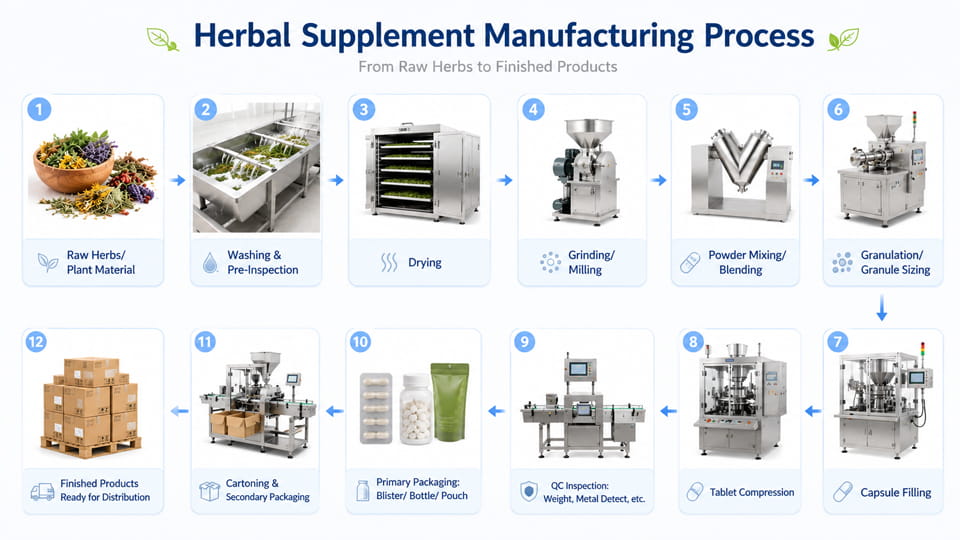
ตลอดการผลิต, เงื่อนไข (อุณหภูมิ, ความชื้น) ได้รับการควบคุมอย่างใกล้ชิด. พฤกษศาสตร์หลายชนิดไวต่อความชื้น, ดังนั้นทั้งสายอาจทำงานในห้องสะอาดที่มีการควบคุมความชื้น. บรรจุภัณฑ์ที่มีอุปสรรคสูง (ตุ่มฟอยล์อลูมิเนียม, HDPE พร้อมสารดูดความชื้น) ถูกเลือกเพื่อรักษาอายุการเก็บรักษา.
การผลิตอาหารเสริมที่ประสบความสำเร็จขึ้นอยู่กับความน่าเชื่อถือ เครื่องแปรรูปและบรรจุภัณฑ์. ต่อไปนี้เป็นภาพรวมของอุปกรณ์หลัก โดยเฉพาะอุปกรณ์ที่ Jinlu นำเสนอ พร้อมบทบาทต่างๆ:

รูป: เครื่องบรรจุแคปซูลความเร็วสูงของ Jinlu (รุ่น NJP-1500D, 90K cps/ชม). ตัวเติมอัตโนมัติดังกล่าวจะวางแนวแคปซูลเปล่า, ผงสมุนไพรเมตร, เติมให้เต็ม, และประกอบแต่ละแคปซูลที่เติมด้วยความแม่นยำ ±3%.
 รูป: เครื่องกดแท็บเล็ตแบบโรตารี่ HZP-26D-40D. เครื่องอัดยาเม็ดอัดเม็ดสมุนไพรเป็นยาเม็ดโดยมีน้ำหนักและความแข็งตามต้องการ. การกดของ Jinlu สามารถส่งออกไปได้ 260,000 เม็ด/ชั่วโมงโดยยังคงความสม่ำเสมอ.
รูป:เครื่องบรรจุถุงสำเร็จรูป. เครื่องจักรดังกล่าว (เหมือนซีรีย์ GD ของ Jinlu) สามารถเปิดได้อัตโนมัติ, เติม, และปิดผนึกถุงตั้งหรือซิปด้วยผง, เม็ดหรือแท็บเล็ต, บรรลุน้ำหนักเติมที่แม่นยำมาก.
อุปกรณ์ที่จำเป็นอื่นๆ ได้แก่ เครื่องล้างขวด (สำหรับการเริ่มขวดเปล่า), ผู้ติดฉลาก, และ เครื่องตรวจจับโลหะ. เครื่องจักรของ Jinlu ได้รับการออกแบบเพื่อให้ตรงตามมาตรฐานการรับรองระดับโลก (CE, CGMP, อย) และสามารถปรับแต่งได้ (E.G. ด้วยเครื่องป้อนสุญญากาศสำหรับผงที่ตัดยาก, เครื่องชั่งน้ำหนักแบบผสมผสานสำหรับการผสม).
การเลือกบรรจุภัณฑ์หลักที่เหมาะสมจะส่งผลต่อความเสถียร, ประสบการณ์ผู้ใช้, และการปฏิบัติตาม. ด้านล่างนี้เราเปรียบเทียบรูปแบบบรรจุภัณฑ์ทั่วไปสำหรับอาหารเสริม:
| รูปแบบ | ดีที่สุดสำหรับ | ข้อดี | ความท้าทาย/ข้อพิจารณา |
| ขวด (เอชดีพีอี, สัตว์เลี้ยง) | แคปซูล, แท็บเล็ต, ซอฟท์เจล, กัมมี่ | กั้นความชื้น/ออกซิเจนที่แข็งแกร่ง; ง่ายต่อการติดฉลาก; มีฝาปิดกันเด็กให้เลือก; รูปแบบที่คุ้นเคย | ขนาดใหญ่สำหรับการจัดส่ง; มักจะทึบแสง (รีไซเคิลได้น้อยลง); ต้องใช้ฝาปิด CR ด้วยวัสดุผสม |
| แพ็คแผลพุพอง (อลู/พีวีซี) | แท็บเล็ต, แคปซูล, รอยเปื้อน | การป้องกันแบบหน่วยปริมาณ (แต่ละเม็ดปิดผนึก); อุปสรรคที่ดีเยี่ยม (ฟอยล์); หลักฐานการงัดแงะ; การให้ยาที่สะดวก | ราคาแพงกว่าต่อหน่วย; รูปร่าง/ขนาดจำกัด; การรีไซเคิลฟอยล์/พีวีซีเป็นเรื่องยาก |
| สติ๊กแพ็ค | ผง (เสิร์ฟเดี่ยว), ชา | ปริมาณแบบพกพาที่วัดไว้ล่วงหน้า; เหลือน้อยที่สุด; รายละเอียดเพรียวบาง | ขยะแบบใช้ครั้งเดียว; ต้องใช้ลามิเนต (ความท้าทายในการรีไซเคิล); ปริมาณน้อยต่อแพ็ค |
| ซอง | เม็ด, เม็ดฟู่, ผง | แพ็กเก็ตส่วนเดียว, มักจะละลายน้ำได้; ต้นทุนต่ำ | อุปสรรคความชื้นมีจำกัด; มีแนวโน้มที่จะเจาะ; ขยะแบบใช้ครั้งเดียว |
| กระเป๋ายืนขึ้น (ปิดผนึกได้) | ผง, เม็ด, กัมมี่, มัลติแพ็ก | มีน้ำหนักเบา, ประหยัดพื้นที่; ลามิเนตกั้นสูง; ซิปผนึก; รูปร่างที่ปรับแต่งได้ | มักมีความโปร่งใส (ความเสี่ยงเล็กน้อย); ต้องการสารดูดความชื้นสำหรับเนื้อหาที่ไวต่อความชื้น; ซิปเพิ่มต้นทุน |
| ไห / กระป๋อง (แก้ว/อะลูมิเนียม) | กัมมี่, ผง, สินค้าพรีเมี่ยม | ความสามารถในการรีไซเคิลที่เหนือกว่า (แก้ว/อลูมิเนียม); อุปสรรคสูง; นำกลับมาใช้ใหม่ได้; ดูพรีเมี่ยม | หนักกว่า (ค่าจัดส่ง); เปราะ (กระจก); ไม่ป้องกันเด็กโดยค่าเริ่มต้น เว้นแต่จะมีการเพิ่มกลไกฝา |
| กล่องรอง | แคปซูล/ยาเม็ดในขวดหรือตุ่ม | เปิดใช้งานบรรจุภัณฑ์จำนวนมาก; เพิ่มอุปสรรคสำหรับผลิตภัณฑ์หลายรายการ; ให้พื้นที่การติดฉลาก | เพิ่มต้นทุนและวัสดุ; กั้นกล่องด้อยกว่าพลาสติก (อาจต้องใช้แผ่นซับความชื้น) |
สำหรับอาหารเสริมสมุนไพร, การควบคุมความชื้นและออกซิเจน เป็นฟังก์ชันบรรจุภัณฑ์ที่สำคัญ. ตัวอย่างเช่น, ฟอยล์ตุ่มกั้นสูงหรือถุงหลายชั้นสามารถป้องกันสมุนไพรดูดความชื้นได้. ทนต่อเด็ก (CR) การปิดถนนมักจำเป็นตามกฎหมาย (โดยเฉพาะอย่างยิ่งสำหรับวิตามิน). ทางเลือกที่ยั่งยืน (พลาสติกพีซีอาร์, วัสดุรีไซเคิลได้, ถุงที่ย่อยสลายได้) กำลังมีแนวโน้มการเติบโต, แต่ยังคงต้องเป็นไปตามข้อกำหนดด้านความปลอดภัยและอายุการเก็บรักษา.
เครื่องบรรจุภัณฑ์ (ฟิลเลอร์ขวด, เส้นตุ่ม, ผู้บรรจุถุง) ต้องตรงกับรูปแบบและเอาต์พุตที่เลือก. ระบบอัตโนมัติ (เช่น เครื่องแพ็คถุงรุ่น GD ของ Jinlu หรือเครื่องตุ่มซีรีส์ PJ) จัดการกับความเร็วสูงด้วยการปิดผนึกที่สม่ำเสมอ, ซึ่งจำเป็นสำหรับเภสัชกรรม การปฏิบัติตามมาตรฐาน GMP.
แม้จะมีอุปกรณ์ที่ดี, การผลิตอาหารเสริมอาจประสบปัญหาอุปสรรคได้. ต่อไปนี้เป็นปัญหาและการเยียวยาที่พบบ่อย:
ในทุกกรณี, การบำรุงรักษาเชิงป้องกันและผู้ปฏิบัติงานที่มีประสบการณ์คือกุญแจสำคัญ. การกู้คืนข้อผิดพลาดอัตโนมัติ (สถานีปฏิเสธ, สัญญาณเตือน) ช่วยจับประเด็นได้ตั้งแต่เนิ่นๆ. ตัวอย่างเช่น, เครื่องจักรของ Jinlu มีคุณลักษณะ "การปฏิเสธอัจฉริยะ" เพื่อทิ้งถุงที่บรรจุผิด.
การเลือกอุปกรณ์บรรจุภัณฑ์ถือเป็นการตัดสินใจเชิงกลยุทธ์. ปัจจัยที่ต้องพิจารณา ได้แก่:
โดยสรุป, เลือกเครื่องจักรที่ได้รับการจัดอันดับสำหรับเอาต์พุตที่คุณต้องการและข้อกำหนดด้านการปฏิบัติตามข้อกำหนด. ที่ อุปกรณ์ที่เหมาะสม ช่วยให้มั่นใจได้ถึงการเติม/ซีลที่สม่ำเสมอ, เพิ่มผลผลิตสูงสุด, และหลีกเลี่ยงการเรียกคืนที่มีราคาแพง.
การเปลี่ยนแปลงทั่วโลกไปสู่สุขภาพตามธรรมชาติทำให้ผลิตภัณฑ์เสริมอาหารสมุนไพรกลายเป็นอุตสาหกรรมหลัก, แต่ยังต้องการการผลิตระดับเภสัชกรรมที่เข้มงวดด้วย. ตั้งแต่การทดสอบพฤกษศาสตร์ดิบอย่างรอบคอบไปจนถึงการบรรจุแคปซูลอัตโนมัติและบรรจุภัณฑ์ป้องกันการงัดแงะ, แต่ละขั้นตอนจะต้องได้รับการปรับให้เหมาะสมเพื่อความสม่ำเสมอ, การปฏิบัติตาม, และคุณภาพ. ความก้าวหน้าในด้านอุปกรณ์ (เช่น ฟิลเลอร์แคปซูลความเร็วสูง, เส้นตุ่มที่แม่นยำ, และเครื่องใส่ถุงแบบยืดหยุ่น) ช่วยให้บริษัทด้านโภชนเภสัชขยายขนาดได้อย่างมีประสิทธิภาพโดยยังคงรักษาระดับความคลาดเคลื่อนที่เข้มงวดไว้ได้.
โดยสรุป, การผลิตอาหารเสริมสมุนไพร เป็นการรำที่ซับซ้อนขององค์ความรู้ด้านพฤกษศาสตร์แบบดั้งเดิมและวิศวกรรมสมัยใหม่. โดยปฏิบัติตามหลักเกณฑ์ GMP, การใช้เครื่องจักรที่เหมาะสม, และก้าวนำหน้าเทรนด์ (ชอบ บรรจุภัณฑ์ที่ยั่งยืน และสูตรเฉพาะบุคคล), ผู้ผลิตสามารถส่งมอบได้อย่างปลอดภัย, ผลิตภัณฑ์จากพืชที่มีประสิทธิภาพ. สำหรับบริษัทที่ต้องการขยายหรืออัพเกรดสายผลิตภัณฑ์ของตน, จินลู่บรรจุ นำเสนอกลุ่มผลิตภัณฑ์ตัวเติมแคปซูลแบบครบวงจร, แท็บเล็ตกด, เครื่องพุพอง, เครื่องแพ็คถุงและอื่นๆ อีกมากมาย - ทั้งหมดนี้สร้างขึ้นเพื่อการผลิตโภชนเภสัช. ติดต่อเรา เพื่อเรียนรู้ว่าอุปกรณ์ของเราสามารถช่วยนำอาหารเสริมสมุนไพรของคุณจากสวนสมุนไพรมาจัดเก็บชั้นวางอย่างมีคุณภาพและประสิทธิภาพได้อย่างไร.
อาหารเสริมสมุนไพรเป็นผลิตภัณฑ์เสริมอาหารที่ทำจากสมุนไพร, สารสกัดจากพฤกษศาสตร์, หรือส่วนผสมจากพืชอื่นๆ. ผลิตภัณฑ์เหล่านี้มีจำหน่ายทั่วไปในรูปแบบแคปซูล, แท็บเล็ต, ผง, กัมมี่, ชา, หรือสารสกัดเหลวและออกแบบมาเพื่อเสริมอาหารมากกว่าทดแทนอาหารทั่วไป. ขึ้นอยู่กับตลาด, ผลิตภัณฑ์เสริมอาหารสมุนไพรได้รับการควบคุมให้เป็นผลิตภัณฑ์เสริมอาหารมากกว่ายารักษาโรค.
ในสหรัฐอเมริกา, ผลิตภัณฑ์เสริมอาหาร (รวมทั้งสมุนไพร) ตกอยู่ภายใต้พระราชบัญญัติ DSHEA ของ FDA. ผู้ผลิตจะต้องปฏิบัติตามกฎของ FDA cGMP (21 ซีเอฟอาร์ 111) เพื่อให้แน่ใจว่ามีตัวตน, ความบริสุทธิ์, และเพื่อหลีกเลี่ยงการปนเปื้อน. ซึ่งหมายถึงการทดสอบสมุนไพรดิบอย่างละเอียดและการตรวจสอบระหว่างดำเนินการ. ในยุโรปและที่อื่นๆ, มาตรฐานการผลิตที่ดีเช่นเดียวกัน (GMP ของสหภาพยุโรป, แนวทางขององค์การอนามัยโลก) นำไปใช้กับโภชนเภสัช.
พวกเขามาในหลายรูปแบบ: แคปซูล, แท็บเล็ต, ผง, ของเหลว/ทิงเจอร์, กัมมี่, แพ็คติด, ชา, ฯลฯ. ทางเลือกขึ้นอยู่กับคุณสมบัติทางพฤกษศาสตร์และความต้องการของผู้บริโภค. ตัวอย่างเช่น, สมุนไพรที่มีรสขมเล็กน้อยอาจบรรจุอยู่ในแคปซูล, ในขณะที่ชาผ่อนคลายขายเป็นถุงชา.
กระบวนการผลิตมักประกอบด้วยขั้นตอนสำคัญหลายขั้นตอน:
• คัดสรรสมุนไพรดิบ
• การทำความสะอาดและการอบแห้ง
• การบดหรือโม่
• การผสมแป้ง
• การเกิดเป็นเม็ด (หากต้องการ)
• การเติมแคปซูลหรือการบีบอัดเม็ดยา
• การตรวจสอบคุณภาพ
• บรรจุภัณฑ์เบื้องต้น
• การบรรจุหีบห่อและบรรจุภัณฑ์รอง
ผู้ผลิตสมัยใหม่มักจะทำให้กระบวนการเหล่านี้เป็นแบบอัตโนมัติเพื่อปรับปรุงความสม่ำเสมอ, ผลผลิต, และคุณภาพของผลิตภัณฑ์.
อย่างน้อยที่สุด, ผู้ผลิตต้องการอุปกรณ์ผสม, ฟิลเลอร์แคปซูลหรือการกดแท็บเล็ต (ขึ้นอยู่กับปริมาณ), และสายการบรรจุภัณฑ์. เครื่องสำคัญได้แก่: เครื่องบรรจุแคปซูล, แท็บเล็ตหมุน, เครื่องบรรจุหีบห่อ, สายการนับ/บรรจุขวด, เครื่องแพ็คซอง/สติ๊ก, และเครื่องบรรจุถุง. ตัวอย่างเช่น, Jinlu Packing ให้บริการบรรจุแคปซูลและเครื่องบรรจุถุงที่ออกแบบมาโดยเฉพาะสำหรับโภชนเภสัช.
ผู้ผลิตส่วนใหญ่ใช้วัสดุบรรจุภัณฑ์ที่ทนความชื้น เช่น บลิสเตอร์แพ็ค, ขวด HDPE พร้อมซีลแบบเหนี่ยวนำ, ลามิเนตอลูมิเนียมฟอยล์, หรือกระเป๋าที่มีอุปสรรคสูง. สภาพแวดล้อมการผลิตที่มีการควบคุม, สารดูดความชื้น, ระบบการปิดผนึกที่เหมาะสม, และการตรวจสอบคุณภาพเป็นประจำยังช่วยปกป้องผลิตภัณฑ์เสริมอาหารสมุนไพรตลอดทั้งการจัดเก็บและการขนส่ง.
บรรจุภัณฑ์ที่ดีที่สุดขึ้นอยู่กับประเภทผลิตภัณฑ์และความไวต่อความชื้น, ออกซิเจน, และแสงสว่าง.
ตัวเลือกบรรจุภัณฑ์ทั่วไป ได้แก่:
• ขวดสำหรับบรรจุแคปซูลและยาเม็ด
• บรรจุภัณฑ์พลาสติกสำหรับการป้องกันปริมาณหนึ่งหน่วย
• ถุงตั้งสำหรับใส่ผง
• แพ็คแบบแท่งและซองสำหรับเสิร์ฟเดี่ยว
• ขวดแก้วสำหรับสกัดของเหลว
การเลือกบรรจุภัณฑ์กั้นที่เหมาะสมช่วยรักษาคุณภาพของผลิตภัณฑ์และยืดอายุการเก็บ.
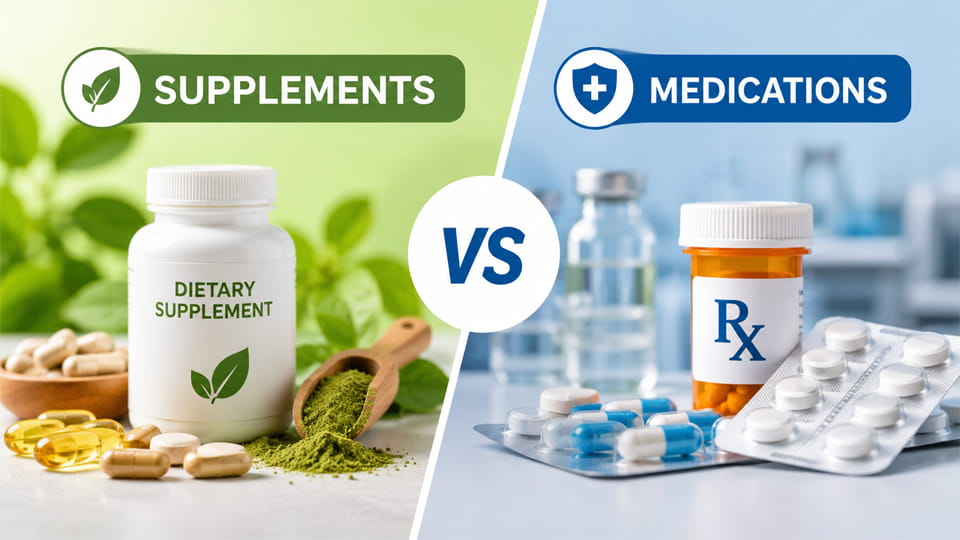
อาหารเสริมสมุนไพรจัดเป็นอาหารเสริมและสามารถขายได้โดยไม่ต้องมีใบสั่งยา, เน้นการสนับสนุนด้านโภชนาการ. ยาสมุนไพร (เช่นอายุรเวชหรือยาจีนโบราณ) มักถูกควบคุมให้เป็นยาหรือผลิตภัณฑ์ทางการแพทย์, กับการกล่าวอ้างรักษาโรคภัยไข้เจ็บ. อาหารเสริมสามารถส่งเสริมสุขภาพโดยทั่วไปได้ (E.G. “รองรับภูมิคุ้มกัน”) แต่ไม่สามารถอ้างว่ารักษาโรคได้.
อ้างอิง:
1.เอกสารแนะนำผลิตภัณฑ์เสริมอาหาร & ข้อมูลด้านกฎระเบียบ—— เรา. สำนักงานคณะกรรมการอาหารและยา
2.ผลิตภัณฑ์เสริมอาหาร —— เรา. สำนักงานคณะกรรมการอาหารและยา
3.อาหารเสริมสมุนไพร —— เรา. กรมวิชาการเกษตร
4.การพัฒนาผลิตภัณฑ์เสริมอาหารพฤกษศาสตร์ที่ปลอดภัยและมีประสิทธิภาพ —— หอสมุดแห่งชาติแพทยศาสตร์
5.การประกันคุณภาพและความปลอดภัยของผลิตภัณฑ์เสริมอาหารสมุนไพร —— หอสมุดแห่งชาติแพทยศาสตร์
6.อาหารเสริมและสมุนไพร —— กสทช