×
บริการออนไลน์
✉️อีเมล์: 💌WhatsApp: +86 18011793320
💡
  • บ้าน
  • บล็อก
  • แคปซูลเปล่า: ประเภท, กระบวนการผลิต, และโซลูชั่นบรรจุภัณฑ์สำหรับการผลิตยา

แคปซูลเปล่า: ประเภท, กระบวนการผลิต, และโซลูชั่นบรรจุภัณฑ์สำหรับการผลิตยา

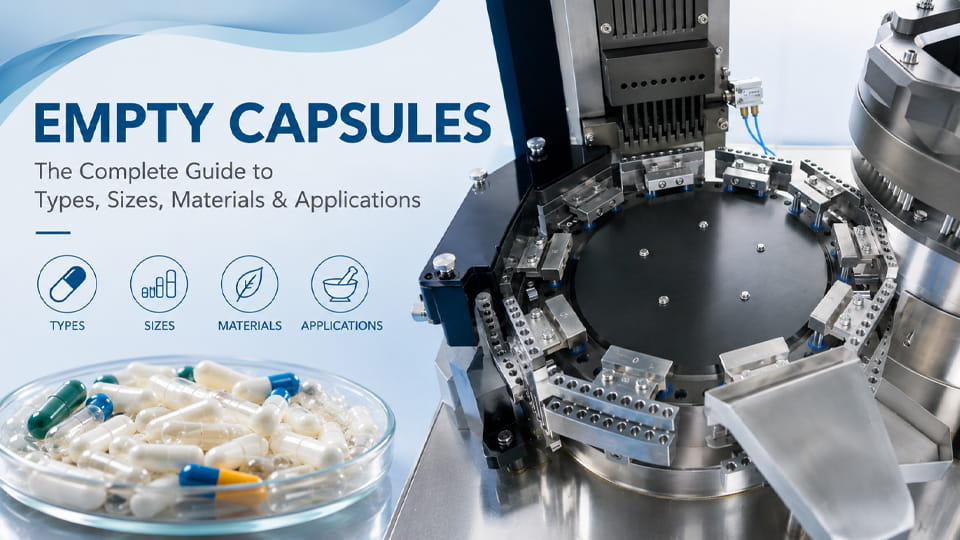
Before discussing capsule materials, manufacturing methods, or packaging equipment, it is helpful to understand what empty capsules actually are and why they are so widely used. From prescription medicines to nutraceuticals and herbal supplements, empty capsules provide pharmaceutical manufacturers with a flexible, แม่นยำ, and efficient dosage solution. Their compatibility with automated capsule filling and สายการบรรจุ also makes them an essential part of modern pharmaceutical production. Whether you are selecting empty gelatin capsules, evaluating plant-based alternatives, or planning a new capsule packaging line, understanding the fundamentals will help you make better production and purchasing decisions.

คู่มือแคปซูลเปล่า


What Are Empty Capsules?

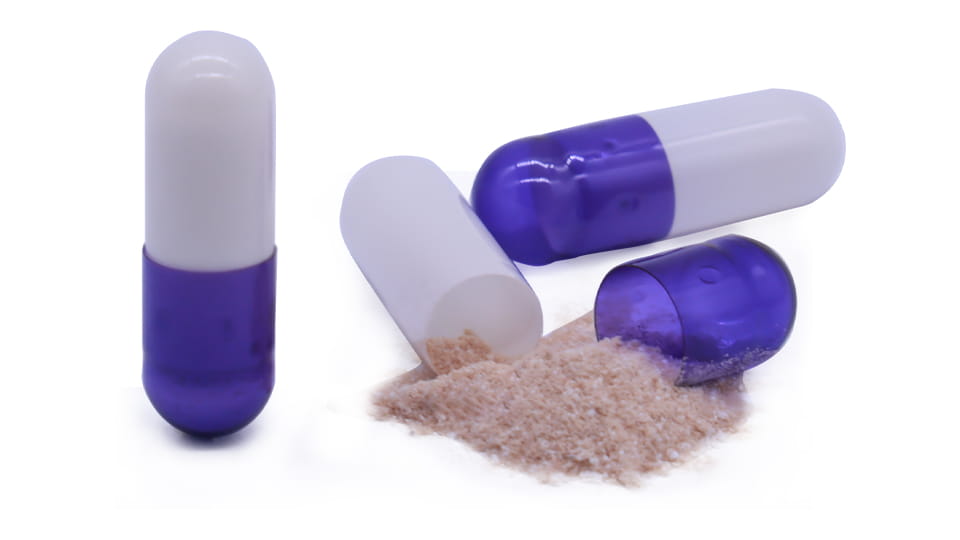
ในการผลิตยา, empty capsules (also called blank capsules or empty pill capsules) are the basic hollow shells used to create oral แบบฟอร์มการให้ยา. They act as containers for powders, granules or pellets of medication and supplements. An empty capsule typically consists of two main parts – the cap and the body – which fit and lock together to form a closed shell. (The cap is the shorter top half, and the body is the longer bottom half.) Modern capsule designs include a locking mechanism (such as matching snap-rings or grooves on the cap and body) to ensure the capsule stays tightly closed after filling. This prevents the capsule from accidentally opening during processing, shipping or handling.

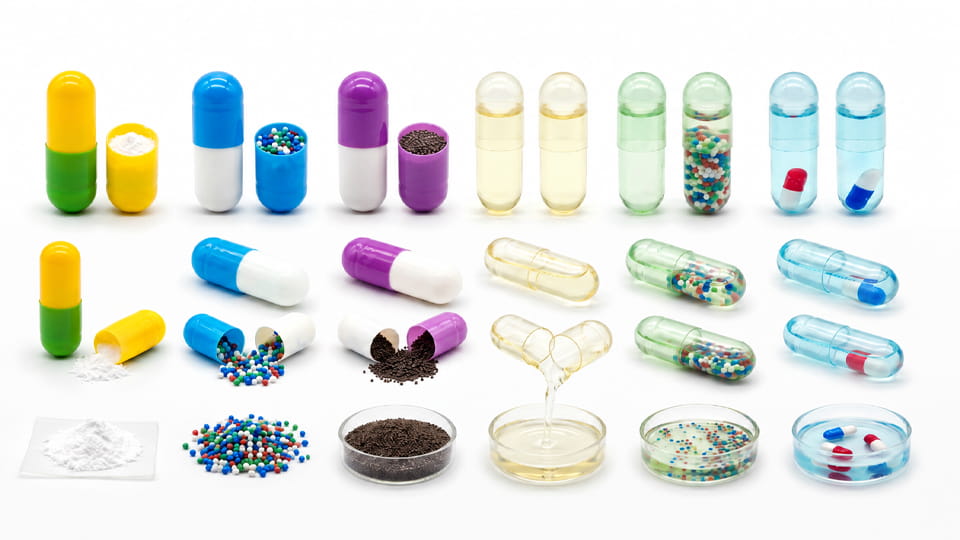
Two-piece empty capsules (gelatin shell) and powder for filling

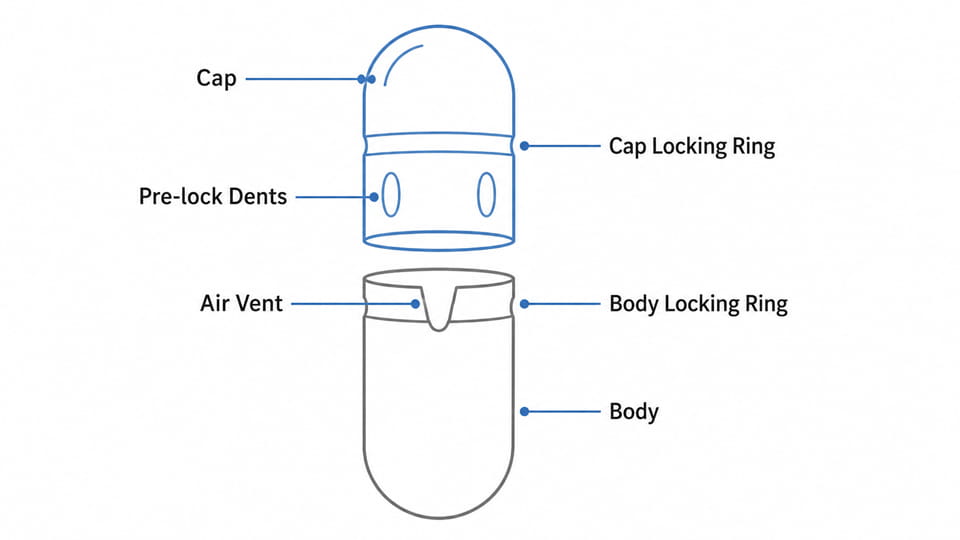
ในทางปฏิบัติ, empty capsules serve as a convenient “empty vessel” for medicine. They are commonly made of gelatin or plant-based materials, and are loaded with API or supplements during production. หลังจากเติมแล้ว, the cap and body snap together to keep the contents secure. Under a microscope, you can see the capsule cap, capsule body, and often an interlocking ring or double-snap design at the join (ตามที่แสดงด้านล่าง):

  • Capsule Cap: The shorter, closed end that fits over the body. It covers the open end of the body once closed.
  • Capsule Body: The longer hollow tube with one closed end and one open end. It holds the dose of drug or supplement.
  • Locking Mechanism: Many modern capsules have one or two small snap rings or grooves molded on the cap and body. When the capsule is closed, these rings interlock, keeping the cap firmly attached. This prevents cap-body separation caused by internal pressure (E.G. from trapped air during filling) or rough handling. Without a locking feature, capsules could pop open after filling, which would ruin the dose and disrupt production.
Schematic diagram of capsule structure

โดยสรุป, an empty capsule is a ready-to-fill shell consisting of a cap and a body that click or lock together. These hard shells are elastic enough to assemble but rigid enough to survive high-speed filling and packaging lines. They come pre-assembled or as loose caps and bodies (often supplied in bulk trays), and are filled at separate stages in the plant.


Types of Empty Capsules Used in Pharmaceuticals

There are several types of empty capsules, distinguished mainly by their shell material. The most common are:

  • เจลาตินแคปซูล: These are the classic hard capsules made from gelatin (animal collagen). They have been used for decades in pharma. Gelatin shells are translucent and have 12–16% moisture content. They are generally inexpensive and dissolve quickly in the stomach. อย่างไรก็ตาม, gelatin is animal-derived, which may be a concern for vegetarians or certain religious groups. เจลาตินแคปซูล are also sensitive to moisture (too dry -> brittle, too humid -> เหนียว).
  • HPMC (Hypromellose) แคปซูล: Made from hydroxypropyl methylcellulose (a plant-based cellulose), แคปซูล HPMC are vegetarian/vegan-friendly. They typically contain less water (about 4–7% moisture), making them more stable for moisture-sensitive formulations. This also means HPMC shells stay less brittle when stored. HPMC capsules often require a gelling agent (like carrageenan) or hotter dipping than gelatin, but they avoid the use of animal products. They are an excellent choice for customers needing “vegetarian capsules”.
  • พูลลูแลน แคปซูล: Pullulan is a natural polysaccharide (จากมันสำปะหลัง) that can form a gelatin-like film. Pullulan capsules are also vegetarian and have very low moisture content, plus a high oxygen barrier (better for protecting sensitive APIs). They are used in nutraceuticals and specialty applications.
  • Starch and Other Veggie Capsules: There are also capsules made from modified starch (E.G. hydroxypropyl starch) หรือโพลีเมอร์อื่นๆ. These are less common but appeal to niche markets (E.G. gluten-free or paleo diets).

Modern pharma has expanded beyond animal gelatin. “As science and technology have advanced, new materials and process improvements have led to the development of empty capsules made of HPMC, hydroxypropyl starch, and pullulan, in addition to gelatin”. ในทางปฏิบัติ, when someone asks for “empty gelatin capsules”, they usually mean hard two-piece capsules of the common material. But capsule suppliers today offer both gelatin and HPMC (มังสวิรัติ) แคปซูล in a range of colors and sizes to meet different needs. (When ordering, you may also see them called empty pill capsules, empty medicine capsules, หรือ empty capsule shells.)

Each material has pros and cons. Gelatin is traditional, low-cost and dissolves easily, but not suitable for strict vegetarians. HPMC and other vegan options cost a bit more but suit broader consumer bases. Pullulan has very good moisture protection, which can improve shelf-life of some drugs or supplements.

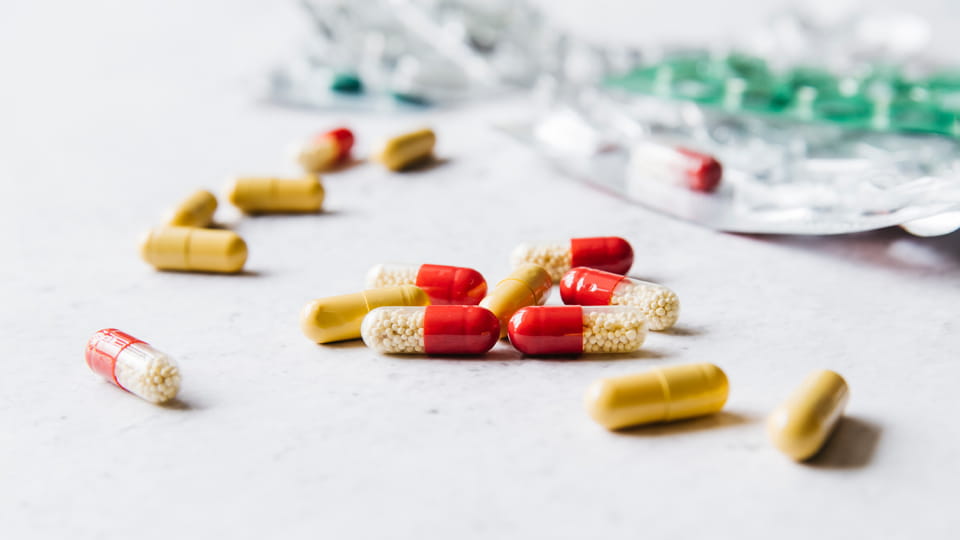
capsules with blisters


Empty Capsule Sizes

Empty capsules come in a range of sizes to accommodate different dose volumes. The standard sizes are numbered from 000 (ใหญ่ที่สุด) ลงไป 5 (เล็กที่สุด). ขนาด 000 is very large – about 1.37 mL internal volume – whereas size 5 is tiny (~0.21 mL). การเลือกสิ่งที่ถูกต้อง ขนาดแคปซูล depends on the เติมน้ำหนัก and density of the powder or granules:

  • ขนาด 000 และ 00 (ใหญ่ที่สุด): These large capsules hold roughly 500–800 mg of a low-density powder. They are often used for bulk supplements or pharmaceuticals requiring large doses (ตัวอย่างเช่น, certain veterinary or nutritional formulations).
  • ขนาด 0 และ 1: These are the most common sizes in human pharma. ขนาด 0 (~500 mg capacity) and size 1 (~400 mg) work well for many medium-strength medications.
  • Size 2–5 (เล็กลง): Capsules sizes 2 (~300 mg) ผ่าน 5 (~120 mg) are used for potent drugs (when only a small volume is needed) or pediatric formulations. ตัวอย่างเช่น, highly potent APIs might be dosed in size 3-5 capsules to keep the pill small.

โต๊ะ 1 Typical sizes of hard gelatin capsules

Size designation Fill volume (มล) Fill volume (oz) Height of locked capsule (มม) Outer diameter (มม)
000 1.37 1/20 26.1 10.0
00 0.95 1/30 23.3 8.5
0 0.68 1/40 21.7 7.7
1 0.50 1/55 19.4 6.9
2 0.37 1/75 18.0 6.4
3 0.30 1/100 15.9 5.8
4 0.21 1/135 14.3 5.3
5 0.13 1/220 11.1 4.9

The fill volume of each size is typically provided by the capsule manufacturer. ตัวอย่างเช่น, a standard chart shows capsule volumes from 1.37 มล (ขนาด 000) ลงไป 0.21 มล (ขนาด 5). This volume corresponds to a certain weight based on powder density. ในความเป็นจริง, โต๊ะ 2.1 in a pharmaceutical reference lists the volumes and approximate weights for various sizes based on typical tapped densities. When formulating, manufacturers calculate the needed capsule size by the target dose weight and the material’s density (powder tap density).

Applications by size: โภชนเภสัช (like multivitamins or herbal supplements) often use larger capsules (0 หรือ 000) because they need to deliver large amounts of herbs or vitamins. Many tablets converted to capsules (over-encapsulation for clinical trials) use standard capsule sizes 1 หรือ 0. ในทางกลับกัน, very small capsules (sizes 3–5) might be used for high-potency drugs, or for easy swallowing by children.

โดยสรุป, empty capsules are available in ขนาด 000 ถึง 5. A general guideline is: the smaller the number, the larger the capsule (เช่น. 000 is biggest, 5 is smallest). Manufacturers and capsule suppliers provide size charts so that formulators can pick a capsule that meets the volume requirement of the intended dose. Proper size selection ensures that each capsule holds the correct amount of API for consistent dosing.


How Are Empty Capsules Manufactured?

Empty hard capsule shells (capsule bodies and caps) are produced by a dip-coating process. The basic steps are as follows (see clinical pharmaceutics references for details):

  1. Prepare the Dipping Solution: A warm, viscous solution is made by dissolving gelatin (หรือ HPMC) in water at around 60–70°C. Typically this solution is 30–40% polymer by weight. พลาสติไซเซอร์ (like glycerol) are added to give the shell flexibility, along with colorants or opacifiers if needed. For HPMC capsules, a gelling agent (like carrageenan or gellan gum) may be included to form a firm film.. The solution is mixed and filtered under strict conditions (GMP) until it has the right viscosity and clarity.
  2. Dip-Coat Steel Pins (Molds): Pairs of stainless-steel pin molds are used: one set sized for caps and one for bodies. The pins are arranged on bars and dipped into the warm polymer solution. Since the pins are cooler than the solution, a thin film of gelatin or HPMC sticks to each pin. In one continuous machine, alternating rows of pins form the caps and bodies simultaneously.
  3. Rotation and Drainage: After dipping, the bars of pins are lifted out and rotated. This ensures the polymer film is evenly distributed around each pin and excess solution drains off. Rotation and sometimes air knives control the wall thickness of the forming shell. Uniform distribution is critical for consistency in shell strength and dissolution.
  4. การทำให้แห้ง: The coated pins pass through a controlled drying chamber. อบอุ่น (but not too hot) air evaporates water from the film, solidifying it into a rubbery shell. Drying usually takes place under low-humidity, GMP-monitored conditions. The end result is an empty capsule shell (cap or body) on each pin.
  5. Stripping and Trimming: Once dry, the capsule shells are stripped (pulled) off the pins. Each shell is then automatically trimmed to the correct length (body and cap lengths are usually different). This step creates the finished “cap” and “body” pieces with open ends that will eventually fit together.
  6. Joining Cap and Body: ในที่สุด, each trimmed cap is inserted onto a body (a very slight press fit) to temporarily store them as a complete empty capsule. อย่างไรก็ตาม, they are typically shipped and stored with caps and bodies loosely combined, not locked fully together. (If they were locked too tightly, it would be hard to separate them later during filling.)
  7. Printing and Inspection: Optional printing (for logos or codes) can be applied to the joined capsules. ในที่สุด, capsules are inspected (often by automated vision systems) for defects (E.G. ชิป, off-color, wrong size) and then then packed (often in trays or buckets) under controlled humidity (around 40–50% RH) to maintain their moisture content.

All these manufacturing steps are automated and closely controlled for quality. ในความเป็นจริง, a published capsule manufacturing guide summarizes these stages: “Step 1: preparation of gelatin solution; ขั้นตอน 2: dip-coating onto metal pins; ขั้นตอน 3: rotation of the coated pins; ขั้นตอน 4: drying of the coated pins; ขั้นตอน 5: stripping and trimming; ขั้นตอน 6: joining of the trimmed capsule shell; ขั้นตอน 7: printing”. (Printing step: After assembly, capsules are often printed with product codes or logos, then inspected and packaged.)

ตลอดกระบวนการนี้, extensive การควบคุมคุณภาพ checks are performed (gelatin bloom strength, viscosity, ขีดจำกัดของจุลินทรีย์, ฯลฯ) to ensure uniform shells. Modern capsule lines can make millions of shells per day, with very consistent weight and dimensions.


How to Choose the Right Empty Capsules

When selecting a capsule type and size, first consider the active ingredient and formulation, then the production method.

Choose by Ingredient/Formulation:

  • Moisture-sensitive or hygroscopic APIs: Go with low-moisture shells. HPMC is typically the best choice (HPMC > พูลลูแลน > gelatin for moisture barrier). ตัวอย่างเช่น, โปรไบโอติก, enzymes or deliquescent powders should use HPMC or pullulan to minimize moisture uptake.
  • Oily or liquid ingredients: Gelatin softgels are standard. For hard shells, HPMC or pullulan are better since they resist oils and provide inert protection.
  • High-dose powders or granules: You may need larger capsule sizes (00 หรือ 000) to fit the dose. Gelatin capsules can handle large fills, but large HPMC and pullulan shells are also available.
  • Vegetarian/Allergen-free requirements: Use HPMC or pullulan capsules, which contain no animal gelatin. Gelatin is not suitable for strict vegans, vegetarians or certain religious diets.
  • Speed of release: If you need very fast disintegration (E.G. a quick-release drug), gelatin is slightly faster than HPMC. If controlled/delayed release is acceptable, HPMC or even เคลือบลำไส้ capsules might be used.

Empty Capsules can be filled with various Ingredient&สูตร

Choose by Equipment and Scale:

  • ชุดเล็ก / ร&ดี: Manual capsule filling (hand loader or small tabletop machine) is often used for formulation development or low-volume production. It can fill a few hundred capsules per run with a capsule board or simple press.
  • Medium production: เครื่องเติมแคปซูลกึ่งอัตโนมัติ (typically 100–400 hole plates) can process thousands of capsules per hour. They combine manual steps with mechanical assistance. They require less operator time than fully manual but have moderate throughput.
  • High-volume production: เต็มที่ เครื่องบรรจุแคปซูลอัตโนมัติ are used in commercial plants. These machines have large magazine capacities and can fill tens of thousands to hundreds of thousands of capsules per hour. ตัวอย่างเช่น, Jinlu Packing’s NJP-7800D automatic filler can handle up to 468,000 แคปซูลต่อชั่วโมง (sizes 000–5). Such machines feature high-precision servo control, multi-size cassettes, and GMP design with dust collection. When planning a large production line, integrating an [เครื่องบรรจุแคปซูลอัตโนมัติ] or complete [Capsule Filling Production Line] (with polishing, inspection and packaging stages) can maximize efficiency.

โดยสรุป, pick the capsule material that fits your API (ความมั่นคง, dietary needs) and then choose the capsule size for your dose. Also ensure compatibility with your filling equipment (manual vs. อัตโนมัติ). Modern capsule fillers (like those from Jinlu) are engineered to handle all standard capsule types. ตัวอย่างเช่น, tested setups show that gelatin, HPMC and pullulan shells all run smoothly on the same high-speed machines.


Common Applications of Empty Capsules

Empty capsules are used across many industries. Key applications include:

  • เภสัชกรรม: Widely used for prescription and OTC oral drugs (painkillers, ยาปฏิชีวนะ, anti-inflammatories, ฯลฯ) where active ingredients are powdered or granular. Gelatin capsules are especially common, but HPMC or pullulan may be used for specialty drugs. Gelita notes that “hard gelatin capsules are ideal for powdered or granulated fillings”, allowing precise dosing of medicines.
  • ผลิตภัณฑ์เสริมอาหาร: วิตามิน, minerals and nutraceutical blends are often encapsulated. Both gelatin and vegetarian capsules are used, depending on consumer preferences. Supplement makers often choose capsule forms for herbal extracts, antioxidant powders, and vitamin complexes.
  • Herbal/Natural Products: Many herbal remedies and botanicals are sold in capsule form. The inert capsule shell helps mask taste and protect sensitive phytonutrients. For certain herbs with aldehydes or tannins, producers may prefer HPMC or pullulan to avoid cross-linking issues in gelatin.
  • น้ำมัน: Oil-based supplements (น้ำมันปลา, น้ำมันอีฟนิ่งพริมโรส, ฯลฯ) sometimes use modified hard capsules or softgels. Vegetarian oil capsules use HPMC or specially formulated “vegetable softgels.” Empty hard capsules for oils are less common, but HPMC can encapsulate powder forms of oils or oil-containing granules.
  • โปรไบโอติก: Live-culture products benefit from HPMC or pullulan shells because of their superior moisture protection. พูลลูแลน, โดยเฉพาะ, is noted for keeping probiotic bacteria viable much longer by blocking oxygen.
  • สัตวแพทยศาสตร์: Pet and livestock supplements or medications are also produced as capsules. (ตัวอย่างเช่น, large size gelatin capsules are used for horse or cattle medicines.) Both gelatin and vegetable capsules are used in vet applications, similar to human pharma.
  • Sports Nutrition: Protein blends, ครีเอทีน, pre-workout and post-workout supplements often come in capsule form (E.G. “pre-workout pills”). Capsule convenience and rapid release are appealing to fitness consumers.

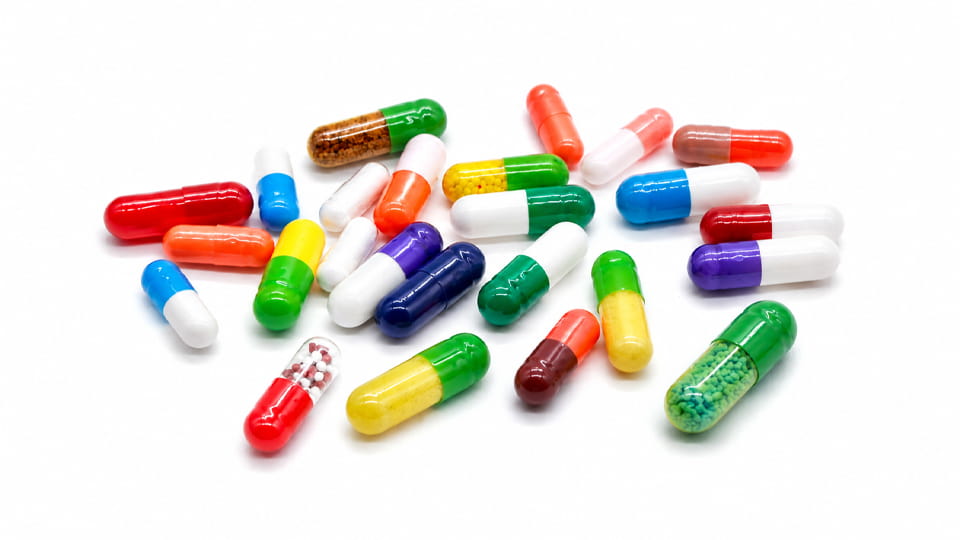
Types of Empty Capsules Used in Pharmaceuticals

These examples show the versatility of empty capsules. They are a universal dosage form for any powdered or granular product that needs to be swallowed in a precise dose.


How Empty Capsules Are Filled

Filling empty capsules with product can be done in several ways, depending on scale:

  • ไส้ด้วยตนเอง: The simplest method uses a capsule-filling board. You manually separate capsules, fill the bodies with powder (using a spoon or funnel), then join the caps by hand. This is very labor-intensive and suited only to small-scale labs (tens or hundreds of capsules).
  • Semi-Automatic Filling: Semi-auto machines (rotary or plate-style) automate part of the process. An operator loads empty capsules into a filling plate (or hopper), the machine aligns and separates cap/body, and the bodies are filled with powder via tamping and spreading. Caps are then placed on top and locked (often by rotating bars). Semi-automatic fillers can produce thousands of capsules per hour with minimal effort.

    CGN-208D Semi Automatic Capsule Filler
    CGN-208D Semi Automatic Capsule Filler
  • Automatic Filling: Fully automatic capsule machines are used for large-scale production. They automate feeding (orientation of caps/bodies), ไส้ผง, camming and sealing. Modern machines can handle any hard-shell type. ตัวอย่างเช่น, Jinlu’s NJP-3800D is an automatic capsule filling machine that can achieve up to 228,000 แคปซูล/ชม. These high-throughput systems often include features like servo-controlled dosing for precise fill weight, multi-size turret chutes, การสกัดฝุ่น, and integration with capsule polisher and inspection equipment. High-speed fillers ensure quick production and consistent dosing.

    เครื่องไส้แคปซูล NJP-3800D
    เครื่องไส้แคปซูล NJP-3800D

In all filling methods, special care is taken for very light or sticky powders (flow enhancers, การหล่อลื่น). Dust collection and electrostatic control (ionizers) are important for operator safety and fill accuracy. For large operations, capsule filling machines are a key part of the process chain – they turn the “empty capsules” into finished products at scale.


Capsule Packaging Solutions for Pharmaceutical Manufacturers

Once capsules are filled, the dosage forms must be packaged efficiently. There are a few common packaging solutions for hard capsules:

  • เครื่องบรรจุตุ่ม: These machines form blisters (aluminum-plastic or aluminum-aluminum pouches), fill each cavity with capsules, then seal and cut the blisters. This is often used for บรรจุภัณฑ์แบบหน่วยขนาด of capsules. Modern blister lines can run very quickly – for example, เครื่องตุ่มความเร็วสูง can achieve outputs around 10,000 - 11,000 แผลพุพอง (with capsules) ต่อชั่วโมง. Jinlu DPP-270Max, เช่น, is rated at up to 11,200 blisters/hr and handles materials like PVC/Alu film. Blister packaging is popular for keeping individual doses clean, หลักฐานการงัดแงะ, and moisture-protected. The machines typically include forming, feeding of capsules, การปิดผนึก, and die-cutting in one line.
  • การบรรจุขวดและเส้นสูงสุดที่กำหนด: For capsules packed in bottles, the process involves unscrambling bottles, counting and filling capsules into each bottle, adding any สารดูดความชื้น หรือ ฝ้าย, สูงสุดที่กำหนด, และการติดฉลาก. Capsule counting machines (auto-count fillers) automatically count and dispense precise numbers of capsules. ตัวอย่างเช่น, Jinlu’s JL-16C capsule counting filling machine can handle large production of bulk capsules into bottles. These systems ensure each bottle receives the exact count, and they often integrate capping and labeling machines. (The whole line might look like: bottle unscrambler -> capsule counter -> desiccant inserter -> capper -> labeler -> carton/packager.)
  • Cartoning and Secondary Packaging: After blisters or bottles are filled and closed, they are typically placed into cartons or cartons are formed automatically around strips. เครื่องแพ็คกล่อง erect boxes, insert blisters or bottles, และปิดผนึกพวกเขา. ในที่สุด, case packers bundle multiple cartons for shipping. Jinlu offers cartoning and labeling lines to integrate with blister or bottle lines.

ในทางปฏิบัติ, a pharmaceutical plant may combine these solutions. ตัวอย่างเช่น, a high-speed production line might start with an ฟิลเลอร์แคปซูลอัตโนมัติ, then route capsules to a counting-capping machine, and finally send bottles to a cartoner. อีกทางหนึ่ง, for unit doses, the capsules from the filler go to an inline blister machine.

จุดสำคัญ: Packaging equipment should be chosen to match the capsules. Blister machines must handle the size and shape of the capsules (to ensure reliable feeding into the cavities). Counting machines should be compatible with capsule fragility and speed requirements. ผู้จำหน่ายเครื่องจักรมากมาย (เหมือนจินลู่) offer customization: เช่น, adjusting feeders or chute guides to suit your capsule size and material. As the manufacturer advertises, their blister packers are built to GMP standards and can pack tablets, แคปซูล, and other forms at high speed.

ในที่สุด, สายการบรรจุภัณฑ์แบบครบวงจร – combining capsule filling, การนับ, blistering/capping, and cartoning – provide the most efficient solution for large-scale production. They automate the flow from empty capsule to finished packaged product.


บทสรุปและขั้นตอนต่อไป

แคปซูลเปล่า (the two-piece shells for pills and supplements) are a foundational element in pharmaceutical production. Understanding their materials, ขนาด, and design features (like locking mechanisms) helps you choose the right shell for your product. Equally important is knowing the manufacturing and filling process: capsules are made by dip-coating (gelatin/HPMC) and then filled on automated machines that separate, ปริมาณ, and close each capsule. ในที่สุด, proper packaging – via blister machines or counting lines – ensures the filled capsules stay intact and compliant through distribution.

If you’re a pharmaceutical or nutraceutical manufacturer looking for reliable equipment, consider a one-stop solution provider that understands capsules. Companies like Jinlu Packing offer integrated capsule filling and packaging lines that meet cGMP standards. They can help tailor the line to your specific capsule type and output needs. Contact an expert today to discuss how to streamline your capsule production and packaging.


FAQs on Empty Capsules

What are empty capsules?

Empty capsules are empty capsule shells used to contain pharmaceutical ingredients, ผง, เม็ด, or nutritional supplements. They usually consist of a capsule cap, capsule body, and locking mechanism, allowing manufacturers to produce accurate and convenient oral dosage forms.

What are empty capsules made of?

Hard capsules are typically made from gelatin (ที่ได้มาจากสัตว์) or vegetarian alternatives like HPMC (เซลลูโลส) and pullulan (แป้งมันสำปะหลังหมัก). ในทางปฏิบัติ, “empty capsule” usually refers to one of these two-piece shells ready for filling.

What are the different types of empty capsules used in pharmaceuticals?

The main types of empty capsules include hard gelatin capsules, แคปซูล HPMC, and pullulan capsules. Hard gelatin capsules are commonly used for pharmaceutical drugs, while HPMC and plant-based capsules are popular for nutraceutical and vegetarian products.

What are the different types of empty capsules used in pharmaceuticals?

The main types of empty capsules include hard gelatin capsules, แคปซูล HPMC, and pullulan capsules. Hard gelatin capsules are commonly used for pharmaceutical drugs, while HPMC and plant-based capsules are popular for nutraceutical and vegetarian products.

What sizes are available for empty capsules?

Empty capsules are available in different sizes, รวมทั้ง 000, 00, 0, 1, 2, 3, 4, และ 5. Larger sizes such as 000 และ 00 are often used for supplements, while smaller sizes are commonly used for pharmaceutical medicines with lower dosage requirements.

Which capsule size is most popular?

The most common hard-shell sizes in pharma and supplements are sizes 0 และ 1. These offer a good balance of fill volume and swallowability. (อย่างไรก็ตาม, very high-dose formulas may use 00 หรือ 000, and pediatric doses may use size 3–5.)

Can empty capsules hold liquids?

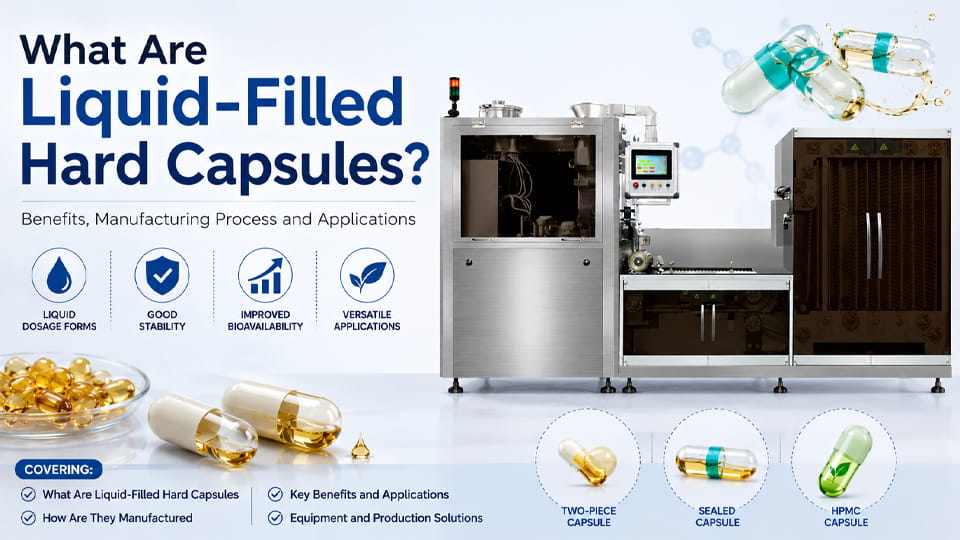
Standard two-piece capsules are designed for solids (ผง, เม็ด). They can leak with liquid fills. For oils or liquids, softgel capsules or specialized liquid capsules are typically used. (บันทึก: there are liquid-filled hard capsules technology, but those still use a powder barrier inside.)

How long do empty capsules last?

Properly stored capsules have a long shelf life. Both gelatin and HPMC capsules can last several years (มักจะ 2-5 ปี) if kept sealed in cool, dry conditions. เมื่อเวลาผ่านไป, moisture loss or gain can affect them, so storage recommendations must be followed.

How are empty capsules manufactured?

Empty capsules are manufactured through several steps, including raw material preparation, capsule shell formation, การทำให้แห้ง, การตรวจสอบคุณภาพ, และบรรจุภัณฑ์. The process ensures consistent capsule size, ความแข็งแกร่ง, and quality for pharmaceutical production.

Are vegetarian capsules more expensive?

ใช่. Because of the raw materials and processing, HPMC and pullulan capsules cost significantly more to manufacture than gelatin capsules. This is reflected in the pricing of empty veggie capsules.


อ้างอิง:
1.แคปซูลเจลาตินแข็ง: สูตร & การผลิต —— studylib.net
2.Locking hard gelatin capsule —— Google Patents
3.แคปซูล HPMC: current status and future prospects —— หอสมุดแห่งชาติแพทยศาสตร์
4.แคปซูลเจลาตินแข็ง —— pharmacy180.com
5.A Comprehensive Review On: แคปซูล —— International Journal of Pharmaceutical Sciences (IJPS)

แบ่งปันบทความนี้:
รูปภาพของ เพตตี้ ฟู
เพตตี้ ฟู

เพตตี้ ฟู, ผู้ก่อตั้ง Jinlupacking, นำมาซึ่ง 20 ความเชี่ยวชาญหลายปีในภาคส่วนเครื่องจักรยา. ภายใต้การนำของเขา, Jinlu เติบโตเป็นซัพพลายเออร์ที่เชื่อถือได้โดยผสมผสานการออกแบบ, การผลิต, และการขาย. Petty มีความกระตือรือร้นในการแบ่งปันความรู้เชิงลึกในอุตสาหกรรมของเขา เพื่อช่วยลูกค้าจัดการกับความซับซ้อนของบรรจุภัณฑ์ยา, รับรองว่าพวกเขาจะได้รับไม่ใช่แค่อุปกรณ์เท่านั้น, แต่เป็นพันธมิตรด้านบริการแบบครบวงจรที่แท้จริงซึ่งปรับให้เหมาะกับเป้าหมายการผลิต.

สารบัญ

ส่งคำถามของคุณ

ทิ้งคำตอบไว้

ที่อยู่อีเมลของคุณจะไม่ถูกเผยแพร่. ช่องที่ต้องกรอกถูกทำเครื่องหมายไว้ *

รับใบเสนอราคาฟรี

*เราเคารพการรักษาความลับของคุณและข้อมูลทั้งหมดได้รับการคุ้มครอง. ข้อมูลส่วนบุคคลของคุณจะถูกนำมาใช้และประมวลผลสำหรับโซลูชัน JL เท่านั้น.