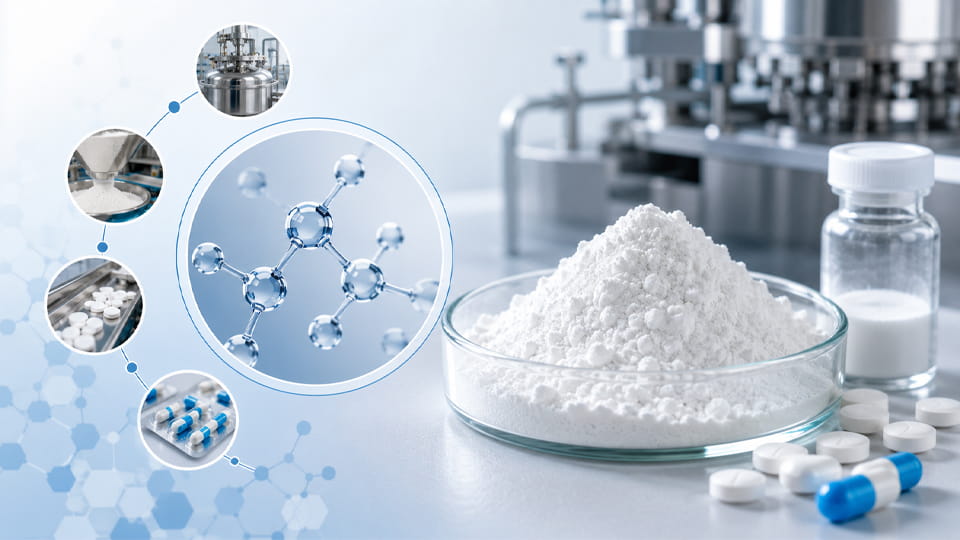
หากคุณเคยสงสัยว่าอะไรทำให้ยาใช้งานได้จริง, คำตอบมักจะเป็น API (ส่วนผสมทางเภสัชกรรมที่ใช้งานอยู่). ไม่ว่าจะเป็นแท็บเล็ต, แคปซูล, การฉีด, หรือน้ำเชื่อม, API เป็นองค์ประกอบที่รับผิดชอบในการสร้างผลการรักษาตามที่ตั้งใจไว้. ในแง่ง่ายๆ, เป็นส่วนหนึ่งของยาที่ใช้รักษาโรค, บรรเทาอาการ, หรือให้ผลลัพธ์ทางการแพทย์ที่ต้องการ, ในขณะที่ส่วนผสมอื่นๆ หรือที่เรียกว่าสารเพิ่มปริมาณ ส่วนใหญ่จะสนับสนุนการกำหนดสูตรและการจัดส่ง. สำหรับผู้ผลิตยา, ทีมงานจัดซื้อจัดจ้าง, และผู้จัดการฝ่ายผลิต, การทำความเข้าใจ API ถือเป็นสิ่งสำคัญเนื่องจากส่งผลโดยตรงต่อคุณภาพของผลิตภัณฑ์, การปฏิบัติตามกฎระเบียบ, กระบวนการผลิต, และความปลอดภัยของผู้ป่วยในที่สุด.
API หมายถึงอะไรในเภสัชภัณฑ์?
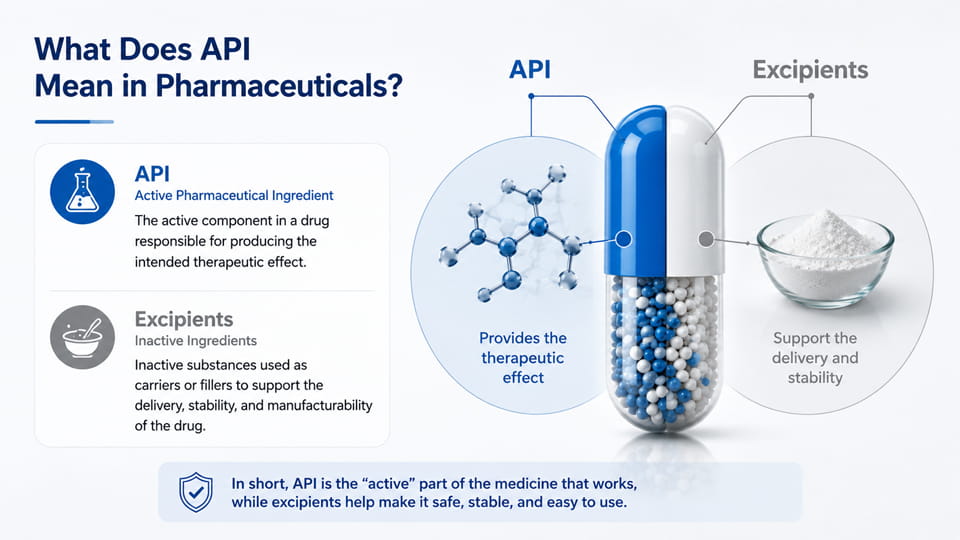
หนึ่ง API คือ ส่วนผสมทางเภสัชกรรมที่ใช้งานอยู่ – ที่ สารยาออกฤทธิ์ ในยาที่ให้ผลการรักษา. ในแง่ง่ายๆ, มันเป็นสารเคมี (หรือทางชีวภาพ) องค์ประกอบที่ทำงาน (E.G. ลดไข้, ฆ่าเชื้อแบคทีเรีย, บรรเทาอาการปวด). ตัวอย่างเช่น, ในยาเม็ดอะเซตามิโนเฟน, อะเซตามิโนเฟน ตัวมันเองก็คือ API; ส่วนผสมอื่นๆ (ผู้ยึดติด, ฟิลเลอร์, การเคลือบ) เป็น สารเพิ่มปริมาณ. สหรัฐอเมริกา. สถาบันมะเร็งแห่งชาติกำหนด API เป็น “ส่วนประกอบหลักในยาที่ทำให้เกิดผลตามที่ต้องการของยา”.
ในทางปฏิบัติ, การผลิตยาเริ่มต้นด้วย API หนึ่งรายการขึ้นไปและ เปลี่ยนให้เป็นผลิตภัณฑ์ขั้นสุดท้าย (แท็บเล็ต, แคปซูล, ของเหลว, ฯลฯ) ภายใต้การควบคุมคุณภาพอย่างเข้มงวด. ดังแหล่งบันทึกแห่งหนึ่ง, การผลิตยา โดยพื้นฐานแล้ว “หมายถึงการเปลี่ยนส่วนผสมทางเภสัชกรรมที่ออกฤทธิ์ (API) และสารปรุงแต่งในรูปแบบยา (เหมือนแท็บเล็ต, แคปซูล, ของเหลว, หรือแบบฉีด) ผ่านการดำเนินงานของหน่วยงานต่างๆ (การโม่, การทำเม็ดเล็ก, การบีบอัด, การเคลือบ, การกรอก, ฯลฯ)-. ทุกขั้นตอนต้องแม่นยำ: หน่วยงานกำกับดูแลเรียกร้องให้แต่ละชุด “มีส่วนผสมและความแข็งแกร่งตามที่อ้างว่ามี”. ในระยะสั้น, โดยไม่มี API, จะไม่มียา - พวกเขาคือ กระดูกสันหลังของสูตรยา.
คำจำกัดความของส่วนผสมทางเภสัชกรรมที่ใช้งานอยู่ (API)
- API (เรียกอีกอย่างว่า สารยา หรือ ส่วนประกอบออกฤทธิ์ทางเภสัชวิทยา) เป็น ส่วนผสมในตัวยาที่ทำให้มีประสิทธิผล. ตัวอย่างเช่น, แอมม็อกซิซิลลิน คือ API ในเม็ดยาปฏิชีวนะ (มันฆ่าเชื้อแบคทีเรีย).
- วัตถุประสงค์: API ให้ ผลการรักษา. หากไม่มี API, “ยา” จะเป็นเพียงผงเฉื่อยหรือของเหลว.
- มุมมองด้านกฎระเบียบ: FDA และ EMA ถือว่า API เป็นส่วนหนึ่งของ ควบคุมโดย CGMP แนวทางเช่น ฉัน Q7 ตรวจสอบให้แน่ใจว่า API ถูกสร้างขึ้นภายใต้มาตรฐานคุณภาพที่เข้มงวด.
API มักเป็นผงหรือสารเข้มข้นที่มีความบริสุทธิ์สูง; จากนั้นนำไปผสมกับสารเพิ่มปริมาณและก่อตัวเป็นยาเม็ด, แคปซูล, หรือรูปแบบยาอื่นๆ (ดูด้านล่าง). ประเด็นสำคัญก็คือ API เป็นยาที่ออกฤทธิ์, ในขณะที่สิ่งอื่นๆ ในสูตรช่วยให้ส่งยาได้อย่างปลอดภัยและมีประสิทธิภาพ.
API เทียบกับ. สารเพิ่มปริมาณ: ความแตกต่างคืออะไร?
| คุณสมบัติ |
API (ส่วนผสมที่ใช้งานอยู่) |
สารเพิ่มปริมาณ (ส่วนผสมที่ไม่ใช้งาน) |
| บทบาท/หน้าที่ |
จัดให้มี ผลการรักษา (ยาออกฤทธิ์) |
ทำหน้าที่เป็นผู้ขนส่ง, เครื่องผูก, ฟิลเลอร์, โคลง, ฯลฯ, สำหรับ API |
| กิจกรรมทางเภสัชวิทยา |
ใช่ – มีฤทธิ์ทางชีวภาพ. |
เลขที่ – เฉื่อยทางเภสัชวิทยา. |
| ปริมาณโดยทั่วไป |
โดยปกติ จำนวนเล็กน้อย (มก. หรือ ไมโครกรัม). |
โดยทั่วไป เป็นกลุ่ม ของการกำหนด. |
| ตัวอย่าง |
พาราเซตามอล (อะเซตามิโนเฟน), แอมม็อกซิซิลลิน, อะทอร์วาสแตติน, ฯลฯ. |
แลคโตส, เซลลูโลสไมโครคริสตัลไลน์, แมกนีเซียมสเตียเรต, ฯลฯ. |
| ความสำคัญ |
สิ่งสำคัญสำหรับประสิทธิภาพ; กำหนดการทำงานของยา. |
ช่วยให้เม็ดยามีความคงตัว, ความสามารถในการผลิต, และการดูดซึม. |
กล่าวอีกนัยหนึ่ง, API เป็นส่วน "ใช้งานอยู่", ในทางตรงกันข้าม สารเพิ่มปริมาณเป็นส่วนที่ "สนับสนุน". ดังที่แหล่งอุตสาหกรรมแห่งหนึ่งอธิบาย: “API เป็นยาปริมาณมากที่มีฤทธิ์ทางเภสัชกรรมและสร้างผลทางเภสัชวิทยาที่ต้องการ, ในขณะที่สารปรุงแต่งเป็นสารที่ไม่ใช้งานทางเภสัชวิทยาซึ่งโดยทั่วไปใช้เป็นพาหะของ API”.
- API: คล่องแคล่ว, มีพลัง, และโดยทั่วไปจะต้องมีการจัดการอย่างระมัดระวัง. มักมีน้ำหนักเพียงไม่กี่เปอร์เซ็นต์ของน้ำหนักแท็บเล็ต, แต่หากไม่มีพวกมัน ยาก็ไม่ทำอะไรเลย.
- สารเพิ่มปริมาณ: ไม่ได้ใช้งาน, มักเป็นผง/ของเหลวที่กินได้หรือเฉื่อย. พวกเขาเพิ่มจำนวนมาก, ช่วยการดูดซึม, ปรับปรุงเสถียรภาพ, และทำให้การผลิตเป็นไปได้. ตัวอย่างเช่น, ผงแลคโตสเป็นสารตัวเติมทั่วไป; โพวิโดนเป็นสารยึดเกาะ; แมกนีเซียมสเตียเรตเป็นสารหล่อลื่น; การควบคุมการปล่อยสารเคลือบต่างๆ.
ทั้งสองมีความจำเป็น: API สำหรับเอฟเฟกต์, สารเพิ่มปริมาณในการส่งผลกระทบนั้นในตู้นิรภัย, รูปแบบยาที่เสถียร. การทำความเข้าใจความแตกต่างถือเป็นกุญแจสำคัญในการผลิตยา.
ประเภทของ API เภสัชกรรม
API เข้ามา สองหมวดหมู่กว้าง ๆ: โมเลกุลขนาดเล็ก (สังเคราะห์) ยาและชีววิทยา.
- API สังเคราะห์ (โมเลกุลขนาดเล็ก): เหล่านี้เป็นสารเคมีน้ำหนักโมเลกุลต่ำที่ผลิตโดย การสังเคราะห์ทางเคมี. ได้แก่ยาเม็ดคลาสสิคเช่น แอสไพริน, พาราเซตามอล. การสังเคราะห์สามารถเป็นเส้นตรงได้ (ปฏิกิริยาหนึ่งหม้อ) หรือหลายขั้นตอน. API สังเคราะห์มักเป็นผงผลึก (ดูดความชื้นบางส่วน) ที่ต้องการปฏิกิริยาเคมีที่แม่นยำและการทำให้บริสุทธิ์. ยาสามัญส่วนใหญ่และภาพยนตร์ดังหลายเรื่องจัดอยู่ในหมวดหมู่นี้. ตัวอย่างเช่น, ยาแก้แพ้ เซทิริซีน และยาลดความดันโลหิต โลซาร์แทน เป็น API โมเลกุลขนาดเล็กสังเคราะห์. การผลิตมักจะทำให้สามารถควบคุมความบริสุทธิ์และความสม่ำเสมอได้อย่างเข้มงวด.
- API ธรรมชาติ (แหล่งที่มา/ทางชีวภาพ): API บางตัวถูกดึงมาจากแหล่งธรรมชาติ. ซึ่งรวมถึงสารประกอบที่ได้จากพืชด้วย (E.G. ดิจอกซิน จากฟ็อกซ์โกลฟ) หรือวิตามินที่ได้จากการหมัก (E.G. วิตามินซี ผ่านการหมักจุลินทรีย์). การหมัก (โดยใช้แบคทีเรียหรือยีสต์) สามารถผลิตสารประกอบเช่นยาปฏิชีวนะได้ (เพนิซิลิน) หรือสแตตินลดคอเลสเตอรอล. Natural API สามารถมีความแปรปรวนได้มากกว่า (เนื่องจากวัตถุดิบต้นทาง) และมักต้องการการทำให้บริสุทธิ์เป็นพิเศษ. โดยทั่วไปจะพบได้น้อยกว่าในยาที่เน้นการสังเคราะห์สมัยใหม่, แต่กำลังเติบโตในโภชนเภสัชและยา "พฤกษศาสตร์".
- API เทคโนโลยีชีวภาพ/ชีวภาพ: เหล่านี้มีขนาดใหญ่, โมเลกุลที่ซับซ้อนที่เกิดจากกระบวนการทางชีววิทยา (การเพาะเลี้ยงเซลล์หรือ DNA รีคอมบิแนนท์). ได้แก่ โมโนโคลนอลแอนติบอดี (มิลลิแอมป์), โปรตีนบำบัด, วัคซีน, และ ชีววัตถุคล้ายคลึง. ตัวอย่างเช่น, ทราสตูซูแมบ (เฮอร์เซปติน) และ อินซูลิน เป็น API เทคโนโลยีชีวภาพ. โดยทั่วไปจะผลิตโดยเซลล์ดัดแปลงพันธุกรรม (E.G. แบคทีเรีย, ยีสต์, หรือเซลล์ของสัตว์เลี้ยงลูกด้วยนม) แล้วจึงเก็บเกี่ยวและทำให้บริสุทธิ์. ชีววิทยาจำเป็นต้องมีการหมักแบบปลอดเชื้อและการทำให้บริสุทธิ์ที่ซับซ้อน. ในขณะที่เรามุ่งเน้นไปที่ API ที่มีโมเลกุลขนาดเล็กเป็นส่วนใหญ่, แนวโน้มของอุตสาหกรรมก็คือปัจจุบันชีววิทยามีส่วนทำให้เกิดส่วนแบ่งที่เพิ่มขึ้นของยาใหม่.
วิธีที่มีประโยชน์ในการจำ: โมเลกุลขนาดเล็ก สังเคราะห์ทางเคมีและมักเป็นยาเม็ด; ชีววิทยาโมเลกุลขนาดใหญ่ มาจากระบบสิ่งมีชีวิตและมักเป็นแบบฉีด. แต่ละประเภทมีเส้นทางการผลิตและกฎระเบียบของตนเอง, แต่ทั้งสองอย่างนั้นเป็น “API” ตราบใดที่พวกมันเป็นส่วนประกอบออกฤทธิ์ในยาขั้นสุดท้าย.
API มีการผลิตขึ้นมาอย่างไร?
การผลิต API มีความซับซ้อน, กระบวนการหลายขั้นตอนที่เกี่ยวข้องกับเคมีหรือชีววิทยาอย่างระมัดระวัง. แบบง่าย ผังงาน ของการผลิต API ทั่วไป (สำหรับ API โมเลกุลขนาดเล็กสังเคราะห์) แสดงไว้ด้านล่าง:
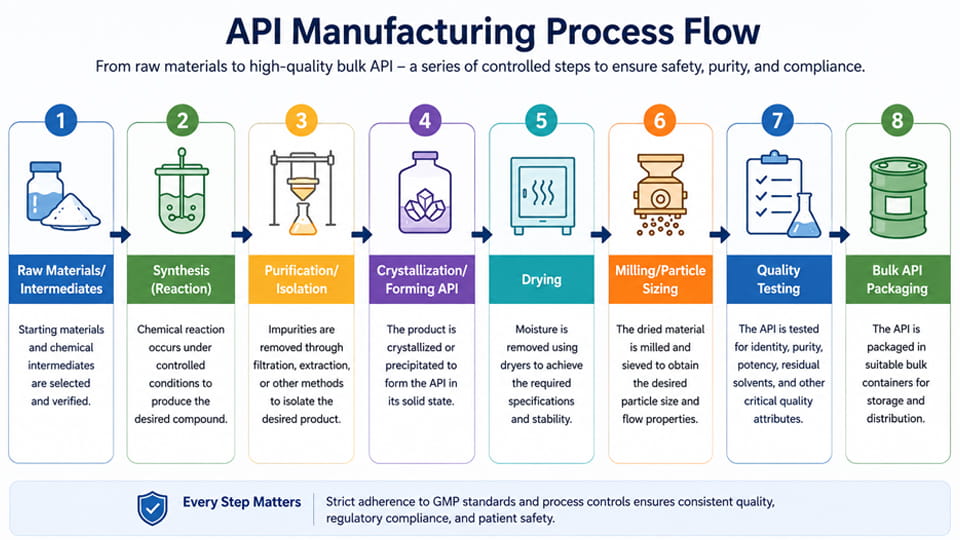
- วัตถุดิบ/ตัวกลาง: กระบวนการนี้เริ่มต้นด้วยการสร้างองค์ประกอบทางเคมีดิบ (มักมีรีเอเจนต์ที่มีจำหน่ายในท้องตลาดหรือสารตัวกลางที่สังเคราะห์ไว้ก่อนหน้านี้). แต่ละขั้นตอนทางเคมีต้องใช้ส่วนผสมคุณภาพสูงเพื่อหลีกเลี่ยงสิ่งสกปรก.
- สังเคราะห์ (ปฏิกิริยา): นักเคมีทำปฏิกิริยาเคมีอย่างน้อยหนึ่งปฏิกิริยา (เครื่องปฏิกรณ์แบบแบตช์หรือเครื่องปฏิกรณ์แบบไหล) เพื่อสร้างโมเลกุล API. ซึ่งอาจเกี่ยวข้องกับหลายขั้นตอน (เช่น, เพิ่มกลุ่มการทำงาน, แบบฟอร์มวงแหวน). สภาวะของปฏิกิริยา (ตัวทำละลาย, อุณหภูมิ, ตัวเร่งปฏิกิริยา) ถูกควบคุมอย่างเข้มงวด. สำหรับ API เทคโนโลยีชีวภาพ, ขั้นตอนนี้จะถูกแทนที่ด้วยการหมักทางชีวภาพ/การเพาะเลี้ยงเซลล์เพื่อสร้างโมเลกุล.
- การทำให้บริสุทธิ์/การแยก: หลังจากแต่ละขั้นตอนของปฏิกิริยา, ส่วนผสมได้รับการทำให้บริสุทธิ์เพื่อกำจัดผลพลอยได้ที่ไม่พึงประสงค์. เทคนิครวมถึงการสกัดของเหลว-ของเหลว, การกรอง, โครมาโตกราฟี, การตกผลึก, ฯลฯ. เป้าหมายคือเพื่อแยกตัวกลางหรือ API ในรูปแบบที่บริสุทธิ์.
- API การตกผลึก/การขึ้นรูป: API สุดท้ายมักจะตกผลึกจากโซลูชัน. สิ่งนี้จะสร้างผลึกทึบของ API ด้วยความหลากหลายและความบริสุทธิ์ที่กำหนด. การตกผลึกช่วยเพิ่มความบริสุทธิ์ (สิ่งเจือปนยังคงอยู่ในสารละลาย) และให้คุณสมบัติทางกายภาพที่ดี.
- การทำให้แห้ง: ผลึกเปียกจะถูกทำให้แห้ง (E.G. ในเครื่องอบผ้า) เพื่อขจัดตัวทำละลายออกให้หมด. ตัวทำละลายตกค้างต้องเป็นไปตามขีดจำกัดด้านกฎระเบียบ.
- การสี/ขนาดอนุภาค: API แบบแห้งอาจถูกบดหรือกรองเพื่อให้ได้ขนาดอนุภาคที่ต้องการ. ขนาดอนุภาคส่งผลต่อวิธีที่ API ผสมและละลายในผลิตภัณฑ์ยาขั้นสุดท้าย.
- การทดสอบคุณภาพ: ในแต่ละก้าวสำคัญ (โดยเฉพาะ API สุดท้าย), วัสดุได้รับการทดสอบเอกลักษณ์, ความบริสุทธิ์, ความแรง, และตัวทำละลายตกค้าง. วิธีการวิเคราะห์ (HPLC, สเปกโทรสโกปี, ฯลฯ) ยืนยันว่าตรงตามข้อกำหนด.
- บรรจุภัณฑ์ API จำนวนมาก: ผง API สุดท้ายถูกบรรจุในการควบคุม (มักจะเฉื่อย) ภาชนะเพื่อป้องกันความชื้น, แสงสว่าง, และการปนเปื้อน. สิ่งเหล่านี้มีป้ายกำกับและจัดเก็บตาม ข้อกำหนด GMP.
แต่ละขั้นตอนจะต้องปฏิบัติตาม CGMP (แนวทางปฏิบัติที่ดีในการผลิตในปัจจุบัน) กฎ. ตัวอย่างเช่น, ฉัน Q7 (และใคร GMP) ให้คำแนะนำเฉพาะสำหรับ API. ตามที่ WHO ตั้งข้อสังเกต, “ความเข้มงวดของ GMP ในการผลิต API ควรเพิ่มขึ้นเมื่อกระบวนการดำเนินตั้งแต่ขั้นตอน API ขั้นต้นไปจนถึงขั้นตอนสุดท้าย, การทำให้บริสุทธิ์, และบรรจุภัณฑ์”. ในทางปฏิบัตินี่หมายถึงเอกสารที่เข้มงวด, การทำความสะอาดอุปกรณ์ที่ผ่านการตรวจสอบแล้ว, บุคลากรที่มีคุณสมบัติเหมาะสม, และการควบคุมในกระบวนการ.
เทคโนโลยีการวิเคราะห์กระบวนการ (กทท) และระบบอัตโนมัติถูกนำมาใช้มากขึ้นในการติดตามปฏิกิริยาแบบเรียลไทม์. อุตสาหกรรมก็กำลังก้าวไปสู่ การผลิตอย่างต่อเนื่อง โดยที่วัตถุดิบจะไหลอย่างต่อเนื่องผ่านขั้นตอนการทำปฏิกิริยาและการทำให้บริสุทธิ์ แทนที่จะดำเนินการเป็นชุด. กระบวนการต่อเนื่องสามารถปรับปรุงประสิทธิภาพและความสม่ำเสมอได้, แม้ว่าการผลิตเป็นชุดจะยังคงเป็นเรื่องปกติ.
โดยสรุป: การผลิต API เป็นสายการผลิตที่มีการควบคุมสูง, ตั้งแต่สารเคมีดิบหรือการเพาะเลี้ยงเซลล์ไปจนถึงสารออกฤทธิ์สำเร็จรูป, ด้วยประตูคุณภาพที่เข้มงวดในแต่ละขั้นตอน. ผลลัพธ์ที่ได้คือ API จำนวนมากที่ปลอดภัย, มีพลัง, และพร้อมปรุงเป็นยา.
การควบคุมคุณภาพ API และข้อกำหนด GMP
คุณภาพเป็นสิ่งสำคัญยิ่งในการผลิต API. หน่วยงานกำกับดูแล (อย, EMA, ฯลฯ) กำหนดให้ผู้ผลิต API ปฏิบัติตามอย่างเคร่งครัด แนวทางปฏิบัติที่ดีในการผลิต (GMP) เพื่อให้แน่ใจว่าแต่ละชุดมีคุณสมบัติตรงตามมาตรฐานคุณภาพ. สำหรับ API, ICH Q7 เป็นแนวทางสำคัญที่ระบุ GMP เฉพาะสำหรับส่วนผสมออกฤทธิ์. ประเด็นสำคัญบางประการ ได้แก่:
- เอกสาร & การตรวจสอบ: กระบวนการทั้งหมดจะต้องมีการจัดทำเป็นเอกสารอย่างดี. ขั้นตอนที่สำคัญ (เหมือนการตกผลึกครั้งสุดท้าย) ได้รับการตรวจสอบเพื่อแสดงว่าพวกเขาสร้าง API ที่มีคุณภาพเป็นที่ยอมรับได้อย่างน่าเชื่อถือ. สิ่งอำนวยความสะดวกและอุปกรณ์จะต้องมีคุณสมบัติ.
- การทดสอบความบริสุทธิ์และเอกลักษณ์: API ทุกชุดได้รับการทดสอบเพื่อตรวจสอบความถูกต้อง ตัวตน (มันเป็นสารเคมีที่ถูกต้อง), ความบริสุทธิ์ (ปราศจากสิ่งเจือปนหรือผลพลอยได้ที่ไม่พึงประสงค์), และ ความแรง (ความเข้มข้นที่ถูกต้องของโมเลกุลที่ใช้งานอยู่). ตัวอย่างเช่น, การทดสอบ HPLC หรือสเปกโตรเมทรีใช้เพื่อตรวจจับสิ่งเจือปนปริมาณเล็กน้อย. การปนเปื้อนใดๆ อาจเป็นอันตรายต่อผลิตภัณฑ์ยาได้.
- การควบคุมสิ่งเจือปน: ผู้ผลิตกำหนดขีดจำกัดที่ยอมรับได้สำหรับสิ่งสกปรกบางอย่าง (โลหะหนัก, ตัวทำละลายตกค้าง, วัสดุตั้งต้นที่ไม่ทำปฏิกิริยา). หากระดับเกินเกณฑ์, แบทช์ถูกปฏิเสธหรือประมวลผลใหม่.
- การทดสอบความเสถียร: API จะต้องคงความเสถียรระหว่างการจัดเก็บข้อมูล. การศึกษาความเสถียร (E.G. เร่งการแก่ชรา) ตรวจสอบให้แน่ใจว่า API จะไม่ลดระดับหรือสูญเสียประสิทธิภาพเมื่อเวลาผ่านไป. การบรรจุหีบห่อ (ดูหัวข้อถัดไป) ก็สะท้อนสิ่งนี้เช่นกัน.
- การตรวจสอบย้อนกลับ: วัตถุดิบและทุกขั้นตอนของกระบวนการต้องสามารถตรวจสอบย้อนกลับได้. หากมีปัญหาใดๆเกิดขึ้นกับตัวยาขั้นสุดท้าย, ผู้ผลิตจะต้องติดตามย้อนกลับผ่านบันทึกการผลิต.
- การปฏิบัติตามมาตรฐาน cGMP: หน่วยงานตรวจสอบโรงงาน API บ่อยครั้ง. ดังที่แหล่งข่าวแห่งหนึ่งสรุปไว้: หลักเกณฑ์ GMP มุ่งหวังเพื่อให้แน่ใจว่ายาแต่ละชนิดมี "ส่วนผสมและความแข็งแรงตามที่อ้างว่ามี". ซึ่งหมายความว่าผู้ผลิต API จะต้องพิสูจน์ว่า API ของตนมีความสอดคล้องกันในทุกชุด.
- การยื่นตามกฎระเบียบ: ผู้ผลิต API ส่งข้อมูลเกี่ยวกับกระบวนการของตน (เคมี, การผลิต, การควบคุม – ส่วน CMC ในการใช้ยา) ถึงเจ้าหน้าที่. การเปลี่ยนแปลงใดๆ ในกระบวนการ (E.G. สิ่งเจือปนใหม่) อาจต้องได้รับการอนุมัติอีกครั้ง.
องค์การอนามัยโลก (WHO) คำแนะนำเน้นย้ำว่า ความเข้มงวดเพิ่มขึ้นในขั้นตอนสุดท้าย. ตัวกลางในช่วงต้นอาจมีการควบคุมน้อยลง, แต่เมื่อกำหนดเนื้อหาเริ่มต้นของ API แล้ว (จุดที่ GMP ใช้), ขั้นตอนต่อมา (การตกผลึก, การทำให้บริสุทธิ์ขั้นสุดท้าย) ถือเป็นมาตรฐานสูงสุด.
ในระยะสั้น, การควบคุมคุณภาพ API นั้นครอบคลุม: “การประกันคุณภาพเป็นส่วนสำคัญของการผลิต API” และ GMP ครอบคลุมทุกอย่าง “ตั้งแต่การจัดหาวัตถุดิบไปจนถึงการทดสอบผลิตภัณฑ์ขั้นสุดท้าย”. สิ่งนี้ทำให้มั่นใจได้ว่า API สุดท้ายจะปลอดภัยและมีประสิทธิภาพเมื่อถูกแปลงเป็นยา.
API เทียบกับ. ผลิตภัณฑ์ยาสำเร็จรูป (เอฟพีพี)
สิ่งสำคัญคือต้องแยกแยะ API จาก แบบฟอร์มขนาดยาที่เสร็จแล้ว (สุดท้าย, ยาที่พร้อมสำหรับผู้ป่วย).
- API (ส่วนผสมที่ใช้งานอยู่ / สารเสพติด): สารเคมีหรือสารชีวภาพที่ออกฤทธิ์บริสุทธิ์, มักอยู่ในรูปแบบผงหรือสารละลาย. ได้ผ่านขั้นตอนการผลิตทั้งหมดจนถึงการทดสอบความบริสุทธิ์. มันคือ ไม่ มักจะมอบให้ผู้ป่วยเอง (ยกเว้นในรูปแบบ IV), แต่รวมกับสารปรุงแต่งและแปรรูปต่อไป.
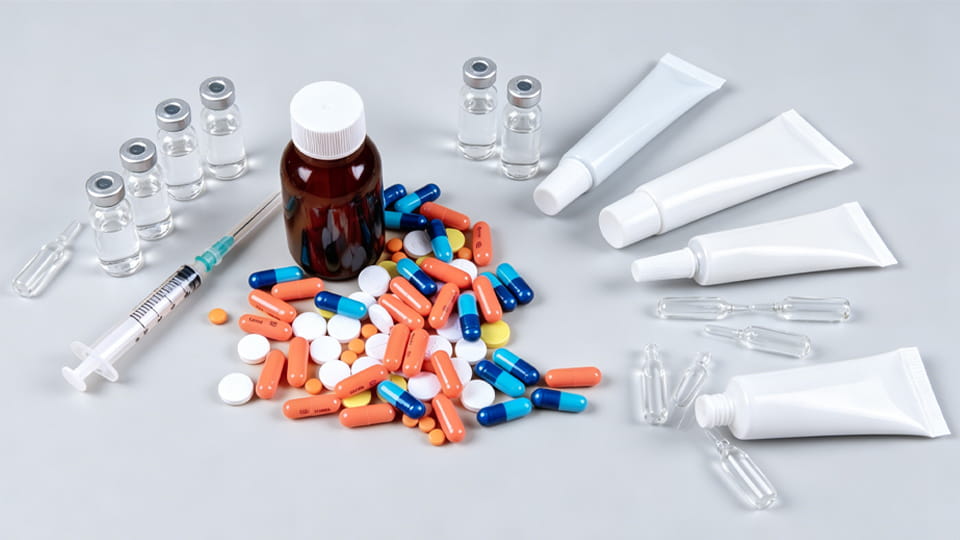
- ผลิตภัณฑ์ยาสำเร็จรูป (เอฟพีพี, หรือแบบฟอร์มการให้ยาสำเร็จรูป): นี่คือยาตัวสุดท้ายบนชั้นวาง – แท็บเล็ต, แคปซูล, น้ำเชื่อม, การฉีดยา, ฯลฯ. มันมี API บวก สารเพิ่มปริมาณที่จำเป็นทั้งหมด, บรรจุเพื่อการบริหาร.
FPP เป็นผู้กำหนด วิธีส่งมอบ API ในทางปฏิบัติ. ตามคำจำกัดความของกฎระเบียบ, รูปแบบขนาดยาที่เสร็จแล้วคือ “แบบสุดท้าย”, ผลิตภัณฑ์ยาที่ผลิตเต็มที่ซึ่งมีสารตัวยาและสารเพิ่มปริมาณที่จำเป็นทั้งหมด, และประมวลผลเป็นรูปแบบการจัดส่งเฉพาะ, เช่นแท็บเล็ต, แคปซูล, การฉีด, ฯลฯ”.
ความแตกต่างที่สำคัญ:
- รูปร่าง: โดยทั่วไปแล้ว API จะเป็นผงหรือเม็ดดิบ; FPP คือแท็บเล็ต, แคปซูล, ของเหลว, ฯลฯ.
- ใช้: API ได้รับการจัดการในการผลิต; FPP ถูกใช้โดยผู้ให้บริการด้านการดูแลสุขภาพและผู้ป่วย.
- การติดฉลาก: FPP จะต้องมีการติดฉลากแบบเต็ม (ปริมาณ, คำแนะนำ, หมดอายุ, ฯลฯ); คอนเทนเนอร์ API มีป้ายกำกับทางเทคนิคสำหรับการใช้งานด้านการผลิต.
- ระเบียบข้อบังคับ: FPP ต้องการหลักฐานความปลอดภัย/ประสิทธิภาพในผู้ป่วย; API ต้องเป็นไปตามข้อกำหนดด้านความบริสุทธิ์/ประสิทธิภาพ. ทั้งสองรายการต้องเป็นไปตามข้อกำหนด cGMP, แต่ FPP ยังเผชิญกับอุปสรรคด้านกฎระเบียบเพิ่มเติมอีกด้วย (การทดลองทางคลินิก, การอนุมัติการตลาด).
| เวที |
คำจำกัดความ/ตัวอย่าง |
| API (สารเสพติด) |
ตัวยาออกฤทธิ์ด้วยตัวยาเอง (E.G. ผงเจนทามิซิน). |
| ผลิตภัณฑ์ยาสำเร็จรูป |
แบบฟอร์มยา (E.G. การฉีดเจนทามิซิน) ที่มี API บวกสารเพิ่มปริมาณ. |
ดังนั้น, API คือ ตัวแทนยาหลัก, ในขณะที่ผลิตภัณฑ์สำเร็จรูปเป็นวิธีการกำหนดสูตรและบรรจุหีบห่อเพื่อใช้งาน. การผลิตที่ดีทำให้มั่นใจได้ว่า “ผลิตภัณฑ์ยาสำเร็จรูปมี API ที่ถูกต้องและมีความแรงที่เหมาะสม”. อุปกรณ์บรรจุภัณฑ์เช่น แท็บเล็ตกด หรือ ฟิลเลอร์แคปซูล จากนั้นแปลง API–excipient blends เป็น FPP, ซึ่งถูกปิดผนึกไว้ในถุงพุพอง, ขวด, หรือภาชนะอื่นๆ.
ความท้าทายในการผลิต API
ผู้ผลิต API เผชิญกับความท้าทายในอุตสาหกรรมหลายประการ:
- การปฏิบัติตามกฎระเบียบ: API ต้องเป็นไปตามกฎ GMP (E.G. ฉัน Q7, คำแนะนำของ FDA/EMA). การปฏิบัติตามกฎระเบียบที่เปลี่ยนแปลงไปทั่วโลกอาจมีความซับซ้อน. การไม่ปฏิบัติตามอาจทำให้การผลิตต้องหยุดชะงักหรือนำไปสู่การถูกปรับ.
- การควบคุมคุณภาพ: การรักษาคุณภาพให้สม่ำเสมอในแต่ละชุดเป็นเรื่องยาก. ความแปรผันเล็กน้อยของวัตถุดิบหรือสภาวะของปฏิกิริยาอาจทำให้เกิดสิ่งเจือปนได้. จำเป็นต้องมีการทดสอบเชิงวิเคราะห์ที่แข็งแกร่งในทุกขั้นตอน.
- ต้นทุนการผลิตสูง: การสร้างและดำเนินการสิ่งอำนวยความสะดวก GMP (ห้องสะอาด, เครื่องปฏิกรณ์, การบำบัดของเสีย) มีราคาแพง. ต้นทุนรวมถึงเงินลงทุน, พนักงานที่ผ่านการฝึกอบรม, และอุปกรณ์พิเศษ (E.G. ตัวกรองสำหรับ API ที่ผ่านการฆ่าเชื้อ). การลดต้นทุนในขณะที่รักษาคุณภาพไว้นั้นเป็นการต่อสู้ดิ้นรนอย่างต่อเนื่อง.
- ความเสี่ยงด้านห่วงโซ่อุปทาน: API จำนวนมากอาศัยซัพพลายเออร์ในบางประเทศ (E.G. วัตถุดิบจากเอเชีย). ประเด็นทางภูมิรัฐศาสตร์, ภัยพิบัติทางธรรมชาติหรือโรคระบาดสามารถรบกวนอุปทานได้. ในช่วงไม่กี่ปีมานี้ เราได้เห็นการขาดแคลนวัตถุดิบเริ่มต้นที่สำคัญ, ทำให้ต้องตัดสินใจจัดหาวัตถุดิบอย่างเร่งด่วน.
- HPAPI (API ที่มีศักยภาพสูง): API ชุดย่อยที่กำลังเติบโต (E.G. ยารักษามะเร็ง, ฮอร์โมน) มีศักยภาพมาก. อาจเป็นพิษได้เมื่อได้รับในปริมาณที่ต่ำมาก, ก่อให้เกิดความเสี่ยงด้านสุขภาพแก่คนงาน. จำเป็นต้องมีการผลิต HPAPI การบรรจุแบบพิเศษ: ตัวแยกปิด, กรองไอเสีย, ชุดป้องกัน, ฯลฯ. ในฐานะที่เป็นบันทึกการทบทวนอุตสาหกรรมฉบับหนึ่ง, HPAPI นำเสนอ "การจัดการกับความท้าทายและต้องมีการลงทุนจำนวนมากในการกักกันแบบพิเศษ" เพื่อปกป้องพนักงานและสิ่งแวดล้อม. ในความเป็นจริง, ปัจจุบันบริษัทหลายแห่งสร้างโรงงาน HPAPI โดยเฉพาะด้วยต้นทุน "มากกว่าโรงงาน GMP ทั่วไปหลายล้าน". จำเป็นต้องมีอุปกรณ์ เช่น เครื่องปฏิกรณ์อัตโนมัติและโรงงานเฉพาะทาง.
- กฎระเบียบด้านสิ่งแวดล้อม: การผลิต API สามารถสร้างของเสียอันตรายและใช้ตัวทำละลายได้. กฎหมายสิ่งแวดล้อมที่เข้มงวดมากขึ้นผลักดันให้ผู้ผลิตหันมาใช้ “เคมีสีเขียว” (การรีไซเคิลตัวทำละลาย, กระบวนการเร่งปฏิกิริยา) หรือลงทุนในการบำบัดของเสีย, เพิ่มความซับซ้อนและต้นทุน.
- การแข่งขันทางการตลาด: การหมดอายุของสิทธิบัตรนำไปสู่การแข่งขันทางการค้าทั่วไป, ทำให้ราคา API ลดลง. ผู้สร้าง API จึงต้องมีประสิทธิภาพเพื่อรักษาผลกำไร. ในทางกลับกัน, การพัฒนา ใหม่ API สำหรับยาเชิงนวัตกรรมมีความเสี่ยงและมีค่าใช้จ่ายสูง.
- ต้นทุนวัตถุดิบ: ราคามีความผันผวน (E.G. สำหรับสารเคมีหรือรีเอเจนต์เทคโนโลยีชีวภาพ) สามารถบีบระยะขอบได้.
ความท้าทายเหล่านี้หมายความว่าผู้ผลิต API จำเป็นต้องลงทุนอย่างต่อเนื่องในการเพิ่มประสิทธิภาพกระบวนการ, การปฏิบัติตาม, และความยืดหยุ่น. ดังที่แหล่งข่าวแห่งหนึ่งแนะนำ, การใช้ระบบคุณภาพที่แข็งแกร่งและการติดตามกฎระเบียบให้ทันสมัยอยู่เสมอถือเป็นกลยุทธ์สำคัญ. โดยสรุป: รักษาคุณภาพสูงภายใต้แรงกดดันด้านต้นทุน, และมั่นใจในความปลอดภัย (โดยเฉพาะอย่างยิ่งสำหรับ HPAPI), เป็นอุปสรรคสำคัญในการผลิต API สมัยใหม่.
เหตุใดบรรจุภัณฑ์จึงมีความสำคัญสำหรับยาที่ใช้ API
หลังจากสร้าง API และกำหนดสูตรเป็นยาแล้ว, บรรจุภัณฑ์ กลายเป็นสิ่งสำคัญในการปกป้องคุณภาพของผลิตภัณฑ์และรับประกันความปลอดภัยของผู้ป่วย. บรรจุภัณฑ์ที่ใช้งานได้จริงช่วยปกป้องยา (และ API ของมัน) จากปัจจัยด้านสิ่งแวดล้อมและช่วยให้มั่นใจว่าได้รับปริมาณที่ถูกต้อง. ข้อควรพิจารณาเกี่ยวกับบรรจุภัณฑ์ที่สำคัญ ได้แก่:
- การปกป้องความมั่นคง: API มากมาย (และผลิตภัณฑ์ยาขั้นสุดท้าย) มีความอ่อนไหวต่อ ความชื้น, ออกซิเจน, แสงสว่าง, และอุณหภูมิ. ตัวอย่างเช่น, ความชื้นอาจทำให้ API ลดลงหรือแท็บเล็ตละลายก่อนเวลาอันควร. เพื่อต่อสู้กับสิ่งนี้, แผงตุ่มมักใช้ฟิล์มกั้นสูง. แพ็คแผลพุพอง ให้การป้องกันแบบหน่วยปริมาณ: แต่ละเม็ด/แคปซูลถูกปิดผนึกไว้ในกระเป๋าของตัวเอง, ป้องกันความชื้นและการปนเปื้อน. ขวด (ขวด) บรรจุภัณฑ์ การใช้งาน สารดูดความชื้น และขวดทึบแสงหรือสีเหลืองอำพันเพื่อป้องกันความชื้นและแสง. ในระยะสั้น, คอนเทนเนอร์และวัสดุที่เหมาะสมจะรักษาประสิทธิภาพของ API ไว้จนกว่าจะใช้งาน.
- การป้องกันการปนเปื้อน: ปิดผนึก, บรรจุภัณฑ์ ช่วยให้มั่นใจได้ว่ายายังคงปลอดเชื้อหรือไม่มีการปนเปื้อน. สำหรับ API แบบฉีดได้, ใช้ขวดปลอดเชื้อ. แม้แต่ยาเม็ด, ต้องปิดผนึกแผลพุพองและขวดเพื่อป้องกันการปลอมแปลง.
- การจ่ายยาที่แม่นยำ: แผลพุพองและชุดยาสามารถบังคับใช้ได้ ปริมาณหน่วย (หนึ่งเม็ดต่อช่อง). ขวดนมมักมีฝาปิดกันเด็ก (ข้อกำหนดด้านกฎระเบียบ). เครื่องจักรบรรจุ/ปิดฝาที่แม่นยำ (เหมือนการนับสายการบรรจุขวดของ Jinlu) ช่วยให้มั่นใจได้ถึงการนับที่ถูกต้องและการปิดที่ปลอดภัย. ยาที่นับผิดหรือหมวกหลวมอาจนำไปสู่ปัญหาได้- หรือการให้ยาเกินขนาด.
- การปฏิบัติตาม & ข้อมูล: บรรจุภัณฑ์ให้ข้อมูลการติดฉลากและข้อมูลผู้ป่วย (คำแนะนำ, วันหมดอายุ). เครื่องติดฉลากใช้ฉลากที่แม่นยำได้อย่างรวดเร็ว. การติดฉลากที่ชัดเจนช่วยให้ผู้ป่วยรับประทานยาได้อย่างถูกต้อง.
- การปฏิบัติตามกฎระเบียบ: บรรจุภัณฑ์เองก็ได้รับการควบคุม (วัสดุเกรดยา, มาตรฐานความสะอาด). อุปกรณ์สำหรับทำพุพอง, การบรรจุขวด, การติดฉลาก, และการบรรจุหีบห่อต้องเป็นไปตามการออกแบบสุขอนามัย GMP และได้รับการตรวจสอบความถูกต้อง. เช่น, เครื่องบรรจุตุ่มความเร็วสูงจะต้องปิดผนึกฟิล์มได้อย่างน่าเชื่อถือโดยไม่มีการรั่วซึม.
ในทางปฏิบัติ, เครื่องจักรบรรจุภัณฑ์ยา เชื่อมโยงโดยตรงกับ API. ตัวอย่างเช่น:
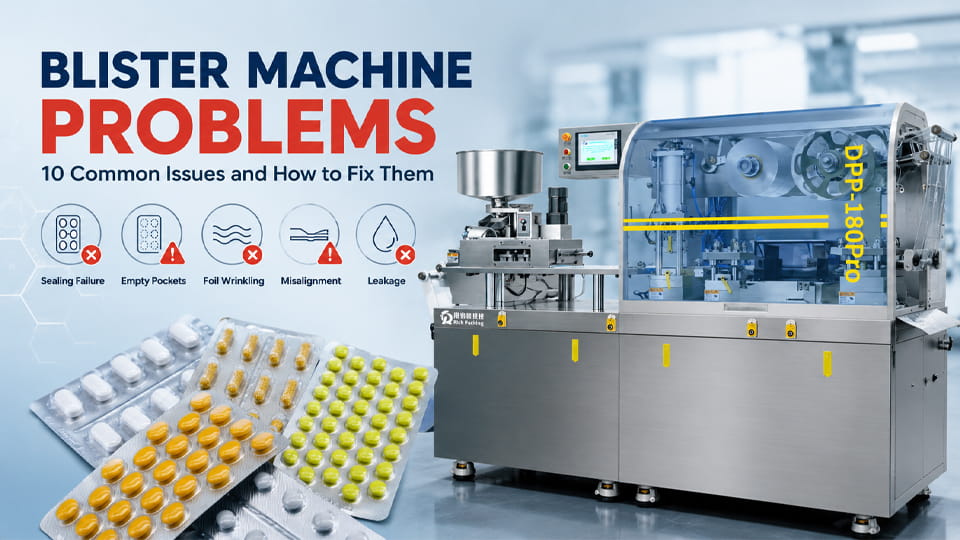
- เครื่องบรรจุพุพอง (เหมือนของจินลู่ [ดีพีพี-180โปร]) รูปร่าง, เติม, และปิดผนึกเม็ดหรือแคปซูลลงในตุ่ม. ตุ่มแต่ละอันจะปกป้อง API จากความชื้น/อากาศ.
- เส้นบรรจุและปิดฝาขวด (เช่น สายการบรรจุขวดนับ JL-16C) เติมยาเม็ดลงในขวดโดยอัตโนมัติ, การใส่ซองดูดความชื้น, ปิดฝาและปิดผนึก. สิ่งเหล่านี้จะปกป้อง API จากความชื้นและรักษาปริมาณยาให้คงที่.
- เครื่องแพ็คกล่อง (เครื่องบรรจุกล่องของ Jinlu) จากนั้นบรรจุตุ่มหรือขวดลงในกล่องที่มีป้ายกำกับ. กล่องกระดาษแข็งเพิ่มสิ่งกีดขวางพิเศษ, มีคำแนะนำที่พิมพ์ออกมา, และขนาดยาแบบกลุ่มเพื่อให้หยิบจับได้ง่าย.
- เครื่องติดฉลาก (เหมือน เครื่องติดฉลาก JL-TBJ-120) ติดฉลากที่สอดคล้องกับขวดหรือกล่อง, การระบุตัวตนและการตรวจสอบย้อนกลับของยา.
ด้วยการบูรณาการระบบเหล่านี้, โรงงานผลิตยารับรองว่า API (สารออกฤทธิ์) ถึงมือคนไข้ตรงตามที่ตั้งใจไว้. บรรจุภัณฑ์ยาที่ใช้งานได้จริง (แผลพุพอง, ขวด, การปิดที่เห็นได้ชัด) คือ “ส่วนสำคัญ” ในการปกป้องผลิตภัณฑ์จากความชื้น, ออกซิเจน, เบาและเพื่อความปลอดภัยของผู้ป่วย.
สำหรับบริษัทเช่น จินลู่บรรจุ, นี่หมายถึงการนำเสนอโซลูชั่นบรรจุภัณฑ์ที่สมบูรณ์ซึ่งตรงกับความต้องการของ API: เช่น, เครื่องบรรจุหีบห่อและสายนับจำนวนที่ได้รับการปรับให้เหมาะสมสำหรับยาเม็ดที่ไวต่อความชื้น, หรือกล่องบรรจุที่ออกแบบมาเพื่อจัดการกับขวดน้ำเชื่อมหรือขวดเล็ก. ในระยะสั้น, เครื่องจักรบรรจุภัณฑ์คือจุดเชื่อมต่อสุดท้ายในห่วงโซ่ ที่ทำให้ API มีเสถียรภาพและมีประสิทธิภาพจนถึงจุดใช้งาน.
บทสรุป
ที่ API (ส่วนผสมทางเภสัชกรรมที่ใช้งานอยู่) เป็นองค์ประกอบหลักที่ทำให้ยามีผลการรักษา. ตั้งแต่การผลิตและการควบคุมคุณภาพไปจนถึงการปฏิบัติตามกฎระเบียบและบรรจุภัณฑ์ขั้นสุดท้าย, การปกป้องความสมบูรณ์ของ API ถือเป็นสิ่งสำคัญในการรับรองความปลอดภัยของผลิตภัณฑ์, ประสิทธิภาพ, และความสม่ำเสมอตลอดห่วงโซ่อุปทานยา.
เนื่องจากผลิตภัณฑ์ยามีความก้าวหน้ามากขึ้น, อุปกรณ์บรรจุภัณฑ์ที่เชื่อถือได้มีบทบาทสำคัญในการปกป้องยาที่ใช้ API มากขึ้น. ไม่ว่าคุณจะบรรจุยาเม็ด, แคปซูล, ผง, หรือเป็นเม็ด, โซลูชันบรรจุภัณฑ์ที่เหมาะสมช่วยรักษาคุณภาพของผลิตภัณฑ์ในขณะเดียวกันก็ปรับปรุงประสิทธิภาพการผลิตและการปฏิบัติตามข้อกำหนด.
กำลังมองหาอุปกรณ์บรรจุภัณฑ์ยาที่เชื่อถือได้? Jinlu Packing ให้บริการเครื่องบรรจุตุ่ม, นับเส้น, ระบบเติมขวด, เครื่องเขียนกล่อง, และเสร็จสมบูรณ์ โซลูชั่นบรรจุภัณฑ์แบบครบวงจร ปรับให้เข้ากับความต้องการของผู้ผลิตยาสมัยใหม่. ติดต่อทีมงานของเรา เพื่อหารือเกี่ยวกับโครงการบรรจุภัณฑ์ครั้งต่อไปของคุณ.
คำถามที่พบบ่อยเกี่ยวกับ API ในเภสัชกรรม
API ย่อมาจากอะไรในด้านเภสัชกรรม?
API ย่อมาจาก Active Pharmaceutical Ingredient. เป็นสารออกฤทธิ์ในยาที่ให้ผลการรักษา. ตัวอย่างเช่น, API ในยาเม็ดไข้หวัดใหญ่จะเป็นสารประกอบที่ต่อสู้กับไวรัสหรือบรรเทาอาการ.
API เหมือนกับยาหรือไม่?
API ถือเป็นแกนหลักของยา, แต่โดยตัวมันเองแล้วมันไม่ใช่รูปแบบยาขั้นสุดท้าย. ยาตัวสุดท้าย (ยา, แคปซูล, การฉีด) เรียกว่าผลิตภัณฑ์สำเร็จรูปหรือรูปแบบขนาดยาสำเร็จรูป. API จะต้องได้รับการกำหนดสูตรด้วยสารเพิ่มปริมาณ (ส่วนผสมที่ไม่ใช้งาน) และนำมาแปรรูปเป็นขนาดยาก่อนที่จะกลายเป็นยาที่ผู้ป่วยรับประทานจริง.
ความแตกต่างระหว่าง API และสารเพิ่มปริมาณคืออะไร?
API เป็นสารออกฤทธิ์ที่ทำให้เกิดผลทางเภสัชวิทยาตามที่ต้องการ. สารเพิ่มปริมาณเป็นส่วนผสมที่ไม่ใช้งานซึ่งไม่ส่งผลต่อโรค แต่ช่วยกำหนดสูตรยา (เพิ่มจำนวนมาก, มีเสถียรภาพ, ช่วยการดูดซึม, ฯลฯ). ในระยะสั้น: API มีกิจกรรมการรักษา; สารเพิ่มปริมาณไม่ได้.
API ผลิตขึ้นมาอย่างไร?
โดยทั่วไปการผลิต API เกี่ยวข้องกับการสังเคราะห์ทางเคมี (หรือการหมักทางชีวภาพ), ตามด้วยการทำให้บริสุทธิ์, การตกผลึก, การทำให้แห้ง, และการกัด. แต่ละขั้นตอนได้รับการควบคุมอย่างเข้มงวดเพื่อให้มั่นใจถึงความบริสุทธิ์และประสิทธิภาพ. กระบวนการนี้เป็นไปตามหลักปฏิบัติที่ดีในการผลิต (GMP). การไหลแบบง่ายคือ: วัตถุดิบ → (สารเคมีหรือชีวภาพ) การสังเคราะห์ → การทำให้บริสุทธิ์ → การตกผลึก → การอบแห้ง → การสี → การทดสอบคุณภาพ → บรรจุภัณฑ์ (ตามภาพประกอบข้างต้น).
เหตุใดคุณภาพ API จึงมีความสำคัญ?
คุณภาพของ API มีความสำคัญเนื่องจากส่งผลโดยตรงต่อความปลอดภัยและประสิทธิผลของยา. API ที่ไม่บริสุทธิ์หรือเสื่อมคุณภาพอาจทำให้เกิดผลเสียหรือประสิทธิภาพลดลง. หน่วยงานกำกับดูแลกำหนดให้มีการทดสอบคุณภาพอย่างเข้มงวดของ API (ตัวตน, ความบริสุทธิ์, ความแรง) ภายใต้หลักเกณฑ์ GMP. API คุณภาพสูงช่วยป้องกันการเรียกคืนยาและรับรองว่ายาแต่ละขนาดได้ผลตามที่ตั้งใจไว้.
ตัวอย่างของ API คืออะไร?
ตัวอย่างของ API ได้แก่ สารยาทั่วไป เช่น พาราเซตามอล (อะเซตามิโนเฟน), ไอบูโพรเฟน, แอมม็อกซิซิลลิน, อะทอร์วาสแตติน, และเมตฟอร์มิน. ในด้านชีววิทยา, ตัวอย่างคืออินซูลิน, เฮอร์เซปติน (ทราสตูซูแมบ), โมโนโคลนอลแอนติบอดี, และวัคซีน. โดยพื้นฐานแล้ว, ชื่อของ API มักจะเป็นชื่อยาสามัญ.
ข้อกำหนด GMP สำหรับการผลิต API คืออะไร?
GMP สำหรับ API (E.G. ฉัน Q7) ต้องการสิ่งอำนวยความสะดวกที่ผ่านการรับรอง, กระบวนการตรวจสอบแล้ว, พนักงานที่ผ่านการฝึกอบรม, และการทดสอบที่ครอบคลุม. ผู้ผลิตจะต้องควบคุมการปนเปื้อนข้าม, จัดทำเอกสารทุกขั้นตอน, และทดสอบแต่ละชุดเพื่อความบริสุทธิ์และความแรง. WHO ตั้งข้อสังเกตว่าความเข้มงวดของ GMP เพิ่มขึ้นจนถึงขั้นตอนสุดท้ายของ API, ทำให้มั่นใจว่าแต่ละชุดมีคุณสมบัติตรงตามมาตรฐานเอกลักษณ์และคุณภาพ.
เหตุใดบรรจุภัณฑ์ยาจึงมีความสำคัญสำหรับ API?
บรรจุภัณฑ์ที่เหมาะสมช่วยปกป้อง API ในยาขั้นสุดท้ายจากปัจจัยด้านสิ่งแวดล้อม. เช่น, บรรจุภัณฑ์พลาสติกและระบบขวดช่วยกักความชื้นและออกซิเจน, รักษาเสถียรภาพของ API. อุปกรณ์บรรจุภัณฑ์ (เครื่องพุพอง, ฟิลเลอร์, หมวกแก๊ป, ผู้ติดฉลาก, กล่องกระดาษ) ช่วยให้มั่นใจได้ว่ายาที่มี API ได้รับการจ่ายยาอย่างถูกต้อง, ปิดผนึก, และติดป้ายกำกับ, การรักษาความปลอดภัยและการปฏิบัติตามกฎระเบียบ.
HPAPI คืออะไร และเหตุใดจึงมีความสำคัญ?
HPAPI (API ที่มีศักยภาพสูง) เป็นสารประกอบที่มีฤทธิ์รุนแรงมาก (มักเป็นมะเร็งหรือยาฮอร์โมน) ที่เป็นพิษในปริมาณที่ต่ำมาก. พวกเขาต้องการอุปกรณ์การประมวลผลพิเศษ (ตัวแยก, ระบบปิด) เพื่อปกป้องคนงาน. ความต้องการ HPAPI เพิ่มขึ้นด้วยการบำบัดแบบตรงเป้าหมาย, ดังนั้นผู้ผลิตจึงต้องลงทุนในการบรรจุและความเชี่ยวชาญ.
API เกี่ยวข้องกับรูปแบบยาที่เสร็จแล้วอย่างไร?
API ถูกรวมเข้ากับส่วนเติมเนื้อยาและผ่านการประมวลผลเพื่อสร้างรูปแบบยาขั้นสุดท้าย. ตัวอย่างเช่น, แท็บเล็ตถูกสร้างขึ้นโดยการผสม API กับฟิลเลอร์และบีบอัด. จากนั้นผลิตภัณฑ์สำเร็จรูปจะส่ง API ให้กับผู้ป่วยในวิธีที่สะดวก. เครื่องจักรบรรจุภัณฑ์ (ตั้งแต่การบรรจุจนถึงการติดฉลาก) เชื่อมโยงการผลิต API เข้ากับยาพร้อมบริโภค.
อ้างอิง:
1.ข้อ 7 คำแนะนำวิธีปฏิบัติที่ดีในการผลิตสำหรับส่วนผสมทางเภสัชกรรมที่ออกฤทธิ์สำหรับอุตสาหกรรม — เรา. สำนักงานคณะกรรมการอาหารและยา
2.หลักเกณฑ์ด้านคุณภาพ: สารออกฤทธิ์ — สำนักงานยาแห่งยุโรป
3.ส่วนผสมทางเภสัชกรรมที่ใช้งานอยู่ — WHO
4.ตส 957 – ภาคผนวก 2: แนวปฏิบัติที่ดีในการผลิตส่วนผสมทางเภสัชกรรมที่ดีของ WHO (สารยาจำนวนมาก) - WHO