เหตุใดบรรจุภัณฑ์ที่ยั่งยืนจึงมีความสำคัญในยา
อุตสาหกรรมยาพึ่งพาพลาสติกแบบใช้ครั้งเดียวและบรรจุภัณฑ์ที่ซับซ้อนเป็นอย่างมาก. ทำให้เกิดของเสียจำนวนมหาศาล: บันทึกการวิเคราะห์หนึ่งรายการ “อุตสาหกรรมยาที่รับผิดชอบ 300 ขยะพลาสติกนับล้านตันต่อปี, ครึ่งหนึ่งเป็นพลาสติกแบบใช้ครั้งเดียวทิ้ง”. ส่วนใหญ่จบลงที่หลุมฝังกลบหรือสิ่งแวดล้อม. เกินกว่ามลภาวะ, แรงกดดันเพิ่มขึ้นจากหน่วยงานกำกับดูแลและลูกค้า. รัฐบาลทั่วโลก (สหภาพยุโรป, สหราชอาณาจักร, ฯลฯ) กำลังมีกฎเกณฑ์ที่เข้มงวด: ตัวอย่างเช่น, กฎระเบียบบรรจุภัณฑ์และขยะบรรจุภัณฑ์ใหม่ของสหภาพยุโรป (PPWR) จะกำหนดให้อัตราการรีไซเคิลและวัสดุรีไซเคิลสูงขึ้นโดย 2030. ความรับผิดชอบเพิ่มเติมของผู้ผลิต (อีพีอาร์) กฎหมายกำลังจะมาซึ่งบังคับให้ผู้ผลิตยาติดตามและชำระค่ากำจัดบรรจุภัณฑ์. ในเวลาเดียวกัน, ลูกค้าตั้งแต่ผู้ค้าปลีกไปจนถึงผู้ป่วย คาดหวังแนวทางปฏิบัติที่คำนึงถึงสิ่งแวดล้อมมากขึ้น. ในระยะสั้น, บรรจุภัณฑ์ที่ยั่งยืน (โดยใช้การรีไซเคิล, รีไซเคิลได้, หรือวัสดุและการออกแบบที่ย่อยสลายได้ทางชีวภาพ) ไม่เป็นทางเลือกอีกต่อไป. ถือเป็นลำดับความสำคัญของ ESG ซึ่งช่วยลดต้นทุนวัสดุและเพิ่มชื่อเสียงของแบรนด์ด้วย.
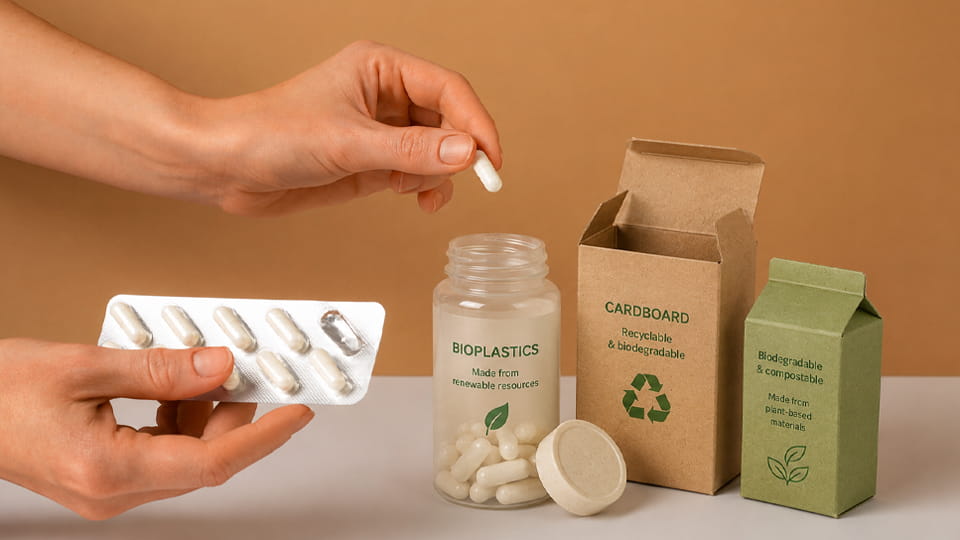
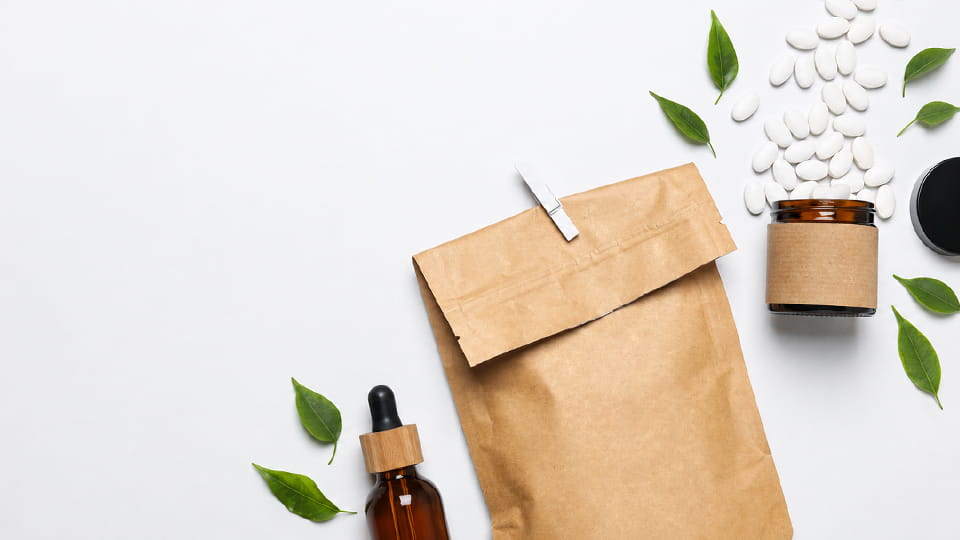
รูป: การเลือกวัสดุสีเขียว (E.G. กระดาษแข็ง, พลาสติกชีวภาพ) สำหรับตุ่ม, แพ็คขวดและกล่องสามารถลดปริมาณขยะพร้อมทั้งปกป้องผลิตภัณฑ์.
บรรจุภัณฑ์ยาที่ยั่งยืนคืออะไร?
“บรรจุภัณฑ์ที่ยั่งยืน” หมายถึงการออกแบบและวัสดุที่ลดผลกระทบต่อสิ่งแวดล้อม ในขณะเดียวกันก็รักษาผลิตภัณฑ์ให้ปลอดภัยและเป็นไปตามข้อกำหนด. ในทางปฏิบัติ, สิ่งนี้มักเกี่ยวข้องกับ:
- วัสดุรีไซเคิลได้ (พลาสติกวัสดุเดียวเช่น PP หรือ PET, กระดาษและกระดาษแข็ง, กระจก, อลูมิเนียม)
- วัสดุที่ย่อยสลายได้/ย่อยสลายได้ (พลาสติกชีวภาพเช่น PLA, ถาดเยื่อกระดาษขึ้นรูปได้, ภาพยนตร์ที่ทำจากสาหร่ายทะเล)
- การลดน้ำหนักและการเพิ่มประสิทธิภาพ (ลดบรรจุภัณฑ์ส่วนเกิน, ใช้ภาชนะที่ปลอดภัยที่เล็กที่สุด)
- การออกแบบที่ใช้ซ้ำได้ (ในกรณีที่จำกัด, ขวดที่ส่งคืนได้หรือชุดอุปกรณ์รีฟิล)
สำหรับเภสัช, ความปลอดภัยเป็นสิ่งสำคัญยิ่ง, บรรจุภัณฑ์ที่ยั่งยืนมาก ต้อง ยังคงพบกัน มาตรฐานความปลอดภัย cGMP (การต่อต้านเด็ก, คุณสมบัติอุปสรรค, ความเป็นหมัน). กล่าวอีกนัยหนึ่ง, บรรจุภัณฑ์ต้องปกป้องตัวยาก่อน, ในขณะที่แง่มุมเชิงนิเวศน์มีอยู่ในตัว. เมื่อทำถูกแล้ว, บรรจุภัณฑ์ที่เป็นมิตรต่อสิ่งแวดล้อมยังช่วยปรับปรุงผลกระทบต่อสิ่งแวดล้อมของบริษัทอีกด้วย, ยืนปฏิบัติตาม, และภาพลักษณ์ของแบรนด์. ตัวอย่างเช่น, GSK และเมอร์คได้ตั้งเป้าหมายการเป็นกลางทางคาร์บอนในวงกว้าง (GSK ตั้งเป้าคาร์บอนเป็นกลางโดย 2050) และกำลังลดการปล่อยก๊าซบรรจุภัณฑ์อย่างจริงจัง.
แนวโน้มอุตสาหกรรมที่สำคัญสะท้อนถึงการเปลี่ยนแปลงนี้: บริษัทต่างๆ หันมาใช้ไฟแช็กกันมากขึ้น, โครงสร้างวัสดุเดี่ยวและวัสดุรีไซเคิล. รายงานฉบับหนึ่งตั้งข้อสังเกตว่าโดย 2025 แบรนด์ยาจะถือว่าบรรจุภัณฑ์ที่ยั่งยืนเป็น "ความจำเป็นทางการค้า,” ให้ความสำคัญกับการออกแบบที่เบากว่า, แพ็ควัสดุเดียว, และเส้นใยรีไซเคิลเพื่อให้บรรลุเป้าหมาย. (บรรจุภัณฑ์ที่ยั่งยืนในฐานะตลาดคาดว่าจะเติบโตประมาณ 15% ต่อปี 2034.) อย่างไรก็ตาม, ตัวเลือกสีเขียวบางตัวเลือกยังคงท้าทาย: บรรจุภัณฑ์ยาที่ย่อยสลายได้ทางชีวภาพอย่างแท้จริงยังคงเป็นช่องทางเฉพาะ, เนื่องจากความล่าช้าของประสิทธิภาพและการรีไซเคิลโครงสร้างพื้นฐาน. การเคลื่อนตัวโดยรวมมุ่งสู่ก เศรษฐกิจแบบวงกลม แนวทาง – การออกแบบบรรจุภัณฑ์เพื่อให้วัสดุไหลกลับเข้าสู่ห่วงโซ่อุปทาน (รีไซเคิลหรือนำกลับมาใช้ใหม่) แทนที่จะจบลงแบบสูญเปล่า.
วัสดุบรรจุภัณฑ์ที่เป็นมิตรต่อสิ่งแวดล้อม (ตารางเปรียบเทียบ)
การเลือกวัสดุที่เหมาะสมถือเป็นพื้นฐาน. ตารางด้านล่างเปรียบเทียบตัวเลือกทั่วไป:
| วัสดุ / พิมพ์ |
ตัวอย่างการใช้งาน |
รีไซเคิลได้ / ย่อยสลายได้? |
หมายเหตุ |
| กระดาษ / กระดาษแข็ง |
กล่อง, กล่องจัดส่ง, IFU |
รีไซเคิลได้ (อย่างกว้างขวาง) และย่อยสลายได้ |
ทดแทนได้, มีน้ำหนักเบา, เหมาะสำหรับบรรจุภัณฑ์รอง. |
| กระจก |
ขวด, ขวด (E.G. ฉีด, ทิงเจอร์) |
รีไซเคิลได้ (ไม่มีที่สิ้นสุด) |
เฉื่อยและนำกลับมาใช้ใหม่ได้; มีน้ำหนักมากแต่สามารถรีไซเคิลได้ไม่รู้จบโดยไม่มีการสูญเสียคุณภาพ. |
| อลูมิเนียม |
ชั้นฟอยล์ตุ่ม, กระป๋องสเปรย์, เครื่องช่วยหายใจ |
รีไซเคิลได้ (อัตราสูง) |
อุปสรรคที่ดีเยี่ยม; มีน้ำหนักเบา; อลูมิเนียมรีไซเคิลช่วยลดการใช้พลังงานได้อย่างมากเมื่อเทียบกับ. ใหม่. |
| สัตว์เลี้ยง / พลาสติกเอชดีพีอี |
ขวด, หมวกแก๊ป, น้ำเชื่อม, เจล |
รีไซเคิลได้อย่างกว้างขวาง (โดยเฉพาะ PET); พีซีอาร์ (หลังผู้บริโภค) มีให้เลือกหลากหลาย |
ทนทานและน้ำหนักเบา; ผลิตจากวัสดุรีไซเคิล (E.G. ขวดพีพีอาร์พีอีที). |
| พีพี / ฟิล์มวัสดุเดี่ยว |
แพ็คแผลพุพอง, หลอดพลาสติก |
รีไซเคิลได้หากเป็นวัสดุเดียว (พีพี, วิชาพลศึกษา) |
การเปลี่ยนพลาสติกพุพองจาก PVC/ฟอยล์เป็นฟิล์ม PP หรือ PE ทำให้การรีไซเคิลง่ายขึ้น. |
| พลาสติกแข็ง |
หมวก, การปิด, ถาด |
รีไซเคิลได้ในลำธารเฉพาะ (ถ้าเรียงลำดับ) |
การออกแบบที่ใช้ซ้ำได้ (E.G. ขวดปั๊มรีฟิล) สามารถลดขยะได้อีก. |
| พลาสติกชีวภาพที่ย่อยสลายได้ทางชีวภาพ (ปลา) |
ถาด Eco-IFU, กระเป๋า |
ย่อยสลายได้ (ทางอุตสาหกรรม) |
ทำจากแป้งข้าวโพดหรืออ้อย; หลีกเลี่ยงพลาสติกเชื้อเพลิงฟอสซิล แต่ต้องการสิ่งอำนวยความสะดวกในการทำปุ๋ยหมักที่เหมาะสม. |
| ไฟเบอร์ขึ้นรูป (เยื่อกระดาษ) |
ถาดป้องกัน, เม็ดมีด |
ย่อยสลายได้ / รีไซเคิลได้ (เส้นใยกระดาษ) |
ผลิตจากกระดาษรีไซเคิล; ย่อยสลายได้อย่างสมบูรณ์และมักใช้สำหรับถาดพิเศษและส่วนแทรกที่ปลอดภัยต่ออาหาร. |
| อลู-อลู vs. แผลพุพองกระดาษ |
บัตรตุ่ม |
Alu-Alu ไม่สามารถรีไซเคิลได้; กระดาษ = รีไซเคิล/ย่อยสลายได้ |
ห่อยาหลายห่อเคลือบด้วยฟอยล์. การออกแบบใหม่ใช้แผ่นรองตุ่มกระดาษ (หรือระบบ PP-Al รีไซเคิลได้). |
การใช้วัสดุเหล่านี้อย่างชาญฉลาดสามารถลดปริมาณขยะได้อย่างมาก. ตัวอย่างเช่น, แทนที่ แพ็คตุ่มพีวีซี ด้วย PP ชั้นเดียวหรือแม้แต่อลูมิเนียมสามารถช่วยลดน้ำหนักและรีไซเคิลได้เต็มรูปแบบ. บริษัทบางแห่งกำลังทดลองใช้ฟิล์มสาหร่ายหรือแป้งสำหรับการห่อรอง. บริษัทยาหลายแห่งใช้อยู่แล้ว เนื้อหารีไซเคิล – เช่น. PCR PET สำหรับขวดหรือกระดาษแข็งรีไซเคิลสำหรับกล่องขนส่ง – เพื่อปิดวง.
เพื่อแสดงให้เห็นว่าบรรจุภัณฑ์ยาผสมวัสดุในปัจจุบันอย่างไร, พิจารณารายละเอียดทั่วโลกโดยประมาณตามวัสดุ:
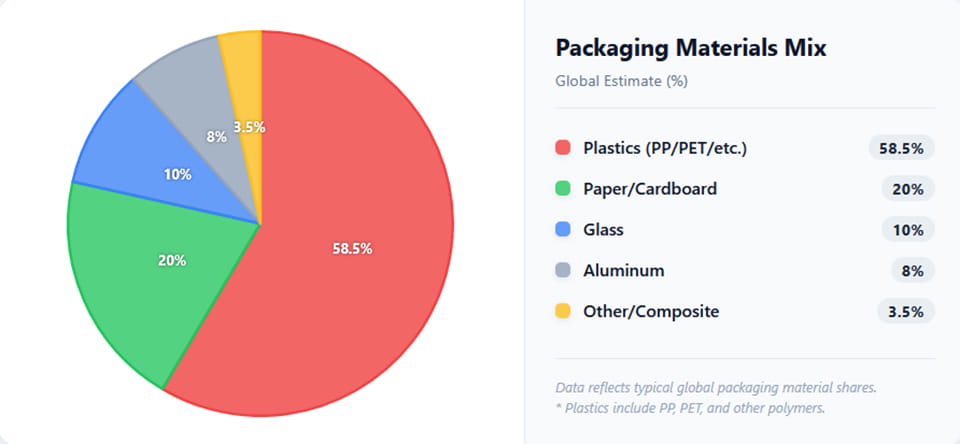
(รูป: ส่วนแบ่งวัสดุบรรจุภัณฑ์ทั่วโลกคร่าวๆ; พลาสติกครอบงำ (~60%), กระดาษ ~20%. สิ่งนี้เน้นย้ำว่าการเปลี่ยนแม้แต่เศษเสี้ยวของพลาสติกนั้นด้วยวัสดุที่นำกลับมาใช้ใหม่หรือรีไซเคิลสามารถส่งผลกระทบอย่างมากได้อย่างไร)
โซลูชันเครื่องจักรบรรจุภัณฑ์ที่ยั่งยืน
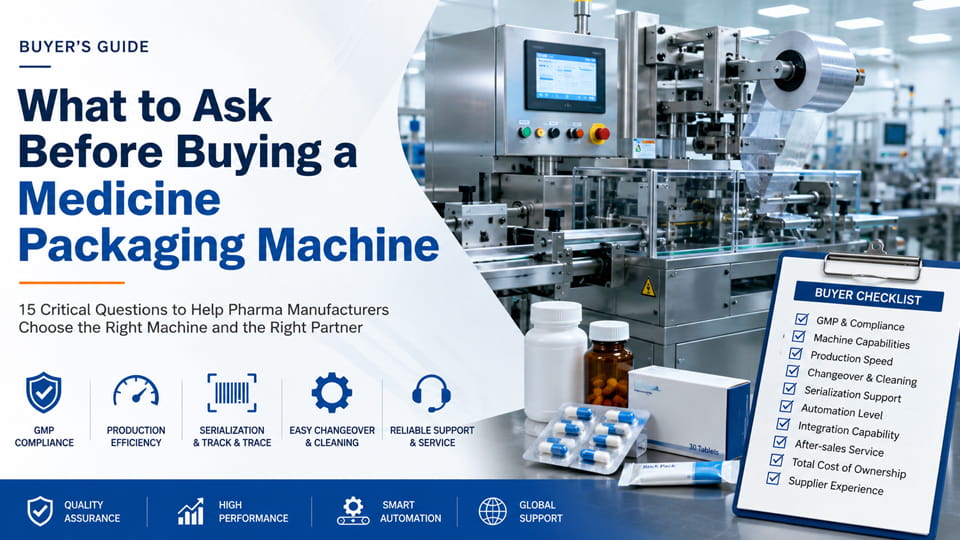
เกินกว่าวัสดุ, เครื่องจักรบรรจุภัณฑ์ มีบทบาทสำคัญในความยั่งยืน. เครื่องจักรขั้นสูงสามารถจัดการกับวัสดุเชิงนิเวศใหม่และลดของเสียได้อย่างแม่นยำ. ประเภทคีย์ได้แก่:
- เครื่องบรรจุตุ่ม: เครื่องตุ่มที่ทันสมัย (เหมือนของจินลู่ เครื่องบรรจุตุ่ม) ถูกออกแบบให้ใช้ไฟแช็ก, ภาพยนตร์วัสดุเดียว. อุปกรณ์บางอย่างสามารถทำงานบนฟิล์มนิเวศได้ (ลามิเนต PP/PE ปลอดสาร PVC) หรือแม้แต่แผลพุพองที่มีกระดาษหนุน. เครื่องจักรที่มีประสิทธิภาพสูงยังช่วยลดเศษซากด้วยการลงทะเบียนที่แม่นยำ. ตัวอย่างเช่น, การเปลี่ยนจากตุ่ม PVC-อลูมิเนียมผสมไปเป็นตุ่ม PP เท่านั้น ไม่เพียงแต่ทำให้บรรจุภัณฑ์สามารถรีไซเคิลได้เท่านั้น, แต่เครื่องจักรของเราสามารถนับและปิดผนึกโดยมีของเสีย ≤0.1%.
- เครื่องบรรจุกล่อง: ผู้บรรจุกล่องบรรจุผลิตภัณฑ์ลงในกล่องหรือกล่องพับ. โดยใช้ขนาดกะทัดรัด, กล่องขนาดเหมาะสม, กล่องกระดาษช่วยลดการใช้กระดาษลูกฟูกส่วนเกิน. Jinlu เครื่องบรรจุกล่อง สามารถจัดการกับกระดาษแข็งรีไซเคิลและสร้างกล่องที่รัดแน่นเพื่อลดพื้นที่อากาศ. ระบบอัตโนมัติทำให้แน่ใจได้ว่ามีการใช้วัสดุในปริมาณที่แน่นอนเท่านั้น (E.G. กล่องที่มีขนาดแทบไม่ใหญ่เพียงพอ), ลดปริมาณและต้นทุนการขนส่ง.
- ซอง / เครื่องแพ็คสติ๊ก: เครื่องซองหรือซองแบบแท่งผลิตซองฟอยล์/กระดาษขนาดเดียวขนาดเล็ก (E.G. สำหรับผง, ยา OTC). สิ่งเหล่านี้มักใช้กระดาษหรือลามิเนตฟิล์มบาง. โดยปรับขนาดซองให้เหมาะสมและใช้ฟิล์มนิเวศ (เช่น PE รีไซเคิลหรือ PLA ที่ย่อยสลายได้ทางชีวภาพ), ของเสียถูกตัด. ของเรา เครื่องบรรจุซอง สามารถเรียกใช้สต็อคซองที่ใช้กระดาษได้ 100% ความสามารถในการย่อยสลายทางชีวภาพ. การจ่ายที่แม่นยำยังช่วยป้องกันการเติมมากเกินไป, ลดการสูญเสียผลิตภัณฑ์.
- แคปซูล & เครื่องนับ/บรรจุแท็บเล็ต: อุปกรณ์นับและบรรจุที่แม่นยำ (ดู เครื่องนับแท็บเล็ต/แคปซูล และ เครื่องบรรจุแคปซูล) ลดการรั่วไหลและการเติมมากเกินไป. สำหรับผลิตภัณฑ์แคปซูล, ฟิลเลอร์ความเร็วสูงจาก 12,000 ถึง 468,000 หมวก/ชม (ชุดอัตโนมัติ Jinlu) รับรองการแบ่งส่วนที่แน่นอนโดยมีของเสียน้อยที่สุด. การคัดแยกที่น้อยลงหมายถึงการสิ้นเปลืองวัสดุและผลิตภัณฑ์น้อยลง. การออกแบบตามหลักสรีระศาสตร์ยังช่วยเร่งการเปลี่ยนแปลงอีกด้วย (เพื่อทำความสะอาดเครื่องจักรอย่างรวดเร็วเมื่อเปลี่ยนสูตรหรือใช้งานบรรจุภัณฑ์, ลดเวลาหยุดทำงาน).
- การบรรจุขวด & การจับ: สำหรับขวดยาหรือของเหลว, เส้นเติม/ปิดฝาอัตโนมัติช่วยให้มั่นใจในการจ่ายสารที่แม่นยำมาก. ตัวอย่างเช่น, ภาชนะใส่นมแม่แบบไร้สุญญากาศหรือน้ำเชื่อมที่มีความหนืดสูงสามารถเติมได้โดยแทบไม่มีน้ำล้น, ซึ่งช่วยประหยัดทั้งผลิตภัณฑ์และวัสดุขวดพลาสติก. แม้ว่ายาบางชนิดจะไม่ใช้ขวดก็ตาม, เครื่องนับแคปซูลสามารถผูกเข้ากับเครื่องบรรจุขวดเพื่อนับจำนวนที่แน่นอนได้, ลดพื้นที่ว่างให้เหลือน้อยที่สุด.
- บรรจุถุงสำเร็จรูป (VFFS/HFFS): สำหรับถุงสำเร็จรูปหรือแพ็คแบบแท่ง (ถุงซิปล็อค, แพ็คของ), ที่ เครื่องบรรจุกระเป๋า Premade จับกระดาษตั้งได้- หรือถุงฟิล์มชีวภาพ. เครื่องเหล่านี้เลือก, เติม, และปิดผนึกด้วยความแม่นยำของเซอร์โว (ความแม่นยำ ±0.4%), เปิดใช้งานได้อย่างแน่นหนา, ซีลไร้รอยรั่วบนฟิล์มถุงรีไซเคิล. เครื่องชั่งน้ำหนักแบบรวมและเครื่องบรรจุถุงสามารถบรรจุสารโภชนาการหรือผงที่มีส่วนผสมหลากหลายได้โดยไม่ส่วนเกิน.

รูป: เครื่องจักรทันสมัยบรรจุเม็ดยาและผงได้อย่างมีประสิทธิภาพ. กล่องกระดาษแข็งหรือเส้นตุ่มสามารถวิ่งด้วยกระดาษแข็งรีไซเคิลและฟิล์ม PP เพื่อลดการใช้พลาสติก.
ในระยะสั้น, บรรจุภัณฑ์ที่ยั่งยืนมักจะควบคู่ไปกับระบบอัตโนมัติสมัยใหม่. เครื่องจักรที่มีประสิทธิภาพช่วยให้คุณใช้วัสดุที่เป็นมิตรต่อสิ่งแวดล้อม (กระดาษ, โมโนโพลีเมอร์, พลาสติกชีวภาพ) โดยไม่ทำให้การผลิตช้าลง. พวกเขายังเปิดใช้งาน การเพิ่มประสิทธิภาพบรรจุภัณฑ์ – การสร้างกล่องที่ขับเคลื่อนด้วยซอฟต์แวร์, การลดการเติมช่องว่างให้เหลือน้อยที่สุด, การทำกล่องตามความต้องการ – ซึ่งช่วยลดการใช้วัสดุ. (ตัวอย่างเช่น, ระบบกล่องขนาดเหมาะสมสามารถลดการใช้กระดาษลูกฟูกได้ประมาณ 20%) ขณะนี้ผู้จำหน่ายอุปกรณ์เสนอตัวเลือก "สีเขียว" เช่น หมึกรีไซเคิลเกรดสำหรับอาหาร และการปิดผนึกแบบไร้กาว. เมื่อซื้อเครื่องจักร, มองหาคุณสมบัติเช่นการควบคุมเซอร์โว, การเปลี่ยนแปลงเครื่องมืออย่างรวดเร็ว, และโหมดลดของเสีย. Jinlu Packing's เต็มบรรทัด (พุพอง, การบรรจุกล่อง, ซอง, แคปซูล, การนับ, ฯลฯ) ได้รับการออกแบบทางวิศวกรรมให้มีความเร็วสูง, การทำงานที่มีความแม่นยำสูงซึ่งส่งผลให้มีเศษเหลือน้อยลงและเป็นมิตรกับการรีไซเคิลมากขึ้น. เช่น, ฟิลเลอร์แคปซูลของ Jinlu ใช้กลไกที่ได้รับการจดสิทธิบัตรเพื่อลดการปัดฝุ่นหรือการเติมมากเกินไป, ลดการสูญเสียผง.
กฎระเบียบ & ข้อควรพิจารณาในการปฏิบัติตามข้อกำหนด
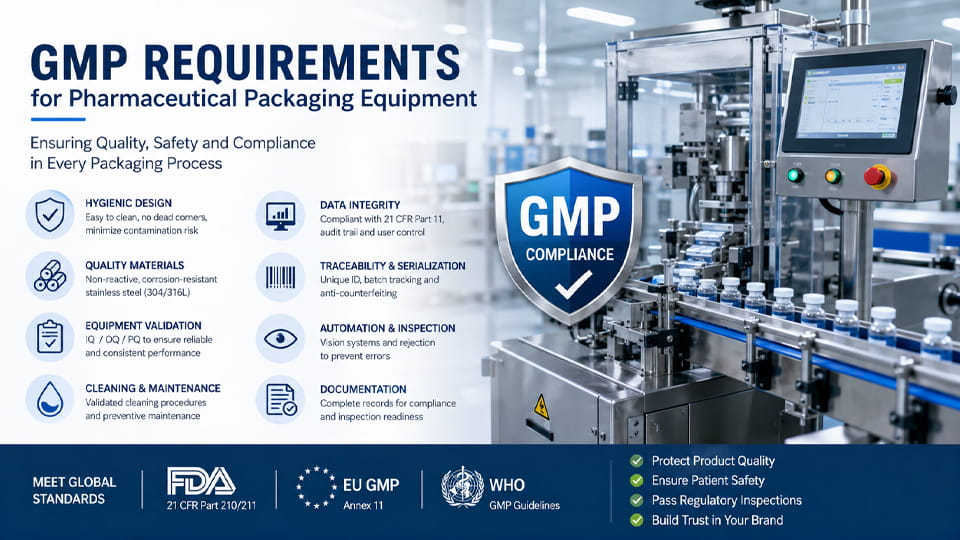
บรรจุภัณฑ์ยาต้องสร้างความสมดุลให้กับความยั่งยืน กับ กฎระเบียบที่เข้มงวด. ประเด็นสำคัญ:
- ความปลอดภัยก่อน: การเปลี่ยนแปลงวัสดุหรือการออกแบบใดๆ จะต้องเป็นไปตามมาตรฐาน cGMP และเภสัชตำรับ. (ตัวอย่างเช่น, 21 ส่วนซีเอฟอาร์ 211 กำหนดให้ระบบปิดภาชนะไม่ทำปฏิกิริยากับยา) วัสดุใหม่จำเป็นต้องทดสอบความเข้ากันได้ของผลิตภัณฑ์, ความมั่นคง, และการต่อต้านเด็กหากจำเป็น. หน่วยงานกำกับดูแลเช่น FDA หรือ EMA ไม่ได้ห้ามการใช้วัสดุเฉพาะใดๆ ทั้งสิ้น, แต่พวกเขาต้องการหลักฐานความปลอดภัย. จัดทำเอกสารเสมอว่าวัสดุที่เป็นมิตรต่อสิ่งแวดล้อมตรงกับสิ่งกีดขวางและความสะอาดของต้นฉบับ.
- กฎหมาย EPR และของเสียจากบรรจุภัณฑ์: ปัจจุบันหลายภูมิภาคกำหนดให้ผู้ผลิตต้องจ่ายค่าจัดการขยะ. ในสหราชอาณาจักร, การรายงานข้อมูลบรรจุภัณฑ์ภาคบังคับมีผลบังคับใช้แล้ว, และค่าธรรมเนียม EPR (ขึ้นอยู่กับน้ำหนักและความสามารถในการรีไซเคิลของแต่ละแพ็ค) กำลังมา. ในสหภาพยุโรป, กฎระเบียบบรรจุภัณฑ์และของเสียจากบรรจุภัณฑ์ใหม่ (PPWR) จะบังคับให้บรรจุภัณฑ์ทั้งหมดบรรลุเป้าหมายการรีไซเคิลที่เข้มงวดและเป้าหมายเนื้อหารีไซเคิล. บริษัทจะต้องติดตามทุกองค์ประกอบ (ฉลาก, แผลพุพอง, เม็ดมีด) และค่อยๆ ออกแบบลามิเนตหลายชั้นที่ไม่สามารถรีไซเคิลได้ให้เป็นโครงสร้างวัสดุเดียว. ซึ่งหมายความว่าบริษัทยาจะได้รับแรงจูงใจให้หลีกเลี่ยงตุ่ม PVC/ฟอยล์, ใช้หมึกสูตรน้ำ, และเพิ่มคำแนะนำในการรีไซเคิลที่ชัดเจนบนฉลากกล่อง.
- เป้าหมายเศรษฐกิจหมุนเวียน: เพิ่มมากขึ้น, กลยุทธ์ด้านเภสัชกรรม ESG ต้องการการออกแบบแบบวงกลม. ตัวอย่างเช่น, คำแนะนำที่ชัดเจน (E.G. “ถอดหมวกออก, ขวดเปล่า, ล้าง & รีไซเคิล”) อาจจำเป็นต้องใช้บนบรรจุภัณฑ์ OTC เร็วๆ นี้. บางประเทศอาจกำหนดให้ต้องเข้าร่วมโครงการรับยาคืน (เพื่อป้องกันไม่ให้ขยะยาเสพติดไปฝังกลบ) เป็นส่วนหนึ่งของ EPR. บริษัทควรจัดเตรียมโดยให้แน่ใจว่าผู้บริโภคและผู้รีไซเคิลสามารถคัดแยกบรรจุภัณฑ์ของตนได้ง่าย.
- ความแปรปรวนระหว่างประเทศ: ตลาดที่ต่างกันอาจมีกฎเกณฑ์ที่แตกต่างกัน (แม้แต่ในสหภาพยุโรป, แต่ละประเทศจัดการขยะแตกต่างกัน). ผู้ผลิตข้ามชาติควรตั้งเป้าที่จะบรรลุหรือเกินกว่ามาตรฐานระดับภูมิภาคที่เข้มงวดที่สุด. ในทางปฏิบัติ, นี่หมายถึงการออกแบบบรรจุภัณฑ์ใหม่ทั้งหมดเพื่อให้สามารถรีไซเคิลได้ทั้งหมด (หรือนำมาใช้ซ้ำได้) จากวัน 1.
ข่าวดีก็คือว่ามาตรการด้านความยั่งยืนหลายประการยังสอดคล้องกับการปฏิบัติตามกฎระเบียบและความปลอดภัยของผู้บริโภคอีกด้วย. เช่น, การใช้วัสดุรีไซเคิลมักจะหมายถึงการเติมสารเติมแต่งโพลีเมอร์ที่ไม่รู้จักน้อยลง, และการออกแบบวัสดุเดียวช่วยขจัดกาวหรือลามิเนตที่เป็นอันตราย. นิ่ง, สวิตช์วัสดุใด ๆ ควรได้รับการตรวจสอบความถูกต้อง (ดูหัวข้อถัดไป) เพื่อให้แน่ใจว่าความสมบูรณ์ของผลิตภัณฑ์จะไม่ถูกทำลาย.
ประโยชน์, ต้นทุนและ ROI ของ Going Green
การใช้บรรจุภัณฑ์ที่ยั่งยืนนำมาซึ่งทั้งสองอย่าง ด้านสิ่งแวดล้อม และ ธุรกิจ ประโยชน์:
- รอยเท้าทางสิ่งแวดล้อมที่เล็กลง: โดยใช้วัสดุรีไซเคิลหรือน้ำหนักเบา, ผู้ผลิตลดการใช้พลังงานและการใช้ทรัพยากรดิบ. บรรจุภัณฑ์ที่ย่อยสลายได้หรือย่อยสลายได้ช่วยลดปริมาณการฝังกลบ. ขั้นตอนทั้งหมดเหล่านี้ช่วยลดรอยเท้าคาร์บอนของคุณ.
- ลดต้นทุนระยะยาว: การออกแบบที่ยั่งยืนมักใช้วัสดุน้อยลง (E.G. กล่องขนาดที่เหมาะสม, ฟิล์มบางลง) ซึ่งช่วยประหยัดต้นทุนวัตถุดิบ. พัสดุที่เบากว่าจะช่วยลดค่าใช้จ่ายในการขนส่งและการใช้เชื้อเพลิง. บริษัทต่างๆ ยังประหยัดค่าธรรมเนียมการกำจัดขยะอีกด้วย. เมื่อเวลาผ่านไป, การประหยัดเหล่านี้อาจมีมากกว่าการลงทุนเริ่มแรกในอุปกรณ์หรือวัสดุใหม่. ตัวอย่างเช่น, ซอฟต์แวร์บรรจุภัณฑ์ที่มีขนาดเหมาะสมสามารถลดต้นทุนกระดาษลูกฟูกและการขนส่งได้ประมาณ 20%. สินค้าเสียน้อยลง (ต้องขอบคุณฟิลเลอร์/เคาน์เตอร์ที่มีความแม่นยำ) ยังช่วยเพิ่มผลผลิตอีกด้วย.
- ข้อดีของกฎระเบียบและแบรนด์: การปฏิบัติตามหรือเกินกว่ากฎระเบียบใหม่จะหลีกเลี่ยงการเสียค่าปรับและข้อจำกัดด้านตลาด. บรรจุภัณฑ์สีเขียวก็สามารถเป็นจุดขายได้เช่นกัน: จากการสำรวจพบว่าลูกค้าจำนวนมากชอบแบรนด์ที่มีบรรจุภัณฑ์ที่เป็นมิตรต่อสิ่งแวดล้อม (การศึกษาบางชิ้นแนะนำว่า ~70% ยินดีจ่ายมากขึ้น) – โดยเฉพาะอย่างยิ่งในกลุ่มสุขภาพของผู้บริโภคและกลุ่ม OTC. แนวทางที่ยั่งยืนสร้างความไว้วางใจให้กับผู้ค้าปลีกและผู้ป่วย.
- ความแตกต่างในการแข่งขันและนวัตกรรม: การเป็นมิตรกับสิ่งแวดล้อมมักจะขับเคลื่อนนวัตกรรม. การเพิ่มประสิทธิภาพบรรจุภัณฑ์ (ซอฟต์แวร์แอลซีเอ, การออกแบบที่ชาญฉลาด) และวัสดุใหม่สามารถสร้างโซลูชันที่เป็นเอกสิทธิ์ได้. นอกจากนี้ยังเตรียมบริษัทของคุณให้พร้อมสำหรับกฎระเบียบในอนาคตอีกด้วย (สหภาพยุโรป 2030 เป้าหมาย, ฯลฯ) นำหน้าคู่แข่ง. บวก, บริษัทยาขนาดใหญ่หลายแห่งเผยแพร่แนวคิดริเริ่มด้านความยั่งยืนของตน ดังนั้นการอยู่เบื้องหลังอาจส่งผลเสียต่อชื่อเสียงได้.
- การปฏิบัติตาม ESG: สำหรับบริษัทมหาชนหรือผู้จัดหากลุ่มการดูแลสุขภาพขนาดใหญ่, บรรจุภัณฑ์ที่ยั่งยืนถือเป็นตัวชี้วัด ESG ที่สำคัญ. การสาธิตการลดการใช้พลาสติกหรือความสามารถในการรีไซเคิลที่เพิ่มขึ้นสามารถช่วยเพิ่มคะแนน ESG และความเชื่อมั่นของนักลงทุนได้.
ในแง่ที่เป็นรูปธรรม, มีตัวอย่างกรณี ROI มากมายจากบรรจุภัณฑ์ที่ยั่งยืน: ไฟเซอร์ออกแบบชุดวิตามินรวม Centrum ใหม่, กำจัดโพลีไวนิลคลอไรด์ (พีวีซี) และลดขนาดกล่อง. บันทึกนี้แล้ว วัสดุประมาณ 60 ตัน ในปีแรกและลดต้นทุนการขนส่ง. แกล็กโซสมิธไคลน์ (จีเอสเค) ได้ทำการเปลี่ยนแปลงที่คล้ายกันกับส่วนประกอบของเครื่องช่วยหายใจและถาดตุ่ม, ประหยัด 305 ตัน ของวัสดุและ 1550 CO₂ ตัน ต่อปี. การประหยัดเหล่านี้แสดงให้เห็นว่าการแลกเปลี่ยนบรรจุภัณฑ์ที่ค่อนข้างง่ายสามารถให้ผลตอบแทนมหาศาล.
วิธีใช้บรรจุภัณฑ์ที่ยั่งยืน (ทีละขั้นตอน)
การเปลี่ยนสายการผลิตยาไปใช้บรรจุภัณฑ์ที่ยั่งยืนถือเป็นกระบวนการหนึ่ง. ขั้นตอนสำคัญรวมถึง:
- ตรวจสอบบรรจุภัณฑ์ปัจจุบัน: แคตตาล็อกทุกแพ็คหลักและรอง: วัสดุ, น้ำหนัก, เล่ม, ชั้น. วัดปริมาณขยะในปัจจุบันของคุณ (E.G. อัตราเศษเหล็ก) และคาร์บอนฟุตพริ้นท์ของบรรจุภัณฑ์. ระบุผู้กระทำความผิดที่เลวร้ายที่สุด (E.G. ตุ่มพีวีซี, เม็ดมีดโฟม).
- ตั้งเป้าหมายที่ชัดเจน: กำหนดเป้าหมายด้านความยั่งยืนของคุณ เช่น. “50% ของบรรจุภัณฑ์สามารถรีไซเคิลได้ภายในปี 2571”, “เปลี่ยนตุ่ม PVC ด้วยฟิล์ม PP”, หรือ “รวม 25% PCR ในพลาสติก” เป้าหมายเหล่านี้ควรสอดคล้องกับกฎระเบียบ (อีพีอาร์, PPWR) และนโยบาย ESG ขององค์กร.
- สำรวจทางเลือกวัสดุ: ขึ้นอยู่กับการตรวจสอบ, วิจัยวัสดุเชิงนิเวศน์สำหรับบรรจุภัณฑ์แต่ละประเภท. เช่น, ใช้กระดาษแข็งรีไซเคิลสำหรับกล่อง, แผลพุพองที่ปราศจากอลูมิเนียม (โมโน-พีพี), PLA หรือถาดไฟเบอร์ไม้, ขวดแก้วหรืออลูมิเนียมที่เบากว่า, ฯลฯ. พิจารณาความร่วมมือกับซัพพลายเออร์ (ปัจจุบันบางบริษัทจำหน่ายพลาสติกชีวภาพเกรดยาหรือตุ่มที่ทำจากเส้นใย).
- การออกแบบและสร้างต้นแบบ: สร้างแบบจำลองหรือต้นแบบบรรจุภัณฑ์ใหม่. ใช้ซอฟต์แวร์ออกแบบบรรจุภัณฑ์หรือเครื่องมือ "ปรับขนาดให้เหมาะสม" เพื่อปรับขนาดกล่องและความหนาของวัสดุให้เหมาะสม. ตรวจสอบว่าคุณสมบัติป้องกันเด็กและป้องกันการงัดแงะยังคงใช้งานได้กับวัสดุใหม่.
- ทดสอบและตรวจสอบ: ดำเนินการทดสอบความเสถียรและการขนย้ายบนบรรจุภัณฑ์ใหม่. ตรวจสอบคุณสมบัติของสิ่งกีดขวาง (ป้องกันความชื้น/ออกซิเจน) เป็นไปตามมาตรฐานยา. ทำการทดสอบตามกฎระเบียบที่จำเป็นให้เสร็จสิ้น (E.G. สารสกัดหรือสารชะล้างได้หากใช้วัสดุใหม่). อีกด้วย, ทดสอบความสามารถในการรีไซเคิล – บางบริษัทร่วมมือกับห้องปฏิบัติการรีไซเคิลหรือ SPC (แนวร่วมบรรจุภัณฑ์ที่ยั่งยืน) โปรแกรมเพื่อรับรองความสามารถในการรีไซเคิล.
- อัพเกรดอุปกรณ์หากจำเป็น: ตรวจสอบว่าเครื่องจักรที่มีอยู่สามารถรองรับวัสดุใหม่ได้หรือไม่. เปลี่ยนจากฟิล์ม PVC แบบแข็งเป็นฟิล์ม PLA แบบยืดหยุ่น, หรือกระดาษแข็งหนาขึ้น, อาจต้องมีการปรับแต่งเซอร์โวมอเตอร์หรือระบบฟีดที่แตกต่างกัน. คุณอาจต้องติดตั้งเพิ่มเติมเอกสารแนบ (E.G. เครื่องลำเลียงสุญญากาศสำหรับกล่องที่มีน้ำหนักมาก). เครื่องจักรของ Jinlu, ตัวอย่างเช่น, เป็นแบบโมดูลาร์ โดยสามารถปรับเครื่องมือให้เหมาะกับวัสดุหรือขนาดพุพองที่แตกต่างกันได้.
- นักบินวิ่งและการฝึกอบรม: ดำเนินการผลิตนำร่องขนาดเล็กด้วยบรรจุภัณฑ์ใหม่. ฝึกอบรมผู้ปฏิบัติงานเกี่ยวกับขั้นตอนที่เปลี่ยนแปลง (E.G. กาวกับ. ประทับตราความร้อนบนกล่อง, ข้อกำหนดในการทำความสะอาดไบโอเรซินที่มีความเหนียว). ใช้เฟสนี้เพื่อปรับแต่งความเร็วของเครื่องจักรและลดการคัดแยก.
- การเปิดตัวเต็มรูปแบบ: เมื่อได้รับการตรวจสอบแล้ว, สลับสายการผลิต. ปรับปรุงขั้นตอนการปฏิบัติงานมาตรฐาน. สื่อสารการเปลี่ยนแปลงต้นทาง (E.G. ไปจนถึงการจัดซื้อจัดจ้างและโลจิสติกส์) เพื่อให้สามารถสั่งซื้อวัสดุรีไซเคิลและกระบวนการจัดการของเสียได้.
- ติดตามและปรับปรุง: หลังจากดำเนินการแล้ว, ติดตาม KPI เช่น ต้นทุนบรรจุภัณฑ์ต่อหน่วย, ของเสีย % ในการผลิต, และอัตราการรีไซเคิลของผลิตภัณฑ์ที่ส่งคืน. ใช้ LCA หรือเครื่องมือดัชนีชี้วัดบรรจุภัณฑ์ (บัตรคะแนนของ Walmart, Cradle-to-Cradle, ฯลฯ) เพื่อวัดผลกระทบ. ทำซ้ำการออกแบบ - เช่น. หากมีการใช้กระดาษแข็งน้อยเกินไป, ตัดแต่งขนาดเพิ่มเติม.
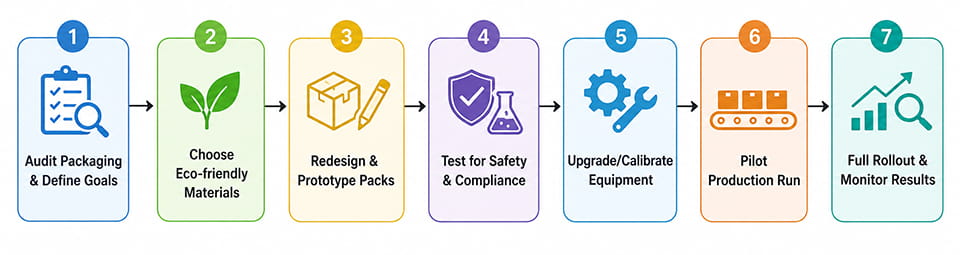
รูป: ขั้นตอนในการเปลี่ยนผ่านสู่บรรจุภัณฑ์ที่ยั่งยืน – จากการตรวจสอบไปจนถึงการผลิตเต็มรูปแบบ.
ตลอดกระบวนการนี้, เก็บไว้ในใจที่สำคัญ การเพิ่มประสิทธิภาพบรรจุภัณฑ์ กลยุทธ์. ตัวอย่างเช่น, ใช้การออกแบบโดยใช้คอมพิวเตอร์ช่วยกับกล่องและถาดขนาดที่เหมาะสม, และใช้สายพานลำเลียงสุญญากาศหรือตัวกั้นแบบปรับได้บนฟิลเลอร์เพื่อลดการรั่วไหลของผลิตภัณฑ์. การประเมินวงจรชีวิต (แอลซีเอ) ซอฟต์แวร์สามารถช่วยเปรียบเทียบผลกระทบต่อสิ่งแวดล้อมโดยรวมของทางเลือกอื่นได้ (เช่น, ความสมดุลของวัสดุกับ. ความสามารถในการรีไซเคิล). บริษัทหลายแห่งเริ่มต้นด้วยการมุ่งเน้นไปที่ชัยชนะที่ง่ายที่สุด (เปลี่ยนไปใช้กระดาษแข็งรีไซเคิล, ฉลากที่เบากว่า) แล้วจัดการกับพื้นที่ที่ยากกว่า (แผลพุพองที่ซับซ้อนหรือชุดอุปกรณ์หลายวัสดุ).
ตัวอย่างบรรจุภัณฑ์ที่ยั่งยืนในยา
- ไฟเซอร์ (ศูนย์): โดยการเอาพีวีซีออกและลดขนาดกล่อง, ไฟเซอร์เลิกใช้พลาสติก/บรรจุภัณฑ์ประมาณ 60 ตันในหนึ่งปี. พวกเขายังจัดส่งหน่วยต่อพาเลทมากขึ้นด้วย, ลดการปล่อยมลพิษจากการขนส่ง.
- จีเอสเค (เวนโทลิน, นิโคเดิร์ม): GSK ได้เปลี่ยนถาดและกล่องหลายชั้นจำนวนมาก (เครื่องช่วยหายใจ, แพทช์) ด้วยกล่องรีไซเคิลและกล่องพาเลท. การออกแบบ Ventolin ใหม่หนึ่งครั้งช่วยประหยัดวัสดุบรรจุภัณฑ์ได้ประมาณ 305 ตัน และลดการปล่อย CO₂ ได้ประมาณ 1,550 ตันต่อปี.
- แอสเทลลัส (แผลพุพอง): แอสเทลลัสเปิดตัวแผลพุพองที่ทำจาก PP ที่ได้จากอ้อยบางส่วน, ลดการป้อนฟอสซิล (แม้ว่าจะไม่ย่อยสลายทางชีวภาพได้เต็มที่ก็ตาม, มันสามารถต่ออายุได้).
- ผู้บรรจุหีบห่อตามสัญญา: ปัจจุบันผู้ผลิตตามสัญญาบางรายมีความเชี่ยวชาญใน "การดำเนินการบรรจุภัณฑ์ที่เป็นมิตรต่อสิ่งแวดล้อม" โดยใช้วัสดุที่เป็นมิตรต่อสิ่งแวดล้อมและการบริจาคพลาสติก PCR. กรณีศึกษาของพวกเขาแสดงคำสั่งด้วย 100% ขวดรีไซเคิลหรือกล่องไร้ถาดจะขายดีให้กับผู้ซื้อที่ใส่ใจ.
ตัวอย่างเหล่านี้เน้นย้ำว่าแม้ในอุตสาหกรรมที่มีการควบคุมอย่างเข้มงวด, บรรจุภัณฑ์ที่ยั่งยืนสามารถทำได้อย่างมีประสิทธิภาพและประหยัดต้นทุน.
เริ่มต้นใช้งาน: ร่วมมือกับ Jinlu Packing
การเปลี่ยนไปใช้บรรจุภัณฑ์ที่ยั่งยืนอาจดูซับซ้อน, แต่คุณไม่จำเป็นต้องไปคนเดียว. จินลู่บรรจุ นำเสนอกลุ่มผลิตภัณฑ์เครื่องจักรบรรจุภัณฑ์เกรดยาเต็มรูปแบบที่สนับสนุนโครงการริเริ่มที่เป็นมิตรกับสิ่งแวดล้อม:
- เครื่องจักรที่เป็นมิตรกับสิ่งแวดล้อม: โมเดล Jinlu หลายรุ่นถูกสร้างขึ้นเพื่อใช้งานกับวัสดุรีไซเคิลหรือย่อยสลายได้ทางชีวภาพ โดยไม่สูญเสียความเร็วหรือคุณภาพ. เช่น, เครื่องตุ่มของเรารองรับสต็อกโมโน PP หรือตุ่มกระดาษ, และกล่องบรรจุสามารถรองรับแผ่นใยไม้อัดรีไซเคิลได้.
- โซลูชั่นที่ปรับแต่งได้: จำเป็นต้องปรับปรุงสายของคุณ? จินลู่จัดให้ การปรับแต่ง (เครื่องป้อนสูญญากาศ, การอัพเกรดเซอร์โว) เพื่อลดการสูญเสียวัสดุ. วิศวกรภายในของเรารับประกันว่าอุปกรณ์ของคุณจะบรรลุเป้าหมายที่เป็นมิตรต่อสิ่งแวดล้อม.
- การปฏิบัติตามและการสนับสนุน: เครื่องจักร Jinlu ตรงตามมาตรฐานสากล (CGMP, CE, อย, EMA). นอกจากนี้เรายังมีการฝึกอบรมและการสนับสนุนการเปลี่ยนแปลงเพื่อให้ชุดใหม่ที่ยั่งยืนของคุณทำงานได้อย่างราบรื่น.
- พันธมิตรแบบครบวงจร: ตั้งแต่เครื่องบรรจุแคปซูลไปจนถึงเครื่องแพ็คแบบแท่งและเครื่องนับ, Jinlu สามารถจัดหา สายการบรรจุภัณฑ์ที่ยั่งยืนแบบครบวงจร. สิ่งนี้ทำให้การจัดการผู้ขายง่ายขึ้นและช่วยให้มั่นใจได้ว่าส่วนประกอบทั้งหมดได้รับการปรับให้เหมาะสมร่วมกัน.
พร้อมที่จะทำให้สายบรรจุภัณฑ์ของคุณเป็นสีเขียว? ติดต่อผู้เชี่ยวชาญของ Jinlu เพื่อขอคำปรึกษาฟรี. เราสามารถตรวจสอบผลิตภัณฑ์ของคุณและแนะนำการอัพเกรดเครื่องจักรหรือสายการผลิตใหม่ที่ใช้วัสดุรีไซเคิลและลดของเสีย. เยี่ยมชมเครื่องบรรจุตุ่มของเรา, เครื่องบรรจุกล่อง, เครื่องบรรจุซอง, เครื่องบรรจุแคปซูล, หน้าเครื่องนับและเครื่องบรรจุถุงสำเร็จรูปเพื่อดูว่าแต่ละเครื่องเหมาะสมกับกลยุทธ์การบรรจุที่ยั่งยืนของคุณได้อย่างไร. ด้วยกัน, เราสามารถช่วยผลิตภัณฑ์ยาของคุณปกป้องทั้งสุขภาพได้ และ สิ่งแวดล้อม.
คำถามที่พบบ่อยเกี่ยวกับบรรจุภัณฑ์ที่ยั่งยืนในอุตสาหกรรมยา
บรรจุภัณฑ์ที่ยั่งยืนในอุตสาหกรรมยาคืออะไร?
บรรจุภัณฑ์ที่ยั่งยืนในอุตสาหกรรมยาหมายถึงโซลูชันบรรจุภัณฑ์ที่ออกแบบมาเพื่อลดผลกระทบต่อสิ่งแวดล้อมในขณะที่ยังคงปกป้องยาและปฏิบัติตามข้อกำหนดด้านกฎระเบียบที่เข้มงวด. รวมถึงการใช้วัสดุรีไซเคิล, ลดขยะบรรจุภัณฑ์, ลดการปล่อยก๊าซคาร์บอน, และปรับปรุงประสิทธิภาพบรรจุภัณฑ์ตลอดห่วงโซ่อุปทาน.
เหตุใดบรรจุภัณฑ์ที่ยั่งยืนจึงมีความสำคัญสำหรับบริษัทยา?
ผู้ผลิตยากำลังเผชิญกับแรงกดดันที่เพิ่มขึ้นจากรัฐบาล, ผู้ให้บริการด้านสุขภาพ, และผู้บริโภคเพื่อลดขยะบรรจุภัณฑ์และปรับปรุงประสิทธิภาพ ESG. บรรจุภัณฑ์ที่ยั่งยืนยังช่วยให้บริษัทต่างๆ ลดการใช้วัสดุลงอีกด้วย, ปรับปรุงประสิทธิภาพด้านลอจิสติกส์, และเตรียมความพร้อมสำหรับกฎระเบียบด้านสิ่งแวดล้อมในอนาคต.
วัสดุใดที่นิยมใช้ในบรรจุภัณฑ์ยาแบบยั่งยืน?
วัสดุบรรจุภัณฑ์ที่ยั่งยืนทั่วไปได้แก่:
• พลาสติกรีไซเคิล เช่น PET, พีพี, และเอชดีพีอี
• บรรจุภัณฑ์ที่ทำจากกระดาษแข็งและเส้นใย
• วัสดุชีวภาพหรือวัสดุที่ย่อยสลายได้ทางชีวภาพ
• อะลูมิเนียมและกระจกรีไซเคิล
• บรรจุภัณฑ์แบบยืดหยุ่นที่ใช้วัสดุเดี่ยว
การเลือกใช้วัสดุยังคงขึ้นอยู่กับความคงตัวของยาเป็นอย่างมาก, การป้องกันอุปสรรค, และข้อกำหนดการปฏิบัติตาม.
บรรจุภัณฑ์ยาสามารถมีความยั่งยืนและเป็นไปตามมาตรฐาน GMP ได้หรือไม่?
ใช่. โซลูชันบรรจุภัณฑ์ยาที่ยั่งยืนสมัยใหม่ได้รับการออกแบบมาเพื่อรักษาความปลอดภัยของผลิตภัณฑ์, การป้องกันความชื้น, หลักฐานการงัดแงะ, และการปฏิบัติตามข้อกำหนดการออกหมายเลขกำกับพร้อมกับลดผลกระทบต่อสิ่งแวดล้อม. กุญแจสำคัญคือการสร้างสมดุลระหว่างความยั่งยืนกับข้อกำหนดด้านกฎระเบียบและการคุ้มครองผลิตภัณฑ์.
อะไรคือความท้าทายที่ใหญ่ที่สุดของบรรจุภัณฑ์ยาที่ยั่งยืน?
ความท้าทายที่สำคัญบางประการ ได้แก่:
• กฎระเบียบด้านเภสัชกรรมที่เข้มงวด
• ข้อกำหนดในการป้องกันสิ่งกีดขวาง
• การทดสอบความเข้ากันได้ของยา
• ต้นทุนวัสดุเริ่มแรกสูงขึ้น
• โครงสร้างพื้นฐานการรีไซเคิลมีจำกัด
• รีไซเคิลวัสดุหลายชั้นได้ยาก
ปัจจุบันบริษัทหลายแห่งกำลังลงทุนในการออกแบบวัสดุเดี่ยวและบรรจุภัณฑ์น้ำหนักเบาเพื่อแก้ไขปัญหาเหล่านี้.
บริษัทยาสามารถลดขยะบรรจุภัณฑ์ได้อย่างไร?
ผู้ผลิตยาสามารถลดขยะบรรจุภัณฑ์ได้ด้วย:
• การเพิ่มประสิทธิภาพขนาดบรรจุภัณฑ์
• การลดบรรจุภัณฑ์รองที่ไม่จำเป็น
• การใช้วัสดุที่มีน้ำหนักเบา
• การเปลี่ยนส่วนแทรกกระดาษด้วยแผ่นพับดิจิทัล
• การปรับปรุงประสิทธิภาพของสายการบรรจุ
• ยกระดับเป็นเครื่องจักรบรรจุภัณฑ์ประหยัดพลังงาน
กลยุทธ์เหล่านี้ช่วยลดทั้งการใช้วัสดุและต้นทุนการดำเนินงาน.
เป็นวัสดุที่ย่อยสลายได้ทางชีวภาพเหมาะสำหรับบรรจุภัณฑ์ยา?
วัสดุที่ย่อยสลายได้ทางชีวภาพสามารถทำงานได้ดีกับการใช้งานบรรจุภัณฑ์ยาระดับทุติยภูมิและตติยภูมิบางประเภท, เช่น กล่องกระดาษ, ถาด, และชั้นป้องกัน. อย่างไรก็ตาม, บรรจุภัณฑ์หลักยังคงต้องการประสิทธิภาพการกั้นที่แข็งแกร่งและการทดสอบความเข้ากันได้เพื่อปกป้องยาที่ละเอียดอ่อน.
เครื่องจักรบรรจุภัณฑ์สนับสนุนเป้าหมายการบรรจุที่ยั่งยืนได้อย่างไร?
เครื่องบรรจุภัณฑ์ยาสมัยใหม่ช่วยลดของเสียผ่าน:
• ระบบการป้อนวัสดุที่แม่นยำ
• ระบบอัตโนมัติที่ขับเคลื่อนด้วยเซอร์โว
• ลดการใช้ฟิล์ม
• เทคโนโลยีประหยัดพลังงาน
• เวลาการเปลี่ยนแปลงเร็วขึ้น
• ปรับปรุงประสิทธิภาพการผลิต
เครื่องบรรจุภัณฑ์พุพองขั้นสูง, เครื่องเขียนกล่อง, และเครื่องแพ็คแบบแท่งสามารถปรับปรุงประสิทธิภาพด้านความยั่งยืนในโรงงานผลิตยาได้อย่างมาก.
อ้างอิง:
1.บรรจุภัณฑ์ที่ยั่งยืน —— วิกิพีเดีย
2.แนวทางการออกแบบเชิงนิเวศเศรษฐกิจสำหรับบรรจุภัณฑ์ยาตามการประเมินวัฏจักรชีวิต —— ไซแอนซ์ไดเร็ค
3.ขยะบรรจุภัณฑ์ —— คณะกรรมาธิการยุโรป
4.ตส 902 – ภาคผนวก 9: แนวปฏิบัติเกี่ยวกับบรรจุภัณฑ์สำหรับผลิตภัณฑ์ยา -- WHO
5.นวัตกรรมระดับโลกด้านบรรจุภัณฑ์ยาที่ยั่งยืนในยุคสุดท้าย 25 ปี: การทบทวนการกำหนดขอบเขต —— เอ็มดีพีไอ


หนึ่งคำตอบ
นี่เป็นจุดสำคัญ. อุตสาหกรรมยาก่อให้เกิดขยะพลาสติกจำนวนมาก, ดังนั้นการก้าวไปสู่บรรจุภัณฑ์ที่ยั่งยืนจึงเป็นขั้นตอนที่ชาญฉลาดและมีความรับผิดชอบ. ใช้รีไซเคิลได้, รีไซเคิล, หรือวัสดุที่ย่อยสลายได้ทางชีวภาพสามารถช่วยลดมลพิษได้, ปฏิบัติตามกฎระเบียบใหม่, และแสดงให้ลูกค้าเห็นว่าบริษัทใส่ใจสิ่งแวดล้อม.