Заводские приемочные испытания (ТОЛСТЫЙ) и приемочное тестирование на объекте (СБ) два взаимодополняющих этапа валидации фармацевтического оборудования. FAT проводится на предприятии производителя оборудования. (перед отправкой) убедиться, что все характеристики и функции соответствуют требованиям заказчика. SAT проводится после установки на площадке клиента для подтверждения правильности работы машины в реальной производственной среде.. Вместе, FAT и SAT помогают выявить проблемы на ранней стадии (экономия времени и средств) и обеспечить Соответствие GMP. В этой статье подробно объясняется сравнение FAT и SAT, а также то, что проверяет каждый тест., ключевые различия, как они вписываются в жизненный цикл IQ/OQ/PQ, образцы контрольных списков для упаковочные линии (волдырь, капсула, планшет, картонирование), и вопросы о передовом опыте для покупателей.
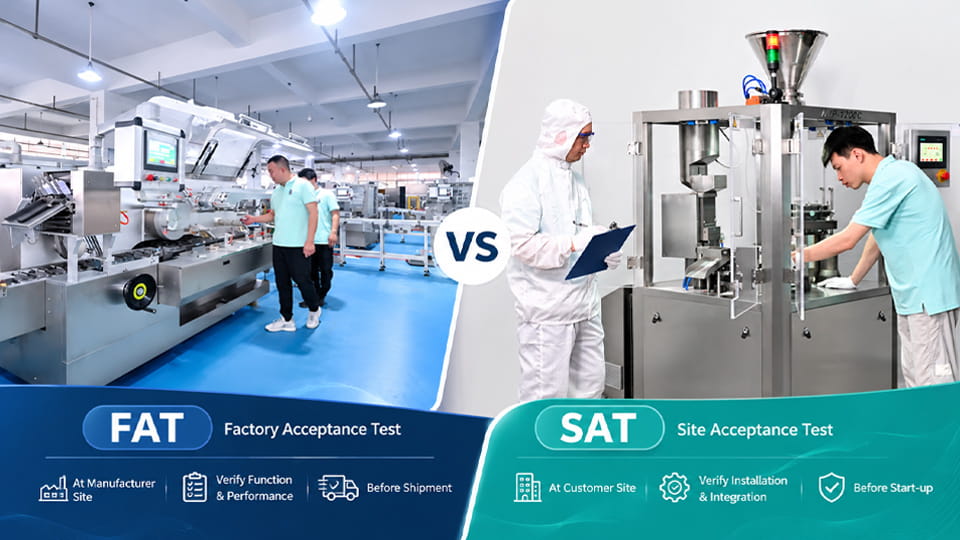
Что такое заводские приемочные испытания (ТОЛСТЫЙ)?
А Заводские приемочные испытания (ТОЛСТЫЙ) является формальным, документированная оценка оборудования на площадке производителя, проводится перед отправкой устройства заказчику. Он проверяет, что машина изготовлена в соответствии с согласованными Спецификация требований пользователя (УРС) и работает корректно. Во время ФАТ, продавец и клиент (или их представители) выполнить утвержденный протокол FAT тестовых примеров и контрольных списков. Типичные цели включают демонстрацию соответствия спецификациям., раннее обнаружение дефектов, и дать покупателю уверенность в том, что «оборудование готово к отправке».
Что проверяет FAT?
В ЖИРЕ, основное внимание уделяется автономной производительности и соблюдению дизайна. Обычно оно включает в себя:
- Визуальные и строительные проверки: Осмотрите механическую сборку, выравнивание кадра, проводка, и качество сборки по чертежам. Подтвердите серийные номера и идентификаторы моделей..
- Электрические и контрольные испытания: Проверьте подключения питания, Версии программного обеспечения ПЛК/ЧМИ, датчики и исполнительные механизмы. Убедитесь, что экраны управления, рецепты, и сигналы тревоги реагируют правильно.
- Функциональные тесты (Работа без нагрузки или всухую): Запустите каждую основную функцию машины (моторы, диски, кормушки, обогреватели) во всем своем диапазоне. Например, минимальная и максимальная скорость цикла, испытательные нагреватели/линейные изменения давления, и намеренно активировать блокировки.
- Проверки производительности: Если возможно, используйте репрезентативные производственные материалы.. Для начинки или упаковочная машина, запускайте образцы продукции и проверяйте пропускную способность, точность, переключение, и другие целевые показатели производительности. (Использование реальных продуктов клиента во время FAT настоятельно рекомендуется для выявления проблем, связанных с материалом.)
- Безопасность и блокировки: Протестируйте аварийную остановку, легкие шторы, охранники, клапаны сброса давления, и т. д., подтвердить, что все системы безопасности реагируют должным образом в условиях неисправности..
- Обзор документации: Подтвердите, что все необходимые документы готовы: руководства по эксплуатации, электрические и пневматические схемы, руководства по техническому обслуживанию, списки запасных частей, сертификаты калибровки, и т. д..
- Критерии приемки: Все тесты оцениваются по заранее согласованным критериям приемки. (часто извлекается из URS). Любые отклонения или открытые вопросы записываются в контрольный список для разрешения..
Успешная FAT заканчивается подписанием отчета FAT., перечисление пройденных испытаний и список проблем, которые необходимо устранить перед отправкой. По сути, FAT гарантирует, что «система готова к отправке», проверяя ее основные функции в контролируемых заводских условиях..
Когда и у кого возникает ЖИР?
FAT обычно проводится после того, как машина полностью собрана, но до того, как она покинет завод-изготовитель.. Это следует за квалификацией дизайна (если таковые имеются) и предшествует доставке. Ключевые участники обычно включают инженеров и технических специалистов поставщиков., и представители компании-покупателя (Инженеры по обеспечению качества/валидации, производственный персонал). Команда покупателя должна прибыть подготовленной, часто приношу URS, протоколы испытаний, и любые специализированные материалы для запуска. FAT – это последний шанс покупателя обнаружить серьезные несоответствия под контролем поставщика..
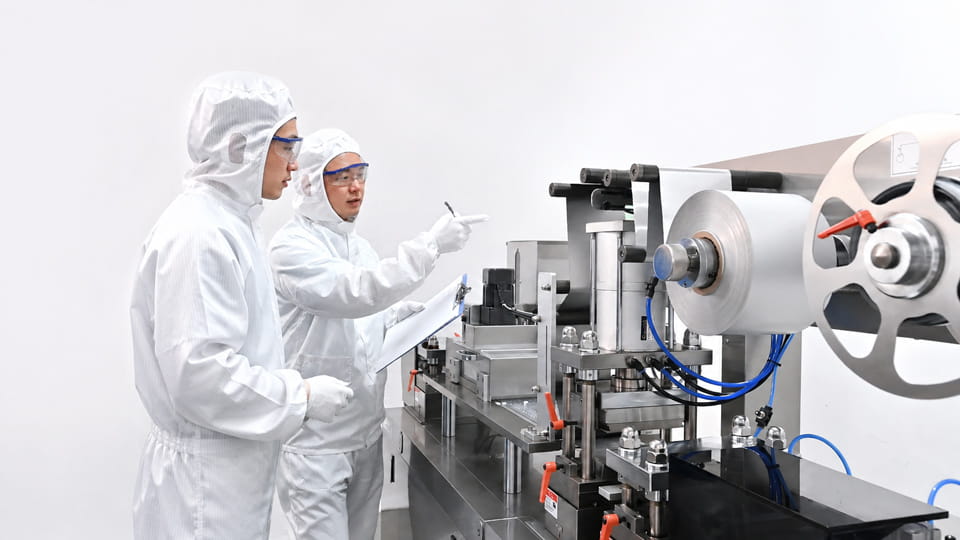
Фигура: Фармацевтический блистерная упаковочная машина проходит приемочные испытания. В строгом FAT, каждая подсистема (формирование, уплотнение, кормление, элементы управления) проверяется по URS. Последующий SAT повторяет ключевые функциональные тесты после установки в среде конечного использования..
Что такое приемочный тест сайта (СБ)?
А Приемочное тестирование сайта (СБ) документированное испытание, проводимое на предприятии заказчика после поставки и установки оборудования, но до его выпуска в производство.. SAT повторно проверяет, соответствует ли машина требованиям в фактическом рабочем контексте.. В САТ, оборудование проверяется на правильность установки, подключение коммунальных услуг, системная интеграция, и финальное выступление.
Что проверяет SAT?
SAT обычно включает в себя:
- Квалификация установки (IQ) Чеки: Убедитесь, что оборудование установлено в соответствии с утвержденным планом.. Это включает в себя подтверждение правильного местоположения, выравнивание, коммунальные услуги (напряжение питания, пневматическое давление, вода, и т. д.), заземление, и условия окружающей среды. Все компоненты машины и документация должны присутствовать и быть правильно установлены..
- Проверка утилиты: Убедитесь, что утилиты объекта соответствуют требованиям к машине.. Например, измерить фактическое напряжение, давление/расход воздуха, температура охлажденной воды, или давление пара от источника питания объекта. Убедитесь, что они находятся в пределах допустимого диапазона, указанного машиной..
- Интеграционное тестирование: Проверьте интерфейсы с вышестоящим/нисходящим оборудованием и системами здания.. Проверьте каналы связи (например. в ЛИМС, МЧС, СКАДА) если применимо. Убедитесь, что конвейеры выровнены, переключение между машинами происходит плавно, и любые сетевые сигналы тревоги или сбор данных работают в условиях объекта..
- Повторите функциональные тесты в реальных условиях: Снова выполните основные функции, теперь машина подключена к коммунальным сетям и, если возможно, используются реальные производственные материалы. Например, запустить партию реальных таблетки или капсулы через машину, чтобы убедиться, что она по-прежнему соответствует критериям скорости и качества.. Убедитесь, что любые корректировки, внесенные с учетом условий на объекте, эффективны..
- Проверки безопасности и окружающей среды: Повторно проверьте защитные блокировки и защитные устройства в реальных условиях установки.. Убедитесь, что экологические требования (класс чистых помещений, температура, влажность) соблюдаются и не оказывают негативного влияния на работу машины..
- Окончательные критерии приемки: Подтвердите, что все критерии приема SAT (часто извлекается из URS и протоколов сайтов) удовлетворены. Задокументируйте все оставшиеся отклонения в дефектной ведомости.. Соберите подписи оператора и официальную приемочную документацию..
Успешный SAT заканчивается отчетом или сертификатом SAT, подписанным как поставщиком, так и клиентом.. Он предоставляет документальное подтверждение того, что «оборудование/система было доставлено в хорошем состоянии, на него не повлияла транспортировка» и теперь оно правильно работает на площадке.. На практике, тщательный SAT дает уверенность в том, что машина готова к следующему этапу проверки (ИК/Белый/PQ) или рутинное производство.
FAT против SAT: 10 Ключевые различия
- Расположение: FAT проводится на сайте производителя.; СБ у владельца (клиент) сайт.
- Время: происходит ЖИР перед отправкой (пост-сборка), тогда как SAT после установки (пуско-наладочные работы).
- Среда: FAT имеет контролируемую заводскую настройку. (иногда не в условиях чистого помещения); SAT находится в реальной производственной среде с реальными условиями окружающей среды..
- Утилиты: В ЖИРЕ, коммунальные услуги (воздух, вода, власть) может быть смоделировано поставщиком при номинальных значениях; в СБ, машина использует действующие утилиты сайта (настоящий воздух, вода, электроснабжение).
- Интеграция: FAT тестирует машину изолированно (иногда с фиктивными нагрузками). Тесты SAT включают интеграцию с окружающим оборудованием (например. восходящий погрузчик, последующий пакер, системы данных).
- Объем испытаний: Сценарии FAT имеют тенденцию быть более исчерпывающими. (полные функциональные проверки, максимальная скорость) «вытряхнуть» проблемы в торговом зале. Сценарии SAT направлены на подтверждение производительности ядра в условиях площадки и проверку исправлений из FAT..
- Детали документации: Протоколы FAT обычно очень детализированы с постатейными тестами. (часто пишут в UW). Протоколы SAT могут ссылаться на результаты URS и FAT., чтобы они могли быть более рациональными.
- Критерии приемки: Приемка FAT основана исключительно на заранее согласованных критериях заводских испытаний.. Приемка SAT включает любые дополнительные критерии сайта (например. полнофункциональная интеграция, факторы окружающей среды).
- Цель: Цель FAT — «доказать», что машина построена правильно.. Цель SAT — «подтвердить», что он все еще работает после транспортировки и установки..
- Влияние: Проблемы, обнаруженные при FAT, можно решить у поставщика. (более низкая стоимость). Проблемы, обнаруженные в SAT, часто требуют простоя и могут задержать производство.. Тщательный FAT сводит к минимуму дорогостоящие сюрпризы SAT.
Суммируя, FAT и SAT — последовательные контрольные точки.: FAT выявляет дефекты на ранних этапах производства; SAT выявляет все оставшиеся проблемы, как только машина оказывается на месте.. Оба имеют решающее значение для соблюдения требований GMP и управления рисками..
FAT против SAT: краткий обзор
| Особенность |
ТОЛСТЫЙ (Заводские приемочные испытания) |
СБ (Приемочное тестирование сайта) |
| Где & Когда |
На территории продавца, перед отправкой. |
На сайте клиента, после установки. |
| Цель |
Убедитесь, что машина соответствует проектным спецификациям/спецификациям URS и работает автономно.. |
Убедитесь, что машина правильно работает на реальной производственной линии. (коммунальные услуги, среда, интеграция). |
| Среда |
Контролируемые заводские условия (утилиты поставщика). |
Реальные условия завода (настоящий воздух, власть, температура). |
| Объем тестирования |
Подробные функциональные тесты в соответствии со спецификациями контракта; смоделируйте процесс, используя репрезентативные материалы, если это возможно.. |
Проверьте установку (IQ), затем повторите основные функции и производительность с конечным продуктом/настройкой.; протестировать интеграцию с вышестоящим/нисходящим оборудованием. |
| Критерии приемки |
На основе требований пользователя и согласованного плана испытаний. (например. скорость, точность). |
Подтверждает производительность с учетом особенностей сайта (например. стабильное качество продукции, служебные параметры) соответствовать критериям. |
| Документация |
Формальный протокол FAT, протоколы испытаний, список ударов, окончательный отчет FAT. |
Формальный протокол SAT (часто проще), журнал отклонений/панч-лист, выйти, и прослеживаемость до URS. |
| Исход |
«Оборудование одобрено к отправке» (или список исправлений). |
«Машина принята на месте» (или список оставшихся проблем, которые нужно исправить). |
В этой таблице показаны ключевые различия: Целью FAT является доказательство того, что машина создана в соответствии со спецификациями. до он покидает завод, в то время как SAT доказывает, что он по-прежнему соответствует требованиям после установка в рабочую среду. Оба обычно требуются в соответствии с GMP/Приложением. 15 руководство.
FAT против SAT против IQ против OQ против PQ
FAT и SAT являются частью более широкого жизненного цикла сертификации оборудования GMP.. В типичном потоке проекта, вы начинаете со спецификации требований пользователя (УРС) и квалификация дизайнера (ДК), затем переходим к FAT, доставка, установка, СБ, и, наконец, IQ/OQ/PQ на месте. Диаграмма русалки ниже иллюстрирует эту последовательность.:
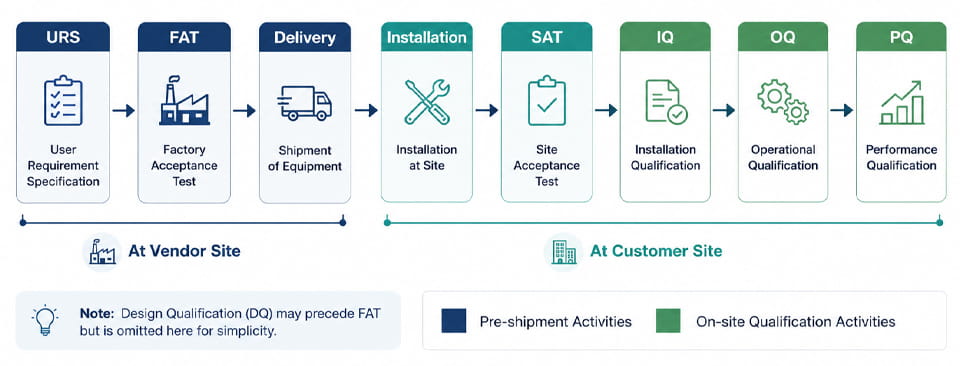
Фигура: Последовательность жизненного цикла квалификации. После определения УРС, заводские приемочные испытания (ТОЛСТЫЙ) осуществляется на сайте поставщика. Далее оборудование доставляется и устанавливается., с последующим приемочным испытанием на объекте (СБ). Окончательно, Квалификация установки (IQ), Операционная квалификация (ОК), и квалификация производительности (ПК) выполняются на месте (примечание: DQ может предшествовать FAT, но здесь для простоты опущен.).
Этот поток поддерживается руководством GMP.. Например, в соответствии с Приложением GMP ЕС 15 и ISPE C&Q-практики, документированные результаты FAT часто можно использовать в IQ/OQ, сокращение дублирования. Фактически, В руководствах ISO/ISPE отмечается, что деятельность FAT «непосредственно способствует повышению квалификации проектировщиков». (ДК) и квалификация по установке (IQ) доказательство,» помогает сократить общее время квалификации. На практике, строгий FAT с надлежащей документацией означает, что ваша команда IQ может повторно использовать эти результаты (например. проверка установки уже выполнена) вместо повторного тестирования тех же точек.
Контрольный список протокола FAT (Фармацевтическая упаковка)
Комплексный протокол FAT для фармацевтического упаковочного оборудования обычно включает следующие элементы::
- Предварительно одобренный протокол FAT: Письменный документ (на основе УРС) в котором перечислен каждый тестовый пример, критерии приемки, и ответственность. Это одобрено как покупателем, так и продавцом перед тестированием..
- Визуальный осмотр: Убедитесь, что машина соответствует окончательно утвержденным чертежам., без недостающих частей и повреждений. Проверьте серийные номера и модель компонентов..
- Механический & Электрический осмотр: Подтвердите все структурные компоненты (рамки, охранники, конвейеры) и электрические компоненты (моторы, кабели, панели) правильно установлены и промаркированы.
- Тесты сигнализации и блокировки: Запускайте каждое аварийное состояние и проверяйте правильность реагирования. Активируйте каждую защитную блокировку (Аварийный останов, дверной охранник, световая завеса) чтобы машина останавливалась или подавала сигналы в соответствии с замыслом.
- Проверка управления/программного обеспечения: Подтвердите настройки ПЛК/ЧМИ., версии программного обеспечения, обработка рецептов, и уровни доступа пользователей работают. Тестирование операторских интерфейсов и логики управления на соответствие требованиям.
- Проверка калибровки прибора: Перед использованием убедитесь, что все датчики и инструменты имеют действующие сертификаты калибровки и соответствуют техническим характеристикам..
- Производительность зависит от продукта: Запустите машину на всех указанных рабочих скоростях, используя репрезентативный продукт или материалы, пригодные для наихудшего случая.. Измерение ключевых результатов (заполнить веса, пропускная способность, качество уплотнения, точность подсчета, и т. д.) против критериев приемки.
- Демонстрации переналадки: Если требуется несколько форматов/SKU, демонстрировать переключение процедуры и сроки согласно договору.
- Утилита моделирования: Имитировать условия эксплуатации объекта (например. запускать двигатели при более низком напряжении, применить более низкое давление воздуха) чтобы гарантировать, что машина может обрабатывать ожидаемые отклонения полезности.
- Обзор документации: Убедитесь, что все руководства, схемы, руководства по техническому обслуживанию, и списки запасных частей заполнены и переданы.
- Пунш-лист и подписание: Документируйте все открытые проблемы в контрольном списке.. После повторного тестирования исправлений, включить последнюю страницу с подписью «Приемка FAT» в отчет FAT.
Следование этому контрольному списку помогает выявить отклонения на заводе.. Например, отраслевые эксперты предостерегают от расплывчатых записей FAT – только количественных, данные испытаний для конкретного оборудования должны быть приняты. Принятие простых заявлений поставщика о «прохождении» или неполных контрольных списков может маскировать проблемы.. Всегда записывайте измеренные значения и отслеживайте их до серийного номера конкретной машины..
Контрольный список протокола SAT (Фармацевтическая упаковка)
Протокол SAT для фармацевтических упаковочных машин обычно охватывает:
- Проверки перед установкой: Убедитесь, что сайт готов (чистое помещение, уровень фундамента), коммунальные услуги имеются (власть, сжатый воздух, пустой, вода), и установочные чертежи соответствуют машине.
- Проверка установки: Убедитесь, что все механические компоненты правильно собраны на месте. (никаких повреждений при доставке). Проверьте правильность подключения инженерных сетей (Напряжение, давление, поток) и что условия окружающей среды (температура, влажность, классификация) удовлетворить требования к оборудованию.
- Функциональные тесты без нагрузки: Запускайте ключевые функции пустым или с макетом продукта, чтобы убедиться, что проводка и двигатели остались неповрежденными после транспортировки.. Еще раз проверьте защитные блокировки в условиях площадки. (например. Заводской воздух, а не заводской воздух).
- Тест подключения к утилитам: Измерьте фактические параметры утилиты на машине (например. Подтвердите, что фактическое давление воздуха и расход соответствуют техническим характеристикам).
- Интеграционное тестирование: Если применимо, проверить связь между этой машиной и вышестоящим/нисходящим оборудованием (например. проверьте, что счетная машина правильно подает сигнал картонщику об индексации).
- Тест производительности производства: Запустите машину с реальным продуктом или макетом продукта (согласно УРС). Например, пропустите по линии блистеры или капсулы с таблетками, чтобы убедиться, что выход и качество соответствуют требованиям.. По сути, это проверка качества сайта..
- Обучение оператора & Сдавать: Убедитесь, что операторы могут управлять машиной. Проверьте рабочие процедуры и попросите операторов выполнять основные задачи под наблюдением..
- Решение проблемы: Записывайте любые отклонения или результаты SAT в журнал и проверяйте корректирующие действия.. Только после закрытия всех критических точек машина получает официальную приемку..
- Окончательное подписание: Заполните отчет или сертификат SAT, подпиши это, и включите данные окончательного запуска. Это становится доказательством соблюдения.
Суммируя, протокол SAT повторно подтверждает все критические функции в реальных условиях. Это последняя контрольная точка перед вводом в эксплуатацию. Например, Джинлупакинг отмечает, что тщательный SAT часто генерирует исходные данные, которые можно сразу использовать в протоколах IQ/OQ., избегая повторного тестирования утилит и среды.
FAT и SAT для фармацевтических упаковочных машин
Упаковочные линии для фармацевтических компаний (волдырь, капсула, планшет, Картонические машины) имеют собственный акцент на FAT/SAT. Вот некоторые типичные моменты:
- Блистерная упаковочная машина: FAT должна проверить станции формования и запечатывания.. Например, измерить однородность температуры на плите термоформования (±2°C по всей форме) и уплотнительная матрица (±3°С) при наихудших скоростях. Проверка целостности уплотнения (испытания на отслаивание согласно ASTM F88). Проверьте точность подачи блистера, индексирование, выравнивание пленки, и что система отбраковки удаляет пузыри неправильной формы.. СБ затем повторит эти испытания с настоящей блистерной фольгой и таблетками на месте и подтвердит, что машина по-прежнему соответствует требованиям по прочности запечатывания и пропускной способности при местной влажности/температуре..
- Машина для наполнения капсул: Контрольные точки FAT включают ориентацию капсулы и ее подачу. (проверьте правильность загрузки крышек и корпусов), точность наполнения порошком (Измерьте заполнение веса в нижнем/высоком диапазоне), системы обнаружения (проверьте выравнивание датчика на предмет пустого, двойной, или неправильная ориентация), и целостность замка (убедитесь, что капсулы плотно закрыты). Проверьте индексацию револьверной головки и точность сервопривода без продукта.. СБ затем проверит точность наполнения капсулами и порошковой смесью клиента., и убедитесь, что механизм отклонения в конце линии работает, когда происходят реальные отклонения.
- Таблеточный пресс: Во время ФАТ, испытания включают калибровку инструмента (Вес таблицы, толщина, твердость во всех положениях башни), работа подающей рамы и бункера, и постоянство силы нажатия. Запустите пресс под нагрузкой с минимальной и максимальной силой сжатия, чтобы проверить скорость плунжера.. СБ повторно проверяет характеристики таблеток, используя фактическое гранулирование при желаемом размере партии, подтверждает, что уровни смазки и шума являются приемлемыми, и проверяет защитные ворота и реле перегрузки на месте.
- Счетные и картонажные машины: Для счетных машин, FAT фокусируется на точности и скорости работы с макетами продуктов., проверка датчиков и желобов отбраковки. Для картонажников, FAT проверяет формирование картонных коробок, время подачи, выходная скорость, и качество герметизации. СБ проверю непрерывную работу: подача реальных блистерных упаковок или бутылок в картонажную машину и обеспечение правильности выходных картонных коробок.. Он также проверяет правильность синхронизации счетной машины и картонажа. (например. ни одной пропущенной бутылки).
Во всех случаях, как FAT, так и SAT проверяют, что машина работает с заданной скоростью и обеспечивает правильное количество/вес/качество. с реальным продуктом. Пропуск тестов (например, не запускать реальный продукт в FAT) может привести к провалам на SAT. Как предупреждает один эксперт, «Проведение FAT с общими материалами OEM — это не то же самое, что проведение FAT с вашими» — если вы не тестируете реальные материалы в FAT, проблемы с сайтом часто возникают позже.
Почему машина может сдать FAT, но не сдать SAT?
Даже если машина прошла все пункты контрольного списка FAT, он все равно может провалить SAT, если условия изменятся. Общие причины включают в себя:
- Различия в утилитах: Напряжение, давление воздуха, или качество поставок на заводе может находиться за пределами диапазона, используемого в FAT. Двигатель конвейера может отключиться при SAT, если напряжение в сети немного низкое., например.
- Изменение окружающей среды: Разница температур или влажности может повлиять на процессы. В одном случае блистерная машина прошла ЖИР при умеренной влажности. (45% относительной влажности) но не удалось обеспечить целостность пломбы на месте 80% относительной влажности.
- Варианты продукта: Если поставщик не использовал конкретный продукт или упаковочный материал в ходе FAT, машина может вести себя по-другому с реальным продуктом. (Мы советуем убедить OEM-производителя обработать ваши материалы на FAT.)
- Проблемы с установкой: Ошибки в настройке, выравнивание, или крепление во время транспортировки может привести к появлению новых неисправностей, которые SAT должна выявить.. Например, незакрепленный энкодер или перекошенная направляющая могут быть незаметны до тестирования на месте.
- Проблемы интеграции: Машина может не взаимодействовать должным образом с другим линейным оборудованием или системой управления предприятия, если эти интерфейсы не проверены в SAT..
- Незакрытый список ударов: Если вендор сделал частичный релиз (например. «Мы исправим это после доставки»), нерешенная проблема с FAT может возникнуть только на SAT.
Суммируя, FAT тестирует машину изолированно; SAT проверяет это в контексте. Любое различие в условиях площадки или настройке является потенциальным источником отказа.. Хорошо проведенный SAT, однако, является последней проверкой для выявления таких проблем перед полноценным производством..
Что покупатели должны спросить у поставщика о FAT и SAT?
При выборе поставщика станков, отраслевые покупатели часто используют готовность к FAT/SAT в качестве ключевого критерия. Например, Руководство по аудиту поставщиков Jinlu рекомендует спросить:
- Доступность документа: «Можете ли вы предоставить полную документацию по оборудованию?, включая руководства, рисунки, Отчеты FAT/SAT, и шаблоны IQ/OQ?». (Соответствующий поставщик предоставляет их заранее.)
- Поддержка валидации: «Вы поможете с установка и квалификация? Предоставляете ли вы поддержку или обучение на месте во время FAT/SAT??». (Убедитесь, что они отправляют инженеров в FAT и SAT.)
- Участие в процессе: «Кто будет руководить FAT и SAT? Может ли моя команда контроля качества/валидации участвовать в тестах или быть их свидетелем??»
- Использование образцов: «Будете ли вы использовать мой реальный продукт и упаковочные материалы в FAT??» (Как отмечалось, Использование реальных материалов имеет решающее значение.)
- Обработка отклонений: «Если что-то выйдет из строя в FAT, как это будет исправлено? Будете ли вы повторно тестировать на месте перед отправкой??»
- Контроль изменений: «Как вы управляете изменениями после заказа? Могут ли незначительные обновления URS быть включены в протоколы??».
- Опыт & Ссылки: «Поставляли ли вы эту модель другим фармацевтическим клиентам?? Можем ли мы увидеть тематические исследования или контактные ссылки?».
- Запасные части и сервис: «Какова ваша политика поддержки запасных частей?? Предлагаете ли вы расширенную гарантию или местное обслуживание??».
Эти вопросы помогают оценить зрелость валидации поставщика.. Опытный поставщик должен с готовностью ответить, что он поставляет машины «готовые к аудиту» с полными пакетами FAT/SAT/IQ/OQ..
Контрольный список приема FAT/SAT
Чтобы обеспечить плавный процесс принятия, покупатели могут использовать этот краткий контрольный список FAT/SAT:
- Согласуйте объем заранее: Включите планы FAT и SAT в заказ на покупку или URS., точно определить, какие тесты будут проводиться и каким критериям необходимо соответствовать.
- Свидетельские тесты: Посетите FAT (в идеале лично) для проверки выполнения каждого теста. Если дистанционное свидетельствование, обеспечить живое видео показаний.
- Используйте окончательные чертежи/спецификации: Подтвердите, что машина проверена на соответствие последней версии URS и чертежам. (не старые версии).
- Принесите доказательства калибровки: Убедитесь, что инструменты, используемые в FAT/SAT, откалиброваны и их сертификаты находятся в пакете документации..
- Соберите необработанные данные: Требовать, чтобы все измеренные значения (гири, силы, напряжения, и т. д.) записываются, не просто оценки «прошел/не прошел».
- Оперативно устраняйте отклонения: Любое обнаруженное несоответствие должно быть согласовано исправлено и проведено повторное тестирование перед приемкой.. Не принимайте «мы исправим это позже» без доказательств..
- Прослеживаемость: Поддерживать матрицу прослеживаемости, связывающую каждую точку URS с тестовыми примерами и результатами FAT/SAT..
- Окончательное подписание: Не отпускайте машину до тех пор, пока все пункты контрольного списка FAT не будут решены и отчет FAT не будет подписан.. Повторите для SAT.
- Проверка перед отправкой после FAT: Опционально, провести предотгрузочную проверку, чтобы убедиться, что после FAT ничего не изменилось (Мы предлагаем провести последнюю проверку после упаковки машины.).
- Архив документации: Храните копии всех протоколов и отчетов FAT и SAT в файлах проверки.. Они становятся частью записей о квалификации оборудования..
Следование такому контрольному списку позволит избежать сюрпризов.. Например, Просмотр фотографий упаковки поставщика или общих примечаний по контролю качества после того, как факт уже установлен. нет доказательство соответствия. Самым убедительным доказательством является полный набор записей FAT/SAT, привязанных к конкретной машине..
Заключение
FAT и SAT являются важными проверками для обеспечения надежной работы вашего фармацевтического упаковочного оборудования и соответствия требованиям GMP.. Путем тщательного тестирования оборудования на площадке вендора (ТОЛСТЫЙ) и еще раз после установки (СБ), вы сводите к минимуму дорогостоящие сюрпризы и подтверждаете, что все пункты URS соблюдены.
Готовы оптимизировать приемочные тесты? Jinlu Packing доставляет фармацевтическое оборудование (блистерные упаковщики, капсульные наполнители, Пережи для планшетов, линии подсчета и картонирования, и т. д.) с полной поддержкой FAT/SAT. Каждая машина поставляется с полным протоколом FAT/SAT и комплектом IQ/OQ/PQ, чтобы сделать вашу квалификацию быстрее и проще.. Свяжитесь с Jinlu сегодня, чтобы обсудить вашу URS и настроить планы FAT/SAT для вашего нового оборудования., или посетите наши страницы продуктов, чтобы Машины для наполнения капсул, Блистерные упаковочные машины, Таблеточные прессы, Счетные машины, Картонирующие машины и еще. Наша команда поможет вам спланировать этапы FAT/SAT и предоставит документацию по проверке «под ключ», чтобы ваш проект оставался своевременным и соответствовал требованиям..
Свяжитесь с нами с экспертами Jinlu получить рекомендации FAT/SAT и убедиться, что ваша новая упаковочная линия готова к валидации с первого дня.
Часто задаваемые вопросы о FAT и SAT в фармацевтике
В чем разница между FAT и SAT?
ТОЛСТЫЙ (Заводские приемочные испытания) выполняется на предприятии производителя оборудования перед отправкой для проверки соответствия оборудования согласованным спецификациям и функциональным требованиям.. СБ (Приемочное тестирование сайта) выполняется на объекте заказчика после установки для подтверждения корректной работы оборудования с реальными инженерными сетями объекта., среда, и связанные системы.
Почему важна проверка FAT перед отправкой фармацевтического оборудования?
FAT позволяет покупателю и поставщику идентифицировать дизайн., Производство, контроль, или проблемы с производительностью до того, как машина покинет завод производителя.. Проблемы, обнаруженные на этом этапе, обычно легче исследовать и устранить, поскольку оборудование, инженерная команда, инструменты, и тестовая среда легко доступны. Таким образом, хорошо спланированная FAT может сократить задержки при вводе в эксплуатацию и избежать ненужных переделок на площадке клиента..
Требуется ли FAT перед SAT?
FAT обычно проводится перед SAT., но обязательно ли это зависит от проекта, договор, оборудование, и требования к качеству. FAT проверяет оборудование перед отправкой, пока SAT проверяет оборудование после установки на объекте заказчика. Для фармацевтического оборудования, два теста могут дополнять друг друга, а не заменять друг друга.
Может ли оборудование пройти FAT, но не пройти SAT?
Да. Прохождение FAT не гарантирует, что оборудование пройдет SAT.. FAT обычно выполняется в контролируемых заводских условиях., пока SAT оценивает машину после транспортировки, установка, подключение к реальным коммуникациям, и интеграция с другим оборудованием. Различия в питании, сжатый воздух, условия окружающей среды, подача продукта, или линейная интеграция может создать проблемы, которые не были видны во время FAT..
Что должен включать в себя контрольный список FAT?
Контрольный список FAT фармацевтического оборудования должен основываться на согласованных спецификациях и может включать идентификацию оборудования., механический осмотр, электрические системы, Функции ПЛК/ЧМИ, сигналы тревоги, предохранительные блокировки, работа машины, тестирование производительности, документация, и согласованные критерии приемки. Для упаковочного оборудования, контрольный список может также охватывать скорость производства, точность подачи, уплотнение, кодирование, отказ, и другие функции, специфичные для машины.
Что должен включать контрольный список SAT?
Контрольный список SAT должен быть сосредоточен на оборудовании после установки на площадке заказчика.. В зависимости от машины, он может включать статус установки, электрические соединения, сжатый воздух и другие коммунальные услуги, работа машины, устройства безопасности, сигналы тревоги, связь с вышестоящим и нижестоящим оборудованием, производительность производства, и операторские функции. В SAT следует использовать критерии приемки, согласованные перед тестированием, а не полагаться только на неформальную демонстрацию машины..
Кому следует посещать FAT и SAT?
В FAT обычно участвуют инженеры поставщика и представители покупателя. (Контроль качества/проверка, инженерия, операции). SAT должен включать в себя поставщика, устанавливающего оборудование, или команду обслуживания., Контроль качества/проверка, и операционный персонал заказчика. Иногда привлекаются сторонние консультанты или инспекторы..
Какая документация необходима для FAT и SAT?
Для каждого требуется предварительно утвержденный протокол, в котором описываются все тесты., критерии приемки, и обязанности. Во время тестирования, заполнить протокол данными и наблюдениями в реальном времени. Результаты включают выполненный протокол., список всех отклонений, и подписанный заключительный отчет или сертификат. Для САТ, также подготовить матрицу прослеживаемости, связывающую тесты с требованиями URS..
В чем разница между FAT, СБ, IQ, и ОК?
FAT и SAT — приемочные испытания., в то время как IQ и OQ обычно являются частью стратегии квалификации оборудования.. FAT проверяет оборудование на предприятии производителя перед отправкой; САТ проверяет его после установки на объекте заказчика. IQ (Квалификация установки) основное внимание уделяется тому, установлено ли оборудование в соответствии с утвержденными требованиями, пока ОК (Операционная квалификация) проверяет, что он работает должным образом в указанных рабочих диапазонах. Точная последовательность и документация зависят от стратегии валидации компании и требований проекта..
Является ли FAT частью проверки GMP??
FAT может поддержать стратегию квалификации и валидации фармацевтического оборудования., но сам FAT не должен автоматически рассматриваться как эквивалент квалификации GMP.. Его роль зависит от оборудования., требования проекта, оценка риска, и действующая система качества. В некоторых проектах, соответствующее тестирование FAT может предоставить документированные доказательства, которые будут использованы в ходе последующих квалификационных мероприятий., потенциальное сокращение ненужного дублирования, когда это оправдано.
Ссылки:
1.Системы автоматизации в перерабатывающей промышленности – Заводские приемочные испытания (ТОЛСТЫЙ), приемочное тестирование сайта (СБ), и тест интеграции сайта (СИДЕТЬ) —— АНСИ/ИСА-62381-2026 / МЭК 62381:2024
2.Инженерная СОП-FAT : Заводские приемочные испытания & СБ : Приемочные испытания на месте —— Фармастат.академия
3.Тестирование FAT и SAT в фармацевтическом оборудовании —— Скрибд
4.Квалификационные исследования на этапе приемки SAT машины для мойки фармацевтических контейнеров —— ИсследованияГейт
5.Контрольный список приемочных испытаний на заводе и на площадке —— Скрибд



Один ответ
Интересно, как различие между FAT и SAT может повлиять на фармацевтическую деятельность.. Во время проверок наших клиентов, мы часто обнаруживаем проблемы с влажностью, которые могут поставить под угрозу производительность оборудования. Когда мы используем тепловидение, мы находим скрытые утечки, которые могут привести к дорогостоящим простоям. Мы всегда советуем владельцам недвижимости провести тщательную оценку перед завершением приемки оборудования.. Заметили ли вы какие-либо тенденции в том, как компании решают эти проблемы на этапе приемочного тестирования??