

Хорошая производственная практика (GMP) руководящие принципы диктуют строгие правила для фармацевтическое упаковочное оборудование для обеспечения качества продукции и безопасности пациентов. Ключевые требования включают гигиеническую конструкцию машины., нереактивные материалы, полная квалификация оборудования (ИК/Белый/PQ), проверенная очистка, автоматизация для уменьшения ошибок, целостность данных (21 CFR часть 11) и отслеживаемость продукции (сериализация). В этом руководстве рассматриваются FDA, Стандарты EMA/ЕС и ВОЗ, представляет контрольный список GMP и объясняет, как выбирать и поддерживать Упаковочные машины, соответствующие требованиям GMP.
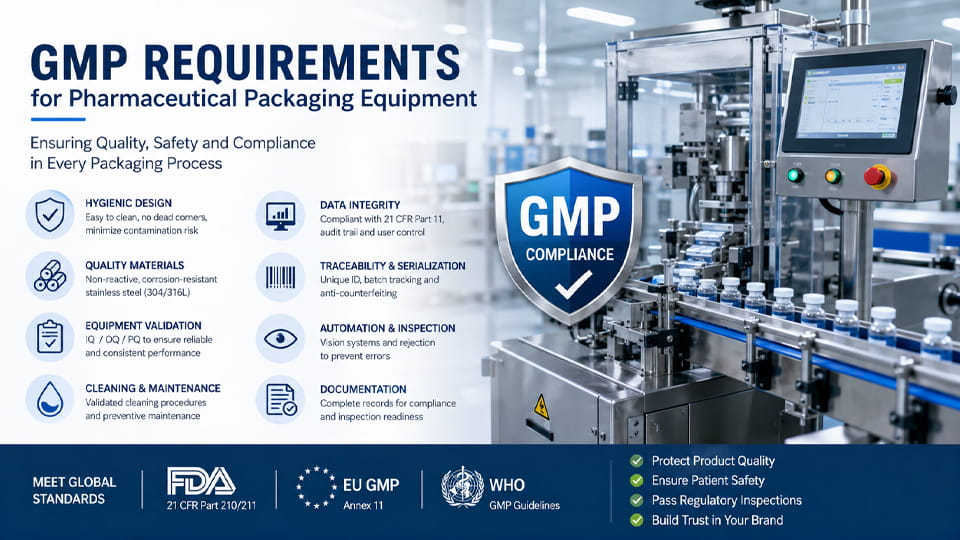
GMP (Хорошая производственная практика) это система качества, обеспечивающая последовательное производство и контроль фармацевтических препаратов.. В упаковке, GMP означает конструкции и процессы, которые предотвращают путаницу или загрязнение.. Регулирующие органы, такие как FDA (21 CFR210/211), ЕМА (Часть I GMP ЕС, Приложения) и ВОЗ (руководящие принципы фармацевтического качества) всем требуется оборудование, используемое в упаковке, чтобы соответствовать принципам GMP.. Цель – защитить продукт личность, сила, качество и чистота (отсутствие нежелательных химических реакций или загрязнений). Мировые регулирующие органы также подчеркивают, что упаковочные процессы и оборудование должны быть проверенный/квалифицированный так же, как этапы производства лекарств, и что только обученный персонал работает в соответствии с письменными процедурами..
Упаковочные машины должны иметь санитарный, очищаемый дизайн. Это означает нержавеющая сталь (например. 304 или пищевой 316L) строительство, гладкие поверхности, наклонные плоскости, чтобы избежать пылевых ловушек, и никаких мертвых ног или скрытых полостей. В руководствах FDA указано, что оборудование «должно быть сконструировано и расположено так, чтобы облегчить очистку» и «предотвратить загрязнение в результате других… операций».. GMP ЕС также требует, чтобы производственное оборудование «легко и тщательно очищалось» с подробными письменными процедурами.. На практике, современные машины GMP часто используют консольные ("балкон") конструкции, которые изолируют двигатели и системы смазки от зоны производства продукта. Все зоны должны быть доступны для проверки., вытирание, и мазок. Например, Jinlupacking отмечает, что в блистерных машинах, соответствующих требованиям, используются наклонные поверхности и сталь SUS316L на всех деталях, контактирующих с продуктом, чтобы избежать ловушек твердых частиц..
Все части, контактирующие с продуктом, должны быть нереактивный и неабсорбирующий, поэтому они не выщелачивают и не связывают активные ингредиенты. CGMP FDA требует, чтобы «любая поверхность оборудования, контактирующая с… лекарственными препаратами, была реактивной»., добавка, или абсорбционный, чтобы изменить… качество лекарственного препарата». Так же, GMP ЕС утверждает, что контактные детали «не должны быть реактивными», добавка или абсорбция… что это повлияет на качество продукта». На практике, это означает использование чистой нержавеющей стали. (СУС316Л) или фармацевтический пластик, и пищевые смазочные материалы. Вся фурнитура, уплотнения и шланги должны быть совместимы с используемыми препаратами и чистящими средствами.. Например, Прокладки медицинского назначения и трубки из ПТФЭ предпочтительнее во избежание коррозии или образования остатков. Результатом является упаковочное оборудование, которое не может загрязнять или портить продукт..
GMP требует полной квалификации оборудования. После установки, новая или модифицированная машина должна пройти Квалификация установки (IQ), Операционная квалификация (ОК), и Квалификация производительности (ПК).
Инспекторы FDA подчеркивают, что «новое оборудование должно быть правильно установлено… и очищено перед использованием в соответствии с письменными процедурами», причем «очистка задокументирована и проверена».. Поставка оборудования, соответствующего требованиям GMP, означает предоставление полного пакета валидационной документации. (НАПРИМЕР., Протоколы и отчеты IQ/OQ/PQ). Это часто делается с помощью FAT/SAT и мощной поддержки поставщиков.. Например, В блоге Hikma отмечается, что для успешного аудита машинам, соответствующим требованиям FDA, требуется «нержавеющая сталь SUS316L для всех контактирующих частей» и «пуленепробиваемая документация IQ/OQ/PQ».. Другими словами, без документально подтвержденного IQ/OQ/PQ, оборудование не считается сертифицированным GMP.
(Схема русалки: поток шагов проверки IQ→OQ→PQ)
Упаковочные линии должны иметь проверенные процессы очистки. После запуска каждого продукта или партии, оборудование очищается в соответствии со стандартными эксплуатационными процедурами (Сов). Регулирующие органы требуют документирования процедур очистки., проверено, и периодически перепроверяется. В руководстве ВОЗ GMP отмечается, что при планировании валидации очистки следует учитывать конструкцию оборудования., поскольку дизайн может влиять на эффективность. Тщательной проверки требуют только контактные поверхности – неконтактные области можно исключить. Критические предметы (например, многоразовые бункеры или насадки) часто требуют специального использования или использования одного продукта для упрощения очистки. На практике, фирмы определяют допустимые пределы остатков и проводят тесты мазком или промыванием. Часто задаваемые вопросы FDA рекомендуют использовать такие методы, как Total Organic Carbon. (ТОС) или специальные анализы для подтверждения удаления остатков.
Техническое обслуживание и калибровка также обязательны.. GMP ожидает регулярного профилактического обслуживания: неисправные или изношенные детали должны быть отремонтированы до того, как они вызовут риск загрязнения.. Калибровка оборудования (гири, весы, датчики) должен следовать письменным процедурам с записями (21 CFR211.68). Например, В руководстве FDA говорится, что устройства измерения и контроля «должны калиброваться и проверяться через определенные промежутки времени» с сохранением записей.. Это гарантирует, что машина продолжит работать в соответствии со спецификациями. (НАПРИМЕР., правильный объем заполнения, размещение этикетки).
Автоматизированные функции поддерживают GMP, уменьшая количество человеческих ошибок.. Современные машины часто включают в себя системы технического зрения., сканеры штрих-кода, или чеквейеры для поточного контроля. Например, автоматизированные сканеры этикеток/штрих-кодов проверяют правильность маркировки и идентификацию каждой упаковки – основной этап GMP. Интеграция с системами MES/ERP позволяет записывать данные партии.. Автоматическая отбраковка исключает недостаточно заполненные или дефектные упаковки.. Робототехника (для манипуляций с бутылками или переноса бутылок) повысить согласованность. На практике, многие линии GMP включают в себя такие функции устройств, как блокировки (НАПРИМЕР., машина не запустится, если открыта дверца), автоматические переключатели защиты, и датчики для обнаружения застреваний. Все программное обеспечение должно иметь защищенные учетные записи пользователей. (см. следующий раздел).
Фармацевтический GMP требует строгой целостности данных. В США и на многих рынках, компьютеризированное управление должно соответствовать 21CFRPart11.: сюда входят уникальные логины, контрольные журналы, и электронные подписи. Все пакетные записи, сигналы тревоги и изменения должны иметь метки времени и быть защищены от несанкционированного доступа.. Например, FDA предупреждает, что весы с автокалибровкой по-прежнему нуждаются во внешних проверках, и управляющее программное обеспечение должно отслеживать, кто и когда менял параметры.. Ключевые требования включают доступ на основе ролей. (операторы против менеджеров), неизменяемые журналы аудита изменений параметров, и цифровая подпись на важных этапах. Приложение 11 ЕС аналогичным образом требует проверенных систем и журналов аудита для любых компьютеризированных систем, соответствующих GMP.. По сути, HMI/PLC машины должен предотвращать несанкционированные изменения. Надлежащая целостность данных также означает электронные копии СОП., записи партий и журналы технического обслуживания.
Последние правила (например. Директива ЕС о фальсифицированных лекарственных средствах, США DSCSA) требовать уникальные идентификаторы для каждого основного пакета. Упаковочное оборудование GMP должно поддерживать это путем печати/гравировки 2D-штрих-кодов или QR-кодов.. Прослеживаемость означает привязку каждого серийного кода к производственной партии.. Оборудование должно интегрироваться с программным обеспечением сериализации или камерами, чтобы гарантировать, что каждое устройство получит уникальный код, соответствующий правилам страны.. Это не только GMP, но и рыночное право.. На практике, производители часто устанавливают лазерный или струйный кодер и подключают его к базе данных, которая проверяет подлинность каждого кода.. Линия окончательной упаковки должна обеспечивать возможность отзыва или отслеживания любой партии по ее коду..
GMP распространяется не только на машины, но и на все упаковочные операции.. Ключевые элементы управления включают в себя:
Следуя этим правилам управления процессом, компании гарантируют отсутствие путаницы или загрязнения во время упаковки.
| Требование | Ключевые моменты |
| Дизайн | Гигиенический, консольная или балконная конструкция; нет мертвых зон; наклонный, доступные поверхности |
| Материалы | Фармацевтический уровень (316л) нержавеющая сталь; нереактивные уплотнения/смазки; гладкие сварные швы |
| Валидация | Полный IQ, ОК, ПК (установка, эксплуатационная и эксплуатационная квалификация) |
| Уборка | Утвержденные процедуры очистки; документация/СОП; очистка на месте, если применимо |
| Обслуживание | График профилактического обслуживания; журналы запасных частей; калибровка (с записями) |
| Автоматизация | Системы технического зрения, металлоискатели, отвергать ворота, сканеры этикеток для уменьшения путаницы и ошибок |
| Целостность данных | 21 Соответствие CFRPart11: контрольные журналы, электронные подписи, контроль доступа пользователей |
| Прослеживаемость | Сериализация (2D штрих-коды/UID); пакетное кодирование; привязка кодов к записям партий |
Разные машины имеют разные проблемы GMP:
Блистерные упаковочные машины: Они образуют и запечатывают пластиковые/алюминиевые карманы.. Ключевые моменты GMP: Зона формования и термосварки должна быть огороженной или находиться в чистой зоне во избежание загрязнения.. Ролики и матрицы для термосварки не должны иметь острых кромок., и вакуумная система (если присутствует) не должен выделять частицы в волдыри. Для чувствительных лекарств, Блистерные машины могут работать в контролируемых средах (ламинарные шкафы или чистые помещения).
Картонирующие машины: Эти вертикальные коробки, вставить продукты (волдыри, бутылки, пакетики), и закройте коробки. потребности GMP: точная печать и сканирование кодов партий на каждой коробке (100% проверка), и жесткий контроль картонных магазинов (чтобы избежать путаницы между разными продуктами). Контроль пыли может стать проблемой при подаче картонных коробок и листовок.; поэтому используются фильтры или закрытые бункеры..
Этикетировочные машины: Они наклеивают этикетки или листовки на упаковки.. Проблемы GMP: синхронизация (чтобы этикетки соответствовали нужному продукту); камеры проверки для обнаружения неправильно нанесенных или отсутствующих этикеток; и очистите поверхности для маркировки (клеи не должны загрязнять продукт).
Считает & Разливочные машины: Счетчики планшетов, капсульные наполнители, и устройства для розлива бутылок предназначены для работы с сыпучими веществами или жидкостями.. GMP требует, чтобы все контактные части допускали очистку. (иногда CIP для жидкостных систем), и все заполняется, чтобы быть точным. Дефекты, такие как недостаточное заполнение, должны автоматически отклоняться. (через чеквейер). Для жидкостей, герметичные сопла и дегазация могут предотвратить появление пузырьков.
Машины для изготовления пакетов-саше: Для порошков или гранул. Им часто нужны функции очистки саше. (убрать просыпанный порошок), и проверка прочности уплотнения на растяжение. Ножи для обрезки кромок должны быть защищены.
В каждом случае, искать валидация для конкретного оборудования: НАПРИМЕР., блистерная машина нуждается в вакуумном испытании на утечку (чтобы гарантировать действительно запечатанный блистер), и картонажнику необходимо пройти проверку на падение (показать картонки, задержать). Производители часто предоставляют документацию (например. пример плана OQ) для каждого типа машины. При рассмотрении линия под ключ, убедитесь, что у поставщика есть опыт интеграции этих машин в соответствии с требованиями GMP. (например. Jinlu продемонстрировала интеграцию блистерной машины+картонер+этикетировочная машина с плавным управлением).
[jl_youtube src=”https://www.youtube.com/embed/1Bb_J6rluac”]
При выборе оборудования для вашей фармацевтической линии, убедиться, что он разработан и поддерживается для операций GMP:
👉 Для индивидуальных решений, соответствующих требованиям GMP, свяжитесь с Jinlu Packing или запросите подробное предложение. Мы предлагаем сертифицированные Блистерные упаковочные машины, Картонические машины, этикетировочные машины и полный пакет документации. Наше оборудование разработано в соответствии со стандартами cGMP и включает в себя такие функции, как конвейеры из нержавеющей стали., быстросменный инструмент, и модули автоматической сериализации.
Требования GMP к фармацевтическому упаковочному оборудованию охватывают все аспекты машины и процесса – от марки стали и гигиенической конструкции до валидации., уборка, автоматизация, и контроль данных. Правильная реализация этих мер гарантирует безопасность вашей продукции., прослеживаемый, и готов к аудиту. Инвестиции в совместимое оборудование и процессы не только соответствуют требованиям (FDA/EMA/ВОЗ) но и сводит к минимуму напоминает и усиливает гарантию качества. Выбирайте машины, созданные в соответствии с GMP, и ваша производственная линия будет эффективной и готовой к проверкам.
Ключевые требования GMP включают гигиенический дизайн. (нержавеющая сталь, нет мертвых зон), проверка (ИК/Белый/PQ), проверенные процедуры очистки, регулярное обслуживание и калибровка, автоматизированный контроль для предотвращения ошибок, и надежная целостность данных (21 CFR 11) и отслеживаемость (сериализация) меры. Это гарантирует отсутствие загрязнения или путаницы продуктов..
Валидация IQ/OQ/PQ обеспечивает документальное подтверждение того, что оборудование изготовлено и работает по назначению.. IQ проверяет правильность установки; OQ тестирует каждую функцию и предел; PQ показывает, что машина обеспечивает стабильную производительность в реальных условиях.. Без этой документации, регулирующие органы рассматривают оборудование как «непроверенное», и любые данные о партии вызывают подозрение..
В оборудовании GMP используются высококачественные, некоррозионные материалы (как нержавеющая сталь 316L) для всех частей, контактирующих с продуктом. Он имеет гладкий, очищаемые сварные швы и поверхности. Особенности включают в себя легко снимаемые защитные ограждения., Возможности CIP, и закрытые подшипники. Панели управления должны быть герметичными или экранированными.. По сути, ничто в конструкции не должно приводить к загрязнению или риску коррозии.
Часть 11 регулирует электронные записи и подписи.. Для упаковочных машин, это означает, что программное обеспечение/HMI должно обеспечивать вход пользователей в систему, иметь безопасный контрольный журнал любых изменений (кто что сделал, когда), и включить электронную подпись пакетных отчетов. Это обеспечивает пакетные данные (пополнять суммы, номера лотов, и т. д.) невозможно изменить бесследно. Современные системы ПЛК часто имеют 21 CFR 11 встроенные режимы для фармацевтического использования.
Сериализация — это присвоение уникального идентификатора каждой упакованной единице. (обычно 2D-код) и записываем это в базу данных. Правила (НАПРИМЕР., ЕС ящура, США DSCSA) теперь требуется сериализация на первичной и вторичной упаковках, чтобы предотвратить подделку и обеспечить возможность отзыва. Линии GMP должны иметь кодеры и сканеры для применения и проверки этих кодов.. Это позволяет полностью отслеживать каждую коробку/бутылку до ее производственной партии..
Соответствие GMP гарантирует правильную упаковку лекарств., предотвращение загрязнения, путаница, и ошибки в маркировке. Это помогает поддерживать качество продукции и обеспечивает безопасность пациентов на протяжении всей цепочки поставок..
Ключевые правила GMP включают в себя:
• FDA 21 CFR Part 210/211 (США)
• GMP ЕС (ЕвдраЛекс Объем 4)
• Рекомендации ВОЗ GMP
Производители должны соблюдать правила своего целевого рынка..
При выборе оборудования, учитывать:
• Конструкция и материалы соответствуют требованиям GMP.
• Наличие подтверждающих документов (ИК/Белый/PQ)
• Функции целостности и отслеживания данных.
• Соответствие стандартам FDA/ЕС/ВОЗ.
Выбор правильного поставщика обеспечивает более плавный аудит и долгосрочное соблюдение требований..
Ссылки:
1.Вопросы и ответы по текущим требованиям надлежащей производственной практики | Оборудование -- НАС. Управление по контролю за продуктами и лекарствами
2.Приложение 9 Руководство по упаковке фармацевтической продукции —— gmp-compliance.org
3.21 CFR Part 211 – СОВРЕМЕННАЯ НАДЛЕЖАЩАЯ ПРАКТИКА ПРОИЗВОДСТВА ГОТОВЫХ ФАРМАЦЕВТИЧЕСКИХ СРЕДСТВ —— Институт правовой информации
4.Основные принципы GMP для фармацевтической продукции -- ВОЗ