Что такое валидация упаковки в фармацевтической промышленности? Полное руководство для фармацевтических производителей
Что такое валидация упаковки в фармацевтической промышленности? Полное руководство для фармацевтических производителей
Апрель 29, 2026
Без комментариев
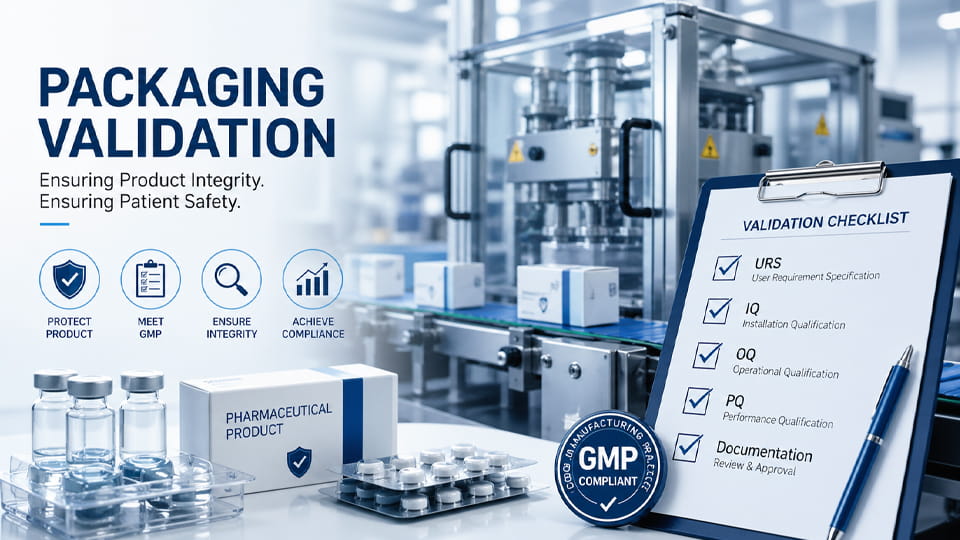
В фармацевтической промышленности, проверка упаковки является критическим подмножеством валидация процесса сосредоточено на обеспечении того, чтобы упаковочное оборудование и процессы последовательно защищали качество лекарственной продукции.. Это включает в себя документированную программу квалификации. (Установка, Оперативный, Производительность) и тестирование (например. целостность закрытия контейнера, стабильность, транспорт) доказать, что упаковочные системы работают так, как задумано в условиях GMP.. Эффективная проверка упаковки обеспечивает безопасность пациентов (предотвращая загрязнение, деградация или путаница) и обеспечивает соблюдение нормативных требований (FDA, ЕМА, ВОЗ, я, ИСО). В этом руководстве объясняется определение, шаги, тесты, стандарты, и лучшие практики для валидации фармацевтической упаковки, и показывает, как автоматизированное оборудование (нравиться Машины Jinlu Packing) разработан с учетом этих строгих требований.
Определение проверки упаковки
Валидация упаковки в фармацевтических средствах демонстрация с документальными доказательствами что процесс упаковки (оборудование и материалы) надежно производит упаковку, защищающую лекарственный препарат. На практике, он применяет те же строгие концепции проверки, которые используются в производстве (ИК/Белый/PQ) к начальный, вторичный, и третичная упаковка операции. Согласно руководству ВОЗ GMP, «Процессы упаковки и оборудование нуждаются в валидации/квалификации так же, как и любая другая часть обработки на фармацевтическом предприятии».. Другими словами, проверка упаковки гарантирует система закрытия контейнера, маркировка, и упаковочные линии постоянное соответствие спецификациям качества и нормативным требованиям. Цель состоит в том, чтобы сохранить силу препарата., чистота и стабильность благодаря упаковке, распространение и срок годности, предотвращая путаницу, подделки, или повреждение.
Типичные результаты валидации упаковки включают: Спецификация требований пользователя (УРС) (дизайн & критерии качества), Протоколы квалификации установки/эксплуатации/производительности, и протоколы испытаний. Процесс проверки охватывает:
Первичная упаковка (контейнер или барьер, непосредственно контактирующий с лекарственным средством, например. флаконы, волдыри, пакетики)
Третичная упаковка (контейнеры для перевозки сыпучих грузов, поддоны, упаковка холодовой цепи для транспортировки)
Каждый уровень должен защищать продукт. Например, австралийский TGA определяет «первичная упаковка» (контейнер, который непосредственно закрывает товар) и отличает вторичная упаковка как внешняя коробка или обертка. В конечном счете, валидация упаковки связана с GMP – гарантируя, что контейнеры и крышки не изменяют препарат и «обеспечивать адекватную защиту от внешних факторов» при хранении и использовании.
Почему валидация упаковки имеет решающее значение в фармацевтике
Фармацевтическая упаковка – последняя защита качества лекарств. Валидация процессов упаковки жизненно важна, потому что:
Обеспечивает безопасность и целостность продукции: Правильно проверенная упаковка предотвращает загрязнение., попадание влаги, или воздействие кислорода, которое может ухудшить активные ингредиенты. Например, утечки или нарушения герметичности могут привести к попаданию микробов или газов в, портящие стерильность или потенцию.
Соответствие нормативным требованиям: Агентства (FDA, ЕМА/Я, ВОЗ) требуют проверенной упаковки. НАС. FDA 21 CFR 211.94 запрещает закрытие, которое изменяет качество лекарств, и требует закрытия «обеспечивать адекватную защиту от предсказуемых внешних факторов». Приложение GMP ЕС 1 так же настаивает на том, что «контейнеры должны закрываться надлежащим образом проверенными методами» (с 100% проверка целостности герметично закрытых изделий). ВОЗ прямо заявляет, что упаковочные системы должны быть сертифицированы, как и любой другой процесс GMP.. Несоблюдение может означать напоминает, отказы в импорте или цитаты из аудита.
Продлевает срок годности: Упаковочные материалы и пломбы, проверенные в условиях стабильности, помогают установить точные заявленные сроки годности.. В руководстве ICH Q1A даже указано, что исследования стабильности должны проводиться в «система закрытия контейнера» предложено для продукта. Если упаковка не удалась, данные о стабильности недействительны.
Сериализация и борьба с подделкой: Современная фармацевтическая упаковка часто включает в себя сериализацию., пломбы с защитой от несанкционированного вскрытия, и функции защиты от подделок. Проверка этих функций (например. возможность сканирования штрих-кодов, целостность тамперных лент) помогает защитить цепочку поставок. Ошибка в маркировке или сериализации может заблокировать выпуск продукта..
Качество и экономическая эффективность: Эффективные проверенные линии сокращают количество дефектов (неправильно заполняет, ошибки в ярлыках, измельченные картонные коробки) и металлолом. Автоматизированные проверки (системы технического зрения для проверки печати/этикетки) часто являются частью проверенных средств контроля. Общий, проверенные процессы упаковки минимизируют риск для пациентов и обеспечивают постоянную поставку эффективных, настоящие лекарства.
Снижение регуляторных рисков: Непроверенные процессы сопряжены с высоким риском отзыва или санкций.. Регулирующие органы ожидают квалификационных данных для каждой производственной линии.
Глобальное распространение: Соответствие международным стандартам (FDA/EMA/ВОЗ) требует проверенной упаковки на всех рынках.
Непрерывность бизнеса: Сбои в упаковке при распределении отходов и времени. Валидация гарантирует «правильно-с первого раза» работа по GMP.
Готовность к аудиту: Аудиты органов контроля качества или регулирующих органов клиентов будут проверять записи о проверке упаковки и квалификации оборудования в рамках проверок GMP..
Объем валидации фармацевтической упаковки
Проверка упаковки охватывает все этапы упаковки.. Обычно, мы различаем:
Проверка первичной упаковки: Основное внимание уделяется закрытию контейнера. (флаконы, ампулы, волдыри, бутылки). Испытания включают целостность уплотнения., Совместимость материала (экстрагируемые/выщелачиваемые вещества) и производительность закрытия контейнера. Для стерильных продуктов, испытания на целостность закрытия контейнера (CCIT) обязательны для обеспечения стерильности.
Проверка вторичной упаковки: Покрывает непосредственную внешнюю упаковку (коробки, этикетки, листовки, осушители). Сюда входит проверка читаемости/точности этикеток., тесты на падение коробки, и тесты на сжатие коробки (для транспорта). Проверка этикетки гарантирует, что правильная информация о пациенте применяется последовательно..
Третичная проверка упаковки: Включает в себя оптовую/транспортную упаковку.. Здесь, тесты производительности, такие как вибрация, уронить, и термоциклирование (холодовая цепь) смоделировать стрессовые ситуации при транспортировке, чтобы убедиться, что поддоны и транспортировочные коробки сохраняют целостность продукта и маркировку во время распределения.. Стандартные протоколы, такие как ASTM D4169. (транспортное моделирование) часто используются.
Каждый уровень требует оценки риска и соответствующего тестирования.: например, начальный упаковка может включать USP <1207>-тесты целостности стиля, пока вторичный тесты упаковки могут включать прочность коробки и адгезию этикетки., и высшее упаковка использует протоколы испытаний ISTA/ASTM. Все должно быть задокументировано в плане валидации..
Ключевые этапы процесса проверки упаковки
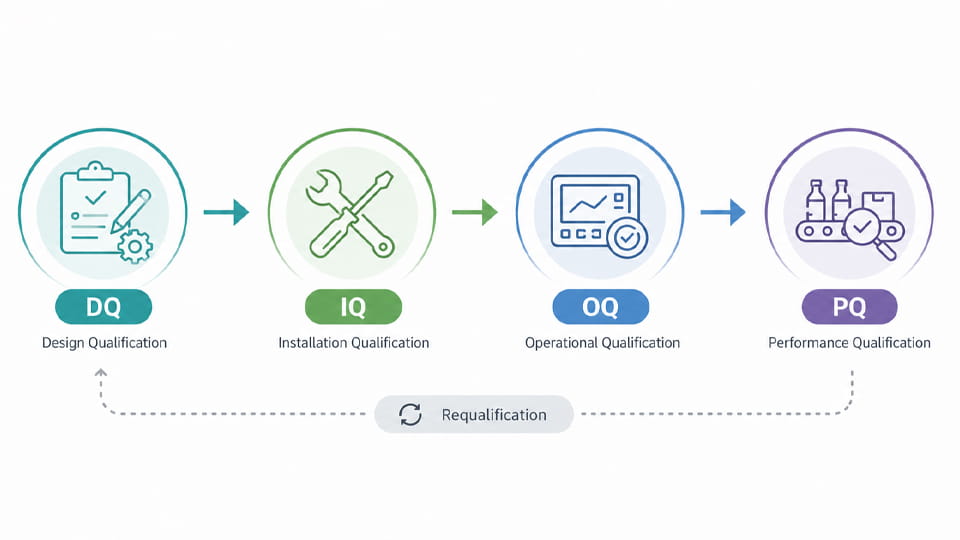
Проверка упаковки обычно следует за жизненным циклом квалификации оборудования/процесса., часто описывается как ДК/IQ/ОК/ПК. Эти этапы гарантируют, что новая или модифицированная упаковочная линия соответствует требованиям на каждом этапе..
Квалификация дизайнера (ДК): Ранний этап, на котором проект оценивается по URS (Спецификация требований пользователя) и рекомендации GMP. Все аспекты дизайна (функции машины, материалы, очищаемость, совместимость с продуктом/упаковочными материалами) рассматриваются. Документы включают URS и проектные спецификации. (Спецификация функционального дизайна FDS, Спецификации аппаратного и программного обеспечения). Часто оценка риска (например. ДФМЕА) делается для того, чтобы предвидеть виды отказов упаковки.
Квалификация установки (IQ): Проверяет правильность установки машины/линии в соответствии со спецификациями поставщика.. IQ включает контрольный список для проверки правильного местоположения., коммунальные услуги (власть, воздух, вода), условия окружающей среды, и правильная сборка. Все компоненты присутствуют и не повреждены.. Проверяется калибровка средств измерений. Результаты: Протоколы и отчеты IQ, сертификаты калибровки.
Операционная квалификация (ОК): Проверяет, что машина работает должным образом при всех указанных условиях.. Критические параметры (диапазоны скоростей, температура, давление, уровни вакуума, крутящий момент, и т. д.) подвергаются испытаниям при настройках мин/макс или наихудшего случая. Испытания в OQ могут включать в себя герметизацию на экстремальных скоростях., функции датчика/сигнализации, изменение скорости конвейера, точность этикетировочной машины, точность наполнительного насоса. Протокол OQ фиксирует, что каждое функциональное испытание соответствует критериям приемки..
Квалификация производительности (ПК): Демонстрирует, что в нормальных производственных условиях, линия стабильно производит продукцию, соответствующую требованиям качества. PQ осуществляется на основе фактических производственных объемов/партий.. Он включает в себя работу линии в течение определенного времени или количества и отбор проб на выходе.. Типичная деятельность: работа с несколькими блистерными коробками, бутылки или пакетики и проведение тестов контроля качества образцов (НАПРИМЕР., целостность закрытия контейнера (CCIT), весовые проверки, визуальный осмотр дефектов, прочность уплотнения). PQ показывает, что линия может работать непрерывно, сохраняя качество продукции..
В таблице ниже суммированы этапы DQ – IQ – OQ – PQ.:
Этап
Цель
Ключевые документы
Примеры действий/тестов
Квалификация дизайнера (ДК)
Убедитесь, что конструкция упаковочной системы соответствует URS/GMP.
УРС (спецификация требований), характеристики дизайна (ФДС/ХДС/СДС), оценка риска
Как показывает диаграмма, Проверка упаковки — это процесс жизненного цикла от проектирования до производительности.. Обратите внимание, что переквалификация может потребоваться после серьезных изменений или периодически.
Ключевые тесты при проверке упаковки
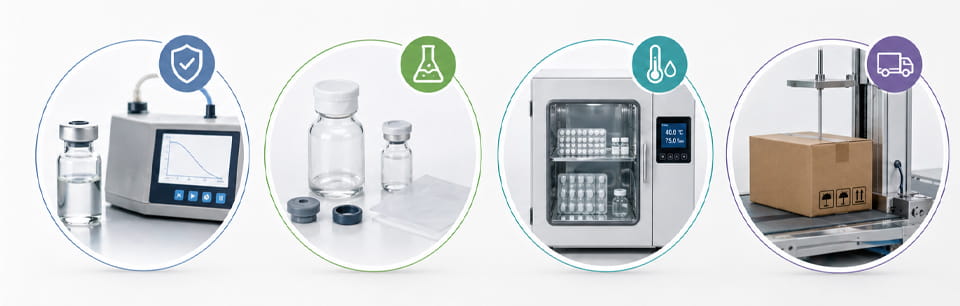
Во время проверки упаковки обычно проводится несколько специализированных тестов.:
Проверка целостности закрытия контейнера (CCIT)
CCIT необходим для стерильных и даже нестерильных продуктов.. Он оценивает, является ли система закрытия контейнера (например. флакон+пробка+крышка, ампула, блистерная печать) образует идеальный барьер. Методы включают вакуумный распад., падение давления, проникновение красителя, или микробный вызов. Как объясняет один из отраслевых источников, «Проверка целостности закрытия контейнера (CCIT) — это анализ, который оценивает адекватность систем закрытия контейнеров для поддержания стерильного барьера против потенциальных загрязнителей».. Нормативные документы (USP <1207>, FDA, Приложение EMA 1) уделите особое внимание проверке целостности закрытия, чтобы убедиться в отсутствии утечек или нарушений. Например, USP <1207> содержит рекомендации по выбору методов испытания на герметичность для сертификации герметичных упаковок..
Тестирование совместимости материалов (Экстрагируемые/выщелачиваемые вещества)
Упаковочные материалы (пластмассы, резины, чернила, клеи) не должен неблагоприятно взаимодействовать с лекарственным препаратом. Экстрагируемые и выщелачиваемые вещества исследования моделируют долгосрочный контакт: экстрагируемые вещества – это химические вещества, вытесняемые из упаковки в суровых условиях., и вымываемые вещества – это те вещества, которые фактически мигрируют в продукт при нормальных условиях.. Эти тесты гарантируют, что упаковка не содержит токсичных или влияющих на стабильность примесей.. Фармакопейные рекомендации и рекомендации FDA (например. USP <661>, Q3E) план испытаний E/L для систем закрытия контейнеров. На практике, проверяется, что полимер, покрытия, и материалы этикетки соответствуют фармакопейным стандартам. (например. Тип стекла USP, Характеристики резиновой застежки ISO). ВОЗ отмечает, что фармакопейные стандарты на укупорочные средства (как резиновые пробки) являются «минимальные требования» и уделяет особое внимание исследованиям стабильности, чтобы доказать пригодность.
Тестирование стабильности упаковки
Согласно ICH Q1A, исследования стабильности должно быть выполнено на лекарственном препарате в его окончательной конфигурации упаковки.. Во время проверки, оценивается влияние упаковки на стабильность: например, конечная упаковка подвергается ускоренному старению (высокая температура/влажность) и условия в реальном времени, чтобы гарантировать отсутствие деградации (например. попадание влаги в блистерную упаковку, проникновение кислорода в бутылях). Анализы, определяющие стабильность (химические и микробные) выполняются. Упаковка, которая не защищает продукт в условиях стресса, лишает законной силы заявления о сроке годности.. Таким образом, валидация включает подтверждение того, что выбранная упаковка соответствует требованиям к сроку годности. (это пересекается с протоколами нормативной стабильности).
Тестирование транспорта и распределения
Третичная упаковка тесты имитируют реальные условия транспортировки. Стандартные испытания включают испытания на высоту падения., вибрация (симуляция грузовика/железнодорожного транспорта), сжатие (штабелируемый вес), и циклическое изменение температуры (специально для холодовой цепи). Например, АСТМ Д4169 (для фасованной продукции) или протоколы ISTA могут использоваться. Надежный план проверки упаковки подтверждает, что картонные коробки, ящики и ящики защищают первичные упаковки во время транспортировки: проверка отсутствия поломок, отслаивание этикетки, или повреждение от влаги происходит в условиях распределения. Для холодовой цепи, картирование температуры и проверенные изолированные грузоотправители проходят испытания на поддержание требуемых температурных диапазонов во время транспортировки.
Нормативные стандарты и рекомендации
Валидация фармацевтической упаковки должна соответствовать многочисленным ожиданиям регулирующих органов:
Правила cGMP: В США, FDA 21 CFR Part 211 (подраздел J) управляет контейнерами и затворами. Раздел 211.94(объявление) указывает, что контейнеры/укупорочные средства не могут изменить качество препарата и должны защищать от предсказуемого загрязнения..
GMP ЕС: Европейские рекомендации (ЕвдраЛекс Том. 4) требуют, чтобы «контейнеры должны закрываться надлежащим образом проверенными методами» (Приложение 1) и что процессы упаковки соответствуют GMP (Приложение 15 при проверке). Приложение GMP ЕС 11 требует проверки компьютеризированной системы (включая упаковочные линии с электронным управлением).
ВОЗ GMP: Серия технических докладов ВОЗ 902 (Приложение 9) прямо указано, что упаковочное оборудование нуждается в проверке, как и любой другой этап обработки.. ВОЗ также предоставляет рекомендации по целостности упаковки. (аналогично ЕС/ICH).
Рекомендации ICH: Хотя ИЧН (Q7, Q8, Q9, Вопрос 10) не иметь специального документа о проверке упаковки, они требуют управления рисками (Q9) и качество, соответствующее дизайну (В8/В10) принципы, которые применяются. Например, оценка риска (я Q9) должно охватывать атрибуты упаковки (тип закрытия, контроль над этикеткой) которые влияют на CQA продукта.
Стандарты: Для стерильных продуктов, ИСО 11607 (для упаковки окончательно стерилизованных медицинских изделий) часто используется по аналогии; Часть 2 ИСО 11607 определяет требования к валидации процессов формования/герметизации, что актуально для блистеров или ампул для парентеральных препаратов. Фармакопеи (USP, Ph. Евро.) также содержат главы, посвященные испытаниям упаковки (например. USP <381> для резиновых затворов, <1207> для проверки герметичности).
В итоге, любая упаковочная линия должна соответствовать национальным стандартам фармакопеи и региональным стандартам GMP.. В контрольных списках соответствия обычно упоминается FDA., GMP ЕС, ВОЗ и соответствующие стандарты ISO, и часто требуют наличия полностью документированных СОП и генеральных планов валидации упаковки..
Распространенные проблемы при проверке упаковки
Проверка упаковки представляет собой уникальные проблемы по сравнению с производственными процессами.:
Тип данных и выборка: Успех упаковочной линии часто определяется дискретные результаты (например. пройти/не пройти печать, рвать) вместо непрерывных измерений. Как отмечает один эксперт, «Тип полученных данных… создает значительную проблему. Успех или неудача часто определяются дефектами (слезы, дыры, пятна, или потекли уплотнения)… Это отсутствие измеримого (переменная) данные часто требуют очень больших размеров выборки для статистической проверки процесса упаковки».. Другими словами, вам может потребоваться много образцов, чтобы продемонстрировать надежность.
Разнообразие технологий: Существует множество технологий упаковки. (волдыри, картотеры, этикетировщики, упаковщики коробок, и т. д.) от разных поставщиков. Каждый из них имеет разные профили риска, сделать невозможным единый план проверки.
Контроль изменений: Упаковочные линии часто обрабатывают множество типов продуктов. (таблетки, жидкости, порошки) и размеры упаковки на одном и том же оборудовании (использование частей изменений или форматов). Каждое изменение может потребовать повторной проверки или включения в план проверки.. Управление этим (тот матрица проверки) может быть сложным.
Экологический контроль: Немного упаковки (например. блистерная упаковка чувствительных к влаге препаратов) требует контролируемой влажности или инертной атмосферы. Проверка этих элементов управления усложняет.
Интеграция с предшествующим процессом: Проверка упаковки зависит от согласованности восходящего потока. Если гранулы лекарственного средства различаются по размеру, может быть затронута смена упаковочной машины (например. заполнить варенье). Эта взаимозависимость может усложнить анализ первопричин сбоев упаковки..
Сериализация/отслеживание: Современные правила (например. ДСКСА, ЕС ящура) требуют сериализации и прослеживаемости. Обеспечение правильного отслеживания каждой единицы автоматизированными линиями (и проверка этого сбора данных) добавляет дополнительный уровень квалификации (проверка программного обеспечения, тесты сканера штрих-кода, проверки базы данных).
Нормативная неопределенность: Парадоксально, существуют ограниченные явные рекомендации FDA/EMA исключительно по «проверке упаковки».,»поэтому компаниям часто приходится интерпретировать общие правила GMP и рекомендации по валидации процессов упаковки.. Это может вызвать неуверенность в отношении точного объема или необходимых тестов..
Несмотря на эти проблемы, основной принцип остается: относитесь к упаковке как к любому другому важному процессу, с тщательной квалификацией и надежными проверками качества. Как завершается статья ISPE, проверка упаковки «различаются(с) мало что получено от валидации процессов, используемых при производстве лекарств»..
Лучшие практики валидации фармацевтической упаковки
Преодолеть трудности и обеспечить успешную валидацию, следуйте этим рекомендациям:
Ранняя оценка рисков: Используйте управление рисками качества (я Q9) с этапа проектирования. Определить критические атрибуты упаковки (например. бесплодие, подделка доказательств, легкая защита) и соответствующим образом расставить приоритеты тестов. Режим отказа & Анализ эффектов (FMEA) рекомендуется во время DQ для планирования объема проверки.
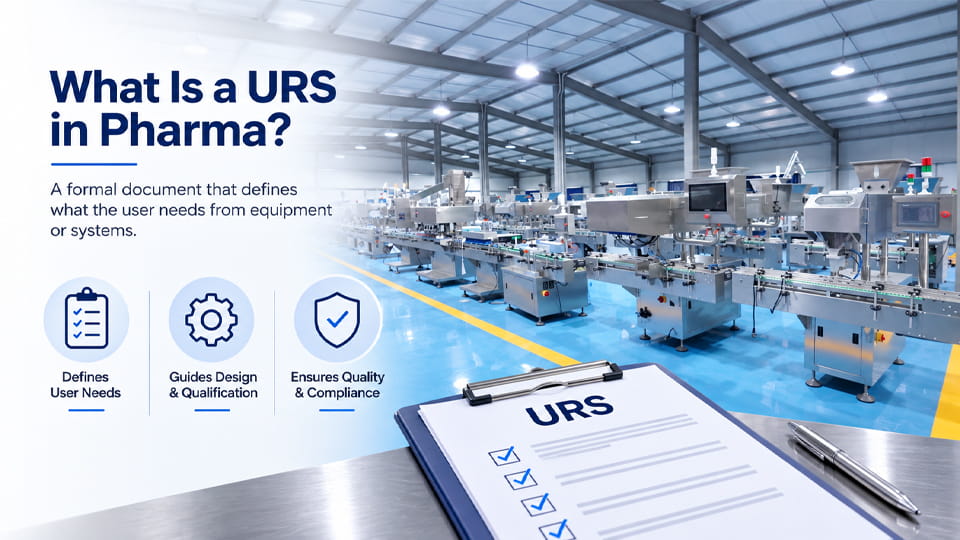
Спецификация требований пользователя (УРС): Четко документируйте все требования заранее: производственная мощность, форматы пакетов, точки интеграции (например. подключение блистерной машины к картонажной машине), условия окружающей среды, требования к уборке. Четко определенная URS обеспечивает бесперебойную проверку.
Стандартные рабочие процедуры (Сов): Ведение подробных СОП по эксплуатации оборудования., уборка, переключение, и обслуживание. Валидация должна ссылаться на эти СОП, чтобы обеспечить последовательное использование..
Автоматизированный контроль и контроль: Внедряйте оперативные проверки качества (например. системы технического зрения для проверки печати/этикеток, чеквейеры, сканеры штрих-кода, детекторы утечек). Это не только инструменты контроля качества, но и часть проверки путем обнаружения дефектов в режиме реального времени..
Комплексная документация: Подготовьте генеральный план валидации с изложением стратегии., и обеспечить все квалификационные протоколы (ИК/Белый/PQ) иметь четкие критерии приемки. Ведите подробные журналы всех запусков, отклонения, и повторные тесты. Используйте контрольные списки, чтобы ничего не упустить из виду.
Обучение и персонал: Операторы и персонал контроля качества должны быть обучены как работе с оборудованием, так и процедурам проверки.. Только квалифицированный персонал должен проводить проверочные испытания и фиксировать результаты..
Программное обеспечение и электронные записи: Для компьютеризированного управления, следовать FDA 21 CFR Часть 11/Приложение GMP 11: проверить программное обеспечение, контрольные журналы, электронные подписи (обеспечить безопасность, резервные копии). Даже нестерильные упаковочные линии часто имеют ПЛК/ЧМИ, требующие проверки..
Проектирование для проверки: Всякий раз, когда это возможно, выбирайте машины с функциями, которые упрощают проверку: например. сервоприводы с цифровым управлением (для точного, воспроизводимые параметры), гигиенические рамы из нержавеющей стали (для легкой очистки), легко заменяемые детали (для уменьшения усилий по очистке между форматами), и модульная конструкция (ограничить количество конфигураций, требующих тестирования).
Текущая проверка: Проверка упаковки не проводится по принципу «один раз и готово». Внедрить триггеры периодической проверки или повторной проверки. (например. после капитального ремонта, модернизация оборудования, или значительное отклонение процесса). Используйте статистический контроль процессов (НПЦ) по ключевым показателям (изменение веса заполнения, процент дефектов) чтобы уловить тенденции заранее.
Целостность данных: Применяйте принципы ALCOA+: все данные проверки (протоколы испытаний, Отчеты контроля качества, калибровки) должно быть атрибутивным, разборчивый, современный, оригинальный, и точный. Используйте переплетенные блокноты или проверенные электронные системы..
Внедряя подходы к проверке на каждом этапе – от проектирования до повседневной эксплуатации – производители могут гарантировать, что упаковочные линии поставляют продукцию, отвечающую ожиданиям по качеству и соответствию требованиям..
Роль упаковочных машин в валидации
Выбор и конструкция упаковочного оборудования во многом влияют на успех валидации.. Высококачественные упаковочные машины разработаны с учетом требований GMP и обеспечивают простую аттестацию.. Например, Джинлу упаковывает автоматизированные машины оснащены функциями, которые упрощают проверку:
Точность и последовательность: Джинлу блистерные машины, Упаковщики и наполнители используют серводвигатели и точную механику для обеспечения постоянного давления термосваривания., заполнить объемы, и индексация. Эта повторяемость имеет решающее значение для прохождения тестов OQ и PQ. (например. устройство подачи с сервоприводом обеспечивает «точное позиционирование» на их блистерной линии).
Гигиенический дизайн: Материалы и поверхности изготовлены из нержавеющей стали или пластика, соответствующего требованиям FDA., предназначен для легкой очистки. Гладкий, наклонные поверхности предотвращают попадание пыли. Это поддерживает соответствие GMP и упрощает проверку очистки..
Адаптируемость к форматам: Jinlu предлагает специальные устройства подачи и направляющие для различных типов упаковок. (видеть Пользовательские кормушки на страницах товаров). Наличие подходящего инструмента уменьшает вариации и ускоряет смену формата., что сокращает необходимость переквалификации при смене формата.
Интегрированные элементы управления: Современные линии Jinlu оснащены элементами управления ПЛК/ЧМИ, которые могут создавать электронные записи партий.. Например, машина для наполнения жидкостью имеет ИИ Siemens ПЛК/ЧМИ для простого, отслеживаемая операция. Такое цифровое управление поддерживает регистрацию данных. (в соответствии с 21 CFR Часть 11/Приложение 11) – имеет решающее значение для проверки того, что уставки и сигналы тревоги функционируют так, как задумано..
Документация по валидации: Jinlu предоставляет полную документацию (Таблицы данных, руководства, и т. д.). Например, список страниц их продуктов «Полный комплект технической документации» и они уделяют особое внимание предоставлению детальной документации по проектированию и испытаниям.. Поставщик, желающий провести заводские приемочные испытания (ТОЛСТЫЙ) протоколы или комплекты IOQ значительно облегчают задачу проверки пользователя.
Качественные сертификаты: Jinlu транспортные машины CE, cGMP и другие сертификаты, указывая, что они соответствуют определенным стандартам качества и безопасности. (см. логотип cGMP на изображениях спецификаций продукта.). Использование сертифицированного оборудования может упростить проверку со стороны регулирующих органов..
На практике, проверенная упаковочная линия может включать в себя: Джинлу блистерная упаковочная машина связан с картонажная машина и подсчет/заполнение строк. Каждое оборудование должно быть сертифицировано. (ИК/Белый/PQ). Системы Jinlu созданы для бесперебойной совместной работы. (например. «Высокоавтоматизированная линия блистерной упаковки» до 320 коробок/мин), уменьшение проблем интеграции во время проверки. Мы также предлагаем тематические исследования (например. полный линия подсчета и розлива, или автоматическая картонация & линия маркировки) которые демонстрируют комплексные проверенные решения.
Роликовая блистерная упаковочная машина DPH-270Max
Сотрудничая с Jinlu или аналогичными производителями, компании получают выгоду от оборудования, которое «соответствует cGMP», поддерживает полный жизненный цикл проверки, и поставляется с послепродажной поддержкой (ввод в эксплуатацию, обучение) чтобы убедиться, что линия остается проверенной.
Заключение
Проверка упаковки имеет важное значение для фармацевтического качества и соблюдения требований. Относясь к упаковочным операциям так же строго, как и к основным этапам производства., компании гарантируют, что их продукция безопасна для пациентов. Процесс охватывает определение (УРС, оценка риска), квалификация (ДК/IQ/ОК/ПК), тестирование (CCIT, стабильность, транспорт), и постоянный мониторинг. Это регулируется правилами GMP. (FDA, ЕМА, ВОЗ) и отраслевые стандарты.
Современное автоматизированное упаковочное оборудование, такое как машины Jinlu Packing, играет ключевую роль в проверке.. Создан для точности, гигиена и электронная отслеживаемость, они помогают производителям эффективно соответствовать критериям валидации. При выборе упаковочных линий, рассмотрите поставщиков, которые предоставляют полную проверочную документацию и поддержку.
В конечном счете, тщательная проверка упаковки «Последняя гарантия качества продукции и безопасности пациентов», соответствие как нормативным требованиям, так и бизнес-целям.
Готовы проверить вашу упаковочную линию?Свяжитесь со специалистами Jinlu Packing чтобы обсудить упаковочные решения, соответствующие GMP, или запросить ценовое предложение.
Часто задаваемые вопросы о проверке упаковки в фармацевтической промышленности
В чем разница между проверкой упаковки и проверкой процесса??
Валидация процесса обычно относится к этапам производства лекарственной субстанции или нерасфасованного лекарственного препарата. (например. смешивание, грануляция, сжатие). При валидации упаковки принципы валидации конкретно применяются к упаковочным операциям. (уплотнение, маркировка, картонная начинка, и т. д.). Однако, оба соответствуют одному и тому же жизненному циклу DQ/IQ/OQ/PQ и требованиям GMP.. По сути, проверка упаковки обеспечивает процесс упаковки (не только производственный процесс) стабильно соответствует требованиям качества.
Какие тесты необходимы для валидации фармацевтической упаковки?
Ключевые тесты включают целостность закрытия контейнера. (CCIT) для проверки пломб, Совместимость материала (исследования экстрагируемых/выщелачиваемых веществ), тесты стабильности (препарат в окончательной упаковке в условиях стресса), и тесты распространения (шок, вибрация, температура для транзита). Дополнительные проверки касаются точности этикеток., системы визуального контроля, взвешивание/контрольное взвешивание, и любые тесты по контракту (например. прочность стерильной пленки). Все испытания должны иметь заранее определенные критерии приемки и документироваться..
Сколько времени обычно занимает проверка упаковки?
Сроки зависят от сложности (количество форматов, оборудование, сайты). Однострочный показатель IQ/OQ/PQ может варьироваться от нескольких недель до пары месяцев.. Факторы: количество проверок параметров OQ, требуемые размеры выборки в PQ, и время для выполнения теста (например. стабильность в ускоренных условиях занимает недели). Планирование параллельных мероприятий (например, подготовка протоколов, пока оборудование прибудет) может сэкономить время.
Какие документы регулируют валидацию упаковки?
Основными ссылками являются правила GMP.: 21 CFR Part 211 (Управление по санитарному надзору за качеством пищевых продуктов и медикаментов США), ЕвдраЛекс Том. 4 (GMP ЕС, Приложение 1 и 15), и Приложение GMP ВОЗ 9. ICH Q7/Q10 содержит общие принципы проверки., ICH Q9 посвящен управлению рисками при принятии решений по упаковке., и ИСО 11607-2 применяется к проверке процесса стерильной упаковки. Фармакопейные стандарты (USP, Ph. Евро.) и местные рекомендации (например. Китайский НМПА, Индия Расписание M) также влияют на требования к упаковке. Всегда согласовывайтесь с правилами целевого рынка..
Как Jinlu Packing поддерживает проверку упаковки?
Упаковочные машины Jinlu созданы в соответствии с GMP.. Предоставляют проектную документацию (УРС, ФДС), сертификаты калибровки, и поддержка OQ/PQ. Их оборудование (блистерные машины, картотеры, линии заполнения) отличается точным сервоуправлением и гигиеническим дизайном, отвечающим проверочным спецификациям. Как показано на сайте Jinlu, машины имеют логотипы cGMP/CE и поставляются с комплектами технической документации.. Jinlu также предлагает поддержку при установке и проверке., индивидуальные решения, и обучение, которое поможет внедрить проверенные упаковочные линии. Для получения дополнительной информации, см. страницы о блистерной упаковочной машине или картонажной машине Jinlu..
Мелкий фу, Основатель компании Jinlupacking, приносит 20 многолетний опыт работы в секторе фармацевтического оборудования. Под его руководством, Jinlu превратилась в надежного поставщика, интегрирующего дизайн., производство, и продажи. Петти с радостью делится своими глубокими отраслевыми знаниями, чтобы помочь клиентам разобраться в сложностях фармацевтической упаковки., гарантируя, что они получат не только оборудование, но настоящее комплексное сервисное партнерство, адаптированное к их производственным целям..