
Покупка фармацевтическое оборудование дело не только в скорости, точность, автоматизация, и размер машины. Прежде чем оборудование попадет на ваш завод, вам также необходимо знать, поддерживает ли сайт это.
Это означает проверку Требования к коммунальным предприятиям фармацевтического оборудования: электроэнергия, сжатый воздух, пустой, вода, охлаждение, выхлоп, и любые услуги, специфичные для процесса, такие как пар или азот..
Машина может быть механически идеальной, но при этом не достигать номинальной производительности, если напряжение неправильное., давление воздуха падает во время пиковой производительности, мощность вакуума недостаточна, или охлаждающая вода слишком теплая. Для закупок, инженерия, и продюсерские коллективы, планирование коммунальных услуг должно начинаться до заказа на покупку, а не во время установки.
Ключевые выводы
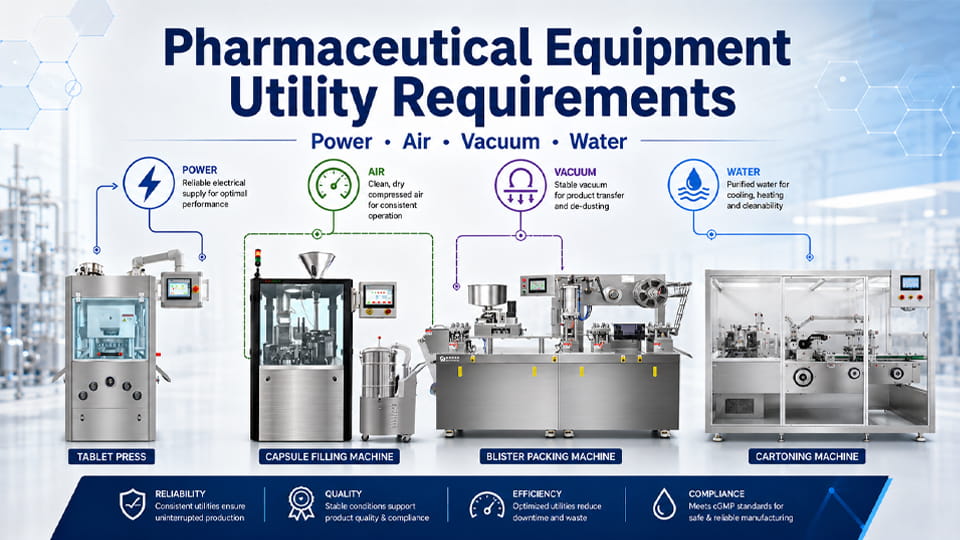
Требования к коммунальным услугам фармацевтического оборудования — это услуги на объекте, которые необходимы машине для правильной работы.. Электроэнергия почти универсальна. В зависимости от машины и процесса, вам также может понадобиться сжатый воздух, пустой, охлаждающая вода, техническая вода, выхлоп, пар, азот, дренаж, или контролируемые условия окружающей среды. Точный список зависит от оборудования., процесс, параметры, и предполагаемое использование.
Не каждая утилита автоматически является критическая полезность в смысле GMP. Ключевой вопрос заключается в том, может ли коммунальное предприятие повлиять на качество продукции., производительность процесса, или риск загрязнения.
FDA Q7 идентифицирует такие утилиты, как Steam, газ, сжатый воздух, обогрев, вентиляция, и кондиционирование воздуха как системы, которые следует аттестовать и надлежащим образом контролировать, если они могут повлиять на качество продукции.. Также речь идет о вентиляции., фильтрация, выхлоп, пыль, влажность, температура, контроль давления, и пригодность воды.
Руководство ВОЗ следует тому же принципу использования по назначению.: коммунальные услуги, такие как HVAC, вода, азот, и сжатый воздух должен быть пригоден для использования по назначению и не должен негативно влиять на качество продукции или становиться источником загрязнения..
Для покупателей, практический смысл прост: Перед установкой требования к машине и возможности предприятия должны совпадать..
Коммунальные услуги напрямую влияют на производительность оборудования и качество продукции. Несоответствия в коммунальных услугах часто случаются из-за того, что закупки, производство, инженерия, и команды проверки сосредотачиваются на разных частях проекта. The Руководство FDA по GMP (В7А) прямо заявляет, что «все утилиты, которые могут повлиять на качество продукта (НАПРИМЕР., пар, газ, сжатый воздух, обогрев, вентиляция, и кондиционер) должны быть квалифицированы и должным образом контролироваться». Другими словами, если у вас произошел сбой в подаче сжатого воздуха или воды, это может остановить работу машины или даже загрязнить продукт.. Например, неадекватная фильтрация сжатого воздуха может привести к попаданию масла или микробов в капсулы или блистерные упаковки.. Так же, Слишком низкое напряжение или засорение воздушной линии могут привести к снижению производительности двигателей и клапанов..
Раннее подтверждение полезности помогает предотвратить три дорогостоящих последствия:
Именно поэтому планирование коммунальных услуг занимает гораздо более ранний этап жизненного цикла оборудования, чем ожидают многие покупатели.. Во время установки (СБ/IQ), коммунальные услуги – в центре внимания. Контрольный список установки упаковочного оборудования Jinlu явно подтверждает «коммунальные услуги (напряжение питания, пневматическое давление, вода, и т. д.)» против технических характеристик машины. Приемочное тестирование на месте (СБ), инженеры будут измерить фактическое напряжение, давление/расход воздуха, температура воды, и т. д.. от источника питания, чтобы подтвердить, что они остаются в пределах диапазонов, указанных для машины.. Суммируя, соответствие коммунальных услуг спецификациям оборудования жизненно важно, чтобы избежать сюрпризов: машина не может работать на полной скорости или может сломаться, если, сказать, растительный воздух только 3 бар вместо необходимого 6 бар, или если двигатель находится на неправильном напряжении.
Начните с Требования к электропитанию фармацевтического оборудования указано в окончательном техническом паспорте, а не в спецификации, скопированной с другой модели..
Подтвердите напряжение, одинокий- или трехфазное питание, частота, установленная/номинальная мощность, максимальный спрос, основное соединение, и любое отдельное питание для вспомогательного оборудования. Экспортное оборудование зачастую может быть настроено для разных рынков.. Например, Списки наполнителей капсул NJP-2600D от JinLu 220/380 V., 50/60 Гц настраиваемая мощность и 8.0 кВт общая мощность; списки блистерных машин DPP-260R 380/220/110 V., 50/60 Гц и 5.5 кВт. Эти примеры показывают, почему покупателям никогда не следует предполагать одно «стандартное фармацевтическое напряжение».
Также отдельно установленная мощность от нормального рабочего потребления. Установленная или номинальная мощность полезна для планирования электрической инфраструктуры., но фактический спрос меняется по мере нагрева обогревателей, моторы, вакуумные насосы, конвейеры, и дополнительный цикл модулей. Спросите поставщик фармацевтического оборудования для максимальной/пиковой нагрузки и ожидаемой рабочей нагрузки, если таковая имеется. Конечный кабель, разрушитель, защита, заземление, и проект изоляции должен соответствовать электрическим правилам страны назначения и квалифицированному электрическому проекту проекта..
Ключевые моменты:
Пневматические цилиндры, клапаны, захваты, отклонять устройства, функции очистки, и механизмы обработки продуктов могут зависеть от сжатого воздуха.
Сколько сжатого воздуха нужно фармацевтическому оборудованию?
Не существует универсального требования к воздуху для фармацевтического оборудования.. Укажите как рабочее давление (обычно указывается в барах или МПа), так и расход в Нл/мин., л/мин, Нм³/ч, или другое четко определенное исходное условие. Две машины могут требовать одинакового давления, но совершенно разного расхода., поэтому определение размера компрессора только по давлению ненадежно..
Воздух качество имеет значение отдельно от давления и количества. ИСО 8573-1:2010 классифицирует чистоту сжатого воздуха по частицам, вода, и нефть; по состоянию на август 2026, это издание остается опубликованным, пока его редакция находится в стадии разработки.. ИСО делает нет предписать один универсальный класс чистоты для каждого фармацевтического применения, поэтому требуемый класс должен основываться на предполагаемом использовании и риске загрязнения..
Укажите фильтрацию, допустимые частицы, общее количество нефти, влага, и точка росы под давлением (ПРП) где это уместно. PDP описывает температуру, при которой влага будет конденсироваться при давлении в системе.; более низкий PDP означает более сухой сжатый воздух. Для воздуха, который может повлиять на открытый продукт или критические поверхности., установить требования к качеству и проверке на месте использования. В руководстве FDA по инспекциям конкретно обсуждается анализ систем сжатого воздуха и фильтрации частиц в точках использования в соответствующих фармацевтических операциях..
Должно ли это быть без масла? Иногда, но «безмасляный компрессор» не должен заменять измеримую характеристику качества воздуха.. Определить приемлемое масло в месте использования, оценить риск контакта с продуктом, и используйте подходящую сушку, фильтрация, мониторинг, и квалификация. Целью является контроль подаваемого воздуха, а не просто маркировка компрессора..
Ключевые моменты:
А фармацевтическая вакуумная система может поддержать разделение капсул, вакуумное дозирование порошка, блистер или обработка материалов, всасывающий датчик, передача продукта, или удаление пыли. ДжинЛу Машина для наполнения капсул NJP-2600D, например, использует вакуумный насос для разделения крышки и корпуса капсулы.
Всегда запрашивайте два параметра:
Уровень вакуума говорит вам, насколько низкое давление, или какой перепад давления, процесс требует. Вакуумный поток/скорость откачки сообщает вам, сколько газа система может удалить с течением времени. Поэтому производители насосов публикуют их отдельно.; Рост, например, указывает как скорость откачки в м³/ч, так и достижимое давление для вакуумного оборудования..
Встроенный насос прост и обеспечивает относительную независимость одной машины.. Центральная система может сократить количество насосов и централизовать техническое обслуживание., но потери в трубах, одновременный спрос, сегрегация загрязнений, и последствия отказа должны быть оценены. Уточните у поставщика машины требуемый вакуум при подключении машины, а не только данные о паспортной табличке насоса..
Ключевые моменты:
Какая вода требуется фармацевтическому оборудованию?
Качество воды зависит от того, что делает вода.. Охлаждающая вода с замкнутым контуром, питьевая вода, Очищенная вода, и WFI не являются взаимозаменяемыми спецификациями.. Определите, контактирует ли вода с продуктом или с поверхностями, контактирующими с продуктом., поддерживает очистку или обработку, или только отводит тепло; затем присвойте соответствующее качество, температура, давление, поток, и требования к мониторингу.
ВОЗ утверждает, что соответствующий фармацевтический класс воды следует выбирать в соответствии с предполагаемое применение, продукт, и этап изготовления; WFI связан с конкретными видами использования с повышенным риском, а не с каждым фармацевтическим оборудованием.. FDA Q7 аналогичным образом требует, чтобы технологическая вода была пригодна для использования по назначению..
Это особенно важно для Требования к воде для фармацевтического оборудования. Охлаждающая вода машины может просто циркулировать через теплообменник или охлаждающую пластину и никогда не касаться продукта.. Тем не менее, FDA Q7 требует контролировать нагревательные и охлаждающие жидкости, чтобы они не вступали в неблагоприятный контакт с продуктом и не влияли на него..
Охлаждение/чиллер, пар, и выхлоп
А блистерный упаковщик, система покрытия, или другому оборудованию, выделяющему тепло, может потребоваться охлаждающая вода или внешний охладитель в зависимости от конструкции.. Прежде чем выбрать чиллер, получить необходимую температуру на входе, поток, давление, теплоотводящая нагрузка, совместимость воды/гликоля, и размер соединения. Не рассчитывайте его только исходя из электрической мощности машины..
Steam — это не стандартная утилита для каждой упаковочной машины. Это становится актуальным в особенности отопления, уборка, стерилизация, покрытие, или технологические системы. Когда пар может повлиять на качество продукта, FDA и ISPE рассматривают его как утилиту, требующую соответствующего контроля..
Окончательно, не забудь пылеудаление и вытяжка. Сжатие планшета, капсульная начинка, грануляция, и обработка порошка может привести к образованию пылевых нагрузок, требующих местного удаления или локализации.. FDA Q7 призывает к адекватной вентиляции, фильтрация, и выхлоп, где это необходимо, включая контроль за пылью и риском перекрестного загрязнения.
Ключевые моменты:
Помимо четырех основных утилит, рассмотрите эти общие услуги:
Следующая матрица представляет собой инструмент планирования., не технические характеристики машины. «Общий» означает часто встречающийся; «Зависит от модели» означает окончательную конфигурацию., продукт, или процесс решает.
| Оборудование | Власть | Сжатый воздух | Вакуум | Вода / Чиллер | Выхлоп / Пыль |
| Таблеточный пресс | Необходимый | Общий | Зависит от модели | Обычно ограничено | Общий |
| Машина для наполнения капсул | Необходимый | Общий | Общий | Обычно ограничено | Общий |
| Блистерная упаковочная машина | Необходимый | Общий | Зависит от модели | Зависит от модели | Зависит от модели |
| Счетчик таблеток/капсул | Необходимый | Зависит от модели | Обычно ограничено | Обычно нет | Зависит от модели |
| Картонирующая машина | Необходимый | Общий | Зависит от модели | Обычно нет | Обычно ограничено |
| Машина для нанесения покрытий | Необходимый | Общий | Зависит от модели | Общий/зависящий от процесса | Общий |
| Гранулятор / система с псевдоожиженным слоем | Необходимый | Общий | Зависит от процесса | Зависит от процесса | Общий |
Данные производителя подтверждают вариацию, а не единый отраслевой номер.: JinLu предлагает настраиваемые источники электропитания в своем каталоге. Капсульные машины для заполнения и Блистерные упаковочные машины, и публикует сжатый воздух под давлением 6 бар для одного таблеточного пресса и конкретные значения расхода для капсулонаполнителя..
Полезная информация для поставщиков пример спецификации утилиты может выглядеть так:
| Утилита | Иллюстративное требование | Что должен подтвердить покупатель |
| Власть | 380 V., 50 Гц, 3-фаза | Местное снабжение, терпимость, защита |
| Установленная мощность | 8 кВт | Пиковый спрос и вспомогательные средства |
| Сжатый воздух | 6 бар на входе в машину | Давление во время пиковой добычи |
| Потребление воздуха | 200 НЛ/мин | Нормальный и максимальный поток |
| Качество воздуха | ИСО 8573-1 сорт: TBD от URS | Частицы, вода/ПДП, масло |
| Вакуум | −60 кПа(герметичный), 80 м³/ч | Требуемый уровень и поток |
| Охлаждающая вода | 15–20°С, 5 л/мин | Тепловая нагрузка, давление, температура возврата |
| Выхлоп | 500 м³/ч | Статическое давление и фильтрация |
| Соединения | Поставщик для определения | Размер, сторона, высота, примерка |
Это намеренно иллюстративные значения., не спецификации для какой-либо модели JinLu или сторонних производителей. Окончательные данные должны быть взяты из утвержденной спецификации выбранной машины.. Реальные таблицы производителей демонстрируют, насколько широко могут варьироваться значения..
Для новой линии, не добавляйте каждое значение паспортной таблички вслепую и не выбирайте размер только для одной машины.
Для каждой утилиты, построить график загрузки:
Проектный спрос ≈ Σ (потребность в оборудовании × ожидаемый коэффициент одновременного использования) + обоснованный резерв
Используйте максимальное рабочее потребление поставщика, при котором машина может работать непрерывно с такой нагрузкой.. Выявите непостоянных пользователей отдельно. Затем протестируйте наихудший вероятный производственный сценарий, например, блистерная машина, картон, прилавок, и пневматические устройства отбраковки все работают, пока запускается другая линия.
Перед установкой, убедиться, что все инженерные коммуникации на объекте соответствуют характеристикам оборудования. Контрольный список может включать в себя:
Пример: Перед отправкой, поставщик может предоставить спецификацию оборудования со списком «Воздух: 6.0 бар, 200 НЛ/мин; Вакуум: –60 кПа; Власть: 380В переменного тока 3-фазный, 10 кВт». Используйте это для настройки цепей и трубопроводов.. Во время установки IQ, измерьте каждый расходный материал, чтобы убедиться, что он соответствует этим спецификациям.
Тщательная URS должна четко перечислять все необходимые коммуникации и условия. В разделе «Коммунальные услуги и окружающая среда»., укажите точные значения (например. «Сжатый воздух: 6.0 бар ±0,2, 100 НЛ/мин, Класс ISO 8573‑1 1.0. Электрический: 400 V., 3-ж, 50 Гц, 15 кВт».). Нормативное руководство (Приложение GMP ЕС 15) требует проверки требований URS во время квалификации проекта. На практике, включение четких спецификаций коммунальных услуг в URS/чертежи контракта заставляет как покупателя, так и поставщика заранее согласовывать потребности. Это также делает ИК/Белый/PQ простота тестирования – каждое подключение к утилите можно отследить до элемента URS.
Перед заказом всегда уточняйте список утилит у своего поставщика.. Поставщики должны предоставить Лист требований к утилитам или паспортная табличка для каждой машины. Просмотрите их на начальном совещании или добавьте в заказ на покупку.. Например, попросить поставщика включить характеристики коммунальных услуг в данные о поставщике (в рамках ФАТ). Во время САТ, физически проверять каждое подключение: измерить напряжение на объекте, давление, и поток в соответствии со спецификациями поставщика. Сохраняйте документированную подпись (часто как часть отчета IQ) что «коммунальные услуги взаимосвязаны и соответствуют спецификациям» – это ожидание GMP (IQ обычно включает в себя проверку силы, пневматический, подключение воды).
Если что-то не совпадает (например. на сайте есть только 200 V но машина нужна 400 V.), решите проблему немедленно – либо предоставьте трансформатор, либо попросите поставщика переконфигурировать машину.. Помнить, Проблемы несоответствия утилит легче исправить до начала производства, чем после.
В итоге, тщательное планирование коммунальных услуг так же важно, как и выбор правильной машины. Линия оборудования может работать с запланированной скоростью и качеством только в том случае, если власть, воздух, пустой, и вода доступны с правильными спецификациями. Используйте таблицы этого руководства, контрольные списки и формулы для оценки ваших потребностей и включения их в URS. Работайте со своим поставщик оборудования (такие как Jinlu Packing) документировать каждое требование к коммунальным предприятиям и проверять его на месте.
Готовы упростить планирование коммунальных услуг? Эксперты Jinlu Packing могут проконсультировать по вопросам подключения электропитания и коммунальных услуг для всех наших фармацевтические упаковочные машины. Посетите страницы продуктов Jinlu – например, Машина для наполнения капсул, Таблеточный пресс, Блистерная упаковочная машина, Счетная машина, Картонирующая машина, Упаковочный аппарат саше или Готовая упаковочная машина – для получения технических характеристик и контактной информации. Для дальнейшей помощи, свяжитесь с нами с нашей командой чтобы убедиться, что ваш объект готов к использованию для бесперебойной установки и функционирования в соответствии с требованиями.
Основа — электроэнергия, сжатый воздух, пустой, и вода/охлаждение. Многие упаковочные линии также используют чистый пар. (для стерилизаторов), инертный газ (N₂ для упаковок подушек), и пылеудаление. Нормативные руководства (например. FDA Q7A) явно вызвать Steam, газ (воздух/азот), ОВК, и т. д.. как коммунальные услуги, которые должны быть квалифицированы.
Большая часть оборудования представляет собой трехфазное промышленное питание.. Обычно 380–400 В переменного тока (50 Гц) или 480 ВАК (60 Гц) с нейтралью или землей. Некоторые устройства меньшего размера могут работать от однофазного напряжения 220–240 В переменного тока.. Важно подтвердить точное напряжение и фазу. (Машины Jinlu часто поддерживают 380/220/110 ВАК 50/60 Гц). Также проверьте, исправна ли машина 50 Гц против 60 Гц или если он может принять оба (как многие могут).
Это зависит от машины и количества единиц.. Для одной блистерной или картонажной машины может потребоваться порядка 50–200 нл/мин. (при ~5–6 бар). Наполнитель капсул или счетная машина могут использовать 30–100 нл/мин.. Давление обычно составляет ~5–6 бар. (0.5–0,6 МПа). Проверьте характеристики каждой машины на предмет расхода. (часто указывается в НЛ/мин или SCFM) и давление. Суммируйте их для своей линии (помните о факторе разнообразия). Всегда обеспечивайте небольшой дополнительный объем в компрессорной системе завода для удовлетворения пиковой нагрузки..
Фармацевтические стандарты требуют безмасляного, сухой воздух. Обычно ISO 8573-1 Сорт 2 (или лучше) рекомендуется для воздуха в фармацевтических помещениях. Это означает по существу 0 масло (Сорт 0 сертификация), точка росы воды ≤–40 °C, и плотные сажевые фильтры (например. 0.01 мкм). Укажите это в своем URS.. Например: «Сжатый воздух: 6.0 бар, 99.995% без масла, точка росы –40 °С, 0.01 Микрометрический фильтр в точке использования» является четким требованием..
Обычно нет, если это не стерилизованный процесс. Для ополаскивания или охлаждения, обычная питьевая вода приемлема. В руководстве FDA говорится, что технологическая вода как минимум должна соответствовать требованиям ВОЗ для питья (питьевая вода) стандарты. Используйте более качественные PW или WFI только в том случае, если оборудование непосредственно связано с инъекционным продуктом или если из него образуется чистый пар.. Всегда уточняйте в URS: «Водоснабжение: питьевой (одобрен NSF) для охлаждения; отсутствие контакта воды с продуктом».
Выделите раздел «Коммунальные услуги и окружающая среда» и укажите точные цифры.. Например: «Электрический: 400 ВАК, 3ж, 50 Гц, 15 кВт. Воздух: 6.0 бар ±0,2, 100 НЛ/мин. Вакуум: –70 кПа (пресс). Вода: 30 пси, 20 л/мин». В руководстве Jinlu URS подчеркивается, что коммунальные предприятия (Напряжение, давление/расход воздуха, охлаждающая вода, пустой, и т. д.) должно быть указано. Включите эти требования в заказ на поставку, чтобы поставщик мог гарантировать их соответствие требованиям FAT/SAT..
В конечном итоге покупатель/объект должен убедиться, что инженерные коммуникации на объекте соответствуют спецификациям., но поставщик должен документировать то, что необходимо. Во время ФАТ, поставщик может моделировать коммунальные услуги; но SAT/IQ – это то, где ты (пользователь) подтвердите реальными поставками. GMP требует документированных тестов IQ для коммунальных предприятий. На практике, команды технического обслуживания/инжиниринга готовят площадку, и отдел контроля качества или инженерный отдел проверят коммунальные услуги в день установки.
Любое несоответствие является «несоответствием». Например, если мощность сайта неправильная, вам понадобится электрик, чтобы модифицировать панель (или поставщик поменять трансформаторы). Если давление воздуха низкое, вам может понадобиться усилитель или регулятор. Не запускайте машину в таких условиях – она может не работать или повредить оборудование.. Устраните проблему или попросите поставщика скорректировать конструкцию.. В идеале, такие проблемы выявляются в SAT и решаются до ввода в эксплуатацию.
Да. Используйте пищевые масла в вакуумных или пневматических системах.; убедитесь, что все смазочные материалы совместимы с фармацевтическим применением. Четко обозначьте инженерные коммуникации (маркировка труб помогает избежать ошибок). Обеспечить аварийную остановку и обеспечить доступность отключений коммунальных услуг в чистом помещении.. Избегайте тупиков в трубопроводах (нет застойных зон). И помните, что проверки качества коммунальных услуг являются частью GMP – например,. Инспекторы FDA проверят ваш сертификат на сжатый воздух и результаты испытаний воды..
Ссылки:
1.Руководство по передовой практике: Критические коммунальные услуги Соответствие GMP —— испе
2.Критические утилиты —— испе
3.Q7A Руководство по надлежащей производственной практике для активных фармацевтических ингредиентов —— НАС. Управление по контролю за продуктами и лекарствами
4.Чистые помещения и связанные с ними контролируемые среды —— ИСО 14644-1:2015