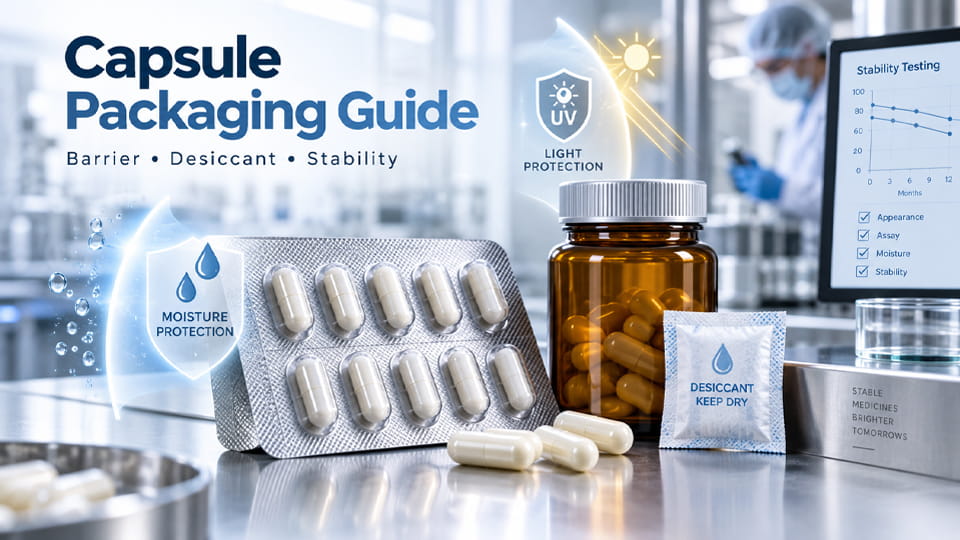

When tablet stability data show sensitivity to humidité, oxygène, ou lumière, the packaging requirement should follow the degradation risk—not the other way around. A tablet that is affected by humidity may need stronger moisture protection, while an oxidation-sensitive product may require better oxygen control. If light exposure causes unacceptable changes, the package must provide an appropriate level of light protection. The goal is not to choose the package with the highest nominal barrier, but to provide enough protection to keep the product within its quality specifications throughout its intended shelf life.
This is where tablet stability and packaging need to be considered together. Stability results can show which critical quality attributes are changing, while packaging development translates those findings into practical requirements such as moisture barrier performance, oxygen barrier performance, or light protection. ICH photostability guidance also recognizes that packaging may need to be adjusted when light exposure produces unacceptable changes. Dans les rubriques ci-dessous, we will follow a practical path from stability data → degradation mechanism → critical quality attributes → barrier requirement → packaging structure, and then look at how the final package should be verified.
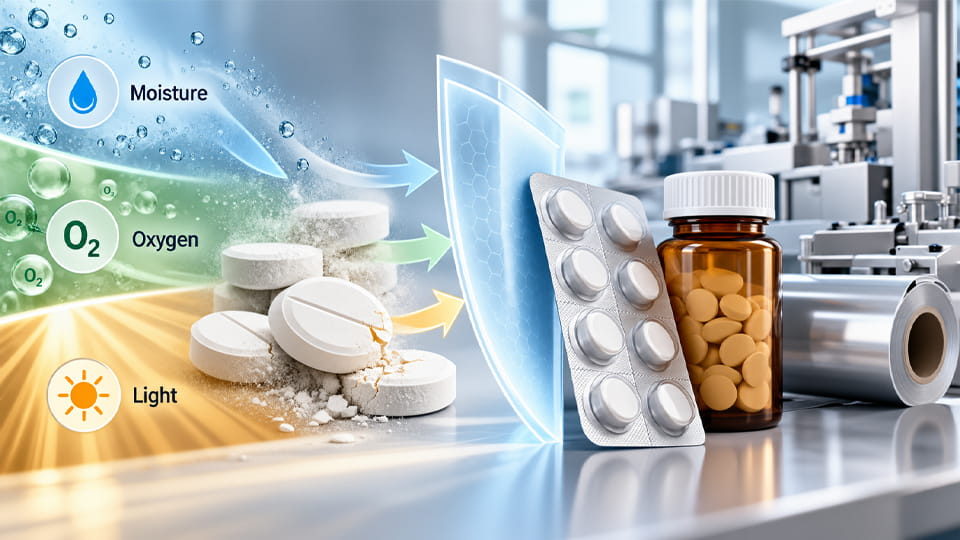
Packaging is part of the stability strategy. Drug makers now understand that a tablet can pass initial release tests yet still degrade in storage if exposed to moisture, oxygène, ou de la lumière. En fait, ICH explicitly requires that accelerated and long-term stability studies be conducted on the drug product in its final or representative container-closure system. Autrement dit, packaging cannot be an afterthought. Early stability testing should reveal which environmental stressors most threaten the tablet’s quality, so that the package can be specified accordingly.
Comme le note un expert, choosing a blister film or bottle is not just “pick the best material” – it’s about “What barrier does the stability data actually require?” Packaging must meet the Quality Target Product Profile for stability.
Stability studies yield data on a tablet’s attributs de qualité critiques (CQA) under stress conditions (par exemple. high RH, high O₂, lumière). Packaging engineers should look beyond the obvious assay and impurity changes to other signals:
| Stability Finding | Likely Risk | Packaging Implication |
|---|---|---|
| Increased degradation (assay loss, impuretés) at high RH | Moisture-induced hydrolysis/chemical change | Choose high moisture barrier package (low MVTR film or add desiccant) |
| Oxidative degradants or potency loss in oxygen-rich conditions | API/excipient oxidation | Choose oxygen-barrier packaging (low OTR film, N₂-flush, oxygen scavenger) |
| Color change or new impurities under light exposure | Photodegradation | Add light protection (opaque/amber package, UV-filter foil) as per ICH Q1B |
| Dissolution slowed or hardness changed at high RH | Physical instability from moisture | Improve moisture barrier (par exemple. blister with PVDC/alu) or use desiccant pack |
| No significant change in stressed conditions | Low sensitivity to that factor | Standard packaging may suffice – avoid over-specifying barrier |
This table summarizes how specific stability findings point to packaging actions. La clé est de correspondre the stress that caused failure (humidité, oxygène, ou de la lumière) with the appropriate barrier.
Moisture is one of the most common culprits in tablet instability. Water vapor can permeate a package and interact with hygroscopic or hydrolysis-prone APIs/excipients. Effects include chemical hydrolysis, croissance microbienne (dans des cas extrêmes), and physical changes (tablet softening or discoloration).
En termes pratiques, if stability data show moisture-driven failures, plan for a “moisture barrier package”. That might mean specifying blister film materials by their MVTR, and verifying via testing (par exemple. ASTM F1249) that the final package meets the moisture ingress limits suggested by the stability gap.
Oxygen exposure can oxidize sensitive Apis ou excipients, leading to loss of potency, appearance/color changes, or harmful degradants. Unlike moisture, oxygen ingress happens through the film and any headspace.
Even if initial tests didn’t show oxidation, any hint of O₂-driven instability should prompt spec’ing an oxygen barrier. Souviens-toi, a film with low MVTR might still have a high OTR (moisture barrier is not the same as oxygen barrier). Always match the measured OTR to the product’s stability risk.
Lumière (UV/visible) can photo-activate APIs, causing bond breakage or new photodegradants. Je Q1B provides a formal photostability protocol. Key points for packaging:
Photostability is often treated as a binary “need light barrier or not,” but in reality, it’s graded. A slight assay loss under light might be acceptable if within spec, whereas a dramatic color change would force heavy light-blocking packaging. Finalement, any photodegradation observed leads to packaging or labeling measures to mitigate exposure.
To systematically go from stability data to packaging, consider this stepwise framework:
Ci-dessous se trouve un decision matrix summarizing common stability observations and the corresponding packaging actions:
| Stability Observation | Likely Packaging Response |
|---|---|
| Significant moisture uptake or assay loss at high RH | Improve moisture barrier: use low-MVTR films (par exemple. PVDC, alu-foil), consider desiccants in bottle, tight seals |
| Oxygen-induced degradation (new oxidized impurities) | Improve oxygen barrier: low-OTR materials (déjouer, ÉVOH), inert fill (N₂ flush), oxygen scavengers |
| Photodegradation (assay/impurity change in light) | Add light protection: opaque/amber pack (par exemple. foil blister, bouteille ambrée), label “protect from light” |
| Combined humidity & temperature stress failures | High-barrier multi-layer packaging: par exemple. cloque + déjouer + déshydratant, or bottle with desiccant + foil lamination |
| Minimal change under stress | Standard packaging with basic protection is sufficient; avoid unnecessary cost (no over-spec) |
This matrix is a starting point for packaging development. Each drug may require tuning: Par exemple, an extremely hygroscopic tablet might need deux layers of moisture barrier.
Once the required barriers are clear, the next choice is package type. Tablets are commonly packed in plaquettes thermoformées unitaires ou multidose bottles. Each has trade-offs:
| Exigence | Plaquette PVC/PVDC | Blister Alu-Alu | Bouteille en PEHD (avec capuchon) |
| Barrière contre l'humidité | Modéré: PVDC layer helps (MVTR ~0.3–0.6 g/m²·day) | Excellent: essentially zero moisture ingress (<0.01 g/m²·day) | Variable: moderate unless desiccant used; depends on bottle material (PEHD) and cap seal |
| Barrière d'oxygène | Modéré: PVDC gives some barrier (OTR ~0.8–1.2 cc/m²·day·atm) | Excellent: Alu foil blocks oxygen (<0.005 cc/m²·day·atm) | Variable: HDPE is relatively permeable; can flush with N₂; can add oxygen absorber in cap |
| Protection contre la lumière | PVC/PVDC is semi-opaque (some light passes) | Complete opacity (pas de lumière); best for photosensitive | Need amber or UV blocker; standard clear/white bottles allow light |
| Unit-dose control | Yes – one tablet per cavity, inviolable | Yes – common for single-dose vaccines (rare for tablets) | No – multiple tablets per bottle, requires counting/dispensing |
| Speed/Flexibility | High-speed lines, but limited to fixed form (tablet shape must fit cavity) | Slower lines; customization possible but more expensive tooling | Versatile – any shape fits in bottle; easy to change dosage count per bottle |
| Desiccant use | Not typical in blister; can use foil + moisture barrier instead | Not applicable (solid foil provides barrier) | Easy – sachet or bottle-insert desiccant common for tablets |
| Coût | Coût matériel inférieur; mid-range equipment cost | Highest material cost (déjouer) and equipment cost | Generally lower material cost; counting machines add to line cost |
| Cas d'utilisation typique | OTC/vitamins, moderate sensitivity tablets | Highly sensitive or regulatory-demanded (certain Rx) | Multidose supplements, bulk tablets, coarse powders |
When to use which: If stability data point to very high moisture or oxygen sensitivity, un blister alu-alu paquet is often the safest choice, providing the maximum barrier. PVC/PVDC blisters suit moderately sensitive products at lower cost and are recyclable-outside-the-US in some cases. Bottles shine when high barrier isn’t needed or when dosing flexibility/desiccant is required. Par exemple, a slightly hygroscopic multivitamin may be fine in a PVC/PVDC blister (ou bottle with desiccant), but a moisture-labile oncology API might demand alu-alu blisters.
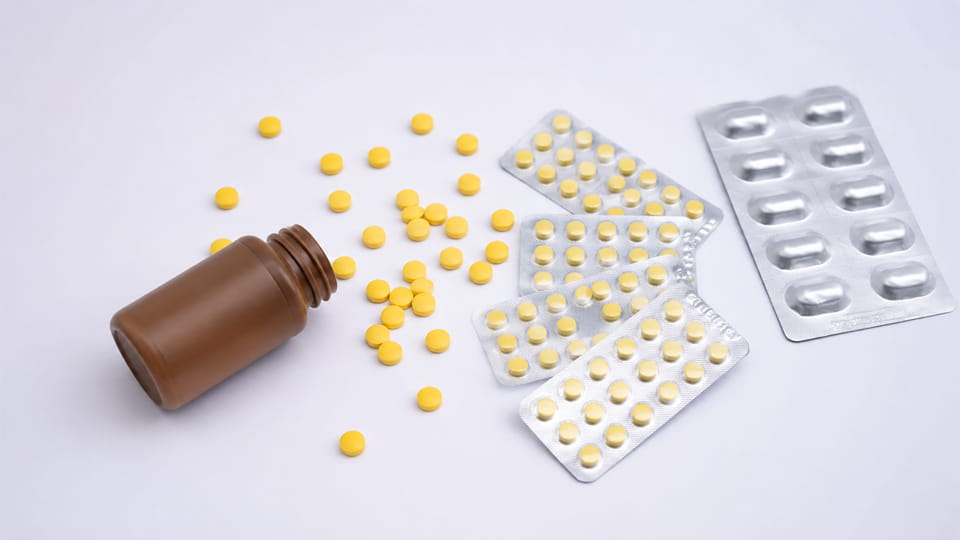
After selecting a packaging concept, teams must verify that it truly meets the barrier needs:
En bref, test the packaging as you’d test the drug. If the assembled blister or bottle passes both the performance tests and stabilizes the product, then the barrier choice is validated.
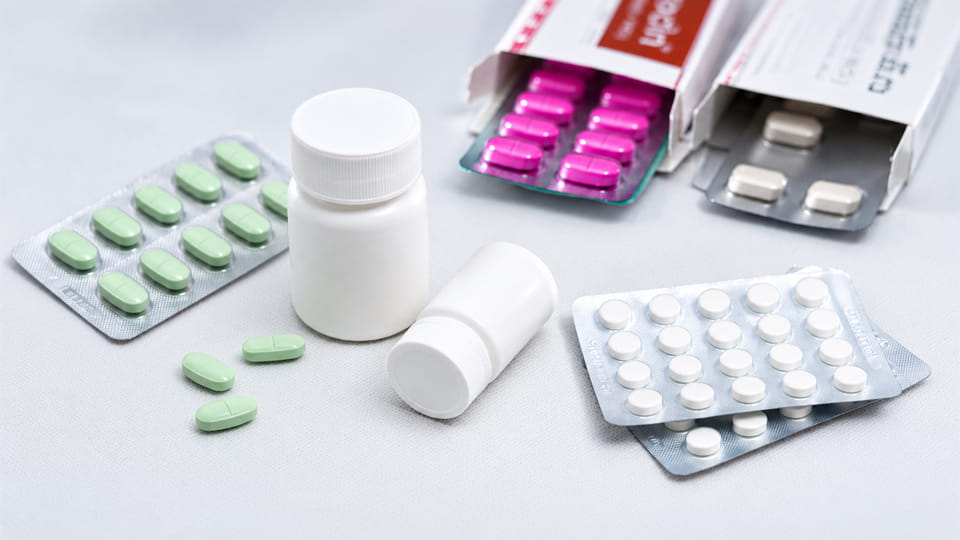
A visual workflow helps teams move from data to decision. The following flowchart outlines a step-by-step packaging selection process based on stability signals:
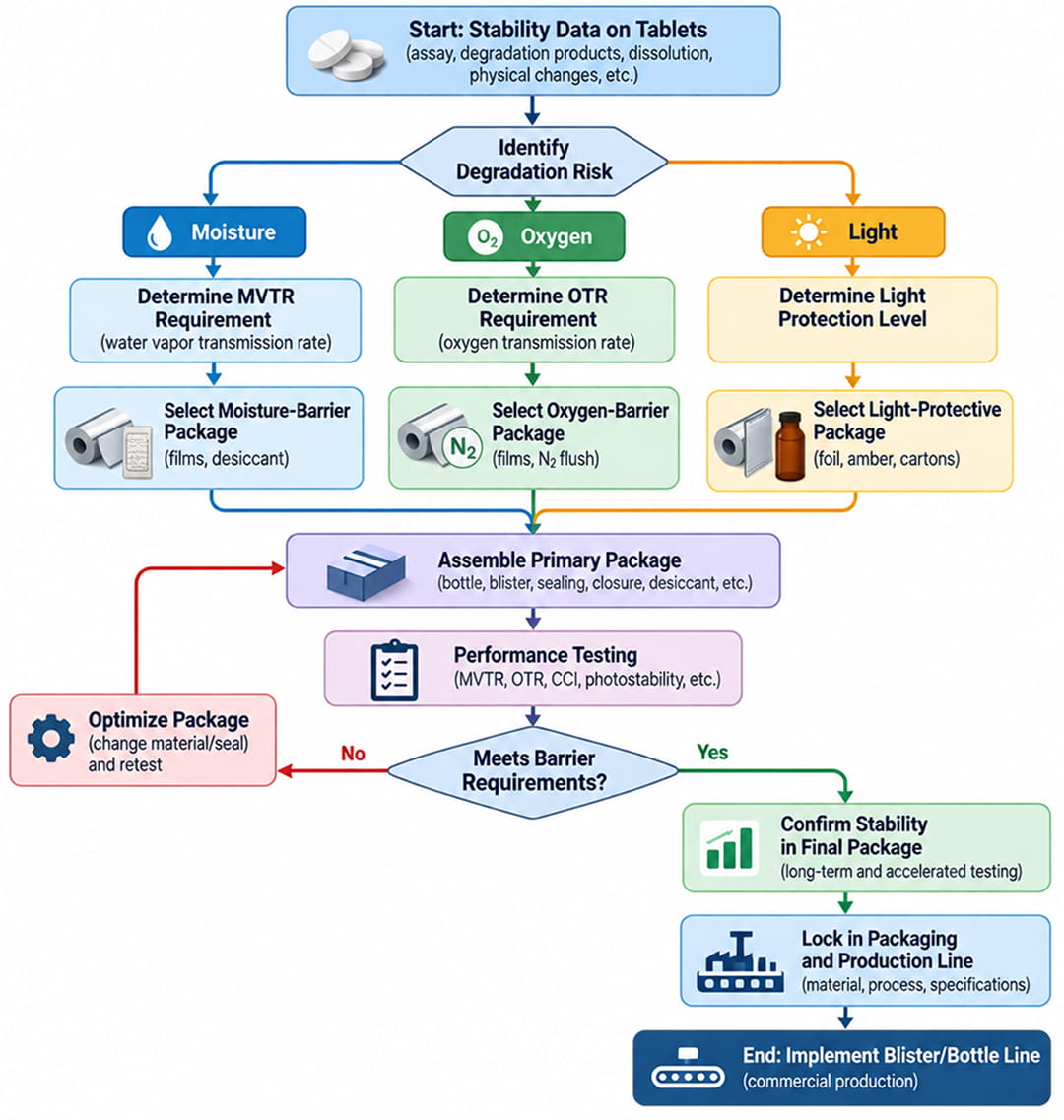
Chiffre: Decision flowchart from tablet stability data to final packaging choice. Start by identifying the dominant risk (Humidité, Oxygen, or Light). Then set targets (MVTR, OTR, etc.), select the appropriate packaging system, and verify with testing.
Tablet packaging should be as data-driven as formulation itself. Instead of guessing “best barrier,” start with what the stability data tell you is required. If moisture uptake or oxidation is observed, design a package with the needed MVTR/OTR performance. If photodegradation occurs, specify a light-protective system. Always verify with package performance testing and confirm stability in the selected package.
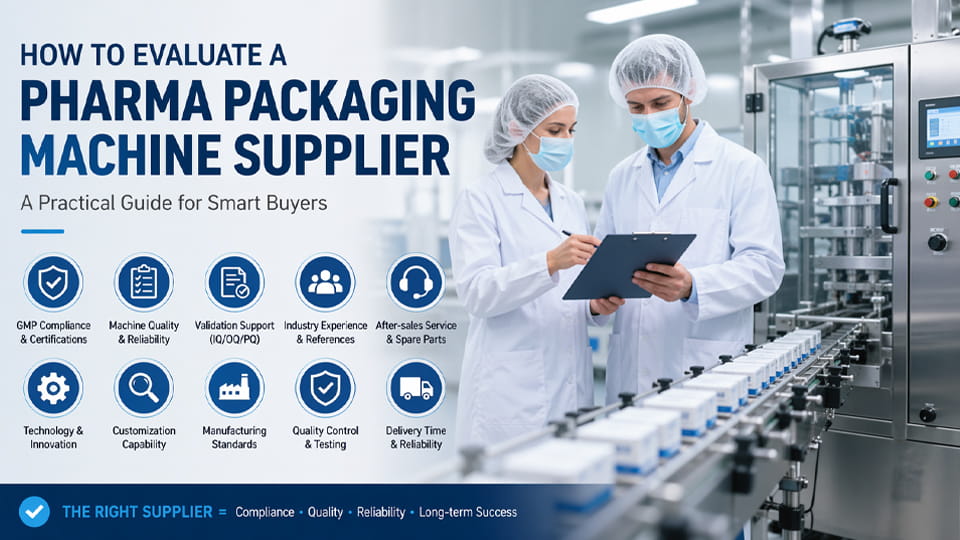
Choosing the right packaging is also a practical decision: blister lines or lignes d'embouteillage must match the barrier specification. Once the required barrier level and package format are defined, the next step is selecting equipment capable of consistently forming, scellage, compte, remplissage, and inspecting that package. For manufacturers evaluating blister or bottle formats, Jinlu Packing provides high-speed machines d'emballage en cloque capable of handling PVDC or alu-alu foils for moisture/oxygen protection, et tablet counting/bottling lines with nitrogen flushing and desiccant addition for flexible volume packs. Our engineering team can help select the proper format and machinery once your stability-driven barrier needs are defined.
If you need to solve a moisture-, oxygène- or light-sensitivity challenge in your tablets, contacter Jinlu Emballage. We design customized blister and bottle packaging solutions (et des machines) that meet the barrier specifications dictated by your product’s stability profile. Let’s translate your stability data into a packaging system that ensures product quality and compliance.
MVTR stands for Moisture Vapor Transmission Rate. It measures how much water vapor passes through a packaging film per area per day. A lower MVTR means a stronger moisture barrier. Packaging engineers use MVTR (or water loss rate) to quantify if a blister or bottle keeps enough moisture out for a given tablet.
Moisture can cause hydrolysis of the API or excipients, change tablet hardness, promote microbial growth, and alter dissolution. Stability data often show assay or dissolution failures at high RH if a tablet is moisture-sensitive. Par exemple, USP notes that moisture uptake can lead to assay drift, impurities or slower dissolution in solid oral products.
Oxygen barrier packaging uses materials with very low Oxygen Transmission Rate (OTR). Examples include aluminum foil, EVOH or metallized films. Such packaging keeps air from contacting tablets. If stability studies show oxidative degradation, a good oxygen barrier (plus possibly inert gas flush) est nécessaire.
Oxygen can oxidize susceptible compounds in the tablet, reducing potency or forming impurities. Tablets stored in air-permeable packaging may degrade faster. If accelerated stability shows more impurities or assay loss under oxygen, that indicates the need for an oxygen-barrier package.
Photodegradation is chemical breakdown of a drug when exposed to light (usually UV or high-energy visible light). Photoreactions can form new impurities or cause color changes. Stability testing (per ICH Q1B) reveals if light exposure significantly degrades the drug, in which case light-blocking packaging is needed.
For highly light-sensitive tablets, opaque packaging like aluminum-foil blisters or amber glass/bottles is best. Even a printed carton can help. Lower-level light sensitivity might only require amber plastic (bouteille) or a foil-backed blister. The key is to block the damaging wavelengths identified in photostability tests.
Oui, accueillir (feuille moulée à froid) blister packs provide an excellent moisture barrier (extremely low MVTR). They also block oxygen and light. Use alu-alu blisters when a product is very sensitive to environmental factors. Cependant, alu-alu is more expensive and less recyclable than PVC/PVDC blisters.
Desiccants help when occasional moisture ingress is unavoidable. Typiquement, use desiccants in bottles, not blisters. If a tablet is moderately hygroscopic, combining a good MVTR barrier with a desiccant in the cap can provide extra protection. Mais souviens-toi, desiccants have limited capacity, so the primary barrier should still be strong.
Stability studies reveal which stresses (humidité, O₂, lumière) affect the tablet. Those results then drive the barrier specs: par exemple. if high-humidity tests cause failure, set a low MVTR target for packaging. If photostability tests show degradation, require opaque packaging. Essentiellement, “stability data define the problem”, and packaging is engineered to solve it.
Oui. Both ICH and FDA emphasize testing the drug in its actual container-closure system. Final-stability studies (accelerated and long-term) in the chosen package confirm that the product remains stable over shelf life. This is the definitive check that the packaging meets the barrier needs identified earlier.
Références:
1.Systèmes de fermeture de conteneurs pour le conditionnement de médicaments et de produits biologiques à usage humain —— NOUS. Administration des aliments et des médicaments
2.Expiration Dating and Stability Testing for Human Drug Products —— NOUS. Administration des aliments et des médicaments
3.TRS 1010 – Annexe 10: WHO guidelines on stability testing of active pharmaceutical ingredients and finished pharmaceutical products —— OMS
4.ICH Q1 guideline on stability testing of drug substances and drug products —— Agence européenne des médicaments
5.Sélection d'emballages pour la protection contre l'humidité des solides, produits pharmaceutiques oraux —— PubMed
6.Assessing impact of manufacturing and package configurations to photosensitive compounds —— PubMed