
Les sociétés pharmaceutiques subissent aujourd’hui des pressions de toutes parts. Les hôpitaux veulent une manipulation plus sûre des médicaments. Les marchés de détail veulent réduire les coûts d'emballage. Les régulateurs s'attendent à une meilleure traçabilité et sérialisation. En même temps, les fabricants tentent d'améliorer l'efficacité de la production sans créer de déchets d'emballage inutiles. C'est pourquoi la discussion autour conditionnement en dose unitaire et emballage en vrac est devenu beaucoup plus important ces dernières années. Un format se concentre sur la protection du niveau de dose et la sécurité des patients, tandis que l'autre privilégie la vitesse, simplicité, et rentabilité. Aucune des deux options n’est automatiquement meilleure pour chaque produit. Le bon choix dépend de votre type de médicament, objectifs de production, canal de distribution, et capacités de la ligne d'emballage. Pour les fabricants pharmaceutiques, équipes d'approvisionnement, et responsables des opérations, comprendre les véritables différences entre les emballages en dose unitaire et en vrac est essentiel avant d'investir dans un nouveau système d'emballage pharmaceutique ou la mise à niveau d'un existant ligne de conditionnement.
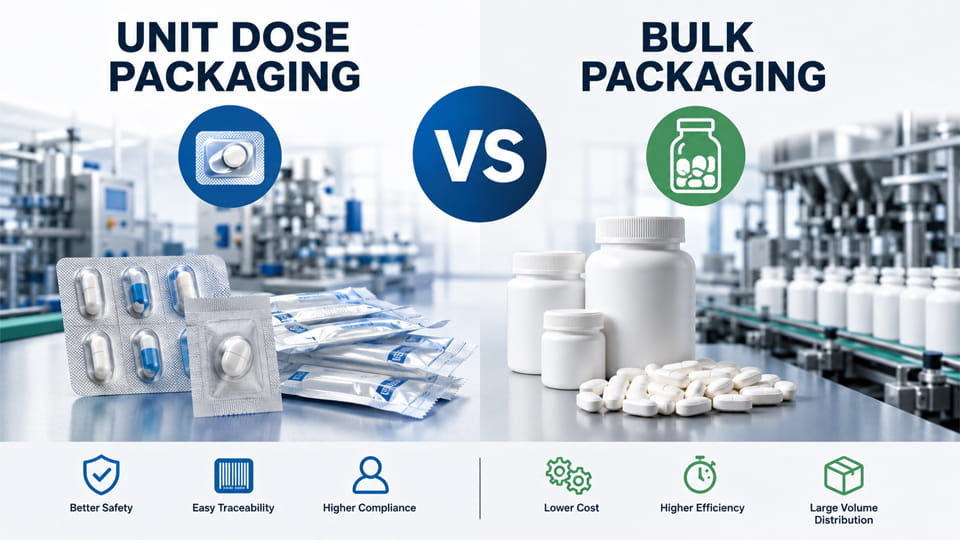
Conditionnement en dose unitaire (aussi appelé emballage unidose) signifie que chaque dose de médicament est scellée individuellement dans son propre emballage. Par exemple, une pilule peut être dans sa propre pochette ou pochette thermoformée. Jinlu Packing explique que « l'emballage en dose unitaire signifie que chaque dose individuelle d'un médicament est préemballée et scellée par elle-même ».. En pratique, il peut s'agir d'une plaquette thermoformée contenant un seul comprimé, un paquet de bandes (un comprimé par cavité), une seringue préremplie, un flacon, ou un sachet contenant une dose de liquide ou de poudre. Chaque colis porte des étiquettes (nom du médicament, dose, expiration) afin qu'une infirmière ou un patient puisse confirmer le médicament sans compter les pilules d'une bouteille. Dans les hôpitaux américains, sur 75% des médicaments oraux sont distribués sous forme de dose unitaire.

Les conditionnements unitaires sont courants dans hôpitaux, cliniques, établissements de soins de longue durée, et essais cliniques – pratiquement partout où un contrôle précis des doses et une traçabilité sont primordiaux. Ils aident à prévenir les erreurs de dosage car chaque sachet contient exactement une dose et est clairement étiqueté.. Autrement dit, et Jinlu note, Les emballages unidose ne nécessitent aucun comptage : il vous suffit de « prendre un emballage et de l'ouvrir », réduire les erreurs de manipulation. Les autres termes utilisés incluent dose unique, unité d'utilisation, ou unité-de-médicament conditionnement. Les formats typiques incluent:
En résumé, conditionnement en dose unitaire isole chaque dose individuellement, contribuer à la sécurité, conformité des patients, et traçabilité.
En revanche, emballage en vrac désigne le conditionnement multidose ou collectif de médicaments. Les formats en vrac courants incluent les grands flacons de pilules, pots, tubes multidoses, et big-bags ou fourre-tout. Par exemple, un flacon de prescription de 100 comprimés ou un pot de vitamines avec 30 les capsules sont emballées en vrac. Ces conteneurs contiennent beaucoup doses ensemble. L'emballage en vrac est la norme pour les produits pharmaceutiques grand public, médicaments en vente libre, suppléments nutritionnels, et la plupart des comprimés génériques. Il est également utilisé pour les étapes intermédiaires de la production (par exemple. sachets ou fûts en vrac).
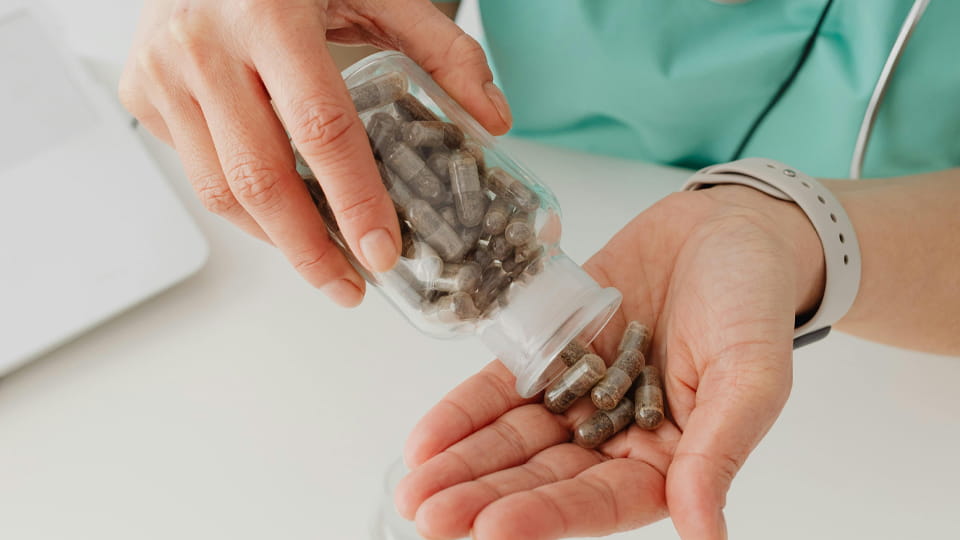
Le conditionnement en vrac est généralement plus rentable par dose et convient aux volumes élevés, produits de base. L'équipement pour les lignes de vrac comprend machines de comptage de comprimés/capsules et de remplissage de bouteilles, plafonnement, scellage, et équipement d'étiquetage. Par exemple, une ligne de comptage de comprimés peut utiliser une machine de comptage automatique pour remplir les bouteilles, une capsuleuse pour les sceller, et une étiqueteuse pour finir. Les lignes de vrac fonctionnent souvent plus rapidement (compter des centaines de comprimés par minute) mais offrent moins de contrôle dose par dose que les systèmes à dose unitaire. L'emballage en vrac est idéal pour médicaments en vente libre grand public, suppléments nutritionnels, médicaments génériques, et tout produit pour lequel le prix par dose est critique et le contrôle du dosage individuel est moins important.
Le tableau ci-dessous compare les deux approches sur des facteurs importants:
| Facteur | Emballage en dose unitaire | Emballage en vrac |
| Sécurité des médicaments | Haut. Chaque dose scellée, réduire la contamination. | Inférieur. Plusieurs doses dans un seul récipient. |
| Conformité des patients | Mieux. Doses individuelles clairement étiquetées; plus facile à vérifier. | Inférieur. Les patients comptent leurs propres doses. |
| Traçabilité & Sérialisation | Excellent. Facile à sérialiser/suivre chaque dose. | Limité. Seul le conteneur est suivi, pas chaque pilule. |
| Coût d'emballage | Plus élevé par dose. Plus de matériel d'emballage & manutention. | Inférieur par dose. Un paquet contient plusieurs unités. |
| Débit de production | Modéré. Plus d'étapes par dose (par exemple. formation de cloques). | Plus haut. Un simple comptage/remplissage est plus rapide. |
| Déchets d’emballage | Plus. Les packs à dose unique augmentent la consommation de matériaux. | Moins. Emballage minimal par dose (par exemple. une bouteille contre. 100 clochards). |
| Durée de conservation/Protection | Mieux. Les blisters/flacons comportent souvent des films à haute barrière. | Modéré. Les bouteilles en vrac protègent moins par unité, bien que la durée de conservation puisse être similaire. |
| Mieux pour | Hôpitaux, essais cliniques, médicaments de grande valeur, substances contrôlées, médicaments personnalisés. | Vente au détail de gré à gré, médicaments génériques, vitamines, suppléments, produits de grande consommation. |
Comme le note Jinlu Packing, pense-y comme à une bouteille de 100 comprimés (en gros) versus une plaquette thermoformée avec un comprimé (dose unitaire). Les bouteilles en vrac gagnent clairement en termes de rentabilité et de rapidité, mais les formats en doses unitaires excellent en matière de sécurité et de contrôle. Par exemple, l'emballage blister protège individuellement chaque pilule de l'humidité et de la falsification, alors que les flacons en vrac exposent tous les comprimés au même environnement.

Les systèmes à dose unitaire offrent plusieurs avantages clés:
En résumé, conditionnement en dose unitaire maximise la sécurité, traçabilité, et un dosage centré sur le patient, au détriment de coûts d'emballage et de manutention plus élevés. Comme le résume Jinlu, les unités de dose unitaire sont « conçues pour contenir une quantité de médicament destinée à être administrée en dose unique », garantir que « le bon médicament, au bon dosage, parvient au bon patient, au bon moment », à chaque fois".
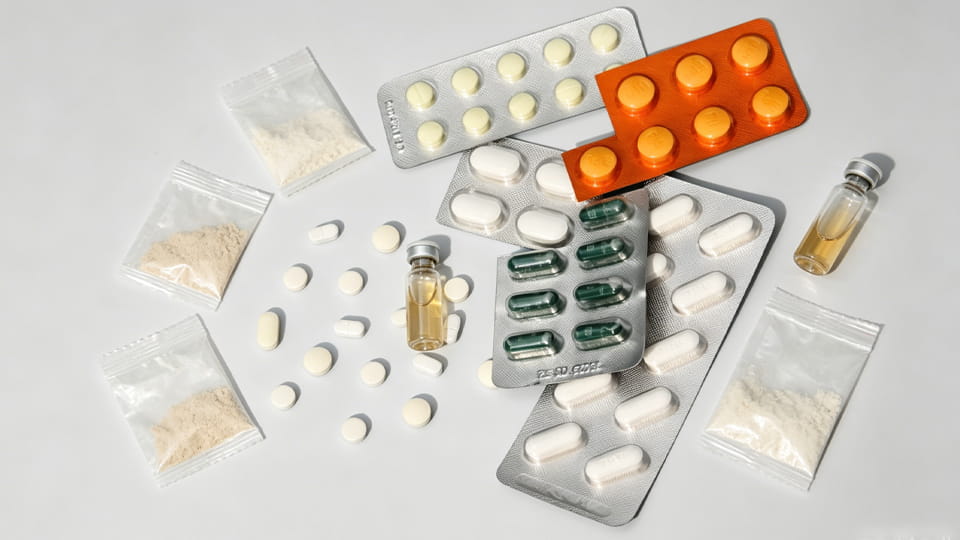
En gros (multidose) l'emballage a ses propres atouts:
Conditionnement en vrac brille par sa rentabilité et son évolutivité, ce qui le rend idéal pour les produits en grand volume où l'économie d'échelle l'emporte sur la nécessité d'un contrôle de dose individuelle. En fait, L'expérience de Jinlu en tant que fournisseur montre que les lignes de bouteilles en vrac (y compris le comptage, plafonnement, et unités d'étiquetage) constituent l'épine dorsale de nombreuses lignes de production de médicaments nutraceutiques et génériques.

Différents marchés finaux et cas d'utilisation ont des préférences claires. Le tableau ci-dessous résume les choix typiques de l'industrie:
| Industrie/Cas d'utilisation | Emballage préféré |
| Hôpitaux & Soins de santé (soins aigus) | Dose unitaire (clochards, bandes, seringues) |
| Soins de longue durée & Pharmacie SLD | Dose unitaire (cartes blister, packs pré-remplis) |
| Essais cliniques & Recherche | Dose unitaire (contrôle précis du dosage pour les essais) |
| Haute puissance / Substances contrôlées | Dose unitaire (sécurité, dosage) |
| Fabrication sous contrat (CMO produisant des médicaments hospitaliers) | Dose unitaire |
| Sur le comptoir (De gré à gré) Drogue | En gros (flacons/tubes de comprimés, gélules) |
| Nutraceutiques & Suppléments | En gros (bouteilles de vitamines, sachets) |
| Produits pharmaceutiques génériques (marché de masse) | En gros (accent sur les coûts) |
| Santé des consommateurs émergents (produits de beauté, combinaisons nutraceutiques) | En gros |
| Vétérinaire / Santé animale | En gros (vend souvent au détail des flacons multidoses ou des additifs alimentaires) |
| Kits d'urgence / PREMIERS SECOURS | Dose unitaire (pochettes à usage unique pour la portabilité) |
Par exemple, Jinlu note que les systèmes à dose unitaire sont originaires des hôpitaux et sont désormais « considérablement étendus » à d'autres domaines en raison de leurs avantages en matière de sécurité.. En effet, sur 75% des États-Unis. médicaments oraux à l'hôpital sont dosés unitairement, reflétant la préférence du secteur. En revanche, les marchés destinés aux consommateurs, comme les suppléments et les analgésiques en vente libre, utilisent généralement des conteneurs en vrac car ils exigent un coût unitaire inférieur et un volume plus élevé.. Les milieux cliniques et hospitaliers favorisent le contrôle du dosage des blisters ou des sachets, tandis que les fabricants et les détaillants de médicaments génériques se concentrent sur l’efficacité des lignes de flacons.
Le choix entre une dose unitaire et une dose en vrac a des implications financières importantes. Tenez compte des facteurs de coût suivants:
En résumé, L'emballage en dose unitaire nécessite généralement des dépenses d'investissement et un coût d'emballage par unité plus élevés., mais peut générer des économies en réduisant les erreurs et le gaspillage. L'emballage en vrac offre des coûts de matériaux et de production inférieurs par dose. La « meilleure » option dépend de l’analyse de ces coûts parallèlement à la stratégie de tarification du produit et aux exigences de conformité..
Les lignes de conditionnement de doses unitaires utilisent des équipements spécialisés. Les machines clés incluent:
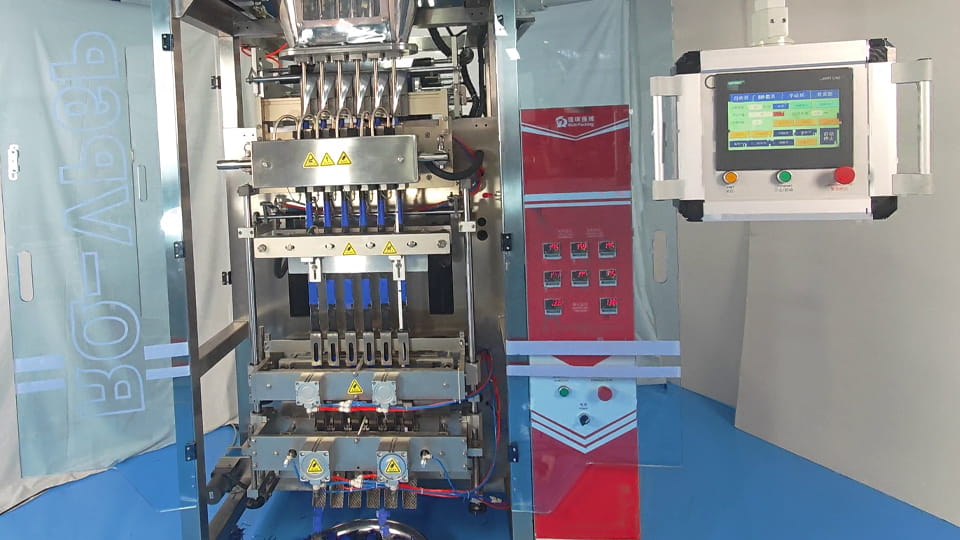
En bref, un ligne de dose unitaire peut consister en une machine à blister ou à sachets (pour emballage primaire), suivi d'un encartonneur (et éventuellement une étiqueteuse ou une imprimante). Par exemple, une ligne de médicaments hospitalière typique est: Alimentateur d'orientation des comprimés → Machine à blister → Encartonneuse automatique → Encartonneuse. Les machines de Jinlu pour ces étapes peuvent être reliées en un seul flux (voir que "peut être connecté aux blisters»).
[jl_youtube src= »https://www.youtube.com/embed/k0uyYbGttCU »]
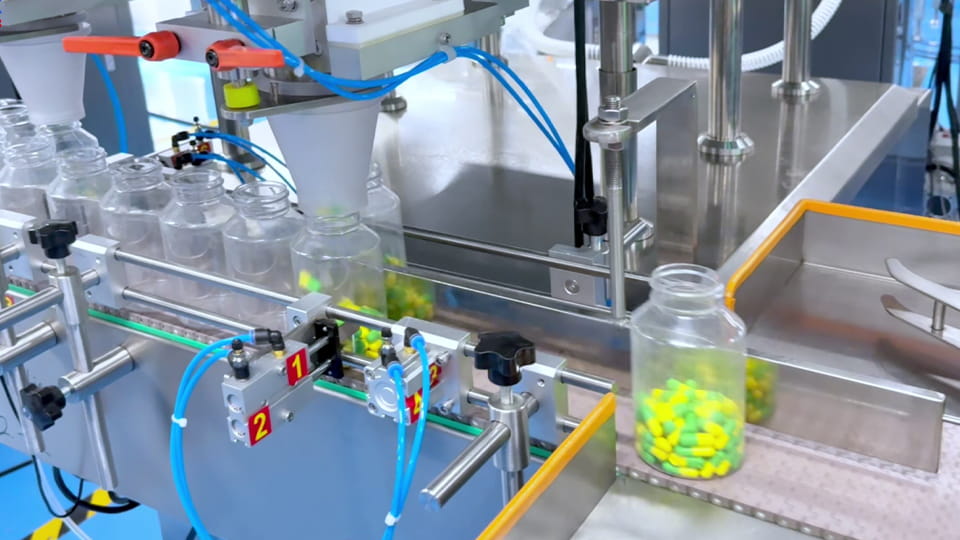
Les lignes de vrac utilisent des équipements optimisés pour la vitesse et le volume:
En vigueur, un ligne de conditionnement en vrac ressemble généralement à: Démêleur de bouteilles → Machine de remplissage de comptoir de comprimés → Introducteur de déshydratant → Capsuleuse → (Scellant en aluminium) → Étiqueteuse → Encartonneuse. Ces machines modulaires peuvent également traiter des produits divers (gummies, poudres, liquides) à condition que le comptage/remplissage et le bouchage soient ajustés. Les pages et Jinlu illustrent comment ces lignes sont intégrées.
Par exemple, la ligne de gomme JL-16R « complète automatiquement tout le processus de déchiffrement des bouteilles », compter… insérer le dessicant, plafonnement, scellage et étiquetage du papier d'aluminium »à jusqu'à 80 bouteilles/min. Ces lignes avancées mettent l'accent sur le débit et la cohérence, ce qui les rend idéaux pour l'emballage de produits en vrac.
Le choix de la bonne approche dépend de plusieurs facteurs. Utilisez la liste de contrôle et l'organigramme ci-dessous comme guide:
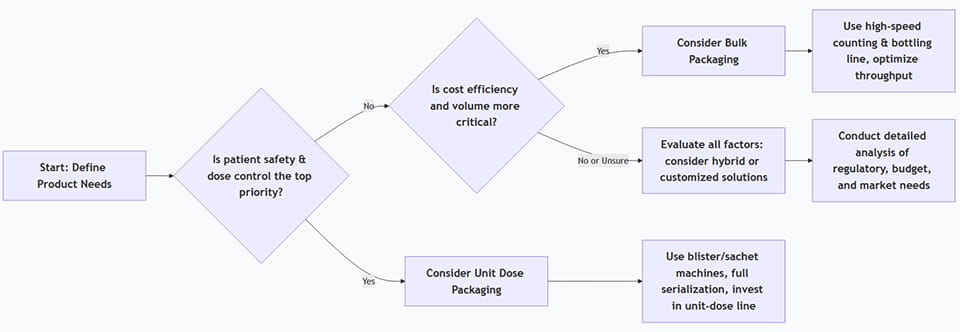
Ce graphique montre un guide simplifié: si la sécurité médicale/traçabilité l'emporte sur le coût, privilégier la dose unitaire. Si le budget et le volume dominent, le vrac est probablement le meilleur. Dans des cas réels, stratégies mixtes (par exemple. bouteille en vrac dans un carton sérialisé) peut également être considéré.
Il n’y a pas de réponse universelle. Le choix entre dose unitaire et conditionnement en vrac dépend des exigences de votre produit et de votre stratégie commerciale.. L'emballage en dose unitaire offre une sécurité inégalée, conformité, et commodité pour les hôpitaux, essais cliniques, et des médicaments de grande valeur, mais cela nécessite plus d'investissement en machines (emballeurs de blisters ou de sachets, encartonneuses) et matériel d'emballage. Conditionnement en vrac (bouteilles, pots, tubes) excelle à faible coût et à haut débit, idéal pour les médicaments et suppléments vendus au détail, mais donne moins de contrôle sur le dosage individuel.
En pratique, de nombreuses entreprises utilisent les deux méthodes pour différents produits. Par exemple, un médicament ayant un index thérapeutique étroit peut être conditionné dans des plaquettes thermoformées unidose destinées à la vente à l'hôpital, tandis que la version OTC du même médicament est vendue en flacons de 30 unités. Lors de la conception de votre ligne, Considérez le coût total de possession (équipement + matériels + erreurs) et les besoins réglementaires.
Pour déterminer la meilleure approche, examiner les facteurs ci-dessus: marché cible, forme posologique, volume, règles de conformité, et budget. Un expert en machines d'emballage (ou L'équipe de personnalisation de Jinlu) peut concevoir une ligne appropriée. Par exemple, Jinlu Packing fournit solutions clé en main – des blisters à grande vitesse aux lignes intégrées de comptage et d'embouteillage de comprimés – pour répondre aux besoins en doses unitaires et en vrac.
L'emballage en dose unitaire signifie que chaque dose de médicament est scellée et étiquetée individuellement, comme un comprimé par cavité blister ou un sachet par utilisation. L'emballage en vrac stocke plusieurs doses ensemble dans une bouteille, récipient, ou un colis plus grand. L’emballage en dose unitaire se concentre davantage sur la sécurité, traçabilité, et contrôle des doses, tandis que l'emballage en vrac est généralement plus rentable pour la production en grand volume.
Il n’existe pas de réponse unique pour chaque produit pharmaceutique. Le conditionnement en dose unitaire est souvent meilleur pour les hôpitaux, environnements cliniques, et les médicaments de grande valeur, car cela améliore la sécurité et le suivi des médicaments. L’emballage en vrac est généralement préféré pour les nutraceutiques, Produits OTC, et la distribution au détail à grande échelle car cela réduit les coûts d'emballage et améliore la vitesse de production.
Les hôpitaux utilisent couramment des emballages en doses unitaires car chaque dose est clairement identifiée et protégée jusqu'à son administration.. Cela aide à réduire les erreurs de médication, prend en charge les systèmes de lecture de codes-barres, et améliore la sécurité des patients pendant la distribution.
Oui, dans la plupart des cas, l'emballage en vrac entraîne des coûts de matériaux d'emballage inférieurs et une efficacité de ligne plus élevée. Les lignes de remplissage de bouteilles et les systèmes de comptage de comprimés peuvent généralement fonctionner à des vitesses plus rapides que les systèmes de conditionnement de doses individuelles.. Cependant, le coût total doit également tenir compte du gaspillage de médicaments, travail, exigences de conformité, et la protection des produits.
Le conditionnement en vrac est largement utilisé pour:
• Vitamines et suppléments
• Comprimés et gélules génériques
• Médicaments en vente libre
• Produits nutraceutiques
• Produits pharmaceutiques de détail à gros volume
Ces produits sont souvent emballés à l'aide de compteuses, lignes de remplissage de bouteilles, machines à capsuler, et systèmes d'étiquetage.
L'équipement courant de conditionnement de doses unitaires comprend:
• Machines d'emballage sous blister
• Machines d'emballage en bandes
• Machines d'emballage de sachets
• Machines à packs de sticks
• Encartonneuses
• Systèmes d'inspection visuelle
Ces machines de conditionnement pharmaceutique aident à créer des doses scellées individuellement avec une meilleure protection et traçabilité des produits..
Oui. L'emballage en dose unitaire contribue à réduire le risque de contamination, dosage incorrect, et des erreurs de manipulation car chaque dose reste scellée jusqu'à son utilisation. De nombreux établissements de santé utilisent des systèmes de dose unitaire pour prendre en charge des flux de distribution et des processus de vérification de codes-barres plus sûrs..
Oui. L'emballage blister pharmaceutique est l'une des formes les plus courantes d'emballage de doses unitaires.. Chaque comprimé ou capsule est stocké dans une cavité séparée, ce qui aide à protéger le produit de l'humidité, oxygène, et la contamination tout en améliorant également le suivi des doses.
L'emballage en vrac est couramment utilisé dans:
• Fabrication de nutraceutiques
• Production de suppléments
• Distribution pharmaceutique au détail
• Médecine vétérinaire
• Production de comprimés et de capsules à haut rendement
Les fabricants choisissent les emballages pharmaceutiques en vrac lorsque l'efficacité de la production et la réduction des coûts d'emballage sont leurs principales priorités..
Le meilleur choix dépend de plusieurs facteurs, y compris:
• Type de produit
• Marché cible
• Exigences réglementaires
• Budget emballage
• Volume de production
• Besoins en matière de durée de conservation
• Canaux de distribution
Par exemple, les hôpitaux et les produits cliniques bénéficient souvent du conditionnement en dose unitaire, tandis que les suppléments vendus au détail et les médicaments génériques en grand volume sont généralement plus adaptés aux systèmes de conditionnement en vrac..
Références:
1. Sec. CPG 430.100 Étiquetage de doses unitaires pour les formes posologiques orales solides et liquides -- NOUS. Administration des aliments et des médicaments
2.Manuel des normes de données (monographies) Type de colis -- NOUS. Administration des aliments et des médicaments
3.Emballage de médicaments —— Wikipédia
4.Conseils sur les bonnes pratiques de fabrication et les bonnes pratiques de distribution: Questions et réponses —— Agence européenne des médicaments
5.ISO 15378 attestation – Matériau d'emballage primaire pour la norme médicinale