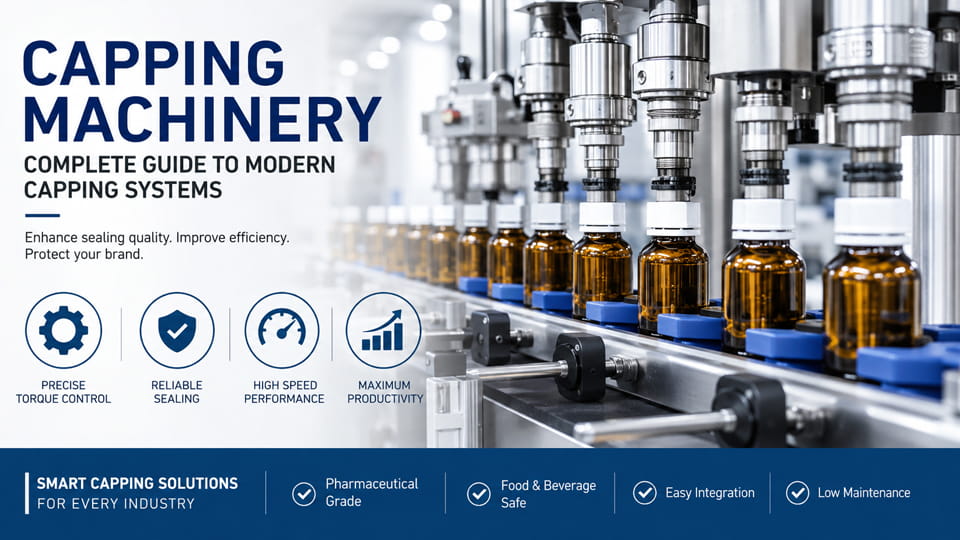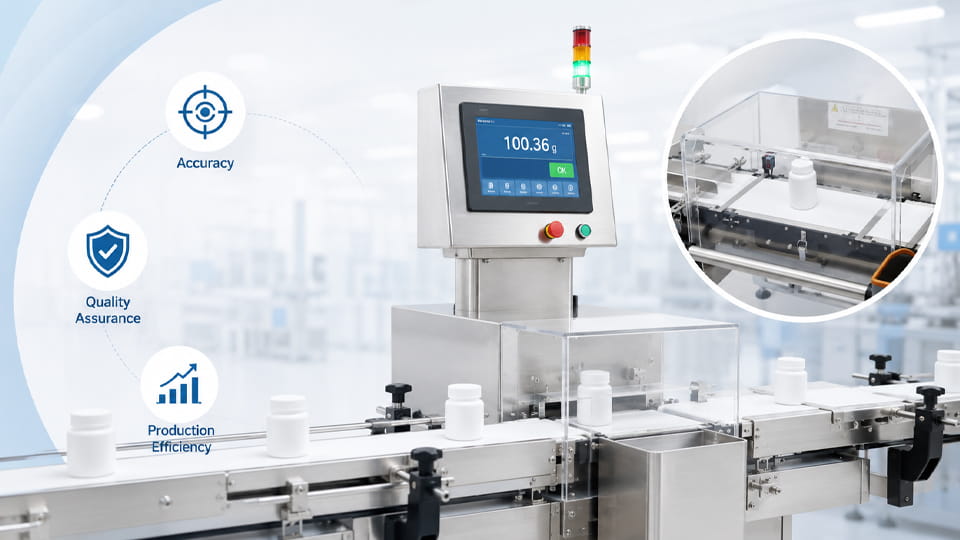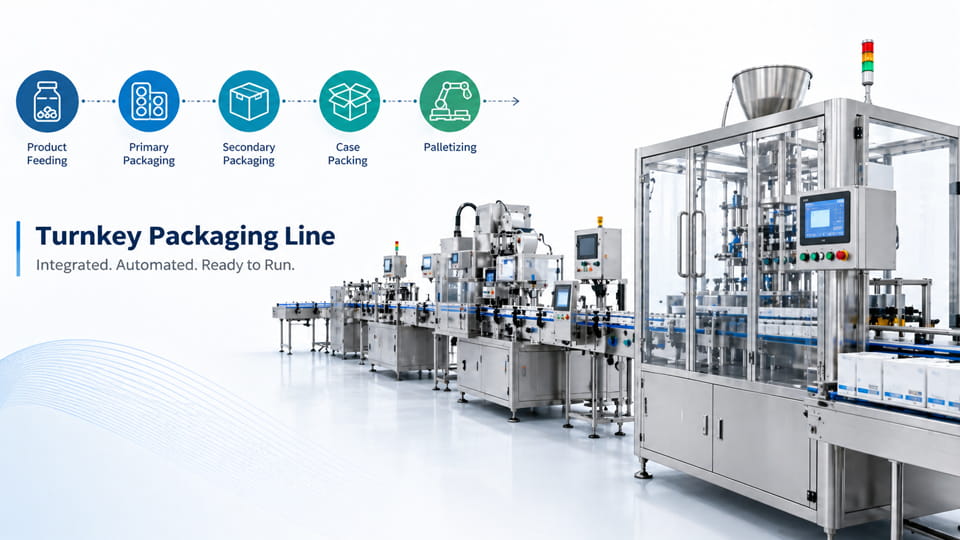

UN ligne de conditionnement de bouteilles est un système automatisé de bout en bout qui transforme les bouteilles vides en bouteilles étiquetées, produits emballés. Pour les fabricants de produits pharmaceutiques et nutraceutiques, ces lignes augmentent le débit, réduire les coûts de main d'œuvre, et assurer Conforme aux BPF sortir. Ce guide explique ce qu'est une ligne de conditionnement de bouteilles, comment ça marche, et les machines clés impliquées. Nous couvrons différents types de lignes (comprimé, liquide, nutraceutique, etc.), énumérer les principaux avantages de l’automatisation, et donnez des conseils pratiques pour choisir la bonne ligne. Que vous souhaitiez un solution de conditionnement de bouteilles clé en main ou comparez le manuel et le. automatique, cet article vous a couvert.
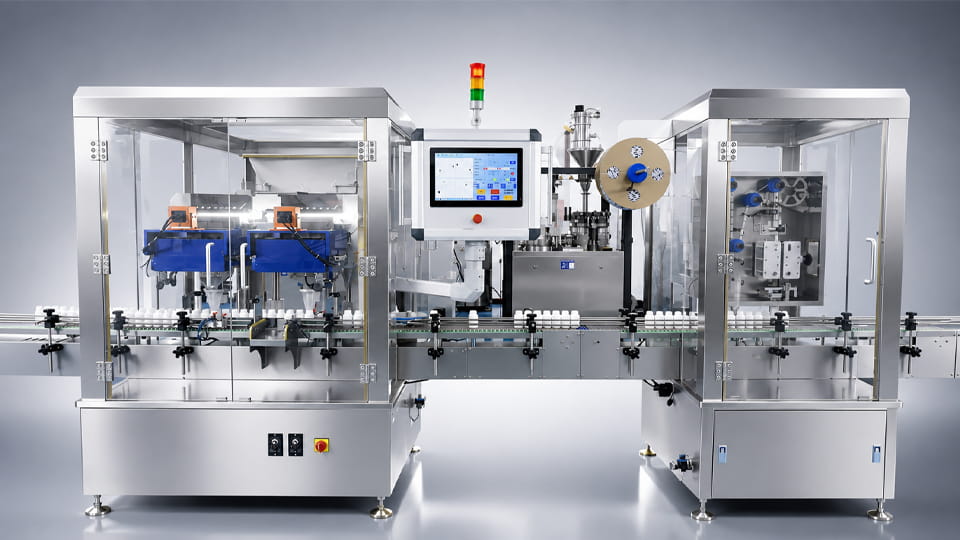
Chiffre:Une ligne typique de conditionnement de bouteilles pharmaceutiques.
Une ligne de conditionnement de bouteilles est une série de machines et de convoyeurs qui traite automatiquement les bouteilles vides en produits finis, produits emballés. En pharmaceutique, cela signifie prendre des comprimés ou des bouteilles de liquide vides et effectuer des étapes telles que compter/remplir, plafonnement, scellage d'induction (scellage par feuille), étiquetage, et emballage final en carton. En pratique, une ligne « automatise entièrement l'ensemble du processus, du déchiffrement des bouteilles au comptage, insertion de déshydratants, plafonnement, scellage de papier d'aluminium, et l'étiquetage ».
Autrement dit, au lieu de ramasser manuellement les bouteilles et de les remplir une à une, un automatisé ligne de conditionnement de bouteilles alimente les biberons à travers chaque station en séquence. Une ligne typique commence par un redresseur de bouteilles (qui oriente les bouteilles verticalement sur le convoyeur), puis s'écoule via le remplissage/comptage, insertion de coton ou de déshydratant (si nécessaire), plafonnement, scellage d'induction, étiquetage, et enfin le cartonnage. Ces machines fonctionnent en synchronisation sous contrôle PLC, former une ligne clé en main pouvant fonctionner en continu. Par exemple, un fournisseur d'équipement note qu'une ligne de comptage-remplissage « peut être connectée à un redresseur de bouteilles »., inserter dessicant, machine de capsulage, Machine à sceller le papier d'aluminium et étiqueteuse », couvrant toutes les étapes principales.
Le les bouteilles elles-mêmes peut être en plastique (ANIMAL DE COMPAGNIE, PEHD), verre, ou d'autres matériaux (verre ambré pour produits sensibles à la lumière, etc.). La ligne est généralement conçue pour gérer une gamme de tailles de bouteilles (par exemple. 30–150mm de diamètre, 40–300 mm de hauteur) et types de bouchons (bouchons à vis, casquettes à pression, fermetures à l'épreuve des enfants). Toutes les pièces en contact avec le produit sont fabriquées en acier inoxydable de qualité GMP avec des conceptions sanitaires (surfaces lisses, pas de jambes mortes) pour répondre aux normes réglementaires. De nombreuses machines incluent des capteurs et des convoyeurs pour le contrôle qualité (par exemple. vérifier le niveau de remplissage, couple du capuchon, présence d'étiquettes) et prend en charge la sérialisation (impression de codes à barres/codes QR) pour la traçabilité.
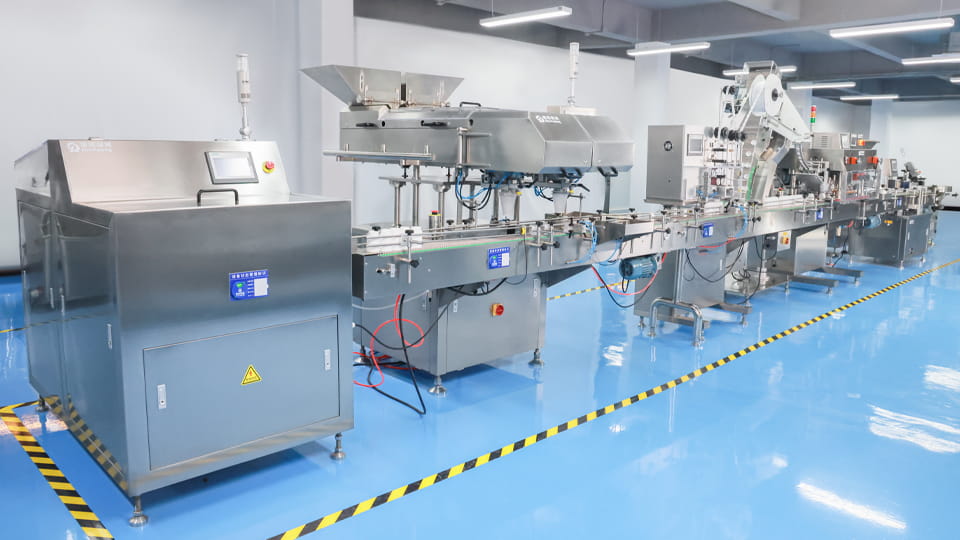
En bref, un ligne de conditionnement de bouteilles pharmaceutiques est un intégré, système validé qui gère tout, de l'alimentation au biberon vide jusqu'à l'emballage final, assurer une vitesse élevée, précision, et conformité.
Le flux de travail d'une ligne de conditionnement de bouteilles implique une séquence d'étapes qui préparent, remplir, joint, et emballer les bouteilles. L'organigramme ci-dessous montre une séquence commune d'étapes:
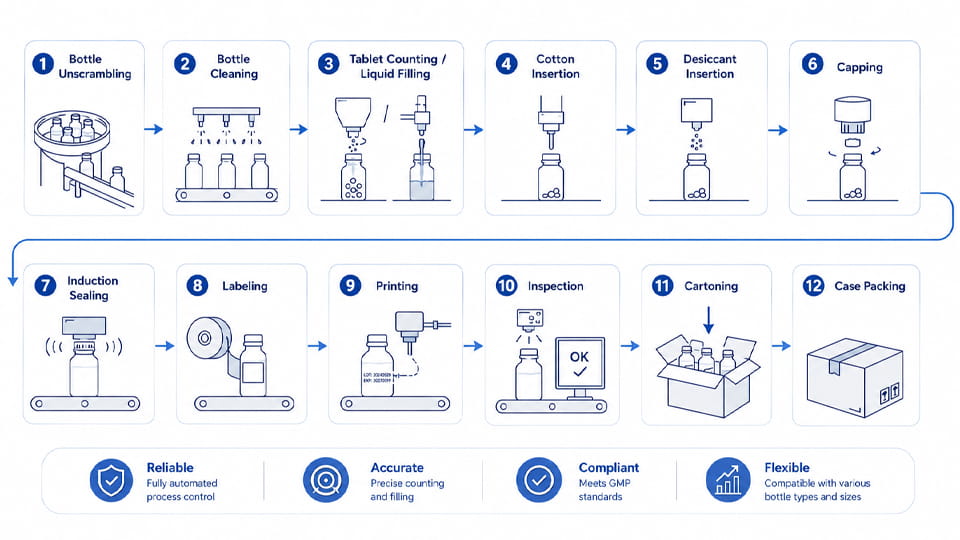
Chiffre: Flux de travail d'une ligne de conditionnement de bouteilles typique.
En pratique, toutes les lignes n'ont pas toutes les stations. Par exemple, une ligne pour les solides non sensibles à l'humidité peut ignorer l'insertion du coton, alors qu'une ligne de liquide n'utilisera pas de compteur de comprimés. Voici un bref aperçu de chaque étape:
Chacune de ces stations est reliée par des convoyeurs et contrôlée par un système PLC/IHM central. La ligne entière est généralement installée dans un environnement de salle blanche, construit pour cgMP normes: cadres en acier inoxydable (SUS304/316L), Tube approuvé par la FDA, moteurs de lavage, et soudures lisses. Automatisation des automates (Siemens, Panasonique, Omron, etc.) synchronise la vitesse et le fonctionnement des machines.
[jl_youtube src= »https://www.youtube.com/embed/tSrCmYZ-OQ0″]
Voici les machines à clés que vous trouverez dans une ligne de conditionnement de bouteilles typique (avec de brèves spécifications ou avantages):
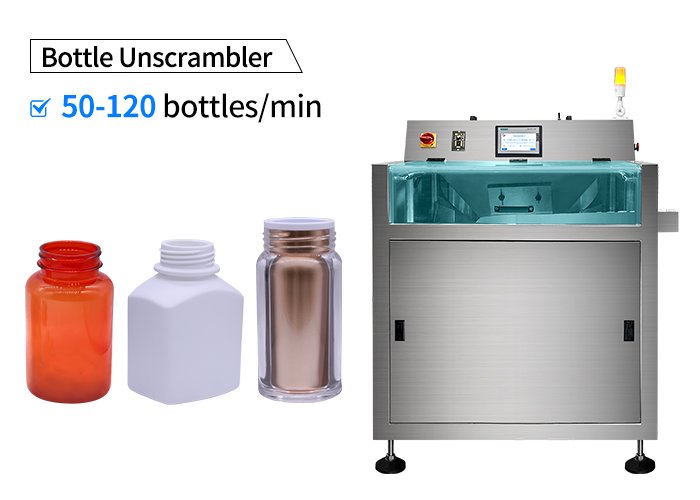
Alimente et oriente les bouteilles vides sur le convoyeur. Une haute qualité redresseur livre 50–120 bouteilles/min, manipulation de bouteilles rondes en plastique ou en PET. Il utilise des alimentateurs à bol vibrant et des chenilles pour redresser les bouteilles.. Les redresseurs modernes sont entièrement fermés (sans poussière, cgMP) et équipé de commandes PLC Siemens et de capteurs optiques/pneumatiques, pour que les bouteilles arrivent correctement orientées (100% précision) sans chargement manuel. Les pièces à changement rapide permettent à un opérateur de changer de taille de bouteille en quelques minutes.
Pour les doses solides, un machine de comptage automatique (aussi appelé compteur de comprimés/capsules ou remplissage) dépose un nombre exact de comprimés dans chaque flacon. Ceux-ci utilisent des capteurs optiques ou des têtes de comptage à grande vitesse. Les compteurs de JinLu, par exemple, poignée 3–40 mm de solides, atteindre un rendement allant jusqu'à 100 bouteilles/heure avec >99.98% précision. (Les versions multi-têtes et multi-voies peuvent multiplier le débit.) Ils s'intègrent parfaitement: "du tri des bouteilles à l'étiquetage... la ligne de remplissage de bouteilles de comptage peut être connectée à un redresseur de bouteilles, inserter dessicant, machine de capsulage, [et] étiqueteuse ». En bref, le compteur garantit que chaque flacon reçoit le nombre correct de pilules.

Pour les sirops, injectables, ou d'autres liquides, un remplisseur de liquide automatique distribue chaque dose. Les remplisseuses de liquides Jinlu utilisent une pompe servo-entraînée et buse submersible conception, ce qui évite la mousse et le reflux. Ils courent à 20–80 bouteilles par minute avec une précision de ±0,2 g, et s'adaptent aux volumes de bouteilles de quelques ml jusqu'à des litres. La station-service est souvent équipée d'une table d'indexation ou d'un collecteur multi-buses pour augmenter la vitesse. Critique, ces machines sont contrôlées par PLC/HMI pour un contrôle précis du débit et un remplissage basé sur des recettes.

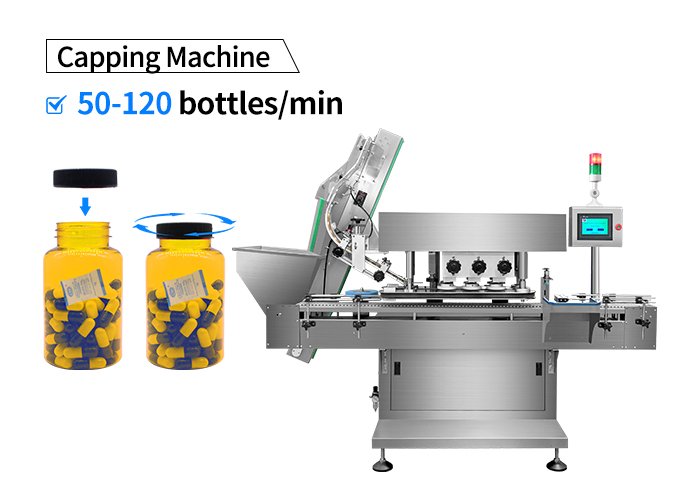
Après avoir rempli, une capsuleuse place et sécurise les bouchons. Un bon machine de capsulage gérera différents styles de casquettes (bouchons à vis, casquettes à pression, sécurité enfant, etc.) en utilisant des têtes de capuchon spécifiques. Il trie automatiquement, se nourrit, et applique les capuchons avec le couple correct. Machines de capsulage servo de Jinlu (par exemple. modèle XG-120) s'adapter à diverses bouteilles et bouchons et fonctionner jusqu'à 120 bouteilles/min. Les fonctionnalités incluent un réglage du couple en temps réel (via un volant ou un servomoteur) et vérification de la présence des bouchons. Si un capuchon est mal aligné ou manquant, le système rejettera cette bouteille, assurer 100% sortie conforme.
Aussi appelé un scellant en papier d'aluminium. Cette station applique une doublure en aluminium thermoscellée sous le capuchon pour créer un joint hermétique. Une scelleuse par induction typique peut traiter jusqu'à 120 bouteilles/min. Il fait circuler les bouteilles sur un convoyeur sous une bobine haute fréquence, chauffer et coller brièvement le film. Cette étape fournit une preuve d'inviolabilité et évite les fuites. Les soudeuses modernes sont dotées de têtes à double mode pour s'adapter aux différents diamètres de bouteilles et de ventilateurs de refroidissement intégrés pour un fonctionnement continu..

Applique des étiquettes imprimées sur les bouteilles. Rotatif à grande vitesse étiqueteuses (comme la série TBJ de JinLu) peut étiqueter jusqu'à 120 bouteilles/min avec une précision de ±1 mm. Ils comprennent un diviseur de bouteille pour espacer uniformément les bouteilles et un système de détection intelligent pour aligner parfaitement chaque étiquette. Les étiqueteuses multimodes peuvent gérer le front-wrap, enveloppant, et étiquetage multiface. Les têtes de codage intégrées sont souvent placées à côté des étiqueteuses pour l'impression par lots/lots. Après étiquetage, les systèmes de vision peuvent vérifier les codes-barres et le texte pour répondre aux exigences de sérialisation.

Une fois les bouteilles étiquetées, groupes de bouteilles (avec instructions ou dépliants si besoin) sont automatiquement insérés dans des cartons. Encartonneuses peut s'ériger et se fermer jusqu'à 400–450 cartons par minute. Dans les lignes de bouteilles, horizontal (chargement latéral) les encartonneuses sont courantes. Une fois les cartons formés, les encaisseurs ou les palettiseurs peuvent regrouper davantage les produits. Ces machines de fin de ligne complètent le système et disposent souvent de leur propre automate pour la synchronisation avec les équipements en amont..

Chacune de ces machines est un exemple de équipement d'emballage de bouteilles. Lorsqu'ils sont reliés entre eux sur des convoyeurs avec une commande centrale PLC, ils forment une ligne de conditionnement de bouteilles hautement automatisée.
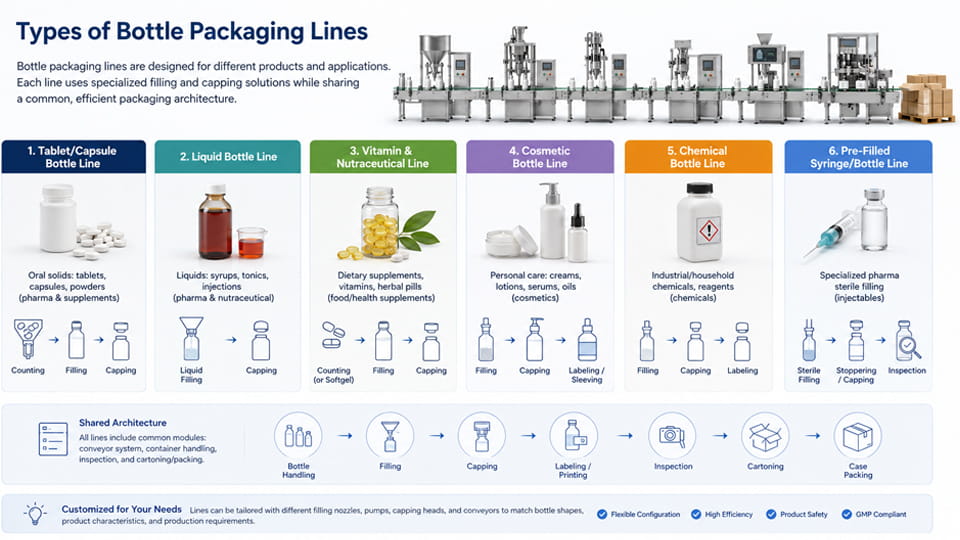
Les lignes de conditionnement de bouteilles sont généralement classées selon le type de produit principal et candidature. Vous trouverez ci-dessous un échantillon de types de lignes courants:
| Type de ligne | Produit/Application |
| Ligne de flacons de comprimés/capsules | Solides oraux: comprimés, gélules, poudres (pharmaceutique & suppléments) |
| Ligne de bouteilles de liquide | Liquides: sirops, sirops, toniques, injections (pharmaceutique & nutraceutique) |
| Vitamine & Gamme Nutraceutique | Compléments alimentaires, vitamines, pilules à base de plantes (compléments alimentaires/santé) |
| Ligne de bouteilles cosmétiques | Soins personnels: crèmes, lotions, sérums, huiles (produits de beauté) |
| Ligne de bouteilles chimiques | Produits chimiques industriels/ménagers, réactifs (produits chimiques) |
| Seringue/boulon prérempli | Remplissage stérile pharmaceutique spécialisé (injectables) |
Ces lignes partagent des architectures similaires mais utilisent des machines de remplissage/bouchage différentes adaptées au produit. Par exemple, un ligne de flacons de comprimés utilise des machines à compter les pilules, tandis qu'un ligne de sirop utilise des pompes à liquide. Les gammes nutraceutiques incluent souvent des fonctionnalités pour les produits délicats (capsules molles, vitamines gommeuses), alors que les lignes cosmétiques pourraient intégrer gaine rétractable ou capsuleuses à vitesse plus élevée. Dans chaque cas, la ligne peut être personnalisée (types de buses, convoyeurs) à la forme de la bouteille et aux besoins du processus.
Investir dans une ligne de conditionnement de bouteilles entièrement automatisée offre de nombreux avantages par rapport au conditionnement manuel. Les principaux avantages comprennent:
En résumé, les lignes automatiques de conditionnement de bouteilles offrent évolutivité et contrôle. Avec les bonnes machines, les fabricants atteignent des vitesses plus rapides, travail réduit, et une qualité de produit supérieure simultanément. Comme le note un expert en emballage, ces systèmes permettent aux entreprises de « gérer de gros volumes de produits en une fraction du temps » tout en réduisant les erreurs.
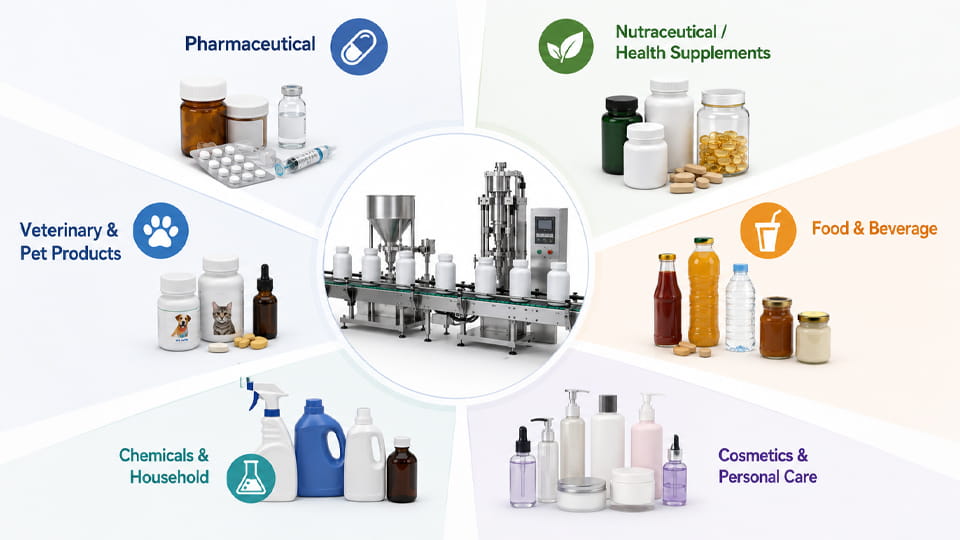
Les lignes de conditionnement de bouteilles sont incontournables dans de nombreux secteurs:
Toute industrie qui embouteille ses produits peut bénéficier d’une ligne automatisée. Même des produits de niche (pilules de cire d'abeille, Huile de CBD) utiliser des lignes personnalisées. Le principe directeur est de savoir si un débit élevé et un contrôle qualité peuvent améliorer la production – dans toutes ces industries., les lignes de bouteilles automatiques jouent un rôle clé.
La sélection de la ligne de conditionnement de bouteilles idéale dépend de plusieurs facteurs. Voici ce qu’il faut considérer:
En résumé, précisez votre types de bouteilles, forme de produit, objectifs de sortie, et budget. Travaillez ensuite avec un fabricant de confiance pour configurer une ligne personnalisée. Ils doivent fournir une présentation détaillée, exigences électriques, et délai de livraison prévu. (Les machines semi-automatiques standard pourraient être expédiées dans quelques semaines; une ligne entièrement intégrée prend souvent 2 à 4 mois pour être construite et testée.) Validez toujours les performances de l’équipement avec des essais sur échantillons avant de finaliser.
| Emballage manuel | Ligne de conditionnement automatique |
| Lent (souvent <20 temporisation) | Grande vitesse (50–120 BPM ou plus) |
| À forte intensité de main d'œuvre (de nombreux opérateurs) | Travail minimal (un technicien) |
| Précision variable (erreur humaine) | Haute précision (>99.9% précision) |
| Qualité inégale (remplissage incohérent) | Sortie cohérente (qualité reproductible) |
| Coût initial inférieur (mais OPEX élevé) | Des investissements plus élevés (mais OPEX inférieur) |
| Intégration minimale d’équipement nécessaire | Intégration clé en main (tout-en-un) |
| Difficile d’évoluer rapidement | Facilement évolutif en ajoutant des voies/modules |
Tableau: Comparaison entre l'emballage manuel et. une ligne automatique de conditionnement de bouteilles.
Comme le montre le tableau, l'automatisation offre un débit et une cohérence beaucoup plus élevés. Cela facilite également la traçabilité (code-barres pour chaque bouteille) et peut souvent être rentabilisé en quelques années grâce à des gains d'efficacité.
Un moderne ligne de conditionnement de bouteilles est l’épine dorsale d’une pharmacie efficace (et nutraceutique) fabrication. En automatisant le remplissage, plafonnement, scellage, et l'étiquetage, ces lignes maximisent la productivité tout en garantissant la qualité et la conformité réglementaire. Lors du choix d'une ligne, alignez le design avec votre type de produit (tablette contre. liquide), besoins en débit, et normes de qualité (GMP, sérialisation, etc.). Recherchez un fournisseur réputé comme Jinlu Packing qui propose des solutions intégrées et un support solide..
En résumé: une ligne automatisée de conditionnement de bouteilles convertit les bouteilles vides en cartons finaux en une seule opération fluide. Il peut gérer de gros volumes (souvent des centaines par minute) avec une précision exceptionnelle. Pour les directeurs d'usine et les ingénieurs, les avantages – un débit plus élevé, travail réduit, meilleure cohérence – sont clairs.
Prêt à automatiser votre emballage? Contactez l’équipe commerciale de Jinlu Packing pour discuter d'une ligne de bouteilles personnalisées pour vos produits. Nous proposons une conception clé en main, mise en service sur site, et garanties 3 ans. Avec plus 30 années dans la fabrication d'équipements pharmaceutiques, Jinlu peut vous aider à sélectionner la bonne vitesse, format, et niveau d'automatisation – garantissant que votre nouvelle ligne offre un retour sur investissement rapide. Visite www.jinlupacking.com ou demandez un devis pour commencer.
Une ligne de conditionnement de bouteilles est un système intégré de machines qui automatise le conditionnement de produits en bouteille.. Il comprend généralement un redresseur de bouteilles, une station de remplissage ou de comptage, capsuleuse, scellant, étiqueteuse, et souvent un cartonneur. Ensemble, ces étapes prennent des bouteilles vides et les transforment en produits finis., marchandises emballées.
Une ligne automatisée suit un flux de travail défini: les bouteilles vides sont nourries debout (décrypté), puis déplacé vers une remplisseuse (pour liquides) ou machine à compter (pour comprimés/capsules). Suivant, tout élément supplémentaire (coton ou déshydratants) sont ajoutés. Les bouteilles sont ensuite bouchées, scellé par induction, et étiqueté. Enfin, des groupes de bouteilles sont emballés dans des cartons. Chaque machine est synchronisée par contrôle PLC. Les lignes modernes peuvent même s'ajuster en temps réel (par exemple. correction du poids de remplissage) pour maintenir la qualité.
Cela dépend du modèle et du format. Les vitesses typiques sont de 50 à 120 bouteilles par minute et par voie. Par exemple, La ligne de comptage de comprimés de Jinlu fonctionne jusqu'à ~ 70 BPM, et de nombreuses machines de capsulage/étiquetage gèrent 120 temporisation. Les lignes à plusieurs voies peuvent multiplier la production (un compteur à 6 voies, par exemple, pourrait faire 6 fois le tarif d'une seule voie). Pour les liquides, des vitesses autour de 20 à 80 BPM sont courantes. Vérifiez toujours la fiche technique du fournisseur pour connaître les tarifs exacts selon les configurations choisies..
Les composants clés sont: un débrouilleur de bouteilles, Machine de remplissage/comptage, Inserteurs en coton/déshydratants, Machine de capsulage automatique, Scelleuse à induction, Machine à étiqueter, Poste d'inspection, et cartonnage/emballeur de caisses. Chacun est fourni par l'OEM et intégré sur un châssis de convoyeur commun. Certaines lignes peuvent également ajouter une imprimante en ligne pour les codes de lots et un trieur de rejets. La gamme exacte dépend si votre produit est solide ou liquide, votre type de bouteille, et besoins en emballage.
Oui, les lignes de bouteilles peuvent gérer à la fois les comprimés et les capsules, puisque les deux sont des solides dénombrables. La ligne comprendrait un remplisseur de comptage de comprimés/capsules, qui fonctionne généralement pour toute petite forme solide (gélules, bonbons gommeux, etc.) de la gamme de tailles spécifiée. Passer d'un comprimé à une gélule est généralement une question d'ajustement de la tête de comptage et des paramètres.. De nombreux fabricants conçoivent leurs compteuses pour gérer les deux en changeant simplement les recettes.. Ainsi, une seule ligne peut exécuter différents SKU (par exemple. un comprimé de vitamines en une seule fois, une capsule dans le prochain) avec un temps de changement minimal.
Oui – toutes les machines d’une ligne de conditionnement de bouteilles pharmaceutiques sont construites pour répondre aux normes cGMP. Ils sont fabriqués en acier inoxydable de qualité pharmaceutique (SS316L), avec conception sanitaire (pas de crevasses, nettoyage facile). Les systèmes de contrôle prennent en charge la FDA 21 Partie CFR 11 (enregistrements électroniques) et sont généralement accompagnés d'une documentation de validation. Par exemple, les fournisseurs déclarent explicitement que leurs gammes de bouteilles « sont conformes aux bonnes pratiques de fabrication » (GMP) et les réglementations de la FDA.. Lors de la sélection de l'équipement, recherchez le marquage CE, Certifications ISO, et confirmez que le fournisseur fournit des protocoles IQ/OQ pour la conformité réglementaire.
Les prix varient considérablement en fonction de la vitesse et de la configuration. Une simple configuration semi-automatique de comptage et de plafonnement peut coûter quelques milliers de dollars., alors qu'une ligne à grande vitesse entièrement intégrée peut coûter des dizaines, voire des centaines de milliers de dollars. Les facteurs incluent le nombre de stations (par exemple. une tête d'étiquetage supplémentaire ajoute du coût), outillage personnalisé, et des extras de conformité (par exemple. systèmes de vision). Demandez toujours des devis pour vos besoins précis. N'oubliez pas de prendre en compte le coût total de possession: une ligne de haute qualité légèrement plus chère permet souvent d'économiser de l'argent au fil du temps grâce à une réduction des déchets et des temps d'arrêt.
Les lignes de bouteilles clé en main sont complexes. Après fabrication et tests en usine, l'installation sur site prend généralement 2 à 7 jours par module de machine (en fonction de la préparation du site, utilitaires, et formation). Les petites lignes pourraient être opérationnelles dans quelques semaines, tandis que les grandes lignes multi-machines peuvent nécessiter 4 à 6 semaines sur site (y compris la validation IQ/OQ). Votre fournisseur doit s'occuper de l'installation mécanique, branchement électrique, et qualification initiale. Prévoyez du temps supplémentaire pour la formation des opérateurs et la validation des processus.
Absolument. Fabricants leaders (comme Jinlu) spécialisé dans les solutions personnalisées et clé en main. Vous pouvez personnaliser presque tous les aspects: longueurs de convoyeur, espacement des machines, Langage automate, couleur de la peinture, matériaux de pièces (par exemple. SS304 contre SS316), et même intégrer des ajouts spécifiques au client (détecteurs de métaux, Applicateurs RFID, etc.). Parce que l’espace et le flux de travail de chaque usine diffèrent, les mises en page sont adaptées pour s'adapter. Si vous avez besoin d'une extension modulaire (par exemple. ajouter une 2ème tête de remplissage plus tard) ou manipulation de produit unique (produits fragiles, casquettes spéciales), discutez-en dès le départ. L'OEM propose généralement une configuration et une simulation d'usine en 3D avant la construction..
Oui – de nombreux fournisseurs proposent des lignes intégrées clé en main, ce qui signifie qu'ils fournissent un système entièrement conçu et prêt à fonctionner. Un projet clé en main comprend la conception, fabrication, essai, expédition, installation, et qualification finale. C'est idéal si vous souhaitez qu'un seul fournisseur soit responsable de toute la ligne.. Selon les guides de l'industrie, une ligne de bouteilles clé en main fonctionne « étape par étape » depuis la manipulation des bouteilles jusqu'au bouchage et à l'étiquetage. Des entreprises comme Jinlu travailleront avec vous sur la mise en page et fourniront ensuite un prix contractuel unique pour l'ensemble de la ligne.. Cela simplifie la validation et le support car une seule équipe connaît l'ensemble du système..
Références:
1.Systèmes de fermeture de conteneurs pour le conditionnement de médicaments et de produits biologiques à usage humain -- NOUS. Administration des aliments et des médicaments
2.Guide de bonnes pratiques: Conditionnement, Étiquetage, & Installations d'entreposage —— ispe.org
3.PARTIE 211 — BONNES PRATIQUES DE FABRICATION ACTUELLES POUR LES PRODUITS PHARMACEUTIQUES FINIS —— ecfr.gov
4.Ressources sur l'étiquetage des cartons et des contenants -- NOUS. Administration des aliments et des médicaments
5.Lignes directrices sur l'emballage des produits pharmaceutiques -- OMS