

Gélules dures remplies de liquide (LFHC) sont essentiellement des capsules standard en deux parties (coques en gélatine dure ou HPMC) qui sont remplis de formulations liquides à base d'huile ou d'autres liquides non aqueux au lieu de poudres ou de granulés. Imaginez une capsule dure que vous pouvez ouvrir et remplir avec votre propre mélange – mais fabriquée à grande échelle par des machines de précision. Dans la fabrication, une pompe ou une seringue injecte une dose mesurée d'un liquide (souvent une huile ou une suspension) dans le corps ouvert de chaque capsule. Après avoir rempli, le capuchon est fermé sur le corps, et le joint est immédiatement scellé (donc rien ne fuit). Pour le visualiser, Considérez l'image ci-dessous de gélules remplies de liquide.:
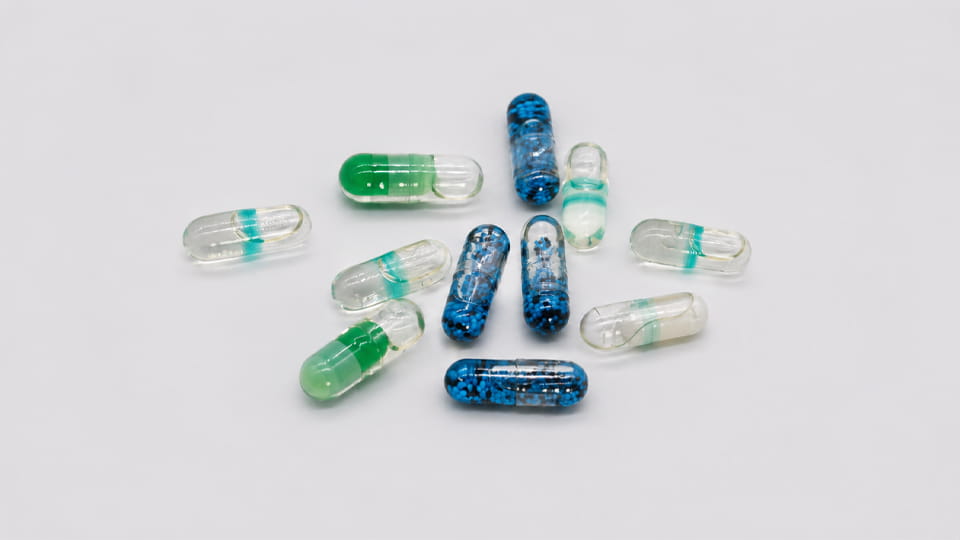
Chiffre: Gélules dures en deux parties remplies de liquide. Chaque capsule a un capuchon et un corps joints et scellés pour contenir une formulation huileuse ou liquide..
Les capsules remplies de liquide nécessitent une fermeture spéciale car les liquides peuvent fuir. Les méthodes de scellement courantes consistent à appliquer une fine bande de gélatine autour du joint. (appelé "scellage par bande») ou en utilisant des techniques de fusion. En fait, moderne remplisseurs de capsules liquides comme Le NJY-1000C de Jinlu remplir automatiquement les liquides dans des coques dures standard, puis les sceller sous une forme hybride qui combine une déglutition facile et une absorption rapide des médicaments. En bref, Les LFHC vous permettent de délivrer une forme posologique liquide dans une enveloppe de capsule solide – un hybride utile entre les poudres et les gélules.
Pour résumer, le avantages des gélules remplies de liquide inclure: solubilité et biodisponibilité améliorées pour les médicaments coriaces; dosage flexible et développement facile; plus rapide, une fabrication plus rentable; haute stabilité du produit; et la capacité de créer de nouveaux produits combinés. Ces avantages rendent les LFHC attrayants pour les fabricants de produits pharmaceutiques et nutraceutiques..
Il est naturel de se demander comment les LFHC se comparent aux capsules de gélatine molle. Les deux fournissent des formulations liquides, mais il y a des différences clés. Les gélules sont fabriquées en une seule étape de moulage et sont idéales pour les huiles, mais ils nécessitent de la gélatine plastifiée (avec de l'humidité) et un contrôle très strict de l'humidité pendant la fabrication. Les gélules sont fabriquées séparément et remplies dans un deuxième temps, ce qui signifie un équipement plus simple et pas besoin de formuler la coque en interne. Par exemple, avec LFHC, vous pouvez utiliser des coques HPMC pour des produits végétariens ou des garnitures sensibles à l'humidité – ce qui n'est pas possible avec les gélules standard.
Du point de vue de la fabrication, les gélules gagnent souvent en termes de coût et de rapidité. Les gélules nécessitent un spécialiste machine d'encapsulation et jours de préparation, alors qu'une remplisseuse de capsules liquides termine le cycle en quelques heures. Les procédés Softgel gaspillent également plus de gélatine et nécessitent un équipement de préparation de gélatine coûteux. D'autre part, les gélules se scellent automatiquement une fois formées, ils n'ont donc pas besoin d'une étape de scellement séparée. Les LFHC ont besoin de cette étape supplémentaire (baguage ou fusion), mais comme discuté, cela peut être très efficace avec les cercleuses modernes.
| Fonctionnalité | Gélules dures remplies de liquide | Gélules |
|---|---|---|
| Coût de développement | Inférieur | Plus haut |
| Flexibilité de production | Haut | Moyen |
| Biodisponibilité | Excellent | Excellent |
| Matériaux des capsules | Gélatine/HPMC | Surtout de la gélatine |
| Options végétariennes | Disponible | Limité |
| Production en petits lots | Plus facile | Difficile |
| Investissement en équipement | Inférieur | Plus haut |
En résumé, les gélules remplies de liquide offrent des avantages similaires aux patients (déglutition facile, libération rapide du contenu liquide) sous forme de gélules, mais avec une fabrication plus simple et une plus grande flexibilité de formulation. Ils comblent essentiellement le fossé entre les gélules et les gélules.
La production de gélules remplies de liquide implique les étapes familières de remplissage des gélules, avec quelques considérations particulières pour le remplissage du liquide. Les principales étapes sont:
Chiffre: Une machine de remplissage de capsules liquides au travail. Les gélules vides sont remplies de liquide puis scellées (en bandes ou en fusion) dans un processus continu.
Chacune des étapes ci-dessus doit être validée pour la qualité. En pratique, les fabricants établissent des contrôles sur la viscosité des liquides, étalonnage de la pompe, solution de cerclage, et conditions de séchage. Ils peuvent également effectuer des tests d'étanchéité sur des échantillons (tests de vide ou contrôles visuels) pour garantir l'intégrité de la bande. Mais avec une ligne bien conçue – vide, filler, les gangs, et séchage : la production de capsules remplies de liquide peut fonctionner à un débit élevé, comme n'importe quelle autre ligne de capsules..
[jl_youtube src= »https://www.youtube.com/embed/jBjWRfpjJ4o »]
Un examen plus approfondi scellage par bande ça vaut la peine, puisqu'il est au cœur de la fabrication de capsules liquides. Dans ce processus, un rideau étroit de solution de gélatine chauffée est appliqué autour de la couture verrouillée de la capsule. Le tapis à capsules passe ensuite par une zone de refroidissement afin que la bande se fixe. Cette méthode est rapide, ne nécessite aucun solvant, et rend instantanément la capsule inviolable. Altasciences et d'autres experts privilégient le scellement par bande car il évite l'alcool (donc pas de test de solvant résiduel) et fournit des preuves d'inviolabilité en vente libre et des bandes de couleur personnalisables. Comme le dit une critique, le scellement par bande « crée un espace hermétique, joint étanche qui protège la formulation et augmente la stabilité du produit pendant le transport ».
D'autres types d'étanchéité incluent scellement par fusion, où la couture de la capsule est ramollie (généralement avec un mélange hydroalcoolique) et brièvement fusionné. Les joints de fusion peuvent paraître plus propres mais nécessitent des contrôles environnementaux stricts. Scellement par micro-pulvérisation est une approche ciblée – une infime quantité de mastic est pulvérisée sur le joint, suivi de chaleur, ce qui abaisse le point de fusion de la capsule au niveau de la couture et la lie. Cependant, cela nécessite une surveillance attentive pour éviter les bulles ou la déformation. En pratique, la plupart des gammes nutraceutiques et pharmaceutiques utilisent le cerclage en raison de sa fiabilité et de sa simplicité.
En termes d'équipement, il y a des dédiés machines à cercler les capsules qui s'intègrent aux lignes de remplissage. Ces machines appliquent avec précision des bandes de gel sur des milliers de capsules par minute. Parce que l’étanchéité est si importante pour les LFHC, les principales machines de remplissage incluent désormais des banderoleuses intégrées. Par exemple, Le système de scellage breveté de Jinlu ajuste automatiquement la vitesse de la bande afin que chaque capsule obtienne une étanchéité uniforme., manteau anti-fuite.
Les capsules dures remplies de liquide couvrent une gamme d’industries. Dans médicaments, ils sont de plus en plus utilisés pour de nouvelles entités chimiques (RCE) qui sont peu solubles ou très puissants. De nombreux médicaments en phase terminale correspondent aujourd’hui à cette description., et la livraison de capsules peut simplifier le développement de formes posologiques. Les LFHC peuvent également réorganiser les produits existants: les entreprises reformulent parfois un vieux comprimé en capsule liquide pour améliorer le début d'action ou combinent plusieurs ingrédients actifs dans un seul comprimé.. Par exemple, un médicament chronique peut administrer un insert liquide à action rapide et une pastille à libération prolongée dans une capsule.
Dans le nutraceutique et supplément champ, les capsules remplies de liquide sont populaires pour les vitamines solubles dans l'huile et les extraits botaniques. Le guide de scellage Richpacking indique que des produits comme huile de poisson, oméga-3, vitamin D, et les huiles végétales sont couramment mises dans les LFHC. En effet, de nombreux suppléments de type « softgel » sont désormais fabriqués sous forme de LFHC avec une bande – les consommateurs reçoivent toujours une dose liquide facile à avaler, mais les fabricants bénéficient d'équipements de remplissage plus simples. Pour compléments alimentaires, Les capsules à bandes fournissent des bandes de couleur inviolables et attrayantes sans le coût d'une pleine packs de cloques.
Les responsables des opérations et les ingénieurs d'approvisionnement apprécieront que les lignes LFHC puissent souvent fonctionner sur le même étage de production que les lignes de capsules standard.. Par exemple, un machine de remplissage de gélules qui manipule déjà des poudres peut parfois être adapté ou équipé pour manipuler des têtes de dosage de liquides. Cela signifie que les usines peuvent ajouter des capacités de dosage de liquides sans avoir à recourir à un tout nouveau département de gélules.. (Une remarque: les coques de gélules standard supportent bien les liquides non aqueux, mais les formulations très aqueuses nécessitent généralement des capsules spéciales.) La polyvalence des LFHC s'étend également à l'emballage. Après scellé, les capsules peuvent être emballées sous blister, en bouteille, ou en bandes en vrac comme n'importe quelle autre pilule.
Enfin, rappeler le résumé des avantages: Les LFHC améliorent la biodisponibilité des huiles et des suspensions, permettre un dosage flexible, et offrir vitesse et stabilité de fabrication. Ils sont idéaux pour API à faible dose ou puissantes (parce que remplir un petit volume est plus facile que distribuer un petit poids de poudre). Ils permettent également un débit de capsules plus élevé: les machines à grande vitesse peuvent en pomper des dizaines de milliers par heure avec des tailles de capsules allant de 000 (grand) jusqu'à #5 (petit). Pour un responsable des opérations décidant d'une ligne de capsules, les capacités liquides signifient que vous pouvez gérer à la fois des produits en poudre et des produits liquides sur un seul système (avec changements), élargir votre mix de produits sans double investissement.
Les gélules remplies de liquide constituent une forme posologique puissante qui combine le meilleur des pilules et des liquides.. Ils résolvent les problèmes de formulation (en particulier pour les combinaisons de médicaments peu solubles ou complexes) et offrir aux fabricants une solution évolutive, voie de production rentable. En utilisant machines de remplissage de capsules liquides et techniques d'étanchéité, les entreprises peuvent produire en masse et de manière fiable des capsules qui fournissent des huiles, suspensions ou émulsions dans un environnement soigné, forme avalable. Dans le monde en pleine croissance des formes posologiques orales, Les LFHC se distinguent par leur flexibilité, appel des patients, et vitesse commerciale. Que vous soyez responsable des opérations dans une usine pharmaceutique ou ingénieur en approvisionnement recherchant des machines d'emballage, explorer capsules dures remplies de liquide pourrait commercialiser vos produits plus rapidement avec une meilleure efficacité et un coût inférieur.
À la recherche d'une solution fiable de remplissage de capsules liquides? Emballage Jinlu fournit des équipements avancés de remplissage et d'emballage de gélules aux fabricants pharmaceutiques et nutraceutiques du monde entier.
Les gélules remplies de liquide sont des gélules en deux parties fabriquées à partir de gélatine ou d'enveloppes HPMC contenant du liquide., semi-solide, suspension, ou formulations à base d'huile. Contrairement aux capsules traditionnelles remplies de poudre, ils permettent aux fabricants de livrer des ingrédients à l'état liquide, ce qui peut améliorer la flexibilité de la formulation et la performance des ingrédients.
Les principaux avantages incluent une biodisponibilité améliorée pour les ingrédients peu solubles, meilleur masquage du goût, protection des composés sensibles, dosage précis, et la capacité de formuler des huiles, suspension, et systèmes auto-émulsifiants à l'intérieur d'une enveloppe de capsule dure.
Le processus de fabrication comprend généralement la préparation de la formulation, liquide remplissant des capsules dures vides, Verrouillage de la capsule, scellement ou cerclage, séchage, inspection, et emballage final. Des machines de remplissage de capsules liquides spécialisées garantissent un dosage précis et évitent les fuites.
Les gélules remplies de liquide peuvent contenir des huiles, formulations à base de lipides, extraits à base de plantes, suspension, semi-solides, systèmes d'administration de médicaments auto-émulsifiants (SEDDS), et autres formulations liquides non aqueuses. Les formulations à base d'eau sont généralement évitées car elles peuvent endommager les coques des capsules..
Les gélules remplies de liquide utilisent une coque en deux parties qui est remplie et scellée après encapsulation., pendant que les gélules se forment, rempli, et scellé en un seul processus. Les gélules remplies de liquide offrent souvent une plus grande flexibilité de formulation, coûts d'outillage réduits, une mise à l'échelle plus facile, et la possibilité d'utiliser des coquilles HPMC végétariennes. Gélules, cependant, offrir un joint monobloc entièrement hermétique.
Oui. Les capsules remplies de liquide HPMC sont largement utilisées pour les ingrédients sensibles à l'humidité., formulations végétariennes, et produits nutraceutiques. Ils contiennent moins d'humidité que les capsules de gélatine et sont souvent préférés pour les suppléments à base de plantes..
Le scellement des capsules empêche les fuites pendant le transport et le stockage, améliore la stabilité du produit, améliore la résistance aux manipulations, et aide à protéger les ingrédients sensibles à l'oxygène. Les méthodes de scellage courantes incluent les technologies de cerclage de capsules et de scellage thermique..
Les gélules remplies de liquide sont largement utilisées dans la fabrication pharmaceutique, production nutraceutique, compléments alimentaires, produits à base de plantes, médecine vétérinaire, et formulations de soins de santé spécialisées. Ils sont particulièrement adaptés aux huiles, vitamines, extraits botaniques, et des principes actifs peu solubles.
Une ligne de production typique de capsules dures remplies de liquide peut comprendre une machine de remplissage de capsules liquides, machine à sceller ou à cercler les capsules, machine de polissage de capsules, détecteur de métaux, trieur de capsules, machine d'emballage en cloque, ligne d'embouteillage, et systèmes d'inspection. La configuration exacte dépend de la capacité de production et des exigences réglementaires.
Lors de la sélection d'une machine de remplissage de capsules liquides, les fabricants devraient évaluer la précision du remplissage, vitesse de production, compatibilité de taille de capsule, intégration d'étanchéité, commodité de nettoyage, Conformité BPF, niveau d'automatisation, et les besoins d'expansion futurs. La solution idéale dépend des caractéristiques de la formulation et du volume de production.
Références:
1.Capsules à coque dure remplies de liquide: La délivrance actuelle de médicaments influence la technologie pharmaceutique —— Bibliothèque nationale de médecine
2.Capsule de gélatine dure remplie de liquide —— jddtonline.info
3.Une revue sur les capsules de gélatine dure remplies de liquide ——merckmillipore.com
4.L'évaluation d'un système automatique de remplissage de liquides dans des capsules de gélatine dure —— Bibliothèque nationale de médecine
5.Capsules de gélatine dure remplies de liquide : études de compatibilité excipient/gélule ——ScienceDirect
6.Capsules de gélatine dure remplies et scellées de liquide —— jddtonline.info
7.Sélection des excipients pour les gélules remplies de liquide —— pharmtech.com