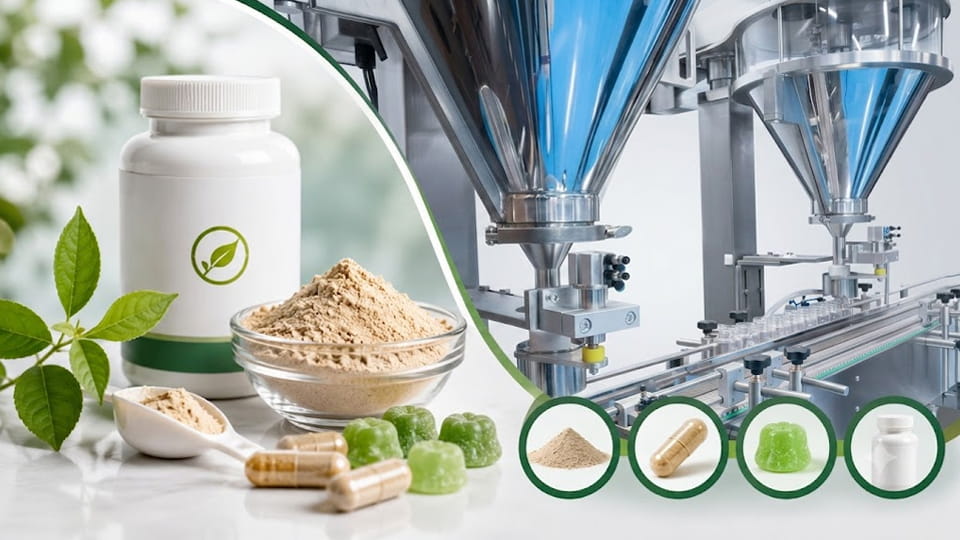

La demande mondiale de Supplément à base de plantes Les produits continuent de croître alors que de plus en plus de consommateurs recherchent des moyens naturels pour soutenir leur santé et leur bien-être.. Des gélules et comprimés aux poudres et bonbons gélifiés, les suppléments à base de plantes se trouvent désormais en pharmacie, supermarchés, et boutiques en ligne dans le monde entier. À mesure que le marché se développe, les fabricants sont confrontés à des attentes croissantes en matière de qualité constante, production efficace, et un emballage fiable qui protège les ingrédients botaniques sensibles. De bonnes pratiques de fabrication et des contrôles d'emballage appropriés sont également essentiels pour garantir la qualité et la conformité des produits tout au long du processus de production..
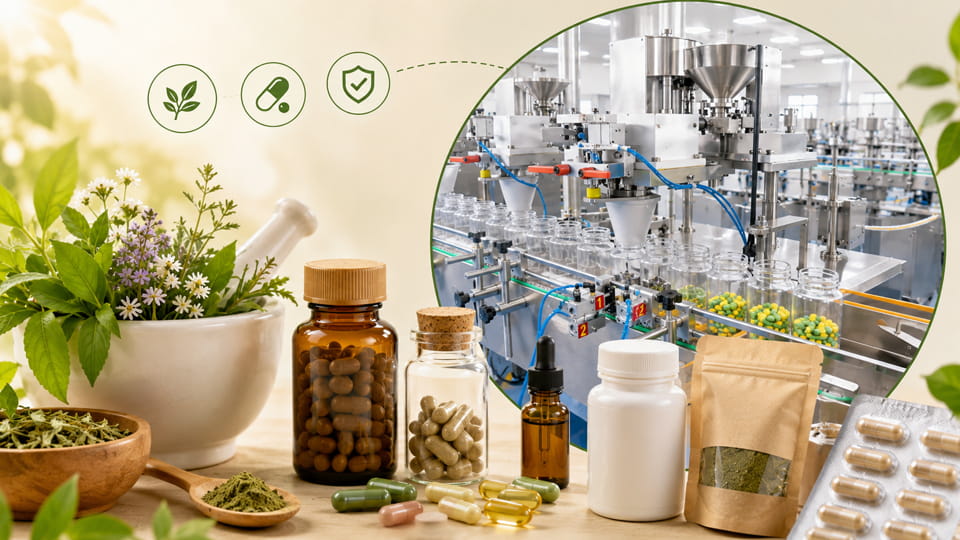
Que vous envisagiez une nouvelle ligne de production de suppléments à base de plantes ou que vous mettiez à niveau un équipement existant, comprendre le processus de fabrication est la première étape vers de meilleures décisions. Dans ce guide, nous passerons en revue les types de suppléments à base de plantes les plus courants, comment ils sont produits, le matériel concerné, et les solutions d'emballage qui aident les fabricants à améliorer leur efficacité, qualité du produit, et durée de conservation.
Suppléments à base de plantes (aussi appelé suppléments botaniques) sont une catégorie de compléments alimentaires fabriqué à partir de matières végétales (racines, feuilles, fleurs, graines, ou extraits) destiné à soutenir la santé. Contrairement aux vitamines synthétiques, les suppléments à base de plantes proviennent de sources naturelles. Ils exploitent souvent les plantes médicinales traditionnelles (par exemple. gingembre, ginkgo, échinacée) et inclure des extraits concentrés ou des poudres. En termes réglementaires, les suppléments à base de plantes sont classés comme compléments alimentaires, pas de drogue. Aux États-Unis. loi, ils doivent contenir les ingrédients étiquetés et éviter les contaminants (pesticides, métaux lourds). Les formes typiques incluent les capsules, comprimés, gélules, poudres, liquides (teintures), thés et bonbons.
Les suppléments à base de plantes visent à « compléter l’alimentation » avec des nutriments ou des actifs d’origine végétale., souvent pour le soutien immunitaire, digestion, soulagement du stress, ou de l'énergie. Par exemple, des ingrédients comme le sureau, l'échinacée et la vitamine C sont populaires pour l'immunité, tandis que l'ashwagandha et le thé vert sont utilisés pour soulager le stress et le métabolisme.. Les consommateurs préfèrent de plus en plus les suppléments à base de plantes en raison de leur approvisionnement naturel et de leurs étiquettes propres.. Le marché mondial des suppléments à base de plantes était d'environ $45.9 milliards en 2025 et devrait croître d'environ 8 % par an grâce à 2034, tirée par la demande de soins de santé préventifs à base de plantes.

Les suppléments à base de plantes sont disponibles sous de nombreuses formes posologiques. Chaque forme a des avantages, les fabricants choisissent donc en fonction du produit et du marché. Les formats courants incluent:


Les suppléments à base de plantes se présentent sous de nombreuses formes: gélules, gélules, les comprimés et les poudres utilisent tous des ingrédients botaniques. Le choix de la bonne forme dépend de l'extrait de plante, besoins posologiques, et les préférences des consommateurs.
| Formulaire de supplément | Ingrédients à base de plantes typiques | Avantages clés | Emballage commun | Équipement de fabrication recommandé |
|---|---|---|---|---|
| Capsules | Ashwagandha, Curcuma, Ginseng | Facile à avaler, dosage précis, protège les poudres sensibles | Bouteilles, packs de cloques | Machine de remplissage de capsules, Ligne de remplissage de bouteilles, Machine d'emballage en cloque |
| Comprimés | Spiruline, Ail, Chardon-Marie | Rentable, longue durée de conservation, adapté à la production en grand volume | Bouteilles, packs de cloques | Presse à comprimés, Machine à revêtement de tablette, Ligne d'emballage de bouteilles |
| Poudres | Matcha, Moringa, Agropyre | Tailles de portions flexibles, idéal pour les mélanges de boissons et les mélanges de protéines | Pochettes stand-up, paquets de bâtons, pots | Mélangeur de poudre, Machine de remplissage à tarière, Machine d'emballage de poche prémade |
| Gélules | Huile d'ail, Huile de lin, Huile d'onagre | Convient aux extraits à base d'huile, facile à consommer | Bouteilles, packs de cloques | Ligne de production de gélules, Machine de remplissage de bouteilles |
| Bonbons | Sureau, Vinaigre de cidre de pomme, Curcuma | Goût agréable, populaire auprès des enfants et des adultes | Bouteilles, pochettes | Machine à compter les gommes, Ligne de remplissage de bouteilles, Machine d'emballage de poche prémade |
| Extraits liquides | Échinacée, Ginkgo Biloba, Racine de valériane | Absorption rapide, pratique pour un dosage personnalisé | Bouteilles en verre, flacons compte-gouttes | Machine de remplissage de liquide, Coiffure, Machine à étiqueter |
| Sachets de tisane | Camomille, Menthe poivrée, Hibiscus | Mode de consommation traditionnel, préparation simple | Sachets, cartons | Machine d'emballage de sachets de thé, Encartonneuse |
Les fabricants peuvent cibler un format spécifique en termes de biodisponibilité ou d'attrait pour le consommateur.. Par exemple, les suppléments à base de plantes à base de capsules représentent une part de marché importante (autour 39%) car ils protègent les principes actifs et se dissolvent rapidement dans l'organisme. Poudres (en pots ou en sticks) gagnent en popularité pour les mélanges de protéines ou de superaliments verts, tandis que les comprimés restent un aliment de base pour les vitamines et les extraits de plantes standard. Finalement, le équipement de fabrication (charges de capsule, presses à comprimés, pochettes, etc.) doit correspondre à la forme choisie et au volume de production.
Les fabricants se concentrent sur les herbes avec une forte demande des consommateurs et un soutien scientifique. Les principales plantes contenues dans les suppléments comprennent:
La comparaison ci-dessous donne un aperçu rapide de certains des suppléments à base de plantes les plus utilisés dans l’industrie nutraceutique actuelle.:
| Supplément à base de plantes | Objectif de santé commun* | Formes posologiques courantes | Emballage typique | Notes de fabrication |
|---|---|---|---|---|
| Curcuma (Curcumine) | Soutien articulaire et inflammatoire | Capsules, comprimés, poudre | Bouteilles en PEHD, packs de cloques, pochettes debout | Extrait de curcumine souvent standardisé avec agents d'écoulement |
| Ashwagandha | Aide au stress et au sommeil | Capsules, gummies, poudre | Bouteilles en plastique, paquets de bâtons | Couramment produit sous forme d’extrait de racine standardisé |
| Ginseng | Soutien énergétique et cognitif | Capsules, gélules, extraits liquides | Bouteilles ambrées, packs de cloques | Le contrôle de l’humidité est important pendant le remplissage |
| Échinacée | Soutien à la santé immunitaire | Comprimés, gélules, teintures | Bouteilles, flacons compte-gouttes en verre | Fréquemment fabriqué sous forme d’extrait sec ou d’extrait liquide |
| Chardon-Marie | Soutien à la santé du foie | Capsules, gélules | Bouteilles en PEHD, packs de cloques | Une teneur standardisée en silymarine est généralement requise |
| Ail | Soutien à la santé cardiaque | Gélules, comprimés | Packs de cloques, bouteilles | Le contrôle des odeurs et le revêtement sont souvent envisagés |
| Gingembre | Support digestif | Capsules, poudres, sachets de thé | Sachets, pochettes, bouteilles | La fluidité de la poudre affecte la précision du remplissage |
| Ginkgo Biloba | Soutien à la mémoire et à la circulation | Comprimés, gélules | Bouteilles, packs de cloques | Souvent standardisé en fonction de la teneur en flavonoïdes |
| Extrait de thé vert | Soutien antioxydant | Capsules, comprimés | Bouteilles, packs de cloques | La protection contre la chaleur et l'humidité améliore la stabilité |
| Sureau | Soutien immunitaire | Bonbons, sirops, gélules | Bouteilles PET, bouteilles en verre | Les bonbons gélifiés nécessitent un équipement de comptage et de mise en bouteille dédié |
Tendances dans 2025 mettre en avant les suppléments formulés pour la santé immunitaire (sureau, échinacée, zinc), la santé des femmes, et bien-être cognitif. Par exemple, Les consommateurs britanniques utilisent de plus en plus de curcuma, ashwagandha, moringa et sureau pour l'immunité et le stress. L'approvisionnement et la formulation des ingrédients nécessitent un contrôle qualité: chaque herbe doit être testée pour sa puissance active et l'absence de contaminants (pesticides, métaux lourds) selon les normes GMP.

La fabrication de suppléments à base de plantes suit un processus en plusieurs étapes, combinant des techniques pharmaceutiques standards avec un soin spécifique pour les ingrédients botaniques. Le flux général est: approvisionnement en herbes brutes → nettoyage → séchage/broyage → mélange → formation du dosage (gélules/comprimés) → conditionnement. Les étapes clés comprennent:
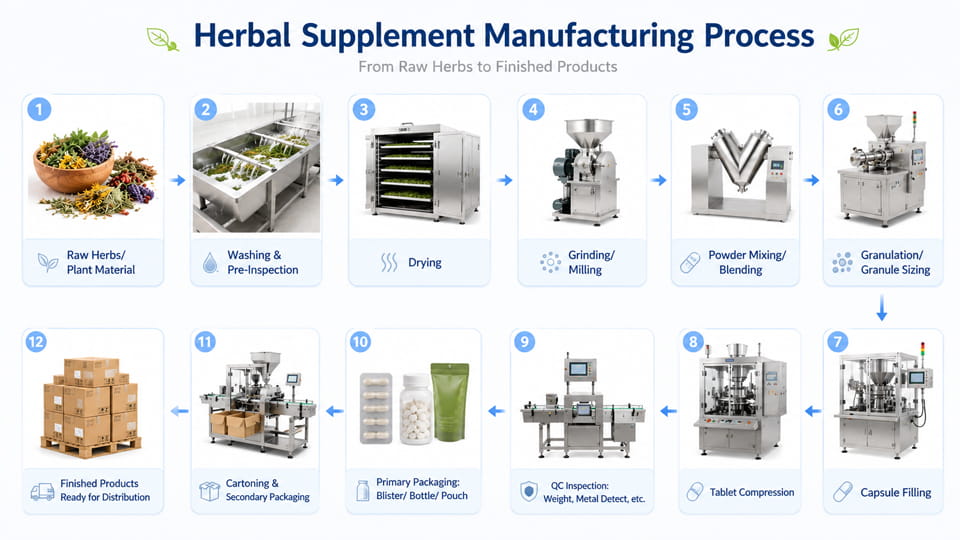
Tout au long de la fabrication, conditions (température, humidité) sont étroitement contrôlés. De nombreuses plantes sont sensibles à l’humidité, afin que la ligne entière puisse fonctionner dans une salle blanche à humidité contrôlée. Emballage haute barrière (ampoules de papier d'aluminium, PEHD avec déshydratant) est sélectionné pour préserver la durée de conservation.
Le succès de la production de suppléments dépend de la fiabilité machines de transformation et d'emballage. Voici un aperçu des équipements clés – notamment ceux proposés par Jinlu – avec leurs rôles:

Chiffre: Machine de remplissage de gélules à grande vitesse de Jinlu (modèle NJP-1500D, 90K cps/h). De tels remplisseurs automatiques orientent les capsules vides, mètre de poudre à base de plantes, tasser le remplissage, et assemblez chaque capsule remplie avec une précision de ± 3 %.
 Chiffre: HZP-26D-40D Rotary Tablet Press Machine. Les presses à comprimés compressent les granulés d'herbes en comprimés avec un poids et une dureté précis.. Les presses de Jinlu peuvent produire plus de 260,000 comprimés/heure tout en assurant l’homogénéité.
Chiffre:Machine d'emballage de sachets préfabriqués. De telles machines (comme la série GD de Jinlu) peut s'ouvrir automatiquement, remplir, et sceller les sachets debout ou à fermeture éclair avec des poudres, granulés ou comprimés, obtenir des poids de remplissage très précis.
Les autres équipements essentiels comprennent les lave-bouteilles (pour démarrer des bouteilles vides), étiqueteuses, et détecteurs de métaux. Les machines Jinlu sont conçues pour répondre aux certifications mondiales (CE, cgMP, FDA) et peut être personnalisé (par exemple. avec doseurs à vide pour poudres difficiles, peseuses combinées pour mélanges).
Choisir le bon emballage primaire affecte la stabilité, expérience utilisateur, et conformité. Ci-dessous, nous comparons les formats d'emballage courants pour les suppléments:
| Format | Mieux pour | Avantages | Défis/Considérations |
| Bouteilles (PEHD, ANIMAL DE COMPAGNIE) | Capsules, Comprimés, Gélules, Bonbons | Forte barrière contre l’humidité et l’oxygène; facile à étiqueter; fermetures à l'épreuve des enfants disponibles; format familier | Encombrant pour l'expédition; souvent opaque (moins recyclable); nécessitent des bouchons CR avec des matériaux mélangés |
| Packs de cloques (Alu/PVC) | Comprimés, Capsules, Caplets | Protection en dose unitaire (chaque pilule scellée); excellente barrière (déjouer); inviolable; dosage pratique | Plus cher à l'unité; formes/tailles limitées; Le recyclage du papier d’aluminium/PVC est difficile |
| Packs de bâtons | Poudres (portion individuelle), Thés | Dose portable prémesurée; restes minimes; profil mince | Déchets à usage unique; exiger des stratifiés (défis de recyclage); petit volume par paquet |
| Sachets | Granulés, Comprimés effervescents, Poudres | Sachets en portion individuelle, souvent soluble dans l'eau; faible coût | Barrière limitée contre l'humidité; sujet aux perforations; déchet à usage unique |
| Pochettes verticales (refermable) | Poudres, Granulés, Bonbons, Multipacks | Léger, gain de place; stratifiés à haute barrière; fermetures éclair refermables; formes personnalisables | Souvent transparent (risque léger); besoin d'un déshydratant pour le contenu sensible à l'humidité; la fermeture éclair augmente le coût |
| Pots / Boîtes (Verre/Aluminium) | Bonbons, Poudres, Produits haut de gamme | Recyclabilité supérieure (verre/aluminium); barrière élevée; réutilisable; aspect haut de gamme | Plus lourd (frais d'expédition); cassable (verre); pas de sécurité enfants par défaut, sauf si des mécanismes de couvercle sont ajoutés |
| Cartons secondaires | Gélules/comprimés en flacons ou blisters | Permet le conditionnement en vrac; ajoute une barrière pour plusieurs produits; fournit un espace d'étiquetage | Ajoute du coût et du matériel; barrière en carton inférieure au plastique (peut avoir besoin de doublures pour l'humidité) |
Pour les suppléments à base de plantes, contrôle de l'humidité et de l'oxygène sont des fonctions critiques de l’emballage. Par exemple, une feuille blister à haute barrière ou des sachets multicouches peuvent protéger les herbes hygroscopiques. Sécurité enfants (CR) les fermetures sont souvent légalement requises (surtout pour les vitamines). Options durables (Plastiques PCR, matériaux recyclables, sachets compostables) sont des tendances croissantes, mais doit toujours répondre aux exigences de sécurité et de durée de conservation.
Machines d'emballage (remplisseurs de bouteilles, lignes de cloques, emballeurs de sachets) doit être adapté au format et au résultat choisis. Systèmes automatisés (comme l'emballeuse de sachets modèle GD de Jinlu ou les blisters de la série PJ) gérer des vitesses élevées avec une étanchéité constante, ce qui est essentiel pour le secteur pharmaceutique Conformité BPF.
Même avec un bon équipement, la production de suppléments peut rencontrer des problèmes. Voici les problèmes fréquents et les solutions:
Dans tous les cas, une maintenance préventive et des opérateurs expérimentés sont essentiels. Récupération d'erreur automatisée (rejeter les stations, alarmes) aide à détecter les problèmes tôt. Par exemple, Les machines de Jinlu sont dotées d'un « rejet intelligent » pour éliminer les sachets mal remplis.
Le choix des équipements d’emballage est une décision stratégique. Les facteurs à considérer comprennent:
En résumé, choisissez des machines adaptées à vos exigences de rendement et de conformité souhaitées. Le bon équipement assure des remplissages/joints cohérents, maximise le rendement, et évite des rappels coûteux.
L’évolution mondiale vers la santé naturelle a fait des suppléments à base de plantes une industrie majeure, mais cela exige également une fabrication rigoureuse au niveau pharmaceutique. Des tests minutieux des plantes brutes au remplissage automatisé des capsules et à l'emballage inviolable, chaque étape doit être optimisée pour plus de cohérence, conformité, et qualité. Des avancées en matière d'équipement (comme les remplisseuses de capsules à grande vitesse, lignes de blister de précision, et machines à sachets souples) permettre aux entreprises nutraceutiques de se développer efficacement tout en maintenant des tolérances strictes.
En résumé, production de suppléments à base de plantes est une danse complexe de savoir-faire botanique traditionnel et d'ingénierie moderne. En suivant les directives GMP, utiliser les bonnes machines, et rester à l'avant-garde des tendances (comme emballage durable et formulations personnalisées), les fabricants peuvent livrer en toute sécurité, des produits végétaux efficaces. Pour les entreprises souhaitant étendre ou moderniser leurs gammes, Emballage Jinlu propose une gamme intégrée de remplisseuses de capsules, presses à comprimés, machines à cloques, conditionneurs de sachets et plus encore – tous conçus pour la production nutraceutique. Contactez-nous pour savoir comment notre équipement peut vous aider à amener vos suppléments à base de plantes du jardin d'herbes aromatiques aux étagères des magasins avec qualité et efficacité.
Un supplément à base de plantes est un complément alimentaire à base de plantes, extraits botaniques, ou d'autres ingrédients d'origine végétale. Ces produits sont couramment disponibles sous forme de capsules, comprimés, poudres, gummies, thés, ou des extraits liquides et sont conçus pour compléter le régime alimentaire plutôt que de remplacer les aliments conventionnels. Selon le marché, les suppléments à base de plantes sont réglementés comme des compléments alimentaires plutôt que comme des médicaments pharmaceutiques.
Aux États-Unis, compléments alimentaires (y compris à base de plantes) relèvent de la loi DSHEA de la FDA. Les fabricants doivent suivre les règles cGMP de la FDA (21 CFR 111) pour garantir l'identité, pureté, et pour éviter toute contamination. Cela signifie des tests approfondis des herbes brutes et des contrôles en cours de processus.. En Europe et ailleurs, bonnes normes de fabrication similaires (BPF de l'UE, Lignes directrices de l'OMS) appliquer aux nutraceutiques.
Ils se présentent sous de nombreuses formes: gélules, comprimés, poudres, liquides/teintures, gummies, paquets de bâtons, thés, etc.. Le choix dépend des propriétés botaniques et des préférences du consommateur.. Par exemple, les petites herbes amères peuvent être présentées en capsules, tandis qu'un thé relaxant est vendu en sachets de thé.
Le processus de fabrication comprend généralement plusieurs étapes clés:
• Sélection d'herbes crues
• Nettoyage et séchage
• Meulage ou fraisage
• Mélange de poudres
• Granulation (si nécessaire)
• Remplissage de gélules ou compression de comprimés
• Contrôle qualité
• Emballage primaire
• Cartonnage et emballage secondaire
Les fabricants modernes automatisent souvent ces processus pour améliorer la cohérence, productivité, et la qualité des produits.
Au minimum, les fabricants ont besoin d'équipements de mélange, une remplisseuse de gélules ou une presse à comprimés (en fonction de la posologie), et une ligne de conditionnement. Les machines clés incluent: Machine de remplissage de capsule, presse à comprimés rotative, machine d'emballage en cloque, ligne de comptage/remplissage de bouteilles, machine à sachets/sticks, et machine d'emballage de sachets. Par exemple, Jinlu Packing propose des remplisseuses de gélules et des conditionneurs de sachets spécialement conçus pour les produits nutraceutiques.
La plupart des fabricants utilisent des matériaux d'emballage résistants à l'humidité, tels que des blisters., Flacons en PEHD avec joints par induction, stratifiés de papier d'aluminium, ou pochettes haute barrière. Environnements de production contrôlés, déshydratants, systèmes d'étanchéité appropriés, et les inspections de qualité de routine aident également à protéger les suppléments à base de plantes tout au long du stockage et du transport..
Le meilleur emballage dépend du type de produit et de sa sensibilité à l'humidité, oxygène, et la lumière.
Les options d'emballage courantes incluent:
• Flacons pour gélules et comprimés
• Plaquettes thermoformées pour protection en dose unitaire
• Sachets stand-up pour poudres
• Stick packs et sachets pour portions individuelles
• Flacons en verre pour extraits liquides
Le choix d'un emballage barrière approprié permet de maintenir la qualité du produit et de prolonger la durée de conservation.
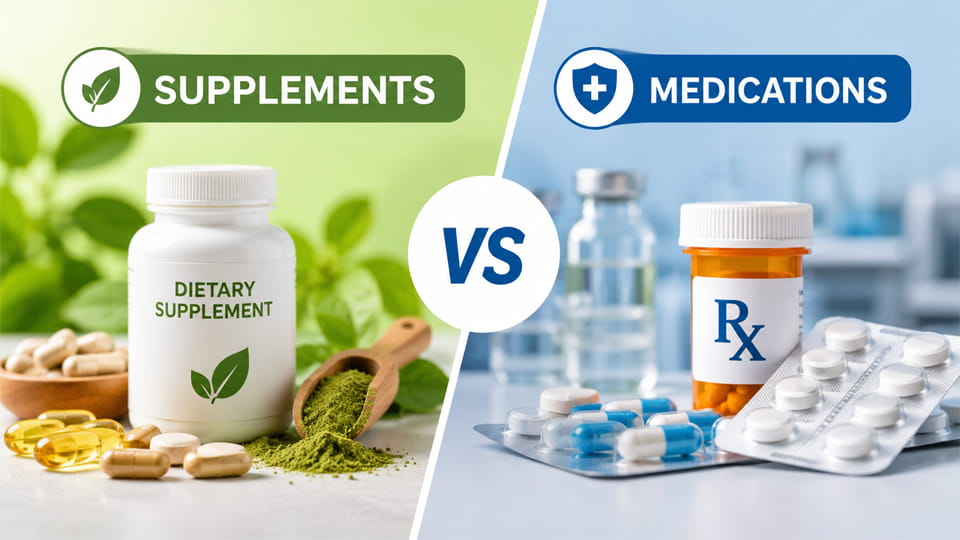
Les suppléments à base de plantes sont classés comme compléments alimentaires et peuvent être vendus sans ordonnance., se concentrer sur le soutien nutritionnel. Médicaments à base de plantes (comme les médecines ayurvédiques ou traditionnelles chinoises) sont souvent réglementés en tant que médicaments ou produits médicaux, avec des allégations de traitement des maladies. Les suppléments peuvent favoriser le bien-être général (par exemple. « soutient l’immunité ») mais ne peut prétendre guérir les maladies.
Références:
1.Documents d'orientation sur les compléments alimentaires & Informations réglementaires—— NOUS. Administration des aliments et des médicaments
2.Compléments alimentaires —— NOUS. Administration des aliments et des médicaments
3.Suppléments à base de plantes —— NOUS. Ministère de l'Agriculture
4.Développement de compléments alimentaires botaniques sûrs et efficaces —— Bibliothèque nationale de médecine
5.Assurance qualité et sécurité des compléments alimentaires à base de plantes —— Bibliothèque nationale de médecine
6.Suppléments diététiques et à base de plantes —— CCNSI