
Dans le langage courant "médicament" et "médecine" sont souvent utilisés de manière interchangeable. Dans l'industrie pharmaceutique, cependant, ils impliquent généralement différentes étapes du cycle de vie du produit. UN médicament est généralement la substance pharmacologique active (API) qui procure des effets thérapeutiques. UN médecine (parfois appelé un médicament) est le produit fini – le médicament formulé et emballé pour être utilisé par le patient. Cette distinction affecte la manière dont les produits sont développés, fabriqué, et emballé. En termes simples, chaque médicament commence par un médicament (ingrédient actif), mais tous les médicaments ne finissent pas comme des médicaments commercialisables. Les différences entre ces termes peuvent influencer forme posologique conception, statut réglementaire, et choix de machines d'emballage.
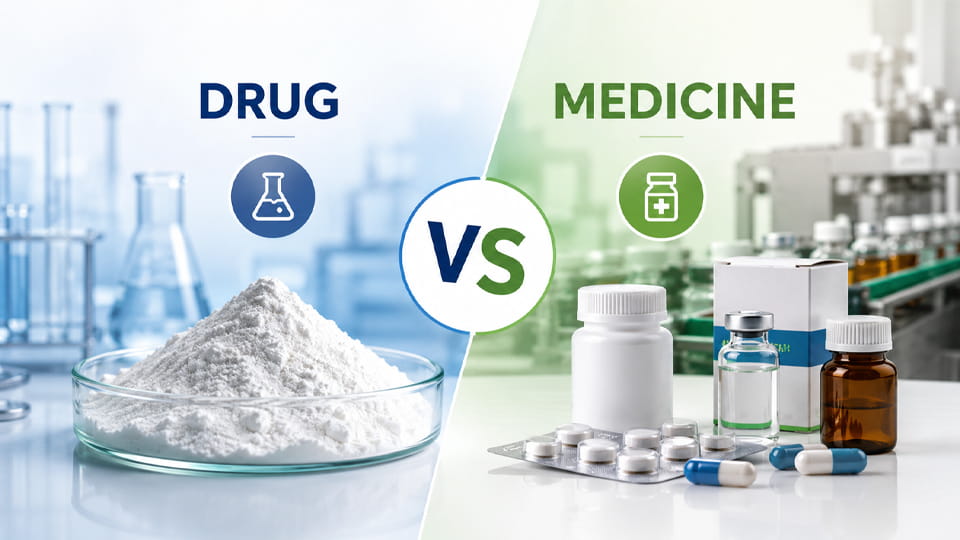
En termes pharmaceutiques, un médicament est une substance chimique ou biologique active utilisée pour diagnostiquer, guérir, atténuer, traiter, ou prévenir la maladie. La FDA définit un médicament au sens large comme «Une substance destinée à être utilisée dans le diagnostic, guérir, atténuation, traitement, ou la prévention des maladies» chez l'homme ou l'animal. En pratique, "médicament" fait souvent référence au principe actif pur (API) lui-même. Par exemple, l’ibuprofène ou l’amoxicilline sous forme de poudre serait appelé substance médicamenteuse avant d’être transformé en comprimé ou capsule.
Points clés sur drogues dans la fabrication pharmaceutique:
En résumé, un médicament est la substance thérapeutique brute ou API – le « quoi » qui donne à un médicament son effet. Ce terme est courant dans le développement et la réglementation des formulations.
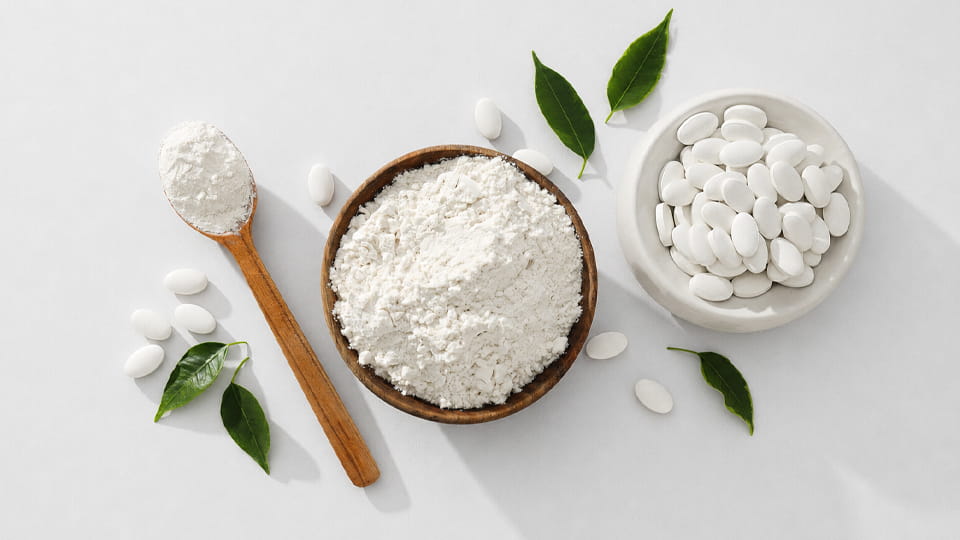
UN médecine (ou médicament) est un produit pharmaceutique fini destiné à l'usage des patients. Il contient un ou plusieurs médicaments (Apis) plus les composants inactifs (excipients) et est emballé pour une distribution et une utilisation en toute sécurité. Autrement dit, une fois qu'un médicament est formulé sous une forme posologique (comprimé, capsule, liquide, etc.) et étiqueté dans un contenant, ça devient un médicament prêt à la vente.
En termes simples, un médecine est le emballé, produit prêt pour le patient utilisé pour diagnostiquer ou traiter une maladie. Il inclut le médicament comme ingrédient vedette, mais aussi tout le reste (excipients, récipient, étiquette).
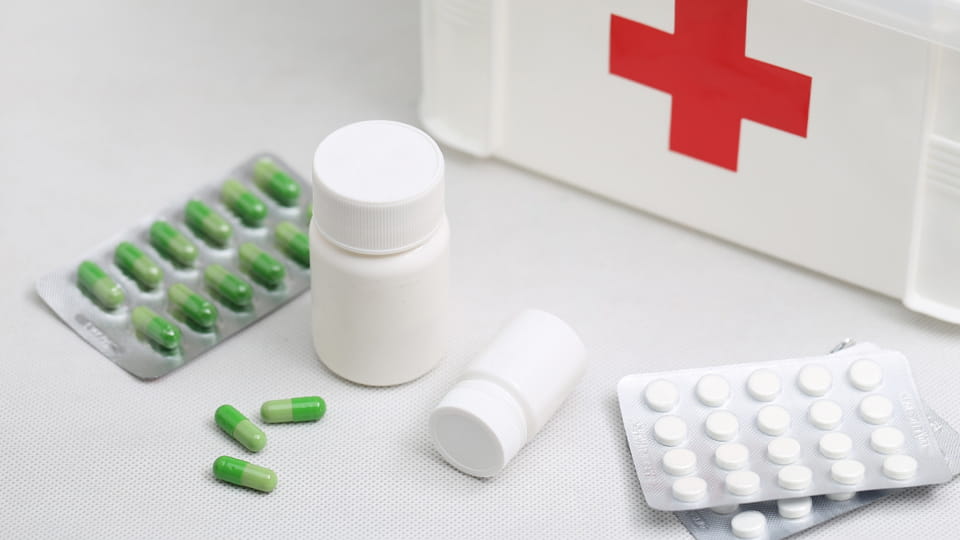
Vous trouverez ci-dessous un résumé des distinctions clés entre un médicament et un médicament. Les différences sont subtiles dans un langage simple, mais importantes dans les contextes manufacturier et réglementaire.:
| Aspect | Médicament | Médecine (Produit médicinal) |
| Signification fondamentale | Substance active (API) avec effet thérapeutique | Produit fini contenant le médicament, prêt à être utilisé par le patient |
| Scène | Fait souvent référence à un ingrédient à un stade précoce ou à un composé de recherche | Désigne la forme galénique finale une fois formulée et emballée. |
| Composition | L'actif pur (par exemple. poudre d'aspirine) | Inclut l'API + excipients, récipient, étiquette (par exemple. comprimé d'aspirine sous blister) |
| Utiliser le contexte | Fabrication, R&D, réglementaire (processus d'approbation) | Utilisation clinique, prescrire, distribution (dans les milieux de soins) |
| Règlement | La définition large du « médicament » de la FDA inclut les API | Des produits finis strictement réglementés (Approbations FDA/EMA, GMP) |
| Exemple | API de l'ibuprofène, protéine d'insuline (substance en vrac) | Comprimés d'ibuprofène, injections d'insuline en flacons |
En termes clairs: UN médicament est la substance chimique/biologique active ayant un effet pharmacologique. UN médecine est-ce que ce médicament plus la formulation et l'emballage, destiné à être utilisé en toute sécurité par les patients. Comme le dit une source pharmaceutique, « Chaque médicament commence comme un médicament, mais tous les médicaments ne deviennent pas des médicaments ». Par exemple, la morphine pure est une substance médicamenteuse; une fois formulé en doses injectables avec une solution saline et scellé dans des flacons, ça devient un médicament (un produit anti-douleur).
Le point crucial est que médecine implique une réglementation, produit consommable, alors que médicament peut désigner uniquement la substance active brute ou une classe plus large de composés. Le tableau ci-dessus met en évidence ces différences.
Pour bien comprendre « médicament contre médicament »," cela aide à clarifier les termes connexes souvent utilisés en pharmacie:
Conclusion: Dans la fabrication pharmaceutique, « substance médicamenteuse » est l'API, « produit médicamenteux » est la forme posologique formulée (comprimés, gélules, injection, etc.), et "médecine" est ce que vous appelez le produit médicamenteux une fois qu'il s'agit d'un produit thérapeutique prêt à être commercialisé. Par exemple, la metformine est une substance médicamenteuse, un comprimé de metformine à 500 mg est le produit médicamenteux, et cette tablette (dans son emballage) est le médicament que prend le patient.
Comprendre ces termes est vital: une fois que nous connaissons la forme galénique d’un produit médicamenteux, nous pouvons sélectionner le bon ligne de conditionnement pour en faire un médicament stable.
Formulation & Développement de formes posologiques: Un brut substance médicamenteuse en soi, il n'est pas prêt pour le patient. Il doit être formulé sous une forme galénique adaptée (comprimé, capsule, sirop, injection, etc.) – c’est une partie majeure du développement manufacturier. Chaque forme posologique nécessite des excipients et un traitement spécifiques (mélange, granulation, stérilisation) devenir un produit médicamenteux. Par exemple, les API sensibles pour les produits biologiques injectables nécessitent un traitement aseptique, alors qu'une API stable pour une pilule passe par le séchage et la compression du comprimé.
Approbation réglementaire: Des agences comme la FDA ou l'EMA examinent les données sur la substance médicamenteuse et le produit médicamenteux/le médicament. Ils évaluent la sécurité de l’API et l’efficacité de la formulation finale. Le médicament fini doit répondre à des normes strictes (GMP, stabilité, étiquetage). FDA cgMP les règles couvrent explicitement les processus et les équipements de conditionnement – donc la manière dont vous emballez un médicament (encore plus qu'une drogue brute) est très réglementé.
Emballage et étiquetage: La distinction dicte les besoins d’emballage. Une substance médicamenteuse a généralement un emballage minimal (batterie, flacons pour le stockage). Un médicament, cependant, nécessite emballage primaire qui protège le dosage (par exemple. packs de cloques, bouteilles, flacons) et emballage secondaire (cartons) pour information et traçabilité. Par exemple, comprimés (produit fini) besoin de blisters résistants à l'humidité ou de systèmes de flacons et de fermeture pour garantir la durée de conservation. Un médicament injectable nécessite des flacons ou des ampoules en verre stériles et des sceaux d'inviolabilité.. Chaque combinaison d'API et de forme posologique possède une solution d'emballage correspondante.
Sélection de l'équipement: Si vous ne pensez qu'aux API, vous pourriez envisager des réacteurs ou des mélangeurs. Mais une fois qu'une substance est un produit médicamenteux nécessitant un emballage, vous avez besoin de la bonne ligne d'emballage. Machines d'emballage sous blister, machines de remplissage de gélules, charges liquides, lignes de remplissage de flacons, encartonneuses – tous deviennent pertinents. Reconnaître le terme « médicament » signifie que le produit emballé incite à l'achat de ces machines.
En bref, comprendre « médicament contre médicament » aide les équipes de projet à savoir quand et comment pour intégrer l'emballage dans le flux de production. Il garantit que le produit médicamenteux n'est pas simplement formulé, mais correctement protégé et présenté sur le marché.
L'emballage est la dernière étape critique qui transforme un médicament formulé en un médicament que les patients peuvent utiliser en toute sécurité.. Dans emballage pharmaceutique, emballage primaire est en contact direct avec le dosage (le produit médicamenteux) et constitue la première barrière à la dégradation. Par exemple, les capsules et comprimés de gélatine dure entrent souvent dans aluminium-plastique packs de cloques, tandis que les sirops liquides entrent dans plastique (PET/PEHD) bouteilles. Les médicaments injectables sont remplis flacons ou ampoules en verre stériles. Chaque contenant primaire est choisi pour son inertie et ses propriétés barrières.
Une fois l’emballage primaire scellé, emballage secondaire (cartons, étiquettes, dépliants) fournit des informations sur les patients et des données de lots. Par exemple, les plaquettes thermoformées ou les flacons sont regroupés dans des cartons de marque avec des notices d'instructions, numéros de lots, et codes-barres – cruciaux pour la conformité et la sécurité des patients.
Chez JinLuPacking, nos machines automatisent ces étapes. Une automatique machine d'emballage sous blister peut sceller des milliers de comprimés dans des plaquettes thermoformées par heure; un Machine de remplissage de capsule dose le médicament en capsules; un ligne de remplissage et de bouchage de bouteilles compte les comprimés ou remplit des sirops dans des bouteilles; et un encartonneuse emballe et emballe les produits finis. Toutes ces étapes – remplissage, plafonnement, emballage – assurez-vous que le médicament final est dosé avec précision, sûr, et prêt à être distribué.
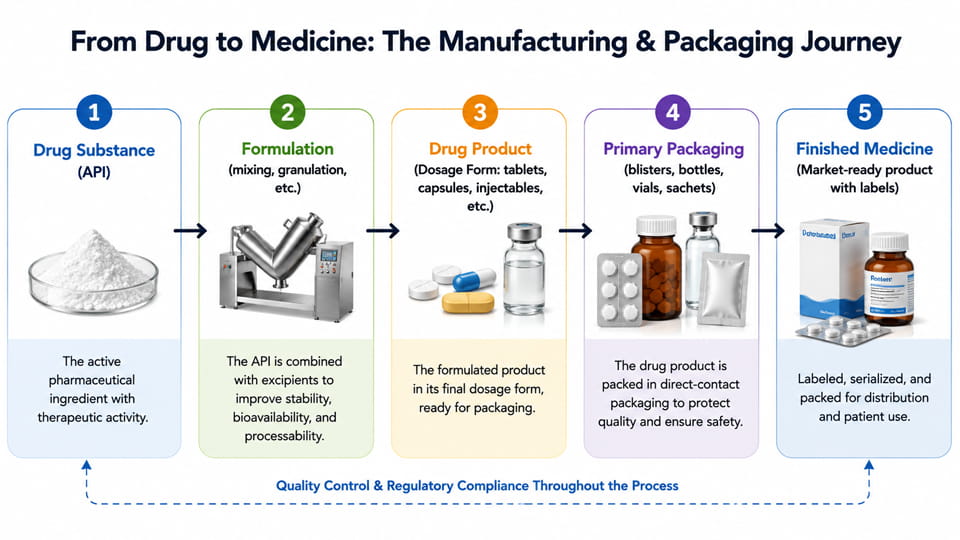
Chiffre: Organigramme du médicament → Médecine: L'actif substance médicamenteuse (API) est formulé dans un produit médicamenteux (forme posologique spécifique). Puis il entre dans emballage primaire (par exemple. plaquettes thermoformées pour comprimés, bouteilles pour sirops, flacons en verre pour injectables). Enfin, ça devient un médicament fini avec emballage secondaire (cartons/étiquettes) à l'usage des patients.
Différentes formes posologiques nécessitent différentes solutions de conditionnement. Le tableau ci-dessous résume les appariements typiques:
| Forme posologique | Emballage primaire commun | Exemple JinLuEquipment |
| Comprimés (Solide Orale) | Packs de cloques (Feuille PVC/PVDC), ou en plastique bouteilles avec bouchons à vis | Machine d'emballage sous blister; Comptage des comprimés & Ligne d'embouteillage |
| Capsules (Oral) | Packs de cloques, ou des flacons similaires à des comprimés | Machine de remplissage automatique de capsules; Machine à blisters |
| Liquide oral (Sirops) | Plastique (PET/PEHD) bouteilles avec capuchons de sécurité pour enfants | Système de remplissage et de bouchage de liquide; Démêleur de bouteilles |
| Poudre / Sachet | Sachets unidose (sachets en aluminium ou en stratifié) | Machine d'emballage de sachets/bâtons; Ligne de pochettes préfabriquées |
| Injectables (Stérile) | Verre flacons, ampoules, ou seringues préremplies, plus des joints en aluminium | Remplissage de flacons/ampoules & Ligne d'arrêt; Scelleuse à induction |
| Pommades/Crèmes | Tubes laminés (aluminium ou plastique) | Machine de remplissage et de scellage de tubes |
| Gélules molles | Bouteilles (ANIMAL DE COMPAGNIE) ou sous blister | Machine à boursoufler les capsules Softgel; Ligne de comptage |
Le choix dépend de facteurs tels que la stabilité de la forme posologique, stérilité, et le confort du patient. Par exemple, les comprimés et les gélules sont souvent utilisés machines à cloques ou lignes de remplissage de bouteilles, alors que les liquides ont besoin rinceurs de bouteilles, remplissage, et machines à boucher. Injectable les médicaments nécessitent des systèmes de remplissage stériles dans des conditions de salle blanche. Chaque solution est soutenue par des machines d'emballage spécialisées pour garantir que le produit médicamenteux devient un produit protégé., étiqueté médecine qui rencontre Normes BPF.
Pour que ce soit concret, voici quelques exemples montrant comment des médicaments spécifiques se transforment en médicaments:
Chaque exemple montre: Médicament (API) → Formulation (mise sous forme de comprimés, remplissage, etc.) → Conditionnement (cloque, bouteille, ampoule, sachet) → Médecine (produit final avec étiquette).
Pas nécessairement. Chaque médicament part d'un médicament, mais tous les médicaments ne deviennent pas des médicaments. De nombreux composés chimiques ou biologiques (drogues) ne jamais atteindre les patients. Certains médicaments restent dans R&D ou sont uniquement utilisés pour la recherche, et d'autres sont utilisés en dehors du cadre médical (par exemple. drogues récréatives). Seulement lorsqu'un médicament est formulé, testé, et approuvé est-ce que ça devient un médicament.
Comme le note une réponse à la FAQ, "L'aspirine est à la fois un médicament et un médicament. C'est un médicament sous sa forme chimique (acide acétylsalicylique) et devient un médicament lorsqu'il est formulé et utilisé pour traiter la fièvre, douleur, ou une inflammation ». La clé est l’utilisation et la présentation prévues: son utilisation comme produit prêt pour le patient en fait un médicament.
En résumé, seulement approuvé, produits destinés aux patients sont des médicaments. Comprendre cela aide les fabricants et les régulateurs à faire la distinction entre les substances expérimentales et les produits réels du marché..
En résumé, "médicament" fait généralement référence à l'ingrédient actif ou à tout agent pharmaceutique, alors que "médecine" (médicament) fait référence au fini, produit prêt pour le patient contenant ce médicament. Cette distinction est importante pour la fabrication pharmaceutique: il guide R&D, statut réglementaire, et choix d'emballage. Comprendre ces termes nous permet de garantir que nous acheminons une substance médicamenteuse tout au long de la formulation et conditionnement correctement pour devenir une écurie, médicament conforme.
Quand développer une nouvelle forme posologique, souviens-toi: la bonne ligne de conditionnement (emballeuse sous blister, remplisseuse de capsules, ligne de bouteilles, remplisseur de flacon, carton, etc.) est essentiel pour protéger le médicament et respecter les BPF. Par exemple, les fabricants de tablettes comptent sur machines d'emballage en cloque et lignes de comptage/remplissage, alors que les produits injectables nécessitent machines de remplissage et de bouchage de flacons/ampoules et emballage secondaire sécurisé. JinLuEmballage offre une gamme complète de machines d'emballage pharmaceutique adapté à chaque forme galénique – de comprimé & cloquage de la capsule à emballage de sachets et mise en carton.
Prêt à transformer votre médicament en un médicament prêt à être commercialisé? Découvrez nos solutions: comprimé & machines de conditionnement sous blister de capsules pour doses solides, remplisseuses de gélules pour poudre/gélules liquides, sachet & machines à sachets préfabriqués pour poudres, et encartonneuses pour le conditionnement final. Nos équipements contribuent à protéger la qualité des produits, assurer la sécurité des patients, et rationalisez votre chaîne de production, du médicament au médicament fini.
Pas exactement. Dans une conversation informelle, ils se chevauchent, mais techniquement, un médicament désigne souvent l'ingrédient actif ou toute substance pharmacologique, considérant qu'un médicament est le produit fini donné aux patients. On peut dire « tout médicament contient un médicament, mais un médicament en soi ne peut pas être un médicament tant qu’il n’est pas formulé. ».
Il s'agit essentiellement du même concept dans la plupart des contextes pharmaceutiques. Un produit médicamenteux est la forme posologique complétée (comprimé, capsule, injection) prêt à vendre. Un médicament est le nom donné au produit médicamenteux lorsqu’il est conditionné pour être utilisé par le patient.. En pratique, produits pharmaceutiques approuvés (avec étiquetage) sont des médicaments.
Une substance médicamenteuse (ou API) est l’ingrédient actif pur – le produit chimique ou biologique qui a l’effet thérapeutique. Un produit médicamenteux est la formulation finale contenant cette substance, plus les excipients, sous forme posologique (pilule, solution, etc.). Pensez au sel et à la salière: le sel (substance médicamenteuse) est l'ingrédient; le sel avec anti-agglomérant dans une bouteille (produit médicamenteux) est le produit utilisable.
L’emballage est crucial pour transformer un médicament en médicament. Comme le notent les ressources JinLuPacking, emballage pharmaceutique (packs de cloques, flacons, bouteilles) protège la stabilité et le dosage du produit médicamenteux, et veille au respect de la réglementation. Un emballage et un étiquetage appropriés transforment une substance médicamenteuse en vrac en un produit sûr., médecine conviviale.
Oui. Un composé comme l'ibuprofène ou l'acétaminophène est une substance médicamenteuse. Lorsqu'il est transformé en comprimé OTC avec des instructions, c'est aussi un médicament. Cela dépend de la forme et de l'utilisation. Comme indiqué ci-dessus, L'aspirine est chimiquement un médicament, mais elle est appelée médicament lorsqu'elle est présentée sous forme de comprimés pour soulager la douleur.. C'est la même chose avec de nombreux analgésiques, antibiotiques, etc..
Les médecins utilisent souvent le terme « médicament » dans le sens neutre de tout agent pharmaceutique.. Dans le jargon clinique et le droit (comme la loi FDA), « drogue » est le terme officiel désignant une substance thérapeutique.. Il couvre tout, du sirop contre la toux à la chimiothérapie. Entre-temps, La « médecine » est plus conviviale pour le patient. Un médecin pourrait donc prescrire de l'ibuprofène (médicament) comme analgésique (médecine).
Références:
1.Glossaire des termes Drugs@FDA -- NOUS. Administration des aliments et des médicaments
2.Classification des produits en tant que médicaments et dispositifs et problèmes supplémentaires de classification des produits -- NOUS. Administration des aliments et des médicaments
3.Glossaire (Termes P: produit pharmaceutique, excipient, matière première) -- OMS
4.Glossaire de préqualification -- OMS
5.Formes posologiques | FDA -- NOUS. Administration des aliments et des médicaments
6.Q7A Guide des bonnes pratiques de fabrication pour les ingrédients pharmaceutiques actifs -- NOUS. Administration des aliments et des médicaments
