
خرید ماشین آلات دارویی فقط سرعت نیست, دقت, اتهام اتوماسیون, و اندازه دستگاه. قبل از اینکه تجهیزات به کارخانه شما برسد, همچنین باید بدانید که آیا سایت می تواند آن را پشتیبانی کند یا خیر.
یعنی چک کردن الزامات ابزاری تجهیزات دارویی: توان الکتریکی, هوای فشرده, خالی, آب, خنک کننده, اگزوز, و هر گونه خدمات خاص فرآیند مانند بخار یا نیتروژن.
یک ماشین می تواند از نظر مکانیکی کامل باشد و در صورت اشتباه بودن ولتاژ باز هم نتواند به عملکرد نامی خود برسد, فشار هوا در زمان اوج تولید کاهش می یابد, ظرفیت خلاء کمتر است, یا آب خنک کننده خیلی گرم است. برای تهیه, مهندسی, و تیم های تولید, برنامه ریزی ابزار باید قبل از سفارش خرید شروع شود - نه در حین نصب.
خوراکی های کلیدی
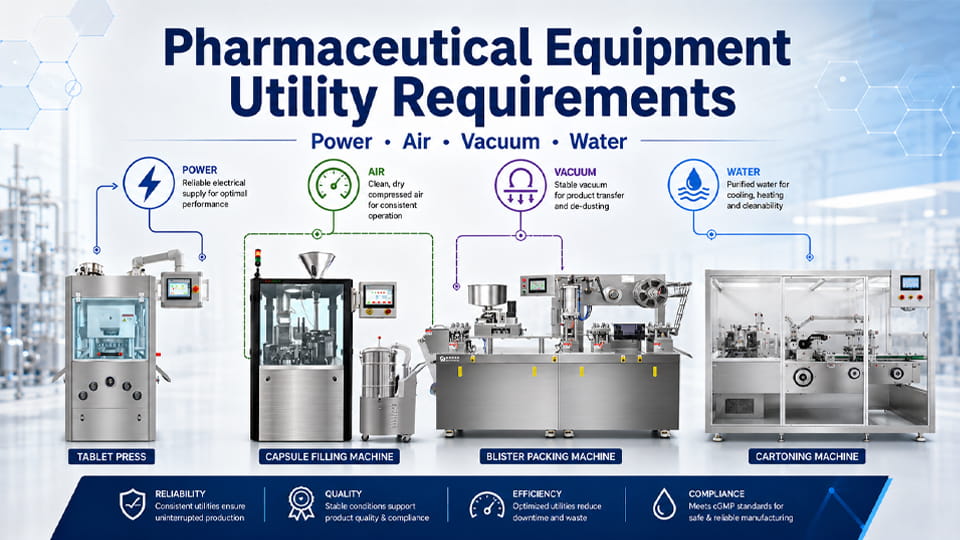
الزامات ابزار تجهیزات دارویی، خدمات سایتی هستند که یک دستگاه برای کارکردن طبق طراحی به آن نیاز دارد. برق تقریباً جهانی است. بسته به دستگاه و فرآیند, همچنین ممکن است به هوای فشرده نیاز داشته باشید, خالی, آب خنک کننده, آب پردازش, اگزوز, بخار, نیتروژن, زهکشی, یا شرایط محیطی کنترل شده. فهرست دقیق به تجهیزات بستگی دارد, فرآیند, گزینه ها, و استفاده مورد نظر.
هر ابزاری به طور خودکار a نیست ابزار بحرانی در مفهوم GMP. سوال اصلی این است که آیا این ابزار می تواند بر کیفیت محصول تأثیر بگذارد یا خیر, عملکرد فرآیند, یا خطر آلودگی.
FDA Q7 ابزارهایی مانند بخار را شناسایی می کند, گاز, هوای فشرده, گرمایش, تهویه, و تهویه مطبوع به عنوان سیستم هایی که باید واجد شرایط باشند و زمانی که می توانند بر کیفیت محصول تأثیر بگذارند، باید به طور مناسب نظارت شوند. همچنین به تهویه می پردازد, فیلتراسیون, اگزوز, گرد و غبار, رطوبت, دما, کنترل فشار, و تناسب آب.
دستورالعمل WHO از همان اصل استفاده مورد نظر پیروی می کند: امکاناتی مانند HVAC, آب, نیتروژن, و هوای فشرده باید برای هدف مورد نظر خود مناسب باشد و نباید بر کیفیت محصول تأثیر منفی بگذارد یا به منبع آلودگی تبدیل شود..
برای خریداران, نکته عملی ساده است: قبل از نصب، الزامات ماشین و قابلیت ابزار کارخانه باید مطابقت داشته باشند.
تاسیسات به طور مستقیم بر عملکرد تجهیزات و کیفیت محصول تأثیر می گذارد. عدم تطابق ابزار اغلب به دلیل تدارکات اتفاق می افتد, تولید, مهندسی, و تیم های اعتبارسنجی بر روی بخش های مختلف پروژه تمرکز می کنند. این راهنمای GMP FDA (Q7A) به صراحت بیان می کند که «همه ابزارهایی که می توانند بر کیفیت محصول تأثیر بگذارند (به عنوان مثال, بخار, گاز, هوای فشرده, گرمایش, تهویه, و تهویه مطبوع) باید واجد شرایط و نظارت مناسب باشد». به عبارت دیگر, اگر هوای فشرده یا منبع آب شما خراب شود, می تواند دستگاه را متوقف کند یا حتی محصول را آلوده کند. به عنوان مثال, فیلتراسیون هوای فشرده ناکافی می تواند روغن یا میکروب ها را وارد کپسول ها یا بسته های تاول کند.. به همین ترتیب, ولتاژ بسیار کم یا مسدود شدن خط هوا می تواند باعث عملکرد ضعیف موتورها و سوپاپ ها شود..
تأیید اولیه ابزار کمک می کند تا از سه نتیجه پرهزینه جلوگیری شود:
همچنین به همین دلیل است که برنامه ریزی ابزار بسیار زودتر از آنچه بسیاری از خریداران انتظار دارند در چرخه عمر تجهیزات قرار می گیرد. در حین نصب (SAT/IQ), خدمات آب و برق تمرکز اصلی است. چک لیست نصب تجهیزات بسته بندی Jinlu به صراحت تأیید می کند «آب و برق (ولتاژ برق, فشار پنوماتیک, آب, و غیره)” برخلاف مشخصات دستگاه. در تست پذیرش سایت (SAT), مهندسین خواهد شد اندازه گیری ولتاژ واقعی, فشار/جریان هوا, دمای آب, و غیره. از منبع تاسیسات برای تأیید اینکه آنها در محدوده های مشخص شده توسط دستگاه باقی می مانند. به طور خلاصه, تطبیق ابزارها با مشخصات تجهیزات برای جلوگیری از غافلگیری ضروری است: ماشین نمی تواند با سرعت کامل کار کند یا ممکن است خراب شود, بگو, هوای گیاه تنها است 3 نوار به جای مورد نیاز 6 نوار, یا اگر موتور روی ولتاژ اشتباه باشد.
با نیازهای برق تجهیزات دارویی در برگه داده نهایی ذکر شده است - مشخصاتی که از مدل دیگری کپی شده باشد.
ولتاژ را تایید کنید, مجرد- یا تامین سه فاز, فرکانس, قدرت نصب شده/نامی, حداکثر تقاضا, اتصال اصلی, و هر گونه عرضه جداگانه برای لوازم جانبی. تجهیزات صادراتی اغلب می توانند برای بازارهای مختلف پیکربندی شوند. به عنوان مثال, لیست پرکننده کپسول NJP-2600D JinLu 220/380 V, 50/60 قدرت قابل تنظیم هرتز و 8.0 توان کل کیلو وات; لیست دستگاه تاول زنی DPP-260R آن است 380/220/110 V, 50/60 هرتز و 5.5 کیلووات. این مثال ها نشان می دهد که چرا خریداران هرگز نباید یک "ولتاژ استاندارد دارویی" را فرض کنند.
همچنین جدا برق نصب شده از مصرف معمولی کارکرد. توان نصب شده یا نامی برای برنامه ریزی زیرساخت های الکتریکی مفید است, اما تقاضای واقعی با بخاری تغییر می کند, موتورها, پمپ های خلاء, نوار نقاله ها, و چرخه ماژول های اختیاری. بپرسید تامین کننده تجهیزات دارویی برای حداکثر / اوج تقاضا و بار مورد انتظار در حال اجرا در صورت وجود. کابل نهایی, شکن, حفاظت, زمین, و طراحی جداسازی باید از قوانین برق کشور مقصد و طراحی برق واجد شرایط پروژه پیروی کند.
نکات کلیدی:
سیلندرهای پنوماتیک, دریچه ها, گیره ها, رد دستگاه ها, توابع تمیز کردن, و مکانیسم های حمل و نقل محصول ممکن است همه به هوای فشرده بستگی داشته باشند.
تجهیزات دارویی به چه مقدار هوای فشرده نیاز دارند?
هیچ نیاز جهانی به هوای ماشین دارویی وجود ندارد. هم فشار کاری را که معمولاً بر حسب بار یا مگاپاسکال بیان می شود و هم مصرف را بر حسب NL/min مشخص کنید, L/min, نیوتن متر در ساعت, یا یکی دیگر از شرایط مرجع به وضوح تعریف شده است. دو ماشین می توانند به فشار یکسان اما جریان بسیار متفاوت نیاز داشته باشند, بنابراین تعیین اندازه کمپرسور به تنهایی از طریق فشار غیر قابل اعتماد است.
هوا کیفیت جدا از فشار و کمیت اهمیت دارد. ISO 8573-1:2010 خلوص هوای فشرده را بر اساس ذرات طبقه بندی می کند, آب, و روغن; از ماه اوت 2026, آن نسخه تا زمانی که ویرایش در دست توسعه است، منتشر میشود. ISO انجام می دهد نه برای هر کاربرد دارویی یک کلاس خلوص جهانی تجویز کنید, بنابراین کلاس مورد نیاز باید بر اساس استفاده مورد نظر و خطر آلودگی باشد.
فیلتراسیون را مشخص کنید, ذرات مجاز, روغن کل, رطوبت, و نقطه شبنم فشار (PDP) جایی که مربوط است. PDP دمایی را توصیف می کند که در آن رطوبت در فشار سیستم متراکم می شود; PDP کمتر به معنای هوای فشرده خشک تر است. برای هوایی که می تواند محصول در معرض یا سطوح بحرانی را تحت تأثیر قرار دهد, الزامات کیفیت نقطه استفاده و تأیید را ایجاد کنید. راهنمای بازرسی FDA به طور خاص در مورد بررسی سیستم های هوای فشرده و فیلتراسیون ذرات نقطه استفاده در عملیات دارویی مربوطه بحث می کند..
باید باشد بدون روغن? گاهی اوقات, اما "کمپرسور بدون روغن" نباید جایگزین مشخصات کیفیت هوا قابل اندازه گیری شود. روغن قابل قبول را در محل مصرف تعریف کنید, ارزیابی ریسک تماس با محصول, و از خشک کن مناسب استفاده کنید, فیلتراسیون, نظارت, و صلاحیت. هدف، هوای تحویلی کنترل شده است - نه صرفاً برچسب کمپرسور.
نکات کلیدی:
بوها سیستم خلاء دارویی ممکن است حمایت کند جداسازی کپسول, دوز پودر به کمک خلاء, جابجایی تاول یا مواد, پیکاپ مکش, انتقال محصول, یا حذف گرد و غبار. جین لو دستگاه پرکن کپسول NJP-2600D, برای مثال, از پمپ خلاء برای جداسازی کلاهک/بدنه استفاده می کند.
همیشه دو پارامتر بخواهید:
سطح خلاء به شما می گوید که چقدر فشار کم است, یا فشار دیفرانسیل چقدر است, فرآیند نیاز دارد. جریان خلاء / سرعت پمپاژ به شما می گوید که سیستم چقدر گاز می تواند در طول زمان حذف کند. بنابراین سازندگان پمپ آنها را جداگانه منتشر می کنند; آنها, برای مثال, هم سرعت پمپاژ را بر حسب m³/h و هم فشار قابل دستیابی را برای تجهیزات خلاء خود مشخص می کند.
پمپ داخلی ساده است و یک دستگاه را نسبتا مستقل نگه می دارد. یک سیستم مرکزی می تواند تعداد پمپ ها را کاهش دهد و تعمیر و نگهداری را متمرکز کند, اما تلفات لوله, تقاضای همزمان, تفکیک آلودگی, و عواقب شکست باید ارزیابی شود. از تامین کننده ماشین خلاء مورد نیاز در محل اتصال ماشین را بخواهید - نه صرفاً رتبه پلاک پمپ.
نکات کلیدی:
تجهیزات دارویی به چه آبی نیاز دارند?
کیفیت آب به کاری که آب انجام می دهد بستگی دارد. آب خنک کننده حلقه بسته, آب آشامیدنی, آب تصفیه شده, و WFI مشخصات قابل تعویض نیستند. تعیین کنید که آیا آب با محصولات تماس دارد یا سطوح تماس محصول, از تمیز کردن یا پردازش پشتیبانی می کند, یا فقط گرما را از بین می برد; سپس کیفیت مناسب را تعیین کنید, دما, فشار, جریان, و الزامات نظارت.
WHO بیان می کند که درجه دارویی-آب مناسب باید بر اساس آن انتخاب شود برنامه مورد نظر, محصول, و مرحله ساخت; WFI به جای هر ماشین دارویی با استفاده های خاص با خطر بالاتر مرتبط است. FDA Q7 به طور مشابه نیاز دارد که آب فرآیند برای استفاده مورد نظر مناسب باشد.
این امر به ویژه برای نیاز آب تجهیزات دارویی. آب خنک کننده ماشین ممکن است به سادگی از طریق مبدل حرارتی یا صفحه خنک کننده به گردش در آید و هرگز محصول را لمس نکند. با این حال FDA Q7 نیاز به کنترل سیالات گرمایشی و خنک کننده دارد تا با محصول تماس یا تأثیر منفی نداشته باشند..
خنک کننده / چیلر, بخار, و اگزوز
بوها بسته بندی تاول, سیستم پوشش, یا سایر تجهیزات مولد گرما ممکن است بسته به طراحی به آب خنک کننده یا چیلر خارجی نیاز داشته باشند. قبل از انتخاب چیلر, دمای ورودی مورد نیاز را بدست آورید, جریان, فشار, بار دفع گرما, سازگاری آب/گلیکول, و اندازه اتصال. آن را فقط از کیلووات الکتریکی دستگاه اندازه نکنید.
بخار است یک ابزار استاندارد برای هر دستگاه بسته بندی نیست. در گرمایش خاص مهم می شود, تمیز کردن, عقیم سازی, پوشش, یا سیستم های فرآیندی. زمانی که بخار می تواند کیفیت محصول را تحت تاثیر قرار دهد, FDA و ISPE آن را به عنوان ابزاری که نیاز به کنترل مناسب دارد، در نظر می گیرند.
بالاخره, فراموش نکن استخراج گرد و غبار و اگزوز. فشرده سازی تبلت, پر کردن کپسول, دانه, و جابجایی پودر می تواند بارهای گرد و غبار ایجاد کند که نیاز به استخراج یا مهار محلی دارد. FDA Q7 خواستار تهویه کافی است, فیلتراسیون, و در صورت لزوم اگزوز کنید, از جمله کنترل گرد و غبار و خطر آلودگی متقابل.
نکات کلیدی:
فراتر از چهار ابزار اصلی, این خدمات رایج را در نظر بگیرید:
ماتریس زیر یک ابزار برنامه ریزی است, مشخصات ماشین نیست. "مشترک" به معنای اغلب با آن مواجه می شود; "وابسته به مدل" به معنای پیکربندی نهایی است, محصول, یا فرآیند تصمیم می گیرد.
| تجهیزات | قدرت | هوای فشرده | وکیوم | آب / چیلر | اگزوز / گرد و غبار |
| پرس تبلت | مورد نیاز | مشترک | وابسته به مدل | معمولا محدود است | مشترک |
| دستگاه پر کردن کپسول | مورد نیاز | مشترک | مشترک | معمولا محدود است | مشترک |
| دستگاه بسته بندی تاول | مورد نیاز | مشترک | وابسته به مدل | وابسته به مدل | وابسته به مدل |
| شمارنده قرص/کپسول | مورد نیاز | وابسته به مدل | معمولا محدود است | معمولا خیر | وابسته به مدل |
| دستگاه کارتن سازی | مورد نیاز | مشترک | وابسته به مدل | معمولا خیر | معمولا محدود است |
| دستگاه پوشش | مورد نیاز | مشترک | وابسته به مدل | مشترک / وابسته به فرآیند | مشترک |
| گرانولاتور / سیستم بستر مایع | مورد نیاز | مشترک | وابسته به فرآیند | وابسته به فرآیند | مشترک |
داده های سازنده به جای یک عدد صنعتی واحد، از تغییرات پشتیبانی می کند: JinLu منابع الکتریکی قابل تنظیم را در سراسر خود فهرست می کند دستگاه های پر کردن کپسول و دستگاه های بسته بندی تاول, و هوای فشرده 6 بار را برای یک پرس قرص و مقادیر جریان خاص را برای پرکننده کپسول منتشر می کند..
یک مواجهه با تامین کننده مفید نمونه مشخصات ابزار ممکن است شبیه این باشد:
| سودمند | نیاز مصور | آنچه خریدار باید تأیید کند |
| قدرت | 380 V, 50 هرتز, 3-فاز | عرضه محلی, تحمل, حفاظت |
| برق نصب شده | 8 کیلووات | اوج تقاضا و لوازم جانبی |
| هوای فشرده | 6 نوار در ورودی دستگاه | فشار در زمان اوج تولید |
| مصرف هوا | 200 NL/min | جریان معمولی در مقابل حداکثر جریان |
| کیفیت هوا | ISO 8573-1 کلاس: TBD توسط URS | ذرات, آب/PDP, روغن |
| وکیوم | -60 کیلو پاسکال(g), 80 m³/h | سطح مورد نیاز و جریان |
| آب خنک کننده | 15-20 درجه سانتی گراد, 5 L/min | بار حرارتی, فشار, دمای برگشت |
| اگزوز | 500 m³/h | فشار استاتیک و فیلتراسیون |
| اتصالات | تامین کننده برای تعریف | اندازه, طرف, ارتفاع, مناسب |
اینها ارزش های عمداً گویا هستند, مشخصات برای هر مدل JinLu یا شخص ثالث نیست. ارقام نهایی باید از برگه ابزار مورد تایید دستگاه انتخاب شده باشد. برگه های سازنده واقعی نشان می دهد که چقدر مقادیر می توانند متفاوت باشند.
برای یک خط جدید, هر مقدار پلاک نام را کورکورانه اضافه نکنید و فقط برای یک ماشین اندازه نکنید.
برای هر ابزار, یک برنامه بارگذاری بسازید:
تقاضای طراحی ≈ Σ (تقاضای تجهیزات × فاکتور استفاده همزمان مورد انتظار) + ذخیره موجه
از حداکثر مصرف عملیاتی تامین کننده در جایی استفاده کنید که ماشین بتواند به طور مداوم در آن بار کار کند. کاربران متناوب را جداگانه شناسایی کنید. سپس بدترین سناریوی تولید معتبر را آزمایش کنید - برای مثال, دستگاه تاول, کارتن ساز, شمارنده, و دستگاه های رد پنوماتیک همه در حالی که خط دیگری شروع می شود کار می کنند.
قبل از نصب, بررسی کنید که همه ابزارهای موجود در سایت با مشخصات تجهیزات مطابقت داشته باشند. یک چک لیست ممکن است شامل شود:
مثال: قبل از حمل و نقل, یک تامین کننده ممکن است برگه مشخصات تجهیزات را ارائه دهد که در آن "هوا: 6.0 نوار, 200 NL/min; وکیوم: 60 کیلو پاسکال; قدرت: 380VAC 3 فاز, 10 کیلو وات." از این برای راه اندازی مدارها و لوله کشی استفاده کنید. در حین نصب IQ, هر منبع را اندازه گیری کنید تا تأیید کنید که با آن مشخصات مطابقت دارد.
یک URS کامل باید به صراحت فهرست شود کلیه امکانات و شرایط مورد نیاز. در بخش «آب و برق و محیط زیست»., مقادیر دقیق را مشخص کنید (به عنوان مثال. «هوای فشرده: 6.0 نوار ± 0.2, 100 NL/min, کلاس ISO 8573-1 1.0. برقی: 400 V, 3-f, 50 هرتز, 15 کیلو وات."). راهنمایی نظارتی (ضمیمه GMP اتحادیه اروپا 15) نیاز به تأیید الزامات URS در طول صلاحیت طراحی دارد. در عمل, از جمله مشخصات کاربردی واضح در نقشههای URS/قرارداد، خریدار و فروشنده را مجبور میکند تا در مورد نیازها به توافق برسند.. همچنین می سازد IR/WH/PQ آزمایش ساده - هر اتصال ابزاری را می توان به یک مورد URS ردیابی کرد.
همیشه قبل از سفارش، لیست ابزار را با فروشنده خود تأیید کنید. تامین کنندگان باید یک برگه مورد نیاز ابزار یا دیتا پلاک برای هر ماشین. این موارد را در جلسه اولیه مرور کنید یا به سفارش خرید اضافه کنید. به عنوان مثال, از تامین کننده درخواست کنید تا مشخصات ابزار را در داده های فروشنده لحاظ کند (به عنوان بخشی از FAT). در طول SAT, بررسی فیزیکی هر ارتباط: اندازه گیری ولتاژ سایت, فشار, و برخلاف مشخصات تامین کننده جریان یابد. ثبت نام مستند را حفظ کنید (اغلب به عنوان بخشی از گزارش IQ) که "توسعه های برقی متصل هستند و در محدوده مشخصات هستند" - این یک انتظار GMP است (IQ به طور معمول شامل بررسی قدرت است, پنوماتیک, اتصالات آب).
اگر چیزی مطابقت ندارد (به عنوان مثال. سایت فقط دارد 200 V اما ماشین نیاز دارد 400 V), فوراً آن را حل کنید - یا یک ترانسفورماتور تهیه کنید یا از تامین کننده بخواهید دستگاه را دوباره پیکربندی کند. به یاد داشته باشید, رفع مشکلات عدم تطابق ابزار قبل از شروع تولید آسان تر از بعد از آن است.
خلاصه, برنامه ریزی دقیق ابزار به اندازه انتخاب ماشین مناسب مهم است. یک خط تجهیزات فقط می تواند با سرعت و کیفیت مورد نظر خود کار کند اگر قدرت, هوا, خالی, و آب با مشخصات صحیح موجود هستند. از جداول این راهنما استفاده کنید, چک لیست ها و فرمول هایی برای برآورد نیازهای شما و گنجاندن آنها در URS. با خودت کار کن فروشنده تجهیزات (مانند بسته بندی جینلو) برای مستندسازی هر مورد نیاز ابزار و تأیید آن در محل.
آماده برای ساده سازی برنامه ریزی ابزار? کارشناسان Jinlu Packing می توانند در مورد اتصالات برق و برق برای همه ما مشاوره دهند ماشین آلات بسته بندی دارویی. از صفحات محصول Jinlu بازدید کنید - برای مثال دستگاه پرکن کپسول, دستگاه پرس تبلت, دستگاه بسته بندی تاول, دستگاه شمارش, دستگاه کارتن سازی, ماشین بسته بندی کیسه یا دستگاه بسته بندی کیسه ای از پیش ساخته شده - برای مشخصات ابزار و اطلاعات تماس. برای کمک بیشتر, تماس بگیرید با تیم ما برای اطمینان از اینکه تاسیسات شما برای نصب نرم و عملکردی سازگار آماده است.
اصول اولیه برق است, هوای فشرده, خالی, و آب / خنک کننده. بسیاری از خطوط بسته بندی نیز از بخار تمیز استفاده می کنند (برای استریل کننده ها), گاز بی اثر (N2 برای بسته های بالش), و استخراج گرد و غبار. راهنماهای نظارتی (به عنوان مثال. FDA Q7A) صراحتاً بخار را صدا کنید, گاز (هوا/نیتروژن), تهویه مطبوع, و غیره. به عنوان آب و برقی که باید واجد شرایط باشند.
اکثر تجهیزات برق صنعتی 3 فاز هستند. معمولاً 380-400 VAC (50 هرتز) یا 480 VAC (60 هرتز) با خنثی یا زمین. برخی از واحدهای کوچکتر می توانند با برق 220-240 VAC تک فاز کار کنند. مهم است که ولتاژ و فاز دقیق را تأیید کنید (ماشین های Jinlu اغلب پشتیبانی می کنند 380/220/110 VAC 50/60 هرتز). همچنین بررسی کنید که آیا دستگاه است 50 هرتز در مقابل 60 هرتز یا اگر بتواند هر دو را بپذیرد (تا آنجا که بسیاری می توانند).
این بستگی به دستگاه و تعداد واحدها دارد. ممکن است یک دستگاه تاول یا کارتن سازی در حدود 50 تا 200 نیوتن لیتر در دقیقه نیاز داشته باشد (در ~ 5-6 بار). یک پرکننده کپسول یا دستگاه شمارش ممکن است از 30 تا 100 NL در دقیقه استفاده کند. فشار معمولا ~5-6 bar است (0.5-0.6 مگاپاسکال). مشخصات هر دستگاه را برای جریان بررسی کنید (اغلب در NL/min یا SCFM داده می شود) و فشار. آنها را برای خط خود جمع کنید (فاکتور تنوع را به خاطر بسپار). همیشه مقدار کمی حجم اضافی در سیستم کمپرسور کارخانه برای پاسخگویی به اوج تقاضا فراهم کنید.
استانداردهای دارویی نیاز به بدون روغن دارند, هوای خشک. به طور معمول ISO 8573-1 کلاس 2 (یا بهتر) برای هوا در مناطق دارویی توصیه می شود. این یعنی اساسا 0 روغن (کلاس 0 صدور گواهینامه), نقطه شبنم آب ≤-40 درجه سانتیگراد, و فیلترهای ذرات محکم (به عنوان مثال. 0.01 میکرومتر). اینها را در URS خود مشخص کنید. به عنوان مثال: «هوای فشرده: 6.0 نوار, 99.995% بدون روغن, نقطه شبنم -40 درجه سانتیگراد, 0.01 فیلتر میکرومتر در نقطه استفاده» یک الزام واضح است.
به طور کلی خیر, مگر اینکه یک فرآیند استریل شده باشد. برای شستشو یا خنک کردن, آب آشامیدنی معمولی قابل قبول است. دستورالعمل FDA می گوید در حداقل فرآیند آب باید مطابق با شرب WHO باشد (آب آشامیدنی) معیارها. فقط در صورتی از PW یا WFI با کیفیت بالاتر استفاده کنید که تجهیزات مستقیماً با محصول تزریقی درگیر باشد یا بخار تمیز از آن تولید شود.. همیشه در URS توضیح دهید: «تامین آب: قابل شرب (دارای تاییدیه NSF) برای خنک کردن; عدم تماس آب با محصول.”
یک بخش را به «آب و برق و محیط زیست» اختصاص دهید و اعداد دقیق را فهرست کنید. به عنوان مثال: «برقی: 400 VAC, 3f, 50 هرتز, 15 کیلووات. هوا: 6.0 نوار ± 0.2, 100 NL/min. وکیوم: -70 کیلو پاسکال (عضلات شکم). آب: 30 psi, 20 L/min.” راهنمای Jinlu URS بر این ابزارها تأکید دارد (ولتاژ, فشار/جریان هوا, آب خنک کننده, خالی, و غیره) باید مشخص شود. این الزامات را در سفارش خرید لحاظ کنید تا تامین کننده بتواند آنها را در FAT/SAT تضمین کند.
در نهایت خریدار/تسهیلات باید اطمینان حاصل کند که ابزارهای سایت دارای مشخصات هستند, اما تامین کننده باید آنچه مورد نیاز است را مستند کند. در طول FAT, فروشنده ممکن است برنامه های کاربردی را شبیه سازی کند; اما SAT/IQ جایی است که شما (کاربر) با منابع واقعی تایید کنید. GMP به تستهای IQ مستند برای برنامههای کاربردی نیاز دارد. در عمل, تیم های تعمیر و نگهداری/مهندسی سایت را آماده می کنند, و QA یا مهندسی خدمات را در روز نصب تأیید می کند.
هرگونه عدم تطابق "عدم انطباق" است. به عنوان مثال, اگر پاور سایت اشتباه است, برای اصلاح پنل به یک برقکار نیاز دارید (یا تامین کننده برای تعویض ترانسفورماتور). اگر فشار هوا پایین باشد, ممکن است به یک تقویت کننده یا تنظیم کننده نیاز داشته باشید. در این شرایط دستگاه را روشن نکنید - ممکن است کار نکند یا به تجهیزات آسیب برساند. مشکل را برطرف کنید یا از تامین کننده بخواهید طراحی را تنظیم کند. در حالت ایده آل, چنین مشکلاتی در SAT شناسایی می شوند و قبل از راه اندازی حل می شوند.
بله. از روغن های غذایی در سیستم های خلاء یا پنوماتیک استفاده کنید; اطمینان حاصل کنید که همه روان کننده ها با کاربردهای دارویی سازگار هستند. خطوط ابزار را به وضوح برچسب بزنید (برچسب زدن لوله به جلوگیری از اشتباهات کمک می کند). توقف های اضطراری ایجاد کنید و اطمینان حاصل کنید که خاموشی های تاسیسات در اتاق تمیز قابل دسترسی است. در لوله کشی از بن بست خودداری کنید (بدون مناطق راکد). و به یاد داشته باشید که بررسی کیفیت ابزار بخشی از GMP است - به عنوان مثال. بازرسان FDA گواهی هوای فشرده و آزمایشات آب را بررسی خواهند کرد.
مراجع:
1.راهنمای تمرین خوب: Critical Utilities انطباق GMP —— ispe
2.Critical Utilities —— ispe
3.راهنمای عملکرد خوب تولید Q7A برای مواد فعال دارویی —— ایالات متحده. سازمان غذا و داروی
4.اتاق های تمیز و محیط های کنترل شده مرتبط —— ISO 14644-1:2015