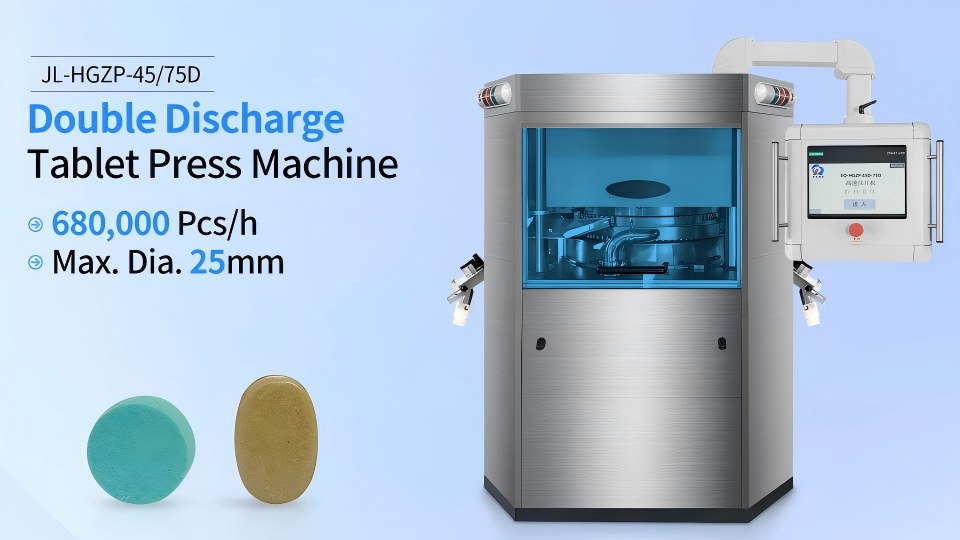
Variación del peso de la tableta(diferencias de masa entre tabletas) pueden parecer menores, pero es un problema grave para la calidad de los medicamentos y la precisión de la dosificación.. Muchos factores pueden alterar la consistencia del peso.: flujo de polvo deficiente, llenado desigual del troquel, Configuración incorrecta del alimentador o de la cámara de llenado, altas velocidades de prensa, segregación de materiales, Desgaste de herramientas y calibración de máquinas.. En la práctica, La solución de problemas sigue una comprobación paso a paso del polvo., sistema de alimentación, el relleno, presione configuración y herramientas para encontrar y solucionar la causa raíz. Las medidas preventivas incluyen mejorar la granulación/flujo del polvo. (danza deslizante, humedad adecuada), utilizando alimentación forzada o deflectores en la tolva, optimización de la profundidad de leva/relleno, y mantenimiento de equipos (estampación, sensores, Sistemas PLC) regularmente. Moderno máquina de tableta rotaria con llenado servocontrolado, Monitoreo de peso/presión en tiempo real., y el rechazo automático puede estabilizar automáticamente el peso de la tableta. En breve, peso estable de la tableta comienza con flujo de polvo y llenado de matrices consistentes, pero manteniendo bajo operación de alta velocidad requiere una configuración adecuada del alimentador, controles y monitoreo de la máquina.
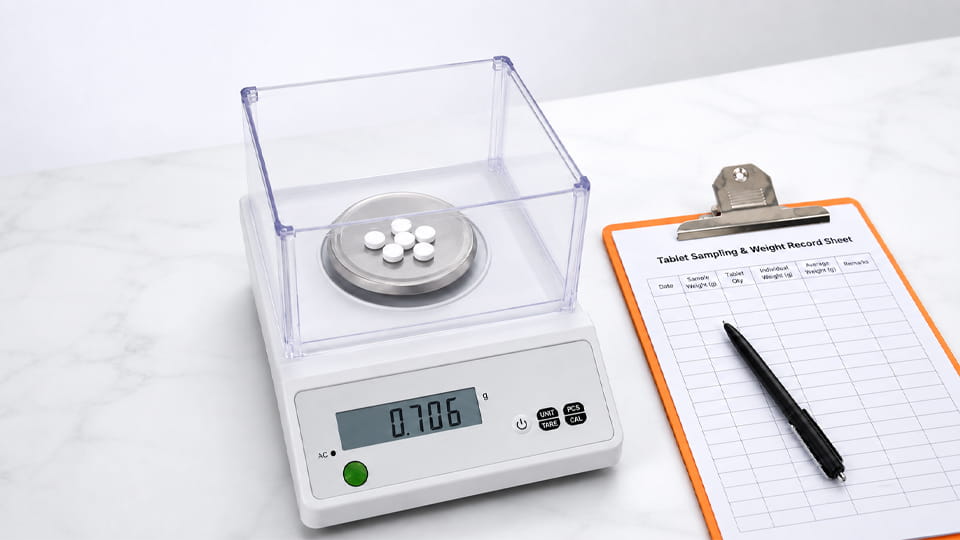
La variación del peso de la tableta es simplemente la falta de uniformidad de la masa de la tableta dentro de un lote. En otras palabras, las tabletas que se espera que tengan el mismo peso salen de manera diferente. La alta variación de peso es una señal de alerta para la uniformidad de la dosis en el sector farmacéutico (una tableta puede tener demasiada o muy poca API). El peso constante de la tableta es vital: se supone que si se controla el peso de cada tableta, entonces el contenido de droga (API) es uniforme. De hecho, USP <905> sobre la uniformidad de las unidades de dosificación permite a los fabricantes utilizar una prueba sencilla de variación de peso solo cuando la tableta es lo suficientemente grande (Dosis ≥25 mg o ≥25% API). Si las tabletas son más pequeñas o tienen menos medicamento, en su lugar, deben utilizar una prueba de uniformidad de contenido.. En breve, controlar la variación de peso es una forma de garantizar que cada tableta contenga la dosis prevista.
| Término | Lo que significa | Preocupación principal |
| Variación del peso de la tableta | Variación en la masa de comprimidos individuales. | Cada comprimido debe tener la misma cantidad de polvo. (masa) |
| Uniformidad de contenido | Variación en el contenido de fármaco activo. | Cada tableta debe contener una cantidad uniforme de API. |
| Control de peso de la tableta | Ajuste del proceso/máquina para estabilizar la masa de la tableta | Lograr un llenado de matriz consistente y un peso uniforme en todas las tabletas |
Mesa: Términos clave relacionados con la uniformidad de la tableta. Un buen sistema de control de peso tiene como objetivo eliminar la variación de peso., asegurando una dosificación confiable.
La variación de peso es casi siempre un síntoma., no es el problema de raíz. Generalmente significa que algo en el proceso de alimentación o compresión no es uniforme.. El causas comunes incluir:
Si los gránulos o el polvo no fluyen suavemente, el llenado del troquel será errático. Polvos cohesivos, partículas muy finas o esponjosas, o una amplia distribución del tamaño de las partículas puede hacer que el polvo forme puentes, agujero de rata, o segregar en la tolva y el marco de alimentación. Por ejemplo, un lote con demasiados aglomerados grandes puede detenerse mientras los finos fluyen, o viceversa. Esto lleva a que algunos troqueles se sobrellenen y otros se llenen insuficientemente.. En la práctica, La mala fluidez a menudo se manifiesta como cambios aleatorios de peso.. Una solución es mejorar la granulación o agregar ayudas para el flujo. (deslizantes como la sílice coloidal) para que el polvo fluya uniformemente. Controlar la humedad y el tamaño de las partículas. (mediante molienda o tamizado) también ayuda.
El peso de la tableta es colocar por la cantidad de material que entra en cada dado. Cualquier variación en la profundidad o el volumen de llenado del troquel cambia directamente el peso de la tableta.. Si el nivel de polvo en la tolva, Cambios en el marco de alimentación o en el canal de alimentación. (debido al diseño del sistema de alimentación o a la sedimentación del polvo), el llenado puede variar de un ciclo a otro. Prensas rotativas modernas dosifican por volumen (profundidad de relleno), por lo que el llenado inestable equivale a cambios de peso. En un estudio sobre el llenado de troqueles, Los investigadores señalan que "la reproducibilidad del llenado del troquel es muy crítica ya que determina el peso de la tableta y la variación del peso".. En otras palabras, cualquier cosa que haga que el polvo llene cada cavidad de manera desigual, como una mala alineación del marco de alimentación, nivel del plato de alimentación variable, o muy poco tiempo de permanencia: provocará un peso desigual de la tableta.
El marco de alimentación (alimentador forzado/paletas o alimentación por gravedad) debe configurarse correctamente. Si la velocidad de la paleta es demasiado alta o baja, o el espacio libre entre las paletas y el troquel está apagado, Volumen de polvo por cambio de matriz.. Por ejemplo, si el marco de alimentación está desgastado/desalineado o el ángulo de la paleta es incorrecto, Algunas estaciones recibirán sistemáticamente más o menos pólvora.. AchieveChem señala que las paletas desalineadas o las rutas de alimentación obstruidas causan una "distribución desigual del polvo"., lo que lleva a un llenado inconsistente del troquel y... variación de peso”. Asegurarse de que el comedero esté limpio, correctamente ajustado, y usando alimentación forzada para polvos de flujo deficiente puede mejorar enormemente la consistencia.
La profundidad de llenado o el perfil de leva en la torreta debe ser el adecuado para la densidad aparente del polvo.. Una leva de llenado demasiado poco profunda llenará insuficientemente el troquel. (tabletas demasiado ligeras), mientras que una leva de llenado demasiado profunda se llenará demasiado, requiriendo que se raspe el exceso (lo que puede causar reintroducción y llenado desigual). Incluso pequeños cambios en la profundidad del relleno provocan cambios directos de peso.: más profundidad → más polvo → tabletas más pesadas (y viceversa). La baja profundidad de llenado o el flujo inconsistente hacen que las tabletas tengan un peso inferior al normal., mientras que el sobrellenado conduce a comprimidos con sobrepeso. Ajustar la leva y monitorear el peso de una muestra es esencial cada vez que se procesa una nueva formulación o tamaño de tableta..
Hacer funcionar la prensa más rápido acorta el tiempo que cada troquel pasa debajo del alimentador. Si la velocidad excede la capacidad del polvo para rellenar los troqueles, algunos troqueles estarán insuficientemente llenos. Las RPM altas pueden "matar de hambre" al marco de alimentación, especialmente con polvos alimentados por gravedad. Como advierte la guía de solución de problemas de Jinlu, “Hacer funcionar la prensa demasiado rápido puede empeorar [variación] al no dejar suficiente tiempo para que se llene cada dado”. La solución es reducir la velocidad o cambiar a una actividad activa. sistema de alimentación forzada que puede mantenerse a alta velocidad. A menudo, cuando la variación de peso sólo aparece a alta velocidad, significa que el sistema de alimentación necesita optimización (mayor velocidad de paleta o asistencia de vacío) en lugar del proceso en sí.
En polvo mezclado, La segregación puede hacer que algunos troqueles obtengan más API y otros obtengan menos. (o viceversa en peso). Por ejemplo, si las partículas gruesas del fármaco tienden a separarse de las finas durante el movimiento de la tolva, Las primeras tabletas que salen de la tolva pueden ser más pesadas. (fino rico) y después otros más ligeros (rico). Esta segregación afecta tanto al peso como a la uniformidad del contenido.. La solución común es garantizar una mezcla/granulación muy completa para unir los componentes., y diseñar la tolva/alimentador para minimizar la segregación (p.ej. usando tolvas o deflectores de fondo vivo). En esencia, si los componentes no están distribuidos uniformemente antes del llenado, el peso de la tableta será desigual.
Físico desgaste en golpes, matrices, o los mecanismos de alimentación pueden introducir variaciones. Es posible que los punzones desgastados o desconchados no alcancen la misma profundidad., Los troqueles desgastados pueden cambiar ligeramente el volumen del polvo., y las herramientas sueltas pueden cambiar los volúmenes de relleno. Por ejemplo, Un raspador del marco de alimentación desgastado podría permitir que entre más o menos polvo en el alimentador.. Incluso las vibraciones menores de la máquina o una leva de torreta desalineada pueden causar variaciones. El mantenimiento regular para reemplazar punzones/troqueles antes de un desgaste excesivo y verificar la alineación de la torreta es fundamental. Muchos defectos de prensa En última instancia, se remonta a problemas mecánicos., por lo que inspeccionar las herramientas y la mecánica es un paso clave para la solución de problemas..
Finalmente, errores simples de configuración pueden causar variación de peso. Los ejemplos incluyen la calibración incorrecta del sensor de nivel. (lo que lleva a una profundidad de relleno incorrecta), mal configurado precompresión (atrapando el aire de manera diferente), o sensores de control de peso defectuosos. Si un sistema de control de peso automático a bordo no está calibrado, podría ajustarse incorrectamente. Incluso cosas como una cara sucia de puñetazo. (alterando su geometría efectiva) o un marco de alimentación mal ensamblado puede perder peso. Calibración cuidadosa (usando un controladora de peso y verificar la configuración) Garantiza que el sistema de control funcione con datos precisos..

Cuando se enfrenta a un peso errático de la tableta, utilizar un enfoque lógico paso a paso. Cambiar un factor a la vez y observar el efecto. Una secuencia diagnóstica típica es:
Siguiendo estos pasos (a menudo registra el peso o el grosor de la tableta después de cada cambio), puedes aislar al culpable. En muchos casos, ajustes simples (un poco más de velocidad de remo, un toque más de profundidad de relleno, limpiar un punto de puente) devolverá la variación al rango.
Prevenir la variación de peso significa controlar proactivamente todos los factores identificados:
En esencia, la prevención se trata de consistencia en cada paso: buena fórmula, alimentación confiable, control preciso de la máquina, y monitoreo. El costo de una onza de prevención es mucho menor que el de reelaborar o desechar un lote que no cumple con las especificaciones..
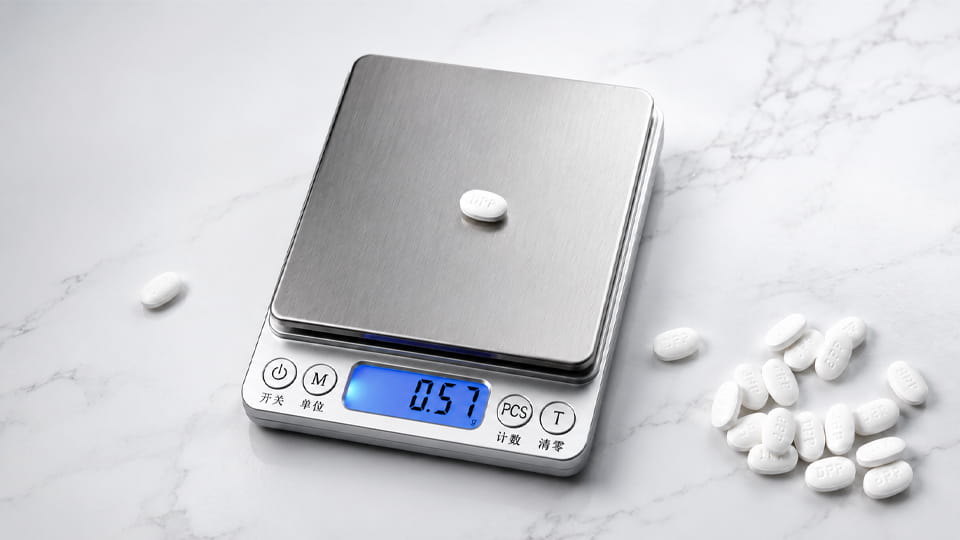
Ayuda a distinguir variación de peso (el problema) de control de peso (la solución). Variación de peso se refiere al síntoma: las tabletas no cumplen con las tolerancias de peso objetivo, un problema de calidad. Por el contrario, control de peso se trata del proceso y equipo características que mantienen estable el peso de la tableta. Por ejemplo, El «control de peso» puede implicar ajustes de llenado accionados por servos, bucles de retroalimentación, y rechazar sistemas que prevenir que la variación de peso ocurra en primer lugar. Piense en la variación de peso como la defecto (lo que ves en una escala) y el control de peso como herramienta (cómo se ajusta la máquina).
Las modernas prensas rotativas para tabletas ahora ofrecen sistemas de control de peso integrados.. Estos sistemas ajustan automáticamente la profundidad de llenado o el paso de las paletas durante la operación para alcanzar un peso objetivo.. Pueden usar células de carga o sensores de presión en cada punzón para medir la fuerza de compactación real e inferir el peso.. En la práctica, esto significa que si se detecta una tableta atípica, la prensa lo corrige instantáneamente y lo expulsa. Esto contrasta con la antigua era del “volante manual”, donde los operadores tenían que hacer ajustes a simple vista o por experiencia..
En pocas palabras, si la variación de peso es un obstáculo, El control de peso es la solución con tracción a las 4 ruedas.. No elimina la necesidad de una buena configuración del proceso. (todavía necesitas polvo constante, buenos comederos, etc.), pero proporciona una red de seguridad activa.
Sí, moderno máquina de prensa de tabletasEstán diseñados específicamente para minimizar la variación de peso.. Incorporan tecnologías como:
En breve, Los prensadores de pastillas como las series HZP y HGZP de Jinlu están diseñados para brindar uniformidad. Sus características: llenado de servos, alimentadores de paletas múltiples, Información de peso/presión en tiempo real y rechazo impulsado por IA: actúan en conjunto para reducir la variación del peso de la tableta al mínimo.. Esto no significa que puedas ignorar los fundamentos (si tu polvo es malo, ninguna máquina puede salvarte), pero estas funciones de alta gama hacen que la producción sea mucho más robusta y tolerante.
Al comprar o especificar una máquina prensadora de pastillas, considerar los factores que afectan la consistencia del peso:
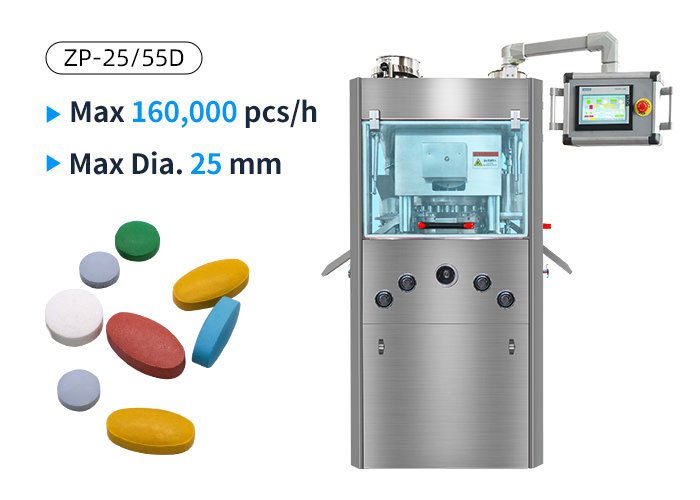
Al final, Elija una máquina que se adapte a las demandas de su producto.. Por ejemplo, Las tabletas efervescentes de gran volumen podrían requerir una prensa grande y robusta con alimentadores forzados. (como el 400 prensa kN), mientras que las pequeñas tabletas de vitaminas podrían funcionar bien en una herramienta rotativa B estándar con control de peso. En caso de duda, consulte las pautas del fabricante: La guía del comprador de Jinlu sobre la selección de máquinas prensadoras de tabletas analiza consideraciones como el diámetro de la tableta, recuento de capas, producción, y fluidez para ayudar a adaptar una prensa de tabletas a sus necesidades.
| Problema | Posible causa | Acción recomendada |
| Tabletas consistentemente demasiado pesado | Profundidad de llenado demasiado profunda | Reducir la profundidad de la leva de llenado / llenar la configuración |
| Tabletas consistentemente demasiado ligero | Profundidad de relleno demasiado baja | Aumente ligeramente la profundidad de relleno |
| Peso de la tableta fluctúa aleatoriamente | Flujo de polvo deficiente o formación de puentes | Mejorar la granulación/flujo (agregar corredera, mezcla) |
| Peso cambia con la velocidad | El llenado de troqueles no puede mantenerse a altas RPM | Reduzca la velocidad de la prensa o aumente la eficiencia del alimentador |
| El peso varía entre estaciones | Desalineación de herramientas o desequilibrio de estación | Inspeccionar punzones/matrices y realinear el marco de alimentación. |
| Peso se desvía durante una carrera | Cambio de nivel de tolva / tener puesto | Comprobar el suministro de polvo (nivel de tolva), calibrar el sistema de alimentación |
| Alta variación con alta humedad. | La humedad afecta el flujo. | Entorno de control; probar deshumidificadores |
Referencia rápida: Haga coincidir el defecto con las causas probables y las soluciones. Muchas soluciones implican ajustar la profundidad de relleno, mejorar el flujo de polvo, o sintonizar la configuración del alimentador.
Se puede lograr un peso constante de la tableta, pero sólo controlando muchos factores. Él comienza con una fórmula bien diseñada y gránulos de polvo uniformes, pero corsé consistente solo si el troquel se llena de manera idéntica en cada ciclo y la configuración de la máquina de tabletas permanece estable. En la práctica, esto significa optimizar el flujo de polvo, parámetros del alimentador, llenar cámaras y velocidad, y mantener las herramientas en óptimas condiciones. La tecnología moderna proporciona una poderosa ayuda: prensas con ajuste de llenado servoaccionado, sensores en matriz, y el rechazo automático puede corregir automáticamente pequeñas desviaciones y evitar tabletas fuera de especificaciones.
Por ejemplo, Jinlu Packing’s prensas de tabletas combine funciones de alimentación automatizada y control de peso, desde marcos de alimentación activos hasta monitoreo de presión en tiempo real, para mantener la desviación de peso dentro de límites estrictos.. Si el control de peso estable es fundamental para su producto, Elegir una prensa de pastillas con estas capacidades es clave.
Buscando una punzonadora de tabletas con control de peso preciso y monitoreo automático? Contacte a Jinlu Packing para analizar sus necesidades de producción de tabletas. Nuestros expertos pueden recomendar una solución. (del estándar prensas rotativas de tabletas a alta velocidad HZP o prensas de gran tamaño) que coincida con sus requisitos de formulación y calidad, ayudándote a eliminar los problemas de variación de peso.
Generalmente, Cualquier factor que haga que el llenado del troquel sea desigual provocará una variación de peso.. Los culpables comunes son el flujo de polvo inconsistente (debido a mala granulación o humedad), llenado desigual del troquel (Problemas con la profundidad de llenado o la tolva), configuraciones incorrectas del alimentador, velocidad de torreta demasiado alta, segregación de materiales, o desgaste del equipo. Por ejemplo, si las paletas del marco de alimentación no barren uniformemente (debido a desalineación o desgaste), algunos troqueles no se llenan lo suficiente. A menudo, la solución es inspeccionar el polvo y el proceso de alimentación de principio a fin..
Los pesos inconsistentes durante la compresión generalmente significan que la fase de llenado es inconsistente. Cada rotación de la torreta debe entregar el mismo volumen de polvo.. Si una cámara está ligeramente apagada, o si el flujo de polvo varía (p.ej. porque el nivel de la tolva bajó), las tabletas variarán en peso. Esto también puede suceder si se cambia la velocidad de la prensa sin volver a ajustar la configuración., o si el desgaste de la herramienta ha alterado el volumen del troquel.
Primero, asegúrese de que el flujo de polvo sea estable (buenos gránulos, mezcla uniforme, deslizantes/lubricantes según sea necesario). Luego asegúrese de que el llenado del troquel sea consistente: Utilice alimentadores forzados para polvos de flujo deficiente., mantener un nivel de polvo constante, y establezca la profundidad de relleno correcta. Ajuste la velocidad del alimentador y la alineación de las paletas, y ralentizar la máquina si es necesario. Muchos también utilizan el monitoreo durante el proceso. (controladoras de peso, sensores de presión) que rechazan automáticamente los valores atípicos, ajustando efectivamente la distribución. Mantenimiento y calibración regulares (paletas de limpieza, reemplazo de piezas desgastadas) también mantiene baja la dispersión del peso.
Si un polvo fluye erráticamente, algunos troqueles pueden llenarse de manera insuficiente mientras que otros se llenan en exceso. Por ejemplo, Los polvos que se acumulan en la tolva o en el “agujero de rata” en el marco de alimentación dejan los troqueles vacíos., dando lugar a tabletas ligeras. En cambio, cuando un puente se rompe de repente, vierte polvo extra en los siguientes troqueles, causando tabletas pesadas. En resumen, buen flujo = llenado uniforme del troquel (y peso), mientras que un flujo deficiente conduce a fluctuaciones. Es por eso que los fabricantes pueden agregar estearato de magnesio o sílice para mejorar el flujo y reducir la variación de peso..
Sí. Una mayor velocidad de la torreta acorta el tiempo que un dado pasa debajo del alimentador. A muy altas RPM, Es posible que un marco de alimentación alimentado por gravedad no rellene completamente el troquel antes de la compresión.. Esto provoca comprimidos con bajo peso y más dispersión.. Si la variación de peso solo aparece a velocidades más altas, la solución suele ser una velocidad más lenta o un mejor alimentador (como un sistema de remo activo). Algunas prensas modernas evitan este problema sincronizando la alimentación con la velocidad o utilizando sistemas de alimentación dual..
El peso de la tableta lo establece esencialmente la cantidad de polvo en el troquel antes de la compresión.. El llenado constante del troquel significa una masa constante. Si el volumen de llenado del troquel varía (debido a la configuración de la cámara, fluctuaciones de la tolva, o problemas con el marco de alimentación), el peso varía. Una buena práctica es verificar periódicamente que el volumen del troquel sea el correcto. (p.ej. medir el peso de una tableta de muestra versus. punto de ajuste) y ajuste la leva de llenado o la configuración de alimentación para mantener cada troquel igualmente lleno.
La variación de peso es una medida física.: cuanto pesa cada tableta. La uniformidad del contenido es una medida química.: cuanta droga (API) está en cada tableta. Cuando el fármaco está bien mezclado y constituye una porción importante del comprimido., controlar el peso puede garantizar una dosis constante. Pero para drogas muy potentes (pequeña dosis, <25% de tableta), La USP requiere pruebas de contenido individuales. En otras palabras, la variación de peso mide la masa, mientras que la uniformidad del contenido mide la cantidad de droga. Ambos son aspectos de la “uniformidad de unidades de dosificación”, pero la variación de peso es la prueba preferida sólo cuando el tamaño de la tableta y la fracción del fármaco cumplen con los criterios del compendio.
Sí. Muchas prensas ahora incluyen sistemas de control de peso de circuito cerrado.. Por ejemplo, un servomotor puede ajustar la profundidad de llenado en tiempo real para alcanzar un peso objetivo, basado en retroalimentación de sensores. Las modernas prensas de Jinlu utilizan un riel de llenado servoaccionado que corrige continuamente las desviaciones de peso.. También cuentan con inspección de peso en tiempo real.: si una tableta sale fuera del objetivo, la máquina puede expulsarlo instantáneamente. Entonces con la prensa adecuada, Gran parte del control de peso está automatizado..
Un alimentador forzado tiene paletas o tornillos que empujan activamente el polvo hacia los troqueles.. Esto significa que cada troquel está "lleno" de polvo en cada ciclo.. Previene problemas comunes como puentes y garantiza una distribución uniforme. En la práctica, un alimentador forzado mantiene estable el peso de la tableta haciendo que cada llenado sea más reproducible. Las guías de Jinlu señalan que agregar o ajustar alimentadores forzados a menudo reduce drásticamente la variación para polvos finos o pegajosos.. Esencialmente, hace que el proceso de llenado dependa menos del flujo de gravedad impredecible.
Más allá de un buen equipamiento, La prevención se trata de un control inteligente de los procesos.: utilizar el monitoreo de procesos (rastrear el peso de la tableta, dureza en tiempo real), apegarse a los procedimientos operativos estándar, y realizar controles periódicos. Establecer controles durante el proceso como “si el peso promedio varía >0.5%, detenerse y ajustarse”. Implementar cronogramas de mantenimiento preventivo.. Estandarizar formulaciones y mezclas.. Por último, Capacitar a los operadores para que noten las señales de advertencia tempranas. (como un cambio en el sonido de la prensa) puede tomar la deriva antes de un gran problema. El objetivo es un sistema de alerta temprana.: atrapar un 1% turno en lugar de producir un lote en 5%.
Referencias:
1. PubMed —— Comportamiento del flujo de polvos farmacéuticos durante el llenado de matrices rotativas con un alimentador de paletas
2.Ciencia Directa—— Estudio de los efectos de los marcos de alimentación sobre las propiedades de la mezcla de polvo durante el llenado de matrices de prensas de tabletas.
3.Anexo Q4B de la FDA 6 —— Uniformidad de Unidades de Dosificación Capítulo General
4.PubMed —— El desafío del llenado de matrices en prensas rotativas: un estudio sistemático de las propiedades de los materiales y los parámetros del proceso
5.PubMed —— Predicción de la variabilidad del peso de las tabletas en la fabricación continua.
6.PubMed —— Reducción de la variabilidad del peso de las tabletas optimizando la velocidad de las paletas en el alimentador forzado de una prensa rotativa de tabletas de alta velocidad