Si alguna vez te has preguntado qué es lo que realmente hace que un medicamento funcione, la respuesta suele ser la API (Ingrediente farmacéutico activo). Ya sea una tableta, cápsula, inyección, o almíbar, el API es el componente responsable de producir el efecto terapéutico deseado. En términos simples, es la parte del medicamento que trata la enfermedad, alivia los síntomas, o ofrece el resultado médico deseado, mientras que otros ingredientes, conocidos como excipientes, apoyan principalmente la formulación y la administración.. Para fabricantes farmacéuticos, equipos de adquisiciones, y jefes de producción, Comprender las API es esencial porque impactan directamente en la calidad del producto., cumplimiento regulatorio, procesos de fabricación, y, en última instancia, la seguridad del paciente.
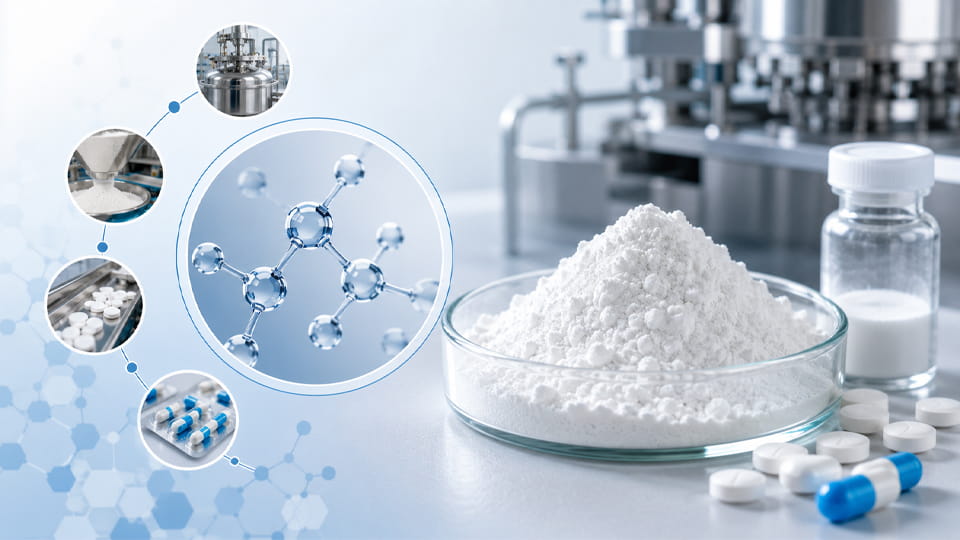
¿Qué significa API en productos farmacéuticos??
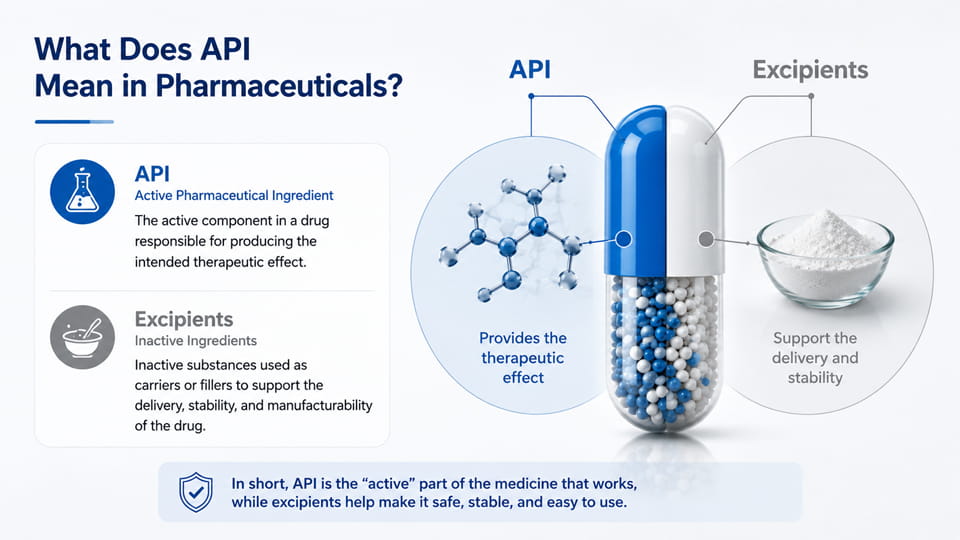
Un API es el Ingrediente farmacéutico activo - el sustancia activa en un medicamento que proporciona su efecto terapéutico. En términos simples, es el químico (o biológico) componente que hace el trabajo (p.ej. bajar la fiebre, matando bacterias, aliviar el dolor). Por ejemplo, en una tableta de acetaminofén, paracetamol en sí es la API; los otros ingredientes (carpetas, relleno, revestimientos) son excipientes. Estados Unidos. Instituto Nacional del Cáncer define un API como "el ingrediente principal de un medicamento que provoca el efecto deseado del medicamento".
En la práctica, La fabricación de medicamentos comienza con uno o más API y los convierte en el producto final (tableta, cápsula, líquido, etc.) bajo estrictos controles de calidad. Como señala una fuente, fabricación farmacéutica esencialmente “significa transformar ingredientes farmacéuticos activos (API) y excipientes en formas farmacéuticas (como tabletas, cápsulas, líquidos, o inyectables) a través de varias operaciones unitarias (molienda, granulación, compresión, revestimiento, relleno, etc.)". Cada paso debe ser preciso.: Los reguladores exigen que cada lote “tenga los ingredientes y la fuerza que dice tener”.. En breve, sin API, no habría medicina – ellos son los columna vertebral de la formulación de medicamentos.
Definición de ingrediente farmacéutico activo (API)
- API (también llamado el sustancia farmacológica o componente farmacológicamente activo) es el ingrediente de un medicamento que lo hace efectivo. Por ejemplo, amoxicilina es el API en una pastilla antibiótica (mata las bacterias).
- Objetivo: Las API proporcionan la efecto terapéutico. Sin la API, una “medicina” sería simplemente un polvo o líquido inerte.
- Vista regulatoria: La FDA y la EMA consideran que los API son parte del regulado por CGMP Directrices como Yo Q7 garantizar que las API se fabriquen bajo estrictos estándares de calidad.
Los API suelen ser polvos o concentrados de alta pureza.; luego se mezclan con excipientes y se les da forma de píldoras., cápsulas, u otras formas de dosificación (vea abajo). El punto clave es que Los API son los fármacos activos., mientras que todo lo demás en la formulación simplemente ayuda a administrar el medicamento de manera segura y efectiva.
API frente a. Excipientes: ¿Cuál es la diferencia??
| Característica |
API (Ingrediente activo) |
Excipiente (Ingrediente inactivo) |
| Rol/Función |
Proporciona el efecto terapéutico (droga activa) |
Sirve como transportista, aglutinante, vara, estabilizador, etc., para la API |
| Actividad farmacológica |
Sí – biológicamente activo. |
No – farmacológicamente inerte. |
| Cantidad típica |
Generalmente pequeña cantidad (mg o µg). |
Generalmente a granel de formulación. |
| Ejemplos |
Paracetamol (paracetamol), amoxicilina, atorvastatina, etc.. |
Lactosa, celulosa microcristalina, estearato de magnesio, etc.. |
| Importancia |
Crucial para la eficacia; determina la función del fármaco. |
Garantiza la estabilidad de la pastilla., capacidad de fabricación, y biodisponibilidad. |
En otras palabras, Las API son las partes "activas", mientras Los excipientes son las partes “de soporte”.. Como explica una fuente de la industria: “Los API son medicamentos a granel que son farmacéuticamente activos y generan un efecto farmacológico deseado., mientras que los excipientes son sustancias farmacológicamente inactivas que generalmente se utilizan como portadores del API”.
- API: Activo, potente, y normalmente requieren un manejo cuidadoso. A menudo representan sólo un pequeño porcentaje del peso de una tableta., pero sin ellos la droga no hace nada.
- Excipientes: Inactivo, polvos/líquidos a menudo comestibles o inertes. Añaden volumen, absorción de ayuda, mejorar la estabilidad, y hacer posible la fabricación. Por ejemplo, la lactosa en polvo es un relleno común; la povidona es un aglutinante; el estearato de magnesio es un lubricante; liberación de control de varios recubrimientos.
Ambos son necesarios: API para lograr efecto, excipientes para lograr ese efecto de forma segura, forma de dosificación estable. Comprender la diferencia es clave en la fabricación farmacéutica.
Tipos de API farmacéuticas
Las API entran dos categorías amplias: molécula pequeña (sintético) medicamentos y biológicos.
- API sintéticas (Moléculas pequeñas): Son sustancias químicas de bajo peso molecular producidas por síntesis química. Incluyen pastillas clásicas como aspirina, paracetamol. La síntesis puede ser lineal. (reacciones de un solo recipiente) o de varios pasos. Los API sintéticos suelen ser polvos cristalinos. (algunos higroscópicos) que requieren reacciones químicas precisas y purificación. La mayoría de los medicamentos genéricos y muchos éxitos de taquilla entran en esta categoría.. Por ejemplo, el antihistamínico cetirizina y el medicamento para la presión arterial losartán son API sintéticas de molécula pequeña. Su producción a menudo permite un control estricto sobre la pureza y la consistencia..
- API naturales (Fuentes derivadas/biológicas): Algunas API se extraen de fuentes naturales. Esto incluye compuestos de origen vegetal. (p.ej. digoxina de dedalera) o vitaminas obtenidas por fermentación (p.ej. vitamina C mediante fermentación microbiana). Fermentación (usando bacterias o levaduras) Puede producir compuestos como antibióticos. (penicilina) o estatinas para reducir el colesterol. Las API naturales pueden tener más variabilidad (debido al material de origen) y a menudo requieren una purificación adicional. Por lo general, son menos comunes en la industria farmacéutica moderna centrada en productos sintéticos., pero están creciendo en nutracéuticos y medicamentos “botánicos”.
- API biotecnológicas/biológicas: estos son grandes, Moléculas complejas formadas por procesos biológicos. (cultivo celular o ADN recombinante). ellos incluyen anticuerpos monoclonales (mAb), proteínas terapéuticas, vacunas, y biosimilares. Por ejemplo, trastuzumab (Herceptina) y insulina son API biotecnológicas. Por lo general, son producidos por células genéticamente modificadas. (p.ej. bacterias, levadura, o células de mamíferos) y luego cosechado y purificado. Los productos biológicos requieren una fermentación estéril y una purificación compleja. Si bien nos centramos principalmente en las API de molécula pequeña, La tendencia de la industria es que los productos biológicos ahora representan una proporción cada vez mayor de los nuevos medicamentos..
Una forma útil de recordar: Moléculas pequeñas Se sintetizan químicamente y generalmente son pastillas.; Productos biológicos de moléculas grandes Provienen de sistemas vivos y a menudo son inyectables.. Cada tipo tiene su propia ruta de fabricación y reglamentación., pero ambos son "API" siempre que sean el ingrediente activo de un fármaco final.
¿Cómo se fabrican las API??
La producción de API es un proceso complejo., Proceso de varios pasos que involucra química o biología cuidadosa.. Un simplificado diagrama de flujo de fabricación API típica (para API sintéticos de molécula pequeña) se muestra a continuación:
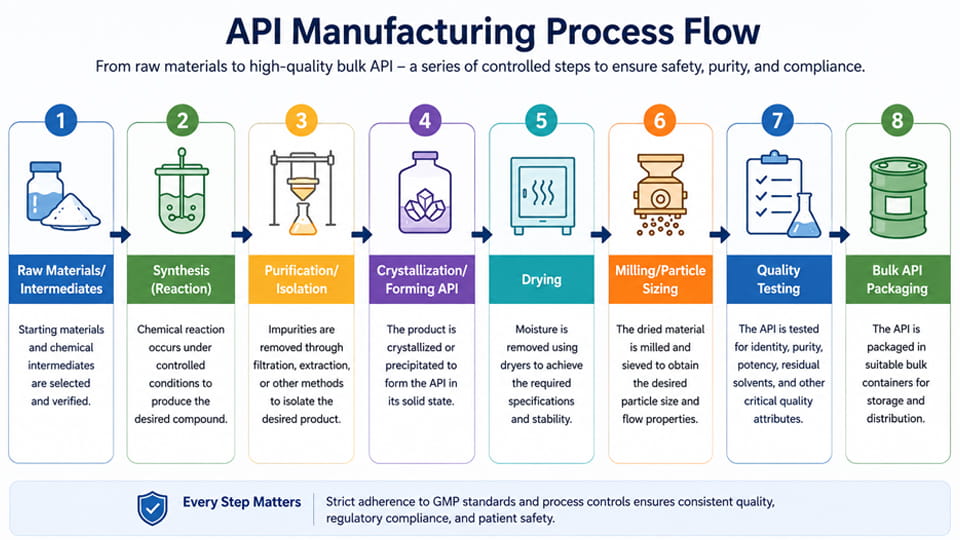
- Materias primas/intermedios: El proceso comienza con componentes químicos en bruto. (a menudo reactivos disponibles comercialmente o intermediarios previamente sintetizados). Cada paso químico debe utilizar ingredientes de alta calidad para evitar impurezas..
- Síntesis (Reacción): Los químicos llevan a cabo una o más reacciones químicas. (reactores discontinuos o reactores de flujo) para construir la molécula API. Esto podría implicar varios pasos. (P.EJ., agregar grupos funcionales, formar anillos). Condiciones de reacción (solvente, temperatura, catalizadores) están estrictamente controlados. Para API biotecnológicas, Este paso se reemplaza por fermentación biológica/cultivo celular para producir la molécula..
- Purificación/Aislamiento: Después de cada paso de reacción, la mezcla se purifica para eliminar subproductos no deseados. Las técnicas incluyen extracción líquido-líquido., filtración, cromatografía, cristalización, etc.. El objetivo es aislar el intermedio o API en forma pura..
- API de cristalización/formación: La API final suele cristalizarse a partir de una solución.. Esto crea cristales sólidos del API con un polimorfo y pureza definidos.. La cristalización mejora la pureza. (las impurezas permanecen en solución) y da buenas propiedades físicas.
- El secado: Los cristales húmedos se secan. (p.ej. en una secadora) para eliminar el disolvente por completo. El disolvente residual debe cumplir los límites reglamentarios..
- Fresado/Tamaño de partículas: El API seco se puede moler o tamizar para lograr el tamaño de partícula deseado.. El tamaño de las partículas afecta la forma en que el API se mezcla y se disuelve en el producto farmacéutico final..
- Prueba de calidad: En cada paso importante (especialmente API final), el material se prueba para determinar su identidad, pureza, potencia, y disolventes residuales. Métodos analíticos (HPLC, espectroscopia, etc.) confirmar que cumple con las especificaciones.
- Embalaje API a granel: El polvo API final se envasa en condiciones controladas. (a menudo inerte) recipientes para protegerlo de la humedad, luz, y contaminación. Estos están etiquetados y almacenados según Requisitos GMP.
Cada paso debe seguir CGMP (Buenas prácticas de fabricación actuales) normas. Por ejemplo, Yo Q7 (y BPM de la OMS) proporcionar orientación específica para las API. Como señala la OMS, “La rigurosidad de las BPF en la fabricación de API debería aumentar a medida que el proceso avanza desde los primeros pasos del API hasta los pasos finales., purificación, y embalaje”. En la práctica, esto significa una documentación rigurosa., limpieza validada de equipos, personal calificado, y controles durante el proceso.
Tecnología analítica de procesos (PALMADITA) y la automatización se utilizan cada vez más para monitorear las reacciones en tiempo real. La industria también avanza hacia fabricación continua donde las materias primas fluyen continuamente a través de etapas de reacción y purificación en lugar de procesos por lotes. Los procesos continuos pueden mejorar la eficiencia y la coherencia, aunque la producción por lotes sigue siendo común.
En resumen: La fabricación de API es una línea de producción altamente controlada, desde productos químicos crudos o cultivos celulares hasta el ingrediente activo terminado, con estrictos controles de calidad en cada etapa. El resultado es una API masiva que es segura, potente, y listo para ser formulado en un medicamento.
Control de calidad API y requisitos GMP
La calidad es primordial en la producción de API. Agencias reguladoras (FDA, EMA, etc.) requieren que los fabricantes de API sigan estrictas Buenas prácticas de fabricación (GMP) para garantizar que cada lote cumpla con los estándares de calidad. Para API, ICH Q7 es una directriz clave que describe las BPF específicas para ingredientes activos. Algunos aspectos críticos incluyen:
- Documentación & Validación: Todos los procesos deben estar bien documentados.. Pasos críticos (como una cristalización final) están validados para demostrar que producen de manera confiable API de calidad aceptable. Las instalaciones y equipos deben estar calificados..
- Pruebas de pureza e identidad: Cada lote de API se prueba para verificar su identidad (es el químico correcto), pureza (libre de impurezas o subproductos no deseados), y potencia (la concentración correcta de moléculas activas). Por ejemplo, Las pruebas de HPLC o espectrometría se utilizan para detectar incluso trazas de impurezas.. Cualquier contaminación podría ser perjudicial en un producto farmacéutico..
- Control de impurezas: Los fabricantes establecen límites aceptables para determinadas impurezas (metales pesados, disolventes residuales, materiales de partida sin reaccionar). Si los niveles exceden los umbrales, el lote es rechazado o reprocesado.
- Prueba de estabilidad: Las API deben permanecer estables durante el almacenamiento. Estudios de estabilidad (p.ej. envejecimiento acelerado) asegúrese de que la API no se degrade ni pierda potencia con el tiempo. Embalaje (ver la siguiente sección) también refleja esto.
- Trazabilidad: Las materias primas y cada paso del proceso deben ser rastreables.. Si surge algún problema en un medicamento final, Los fabricantes deben rastrear los registros de producción..
- Cumplimiento de CGMP: Las agencias inspeccionan con frecuencia las plantas API. Como resume una fuente: Las directrices GMP tienen como objetivo garantizar que cada medicamento tenga "los ingredientes y la potencia que dice tener".. Esto significa que los productores de API deben demostrar que su API es consistente en cada lote..
- Presentaciones regulatorias: Los fabricantes de API envían datos sobre sus procesos (Química, Fabricación, Controles – Sección CMC en aplicaciones de medicamentos) a las autoridades. Cualquier cambio en el proceso. (p.ej. una nueva impureza) puede requerir una nueva aprobación.
Organización Mundial de la Salud (OMS) La guía enfatiza que La rigurosidad aumenta hacia los pasos finales.. Los intermediarios tempranos pueden tener menos controles, pero una vez que se define un material de partida API (el punto desde el cual se aplican las GMP), los pasos posteriores (cristalización, purificación final) están sujetos a los más altos estándares.
En breve, El control de calidad API es integral: "La garantía de calidad es un aspecto crítico de la fabricación de API" y GMP cubre todo “desde el abastecimiento de materias primas hasta las pruebas del producto final”. Esto garantiza que el API final será seguro y eficaz cuando se convierta en un medicamento..
API frente a. Producto farmacéutico terminado (FPP)
Es importante distinguir el API desde forma de dosificación terminada (la final, medicina lista para el paciente).
- API (Ingrediente activo / Sustancia farmacológica): La sustancia química o biológica activa pura., generalmente en forma de polvo o solución. Ha pasado por todos sus pasos de fabricación hasta las pruebas de pureza.. Es no normalmente se administra solo a los pacientes (excepto en forma IV), sino que se combina con excipientes y se procesa más.
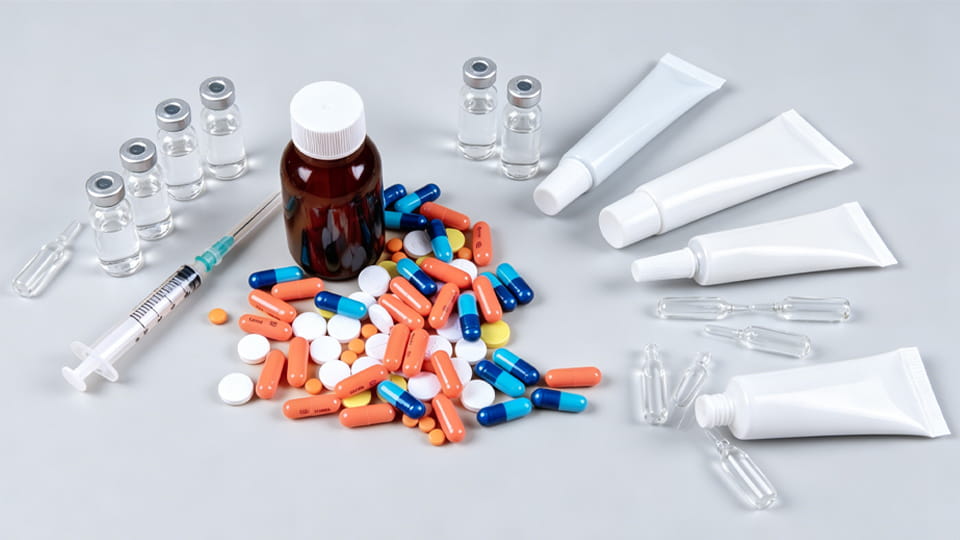
- Producto farmacéutico terminado (FPP, o forma farmacéutica terminada): Este es el último medicamento disponible: tabletas, cápsulas, jarabes, inyecciones, etc.. Contiene la API más todos los excipientes requeridos, empaquetado para administración.
El FPP determina cómo se entrega la API en la práctica. Según definiciones reglamentarias, una forma farmacéutica terminada es “la forma final, medicamento completamente fabricado que contiene el principio activo y todos los excipientes necesarios, y se procesa en un formato de entrega específico, como una tableta, cápsula, inyección, etc.".
Diferencias clave:
- Forma: El API suele ser un polvo o gránulo crudo.; FPP es una tableta, cápsula, líquido, etc..
- Usar: Las API se manejan en la fabricación.; Los proveedores de atención médica y los pacientes utilizan los FPP.
- Etiquetado: Los FPP deben llevar un etiquetado completo (dosificación, instrucciones, expiración, etc.); Los contenedores API cuentan con etiquetas técnicas para uso en fabricación.
- Regulación: Los FPP requieren prueba de seguridad/eficacia en pacientes; Las API deben cumplir con las especificaciones de pureza/potencia. Ambos deben cumplir con cGMP, pero el FPP también enfrenta obstáculos regulatorios adicionales (ensayos clínicos, aprobación de comercialización).
| Escenario |
Definición/Ejemplo |
| API (Sustancia farmacológica) |
El compuesto farmacológico activo por sí solo. (p.ej. polvo de gentamicina). |
| Producto farmacéutico terminado |
la forma de medicina (p.ej. inyección de gentamicina) que contiene el API más excipientes. |
De este modo, la API es la agente medicinal central, mientras que el producto terminado es la forma en que ese agente se formula y empaqueta para su uso.. Una buena fabricación garantiza que “el producto farmacéutico terminado contenga el API correcto con la concentración adecuada”. Equipos de embalaje como prensas de tabletas o rellenos de cápsula luego convierta las mezclas de API y excipientes en FPP, que están sellados en blisters, botellas, u otros contenedores.
Desafíos en la fabricación de API
Los productores de API enfrentan varios desafíos de la industria:
- Cumplimiento normativo: Las API deben cumplir con las reglas GMP (p.ej. Yo Q7, Guías de la FDA/EMA). Mantenerse al día con la evolución de las regulaciones en todo el mundo puede ser complejo. El incumplimiento puede detener la producción o dar lugar a multas.
- Control de calidad: Mantener una calidad constante lote tras lote es difícil. Pequeñas variaciones en las materias primas o las condiciones de reacción pueden crear impurezas.. Se necesitan pruebas analíticas sólidas en cada paso.
- Altos costos de producción: Construcción y funcionamiento de instalaciones GMP (salas limpias, reactores, tratamiento de residuos) es caro. Los costos incluyen inversión de capital., personal capacitado, y equipo especializado (p.ej. filtros para API estériles). Reducir costos manteniendo la calidad es una lucha constante.
- Riesgos de la cadena de suministro: Muchas API dependen de proveedores en países específicos (p.ej. materias primas de asia). Cuestiones geopolíticas, Los desastres naturales o las pandemias pueden alterar el suministro.. En los últimos años se ha producido escasez de materiales de partida clave., forzar decisiones urgentes de abastecimiento.
- HPAPI (API altamente potentes): Un subconjunto creciente de API (p.ej. medicamentos oncológicos, hormonas) son extremadamente potentes. Pueden ser tóxicos en dosis muy bajas., plantear riesgos para la salud de los trabajadores. La fabricación de HPAPI requiere contención especializada: aisladores cerrados, escape filtrado, trajes de proteccion, etc.. Como señala una revisión de la industria, Los HPAPI presentan "desafíos de manejo y requieren una gran inversión en contención especializada" para proteger a los empleados y el medio ambiente.. De hecho, Muchas empresas ahora construyen plantas HPAPI dedicadas a un costo de “millones más allá de las instalaciones GMP típicas”.. Se necesitan equipos como reactores automatizados contenidos y molinos especializados..
- Regulaciones Ambientales: La producción de API puede generar residuos peligrosos y utilizar disolventes.. Las leyes medioambientales más estrictas empujan a los fabricantes a adoptar la “química verde” (reciclaje de solventes, procesos catalíticos) o invertir en el tratamiento de residuos, agregando complejidad y costo.
- Competencia en el mercado: La expiración de patentes genera competencia genérica, haciendo bajar los precios de API. Por lo tanto, los fabricantes de API deben ser eficientes para seguir siendo rentables.. En cambio, desarrollo nuevo Los API para medicamentos innovadores son riesgosos y costosos.
- Costo de Materias Primas: Precios fluctuantes (p.ej. para reactivos químicos o reactivos biotecnológicos) puede exprimir los márgenes.
Estos desafíos significan que los fabricantes de API deben invertir continuamente en la optimización de procesos., cumplimiento, y resiliencia. Como aconseja una fuente, implementar sistemas de calidad sólidos y mantenerse actualizado con las regulaciones son estrategias clave. En resumen: Mantener alta calidad bajo presión de costos., y garantizar la seguridad (especialmente para HPAPI), son los principales obstáculos en la producción moderna de API.
Por qué es importante el embalaje de los medicamentos basados en API
Después de que un API se fabrica y formula como medicamento, embalaje Se vuelve crucial para proteger la calidad de ese producto y garantizar la seguridad del paciente.. El embalaje funcional protege el medicamento (y su API) de factores ambientales y garantiza que se administre la dosis correcta. Las consideraciones clave sobre el embalaje incluyen:
- Proteger la estabilidad: Muchas API (y los productos farmacéuticos finales) son sensibles a humedad, oxígeno, luz, y temperatura. Por ejemplo, la humedad puede hacer que los API se degraden o que las tabletas se disuelvan prematuramente. Para combatir esto, Los blister suelen utilizar películas de alta barrera.. Paquetes de ampollas proporcionar protección en dosis unitarias: cada tableta/cápsula está sellada en su propio bolsillo, protegiéndolo de la humedad y la contaminación. Botella (frasco) embalaje usos desecantes y botellas opacas o de color ámbar para evitar la entrada de humedad y luz.. En breve, el contenedor y los materiales correctos mantienen el API potente hasta su uso.
- Prevenir la contaminación: Sellado, embalaje de manipulación garantiza que el medicamento permanezca estéril o no contaminado. Para API inyectables, Se utilizan viales asépticos.. Incluso para pastillas, Las ampollas y los frascos deben sellarse para evitar su manipulación..
- Dosificación precisa: Los blísteres y los paquetes dosificadores pueden hacer cumplir dosis unitarias (una tableta por cavidad). Los biberones suelen tener tapas a prueba de niños. (requisito reglamentario). Maquinaria de llenado/tapado de precisión (como las líneas de embotellado de conteo de Jinlu) Garantiza el recuento correcto y el cierre seguro.. Las pastillas mal contadas o las tapas sueltas pueden provocar una subscripción- o sobredosis.
- Cumplimiento & Información: El embalaje proporciona etiquetado e información para el paciente. (instrucciones, fecha de vencimiento). Las máquinas etiquetadoras aplican etiquetas precisas rápidamente. Un etiquetado claro ayuda a los pacientes a tomar los medicamentos correctamente.
- Cumplimiento normativo: El embalaje en sí está regulado. (materiales de calidad farmacéutica, estándares de limpieza). Equipo para ampollar, embotellado, etiquetado, y el embalaje debe cumplir con el diseño de higiene GMP y estar validado.. Por ejemplo, una máquina empacadora de blister de alta velocidad debe sellar películas de manera confiable y sin fugas.
En la práctica, maquinaria de envasado farmacéutico enlaces directos a las API. Por ejemplo:
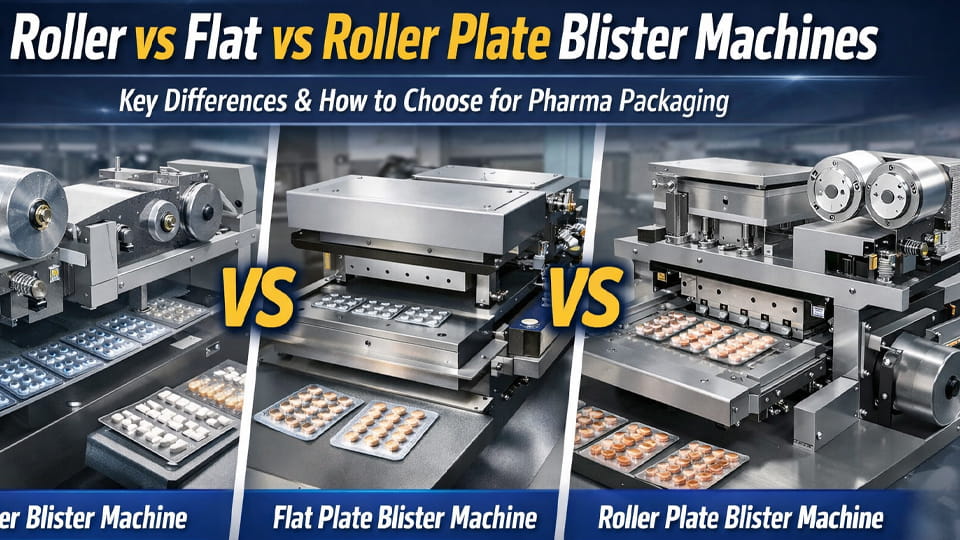
- Máquinas de embalaje (como el de Jinlu [DPP-180Pro]) forma, llenar, y sellar tabletas o cápsulas en ampollas. Cada ampolla protege el API de la humedad/aire..
- Líneas de llenado y taponado de botellas. (como la línea de embotellado y conteo JL-16C) automatizar el llenado de tabletas en botellas, insertar bolsitas desecantes, taparlos y sellarlos. Estos protegen el API de la humedad y aseguran la dosis..
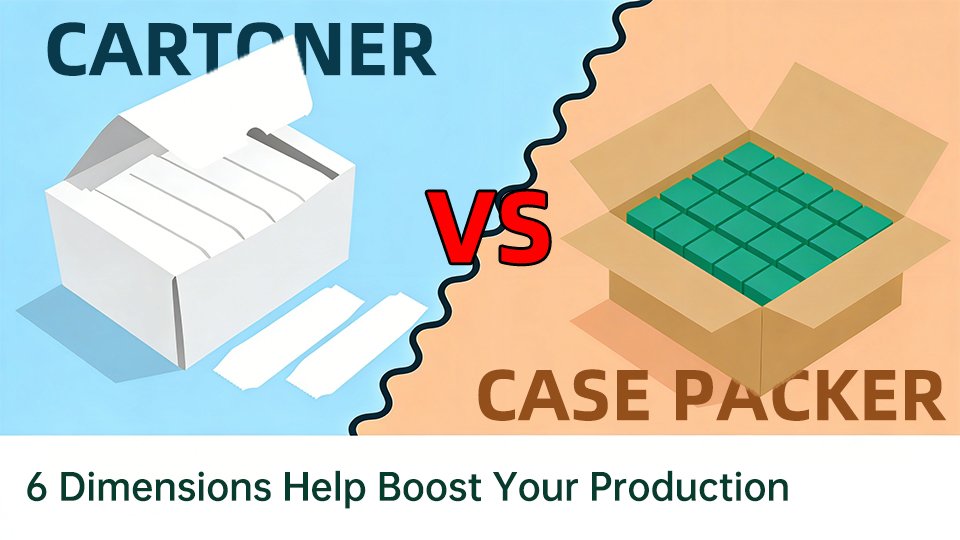
- Máquinas estuchadoras (Encartonadora de Jinlu) luego empaquete ampollas o botellas en cajas etiquetadas. Los cartones añaden una barrera adicional, contener instrucciones impresas, y dosificaciones grupales para un fácil manejo.
- Máquinas de etiquetado (como el Etiquetadora JL-TBJ-120) aplicar etiquetas compatibles a botellas o cajas de cartón, Proporcionar identidad y trazabilidad de los medicamentos..
Al integrar estos sistemas, Las plantas farmacéuticas garantizan que el API (ingrediente activo) llega al paciente exactamente como se esperaba. Envases farmacéuticos funcionales (ampollas, botellas, cierres a prueba de manipulaciones) es “crucial” para proteger los productos de la humedad, oxígeno, ligero y para la seguridad del paciente.
Para empresas como Embalaje de Jinlu, Esto significa ofrecer soluciones de empaquetado completas que satisfagan las necesidades de las API.: P.EJ., Empacadoras de blister y líneas de conteo optimizadas para tabletas sensibles a la humedad., o cajas de cartón diseñadas para manipular botellas de jarabes o viales. En breve, La maquinaria de embalaje es el último eslabón de la cadena. que mantiene las API estables y eficaces hasta el punto de uso.
Conclusión
El API (Ingrediente farmacéutico activo) Es el componente central que le da a un medicamento su efecto terapéutico.. Desde la fabricación y el control de calidad hasta el cumplimiento normativo y el embalaje final, Proteger la integridad del API es esencial para garantizar la seguridad del producto., eficacia, y coherencia en toda la cadena de suministro farmacéutico.
A medida que los productos farmacéuticos se vuelven más avanzados, Los equipos de envasado fiables desempeñan un papel cada vez más importante en la protección de los medicamentos basados en API.. Ya sea que esté envasando tabletas, cápsulas, polvos, o gránulos, la solución de embalaje adecuada ayuda a mantener la calidad del producto y al mismo tiempo mejora la eficiencia y el cumplimiento de la producción..
Buscando equipos de envasado farmacéutico confiables? Jinlu Packing proporciona máquinas empacadoras de blister, líneas de conteo, sistemas de llenado de botellas, máquinas estuchadoras, y completo soluciones de embalaje llave en mano adaptado a las necesidades de los fabricantes farmacéuticos modernos. Contacta con nuestro equipo para discutir su próximo proyecto de embalaje.
Preguntas frecuentes sobre API en productos farmacéuticos
¿Qué significa API en productos farmacéuticos??
API significa ingrediente farmacéutico activo. Es el principio activo de un medicamento que produce su efecto terapéutico.. Por ejemplo, El API en una tableta contra la gripe sería el compuesto que combate el virus o alivia los síntomas..
¿Es API lo mismo que un medicamento??
El API es el núcleo de un fármaco., pero por sí solo no es la forma farmacológica final.. La droga final (píldora, cápsula, inyección) Se llama producto terminado o forma farmacéutica terminada.. El API debe estar formulado con excipientes. (ingredientes inactivos) y procesado en una dosis antes de que se convierta en el medicamento real que toman los pacientes.
¿Cuál es la diferencia entre API y excipiente??
Los API son sustancias activas que provocan el efecto farmacológico deseado.. Los excipientes son ingredientes inactivos que no afectan la enfermedad pero ayudan a formular el fármaco. (agregar bulto, estabilizar, absorción de ayuda, etc.). En breve: Los API tienen actividad terapéutica; los excipientes no.
¿Cómo se fabrican las API??
La fabricación de API generalmente implica síntesis química. (o fermentación biológica), seguido de purificación, cristalización, el secado, y fresado. Cada paso está estrictamente controlado para garantizar la pureza y la potencia.. Este proceso sigue Buenas Prácticas de Manufactura (GMP). Un flujo simplificado es: Materias primas → (Químico o biológico) Síntesis → Purificación → Cristalización → Secado → Molienda → Pruebas de calidad → Envasado (como se ilustra arriba).
¿Por qué es importante la calidad de la API??
La calidad del API es fundamental porque afecta directamente la seguridad y eficacia del fármaco.. Los API impuros o degradados pueden provocar efectos adversos o una eficacia reducida. Los reguladores exigen estrictas pruebas de calidad de los API (identidad, pureza, potencia) bajo directrices GMP. Las API de alta calidad ayudan a prevenir retiradas de medicamentos y garantizan que cada dosis funcione según lo previsto.
¿Cuáles son ejemplos de API??
Ejemplos de API incluyen sustancias farmacológicas comunes como el paracetamol. (paracetamol), ibuprofeno, amoxicilina, atorvastatina, y metformina. En biológicos, ejemplos son la insulina, Herceptina (trastuzumab), anticuerpos monoclonales, y vacunas. Esencialmente, El nombre de un API suele ser el nombre genérico del medicamento..
¿Cuáles son los requisitos GMP para la fabricación de API??
GMP para API (p.ej. Yo Q7) requiere instalaciones calificadas, procesos validados, personal capacitado, y pruebas integrales. Los fabricantes deben controlar la contaminación cruzada, documentar todos los pasos, y pruebe cada lote para comprobar su pureza y potencia.. La OMS señala que la rigurosidad de las GMP aumenta hacia los pasos finales del API, garantizar que cada lote cumpla con los estándares de identidad y calidad.
¿Por qué los envases farmacéuticos son importantes para los API??
El envasado adecuado protege los API del fármaco final de factores ambientales. Por ejemplo, Los blister y los sistemas de botellas mantienen alejados la humedad y el oxígeno., Preservar la estabilidad de la API.. Equipo de embalaje (máquinas de ampolla, relleno, gorras, etiquetadoras, cartón) garantiza que el fármaco que contiene API se dosifique con precisión, sellado, y etiquetado, mantener la seguridad y el cumplimiento.
¿Qué son las HPAPI y por qué son importantes??
HPAPI (API altamente potentes) son compuestos extremadamente activos (a menudo cáncer o medicamentos hormonales) que son tóxicos en dosis muy bajas. Requieren equipos de procesamiento especiales. (aisladores, sistemas cerrados) para proteger a los trabajadores. La demanda de HPAPI está aumentando con las terapias dirigidas, por lo que los fabricantes deben invertir en contención y experiencia.
¿Cómo se relacionan los API con las formas farmacéuticas terminadas??
El API se combina con excipientes y se procesa para obtener la forma final del fármaco.. Por ejemplo, una tableta se fabrica mezclando API con rellenos y comprimiéndola. Luego, el producto terminado entrega el API al paciente de una manera conveniente.. Maquinaria de embalaje (desde el llenado hasta el etiquetado) conecta la producción de API con el medicamento listo para el consumo.
Referencias:
1.Q7 Guía de buenas prácticas de fabricación para ingredientes farmacéuticos activos Guía para la industria — A NOSOTROS. Administración de Alimentos y Medicamentos
2.Directrices de calidad: sustancia activa — Agencia Europea de Medicamentos
3.Ingredientes farmacéuticos activos — OMS
4.TRS 957 – Anexo 2: Buenas prácticas de fabricación de ingredientes farmacéuticos activos de la OMS (sustancias farmacológicas a granel) – OMS