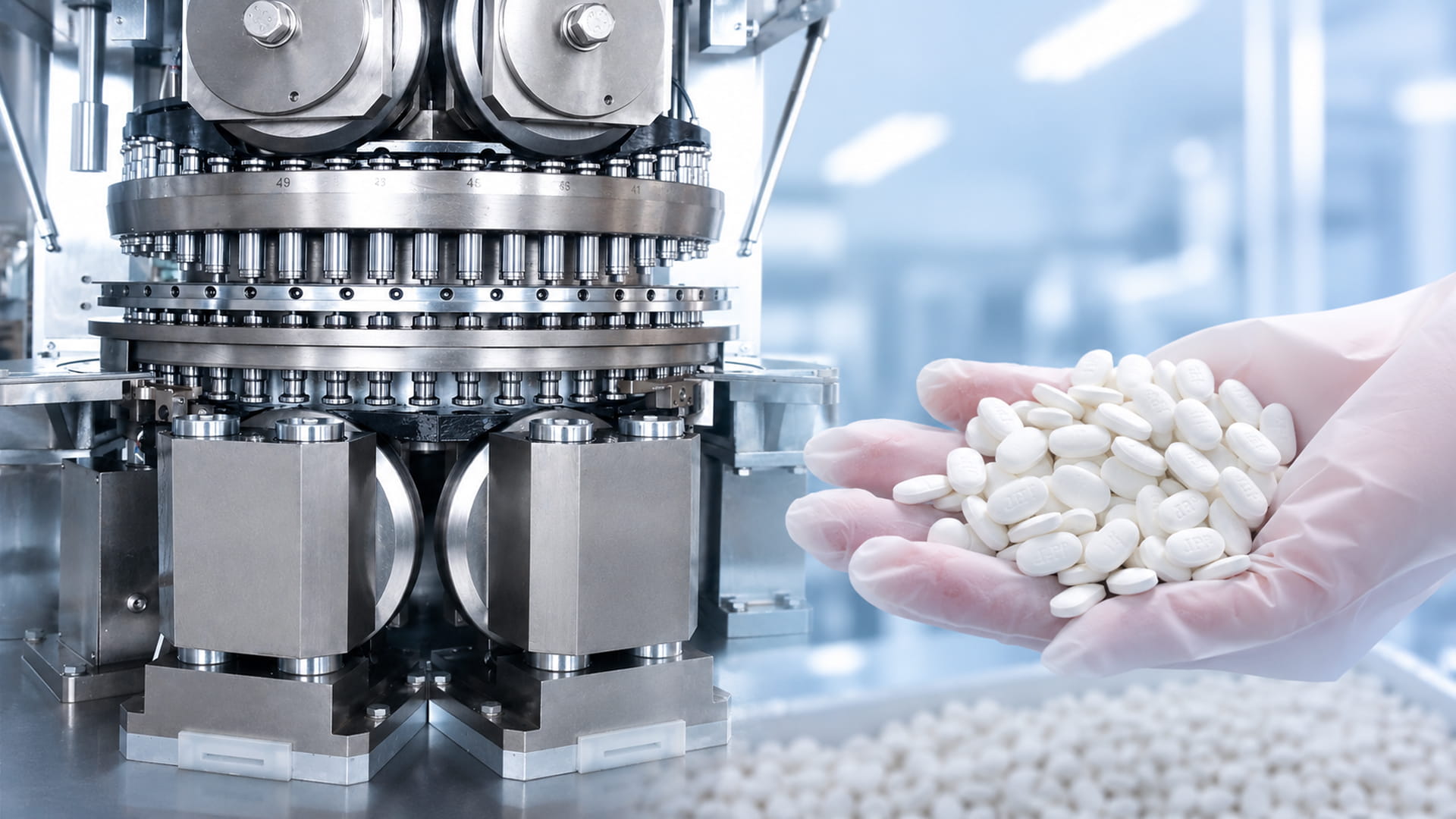
El polvo o los gránulos se introducen en una matriz y se comprimen mediante un punzón superior y un punzón inferior. máquina de compresión de tabletas. Juntos, Estos punzones y matrices forman la forma y dosis finales de la tableta.. Cada rotación de la torreta de la prensa tiene un punzón encima y otro debajo de un troquel.. Cuando los golpes se juntan con alta presión., se forma una tableta. En términos simples, Las herramientas para prensar tabletas se refieren al conjunto de punzones y troqueles que utiliza una máquina punzonadora de tabletas para fabricar pastillas..
En la fabricación de tabletas, golpes y muere – conocido colectivamente como herramientas de prensa de tabletas – determinar cada tamaño de la tableta, forma y calidad. Ya sea que lo llames prensa para tabletas, maquina para hacer pastillas, o prensa de tabletas rotativa, las herramientas internas hacen el trabajo real de formar tabletas. Elegir el estándar de herramientas adecuado es crucial. Las normas más comunes son herramientas B, herramientas D, y sus variantes más pequeñas BB y DB. Cada estándar especifica diferentes diámetros de cilindro de punzonado y matriz., haciéndolos adecuados para tamaños de tabletas y máquinas particulares. Esta guía desglosa lo que B, D, Media de herramientas BB y DB, en qué se diferencian, y cómo elegir las mejores herramientas para su máquina fabricante de tabletas.
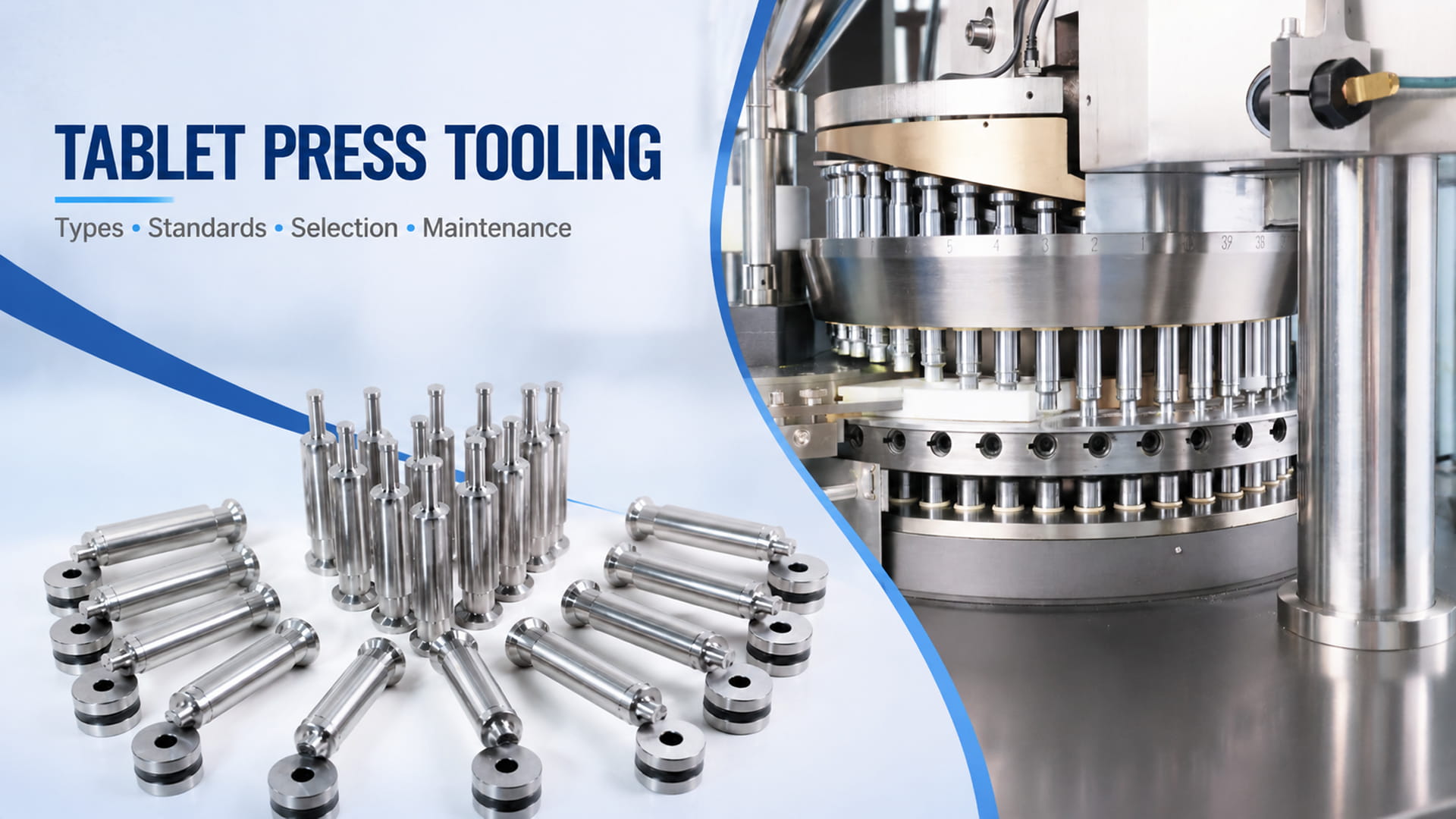
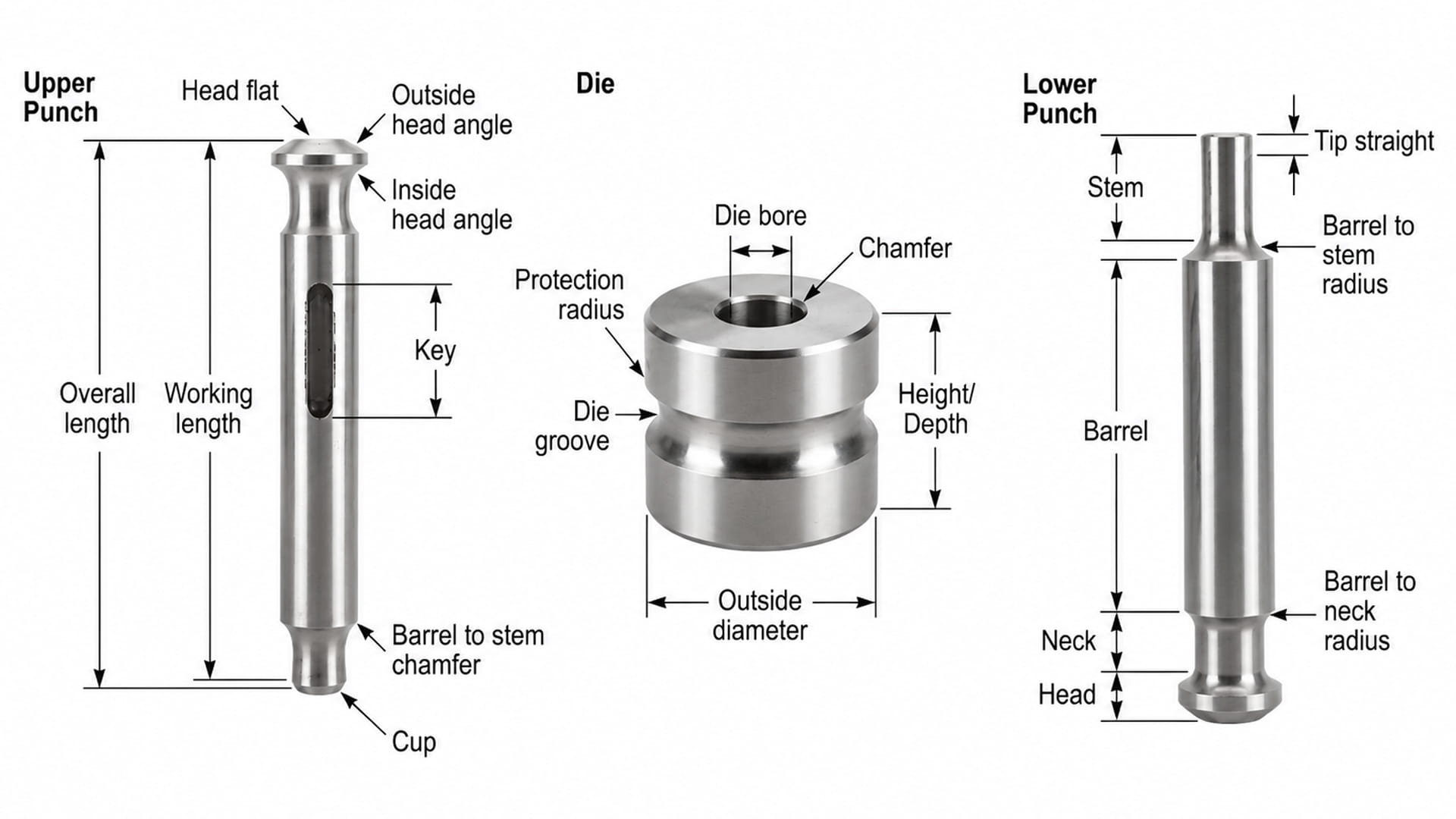
El utillaje en una máquina prensadora de tabletas se refiere a la pares de punzones y matrices darle forma y comprimir el polvo en tabletas. El troquel es una cavidad hueca. (a menudo redondo) que define el diámetro y el grosor de la tableta, mientras golpea (superior e inferior) encajar en el troquel desde arriba y desde abajo para comprimir el polvo. Esencialmente, Las herramientas gobiernan la geometría de la tableta. y debe adaptarse exactamente a la prensa. Las herramientas adecuadas garantizan un peso uniforme, Grosor e impresión en la tableta.. Herramientas de alta calidad (hecho de aceros endurecidos como GCR-15) también resiste el desgaste y evita Problemas como tapado o laminación..
Existen diferentes estándares internacionales de herramientas.. En América del Norte, el estándar AAP/TSM es común, mientras que el ISO 18084 (europeo) El estándar se utiliza a nivel mundial.. Dentro de estos estándares, Las herramientas para prensa de tabletas se clasifican por clases de tamaño.: B, D, CAMA Y DESAYUNO, y herramientas DB. Cada clase tiene diámetros fijos de cilindro de punzón y matriz. (y alturas), que a su vez controlan el diámetro máximo de la tableta. Por ejemplo, Embalaje de Jinlu señala que todas las herramientas deben coincidir con las dimensiones de la torreta y la tableta (pequeñas de 6 a 8 mm) tabletas masticables utilizar herramientas BB, Las tabletas estándar de 12 a 13 mm utilizan herramientas B., y las tabletas grandes de 25+ mm necesitan herramientas D.
Diferentes productos de tabletas requieren diferentes configuraciones de herramientas para lograr una calidad constante de las tabletas y un rendimiento de producción estable.. En una máquina de compresión de tabletas, Los tipos de herramientas de prensa de tabletas más comunes incluyen herramientas B, herramientas D, herramientas de pedalier, y herramientas DB. Estas opciones de herramientas varían principalmente en el tamaño del punzón., dimensiones del troquel, capacidad de compresión, y aplicaciones de tableta adecuadas. Comprender las diferencias entre estos tipos de herramientas ayuda a los fabricantes farmacéuticos, ingenieros de producción, y los usuarios de la máquina seleccionan la configuración adecuada para su tableta.
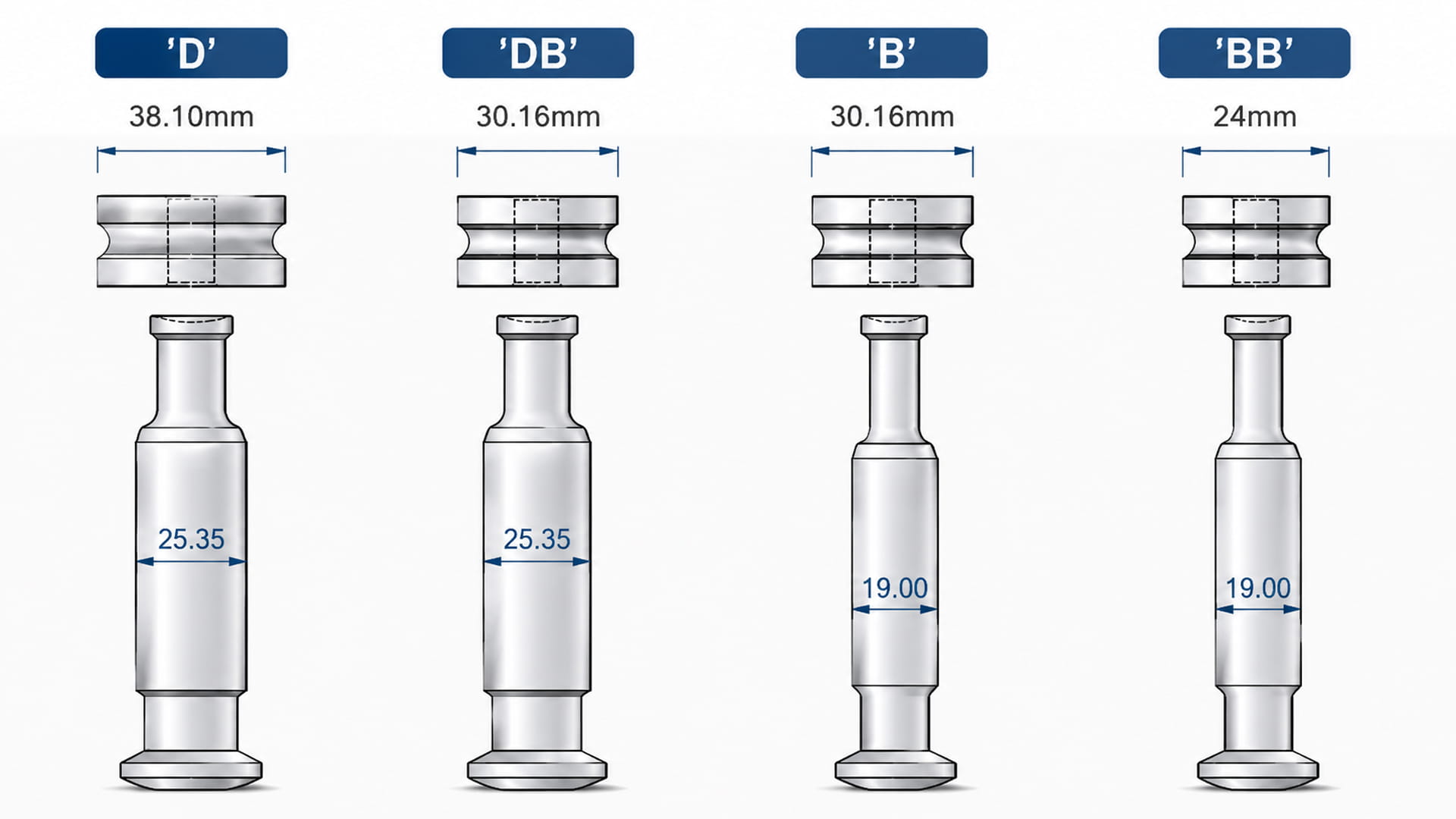
En la industria farmacéutica, herramientas tipo B es uno de los estándares más comunes. Las herramientas B utilizan un 19.0 barril de punzonado de mm y un 30.16 mm de diámetro exterior del troquel (DE). Sus punzones tienen una proyección distintiva. brida o labio en la cabeza, que se bloquea en la torreta. En otras palabras, golpes B tener un borde elevado que una abrazadera de bloqueo engrane.
Las herramientas B son muy versátiles. tiene un punta de punzón cóncava (en forma de copa) y un dado redondo, y es compatible con casi todas las prensas para tabletas modernas (Por ejemplo, muchos medianos- a las prensas rotativas de alta velocidad de Fette, Hay, manestia, etc.. son tipo B). Esta herramienta se utiliza para tabletas sólidas estándar en una amplia gama de tamaños. (normalmente alrededor de 4 a 16 mm redondos, o incluso hasta ~19 mm para formas). Las aplicaciones comunes incluyen tabletas redondas y ovaladas convencionales como vitaminas., suplementos, y tabletas farmacéuticas donde se necesitan dosis y tamaño moderados..
Las herramientas B son populares porque están ampliamente disponibles y son rentables para la producción de gran volumen.. A 30.16 El troquel de mm puede producir comprimidos de hasta ~16-18 mm (círculo) o un poco más en forma. Por ejemplo, la mayoría de las líneas de fabricación de pastillas pequeñas y medianas utilizarán herramientas B para mayor eficiencia y flexibilidad..
herramientas tipo D está diseñado para tabletas más grandes o más gruesas. El cilindro del punzón de herramientas D es más grande (25.35 mm de diámetro) y el OD del dado es 38.10 milímetros. A diferencia de las herramientas B, un punzón tipo D tiene sin borde ni brida – es solo una cabeza de disco plana. Los punzones se bloquean en la torreta mediante un llave y retenedor sistema en lugar de una abrazadera de brida.
Las herramientas D a veces se denominan “herramientas europeas”. (aunque también es común en EE. UU.). Históricamente era estándar en las prensas de tabletas de uso pesado más antiguas y todavía se usa para tabletas muy grandes o con una fuerza de compresión muy alta.. Por ejemplo, Las herramientas D son populares para tabletas efervescentes, tabletas veterinarias, y comprimidos farmacéuticos en dosis altas que necesitan un mayor diámetro y espesor. Los punzones de cara plana de las herramientas D son buenos para tabletas que pueden tener diseños complejos o requerir un estampado confiable. (la cara plana ayuda a marcar).
En términos prácticos, una configuración de herramientas D (25.35 mm punzón, 38.10 mm morir) fabricará tabletas a partir de aproximadamente 5 mm hasta 25 mm de diámetro. Ofrece un área de compresión más alta y puede lograr tabletas muy duras.. Si su operación utiliza una gran máquina rotatoria de prensa de tabletas para tabletas de vitaminas grandes o productos en capas, probablemente use herramientas D. Recordar: Los golpes D no tienen labio., Así que visualmente parecen una tapa de disco plana..
Herramientas tipo BB es esencialmente un versión reducida de las herramientas B para tabletas muy pequeñas. Las herramientas BB también tienen un 19.0 barril de punzonado de mm (como B) pero usa un dado más pequeño de 24.00 mm DE. La diferencia clave es que las herramientas BB hacen pequeñas tabletas o pastillas – piense en balas de menos de 13 mm.
Las herramientas BB son las preferidas cuando se necesita un gran número de estaciones o punzones de múltiples puntas.. Con 24 mm muere, puedes colocar muchas estaciones en un 24- o prensa de 32 estaciones para aumentar la producción de tabletas pequeñas. Su pequeño tamaño no compromete la precisión: Los golpes de BB producen minitabletas muy uniformes (Por ejemplo, pastillas para la tos, mentas para el aliento, pequeños masticables) donde la precisión de la dosis es crítica.
En resumen, Herramientas BB = pastillas de diámetro pequeño. Es esencialmente para prensas compactas o modos de alto rendimiento donde cada tableta es pequeña. El sistema de herramientas BB requiere los mismos estándares de torreta que las herramientas B (Mismo cabezal de punzón y retención.), Entonces BB golpea hacer tener el labio/brida como punzones B. El beneficio es poder operar una prensa antigua de 16 estaciones en una configuración de 24 estaciones usando herramientas más pequeñas..
Herramientas tipo DB Es un sistema híbrido que combina características de D y B.. En una configuración de base de datos, el El diámetro del cilindro del punzón es 25.35 milímetros (igual que D), pero el el OD es 30.16 milímetros (igual que B). En otras palabras, utiliza un cabezal perforador de gran diámetro (apreciado) con un orificio de troquel más pequeño (como B).
Esta combinación le permite producir bastante grandes, tabletas de dosis alta (más alto como D) mientras se instalan más estaciones que las herramientas D completas (ya que los troqueles son más pequeños). Las herramientas DB aparecen a menudo en prensas diseñadas para una producción flexible.: obtienes la alta capacidad de compactación de un punzón D con un troquel de tamaño B. Por ejemplo, Se puede usar un juego de punzones/troqueles DB para tabletas multivitamínicas densas o pastillas veterinarias grandes en las que desea una forma grande pero también desea reutilizar una torreta B intercambiando punzones..
El punzón de una herramienta DB se bloquea como un punzón B (tiene una brida en la cabeza) pero su tamaño es más cercano a D. Es una opción especializada para tabletas medianas-grandes con eficiencia en mente. Básicamente, DB significa "más grande que B pero no tan grande como D completo", un compromiso que ofrece un alto rendimiento en tabletas de tamaño mediano a grande.. Los tamaños típicos de tabletas para herramientas DB son de aproximadamente 5 a 19 mm de diámetro..
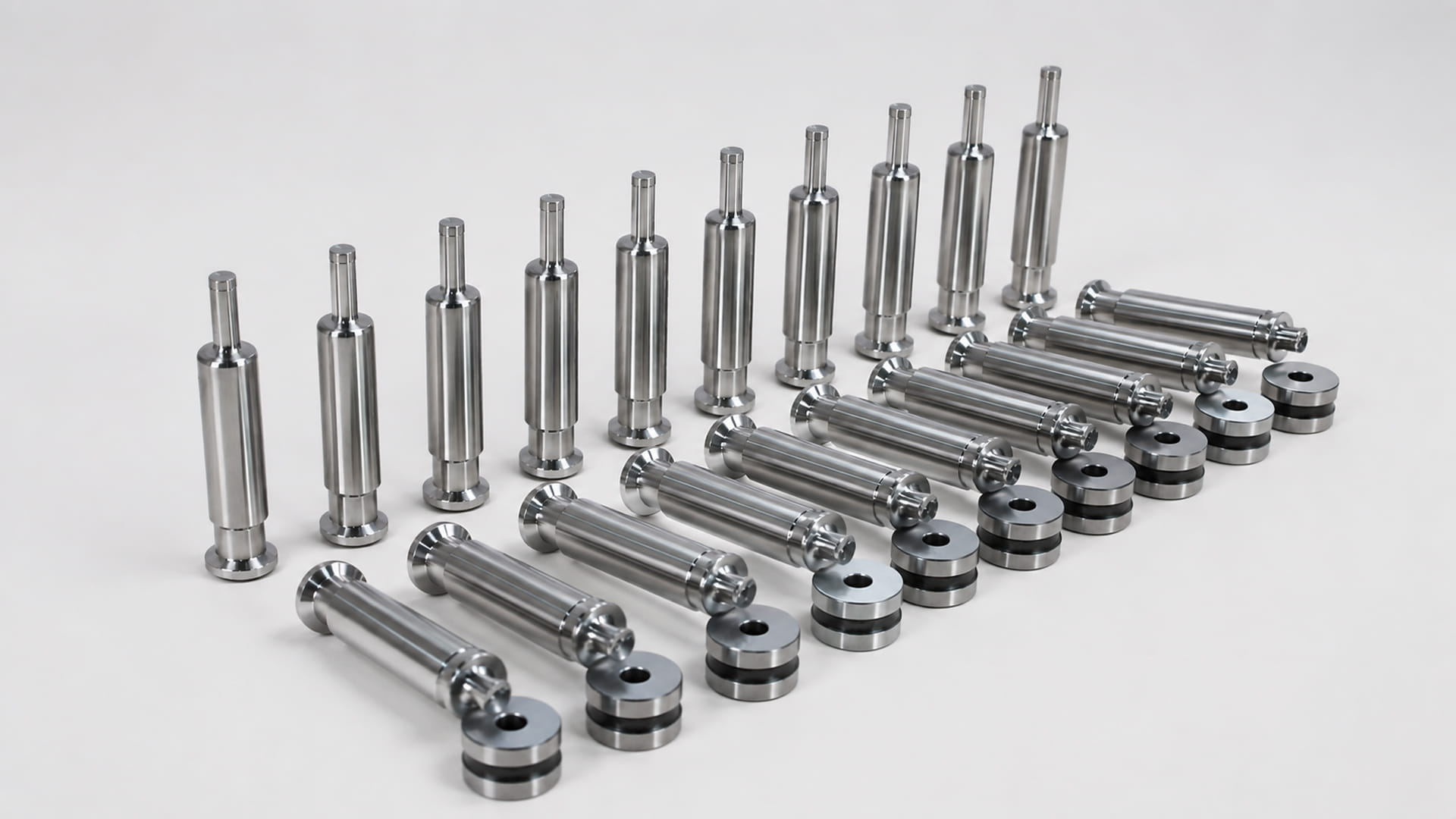
A continuación se muestra una comparación rápida de las dimensiones típicas de cada tipo de herramienta y los rangos de tamaño de tableta., basado en estándares de la industria:
| Tipo de herramienta | Ø del barril del punzón | Matriz Ø (DE) | Diámetro de la tableta | Uso común |
| B | 19.00 milímetros | 30.16 milímetros | ~4–16 mm | Tabletas estándar (farmacéutica) |
| D | 25.35 milímetros | 38.10 milímetros | ~10–25 mm | tabletas grandes, efervescente |
| CAMA Y DESAYUNO | 19.00 milímetros | 24.00 milímetros | ~4–13 mm | tabletas pequeñas, líneas de alta velocidad |
| DB | 25.35 milímetros | 30.16 milímetros | ~5–19 milímetros | Tabletas densas de tamaño pequeño |
Por ejemplo, JinluNotas de embalaje Las herramientas B suelen fabricar tabletas de 3 a 16 mm, mientras que las herramientas D cubren de 10 a 25 mm. Las herramientas BB alcanzan un máximo de alrededor de 13 mm y DB alrededor de 19 mm. El tamaño exacto también depende de la forma de la tableta. (redondo, oval, etc.).
Más allá de la A, B, D denominación, Las herramientas deben cumplir con un estándar para adaptarse a las prensas de tabletas.. Hay dos familias principales de estándares de herramientas.:
En tono rimbombante, UE (ISO 18084) y los punzones TSM no son intercambiables. Aunque los diámetros exteriores de la matriz son los mismos (p.ej. 38.10 mm para D, 30.16 mm para B), el los detalles del punzón difieren. Por ejemplo, Los cabezales de punzonado TSM tienen un ángulo ligeramente diferente en las superficies de apoyo que los ISO, y la ranura para llave está posicionada de manera diferente. En la práctica, un punzón ISO/D generalmente no encajará correctamente en una prensa estilo TSM/EE.UU., y viceversa. Siempre revise la documentación de su imprenta para ver si espera TSM o ISO/UE herramientas antes de ordenar punzones y matrices.
En resumen: TSM = estándar de EE. UU./Japón, UE = ISO 18084 métrico. Ambos garantizan precisión en la forma de la tableta, pero sus cabezales de herramientas son incompatibles.
Al seleccionar herramientas para su máquina prensadora de pastillas, considerar tamaño de la tableta, volumen de producción, y dureza de la tableta:
En la práctica, muchos fabricantes (incluido el embalaje JinLu) proporcionar orientación. Por ejemplo, JinLu Prensa de tabletas ZP-17D Está clasificado para 100 kN usando punzones GCR-15 estándar., por lo que especifican herramientas por tamaño de tableta. También señalan que ambas herramientas tamaño y material asunto: duro, Las tabletas abrasivas utilizan acero más duro o recubrimientos especiales. (Estaño, CrN) para extender la vida útil de las herramientas.
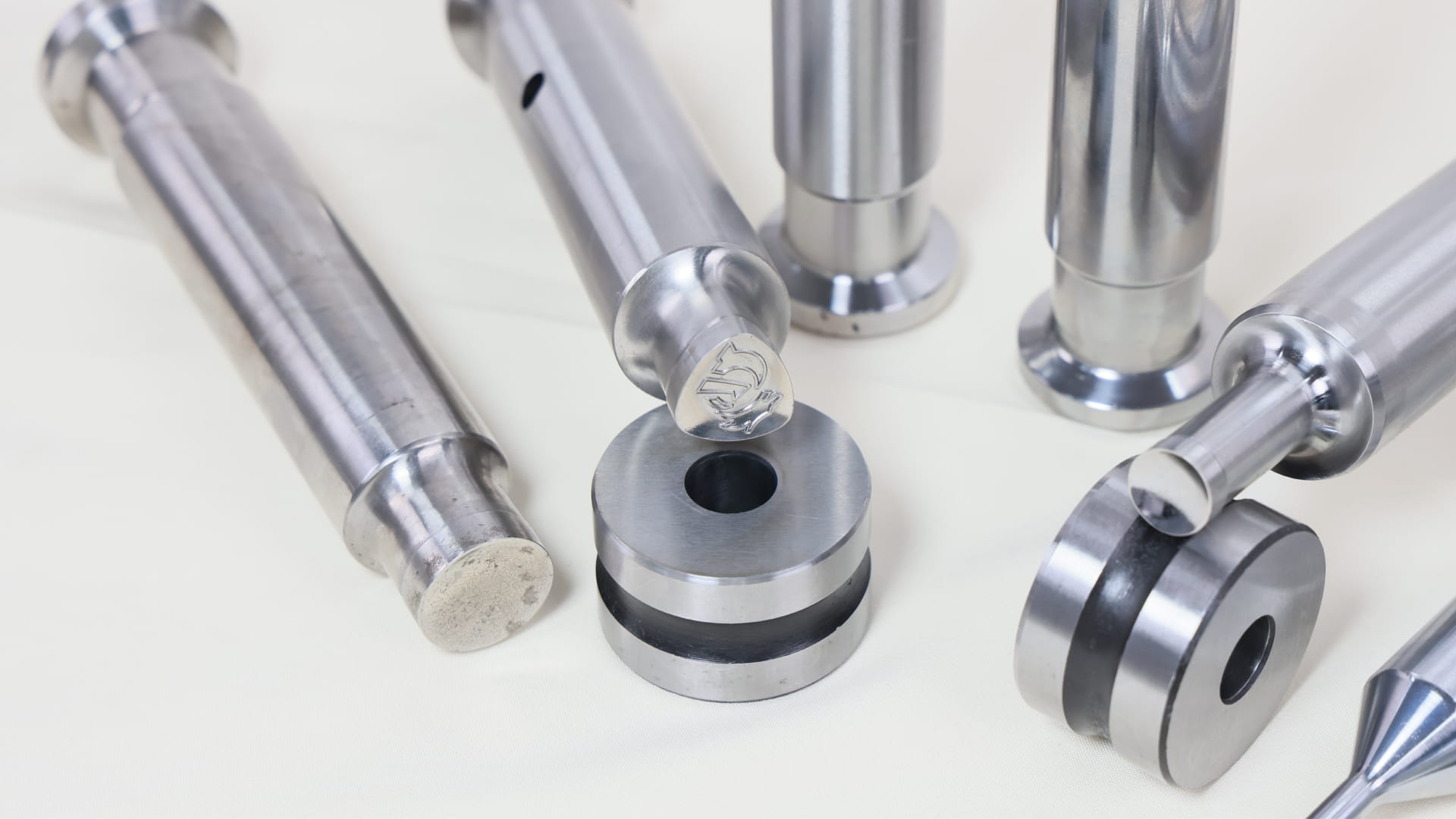
Mantenimiento adecuado extiende dramáticamente la vida útil de la herramienta y calidad de tableta. Los expertos de la industria señalan que aproximadamente 85% de los problemas del punzón y matriz provienen de un mantenimiento y manejo deficientes. Estas son las mejores prácticas para mantener sus herramientas en óptimas condiciones.:
Siguiendo estos pasos (limpio, inspeccionar, reparar/pulir, medida, lubricar, tienda: a menudo denominado “proceso de mantenimiento de herramientas de 7 pasos”) minimizará el tiempo de inactividad. Como lo expresó un ingeniero, “Un limpio, Es mucho menos probable que un punzón en buen estado produzca tabletas que se peguen o se rompan”. En la práctica, la limpieza es el paso más crítico: Elimina residuos de productos antiguos que pueden provocar que se peguen., cosecha, o contaminación cruzada.
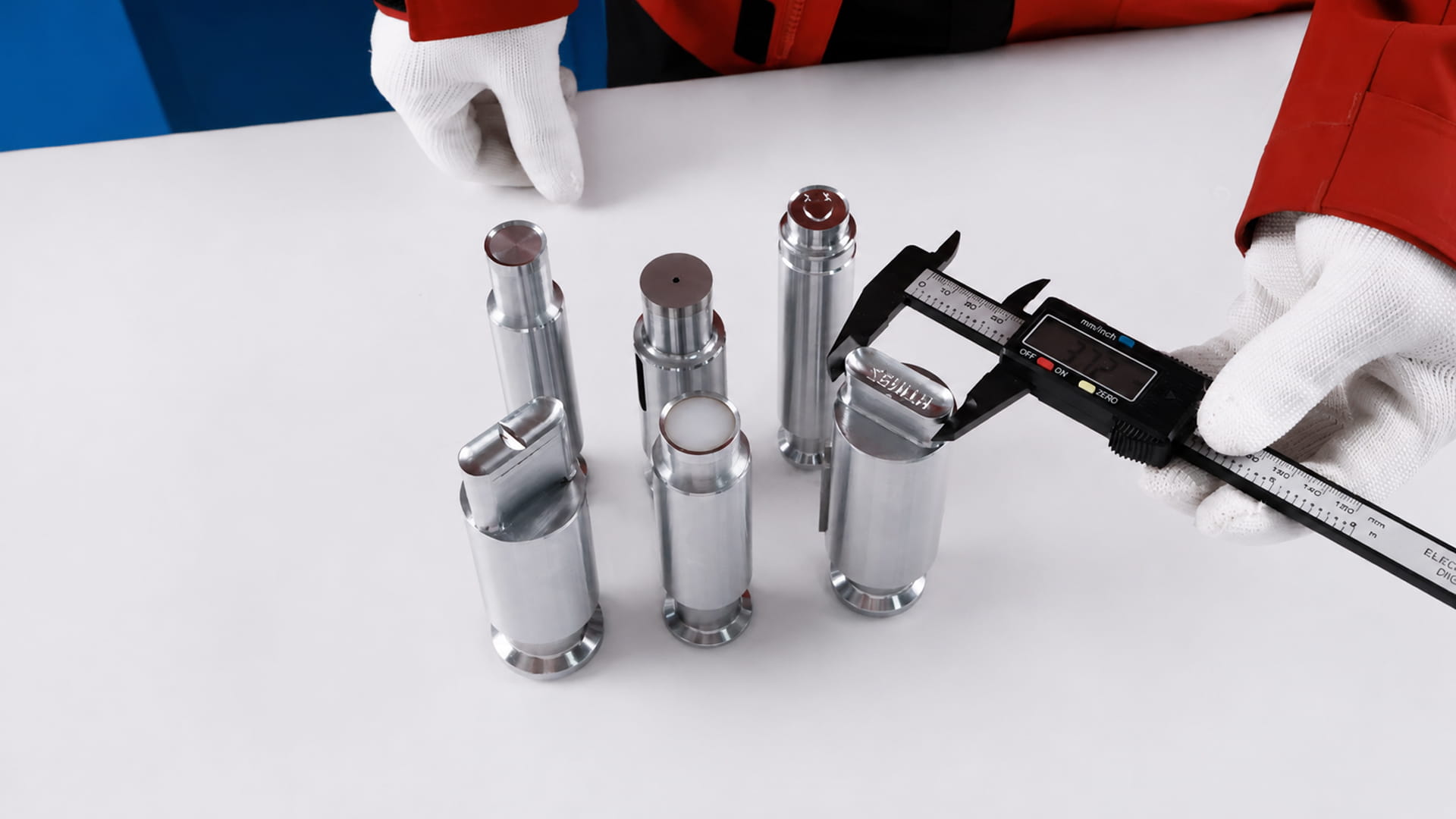
Aparte de las dimensiones, estampación material y acabado son críticos. La mayoría de los punzones para prensar tabletas están hechos de acero al carbono de alta calidad. (p.ej. GCR-15) con dureza ~60 HRC, que soporta altas fuerzas de compresión. Para formulaciones húmedas o ácidas (como hierbas o efervescentes), punzones de acero inoxidable o revestidos (Estaño, CrN, contenido descargable) puede resistir la corrosión y el pegado.
Asegúrese siempre de que las herramientas se fabriquen según las especificaciones.. Muchos proveedores siguen el Manual de especificaciones de tabletas. (TSM) o normas ISO para tolerancias. JinLu, Por ejemplo, notas Las herramientas BB están fabricadas según las especificaciones exactas de TSM/UE y los documentos de inspección se proporcionan a pedido.. Las herramientas de alta calidad ayudan a evitar defectos y prolongar la vida útil del punzón..
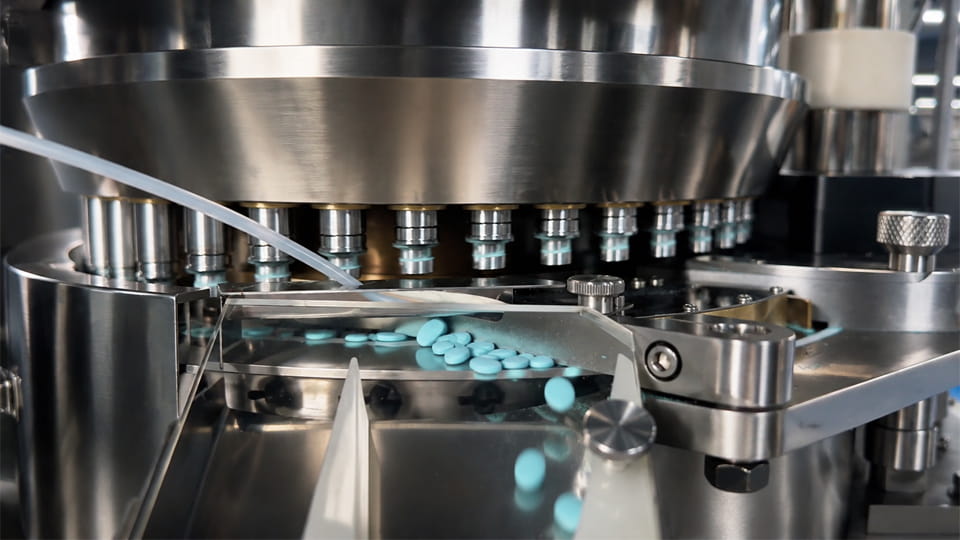
Cifra: prensas y herramientas de alta velocidad entregan muchas tabletas rápidamente
Acreditado fabricantes de prensas de tabletas y proveedores de herramientas puede ayudarle a elegir el estándar correcto. Por ejemplo, JinLu Packing a menudo ayuda a los clientes a elegir entre B, D, Herramientas BB o DB según el producto.. Ofrecemos pruebas de fórmula gratuitas y podemos recomendar herramientas especializadas. (grabado, tanteo, etc.) para tu prensa. Al integrar una línea de producción completa, Elija un proveedor que proporcione prensas y herramientas., por lo que la compatibilidad está garantizada.
Además, tener un sistema de herramientas de cambio rápido y un plan de mantenimiento minimiza el tiempo de inactividad. Busque funciones como la eliminación rápida de troqueles, liberación rápida de la torreta, y eliminación de punzones sin herramientas en prensas nuevas. Por ejemplo, El enfoque de JinLu en el diseño GMP significa que sus máquinas tienen torretas de liberación rápida y piezas de contacto fáciles de limpiar., ayudando a garantizar que las herramientas se mantengan en las mejores condiciones.
Las herramientas adecuadas para la prensa de tabletas son más que solo una pieza consumible: es una elección estratégica que impacta directamente la calidad de su producto y su eficiencia de fabricación.. Al comprender las diferencias entre B, D, CAMA Y DESAYUNO, y herramientas DB y siguiendo las mejores prácticas en selección y mantenimiento, Los fabricantes farmacéuticos pueden evitar costosos defectos y tiempos de inactividad.. Recuerde igualar su estándar de herramientas (TSM frente a ISO), elige el tamaño adecuado para tu tableta, y seguir un estricto rutina de limpieza/inspección. La recompensa son tabletas uniformes., menos rechazos, y una línea de producción más confiable.
Si se está preparando para comprar una nueva máquina compresora de tabletas o actualizar sus herramientas, considere comunicarse con OEM experimentados. Jinlu Packing ofrece orientación sobre el mejor sistema de herramientas para sus necesidades, y podemos suministrar punzones y troqueles personalizados para mantener sus tabletas según las especificaciones. Nuestro equipo está listo para ayudarlo a seleccionar el conjunto de herramientas perfecto para que aproveche al máximo su prensa para tabletas.. Contáctenos para obtener asesoramiento de expertos o una cotización sobre herramientas y equipos de prensa de tabletas de calidad.
Las herramientas para prensar tabletas se refieren al conjunto de punzones y matrices que se utilizan en una máquina de compresión de tabletas para formar tabletas en polvo o gránulos.. Las herramientas controlan el tamaño de la tableta., forma, espesor, y apariencia general. Un juego de herramientas completo normalmente incluye un punzón superior., golpe inferior, y morir, que trabajan juntos durante el proceso de compresión.
Los tipos más comunes de herramientas para prensa de tabletas incluyen herramientas B., herramientas D, herramientas de pedalier, y herramientas DB. Estos tipos de herramientas se diferencian principalmente en el tamaño del punzón., dimensiones del troquel, capacidad de compresión, y aplicaciones de tableta adecuadas. La elección correcta depende del tamaño de la tableta, características de formulación, requisitos de producción, y las especificaciones de su máquina compresora de tabletas.
La principal diferencia entre las herramientas B y las herramientas D es su tamaño y capacidad de compresión.. Las herramientas B tienen una configuración de punzón y matriz más pequeñas y se usan comúnmente para tabletas de tamaño estándar.. Las herramientas D presentan un diseño más grande, permitiendo una mayor fuerza de compresión y una mayor producción de tabletas. A menudo se prefiere la herramienta D para tabletas más grandes., mientras que las herramientas B proporcionan una mayor flexibilidad para las tabletas farmacéuticas comunes..
Las herramientas BB son una configuración de herramientas más pequeña diseñada para producir tabletas más pequeñas.. Se utiliza comúnmente para productos que requieren tamaños de tableta compactos., como ciertas tabletas farmacéuticas, suplementos, y productos especiales. Las herramientas BB pueden ser una opción adecuada cuando los fabricantes necesitan tabletas más pequeñas con un rendimiento de producción eficiente..
Las herramientas DB son una configuración de herramientas que combina características de los sistemas de herramientas D y B.. Utiliza una configuración de matriz más grande con un diseño de punzón más pequeño., proporcionando flexibilidad para tamaños de tabletas específicos y requisitos de producción. Las herramientas DB a menudo se seleccionan cuando los fabricantes necesitan un equilibrio entre la capacidad del tamaño de la tableta y la eficiencia de las herramientas..
No siempre. Una máquina prensadora de tabletas está diseñada para especificaciones de herramientas específicas., y la compatibilidad depende del diseño de la torreta, dimensiones del punzón, tamaño del troquel, y estándar de herramientas. Por ejemplo, Las herramientas B y D no pueden simplemente reemplazarse entre sí sin confirmar la compatibilidad de la máquina.. Siempre verifique el modelo de prensa de tabletas y las especificaciones de herramientas antes de cambiar las herramientas..
Los principales estándares de herramientas para prensas de tabletas incluyen TSM (Manual de especificaciones de la tableta), UE (Estándar europeo de herramientas), y estándares de herramientas ISO. TSM se usa ampliamente en América del Norte., Mientras que las normas de la UE e ISO se utilizan comúnmente en muchos mercados internacionales.. Aunque algunas dimensiones pueden parecer similares, Las herramientas TSM y EU no son automáticamente intercambiables.
La elección de las herramientas de prensa de tabletas adecuadas depende de varios factores, incluido el tamaño de la tableta, forma, formulación, fuerza de compresión, volumen de producción, y modelo de prensa de tabletas. Los fabricantes también deberían considerar los estándares de herramientas., selección de materiales, y vida útil esperada de la herramienta para garantizar una calidad estable de la tableta y una producción eficiente.
Los problemas comunes de las herramientas de prensa de tabletas incluyen el pegado, cosecha, tapado de tabletas, peso desigual de la tableta, desgaste del punzón, y morir daño. Estos problemas pueden deberse a herramientas desgastadas., mantenimiento incorrecto, materiales de herramientas inadecuados, o configuraciones inadecuadas de compresión de la tableta. La inspección regular y la selección correcta de herramientas pueden ayudar a reducir los problemas de producción..
La vida útil de las herramientas de prensa de tabletas depende de factores como la formulación de las tabletas., velocidad de producción, fuerza de compresión, material de herramientas, revestimiento, y prácticas de mantenimiento. Con una limpieza adecuada, inspección, lubricación, y almacenamiento, Los punzones y matrices de alta calidad pueden producir millones de tabletas antes de que sea necesario reemplazarlas..
Referencias:
1.Herramientas de prensa para tabletas: punzones y matrices —— ISO 18084:2011
2.Capítulo 32 – Desarrollo, Mejoramiento, y ampliación de los parámetros del proceso: Compresión de tabletas —— Ciencia Directa
3.Los beneficios de la estandarización de herramientas para tabletas —— Farmacéutica
4.Mejora del mantenimiento y almacenamiento de herramientas para prensas de tabletas —— Farmacéutica
5.Influencia de la geometría del punzón (diámetro de la cabeza plana) y tipo de herramienta ('B’ o 'D') sobre las propiedades físico-mecánicas de las tabletas de formulación —— Biblioteca Nacional de Medicina
6.Una actualización sobre los avances en la tecnología de herramientas para tabletas —— Ciencia Directa