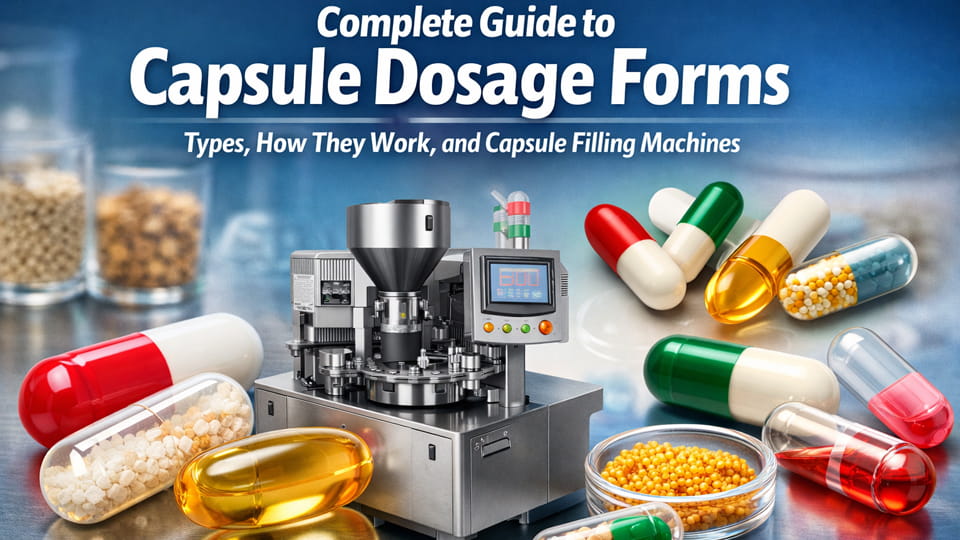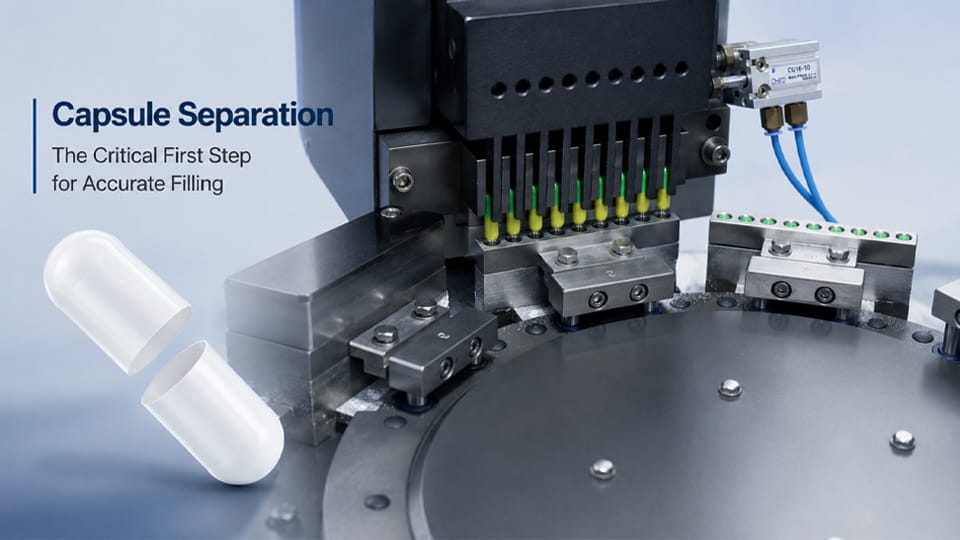

Για έναν κατασκευαστή φαρμακευτικών συμβολαίων, ο Η καλύτερη μηχανή πλήρωσης καψουλών συνήθως δεν είναι η μηχανή με την υψηλότερη ταχύτητα πινακίδας. Είναι το μηχάνημα που μπορεί να κινηθεί αξιόπιστα μεταξύ των πραγματικών προϊόντων σας με τη μικρότερη συνολική απώλεια χρόνου παραγωγής.
Αυτό σημαίνει ότι κοιτάμε πέρα από τις «κάψουλες ανά ώρα». Πρέπει να ληφθεί υπόψη μια CMO ή CDMO πολλαπλών προϊόντων μεγέθη κάψουλας, συμπεριφορά σκόνης, πέλλετ, μικρο-ταμπλέτες, συνδυαστικά προϊόντα, απαιτήσεις καθαρισμού, αλλαγές εργαλείων, περιορισμός, χρόνος χειριστή, νομιμοποίηση, και έλεγχος ποιότητας κατάντη. Μείζων προμηθευτές εξοπλισμού πλήρωσης καψουλών αναφέρετε το ίδιο σημείο με διαφορετικούς τρόπους: η ευελιξία προέρχεται από εναλλάξιμα συστήματα δοσομέτρησης, ευρεία συμβατότητα προϊόντος, σύντομες αλλαγές, εύκολος καθαρισμός, και ενσωματωμένος έλεγχος βάρους — όχι μόνο η ταχύτητα.
Για τους περισσότερους συμβασιούχους κατασκευαστές χειρισμό πολλαπλές SKU σε εμπορική κλίμακα, ένα ευέλικτο πλήρως αυτόματη μηχανή πλήρωσης καψουλών στην περιοχή μεσαίας ταχύτητας είναι συχνά το καλύτερο σημείο εκκίνησης. Ο ημιαυτόματος εξοπλισμός εξακολουθεί να έχει νόημα όταν οι παρτίδες είναι μικρές και αλλάζουν συχνά. Τα μηχανήματα πολύ υψηλής ταχύτητας έχουν νόημα όταν οι μεγάλες καμπάνιες κυριαρχούν στο πρόγραμμα. Και αν εμπλέκονται ισχυρές ενώσεις, ο περιορισμός μπορεί να υπερισχύσει κάθε άλλου κριτηρίου επιλογής. Διατίθεται εξειδικευμένος εξοπλισμός πλήρωσης κάψουλας με OEB 4/OEB 5 συστήματα περιορισμού και υγρού καθαρισμού ή πλύσης επιτόπου, που δείχνει πόσο διαφορετική είναι αυτή η απαίτηση από την αγορά ενός τυπικού ενθυλακωτή γενικής χρήσης.
Ο πρακτικός κανόνας είναι απλός:
Επιλέξτε τη μηχανή πλήρωσης καψουλών που σας προσφέρει την υψηλότερη χρησιμοποιήσιμη ημερήσια απόδοση σε ολόκληρο το μείγμα προϊόντων σας—όχι την υψηλότερη θεωρητική ωριαία απόδοση σε ένα εύκολο προϊόν.
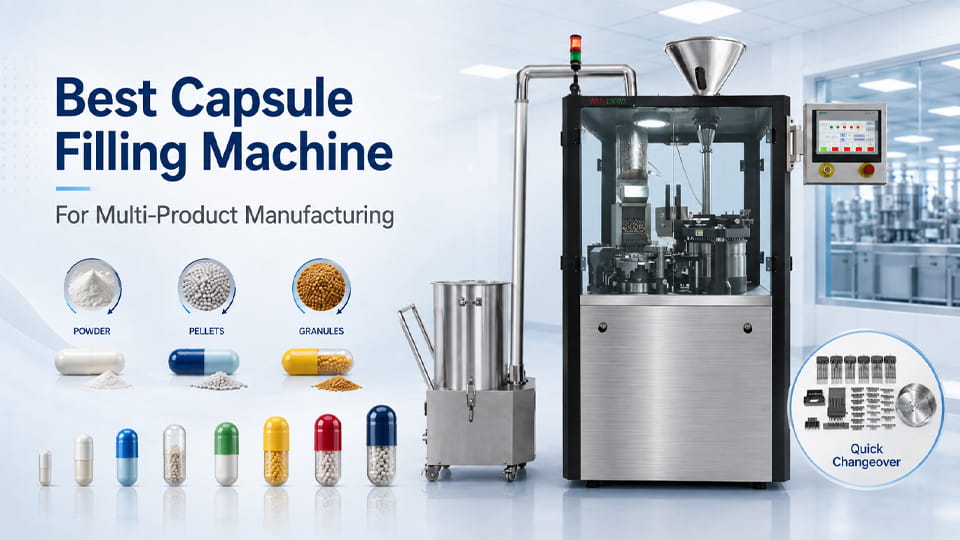
Φαρμακευτικοί ΚΟΑ (συμβασιούχοι κατασκευαστές) εκτελέστε πολλά SKU σε κοινόχρηστες γραμμές. Συχνά πρέπει να αλλάζουν μεταξύ προϊόντων, μεγέθη κάψουλας, και συνταγές γρήγορα. Μηχάνημα μίας χρήσης (έχει διαμορφωθεί για ένα μέγεθος ή προϊόν) δεν μπορεί να ανταποκριθεί σε αυτήν την ποικιλία χωρίς πολλές μονάδες. Ένα πληρωτικό πολλαπλών μεγεθών καλύπτει το #000–#5 (από τη μεγαλύτερη έως τη μικρότερη σκληρή κάψουλα) σε ένα μηχάνημα. Αυτό επιτρέπει στους CMOs ενοποιήσει τον εξοπλισμό, εξοικονόμηση χώρου και κεφαλαίου. Επιταχύνει επίσης την κυκλοφορία νέων προϊόντων: αντί να παραγγείλετε μια νέα μηχανή ενθυλάκωσης για κάθε SKU, μια ρυθμιζόμενη μηχανή μπορεί να παράγει πολλές συνταγές.
Ωστόσο, η ευελιξία φέρνει συμβιβασμούς. Οι αλλαγές γίνονται εμπόδιο εάν οι ανταλλαγές εργαλείων είναι αργές ή περίπλοκες (δείτε την επόμενη ενότητα). Καθαρισμός και επικύρωση είναι επίσης κρίσιμα: μια μηχανή πλήρωσης CMOs της κάψουλας πρέπει να είναι εύκολο να απολυμανθεί μεταξύ διαφορετικών φαρμάκων για να αποφευχθεί η διασταυρούμενη μόλυνση (μη αποκλειστικό εξοπλισμό πρέπει καθαρίζονται μεταξύ των παρτίδων). Εν συντομία, Τα CMO χρειάζονται πληρωτικά καψουλών σχεδιασμένα για γρήγορες αλλαγές μούχλας, απαλό καθάρισμα, και ακριβής δοσολογία, ώστε ένα μηχάνημα να μπορεί να παράγει αξιόπιστα πολλά προϊόντα GMP κανόνες.
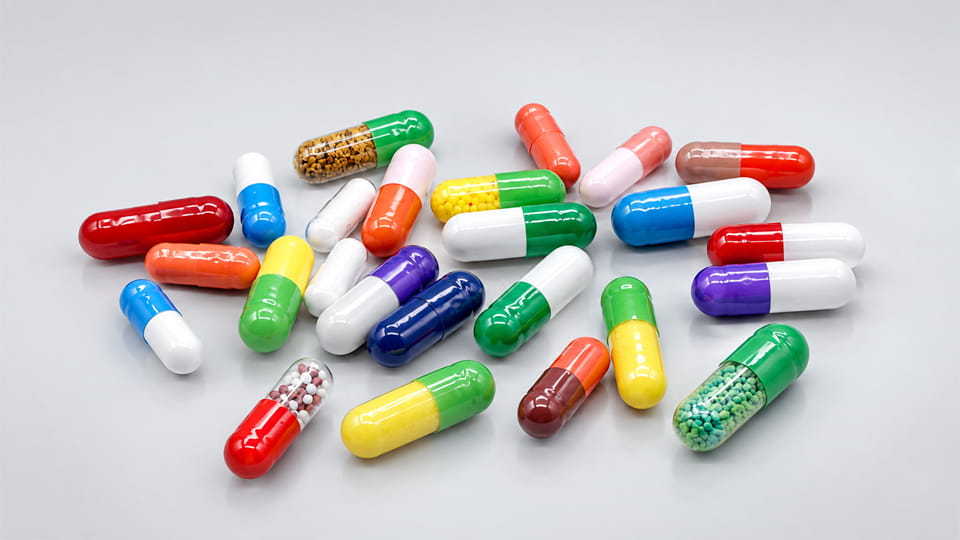
Κατά την αξιολόγηση μηχανών για περιβάλλον πολλαπλών προϊόντων, εστίαση σε αυτούς τους παράγοντες (πίνακα παρακάτω), στη συνέχεια διαβάστε τις λεπτομέρειες μετά. Μια καλά ισορροπημένη επιλογή ελαχιστοποιεί τους συμβιβασμούς σε όλο το χαρτοφυλάκιό σας.
| Παράγοντας | Τι να ψάξετε |
| Εύρος μεγέθους κάψουλας | Υποστηρίζει όλα τα απαραίτητα μεγέθη (#000– Το #5 είναι κοινό στα φαρμακευτικά) χωρίς ειδικά mods. Εξίσου σημαντική είναι η γρήγορη εναλλαγή μεταξύ των μεγεθών. |
| Τύποι σκευασμάτων | Χειρίζεται τις σκόνες/κόκκους σας. Ελέγξτε εάν μπορεί να χορηγήσει τη συγκεκριμένη σκόνη API σας, πέλλετ ή μικροδισκία. Ορισμένα μοντέλα χορηγούν ακόμη και υγρά (απαιτούν ειδικά ακροφύσια). |
| Ταχύτητα Παραγωγής | Ονομαστική έξοδος (κάψουλες/ώρα) θα πρέπει να υπερβαίνει τον υψηλότερο ρυθμό εκτέλεσης. Αλλά σημειώστε ότι οι αναφερόμενες ταχύτητες προϋποθέτουν ιδανικές συνθήκες (μέγεθος #00, σκόνη ελεύθερης ροής). |
| Ευκολία αλλαγής | Αναζητήστε αρθρωτά εργαλεία και σχέδια γρήγορης προσαρμογής. Τα σύγχρονα μηχανήματα μπορούν να ανταλλάξουν τα σετ καλουπιών <30 πρακτικά (15 min σε προηγμένα μοντέλα). |
| Καθαρισμός/Σχεδιασμός CIP | Το GMP απαιτεί επικυρωμένο καθαρισμό μεταξύ των προϊόντων. Προτιμήστε εξαρτήματα επαφής από ανοξείδωτο χάλυβα και δυνατότητα CIP ή αποσυναρμολόγηση χωρίς εργαλεία. |
| Ακρίβεια πλήρωσης | Ελέγξτε το σύστημα δοσολογίας (τρυπάνι / δίσκος, καρφίτσες συμπίεσης) και προδιαγραφές ακριβείας. Τα καλά πληρωτικά αγγίζουν τη διακύμανση βάρους ~±1–3%.. Οι γραμμές υψηλών προδιαγραφών διαφημίζονται >97% ακρίβεια πλήρωσης. |
| Επίπεδο Αυτοματισμού | Τα πλήρως αυτόματα μηχανήματα λειτουργούν συνεχώς με ελάχιστη εργασία (αυτόματη φόρτωση/κλείδωμα, Χειριστήρια PLC), ενώ το ημιαυτόματο απαιτεί χειριστή αλλά κοστίζει λιγότερο (δείτε παρακάτω). |
| Υποστήριξη επικύρωσης | Επιβεβαιώστε ότι το μηχάνημα υποστηρίζει πρωτόκολλα IQ/OQ/PQ, αρχεία καταγραφής δεδομένων και CFR21 Part 11 αν χρειαστεί. Ελέγξτε εάν ο προμηθευτής παρέχει έγγραφα επικύρωσης ή βοήθεια. |
| Ιχνος & Επεκτασιμότητα | Για ΚΟΑ, ο χώρος του δαπέδου και η μελλοντική ανάπτυξη έχουν σημασία. Ένα μόνο ευέλικτο μηχάνημα εξοικονομεί χώρο έναντι πολλών αποκλειστικών μονάδων, αλλά βεβαιωθείτε ότι μπορεί να κλιμακωθεί (π.χ.. προσθήκη σταθμών ή σύνδεση πληρωτικών αν αυξηθούν οι όγκοι). |
Κάθε παράγοντας παραπάνω θα πρέπει να είναι προσαρμοσμένος στην κατάστασή σας. Για παράδειγμα, εάν χειρίζεστε ισχυρά API, ο Καθαρισμός/Σχεδιασμός CIP γίνεται εξαιρετικά κρίσιμο (θα χρειαστείτε πλήρη περιορισμό ή συχνούς επικυρωμένους καθαρισμούς για να προστατεύσετε τους χειριστές και να αποτρέψετε τη διασταυρούμενη μόλυνση). Εάν κάνετε συχνά εναλλαγή μεταξύ πολλών μεγεθών καψουλών, τότε η "Ευκολία αλλαγής" είναι πρωταρχικής σημασίας; όπως σημειώνεται παρακάτω, Η παράλειψη του αυτοματισμού αλλαγής μεγέθους μπορεί να κοστίσει ώρες διακοπής λειτουργίας.
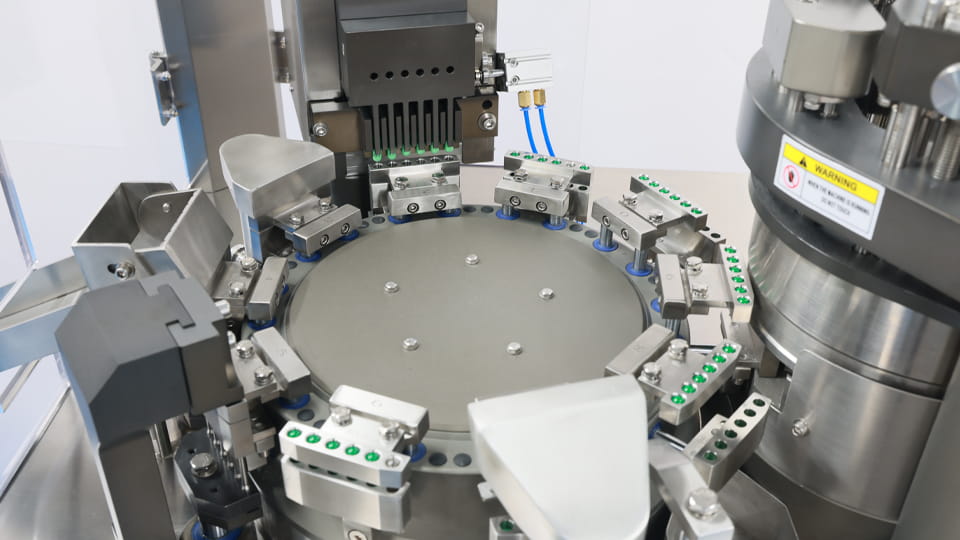
Η υψηλή απόδοση κάψουλας είναι ελκυστική, αλλά η αποτελεσματικότητα στον πραγματικό κόσμο εξαρτάται από κάτι περισσότερο από την κορυφαία ταχύτητα. Οι κατασκευαστές συχνά αναφέρουν τη χωρητικότητα του μηχανήματος υπό ιδανικές συνθήκες, αλλά η πραγματική παραγωγή μπορεί να είναι πολύ χαμηλότερα εάν το προϊόν σας είναι προκλητικό. Για παράδειγμα, λεπτές ή κολλώδεις σκόνες μπορεί να μπλοκάρουν ένα τρυπάνι, ή μικρές κάψουλες αποδίδουν πιο αργό ρυθμό. Λάβετε πάντα υπόψη τις επιπτώσεις του μεγέθους της κάψουλας, ροή σκόνης, και χρόνο διακοπής λειτουργίας.
Για προγραμματισμό χωρητικότητας, ξεκινήστε με την απαιτούμενη έξοδο (κάψουλες ανά παρτίδα ή ανά έτος) και δουλέψτε ανάποδα. Προσδιορίστε πόσες ώρες παραγωγής μπορείτε να τρέξετε ρεαλιστικά (π.χ.. δύο βάρδιες έναντι πλήρους 24×7). Στη συνέχεια, διαιρέστε τις κάψουλες που χρειάζεστε με τις ώρες λειτουργίας για να λάβετε τις κάψουλες/ώρα-στόχους. Συγκρίνετε αυτό με την αποτελεσματική ταχύτητα του μηχανήματος (συχνά το 80–90% της μέγιστης βαθμολογίας του). Σημείωμα: Το υπερμεγέθη μπορεί να αποτύχει εάν άλλος εξοπλισμός γραμμής (αρίθμηση, κάλυψη, τιτλοφόρηση) δεν μπορεί να συμβαδίσει. Όπως το έθεσε ένας οδηγός, η εγκατάσταση πλήρωσης 150k/hr σε γραμμή 80k/hr προκαλείται 47% ώρα αδράνειας, σπατάλη χρημάτων. Να στοχεύετε πάντα σε ισορροπημένη απόδοση γραμμής.
Για να καταγράψετε την αποτελεσματικότητα, αντιπροσωπεύουν επίσης τις απώλειες μετάβασης και καθαρισμού. Ακόμη και μια αλλαγή «30 λεπτών» μειώνει τη χωρητικότητα εάν συμβαίνει μεταξύ κάθε παρτίδας. Εάν η γραμμή σας αλλάζει SKU συχνά, συμπεριλάβετε αυτά τα παράθυρα χρόνου διακοπής λειτουργίας στον υπολογισμό σας. Στην πράξη, στόχος ένα πληρωτικό του οποίου αποτελεσματικός ικανότητα (πραγματική έξοδο χρόνου εκτέλεσης) υπερβαίνει τις μέγιστες ανάγκες σας, ώστε να έχετε περιθώριο για αλλαγές ή μικρές επιβραδύνσεις.
Οι μακρές αλλαγές μπορούν να διαβρώσουν τα οφέλη οποιουδήποτε ευέλικτου μηχανήματος. Συχνά απαιτούνται παραδοσιακές περιστροφικές μηχανές πλήρωσης καψουλών 4– 6 ώρες για αλλαγή μεγέθους. Τα μοντέρνα σχέδια χρησιμοποιούν σερβομηχανές και πλάκες καλουπιού γρήγορου κλειδώματος για να το κόψουν δραματικά - συχνά 30– 45 λεπτά για ανταλλαγή πλήρους μεγέθους. Κατά την αξιολόγηση, ζητήστε από τους προμηθευτές να επιδείξουν μια αλλαγή μεγέθους στα μεγέθη των καψουλών σας.
Η ευκολία εναλλαγής προέρχεται από αρθρωτά εξαρτήματα: τυπικά ο σταθμός τροφοδοσίας της κάψουλας, τις άνω/κάτω πλάκες καλουπιού, ο δοσομετρικός δίσκος και η ξύστρα, τις ράβδους πλήρωσης, και οι οδηγοί εκκένωσης πρέπει να αλλάξουν όλοι για νέο μέγεθος. Τα μηχανήματα με σφιγκτήρες χωρίς εργαλεία ή περιβλήματα καλουπιού με ευρετήριο μπορούν να εξοικονομήσουν χρόνο εδώ. Για παράδειγμα, Η σειρά NJP του Jinlu χρησιμοποιεί α αρθρωτό σχέδιο καλουπιού που επιτρέπει πλήρεις αλλαγές μούχλας στο κάτω 15 πρακτικά. Σε μια πραγματική περίπτωση, μετάβαση από ένα πληρωτικό με έκκεντρο σε ένα σερβοκατευθυνόμενο πλήρωμα από το ένα cut 6 ώρες για να 35 πρακτικά, εξοικονόμηση πάνω \$120,000 ανά έτος.
Συνοπτικά, ελαχιστοποίηση της μετάβασης: αναζητήστε μηχανές με γρήγορη απελευθέρωση καλουπιού, προκαθορισμένες δυνατότητες προσαρμογής, και αποθήκευσε "συνταγές", ώστε οι χειριστές να μην χρειάζεται να ρυθμίζουν με μη αυτόματο τρόπο τις μετατοπίσεις κάθε φορά. Αν περιμένετε δεκάδες αλλαγές μεγέθους ανά τρίμηνο, Η ταχύτητα μετάβασης θα πρέπει να αποτελεί κορυφαίο κριτήριο επιλογής.
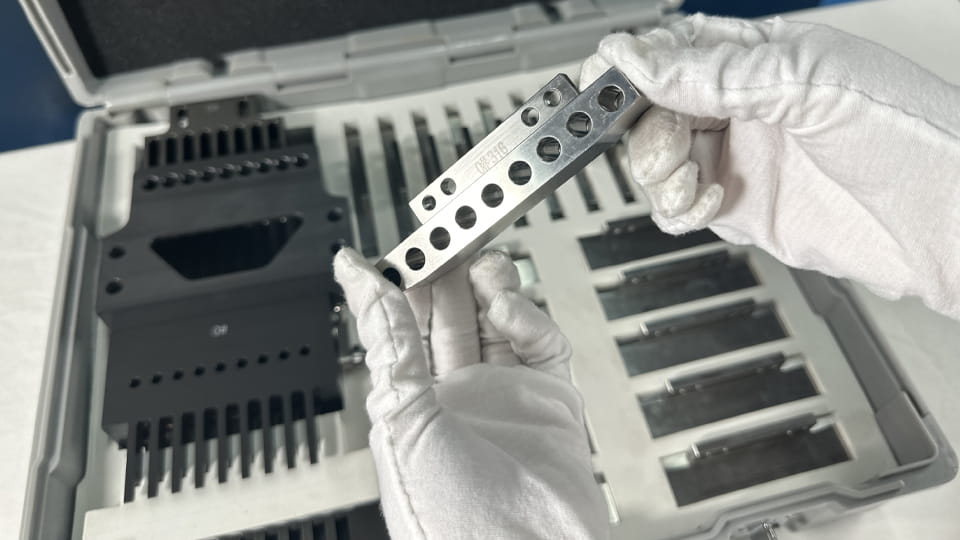
Ένας φαρμακευτικός ΚΟΑ πρέπει να επιβάλλει αυστηρούς ελέγχους καθαρισμού και μόλυνσης όταν εκτελούνται πολλά προϊόντα σε ένα μηχάνημα. Οδηγίες FDA (και απλή λογική GMP) δηλώστε ότι Ο μη αποκλειστικός εξοπλισμός πρέπει να καθαρίζεται μεταξύ διαφορετικών προϊόντων για την αποφυγή διασταυρούμενης μόλυνσης. Οντως, μια προειδοποιητική επιστολή της FDA σημείωσε πρόσφατα ότι είναι "απαράδεκτο ως θέμα της CGMP να παρασκευάζονται φάρμακα χρησιμοποιώντας τον ίδιο εξοπλισμό ... που χρησιμοποιείται επίσης για την παραγωγή μη φαρμακευτικών προϊόντων" χωρίς αυστηρό καθαρισμό.
Για την ικανοποίηση αυτών των απαιτήσεων, επιλέξτε ένα πληρωτικό κάψουλας χαπιού με υγειονομικός σχεδιασμός: λεία ανοξείδωτη κατασκευή 316L, στρογγυλεμένες άκρες, ελάχιστες ρωγμές, και σφραγισμένα ρουλεμάν όπου είναι δυνατόν. Πολλά μηχανήματα υποστηρίζουν πλέον Καθαριότητα στη θέση του (CIP): ενσωματωμένες μπάλες ψεκασμού και κυκλοφορούντα συστήματα καθαρισμού που σας επιτρέπουν να πλένετε εσωτερικές επιφάνειες χωρίς πλήρη αποσυναρμολόγηση. Εάν το CIP δεν είναι διαθέσιμο, βεβαιωθείτε ότι όλες οι χοάνες, δίσκους δοσομέτρησης, και οι δίσκοι τροφοδοσίας μπορούν να αφαιρεθούν ή να ανοίξουν χωρίς εργαλεία για χειροκίνητο καθαρισμό.
Καθορίστε επίσης επικυρωμένα πρωτόκολλα καθαρισμού: ρύπανση στη χειρότερη περίπτωση (π.χ.. ιδιαίτερα ισχυρά ή κολλώδη συστατικά) πρέπει να αφαιρείται σε αποδεκτά όρια υπολειμμάτων. Ο προμηθευτής φαρμακευτικού εξοπλισμού θα πρέπει να παρέχει οδηγούς καθαρισμού ή ακόμα και προσομοιωμένες δοκιμές μόλυνσης. Τελικά, διατηρείτε τα κούτσουρα λεπτομερούς καθαρισμού όπως απαιτείται παρακάτω 21 CFR 211.67(σι). (Όπως υπενθύμισε ένας επιθεωρητής της FDA, Η ανεπαρκής επικύρωση καθαρισμού αποτελεί επαναλαμβανόμενη παραβίαση.) Εν συντομία: σχεδιάστε για καθαριότητα και τεκμηριώστε τα πάντα. Η διασφάλιση των γρήγορων εναλλαγών είναι αμφιλεγόμενη εάν το μηχάνημα δεν μπορεί να καθαριστεί γρήγορα και αξιόπιστα μεταξύ των παρτίδων.
Δεν ρέουν όλοι οι τύποι το ίδιο. Οι συσκευές πλήρωσης κάψουλας χρησιμοποιούν διαφορετικούς μηχανισμούς δοσολογίας για να χειριστούν τη μεταβλητότητα του προϊόντος. Τα κοινά συστήματα περιλαμβάνουν:
Επιδιώξτε την ακρίβεια βάρους πλήρωσης εντός ±1–3% του στόχου. Μηχανήματα ανώτερης βαθμίδας (σαν φαρμακείο υψηλής ποιότητας μηχανές κατασκευής καψουλών) διαφημίζουν την ακρίβεια σε αυτό το εύρος. Για παράδειγμα, Το αυτόματο γεμιστικό NJP-3800D της Jinlu διατηρεί >97% ακρίβεια βάρους. Επαληθεύστε πάντα με δεδομένα δοκιμής: Ζητήστε από τους πωλητές τυπική διακύμανση βάρους στο μέγεθος και το βάρος της κάψουλας-στόχου σας.
Η επιλογή του συστήματος δοσομέτρησης πρέπει να ταιριάζει με το υλικό σας. Αν χειρίζεσαι πολύ καλά, ηλεκτροστατική, ή συνεκτικές σκόνες, βεβαιωθείτε ότι υπάρχουν διαθέσιμες λειτουργίες όπως αντιστατικές επικαλύψεις ή πλατφόρμες ρευστοποίησης. Και βεβαιωθείτε ότι το υλικό των εξαρτημάτων επαφής ταιριάζει πάντα με τη χημεία σας (γενικά 304 ή 316 ανοξείδωτο χάλυβα είναι στάνταρ). Συνοπτικά, αντιστοιχίστε την τεχνολογία δοσολογίας στο προϊόν σας και επιβεβαιώστε τις προδιαγραφές ακρίβειας με στοιχεία.
Η επιλογή μεταξύ μιας μηχανής πολλαπλών μεγεθών ή πολλών αποκλειστικών μηχανών είναι μια κλασική ανταλλαγή. Εξετάστε αυτά τα πλεονεκτήματα και τα μειονεκτήματα (πίνακα παρακάτω) στο πλαίσιο των SKU και των τόμων σας.
| Αποψη | Μία μηχανή πολλαπλών μεγεθών | Πολλαπλές αποκλειστικές μηχανές |
| Εύρος καψουλών | Χειρίζεται πλήρη γκάμα (π.χ.. #000–#5) με μετατροπές. Απαιτεί εναλλαγές εργαλείων μεταξύ των μεγεθών. | Κάθε μηχάνημα προσαρμοσμένο σε ένα μέγεθος (δεν χρειάζονται ανταλλαγές ανά μηχανή). |
| Κεφάλαιο Κόστος | Χαμηλότερα μπροστά: αγοράστε μία μονάδα προηγμένης τεχνολογίας αντί για πολλές. | Άνω: πολλαπλές μηχανές (συχνά με αλληλεπικαλυπτόμενα χαρακτηριστικά). |
| Χώρος ορόφου | Εξοικονομεί χώρο με ένα ίχνος. | Μεγαλύτερο αποτύπωμα; πολλές μονάδες απαιτούν περισσότερο χώρο. |
| Διακίνηση | Περιορίζεται από τη μέγιστη ταχύτητα ενός μηχανήματος. Εάν οι όγκοι είναι μεγάλοι, μπορεί να χρειαστείτε ένα πολύ μεγάλο μηχάνημα. | Η συνδυασμένη απόδοση μπορεί να είναι υψηλότερη (παράλληλο τρέξιμο); Το μέγεθος μπορεί να ταιριάζει με τον όγκο κάθε προϊόντος. |
| Ευελιξία μείγματος προϊόντων | Πολύ ψηλά: οποιοδήποτε προϊόν μπορεί να χρησιμοποιήσει το ίδιο μηχάνημα (με μετάβαση). Εξαιρετικό για πολλά SKU. | Διορθώθηκε με μηχανή; Η αλλαγή προϊόντος σημαίνει μετακίνηση παρτίδων μεταξύ μηχανών ή αγορά πρόσθετων μονάδων. |
| Αλλαγή & Χρόνος αργίας | Θα έχετε χρόνο διακοπής για κάθε αλλαγή μεγέθους (και καθαρισμός) σε αυτή τη μία γραμμή. | Δεν υπάρχει χρόνος διακοπής αλλαγής μεγέθους σε κάθε μονάδα (μένουν στημένα); αλλά θα χρειαστείς καθάρισμα ούτως ή άλλως. |
| Κίνδυνος διασταυρούμενης μόλυνσης | Κάθε παρτίδα καθαρισμού μεταξύ προϊόντων, υψηλότερος κίνδυνος διασταυρούμενης μόλυνσης εάν δεν καθαριστεί καλά. | Εάν είναι αποκλειστικό ανά SKU ή περιορισμό, χαμηλότερο κίνδυνο διασταυρούμενης μόλυνσης (με λιγότερους κύκλους καθαρισμού που χρειάζονται). |
| Συντήρηση | Μόνο ένα μηχάνημα για συντήρηση και απόθεμα ανταλλακτικών. | Περισσότερα μηχανήματα σημαίνει περισσότερη συντήρηση και εξαρτήματα προς διαχείριση. |
| Χρησιμοποίηση | Μπορεί να έχει χρόνο αδράνειας εάν η ζήτηση είναι χαμηλή για ορισμένα μεγέθη. | Κάθε μηχάνημα μπορεί να λειτουργεί συνεχώς στο καθορισμένο μέγεθος εάν υπάρχει ζήτηση. |
| Μελλοντική κλιμάκωση | Κλιμακώστε αναβαθμίζοντας σε πιο γρήγορο μοντέλο ή προσθέτοντας αργότερα μηχανή ίδιου τύπου. | Για να αυξήσετε τη χωρητικότητα για ένα μέγεθος, προσθέστε περισσότερες μονάδες αυτού του μεγέθους. |
Ένα μόνο εύκαμπτο πληρωτικό είναι γενικά καλύτερο αν: έχεις πολλά μικρές έως μεσαίες παρτίδες και χρειάζονται αποδοτικότητα χώρου ή κεφαλαίου, και μπορείτε να προγραμματίσετε αλλαγές. Πολλαπλές αποκλειστικές μηχανές είναι καλύτερες αν: ένα ή δύο προϊόντα κυριαρχούν στον όγκο (δικαιολογώντας τις δικές τους μηχανές), ή εάν ο κίνδυνος μόλυνσης απαιτεί αυστηρό διαχωρισμό (π.χ.. ένα μηχάνημα για πολύ ισχυρό, άλλο για στάνταρ σκευάσματα). Για τους περισσότερους ΚΟΑ με πολλαπλούς προϊόντα μεσαίου όγκου, ένα προσαρμόσιμο μηχάνημα – ή ένα ζευγάρι εύκαμπτων μηχανών – είναι συχνά το βέλτιστο.
Οι ημιαυτόματες και πλήρως αυτόματες μηχανές πλήρωσης καψουλών διαθέτουν θήκες χρήσης. Γενικά:
| Χαρακτηριστικό | Ημιαυτόματο Γεμιστικό | Πλήρως αυτόματο Filler |
| Παραγωγή (καπάκια/ώρα) | Μέτριος: ~10.000–40.000 (τυπικός) | Ψηλά: ~30.000–200.000+ (έως 468k σε κορυφαία μοντέλα) |
| Κόστος επένδυσης | Χαμηλότερος (δεκάδες χιλιάδες δολάρια). | Πολύ ψηλότερα (τυπικά εξαψήφιες ετικέτες τιμών). |
| Εργασία χειριστή | Απαιτεί 1 χειριστή που φορτώνει κάψουλες και σκόνη. | Ελάχιστος (1–2 χειριστές) – αυτόματη τροφοδοσία και εξαγωγή του μηχανήματος. |
| Ευκαμψία | Καλός: πολλοί μπορούν να αλλάξουν μεγέθη, αλλά το χειροκίνητο φορτίο προσθέτει χρόνο κύκλου. | Καλός: μερικοί μπορούν επίσης να αλλάξουν μεγέθη, αλλά με προκαθορισμένα προγράμματα; πολύ γρήγορο συνεχόμενο τρέξιμο. |
| Αλλαγή | Γενικά πιο εύκολο (λιγότερους σταθμούς), αλλά χρειάζονται ακόμα λίγα λεπτά για να ανταλλάξουν ανταλλακτικά. | Επίσης παίρνει λεπτά, αλλά οι μηχανές συχνά περιλαμβάνουν αυτοματοποιημένες ρυθμίσεις και αποθήκευση συνταγών για αλλαγή. |
| Χώρος ορόφου | Μικρότερο αποτύπωμα. | Μεγαλύτερος, με περισσότερους σταθμούς/πυργίσκους. |
| Τυπικοί Χρήστες | Μικρές εταιρείες, διατροφικά, εργαστήρια συμβάσεων, ή ΚΟΑ με <40k/hr ανάγκες (ως λύση «γέφυρας».). | Μεγάλοι κατασκευαστές pharma/nutra με υψηλή ζήτηση. Καλύτερα αν η ζήτηση δικαιολογεί >50k/hr παροχής. |
Στην πράξη, βρίσκουν πολλοί εργολάβοι ημιαυτόματες μηχανές πλήρωσης καψουλών ιδανικό για αρχικούς όγκους ή πιλοτικές παρτίδες, δεδομένου ότι μειώνουν σημαντικά την εργασία σε σχέση με τη χειρωνακτική χωρίς υπερβολικές δαπάνες σε μια πλήρη γραμμή. Αλλά καθώς οι σειρές προϊόντων μεγαλώνουν ή διαφοροποιούνται, η συνοχή και η ταχύτητα των πλήρως αυτόματων περιστροφικών μηχανών γίνονται ελκυστικές. Ο πίνακα παραπάνω υπογραμμίζει ότι τα ημιαυτόματα ανταλλάσσουν την ταχύτητα με το κόστος και την απλότητα, λαμβάνοντας υπόψη ότι τα αυτόματα υπερέχουν σε μεγάλο όγκο, αλλά απαιτούν σημαντικές επενδύσεις και τεχνικές δεξιότητες για να λειτουργήσουν.

Όταν μιλάμε με κατασκευαστές φαρμακευτικών μηχανημάτων ή OEM, ρωτήστε απευθείας:
Δώρο: «Ποιες δυνατότητες ασφάλειας/περιορισμού για ισχυρά API?” Εάν ισχύει, επαληθεύστε μονωτήρες συνοδηγού ή συστήματα φίλτρων. Η προθυμία του πωλητή να απαντήσει διεξοδικά σε αυτές τις ερωτήσεις θα διακρίνει έναν συνεργάτη που κατανοεί τις ανάγκες της CMO.
Για να διαστασιολογήσετε τον εξοπλισμό ή επιλέξτε ποσότητες μηχανών, ακολουθήστε αυτά τα βήματα:
Πάντα σφάλλει στο πλευρό του ευελιξία με χώρο κεφαλής. Για συμβάσεις εργασίας, η ζήτηση μπορεί να αυξηθεί ή να αλλάξει. Επιλέγοντας μια μηχανή που συναντά ακριβής Η βασική γραμμή μπορεί να προκαλέσει προβλήματα χωρητικότητας αργότερα. Αν το επιτρέπουν οι προϋπολογισμοί, ένα μηχάνημα με 20–30% επιπλέον χωρητικότητα (ή την επιλογή για εύκολη προσθήκη άλλης μονάδας) είναι συχνά πιο ασφαλής.
Συνοψίζοντας τις σκέψεις:
Στην πράξη, Οι περισσότεροι CMO ξεκινούν με ένα εύκαμπτο ημιαυτόματο ή μικρότερο μηχάνημα αυτόματης κάψουλας (να υπηρετήσει ως γενικός) και προσθέστε εξειδικευμένα μηχανήματα μόνο όταν ο όγκος ενός προϊόντος ή οι ρυθμιστικές ανάγκες το δικαιολογούν.
Ως παράδειγμα μηχανής πολλαπλών προϊόντων, Jinlu's Σειρά αυτόματων πληρωτικών καψουλών NJP απεικονίζει πολλές από τις επιθυμητές προδιαγραφές. Για παράδειγμα, ο NJP-1500D μοντέλο:

Η Jinlu υποστηρίζει επίσης μηχανήματα με εγγυήσεις και τεκμηρίωση (δείτε το δικό μας Λάβετε μια προσφορά και σελίδες επικοινωνίας). Ενώ επισημαίνουμε τις προδιαγραφές NJP για επεξήγηση, οποιοσδήποτε προμηθευτής θα πρέπει ιδανικά να ταιριάζει ή να υπερβαίνει αυτές τις δυνατότητες για μια εφαρμογή CMO.
Χρησιμοποιήστε αυτήν τη λίστα ελέγχου για να συγκρίνετε τους προμηθευτές δίπλα-δίπλα. Το καλύτερο συσκευή πλήρωσης κάψουλας γιατί ο ΚΟΑ σας θα καλύψει τις τρέχουσες ανάγκες σας και αφήστε λίγο χώρο για τα αυριανά έργα.
Η επιλογή της σωστής μηχανής παρασκευής καψουλών είναι μια ισορροπία ευελιξίας, ταχύτητα, και ποιότητα. Για ΚΟΑ πολλαπλών προϊόντων, μια αυτόματη μηχανή πλήρωσης καψουλών υψηλής τεχνολογίας προσφέρει συχνά την απαιτούμενη ευελιξία: υποστηρίζει όλα τα μεγέθη (#000–#5), γρήγορες αλλαγές μούχλας, και επικυρωμένος καθαρισμός. Η σειρά NJP της Jinlu είναι ένα παράδειγμα τέτοιου εξοπλισμού, αλλά οι αρχές ισχύουν για κάθε μοντέλο προμηθευτή. Αξιολογήστε τα μηχανήματα σε σχέση με το συγκεκριμένο χαρτοφυλάκιο και τις προτεραιότητές σας, και μη διστάσετε να εμπλέξετε νωρίς τις ομάδες μηχανικών και QA.
Όταν είστε έτοιμοι να προχωρήσετε, εξερευνήστε τις προσφορές πλήρωσης κάψουλας της Jinlu (δείτε το δικό μας Μηχανή πλήρωσης καψουλών τμήμα) ή επικοινωνήστε με τους μηχανικούς πωλήσεών μας για μια προσαρμοσμένη προσφορά. Βεβαιωθείτε ότι ο πωλητής κατανοεί τη ροή εργασίας και τις κανονιστικές απαιτήσεις πολλαπλών SKU. Με το σωστό μηχάνημα στη θέση του, Η CMO σας μπορεί να κατασκευάσει αποτελεσματικά μια ευρεία γκάμα προϊόντων, πληρούν τα πρότυπα GMP, και να ανταποκρίνεται ευκίνητα στις απαιτήσεις των πελατών.
Έτοιμοι να συζητήσετε τις ανάγκες σας για γέμισμα κάψουλας? Επικοινωνήστε με την Jinlu Packing μέσω μας Επικοινωνήστε σελίδα ή ζητήστε μια λεπτομερή προσφορά για καθοδήγηση σχετικά με τη βέλτιστη λύση.
Για τους περισσότερους εμπορικούς ΚΟΑ πολλαπλών προϊόντων, η καλύτερη επιλογή είναι μια εύκαμπτη πλήρως αυτόματη μηχανή πλήρωσης καψουλών με μέγεθος γύρω από πραγματικούς όγκους παρτίδων αντί για τη μέγιστη δυνατή ταχύτητα. Δώστε προτεραιότητα στη συμβατότητα της σύνθεσης, γρήγορη μηχανική αλλαγή, καθαριότητα, εύρος μεγέθους κάψουλας, επαναλαμβανόμενη δοσολογία, υποστήριξη επικύρωσης και αποτελεσματική ημερήσια απόδοση.
Ναί, υπό τον όρο ότι το μηχάνημα έχει σχεδιαστεί με τα απαιτούμενα εξαρτήματα αλλαγής. Η Jinlu αυτή τη στιγμή απαριθμεί #000, #00, #0, #1, #2, #3, #4 και #5 σκληρές κάψουλες για το NJP-1200C, NJP-1500D και NJP-7800D. Η αλλαγή του μεγέθους της κάψουλας απαιτεί συνήθως αλλαγές μορφής/εργαλείων, έτσι οι αγοραστές θα πρέπει να συμπεριλάβουν κάθε προγραμματισμένο μέγεθος στο URS και στην προσφορά.
Ναί, κατάλληλα βιομηχανικά πληρωτικά καψουλών μπορούν να επεξεργαστούν σκόνες και σφαιρίδια, και ορισμένες αρχιτεκτονικές μπορούν να γεμίσουν συνδυασμούς στην ίδια κάψουλα χρησιμοποιώντας ξεχωριστούς σταθμούς δοσολογίας. ACG, Τα Syntegon και MG2 όλα τεκμηριώνουν τη δυνατότητα πλήρωσης πολλαπλών υλικών ή συνδυασμού στα χαρτοφυλάκια πλήρωσης καψουλών. Η ακριβής διαμόρφωση θα πρέπει να επαληθευτεί επειδή το "υποστηρίζει πούδρα και πέλλετ" δεν σημαίνει απαραίτητα ότι περιλαμβάνεται ως στάνταρ η ταυτόχρονη πλήρωση συνδυασμού.
Διαχωρίζετε πάντα τη μηχανική αλλαγή από την επικυρωμένη αλλαγή προϊόντος. Η Jinlu δημοσιεύει στοιχεία αλλαγής καλουπιού διάρκειας περίπου 15 λεπτών για το NJP-1200C, NJP-1500D και NJP-7800D, αλλά η πλήρης αλλαγή προϊόντος μπορεί επίσης να περιλαμβάνει εκκαθάριση γραμμής, αποσυναρμολόγηση, καθάρισμα, ξήρανση, επιθεώρηση, επαλήθευση και τεκμηριωμένη απελευθέρωση. Ο FDA αναμένει ότι οι διαδικασίες καθαρισμού θα αποδειχθούν αποτελεσματικές, Επομένως, ο χρόνος πλήρους αλλαγής εξαρτάται σε μεγάλο βαθμό από το προϊόν και την επικυρωμένη διαδικασία καθαρισμού του ιστότοπου.
Ένα ημιαυτόματο πληρωτικό κάψουλας μπορεί να είναι μια ισχυρή επιλογή για μικρές παρτίδες, επειδή το κόστος κεφαλαίου είναι χαμηλότερο και ο εξοπλισμός είναι σχετικά απλός. Μια πλήρως αυτόματη μηχανή πλήρωσης κάψουλας γίνεται πιο ελκυστική όσο οι εμπορικοί όγκοι, κόστος εργασίας, αυξάνονται οι απαιτήσεις επαναληψιμότητας και η κατάντη αυτοματοποίηση. Το τρέχον ημιαυτόματο CGN-208D της Jinlu παρατίθεται έως 30,000 κάψουλες/ώρα, σε σύγκριση με 72,000, 90,000 και 468,000 κάψουλες/ώρα για τα τρία αυτόματα μοντέλα που συζητήθηκαν παραπάνω.
Ξεκινήστε με υγιεινό σχεδιασμό, προσβάσιμα εξαρτήματα επαφής με το προϊόν, αποτελεσματικός έλεγχος της σκόνης και μια επιστημονικά τεκμηριωμένη διαδικασία καθαρισμού. Στη συνέχεια, επικυρώστε τον καθαρισμό όπως απαιτείται από το σύστημα ποιότητας της εγκατάστασης. Για ισχυρά προϊόντα, αξιολογήστε εάν απαιτείται αποκλειστικός εξοπλισμός ή περιορισμός που έχει σχεδιαστεί για το σκοπό αυτό αντί να βασιστείτε στη συνηθισμένη εξαγωγή σκόνης. Η FDA προσδιορίζει την πρόληψη της μόλυνσης και της μεταφοράς ως βασικό λόγο για τον καθαρισμό του εξοπλισμού, ενώ διατίθεται ειδικός εξοπλισμός κάψουλας με περιορισμό με βαθμολογία OEB και καθαρισμό WIP.
Δεν υπάρχει χρήσιμη τιμή μηχανής πλήρωσης μιας κάψουλας για φαρμακευτική παραγωγή πολλαπλών προϊόντων, επειδή η διαμόρφωση αυξάνει το κόστος. Παραγωγή, εργαλεία κάψουλας, δοσομετρικές μονάδες, τροφοδότες σκόνης ή πέλλετ, περιορισμός, έλεγχος ζύγισης, αυτοματοποίηση, τεκμηρίωση επικύρωσης, εγκατάσταση, τα ανταλλακτικά και το σέρβις επηρεάζουν το έργο. Συγκρίνετε το συνολικό κόστος ιδιοκτησίας και το κόστος ανά πωλήσιμη κάψουλα, όχι μόνο η τιμή αγοράς.
Η ακριβής στρατηγική πιστοποίησης ανήκει στο σύστημα ποιότητας του κατασκευαστή φαρμακευτικών προϊόντων και στις ισχύουσες απαιτήσεις της αγοράς. Παράρτημα GMP της ΕΕ 15 περιγράφει ρητά το IQ, OQ και PQ και επίσης συζητά το URS και το FAT/SAT. Ομοίως, η καθοδήγηση επικύρωσης διαδικασιών του FDA αναμένει ότι ο εξοπλισμός θα είναι κατάλληλος για την προβλεπόμενη χρήση του πριν από την πιστοποίηση εμπορικής διαδικασίας. Η τεκμηρίωση του προμηθευτή μπορεί να υποστηρίξει αυτήν την εργασία, αλλά δεν αντικαθιστά τις εγκεκριμένες ευθύνες πιστοποίησης και επικύρωσης του ίδιου του χρήστη.
Το ιδανικό σύστημα δοσολογίας εξαρτάται από τα χαρακτηριστικά του προϊόντος.
• Τα σκευάσματα πούδρας χρησιμοποιούν συχνά πινέζες ή συστήματα δοσομέτρησης.
• Οι κόκκοι απαιτούν ειδικούς μηχανισμούς τροφοδοσίας.
• Τα πέλλετ και τα μικροδισκία μπορεί να χρειάζονται εξειδικευμένες δοσομετρικές μονάδες.
Μια εύκαμπτη μηχανή πλήρωσης καψουλών θα πρέπει να υποστηρίζει πολλαπλές μεθόδους πλήρωσης για να ανταποκρίνεται στις μεταβαλλόμενες απαιτήσεις παραγωγής.
Εξαρτάται από τη στρατηγική παραγωγής. Μια εύκαμπτη μηχανή πλήρωσης κάψουλας είναι συχνά κατάλληλη για κατασκευαστές με πολλά SKU, συχνές αλλαγές προϊόντων, και μεσαίου όγκου παραγωγής. Τα ειδικά μηχανήματα μπορεί να είναι πιο αποτελεσματικά για προϊόντα πολύ μεγάλου όγκου ή εξειδικευμένες εφαρμογές.
Αναφορές:
1.Επιδράσεις των ιδιοτήτων ροής σκόνης στην ομοιομορφία βάρους πλήρωσης κάψουλας —— Τέιλορ & Francis Online
2.Γέμισμα κάψουλας χαμηλής δόσης προϊόντων εισπνοής: κρίσιμα χαρακτηριστικά υλικού και παραμέτρους διεργασίας —— Εθνική Βιβλιοθήκη Ιατρικής
3.Η επίδραση των χαρακτηριστικών υλικού και των παραμέτρων της διαδικασίας στην ομοιομορφία της κλίνης σκόνης κατά τη διάρκεια μιας διαδικασίας πλήρωσης κάψουλας χαμηλής δόσης —— ScienceDirect
4.ΜΟΝΤΕΛΟΠΟΙΗΣΗ ΔΙΑΔΙΚΑΣΙΑΣ ΓΕΜΙΣΗΣ ΚΑΨΟΥΛΩΝ DOSATOR ΓΙΑ ΚΑΨΟΥΛΕΣ ΣΚΛΗΡΟΥ ΚΕΛΥΒΙΟΥ —— Ηλεκτρονική βιβλιοθήκη WILEY
5.Γέμισμα σε σκόνη σε κάψουλες σκληρής ζελατίνης σε μηχανή πλήρωσης ταμπών —— ScienceDirect