Τι είναι η Pharma Contract Manufacturing? Ένας πλήρης οδηγός για το CDMO, CMO, Οφέλη & Διαδικασία
Τι είναι η Pharma Contract Manufacturing? Ένας πλήρης οδηγός για το CDMO, CMO, Οφέλη & Διαδικασία
Ιούλιος 15, 2026
Δεν υπάρχουν σχόλια
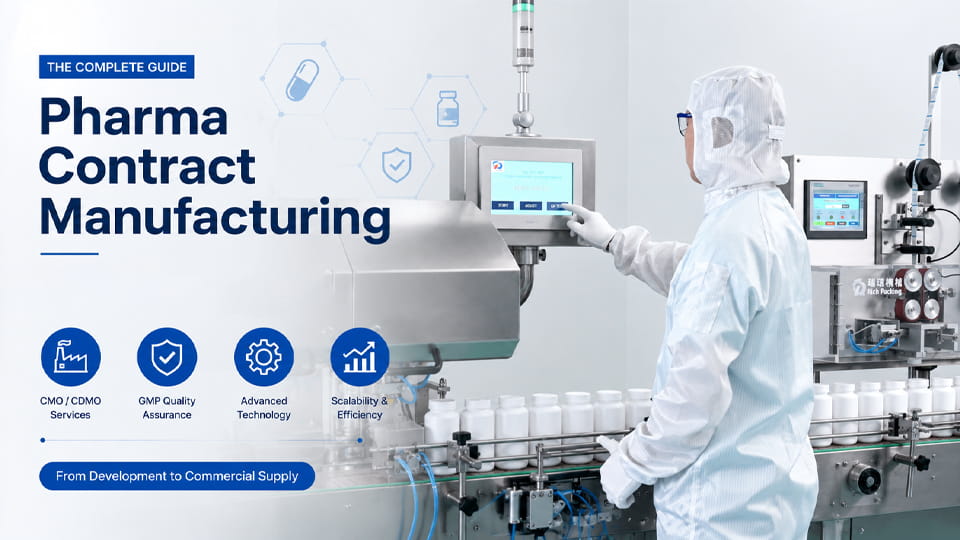
Στη σημερινή φαρμακοβιομηχανία, Πολλές εταιρείες αναθέτουν την παραγωγή φαρμάκων σε εξειδικευμένους κατασκευαστές με σύμβαση. Η κατασκευή φαρμακευτικών συμβολαίων περιλαμβάνει τα πάντα από API ανάπτυξη παραγωγής και σκευάσματος έως την τελική συσκευασία – συχνά παρέχεται από Οργανισμούς Ανάπτυξης και Κατασκευής Συμβάσεων (CDMO) ή Οργανισμοί Συμβολαιακής Κατασκευής (ΚΟΑ). Αυτός ο οδηγός εξηγεί τι σημαίνει κατασκευή φαρμακευτικής σύμβασης, διανύει την τυπική διαδικασία (από την ανάπτυξη στο τελικό προϊόν), συγκρίνει CMO και CDMO, και περιγράφει τα οφέλη και τις προκλήσεις της εξωτερικής ανάθεσης. Τονίζουμε επίσης το προχωρημένο εξοπλισμός παραγωγής και συσκευασίας (πλήρωση κάψουλας, πρέσες δισκίων, μηχανές φυσαλίδων, και τα λοιπά.) που χρησιμοποιούν τα σύγχρονα CDMO.
Φαρμακευτική κατασκευή συμβολαίων (ονομάζεται επίσης φαρμακευτική εξωτερική ανάθεση) είναι όταν μια φαρμακευτική εταιρεία προσλαμβάνει μια εταιρεία τρίτων για να παράγει τα φαρμακευτικά προϊόντα της. Αυτά τα τρίτα μέρη – γνωστά ως Οργανισμοί Συμβολαιακής Κατασκευής (ΚΟΑ) – μπορεί να παράγει μόνο το εμπορικό φάρμακο ή μερικές φορές να παρέχει υποστήριξη ανάπτυξης. Στην πράξη, μπορεί να καλύψει την παραγωγή φαρμακευτικών συμβολαίων:
API (Δραστικά Φαρμακευτικά Συστατικά): σύνθεση της δραστικής φαρμακευτικής ένωσης.
Διατύπωση & FDF (Τελειωμένες Δοσολογικές Μορφές): αναμειγνύοντας τα συστατικά σε ταμπλέτες, κάψουλες, υγρά, ή ενέσιμα.
Κατασκευή Δοσολογίας: ταμπλέτες συμπίεσης, κάψουλες πλήρωσης, γέμιση κόκκων, και τα λοιπά.
Συσκευασία & Τιτλοφόρηση: συσκευασία φουσκάλας, γέμιση μπουκαλιού, εισαγωγή αποξηραντικών, χαρτοκιβώτιο, σειριοποίηση, και τα λοιπά.
Κλινική/Εμπορική Παραγωγή: από μικρές παρτίδες για δοκιμές έως μεγάλης κλίμακας εμπορικές εκδόσεις.
Σημαντικό, ο όρος CDMO (Οργανισμός Ανάπτυξης και Κατασκευής Συμβάσεων) έχει γίνει πιο συνηθισμένο. Ένα CDMO δεν παράγει μόνο ένα φάρμακο, αλλά και χειρίζεται την ανάπτυξη και την κλιμάκωση κάτω από μια στέγη. Με άλλα λόγια, CMO = «απλώς κατασκευάζω,"ενώ CDMO = «ανάπτυξη συν βιομηχανοποίηση." Ένα CDMO μπορεί να βοηθήσει στο σχεδιασμό της τυποποίησης, πιλοτικές παρτίδες, και ρυθμιστικές καταθέσεις, και στη συνέχεια κλιμακώστε απρόσκοπτα τη διαδικασία σε πλήρη παραγωγή, ελαχιστοποίηση μεταβιβάσεων και καθυστερήσεων.
Μια ΚΟΑ βοηθά τους χορηγούς να παρασκευάζουν τις καινοτόμες φαρμακευτικές ουσίες και τα φαρμακευτικά προϊόντα τους (παρέχοντας εγκαταστάσεις και παραγωγική ικανότητα). Σε αντίθεση, ένα CDMO παρέχει ολοκληρωμένες λύσεις ανάπτυξης και παρασκευής φαρμάκων, συνδυάζοντας το R&Δ τεχνογνωσία με ικανότητα παραγωγής. Στην πράξη, πολλές φαρμακευτικές εταιρείες προτιμούν όλο και περισσότερο το μοντέλο CDMO για μια συνεργασία από άκρο σε άκρο – από την πρώιμη ανάπτυξη έως την τελική σειριοποίηση – για τη μείωση των κινδύνων μεταξύ των μεταβάσεων.
Διαδικασία Παραγωγής Φαρμακευτικών Συμβάσεων
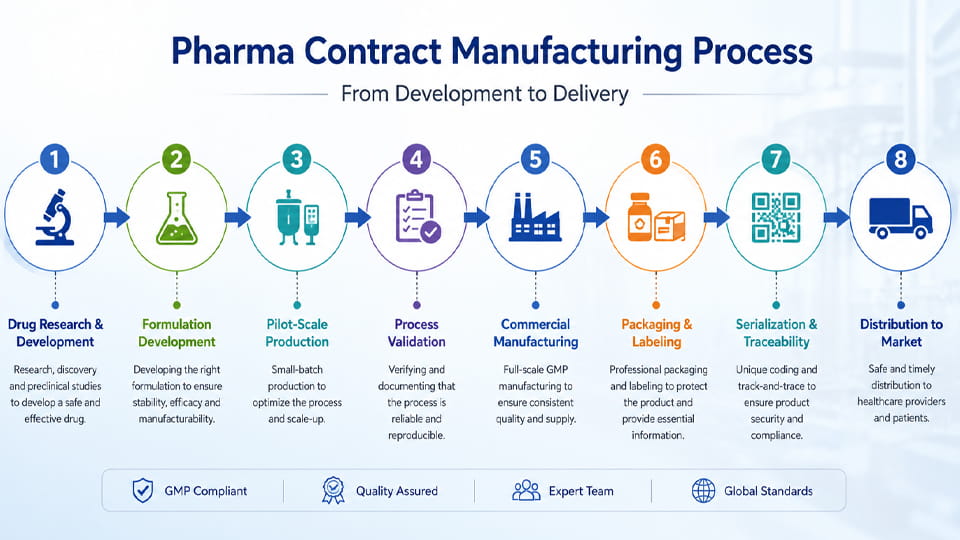
Ένα πρόγραμμα κατασκευής με σύμβαση ακολουθεί συνήθως τον κύκλο ζωής ανάπτυξης φαρμάκων από εργαστήριο σε αγορά. Τα βασικά στάδια περιγράφονται στο διάγραμμα ροής παρακάτω, και στη συνέχεια περιγράφεται εν συντομία:
Έρευνα για τα ναρκωτικά & Ανάπτυξη: Στις αρχές του Ρ&ρε, οι επιστήμονες εντοπίζουν ένα υποψήφιο μόριο. Για μικρές επιχειρήσεις ή βιοτεχνολογία, ένα CDMO μπορεί ακόμη και να συνεργαστεί στη διαμόρφωση ή στο σχεδιασμό διαδικασίας (π.χ.. βελτιστοποίηση μιας σύνθεσης δισκίου ή κάψουλας).
Ανάπτυξη σκευασμάτων: Το CDMO συνεργάζεται με τον χορηγό για να οριστικοποιήσει τη σύνθεση του φαρμάκου (δισκίο, κάψουλα, σκόνη, υγρό, και τα λοιπά.) και να αναπτύξουν μεθόδους παραγωγής. Αυτό το στάδιο περιλαμβάνει εργαστηριακές εργασίες και μελέτες προσκευασμάτων για να διασφαλιστεί η σταθερότητα και η αποτελεσματικότητα της δοσολογικής μορφής.
Παραγωγή πιλοτικής κλίμακας: Μόλις γίνει ένα σκεύασμα, το CDMO παράγει μικρές πιλοτικές παρτίδες (συχνά 10^3–10^5 μονάδες) υπό συνθήκες GMP. Αυτές οι παρτίδες χρησιμοποιούνται για κλινικές δοκιμές ή ρυθμιστικές υποβολές. Η διαδικασία κλιμακώνεται σε στάδια.
Επικύρωση διαδικασίας: Πριν την πλήρη εμπορευματοποίηση, το CDMO επικυρώνει τη διαδικασία (αποδεικνύοντας ότι το φάρμακο μπορεί να παρασκευαστεί με συνέπεια σύμφωνα με τα πρότυπα ποιότητας). Αυτό περιλαμβάνει την πλήρη πιστοποίηση του εξοπλισμού, γραμμές συσκευασίας, αναλυτική δοκιμή, και τεκμηρίωση.
Εμπορική Βιομηχανία: Με πλήρη επικύρωση, το CDMO μετακινείται σε μεγάλης κλίμακας παραγωγή στο πλαίσιο του cGMP. Αυτό μπορεί να περιλαμβάνει πολλές βάρδιες, αρχεία παρτίδας, και τη διεξαγωγή ρυθμιστικών επιθεωρήσεων. Η εγκατάσταση παράγει τα δραστικά συστατικά και τις τελικές δοσολογικές μορφές στους συμφωνηθέντες όγκους.
Συσκευασία & Τιτλοφόρηση: Στη συνέχεια, οι έτοιμες δοσολογικές μορφές συσκευάζονται – για παράδειγμα, τα δισκία μπορεί να μπουν σε κυψέλες ή φιάλες, Τα υγρά γεμίζονται και καλύπτονται – και επισημαίνονται. Οι σύγχρονες σειρές συσκευασίας CDMO συχνά περιλαμβάνουν αυτόματα πληρωτικά καψουλών, μετρητές tablet, πληρωτικά/καπάκια μπουκαλιών, επαγωγικά στεγανοποιητικά, εκτυπωτές ετικετών, και τα χαρτοκιβώτια που λειτουργούν με τη σειρά.
Σειριοποίηση & Ιχνηλασιμότητα: Για συμμόρφωση με τους παγκόσμιους κανονισμούς, η συσκευασία ενσωματώνει σειριοποίηση (μοναδικοί γραμμικοί κώδικες/κώδικες QR) και χαρακτηριστικά παρακολούθησης και ανίχνευσης. Αυτό διασφαλίζει ότι κάθε μονάδα μπορεί να εντοπιστεί από την παραγωγή μέχρι την πώληση.
Διανομή: Τελικά, τα συσκευασμένα φάρμακα αποθηκεύονται και αποστέλλονται σε πελάτες ή διανομείς σε όλο τον κόσμο. Το CDMO μπορεί επίσης να χειρίζεται την αποθήκευση και την επιμελητεία ανά συμβατικό όρο.
Σε κάθε στάδιο, το CDMO παρέχει διαχείριση έργου, ποιοτική επίβλεψη, και κανονιστική υποστήριξη για τη διασφάλιση της τήρησης των ορόσημων. Με την εξωτερική ανάθεση αυτών των βημάτων, Οι χορηγοί φαρμάκων αποφεύγουν την κατασκευή περιττών R&Δ και μεταποιητική υποδομή.
CMO εναντίον CDMO: Ποια είναι η διαφορά?
Παρακάτω είναι μια γρήγορη σύγκριση ενός παραδοσιακού ΚΟΑ (Οργανισμός Συμβολαιακής Κατασκευής) και ένα CDMO:
Αποψη
CMO (Οργανισμός Συμβολαιακής Κατασκευής)
CDMO (Συμβόλαιο Dev. & Manuf. Οργ.)
Πεδίο εξυπηρέτησης
Κατασκευή και μερικές φορές συσκευασία.
Από άκρο σε άκρο: R&ρε, διατύπωση, και την παραγωγή.
R&Δ Συμμετοχή
Ελάχιστος; προϋποθέτει ότι παρέχονται σκευάσματα.
Δραστικό στη σύνθεση, κλιμάκωση, και μεταφορά τεχνολογίας.
Στάδιο Παραγωγής
Συνήθως εμπορική ή κλινική παραγωγή.
Καλύπτει από πρώιμη κλινική έως εμπορική κλίμακα.
Παραχωρήσεις πωλητών
Μπορεί να χρειαστεί ξεχωριστός συνεργάτης ανάπτυξης.
Ένας συνεργάτης μειώνει τις μεταβιβάσεις και τις καθυστερήσεις.
Τυπική περίπτωση χρήσης
Επιπλέον χωρητικότητα για γνωστά φάρμακα (γενόσημα).
Αυτός ο πίνακας το υπογραμμίζει Οι ΚΟΑ επικεντρώνονται κυρίως στη μεταποίηση, ενώ Τα CDMO προσφέρουν ολοκληρωμένες υπηρεσίες ανάπτυξης και κατασκευής. Με άλλα λόγια, εάν έχετε ήδη μια οριστική φόρμουλα φαρμάκου και χρειάζεστε απλώς παραγωγική ικανότητα, μια ΚΟΑ μπορεί να αρκεί. Αλλά αν χρειάζεστε βοήθεια ανάπτυξη μιας νέας φαρμακευτικής σύνθεσης, διαδικασίες κλιμάκωσης, και κανονισμούς πλοήγησης, ένα CDMO είναι ο συνεργάτης της επιλογής.
Τύποι φαρμακευτικών προϊόντων που μπορούν να κατασκευαστούν με σύμβαση
Τα σύγχρονα CDMO μπορούν να παράγουν σχεδόν οποιοδήποτε είδος φαρμακευτικού προϊόντος. Εδώ είναι κοινά παραδείγματα, μαζί με τον βασικό εξοπλισμό που χρησιμοποιείται:
Δισκίο: Τα στερεά από του στόματος δισκία παρασκευάζονται με συμπίεση κόνεων ή κόκκων σε α περιστροφική πρέσα ταμπλετών. Οι μηχανές πρέσας tablet υψηλής ταχύτητας μπορούν να συμπιέσουν εκατοντάδες χιλιάδες ταμπλέτες ανά ώρα. Ηλεκτρονικές περιστροφικές πρέσες μπορεί να χειριστεί τυπικά και ειδικού σχήματος tablet. Συνήθως ακολουθεί πιεστήριο tablet υγρή ή ξηρή κοκκοποίηση βήμα που έγινε στο CDMO. (Στη συνέχεια, τα δισκία μπορούν να σχηματιστούν με κυψέλες ή να εμφιαλωθούν.)
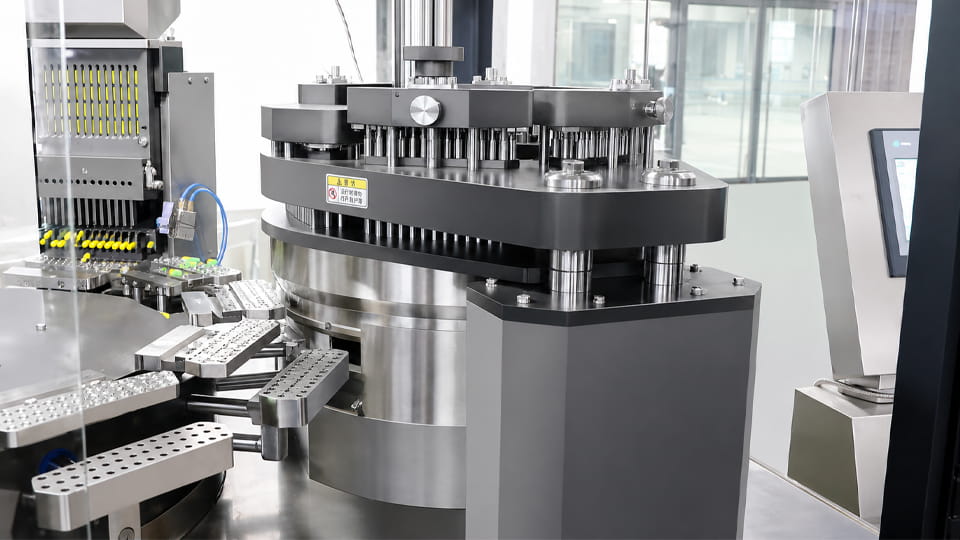
Κάψουλες: Οι σκληρές κάψουλες γεμίζονται με σκόνες ή σφαιρίδια χρησιμοποιώντας α μηχανή πλήρωσης κάψουλας. Οι μηχανές πλήρωσης καψουλών Jinlu ποικίλλουν από ημιαυτόματα πληρωτικά (για μικρές παρτίδες) σε πλήρως αυτόματες μηχανές πολλών χιλιάδων καψουλών/ώρα. Κάψουλες μπορεί επίσης να είναι μαλακές γέλη ή υγρές κάψουλες. Η παραγωγή καψουλών είναι κοινή σε συμπληρώματα και φάρμακα OTC.
Εικόνα: Αυτόματες γραμμές πλήρωσης καψουλών σε εργοστασιακή εγκατάσταση με σύμβαση. Αυτά τα μηχανήματα χορηγούν σκόνη ή σφαιρίδια σε κάψουλες με σκληρό κέλυφος, επιτρέποντας δεκάδες χιλιάδες κάψουλες ανά ώρα.
Σκόνη & Κοκκία: Χύμα σκόνες ή κόκκοι (π.χ.. για φακελάκια ή χύμα συσκευασία) μπορεί να χειριστεί με ογκομετρικό ή κοχλία μηχανές πλήρωσης, και συσκευάζεται σε σακούλες ή μπουκάλια. Τα CDMO χρησιμοποιούν συχνά τροφοδότες δόνησης, συστήματα απώλειας βάρους, ή εξειδικευμένα πληρωτικά σε σκόνη για ακριβή δοσολογία. (Για παράδειγμα, μηχανές συσκευασίας ραβδιών [δείτε παρακάτω] συχνά ενσωματώνουν ογκομετρικούς τροφοδότες σκόνης.)
φακελάκια & Πακέτα ραβδιών: Τα φακελάκια μιας δόσης είναι κοινά για σκευάσματα σε σκόνη ή υγρά (όπως σκόνες ή υγρά κλινικών δοκιμών). Κατακόρυφη φόρμα-γέμιση-σφράγιση (VFFS) μηχανές όπως μηχανές συσκευασίας φακελλίσκων σχηματίζονται αυτόματα, γέμισμα, και σφραγίστε πακέτα ραβδιών και μικρές θήκες. Αυτά τα μηχανήματα μπορούν να συσκευάζουν σκόνες, κόκκους, υγρά ή τζελ σε σφραγισμένα πακέτα.
Μπουκάλια (Υγρά, Δισκίο): Τα υγρά σιρόπια ή εναιωρήματα γεμίζονται σε μπουκάλια χρησιμοποιώντας υψηλή ταχύτητα γραμμές πλήρωσης μπουκαλιών, που περιλαμβάνουν ξέβγαλμα, πλήρωση, κάλυψη, και επαγωγική σφράγιση. Τα δισκία και οι κάψουλες μπορούν επίσης να μετρηθούν και να εισαχθούν σε φιάλες. Αυτές οι γραμμές συχνά περιλαμβάνουν αυτόματα μετρητές δισκίων/καψουλών να γεμίσει μπουκάλια. (Οι μηχανές μέτρησης κάψουλων/δισκίων της Jinlu μπορούν να γεμίσουν μπουκάλια με ταχύτητα 50–100 bpm.) Μόλις γεμίσει και κλείσει, ένα επαγωγικό σφραγιστικό εφαρμόζει ένα φύλλο αλουμινόχαρτου κάτω από το καπάκι για στοιχεία παραβίασης.
Φουσκάλες: Πολλά δισκία και κάψουλες συσκευάζονται σε blister κάρτες (Κοιλότητες PVC/Alu). Αυτοματοποιημένο Μηχανές συσκευασίας φουσκάλων (π.χ.. Συσκευασίες συσκευασίας κυψελών της JL) σχηματίστε τις τσέπες της κυψέλης, γεμίστε τα με τις δοσολογικές μονάδες, και θερμοκολλήστε με αλουμινόχαρτο ή PVC. Οι μηχανές με κυψέλες μπορούν να λειτουργήσουν 4.000–12.000 κυψέλες την ώρα για προϊόντα μεγάλου όγκου.
Χαρτοκιβώτια: Μετά τη δημιουργία φυσαλίδων ή το γέμισμα της φιάλης, τα προϊόντα τοποθετούνται σε χαρτοκιβώτια. ΕΝΑ μηχάνημα χαρτοκιβωτίου διπλώνει και κολλάει χαρτόκουτα γύρω από το προϊόν (μπουκάλια, κάρτες blister, φακελάκια). Οι μηχανές χαρτοκιβωτίου της Jinlu μπορούν να χειριστούν έως και 15.600 κιβώτια/ώρα και μπορούν να ενσωματωθούν με τη σήμανση κατάντη.
Σφραγισμένα σακουλάκια/βάζα: Μερικά προϊόντα (κρέμες, πηκτές, αναστέλματα) πηγαίνετε σε σωλήνες, βάζα, ή εξειδικευμένες θήκες. Υπάρχουν γραμμές πλήρωσης και καλύμματος για σωλήνες και βάζα. (Για παράδειγμα, επαγωγικά στεγανοποιητικά καπάκια ή μηχανές κάλυψης.) Η Jinlu προμηθεύει επίσης προκατασκευασμένη συσκευασία θήκης γραμμές και αυτοματοποιημένα χαρτοκιβώτια για πολλαπλές συσκευασίες.
Εν συντομία, οποιαδήποτε τελική μορφή δοσολογίας – δισκία, κάψουλες, σκόνες, υγρά, φουσκάλες, μπουκάλια – μπορούν να παραχθούν από ένα ικανό CDMO.
Οφέλη και προκλήσεις της Φαρμακευτικής Συμβολαιακής Παραγωγής
Όπως κάθε επιχειρηματική απόφαση, παραγωγή φαρμακευτικών συμβολαίων προσφέρει σαφή πλεονεκτήματα, αλλά έρχεται και με ευθύνες. Η κατανόηση και των δύο πλευρών βοηθά τις φαρμακευτικές εταιρείες να αποφασίσουν εάν η εξωτερική ανάθεση είναι η σωστή στρατηγική.
Οφέλη
Χαμηλότερο κόστος επένδυσης – Η κατασκευή και η επικύρωση μιας φαρμακευτικής εγκατάστασης GMP απαιτεί σημαντικό κεφάλαιο. Η συμβατική κατασκευή επιτρέπει στις εταιρείες να ξεκινήσουν την παραγωγή χωρίς να επενδύσουν σε ακριβές υποδομές.
Γρηγορότερος χρόνος για την αγορά – Οι έμπειροι CDMO διαθέτουν ήδη εξειδικευμένες εγκαταστάσεις, εκπαιδευμένο προσωπικό, και επικυρωμένες γραμμές παραγωγής, βοηθώντας τα προϊόντα να περάσουν από την ανάπτυξη στην εμπορευματοποίηση πιο γρήγορα.
Πρόσβαση σε εξειδικευμένη τεχνογνωσία – Οι συμβασιούχοι κατασκευαστές έχουν συχνά έμπειρους επιστήμονες σκευασμάτων, ποιοτικές ομάδες, και ρυθμιστικούς ειδικούς που κατανοούν τον FDA, EMA, και Απαιτήσεις GMP.
Ευέλικτη παραγωγική ικανότητα – Είτε παράγεται πιλοτική παρτίδα είτε όγκοι εμπορικής κλίμακας, Η εξωτερική ανάθεση παρέχει την ευελιξία για αύξηση ή μείωση της παραγωγής καθώς αλλάζει η ζήτηση της αγοράς.
Προηγμένος εξοπλισμός κατασκευής – Τα σύγχρονα CDMO επενδύουν σε μηχανές πλήρωσης καψουλών υψηλής ταχύτητας, πρέσες δισκίων, μηχανές συσκευασίας blister, γραμμές συσκευασίας φιαλών, και αυτοματοποιημένα συστήματα επιθεώρησης που πολλοί μικρότεροι κατασκευαστές δεν μπορούν να δικαιολογήσουν την αγορά τους.
Προκλήσεις
Ενώ η εξωτερική ανάθεση προσφέρει πολλά οφέλη, Οι εταιρείες θα πρέπει επίσης να γνωρίζουν πολλές πιθανές προκλήσεις:
Προστασία εμπιστευτικών σκευασμάτων και πνευματικής ιδιοκτησίας.
Συντονισμός επικοινωνίας μεταξύ της φαρμακευτικής εταιρείας και του συνεργάτη της παραγωγής.
Διασφάλιση ότι το CDMO συνεχίζει να πληροί τις κανονιστικές απαιτήσεις και τις απαιτήσεις GMP.
Διαχείριση κινδύνων της εφοδιαστικής αλυσίδας που θα μπορούσαν να επηρεάσουν τα χρονοδιαγράμματα παραγωγής.
Ευτυχώς, οι περισσότερες από αυτές τις προκλήσεις μπορούν να ελαχιστοποιηθούν επιλέγοντας έναν έμπειρο συνεργάτη για την κατασκευή φαρμακευτικών συμβολαίων με ένα ισχυρό σύστημα διαχείρισης ποιότητας, διαφανή επικοινωνία, και αποδεδειγμένη κανονιστική συμμόρφωση. Μια διεξοδική διαδικασία πιστοποίησης προμηθευτών και τακτικοί έλεγχοι συμβάλλουν επίσης στη δημιουργία μιας επιτυχημένης μακροπρόθεσμης συνεργασίας.
Πώς να επιλέξετε τον κατάλληλο συνεργάτη για την παραγωγή συμβολαίου φαρμακευτικής αγωγής
Η επιλογή ενός CDMO/CMO είναι μια κρίσιμη απόφαση. Εδώ είναι βασικά κριτήρια, που απεικονίζεται με το φακό των αναγκών φαρμακευτικών προϊόντων:
Ποιότητα & Κανονιστική Συμμόρφωση: Πρώτα και κύρια, ο συνεργάτης πρέπει να διαθέτει ισχυρά συστήματα ποιότητας και καθαρό ρυθμιστικό αρχείο. Αναζητώ FDA, EMA, ή πιστοποιήσεις GMP του ΠΟΥ, Πιστοποιήσεις ποιότητας ISO, και ιστορικό επιτυχόντων ελέγχων. Μπορείτε να ελέγξετε τις βάσεις δεδομένων επιθεώρησης του FDA για να ελέγξετε για προειδοποιητικές επιστολές ή GMP 483 στις τοποθεσίες τους. Η εταιρεία θα πρέπει να είναι διαφανής σχετικά με τα εργαστήρια ποιοτικού ελέγχου και τις διαδικασίες επικύρωσης.
Σχετική Εμπειρία: Βεβαιωθείτε ότι το CDMO έχει εμπειρία με τον τύπο του προϊόντος σας. Για παράδειγμα, εάν φτιάχνετε ταμπλέτες, έχουν σύγχρονες γραμμές πιεστηρίου tablet? Εάν έχετε βιολογικά, διαθέτουν αποστειρωμένες εγκαταστάσεις ή εγκαταστάσεις μιας χρήσης? Ένας συνεργάτης έμπειρος στον θεραπευτικό σας τομέα (αντιβιοτικά vs. ορμόνες vs. βιολογικά) θα προλάβει καλύτερα τις προκλήσεις. Ζητήστε παρόμοιες μελέτες περιπτώσεων ή πελάτες με τους οποίους έχουν συνεργαστεί.
Κατασκευαστικές Δυνατότητες & Ικανότητα: Έχουν τον κατάλληλο εξοπλισμό και την κατάλληλη κλίμακα χωρητικότητας;? Ψάξτε για σύγχρονα μηχανήματα (π.χ.. αυτόματα πληρωτικά καψουλών, πρέσες ταμπλετών πολλαπλής συμπίεσης, γραμμές blister και μπουκαλιών) για να διασφαλίσετε ότι μπορούν να καλύψουν τις ανάγκες σας σε όγκο. Επίσης, επιβεβαιώστε ότι έχουν πλεονάζουσα χωρητικότητα ή σχέδια επέκτασης για να αναπτυχθούν με το έργο σας. Μια εγκατάσταση γεμάτη μέχρι το χείλος μπορεί να μην δίνει προτεραιότητα στο έργο σας.
Τεχνική Υποστήριξη & Υπηρεσίες Ανάπτυξης: Εάν χρειάζεστε R&Δ βοήθεια, επιλέξτε ένα CDMO (όχι απλώς ΚΟΑ) με ισχυρά σκευάσματα και αναλυτικά εργαστήρια. Ελέγξτε εάν προσφέρουν ολοκληρωμένες υπηρεσίες (ανάπτυξη αναλυτικής μεθόδου, δοκιμή σταθερότητας, σχεδιασμός συσκευασίας). Αυτό κάνει τις μεταφορές πιο ομαλές και βοηθά στις ρυθμιστικές αρχειοθετήσεις. Ένας συνεργάτης που είναι πρόθυμος να αναπτύξει από κοινού και να αντιμετωπίσει προβλήματα είναι πολύ πιο πολύτιμος.
Ποιότητα Επικοινωνίας & Υπηρεσία: Η καλή διαχείριση έργου είναι το κλειδί. Το CDMO θα πρέπει να ορίσει μια ειδική ομάδα, παρέχουν τακτικές ενημερώσεις, και να ανταποκρίνεται. Η συνάντηση αυτοπροσώπως ή ουσιαστικά θα πρέπει να είναι εύκολη – η τοποθεσία μπορεί να έχει σημασία. (Όπως σημειώνει ένα άρθρο του κλάδου, Η ύπαρξη ενός συνεργάτη κοντά μπορεί να μειώσει τις καθυστερήσεις στα ταξίδια και να βελτιώσει τον συντονισμό. Ωστόσο, Πολλά παγκόσμια CDMO εξυπηρετούν αποτελεσματικά διεθνείς πελάτες.) Βεβαιωθείτε ότι η πολιτιστική προσαρμογή και η γλώσσα ταιριάζουν με τις ανάγκες σας.
Χρηματοπιστωτική Σταθερότητα & Φήμη: Ένας αξιόπιστος συνεργάτης χρειάζεται σταθερά οικονομικά. Οι εταιρείες θέλουν μακροχρόνιες σχέσεις, Επομένως, ελέγξτε το μέγεθος και τη σταθερότητα της εταιρείας. Ένα CDMO εκκίνησης θα μπορούσε να είναι επικίνδυνο, εκτός εάν υποστηρίζεται καλά. Ελέγξτε επίσης αναφορές από άλλους πελάτες φαρμακείων ή αναζητήστε κριτικές του κλάδου.
Προστασία Πνευματικής Ιδιοκτησίας: Ρωτήστε για τις πολιτικές ασφαλείας IP τους. Πώς αποθηκεύουν τα δεδομένα σας, λαβή τετράδια εργαστηρίου, και διαχείριση πρόσβασης προσωπικού? Ένα αξιόπιστο CDMO θα έχει αυστηρές συμφωνίες εμπιστευτικότητας.
Τιμολόγηση & συμφωνίες: Φυσικά, το κόστος έχει σημασία. Ζητήστε διαφανείς προσφορές. Προσοχή στις ασυνήθιστα χαμηλές προσφορές – μπορεί να κόψουν τις γωνίες. Συζητήστε επίσης τους χρόνους παράδοσης, ευελιξία αλλαγής παραγγελίας, και κυρώσεις στα συμβόλαια. Ένας καλός συνεργάτης θα είναι δίκαιος και ξεκάθαρος.
Συνοπτικά: έλεγχος της ποιότητάς τους, δοκιμάσουν την τεχνογνωσία τους, και βεβαιωθείτε ότι έχουν το κατάλληλο κιτ και τη σωστή χωρητικότητα για το έργο σας. Η διαφάνεια και η εμπιστοσύνη είναι ζωτικής σημασίας. Πραγματοποιήστε επισκέψεις στις εγκαταστάσεις εάν είναι δυνατόν. Όπως προτείνει ένας οδηγός της βιομηχανίας, Η αναθεώρηση των εγγραφών GMP του FDA ενός CMO είναι μια έξυπνη κίνηση. Συγκρίνοντας πολλούς προμηθευτές με βάση αυτά τα κριτήρια, μπορείτε να επιλέξετε έναν συνεργάτη που θα γίνει επέκταση της ομάδας σας.
Φαρμακευτικός εξοπλισμός που χρησιμοποιείται στη συμβατική κατασκευή
Ο προηγμένος εξοπλισμός είναι η ραχοκοκαλιά κάθε γραμμής παραγωγής CDMO. Ακολουθούν ορισμένες βασικές μηχανές που θα βρείτε συνήθως στις εγκαταστάσεις ενός κατασκευαστή με σύμβαση:
Μηχανές πλήρωσης καψουλών: Αυτά τα μηχανήματα γεμίζουν με ακρίβεια τα κενά κελύφη κάψουλας με σκόνη, πέλλετ, ή κόκκους. Σύγχρονα αυτόματα πληρωτικά (όπως αυτά από το Jinlu) μπορεί να τρέξει εκατοντάδες λωρίδες ταυτόχρονα, παράγοντας δεκάδες χιλιάδες κάψουλες την ώρα. Διαχειρίζονται λεπτές ρυθμίσεις (γεμίστε το βάρος, προσανατολισμός κάψουλας) και διαθέτουν βαθμό GMP ανοξείδωτο χάλυβα σχέδιο.
Μηχανή πλήρωσης κάψουλας NJP-1200C
Πρέσες Tablet (Περιστροφικοί Συμπιεστές): Υψηλής ταχύτητας περιστροφικές πρέσες δισκίων συμπίεση σκόνης σε δισκία. Αυτά τα μηχανήματα ασκούν χιλιάδες τόνους δύναμης για να παράγουν ταμπλέτες οποιουδήποτε σχήματος. Πολλά έχουν αυτόματους τροφοδότες, έλεγχος βάρους, και λειτουργία PLC για ακρίβεια. Οι πρέσες ταμπλετών είναι το κλειδί για κάθε κατασκευή στερεών δόσεων.
Γραμμές συσκευασίας blister: Αφού τα δισκία/κάψουλες είναι έτοιμα, αυτοματοποιημένες μηχανές συσκευασίας blister σχηματίστε και σφραγίστε τα σε πλαστικές/αλουμινένιες συσκευασίες. Ο εξοπλισμός της Jinlu καλύπτει την πλήρη διαδικασία blister (σχηματίζοντας κοιλότητες, ταμπλέτες σίτισης, σφράγιση, τομή). Αυτές οι γραμμές περιλαμβάνουν συχνά ενσωματωμένους τροφοδότες και μπορούν να λειτουργήσουν με αρκετές χιλιάδες κυψέλες ανά ώρα.
Μηχανές μέτρησης και πλήρωσης καψουλών/δισκίων: Για προϊόντα συσκευασμένα σε μπουκάλια, αφιερωμένο μετρητικές μηχανές γεμίστε με ακρίβεια τα μπουκάλια με τον σωστό αριθμό χαπιών. Αυτά τα μηχανήματα χρησιμοποιούν δονητικές ή περιστρεφόμενες διαδρομές και αισθητήρες όρασης για να μετρούν και να ρίχνουν δισκία ή κάψουλες σε δοχεία χωρίς επικάλυψη. Καταμέτρηση υψηλής ακρίβειας (99.97%+) επιτυγχάνεται με φωτοηλεκτρικούς αισθητήρες.
Μηχανή εμφιάλωσης δισκίων κάψουλας JL-16H cGMP
Γέμισμα μπουκαλιού & Γραμμές κάλυψης: Για υγρά ή ακόμα και για μπουκάλια ταμπλέτας/κάψουλας, αυτοματοποιημένες γραμμές ενσωματώνουν ένα μπουκάλι unscrambler, ράβδος, καπάκι, και διαλογέας καπακιών. Μια πλήρης γραμμή μπουκαλιών μπορεί να τρέχει 50–100 μπουκάλια ανά λεπτό ή και περισσότερο. Πολλές γραμμές περιλαμβάνουν επαγωγικά στεγανοποιητικά μεμβράνης και ζυγιστές ελέγχου/ελεγκτές μετά το καπάκι.
Μηχανές σήμανσης: Αυτά εφαρμόζουν τυπωμένες ετικέτες σε μπουκάλια, κουτιά, ή πακέτα. Σύγχρονος μηχανές σήμανσης μπορεί να εκτυπώσει και να εφαρμόσει διαδοχικούς γραμμωτούς κώδικες/σειρές (για την ιχνηλασιμότητα) και όραμα-επιθεωρήστε το αποτέλεσμα. Ενώ ο ιστότοπος του Jinlu δεν απαριθμούσε μια σελίδα ετικέτας, Τα CDMO χρησιμοποιούν συνήθως αυτοματοποιημένες ετικέτες στις γραμμές συσκευασίας.
Μηχανές χαρτοκιβωτίου: Όπως σημειώθηκε παραπάνω, χαρτοκιβώτια προϊόντα περιτύλιξης (μπουκάλια, κάρτες blister, φακελάκια) σε χαρτοκιβώτια σε υψηλή ταχύτητα. Μπορούν να συνδεθούν κατάντη πληρωτικών ή φυσαλίδων για μια απρόσκοπτη γραμμή.
Οριζόντια μηχανή χαρτοκιβωτίου JL-130W
Μηχανές φακελίσκου/VFFS: Μηχανές συσκευασίας ραβδιών ή μαξιλαριών (κατακόρυφη μορφή-γεμίσματος-σφραγίδα) χρησιμοποιούνται για σκόνες μιας δόσης, υγρά, ή τζελ. Jinlu's μηχανές συσκευασίας φακελλίσκων μπορεί να γεμίσει πακέτα πολλαπλών λωρίδων για σκόνη ή υγρά σκευάσματα με υψηλή ακρίβεια και ταχύτητα.
Αυτοματοποίηση & Επιθεωρητές: Όλα αυτά τα μηχανήματα έχουν συχνά ενσωματωμένα χειριστήρια PLC (π.χ.. Siemens, PLC), πνευματικοί ενεργοποιητές, και σερβοκινητήρες για ακρίβεια. Πολλές γραμμές περιλαμβάνουν συστήματα επιθεώρησης – όπως σταθμοί ελέγχου, ανιχνευτές μετάλλων, και σαρωτές όρασης – για να διασφαλιστεί ότι κάθε μονάδα πληροί τις προδιαγραφές (π.χ.. έλεγχος βάρους, λείπουν χάπια, ποιότητα εκτύπωσης στις ετικέτες). Αυτοί οι αυτοματοποιημένοι έλεγχοι είναι κρίσιμοι για τη συμμόρφωση.
Συνδυάζοντας αυτά τα μηχανήματα με ειδικευμένους χειριστές και SOP, Τα CDMO μπορούν να εκτελέσουν πολύπλοκη παραγωγή πολλαπλών σταδίων. Για παράδειγμα, μια σειρά προϊόντων κάψουλας μπορεί να ξεκινά με πληρωτικό καψουλών, μετακινηθείτε σε μετρητή κάψουλας (να γεμίσει το μπουκάλι), στη συνέχεια ένα επαγωγικό σφραγιστικό, και τελειώστε με ετικέτα και χαρτόνι – όλα λειτουργούν υπό συγχρονισμένο έλεγχο. Ομοίως, μια γραμμή δισκίου μπορεί να πάει από το πάτημα → συσκευασία κυψέλης → συσκευασία ετικετών → χαρτοκιβώτιο. Ο προηγμένος εξοπλισμός ενισχύει την απόδοση και διατηρεί σταθερή ποιότητα.
Στην πράξη, κορυφαία CDMO επενδύουν σε εξοπλισμό τελευταίας τεχνολογίας. Για παράδειγμα, Η Jinlu Packing προσφέρει ολοκληρωμένες λύσεις: Οι μηχανές πλήρωσης καψουλών υψηλής ταχύτητας και οι πρέσες ταμπλετών έχουν σχεδιαστεί για Συμμόρφωση cGMP. Τα blister packers περιλαμβάνουν χαρακτηριστικά όπως αλουμίνιο-αλουμίνιο (Alu-Alu) και PVC θερμοσφράγιση για ευελιξία. Η επένδυση σε τέτοιου είδους αυτοματοποιημένο εξοπλισμό συσκευασίας και επεξεργασίας διασφαλίζει ότι ένα CDMO μπορεί να παρέχει αξιόπιστα μεγάλες παραγγελίες.
Γιατί τα σύγχρονα CDMO χρειάζονται προηγμένο εξοπλισμό συσκευασίας
Καθώς οι συμβασιούχοι κατασκευαστές κλιμακώνονται για να εξυπηρετήσουν τις παγκόσμιες φαρμακευτικές αγορές, προηγμένος αυτοματοποιημένος εξοπλισμός συσκευασίας γίνεται ουσιαστικό. Να γιατί:
Ταχύτητα & Διακίνηση: Εξοπλισμός υψηλής ταχύτητας (πληρωτικά πολλαπλών λωρίδων, περιστροφικές πρέσες, γραμμές φυσαλίδων) επιτρέπει την εκτέλεση χιλιάδων έως εκατομμυρίων δόσεων την ημέρα. Για ένα CDMO, ταχύτερα μηχανήματα σημαίνει τη δυνατότητα χειρισμού περισσότερων συμβάσεων και μεγαλύτερων όγκων. Μπορούν να τρέξουν αυτοματοποιημένες γραμμές 24/7 με ελάχιστο χρόνο διακοπής λειτουργίας.
Συνοχή & Ακρίβεια: Τα αυτοματοποιημένα μηχανήματα διασφαλίζουν ότι κάθε μονάδα είναι ίδια. Για παράδειγμα, Τα σύγχρονα πληρωτικά καψουλών διαθέτουν μηχανισμούς πλήρωσης ακριβείας (όπως εμφανίζεται στα πατενταρισμένα σχέδια της JL) που διατηρούν τη διακύμανση της δόσης σε χαμηλά επίπεδα. Οι ακριβείς πρέσες δισκίων και τα συστήματα επιθεώρησης της όρασης βοηθούν στην επίτευξη σταθερού βάρους δοσολογίας, που είναι κρίσιμο για την αποτελεσματικότητα και τη διέλευση QC.
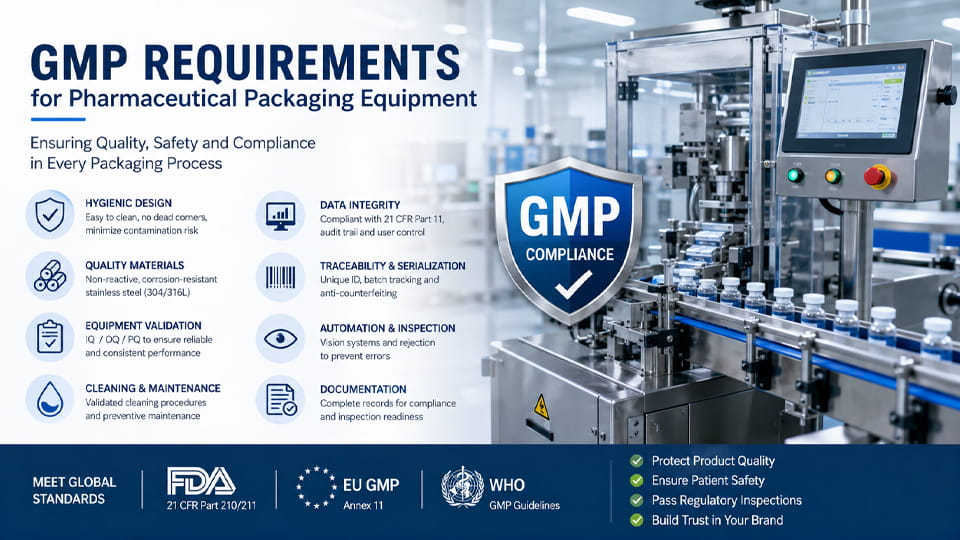
Κανονιστική Συμμόρφωση: Οι κανονισμοί GMP απαιτούν τεκμηριωμένο έλεγχο και καθαριότητα. Ο νεότερος εξοπλισμός κατασκευάζεται με σχέδια υγιεινής (εξολοκλήρου από ανοξείδωτο χάλυβα, επιφάνειες που καθαρίζονται εύκολα, κλειστές διαδικασίες). Για παράδειγμα, Οι γραμμές φιαλών με κλειστό γέμισμα και πώμα πληρούν αυστηρά πρότυπα υγιεινής. Τα προηγμένα μηχανήματα υποστηρίζουν επίσης τη σειριοποίηση και την αυτοματοποιημένη καταγραφή δεδομένων, που βοηθούν τα CDMO να συμμορφώνονται με τους κανονισμούς παρακολούθησης και ανίχνευσης.
Εργατική Αποταμίευση: Οι αυτοματοποιημένες γραμμές μειώνουν σημαντικά τη χειρωνακτική εργασία και το ανθρώπινο λάθος. Αντί για γέμιση με το χέρι ή χειροκίνητη μέτρηση, τροφοδοσία μηχανών, γέμισμα, σφραγίδα, και αυτομάτως ετικέτα. Αυτό όχι μόνο μειώνει το κόστος εργασίας, αλλά μειώνει επίσης τους κινδύνους μόλυνσης και τα ζητήματα εργονομίας.
Ευκαμψία & Ολοκλήρωση: Οι σύγχρονες γραμμές CDMO είναι αρθρωτές. Για παράδειγμα, ένας σταθμός πλήρωσης καψουλών μπορεί να συνδεθεί με έναν μετρητή καψουλών και στη συνέχεια με ένα πλήρωμα φιαλών στον ίδιο μεταφορέα, σχηματίζοντας μια συνεχή γραμμή. Αυτή η ολοκληρωμένη προσέγγιση επιτρέπει την ευκολότερη εναλλαγή μεταξύ προϊόντων. Εταιρείες όπως η Jinlu Packing προσφέρουν λύσεις με το κλειδί στο χέρι (π.χ.. ένα από άκρο σε άκρο γραμμή συσκευασίας μπουκαλιών με unscrambler→filler→capper→sealer→labeler→cartoner) ώστε τα CDMO να μπορούν να αναβαθμίσουν ολόκληρες ροές εργασίας.
Παρακολούθηση Ποιότητας: Ο προηγμένος εξοπλισμός περιλαμβάνει συχνά αισθητήρες και κάμερες σε σειρά. Για παράδειγμα, αφού σφραγίσετε μια συσκευασία blister, μια οπτική κάμερα μπορεί να επιθεωρήσει κάθε κοιλότητα για λείπουν ταμπλέτες ή τρύπες. Εάν εντοπιστεί πρόβλημα, αυτή η κυψέλη μπορεί να απορριφθεί αυτόματα. Αυτό το ενσωματωμένο QA βελτιώνει σημαντικά την ασφάλεια του τελικού προϊόντος.
Εν συντομία, Τα υπερσύγχρονα μηχανήματα συσκευασίας δεν είναι πολυτέλεια αλλά ανάγκη για τα CDMO. Ενισχύει τη συνολική αποτελεσματικότητα του εξοπλισμού (ΟΕΕ) και εξασφαλίζει την υψηλή ταχύτητα, υψηλής ποιότητας, και αυστηρό ρυθμιστικό έλεγχο των σύγχρονων απαιτήσεων παραγωγής φαρμάκων. Επενδύοντας σε μηχανές όπως αυτόματα πληρωτικά καψουλών, blister packers, περιστροφικές πρέσες δισκίων, και γραμμές πλήρωσης μπουκαλιών, Τα CDMO μπορούν να εγγυηθούν καλύτερα την ποιότητα των προϊόντων και την αξιοπιστία της προσφοράς. Αυτό ωφελεί άμεσα τους φαρμακευτικούς πελάτες τους παρέχοντας αποτελέσματα και ιχνηλασιμότητα με συνέπεια GMP.
Σύναψη
Φαρμακευτική κατασκευή συμβολαίων (είτε μέσω CMO είτε μέσω CDMO) έχει γίνει ένα ζωτικό πρότυπο για τον κλάδο. Η εξωτερική ανάθεση της παραγωγής και της συσκευασίας φαρμάκων επιτρέπει στις εταιρείες να εξοικονομούν κεφάλαια, αξιοποιούν εξειδικευμένες δεξιότητες, και να λαμβάνετε νέα φάρμακα στους ασθενείς πιο γρήγορα. Ένας καλός συνεργάτης CDMO θα χειριστεί τα πάντα, από την ανάπτυξη και την επικύρωση έως την παραγωγή και τη συσκευασία μεγάλου όγκου, όλα υπό συνθήκες cGMP.
Ενώ η εξωτερική ανάθεση φέρνει προκλήσεις (όπως η διατήρηση της επίβλεψης και η προστασία της IP), τα οφέλη – εξοικονόμηση κόστους, ταχύτητα, και επεκτασιμότητα – είναι σημαντικές. Καθώς η αγορά μεγαλώνει (αναμένεται να ξεπεράσει τις εκατοντάδες δισεκατομμύρια κατά 2030), Περισσότερες φαρμακευτικές εταιρείες θα επιλέξουν CDMO. Αυτά τα CDMO, με τη σειρά τους, βασίζομαι πάνω σε σύγχρονος, αυτοματοποιημένο εξοπλισμό (μηχανήματα κάψουλας και δισκίων, γραμμές blister και μπουκαλιών, και τα λοιπά.) για την κάλυψη της ζήτησης.
Έτοιμοι να βελτιώσετε τη φαρμακευτική σας παραγωγή?Επικοινωνήστε με την Jinlu Packing για διαβούλευση. Παρέχουμε πλήρως ενσωματωμένες λύσεις συσκευασίας – από μηχανές πλήρωσης καψουλών και πρέσες δισκίων υψηλής ταχύτητας έως προηγμένες σειρές συσκευασίας κυψελών και φιαλών – σχεδιασμένες για την κατασκευή συμβάσεων GMP. Η ομάδα μας μπορεί να σας προτείνει τον κατάλληλο εξοπλισμό για τη βελτιστοποίηση των διαδικασιών παραγωγής και συσκευασίας των φαρμάκων σας. Επικοινωνήστε σήμερα για να μάθετε πώς μπορούμε να υποστηρίξουμε τις ανάγκες σας για CDMO/CDO!
Συχνές ερωτήσεις σχετικά με την παραγωγή φαρμακευτικών συμβάσεων
Τι είναι η παραγωγή φαρμακευτικών συμβολαίων?
Η παραγωγή φαρμακευτικής σύμβασης είναι όταν μια φαρμακευτική εταιρεία αναθέτει σε τρίτους την παραγωγή φαρμάκων της σε τρίτο κατασκευαστή (ένα CMO ή CDMO). Ο κατασκευαστής συμβάσεων χειρίζεται εργασίες όπως η σύνθεση API, διατύπωση, παραγωγή δισκίου/κάψουλας, συσκευασία, και επισήμανση υπό συνθήκες GMP. Αυτό επιτρέπει στις φαρμακευτικές εταιρείες να αξιοποιήσουν την εξωτερική τεχνογνωσία και να αποφύγουν την κατασκευή των δικών τους εργοστασίων.
Ποια είναι η διαφορά μεταξύ ενός CMO και ενός CDMO?
Ένας ΚΟΑ (Οργανισμός Συμβολαιακής Κατασκευής) επικεντρώνεται στην παρασκευή και συσκευασία φαρμάκων σύμφωνα με μια υπάρχουσα φόρμουλα. Ένα CDMO (Οργανισμός Ανάπτυξης και Κατασκευής Συμβάσεων) παρέχει υπηρεσίες ανάπτυξης και κατασκευής. Με άλλα λόγια, Οι ΚΟΑ συνήθως ξεκινούν αφού ολοκληρωθεί η διατύπωση, ενώ τα CDMO μπορούν να λειτουργήσουν από την πρώιμη ανάπτυξη σκευασμάτων έως την εμπορική παραγωγή.
Γιατί οι φαρμακευτικές εταιρείες αναθέτουν σε εξωτερικούς συνεργάτες την παραγωγή?
Οι εταιρείες αναθέτουν σε εξωτερικούς συνεργάτες για εξοικονόμηση κόστους και χρόνου. Η κατασκευή μιας εγκατάστασης GMP είναι εξαιρετικά δαπανηρή, Έτσι, η εξωτερική ανάθεση αποφεύγει αυτή τη δαπάνη κεφαλαίου. Τα CDMO διαθέτουν ήδη εξοπλισμό και τεχνογνωσία, που επιταχύνει την κυκλοφορία του προϊόντος. Η εξωτερική ανάθεση παρέχει επίσης ευελιξία για την κλιμάκωση της παραγωγής προς τα πάνω ή προς τα κάτω με τη ζήτηση, και πρόσβαση σε εξειδικευμένη τεχνογνωσία σε τομείς όπως η σύνθεση, αναλυτικά στοιχεία, και συμμόρφωση με τα κανονιστικά.
Συμμορφώνονται με την GMP για τις υπηρεσίες κατασκευής συμβάσεων?
Ναί. Οι αξιόπιστοι κατασκευαστές φαρμακευτικών συμβάσεων λειτουργούν σύμφωνα με την cGMP (τρέχουσα ορθή παραγωγική πρακτική) πρότυπα που επιβάλλονται από αρχές όπως ο FDA, EMA, ή ΠΟΥ. Πριν συνεργαστείτε, θα πρέπει να επαληθεύσετε τις πιστοποιήσεις τους και το ιστορικό επιθεώρησης. Καλό ρεκόρ με επιθεωρήσεις FDA (καμία σημαντική παραβίαση) είναι απαραίτητο. Η συνεργασία με έναν ΚΟΑ με πιστοποίηση GMP διασφαλίζει ότι το προϊόν σας κατασκευάζεται και συσκευάζεται σύμφωνα με αυστηρούς κανονισμούς ποιότητας.
Ποιος εξοπλισμός χρησιμοποιείται συνήθως στην κατασκευή φαρμακευτικών συμβάσεων?
Οι σύγχρονες εγκαταστάσεις παραγωγής φαρμακευτικών προϊόντων συνήθως χρησιμοποιούν εξαιρετικά αυτοματοποιημένο εξοπλισμό παραγωγής, συμπεριλαμβανομένου: • Μηχανές πλήρωσης καψουλών • Περιστροφικές πρέσες ταμπλετών • Συστήματα ανάμειξης σκόνης • Μηχανήματα συσκευασίας blister • Γραμμές πλήρωσης και μέτρησης μπουκαλιών • Μηχανές χαρτοκιβωτίου • Συστήματα επιθεώρησης όρασης • Εξοπλισμός σειριοποίησης και ιχνηλασιμότητας Ο αυτοματισμός βελτιώνει την αποδοτικότητα της παραγωγής, συνοχή του προϊόντος, και συμμόρφωση με τα κανονιστικά.
Πόσο κοστίζει η κατασκευή φαρμακευτικών συμβολαίων?
Το κόστος της παραγωγής φαρμακευτικών συμβολαίων εξαρτάται από διάφορους παράγοντες, συμπεριλαμβανομένης της σύνθεσης του προϊόντος, μέγεθος παρτίδας, δοσολογική μορφή, απαιτήσεις συσκευασίας, ρυθμιστικές δοκιμές, νομιμοποίηση, και όγκος παραγωγής. Οι μεγάλες εμπορικές παρτίδες γενικά επιτυγχάνουν χαμηλότερο μοναδιαίο κόστος λόγω οικονομιών κλίμακας, ενώ οι μικρές πιλοτικές παρτίδες έχουν συνήθως υψηλότερο κόστος κατασκευής ανά μονάδα.
Γιατί είναι σημαντικός ο προηγμένος εξοπλισμός συσκευασίας φαρμακευτικών προϊόντων για συμβασιούχους κατασκευαστές?
Ο αυτοματοποιημένος εξοπλισμός συσκευασίας βελτιώνει την παραγωγικότητα, μειώνει το ανθρώπινο λάθος, υποστηρίζει την ιχνηλασιμότητα του προϊόντος, και βοηθά τους κατασκευαστές να συμμορφωθούν με τον FDA, EMA, και τις απαιτήσεις GMP. Τεχνολογίες όπως μηχανές συσκευασίας blister, γραμμές συσκευασίας φιαλών, συστήματα σειριοποίησης, και ο αυτοματοποιημένος εξοπλισμός επιθεώρησης αυξάνουν επίσης τη συνολική αποτελεσματικότητα του εξοπλισμού (ΟΕΕ) και εξασφαλίζουν σταθερή ποιότητα συσκευασίας, καθιστώντας τις βασικές επενδύσεις για τα σύγχρονα CDMO και ΚΟΑ.
Ποια φαρμακευτικά προϊόντα μπορούν να παρασκευαστούν μέσω συμβατικής κατασκευής?
Ένας κατασκευαστής φαρμακευτικών συμβάσεων μπορεί να παράγει ένα ευρύ φάσμα μορφών δοσολογίας, συμπεριλαμβανομένου: • Ταμπλέτες • Σκληρές κάψουλες • Μαλακές γέλη • Σκόνες και κόκκοι • Υγρά φάρμακα • Αποστειρωμένα ενέσιμα • Φακελάκια και πακέτα στικ • Συσκευασίες blister • Εμφιαλωμένα φαρμακευτικά και διατροφικά προϊόντα Το διαθέσιμο χαρτοφυλάκιο προϊόντων εξαρτάται από τις εγκαταστάσεις του κατασκευαστή, πιστοποιήσεις, και παραγωγικές δυνατότητες.
Πέτι Φου, Ιδρυτής της Jinlupacking, φέρνει πάνω 20 χρόνια εμπειρίας στον τομέα των φαρμακευτικών μηχανημάτων. Υπό την ηγεσία του, Η Jinlu έχει εξελιχθεί σε έναν αξιόπιστο προμηθευτή που ενσωματώνει το σχεδιασμό, παραγωγή, και πωλήσεις. Ο Petty είναι παθιασμένος με το να μοιράζεται τις βαθιές του γνώσεις στον κλάδο για να βοηθήσει τους πελάτες να πλοηγηθούν στην πολυπλοκότητα της συσκευασίας φαρμάκων, εξασφαλίζοντας ότι δεν λαμβάνουν μόνο εξοπλισμό, αλλά μια πραγματική συνεργασία ενιαίας εξυπηρέτησης προσαρμοσμένη στους στόχους παραγωγής τους.