
Η τήρηση της φαρμακευτικής αγωγής – ο βαθμός στον οποίο οι ασθενείς λαμβάνουν τα φάρμακά τους όπως τους έχει συνταγογραφηθεί – είναι κρίσιμος παράγοντας για την επιτυχία της θεραπείας. Ωστόσο, μελέτες δείχνουν ότι μόνο οι μισές περίπου συνταγές λαμβάνονται σωστά, οδηγώντας όσο $100– 300 δις στο ετήσιο κόστος υγειονομικής περίθαλψης στις Η.Π.Α. μόνος. Η κακή συμμόρφωση υπονομεύει τα αποτελέσματα των ασθενών και προκαλεί χαμένες θεραπείες. Ο έξυπνος σχεδιασμός συσκευασίας μπορεί να διαδραματίσει ισχυρό ρόλο στην κάλυψη αυτού του κενού. Κάνοντας εύκολη πρόσβαση στις δόσεις, με σαφή σήμανση, και οργανώνονται κατά χρόνο ή σκοπό, Οι αποτελεσματικές μορφές συσκευασίας γίνονται ενσωματωμένες υπενθυμίσεις που βοηθούν τους ασθενείς να ακολουθούν τα σχήματά τους. Οντως, Η κλινική έρευνα έχει βρει ότι οι απλές αλλαγές συσκευασίας μπορούν να ενισχύσουν αισθητά τη συμμόρφωση - μια μετα-ανάλυση ανέφερε ποσοστά συμμόρφωσης αυξανόμενα από ~63% σε ~71% όταν χρησιμοποιήθηκαν δομημένες παρεμβάσεις με κυψέλες ή κουτί χαπιών.
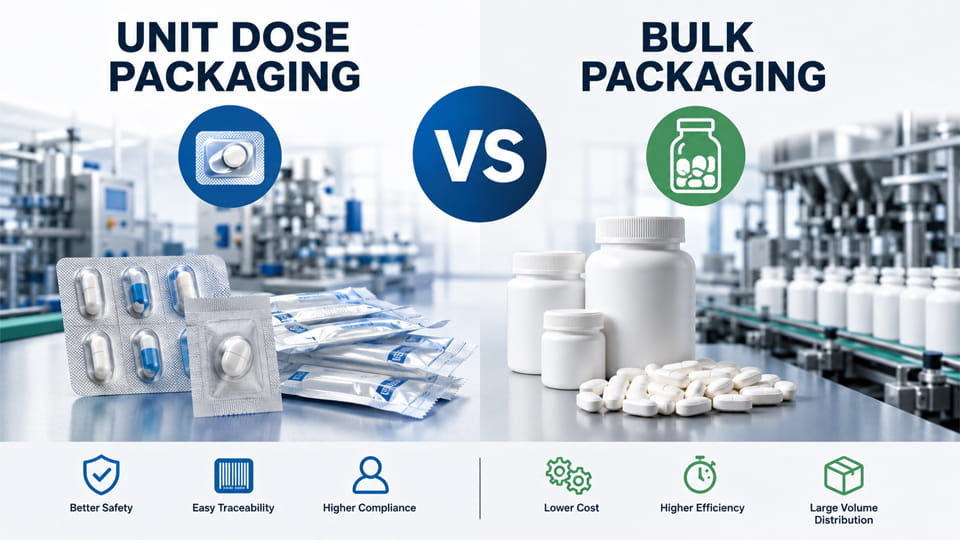
Για παράδειγμα, συμβατικά μπουκάλια χαπιών (δείτε εικόνα) είναι βολικά για διανομή αλλά δεν προσφέρουν εγγενές βοήθημα προσκόλλησης. Οι ασθενείς συχνά χάνουν την ένδειξη των δόσεων όταν τα χάπια κουδουνίζουν χαλαρά σε ένα μπουκάλι. Αντίθετα, ημερολογιακές μορφές ή μορφές μοναδιαίας δόσης δίνουν οπτικές και φυσικές ενδείξεις: κενά σημεία σε μια κάρτα blister ή οργανωμένα διαμερίσματα σε κουτί χαπιών δείχνουν με μια ματιά τι έχει ληφθεί. Πράγματι, μελέτες επιβεβαιώνουν ότι τα μπουκάλια «Δεν προσφέρουν κανένα όφελος στη βελτίωση της συμμόρφωσης,” ενώ ειδικές για τη δόση συσκευασίες – ειδικά ημερολογιακές συσκευασίες blister – εξουδετερώνει άμεσα τη λήθη. Η ίδια η συσκευασία γίνεται καθημερινή προτροπή. Για πολυάσχολους ή ηλικιωμένους ασθενείς, Αυτό μπορεί να σημαίνει τη διαφορά μεταξύ χαμένων χαπιών και μιας υγιεινής ρουτίνας θεραπείας.
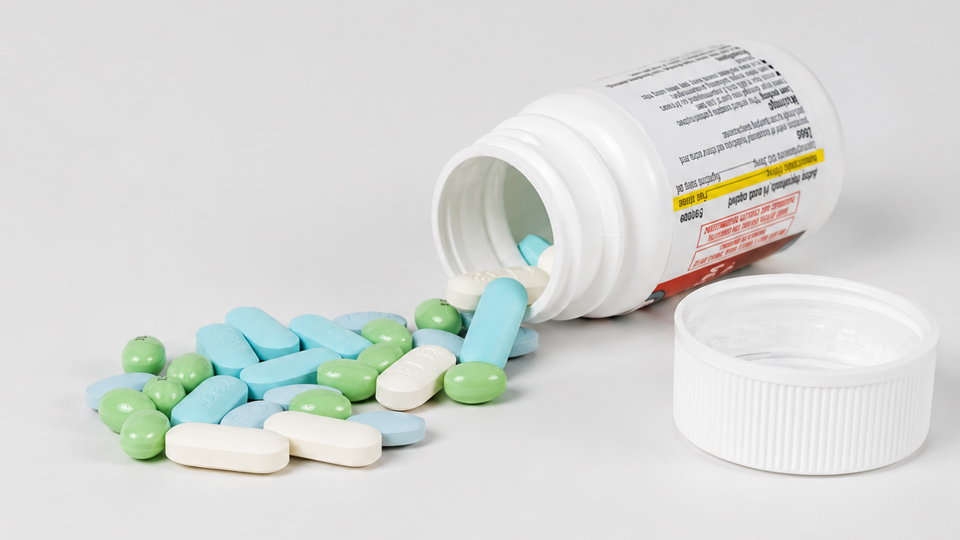
Εικών: Ένα τυπικό μπουκάλι χαπιών και χαλαρά χάπια. Τα τυπικά μπουκάλια είναι κοινά, αλλά δεν διαθέτουν ενσωματωμένες υπενθυμίσεις για τους ασθενείς.
Η συσκευασία κάνει πολύ περισσότερα από την προστασία των φαρμακευτικών προϊόντων κατά την αποθήκευση και τη μεταφορά. Σήμερα, παίζει επίσης σημαντικό ρόλο στο να βοηθά τους ασθενείς να παίρνουν σωστά τα φάρμακα. Μια καλά σχεδιασμένη μορφή συσκευασίας μπορεί να απλοποιήσει τις καθημερινές ρουτίνες φαρμάκων, βελτίωση της εμπειρίας του ασθενούς, και υποστηρίζουν την καλύτερη τήρηση των φαρμάκων. Η έρευνα έχει δείξει ότι η συσκευασία υπενθύμισης, όπως συσκευασίες blister ημερολογίου και άλλες οργανωμένες μορφές δόσης, μπορεί να επηρεάσει θετικά την προσκόλληση σε πολλούς ασθενείς.
Η καλή συσκευασία υποστηρίζει την τήρηση των φαρμάκων με πολλούς πρακτικούς τρόπους:
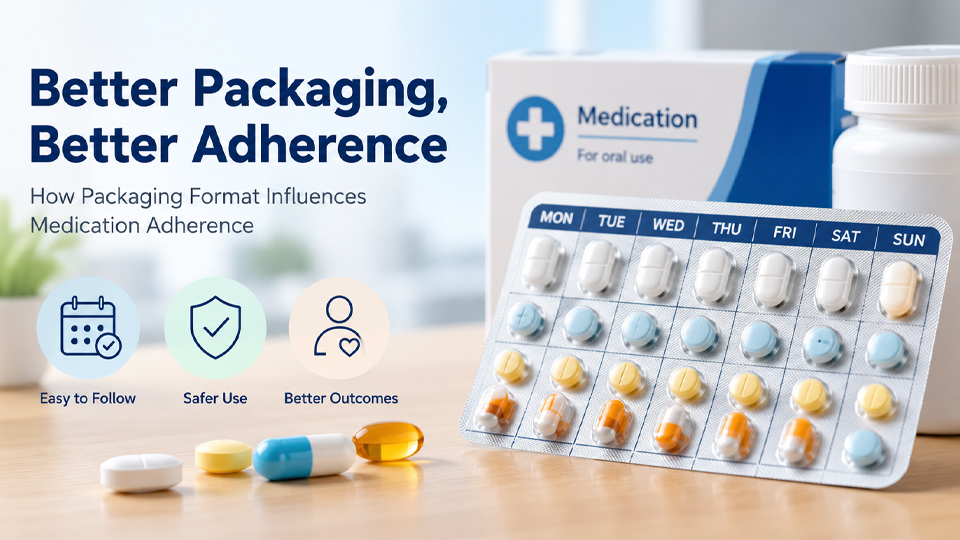
Διαφορετικά προϊόντα και ομάδες ασθενών επωφελούνται από διαφορετικές μορφές συσκευασίας. Οι ακόλουθες μορφές χρησιμοποιούνται ευρέως στη φαρμακευτική και την υγειονομική περίθαλψη για την υποστήριξη της συμμόρφωσης:
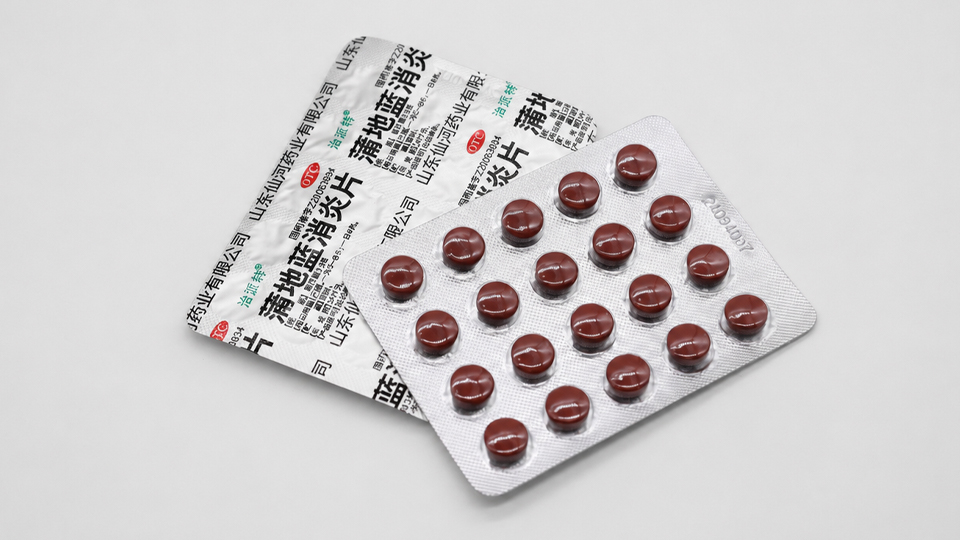
Εικών: Μεμονωμένα χάπια σφραγισμένα σε κάρτα blister. Κυψέλες μονάδας δόσης (συχνά εκτυπώνονται με πληροφορίες δοσολογίας) δώστε στους ασθενείς ένα σαφές ημερήσιο πρόγραμμα και διευκολύνετε τον εντοπισμό μιας χαμένης δόσης.
Η συσκευασία μπορεί να επηρεάσει την προσκόλληση με πολλούς βασικούς τρόπους:
Στα καλύτερά της, συσκευασία γεφυρώνει το χάσμα μεταξύ της συνταγογράφησης και της συμπεριφοράς του ασθενούς. Γίνεται ένας παθητικός «συνεργάτης συμμόρφωσης» οργανώνοντας και υπενθυμίζοντας χωρίς να απαιτείται επιπλέον προσπάθεια από τον ασθενή.
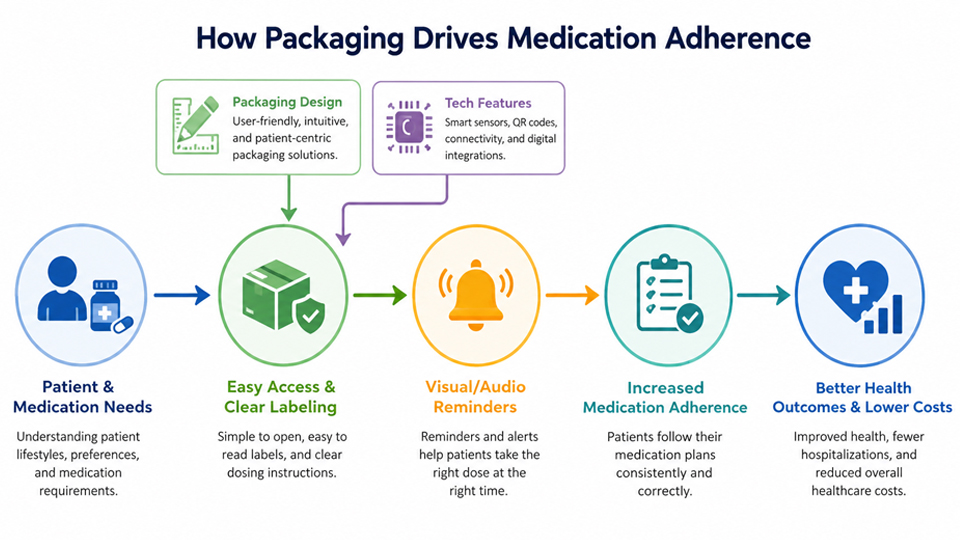
Η απλή επιλογή της σωστής μορφής δεν αρκεί – η συσκευασία πρέπει να είναι σχεδιασμένη για τον ασθενή. Τα πακέτα με κακή σχεδίαση μπορούν να δημιουργήσουν εμπόδια. Ο καλύτερα σχέδια που επικεντρώνονται στην προσκόλληση μοιράζονται πολλά χαρακτηριστικά:
Αυτές οι αρχές σχεδίασης με επίκεντρο τον ασθενή έχουν το πρόσθετο πλεονέκτημα της συμμόρφωσης με την ποιότητα: σαφής, Η προφανής συσκευασία με παρακολούθηση διευκολύνει τους κατασκευαστές να πληρούν τα πρότυπα FDA/EMA ενώ παράλληλα βελτιώνει την εμπειρία χρήστη. Για φαρμακευτική παραγωγή, Η επένδυση σε αυτά τα χαρακτηριστικά μπορεί να αποδώσει στην εμπιστοσύνη της επωνυμίας και τη χαμηλότερη ευθύνη.
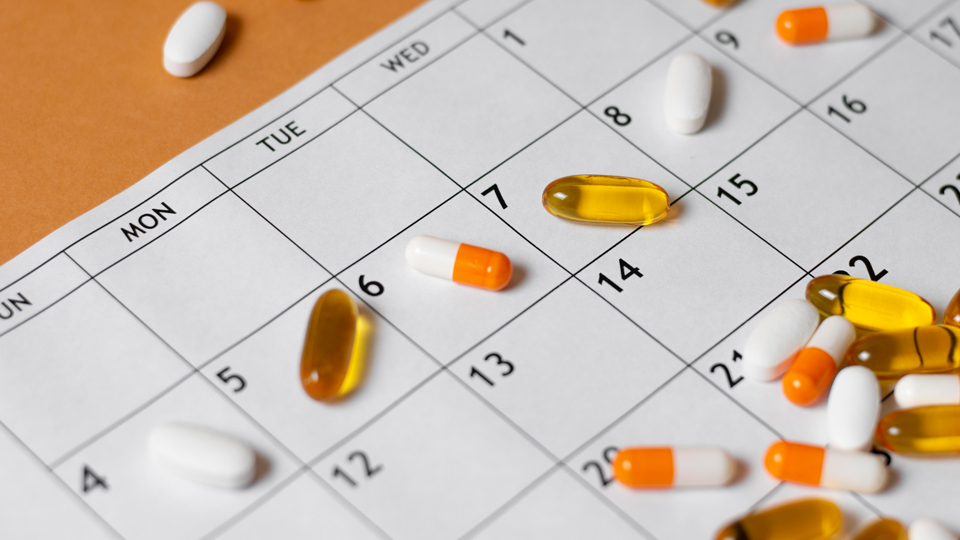
Η συσκευασία συμμόρφωσης πρέπει να πληροί όλους τους ρυθμιστικούς περιορισμούς και τους περιορισμούς κόστους. Στις Η.Π.Α., για παράδειγμα, Οι συσκευασίες ανθεκτικές στα παιδιά επιβάλλεται από το νόμο για τις περισσότερες συνταγές. Οι σύγχρονες λύσεις συχνά επιτυγχάνουν συμμόρφωση ενσωματώνοντας χαρακτηριστικά ασφαλείας στο σχήμα της συσκευασίας (π.χ.. μηχανισμοί κλειδώματος σε κάρτες blister) αντί να βασίζεται αποκλειστικά στα καπάκια των μπουκαλιών. Συγχρόνως, εταιρείες εξερευνούν βιώσιμα υλικά: ημερολόγια από χαρτόνι αντί για πλαστικές φουσκάλες, ή ανακυκλώσιμες μεμβράνες, που εκτιμούν οι ασθενείς και που συχνά έχουν απλούστερες δομές. Μελέτες δείχνουν ότι οι ασθενείς προτιμούν πραγματικά τους φιλικούς προς το περιβάλλον, απλή συσκευασία – φαίνεται πιο μοντέρνο και καθησυχαστικό.
Από την πλευρά του κόστους, αυτοματοποιημένες γραμμές συσκευασίας (π.χ.. κυψέλη υψηλής ταχύτητας ή μηχανές συσκευασίας ταινιών) έχουν γίνει αρκετά αποτελεσματικές. Μεγάλης κλίμακας παραγωγή μονάδας δόσης μπορεί μείωση του κόστους ανά μονάδα και μείωση των απορριμμάτων από ληγμένα αποθέματα. Για κατασκευαστές και συσκευαστές με σύμβαση, Αυτό σημαίνει υψηλή αρχική επένδυση σε μηχανήματα αλλά δυνητικά χαμηλότερο μακροπρόθεσμο κόστος και απώλειες αποθεμάτων. Από την άποψη του ασθενούς, η βελτιωμένη άνεση και ασφάλεια δικαιολογούν αυτές τις μορφές. Με άλλα λόγια, Η πρόσθετη φροντίδα στη συσκευασία συχνά αντισταθμίζεται από καλύτερα αποτελέσματα υγείας και λιγότερα σπατάλη φαρμάκων.
Για να παραδώσετε αυτές τις φιλικές προς τον ασθενή μορφές συσκευασίας σε κλίμακα, οι κατασκευαστές χρειάζονται αξιόπιστα μηχανήματα. Συσκευασία Jinlu προσφέρει μια σειρά εξοπλισμού ρυθμισμένου για πακέτα που επικεντρώνονται στην προσκόλληση:


Εικόνα: Μηχάνημα συσκευασίας stick πολλαπλών λωρίδων από την Jinlu Packing. Σχηματίζει, γεμίζει και σφραγίζει στενά φακελάκια (πακέτα) παράλληλα. Κάθε συσκευασία περιέχει μία δόση (σκόνη, υγρό, και τα λοιπά.), υποβοήθηση της χορήγησης και της τήρησης της δόσης.


Συνδυάζοντας αυτά τα μηχανήματα, μια φαρμακευτική σειρά μπορεί να παράγει πακέτα φιλικά προς τον ασθενή χωρίς να θυσιάζει την απόδοση ή την ποιότητα. Για παράδειγμα, ένα Σειρά blister Jinlu μπορεί να ενσωματώσει έναν σταθμό μέτρησης, σχηματιστής/σφραγιστικό φυσαλίδων, και έναν εκτυπωτή σειριοποίησης σε μία συνεχή διαδικασία. Αυτός ο αυτοματισμός διατηρεί τη συμμόρφωση με Πρότυπα GMP (21 CFR 211, Παράρτημα GMP της ΕΕ 15) και διασφαλίζει ότι κάθε συσκευασία που βγαίνει από τη γραμμή ταιριάζει με την προβλεπόμενη συνταγή. Τοιουτοτροπώς, Ο εξοπλισμός συσκευασίας υψηλής τεχνολογίας γίνεται η ραχοκοκαλιά του «λύσεις συσκευασίας για τη συμμόρφωση των ασθενών» – δίνοντας τη δυνατότητα στους κατασκευαστές να παρέχουν με σιγουριά ημερολόγια, φακελάκια μονάδας δόσης, και έξυπνα μπουκάλια σε κλίμακα.
Συνοπτικά, Η μορφή συσκευασίας έχει αποδεδειγμένη επίδραση στην τήρηση των φαρμάκων. Προσεγμένα σχέδια – από κάρτες blister μοναδιαίας δόσης και εβδομαδιαίες συσκευές οργάνωσης χαπιών έως έξυπνες, συνδεδεμένες συσκευασίες – διευκολύνουν τους ασθενείς να λαμβάνουν τα σωστά φάρμακα την κατάλληλη στιγμή. Τα πραγματικά στοιχεία δείχνουν ότι αυτές οι μορφές αυξάνουν σημαντικά τα ποσοστά προσκόλλησης σε σύγκριση με τις απλές φιάλες. Για κατασκευαστές και διανομείς φαρμάκων, Η υιοθέτηση συσκευασίας φιλικής προς την προσκόλληση αποτελεί ταυτόχρονα υπηρεσία δημόσιας υγείας και πλεονέκτημα της αγοράς: βελτιώνει τα αποτελέσματα των ασθενών και μπορεί να διαφοροποιήσει τα προϊόντα σε έναν ανταγωνιστικό τομέα.
Έτοιμοι να βελτιώσουν τη συμμόρφωση για τους πελάτες σας? Η Jinlu Packing ειδικεύεται σε μηχανήματα συσκευασίας φαρμακευτικών προϊόντων και λύσεις προσαρμοσμένες στις ανάγκες των ασθενών. Είτε χρειάζεστε γραμμές συσκευασίας blister υψηλής ταχύτητας, αυτοματοποιημένες λωρίδες θήκης, ή προσαρμοσμένα συστήματα πακέτων ημερολογίου, Η ομάδα μας μπορεί να βοηθήσει στο σχεδιασμό μορφών που ενθαρρύνουν τη συμμόρφωση. Επικοινωνήστε με τη Jinlu σήμερα για να συζητήσετε πώς ο έξυπνος σχεδιασμός της συσκευασίας μπορεί να ενισχύσει την απόδοση του προϊόντος σας και να υποστηρίξει την καλύτερη φροντίδα των ασθενών.
Η τήρηση της φαρμακευτικής αγωγής αναφέρεται στο πόσο πιστά οι ασθενείς ακολουθούν το συνταγογραφημένο σχέδιο θεραπείας τους, συμπεριλαμβανομένης της λήψης της σωστής φαρμακευτικής αγωγής, στη σωστή δόση, και τη συνιστώμενη ώρα. Η κακή συμμόρφωση μπορεί να μειώσει την αποτελεσματικότητα της θεραπείας και να αυξήσει το κόστος υγειονομικής περίθαλψης.
Η μορφή συσκευασίας μπορεί να απλοποιήσει τις ρουτίνες φαρμάκων και να παρέχει οπτικές υπενθυμίσεις. Χαρακτηριστικά όπως η επισήμανση ημερολογίου, συσκευασία μονάδας δόσης, και τα οργανωμένα διαμερίσματα βοηθούν τους ασθενείς να θυμούνται πότε και πώς να παίρνουν τα φάρμακά τους.
Οι συσκευασίες blister χωρίζουν τα φάρμακα σε μεμονωμένες δόσεις και μπορούν να εμφανίσουν την ημέρα ή την ώρα για κάθε δόση. Οι ασθενείς μπορούν εύκολα να δουν εάν έχουν πάρει το φάρμακό τους, που βοηθά στη μείωση των χαμένων δόσεων και των σφαλμάτων φαρμακευτικής αγωγής.
Τα παραδοσιακά μπουκάλια χαπιών είναι βολικά για αποθήκευση και διανομή, αλλά συνήθως δεν παρέχουν ενσωματωμένο σύστημα υπενθύμισης. Οι ασθενείς μπορεί να ξεχάσουν εάν έχουν πάρει μια δόση, ειδικά κατά τη διαχείριση πολλαπλών φαρμάκων.
Οι συσκευασίες blister ημερολογίου είναι συστήματα συσκευασίας που οργανώνουν τα φάρμακα ανά ημέρα της εβδομάδας ή ώρα χορήγησης. Δημιουργούν ένα οπτικό πρόγραμμα που διευκολύνει τους ασθενείς να ακολουθήσουν τα σχέδια θεραπείας και να διατηρήσουν συνεπή χρήση φαρμάκων.
Η συσκευασία προσκόλλησης είναι ιδιαίτερα χρήσιμη για τους ηλικιωμένους ασθενείς, άτομα με χρόνια νοσήματα, ασθενείς που λαμβάνουν πολλαπλά φάρμακα, και άτομα με προκλήσεις μνήμης. Οι φροντιστές επωφελούνται επίσης επειδή η οργανωμένη συσκευασία απλοποιεί τη διαχείριση των φαρμάκων.
Ναί. Έξυπνες λύσεις συσκευασίας, όπως συνδεδεμένες συσκευασίες blister και ηλεκτρονικά μπουκάλια χαπιών, μπορεί να παρέχει υπενθυμίσεις, παρακολουθήστε τη χρήση φαρμάκων, και να στέλνετε ειδοποιήσεις όταν παραλείπονται δόσεις. Αυτές οι τεχνολογίες προσφέρουν πρόσθετη υποστήριξη για τη μακροπρόθεσμη διαχείριση της θεραπείας.
Η φιλική προς τον ασθενή φαρμακευτική συσκευασία περιλαμβάνει συνήθως σαφείς οδηγίες, μεγάλες και ευανάγνωστες ετικέτες, χρωματική κωδικοποίηση, ημερολογιακή οργάνωση, σχέδια που ανοίγουν εύκολα, και χαρακτηριστικά ανθεκτικά στα παιδιά που παραμένουν προσβάσιμα για ενήλικες.
Η τήρηση της φαρμακευτικής αγωγής επηρεάζει άμεσα τα αποτελέσματα της θεραπείας και την ικανοποίηση των ασθενών. Οι φαρμακευτικές εταιρείες που εφαρμόζουν συσκευασία φιλική προς τη συμμόρφωση μπορούν να βελτιώσουν την αξία του προϊόντος, ενίσχυση της φήμης της μάρκας, και να διαφοροποιηθούν σε ανταγωνιστικές αγορές.
Ανάλογα με τη μορφή συσκευασίας, οι κατασκευαστές ενδέχεται να απαιτήσουν μηχανές συσκευασίας με κυψέλες, συστήματα χαρτοκιβωτίου, μηχανές συσκευασίας σακουλών ταινίας, και προσαρμοσμένες γραμμές παραγωγής πακέτων ημερολογίου. Ο αυτοματοποιημένος εξοπλισμός συσκευασίας φαρμακευτικών προϊόντων εξασφαλίζει σταθερή ποιότητα και αποτελεσματική παραγωγή μεγάλης κλίμακας.
Αναφορές:
1.Παρεμβάσεις συσκευασίας για την αύξηση της προσκόλλησης στα φάρμακα: συστηματική ανασκόπηση και μετα-ανάλυση —— Εθνική Βιβλιοθήκη Ιατρικής
2.Η συσκευασία βελτιώνει την τήρηση των φαρμάκων —— pharmtech.com
3.Επίδραση της συσκευασίας υπενθύμισης φαρμάκων στην τήρηση του φαρμάκου: μια συστηματική ανασκόπηση που αποκαλύπτει ερευνητικά κενά —— Springer Nature
4.Ηλεκτρονικές συσκευές συσκευασίας φαρμάκων και τήρηση φαρμάκων: Συστηματική ανασκόπηση —— Εθνική Βιβλιοθήκη Ιατρικής
5.Τα χάπια συνδυασμού σταθερής δόσης ή οι συσκευασίες μονάδας χρήσης βελτιώνουν την προσκόλληση? Συστηματική ανασκόπηση. —— Εθνική Βιβλιοθήκη Ιατρικής
6.CDC Grand Rounds: Βελτίωση της τήρησης των φαρμάκων για τη διαχείριση χρόνιων παθήσεων — Καινοτομίες και ευκαιρίες —— CDC