Επιλέγοντας το σωστό μηχάνημα συσκευασίας φαρμακευτικών προϊόντων είναι ζωτικής σημασίας για τη διασφάλιση της ασφάλειας του προϊόντος, κανονιστική συμμόρφωση, και αποτελεσματική παραγωγή. Η παγκόσμια αγορά φαρμακευτικών συσκευασιών ανθεί – ένα έργο πρόβλεψης θα ξεπεράσει $160 δισεκατομμύρια κατά 2026. Συγχρόνως, Οι ρυθμιστικές αρχές απαιτούν αυστηρούς ποιοτικούς ελέγχους: π.χ.. CGMP του FDA (21 Μέρη CFR 210–211) επιβάλλει αυστηρές απαιτήσεις στην κατασκευή, επεξεργασία, και συσκευασία ναρκωτικών. Στην πράξη, σχεδόν το μισό από ανακλήσεις ναρκωτικών περιλαμβάνουν σφάλματα συσκευασίας ή επισήμανσης, τονίζοντας τα διακυβεύματα. Σε αυτόν τον οδηγό, θα εξετάσουμε όλα τα βασικά ζητήματα - μορφή προϊόντος, ικανότητα, συμμόρφωση, αυτοματοποίηση, υποστήριξη πωλητή, και πολλά άλλα – ώστε να μπορείτε να επιλέξετε με σιγουριά τον κατάλληλο εξοπλισμό συσκευασίας φαρμάκων για τις ανάγκες σας. Καλύπτουμε τύπους μηχανών (μηχανές φυσαλίδων, πλήρωση κάψουλας, χαρτοκιβώτια, και τα λοιπά.), συγκρίνετε αυτόματα και ημιαυτόματα συστήματα, και περιλαμβάνει συμβουλές από ειδικούς, πίνακα σύγκρισης, ένα διάγραμμα ροής των βημάτων επιλογής, ένα FAQ, και πρακτικές συστάσεις.
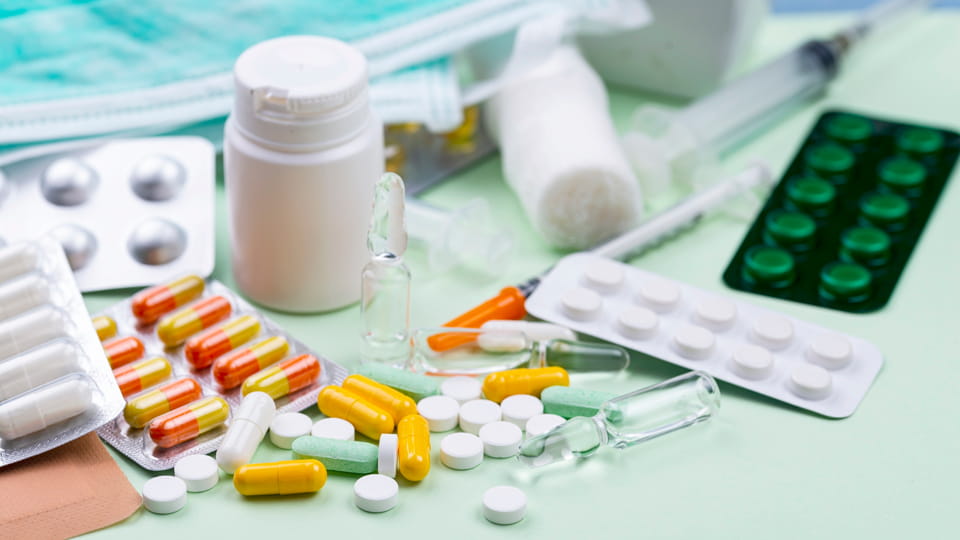
Γιατί έχει σημασία η επιλογή του σωστού μηχανήματος
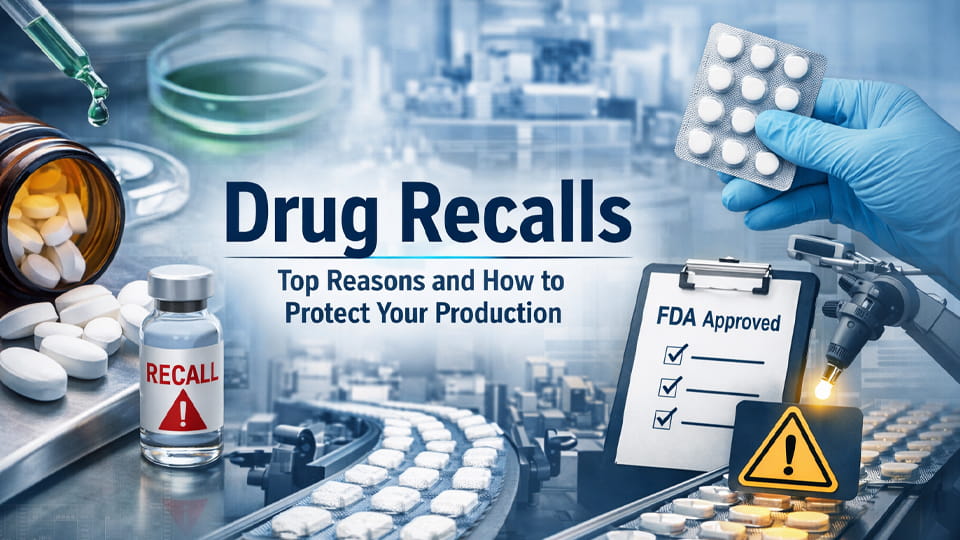
Φαρμακευτική συσκευασία είναι πολύ πιο κρίσιμη από τις συσκευασίες των συνηθισμένων καταναλωτών. Το προστατεύει την ποιότητα του φαρμάκου, εξασφαλίζει την ακρίβεια της δοσολογίας, και προστατεύει την ασφάλεια των ασθενών. Για παράδειγμα, Οι οδηγίες του ΠΟΥ τονίζουν ότι η συσκευασία πρέπει να προστατεύει τα φάρμακα από την υγρασία, φως, οξυγόνο, και άλλες δυσμενείς επιδράσεις σε όλη τη διάρκεια ζωής τους. Επίσης, Οι κανόνες CGMP του FDA ορίζουν ότι «οι μέθοδοι, εγκαταστάσεις, και έλεγχοι» στην επεξεργασία και τη συσκευασία πρέπει να εγγυώνται την ασφάλεια και τα σωστά συστατικά ενός φαρμάκου. Με πρακτικούς όρους, Η κακή συσκευασία μπορεί να οδηγήσει σε μόλυνση, λανθασμένη επισήμανση, δοσολογικά σφάλματα, ή δυσλειτουργίες της συσκευής – ακόμη και βλάβη του ασθενούς. Πράγματι, δείχνει η ανάλυση των δεδομένων ανάκλησης μέχρι και 50% οι ανακλήσεις φαρμάκων οφείλονται σε λάθη συσκευασίας ή επισήμανσης. Αυτό σημαίνει μια φαινομενικά μικρή παράβλεψη (λάθος barcode, κατεστραμμένη κυψέλη, λανθασμένα δισκία) μπορεί να προκαλέσει μια δαπανηρή ανάκληση ή ρυθμιστική προειδοποίηση.
Πέρα από την ασφάλεια, το σωστό μηχάνημα ενισχύει την παραγωγικότητα και μειώνει το κόστος. Οι σύγχρονες φαρμακευτικές σειρές ενσωματώνουν γέμιση, σφράγιση, καταμέτρηση και επισήμανση σε αυτοματοποιημένα συστήματα υψηλής ταχύτητας. Η επιλογή εξοπλισμού που ταιριάζει με τις ανάγκες παραγωγής και το επίπεδο αυτοματισμού σας μπορεί να βελτιώσει δραματικά την απόδοση και να μειώσει την εργασία. Αντίστροφως, η λάθος επιλογή μπορεί να προκαλέσει συχνές εμπλοκές, ασυνεπή γεμίσματα, και χρόνο διακοπής – βλάπτει την αποτελεσματικότητα. Και επειδή συχνά λειτουργούν φαρμακευτικά εργοστάσια 24/7, Η μη προγραμματισμένη συντήρηση μπορεί να είναι καταστροφική. Για αυτούς τους λόγους, οι ειδικοί του κλάδου τονίζουν την ισορροπημένη επιλογή: «Η επιλογή φαρμακευτικού εξοπλισμού συσκευασίας απαιτεί προσεκτική αξιολόγηση των ικανοτήτων συμμόρφωσης με την GMP, ετοιμότητα επικύρωσης, και μακροπρόθεσμη λειτουργική αξιοπιστία». Συνοπτικά, το σωστό μηχάνημα εξασφαλίζει ποιότητα και συμμόρφωση (αποφυγή ελαττωμάτων/ανακλήσεων) κατά τη βελτιστοποίηση παραγωγική ικανότητα και κόστος.
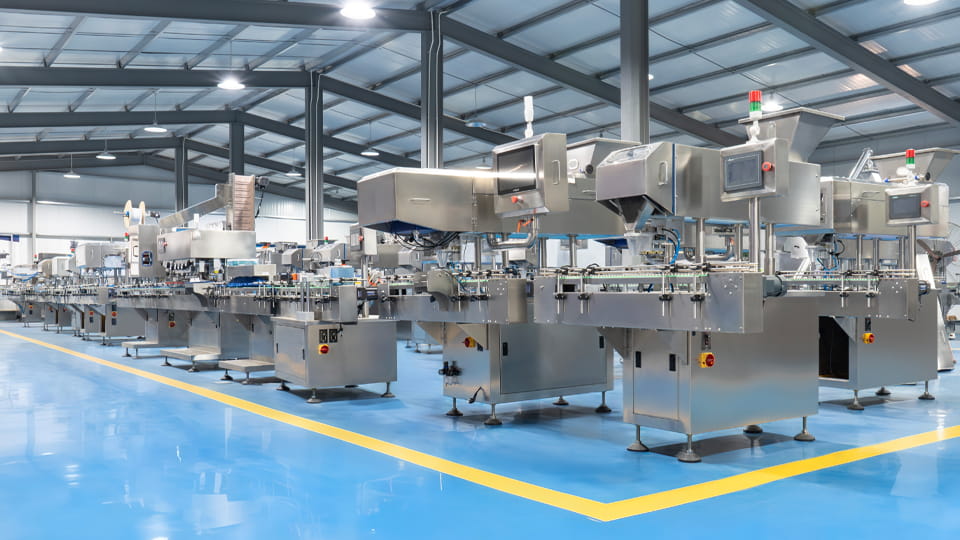
Είδη Μηχανών Φαρμακευτικής Συσκευασίας
Η «φαρμακευτική συσκευασία» καλύπτει πολλά προϊόντα και μορφές. Οι μηχανές πέφτουν μέσα πρωταρχική συσκευασία (πρώτο στρώμα σε επαφή με το φάρμακο) και δευτερεύουσα/τριτογενής συσκευασία (εξωτερικά χαρτοκιβώτια, δεσμίδες, παλέτες). Τα τυπικά μηχανήματα περιλαμβάνουν:
- Μηχανές πλήρωσης και δοσομέτρησης: Για υγρά, κρέμες, ή σκόνες σε φιαλίδια/μπουκάλια/ φακελάκια. Παραδείγματα: υγρά πληρωτικά, μηχανές πλήρωσης σκόνης, πληρωτικά σιροπιού. Εάν το προϊόν σας είναι α υγρό φάρμακο, επιλέξτε ένα μηχάνημα σχεδιασμένο για υγρά (περισταλτικά ή έμβολα πληρωτικά). Για σκόνες/κόκκοι (π.χ.. χύμα δισκία που συσκευάζονται), Τα ογκομετρικά ή πληρωτικά κοχλία είναι ιδανικά.
- Εξοπλισμός για κάψουλες/ταμπλέτες: Για κάψουλες ή δισκία, βασικά μηχανήματα είναι μηχανές πλήρωσης καψουλών, πρέσες δισκίων, και μηχανές μέτρησης/γεμίσματος. Τα σύγχρονα πληρωτικά καψουλών μπορούν να αυτοματοποιήσουν την τοποθέτηση, χωρισμός, πλήρωση, και κλείδωμα των καψουλών. Ταμπλέτες πρέσες συμπίεσης σκόνης σε δισκία. Μηχανές μέτρησης (οπτικούς μετρητές) ταΐστε και μετρήστε τις στερεές δόσεις σε μπουκάλια ή σακουλάκια. Όπως σημειώνει η JinLuPacking, σε στερεάς δόσης γραμμές "όλα ξεκινούν με ακριβή μέτρηση" - αισθητήρες πολλαπλών καναλιών υψηλής ταχύτητας διασφαλίζουν ότι κάθε μπουκάλι/θήκη έχει ακριβώς τη σωστή μέτρηση.
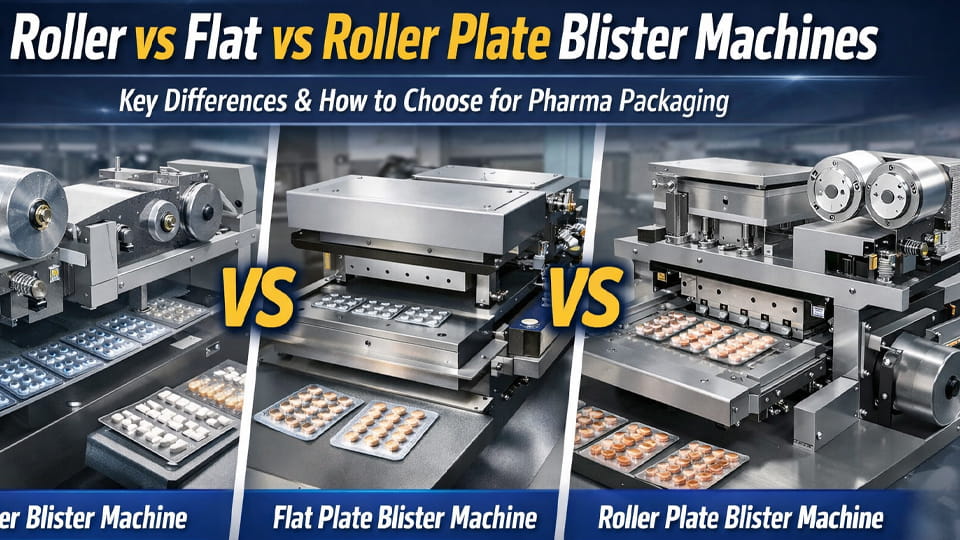
- Μηχανές συσκευασίας φυσαλίδων: Για δισκία/κάψουλες σε συσκευασίες blister. Αυτοί οι θερμομορφικοί δίσκοι που σφραγίζουν τα χάπια κάτω από το φύλλο. Μηχανές φυσαλίδων ελάτε ως επίπεδη πλάκα (ευρετηριασμένα) ή περιστροφικό συνεχές τύπους, με διάφορες μορφές (Αλουμινόχαρτο με βάση το PVC ή ψυχρής μορφής). Είναι ιδανικά για συσκευασία μοναδιαίας δόσης.
- Μηχανές χαρτοκιβωτίου/Εγκιβωτισμού: Δευτερεύουσα συσκευασία. Χαρτοκιβώτια διπλώστε και σφραγίστε τα χαρτοκιβώτια, συχνά εισάγοντας συσκευασίες ή μπουκάλια με κυψέλες συν φυλλάδια ασθενούς. Μπορούν να είναι οριζόντιος (πλευρικό φορτίο) ή κατακόρυφος (άνω φορτίο) Τα χαρτοκιβώτια αυτοματοποιούν την ανέγερση κιβωτίων, φόρτωση περιεχομένου, και σφράγιση – μείωση της χειρωνακτικής εργασίας και εξασφάλιση σταθερού κλεισίματος των κιβωτίων (σημαντική για την ιχνηλασιμότητα της GMP). Τα σύγχρονα χαρτοκιβώτια χρησιμοποιούν σχεδιασμό υγιεινής από ανοξείδωτο χάλυβα και σφραγίδες που δεν παραβιάζονται για να πληρούν αυστηρούς κανονισμούς.
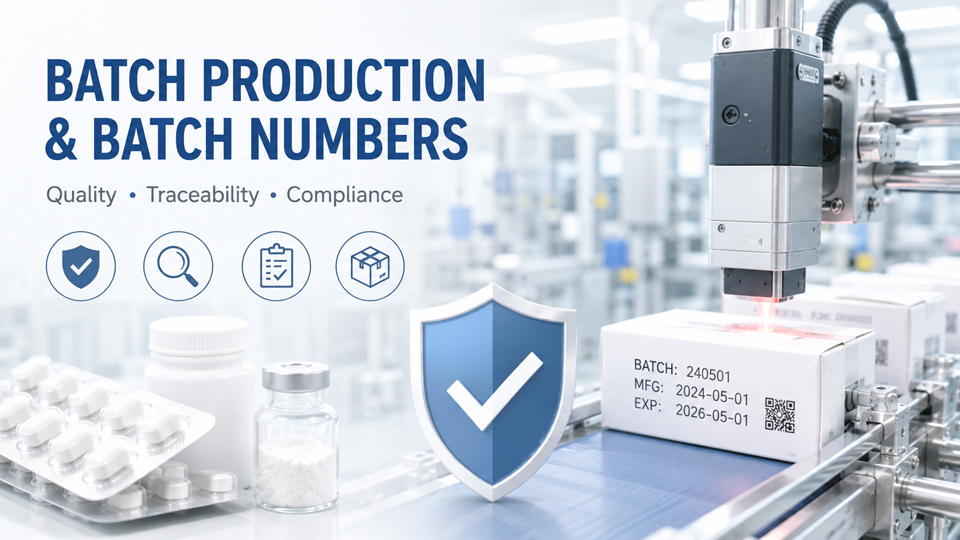
- Ετικέτες και επιθεωρητές: Μηχανές επισήμανσης εφαρμόστε προεκτυπωμένες ετικέτες σε μπουκάλια/χαρτοκιβώτια με κωδικούς παρτίδας, ημερομηνίες λήξης, και barcodes. Συστήματα επιθεώρησης (όραση κάμερας, ανιχνευτές μετάλλων, ακτινογραφία) ελέγξτε την ακρίβεια πλήρωσης, ξένα σωματίδια, παρουσία ετικέτας, και αναγνωσιμότητα κώδικα. Για συμμόρφωση, αναζητήστε εξοπλισμό που υποστηρίζει τη σειριοποίηση (ανιχνεύσιμους γραμμωτούς κώδικες) και απόρριψη σφάλματος.
- Ενσωματωμένες γραμμές συσκευασίας: Στην πράξη, τα φαρμακευτικά φυτά χρησιμοποιούν συχνά πλήρεις γραμμές συνδυάζοντας τα παραπάνω μηχανήματα. Για παράδειγμα, μια γραμμή από tablet σε χαρτοκιβώτιο μπορεί να περιλαμβάνει μια πρέσα tablet, αποξηραμένος εισερχόμενος, μετρητής κάψουλας, μπουκαλάκι unscrambler, μονάδα πλήρωσης, μηχανισμός κάλυψης, επαγωγικό σφραγιστικό, τιτλοφόρηση, χαρτοκιβώτιο, και μεταφορέας τελικής επιθεώρησης. Αυτά τα συστήματα από άκρο σε άκρο μπορούν να προσυναρμολογηθούν και να επικυρωθούν ως γραμμή, που απλοποιεί τα προσόντα και το αποτύπωμα. .
Εν συντομία, επιλέξτε μηχανές που ταιριάζουν με τη δοσολογική μορφή και τη μορφή συσκευασίας σας. Όπως συμβουλεύει ένας οδηγός, «Οι μηχανές συσκευασίας με κυψέλες είναι ιδανικές για ταμπλέτες, ενώ τα οριζόντια συστήματα φόρμας-πλήρωσης-σφράγισης χρησιμοποιούνται για θήκες υψηλής απόδοσης». Κατανόηση του προϊόντος σας (δισκίο, κάψουλα, υγρό, σκόνη) και το επιθυμητό πακέτο (φουσκάλα, μπουκάλι, σακκίδιο πούδρας, προκατασκευασμένη θήκη, και τα λοιπά.) είναι το πρώτο βήμα για την επιλογή ενός μηχανήματος.
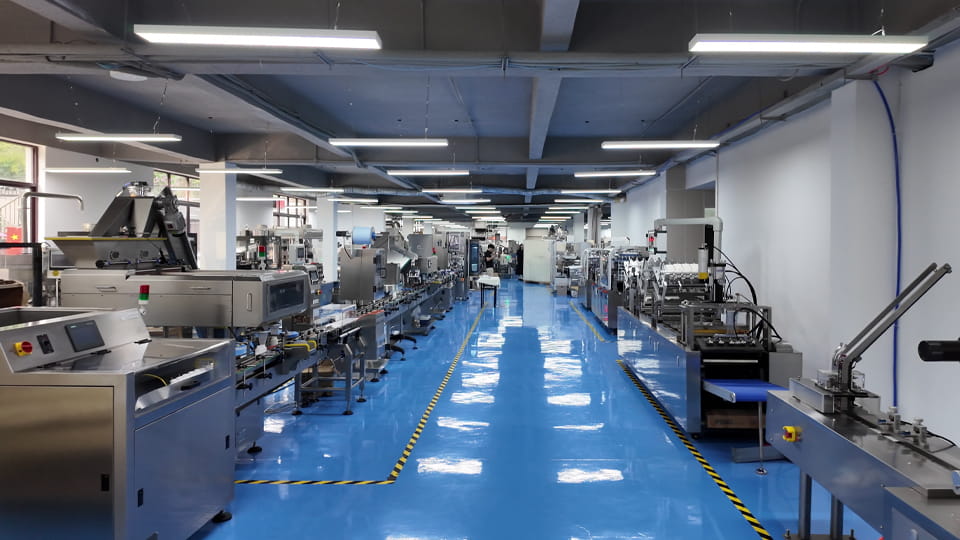
Βασικοί παράγοντες που πρέπει να ληφθούν υπόψη
Κατά την αξιολόγηση συγκεκριμένων μηχανημάτων ή πωλητών, έχετε υπόψη σας αυτούς τους κρίσιμους παράγοντες:
- Προϊόν & Συμβατότητα μορφής συσκευασίας: Βεβαιωθείτε ότι ο εξοπλισμός μπορεί να χειριστεί την ακριβή μορφή του προϊόντος και το δοχείο σας. Δοσολογική μορφή και τύπος δοχείου ύλη: δισκία, κάψουλες, υγρά, όλες οι σκόνες έχουν μοναδικές ανάγκες χειρισμού. Για παράδειγμα, μετρήσιμα στερεά χρησιμοποιούν συστήματα μέτρησης ή φυσαλίδων, ενώ τα υγρά απαιτούν υγρά πληρωτικά με σφιχτά σφραγιστικά. Ελέγξτε επίσης μέγεθος και γεωμετρία: ορισμένα μηχανήματα μπορούν να χειριστούν πολλαπλά βάρη πλήρωσης ή μεγέθη δοχείων, άλλοι είναι αφιερωμένοι. Η ευελιξία είναι το κλειδί εάν σχεδιάζετε πολλά SKU. Οι περιγραφές μηχανών συχνά καθορίζουν συμβατές μορφές; επαληθεύστε με δοκιμές δειγμάτων προϊόντος εάν είναι δυνατόν.
- Ταχύτητα Παραγωγής & Ικανότητα: Αντιστοιχίστε την απόδοση του μηχανήματος με την παρούσα και τη μελλοντική σας ζήτηση. Οι μηχανές έχουν "ονομαστική ταχύτητα" (π.χ.. φιάλες/λεπτό ή κυψέλες/λεπτό) και ένα πρακτικό αποτέλεσμα (λαμβάνοντας υπόψη τις αλλαγές). Υπερ-προδιαγραφές (πολύ υψηλή ταχύτητα) σπαταλά χρήματα και χώρο; Η υποπροδιαγραφή προκαλεί συμφόρηση. Πολλοί κατασκευαστές (όπως ο JinLu) ταχύτητες προσφοράς: π.χ.. ορισμένες σειρές κάψουλας μπορούν να κάνουν εκατοντάδες χιλιάδες κάψουλες ανά ώρα, μετρητικές μηχανές >99.98% ακριβής στα ~6.000 μπουκάλια/ώρα, και χαρτοκιβωτίων μέχρι 450 χαρτοκιβώτια/λεπτό. Σκεφτείτε όχι μόνο την τρέχουσα παραγωγή αλλά και την ανάπτυξη – Η JinLuPacking συμβουλεύει να επιλέξετε χωρητικότητα «που ταιριάζει στην τρέχουσα ζήτηση ενώ αφήνει χώρο για ανάπτυξη». Αναζητήστε αρθρωτές μηχανές ή επιλογές πολλαπλών λωρίδων, εάν προβλέπετε αύξηση της έντασης.
- Ακρίβεια & Ποιοτικός έλεγχος: Η υψηλή ακρίβεια είναι αδιαπραγμάτευτη στη φαρμακευτική. Πρέπει να διασφαλίζεται ο εξοπλισμός πλήρωσης και μέτρησης δεν υπάρχουν επιπλέον χάπια ή χάπια που λείπουν, σωστή δοσολογία, και μια αξιόπιστα σφραγισμένη συσκευασία. Οι κορυφαίες σειρές στοχεύουν στο "ούτε ένα επιπλέον κομμάτι και δεν λείπει ένα κομμάτι" σε κάθε δοχείο. Αξιολογήστε κάθε μηχανή προδιαγραφές ακρίβειας: π.χ.. μπορεί να ισχυριστεί ένα πληρωτικό μέτρησης 99.98% ακρίβεια. Συνιστούμε πολυκάναλους οπτικούς αισθητήρες ή δοσομέτρηση που βασίζεται σε σερβομηχανισμό για να πετύχετε αυστηρές ανοχές. Ελέγξτε επίσης για ενσωματωμένα χαρακτηριστικά ποιότητας: π.χ.. συστήματα όρασης για την επαλήθευση των μετρήσεων, ανίχνευση διαρροής, ζυγιστήρια ελέγχου βάρους. Το μηχάνημα πρέπει να ενσωματωθεί ελέγχους κατά τη διαδικασία να συλλάβει τα λάθη (παρτίδα απορρίπτει, ειδοποιήσεις) για την εξασφάλιση σταθερής ποιότητας.
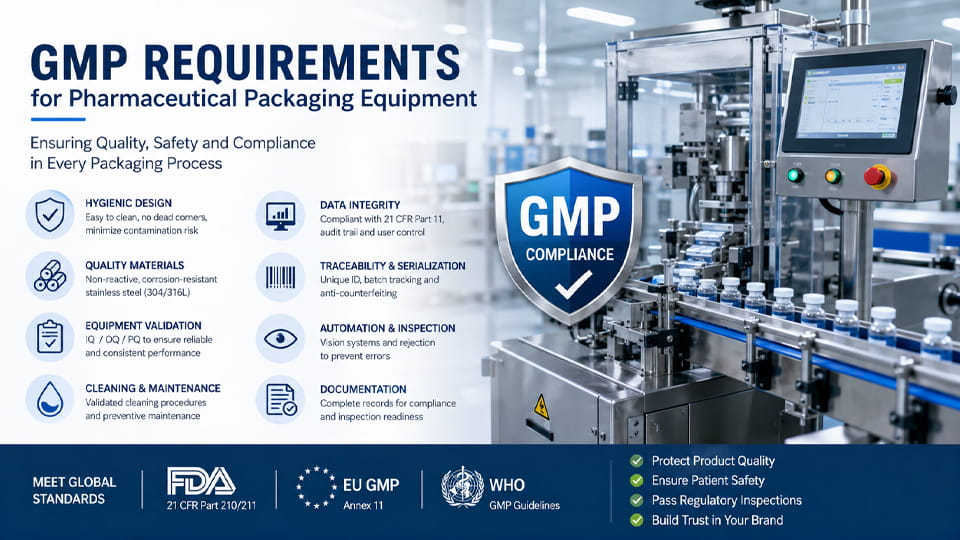
- GMP & Κανονιστική Συμμόρφωση: Τα φαρμακευτικά μηχανήματα πρέπει να πληρούν αυστηρά πρότυπα υγιεινής και τεκμηρίωσης. Αναζητώ Σχεδιασμός συμβατός με cGMP: όλα τα εξαρτήματα που έρχονται σε επαφή με το προϊόν ανοξείδωτο χάλυβα (SUS316L) ή άλλα υλικά φαρμακοβιομηχανίας, λείες επιφάνειες (χωρίς νεκρά πόδια ή χαραμάδες), και εύκολη αποσυναρμολόγηση για καθάρισμα. Οι επιφάνειες πρέπει να ανθίστανται στη διάβρωση/μόλυνση. Το μηχάνημα πρέπει να έχει φύλακες ασφαλείας, σφραγισμένοι πίνακες ελέγχου, και αλλαγές χωρίς εργαλεία όπου είναι δυνατόν. Εξίσου σημαντική είναι η συμμόρφωση με το λογισμικό: Οι σύγχρονες σειρές φαρμάκων εμπίπτουν συχνά στον FDA 21 Μέρος CFR 11 (ηλεκτρονικά αρχεία) και το παράρτημα GMP της ΕΕ 11 (ηλεκτρονικά συστήματα). Σας συμβουλεύουμε να διασφαλίσετε ότι ο εξοπλισμός υποστηρίζει ηλεκτρονικά αρχεία, ίχνη ελέγχου, και πρόσβαση βάσει ρόλων, και συνοδεύεται από ένα ολοκληρωμένο πακέτο επικύρωσης (έγγραφα σχεδίασης, Πρωτόκολλα FAT/SAT, Πρότυπα IQ/OQ/PQ). Εν συντομία, το μηχάνημα πρέπει να είναι έτοιμη για επικύρωση. Δώστε προτεραιότητα σε μηχανήματα με σήμανση CE ή άλλες τοπικές πιστοποιήσεις εάν κάνετε εξαγωγή. Θυμηθείτε ότι οι οδηγίες συσκευασίας (ΠΟΥ, FDA, ΕΕ) όλη η πίεση διατήρηση της ακεραιότητας του προϊόντος μέσω του καθαρού, επικυρωμένες διαδικασίες.
- Ευκαμψία & Ώρα αλλαγής: Οι φαρμακευτικές γραμμές διαθέτουν συχνά πολλά προϊόντα. Αναζητήστε μηχανές με δυνατότητες γρήγορης αλλαγής. Τα χαρακτηριστικά μπορεί να περιλαμβάνουν ρυθμιζόμενες κεφαλές με σερβομηχανισμό, «συνταγές» μνήμης για ρυθμίσεις, και αντικατάσταση καλουπιών ή οδηγών χωρίς εργαλεία. Η JinLuPacking τονίζει «χωρίς εργαλεία, γρήγορες αλλαγές με αποθήκευση συνταγών» για χειρισμό πολλαπλών SKU. Ένα μηχάνημα που μπορεί να αλλάξει μορφές σε λίγα λεπτά (εναντίον. ώρες) αποδίδει με τη μείωση του χρόνου διακοπής λειτουργίας και την αύξηση του ΟΕΕ. Οι ημιαυτόματες μηχανές είναι πιο απλές στη ρύθμιση αλλά απαιτούν χειριστές; Οι πλήρως αυτόματες μηχανές έχουν συνήθως ταχύτερες αλλαγές εργαλείων εάν είναι καλά σχεδιασμένες. Σκεφτείτε επίσης την ευελιξία της διάταξης – κατακόρυφη έναντι οριζόντιας τροφοδοσίας, λωρίδες, και τα λοιπά., για να φιλοξενήσει διαφορετικές γεωμετρίες συσκευασίας.
- Επίπεδο Αυτοματισμού: Αποφασίστε μεταξύ ημιαυτόματος (μερικά χειροκίνητα βήματα) και πλήρως αυτόματο συστήματα. Οι αυτόματες γραμμές συσκευασίας ελαχιστοποιούν την εργασία και το ανθρώπινο λάθος, επίτευξη συνεπούς 24/7 διακίνησης. Για παράδειγμα, αυτόματα χαρτοκιβώτια στήνονται, φορτώστε και σφραγίστε τα χαρτοκιβώτια με ελάχιστη είσοδο χειριστή, ενώ τα ημιαυτόματα χαρτοκιβώτια χρειάζονται χειροκίνητη φόρτωση χαρτοκιβωτίων. Πλήρως αυτόματες γραμμές μέτρησης/γεμίσματος ενσωματώνουν δονητικούς τροφοδότες και βραχίονες επιλογής και τοποθέτησης για ταμπλέτες, εξαλείφοντας τη χειροκίνητη καταμέτρηση. Ο συμβιβασμός: Οι μηχανές αυτοκινήτων κοστίζουν περισσότερο και είναι πολύπλοκες στην εγκατάσταση. Οι ημιαυτόματες μηχανές κοστίζουν λιγότερο, αλλά δένουν τους εργάτες και λειτουργούν με χαμηλότερη ταχύτητα. Τα συγκρίνουμε στον παρακάτω πίνακα:
| Χαρακτηριστικό |
Αυτόματο μηχάνημα |
Ημιαυτόματο μηχάνημα |
| Διακίνηση |
Πολύ ψηλά (συνεχής, 24/7) |
Μέτριος (παρτίδα ή διαλείπουσα) |
| Απαίτηση Εργασίας |
Χαμηλός (μικρό πλήρωμα για παρακολούθηση) |
Άνω (χειριστές για σίτιση/χειρισμό) |
| Ευκαμψία |
Μέσον (ειδική μορφή; πιο γρήγορα σε ένταση) |
Ψηλά (Ο χειροκίνητος χειρισμός επιτρέπει ποικίλες μορφές) |
| Ώρα αλλαγής |
Μπορεί να είναι μεγαλύτερο (σύνθετη εγκατάσταση) |
Συνήθως πιο κοντό (απλούστερη μηχανική) |
| Αρχικό Κόστος |
Άνω (πολύπλοκους ελέγχους & ρομποτική) |
Χαμηλότερος |
| Συντήρηση |
Συγκρότημα (απαιτεί εκπαιδευμένους τεχνικούς) |
Πιο απλό (εξαρτήματα που μπορούν να επισκευαστούν από το χρήστη) |
Εν συντομία, χρησιμοποιήστε αυτόματες μηχανές για μεγάλου όγκου, σταθερή παραγωγή. Εάν οι παρτίδες σας είναι μικρές ή σπάνιες, το ημιαυτόματο μπορεί να είναι αρκετό για τον προϋπολογισμό. (Για παράδειγμα, ένα ημιαυτόματο μηχάνημα κυψελών μπορεί να σφραγίζει μόνο τις κυψέλες όταν ο χειριστής φορτώνει με το χέρι χάπια.) Όποιο επίπεδο κι αν επιλέξετε, βεβαιωθείτε ότι τα χειριστήρια είναι σύγχρονα (PLC/HMI, κλειδώματα ασφαλείας) και ότι η διεπαφή χρήστη είναι διαισθητική.
- Υγιεινή & Καθαριότητα: Τα φαρμακευτικά μηχανήματα πρέπει να είναι εύκολο να καθαριστεί και να αποστειρωθεί για την αποφυγή διασταυρούμενης μόλυνσης. Ελέγξτε ότι όλα τα μέρη επαφής είναι προσβάσιμα για πλύση, και καμία γωνία δεν παγιδεύει σκόνες ή υγρά. Χρησιμοποιούν πολλές φαρμακομηχανές εξαρτήματα γρήγορης αποδέσμευσης χωρίς εργαλεία για καθαρισμό. Σκεφτείτε αν το μηχάνημα υποστηρίζει CIP (καθαρό επί τόπου) ή σκουπίστε τους κύκλους καθαρισμού. Ο σχεδιασμός πρέπει να επιτρέπει στεγνό καθάρισμα (για παράδειγμα, εναλλάξιμα μέρη που περιέχουν σκόνες). Αξιολογήστε επίσης τα φίλτρα και τον εξαερισμό εάν εμπλέκονται σκόνες. Απαιτούνται αυστηρά πρωτόκολλα καθαρισμού σε περιβάλλοντα φαρμακείου, οπότε προγραμματίστε καθημερινές/εβδομαδιαίες ρουτίνες συντήρησης. (Για την συμβουλή: Διαβάστε τις συμβουλές της HMC – οι φαρμακευτικές σειρές απαιτούν «αυστηρά πρωτόκολλα καθαρισμού για την απομάκρυνση των υπολειμμάτων και την πρόληψη της διασταυρούμενης μόλυνσης μεταξύ των παρτίδων».)
- Ακεραιότητα δεδομένων & Ιχνηλασιμότητα: Το μηχάνημα θα πρέπει να διευκολύνει την πλήρη ιχνηλασιμότητα της παρτίδας. Τα χαρακτηριστικά που πρέπει να αναζητήσετε περιλαμβάνουν σειριακό barcoding (για συσκευασίες μοναδιαίας δόσης), καταγραφή δεδομένων των παραμέτρων της διαδικασίας, και ενσωμάτωση με εργοστασιακά συστήματα MES/ERP. Τα μηχανήματα ανώτερης βαθμίδας παρέχουν ίχνη ελέγχου για όλες τις κρίσιμες παραμέτρους (θερμοκρασίες, βάρη, μετράει). Για σειριοποίηση (απαιτούνται από πολλές αγορές όπως το DSCSA στις ΗΠΑ ή το FMD στην ΕΕ), βεβαιωθείτε ότι η γραμμή μπορεί να χειριστεί την επιθεώρηση όρασης των κωδικών 1D/2D, απόρριψη κακών κωδικών, και συγκεντρωτικά δεδομένα γονέα-παιδιού (Π.χ., συνδέοντας μεμονωμένες συσκευασίες blister στο χαρτοκιβώτιό τους). Βασικά, ο εξοπλισμός θα σας βοηθήσει να εκπληρώσετε τις εντολές εντοπισμού της FDA και της ΕΕ. Τα σύγχρονα μηχανήματα συχνά περιλαμβάνουν ΟΕΕ (Συνολική αποτελεσματικότητα εξοπλισμού) επίσης ταμπλό παρακολούθησης.
- Συνολικό κόστος ιδιοκτησίας (TCO): Κοιτάξτε πέρα από την τιμή του αυτοκόλλητου. Θεωρώ κατανάλωση ενέργειας (θερμαντικά στοιχεία, αντλίες κενού, κινητήρες), αναλώσιμα έξοδα (ταινία, ξίφος, σκόνες, ανταλλακτικά όπως τσιμούχες), και απαιτήσεις υπηρεσίας. Ένα πολύ φτηνό μηχάνημα μπορεί να έχει μεγάλο χρόνο διακοπής λειτουργίας ή να χρησιμοποιεί μη τυποποιημένα εξαρτήματα. Αντίστροφως, ένα ποιοτικό μηχάνημα μπορεί να καταναλώνει περισσότερη ενέργεια αλλά να αποδίδει λιγότερα απόβλητα. Οι παράγοντες περιλαμβάνουν: εργασία συντήρησης (πόσο συχνά και πόσο δύσκολο να διατηρηθεί), χρόνους παράδοσης ανταλλακτικών (σημαντικό για εισαγόμενα μηχανήματα), και χρηματοδότηση/ROI. Όπως σημειώνει το ιστολόγιο Jinlu για μηχανές κυψελών, «Τα μηχανήματα υψηλής ποιότητας μπορεί να έχουν υψηλότερο αρχικό κόστος, αλλά μπορούν να μειώσουν τη σπατάλη και το χρόνο διακοπής λειτουργίας». Συνοπτικά, υπολογίστε το κόστος κύκλου ζωής: τιμή αγοράς + δαπάνες λειτουργίας + συντήρηση. Οι προμηθευτές παρέχουν συχνά εργαλεία TCO ή αριθμομηχανές για αυτό.
- Εμπειρία προμηθευτή & Υποστήριξη: Τελικά, επιλέξτε έναν αξιόπιστο κατασκευαστή με εμπειρία στη φαρμακευτική. Ο εξοπλισμός συσκευασίας είναι μια μακροπρόθεσμη επένδυση; θέλεις σύντροφο, όχι απλώς ένας πωλητής. Ελέγξτε το ιστορικό του προμηθευτή: έχουν εγκαταστάσεις αναφοράς στην περιοχή/βιομηχανία σας? Είναι τα μηχανήματα τους επικυρωμένα για πελάτες φαρμακείων? Δίνοντας προτεραιότητα σε προμηθευτές με αποδεδειγμένη τεχνογνωσία GMP, ολοκληρωμένη υποστήριξη επικύρωσης, και αποδεδειγμένες επιδόσεις σε ρυθμιζόμενες βιομηχανίες. Αξιολογήστε επίσης την εξυπηρέτηση μετά την πώληση: προσφέρουν υποστήριξη ανάθεσης (FAT/SAT/IQ/OQ), απογραφή ανταλλακτικών, απομακρυσμένη διάγνωση, και κατάρτιση? Ένας καλός προμηθευτής θα βοηθήσει στη βελτιστοποίηση της διάταξής σας, να βοηθήσει με ρυθμιστικούς ελέγχους, και χειρίζονται βλάβες έκτακτης ανάγκης. Αποφύγετε τους πωλητές που πετούν από τη νύχτα – αναζητήστε πιστοποιήσεις του κλάδου (ISO, CE), εγγυήσεις, και παγκόσμια δίκτυα.
Παρακάτω είναι ένα διάγραμμα ροής που συνοψίζει τη διαδικασία επιλογής:

Αυτόματο vs. Ημιαυτόματη Συσκευασία: Μια Σύγκριση
Κατά τις επιλογές οριοθέτησης, Βοηθά στη σύγκριση των πλήρως αυτόματων γραμμών με τις ημιαυτόματες εναλλακτικές. Οι αυτόματες γραμμές ενσωματώνουν τροφοδοσία, σχηματισμός, πλήρωση, και σφράγιση σε μία συνεχή διαδικασία, ενώ οι ημιαυτόματες γραμμές απαιτούν χειροκίνητη παρέμβαση (π.χ.. φιάλες ή χαρτοκιβώτια φόρτωσης με το χέρι). Γενικά:
- Αυτόματο προσφέρουν συστήματα πολύ υψηλή απόδοση (συχνά απαραίτητο για >100 χαρτοκιβώτια/λεπτό, ή μεγάλες παρτίδες κάψουλας). Λειτουργούν με ελάχιστη εργασία (1–2 χειριστές για παρακολούθηση), που μειώνει το ανθρώπινο λάθος. Επίσης, συνήθως συλλέγουν αυτόματα πλήρη αρχεία καταγραφής δεδομένων. Το μειονέκτημα είναι υψηλότερο κόστος κεφαλαίου και πολυπλοκότητα. Απαιτούν εκπαιδευμένους τεχνικούς για τη συντήρηση.
- Ημιαυτόματος μηχανές είναι χαμηλότερο κόστος και πιο απλό. Μπορεί να χρειαστούν εργάτες για να ταΐσουν προϊόντα ή χαρτοκιβώτια, καθιστώντας τα κατάλληλα για μικρές έως μεσαίες διαδρομές. Οι αλλαγές τείνουν να είναι πιο γρήγορες (λιγότερους άξονες κίνησης), και η προπόνηση είναι πιο απλή. Ωστόσο, Τα χειροκίνητα βήματα αυξάνουν το κόστος εργασίας και τη μεταβλητότητα. Οι ημιαυτόματες γραμμές σπάνια φτάνουν την ίδια ταχύτητα με τις πλήρως αυτόματες.
Ακολουθεί μια γρήγορη σύγκριση των βασικών χαρακτηριστικών:
| Χαρακτηριστικό |
Αυτόματη Γραμμή |
Ημιαυτόματη γραμμή |
| Διακίνηση |
Πολύ ψηλά (100+ μονάδες/λεπτό) |
Μέτριος (ανάλογα με την ταχύτητα του χειριστή) |
| Εργασία |
Χαμηλός (1– 2 άτομα, κυρίως παρακολουθώντας) |
Άνω (αρκετοί χειριστές που τροφοδοτούν εξαρτήματα) |
| Ευκαμψία |
Μέσον (βελτιστοποιημένη για συγκεκριμένη μορφή) |
Ψηλά (οι χειριστές μπορούν να προσαρμοστούν εν κινήσει) |
| Αλλαγή |
Μπορεί να απαιτεί μηχανική (περισσότερα ανταλλακτικά/εργαλεία) |
Συχνά πιο γρήγορα (λιγότερα εξαρτήματα για ανταλλαγή) |
| Αρχικό Κόστος |
Ψηλά (PLC, ρομποτική, αισθητήρες) |
Χαμηλότερος (βασικοί ενεργοποιητές και μεταφορείς) |
| Συντήρηση |
Εντατικός (εξειδικευμένες τεχνολογικές δεξιότητες) |
Πιο εύκολο (κοινή μηχανική συντήρηση) |
Στην πράξη, πολλές φαρμακευτικές σειρές συνδυάζουν και τα δύο: π.χ.. ένα αυτόματο πρατήριο πλήρωσης που τροφοδοτεί ένα ημιαυτόματο χαρτοκιβώτιο, ή το αντίστροφο. Το κλειδί είναι να ταιριάζει με το σωστό επίπεδο αυτοματισμού στους όγκους σας. Εάν σκοπεύετε να κλιμακώσετε ή 24/7 τρέξιμο, η πλήρης αυτοματοποίηση συνήθως αποδίδει. Για πιλοτικές παρτίδες ή περιορισμούς προϋπολογισμού, μπορεί να αρκεί μια ημιαυτόματη μηχανή πάγκου ή επιτραπέζιου.
Συνήθεις παγίδες προς αποφυγή
- Αγνοώντας τη Συμμόρφωση: Ποτέ μην παραμελείτε τις λειτουργίες GMP για εξοικονόμηση κόστους. Μη συμμορφούμενα μηχανήματα θα προκαλέσουν αποτυχίες ελέγχου ή ανακλήσεις.
- Αγορά "Φθηνότερη" επιλογή: Μια πολύ χαμηλή προσφορά μπορεί να μην έχει ακρίβεια ή υποστήριξη. Εξετάστε τη μακροπρόθεσμη απόδοση επένδυσης (ROI)., όχι μόνο προκαταβολική τιμή.
- Παραμέληση Μελλοντικών Αναγκών: Μην αγοράζετε για μόνο το σημερινό παραγωγή; αφήνουν χώρο για ανάπτυξη ή νέα προϊόντα.
- Παράλειψη δοκιμών αποδοχής εργοστασίων: Ελέγχετε πάντα το μηχάνημα με τα δείγματά σας από το εργοστάσιο (ΛΙΠΟΣ) πριν την αποστολή. Επίσης, πραγματοποιήσει αποδοχή του ιστότοπου (ΣΑΤ) με την ομάδα σας για να διασφαλίσετε ότι πληροί τις προδιαγραφές.
- Με θέα στα βοηθητικά προγράμματα & Ολοκλήρωση: Ελέγξτε τις απαιτήσεις της εγκατάστασης (εξουσία, αέρας, νερό) και βεβαιωθείτε ότι το μηχάνημα ταιριάζει στην κάτοψή σας. Βεβαιωθείτε επίσης ότι ενσωματώνεται ομαλά με υπάρχοντες μεταφορείς ή συστήματα ελέγχου.
Πώς να επιλέξετε τον σωστό προμηθευτή
Η συνεργασία με τον κατάλληλο κατασκευαστή εξοπλισμού είναι εξίσου σημαντική με την επιλογή του ίδιου του μηχανήματος. Αναζητώ:
- Εμπειρογνωμοσύνη στον κλάδο: Προμηθευτές που ειδικεύονται σε φαρμακευτικός εξοπλισμός θα είναι ενημερωμένο σχετικά με τα πρότυπα και τα πρωτόκολλα επικύρωσης του FDA/EMA/WHO. Μπορούν να συμβουλεύουν σχετικά με τη διάταξη και τους ποιοτικούς ελέγχους. Όπως αναφέρει ένας οδηγός, «Το μηχάνημα που θα επιλέξετε πρέπει να ταιριάζει με τη δοσολογική σας μορφή, μορφή συσκευασίας, κανονιστικές απαιτήσεις, και παραγωγική ικανότητα», οπότε η εμπειρία μετράει.
- Υποστήριξη επικύρωσης: Βεβαιωθείτε ότι ο πωλητής παρέχει πλήρη τεκμηρίωση: Σχέδια δοκιμής αποδοχής εργοστασίου/ τοποθεσίας, Πρωτόκολλα IQ/OQ/PQ, αξιολογήσεις κινδύνου, και πακέτα επικύρωσης λογισμικού. Στην ιδανική περίπτωση, θα βοηθήσουν ακόμη και στην εκτέλεση SAT.
- Εξυπηρέτηση μετά την πώληση: Ελέγξτε τους όρους εγγύησης και τον τρόπο με τον οποίο η εταιρεία χειρίζεται τα ανταλλακτικά και το σέρβις. Έχουν τοπικό γραφείο ή διανομέα;? Είναι διαθέσιμη απομακρυσμένη υποστήριξη? Ένας πωλητής που μπορεί να στείλει γρήγορα ανταλλακτικά ή να στείλει τεχνικούς θα ελαχιστοποιήσει το χρόνο διακοπής λειτουργίας.
- Φήμη & Αναφορές: Ζητήστε αναφορές ή μελέτες περιπτώσεων παρόμοιων εγκαταστάσεων. Επιλογή εταιρειών με ισχυρή τεχνική υποστήριξη, παγκόσμιες ομάδες εξυπηρέτησης, επικυρωμένα φαρμακευτικά έργα, και αποδεδειγμένη αξιοπιστία του μηχανήματος.
- Δυνατότητα προσαρμογής: Η παραγωγή σας μπορεί να έχει μοναδικές ανάγκες (ειδικά υλικά, προδιαγραφές καθαρού δωματίου, και τα λοιπά.). Ένας καλός προμηθευτής θα προσαρμόσει τις μηχανές (π.χ.. ειδικούς θαλάμους, προστέθηκε αυτοματισμός, γλώσσα διεπαφής χρήστη) στις απαιτήσεις σας. Τζινλού, για παράδειγμα, προσφέρει γραμμές κλειδί στο χέρι προσαρμοσμένες στις ανάγκες χώρου και διεργασιών.
Ελέγχοντας προσεκτικά τους προμηθευτές σε αυτά τα σημεία, μειώνετε τον κίνδυνο του έργου. Θυμάμαι: «Ο σωστός συνεργάτης εξοπλισμού γίνεται επέκταση των ομάδων ποιότητας και μηχανικής σας».
Διάγραμμα ροής επιλογής
Για σαφήνεια, εδώ είναι ένα απλό διάγραμμα ροής των βημάτων επιλογής:

Επόμενα Βήματα
Η επιλογή του σωστού μηχανήματος είναι μια πολύπλοκη αλλά ικανοποιητική διαδικασία. Συνιστούμε να γράψετε μια λεπτομερή Προδιαγραφές Απαιτήσεων Χρήστη (URS) για την ομάδα σας, απαριθμώντας όλα τα χαρακτηριστικά που πρέπει να έχετε παραπάνω. Στη συνέχεια, ζητήστε προσφορές και δελτία δεδομένων από αξιόπιστους προμηθευτές. Πριν την αγορά, αίτημα α Εργοστασιακή δοκιμή αποδοχής και, αν είναι δυνατόν, μια δοκιμή ιστότοπου με τα πραγματικά προϊόντα σας.
Στο Μηχανήματα Συσκευασίας JinLu, ειδικευόμαστε σε γραμμές συσκευασίας φαρμάκων από άκρο σε άκρο. Τα προϊόντα μας (πλήρωση κάψουλας, blister packers, μετρητικές μηχανές, χαρτοκιβώτια, και τα λοιπά.) έχουν σχεδιαστεί για συμμόρφωση και ακρίβεια GMP. Σας ενθαρρύνουμε να εξερευνήσετε τις σελίδες προϊόντων μας (βλέπω Εσωτερικοί σύνδεσμοι παρακάτω) και επικοινωνήστε με τους μηχανικούς μας για προσαρμοσμένες λύσεις. Είτε χρειάζεστε μια αυτόματη γραμμή χαρτοκιβωτίου, μια ημιαυτόματη μηχανή blister, ή μια πλήρως ενσωματωμένη γραμμή μπουκαλιών, μπορούμε να σας καθοδηγήσουμε στη διαδικασία επιλογής και επικύρωσης.
Συχνές ερωτήσεις σχετικά με τη μηχανή συσκευασίας φαρμακευτικών προϊόντων
Τι ακριβώς είναι μια «μηχανή συσκευασίας φαρμακευτικών προϊόντων»?
Είναι κάθε αυτοματοποιημένος εξοπλισμός που χρησιμοποιείται στη φαρμακοβιομηχανία για τη συσκευασία φαρμάκων. Αυτό μπορεί να περιλαμβάνει μηχανές πλήρωσης υγρών σε φιαλίδια, μετρώντας τα δισκία σε μπουκάλια, χάπια με φουσκάλες σε δίσκους, χαρτοκιβώτιο προϊόντων σε κουτιά, και ούτω καθεξής. Ουσιαστικά, οποιοσδήποτε μηχανισμός βοηθά στη συγκράτηση, επιγραφή, σφραγίδα, ή το πακέτο φαρμάκων είναι μέρος του εξοπλισμού συσκευασίας φαρμάκων.
Γιατί τα πρότυπα GMP είναι τόσο σημαντικά για αυτά τα μηχανήματα?
Καλή πρακτική παραγωγής (GMP) πρότυπα (FDA 21CFR, GMP της ΕΕ, καθοδήγηση του ΠΟΥ) βεβαιωθείτε ότι τα προϊόντα σας είναι σταθερά υψηλής ποιότητας. Τα μηχανήματα που συμμορφώνονται έχουν σχέδια υγιεινής (ανοξείδωτο ατσάλι 316L, επιφάνειες που καθαρίζονται), επικυρωμένοι έλεγχοι (ακριβής, ανιχνεύσιμες λειτουργίες), και κατάλληλη τεκμηρίωση. Ο μη συμμορφούμενος εξοπλισμός κινδυνεύει με μόλυνση ή σφάλματα παραγωγής που θα μπορούσαν να οδηγήσουν σε ανακλήσεις ή ρυθμιστικές αναφορές.
Πόσο κοστίζουν αυτά τα μηχανήματα?
Το κόστος ποικίλλει πολύ ανάλογα με τον τύπο και την πολυπλοκότητα του μηχανήματος. Ένας απλός ημιαυτόματος μετρητής χαπιών στον πάγκο μπορεί να είναι μερικές χιλιάδες δολάρια, λαμβάνοντας υπόψη ότι μια αυτόματη σειρά blister υψηλής ταχύτητας ή μια ενσωματωμένη γραμμή φιαλών μπορεί να κοστίσει δεκάδες ή και εκατοντάδες χιλιάδες. Λαμβάνετε πάντα υπόψη το συνολικό κόστος ιδιοκτησίας (δείτε παραπάνω). Είναι καλύτερο να λαμβάνετε προσφορές από πολλούς προμηθευτές αφού καθορίσετε τις απαιτήσεις σας.
Ποια μηχανή συσκευασίας είναι η καλύτερη για ταμπλέτες?
Αυτό εξαρτάται από τη μορφή σας. Για μέτρηση δισκίων σε μπουκάλια ή σακούλες, μια αυτόματη μηχανή μέτρησης/γεμίσματος είναι ιδανική. Για συσκευασία μοναδιαίας δόσης, μια μηχανή φυσαλίδων είναι συνηθισμένη. Για χύμα συσκευασία σε μπουκάλι, μια αυτόματη γραμμή πλήρωσης και κάλυψης μπουκαλιών (με μετρητή tablet ανάντη) χρησιμοποιείται. Ορισμένες εταιρείες χρησιμοποιούν επίσης μηχανές συσκευασίας με στικ ή φακελίσκους για τη συσκευασία μεμονωμένων δόσεων δισκίων. Αξιολογήστε τα πλεονεκτήματα/μειονεκτήματα κάθε μορφής (κόστος, προστασία, προτίμηση χρήστη) πριν επιλέξετε το μηχάνημα.
Τα προϊόντα μου είναι ευαίσθητα στην υγρασία. Τι να σκεφτώ?
Για ευαίσθητα στην υγρασία δισκία ή κάψουλες, μπορεί να χρειαστείτε ψυχρή μορφή (Alu-Alu) μηχανές blister ή εξειδικευμένα συστήματα ξηραντικής ουσίας. Βεβαιωθείτε ότι οι σφραγίδες του μηχανήματος είναι φαρμακευτικής ποιότητας, και εξετάστε τις επιλογές ολοκληρωμένης ξήρανσης ή αδρανοποίησης αζώτου. Τα ίδια τα υλικά συσκευασίας (αλουμινόχαρτο vs. Ταινία PVC) είναι εξίσου σημαντικές.
Μπορώ να χρησιμοποιήσω ένα μηχάνημα για πολλά προϊόντα?
Πολλά μηχανήματα είναι κάπως ρυθμιζόμενα, αλλά η εναλλαγή μεταξύ δραστικά διαφορετικών προϊόντων μπορεί να είναι δύσκολη. Επιλέξτε εξοπλισμό με συνταγές/ρυθμίσεις για διαφορετικές μορφές. Χωρίς εργαλεία, Τα εργαλεία γρήγορης αλλαγής καθιστούν εφικτό τον χειρισμό πολλών SKU στο ίδιο μηχάνημα. Ωστόσο, εάν αναμένετε μεγάλη ποικιλία προϊόντων, αρθρωτές μηχανές ή πολλαπλές αποκλειστικές γραμμές μπορεί να είναι πιο αποτελεσματικές.
Αναφορές:
1.Οδηγίες για τη συσκευασία φαρμακευτικών προϊόντων(Παράρτημα 9) - ΠΟΥ.
2.Ερωτήσεις και απαντήσεις σχετικά με τις τρέχουσες απαιτήσεις ορθής παρασκευαστικής πρακτικής | Εξοπλισμός – Η.Π.Α. Υπηρεσία Τροφίμων και Φαρμάκων.
3.Συσκευασία GMP σε 2026: Απαιτήσεις, κατευθυντήριες γραμμές, Έλεγχοι, και Πρωτογενής έναντι Δευτερεύουσας Συσκευασίας – pharmuni.com.
4.Παγκόσμιοι κανονισμοί και πρότυπα συσκευασίας – GMP Navigator.