
Στη φαρμακευτική παραγωγή, παρτίδα παραγωγής παραμένει η τυπική μέθοδος παρασκευής φαρμάκων. Σε κάθε παρτίδα – μια καθορισμένη ποσότητα που παράγεται σε μια σειρά – εκχωρείται μια μοναδική αριθμός παρτίδας. Αυτός ο αριθμός είναι κρίσιμος για ιχνηλασιμότητα, ποιοτικός έλεγχος, και Συμμόρφωση GMP/FDA. Συνδέοντας τα προϊόντα πίσω στα αρχεία παρτίδας τους, οι κατασκευαστές μπορούν να διερευνήσουν γρήγορα ζητήματα, απομονώστε ελαττώματα, και πραγματοποιήστε στοχευμένες ανακλήσεις εάν χρειάζεται. Σύγχρονος γραμμές συσκευασίας (φουσκάλες, εμφιάλωση, χαρτοκιβώτιο, τιτλοφόρηση) ενσωματώνουν συστήματα κωδικοποίησης και επιθεώρησης που εκτυπώνουν και επαληθεύουν αριθμούς παρτίδας σε κάθε μονάδα. Αυτό το άρθρο εξηγεί τι είναι η παραγωγή παρτίδας και οι αριθμοί παρτίδας, γιατί έχουν σημασία στη φαρμακευτική, και πώς μηχανήματα συσκευασίας (εκτυπωτές κωδικοποίησης, ετικετοποιητές, συστήματα όρασης, και τα λοιπά.) εξασφάλιση ακριβούς παρακολούθησης παρτίδων. Καλύπτουμε επίσης τις βέλτιστες πρακτικές και τις συχνές ερωτήσεις για να βοηθήσουμε τους υπεύθυνους προμηθειών/παραγωγής και τους μηχανικούς συσκευασίας να κατανοήσουν πώς να αξιοποιήσουν την αρίθμηση παρτίδων για ποιότητα, συμμόρφωση και αποτελεσματικότητα.

Στη φαρμακοβιομηχανία, ένα “σύνολο παραγωγής” τυπικά αναφέρεται σε μια συγκεκριμένη ποσότητα προϊόντος που κατασκευάζεται κατά τη διάρκεια ενός μόνο κύκλου παραγωγής —με βάση τις ίδιες οδηγίες παραγωγής— που διαθέτει ομοιόμορφα ποιοτικά χαρακτηριστικά. Σύμφωνα με τις Η.Π.Α. Ορισμός FDA, ένα “σύνολο παραγωγής” είναι μια συγκεκριμένη ποσότητα χύδην φαρμακευτικής ουσίας ή υλικού δοσολογικής μορφής που προορίζεται να έχει ομοιόμορφη ποιότητα.
Παραγωγή παρτίδας σημαίνει παραγωγή α καθορισμένη ποσότητα ενός προϊόντος με μία κίνηση, στη συνέχεια ξεκινά μια νέα σειρά για την επόμενη παρτίδα. Αυτό περιλαμβάνει την επεξεργασία των πρώτων υλών σε κάθε στάδιο παραγωγής (μίξη, κοκκοποίηση, συμπίεση, και τα λοιπά.) για μία παρτίδα, ολοκληρώνοντας όλα τα βήματα, στη συνέχεια καθαρίστε τον εξοπλισμό πριν ξεκινήσει η επόμενη παρτίδα. Είναι διαφορετικό από συνεχής κατασκευή, εκεί που η γραμμή δεν σταματά ποτέ. Στην παραδοσιακή επεξεργασία κατά παρτίδες, "Η τρέχουσα παρτίδα πρέπει να ολοκληρωθεί πριν να μπορέσει να υποβληθεί σε επεξεργασία μια επόμενη παρτίδα".
Οι παρτίδες είναι ιδιαίτερα συχνές στη φαρμακευτική παρασκευή, επειδή πολλά σκευάσματα απαιτούν αυστηρούς ελέγχους και περιστασιακά καθαρισμούς μεταξύ των παρτίδων. Κάθε παρτίδα παράγει ένα σταθερό αριθμό μονάδων – πες 100,000 δισκία ή 50,000 κάψουλες. Κάνοντας αυτό, Οι εταιρείες μπορούν να προσαρμόσουν την παραγωγή στις ανάγκες της ζήτησης και της ποιότητας. Για παράδειγμα, εάν μια φόρμουλα δισκίου αλλάξει ή διαφορετική πρέσα tablet χρειάζεται, η νέα παρτίδα ξεκινά νέα υπό ελεγχόμενες συνθήκες. Αυτή η βήμα προς βήμα προσέγγιση βοηθά στη διατήρηση συνοχή.
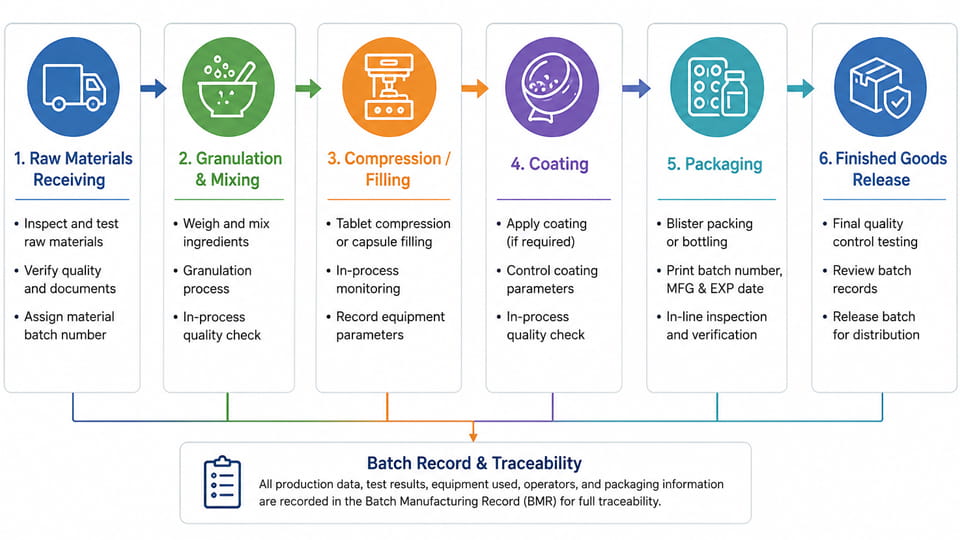
Εικόνα: Απλοποιημένη ροή παραγωγής παρτίδων στη φαρμακευτική παραγωγή.
Στην πράξη, μετά την πλήρωση της κάψουλας ή τη συμπίεση του δισκίου της παρτίδας, η γραμμή σταματά συχνά, καθαρίζεται, και ξεκινά η επόμενη παρτίδα. Αυτό είναι ο ακρογωνιαίος λίθος της GMP, επειδή αποτρέπει τη διασταυρούμενη μόλυνση και επιτρέπει τον έλεγχο κάθε παρτίδας ξεχωριστά. Αν κάτι πάει στραβά (ας πούμε ότι ένα εργαστηριακό τεστ αποτυγχάνει), μόνο αυτή η παρτίδα είναι απομονωμένη. Όπως σημειώνει μια πηγή του κλάδου, «χρησιμοποιώντας παρτίδα παραγωγής, Οι φαρμακευτικές εταιρείες μπορούν να παράγουν συγκεκριμένες ποσότητες ενός προϊόντος και στη συνέχεια να προσαρμόσουν τις προτεραιότητές τους ανάλογα με τη μεταβαλλόμενη ζήτηση»..
ΕΝΑ αριθμός παρτίδας (μερικές φορές ονομάζεται αριθμός παρτίδας) είναι ένας μοναδικός κωδικός που δίνεται σε μία παρτίδα προϊόντος. Είναι σφραγισμένο ή τυπωμένο σε κάθε μονάδα (ή τη συσκευασία του) από αυτή την παρτίδα. Με απλά λόγια, ένας αριθμός παρτίδας συνδέει κάθε δισκίο ή φιαλίδιο με την ακριβή περίοδο παραγωγής. Σύμφωνα με τους ειδικούς, «Ο αριθμός παρτίδας είναι ένα μοναδικό αναγνωριστικό που εκχωρείται σε μια ομάδα προϊόντων που κατασκευάστηκαν μαζί υπό τις ίδιες συνθήκες». Ένας άλλος οδηγός βιομηχανίας το συνοψίζει: μια παρτίδα είναι η ποσότητα που παράγεται σε μία μόνο σειρά, και ο αριθμός παρτίδας προσδιορίζει αυτήν την εκτέλεση.
Πώς μοιάζει ένας αριθμός παρτίδας? Δεν υπάρχει ενιαία παγκόσμια μορφή - οι εταιρείες δημιουργούν τη δική τους κωδικοποίηση. Συχνά ένας αριθμός παρτίδας περιλαμβάνει κάποιο συνδυασμό ημερομηνία, κωδικός γραμμής ή εγκατάστασης, και μια ακολουθία. Για παράδειγμα: B12345678-AB, όπου το "B" μπορεί να είναι κωδικός προϊόντος ή κατηγορία, οι αριθμοί είναι ένα διαδοχικό αναγνωριστικό παρτίδας, και το "AB" θα μπορούσε να υποδεικνύει το φυτό ή τη γραμμή. Επίσης, ένας αριθμός σαν TAB240501-001 θα μπορούσε να αναλυθεί ως "TAB" (κωδικός προϊόντος για tablet), “240501” (Μάιος 1, 2024), και "001" (σύνολο παραγωγής 1 της ημέρας). Άλλο ένα παράδειγμα: CAP250318A03 μπορεί να σημαίνει Κάψουλες (ΚΑΠΑΚΙ), ημερομηνία 25-Μαρτ-18, γραμμή Α, σύνολο παραγωγής 03. Το κλειδί είναι η συνέπεια: κάθε μέρος του κώδικα έχει νόημα.
Ανεξαρτήτως μορφής, ο αριθμός παρτίδας καταγράφεται σε όλα τα αρχεία παραγωγής. Του «Τεκμηριωμένη με συνέπεια και συστηματική βάση – από την παραγωγή έως την αποθήκευση». Συνήθως τυπώνεται και στις δύο πρωτογενείς συσκευασίες (σαν μπουκάλι χαπιού) και σε δευτερεύουσα συσκευασία (σαν χαρτοκιβώτιο ή κουτί). Εν συντομία, Ο αριθμός παρτίδας είναι ο σύνδεσμος μεταξύ του προϊόντος στο ράφι και της ιστορίας κατασκευής του.
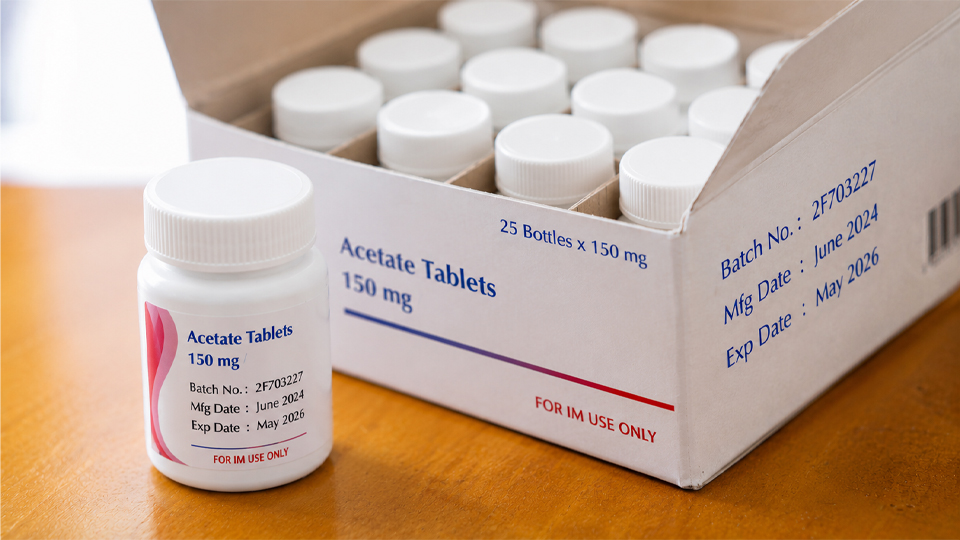
Το να έχετε έναν αριθμό παρτίδας μπορεί να φαίνεται σαν μια επιπλέον ετικέτα, αλλά στην πραγματικότητα είναι α Απαίτηση GMP και ένα εργαλείο κρίσιμης ποιότητας. Οι ρυθμιστικές αρχές σε όλο τον κόσμο επιβάλλουν την αρίθμηση παρτίδων για φαρμακευτικά προϊόντα. Για παράδειγμα, τους κανόνες CGMP του FDA των ΗΠΑ (21 CFR 211.130) απαιτούν ρητά οι ετικέτες φαρμάκων να φέρουν πολλά ή τον αριθμό ελέγχου που «επιτρέπει τον προσδιορισμό του ιστορικού της κατασκευής και του ελέγχου της παρτίδας». Με άλλα λόγια, κάθε φάρμακο που πωλείται στις ΗΠΑ πρέπει να έχει μια παρτίδα (παρτίδα) αριθμός σε αυτό, ώστε να μπορεί να εντοπιστεί το πλήρες ιστορικό του. Ομοίως, Οι κατευθυντήριες γραμμές GMP της ΕΕ και PIC/S καθιστούν σαφές ότι κάθε παρτίδα πρέπει να προσδιορίζεται και να καταγράφεται μοναδικά για να διασφαλίζεται η ποιότητα του προϊόντος και η ασφάλεια των ασθενών.
Γιατί είναι τόσο σημαντικό? Μπορούμε να ομαδοποιήσουμε τους λόγους σε ιχνηλασιμότητα, συμμόρφωση, ποιότητα, ανακαλεί, και έρευνες:
Οι αριθμοί παρτίδας είναι στοιχεία ιχνηλασιμότητας. Δημιουργούν έναν άμεσο σύνδεσμο μεταξύ του τελικού προϊόντος και όλων όσων συνέβαλαν στην παραγωγή του. Με αριθμό παρτίδας, μπορείς να απαντήσεις «ποιες πρώτες ύλες, χειριστές, μηχανές, και τα αποτελέσματα των δοκιμών μπήκαν σε αυτήν την παρτίδα?”. Για παράδειγμα, εάν υπάρχει σήμανση μιας παρτίδας φαρμάκου BN12345, Οι ομάδες ποιότητας γνωρίζουν ακριβώς ποιοι αριθμοί παρτίδας συστατικών χρησιμοποιήθηκαν (λέγω, API πολλά και έκδοχο πλήθος), ποια πρέσα ταμπλετών χρησιμοποιήθηκε, ποιοι χειριστές βρίσκονταν σε υπηρεσία, και ακόμη και τα αποτελέσματα των ελέγχων κατά τη διαδικασία και των τελικών δοκιμών QC. “σιΟι αριθμοί atch εξυπηρετούν έναν θεμελιώδη σκοπό: ιχνηλασιμότητα”. Σας επιτρέπουν να εντοπίσετε προβλήματα και να επαληθεύσετε κάθε βήμα από την αρχή μέχρι το τέλος. Εν συντομία, κάθε αριθμός παρτίδας είναι σαν μια λεπτομερής διαδρομή τριμμένης φρυγανιάς στη διαδικασία παραγωγής.
Φαρμακευτική GMP (Καλή πρακτική παραγωγής) κανονισμοί απαιτώ αυτή η ιχνηλασιμότητα. Τα πρακτορεία αναμένουν ότι το ιστορικό κάθε παρτίδας καταγράφεται. Για παράδειγμα, στο EU GMP Q&ΕΝΑ, Οι επιθεωρητές σημειώνουν ότι οι παρτίδες χύμα και τελικού προϊόντος θα πρέπει να συνδέονται ιχνηλάτητα (συχνά χρησιμοποιώντας σχετικούς κωδικούς παρτίδας). Προειδοποιούν ότι η ύπαρξη άσχετων αριθμών παρτίδας σε μαζικές τιμές έναντι. τελικά πακέτα είναι "ανεπιθύμητος" γιατί μπορεί να μπερδέψει τις προσπάθειες ανάκλησης. Σε ανώτερο επίπεδο, Οι οδηγίες PIC/S αναφέρουν ότι οι εταιρείες πρέπει να τηρούν αρχεία διανομής για κάθε παρτίδα ώστε οποιαδήποτε παρτίδα να μπορεί να ανακληθεί γρήγορα εάν χρειαστεί. Επίσης, I Q7A (για API) λέει ότι «θα πρέπει να υπάρχει ένα σύστημα με το οποίο η διανομή κάθε παρτίδας… μπορεί να προσδιοριστεί άμεσα ώστε να επιτρέπεται η ανάκλησή της». Με άλλα λόγια, Οι ρυθμιστικές αρχές αναμένουν ότι οι αριθμοί παρτίδας συνδέονται με ολόκληρο το σύστημα αρχείων GMP: αρχεία παραγωγής παρτίδων, αρχεία συσκευασίας, ημερολόγια διανομής, και τα λοιπά. Χωρίς αριθμούς παρτίδας, η ικανοποίηση αυτών των απαιτήσεων θα ήταν αδύνατη.
Η ύπαρξη αριθμού παρτίδας καθιστά τον ποιοτικό έλεγχο συστηματικό. Κάθε παρτίδα δοκιμάζεται με βάση τα δικά της πλεονεκτήματα: χημική δοκιμή, διάλυση, καθαρότητα, στειρότητα και ούτω καθεξής. Εάν ένα τεστ αποτύχει, το εργαστήριο μπορεί γρήγορα να αναγνωρίσει την παρτίδα από τον αριθμό της και να αφαιρέσει όλες τις μονάδες με αυτόν τον κωδικό. Όπως επισημαίνει ένας οδηγός, «Εάν εντοπιστεί πρόβλημα ποιότητας, η επηρεασμένη παρτίδα μπορεί γρήγορα να απομονωθεί και να αναλυθεί για να εντοπιστεί και να επιλυθεί η βασική αιτία».. Στην πράξη, Αυτό σημαίνει ότι τα ασυνεπή ή κατώτερα αποτελέσματα επηρεάζουν μόνο μία παρτίδα, όχι ολόκληρη την παραγωγή. Ο αριθμός παρτίδας συνδέει το αποτυχημένο αποτέλεσμα δοκιμής με το πραγματικό υλικό παρτίδας. Αυτή η προσέγγιση εγγυάται ότι οι διορθωτικές ενέργειες (όπως επανεπεξεργασία ή απόρριψη) εφαρμόστε μόνο όπου χρειάζεται, και όχι σε άλλες καλές παρτίδες κατά λάθος.
Οι αριθμοί παρτίδας είναι απαραίτητοι σε περίπτωση ανάκλησης. Εάν προκύψει ανησυχία για την ασφάλεια - ας πούμε, μια ακαθαρσία που βρέθηκε σε εργαστηριακές δοκιμές ή ανεπιθύμητες ενέργειες που αναφέρθηκαν από ασθενείς - η εταιρεία πρέπει να προσδιορίσει ακριβώς ποια προϊόντα επηρεάζονται. Επειδή κάθε κουτί ή μπουκάλι που αποστέλλεται έχει αυτόν τον μοναδικό κωδικό παρτίδας, η ανάκληση μπορεί να στοχεύει μόνο αυτές τις μονάδες. Η καθοδήγηση PIC/S λέει ότι τα αρχεία διανομής για κάθε παρτίδα πρέπει να διατηρούνται «για να διευκολυνθεί η ανάκληση». Και οι ειδικοί του κλάδου το επαναλαμβάνουν: «Η ιχνηλασιμότητα παρτίδων είναι απαραίτητη για την αποτελεσματικότητα της ανάκλησης προϊόντος». Το GMP Trends προειδοποιεί ότι χωρίς μοναδικούς αριθμούς παρτίδας, μια ανάκληση γίνεται εφιάλτης. Εάν δύο διαφορετικά προϊόντα μοιράζονται έναν αριθμό παρτίδας, ίσως χρειαστεί να βγάλετε περισσότερα από την αγορά από όσα χρειάζεται, κίνδυνος βλάβης του ασθενούς ή νομικών επιπτώσεων. Με σωστή κωδικοποίηση παρτίδας, αποσύρεται μόνο η προβληματική παρτίδα, εξοικονομώντας χρόνο, κόστος και ανησυχία. «Αντί να ανακαλούμε όλα τα προϊόντα, μόνο οι παρτίδες που επηρεάζονται πρέπει να αποσυρθούν» σε μια στοχευμένη ανάκληση.
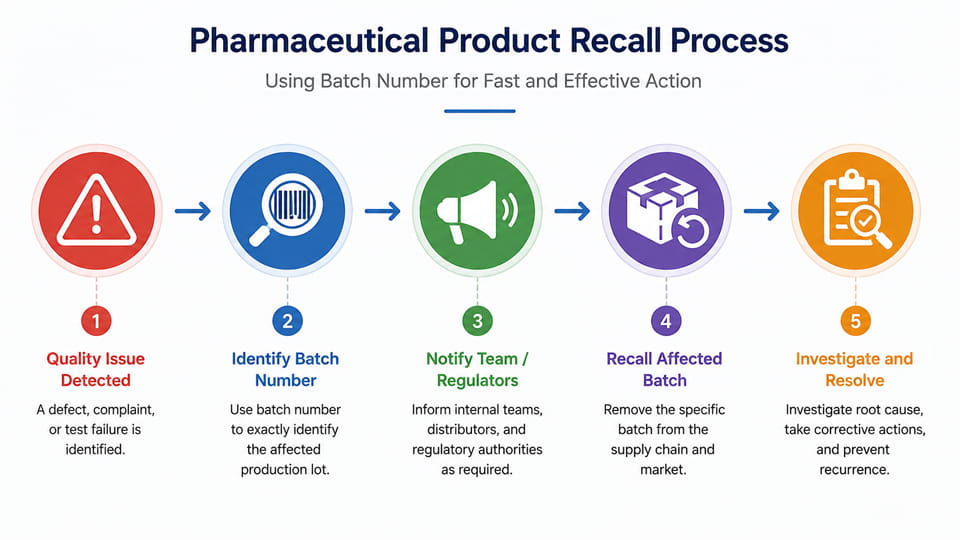
Εικόνα: Απλοποιημένη διαδικασία ανάκλησης προϊόντων με χρήση αριθμών παρτίδας.
Κάθε φορά που κάτι πάει στραβά – είτε πρόκειται για παράπονο πελάτη, μια απόκλιση, ή μια αποτυχημένη δοκιμή - οι αριθμοί παρτίδας καθιστούν τις έρευνες απλές. Οι ομάδες ποιότητας μπορούν να εντοπίσουν όλες τις πτυχές αυτής της παρτίδας. Ξέρουν ακριβώς ΠΟΥ το χειρίστηκε, όταν και όπου έγινε, και τι υλικά χρησιμοποιήθηκαν. «Ποιος κατασκεύασε ένα προϊόν, όταν κατασκευάστηκε, όπου κατασκευάστηκε, ποιες μηχανές και πρώτες ύλες χρησιμοποιήθηκαν». Αυτές οι πληροφορίες σημαίνουν ότι δεν χρειάζεται να μαντέψετε. Για παράδειγμα, αν α σκληρότητα δισκίου η δοκιμή αποτυγχάνει, το QA μπορεί να ελέγξει εάν η συγκεκριμένη παρτίδα είχε διαφορετική υγρασία κοκκοποίησης ή διαφορετική ταχύτητα πίεσης. Με άλλα λόγια, Οι αριθμοί παρτίδων εξαλείφουν τα τυφλά σημεία και επιταχύνουν την ανάλυση της βασικής αιτίας.
Συνοπτικά, Οι αριθμοί παρτίδας απαιτούνται από τις ρυθμιστικές αρχές (FDA, EMA/PIC/S, ΠΟΥ) γιατί εξασφαλίζουν πλήρη ιχνηλασιμότητα και έλεγχο κάθε παρτίδας που παράγεται. Υποστηρίζουν άμεσα τη συμμόρφωση με την GMP, διασφάλιση ποιότητας, και ασφαλής, αποτελεσματικές ανακλήσεις. Οντως, σε ρυθμιζόμενες βιομηχανίες όπως η φαρμακευτική, Η αρίθμηση παρτίδων δεν είναι προαιρετική – είναι νομική απαίτηση. Εάν ένας κατασκευαστής δεν μπορεί να εντοπίσει ένα ελάττωμα στην παρτίδα του, Οι ρυθμιστικές αρχές μπορούν να επιβάλλουν κυρώσεις και οι ανακλήσεις θα μπορούσαν να γίνουν καταστροφικά εκτενείς.
Σε πολλούς κλάδους, τους όρους αριθμός παρτίδας και αριθμός παρτίδας συχνά χρησιμοποιούνται εναλλακτικά. Σε φαρμακευτικά προϊόντα, Ο "αριθμός παρτίδας" είναι πιο συνηθισμένος (συνδέεται με την GMP και το αρχείο παρτίδας), αλλά η ιδέα είναι παρόμοια. Η κύρια διαφορά είναι το εύρος:
| Αριθμός παρτίδας | Αριθμός παρτίδας | |
| Ορισμός | Προσδιορίζει α ενιαία σειρά παραγωγής ενός προϊόντος υπό ένα σύνολο συνθηκών. | Συχνά αναφέρεται σε μια μεγαλύτερη ομάδα που μπορεί να περιλαμβάνει πολλές παρτίδες που μοιράζονται την ίδια συνταγή ή χρονοδιάγραμμα. |
| Βιομηχανική χρήση | Πρότυπο στα φαρμακευτικά προϊόντα (και βιολογικά) για την παραγωγή παρτίδας και τη δοκιμή αποδέσμευσης. | Κοινό στα τρόφιμα, καλλυντικά, και τα λοιπά.; μερικές φορές χρησιμοποιείται στη φαρμακευτική, αλλά μπορεί να καλύψει πολλές παρτίδες. |
| Ιχνηλασιμότητα | Συνδέεται με το λεπτομερές ιστορικό μιας παρτίδας (υλικά, εξοπλισμός, εγγραφές). | Δένει πολλές παρτίδες μεταξύ τους, συνήθως για ομαδοποίηση σε δειγματοληψία ή QA, παρά λεπτομερής ιχνηλάτηση. |
| Παράδειγμα | Σύνολο παραγωγής #001 για τρέξιμο τον Ιαν 1, 2024 ενός αντιβιοτικού δισκίου (ένα τρέξιμο). | Παρτίδα 202401 μπορεί να περιλαμβάνει Batch #001 και #002 των ίδιων αντιβιοτικών δισκίων που παρασκευάστηκαν τον Ιανουάριο 2024. |
ΕΝΑ αριθμός παρτίδας συνήθως αναφέρεται σε μια συγκεκριμένη φάση παραγωγής, ενώ α αριθμός παρτίδας μπορεί να περιλαμβάνει πολλαπλές εκτελέσεις που γίνονται υπό παρόμοιες συνθήκες. Στην πράξη, ορισμένες εταιρείες τα χρησιμοποιούν συνώνυμα. Αλλά με αυστηρούς όρους GMP, κάθε σύνολο παραγωγής έχει το δικό του ρεκόρ και αριθμό. Πολλά κανονιστικά έγγραφα (όπως το FDA και το PIC/S) στην πραγματικότητα αναφέρονται αριθμός παρτίδας ή παρτίδας μαζί, αναγνωρίζοντας ότι είναι λειτουργικά τα ίδια για λόγους ιχνηλασιμότητας.
Ένας αριθμός παρτίδας μπορεί να μοιάζει με απλός συνδυασμός γραμμάτων και αριθμών, αλλά πίσω από αυτό βρίσκεται ένα προσεκτικά σχεδιασμένο σύστημα αναγνώρισης. Κάθε φαρμακευτική εταιρεία θεσπίζει τους δικούς της κανόνες αρίθμησης μέσω εσωτερικών Τυποποιημένων Λειτουργικών Διαδικασιών (Κοφτερός), διασφαλίζοντας ότι καμία παρτίδα παραγωγής δεν θα λάβει ποτέ το ίδιο αναγνωριστικό.
Ένας τυπικός αριθμός παρτίδας συνήθως συνδυάζει πολλές πληροφορίες κατασκευής. Για παράδειγμα:
TAB-240501-001
Αντί να είναι τυχαίοι χαρακτήρες, κάθε ενότητα έχει συγκεκριμένο νόημα. “ΑΥΤΙ” μπορεί να αντιπροσωπεύει ένα προϊόν tablet, “240501” υποδεικνύει την ημερομηνία κατασκευής, ενώ “001” προσδιορίζει την πρώτη παρτίδα παραγωγής που ολοκληρώθηκε εκείνη την ημέρα.
Ορισμένοι κατασκευαστές περιλαμβάνουν επίσης πρόσθετα αναγνωριστικά, όπως γραμμές παραγωγής, εργαστήρια, ή βάρδιες. Κατασκευαστής κάψουλας, για παράδειγμα, μπορεί να δημιουργήσει έναν αριθμό παρτίδας όπως CAP-250318-B02, όπου “σι” αναφέρεται στη Γραμμή Παραγωγής Β και “02” αντιπροσωπεύει τη δεύτερη παρτίδα που παράγεται κατά τη διάρκεια αυτής της βάρδιας.
Η ακριβής μορφή διαφέρει από τη μια εταιρεία στην άλλη, αλλά κάθε αποτελεσματικό σύστημα αρίθμησης παρτίδων ακολουθεί τρεις βασικές αρχές:
Αυτές οι αρχές επιτρέπουν στους κατασκευαστές να ανακτούν το πλήρες ιστορικό παραγωγής οποιουδήποτε προϊόντος μέσα σε λίγα λεπτά, που είναι ακριβώς αυτό που περιμένουν οι ρυθμιστικοί επιθεωρητές κατά τους ελέγχους GMP.
Η όλη διαδικασία παραγωγής για κάθε παρτίδα πρέπει να τεκμηριώνεται στο α Ρεκόρ παρτίδας παραγωγής (BPR), αναφέρεται επίσης ως α Αρχείο Παραγωγής παρτίδας (BMR). Αυτά τα αρχεία χρησιμεύουν ως το ημερολόγιο παραγωγής για κάθε παρτίδα, αποδεικνύοντας ότι το προϊόν κατασκευάστηκε σύμφωνα με τον εγκεκριμένο τύπο, οδηγίες κατασκευής, και τις απαιτήσεις GMP. Σύμφωνα με τους κανονισμούς του FDA, πρέπει να καταρτίζεται αρχείο παραγωγής και ελέγχου παρτίδας για κάθε παρτίδα φαρμακευτικού προϊόντος και να περιλαμβάνει πλήρεις πληροφορίες παραγωγής και ελέγχου.
Ένα τυπικό BPR περιλαμβάνει:
Ο αριθμός παρτίδας εμφανίζεται σε ολόκληρο το BPR και χρησιμεύει ως το κλειδί αναγνωριστικό που συνδέει όλα τα αρχεία παραγωγής μαζί. Μόλις ολοκληρωθεί η παραγωγή, το BPR πρέπει να επανεξεταστεί και να εγκριθεί από την Διασφάλιση Ποιότητας (QA) προτού αποδεσμευτεί η παρτίδα. Κατά τη διάρκεια επιθεωρήσεων GMP, οι ρυθμιστικές αρχές επαληθεύουν προσεκτικά ότι οι πληροφορίες που καταγράφονται στο BPR ταιριάζουν με τον αριθμό παρτίδας που αναγράφεται στο τελικό προϊόν. Ένα ολοκληρωμένο σύστημα καταγραφής παρτίδων επιτρέπει στους κατασκευαστές να ανακτούν γρήγορα τα αρχεία παραγωγής, εργαστηριακά αποτελέσματα, και πληροφορίες διανομής κάθε φορά που γίνεται έρευνα ποιότητας, παράπονο πελάτη, ή ανάκληση προϊόντος εμφανίζεται, καθιστώντας το έναν από τους ακρογωνιαίους λίθους της σύγχρονης φαρμακευτικής διαχείρισης ποιότητας.
Οι σύγχρονες γραμμές συσκευασίας φαρμακευτικών προϊόντων είναι συνήθως ενσωματωμένες με αυτόματα συστήματα κωδικοποίησης και επιθεώρησης που μπορούν εκτυπώστε και επαληθεύστε αυτόματα τους αριθμούς παρτίδας σε όλη τη διαδικασία συσκευασίας. Ανάλογα με τη μορφή συσκευασίας, διαφορετικοί τύποι εξοπλισμού εφαρμόζουν τις πληροφορίες παρτίδας με διαφορετικούς τρόπους:
Οι λύσεις φαρμακευτικής συσκευασίας της Jinlu Packaging ενσωματώνουν κωδικοποίηση, επιθεώρηση, και αυτοματοποίηση σε μια ενιαία γραμμή παραγωγής. Για παράδειγμα, μια γραμμή συσκευασίας blister μπορεί να εκτυπώσει αυτόματα ένα μοναδικό αριθμός παρτίδας και κωδικό QR σε κάθε συσκευασία blister, ενώ ένα ενσωματωμένο σύστημα επιθεώρησης όρασης επαληθεύει αμέσως την ποιότητα και την ακρίβεια εκτύπωσης. Αυτή η αυτοματοποιημένη επαλήθευση μειώνει σημαντικά το ανθρώπινο σφάλμα, βελτιώνοντας παράλληλα την ιχνηλασιμότητα του προϊόντος και την ακεραιότητα των δεδομένων.
Συνοπτικά, ένα ευρύ φάσμα φαρμακευτικού εξοπλισμού συσκευασίας—συμπεριλαμβανομένου πρέσες δισκίων, μηχανές πλήρωσης καψουλών, Μηχανές συσκευασίας φουσκάλων, γραμμές συσκευασίας φιαλών, μηχανές σήμανσης, και μηχανές χαρτοκιβωτίου— μπορεί να ενσωματωθεί με συστήματα κωδικοποίησης inkjet ή λέιζερ για την εκτύπωση αριθμών παρτίδας και άλλων πληροφοριών ιχνηλασιμότητας στην κύρια ή δευτερεύουσα συσκευασία. Με την αυτοματοποίηση της διαχείρισης αριθμών παρτίδας, Οι κατασκευαστές φαρμακευτικών προϊόντων μπορούν να βελτιώσουν την αποδοτικότητα της παραγωγής, ενίσχυση της ιχνηλασιμότητας των προϊόντων, και διασφαλίζουν τη συμμόρφωση με τις παγκόσμιες απαιτήσεις GMP.
Συνοπτικά, Η παραγωγή παρτίδων και η αρίθμηση παρτίδων είναι η ραχοκοκαλιά του ασφαλούς, συμμορφούμενη φαρμακευτική παραγωγή. Αφήνουν τις εταιρείες να παράγουν φάρμακα με σιγουριά – γνωρίζοντας ότι μπορούν πάντα να εντοπίσουν και να απομονώσουν οποιοδήποτε πρόβλημα. Η παραγωγή παρτίδας εξασφαλίζει ομοιόμορφη ποιότητα και διακριτικό έλεγχο, ενώ οι αριθμοί παρτίδας παρέχουν την άγκυρα παρακολούθησης. Μαζί, πληρούν τους κανόνες GMP και προστατεύουν την ασφάλεια των ασθενών. Η εναλλακτική λύση – η παραγωγή χωρίς σαφείς παρτίδες ή αριθμούς – είναι σχεδόν αδιανόητη σε ένα ρυθμιζόμενο περιβάλλον.
Για φαρμακευτικά προϊόντα, Η επένδυση σε ικανά μηχανήματα συσκευασίας είναι επίσης επένδυση στην ιχνηλασιμότητα. Κωδικοποιητές Jinlu Packing, μηχανές σήμανσης, Τα χαρτοκιβώτια και τα συστήματα επιθεώρησης είναι κατασκευασμένα με γνώμονα την GMP – διασφαλίζοντας ότι κάθε μονάδα φέρει τις σωστές πληροφορίες παρτίδας. Για να διασφαλίσετε ότι η επόμενη παρτίδα σας είναι ασφαλής, συμβατό και πλήρως τεκμηριωμένο, θεωρώ λύσεις με το κλειδί στο χέρι που ενσωματώνουν κωδικοποίηση παρτίδας και αυτόματη ιχνηλασιμότητα.
Έτοιμοι να βελτιώσουν την ιχνηλασιμότητα σας? Εξερευνήστε την πλήρη γκάμα της Jinlu Packing μηχανές συσκευασίας φαρμακευτικών προϊόντων – από κωδικοποιητές παρτίδας και ετικέτες έως χαρτοκιβώτια και επιθεώρηση όρασης – σχεδιασμένα για εκτύπωση, επαληθεύω, και καταγράψτε τους αριθμούς παρτίδων σας άψογα. Επικοινωνήστε με την Jinlu για να συζητήσετε πώς να δημιουργήσετε μια γραμμή συσκευασίας που κρατά κάθε παρτίδα σε καλό δρόμο.
Αριθμός παρτίδας (ή αριθμός παρτίδας) είναι ένας μοναδικός κωδικός που δίνεται σε μία σειρά παραγωγής ενός φαρμάκου. Προσδιορίζει όλες τις μονάδες που κατασκευάζονται μαζί υπό τις ίδιες συνθήκες. Ο κωδικός συνδέει αυτό το προϊόν με τα αρχεία κατασκευής του (συστατικά, διαδικασία, δοκιμές). Ουσιαστικά, είναι μια ετικέτα ταυτότητας για μια παρτίδα φαρμάκων.
Οι αριθμοί παρτίδας επιτρέπουν την ιχνηλασιμότητα. Εάν προκύψει οποιοδήποτε ζήτημα ποιότητας ή ανησυχία για την ασφάλεια, οι εταιρείες και οι ρυθμιστικές αρχές μπορούν γρήγορα να εντοπίσουν αυτήν την παρτίδα σε κάθε βήμα – πρώτες ύλες, εξοπλισμός, χειριστές, αποτελέσματα δοκιμών, διανομή, και τα λοιπά. Αυτό απαιτείται από τους κανόνες GMP και καθιστά δυνατή την ανάκληση μόνο της επηρεαζόμενης παρτίδας αντί για όλα.
Σε φαρμακευτικά προϊόντα, συχνά χρησιμοποιούνται εναλλακτικά, αλλά μερικές φορές με απόχρωση. Ένας αριθμός παρτίδας αναφέρεται συνήθως σε μια συγκεκριμένη σειρά παραγωγής. Ένας αριθμός παρτίδας μπορεί μερικές φορές να αναφέρεται σε μια ομάδα παρτίδων που κατασκευάζονται υπό παρόμοιες συνθήκες. Πολλοί κατασκευαστές τα αντιμετωπίζουν ως συνώνυμα, αλλά το κλειδί είναι η συνέπεια στην τεκμηρίωσή σας.
Παραγωγή παρτίδας σημαίνει παραγωγή μιας πεπερασμένης ποσότητας προϊόντος σε μια σειρά. Κάθε παρτίδα περνά από την πλήρη διαδικασία παραγωγής, τότε ολοκληρώνεται πριν ξεκινήσει η επόμενη. Είναι ο παραδοσιακός τρόπος για tablet, κάψουλες, και τα λοιπά. γίνονται – βήμα προς βήμα – σε αντίθεση με μια διαδικασία συνεχούς ροής.
Οι εταιρείες δημιουργούν αριθμούς παρτίδας χρησιμοποιώντας μια καθορισμένη μορφή. Τα κοινά στοιχεία περιλαμβάνουν μια ημερομηνία (Π.χ., YYMMDD), κωδικός προϊόντος ή φυτού, μετατόπιση ή αναγνωριστικό γραμμής, και έναν αύξοντα αριθμό. Για παράδειγμα, Το "TAB240501-001" μπορεί να σημαίνει tablet από 2024-05-01, σύνολο παραγωγής 001. Μερικοί προσθέτουν γράμματα για περισσότερες πληροφορίες. Η ακριβής μορφή ποικίλλει, αλλά ορίζεται στο σύστημα ποιότητας και χρησιμοποιείται με συνέπεια.
Ανάλογα με το σχέδιο της εταιρείας σας, ένας αριθμός παρτίδας μπορεί να κωδικοποιεί πράγματα όπως την ημερομηνία παραγωγής, κωδικός προϊόντος, γραμμή εξοπλισμού, μετατόπιση και ακολουθία. Ο στόχος είναι να γίνει η παρτίδα μοναδικά αναγνωρίσιμη. Για παράδειγμα, Ο Yaveon εξηγεί ότι σε έναν κωδικό όπως ο B12345678-AB, Το "B" θα μπορούσε να υποδεικνύει τον τύπο του προϊόντος, “12345678” η συγκεκριμένη παρτίδα, και "AB" τον ιστότοπο ή τη γραμμή.
Η ιχνηλασιμότητα σημαίνει ότι μπορείτε να παρακολουθήσετε το ταξίδι ενός προϊόντος στην κατασκευή. Είναι ζωτικής σημασίας για την ασφάλεια των ασθενών και τη συμμόρφωση με τους κανονισμούς. Εάν εμφανιστεί ζήτημα ασφάλειας φαρμάκων, πρέπει να γνωρίζετε ποιες παρτίδες ενδέχεται να επηρεαστούν. Η ιχνηλασιμότητα σάς επιτρέπει να απαντήσετε, «Ποιες παρτίδες χρησιμοποίησαν αυτή την πρώτη ύλη?» και «Ποιες μονάδες πήγαν σε ποιες αγορές?"Χωρίς αυτό, οι εταιρείες δεν μπορούσαν να πραγματοποιήσουν ακριβείς ανακλήσεις ή έρευνες. Οι ρυθμιστικές αρχές επιβάλλουν την ιχνηλασιμότητα στα GMP για αυτόν ακριβώς τον λόγο.
Εάν ανακαλυφθεί ελάττωμα ή μόλυνση σε ένα φάρμακο, η εταιρεία χρησιμοποιεί αρχεία παρτίδας για να καταλάβει ποιες μονάδες προϊόντων επηρεάζονται. Ειδοποιούν τις ρυθμιστικές αρχές, στη συνέχεια, δώστε εντολή στους χονδρεμπόρους και στα φαρμακεία να επιστρέψουν ή να θέσουν σε καραντίνα τους επηρεασμένους αριθμούς παρτίδων. Λόγω αριθμών παρτίδας, μόνο η κακή παρτίδα τραβιέται. Αυτός είναι ο λόγος για τον οποίο διατηρούμε αρχεία διανομής "για κάθε παρτίδα...για να διευκολύνουμε την ανάκληση". Μετά την αφαίρεση του προϊόντος, Το QA διερευνά τη βασική αιτία για την πρόληψη της υποτροπής.
Ένα BMR (ονομάζεται επίσης Ρεκόρ παρτίδας παραγωγής) είναι το λεπτομερές αρχείο καταγραφής όλων των γεγονότων για την κατασκευή μιας παρτίδας. Περιλαμβάνει το όνομα του προϊόντος, αριθμός παρτίδας, τύπους, εξοπλισμός που χρησιμοποιείται, ονόματα χειριστών, χρονικές σημάνσεις, και όλα τα αποτελέσματα των δοκιμών. Η GMP απαιτεί από το BMR να αναφέρει "το όνομα και τον αριθμό παρτίδας του προϊόντος". Το BMR είναι ουσιαστικά το «πιστοποιητικό γέννησης» μιας παρτίδας.
Η παρτίδα παραγωγής προσφέρει ευελιξία για εγκαταστάσεις πολλαπλών προϊόντων και απλούστερη τεκμηρίωση για κάθε εκτέλεση. Είναι πιο εύκολο να επικυρωθούν και να πληρούν τις προϋποθέσεις οι διαδικασίες σταδιακά. Εάν ένα πρόβλημα εντοπιστεί αργά σε μια παρτίδα, ολόκληρη η παρτίδα μπορεί να απορριφθεί χωρίς να επηρεαστούν άλλα προϊόντα. Η συνεχής παραγωγή έχει οφέλη αποδοτικότητας, αλλά συχνά απαιτεί μεγάλες επενδύσεις και αυστηρούς ελέγχους. Πολλές φαρμακευτικές εταιρείες εξακολουθούν να βασίζονται στη λειτουργία παρτίδας, ειδικά για μικρότερης κλίμακας ή εξειδικευμένα φάρμακα.
Αναφορές:
1.Παραγωγή παρτίδας\Αριθμός παρτίδας—— Βικιπαίδεια
2.Ερωτήσεις και απαντήσεις σχετικά με τις τρέχουσες απαιτήσεις ορθής παρασκευαστικής πρακτικής—αρχεία και εκθέσεις —— Η.Π.Α. Υπηρεσία Τροφίμων και Φαρμάκων
3.21 CFR § 211.188 – Αρχεία παραγωγής και ελέγχου παρτίδων. —— Ινστιτούτο Νομικών Πληροφοριών
4.Q7A Οδηγίες ορθής παρασκευαστικής πρακτικής για ενεργά φαρμακευτικά συστατικά —— Η.Π.Α. Υπηρεσία Τροφίμων και Φαρμάκων