
GMP εναντίον cGMP είναι μια από τις πιο συχνές ερωτήσεις σε φαρμακευτική παραγωγή— και για καλό λόγο. Αν και οι δύο όροι συνδέονται στενά, δεν είναι πανομοιότυπα. Η κατανόηση της διαφοράς είναι απαραίτητη για τους κατασκευαστές φαρμάκων, αγοραστές εξοπλισμού, διευθυντές παραγωγής, και ποιοτικές ομάδες γιατί αυτά τα πρότυπα επηρεάζουν κάθε στάδιο της παραγωγής, από το σχεδιασμό της εγκατάστασης και την επικύρωση της διαδικασίας μέχρι την επιλογή εξοπλισμού και την ποιότητα των προϊόντων. Προπαντός, ο “Ρεύμα” σε Τρέχουσα ορθή παραγωγική πρακτική (CGMP) αντανακλά την προσδοκία ότι οι κατασκευαστές υιοθετούν συνεχώς σύγχρονες τεχνολογίες, συστήματα, και πρακτικές ποιότητας αντί να βασίζονται σε απαρχαιωμένες μεθόδους.
Είτε επενδύετε σε μια νέα σειρά συσκευασίας φιαλών, αναβάθμιση υπάρχουσας γραμμής παραγωγής, ή προετοιμασία για ρυθμιστικές επιθεωρήσεις, κατανόηση GMP εναντίον cGMP μπορεί να σας βοηθήσει να πάρετε πιο ενημερωμένες αποφάσεις. Σε αυτόν τον οδηγό, θα εξηγήσουμε τις βασικές διαφορές μεταξύ GMP και cGMP, περιγράψτε τους απαιτήσεις συμμόρφωσης, και να δείξει πόσο μοντέρνο εξοπλισμός συσκευασίας φαρμακευτικών προϊόντων υποστηρίζει ασφαλέστερα, πιο αποτελεσματικός, και πλήρως συμβατή κατασκευή.
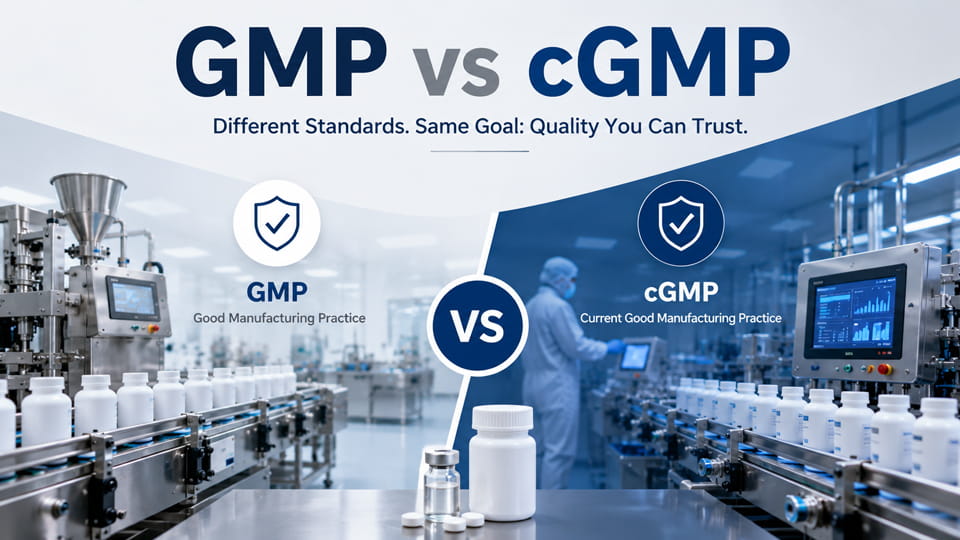
Καλή πρακτική παραγωγής (GMP) είναι ένα παγκόσμιο πλαίσιο διασφάλισης ποιότητας για τη φαρμακευτική βιομηχανία. Ο ΠΟΥ ορίζει την GMP ως την πτυχή της διασφάλισης ποιότητας που διασφαλίζει ότι τα προϊόντα παράγονται και ελέγχονται με συνέπεια σύμφωνα με τα κατάλληλα πρότυπα ποιότητας. Ομοίως, του Ευρωπαϊκού Οργανισμού Φαρμάκων (EMA) περιγράφει την GMP ως το ελάχιστο πρότυπο που πρέπει να πληροί ένας παρασκευαστής φαρμάκων στην παραγωγή. Στην πράξη, Το GMP καλύπτει το σχεδιασμό των εγκαταστάσεων, εξοπλισμός, πρώτες ύλες, κατάρτιση προσωπικού, γραπτές διαδικασίες, και δοκιμές. Ο στόχος είναι να διασφαλιστεί ότι κάθε παρτίδα είναι υψηλής ποιότητας, κατάλληλο για την προβλεπόμενη χρήση του, και ταιριάζει με τις προδιαγραφές του.
Ενώ ΠΟΥ, Η EMA και άλλες ρυθμιστικές αρχές το αποκαλούν «GMP,Αυτός ο όρος είναι ουσιαστικά εναλλάξιμος με το cGMP εκτός των ΗΠΑ. Οντως, Η καθοδήγηση του ΠΟΥ σημειώνει ότι η GMP «αναφέρεται επίσης ως «cGMP» ή «τρέχουσα» GMP» σε ορισμένα πλαίσια. Για πολλούς διεθνείς κατασκευαστές, Η τήρηση των κατευθυντήριων γραμμών GMP σημαίνει ότι έχετε τα ίδια ποιοτικά αποτελέσματα που τονίζει αργότερα η FDA με το cGMP.
Τρέχουσα ορθή παραγωγική πρακτική (CGMP) είναι ο όρος του FDA για αυτούς τους κανονισμούς στις Ηνωμένες Πολιτείες. Ο FDA ορίζει το cGMP ως τα συστήματα που διασφαλίζουν τον σωστό σχεδιασμό, παρακολούθηση και έλεγχος των διαδικασιών και των εγκαταστάσεων παραγωγής. Όπως το GMP, Το cGMP στοχεύει να διασφαλίσει ότι τα ναρκωτικά προϊόντα έχουν την ταυτότητα, δύναμη, ποιότητα και αγνότητα ισχυρίζονται. Οντως, οι κανονισμοί του FDA καλύπτουν ρητά τα πάντα, από την καθαριότητα και τον εξοπλισμό των εγκαταστάσεων μέχρι τα προσόντα του προσωπικού και την τήρηση αρχείων (21 Ανταλλακτικά CFR 210 και 211).
Η κρίσιμη διάκριση είναι ότι το "C" στο cGMP σημαίνει ρεύμα. Αυτό σημαίνει ότι οι εταιρείες πρέπει να χρησιμοποιούν σύγχρονες τεχνολογίες, εξοπλισμό και διαδικασίες. Όπως σημειώνει η FDA, συστήματα και εξοπλισμός που ήταν «κορυφαίοι» 10 ή 20 πριν από χρόνια μπορεί τώρα να υπολείπεται του cGMP, γιατί τα πρότυπα ποιότητας και η τεχνολογία προχωρούν με την πάροδο του χρόνου. Εν συντομία, Το cGMP φέρει όλες τις ίδιες απαιτήσεις ποιότητας με το GMP, αλλά δίνει έμφαση στη συνεχή βελτίωση και εκσυγχρονισμό. Η συμμόρφωση με το cGMP επιβάλλεται μέσω επιθεωρήσεων του FDA, και η μη τήρηση αυτών των προτύπων καθιστά νομικά ένα φάρμακο «νοθευμένο,” ακόμα κι αν περάσει εργαστηριακές εξετάσεις.
Ενώ το GMP και το cGMP στοχεύουν στο ίδιο αποτέλεσμα (ασφαλής, φάρμακα υψηλής ποιότητας), οι διαφορές έγκεινται στην έμφαση και τη χρήση. Ο παρακάτω πίνακας συνοψίζει τις βασικές διακρίσεις:
| Αποψη | GMP (Καλή πρακτική παραγωγής) | CGMP (Τρέχουσα GMP, FDA) |
| Ορολογία | "Good Manufacturing Practice" – χρησιμοποιείται από τον ΠΟΥ, EMA, PIC/S, και τα λοιπά. | «Τρέχουσα ορθή παρασκευαστική πρακτική» – όρος του FDA |
| Ρυθμιστικό πλαίσιο | Παγκόσμιο πρότυπο που εφαρμόζεται από πολλές χώρες (ΠΟΥ, PIC/S, GMP της ΕΕ) | Ειδικοί για τις ΗΠΑ κανονισμοί (21 CFR 210–211) |
| Εστία | Πληροί τα καθιερωμένα πρότυπα ποιότητας με συνέπεια | Πληροί πρότυπα και διατηρεί ενημερωμένη την τεχνολογία/διεργασίες |
| Απαίτηση τεχνολογίας | Γενικά στατικό (πληροί τα βασικά πρότυπα) | Πρέπει να χρησιμοποιεί τον πιο πρόσφατο επικυρωμένο εξοπλισμό και μεθόδους |
| Απόδειξη με έγγραφα | Απαιτούνται διεξοδικά SOP και αρχεία | Ακόμα πιο αυστηρή τεκμηρίωση (ηλεκτρονικές εγγραφές, ίχνη ελέγχου) |
| Νομιμοποίηση | Αναμένεται επικύρωση διαδικασίας και καθαρισμού | Προσόντα εξοπλισμού (IR/WH/PQ) και υποχρεωτική επικύρωση διαδικασίας |
| Σύστημα Ποιότητας | Πρότυπο Σύστημα Διαχείρισης Ποιότητας | Ενισχυμένο QMS με βάση τον κίνδυνο; κύκλους συνεχούς βελτίωσης |
| Επιθεωρήσεις & Ενημερώσεις | Περιοδικές επιθεωρήσεις για την επαλήθευση της συμμόρφωσης με την GMP | Ιδιο, αλλά ο FDA αναμένει συνεχείς ενημερώσεις; ό,τι ήταν συμβατό μπορεί να γίνει ξεπερασμένο |
| Ρυθμιστικό Πεδίο | ΕΓΩ/ΕΓΩ: συμμόρφωση που επιβάλλεται από τον EMA & εθνικές υπηρεσίες | ΜΑΣ: συμμόρφωση που επιβάλλεται από τον FDA; η μη συμμόρφωση οδηγεί σε νομικές ενέργειες |
Στην ουσία, CGMP είναι GMP συν την προσδοκία να συμβαδίσει με τις σύγχρονες βέλτιστες πρακτικές. Όπως εξηγεί μια ανάλυση του κλάδου, Το cGMP «εστιάζει στη συνεχή βελτίωση και σημαίνει ότι χρησιμοποιούνται τα πιο σύγχρονα πρότυπα και τεχνολογίες για τη διασφάλιση της ποιότητας, λαμβάνοντας υπόψη ότι η GMP θεωρείται ένα σύνολο αρχών». Με πρακτικούς όρους, Το cGMP φέρει όλες τις απαιτήσεις GMP, αλλά με επιπλέον έμφαση που πρέπει οι εταιρείες δραστήρια διαδικασίες αναβάθμισης και τεκμηρίωση.
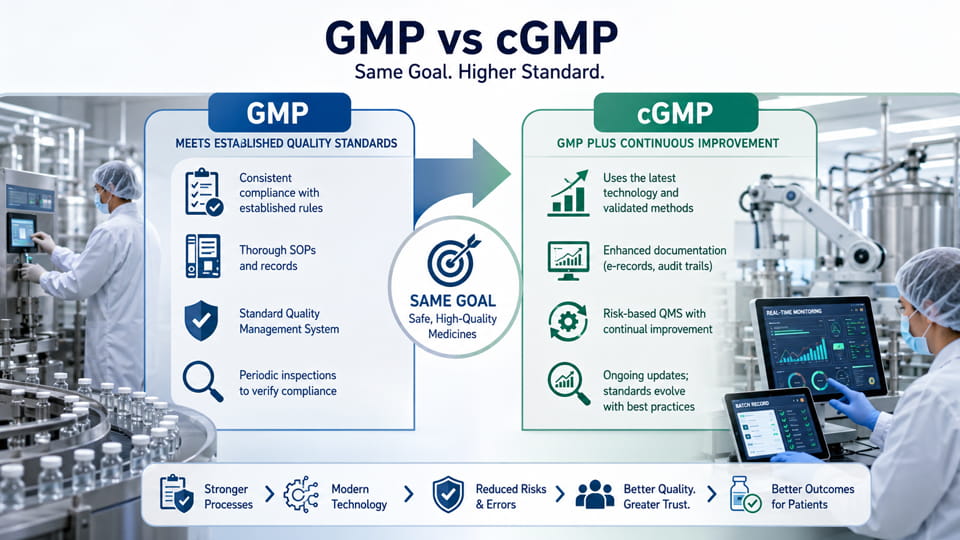
Το "Τρέχον" στο cGMP δεν είναι απλώς μια λέξη-κλειδί: σηματοδοτεί ότι οι εγκαταστάσεις, τα μηχανήματα και τα συστήματα ποιότητας δεν πρέπει ποτέ να είναι ξεπερασμένα. Για παράδειγμα, εάν μια παλαιότερη μέθοδος παραγωγής ή ένα κομμάτι του εξοπλισμού διαπιστωθεί ότι είναι κατώτερο, Τα πρότυπα cGMP σημαίνουν ότι η εταιρεία πρέπει να εφαρμόσει νεότερες λύσεις. Αυτή η προσέγγιση οδηγεί στην καινοτομία: εταιρείες που υιοθετούν cGMP επενδύουν σε ηλεκτρονικά αρχεία παρτίδων, αυτοματοποιημένα συστήματα επιθεώρησης, παρακολούθηση δεδομένων σε πραγματικό χρόνο και άλλες εξελίξεις που βελτιώνουν την ποιότητα και μειώνουν τα σφάλματα.
Το γράμμα "c" στο cGMP υπογραμμίζει ένα απλό αλλά κρίσιμο σημείο: συμμόρφωση σημαίνει χρήση ρεύμα γνώση και τεχνολογία. Αυτό έχει σημασία γιατί η φαρμακευτική επιστήμη και ο εξοπλισμός εξελίσσονται γρήγορα. Ποια ήταν μια έγκυρη μέθοδος καθαρισμού 20 πριν από χρόνια μπορεί να μην πληροί πλέον τα σημερινά πρότυπα μόλυνσης, και νέα εργαλεία (όπως τα ψηφιακά συστήματα διαχείρισης ποιότητας) προσφέρουν καλύτερη ιχνηλασιμότητα από τα χάρτινα κούτσουρα.
Οι ρυθμιστικές αρχές αναμένουν συνήθως ότι οι κατασκευαστές θα το κάνουν βελτιωθεί ενεργά. Για παράδειγμα, Η καθοδήγηση του FDA σημειώνει ότι ο εξοπλισμός πρέπει να κατασκευάζεται και να τοποθετείται για να διευκολύνει τον καθαρισμό και να αποτρέπει τη μόλυνση – υπονοώντας ότι τα σχέδια πρέπει να προσαρμόζονται καθώς μαθαίνουμε περισσότερα για τον έλεγχο της μόλυνσης. Εάν διατίθενται καλύτερη αποστείρωση ή υλικά, Το cGMP ζητά την ενσωμάτωσή τους. Jinlupacking highlights: «Το «Ρεύμα» στο cGMP τονίζει ότι οι κατασκευαστές πρέπει να χρησιμοποιούν σύγχρονες τεχνολογίες και συστήματα,” το οποίο προωθεί τη συνεχή βελτίωση στις διαδικασίες παραγωγής.
Στην πράξη, Αυτό σημαίνει ότι οι εγκαταστάσεις πρέπει να διαθέτουν ένα σύστημα ποιότητας που επανεξετάζει και αναθεωρεί τις διαδικασίες όταν ενημερώνονται οι κανονισμοί ή τα βιομηχανικά πρότυπα. Μέρος 21CFR του FDA 11 (για ηλεκτρονικά συστήματα) είναι ένα παράδειγμα: προστέθηκε για την αντιμετώπιση ηλεκτρονικών αρχείων και υπογραφών. Υπό cGMP, οι φαρμακευτικές εταιρείες έπρεπε να ενσωματώσουν μοναδικές συνδέσεις, ίχνη ελέγχου και χαρακτηριστικά ασφαλείας στον ηλεκτρονικό εξοπλισμό και το λογισμικό τους. Εάν μια εταιρεία συνέχιζε να χρησιμοποιεί μόνο χάρτινα κούτσουρα, δεν θα πληρούσε τα τρέχοντα πρότυπα.
Ένας άλλος βασικός τομέας είναι η ακεραιότητα των δεδομένων. Οι ρυθμιστικές αρχές εξετάζουν τώρα τα ηλεκτρονικά αρχεία παρτίδων, που απαιτεί όλες οι αλλαγές να είναι ανιχνεύσιμες σε εξουσιοδοτημένους χρήστες. Ένας αναφερόμενος οδηγός συμμόρφωσης σημειώνει ότι 21 Μέρος CFR 11 "επιβάλλει μοναδικές συνδέσεις χρηστών, ίχνη ελέγχου και ηλεκτρονικές υπογραφές για τη διασφάλιση της ακεραιότητας των δεδομένων».. Αυτό δεν ήταν ένα αρχικό μέρος της GMP πριν από δεκαετίες. Επομένως, cGMP σήμερα σημαίνει αναβάθμιση του εξοπλισμού και των ελέγχων έτσι ώστε κάθε ενέργεια σε μια γραμμή παραγωγής (αλλαγές στις ρυθμίσεις του μηχανήματος, ειδοποιήσεις ποιότητας) καταγράφεται και προστατεύεται.
Συνοπτικά, Το «τρέχον» στο cGMP σημαίνει ποτέ να μην επαναπαύεσαι σε παλιές δάφνες. Οδηγεί τις εταιρείες να επικυρώνουν τακτικά τον νέο εξοπλισμό, επανεκπαίδευση του προσωπικού σε καλύτερες μεθόδους, και υιοθετήστε τις πιο πρόσφατες πρακτικές ποιότητας. Αυτό έχει ως αποτέλεσμα τη συνεχή βελτίωση της ασφάλειας και της συμμόρφωσης του προϊόντος. Η Qualityze σημειώνει ότι ένας σημαντικός λόγος που το cGMP είναι σημαντικό είναι ότι «προωθεί τη συνεχή βελτίωση» – διασφαλίζοντας ότι οι εταιρείες χρησιμοποιούν πάντα την πιο πρόσφατη τεχνολογία για να διασφαλίσουν την ποιότητα.
Είτε ονομάζεται GMP είτε cGMP, ορισμένες βασικές απαιτήσεις είναι καθολικές στην παρασκευή και τη συσκευασία φαρμακευτικών προϊόντων. Αυτά τα κοινά στοιχεία είναι απαραίτητα για τη συμμόρφωση στο πλαίσιο του FDA, Κανόνες WHO ή EMA:
Ρυθμιστές όπως ο ΠΟΥ δηλώνουν ότι η GMP ορίζει «μέτρα και δραστηριότητες ποιότητας τόσο για την παραγωγή όσο και για τον έλεγχο φαρμάκων,» και εξασφαλίζει τα πάντα από «διαδικασίες [ύπαρξη] σαφώς καθορισμένο, επικυρώθηκε και αναθεωρήθηκε» στο προσωπικό και οι χώροι που είναι «κατάλληλοι για παραγωγή». Στην πράξη, αυτό καλύπτει όλα όσα αναφέρονται παραπάνω.
Σε χώρους συσκευασίας, τα πρότυπα συχνά μεταφράζονται σε συγκεκριμένους κανόνες σχεδιασμού (ως Σημειώσεις οδηγού συμμόρφωσης του Jinlu). Για παράδειγμα, μηχανήματα σε μια γραμμή GMP πρέπει να είναι καθαρίζεται εύκολα (λείος ανοξείδωτος χάλυβας, χωρίς ρωγμές ή νεκρά πόδια) και πλήρως επικυρωμένο. Τεκμηρίωση όπως πιστοποίηση εγκατάστασης (IQ), Επιχειρησιακά Προσόντα (OQ), και Προσόντα Απόδοσης (PQ) απαιτείται πριν και κατά την παραγωγή. Χωρίς αυτούς τους ελέγχους, ένας έλεγχος θα επισήμανε τη μη συμμόρφωση.
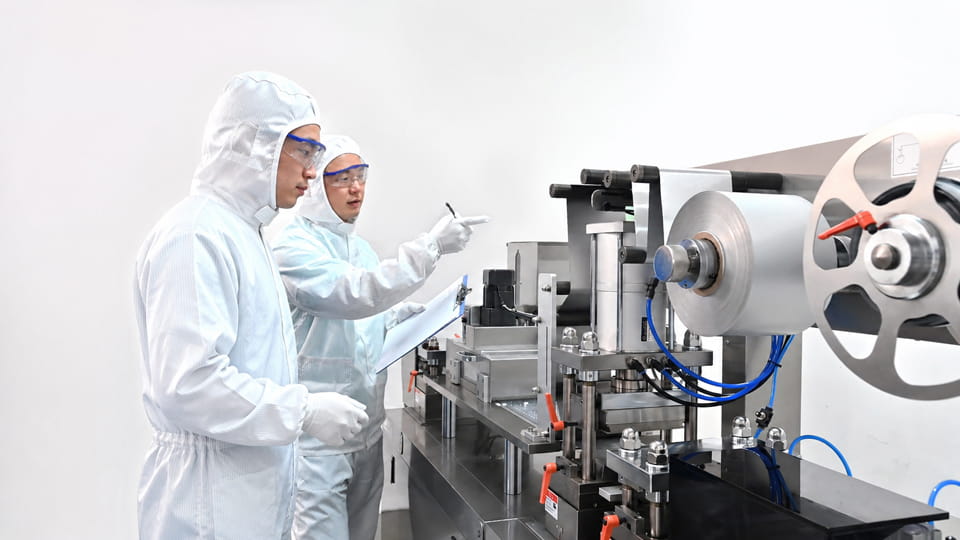
Το πρότυπο που πρέπει να πληροίτε εξαρτάται από την αγορά σας:
Για παράδειγμα, Η FDA συνιστά ρητά οι εγκαταστάσεις που πωλούνται παγκοσμίως να συμμορφώνονται με την τρέχουσα GMP. Επίσης, Το αναφέρει ο EMA «Κάθε κατασκευαστής φαρμάκων που προορίζονται για την αγορά της ΕΕ πρέπει να συμμορφώνεται με την GMP της ΕΕ ανεξάρτητα από το πού βρίσκονται».. Στην πράξη, κορυφαίες φαρμακευτικές εταιρείες δημιουργούν εγκαταστάσεις για να ανταποκρίνονται στο cGMP του FDA ως βάση και στη συνέχεια προσαρμόζονται για τοπικές παραλλαγές (όπως η γλώσσα επισήμανσης ή τεκμηρίωσης).
Τελικά, η επιλογή δεν είναι είτε/ή: Τα σύγχρονα φαρμακευτικά προϊόντα αναμένεται να ανταποκρίνονται τόσο στο γράμμα όσο και στο πνεύμα της GMP. Είτε το ονομάζετε GMP είτε cGMP, τις επί τόπου πρακτικές – καθαρά δωμάτια, επικυρωμένος εξοπλισμός, αυστηρό QC, και διεξοδικά αρχεία – όλα αποτελούν μέρος της ίδιας κουλτούρας ποιότητας.
Οταν επιλογή μηχανημάτων συσκευασίας φαρμακευτικών προϊόντων, Οι αγοραστές θα πρέπει να αναζητήσουν χαρακτηριστικά που υποστηρίζουν συγκεκριμένα τις αρχές GMP/cGMP:
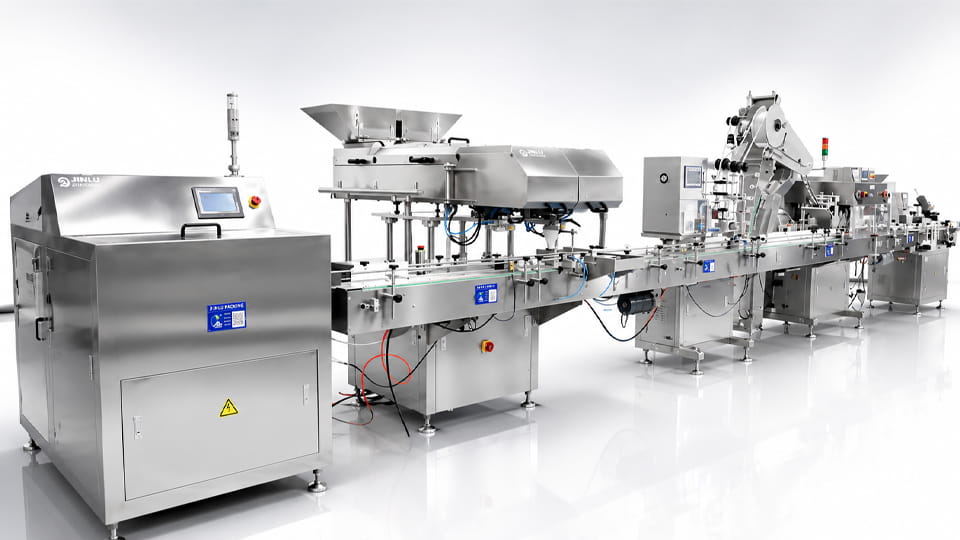
Εικόνα: Μια σύγχρονη σειρά συσκευασίας φαρμακευτικών φιαλών ενσωματώνει το unscrambling, πλήρωση, κάλυψη, σφράγιση και επισήμανση με ενσωματωμένη επιθεώρηση. Αυτά τα μηχανήματα χρησιμοποιούν υγειονομική κατασκευή από ανοξείδωτο χάλυβα και αισθητήρες για ποιοτικό έλεγχο.
Με τη διασφάλιση αυτών των χαρακτηριστικών, Οι υπεύθυνοι προμηθειών μπορούν να έχουν εμπιστοσύνη ότι η γραμμή συσκευασίας τους θα υποστηρίξει τη συμβατή παραγωγή. Πρωτότυπες σημειώσεις Jinlu, τα μηχανήματα μας είναι κατασκευασμένα με τα καλύτερα υλικά και εξελιγμένη κατασκευή σύμφωνα με τα πρότυπα CE και GMP, και ο συσκευαστής θήκης μας πληροί τις απαιτήσεις παραγωγής του cGMP.
Η συμμόρφωση με το GMP και ιδιαίτερα το cGMP αποφέρει σημαντικά οφέλη:
Συνοπτικά, Η συμμόρφωση με τα GMP/cGMP δεν είναι απλώς μια κανονιστική επιβάρυνση – προστατεύει τους ασθενείς, χτίζει εμπιστοσύνη, και εξασφαλίζει μια αξιόπιστη επιχείρηση. Δίνει επίσης στις εταιρείες ένα πλεονέκτημα βελτιώνοντας την αποτελεσματικότητα και επιτρέποντας την παγκόσμια διανομή.

Η GMP και η cGMP είναι οι ακρογωνιαίοι λίθοι της φαρμακευτικής ποιότητας, διασφαλίζοντας ότι κάθε προϊόν κατασκευάζεται με ασφάλεια και συνέπεια. Συνοπτικά, GMP παρέχει το βασικό πλαίσιο υγιεινής, τεκμηρίωση και επικύρωση, ενώ CGMP προσθέτει την απαίτηση της συνεχούς βελτίωσης και της σύγχρονης τεχνολογίας. Για εξοπλισμό συσκευασίας, Αυτό σημαίνει επένδυση σε αυτοματοποιημένα, επικυρωμένα μηχανήματα κατασκευασμένα από υλικά υγιεινής.
Και jeinlu picking, κατασκευάζουμε τα μηχανήματα μας έχοντας κατά νου αυτά τα πρότυπα. Επιλέγοντας τον εξοπλισμό συμβατό με cGMP της Jinlu – όπως ο δικός μας Αυτόματες Μηχανές Γέμισης Κάψουλας, Πρέσες Tablet, Συσκευασίες blister, Μηχανές χαρτοκιβωτίου και Μετρητές Μηχανές – μπορείτε να δημιουργήσετε ένα πλήρως επικυρωμένο, γραμμή παραγωγής έτοιμη για έλεγχο. Κάθε μηχάνημα συνοδεύεται από την τεκμηρίωση και τον υγιεινό σχεδιασμό που απαιτείται για τις επιθεωρήσεις GMP και FDA.
Έτοιμοι να διασφαλίσετε ότι η παραγωγή σας ανταποκρίνεται (ντο)Πρότυπα GMP? Επικοινωνήστε με τους ειδικούς της Jinlu σήμερα για να συζητήσετε τις απαιτήσεις της γραμμής συσκευασίας σας ή να ζητήσετε μια προσφορά. Η ομάδα μας θα σας βοηθήσει να προσαρμόσετε το σωστό πακέτο εξοπλισμού για να διατηρήσετε τα προϊόντα σας συμβατά, ασφαλής και υψηλής ποιότητας.
Η GMP αναφέρεται στις βασικές απαιτήσεις «Καλής Παρασκευαστικής Πρακτικής» για την παραγωγή φαρμάκων. Το cGMP σημαίνει «τρέχον GMP,» που σημαίνει αυτές τις απαιτήσεις συν την προσδοκία συνεχούς βελτίωσης. Σε cGMP, οι κατασκευαστές πρέπει να χρησιμοποιούν ενημερωμένο εξοπλισμό, μεθόδους και συστήματα ποιότητας. Με άλλα λόγια, Το cGMP προσθέτει ότι οι διαδικασίες επανεξετάζονται και εκσυγχρονίζονται τακτικά.
Το "c" σημαίνει "τρέχον,” τονίζοντας ότι μια εταιρεία πρέπει πάντα να πληροί τους πιο πρόσφατους κανονισμούς και πρότυπα. Εξασφαλίζει ότι οι κατασκευαστές δεν βασίζονται σε απαρχαιωμένες πρακτικές. Όπως εξηγεί ο Scilife, cGMP σημαίνει χρήση σύγχρονων συστημάτων και τεχνολογιών για την ικανοποίηση των σημερινών ρυθμιστικών προσδοκιών, αντί για παλαιότερες μεθόδους που μπορεί να μην είναι πλέον επαρκείς.
Ναί. Οι Η.Π.Α. Κανονισμοί FDA (21 Ανταλλακτικά CFR 210 και 211) γράφονται ως cGMP. Με νόμο, οποιοδήποτε φαρμακευτικό προϊόν για τις Η.Π.Α. αγορά πρέπει να παράγεται σύμφωνα με τις τρέχουσες ορθές πρακτικές παραγωγής. Η μη συμμόρφωση μπορεί να οδηγήσει σε προειδοποιητικές επιστολές ή τερματισμό λειτουργίας.
Εάν χρησιμοποιούνται μόνο παρωχημένες πρακτικές GMP, η εταιρεία κινδυνεύει να αποτύχει στις επιθεωρήσεις. Οι ρυθμιστικές αρχές αναμένουν στοιχεία για την τρέχουσα τεχνολογία και επικυρώσεις. Υπό cGMP, Δεν αρκεί απλώς η τήρηση παλαιότερων οδηγιών. Για παράδειγμα, θα μπορούσε να αναφερθεί η χρήση χάρτινων αρχείων καταγραφής αντί επικυρωμένων ηλεκτρονικών αρχείων. Στην πράξη, Συμμόρφωση cGMP σημαίνει ακόμη και αν μια διεργασία έχει ιστορικό GMP, πρέπει να αναθεωρηθεί έχοντας κατά νου τα σημερινά πρότυπα.
Οι περισσότερες φαρμακευτικές αγορές σε όλο τον κόσμο έχουν ενσωματώσει απαιτήσεις παρόμοιες με τις GMP. Υπερ 100 χώρες έχουν υιοθετήσει τα πρότυπα GMP του ΠΟΥ στο εθνικό δίκαιο. Η ορολογία ποικίλλει (κάποιοι λένε GMP, κάποιο cGMP, μερικά απλά "GMP"), αλλά σχεδόν όλες οι μεγάλες ρυθμιστικές αρχές (FDA, EMA, ΠΟΥ) απαιτούν ένα σύστημα ποιότητας ισοδύναμο με το cGMP.
Ο ίδιος ο ΠΟΥ συνήθως αναφέρεται απλώς στο «GMP,», αλλά το ορίζει ευρέως. Στα έγγραφα του ΠΟΥ, «GMP (αναφέρεται επίσης ως cGMP ή «τρέχον GMP»)» περιγράφει τη διασφάλιση ποιότητας για να διασφαλιστεί ότι τα προϊόντα παράγονται με συνέπεια σύμφωνα με τα πρότυπα ποιότητας. Ετσι, Ο ΠΟΥ χρησιμοποιεί τους όρους εναλλακτικά. Η έννοια του «τρέχοντος» είναι ενσωματωμένη σε όλες τις σύγχρονες οδηγίες GMP, ακόμα κι αν ο ΠΟΥ δεν χρησιμοποιεί πάντα το «c».
Απολύτως. Ο σχεδιασμός του εξοπλισμού είναι κρίσιμος για την επίτευξη της GMP. Για παράδειγμα, οι μηχανές πρέπει να καθαρίζονται εύκολα (ανοξείδωτος, χωρίς κρυφές ρωγμές) και θα πρέπει να υποστηρίζει την αυτοματοποίηση και τη συλλογή δεδομένων. Ο κακώς σχεδιασμένος εξοπλισμός μπορεί να οδηγήσει σε μόλυνση ή σε μπερδέματα. Αντίστροφως, ο σωστός εξοπλισμός (όπως οι μηχανές του Jinlu) είναι κατασκευασμένο με χαρακτηριστικά GMP για τη διασφάλιση της συμμόρφωσης.
Η επικύρωση εξοπλισμού τεκμηριώνει ότι τα μηχανήματα λειτουργούν όπως προβλέπεται. IQ (Προσόντα εγκατάστασης) επαληθεύει ότι το μηχάνημα έχει ρυθμιστεί σωστά ανά σχέδιο. OQ (Επιχειρησιακά Προσόντα) ελέγχει ότι κάθε λειτουργία λειτουργεί υπό διαφορετικές συνθήκες. PQ (Προσόντα Απόδοσης) αποδεικνύει ότι ο εξοπλισμός επιτυγχάνει με συνέπεια τα απαιτούμενα αποτελέσματα κατά την πραγματική παραγωγή. Αυτές είναι τυπικές απαιτήσεις GMP για να δείξετε ότι ο εξοπλισμός είναι κατάλληλος για χρήση.
Τα συμβατά μηχανήματα αυτοματοποιούν τους ποιοτικούς ελέγχους και καταγράφουν δεδομένα. Για παράδειγμα, τα αυτοματοποιημένα πληρωτικά καψουλών ζυγίζουν με ακρίβεια τις δόσεις και απορρίπτουν τις κακές κάψουλες, εξαλείφοντας το ανθρώπινο λάθος και τη μόλυνση. Τα ενσωματωμένα συστήματα δεδομένων καταγράφουν αυτόματα πληροφορίες παρτίδας με ίχνη ελέγχου, ικανοποιούν τους κανόνες ακεραιότητας των δεδομένων. Επιλέγοντας εξοπλισμό με αυτά τα χαρακτηριστικά, μια εταιρεία κάνει τη συμμόρφωση cGMP πολύ πιο εφικτή.
Τα μηχανήματα της Jinlu έχουν σχεδιαστεί για φαρμακευτική παραγωγή με πλήρη συνεκτίμηση των αναγκών GMP. Παρέχουν πλήρη πρότυπα IQ/OQ/PQ και υποστήριξη, υψηλής ποιότητας ανοξείδωτη κατασκευή, και προηγμένη αυτοματοποίηση (όπως τα ολοκληρωμένα συστήματα όρασης και ο υγειονομικός σχεδιασμός) για να διασφαλίσετε ότι η γραμμή σας παραμένει συμβατή. Η υπηρεσία τους περιλαμβάνει επιτόπιες δοκιμές FAT/SAT και υποστήριξη τεκμηρίωσης για τον εξορθολογισμό της διαδικασίας πιστοποίησής σας.
Αναφορές:
1.Q&A σχετικά με τις απαιτήσεις CGMP —— Η.Π.Α. Υπηρεσία Τροφίμων και Φαρμάκων
2.Οδηγίες ποιότητας: βιομηχανοποίηση —— Ευρωπαϊκός Οργανισμός Φαρμάκων
3.Τρέχουσα ορθή παραγωγική πρακτική (CGMP) Κανονισμοί —— Η.Π.Α. Υπηρεσία Τροφίμων και Φαρμάκων
4.Καλές πρακτικές παραγωγής -- ΠΟΥ
5.TRS 986 – Παράρτημα 2: Ορθές πρακτικές παραγωγής του ΠΟΥ για φαρμακευτικά προϊόντα: Βασικές αρχές -- ΠΟΥ
6.EudraLex – Τόμος 4 – Καλή πρακτική παραγωγής (GMP) κατευθυντήριες γραμμές —— Ευρωπαϊκή Επιτροπή
7.Οδηγίες GMP —— ispe.org