Η διάθεση ενός νέου φαρμακευτικού προϊόντος στην αγορά απαιτεί πολύ περισσότερα από την ανάπτυξη μιας αποτελεσματικής σύνθεσης. Μία από τις πιο σημαντικές αποφάσεις που αντιμετωπίζουν οι κατασκευαστές είναι η επιλογή της σωστής συσκευασίας. Η συσκευασία που επιλέγεται για ένα φαρμακευτικό προϊόν μπορεί να επηρεάσει άμεσα τη σταθερότητά του, διάρκεια ζωής, κανονιστική συμμόρφωση, ασφάλεια των μεταφορών, και την εμπειρία του ασθενούς. Μια συσκευασία που δεν προστατεύει από την υγρασία, οξυγόνο, φως, ή μόλυνση μπορεί να θέσει σε κίνδυνο την ποιότητα του προϊόντος πολύ πριν φτάσει στον τελικό χρήστη. Επομένως, η συσκευασία δεν είναι απλώς ένα δοχείο - είναι ένα ουσιαστικό μέρος του συστήματος προστασίας του προϊόντος.
Για κατασκευαστές φαρμάκων, διευθυντές παραγωγής, και ομάδες προμηθειών, Η επιλογή της σωστής συσκευασίας απαιτεί εξισορρόπηση πολλών παραγόντων, συμπεριλαμβανομένης της δοσολογικής μορφής, συμβατότητα υλικού, απόδοση φραγμού, ασφάλεια των ασθενών, αποδοτικότητα παραγωγής, και μελλοντική επεκτασιμότητα. Είτε το προϊόν είναι tablet, κάψουλα, σκόνη, υγρό, ή ενέσιμο, Η σωστή λύση συσκευασίας μπορεί να συμβάλει στη διασφάλιση της ακεραιότητας του προϊόντος ενώ υποστηρίζει την αποτελεσματική εμπορική παραγωγή. Σε αυτόν τον οδηγό, θα διερευνήσουμε τους βασικούς παράγοντες που κάθε κατασκευαστής πρέπει να λαμβάνει υπόψη κατά την επιλογή της συσκευασίας για ένα νέο φαρμακευτικό προϊόν.
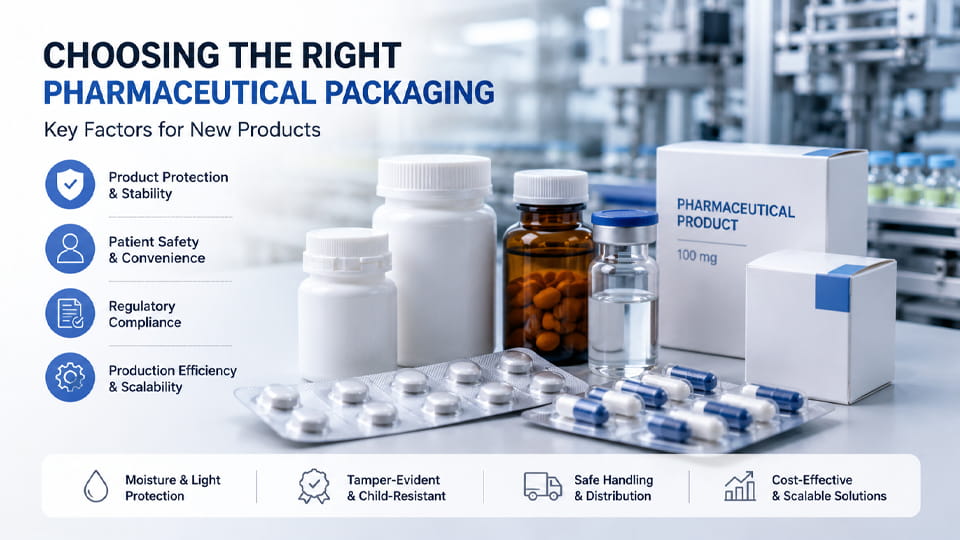
Γιατί η επιλογή συσκευασίας έχει σημασία στα φαρμακευτικά προϊόντα
Φαρμακευτική συσκευασία είναι ζωτικός, όχι προαιρετική. Σε αντίθεση με τις κανονικές συσκευασίες καταναλωτή, φαρμακευτική συσκευασία πρέπει προστατεύουν την ακεραιότητα του φαρμάκου καθ' όλη τη διάρκεια ζωής του. Ο ΠΟΥ και οι ρυθμιστικές κατευθυντήριες γραμμές τονίζουν ότι η συσκευασία πρέπει να προστατεύει τα φάρμακα υγρασία, φως, οξυγόνο και άλλες εξωτερικές απειλές. Με άλλα λόγια, «διατηρεί τη σταθερότητα και την ποιότητα των φαρμακευτικών προϊόντων» και αποτρέπει την αλλοίωση ή την παραβίαση.
Οι βασικές λειτουργίες της συσκευασίας περιλαμβάνουν:
- Προστασία προϊόντος: Κρατήστε μακριά την υγρασία, οξυγόνο, φως, θερμότητα και ρύπους. Για παράδειγμα, μια καθοδήγηση USP σημειώνει ότι τα στερεά χάπια «πρέπει να προστατεύονται από τους υδρατμούς» καθώς η υγρασία μπορεί να αλλάξει την δραστικότητα ή τη διάλυση του φαρμάκου. Υλικά υψηλού φραγμού (αλουμινόχαρτο, επικαλυμμένες μεμβράνες, κεχριμπαρένιο γυαλί) χρησιμοποιούνται συχνά όπου η ευαισθησία είναι υψηλή.
- Κανονιστική συμμόρφωση: Η συσκευασία πρέπει να πληροί τον FDA, EMA και ΠΟΥ Απαιτήσεις GMP. Αυτό περιλαμβάνει την κατάλληλη ακεραιότητα κλεισίματος δοχείου (CCI), επικυρωμένα υλικά, και χαρακτηριστικά όπως παραποιημένος σφραγίδες. Συσκευασία ανθεκτική στα παιδιά απαιτείται για πολλά φάρμακα για την πρόληψη της τυχαίας κατάποσης. Σειριοποίηση και ιχνηλασιμότητα (μοναδικούς γραμμωτούς κωδικούς σε κάθε συσκευασία) είναι πλέον υποχρεωτικές στις μεγάλες αγορές (FDA DSCSA, ΕΕ αφθώδης πυρετός).
- Ασφάλεια και συμμόρφωση ασθενών: Ο σχεδιασμός της συσκευασίας θα πρέπει να αποτρέπει σφάλματα δοσολογίας και κακή χρήση. Ετικέτες που δεν παραβιάζουν και ασφαλή για παιδιά καπάκια «Προστασία από τυχαία δηλητηρίαση». Φιλικά προς το χρήστη χαρακτηριστικά (εύκολο-άνοιγμα, δοσομετρικά βοηθήματα, ημερολογιακές φουσκάλες) βοηθήστε τους ασθενείς να παίρνουν σωστά τα φάρμακα.
- Μάρκα και επικοινωνία: Δευτερεύουσα συσκευασία (χαρτοκιβώτια, ετικέτες) παραδίδει οδηγίες, προειδοποιήσεις, και επωνυμία. Σύμφωνα με τους ειδικούς, Οι ετικέτες πρέπει να είναι ανθεκτικές και σαφείς για να αποφευχθούν τυχόν ανακατώσεις. Πράγματι, μια ανάλυση βρήκε σχεδόν 50% των ανακλήσεων ναρκωτικών συνδέονται με προβλήματα συσκευασίας/ετικέτας.
Εν συντομία, η συσκευασία αποτελεί ενεργό προστασία. Η αποτυχία επιλογής του σωστού πακέτου μπορεί να οδηγήσει σε υποβάθμιση των API, βλάβη του ασθενούς, και ρυθμιστικούς πονοκεφάλους. Η σωστή συσκευασία "προστατεύει την ποιότητα του φαρμάκου” και έτσι υποστηρίζει την αποτελεσματικότητα και τη φήμη του προϊόντος.

Βήμα 1: Κατανοήστε τα Χαρακτηριστικά του Νέου Φαρμακευτικού Προϊόντος σας
Το πρώτο βήμα είναι α διεξοδικός έλεγχος προϊόντων. Παρακαλώ: Ποια είναι η δοσολογική μορφή (δισκίο, κάψουλα, σκόνη, υγρό, ενέσιμο, και τα λοιπά.)? Τι ευαισθησίες έχει το φάρμακο (υγρασία, οξυγόνο, φως, θερμότητα)? Χρειάζεται ειδικός έλεγχος δοσολογίας (συσκευή εισπνοής μετρημένης δόσης, σταγονόμετρο, προγεμισμένη σύριγγα)?
- Δοσολογική μορφή: Τα δισκία και οι κάψουλες είναι συνήθως στερεάς δόσης και συχνά συσκευάζεται μέσα συσκευασίες blister ή μπουκάλια. Τα υγρά/εναιωρήματα μπαίνουν μπουκάλια ή φιαλίδια. Τα ενέσιμα απαιτούν αποστειρωμένα φιαλίδια, αμπούλες ή προγεμισμένες σύριγγες. Τα αέρια/οι εισπνευστήρες χρησιμοποιούν εξειδικευμένα δοχεία. Μπορούν να συσκευαστούν σκόνες ή κόκκοι φακελάκια, ραβδί πακέτα ή μπουκάλια.
- Χημικές/φυσικές ευαισθησίες: Είναι το φάρμακο υγροσκοπικό ή επιρρεπές σε οξείδωση? Φάρμακα υψηλής ευαισθησίας στην υγρασία (π.χ.. αναβράζοντα δισκία) ανάγκη συσκευασία υψηλού φραγμού όπως κυψέλες Alu-Alu ή μπουκάλια με επένδυση αποξηραντικού. Οι φωτοευαίσθητες ενώσεις χρειάζονται αδιαφανή ή φιμέ δοχεία. Τα αντιδραστικά φάρμακα απαιτούν αδρανή υλικά (π.χ.. ποτήρι, ορισμένα πολυμερή).
- Διάρκεια ζωής και σταθερότητα: Εξετάστε τυχόν απαιτούμενο έλεγχο θερμοκρασίας (ψύξη) ή συνθήκες κενού/στείρους. Ορισμένα εμβόλια ή βιολογικά μπορεί να απαιτούν συσκευασία ψυχρής αλυσίδας ή εξειδικευμένα φιαλίδια.
Σημείο κλειδί: Η κύρια συσκευασία πρέπει να είναι αδρανής και προστατευτική. Δεν πρέπει να εκπλύνει ή να απορροφά το φάρμακο, και πρέπει να διατηρεί ένα σφραγισμένο περιβάλλον. Για παράδειγμα, Ο FDA σημειώνει ότι τα στερεά από του στόματος δοχεία πρέπει να έχουν α «χαμηλός ρυθμός διείσδυσης υδρατμών, και το σύστημα κλεισίματος θα πρέπει να δημιουργήσει μια σφράγιση». Η εκτέλεση δοκιμών συμβατότητας και εξαγώγιμων προϊόντων με υποψήφια εξαρτήματα συσκευασίας είναι ζωτικής σημασίας.
Λίστα ελέγχου για έλεγχο προϊόντος:
- Δοσολογική μορφή/τύπος (δισκίο, κάψουλα, υγρό, και τα λοιπά.)
- Συνθήκες αποθήκευσης/σταθερότητας (θερμοκρασία, υγρότητα, φως)
- Απαιτήσεις δοσολογίας/χορήγησης (σταγονόμετρο, αντλία, μονάδα δόσης)
- Σκέψεις για τη χρήση του ασθενούς (παιδί εναντίον ενηλίκων ιατρική, κινητικότητα, φιλική προς τους ηλικιωμένους)
- Ρυθμιστικοί περιορισμοί (π.χ.. αποτελεί μέρος των πληροφοριών ασθενούς του πρωτεύοντος πακέτου?)
Αυτή η κατανόηση θα οδηγήσει στην επιλογή της κύριας συσκευασίας (η συσκευασία σε άμεση επαφή με το φάρμακο). Επόμενος, συζητάμε αυτές τις επιλογές.
Βήμα 2: Επιλέξτε την Κατάλληλη Πρωτεύουσα Συσκευασία
Πρωτογενής συσκευασία είναι το άμεσο δοχείο που περιέχει το φάρμακο. Αγγίζει άμεσα το φάρμακο. Οι κοινοί τύποι πρωτογενών συσκευασιών περιλαμβάνουν φουσκάλες, μπουκάλια (πλαστικό/γυαλί), φιαλίδια/αμπούλες, σακουλάκια, σωλήνες, και τα λοιπά. Το καθένα έχει πλεονεκτήματα/μειονεκτήματα:
- Φουσκάλες (Alu-Alu ή Alu-PVC): Ιδανικό για στερεές μορφές μοναδιαίας δόσης (δισκία, κάψουλες). Παρέχουν εξαιρετικό φράγμα υγρασίας/φωτός, ιδιαίτερα το Alu-Alu (μεμβράνη ψυχρής μορφής) τύπος. Οι κυψέλες διασφαλίζουν ότι κάθε δόση είναι σφραγισμένη μέχρι τη χρήση, βελτίωση της συμμόρφωσης και μείωση της διασταυρούμενης μόλυνσης. Οι σύγχρονες φουσκάλες μπορούν να γίνουν ανθεκτικές στα παιδιά. Εξοπλισμός: Υψηλής ταχύτητας Μηχανές συσκευασίας φουσκάλων διαμόρφωση λαβής, σίτιση, θερμοσφράγιση και κοπή (π.χ.. Μηχανές blister Alu-Alu της JinluPacking).
- Μπουκάλια (Πλαστικό ή Γυαλί): Κοινό για συσκευασία πολλαπλών μονάδων (σιρόπια, κάψουλες, δισκία). Οι φιάλες είναι οικονομικά αποδοτικές για μεγάλους όγκους. Γυάλινα μπουκάλια (Βοροπυριτικό τύπου Ι) προσφέρουν εξαιρετική χημική αδράνεια και μπορεί να βαφτεί σε πορτοκαλί χρώμα για προστασία από το φως. Πλαστικά μπουκάλια (HDPE, PP) είναι ελαφριά και ανθεκτικά στη θραύση αλλά συνήθως έχουν υψηλότερη διαπερατότητα υγρασίας. Τα μπουκάλια χρησιμοποιούνται συχνά καπάκια για παιδιά. Εξοπλισμός: Μηχανές μέτρησης/γεμίσματος μπουκαλιών πλήρωσης και καπακιού, και μπορεί εισάγετε ξηραντικά ή σφραγίδες αλουμινίου (δείτε στις γραμμές μέτρησης). Οι γραμμές πλήρωσης μπουκαλιών της Jinlu και οι αυτόματες μηχανές κάλυψης ενσωματώνουν αυτά τα βήματα.
- φακελάκια & Πακέτα ραβδιών: Χρησιμοποιείται για σκόνες, κόκκους, ή υγρά μιας δόσης (π.χ.. αντιβιοτικά, ORS). Πρόκειται για θήκες από εύκαμπτο φύλλο ή laminate σφραγισμένες σε όλες τις πλευρές. Τα φακελάκια προσφέρουν εξαιρετικό φράγμα (συχνά με αλουμινόχαρτο) και ευκολία. Εξοπλισμός: Σχηματίζονται μηχανές συσκευασίας φακελλίσκων, γέμισμα, και σφραγίστε αυτές τις θήκες με μία κίνηση.
- Φιαλίδια & Αμπούλες: Πρότυπο για στείρα ενέσιμα (λύσεις, λυοφιλοποιημένες σκόνες). Φιαλίδια (γυαλί ή πλαστικό) με ελαστικά πώματα διατηρούν τη στειρότητα. Αμπούλες (ποτήρι) είναι ερμητικά σφραγισμένα μέχρι τη χρήση. Και τα δύο παρέχουν υψηλή καθαρότητα και είναι κατάλληλα για βελόνες/σύριγγες. Εξοπλισμός: Γραμμές πλήρωσης φιαλιδίου, χρησιμοποιούνται μηχανές κάλυψης και πτύχωσης (συχνά με περιοχές στρωτής ροής για στειρότητα).
- Άλλοι: Σωλήνες (μέταλλο ή πλαστικό) είναι κοινά για αλοιφές/κρέμες. Προγεμισμένες σύριγγες ή συσκευές εισπνοής (MDI/DPI) περιλαμβάνει προσαρμοσμένη συσκευασία συσκευής. Αυτά απαιτούν συχνά εξειδικευμένο εξοπλισμό πλήρωσης και συναρμολόγησης.
Η καταλληλότητα κάθε επιλογής εξαρτάται από το προϊόν σας:
- Κόστος vs. Προστασία: Ο παρακάτω πίνακας συγκρίνει τους τύπους πρωτογενών συσκευασιών:
| Τύπος |
Καλύτερος για |
Επίπεδο Προστασίας |
Κόστος |
Εξοπλισμός |
| Συσκευασία blister |
Δισκίο, Κάψουλες |
Πολύ ψηλά (Υγρασία/Φως) |
Μέσον |
Μηχανή συσκευασίας φυσαλίδων |
| Μπουκάλι |
Δισκίο, Σιρόπια, Χάπια |
Μέσον (καλό με ένθετα) |
Χαμηλός |
Γραμμή πλήρωσης/καλύμματος μπουκαλιών |
| Φακελάκι/Στικ |
Σκόνες, Κοκκία |
Ψηλά (Φραγή αλουμινίου) |
Μέσον |
Μηχανή συσκευασίας σακουλάκι |
| Φιαλίδιο/Αμπούλα |
Ενέσιμα, Οροί |
Πολύ ψηλά (Αποστειρωμένο γυαλί) |
Ψηλά |
Γέμισμα φιαλιδίου & Γραμμή σφράγισης |
Επιλέξτε την κύρια συσκευασία που ταιριάζει με τη δοσολογική μορφή και τις ανάγκες φραγμού. Για παράδειγμα, ένα ευαίσθητο στην υγρασία δισκίο μπορεί να απαιτεί ένα Κυψέλη Alu-Alu ή ένα κεχριμπαρένιο γυάλινο μπουκάλι με ξηραντικό. Τα πιο συνηθισμένα OTC δισκία θα μπορούσαν να μπουν σε ένα πλαστικό μπουκάλι με στεγανό καπάκι (συν δυνατότητα προστασίας για παιδιά).
Ακρο: Εάν η συμμόρφωση με τη δόση της μονάδας είναι σημαντική (Π.χ., διανομή νοσοκομείων ή ταξιδιωτικά πακέτα), Συχνά προτιμώνται τα σεντόνια με κυψέλες ή οι συσκευασίες ραβδιών. Για ευελιξία (οι δόσεις μπορούν να αλλάξουν), τα μπουκάλια είναι καλύτερα.
Βήμα 3: Λάβετε υπόψη τις απαιτήσεις σταθερότητας και διάρκειας ζωής
Οι αποφάσεις συσκευασίας είναι αδιαχώριστες από τη σταθερότητα. Το λάθος δοχείο μπορεί να προκαλέσει υποβάθμιση ή αστοχία της ετικέτας. Βασικές εκτιμήσεις:
- Ιδιότητες φραγμού: Χρησιμοποιήστε υλικά που εμποδίζουν κρίσιμους παράγοντες. Για φάρμακα ευαίσθητα στην υγρασία, απαιτούνται φύλλα υψηλού φραγμού ή γυαλί. Για παράδειγμα, κυψέλες αλουμινίου ψυχρής μορφής παρέχουν ουσιαστικά μηδενική εισροή υγρασίας. Η καθοδήγηση σταθερότητας FDA/ICH σημειώνει ότι τα προϊόντα βρίσκονται σε πραγματικά αδιαπέραστα δοχεία (Π.χ., φουσκάλες από αλουμινόχαρτο ή σφραγισμένο γυαλί) μπορεί να ελεγχθεί υπό κανονικές συνθήκες χωρίς ειδικές μελέτες υγρασίας. Αντίστροφως, ημιπερατές συσκευασίες (όπως κάποια πλαστικά) απαιτούν προσεκτική αξιολόγηση της υγρασίας.
- Προστασία από το φως: Τα φωτοευαίσθητα API χρειάζονται αδιαφανή ή πορτοκαλί συσκευασία. Για παράδειγμα, Τα πορτοκαλί γυάλινα μπουκάλια ή οι επιμεταλλωμένες θήκες προστατεύουν από την υπεριώδη ακτινοβολία. Μια συνήθης πρακτική είναι να τυλίγετε τα διαφανή φιαλίδια σε περίβλημα αλουμινίου εάν χρειάζεται.
- Αρμονία: Βεβαιωθείτε ότι τα υλικά συσκευασίας δεν αντιδρούν με το φάρμακο. Το γυαλί είναι αδρανές, αλλά ορισμένα πλαστικά μπορούν να εκπλυθούν ή να απορροφήσουν ενώσεις. Εκτελέστε μελέτες εκχυλίσιμων/εκπλυθέντων σε πρωτεύοντα εξαρτήματα. Κανονιστικές οδηγίες (FDA, EMA) αναμένω ακεραιότητα κλεισίματος δοχείου (CCI) δοκιμή καθ' όλη τη διάρκεια ζωής.
- Προσδιορισμός διάρκειας ζωής: Μελέτες σταθερότητας (I Q1A/R2) πρέπει να χρησιμοποιήσει το προτεινόμενο σύστημα κλεισίματος δοχείων. Εάν οι δοκιμές διάρκειας ζωής δείχνουν υποβάθμιση, ίσως χρειαστεί να προσαρμόσετε τη συσκευασία (π.χ.. μεταβείτε σε ένα καλύτερο εμπόδιο) ή οδηγίες χειρισμού/αποθήκευσης ετικέτας.
- Προηγμένες δυνατότητες: Ορισμένες συσκευασίες ενσωματώνουν ξηραντικά ή σαρωτές οξυγόνου. Πολυστρωματικά ελάσματα (PET/αλουμίνιο/PE) χρησιμοποιούνται συχνά για παγκόσμια διανομή. Για προστασία πολύ υψηλής ακρίβειας, ενεργή συσκευασία (ενσωματωμένοι απορροφητές υγρασίας) μπορεί να χρησιμοποιηθεί.
Λίστα ελέγχου για συμβατότητα σταθερότητας:
- Επιλέξτε πρωτογενές υλικό υψηλού φραγμού εάν χρειάζεται (Alu-Alu, ποτήρι, ελασμάτων).
- Επαληθεύστε τη μέθοδο σφράγισης (θερμοσφράγιση, καπάκια) επιτυγχάνει χαμηλή μετάδοση ατμών υγρασίας (MVTR).
- Εκτελέστε επιταχυνόμενη σταθερότητα (40°C/75% RH) σύμφωνα με το ICH για να διασφαλιστεί ότι δεν υπάρχει εισροή υγρασίας ή χημικές αλλαγές.
- Σχεδιάστε την ακεραιότητα κλεισίματος του δοχείου (δοκιμή εισόδου κενού ή βαφής) ειδικά για υγρά/αποστειρωμένα προϊόντα.
- Βεβαιωθείτε ότι η συσκευασία μπορεί να αντέξει τους κραδασμούς της διανομής (δοκιμή πτώσης/δόνησης με δευτερεύουσα/τριτογενή συσκευασία).
Επιλέγοντας εκ των προτέρων μια συσκευασία που πληροί τις απαιτήσεις σταθερότητας, αποφεύγετε την δαπανηρή αναδιαμόρφωση ή επανασυσκευασία αργότερα.
Βήμα 4: Αξιολογήστε την άνεση και τη συμμόρφωση του ασθενούς
Πέρα από την προστασία, Η σύγχρονη συσκευασία θα πρέπει να βοηθά τους ασθενείς να χρησιμοποιούν σωστά το φάρμακό τους. Σχεδιασμός συσκευασίας επηρεάζει άμεσα τη συμμόρφωση και ασφάλεια. Θεωρώ:
- Άνοιγμα/Ευκολία στη χρήση: Οι ηλικιωμένοι ασθενείς μπορεί να δυσκολεύονται με τα σφιχτά καπάκια. Προσφορά καπέλα φιλικά προς τους ηλικιωμένους ή οι σφραγίδες που ξεφλουδίζουν εύκολα μπορεί να είναι ευεργετικές. Για φάρμακα μονάδας δόσης, ημερολογιακές φουσκάλες (σημειώνονται ημέρες ή ώρες) μπορεί να υπενθυμίσει στους ασθενείς να παίρνουν το σωστό χάπι.
- Δοσολογικά βοηθήματα: Εάν ισχύει, περιλαμβάνει μεζούρες/κουτάλια για υγρά, σταγονόμετρα για οφθαλμικά, ή αντλίες μετρημένης δόσης. Σαφείς σημάνσεις στο δοχείο (αποφοιτήσεις, χρωματικές ζώνες) βελτίωση της ακρίβειας.
- Φορητότητα: Εάν οι ασθενείς ταξιδεύουν ή μεταφέρουν φάρμακα, είναι χρήσιμα τα συμπαγή φακελάκια ή τα μικρά μπουκάλια. Τα χαρακτηριστικά που είναι προφανή για παραβίαση καθησυχάζουν την ασφάλεια.
- Χαρακτηριστικά συμμόρφωσης: Ορισμένα κύρια πακέτα έχουν σχεδιαστεί για συμμόρφωση: Π.χ., διανομείς χαπιών με ενσωματωμένους συναγερμούς, ή έξυπνες κάρτες blister που παρακολουθούν τη χρήση. Εάν η υψηλή προσκόλληση είναι κρίσιμη, εξετάσει τέτοιες καινοτομίες.
- Ετικέτες και ένθετα: Βεβαιωθείτε ότι είναι σαφές, πολύγλωσσες οδηγίες στο κουτί ή στο φυλλάδιο. Η καλή συσκευασία βοηθά τους φαρμακοποιούς και τους ασθενείς με ευανάγνωστες ετικέτες, πίνακες δοσολογίας, και εικονίδια αποθήκευσης.
Ουσιαστικά, παρακαλώ: Θα βρει ο ασθενής αυτό το πακέτο εύκολο και ασφαλές στη χρήση? Αν όχι, ενδέχεται να κάνουν κακή χρήση ή να εγκαταλείψουν το προϊόν. Συμπεριλαμβανομένων χαρακτηριστικών με επίκεντρο τον ασθενή (παιδικές κλειδαριές, εύκολο-άνοιγμα, σαφής επισήμανση) ικανοποιεί επίσης τις ρυθμιστικές αρχές που δίνουν έμφαση στην ασφάλεια των ασθενών.
Βήμα 5: Διασφάλιση Κανονιστικής Συμμόρφωσης
Η συσκευασία των φαρμάκων υπόκειται σε αυστηρές ρυθμίσεις. Βασικά ζητήματα συμμόρφωσης:
- Ανθεκτικό στα παιδιά (CR) απαιτήσεις: Πολλές χώρες (ΜΑΣ, ΕΕ, AU) επιβάλλει τη συσκευασία CR για από του στόματος φάρμακα υψηλού κινδύνου. Ο ΠΟΥ σημειώνει ότι «Έχουν αναπτυχθεί πώματα ασφαλείας για παιδιά» για την προστασία των παιδιών. Βεβαιωθείτε ότι τα από του στόματος στερεά και υγρά συνταγογραφούμενα φάρμακα χρησιμοποιούν πιστοποιημένα καλύμματα CR ή μηχανισμούς ώθησης, εάν απαιτείται από τη νομοθεσία. (Π.χ. ΜΑΣ 16 CFR 1700 χρυσός πρότυπα ΕΕ EN 14375).
- Σφραγίδες που δεν παραβιάζουν: Ο FDA και άλλοι απαιτούν στοιχεία που να αποδεικνύουν ότι ένα πακέτο δεν έχει ανοιχτεί. Ζώνες παραβίασης, συρρικνώνονται περιτυλίγματα, ή σπασμένα σφραγίσματα είναι κοινά στα μπουκάλια; Οι σφραγίδες αλουμινίου είναι συνηθισμένες στα βάζα. Ακόμη και οι συσκευασίες με κυψέλες θα πρέπει να είναι δύσκολο να ανοίξουν χωρίς εμφανή ζημιά.
- Τιτλοφόρηση: Τα πρωτεύοντα και δευτερεύοντα πακέτα πρέπει να φέρουν όλες τις απαιτούμενες πληροφορίες (όνομα φαρμάκου, δύναμη, δοσολογική μορφή, αριθμός παρτίδας/παρτίδας, λήξη, όροι αποθήκευσης, κατασκευαστής). Οι γραμματοσειρές πρέπει να είναι ευανάγνωστες και να συμμορφώνονται με τις φαρμακοτεχνικές οδηγίες. Για παράδειγμα, FDA 21 CFR 201.15 καλύπτει την αντοχή της ετικέτας.
- Σειριοποίηση και ιχνηλασιμότητα: Κανονισμοί όπως το DSCSA του FDA (ΜΑΣ) και η οδηγία της ΕΕ για τα ψευδεπίγραφα φάρμακα απαιτούν μοναδικούς κωδικούς (π.χ.. 2D barcodes) σε κάθε πωλήσιμη μονάδα. Ο σχεδιασμός της συσκευασίας πρέπει να περιλαμβάνει εκτύπωση ή χάραξη σειριακών αριθμών και κωδικών μήτρας δεδομένων σε ταινίες blister ή ετικέτες φιαλών. Η γραμμή συσκευασίας σας μπορεί να χρειάζεται έναν εκτυπωτή κωδικοποίησης και ένα σύστημα όρασης, και ενσωμάτωση με μια βάση δεδομένων παρακολούθησης και ανίχνευσης.
- Καλές πρακτικές παραγωγής (GMP): Γραμμές συσκευασίας πρέπει να πληροί την GMP (καθαριότητα, ιχνηλασιμότητα υλικού, και τα λοιπά.). Όλες οι κύριες συσκευασίες που χρησιμοποιούνται πρέπει να είναι πιστοποιημένες για GMP (π.χ.. ISO 15378 για υλικά συσκευασίας). Οι μηχανές πρέπει να είναι IR/WH/PQ αρμόδιος. (Δείτε παρακάτω για τον εξοπλισμό συσκευασίας Jinlu).
Βασική ρυθμιστική συμβουλή: Μην αντιμετωπίζετε τη συμμόρφωση ως εκ των υστέρων σκέψη. Για παράδειγμα, Η αποτυχία συμπερίληψης μιας δυνατότητας εμφανούς παραβίασης μπορεί να εμποδίσει την εγγραφή προϊόντος. Ελέγξτε έγκαιρα τους κανόνες για τη συγκεκριμένη χώρα – π.χ. USP <661> για πλαστικά δοχεία, CFR 211 για ελέγχους συσκευασίας. Ελέγχετε πάντα ότι η επιλεγμένη συσκευασία και ο εξοπλισμός συσκευασίας μπορούν να πληρούν αυτά τα πρότυπα.
Βήμα 6: Ισορροπία κόστους συσκευασίας και αποδοτικότητας παραγωγής
Σε αυτό το στάδιο, αξιολογώ συνολικό κόστος ιδιοκτησίας (TCO) για επιλογές συσκευασίας. Θεωρώ:
- Κόστος υλικού: Οι εύκαμπτες θήκες και οι κυψέλες μπορεί να κοστίζουν περισσότερο ανά μονάδα από τα απλά μπουκάλια. Το φύλλο κυψέλης Alu-Alu είναι πιο ακριβό από το φύλλο PVC. Τα γυάλινα μπουκάλια κοστίζουν περισσότερο από τα πλαστικά.
- Διακίνηση εξοπλισμού: Οι μορφές υψηλού φραγμού, όπως οι κυψέλες, ενδέχεται να λειτουργούν πιο αργά από τις γραμμές φιαλών, επηρεάζουν τον αριθμό του απαραίτητου εξοπλισμού. Αντίστροφως, Τα γεμιστικά μπουκαλιών μπορούν να επιτύχουν πολύ υψηλές ταχύτητες (αρκετές χιλιάδες μπουκάλια/ώρα) αλλά χρειάζονται unscramblers, καπάκια, και ετικέτες σε μια γραμμή.
- Πολυπλοκότητα γραμμής: Πιο πολύπλοκη συσκευασία (π.χ.. κυψέλες μονάδας δόσης) απαιτεί εξειδικευμένα μηχανήματα. Ελέγξτε εάν η επένδυση κεφαλαίου και η συντήρηση ταιριάζουν στον προϋπολογισμό σας.
- Εργασία: Οι πλήρως αυτοματοποιημένες γραμμές μειώνουν τη χειρωνακτική εργασία αλλά αυξάνουν το κεφάλαιο. Οι ημιαυτόματες μηχανές κοστίζουν λιγότερο αλλά χρειάζονται περισσότερους χειριστές.
- Επιμελητεία: Η δευτερεύουσα/τριτογενής συσκευασία κοστίζει επίσης. Τα μεγάλα γυάλινα μπουκάλια είναι πιο βαριά στη μεταφορά. Τα ογκώδη χαρτοκιβώτια αυξάνουν το κόστος μεταφοράς.
- Απόβλητα και απόδοση: Περισσότερη επεξεργασία (π.χ.. διάτρηση με φουσκάλες) μπορεί να δημιουργήσει σκραπ. Αξιολογήστε τα χαμένα υλικά (κόψτε τις φουσκάλες, σπασμένα μπουκάλια, και τα λοιπά.).
Εκτελέστε μια πρόχειρη σύγκριση κόστους: π.χ.. κόστος ανά τελική συσκευασία συμπεριλαμβανομένων των υλικών και της επεξεργασίας. Εξετάστε επίσης την ταχύτητα (μονάδες ανά ώρα) και απαιτούμενο μέγεθος παρτίδας.
ΕΝΑ Λίστα ελέγχου TCO:
- Συγκρίνετε το κόστος υλικών συσκευασίας ανά μονάδα.
- Αξιολογήστε την απαιτούμενη απόδοση μηχανής έναντι της ζήτησης.
- Υπολογίστε το κόστος εργασίας και ενέργειας για κάθε γραμμή.
- Συμπεριλάβετε το κόστος διάθεσης/ανακύκλωσης απορριμμάτων.
- Παράγοντας κινδύνου επανεπεξεργασίας (π.χ.. εάν η συσκευασία αποτύχει, κόστος επανασυσκευασίας ή επανασυσκευασίας).
- Μελλοντική κλιμάκωση: αν διπλασιαστούν οι όγκοι, κάνει αυτή την κλίμακα λύσης?
Συχνά το Το φθηνότερο υλικό δεν είναι το καλύτερο εάν οδηγεί σε ανακλήσεις ή απορρίψεις. Η επίτευξη ισορροπίας είναι ζωτικής σημασίας: Μερικές φορές το να πληρώσετε περισσότερα για καλύτερο εμπόδιο ή αυτοματισμό αποδίδει υψηλότερη απόδοση και συμμόρφωση.
Βήμα 7: Βεβαιωθείτε ότι η συσκευασία μπορεί να κλιμακωθεί στη μελλοντική ζήτηση
Σκεφτείτε όχι μόνο την άμεση εκτόξευση, αλλά το μακροπρόθεσμο κύκλο ζωής του προϊόντος:
- Pilot vs. Εμπορικός: Για αρχικές κλινικές παρτίδες ή παρτίδες μικρής αγοράς, μπορείτε να χρησιμοποιήσετε χειροκίνητες ή ημιαυτόματες γραμμές. Για παραγωγή μεγάλης κλίμακας, θα χρειαστεί μια πλήρως αυτοματοποιημένη γραμμή. Βεβαιωθείτε ότι η επιλογή σας (ή πρόταση του πωλητή) επιτρέπει αρθρωτές αναβαθμίσεις.
- Αρθρωτότητα εξοπλισμού: Μπορείτε να προσθέσετε λωρίδες ή μονάδες για να αυξήσετε την ταχύτητα? Για παράδειγμα, Ορισμένες μηχανές blister μπορούν να προσθέσουν περισσότερες περιστροφικές τσέπες. Οι γραμμές εμφιάλωσης μπορούν να προσθέσουν παράλληλα πληρωτικά.
- Ολοκλήρωση: Σκεφτείτε από άκρη σε άκρη: μέτρηση / πλήρωση → σφράγιση → χαρτοκιβώτιο → συσκευασία θήκης → παλετοποίηση. Εάν συνεργάζεστε με την Jinlu Packing ή παρόμοια, μπορούν να σχεδιάσουν α γραμμή συσκευασίας με το κλειδί στο χέρι που περιλαμβάνει σειριοποίηση, χαρτοκιβώτιο, συσκευασία θήκης, και τα λοιπά.
- Ρυθμιστική κλιμάκωση: Οποιαδήποτε αλλαγή στα εξαρτήματα της συσκευασίας (π.χ.. νέος προμηθευτής φιαλών) απαιτεί ρυθμιστική εκ νέου έγκριση εάν επηρεάζει τη σταθερότητα ή τη συμμόρφωση. Σχεδιάστε προμηθευτές συσκευασίας ποιοτικού ελέγχου και εφεδρικών προμηθευτών.
- Μελλοντικά προϊόντα: Εάν η εταιρεία σας μπορεί να παράγει άλλες δοσολογικές μορφές (π.χ.. ένα τζελ στο μέλλον), επιλέξτε ευέλικτο εξοπλισμό. Τα αρθρωτά πληρωτικά καψουλών ή οι μηχανές blister που μπορούν να χειριστούν διάφορες μορφές μπορεί να είναι μια καλή επένδυση.
Η έγκαιρη συμμετοχή μηχανικών συσκευασίας ή συμβούλων μπορεί να αποτρέψει αργότερα τα σημεία συμφόρησης. Όπως σημειώνει ένας ειδικός του κλάδου, «Η συσκευασία θα πρέπει να εξετάζεται παράλληλα με την ανάπτυξη της σύνθεσης, όχι ως εκ των υστέρων σκέψη». Οι σωστές πρώιμες αποφάσεις θα κάνουν την κλιμάκωση και την επέκταση της γραμμής πιο ομαλή.
Συνήθη λάθη επιλογής συσκευασίας που πρέπει να αποφεύγονται
- Αφήνοντας την επιλογή συσκευασίας πολύ αργά: Μην αποφασίζετε τη συσκευασία μόνο αφού το σκεύασμα είναι κλειδωμένο. Οι πρώιμες μελέτες σταθερότητας θα πρέπει να χρησιμοποιούν την τελική συσκευασία, όχι εικονικά βάζα.
- Παράλειψη δοκιμών σταθερότητας: Ποτέ μην υποθέτετε ότι ένα δοχείο θα λειτουργήσει; δοκιμάζετε πάντα το φάρμακό σας στον πραγματικό περιέκτη/κλείσιμο υπό συνθήκες ICH. Μια κατά τα άλλα σταθερή φόρμουλα μπορεί να υποβαθμιστεί εάν η συσκευασία είναι κακή.
- Εστίαση μόνο στο κόστος: Τα φθηνά υλικά μπορεί να εξοικονομήσουν χρήματα εκ των προτέρων, αλλά κοστίζουν περισσότερο σε ανακλήσεις ή μειωμένη διάρκεια ζωής. Ισορροπήστε το κόστος με την προστασία.
- Αγνοώντας τους Παράγοντες Ασθενούς: Ένα τυπικό μπουκάλι μπορεί να ταιριάζει με στόχους κόστους, αλλά εάν οι ασθενείς δεν μπορούν να το ανοίξουν ή να κολλήσουν, το προϊόν θα έχει χαμηλή απόδοση στην αγορά.
- Υποεκτίμηση των ρυθμιστικών αναγκών: Εάν δεν συμπεριληφθεί σφράγιση από παραβιάσεις ή κλείσιμο ασφαλείας για παιδιά όταν απαιτείται, μπορεί να σταματήσει η έγκριση. Να συμβουλεύεστε πάντα τις οδηγίες.
- Παραμέληση Εφοδιαστικής Αλυσίδας: Εξετάστε τους χρόνους παράδοσης και τη διάρκεια ζωής της προμήθειας συσκευασίας. Μερικά ειδικά υλικά (όπως τα χιτώνια που απορροφούν το οξυγόνο) μπορεί να έχει μεγάλους χρόνους παράδοσης.
Με την αποφυγή αυτών των σφαλμάτων και τη διαλειτουργική αναθεώρηση (R&ρε, QA, Παραγωγή, Ρυθμιστική), διασφαλίζετε ότι η συσκευασία που έχετε επιλέξει είναι εφικτή, υποχωρητικός, και αποτελεσματική.
Συνιστώμενη Συσκευασία κατά Νέο Φαρμακευτικό Τύπο Προϊόντος
| Τύπος προϊόντος |
Συνιστώμενη Πρωτεύουσα Συσκευασία |
| Δισκία/Κάψουλες |
Μονάδα-δόση φουσκάλες (Alu-Alu ή PVC/Alu) ή όγκος μπουκάλια. Καπάκια για μπουκάλια ανθεκτικά στα παιδιά. Ιδανικός εξοπλισμός: μηχάνημα συσκευασίας blister ή μέτρηση δισκίων/κάψουλων & γραμμή εμφιάλωσης. |
| Πόσιμες Σκόνες/Κόκκοι |
φακελάκια ή πακέτα (για εφάπαξ δόση); ή μπουκάλια (για χύμα). Μηχανές συσκευασίας φακελλίσκων για μοναδιαία δόση, πληρωτικά τρυπανιού για μπουκάλια. |
| Υγρά/Σιρόπια |
Πλαστικά ή γυάλινα μπουκάλια με βιδωτά καπάκια (συχνά με αλουμινόχαρτο και καπάκι ασφαλείας για παιδιά). Για υψηλή καθαρότητα, Γυαλί τύπου Ι. Εξοπλισμός: γραμμή πλήρωσης υγρού (γοβάκια, εν σειρά ανώτατο όριο). |
| Ενέσιμα |
Γυάλινα φιαλίδια ή αμπούλες (στείρος) ή προγεμισμένες σύριγγες. Χρησιμοποιήστε αποστειρωμένες μηχανές πλήρωσης και σύσφιξης φιαλιδίων σε καθαρό δωμάτιο. |
| Κρέμες/Αλοιφές (Ημιστερεά) |
Σωλήνες ή βάζα (σωλήνες αλουμινίου/πλαστικού, γυάλινα/πλαστικά βάζα). Σωλήνες με σφραγίδες που δεν παραβιάζουν. Ημιαυτόματες ή αυτόματες μηχανές πλήρωσης σωλήνων. |
| Αναβραστικά δισκία |
Σωλήνες ή μπουκάλια αλουμινίου (να διατηρηθεί στεγνός); συχνά με ξηραντικό. Συσκευασίες blister από αλουμινόχαρτο επίσης κοινές. Μηχανές σωληνώσεων (για ταμπλέτες) ή μηχανές φυσαλίδων. |
| Υπόθετα |
Δίσκοι blister (τυπικά Alu/PVC ή Alu/Alu) ή κιβώτια με ξεχωριστές συσκευασίες. Συσκευαστές blister ή θερμοδιαμορφωτές. |
| Εισπνευστήρες/Ρινικά σπρέι |
Κουτιά MDI ή φυσίγγια DPI (συγκεκριμένη συσκευή). Συντονισμός με τον κατασκευαστή της συσκευής; προσαρμοσμένος εξοπλισμός πλήρωσης/γεμίσματος κουτιών. |
Αυτή η χαρτογράφηση βοηθά να διασφαλιστεί ότι κάθε μορφή φαρμάκου λαμβάνει την κατάλληλη προστασία. Για παράδειγμα, Οι συσκευασίες blister είναι εξαιρετικές για στερεές από του στόματος δόσεις, ενώ τα γυάλινα φιαλίδια είναι απαραίτητα για στείρα ενέσιμα. Ο πίνακας προτείνει επίσης εξοπλισμό: π.χ.. Μηχανές συσκευασίας φουσκάλων, γραμμές πλήρωσης και καλύμματος μπουκαλιών, μηχανές συσκευασίας φακελλίσκων, πληρωτικά φιαλιδίων, και ούτω καθεξής.
Πώς η συσκευασία Jinlu βοηθά τις φαρμακευτικές εταιρείες
Η Jinlu Packing κατέχει ηγετική θέση κατασκευαστής μηχανημάτων συσκευασίας φαρμακευτικών προϊόντων. Προσφέρουμε λύσεις με το κλειδί στο χέρι για νέες σειρές συσκευασίας φαρμάκων. Βασικές προσφορές:
- Μηχανές συσκευασίας φυσαλίδων: Μηχανές blister υψηλής ταχύτητας για συσκευασίες PVC/Alu ή Alu-Alu. Προσαρμοσμένα σχέδια που ταιριάζουν με τη μορφή tablet/κάψουλας και τις απαιτήσεις ταχύτητας.
- Γέμισμα μπουκαλιού & Γραμμές κάλυψης: Αυτοματοποιημένο γέμισμα μπουκαλιών, κάλυψη, και συστήματα επισήμανσης. Οι γραμμές μέτρησης και πλήρωσης μπορούν να ενσωματώσουν unscramblers, εισαγωγείς αποξηραντικού, σφραγιστικά αλουμινόχαρτου, και καπάκια για ταμπλέτες/μπουκάλια τσίχλας.
- Μηχανές χαρτοκιβωτίου: Οριζόντια και κάθετα χαρτοκιβώτια για την τοποθέτηση χαρτοκιβωτίων γύρω από τις κυψέλες, μπουκάλια, ή φακελάκια. Χαρακτηριστικά όπως 100% σάρωση κώδικα για σειριοποίηση και γρήγορες εναλλαγές.
- Συστήματα Σειριοποίησης/Κωδικοποίησης: Μπορούμε να εξοπλίσουμε γραμμές με κωδικοποιητές inkjet/laser και επιθεώρηση όρασης για εκτύπωση και επαλήθευση παρτίδας, λήξη, και μοναδικούς κωδικούς.
- Ολοκληρωμένες γραμμές συσκευασίας: Από τη τροφοδοσία του προϊόντος μέχρι τη συσκευασία, μπορούμε να σχεδιάσουμε μια πλήρως ενσωματωμένη γραμμή που καλύπτει τις ανάγκες cGMP και σειριοποίησης. Τα μηχανήματα μας είναι κατασκευασμένα για εύκολο καθάρισμα (SUS316L από ανοξείδωτο χάλυβα) και περιλαμβάνουν τεκμηρίωση IQ/OQ.
- Υποστήριξη & Συμμόρφωση: Βοηθάμε με την πιστοποίηση μηχανών (IR/WH/PQ) και προσφέρουν επιτόπια εγκατάσταση και εκπαίδευση σε όλο τον κόσμο.
Δουλεύοντας μαζί μας, δεν παίρνετε μόνο εξοπλισμό, αλλά τεχνογνωσία στη συσκευασία. Διασφαλίζουμε τη μέθοδο συσκευασίας που έχετε επιλέξει (γραμμή φυσαλίδων, γραμμή μπουκαλιών, και τα λοιπά.) είναι βελτιστοποιημένη για το προϊόν σας και τις ρυθμιστικές ανάγκες σας, κάνοντας πιο ομαλή την κυκλοφορία του προϊόντος σας.
Σύναψη
Η επιλογή της σωστής συσκευασίας για ένα νέο φαρμακευτικό προϊόν είναι α πολύπλευρη απόφαση. Απαιτεί εξισορρόπηση της σταθερότητας του φαρμάκου, ασφάλεια των ασθενών, συμμόρφωση, κόστος, και επεκτασιμότητα. Θυμάμαι: η καλύτερη συσκευασία είναι αυτή που διατηρεί το προϊόν σας ασφαλές και αποτελεσματικό μέχρι να φτάσει στον ασθενή. Δεν έχει να κάνει μόνο με το να είσαι ελκυστικός ή φθηνός - έχει να κάνει με την ποιότητα. Αναλύοντας προσεκτικά τις ιδιότητες του προϊόντος, δοκιμή επιλογών συσκευασίας, και σύμφωνα με τους κανονισμούς, Οι κατασκευαστές μπορούν να αποφύγουν τις δαπανηρές ανακλήσεις και να εξασφαλίσουν ότι το φάρμακό τους παραμένει ισχυρό, καθαρός, και ασφαλής. Με μια καλά επιλεγμένη στρατηγική συσκευασίας (και τα σωστά μηχανήματα), προστατεύετε τόσο τους πελάτες σας όσο και τη φήμη της επωνυμίας σας.
Συχνές ερωτήσεις σχετικά με την επιλογή συσκευασίας για ένα νέο φαρμακευτικό προϊόν
Γιατί είναι σημαντική η συσκευασία για ένα νέο φαρμακευτικό προϊόν?
Η συσκευασία κάνει πολύ περισσότερα από το να περιέχει ένα φάρμακο. Προστατεύει το φαρμακευτικό προϊόν από την υγρασία, οξυγόνο, φως, μόλυνση, και σωματική βλάβη. Η σωστή συσκευασία συμβάλλει επίσης στη διασφάλιση της συμμόρφωσης με τους κανονισμούς, ασφάλεια των ασθενών, σταθερότητα του προϊόντος, και διάρκεια ζωής σε όλη τη διανομή και αποθήκευση.
Ποιοι παράγοντες πρέπει να λαμβάνονται υπόψη κατά την επιλογή της φαρμακευτικής συσκευασίας?
Οι κατασκευαστές πρέπει να αξιολογήσουν διάφορους παράγοντες, συμπεριλαμβανομένου:
• Δοσολογική μορφή (δισκίο, κάψουλα, υγρό, σκόνη, ενέσιμο)
• Ευαισθησία στην υγρασία και στο οξυγόνο
• Απαιτήσεις φωτοπροστασίας
• Στόχοι διάρκειας ζωής
• Κανονιστικές απαιτήσεις
• Άνεση του ασθενούς
• Κόστος συσκευασίας
• Αποδοτικότητα παραγωγής
• Μελλοντική επεκτασιμότητα
Η ιδανική λύση συσκευασίας θα πρέπει να εξισορροπεί την προστασία του προϊόντος, συμμόρφωση, και λειτουργική αποτελεσματικότητα.
Ποια είναι η καλύτερη συσκευασία για ταμπλέτες και κάψουλες?
Οι συσκευασίες με κυψέλες και τα μπουκάλια είναι οι πιο συνηθισμένες επιλογές.
• Η συσκευασία με κυψέλες παρέχει εξαιρετική προστασία από την υγρασία και τη μόλυνση, ενώ προσφέρει άνεση μονάδας δόσης.
• Τα μπουκάλια είναι οικονομικά αποδοτικά για παραγωγή μεγάλου όγκου και χρησιμοποιούνται συνήθως για ταμπλέτες, κάψουλες, και συμπληρώματα διατροφής.
Η καλύτερη επιλογή εξαρτάται από τις απαιτήσεις σταθερότητας του προϊόντος και την αγορά-στόχο.
Πώς η συσκευασία επηρεάζει τη σταθερότητα του φαρμάκου?
Τα υλικά συσκευασίας επηρεάζουν άμεσα την έκθεση ενός φαρμάκου σε περιβαλλοντικούς παράγοντες όπως η υγρασία, οξυγόνο, και φως. Η κακή συσκευασία μπορεί να επιταχύνει την υποβάθμιση, μειώσει την ισχύ, και να συντομεύσει τη διάρκεια ζωής. Αυτός είναι ο λόγος για τον οποίο η δοκιμή σταθερότητας συνήθως εκτελείται χρησιμοποιώντας την τελική διαμόρφωση συσκευασίας που προορίζεται για εμπορική διανομή.
Πώς μπορούν οι φαρμακευτικές εταιρείες να διασφαλίσουν τη συμμόρφωση της συσκευασίας?
Οι κατασκευαστές θα πρέπει να επαληθεύουν ότι τα υλικά συσκευασίας, ετικέτες, κλεισίματα, και ο εξοπλισμός συσκευασίας συμμορφώνονται με τους ισχύοντες κανονισμούς όπως ο FDA, GMP της ΕΕ, σειριοποίηση, και απαιτήσεις συσκευασίας για παιδιά. Η συνεργασία με έμπειρους προμηθευτές εξοπλισμού φαρμακευτικής συσκευασίας μπορεί να βοηθήσει στην απλοποίηση των διαδικασιών επικύρωσης και συμμόρφωσης.
Πότε πρέπει να λαμβάνεται υπόψη η συσκευασία κατά την ανάπτυξη φαρμακευτικών προϊόντων?
Η συσκευασία θα πρέπει να αξιολογείται όσο το δυνατόν νωρίτερα κατά την ανάπτυξη του προϊόντος. Η αναμονή μέχρι την εμπορευματοποίηση μπορεί να δημιουργήσει προβλήματα σταθερότητας, ρυθμιστικές καθυστερήσεις, κόστος επανασχεδιασμού συσκευασίας, και προκλήσεις παραγωγής. Η έγκαιρη επιλογή συσκευασίας επιτρέπει στους κατασκευαστές να διεξάγουν ακριβείς μελέτες σταθερότητας και να αναπτύσσουν μια πιο αποτελεσματική εμπορική στρατηγική συσκευασίας.
Πώς επιλέγω τα σωστά μηχανήματα συσκευασίας φαρμακευτικών προϊόντων για ένα νέο προϊόν?
Ξεκινήστε με την αξιολόγηση:
• Τύπος προϊόντος και δοσολογική μορφή
• Μορφή συσκευασίας (φουσκάλα, μπουκάλι, σακκίδιο πούδρας, φιαλίδιο)
• Απαιτούμενη παραγωγική ικανότητα
• Επίπεδο αυτοματισμού
• Κανονιστικές απαιτήσεις
• Μελλοντικά σχέδια επέκτασης
Η επιλογή επεκτάσιμου εξοπλισμού συσκευασίας φαρμακευτικών προϊόντων μπορεί να συμβάλει στη μείωση του μελλοντικού επενδυτικού κόστους και στην υποστήριξη της μακροπρόθεσμης επιχειρηματικής ανάπτυξης.
Αναφορές:
1.Συστήματα κλεισίματος δοχείων για συσκευασία ανθρώπινων φαρμάκων και βιολογικών —— Η.Π.Α. Υπηρεσία Τροφίμων και Φαρμάκων
2.ICH Q8 Φαρμακευτική Ανάπτυξη —— Βάση δεδομένων ICH
3.Καλές Πρακτικές Παραγωγής Φαρμακευτικών Προϊόντων -- ΠΟΥ
4.USP Q&ΕΝΑ: Πρότυπα για Συστήματα Πλαστικών Συσκευασιών Φαρμακευτικών Προϊόντων —— usp.org
5.Δοκιμή ακεραιότητας κλεισίματος δοχείων — Πρακτικές πτυχές και προσεγγίσεις στη φαρμακευτική βιομηχανία —— pda.org
