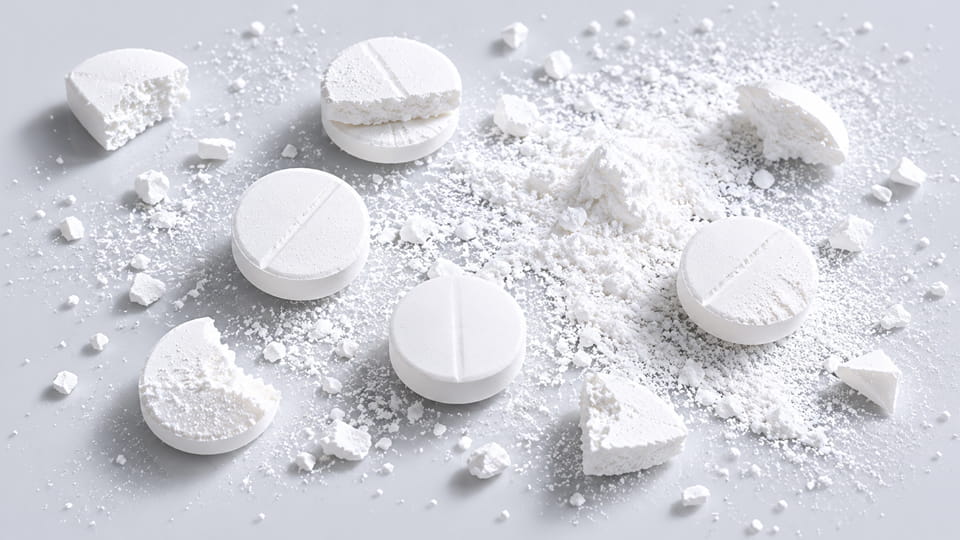

Tablet deduster machines are essential in pharmaceutical production lines to remove excess powder and debris from tablets immediately after compression. By mechanically agitating and conveying tablets through perforated trays with vacuum extraction, dedusters strip off surface dust, improving tablet appearance and preventing contamination. This ensures better product quality, compliance with FDA/EMA GMP standards, and smoother downstream processing (e.g. coating or blister sealing). Modern dedusters (often made of SUS304/316L stainless steel) may integrate metal detectors for dual dust- and impurity-control. This guide explains how tablet dedusters work, their main types, benefits, and selection criteria, with a focus on Jinlu Packing’s pharmaceutical-grade solutions.
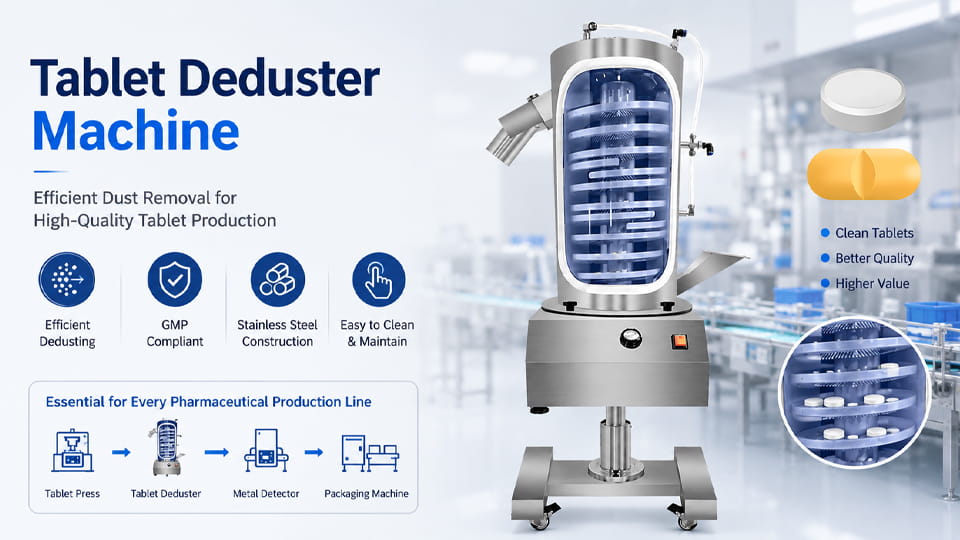
A tablet deduster is a post-press cleaning device in solid dosage manufacturing. It is typically installed between the tablet press and downstream equipment (coating or packaging machines). The deduster’s job is to separate off any loose dust, fragments, or sub‑standard tablets before packaging. In practice, tablets fall from the press into the deduster’s feed hopper. Inside, they pass over vibrating perforated trays or screens. The vibration (or a gentle helical conveyor) agitates the tablets, shaking dust and small particles free from all surfaces. Simultaneously, a vacuum or air jet system draws the dislodged powder out of the chamber for collection. The end result is clean, dust-free tablets that continue down the line.
Tablet dedusters are built to strict pharmaceutical standards: food-grade stainless steel (typically SUS304 or SUS316L) construction ensures no contamination. They often feature easy‑release trays and covers for cleaning (CIP/WIP design) and user-friendly controls. Some models, like Jinlu’s Tablet Deduster with Metal Detector, integrate a metal scanner in the same module. This combined machine not only removes dust but also rejects any tablet containing metal debris, providing two layers of quality control in one compact unit.
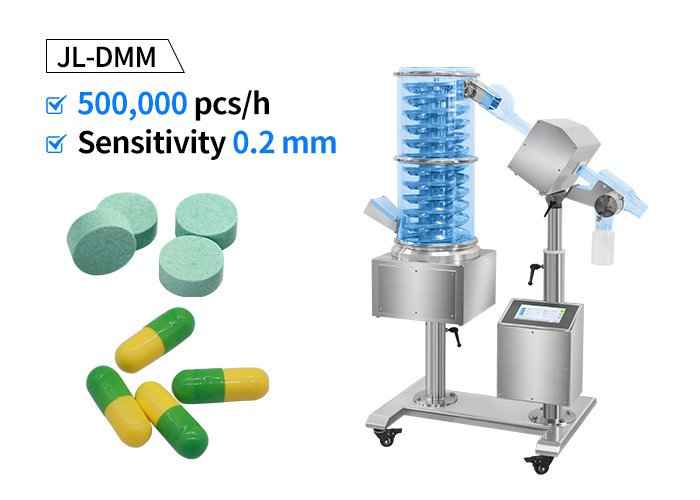
Figure: A tablet deduster machine (with integrated metal detector) removes excess powder from tablets after pressing.
The dedusting process generally involves four stages:
Together, these steps maintain tablet integrity while achieving thorough cleaning. Modern machines often log operating parameters (speed, vacuum pressure, fault data) to meet FDA 21 CFR Part 11 requirements for electronic records.
[jl_youtube src=”https://www.youtube.com/embed/U1KbW9XeHK8″]
Tablet dedusters are commonly classified based on their conveying structure and dust removal method. In pharmaceutical manufacturing, the three main types are horizontal dedusters, vertical dedusters, and brush-type dedusters.
Horizontal tablet dedusters use a vibrating perforated plate or tube to move tablets forward while separating dust and fine particles. The loosened powder falls through the perforated surface and is removed by a vacuum system.
These machines have a simple structure, low cost, and easy operation, making them suitable for small-scale production or traditional tablet manufacturing lines. However, they usually offer shorter residence time and lower dedusting efficiency, especially in high-speed production environments. Their larger floor space requirement also limits integration with modern automated packaging lines.
Vertical tablet dedusters are the most widely used type in modern pharmaceutical production. They use controlled vibration to move tablets through a spiral pathway while continuously removing dust and burrs.
Compared with horizontal machines, vertical dedusters provide longer conveying paths, better dust removal performance, smaller footprints, and easier integration with metal detectors, blister packaging machines, and bottle filling lines.Vertical tablet dedusters are generally divided into two subtypes:

Brush-type dedusters use rotating brushes to clean and polish tablets during conveying. They are suitable for fragile, coated, or delicate tablets that require gentle handling and improved surface finishing.
Although brush-type systems can improve tablet appearance, they require more maintenance and cleaning due to brush wear. For this reason, they are mainly used in specialized applications rather than standard high-speed production lines.
Today, upward conveying vertical tablet dedusters remain the preferred choice for most pharmaceutical manufacturers because of their high efficiency, compact design, and easy production line integration.

Tablet dedusters are a must-have for any modern solid-dosage production line because they directly support product quality, safety and compliance. Removing dust after compression is non-negotiable for GMP. As one guide explains, even a trace of powder can ruin downstream processes – dedusting “prevents contamination in packaging operations, ensures proper blister sealing, and maintains product appearance”. Regulatory agencies (FDA, EMA, cGMP) expect that equipment like tablet dedusters have hygienic design, and that dust is contained or captured. For example, dedusters built to FDA standards use validated cleaning protocols (WIP/CIP) and secure seals so potent or toxic drug dust never escapes.
In addition, dedusters keep up with the demands of high-speed presses. Jinlu notes current models handle up to 100,000 tablets per hour so they easily match even the fastest rotary press. This prevents a production slowdown; the deduster will not become a throughput bottleneck. In fact, by combining dust removal and metal detection (when applicable), these machines save line footprint and reduce the risk of secondary contamination between devices.
Finally, clean tablets improve yield and reduce waste. If dust is left on tablets, they may stick together, misweigh, or trigger defects in coating or blistering. Dedusting dramatically lowers reject rates and customer complaints. By enforcing a final “clean tablet” QC step, manufacturers maintain consistent tablet potency and patient safety.
| Feature | Tablet Deduster | Tablet Polisher |
| Main Function | Remove loose dust and fine particles from tablets. | Polish or buff tablet surfaces for shine (often via rotating brushes or cloth). |
| Typical Use | Installed immediately after tablet press, pre-coating/packaging. Ensures dust-free tablets. | Used after dedusting (or alone) as a finishing step for cosmetic polishing. |
| Mechanism | Vibrating tray or spiral screen + vacuum extraction. | Rotating abrasive brushes or belts gently scrub the tablet surface (with minimal vacuum). |
| Dust Collection | Integral vacuum or suction captures removed powder. | Limited; primarily pushes excess dust into the polishing drum. Less effective at complete dust capture. |
| Impact on Tablets | Cleans tablets without altering shape; rejects broken tablets. | Smooths edges and adds glossy finish; may round off corners slightly. Mainly aesthetic improvement. |
| Integration | Inline with production line (often height-adjustable to press). CIP/WIP options available. | Often a standalone or downstream unit; not always GMP-ready out of the box. |
| Benefits | Meets GMP cleaning requirements, maintains weight accuracy. | Enhances visual appeal; removes minor surface markings. |
Table: Comparison of tablet dedusters and polishers. Dedusters are primarily for dust removal and quality control, whereas polishers focus on appearance. As a result, dedusters usually include dust extraction systems, while polishers do not.
Selecting an optimal deduster depends on your process needs. Consider:
By weighing these factors—throughput, tablet specs, construction, and service—you can pick a deduster that keeps your tablets clean, safe, and your line running efficiently.
Tablet dedusters are used across any industry making compressed tablets:
In all cases, the deduster design is similar. For example, Jinlu’s machines handle 3–25 mm tablets of various shapes, making them versatile for any solid-dose line. Whether it’s a life-saving drug or a vitamin complex, a deduster keeps the tablets intact and contamination-free.

Jinlu Packing is a trusted manufacturer of pharmaceutical packaging machinery, and our tablet dedusters reflect decades of experience. Key reasons to choose Jinlu include:
For more details, see our Tablet Deduster with Metal Detector product page, or contact us for a custom quote and line layout. Our experts can recommend the ideal dedusting system (with or without metal detection) to meet your quality and budget requirements.
A tablet deduster is a vital investment for any solid-dose manufacturer. By ensuring that tablets leave the press surface free of debris, dedusters protect product quality and patient safety while boosting production efficiency. They help meet strict regulatory standards and reduce costly rejects or recalls. With a proper deduster (especially one integrated with a metal detector), your tablets will be cleaner, your line will run smoother, and your final product will be of higher quality.
If you’re looking to upgrade your line, Jinlu Packing offers a full range of dedusting and tablet-handling equipment. Contact Jinlu Packing today for a quotation or consultation – our experts can help configure the ideal Tablet Deduster (with or without metal detection) for your pharmaceutical line. Ensure your production meets the highest standards of quality and efficiency with Jinlu’s proven dedusting solutions.
A deduster removes excess powder and fines from tablets immediately after compression. This cleaning step prevents dust from contaminating the next stages (like coating or blistering) and ensures each tablet has a pristine finish. Removing dust also improves sealing in blister packs and prevents particulate loose-fill in bottles.
Yes. Tablet dedusters are designed to sit inline with the press. They are typically placed right after the press’s discharge chute. Many models have adjustable height bases or matching connectors so they attach directly. This inline setup allows tablets to flow directly from the press into the deduster without manual transfer, which streamlines production.
A tablet deduster cleans tablets of dust and fragments, while a metal detector scans for and rejects metal-contaminated tablets. Jinlu’s combined deduster/metal detector machine actually does both in one unit. In that hybrid, the deduster’s sieve system first removes dust and rejects broken tablets, then the metal detector downstream checks the cleaned tablets for metal particles.
Dedusters should be cleaned regularly per GMP. Typically, the dust collection tray or filters are emptied daily. Internal parts (screens, trays, and hoppers) should be wiped or vacuumed at least weekly. Many companies do a full disassembly and wash (WIP/CIP) monthly or between major product changeovers. Manufacturers often recommend brushing out the perforations and inspecting the vacuum filter every day. Annual maintenance checks and parts replacement (e.g. vibration motors, seals) help keep efficiency high.
Yes, proper dedusters are designed for GMP. They use pharma-grade materials (e.g. SUS316L) and hygienic design principles. A compliant deduster will have smooth, weld-free interiors and quick-disconnect parts for easy cleaning. Automated cleaning (WIP/CIP) is available on high-end models to minimize manual cleaning. All operational steps (e.g. speed settings, cleaning logs) can be documented to satisfy audits. Jinlu’s dedusters, for example, meet FDA/EMA quality regulations and support 21 CFR Part 11 data logging when paired with a metal detector.
Tablet dedusting is important because leftover powder can affect coating quality, blister sealing, bottle filling, and product appearance. It also helps reduce contamination risks and keeps downstream packaging equipment cleaner and more stable during production.
Yes. Modern tablet deduster machines usually include adjustable vibration settings that allow operators to process coated tablets, effervescent tablets, chewable tablets, and irregular shapes without damaging the product surface.
Besides pharmaceutical manufacturing, tablet dedusters are also widely used in nutraceutical, food, confectionery, and chemical industries for products such as vitamin tablets, candy tablets, detergent tablets, and herbal supplements.
References:
1.Guide To Selecting Tablet Dedusters In Pharma Manufacturing Operations —— pharmaceuticalonline.com
2.Sticking and Picking in Pharmaceutical Tablet Compression: An IQ Consortium Review —— ScienceDirect
3.Addressing Dust Accumulation in Tablet Manufacturing —— pharmtech.com
4.Pharma Technology Inc.: Dust-Tight Deduster —— Healthcare Packaging