
ข้อกำหนดการติดฉลากยา กำหนดข้อมูลที่ต้องปรากฏบนบรรจุภัณฑ์ยาเพื่อรองรับการระบุผลิตภัณฑ์, การใช้งานที่ปลอดภัย, การปฏิบัติตามกฎระเบียบ, และการตรวจสอบย้อนกลับ. ขึ้นอยู่กับตลาดและประเภทผลิตภัณฑ์, ฉลากยาอาจมีชื่อผลิตภัณฑ์รวมอยู่ด้วย, สารออกฤทธิ์(S), ความแข็งแกร่ง, แบบฟอร์มการให้ยา, ปริมาณ, หมายเลขแบทช์หรือล็อต, วันหมดอายุ, เงื่อนไขการจัดเก็บ, คำเตือน, และข้อมูลการอนุญาตของผู้ผลิตหรือการตลาด. ในสหรัฐอเมริกา, ข้อกำหนดที่กำหนดขึ้นผ่านกฎระเบียบของ FDA เช่น 21 ส่วนซีเอฟอาร์ 201, ในขณะที่การติดฉลากผลิตภัณฑ์ยาของสหภาพยุโรปอยู่ภายใต้กฎหมายเภสัชกรรมของยุโรป, รวมถึงคำสั่ง 2001/83/EC. ข้อกำหนดที่แน่นอนอาจแตกต่างกันไปตามประเภทของยา, รูปแบบบรรจุภัณฑ์, และตลาดเป้าหมาย, ดังนั้นจึงไม่มีเทมเพลตป้ายกำกับเดียวที่ใช้งานได้ทุกที่.
สำหรับผู้ผลิตยาและทีมงานบรรจุภัณฑ์, การปฏิบัติตามกฎระเบียบไม่ได้เป็นเพียงการสร้างงานศิลปะที่ถูกต้องเท่านั้น. ต้องใช้ข้อมูลที่ได้รับการอนุมัติด้วย, พิมพ์, ตรวจสอบแล้ว, และควบคุมอย่างถูกต้องตลอดการผลิต. สิ่งนี้สำคัญอย่างยิ่งสำหรับบรรจุภัณฑ์พลาสติก, ขวด, กล่อง, และรูปแบบอื่นๆ ที่มีเนื้อที่จำกัดหรือข้อมูลที่แปรผัน เช่น หมายเลขชุดและวันหมดอายุต้องเพิ่มระหว่างการบรรจุ. ทันสมัย สายการบรรจุ อาจใช้ เครื่องติดฉลาก, ระบบการเข้ารหัสแบบแบตช์, เครื่องอ่านบาร์โค้ดหรือ DataMatrix, และระบบตรวจสอบด้วยภาพเพื่อช่วยตรวจสอบว่าข้อมูลที่ถูกต้องถูกนำไปใช้กับผลิตภัณฑ์ที่เหมาะสม. ในคู่มือนี้, เราจะแจกแจงข้อกำหนดสำคัญในการติดฉลากยา, เปรียบเทียบข้อกำหนดที่สำคัญของ FDA และ EU, ดูข้อควรพิจารณาพิเศษสำหรับรูปแบบบรรจุภัณฑ์ต่างๆ, และอธิบายว่าอุปกรณ์การติดฉลากและการเข้ารหัสสามารถรองรับความน่าเชื่อถือมากขึ้นได้อย่างไร กระบวนการบรรจุยา.
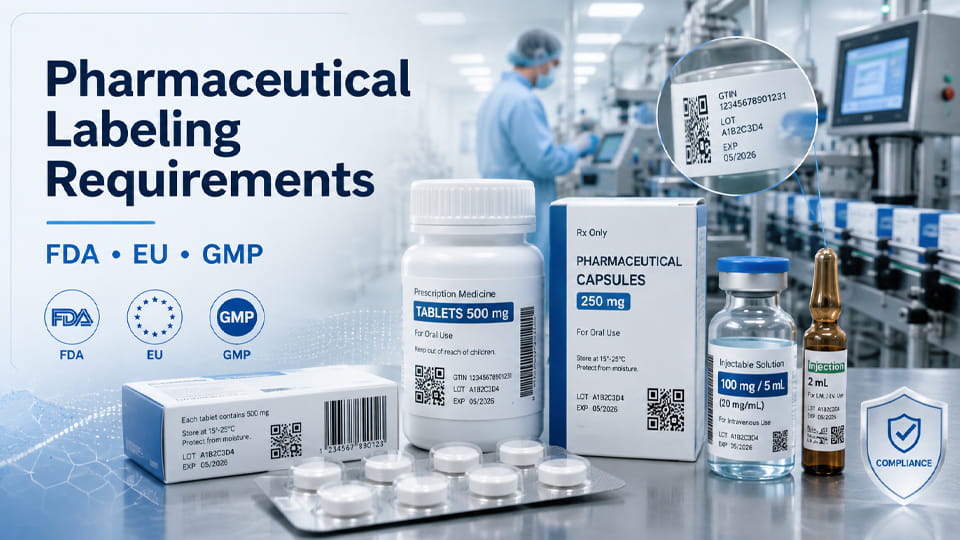
“ข้อกำหนดการติดฉลากยา” คือกฎที่ใช้ควบคุมข้อมูลที่ต้องพิมพ์บนบรรจุภัณฑ์ยา. ในสหรัฐอเมริกา, คำแนะนำของ FDA (และ 21 ส่วนซีเอฟอาร์ 201) กำหนดคำสั่งและรูปแบบฉลากที่ต้องการ. ตัวอย่างเช่น, คำแนะนำของ FDA ระบุว่าการติดฉลากยาที่ต้องสั่งโดยแพทย์ทั้งหมดต้องปฏิบัติตาม 21 ซีเอฟอาร์ 201.56(ง) & 201.57, ครอบคลุมเนื้อหาและรูปแบบ. ตามระเบียบข้อบังคับ, “การติดฉลาก” ยาที่ต้องสั่งโดยแพทย์มีองค์ประกอบ 3 ประการ: ข้อมูลการสั่งจ่ายยาของมืออาชีพ (ใส่แพ็คเกจ), ฉลากกล่องและภาชนะบรรจุ, และการติดฉลากผู้ป่วย. ในแง่การปฏิบัติ, ข้อกำหนดในการติดฉลากทำให้แต่ละบรรจุภัณฑ์ระบุยาและการใช้งานอย่างชัดเจน: แบรนด์และชื่อสามัญ, สารออกฤทธิ์(S), ความแข็งแกร่ง, แบบฟอร์มการให้ยา, ปริมาณ, และชื่อ/ที่อยู่ผู้ผลิตต้องปรากฏ, พร้อมด้วยข้อมูลด้านความปลอดภัย (คำเตือน, ข้อบ่งชี้) และรหัสตรวจสอบย้อนกลับ (แบทช์, หมดอายุ). กฎเหล่านี้ปกป้องความปลอดภัยของผู้ป่วยและเปิดใช้งาน การเรียกคืนผลิตภัณฑ์ ถ้าจำเป็น.
กล่าวอีกนัยหนึ่ง, ข้อกำหนดการติดฉลากกำหนดมาตรฐานขั้นต่ำสำหรับข้อมูลที่อ่านง่ายและครบถ้วนบนบรรจุภัณฑ์ยา. พวกเขามุ่งหวังที่จะป้องกันข้อผิดพลาดในการใช้ยาและรับรองว่าทุกคน (อดทน, ผู้ดูแลหรือผู้ตรวจสอบ) สามารถตรวจสอบสินค้าได้. ตัวอย่างเช่น, FDA ระบุวันหมดอายุและรหัสล็อตอย่างชัดเจนเป็นข้อบังคับ (ดูกล่อง “ฉลากยังบอกคุณด้วย” ด้านล่าง), และกฎหมายของสหภาพยุโรปกำหนดให้ต้องมีแบทช์และวันหมดอายุบนกล่อง. แนวทางการดูแลสุขภาพ (EMA, WHO) และมาตรฐานอุตสาหกรรมเช่น GS1 ยังระบุรูปแบบเพิ่มเติมอีกด้วย (E.G. บาร์โค้ด DataMatrix) เพื่อรองรับการตรวจสอบย้อนกลับทั่วโลก. โดยรวม, การปฏิบัติตามข้อกำหนดหมายความว่าป้ายกำกับของคุณต้องตรงกับช่องทำเครื่องหมายในตารางด้านล่าง.
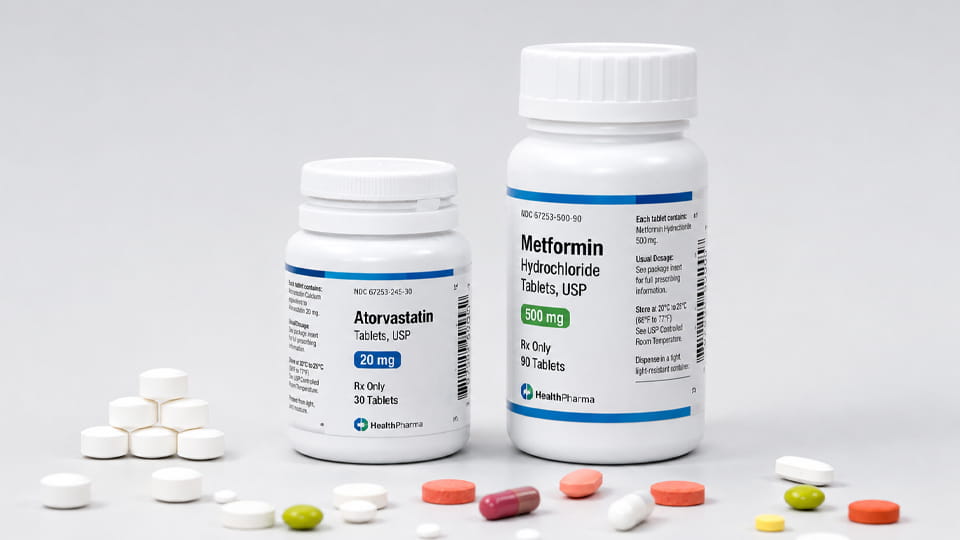
| องค์ประกอบฉลาก | วัตถุประสงค์ |
| ชื่อสินค้า (ยี่ห้อ & ทั่วไป) | ระบุชื่อยาตามชื่อ, ลดความสับสน. |
| สารออกฤทธิ์(S) | ระบุองค์ประกอบและจุดแข็งของยา. |
| ความแข็งแกร่ง (ปริมาณ) | ระบุปริมาณ (E.G. มก. ต่อเม็ด/มล). |
| รูปแบบการให้ยา (แท็บเล็ต, ฯลฯ) | อธิบายการกำหนด (แท็บเล็ต, แคปซูล, ของเหลว). |
| เนื้อหาสุทธิ (นับ/ปริมาตร) | แสดงปริมาณในบรรจุภัณฑ์ (E.G. 30 แท็บเล็ต). |
| หมายเลขชุดงาน/ล็อต | เปิดใช้งานการตรวจสอบย้อนกลับและการเรียกคืนหากจำเป็น. |
| หมดอายุ (หมดอายุ) วันที่ | ตรวจสอบให้แน่ใจว่าใช้ยาก่อนที่จะสูญเสียประสิทธิภาพ. |
| ชื่อผู้ผลิต & ที่อยู่ | ระบุแหล่งที่มาของความรับผิดชอบ. |
| สภาพการเก็บรักษา | สอนเรื่องอุณหภูมิครับ, แสงสว่าง, ความชื้น. |
| คำเตือน/ข้อควรระวัง | คำเตือนด้านความปลอดภัย (เช่น, “เก็บให้พ้นมือเด็ก”). |
| เส้นทางการบริหาร | ระบุการใช้งาน (เช่น, ทางปาก, ฉีดได้). |
| การใช้งาน/บ่งชี้ | (ไม่จำเป็น) ระบุว่ามันปฏิบัติต่ออะไร (โดยเฉพาะ. โอทีซี). |
| รหัสข้อบังคับ (NDC/MA เลขที่) | เรา. หมายเลขอนุญาตทางการตลาดของ NDC หรือ EU. |
| ประกาศแจ้งการงัดแงะ | (ข้อความ "หลักฐานการงัดแงะ" หากจำเป็น). |
| บาร์โค้ด/ดาต้าแมทริกซ์ | เข้ารหัส GTIN, แบทช์, หมดอายุในการสแกน. |
แต่ละองค์ประกอบมีเหตุผลที่ชัดเจน. เช่น, ชื่อผลิตภัณฑ์และส่วนผสมช่วยให้ผู้ป่วยได้รับยาที่ถูกต้อง; ความแข็งแกร่ง, รูปแบบและเส้นทางช่วยให้มั่นใจได้ว่าปริมาณยาที่เหมาะสม; การจัดเก็บและคำเตือนช่วยปกป้องความปลอดภัย; แบทช์/ล็อตและการหมดอายุช่วยให้ตรวจสอบย้อนกลับได้; และบาร์โค้ด (GS1 ดาต้าเมทริกซ์) ให้เครื่องสแกนและตรวจสอบพัสดุ. หน่วยงานกำกับดูแล (อย, EMA, ฯลฯ) ต้องการรายการเหล่านี้ทั้งหมดเป็นหลัก. ตารางด้านบนแสดงรายการช่องทั่วไปและฟังก์ชัน. ในทุกกรณี, ฉลากควรอ่านได้ชัดเจน (ขนาดตัวอักษรเพียงพอ, ตัดกัน) และใช้รูปแบบมาตรฐาน (E.G. เค้าโครง "ข้อมูลยา" ของ FDA สำหรับยาที่ไม่ต้องสั่งโดยแพทย์).
ในประเทศสหรัฐอเมริกา, กฎระเบียบขององค์การอาหารและยา (21 ส่วนซีเอฟอาร์ 201) และคำแนะนำรายละเอียดเนื้อหาฉลากยา. ใบสั่งยา (รับ) ยาเสพติด: ข้อกำหนดที่สำคัญ ได้แก่ การจัดตั้งขึ้น (ทั่วไป) ชื่อของยา (21 ซีเอฟอาร์ 201.50), แบบฟอร์มการให้ยา, เนื้อหาสุทธิ, และทิศทาง (21 ซีเอฟอาร์ 201.55). ฉลากต้องแสดงชื่อและที่อยู่ของผู้ผลิต/ผู้บรรจุหีบห่อ/ผู้จัดจำหน่ายด้วย (201.1), ประมวลกฎหมายยาแห่งชาติ (201.2), และข้อความ “Rx Only” ถ้ามี. ตัวระบุที่สำคัญ เช่น หมายเลขล็อตและวันหมดอายุจะอยู่ภายใต้การควบคุมของ 21 ซีเอฟอาร์ 201.17-18. ตัวอย่างเช่น, 201.17 กำหนดตำแหน่งของวันหมดอายุบนบรรจุภัณฑ์, และ 201.18 ต้องมีการควบคุม (มาก) หมายเลขประจำตัว. ในทางปฏิบัติ, FDA ยืนยันให้พิมพ์หมายเลขรุ่นหรือล็อตและวันหมดอายุอย่างชัดเจนทั้งบนบรรจุภัณฑ์และกล่อง. เช่น, คำแนะนำ "ข้อเท็จจริงเกี่ยวกับยา" ของ FDA ระบุไว้อย่างชัดเจนว่ามีจำนวนมาก (แบทช์) รหัสและวันหมดอายุจะต้องปรากฏบนฉลาก OTC, และตรรกะเดียวกันนี้ใช้กับยา Rx.
ยา OTC (แผงข้อมูลยา): ยาที่ไม่ต้องสั่งโดยแพทย์ทั้งหมดต้องมีฉลาก "ข้อมูลยา" ที่ได้มาตรฐานของ FDA เพื่อช่วยเหลือผู้บริโภค. แผงนี้ใช้รูปแบบคงที่โดยมีส่วนต่างๆ เช่น Active Ingredient(S), วัตถุประสงค์(S), การใช้งาน, คำเตือน, ทิศทาง, และส่วนผสมที่ไม่ใช้งาน. เป้าหมายคือความสม่ำเสมอและความชัดเจน (โครงสร้างเดียวกันกับยาแก้ปวด, ยาแก้แพ้, ฯลฯ). ตัวอย่างเช่น, “ส่วนผสมออกฤทธิ์(S)” บรรทัดแสดงรายการสารบำบัดและความแข็งแรง, “วัตถุประสงค์” ให้หมวดหมู่ของมัน, และ “คำเตือน/คำแนะนำ” จะให้คำแนะนำการใช้งาน. นอกเหนือจากส่วนเหล่านี้แล้ว, ฉลาก OTC ทุกใบจะต้องแสดงวันหมดอายุ (หรือกฎการหมดอายุเริ่มต้น 3 ปี) และรหัสล็อต, พร้อมทั้งชื่อ/ที่อยู่ของผู้ผลิต และปริมาณสุทธิ. หน้า FDA เกี่ยวกับข้อเท็จจริงยา OTC ยืนยัน: “ฉลากยังบอกคุณ… วันหมดอายุ … รหัสล็อตหรือชุด… ชื่อและที่อยู่ของผู้ผลิต… ปริมาณสุทธิ”. หากไม่รวมสิ่งเหล่านี้ไว้ในฉลาก OTC จะเป็นการละเมิดกฎการติดฉลากของ FDA.
กฎระเบียบของ FDA แสดงรายการข้อความการติดฉลากโดยละเอียดมากมาย. ตัวอย่างเช่น, 21 ซีเอฟอาร์ 201.50-201.56 และ 201.100-201.128 ปิดฉลากภาชนะและฉลากกล่อง. ไฮไลท์บางส่วนได้แก่:
นอกเหนือจาก CFR, คำแนะนำของ FDA ให้ความกระจ่างเกี่ยวกับกฎเหล่านี้. สะดุดตา, ขณะนี้ FDA กำหนดให้การติดฉลากยาที่ต้องสั่งโดยแพทย์เป็นสามส่วน: ข้อมูลการสั่งจ่ายยาของมืออาชีพ (ใส่แพ็คเกจ), ฉลากทางกายภาพบนกล่อง/ภาชนะ, และใบปลิวที่กำกับโดยผู้ป่วย. ฉลากบรรจุภัณฑ์จะต้องมีชื่อที่กำหนดไว้ของยา, ความแข็งแกร่ง, แบบฟอร์มการให้ยา, หน่วยปริมาณ, หมายเลขล็อต, วันหมดอายุ, กทช, และชื่อ/ที่อยู่ธุรกิจ ซึ่งครอบคลุมช่องทำเครื่องหมายทั้งหมดในตารางด้านบนนี้. สิ่งเหล่านี้ทำให้มั่นใจได้ว่าร้านขายยาจะจ่ายผลิตภัณฑ์ที่ถูกต้อง และผู้ป่วยจะเห็นข้อมูลด้านความปลอดภัยที่สำคัญ.
ในสหภาพยุโรป, คำสั่ง 2001/83/EC (ตามที่แก้ไขเพิ่มเติม) และกฎระเบียบที่เกี่ยวข้องควบคุมการติดฉลากผลิตภัณฑ์ยา. กฎมีความคล้ายคลึงกับสหรัฐอเมริกาในวงกว้างแต่มีความแตกต่างบางประการ (E.G. ข้อกำหนดด้านภาษา, รายละเอียดการอนุญาตการตลาด). บทความ 54 ของ 2001/83 ระบุสิ่งที่ต้องอยู่บนบรรจุภัณฑ์ด้านนอก (หรือบรรจุภัณฑ์ทันทีหากไม่มีกล่องด้านนอก). จะต้องแสดงชื่อเต็มของผลิตภัณฑ์, ความแข็งแกร่ง, แบบฟอร์มเภสัชกรรม, และเส้นทางการบริหาร. ควรระบุว่าผลิตภัณฑ์นั้นมีไว้สำหรับผู้ใหญ่หรือเด็กตามความเหมาะสม, และระบุคำเตือนหรือข้อควรระวังพิเศษใดๆ (E.G. อุณหภูมิในการจัดเก็บ). อย่างสำคัญ, บทความ 54 ต้องมีวันหมดอายุและหมายเลขชุดบนบรรจุภัณฑ์ด้านนอก, พร้อมด้วยที่อยู่ของผู้มีอำนาจทางการตลาด (มะห์) และหมายเลขอนุญาตทางการตลาดของสหภาพยุโรป. ในทางปฏิบัติ, ซึ่งหมายความว่ากล่องของสหภาพยุโรปจะต้องมีข้อมูลเดียวกันกับฉลากของสหรัฐอเมริกา: ชื่อ, วัตถุดิบ, ความแข็งแกร่ง, ปริมาณ, คำเตือน, หมดอายุ, และแบทช์, บวกกับการติดต่อ MAH.
คำแนะนำและเทมเพลต EMA (คำสั่ง QRD) สอดคล้องกับกฎเกณฑ์เหล่านี้. สำหรับผลิตภัณฑ์ที่ได้รับอนุญาตจากส่วนกลาง, คิวอาร์ดี (การตรวจสอบคุณภาพของเอกสาร) เทมเพลตทำให้ถ้อยคำของข้อความสำคัญเป็นมาตรฐาน. เมื่อเร็ว ๆ นี้ EMA ยังกล่าวถึงเทคโนโลยีสมัยใหม่อีกด้วย: อนุญาตให้ใช้รหัส QR หรือเทคโนโลยีการสแกนบนฉลากหากได้รับการอนุมัติ. เครื่องหมายอักษรเบรลล์ (ข้อ 56ก) จำเป็นสำหรับส่วนใหญ่ กล่องยา (ระบุชื่อผลิตภัณฑ์, ความแข็งแกร่ง, ในรูปแบบอักษรเบรลล์) เพื่อเป็นคุณลักษณะด้านความปลอดภัยสำหรับผู้มีความบกพร่องทางการมองเห็น. แต่ละประเทศในสหภาพยุโรปกำหนดให้ต้องมีการติดฉลากในภาษาราชการของตนด้วย(S). บรรทัดล่าง: ฉลากของสหภาพยุโรป (ประถมศึกษาหรือมัธยมศึกษา) ต้องถ่ายทอดรายละเอียดยาที่สำคัญทั้งหมดด้วยเงื่อนไขที่ชัดเจน (มักมีหลายภาษา), คล้ายกับข้อกำหนดของสหรัฐอเมริกา แต่เน้นย้ำถึงอัตลักษณ์ของ MAH, หมายเลขข้อบังคับ, และแผ่นพับหลายภาษา.
รูปแบบบรรจุภัณฑ์หลัก เช่น แผลพุพอง, ขวดและขวดเล็กก่อให้เกิดความท้าทายพิเศษ.
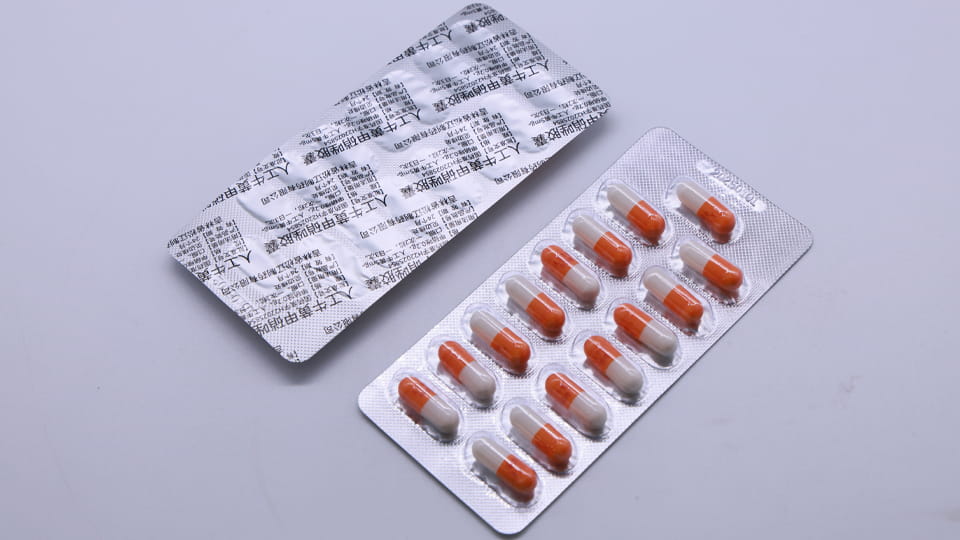
แพ็คแผลพุพอง: โดยการออกแบบ, พุพอง (แถบของกระเป๋าที่ปิดสนิท) มีพื้นที่จำกัด. หน่วยงานกำกับดูแลตระหนักถึงสิ่งนี้: สหภาพยุโรปมักจะอนุญาตให้มีการติดฉลากแบบย่อในช่องตุ่มแต่ละช่อง หากมีรายละเอียดทั้งหมดอยู่บนกล่อง (โดยใช้ฉลากหรือแผ่นพับ “ธง”). ในสหรัฐอเมริกา, ฉลากตุ่ม (E.G. การสนับสนุนฟอยล์) จะต้องระบุชื่อยาด้วย, ความแข็งแกร่ง, หมายเลขล็อตและวันหมดอายุ. บันทึกสรุปอุตสาหกรรมหนึ่งรายการ: -บรรจุภัณฑ์พุพอง ป้ายกำกับต้องมีชื่อกรรมสิทธิ์/ชื่อทั่วไป, ความแข็งแกร่ง, มาก, การหมดอายุ… และปฏิบัติตามข้อกำหนดของ FDA เช่น ความสูงและความคมชัดของข้อความขั้นต่ำ” ในทางปฏิบัติ, ฟอยล์พองมักจะมีชื่อและรหัสพิมพ์อยู่บนแต่ละช่องหรือบนฉลากกระดาษที่พันไว้. บางครั้งบัตรตุ่มจะมีฉลากลอกออกซึ่งครอบคลุมปริมาณหลายขนาด, แต่ก็ยังต้องการข้อมูลเดียวกัน. หลักฐานการงัดแงะมีอยู่ในแผลพุพองที่ปิดสนิท, แต่ถ้าใช้, คำแถลงที่ชัดเจน (E.G. “ห้ามใช้หากซีลชำรุด”) เป็นสิ่งจำเป็น.
ขวดและขวด: โดยทั่วไปขวดทรงกลมจะใช้ฉลากด้านหน้าและด้านหลัง. ฉลากด้านหน้ามักจะแสดงชื่อผลิตภัณฑ์, ความแรงและปริมาณเพื่อ ID ที่รวดเร็ว, และป้ายด้านหลังมีคำแนะนำ, คำเตือนและรายละเอียดด้านกฎระเบียบ. เครื่องติดฉลากแบบทันที (ดูด้านล่าง) ติดฉลากเหล่านี้กับขวด. ตัวอย่างจากโบรชัวร์ของ Jinlu Packing: เครื่องติดฉลาก TBJ-120 ออกแบบมาสำหรับขวดกลม (20–เส้นผ่านศูนย์กลาง –110 มม) และรวมเครื่องเข้ารหัสริบบอนอินไลน์สำหรับการพิมพ์ชุด/วันหมดอายุ. ซึ่งจะทำให้ฉลากกาวของแต่ละขวดได้รับหมายเลขล็อตและวันหมดอายุที่ถูกต้องตามที่กำหนด. สำหรับทั้งตุ่มและขวด, ขนาดตัวอักษรและความคมชัดของสีต้องเป็นไปตามมาตรฐานทางกฎหมาย (E.G. อย 21 ซีเอฟอาร์ 201.15 เกี่ยวกับความชัดเจน). ในระยะสั้น, เวิร์กโฟลว์การติดฉลากบรรจุภัณฑ์พลาสติกและขวดได้รับการออกแบบทางวิศวกรรมเพื่อให้ตรงตามกฎเนื้อหาเดียวกัน นั่นคือ ชื่อ, วัตถุดิบ, ล็อตและหมดอายุ — แม้ว่าจะเป็นวิธีการจัดส่งก็ตาม (ลอกออก, พิมพ์โดยตรง, หรือสติ๊กเกอร์) แตกต่าง.
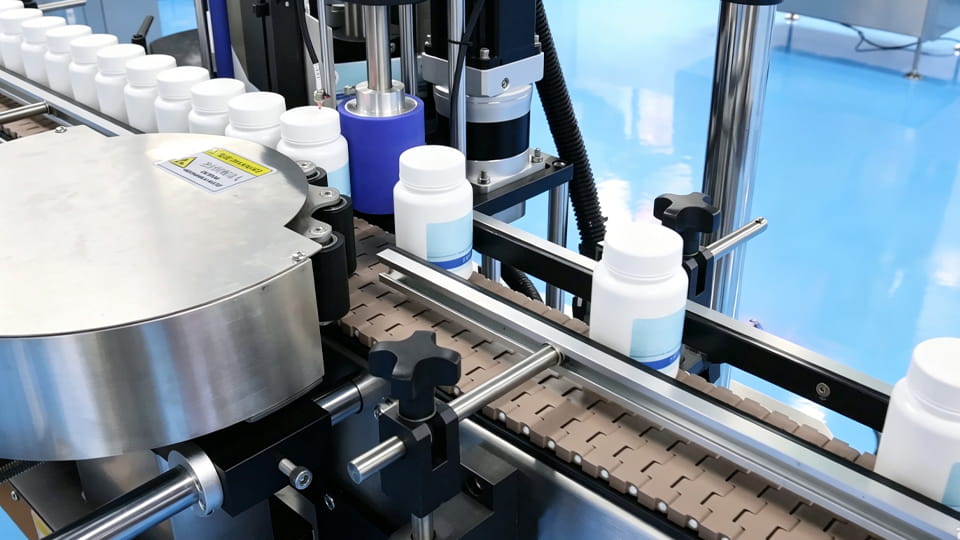
รูป: ติดฉลากขวดยาในสายการผลิต. ฉลากขวดต้องแสดงเอกลักษณ์ของผลิตภัณฑ์อย่างชัดเจน (ชื่อ, สารออกฤทธิ์, ความแข็งแกร่ง) และข้อมูลด้านกฎระเบียบที่จำเป็น (หมายเลขแบทช์, หมดอายุ, ผู้ผลิต) เพื่อให้สามารถตรวจสอบขวดหรือขวดแต่ละขวดได้.
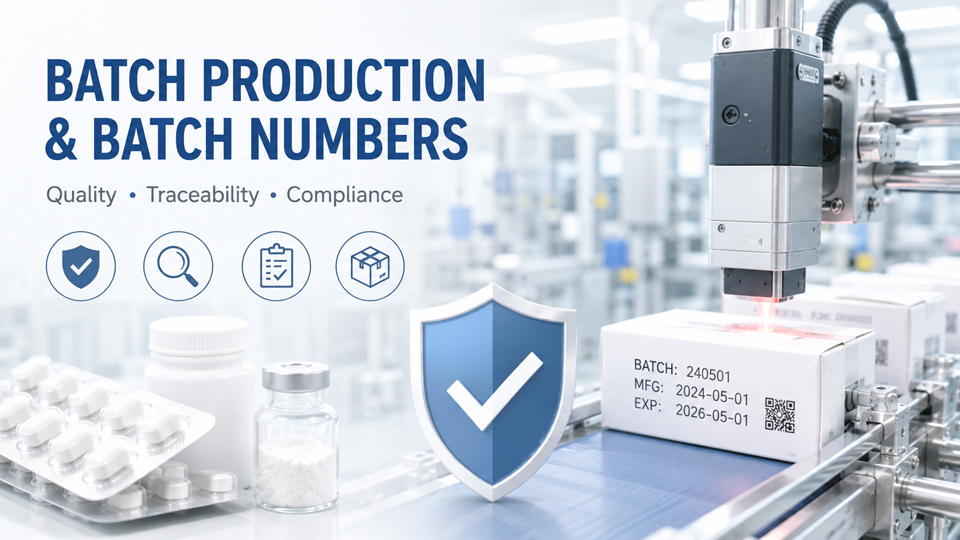
การพิมพ์หมายเลขชุด/ล็อตและวันหมดอายุเป็นส่วนสำคัญของการติดฉลาก. ในสายงานเภสัชกรรม, อุปกรณ์การเข้ารหัสเฉพาะใช้เพื่อพิมพ์ข้อมูลนี้ด้วยความเร็วสูง. เทคโนโลยีทั่วไปได้แก่ อิงค์เจ็ทต่อเนื่อง (ซีไอเจ) เครื่องพิมพ์, อิงค์เจ็ทความร้อน (ของเขา) เครื่องพิมพ์, เครื่องพิมพ์ทับการถ่ายเทความร้อน (ทีทีโอ) และ เลเซอร์โค้ดเดอร์.
โดยทั่วไปเครื่องพิมพ์เหล่านี้จะถูกรวมเข้าด้วยกันทันทีหลังจากการติดฉลาก. ตัวอย่างเช่น, ขวดอาจผ่านเข้าใต้เครื่องเข้ารหัสอิงค์เจ็ททันทีหลังจากติดฉลาก, ซึ่งพิมพ์ล็อตและหมดอายุลงบนฉลากเป็นแถว. เครื่อง Jinlu TBJ-120 (ข้างบน) รวมถึง เครื่องเข้ารหัสริบบิ้น เพื่อประทับรหัสบนฉลากแต่ละอัน. ไม่ว่าจะด้วยวิธีใดก็ตาม, ข้อมูลที่พิมพ์จะต้องมีความชัดเจนสูงและอยู่ในตำแหน่งตามที่กำหนดโดยกฎระเบียบ (E.G. ใกล้ด้านล่างของแผงแสดงผลเพื่อดูวันหมดอายุ). รูปแบบที่มนุษย์สามารถอ่านได้ (เหมือน YYMDD) ต้องตรงกับข้อมูลบาร์โค้ดใดๆ. ไม่ว่าในกรณีใดก็ตาม, ไม่ว่าจะด้วยอิงค์เจ็ทหรือเลเซอร์, เป้าหมายหลักก็เหมือนกัน: แต่ละบรรจุภัณฑ์จะต้องมีหมายเลขแบทช์และวันหมดอายุเพื่อให้สอดคล้องกับการตรวจสอบย้อนกลับของ GMP. ระบบตรวจสอบ (ดูด้านล่าง) จะตรวจสอบว่ารหัสที่พิมพ์ออกมาแต่ละรหัสมีอยู่และถูกต้อง.
กฎระเบียบสมัยใหม่มักกำหนดให้มีรหัสที่เครื่องอ่านได้เพื่อให้สามารถตรวจสอบย้อนกลับและป้องกันการปลอมแปลงได้. มาตรฐานระดับโลกคือ GS1 ดาต้าเมทริกซ์ 2บาร์โค้ด D, ซึ่งสามารถเข้ารหัสองค์ประกอบข้อมูลหลายรายการด้วยสัญลักษณ์สี่เหลี่ยมจัตุรัสขนาดเล็ก. ในการดูแลสุขภาพ, มาตรฐาน GS1 ระบุการเข้ารหัสคุณลักษณะหลักสี่ประการ: GTIN (หมายเลขสินค้าการค้าสากล), วันหมดอายุ, หมายเลขแบทช์/ล็อต, และ หมายเลขซีเรียล. GTIN ระบุผลิตภัณฑ์โดยไม่ซ้ำกัน, ในขณะที่อีกสามรายการเปิดใช้งานการติดตามและตรวจสอบในทุกแพ็คเกจ.
ในสหรัฐอเมริกา, ที่ 2013 พระราชบัญญัติคุณภาพและความมั่นคงด้านยา (ดีคิวเอสเอ) กำหนดให้มีการออกหมายเลขกำกับยาตามใบสั่งแพทย์เป็นระยะๆ. โดย 2023, พระราชบัญญัติความมั่นคงในห่วงโซ่อุปทานยากำหนดให้ต้องมีตัวระบุผลิตภัณฑ์ในแต่ละหน่วย (ซึ่งรวมถึงล็อตและวันหมดอายุด้วย) เพื่อให้ร้านขายยาสามารถตรวจสอบสินค้าได้ที่ใบเสร็จรับเงิน. ในสหภาพยุโรป, คำสั่งยาปลอม (คำสั่ง 2011/62/EU) ต้องใช้หมายเลขซีเรียลที่ไม่ซ้ำกันบนชุดยาที่ต้องสั่งโดยแพทย์หลายชุดอยู่แล้ว. พัสดุของสหภาพยุโรปต้องมี GS1 DataMatrix ที่มี GTIN, หมายเลขซีเรียลที่ผู้ผลิตกำหนด, หมดอายุและแบทช์ (ตัวระบุแอปพลิเคชัน 17, 10). คำแนะนำ GS1 ชี้นำผู้ผลิตอย่างชัดเจน: “เข้ารหัส GTIN ของคุณ, ล็อตและวันหมดอายุในบาร์โค้ด GS1 DataMatrix และติดไว้บนผลิตภัณฑ์”. ตลาดบางแห่ง (บราซิล, อินเดีย, คนอื่น) กำลังนำข้อกำหนดการทำให้เป็นอนุกรมที่คล้ายกันมาใช้ด้วย.
นอกจาก DataMatrix แล้ว, บริษัทต่างๆ อาจใช้รหัส QR หรือ RFID บนฉลากเพื่อการมีส่วนร่วมของผู้บริโภคหรือการจัดการสต็อก, แต่การมุ่งเน้นด้านกฎระเบียบยังคงอยู่ที่บาร์โค้ด 2D เพื่อให้เป็นไปตามข้อกำหนด. รหัสเหล่านี้พิมพ์โดยเครื่องติดฉลากเฉพาะหรือเครื่องเข้ารหัสบนบรรจุภัณฑ์. ตัวอย่างเช่น, วิธีหนึ่งคือให้เครื่องพิมพ์เลเซอร์หรือฉลากเพิ่ม DataMatrix หลังจากติดฉลากหลักแล้ว. วิชันซิสเต็มจะสแกน DataMatrix เพื่อให้แน่ใจว่าอ่านได้อย่างถูกต้อง. โดยการเข้ารหัสแบทช์และการหมดอายุในบาร์โค้ด, สแกนได้ทุกจุด (การกระจาย, การจ่ายยา) ตรวจสอบค่าเหล่านั้นทันที. โดยสรุป, การทำให้เป็นอนุกรมหมายถึงแต่ละรายการ แพ็คเกจต่อหน่วย มีรหัสที่สามารถสแกนได้เฉพาะซึ่งเชื่อมโยงกับข้อมูลการผลิต.
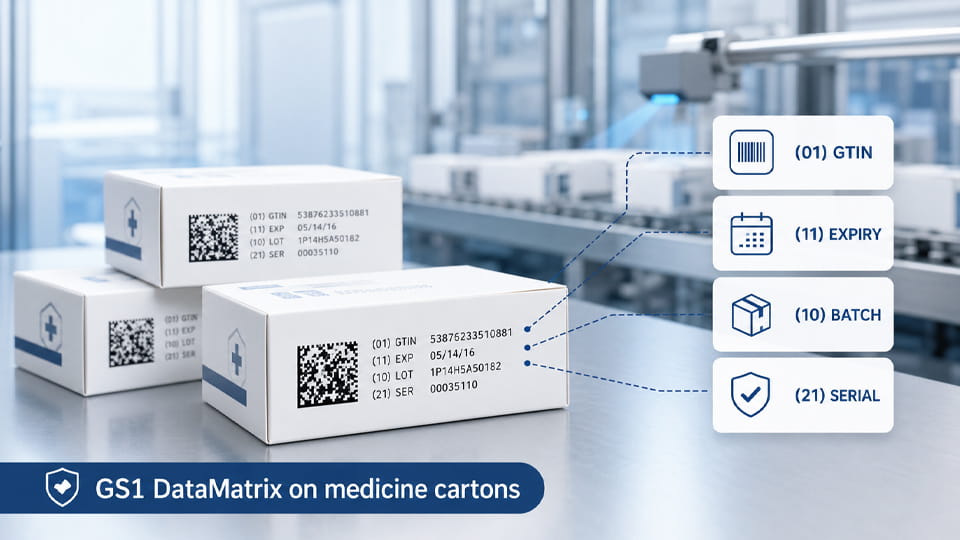
รูป: รหัส GS1 DataMatrix บนกล่องยาที่ประกอบด้วย (01)GTIN, (11)หมดอายุ, (10)แบทช์, (21)อนุกรม. บรรจุภัณฑ์ยามักจะมี GS1 DataMatrix (2บาร์โค้ด D) ด้วย GTIN, วันหมดอายุและหมายเลขแบทช์/ล็อตที่เข้ารหัส. ช่วยให้สแกนและตรวจสอบข้อมูลการติดตามคีย์ทั้งหมดได้ด้วยความเร็วสูง.
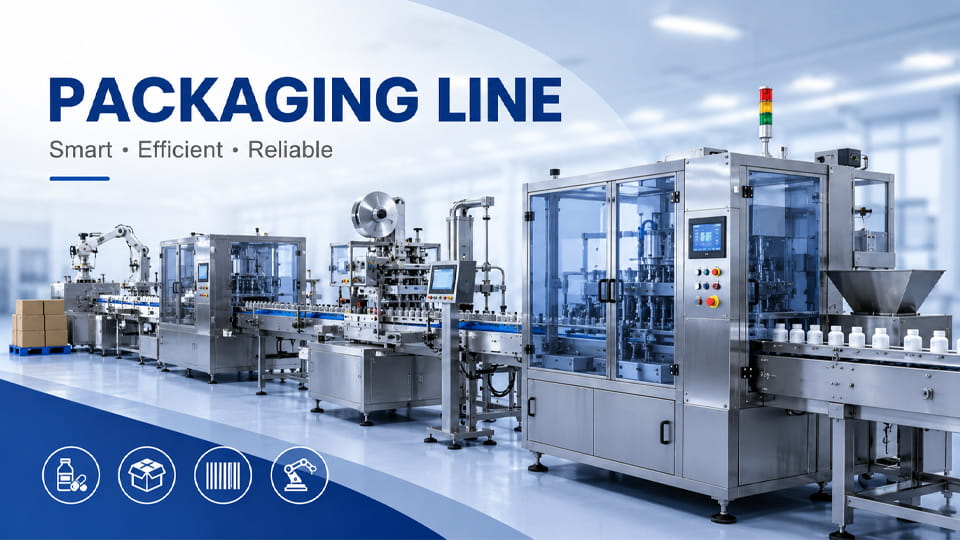
เครื่องจักรอัตโนมัติถือเป็นสิ่งสำคัญในการติดฉลากและรหัสที่จำเป็นทั้งหมดที่ความเร็วของสายการผลิต. ขั้นตอนการทำงานบรรจุภัณฑ์ยาทั่วไปที่มีการติดฉลากอาจมีลักษณะเช่นนี้:
การบรรจุ/การบรรจุภาชนะบรรจุ → เครื่องติดฉลากอัตโนมัติ → แบทช์ & รหัสหมดอายุ → การทำเครื่องหมายบาร์โค้ด/การทำให้เป็นอนุกรม → สถานีตรวจสอบด้วยภาพ → การทำกล่อง / บรรจุภัณฑ์ทุติยภูมิ

รูป: เครื่องติดฉลากอัตโนมัติพร้อมการแบ่งขวดและรหัส (พวกเขา เครื่องติดฉลาก JL-TBJ-120). เครื่องติดฉลากอัตโนมัติติดฉลากกาวบนขวด, ในขณะที่เครื่องพิมพ์ในตัวจะประทับตราชุด/วันหมดอายุ. เครื่องติดฉลากสมัยใหม่สามารถทำงานได้ด้วยความเร็วสูง (เช่น, 120 ขวด/นาที) ด้วยความแม่นยำ, และมักจะมีเครื่องพิมพ์รหัสสำหรับการพิมพ์อิงค์เจ็ต/ความร้อนสำหรับแบทช์และวันที่. เครื่องจักรเหล่านี้ช่วยให้แน่ใจว่ามีการติดฉลากและรหัสอย่างสม่ำเสมอบนทุกคอนเทนเนอร์.
โดยบูรณาการขั้นตอนเหล่านี้, สายการบรรจุยาช่วยให้มั่นใจได้ว่าตั้งแต่การบรรจุจนถึงการชกมวยขั้นสุดท้าย, ทุกหน่วยมีการติดฉลากอย่างถูกต้องและตรวจสอบย้อนกลับได้. ใช้ระบบเชื่อมโยงเดียว (หรือสายของเครื่องที่ซิงค์กัน) ลดข้อผิดพลาดของมนุษย์. สำหรับการตรวจสอบที่สำคัญ, กล้องวิชันซิสเต็มจะตรวจสอบว่าแต่ละแพ็คมีคุณสมบัติตรงตามข้อกำหนด. ในที่สุด, อุปกรณ์การติดฉลากคุณภาพสูง (ตั้งแต่เครื่องป้อนขวดไปจนถึงเครื่องติดฉลากไปจนถึงเครื่องเขียนโค้ด) ทำให้การปฏิบัติตามกฎฉลาก FDA/EMA สามารถนำไปใช้ได้จริงในวงกว้าง.
แม้จะด้วยความเอาใจใส่, ข้อผิดพลาดในการติดฉลากสามารถเกิดขึ้นได้. ปัญหาทั่วไปได้แก่:
กลยุทธ์การบรรเทาผลกระทบ ได้แก่: โปรโตคอลการเปลี่ยนแปลงที่เข้มงวด (ตรวจสอบฉลากอีกครั้งเมื่อเปลี่ยนผลิตภัณฑ์), การควบคุมในกระบวนการ (การตรวจสอบจุดด้วยตนเองทางออนไลน์), และ 100% การตรวจสอบการมองเห็น. เครื่องอ่านโค้ดอัตโนมัติจะตรวจสอบว่าโค้ดที่พิมพ์ทุกอันตรงกับบันทึกการผลิต. หลายบรรทัดยังมีเครื่องสแกนบาร์โค้ดสำรองเพื่อให้แน่ใจว่าการพิมพ์ล็อต/วันหมดอายุจะอ่านได้ชัดเจน. การทำให้ไฟล์อาร์ตเวิร์คเป็นปัจจุบันและปฏิบัติตามรายการตรวจสอบภาษาจะช่วยป้องกันข้อผิดพลาดของเนื้อหา. ในที่สุด, การจัดหาฉลากและหมึกควรตรงกับความต้องการของระบบ (E.G. หมึกทนรังสียูวีหากจำเป็น). กระบวนการประกันคุณภาพที่แข็งแกร่งจะตรวจจับข้อบกพร่องในการติดฉลากได้ตั้งแต่เนิ่นๆ ก่อนเผยแพร่.
ใช้รายการตรวจสอบนี้เพื่อให้แน่ใจว่าฉลากและบรรจุภัณฑ์ทุกรายการตรงตามข้อกำหนด:
| จุดตรวจติดฉลาก | สมบูรณ์? |
| ชื่อสินค้า (ยี่ห้อ & ทั่วไป) ปัจจุบัน | ☐ |
| สารออกฤทธิ์(S) อยู่ในรายการ (ด้วยความแข็งแกร่ง) | ☐ |
| ความแข็งแกร่ง (ปริมาณ) ระบุไว้อย่างชัดเจน | ☐ |
| รูปแบบการให้ยา (แท็บเล็ต, สารละลาย, ฯลฯ) รวมอยู่ด้วย | ☐ |
| พิมพ์หมายเลขชุด/ล็อตและอ่านได้ชัดเจน | ☐ |
| วันหมดอายุพิมพ์และอ่านง่าย | ☐ |
| ผู้ผลิต (ชื่อ & ที่อยู่) ปัจจุบัน | ☐ |
| สภาวะการเก็บรักษาระบุไว้ (E.G. "เก็บ <25องศาเซลเซียส”) | ☐ |
| คำเตือน/ข้อควรระวังรวมอยู่ด้วย | ☐ |
| บาร์โค้ด/ดาต้าแมทริกซ์ (GTIN+หมดอายุ+แบทช์) ปัจจุบัน | ☐ |
| เนื้อหาสุทธิ (ปริมาณหรือปริมาตร) ระบุไว้ | ☐ |
| รหัสข้อบังคับ (กทช, หมายเลขใบอนุญาต) รวมอยู่ด้วย | ☐ |
| ขนาดตัวอักษร/ความสามารถในการอ่านเป็นไปตามข้อบังคับ | ☐ |
| คำกล่าวที่ชัดเจนว่าเป็นการงัดแงะ (หากต้องการ) | ☐ |
ตรวจสอบแต่ละจุดข้างต้นกับฉลากที่พิมพ์ออกมา. ตัวอย่างเช่น, อย.กำหนดวันหมดอายุและหมายเลขล็อตอย่างชัดเจน, และกฎระเบียบของสหภาพยุโรปกำหนดชื่อผลิตภัณฑ์, ความแข็งแกร่งและเนื้อหา. หากมีรายการใดขาดหายไปหรืออ่านไม่ออก, แพ็คเกจไม่เป็นไปตามข้อกำหนด. รายการตรวจสอบนี้สามารถใช้เป็นตารางอ้างอิงที่โดดเด่นสำหรับการตรวจสอบคุณภาพได้.
การติดฉลากที่ถูกต้องเป็นส่วนที่ไม่สามารถต่อรองได้ในการผลิตยา. โดยทำความเข้าใจข้อกำหนดข้างต้น, คุณสามารถออกแบบฉลากและขั้นตอนการทำงานที่สอดคล้องกับอย, EMA และกฎสากล. จำองค์ประกอบฉลากที่สำคัญ (เอกลักษณ์ของผลิตภัณฑ์, วัตถุดิบ, ข้อมูลความปลอดภัย, และการเข้ารหัส) และทำเครื่องหมายตามรายการตรวจสอบการปฏิบัติตามข้อกำหนด. สายการบรรจุภัณฑ์สมัยใหม่ใช้เครื่องติดฉลากอัตโนมัติ, ผู้เขียนโค้ดและระบบวิชันซิสเต็มเพื่อรักษาอัตราข้อผิดพลาดให้ใกล้ศูนย์.
หากคุณต้องการอุปกรณ์ที่แข็งแกร่งสำหรับการติดฉลากและการเขียนโค้ด, พิจารณาโซลูชันของ Jinlu Packing. Jinlu นำเสนอผลิตภัณฑ์ที่หลากหลาย เครื่องบรรจุภัณฑ์ยา - จาก เครื่องติดฉลากขวดอัตโนมัติ (E.G. ซีรีส์ TBJ) ถึง เครื่องเข้ารหัสแบบแบตช์/หมดอายุ และเสร็จสมบูรณ์ เส้นบรรจุกล่อง – ทั้งหมดนี้ออกแบบมาเพื่อ การปฏิบัติตามมาตรฐาน GMP. เครื่องจักรของเราบูรณาการการติดฉลาก, การพิมพ์และการตรวจสอบเพื่อช่วยให้คุณปฏิบัติตามข้อกำหนดในการติดฉลากได้อย่างง่ายดาย. ตัวอย่างเช่น, เครื่องติดฉลากขวดกลมของ Jinlu จัดการขวดขนาด 20–110 มม. ได้สูงสุด 120 ครั้งต่อนาที, การติดฉลากและการพิมพ์รหัสวันที่/ล็อตในการผ่านครั้งเดียว. สำรวจเครื่องติดฉลากและเครื่องบรรจุกล่องของ Jinlu เพื่อดูรายละเอียดเพิ่มเติม. โดยผสมผสานกระบวนการที่ดีเข้ากับอุปกรณ์ที่เหมาะสม, คุณสามารถมั่นใจได้ว่าบรรจุภัณฑ์ยาทุกกล่องมีการติดฉลากอย่างถูกต้องเพื่อความปลอดภัยและการปฏิบัติตามข้อกำหนด.
ข้อกำหนดในการติดฉลากยาเป็นกฎที่กำหนดว่าข้อมูลใดจะต้องปรากฏบนฉลากยา, คอนเทนเนอร์, กล่องกระดาษ, หรือแผ่นพับบรรจุภัณฑ์. อาจครอบคลุมถึงชื่อผลิตภัณฑ์, ส่วนผสมที่ใช้งานอยู่, ความแข็งแกร่ง, แบบฟอร์มการให้ยา, หมายเลขแบทช์, วันหมดอายุ, คำเตือน, เงื่อนไขการจัดเก็บ, รายละเอียดผู้ผลิต, และข้อมูลกฎระเบียบอื่น ๆ. ข้อกำหนดจะแตกต่างกันไปในแต่ละประเทศ, ประเภทยา, และรูปแบบบรรจุภัณฑ์.
ฉลากยาอาจต้องมีชื่อผลิตภัณฑ์ด้วย, สารออกฤทธิ์, ความแข็งแกร่ง, แบบฟอร์มการให้ยา, เนื้อหา, หมายเลขแบทช์หรือล็อต, วันหมดอายุ, ข้อมูลการอนุญาตของผู้ผลิตหรือการตลาด, เงื่อนไขการจัดเก็บ, คำเตือน, และรายละเอียดเฉพาะตลาดอื่นๆ. ข้อมูลที่แน่นอนขึ้นอยู่กับกรอบการกำกับดูแลและหมวดหมู่ผลิตภัณฑ์ที่เกี่ยวข้อง.
ในประเทศสหรัฐอเมริกา, ฉลากยาต้องเป็นไปตามข้อบังคับการติดฉลากของ FDA, รวมทั้ง 21 ส่วนซีเอฟอาร์ 201. ข้อกำหนดแตกต่างกันระหว่างยาที่ต้องสั่งโดยแพทย์และยาที่จำหน่ายหน้าเคาน์เตอร์. การติดฉลากยาที่ต้องสั่งโดยแพทย์เป็นไปตามข้อกำหนดเช่น 21 ซีเอฟอาร์ 201.56 และ 201.57, ในขณะที่ผลิตภัณฑ์ OTC โดยทั่วไปจะใช้รูปแบบข้อมูลยาที่เป็นมาตรฐานภายใต้ 21 ซีเอฟอาร์ 201.66.
โดยทั่วไปข้อกำหนดการติดฉลากยาของสหภาพยุโรปจำเป็นต้องมีข้อมูลสำคัญ เช่น ชื่อยา, ความแข็งแกร่ง, แบบฟอร์มเภสัชกรรม, สารออกฤทธิ์, เนื้อหา, สารเพิ่มปริมาณที่เกี่ยวข้อง, วันหมดอายุ, และหมายเลขแบทช์. ข้อกำหนดเพิ่มเติมสามารถนำไปใช้ได้ ขึ้นอยู่กับผลิตภัณฑ์และตลาด. กรอบการทำงานของสหภาพยุโรปยังรวมถึงข้อกำหนดสำหรับแผ่นพับบรรจุภัณฑ์และคุณลักษณะการเข้าถึง เช่น อักษรเบรลล์บนบรรจุภัณฑ์.
ใช่, การระบุรุ่นหรือล็อตเป็นส่วนสำคัญของบรรจุภัณฑ์ยาและการตรวจสอบย้อนกลับ. ตัวอย่างเช่น, กฎของสหภาพยุโรปกำหนดให้ระบุหมายเลขแบทช์บนบรรจุภัณฑ์ทันทีบางประเภทโดยเฉพาะ, รวมถึงบรรจุภัณฑ์พุพอง, พร้อมด้วยข้อมูลเช่นชื่อผลิตภัณฑ์และวันหมดอายุ. ข้อกำหนดเฉพาะอาจแตกต่างกันไปตามตลาดและประเภทผลิตภัณฑ์.
บรรจุภัณฑ์ยาหลายชนิดจำเป็นต้องมีวันหมดอายุ และเป็นองค์ประกอบสำคัญในการระบุผลิตภัณฑ์และการใช้อย่างปลอดภัย. ตัวอย่างเช่น, ข้อกำหนดของสหภาพยุโรประบุข้อมูลวันหมดอายุสำหรับบรรจุภัณฑ์ทันที เช่น บรรจุภัณฑ์พลาสติกและหน่วยบรรจุภัณฑ์ขนาดเล็ก. รูปแบบและตำแหน่งที่แน่นอนขึ้นอยู่กับข้อกำหนดของตลาดที่เกี่ยวข้อง.
ข้อกำหนดเกี่ยวกับบรรจุภัณฑ์พลาสติกขึ้นอยู่กับตลาดและการกำหนดค่าบรรจุภัณฑ์. ภายใต้กฎของสหภาพยุโรป, บรรจุภัณฑ์พลาสติกที่วางไว้ภายในบรรจุภัณฑ์ด้านนอกจะต้องมีข้อมูลสำคัญรวมถึงชื่อผลิตภัณฑ์ยา, ผู้มีอำนาจทางการตลาด, วันหมดอายุ, และหมายเลขแบทช์. ข้อมูลจะต้องอ่านได้ชัดเจนด้วย, เข้าใจได้, และลบไม่ออก.
การออกหมายเลขกำกับยาคือการกำหนดและการจัดการตัวระบุเฉพาะสำหรับบรรจุภัณฑ์ยาแต่ละชนิดที่จำหน่ายได้ เพื่อรองรับการระบุผลิตภัณฑ์และการตรวจสอบย้อนกลับ. โดยทั่วไปการทำให้เป็นอนุกรมจะทำงานร่วมกับโค้ด 2D และระบบระบุผลิตภัณฑ์อื่นๆ, แต่ข้อกำหนดที่แน่นอนขึ้นอยู่กับตลาดเป้าหมายและกฎระเบียบที่บังคับใช้.
อุปกรณ์การติดฉลากและการเข้ารหัสยาทั่วไปรวมถึงเครื่องติดฉลากอัตโนมัติ, เครื่องติดฉลากขวด, ระบบการเข้ารหัสแบบแบตช์, เครื่องพิมพ์อิงค์เจ็ทหรือเลเซอร์, เครื่องสแกนบาร์โค้ด, ระบบตรวจสอบการมองเห็น, และอุปกรณ์ซีเรียลไลเซชั่น. การตั้งค่าที่ถูกต้องขึ้นอยู่กับรูปแบบบรรจุภัณฑ์, ความเร็วในการผลิต, การออกแบบฉลาก, ข้อกำหนดข้อมูลตัวแปร, และระดับการตรวจสอบที่จำเป็น.
ผู้ผลิตควรระบุข้อกำหนดสำหรับตลาดและผลิตภัณฑ์เป้าหมายแต่ละรายการก่อน, จากนั้นอนุมัติอาร์ตเวิร์กฉลากและข้อมูลตัวแปรก่อนการผลิต. สายการบรรจุควรควบคุมการเลือกฉลากด้วย, การพิมพ์เป็นชุดและวันหมดอายุ, บาร์โค้ดหรือข้อมูลซีเรียลไลซ์, การวางตำแหน่งฉลาก, การตรวจสอบการมองเห็น, และการปฏิเสธผลิตภัณฑ์ที่ไม่ถูกต้อง. ขั้นตอน GMP ควรสนับสนุนเอกสารประกอบ, การกวาดล้างบรรทัด, การควบคุมการเปลี่ยนแปลง, และการตรวจสอบย้อนกลับ.
อ้างอิง:
1.คำถามที่พบบ่อยเกี่ยวกับการติดฉลากยาที่ต้องสั่งโดยแพทย์ —— เรา. สำนักงานคณะกรรมการอาหารและยา
2.ทรัพยากรการติดฉลากกล่องและคอนเทนเนอร์ —— เรา. สำนักงานคณะกรรมการอาหารและยา
3.ตส 902 – ภาคผนวก 9: แนวปฏิบัติเกี่ยวกับบรรจุภัณฑ์สำหรับผลิตภัณฑ์ยา —— WHO
4.ข้อกำหนดข้อมูลผลิตภัณฑ์ —— สำนักงานยาแห่งยุโรป
5.ภาคผนวกของแนวทางของคณะกรรมาธิการยุโรปเรื่อง 'สารปรุงแต่งในการติดฉลากและแผ่นพับบรรจุภัณฑ์ของผลิตภัณฑ์ยาสำหรับมนุษย์’ —— สำนักงานยาแห่งยุโรป
6.21 ซีเอฟอาร์ § 201.66 – ข้อกำหนดด้านรูปแบบและเนื้อหาสำหรับการจำหน่ายหน้าเคาน์เตอร์ (โอทีซี) การติดฉลากผลิตภัณฑ์ยา. —— สถาบันสารสนเทศทางกฎหมาย