
Wymagania dotyczące etykietowania produktów farmaceutycznych określić informacje, które muszą znaleźć się na opakowaniu leku w celu ułatwienia identyfikacji produktu, bezpieczne użytkowanie, Zgodność regulacyjna, i identyfikowalność. W zależności od rynku i rodzaju produktu, etykieta farmaceutyczna może zawierać nazwę produktu, składnik aktywny(S), wytrzymałość, postać dawkowania, ilość, numer partii lub partii, data ważności, Warunki przechowywania, ostrzeżenia, oraz informacje o producencie lub o pozwoleniu na dopuszczenie do obrotu. W USA, wymagania są ustalane na podstawie przepisów FDA, takich jak 21 Część CFR 201, podczas gdy etykietowanie produktów leczniczych w UE podlega europejskiemu prawodawstwu farmaceutycznemu, w tym dyrektywa 2001/83/WE. Dokładne wymagania mogą się różnić w zależności od kategorii leku, formacie opakowania, i rynek docelowy, dlatego nie ma jednego szablonu etykiety, który działałby wszędzie.
Dla producentów farmaceutycznych i zespołów zajmujących się pakowaniem, Zgodność nie polega tylko na stworzeniu właściwej grafiki. Należy również zastosować zatwierdzone informacje, wydrukowane, sprawdzony, i prawidłowo kontrolowane podczas całej produkcji. Staje się to szczególnie ważne w przypadku opakowań blistrowych, butelki, kartony, oraz inne formaty, w których ilość miejsca jest ograniczona lub podczas pakowania należy dodać zmienne dane, takie jak numery serii i daty ważności. Nowoczesny Linie pakowania może użyć maszyny do etykietowania, systemy kodowania wsadowego, czytniki kodów kreskowych lub DataMatrix, oraz systemy kontroli wizyjnej, które pomagają zweryfikować, czy właściwe informacje zostały zastosowane do właściwego produktu. W tym przewodniku, omówimy kluczowe wymagania dotyczące etykietowania produktów farmaceutycznych, porównać główne wymagania FDA i UE, należy zwrócić uwagę na szczególne uwagi dotyczące różnych formatów opakowań, i wyjaśnij, w jaki sposób sprzęt do etykietowania i kodowania może zapewnić większą niezawodność proces pakowania farmaceutycznego.
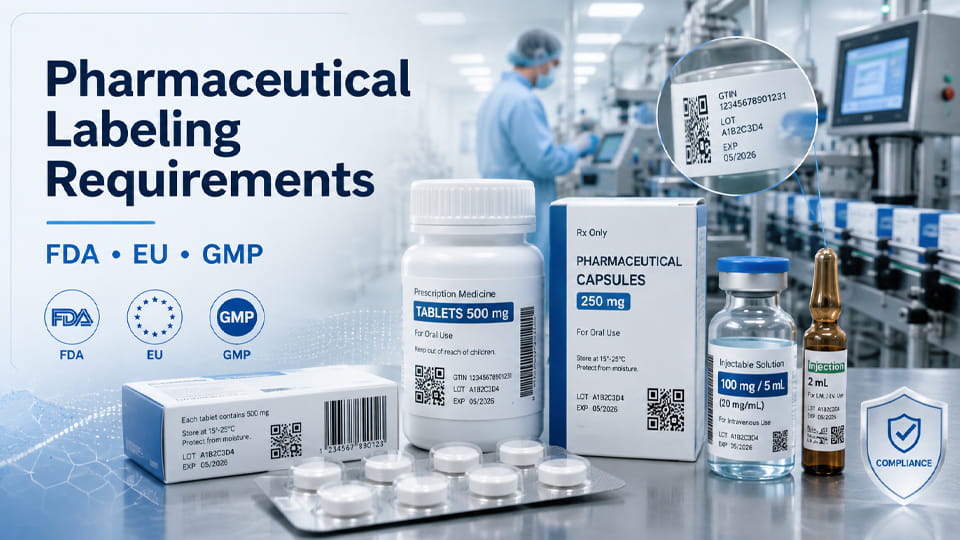
„Wymagania dotyczące etykietowania produktów farmaceutycznych” to zasady regulujące, jakie informacje muszą być wydrukowane na opakowaniach leków. W USA, Wytyczne FDA (I 21 Część CFR 201) zdefiniuj wymagane oświadczenia i format etykiety. Na przykład, Wytyczne FDA stwierdzają, że wszystkie oznakowania leków na receptę muszą być zgodne 21 CFR 201.56(D) & 201.57, obejmujące treść i format. Rozporządzeniem, „Oznakowanie” leków na receptę obejmuje trzy elementy: profesjonalne informacje dotyczące przepisywania leku (ulotka dołączona do opakowania), etykiety na kartonie i pojemniku, i etykietowanie pacjentów. W praktyce, Wymogi dotyczące etykietowania zapewniają, że na każdym opakowaniu wyraźnie znajduje się informacja o leku i jego zastosowaniu: marka i nazwa rodzajowa, składnik aktywny(S), wytrzymałość, postać dawkowania, ilość, oraz nazwa/adres producenta, wraz z informacjami dotyczącymi bezpieczeństwa (ostrzeżenia, wskazania) i kody identyfikowalności (seria, wygaśnięcie). Zasady te chronią bezpieczeństwo pacjentów i umożliwiają wycofanie produktu jeśli potrzeba.
Innymi słowy, Wymogi dotyczące etykietowania określają minimalne standardy dotyczące czytelnych i kompletnych informacji na opakowaniach leków. Ich celem jest zapobieganie błędom w leczeniu i zapewnienie, że każdy (pacjent, opiekun lub inspektor) może zweryfikować produkt. Na przykład, FDA wyraźnie podaje datę ważności i kod partii jako obowiązkowe (zobacz ramkę „Etykieta również Ci mówi” poniżej), a prawo UE wymaga podawania partii i daty ważności na kartonach. Wytyczne dotyczące opieki zdrowotnej (EMA, KTO) a standardy branżowe, takie jak GS1, dodatkowo określają formaty (np. Kody kreskowe DataMatrix) w celu wspierania globalnej identyfikowalności. Ogólnie, zgodność oznacza, że etykiety muszą pasować do pól wyboru w poniższej tabeli.
| Element etykiety | Zamiar |
| Nazwa produktu (marka & ogólny) | Zidentyfikuj lek po nazwie, zmniejszyć zamieszanie. |
| Substancja czynna(S) | Określ skład leku i jego moc. |
| Wytrzymałość (dawka) | Wskaż dawkowanie (np. mg na tabletkę/ml). |
| Forma dawkowania (tabletka, itp.) | Opisz formułę (tabletka, kapsułka, płyn). |
| Zawartość netto (liczba/objętość) | Pokaż ilość w opakowaniu (np. 30 tabletki). |
| Numer partii/partii | Włącz identyfikowalność i wycofanie, jeśli to konieczne. |
| Wygaśnięcie (wygaśnięcie) data | Upewnij się, że lek został zastosowany, zanim straci moc. |
| Nazwa producenta & adres | Zidentyfikuj źródło odpowiedzialności. |
| Warunki przechowywania | Poinstruuj o temperaturze, światło, wilgotność. |
| Ostrzeżenia/przestrogi | Ostrzeżenia dotyczące bezpieczeństwa (NP., „Trzymaj z dala od dzieci”). |
| Droga podania | Określ zastosowanie (NP., doustny, wstrzykiwalny). |
| Zastosowanie/wskazanie | (Fakultatywny) Wskaż, co leczy (szczególnie. OTC). |
| Kody regulacyjne (NDC/MA No.) | NAS. Numer NDC lub numer pozwolenia na dopuszczenie do obrotu w UE. |
| Powiadomienie o manipulacji | (Oświadczenie o zabezpieczeniu przed manipulacją, jeśli jest wymagane). |
| Kod kreskowy/Matrix danych | Koduje numer GTIN, seria, wygaśnięcie skanowania. |
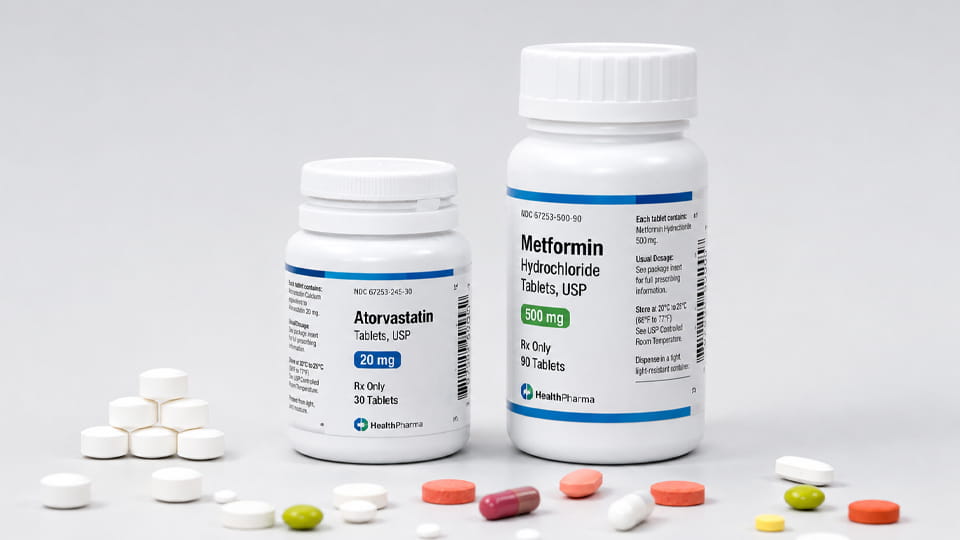
Każdy element ma wyraźny powód. Na przykład, nazwa produktu i składniki pomagają pacjentom w wyborze odpowiedniego leku; wytrzymałość, forma i droga zapewniają właściwe dawkowanie; przechowywanie i ostrzeżenia chronią bezpieczeństwo; partia/partia i data ważności zapewniają identyfikowalność; i kody kreskowe (Matryca danych GS1) pozwól maszynom przeskanować i zweryfikować paczkę. Władze regulacyjne (FDA, EMA, itp.) wymagają zasadniczo wszystkich tych elementów. Powyższa tabela zawiera listę typowych pól i ich funkcji. We wszystkich przypadkach, etykiety powinny być czytelne (wystarczający rozmiar czcionki, kontrast) i używaj standardowych formatów (np. Układ FDA „Fakty dotyczące leków” dla leków OTC).
W Stanach Zjednoczonych, Przepisy FDA (21 Część CFR 201) i wytyczne szczegółowo opisują treść etykiet leków. Recepta (Odbiór) narkotyki: Kluczowe wymagania obejmują ustalone (ogólny) nazwa leku (21 CFR 201.50), postać dawkowania, zawartość netto, i wskazówki (21 CFR 201.55). Etykiety muszą także zawierać nazwę i adres producenta/pakującego/dystrybutora (201.1), Krajowy Kodeks Lekowy (201.2), oraz stwierdzenie „Tylko Rx”, jeśli ma to zastosowanie. Krytyczne identyfikatory, takie jak numer partii i data ważności, podlegają przepisom 21 CFR 201.17-18. Na przykład, 201.17 nakazuje umieszczenie daty ważności na opakowaniu, I 201.18 wymaga kontroli (działka) numer identyfikacyjny. W rzeczywistości, FDA nalega, aby wyraźnie wydrukować numer partii lub datę ważności zarówno na bezpośrednim pojemniku, jak i na kartonie. Na przykład, Wytyczne FDA „Fakty dotyczące leków” wyraźnie stwierdzają, że dużo (seria) kod i data ważności muszą być umieszczone na etykietach OTC, i ta sama logika dotyczy leków Rx.
Leki OTC (Panel Fakty dotyczące narkotyków): Aby pomóc konsumentom, wszystkie leki dostępne bez recepty muszą być opatrzone standardową etykietą FDA „Fakty dotyczące leków”.. Ten panel ma ustalony format i zawiera sekcje takie jak Aktywny składnik(S), Zamiar(S), Zastosowania, Ostrzeżenia, Wskazówki, i nieaktywne składniki. Celem jest spójność i przejrzystość (taką samą strukturę jak w przypadku leków przeciwbólowych, leki na alergię, itp.). Na przykład, „Składnik aktywny(S)” zawiera listę substancji leczniczych i mocy, „Cel” podaje swoją kategorię, oraz „Ostrzeżenia/Wskazówki” zawierają wskazówki dotyczące użytkowania. Oprócz tych odcinków, każda etykieta OTC musi mieć datę ważności (lub domyślna zasada 3-letniego wygaśnięcia) i kod partii, wraz z nazwą/adresem producenta i ilością netto. Strona FDA na temat faktów dotyczących leków OTC potwierdza: „Na etykiecie podano także… datę ważności… Kod partii lub partii… Nazwa i adres producenta… Ilość netto”. Nieumieszczenie ich na etykiecie OTC stanowiłoby naruszenie zasad etykietowania FDA.
Przepisy FDA wymieniają wiele szczegółowych oświadczeń na etykietach. Na przykład, 21 CFR 201.50-201.56 I 201.100-201.128 zakrywać etykiety pojemników i etykiety kartonowe. Niektóre najważniejsze informacje obejmują:
Poza CFR, Wytyczne FDA wyjaśniają te zasady. Szczególnie, FDA definiuje obecnie oznakowanie leków na receptę jako trzyczęściowe: profesjonalne informacje dotyczące przepisywania leku (ulotka dołączona do opakowania), fizyczna etykieta na kartonie/pojemniku, oraz wszelkie ulotki dla pacjenta. Sama etykieta pojemnika musi zawierać ustaloną nazwę leku, wytrzymałość, postać dawkowania, jednostki dawkowania, numer partii, Data ważności, NDC, oraz nazwa/adres firmy – zasadniczo obejmujące wszystkie pola wyboru w powyższej tabeli. Dzięki temu apteki wydają właściwy produkt, a pacjenci widzą kluczowe informacje dotyczące bezpieczeństwa.
W Unii Europejskiej, Dyrektywa 2001/83/WE (zmienione) oraz powiązane przepisy regulują etykietowanie produktów leczniczych. Zasady są zasadniczo podobne do amerykańskich, ale z pewnymi różnicami (np. wymagania językowe, szczegóły pozwolenia na dopuszczenie do obrotu). Artykuł 54 z 2001/83 określa, co musi znajdować się na opakowaniu zewnętrznym (lub bezpośrednie opakowanie, jeśli nie ma pudełka zewnętrznego). Musi zawierać pełną nazwę produktu, wytrzymałość, postać farmaceutyczna, i droga podania. W stosownych przypadkach należy określić, czy produkt jest przeznaczony dla dorosłych czy dla dzieci, oraz wymień wszelkie specjalne ostrzeżenia i środki ostrożności (np. temperatura przechowywania). Najważniejsze, Artykuł 54 wymaga podania daty ważności i numeru serii na opakowaniu zewnętrznym, wraz z adresem podmiotu odpowiedzialnego posiadającego pozwolenie na dopuszczenie do obrotu (MAH) oraz numer pozwolenia na dopuszczenie do obrotu w UE. W rzeczywistości, oznacza to, że kartony w UE muszą zawierać zasadniczo te same informacje, co etykiety w USA: nazwa, składniki, wytrzymałość, ilość, ostrzeżenia, wygaśnięcie, i partia, plus kontakt z MAH.
Wytyczne i szablony EMA (Oświadczenia QRD) dostosować się do tych zasad. Dla produktów autoryzowanych centralnie, QRD (Przegląd jakości dokumentów) szablony ujednolicają sformułowanie kluczowych stwierdzeń. EMA również niedawno poruszyła temat nowoczesnych technologii: umożliwia opcjonalne kody QR lub technologię skanowania na etykietach, jeśli zostanie zatwierdzona. Oznaczenia brajlowskie (Artykuł 56a) są wymagane dla większości kartony z lekarstwami (wskazując nazwę produktu, wytrzymałość, formularz w alfabecie Braille’a) jako element bezpieczeństwa dla osób niedowidzących. Każdy kraj UE wymaga również oznakowania w swoim języku urzędowym(S). Najważniejsze: Etykiety UE (pierwotne lub wtórne) musi przekazywać w jasny sposób wszystkie najważniejsze szczegóły dotyczące leku (często wiele języków), podobne do wymagań amerykańskich, ale z dodatkowym naciskiem na tożsamość podmiotu odpowiedzialnego, numery regulacyjne, i wielojęzyczne ulotki.
Podstawowe formaty opakowań, takie jak blistry, butelki i fiolki stwarzają szczególne wyzwania.
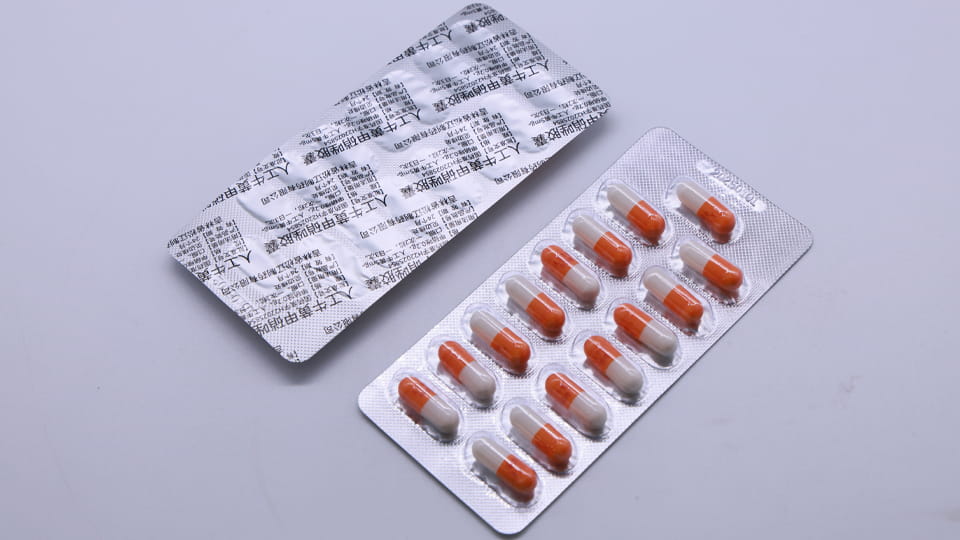
Pakiety pęcherzy: Rozmyślnie, pęcherz (pasek zapieczętowanych kieszeni) ma ograniczoną przestrzeń. Organy regulacyjne to dostrzegają: UE często dopuszcza skrócone etykietowanie poszczególnych wgłębień blistrów, jeśli na pudełku znajdują się wszystkie szczegóły (za pomocą etykiety lub ulotki „flagowej”.). W USA, etykiety blistrowe (np. podkład foliowy) musi nadal zawierać nazwę leku, wytrzymałość, numer partii i data ważności. Podsumowanie jednej branży: „Opakowanie pęcherzy etykiety muszą zawierać nazwę zastrzeżoną/ogólną, wytrzymałość, działka, wygaśnięcia… i spełniają wymagania FDA, takie jak minimalna wysokość tekstu i kontrast. W rzeczywistości, folie blistrowe często mają nazwę i kod wydrukowane na każdym wgłębieniu lub na papierowej etykiecie, która jest owijana. Czasami na blistrze znajduje się odklejana etykieta zawierająca wiele dawek, ale nadal potrzebuje tych samych informacji. Zabezpieczenie przed manipulacją jest nieodłącznym elementem zapieczętowanych blistrów, ale jeśli używany, oświadczenie wskazujące na manipulację (np. „nie używać, jeśli plomba jest uszkodzona”) jest wymagane.
Butelki i fiolki: Na okrągłych butelkach zazwyczaj znajdują się etykiety z przodu i z tyłu. Na przedniej etykiecie zwykle znajduje się nazwa produktu, siła i ilość dla szybkiej identyfikacji, a na tylnej etykiecie znajdują się wskazówki, ostrzeżenia i szczegółowe informacje prawne. Maszyny etykietujące w locie (patrz poniżej) naklej te etykiety na butelki. Przykład z broszury Jinlu Packing: Etykieciarka TBJ-120 przeznaczona jest do butelek okrągłych (20– średnica 110 mm) i zawiera wbudowany koder taśmowy do drukowania partii/daty ważności. Dzięki temu na etykiecie samoprzylepnej każdej butelki będzie podany prawidłowy numer partii i data ważności, zgodnie z wymaganiami. Zarówno na blistry, jak i butelki, rozmiar czcionki i kontrast kolorów muszą spełniać standardy prawne (np. FDA 21 CFR 201.15 na czytelność). Krótko mówiąc, Procesy etykietowania blistrów i butelek zostały zaprojektowane tak, aby spełniać te same zasady dotyczące treści – nazwy, składniki, partia i data ważności – nawet jeśli jest to metoda dostawy (odklejanie, druk bezpośredni, lub naklejkę) różni się.
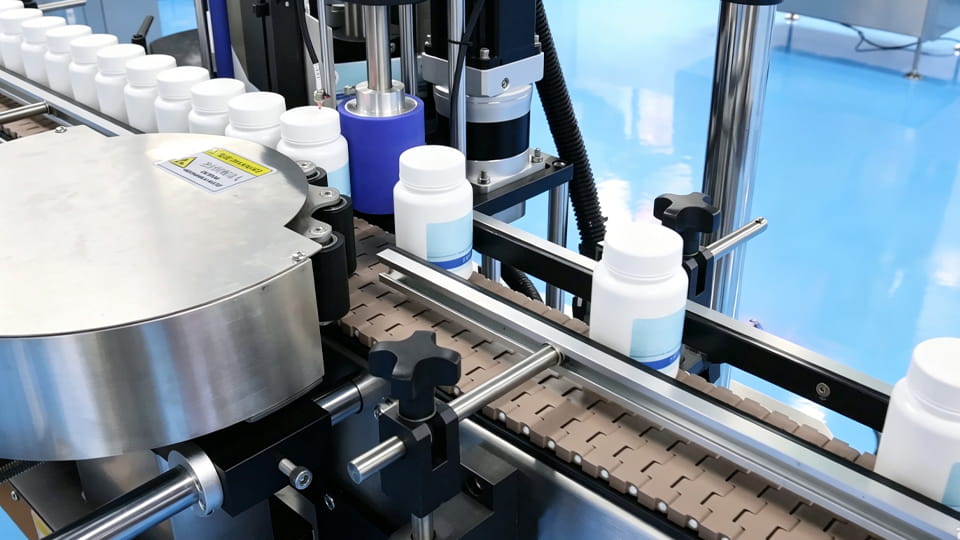
Postać: Oznakowane butelki farmaceutyczne na linii produkcyjnej. Etykiety butelek muszą wyraźnie przedstawiać tożsamość produktu (nazwa, składnik aktywny, wytrzymałość) oraz niezbędne dane regulacyjne (numer partii, wygaśnięcie, producent) tak aby każda pojedyncza fiolka lub butelka mogła zostać zweryfikowana.
Drukowanie numerów partii/partii i dat ważności jest kluczową częścią etykietowania. W liniach farmaceutycznych, Do nadrukowania tych informacji z dużą szybkością wykorzystywany jest dedykowany sprzęt kodujący. Typowe technologie obejmują Ciągły druk atramentowy (CIJ) drukarki, Termiczna drukarka atramentowa (JEGO) drukarki, Drukarki termotransferowe (TTO) I Kodery laserowe.
Drukarki te są zazwyczaj integrowane zaraz po etykietowaniu. Na przykład, butelka może przejść pod drukarkę atramentową natychmiast po nałożeniu etykiety, który drukuje partię i datę ważności na etykiecie w kolejce. Maszyna Jinlu TBJ-120 (powyżej) zawiera: maszyna do kodowania wstążek do stemplowania kodów na każdej etykiecie. Niezależnie od metody, wydrukowane dane muszą być czytelne i umieszczone zgodnie z wymogami przepisów (np. w dolnej części panelu wyświetlacza, aby sprawdzić datę ważności). Formaty czytelne dla człowieka (jak RRMMDD) musi pasować do dowolnych danych kodu kreskowego. W każdym razie, czy to atramentowo, czy laserowo, główny cel jest ten sam: aby zachować zgodność z identyfikowalnością GMP, na każdym pojedynczym opakowaniu musi znajdować się numer partii i data ważności. Systemy inspekcji (patrz poniżej) sprawdzi, czy każdy wydrukowany kod jest obecny i prawidłowy.
Nowoczesne przepisy często wymagają kodów odczytywalnych maszynowo w celu zapewnienia identyfikowalności i zapobiegania podrabianiu. Światowym standardem jest Matryca danych GS1 2Kod kreskowy D, który może zakodować wiele elementów danych w małym kwadratowym symbolu. W opiece zdrowotnej, standard GS1 określa kodowanie czterech kluczowych atrybutów: GTIN (Globalny numer jednostki handlowej), Data ważności, numer partii/partii, I numer seryjny. Numer GTIN jednoznacznie identyfikuje produkt, podczas gdy pozostałe trzy umożliwiają śledzenie i weryfikację każdej paczki.
W USA, . 2013 Ustawa o jakości i bezpieczeństwie leków (DQSA) nakazuje stopniową serializację leków na receptę. Przez 2023, ustawa o bezpieczeństwie łańcucha dostaw leków wymaga identyfikatora produktu na każdej jednostce (która obejmuje partię i datę ważności) aby apteki mogły weryfikować produkty przy odbiorze. W UE, dyrektywę w sprawie sfałszowanych leków (Dyrektywa 2011/62/UE) już wymaga unikalnych numerów seryjnych na wielu opakowaniach leków na receptę. Paczki UE muszą być opatrzone matrycą GS1 DataMatrix zawierającą numer GTIN, numer seryjny przypisany przez producenta, data ważności i partia (identyfikatory aplikacji 17, 10). Wytyczne GS1 wyraźnie kierują producentami: „Zakoduj swój numer GTIN, numer partii i datę ważności w kodzie kreskowym GS1 DataMatrix i umieść go na produkcie”. Niektóre rynki (Brazylia, Indie, inni) przyjmują również podobne wymagania dotyczące serializacji.
Poza DataMatrixem, firmy mogą używać kodów QR lub RFID na etykietach w celu zaangażowania konsumentów lub zarządzania zapasami, jednak regulacje prawne w dalszym ciągu skupiają się na kodach kreskowych 2D w celu zapewnienia zgodności. Kody te są drukowane na opakowaniu przez specjalistyczne maszyny etykietujące lub kodery. Na przykład, jedną z metod jest dodanie DataMatrix przez drukarkę laserową lub etykietę po nałożeniu podstawowej etykiety. Następnie systemy wizyjne skanują DataMatrix, aby upewnić się, że odczytuje się prawidłowo. Poprzez zakodowanie partii i daty ważności w kodzie kreskowym, skanowanie w dowolnym momencie (dystrybucja, dozowanie) natychmiast weryfikuje te wartości. Podsumowując, serializacja oznacza każdy opakowanie jednodawkowe posiada unikalny, skanowalny kod łączący go z danymi produkcyjnymi.
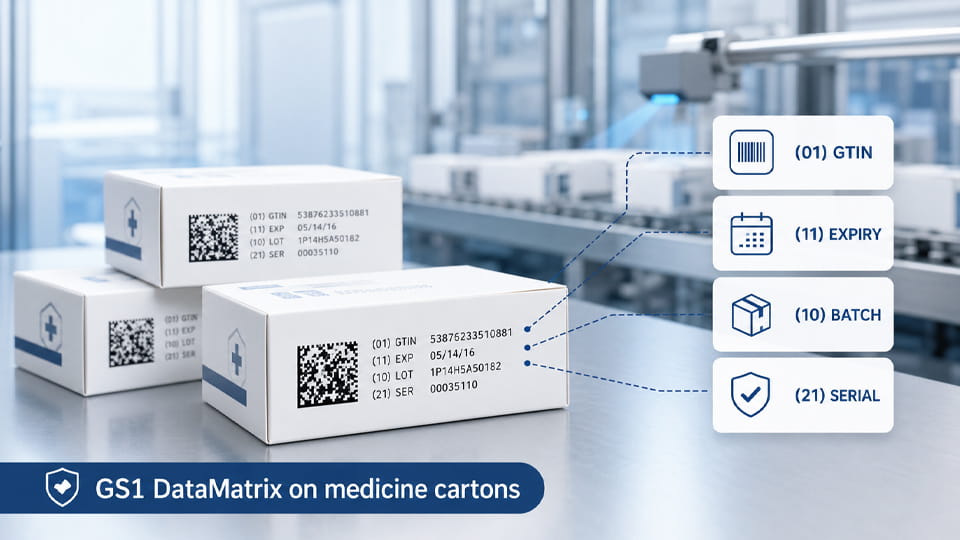
Postać: Kod GS1 DataMatrix na opakowaniach leków zawierających (01)GTIN, (11)wygaśnięcie, (10)seria, (21)seryjny. Opakowania farmaceutyczne często mają oznaczenie GS1 DataMatrix (2Kod kreskowy D) z numerem GTIN, zakodowana data ważności i numer partii/partii. Umożliwia to szybkie skanowanie i weryfikację wszystkich kluczowych danych śledzenia.
Do nanoszenia wszystkich wymaganych etykiet i kodów przy szybkości linii niezbędne są zautomatyzowane maszyny. Typowy proces pakowania produktów farmaceutycznych z etykietowaniem może wyglądać następująco:
Napełnianie/ładowanie pojemników → Automatyczna maszyna do etykietowania → Partia & Koder ważności → Kod kreskowy/oznaczenie serializacji → Stacja kontroli wizualnej → Kartonowanie / Opakowanie wtórne

Postać: Automatyczna etykieciarka z rozdzielaczem butelek i koderem (Wzrastać JL-TBJ-120 Maszyna do etykietowania). Automatyczne etykieciarki aplikują etykiety samoprzylepne na butelki, podczas gdy zintegrowana drukarka stempluje partię/data ważności. Nowoczesne maszyny do etykietowania mogą pracować z dużą prędkością (NP., 120 Butelki/minutę) z precyzją, i często obejmują drukarki kodów do drukowania atramentowego/termicznego partii i daty. Maszyny te zapewniają spójne nanoszenie etykiet i kodów na każdym pojemniku.
Integrując te kroki, linia do pakowania produktów farmaceutycznych zapewnia to od napełniania po końcowe pakowanie, każda jednostka jest prawidłowo oznakowana i identyfikowalna. Korzystanie z jednego połączonego systemu (lub linia zsynchronizowanych maszyn) minimalizuje błąd ludzki. Do krytycznej kontroli, kamery wizyjne sprawdzają, czy każde opakowanie spełnia zgodność. Ostatecznie, wysokiej jakości sprzęt do etykietowania (od podajników fiolek, przez aplikatory etykiet, po kodery) sprawia, że przestrzeganie zasad etykiet FDA/EMA jest możliwe na dużą skalę.
Nawet z ostrożnością, mogą wystąpić błędy w etykietowaniu. Typowe problemy obejmują:
Strategie łagodzące obejmują: rygorystyczne protokoły zmian (przy zmianie produktów dokładnie sprawdzaj etykiety), kontrole w trakcie procesu (ręczne kontrole wyrywkowe on-line), I 100% kontrola wzroku. Automatyczne czytniki kodów sprawdzają, czy każdy wydrukowany kod odpowiada zapisowi produkcyjnemu. Wiele linii posiada także zapasowe skanery kodów kreskowych, które zapewniają czytelność wydruków partii/data ważności. Aktualizowanie plików graficznych i przestrzeganie list kontrolnych języków zapobiega błędom w treści. Wreszcie, dostawa etykiet i atramentów powinna odpowiadać wymaganiom systemowym (np. W razie potrzeby tusz odporny na promieniowanie UV). Solidny proces kontroli jakości wykryje defekty w etykietowaniu na wczesnym etapie przed wypuszczeniem na rynek.
Użyj tej listy kontrolnej, aby upewnić się, że każda etykieta i opakowanie spełnia wymagania:
| Punkt kontrolny oznakowania | Zakończony? |
| Nazwa produktu (marka & ogólny) obecny | ☐ |
| Substancja czynna(S) katalogowany (z siłą) | ☐ |
| Wytrzymałość (dawkowanie) jasno określone | ☐ |
| Forma dawkowania (tabletka, rozwiązanie, itp.) dołączony | ☐ |
| Numer partii/partii wydrukowany i czytelny | ☐ |
| Data ważności wydrukowana i czytelna | ☐ |
| Producent (nazwa & adres) obecny | ☐ |
| Podane warunki przechowywania (np. "Sklep <25°C”) | ☐ |
| Zawarte ostrzeżenia/przestrogi | ☐ |
| Kod kreskowy/Matrix danych (GTIN+data ważności+partia) obecny | ☐ |
| Zawartość netto (ilość lub objętość) wskazany | ☐ |
| Kody regulacyjne (NDC, numer licencji) dołączony | ☐ |
| Rozmiar czcionki/czytelność jest zgodna z przepisami | ☐ |
| Oświadczenie świadczące o manipulacji (jeśli jest to wymagane) | ☐ |
Porównaj każdy punkt powyżej z wydrukowanymi etykietami. Na przykład, FDA wyraźnie wymaga daty ważności i numeru partii, a przepisy UE wymagają nazwy produktu, siła i zawartość. Jeżeli jakiegoś elementu brakuje lub jest on nieczytelny, pakiet nie jest zgodny. Ta lista kontrolna może służyć jako tabela referencyjna dla audytów jakości.
Dokładne etykietowanie jest niepodlegającą negocjacjom częścią produkcji farmaceutycznej. Rozumiejąc powyższe wymagania, możesz projektować etykiety i przepływy pracy zgodne z FDA, EMA i zasady globalne. Zapamiętaj kluczowe elementy etykiety (tożsamość produktu, składniki, informacje dotyczące bezpieczeństwa, i kodowanie) i porównaj je z listą kontrolną zgodności. Nowoczesne linie pakujące wykorzystują automatyczne etykieciarki, koderów i systemów wizyjnych, aby utrzymać poziom błędów w pobliżu zera.
Jeśli potrzebujesz solidnego sprzętu do etykietowania i kodowania, rozważ rozwiązania Jinlu Packing. Jinlu oferuje szeroką gamę maszyny pakujące farmaceutyki - z automatyczne maszyny do etykietowania butelek (np. serii TBJ) Do kodery partii/terminu ważności i kompletne linie kartonowe – wszystko przeznaczone dla Zgodność z GMP. Nasze maszyny integrują etykietowanie, drukowanie i kontrola, które pomogą Ci łatwo spełnić wymagania dotyczące etykietowania. Na przykład, Maszyna do etykietowania okrągłych butelek Jinlu obsługuje butelki o średnicy 20–110 mm z prędkością do 120 BPM, nakładanie etykiet i drukowanie kodów dat/partii w jednym przebiegu. Aby uzyskać więcej informacji, zapoznaj się z maszynami do etykietowania i kartonowania firmy Jinlu. Łącząc dobre procesy z odpowiednim sprzętem, możesz mieć pewność, że każde opakowanie leku jest prawidłowo oznakowane pod kątem bezpieczeństwa i zgodności.
Wymogi dotyczące etykietowania produktów farmaceutycznych to zasady określające, jakie informacje muszą znajdować się na etykiecie leku, pojemnik, karton, lub ulotkę dołączoną do opakowania. Mogą obejmować nazwę produktu, składniki aktywne, wytrzymałość, postać dawkowania, numer partii, data ważności, ostrzeżenia, Warunki przechowywania, szczegóły producenta, i inne informacje regulacyjne. Wymagania różnią się w zależności od kraju, rodzaj leku, i format opakowania.
Etykieta farmaceutyczna może wymagać podania nazwy produktu, składnik aktywny, wytrzymałość, postać dawkowania, zawartość, numer partii lub partii, data ważności, informacje o producencie lub o pozwoleniu na dopuszczenie do obrotu, Warunki przechowywania, ostrzeżenia, i inne szczegóły specyficzne dla rynku. Dokładne informacje zależą od obowiązujących ram regulacyjnych i kategorii produktu.
W Stanach Zjednoczonych, etykiety leków muszą być zgodne z obowiązującymi przepisami dotyczącymi etykietowania FDA, w tym 21 Część CFR 201. Wymagania różnią się w przypadku leków na receptę i leków dostępnych bez recepty. Etykietowanie leków na receptę jest zgodne z wymogami takimi jak 21 CFR 201.56 I 201.57, podczas gdy produkty OTC zazwyczaj korzystają ze standardowego formatu informacji o lekach w ramach 21 CFR 201.66.
Wymogi UE dotyczące etykietowania produktów farmaceutycznych zazwyczaj wymagają kluczowych informacji, takich jak nazwa leku, wytrzymałość, postać farmaceutyczna, substancje czynne, zawartość, odpowiednie substancje pomocnicze, data ważności, i numer partii. W zależności od produktu i rynku mogą obowiązywać dodatkowe wymagania. Ramy UE obejmują również wymagania dotyczące ulotek dołączanych do opakowania i elementów ułatwiających dostępność, takich jak alfabet Braille'a na opakowaniach.
Tak, Identyfikacja partii lub partii jest ważną częścią opakowania farmaceutycznego i identyfikowalności. Na przykład, Przepisy UE wyraźnie wymagają podawania numeru partii na niektórych opakowaniach bezpośrednich, łącznie z blistrami, wraz z informacjami takimi jak nazwa produktu i data ważności. Konkretne wymagania mogą się różnić w zależności od rynku i typu produktu.
Na wielu opakowaniach farmaceutycznych wymagana jest data ważności, która jest kluczowym elementem identyfikacji produktu i jego bezpiecznego stosowania. Na przykład, Wymagania UE określają datę ważności opakowań bezpośrednich, takich jak blistry i małe opakowania jednostkowe. Dokładny format i umiejscowienie zależą od obowiązujących wymagań rynku.
Wymagania dotyczące opakowań blistrowych zależą od rynku i konfiguracji opakowania. Zgodnie z przepisami UE, blistry umieszczone w opakowaniu zewnętrznym muszą zawierać najważniejsze informacje, w tym nazwę produktu leczniczego, posiadacz pozwolenia na dopuszczenie do obrotu, data ważności, i numer partii. Informacje muszą być także czytelne, zrozumiały, i niezatarty.
Serializacja farmaceutyczna polega na przydzielaniu i zarządzaniu unikalnym identyfikatorem dla indywidualnego opakowania leku przeznaczonego do sprzedaży w celu ułatwienia identyfikacji i identyfikowalności produktu. Serializacja zwykle współpracuje z kodami 2D i innymi systemami identyfikacji produktów, ale dokładne wymagania zależą od rynku docelowego i obowiązujących przepisów.
Typowy sprzęt do etykietowania i kodowania produktów farmaceutycznych obejmuje automatyczne maszyny do etykietowania, maszyny do etykietowania butelek, systemy kodowania wsadowego, drukarki atramentowe lub laserowe, skanery kodów kreskowych, systemy kontroli wizyjnej, i sprzęt do serializacji. Właściwa konfiguracja zależy od formatu opakowania, prędkość produkcji, projekt etykiety, wymagania dotyczące danych zmiennych, i wymagany poziom kontroli.
Producenci powinni najpierw określić wymagania dla każdego rynku docelowego i produktu, następnie zatwierdź grafikę etykiety i zmienne dane przed rozpoczęciem produkcji. Linia pakująca powinna także kontrolować dobór etykiet, wydruk partii i daty ważności, kod kreskowy lub dane serializacyjne, pozycjonowanie etykiet, kontrola wzroku, i odrzucenie nieprawidłowych produktów. Procedury GMP powinny wspierać dokumentację, prześwit linii, kontrola przełączeń, i identyfikowalność.
Referencje:
1.Często zadawane pytania dotyczące etykietowania leków na receptę —— NAS. Administracja Żywności i Leków
2.Zasoby dotyczące etykietowania kartonów i pojemników —— NAS. Administracja Żywności i Leków
3.TRS 902 – Załącznik 9: Wytyczne dotyczące opakowań produktów farmaceutycznych —— KTO
4.Wymagania dotyczące informacji o produkcie —— Europejska Agencja Leków
5.Załącznik do wytycznych Komisji Europejskiej w sprawie substancji pomocniczych w oznakowaniu i ulotce dołączonej do opakowania produktów leczniczych stosowanych u ludzi’ —— Europejska Agencja Leków
6.21 CFR § 201.66 – Wymagania dotyczące formatu i treści w przypadku produktów sprzedawanych bez recepty (OTC) oznakowanie produktu leczniczego. —— Instytut Informacji Prawnej