W produkcji, A linia pakująca (Lub linia do produkcji opakowań) to szereg połączonych ze sobą maszyn, które przygotowują gotowe produkty do dystrybucji, składowanie, i sprzedaż. W fabrykach farmaceutycznych, linie pakujące chronią leki i zapewniają zgodność z przepisami. W tym przewodniku opisano krok po kroku linie pakujące, opisuje kluczowe maszyny (unscramblery, liczniki, wypełniacze, czapki, etykiety, pęcherze, kartoniarze, pakowacze skrzynek, paletyzatory), i obejmuje rodzaje linii (dawka stała, płyn, pęcherz, saszetka, koniec linii). Porównamy także pakowanie ręczne i automatyczne, omów korzyści płynące z automatyzacji, zastosowania branżowe, wskazówki dotyczące wyboru, i odpowiadaj na często zadawane pytania. Poprzez zrozumienie linii pakujących, kierownicy ds. zakupów i produkcji mogą dokonywać świadomych wyborów w celu zapewnienia dużej szybkości, uległy, i opłacalne rozwiązania w zakresie opakowań.
Definicja: Co to jest linia pakująca?
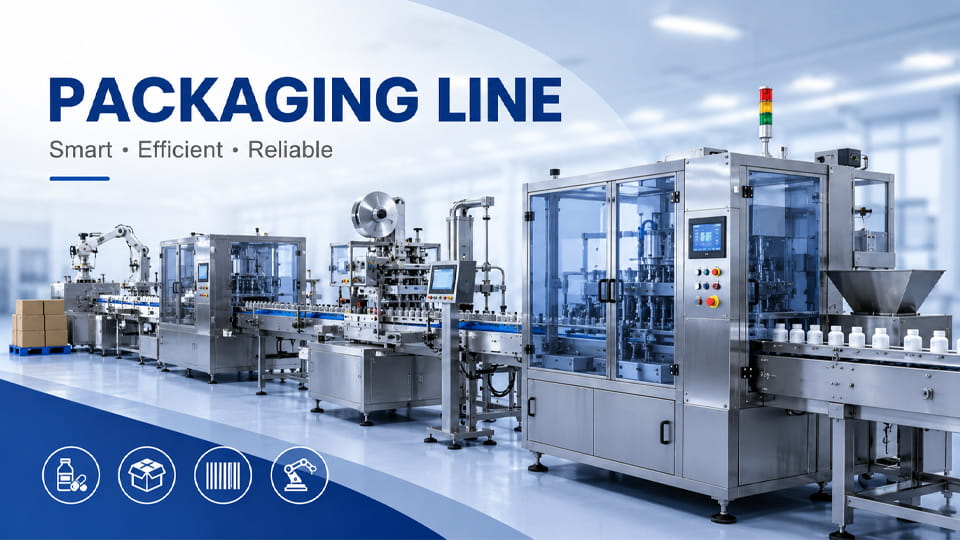
A linia pakująca to skoordynowany system urządzeń, które automatycznie lub półautomatycznie pakują produkty. Zwykle obejmuje przenośniki, wypełniacze, uszczelniacze, etykiety, i maszyny końcowe ustawione w kolejności. Razem, ładują produkty (jak tabletki, kapsułki, butelki, saszetki, itp.), dodać dawki lub ilości, zastosować zamknięcia (zaślepki lub uszczelki), dołączyć etykiety, grupuj produkty w kartony, i ułożyć je w stos do wysyłki.
Na przykład, „linia pakująca to szereg urządzeń pakujących, które przygotowują produkty do dystrybucji, składowanie, i sprzedaż. Sprzęt może być ręczny, półautomatyczne, lub w pełni automatyczny.” W przemyśle farmaceutycznym i konsumenckim, linie te zapewniają napełnienie produktów, zapieczętowany, oznakowane, i śledzone pod ścisłą kontrolą jakości.
Nowoczesne linie pakujące są często zintegrowany z automatyką: Programowalne sterowniki logiczne (sterowniki PLC) a robotyka synchronizuje wiele maszyn, zapewniając płynny przepływ i monitorowanie w czasie rzeczywistym. Jest to niezbędne w farmacji, gdzie FDA i Przepisy GMP wymagają precyzyjnej kontroli objętości napełniania, dokładność etykiety, i integralność opakowania.
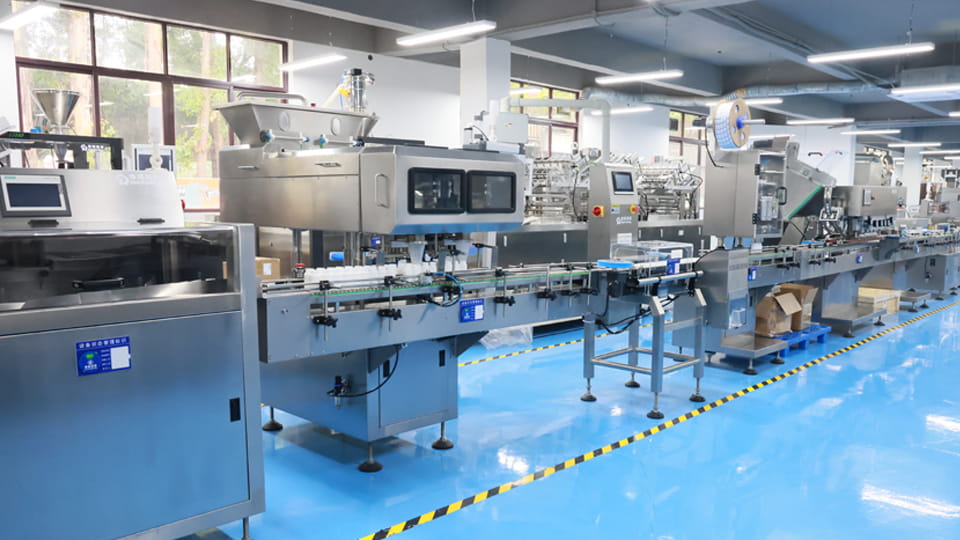
Jak działa linia pakująca? (Przebieg pracy krok po kroku)
Linia pakowania następuje a przepływ pracy krok po kroku, podobnie jak linia montażowa opakowań:
- Podawanie/rozszyfrowanie produktu: Rzeczy (butelki, tabletki, fiolki) są podawane na linię. Do butelek, A rozszyfrator butelek orientuje i dostarcza butelki na przenośnik. Tabletki lub kapsułki mogą być dostarczane za pośrednictwem lejów samowyładowczych lub w procesie poprzedzającym. Zastępuje to ręczne ładowanie i zapewnia stały przepływ.
- Liczenie/dozowanie: Zautomatyzowany licznik/dawki odmierza właściwą ilość. W liniach pigułek, maszyna do liczenia tabletek lub kapsułek precyzyjnie liczy i dozuje pigułki do butelek lub zagłębień w blistrach. Do płynów, maszyna napełniająca dozuje dokładne objętości syropu lub roztworu. Cel jest równy, dokładne dozowanie w każdym opakowaniu. Na przykład, liczniki kapsułek mogą osiągnąć >99.8% dokładność, Zmniejszenie błędu ludzkiego.
- Uszczelnianie/zamykanie: Raz napełniony, pojemniki są zaplombowane. Maszyna zamykająca podnosi i dokręca nakrętki na butelkach. Nowoczesne kapslarze wykorzystują automatyczne sortowanie i podawanie nakrętek, precyzyjne pozycjonowanie butelki, i może odrzucić źle ustawione czapki. Zgrzewarki na gorąco lub indukcyjnie nakładają wkładki foliowe lub uszczelki z tworzywa sztucznego. Ten krok zapobiega wyciekom i zanieczyszczeniom.
- Kontrola/kontrola jakości: Linia obejmuje inspekcje m.in wagi kontrolne (aby sprawdzić wagę paczki) I systemy wizyjne (aby sprawdzić poziom napełnienia, obecność etykiety, lub orientacja kapsułki). Pakiety niezgodne (niewłaściwa waga, brak etykiety, pomylić się, pęknięty pęcherz, itp.) są automatycznie odrzucane.
- Etykietowanie: Maszyny do etykietowania zastosuj informacje o produkcie, kody kreskowe, lub dane dotyczące partii/terminu ważności. Precyzyjne etykieciarki zapewniają dokładne umieszczenie. W farmaceutykach, etykietowanie musi spełniać standardy regulacyjne pod względem przejrzystości i treści. (Na przykład, Część CGMP FDA 211 wymaga dokładnych procedur etykietowania.) Niektóre linie wykorzystują drukarki do dodawania na bieżąco kodów serializacyjnych w celu zapewnienia identyfikowalności.
- Kartonowanie / pakowanie w pudełka: Wypełnione i oznakowane produkty grupowane są w pudełka lub kartony. A maszyna kartonowa składa kartony z tektury, wstawia produkty (butelki, pęcherze, saszetki, itp.), i zamyka karton. Następnie pakowacz skrzynek ładuje kartony do pudełek z tektury falistej lub tac do wysyłki.
- Paletyzacja: Wreszcie, paletyzator układa skrzynki na palecie w stabilny sposób, często z folią termokurczliwą lub paskami do zabezpieczenia ładunku. Na tym kończy się proces końca linii, dzięki czemu produkty są gotowe do magazynu lub dystrybucji.
Oto prosty schemat blokowy tego przepływu pracy:
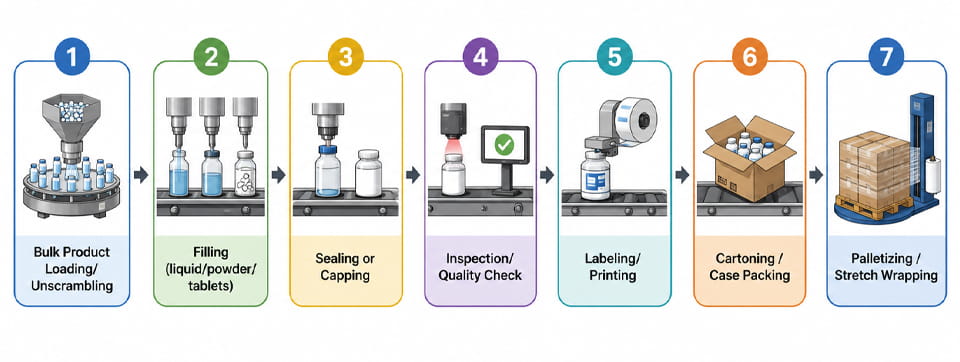
Przez cały ten przepływ, przenośniki (często sterowany czasowo lub serwonapędem) przenosić paczki pomiędzy stacjami. Steruje koordynacją prędkości maszyny i buforowaniem, dzięki czemu każdy etap dotrzymuje kroku. Chociaż dokładna konfiguracja jest różna, tę ogólną sekwencję (nakarm → napełnij → uszczelnij → etykieta → opakowanie) obejmuje większość linii pakujących.
[jl_youtube src=”https://www.youtube.com/embed/DZ7YIDhgknY”]
Główne elementy linii pakującej
Linia pakująca może składać się z kilkudziesięciu pojedynczych maszyn. Kluczowe elementy często obejmują:
- Rozszyfrator butelek (Orient): Maszyna ta sortuje i wyrównuje puste butelki oraz podaje je na przenośnik. Zastępuje żmudne ręczne sortowanie. „Rozszyfrator butelek to maszyna, która sortuje (rozszyfrowuje) i podaje butelki na system przenośników taśmowych linii produkcyjnej”. Obsługuje różne kształty butelek (okrągły, kwadrat, owalny) i może biegać z dużymi prędkościami. Automatyzacja tego kroku obniża koszty pracy i pozwala uniknąć błędów ludzkich.
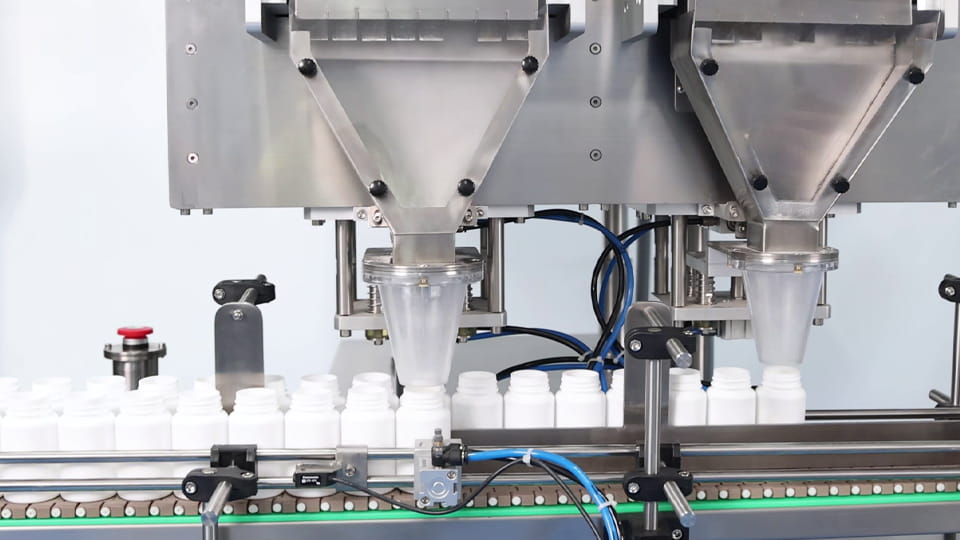
- Maszyna licząca/napełniająca: Do produktów w dawce stałej (tabletki, kapsułki, Gummy), A maszyna licząca dokładnie dozuje dokładną ilość do każdej butelki lub wnęki blistra. Do płynów, A maszyna do napełniania płynów (wypełniacz wolumetryczny lub ciśnieniowy) dozuje określone objętości. Maszyny te radzą sobie z syropami, zawieszenia, maści, i więcej. Automatyzując dozowanie, każda jednostka jest stale wypełniona, zapewnienie zgodności i ograniczenie ilości odpadów.
- Przykład: „Maszyna do liczenia kapsułek… potrafi dokładnie zliczyć kapsułki, tabletki, Miękkie kapsułki, pigułki, …i rozlewamy je do butelek lub innych pojemników”, z wbudowaną funkcją wykrywania defektów. Wiele maszyn liczących integruje kanały wibracyjne i czujniki optyczne >99.97% dokładność liczenia.
- Maszyna do zamykania: Spowoduje to zaciśnięcie nakrętek na butelkach lub fiolkach. Nowoczesne kapsle automatycznie sortują i podają nakrętki, umieścić butelki, i dokręć lub zaciśnij zatyczki. Na przykład, Maszyna zamykająca Jinlu „dostosowuje się do różnych typów butelek i nakrętek, z automatycznym sortowaniem nasadek & karmienie, precyzyjne pozycjonowanie butelki, dokręcenie czapek, i odrzucenie wady”. Prawidłowe zakrycie ma kluczowe znaczenie: chroni jakość produktu i spełnia przepisy bezpieczeństwa.
- Maszyna do etykietowania: Nakleja etykiety lub drukuje bezpośrednio na opakowaniach. Te szybkie maszyny do etykietowania wykorzystują czujniki do wykrywania każdego pojemnika i owijania go papierowymi lub plastikowymi etykietami. W farmaceutykach, etykiety zawierają numery partii i kody serializacji. Zaawansowane etykieciarze mogą drukować i weryfikować kody 2D DataMatrix na bieżąco, aby spełnić wymagania dotyczące identyfikowalności.
- Maszyna do pakowania w blistry: Tworzy blistry (plastikowe/foliowe kieszenie) na tabletki lub kapsułki. Te maszyny do termoformowania zazwyczaj zawierają stację formowania, stacja karmienia (który wprowadza pigułki do ubytków), stacja uszczelniająca (zastosowanie termicznego lub ultradźwiękowego zgrzewania folii), oraz stację cięcia do oddzielania blistrów. Na przykład, Maszyna blistrowa Jinlu „obsługuje cały proces pakowania za jednym razem” dla tabletów, kapsułki, i cukierki, robienie formowania, karmienie, opieczętowanie, i cięcie w jednej ciągłej operacji.
- Maszyna do kartonowania: Pakuje produkty do kartonów. Kartoniarki są dostępne w różnych stylach (poziomy, pionowy, zawijane) ale generalnie stawiaj płaskie kartony, załadować produkty (karty blistrowe, butelki, saszetki, itp.), i zamknij kartony. Potrafią wytrzymać duże prędkości (np. 15,000 kartony/godz). Kartoniarki często otrzymują produkt z poprzednich maszyn (jak wbudowany blister lub wypełniacz do butelek).
- Pakowacz skrzynek: Ładuje grupy kartonów lub produktów do większych skrzynek lub tac. To jest koniec linii maszyna do składania i zgrzewania pudeł z tektury falistej. Maszyny pakujące do skrzynek mogą być ładowane od góry (umieszczanie przedmiotów w otwartej skrzyni) lub montaż ładowarek bocznych. Dbają o bezpieczne zapakowanie produktów na czas transportu.
- Paletyzator: Układanie zapakowanych skrzyń na paletach warstwami według zaprogramowanego wzoru. Mogą być zrobotyzowane lub typu suwnicowego. Paletyzatory zwiększają prędkość ładowania palet i zmniejszają ryzyko obrażeń w wyniku ręcznego układania.
Inne popularne elementy linii obejmują wykrywacze metali (do odrzucenia zanieczyszczonych produktów), wagi kontrolne (pod kątem zgodności z wagą), osuszacz/chłodnia dla produktów wrażliwych, I Vff (pionowe formowanie-wypełnienie-uszczelnienie) maszyny do elastyczne opakowania lub torby.
Pakowanie ręczne vs automatyczne (Tabela porównawcza)
| Funkcja |
Ręczne pakowanie |
Zautomatyzowana linia pakująca |
| Szybkość/przepustowość |
Wolniej, ograniczone tempem pracy pracowników |
Wysoka prędkość, ciągły 24/7 działanie |
| Wymagania pracy |
Wysoki (wielu operatorów do każdego zadania) |
Niski (głównie nadzór operatora) |
| Dokładność & Konsystencja |
Zmienny; błędy ludzkie (błędne obliczenia, rozlewa) |
Bardzo spójne; precyzyjne wypełnianie/liczenie (często >99.9% dokładność) |
| Kontrola jakości |
Inspekcje ręczne (mniej niezawodne) |
Zintegrowane kontrole (waga, systemy wizyjne) |
| Identyfikowalność |
Zapisy papierowe, podatny na błędy |
Śledzenie cyfrowe (kod kreskowy/serializacja na każdym urządzeniu) |
| Przestój |
Często z powodu zmęczenia/zmian lub błędów |
Tylko zaplanowana konserwacja; Alerty predykcyjne redukują nieoczekiwane przestoje |
| Elastyczność |
Łatwo zmieniaj zadania według własnego uznania |
Zmiany wymagają przeprogramowania/przezbrojenia |
| Inwestycja |
Niższy koszt początkowy, wyższe bieżące koszty pracy |
Wyższy koszt kapitału, niższe koszty operacyjne |
| Bezpieczeństwo & Higiena |
Więcej obsługi (większe ryzyko zanieczyszczenia) |
Mniej kontaktu z ludźmi (bezpieczniejsze dla produktów sterylnych) |
| Skalowalność |
Ograniczony (dodać siłę roboczą, aby zwiększyć wydajność) |
Skalowalne poprzez dodanie modułów lub linii |
Tabela: Ręczne pakowanie wymaga pracy i zapewnia elastyczność, ale jest wolniejsze i mniej spójne. Zautomatyzowane linie zwiększają prędkość, konsystencja, i identyfikowalność, ale wymagają większej inwestycji początkowej.
Ogólnie, automatyzacja się opłaca poprzez zwiększenie produktywności, poprawa kontroli jakości, i zapewnienie zgodności. W farmacji, automatyczne pakowanie minimalizuje narażenie operatora i zanieczyszczenie (krytyczne w środowiskach aseptycznych) i pomaga spełnić surowe przepisy, takie jak wymagania dotyczące serializacji.
Rodzaje linii pakujących
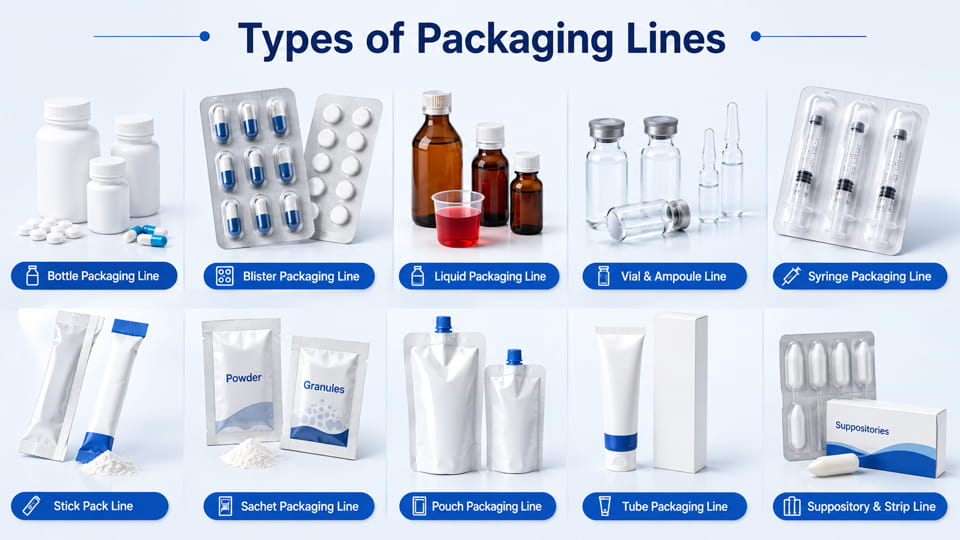
Linie pakujące dostosowane są do rodzaju produktu i formatu opakowania. Typowe typy obejmują:
- Stałe dawkowanie (Tabletka/kapsułka) Kwestia: Linie te obsługują pigułki lub kapsułki. Typowe komponenty: rozszyfrator (jeśli butelki), maszyna licząca, wypełniacz do butelek, Lub maszyna blistrowa, wkład osuszający, zakręcarka/zgrzewarka indukcyjna, etykietownik, kartoniarz, I pakowacz skrzynek. Linie z dawką stałą mogą mieć wiele równoległych pasów w celu zwiększenia przepustowości.
- Linie do pakowania płynów: Przeznaczony do syropów, zawieszenia, zastrzyki, lub oleje. Wyposażenie obejmuje myjka do butelek (do sterylnych fiolek), wypełniacz w płynie (często aseptyczny wypełniacz do produktów sterylnych), maszyna do zamykania (zakrętki lub zakrętki zaciskane), I etykietownik. Do sterylnych zastrzyków, linie te działają w pomieszczeniach czystych (Klasa ISO 5). Niektóre linie cieczy obejmują liofilizację (liofilizacja) po napełnieniu.
- Linie do pakowania blistrowego: Specjalnie do formowania termoformowanych opakowań blistrowych. Linia blistrowa zawiera: termoformierka blistrowa, podajnik produktów (dozowanie tabletek w blistry), zgrzewarka arkuszowa lub foliowa, i a stanowisko do cięcia lub wykrawania. Linie te wyprowadzają karty blistrowe. Jak zauważono, nowoczesne maszyny blistrowe obsługują formowanie, karmienie, opieczętowanie, i cięcie w jednej operacji. Są powszechne w farmacji, nutraceutyki, a nawet słodycze. „Nasza maszyna pakująca w blistry DPP-180Pro nadaje się do opakowań blistrowych Alu-Plastic i Alu-Alu, z wyjściami do 4,800 pęcherze/godzinę”, ilustrujący szybką linię blistrową.
- Linie saszetek/sticków: Do jednorazowych opakowań proszku, granulki, płyny, lub żele. Zwykle używają one a Vff (pionowe formowanie-wypełnienie-uszczelnienie) maszyna formująca woreczki foliowe, wypełnia produkt, i uszczelki. Jinlu's maszyna do saszetek w sztyfcie (Seria JL-VP) oferuje wielotorowe opakowania do proszków, granulki, itp., z dokładnością ± 0,02 g. Linie saszetek są popularne w branży farmaceutycznej (np. dawki leków w proszku), żywność (przyprawy, mieszanki napojów), i kosmetyki (kremy).
- Systemy końca linii: Obejmują one maszyny do pakowania pudełek (grupowanie produktów w większe kartony), uszczelniacze skrzynek, paletyzatory, I automatyczne owijarki stretch. Na przykład, po zapakowaniu butelek z pigułkami w karton, zautomatyzowana maszyna do pakowania skrzynek może łączyć paczki, a zrobotyzowany paletyzator układa skrzynki na paletach. Systemy te uzupełniają linię, przygotowując zapakowane towary do wysyłki do magazynu.
Każda linia jest dostosowana. A linia butelek o stałej dawce wygląda inaczej niż A linia fiolek z płynem lub linia słodyczy przekąskowych. Dostawcy projektują sekwencję maszyn tak, aby odpowiadała formie produktu, materiał opakowaniowy (butelka, kieszonka, pęcherz, karton), prędkość, i przestrzeń.
Zalety zautomatyzowanych linii pakujących
Automatyzacja linii pakującej oferuje wiele korzyści:
- Wyższa produktywność: Maszyny działają 24/7 z dużą prędkością. W pełni zautomatyzowana linia może pomieścić wielokrotnie więcej operacji ręcznych, zaspokojenie rosnącego popytu bez konieczności dodawania pracowników.
- Oszczędności pracy: Zautomatyzowane linie wymagają mniejszej liczby operatorów. Jak zauważa jeden z blogów, „jednym z najłatwiejszych do zautomatyzowania obszarów jest linia pakująca”. Dzięki temu pracownicy mogą zająć się zadaniami o większej wartości.
- Konsystencja & Jakość: Maszyny wykonują powtarzalne zadania w identyczny sposób. W przeciwieństwie do ludzi, roboty się nie męczą. Prowadzi to do równomiernego wypełnienia, moment obrotowy, i zawijaj za każdym razem, ograniczanie defektów i wycofanie produktów.
- Zmniejszona ilość odpadów & Błędy: Precyzyjne napełnianie i liczenie minimalizują straty produktu. Błędy, takie jak błędne liczenie lub przesunięcie centralne, są znacznie zmniejszone. W farmacji, oznacza to mniej błędów wsadowych.
- Większe bezpieczeństwo: Mniej ręcznego przenoszenia ciężkich opakowań i materiałów sterylnych zmniejsza ryzyko obrażeń pracowników i ryzyka zanieczyszczenia. W obszarach aseptycznych, Robotyka „zgaszona” obsługuje teraz wypełnienia, aby poprawić sterylność.
- Lepsza identyfikowalność & Zgodność: Zautomatyzowane linie z łatwością integrują drukowanie seryjne i skanowanie. Dzisiejsze maszyny pakujące często pełnią funkcję centra danych, generowanie i weryfikacja unikalnych identyfikatorów na każdym urządzeniu. Jest to zgodne z przepisami takimi jak amerykańska DSCSA i UE FMD, które wymagają identyfikowalności na poziomie jednostki. (Przez 2026, „każda maszyna pakująca farmaceutyki staje się centrum danych” na potrzeby serializacji.)
- Zoptymalizowane zasoby: Maszyny korzystają z materiałów (etykiety, film, film) efektywniej. Na przykład, Stałe napięcie folii stretch na paletach zmniejsza zużycie folii.
- Skalowalność: Linie zautomatyzowane można modernizować lub rozbudowywać. Na przykład, dodanie równoległych pasów lub drugiej linii z łatwością podwaja przepustowość. Wiele nowoczesnych linii ma charakter modułowy.
- Kompleksowe rozwiązania pod klucz: Oferta dostawców takich jak Jinlu linie pod klucz – w pełni zintegrowane systemy dostosowane do układu zakładu, pojemność, i zgodność. Jinlu zauważa, że opracowujemy „linie pakujące dostosowane do indywidualnych potrzeb, w oparciu o stan Twojej rośliny, Przestrzeń obiektu, zdolności produkcyjne, i inne żądania”. Oznacza to, że otrzymujesz komplet, testowaną linię, a nie składanie maszyn w całość.
Dla kontrastu, linie ręczne lub konfiguracje półautomatyczne w dużym stopniu wymagają pracowników i są wolniejsze, co jest ryzykowne w przypadku gwałtownego wzrostu popytu lub wzrostu kosztów pracy. Ogólnie, automatyzacja zwiększa wydajność i zwrot z inwestycji, nawet jeśli początkowa inwestycja jest wyższa.
Zastosowania branżowe
Linie pakujące znajdują zastosowanie w wielu gałęziach przemysłu:
- Farmaceutyki & Nutraceutyki: Każda fabryka posiada linię do pakowania tabletów, kapsułki, syropy, zastrzyki, maści, itp. W farmacji, ścisły GMP regulamin (21 CFR 211 w USA) obejmować kontrolę pakowania. Linie pakujące muszą zapewniać tożsamość leku, wytrzymałość, czystość, i jakość. Na przykład, aktywne składniki farmaceutyczne (Pszczoła) należy chronić przed zanieczyszczeniem krzyżowym.
- Żywność & Napój: Linie pakują napoje butelkowane (woda, soda, soki), sosy, przyprawy (Pakiety kijowe), przekąski, wyroby cukiernicze, mleczarnia, i więcej. Obowiązują te same zasady: duża prędkość, higiena, i dokładność etykiet.
- Kosmetyki & Habition: Kremy, balsamy, szampony, i perfumy są butelkowane, zakryty, i etykietowane na liniach pakujących. Unscramblery, wypełniacze, uszczelniacze, i osoby zajmujące się etykietowaniem zapewniają, że produkty spełniają standardy dotyczące marki i bezpieczeństwa.
- Chemiczny & Produkty gospodarstwa domowego: Środki czyszczące, detergenty, obrazy olejne, i inne chemikalia korzystają z linii pakujących (często przy użyciu specjalnego sprzętu do transportu materiałów i czyszczenia).
- Specjalność (Biotechnologia, Diagnostyka, itp.): Sterylne produkty biotechnologiczne (szczepionki, biologia) są pakowane w linie o dużej pojemności; W komponentach urządzeń medycznych również wykorzystywane są zaawansowane maszyny pakujące. Jinlupacking zauważa, że urządzenia szyfrujące są popularne w branży farmaceutycznej, Biotech, jedzenie/pok, kosmetyki, i przemysłu chemicznego.
- Nutraceutyki & Suplementy: Witaminy i suplementy (tabletki, Gummy, proszki) często dzielą sprzęt z farmaceutami, skupiając się na dozowaniu i atrakcyjnym opakowaniu.
Krótko mówiąc, w każdej branży wymagającej dużych nakładów, spójne opakowanie może przynieść korzyści. Wybór linii zależy od formy produktu: NP., tablety vs. syropy vs. mieszanki napojów w proszku.
Jak wybrać odpowiednią linię pakującą
Wybór właściwej linii pakującej ma kluczowe znaczenie. Kluczowe czynniki do rozważenia:
- Charakterystyka produktu: Co pakujesz? (tabletki, kapsułki, płyn, pasta, proszek, itp.) To określa, jakich maszyn potrzebujesz (np. licznik kapsułek vs. płynny wypełniacz vs. zaklejarka do saszetek).
- Format opakowania: Butelki, fiolki, karty blistrowe, torebki, pudełka? Każdy format wymaga specjalistycznego sprzętu.
- Prędkość & Tom: Wymagana przepustowość (np. Butelki/godzinę) powinien odpowiadać przepustowości linii. Nad- lub niedostateczna prędkość może powodować marnowanie pieniędzy lub tworzenie wąskich gardeł.
- Przestrzeń i układ: Obrys linii musi pasować do Twojej fabryki. Systemy przenośników i strefy bezpieczeństwa wymagają przeglądu planu piętra. Jinlu podkreśla, że projektujemy linie wokół Przestrzeń obiektu.
- Poziom automatyzacji: Zdecyduj się na pełną automatyzację vs. pół. Pełna automatyzacja jest idealna dla 24/7 linie o dużym natężeniu, ale mniejsze zakłady mogą rozpocząć pracę półautomatyczną (kilka ręcznych kroków) aby zaoszczędzić koszty.
- Zgodność z przepisami: Upewnij się, że maszyny spełniają standardy GMP/CE/ISO (np. cGMP dla farmacji, 21 CFR 211 do pakowania leków). Szukaj dostawców posiadających odpowiednie certyfikaty i doświadczenie.
- Elastyczność & Zmiana: Jeśli pakujesz wiele produktów, łatwość zmiana jest istotne. Niektóre maszyny oferują szybką zmianę rozmiaru (regulowane podajniki, części modułowe).
- Budżet & Tco: Weź pod uwagę nie tylko cenę zakupu, ale całkowity koszt posiadania (Tco). Tańsze maszyny mogą mieć dłuższe przestoje lub wymagać wykwalifikowanych operatorów. Oceń gwarancję, wsparcie, koszty utrzymania.
- Wiedza dostawcy: Współpracuj z doświadczonymi dostawcami. Wzrastać, Na przykład, oferuje rozwiązania „pod klucz” i 24/7 wsparcie techniczne. Sprawdź referencje i umowy serwisowe.
- Skalowalność & Przyszłe potrzeby: Wybierz linię, którą można rozszerzyć lub ulepszyć (np. dodać pasy, zintegrować serializację) w miarę rozwoju Twojej firmy.
- Wymagania dotyczące integracji: Nowoczesne linie często wymagają powiązania z fabrycznymi systemami MES/ERP lub bazami danych serializacji. Zapewnij systemy kontroli (sterowniki PLC, Hmis) są kompatybilne z Twoją infrastrukturą IT.
W rzeczywistości, wyboru linii pakującej często dokonuje zespół interdyscyplinarny (inżynieria, Kontrola jakości, operacje). Konsultacje z ekspertami maszynowymi lub prowadzenie a fabryczny test odbiorczy (TŁUSZCZ) może sprawdzić wydajność linii przed zakupem.
Wniosek
Podsumowując, A linia pakująca jest kompleksem, zintegrowany system maszyn, które przyjmują produkty luzem do towarów pakowanych i gotowych do wysyłki. W branży farmaceutycznej, linie pakujące obsługują tabletki, kapsułki, płyny, fiolki, kremy, i więcej — wszystko pod ścisłą kontrolą GMP. Automatyzując etapy karmienia, pożywny, zakrywanie, etykietowanie, kartonowanie, i paletyzacja, producenci osiągają wyższe prędkości, niższe koszty pracy, lepsza jakość, i pełną identyfikowalność.
Wybór odpowiedniej linii pakującej wiąże się z dopasowaniem rodzaju produktu, wymagania dotyczące prędkości, i wymagania dotyczące zgodności z odpowiednim sprzętem. Wiodący dostawcy (jak Jinlupacking) oferować rozwiązania „pod klucz”., dostosowywanie każdej linii do układu fabryki i standardów regulacyjnych. Patrząc w przyszłość, inteligentne funkcje fabryczne (Łączność IoT, Wizja sztucznej inteligencji, konserwacja predykcyjna) i zrównoważony rozwój poprowadzą linie pakujące w stronę jeszcze większej wydajności i bezpieczeństwa.
Niezależnie od tego, czy potrzebujesz szybkiej linii do liczenia tabletek, w pełni zintegrowana linia do pakowania blistrowego i kartonowania, lub dostosowane pod klucz rozwiązanie w zakresie opakowań farmaceutycznych, Ty też możesz skontaktuj się z naszym zespołem znaleźć odpowiednie rozwiązanie dla Twoich potrzeb produkcyjnych. Z więcej niż 30 lata doświadczenia w branży, dostosowane wsparcie inżynieryjne, usługa szybkiej reakcji, i globalne doświadczenie w zakresie instalacji, Jinlu Packing pomaga producentom farmaceutycznym i nutraceutycznym poprawić wydajność i skrócić przestoje dzięki niezawodnemu wyposażeniu linii pakującej.
Często zadawane pytania dotyczące linii pakującej
Czym właściwie jest linia pakująca?
Linia pakująca to połączony ciąg maszyn służących do pakowania produktów do przechowywania i sprzedaży. Zwykle obejmuje maszyny do podawania produktów, napełnianie lub dozowanie, uszczelnianie/zatykanie, dozorujący, etykietowanie, kartonowanie, i paletyzacja. W farmacji, linia pakująca może zaczynać się od urządzenia do rozszyfrowywania butelek i kończyć na paletyzatorze. Każda maszyna automatyzuje jeden krok, więc cały system przekształca sypki produkt (jak tabletki luzem lub płyny) w gotowe, w pudełku, i towary na paletach gotowe do wysyłki.
Jakie maszyny wchodzą w skład linii pakowania farmaceutycznego?
Maszyny podstawowe obejmują: Unscramblery (sortuj butelki/kapsułki na linii); Liczniki/Wypełniacze (dokładnie dozować tabletki lub płyny); Kapsułki/uszczelniacze (dokręć nakrętki lub zamknij pokrywki foliowe); Etykietowcy (zastosuj etykiety produktów); Kartoniarki (pakować produkty do kartonów); oraz maszyny pakujące/paletyzujące (grupuj kartony w pudełka i układaj na paletach). Innym sprzętem mogą być wykrywacze metali, wagi kontrolne, oraz systemy kontroli wizualnej w celu zapewnienia jakości. Dokładny skład zależy od formy produktu (tabletka vs płyn vs blister vs saszetka).
Jak automatyzacja linii pakującej poprawia efektywność?
Automatyzacja radykalnie zwiększa wydajność. Maszyny działają szybciej niż ludzie i mogą działać w sposób ciągły. Redukują także błędy: automatyczne liczniki i wypełniacze zapewniają, że każda jednostka spełnia dokładne specyfikacje. Automatyzacja minimalizuje powtarzalną pracę ręczną i zmęczenie, poprawę bezpieczeństwa i spójności. Na przykład, roboty mogą później równie dokładnie układać pudełka 8 godziny jak na początku, a systemy wizyjne natychmiast wykrywają defekty. Ogólnie, zautomatyzowana linia pakuje więcej produktów przy mniejszej liczbie osób i mniejszej liczbie błędów, oferując szybki zwrot z inwestycji.
Co to jest linia pakująca pod klucz?
Linia pakowania pod klucz jest kompletna, gotowy do działania system dostarczany przez jednego dostawcę. Zamiast kupować maszyny po kawałku, otrzymujesz zintegrowane rozwiązanie zaprojektowane zgodnie z Twoimi potrzebami. Zawiera wyposażenie, instalacja, integracja, i walidacja. Dostawca pod klucz (jak Jinlupacking) projektuje na zamówienie sekwencję maszyn, upewniając się, że współpracują i spełniają Twoje możliwości, przestrzeń, i wymagania dotyczące zgodności. Usprawnia to zarządzanie projektami i zapewnia płynny rozruch.
Jak wybrać odpowiednią linię pakującą dla mojego produktu??
Rozważ te czynniki: typ produktu (ciało stałe vs ciecz vs proszek), formacie pakietu (butelka, kieszonka, pęcherz, itp.), wymagana prędkość (jednostek na minutę/godzinę), powierzchnia podłogi, budżet, i potrzeb regulacyjnych. Dla farmaceutyków, Zgodność z GMP jest kluczowa. Omów swoje potrzeby z inżynierami zajmującymi się pakowaniem. Zaproponują układ linii i maszyny odpowiadające Twoim celom w zakresie wielkości i jakości. Rozsądnie jest także zaplanować przyszły rozwój: wybierz linię modułową, którą można skalować lub rekonfigurować.
W jaki sposób linie pakujące wspierają zgodność z przepisami w branży farmaceutycznej?
Linie pakujące wspierają zgodność poprzez kontrolę i dokumentowanie każdego etapu. Maszyny mogą automatycznie nanosić numery partii i daty ważności, i systemy skanowania serializującego rejestrują kod każdej jednostki. Automatyczne napełnianie i zamykanie zapewnia stałą dawkę (dla FDA 21 CFR 211). Pełna identyfikowalność (wymagane przez DSCSA i EU FMD) osiąga się poprzez nadanie każdej paczce unikalnych identyfikatorów oraz prowadzenie dzienników elektronicznych. W istocie, nowoczesne linie pakujące są zaprojektowane tak, aby od razu po wyjęciu z pudełka spełniać standardy GMP i serializacji.
W jaki sposób linie pakujące radzą sobie z serializacją i identyfikowalnością??
Dzisiejsze linie integrują drukarki i czytniki kodów kreskowych/2D. Dla farmaceutyków, każda jednostka nadająca się do sprzedaży otrzymuje unikalny kod DataMatrix. System wizyjny linii odczytuje kod natychmiast po wydrukowaniu. Jeśli kod jest nieczytelny lub zduplikowany, jednostka ta zostanie automatycznie wyrzucona. Dane (numer seryjny, znacznik czasu, informacje o linii) jest wysyłany do bazy danych umożliwiającej śledzenie. Zapewnia to pełny łańcuch dostaw. Wiele maszyn pakujących jest obecnie wyposażonych we wbudowane moduły serializacji, aby zapewnić zgodność z globalnymi przepisami.
Jakie są główne zalety przejścia z ręcznej na zautomatyzowaną linię pakującą??
Aktualizacja zapewnia wyższą przepustowość i spójność, jak wspomniano powyżej. Poprawia także bezpieczeństwo pracy i obniża długoterminowe koszty pracy. Zautomatyzowane linie mogą działać przez całą dobę, pomagając w krótkim czasie wprowadzenia produktu na rynek. Dodatkowo, Dane w czasie rzeczywistym z inteligentnego sprzętu dają menedżerom wgląd w wydajność produkcji (np. Wskaźniki OEE). Te zalety często uzasadniają inwestycję, szczególnie w branżach regulowanych, gdzie jakość nie może być zagrożona.
Referencje:
1.ROZWÓJ FARMACEUTYCZNY Q8(R2) -- I
2.EudraLex – Tom 4 – Dobra Praktyka Produkcyjna (GMP) wytyczne —— Załącznik GMP UE 15
3.CZĘŚĆ 211 – AKTUALNE DOBRE PRAKTYKI WYTWARZANIA GOTOWYCH PRODUKTÓW FARMACEUTYCZNYCH —— ecfr.gov
4.Standardowy przewodnik po specyfikacji, Projekt, oraz weryfikacja systemów i sprzętu do produkcji farmaceutycznej i biofarmaceutycznej —— ASTM