Jeśli kiedykolwiek zastanawiałeś się, co tak naprawdę sprawia, że lek działa, odpowiedź brzmi zazwyczaj API (Aktywny składnik farmaceutyczny). Niezależnie od tego, czy jest to tablet, kapsułka, zastrzyk, lub syrop, API jest składnikiem odpowiedzialnym za wywołanie zamierzonego efektu terapeutycznego. W prostych słowach, to część leku, która leczy chorobę, łagodzi objawy, lub zapewnia pożądany efekt medyczny, podczas gdy inne składniki — zwane substancjami pomocniczymi — głównie wspomagają formułowanie i dostarczanie. Dla producentów farmaceutycznych, zespoły zakupowe, i kierownicy produkcji, zrozumienie interfejsów API jest niezbędne, ponieważ mają one bezpośredni wpływ na jakość produktu, Zgodność regulacyjna, procesy produkcyjne, i ostatecznie bezpieczeństwo pacjentów.
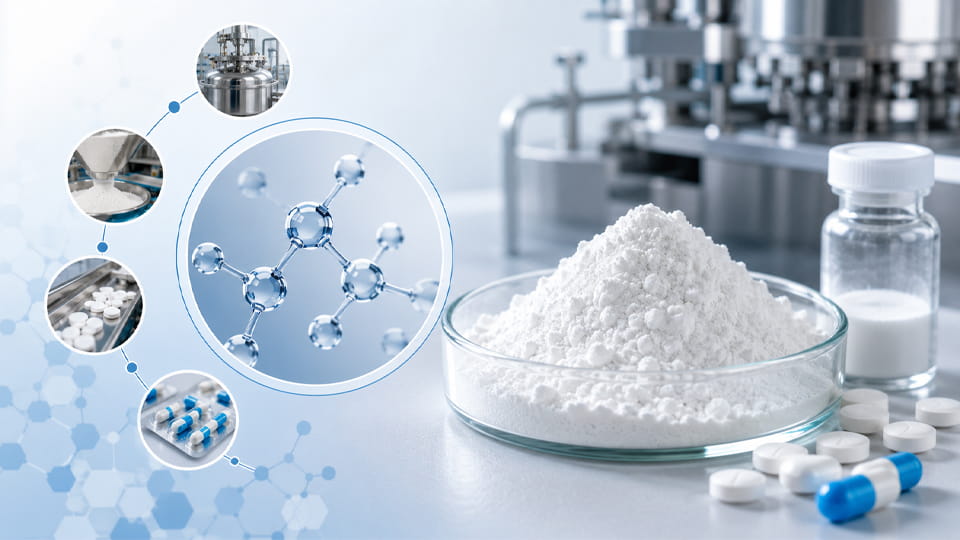
Co oznacza API w farmacji?
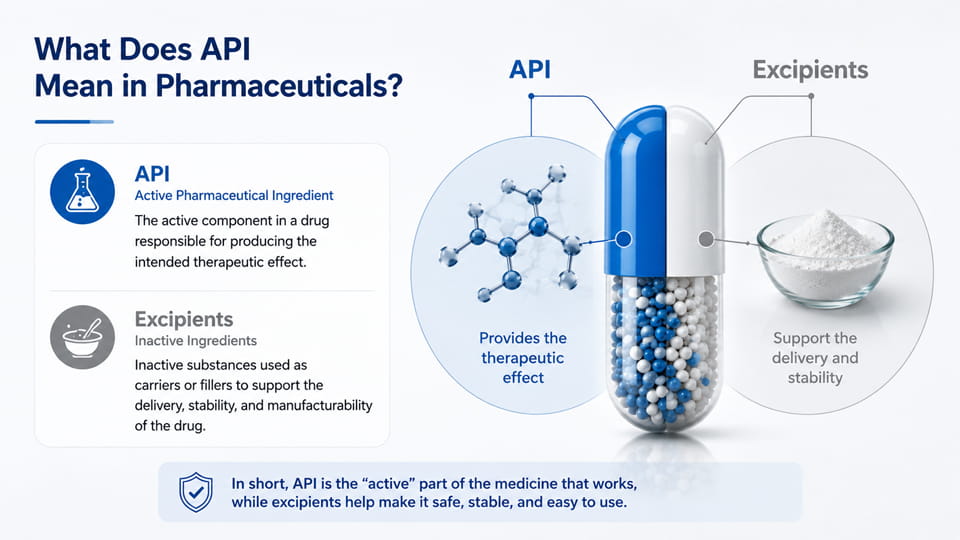
Jakiś API jest Aktywny składnik farmaceutyczny – substancja czynna leku w leku zapewniającym jego działanie terapeutyczne. W prostych słowach, to substancja chemiczna (lub biologiczne) komponent, który wykonuje pracę (np. obniżenie gorączki, zabijanie bakterii, uśmierzanie bólu). Na przykład, w tabletce acetaminofenu, paracetamol samo w sobie jest interfejsem API; pozostałe składniki (spoiwa, wypełniacze, powłoki) Czy substancje pomocnicze. USA. Narodowy Instytut Raka definiuje API jako „główny składnik leku powodujący pożądane działanie leku”.
W rzeczywistości, produkcja leków rozpoczyna się od jednego lub większej liczby API i zamienia je w produkt końcowy (tabletka, kapsułka, płyn, itp.) pod ścisłą kontrolą jakości. Jak zauważa jedno ze źródeł, produkcja farmaceutyczna zasadniczo „oznacza przekształcanie aktywnych składników farmaceutycznych (Pszczoła) i zaróbki w postacie dawkowania (jak tabletki, kapsułki, płyny, lub zastrzyki) poprzez różne operacje jednostkowe (przemiał, granulacja, kompresja, powłoka, pożywny, itp.)”. Każdy krok musi być precyzyjny: organy regulacyjne wymagają, aby każda partia „miała składniki i moc, o której twierdzi”,. Krótko mówiąc, bez API, nie byłoby lekarstw – oni są podstawa receptury leku.
Definicja aktywnego składnika farmaceutycznego (API)
- API (zwany także substancja narkotykowa Lub składnik aktywny farmakologicznie) Jest składnik leku, który sprawia, że jest on skuteczny. Na przykład, amoksycylina to API w pigułce antybiotykowej (zabija bakterie).
- Zamiar: Interfejsy API zapewniają efekt terapeutyczny. Bez API, „lek” byłby po prostu obojętnym proszkiem lub płynem.
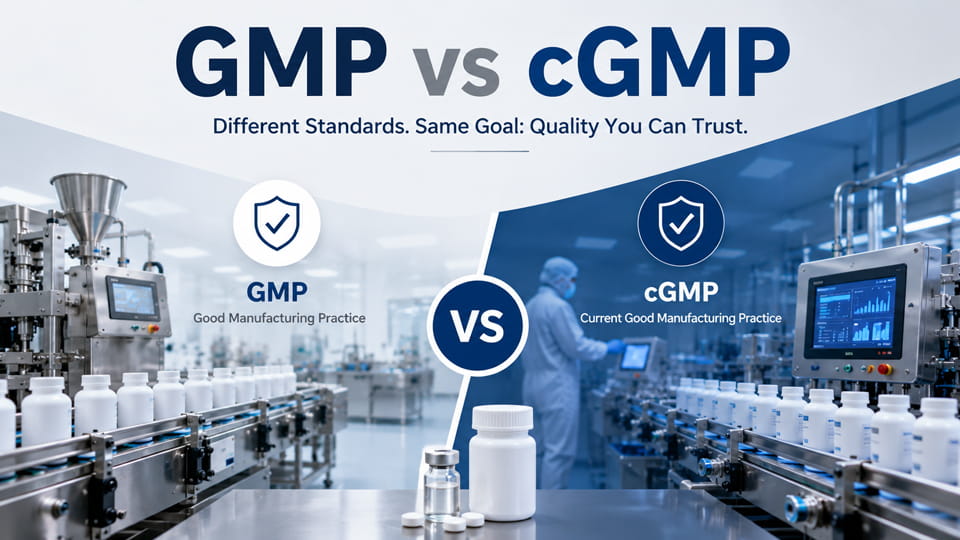
- Widok regulacyjny: FDA i EMA uważają, że API stanowią część tzw Regulowane przez CGMP Wytyczne np I pytanie 7 upewnij się, że interfejsy API są tworzone zgodnie ze ścisłymi standardami jakości.
API to często proszki lub koncentraty o wysokiej czystości; następnie miesza się je z substancjami pomocniczymi i formuje w pigułki, kapsułki, lub inne postacie dawkowania (patrz poniżej). Kluczową kwestią jest to API to leki aktywne, podczas gdy cała reszta preparatu po prostu pomaga w bezpiecznym i skutecznym dostarczaniu leku.
API vs. Substancje substancji desyste: Jaka jest różnica?
| Funkcja |
API (Aktywny składnik) |
Substancja pomocnicza (Nieaktywny składnik) |
| Rola/funkcja |
Zapewnia efekt terapeutyczny (aktywny lek) |
Służy jako nośnik, spoiwo, pręt, stabilizator, itp., dla API |
| Aktywność farmakologiczna |
Tak – biologicznie aktywny. |
NIE – farmakologicznie obojętny. |
| Typowa ilość |
Zazwyczaj mała ilość (mg lub µg). |
Ogólnie cielsko formułowania. |
| Przykłady |
Paracetamol (paracetamol), amoksycylina, atorwastatyna, itp. |
Laktoza, celuloza mikrokrystaliczna, stearynian magnezu, itp. |
| Znaczenie |
Kluczowe dla skuteczności; określa funkcję leku. |
Zapewnia stabilność pigułki, wykonalność, i biodostępność. |
Innymi słowy, Interfejsy API to „aktywne” części, mając na uwadze, że substancje pomocnicze są częściami „wspierającymi”.. Jak wyjaśnia jedno ze źródeł branżowych: „API to leki masowe, które są farmaceutycznie aktywne i generują pożądany efekt farmakologiczny, mając na uwadze, że substancje pomocnicze to substancje farmakologicznie nieaktywne, które są powszechnie stosowane jako nośnik API”.
- Pszczoła: Aktywny, silny, i zazwyczaj wymagają ostrożnego obchodzenia się. Często stanowią zaledwie kilka procent wagi tabletu, ale bez nich lek nic nie robi.
- Substancje substancji desyste: Nieaktywny, często jadalne lub obojętne proszki/płyny. Dodają objętości, wspomaga wchłanianie, poprawić stabilność, i umożliwić produkcję. Na przykład, Laktoza w proszku jest powszechnym wypełniaczem; powidon jest substancją wiążącą; stearynian magnezu jest środkiem nawilżającym; różne powłoki kontrolują uwalnianie.
Obydwa są potrzebne: API dla efektu, substancje pomocnicze zapewniające ten efekt w sejfie, stabilna postać dawkowania. Zrozumienie różnicy jest kluczowe w produkcji farmaceutycznej.
Rodzaje farmaceutycznych API
Pojawiają się interfejsy API dwie szerokie kategorie: drobnocząsteczkowa (syntetyczny) leki i leki biologiczne.
- Syntetyczne API (Małe cząsteczki): Są to chemikalia o niskiej masie cząsteczkowej produkowane przez synteza chemiczna. Należą do nich klasyczne pigułki jak aspiryna, paracetamol. Synteza może być liniowa (reakcje jednogarnkowe) lub wieloetapowy. Syntetyczne API to zazwyczaj krystaliczne proszki (trochę higroskopijny) które wymagają precyzyjnych reakcji chemicznych i oczyszczania. Większość leków generycznych i wiele hitów kinowych należy do tej kategorii. Na przykład, lek przeciwhistaminowy cetyryzyna i lek na nadciśnienie losartan to syntetyczne małocząsteczkowe API. Ich produkcja często pozwala na ścisłą kontrolę czystości i konsystencji.
- Naturalne API (Źródła pochodne/biologiczne): Niektóre interfejsy API są pozyskiwane ze źródeł naturalnych. Obejmuje to związki pochodzenia roślinnego (np. digoksyna z naparstnicy) lub witaminy powstałe w wyniku fermentacji (np. witamina C poprzez fermentację mikrobiologiczną). Fermentacja (przy użyciu bakterii lub drożdży) mogą wytwarzać związki takie jak antybiotyki (penicylina) lub statyny obniżające poziom cholesterolu. Naturalne interfejsy API mogą charakteryzować się większą zmiennością (ze względu na materiał źródłowy) i często wymagają dodatkowego oczyszczenia. Są one zwykle mniej powszechne w nowoczesnych farmacjach skupiających się na produktach syntetycznych, ale rosną w nutraceutykach i lekach „botanicznych”..
- Biotechnologiczne/biologiczne API: Te są duże, złożone cząsteczki powstałe w procesach biologicznych (hodowla komórkowa lub rekombinowany DNA). Obejmują przeciwciała monoklonalne (mAb), białka lecznicze, szczepionki, I leki biopodobne. Na przykład, trastuzumab (Herceptyna) I insulina to biotechnologiczne interfejsy API. Są one zazwyczaj produkowane przez komórki poddane inżynierii genetycznej (np. bakteria, drożdże, lub komórki ssaków) a następnie zbierane i oczyszczane. Produkty biologiczne wymagają sterylnej fermentacji i skomplikowanego oczyszczania. Chociaż skupiamy się głównie na małocząsteczkowych API, Trend w branży jest taki, że leki biologiczne stanowią obecnie rosnący udział nowych leków.
Pomocny sposób na zapamiętywanie: Małe cząsteczki są syntetyzowane chemicznie i zwykle są to pigułki; Biologia wielkocząsteczkowa pochodzą z żywych organizmów i często można je wstrzykiwać. Każdy typ ma własną ścieżkę produkcyjną i regulacyjną, ale oba są „API”, o ile są aktywnym składnikiem końcowego leku.
Jak produkowane są interfejsy API?
Produkcja API jest złożona, wieloetapowy proces obejmujący staranną chemię lub biologię. Uproszczony schemat blokowy typowej produkcji API (dla syntetycznych małocząsteczkowych API) pokazano poniżej:
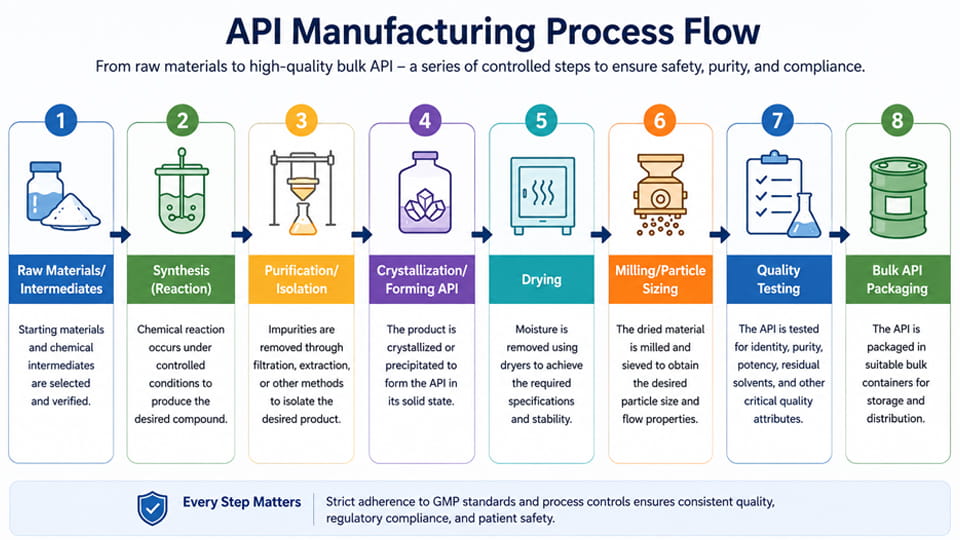
- Surowce/półprodukty: Proces rozpoczyna się od surowych chemicznych elementów konstrukcyjnych (często dostępne na rynku odczynniki lub wcześniej zsyntetyzowane półprodukty). Na każdym etapie chemicznym należy stosować składniki wysokiej jakości, aby uniknąć zanieczyszczeń.
- Synteza (Reakcja): Chemicy przeprowadzają jedną lub więcej reakcji chemicznych (reaktory wsadowe lub reaktory przepływowe) do zbudowania cząsteczki API. Może to obejmować wiele kroków (NP., dodać grupy funkcyjne, uformować pierścienie). Warunki reakcji (rozpuszczalnik, temperatura, katalizatory) są ściśle kontrolowane. W przypadku biotechnologicznych interfejsów API, etap ten zastępuje się fermentacją biologiczną/hodowlą komórkową w celu wytworzenia cząsteczki.
- Oczyszczanie/izolacja: Po każdym etapie reakcji, mieszaninę oczyszcza się w celu usunięcia niepożądanych produktów ubocznych. Techniki obejmują ekstrakcję ciecz-ciecz, filtrowanie, chromatografia, krystalizacja, itp. Celem jest wyizolowanie półproduktu lub API w czystej postaci.
- Krystalizacja/formowanie API: Ostateczny API często krystalizuje się z roztworu. Tworzy to stałe kryształy API o określonej polimorfii i czystości. Krystalizacja poprawia czystość (zanieczyszczenia pozostają w roztworze) i daje dobre właściwości fizyczne.
- Wysuszenie: Wilgotne kryształy suszy się (np. w suszarce) aby całkowicie usunąć rozpuszczalnik. Pozostałość rozpuszczalnika musi spełniać dopuszczalne limity.
- Mielenie/rozmiar cząstek: Wysuszony API można zmielić lub przesiać w celu uzyskania pożądanej wielkości cząstek. Rozmiar cząstek wpływa na sposób mieszania i rozpuszczania API w końcowym produkcie leczniczym.
- Testowanie jakości: Na każdym większym kroku (zwłaszcza końcowe API), materiał jest sprawdzany pod kątem tożsamości, czystość, moc, i pozostałości rozpuszczalników. Metody analityczne (HPLC, spektroskopia, itp.) potwierdź, że spełnia specyfikacje.
- Masowe opakowanie API: Końcowy proszek API jest pakowany w kontrolowany sposób (często obojętny) pojemnikach chroniących je przed wilgocią, światło, i zanieczyszczenie. Są one oznakowane i przechowywane na Wymagania GMP.
Każdy krok musi nastąpić CGMP (aktualnej Dobrej Praktyki Produkcyjnej) zasady. Na przykład, I pytanie 7 (i WHO GMP) zapewnić wskazówki dotyczące interfejsów API. Jak zauważa WHO, „Rygorystyka GMP w produkcji API powinna wzrastać w miarę jak proces przebiega od wczesnych etapów API do etapów końcowych, oczyszczenie, i opakowanie”. W praktyce oznacza to rygorystyczną dokumentację, potwierdzone czyszczenie sprzętu, wykwalifikowany personel, i kontrole w trakcie procesu.
Technologia analizy procesu (POKLEPAĆ) i automatyzacja są coraz częściej wykorzystywane do monitorowania reakcji w czasie rzeczywistym. Branża również zmierza w tym kierunku ciągła produkcja gdzie surowce przepływają w sposób ciągły przez etapy reakcji i oczyszczania, a nie przez okresy wsadowe. Ciągłe procesy mogą poprawić wydajność i spójność, chociaż produkcja seryjna pozostaje powszechna.
Podsumowując: Produkcja API to linia produkcyjna podlegająca ścisłej kontroli, od surowców chemicznych lub kultur komórkowych aż do gotowego składnika aktywnego, z rygorystycznymi bramkami jakości na każdym etapie. Rezultatem jest zbiorczy interfejs API, który jest bezpieczny, silny, i gotowy do przetworzenia w lek.
Kontrola jakości API i wymagania GMP
Jakość jest najważniejsza w produkcji API. Agencje regulacyjne (FDA, EMA, itp.) wymagają, aby producenci API przestrzegali rygorystycznych przepisów Dobre Praktyki Produkcyjne (GMP) aby mieć pewność, że każda partia spełnia standardy jakości. Dla interfejsów API, ICH Q7 to kluczowa wytyczna określająca GMP specyficzne dla składników aktywnych. Niektóre krytyczne aspekty obejmują:
- Dokumentacja & Walidacja: Wszystkie procesy muszą być dobrze udokumentowane. Krytyczne kroki (jak ostateczna krystalizacja) są sprawdzane w celu wykazania, że niezawodnie tworzą API o akceptowalnej jakości. Obiekty i sprzęt muszą być kwalifikowane.
- Testowanie czystości i tożsamości: Każda partia API jest testowana w celu sprawdzenia jej tożsamość (to właściwa substancja chemiczna), czystość (wolne od niepożądanych zanieczyszczeń i produktów ubocznych), I moc (prawidłowe stężenie cząsteczek aktywnych). Na przykład, Do wykrycia nawet śladowych zanieczyszczeń stosuje się testy HPLC lub spektrometrię. Wszelkie zanieczyszczenia mogą być szkodliwe w produkcie leczniczym.
- Kontrola zanieczyszczeń: Producenci ustalają dopuszczalne limity dla niektórych zanieczyszczeń (metale ciężkie, pozostałości rozpuszczalników, nieprzereagowane materiały wyjściowe). Jeśli poziomy przekraczają progi, partia zostaje odrzucona lub ponownie przetworzona.
- Testowanie stabilności: Interfejsy API muszą pozostać stabilne podczas przechowywania. Badania stabilności (np. przyspieszone starzenie się) upewnij się, że interfejs API nie ulegnie degradacji ani nie straci mocy z biegiem czasu. Opakowanie (zobacz następną sekcję) również to odzwierciedla.
- Identyfikowalność: Surowce i każdy etap procesu muszą być identyfikowalne. Jeśli pojawi się jakikolwiek problem w ostatecznym leku, producenci muszą prześledzić historię produkcji.
- Zgodność z cGMP: Agencje często kontrolują fabryki API. Jak podsumowuje jedno ze źródeł: Wytyczne GMP mają na celu zapewnienie, że każdy lek ma „takie składniki i moc, jak twierdzi”. Oznacza to, że producenci API muszą udowodnić, że ich API jest spójne w każdej partii.
- Zgłoszenia regulacyjne: Producenci API przekazują dane dotyczące swoich procesów (Chemia, Produkcja, Sterowanie – sekcja CMC w zastosowaniach leków) władzom. Wszelkie zmiany w procesie (np. nowa nieczystość) może wymagać ponownego zatwierdzenia.
Światowa Organizacja Zdrowia (KTO) wytyczne to podkreślają rygorystyczność wzrasta w kierunku końcowych etapów. Wczesne półprodukty mogą mieć mniej kontroli, ale po zdefiniowaniu materiału wyjściowego API (punkt, od którego obowiązuje GMP), późniejsze kroki (krystalizacja, ostateczne oczyszczenie) spełniają najwyższe standardy.
Krótko mówiąc, Kontrola jakości API jest kompleksowa: „Zapewnienie jakości jest krytycznym aspektem produkcji API” a GMP obejmuje wszystko „od pozyskiwania surowców po testowanie produktu końcowego”. Dzięki temu ostateczny API będzie bezpieczny i skuteczny po przekształceniu w lek.
API vs. Gotowy produkt farmaceutyczny (FPP)
Ważne jest, aby rozróżnić API z gotową postać dawkowania (finał, Lek gotowy dla pacjenta).
- API (Aktywny składnik / Substancja narkotykowa): Czysta aktywna substancja chemiczna lub biologiczna, zwykle w postaci proszku lub roztworu. Przeszedł wszystkie etapy produkcji aż do testów czystości. To jest nie zwykle podawany pacjentom samodzielnie (z wyjątkiem formy IV), ale raczej w połączeniu z substancjami pomocniczymi i poddawanym dalszemu przetwarzaniu.
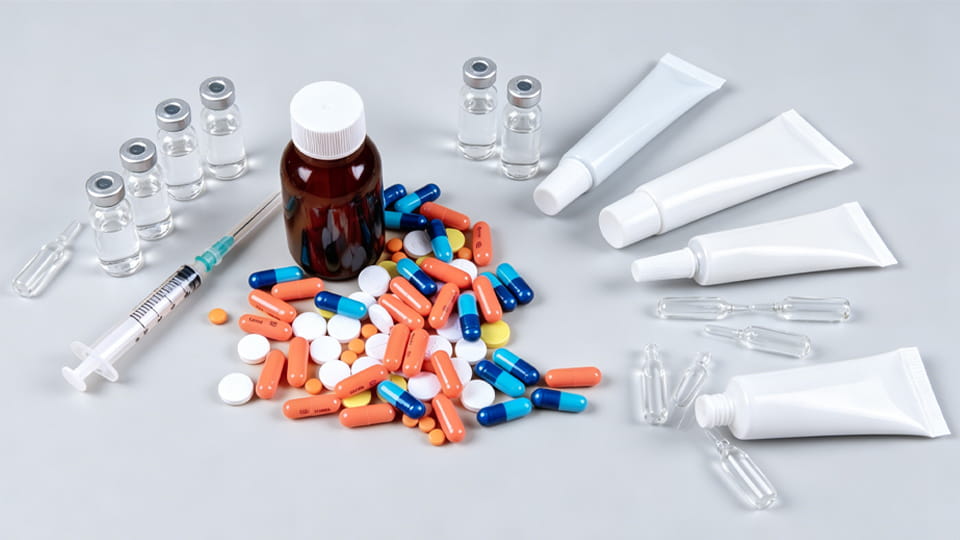
- Gotowy produkt farmaceutyczny (FPP, lub gotowy formularz dawkowania): To już ostatni lek na półce – tabletki, kapsułki, syropy, zastrzyki, itp. Zawiera API plus wszystkie potrzebne substancje pomocnicze, zapakowane do celów administracyjnych.
FPP decyduje jak API jest dostarczane w praktyce. Zgodnie z definicjami regulacyjnymi, gotowa postać dawkowania jest „ostateczna”., w pełni wytworzony produkt leczniczy, który zawiera substancję leczniczą i wszystkie wymagane substancje pomocnicze, i jest przetwarzany do określonego formatu dostawy, jak tablet, kapsułka, zastrzyk, itp.".
Kluczowe różnice:
- Formularz: API to zazwyczaj surowy proszek lub granulka; FPP to tablet, kapsułka, płyn, itp.
- Używać: Interfejsy API są obsługiwane w procesie produkcyjnym; Z programów FPP korzystają podmioty świadczące opiekę zdrowotną i pacjenci.
- Etykietowanie: FPP muszą być opatrzone pełnym oznakowaniem (dawkowanie, instrukcje, wygaśnięcie, itp.); Pojemniki API posiadają etykiety techniczne do użytku produkcyjnego.
- Regulacja: FPP wymagają dowodu bezpieczeństwa/skuteczności u pacjentów; Interfejsy API muszą spełniać specyfikacje czystości/mocy. Obydwa muszą być zgodne z cGMP, ale FPP boryka się również z dodatkowymi przeszkodami regulacyjnymi (badania kliniczne, zgoda marketingowa).
| Scena |
Definicja/przykład |
| API (Substancja narkotykowa) |
Sam aktywny związek leku (np. proszek gentamycyny). |
| Gotowy produkt leczniczy |
Forma leku (np. zastrzyk gentamycyny) zawierający API i substancje pomocnicze. |
Zatem, API to podstawowy środek leczniczy, podczas gdy gotowy produkt to sposób, w jaki ten środek jest formułowany i pakowany do użycia. Dobra produkcja gwarantuje, że „gotowy produkt leczniczy zawiera odpowiednie API w odpowiedniej mocy”. Sprzęt do pakowania, np tabletkarki Lub Wypełniacze kapsułki następnie przekonwertować mieszanki API i substancji pomocniczych w FPP, które są zapieczętowane w blistrach, butelki, lub inne pojemniki.
Wyzwania w produkcji API
Producenci API stoją przed kilkoma wyzwaniami branżowymi:
- Zgodność z przepisami: Interfejsy API muszą spełniać zasady GMP (np. I pytanie 7, Wytyczne FDA/EMA). Nadążanie za zmieniającymi się przepisami na całym świecie może być skomplikowane. Nieprzestrzeganie przepisów może wstrzymać produkcję lub skutkować karami finansowymi.
- Kontrola jakości: Utrzymanie stałej jakości partii po partii jest trudne. Niewielkie różnice w surowcach lub warunkach reakcji mogą powodować zanieczyszczenia. Na każdym kroku potrzebne są solidne testy analityczne.
- Wysokie koszty produkcji: Budowa i obsługa obiektów GMP (pomieszczenia czyste, reaktory, przetwarzanie odpadów) jest drogie. Koszty obejmują inwestycje kapitałowe, przeszkolony personel, i specjalistycznego sprzętu (np. filtry do sterylnych API). Obniżenie kosztów przy jednoczesnym zachowaniu jakości to ciągła walka.
- Ryzyka łańcucha dostaw: Wiele interfejsów API opiera się na dostawcach w określonych krajach (np. surowce z Azji). Kwestie geopolityczne, klęski żywiołowe lub pandemie mogą zakłócić dostawy. W ostatnich latach zaobserwowano niedobory kluczowych materiałów wyjściowych, wymuszanie pilnych decyzji zakupowych.
- HPAPI (Bardzo wydajne interfejsy API): Rosnący podzbiór interfejsów API (np. leki onkologiczne, hormony) są niezwykle silne. Mogą być toksyczne w bardzo małych dawkach, stwarzających zagrożenie dla zdrowia pracowników. Wymagane jest wytwarzanie HPAPI specjalistyczne zabezpieczenie: zamknięte izolatory, filtrowany wydech, kombinezony ochronne, itp. Jak zauważa jeden z przeglądów branżowych, HPAPI stwarzają „wyzwania w zakresie obsługi i wymagają dużych inwestycji w wyspecjalizowane obudowy” w celu ochrony pracowników i środowiska. W rzeczywistości, wiele firm buduje obecnie dedykowane zakłady HPAPI kosztem „milionów przekraczającym typowe obiekty GMP”. Potrzebny jest sprzęt taki jak zamknięte, automatyczne reaktory i specjalistyczne młyny.
- Przepisy środowiskowe: Produkcja API może generować niebezpieczne odpady i wykorzystywać rozpuszczalniki. Surowsze przepisy dotyczące ochrony środowiska zmuszają producentów do stosowania „zielonej chemii” (recykling rozpuszczalników, procesy katalityczne) lub zainwestuj w utylizację odpadów, zwiększenie złożoności i kosztów.
- Konkurencja rynkowa: Wygaśnięcie patentów prowadzi do konkurencji generycznej, obniżanie cen API. Twórcy API muszą zatem być wydajni, aby zachować rentowność. Odwrotnie, rozwijający się nowy API dla innowacyjnych leków jest ryzykowne i kosztowne.
- Koszt surowców: Zmienne ceny (np. dla odczynników chemicznych lub odczynników biotechnologicznych) może zacisnąć marże.
Wyzwania te oznaczają, że producenci API muszą stale inwestować w optymalizację procesów, zgodność, i odporność. Jak radzi jedno ze źródeł, wdrażanie solidnych systemów jakości i bycie na bieżąco z przepisami to kluczowe strategie. Podsumowując: utrzymanie wysokiej jakości pod presją kosztów, i zapewnienie bezpieczeństwa (zwłaszcza dla HPAPI), to główne przeszkody w nowoczesnej produkcji API.
Dlaczego opakowanie ma znaczenie w przypadku leków opartych na API
Po wytworzeniu API i przekształceniu go w lek, opakowanie staje się kluczowa dla ochrony jakości tego produktu i zapewnienia bezpieczeństwa pacjentów. Funkcjonalne opakowanie zabezpiecza lek (i jego API) od czynników środowiskowych i zapewnia dostarczenie właściwej dawki. Kluczowe kwestie związane z opakowaniem obejmują:
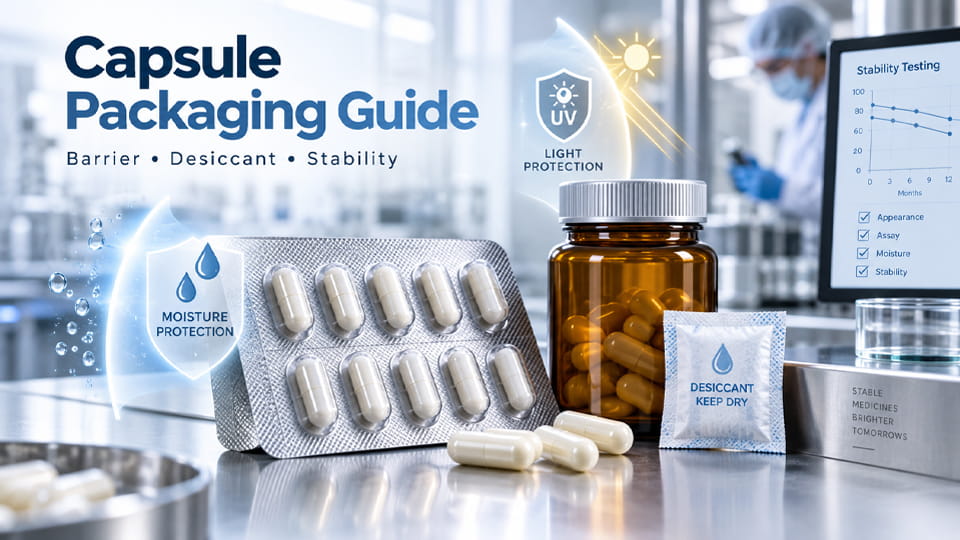
- Ochrona stabilności: Wiele interfejsów API (i końcowe produkty lecznicze) są wrażliwe wilgoć, tlen, światło, i temperatura. Na przykład, wilgoć może powodować degradację API lub przedwczesne rozpuszczenie tabletek. Aby z tym walczyć, w opakowaniach blistrowych często stosuje się folie wysokobarierowe. Pakiety pęcherzy zapewniają ochronę poprzez dawkę jednostkową: każda tabletka/kapsułka jest zamknięta w osobnej kieszeni, chroniąc go przed wilgocią i zanieczyszczeniami. Butelka (fiolka) opakowanie wykorzystuje osuszacze oraz nieprzezroczyste lub bursztynowe butelki chroniące przed wilgocią i światłem. Krótko mówiąc, odpowiedni pojemnik i materiały zapewniają skuteczność API do czasu użycia.
- Zapobieganie zanieczyszczeniom: Zapieczętowany, opakowania zabezpieczające przed manipulacją gwarantuje, że lek pozostanie sterylny i niezanieczyszczony. W przypadku wstrzykiwalnych interfejsów API, stosuje się aseptyczne fiolki. Nawet na pigułki, blistry i butelki muszą być szczelnie zamknięte, aby zapobiec manipulacji.
- Dokładne dawkowanie: Blistry i opakowania dozujące mogą egzekwować dawki jednostkowe (jedna tabletka na wnękę). Butelki często mają nakrętki zabezpieczające przed dziećmi (wymóg regulacyjny). Precyzyjne maszyny do napełniania / zamykania (jak Jinlu liczący linie rozlewnicze) zapewnia prawidłowe zliczenie i bezpieczne zamknięcie. Błędnie przeliczone pigułki lub luźne nakrętki mogą prowadzić do niedoborów- lub przedawkowanie.
- Zgodność & Informacja: Opakowanie zawiera etykietę i informacje dla pacjenta (instrukcje, data ważności). Maszyny etykietujące szybko nakładają dokładne etykiety. Jasne oznakowanie pomaga pacjentom prawidłowo przyjmować leki.
- Zgodność z przepisami: Samo opakowanie jest regulowane (materiały klasy farmaceutycznej, standardy czystości). Sprzęt do pęcherzenia, rozlew, etykietowanie, i pakowanie w kartony muszą spełniać wymogi higieny GMP i zostać zatwierdzone. Na przykład, szybkobieżna maszyna do pakowania blistrowego musi niezawodnie uszczelniać folie bez wycieków.
W rzeczywistości, maszyny do pakowania farmaceutyków linki bezpośrednio do interfejsów API. Na przykład:
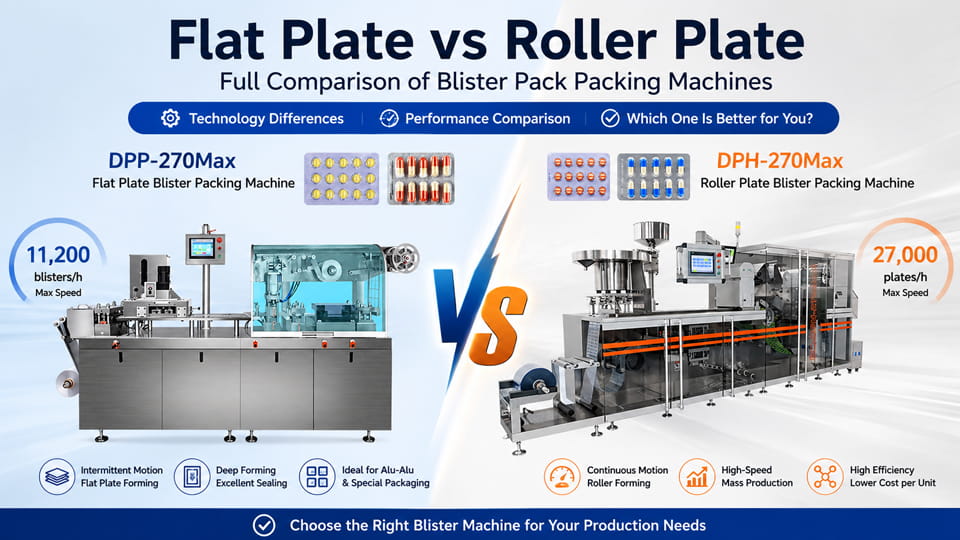
- Maszyny pakowania pęcherzy (jak Jinlu [DPP-180Pro]) formularz, wypełnić, i zamykać tabletki lub kapsułki w blistry. Każdy blister chroni API przed wilgocią/powietrzem.
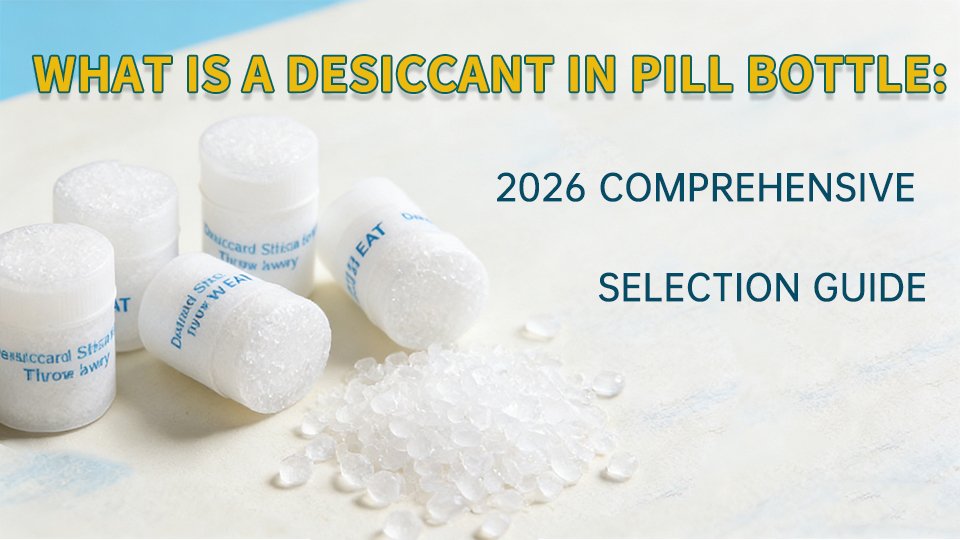
- Linie do napełniania i zamykania butelek (takie jak linia rozlewnicza zliczająca JL-16C) zautomatyzować napełnianie tabletek do butelek, wkładanie saszetek ze środkiem osuszającym, zatykając je i uszczelniając. Chronią one API przed wilgocią i zabezpieczają dozowanie.
- Maszyny kartonowe (Kartograf Jinlu) następnie zapakuj blistry lub butelki do oznakowanych pudełek. Kartony stanowią dodatkową barierę, zawierają drukowane instrukcje, i dawki grupowe dla łatwej obsługi.
- Maszyny do etykietowania (jak Etykieciarka JL-TBJ-120) naklejaj zgodne etykiety na butelki i kartony, zapewnianie tożsamości i identyfikowalności leków.
Poprzez integrację tych systemów, zakłady farmaceutyczne zapewniają, że API (składnik aktywny) dociera do pacjenta dokładnie tak, jak zamierzono. Funkcjonalne opakowania farmaceutyczne (pęcherze, butelki, zamknięcia zabezpieczające przed manipulacją) jest „kluczowy” dla ochrony produktów przed wilgocią, tlen, lekkość i bezpieczeństwo pacjenta.
Dla firm takich jak Pakowanie jinlu, oznacza to oferowanie kompletnych rozwiązań w zakresie opakowań odpowiadających potrzebom interfejsów API: NP., pakowarki blistrowe i linie zliczające zoptymalizowane pod kątem tabletek wrażliwych na wilgoć, lub kartoniarki przeznaczone do obsługi butelek z syropami lub fiolek. Krótko mówiąc, maszyny pakujące są ostatnim ogniwem łańcucha dzięki czemu interfejsy API są stabilne i skuteczne aż do momentu użycia.
Wniosek
The API (Aktywny składnik farmaceutyczny) jest głównym składnikiem nadającym lekowi działanie lecznicze. Od produkcji i kontroli jakości po zgodność z przepisami i końcowe opakowanie, ochrona integralności API jest niezbędna dla zapewnienia bezpieczeństwa produktu, skuteczność, i spójność w całym farmaceutycznym łańcuchu dostaw.
Ponieważ produkty farmaceutyczne stają się coraz bardziej zaawansowane, Niezawodny sprzęt do pakowania odgrywa coraz ważniejszą rolę w zabezpieczaniu leków opartych na API. Niezależnie od tego, czy pakujesz tabletki, kapsułki, proszki, lub granulki, właściwe rozwiązanie opakowaniowe pomaga utrzymać jakość produktu, jednocześnie poprawiając wydajność produkcji i zgodność z przepisami.
Poszukuję niezawodnego sprzętu do pakowania farmaceutycznego? Jinlu Packing dostarcza maszyny pakujące w blistry, liczenie linii, systemy napełniania butelek, maszyny kartonowe, i kompletne rozwiązania w zakresie opakowań pod klucz dostosowane do potrzeb współczesnych producentów farmaceutycznych. Skontaktuj się z naszym zespołem aby omówić kolejny projekt opakowania.
Często zadawane pytania dotyczące API w farmacji
Co oznacza API w farmaceutykach?
API oznacza aktywny składnik farmaceutyczny. Jest to substancja czynna leku, która zapewnia jego działanie lecznicze. Na przykład, API w tabletce przeciw grypie będzie związkiem zwalczającym wirusa lub łagodzącym jego objawy.
Czy API to to samo co lek??
API to rdzeń leku, ale sam w sobie nie jest to ostateczna postać leku. Ostatni lek (pigułka, kapsułka, zastrzyk) nazywa się gotowym produktem lub gotową postacią dawkowania. API musi zawierać substancje pomocnicze (nieaktywne składniki) i przetwarzane na dawkę, zanim stanie się ona faktycznym lekiem przyjmowanym przez pacjentów.
Jaka jest różnica między API a substancją pomocniczą?
API to substancje aktywne, które powodują pożądany efekt farmakologiczny. Substancje pomocnicze to nieaktywne składniki, które nie wpływają na chorobę, ale pomagają w formułowaniu leku (dodaj masę, ustabilizować, wspomaga wchłanianie, itp.). Krótko mówiąc: API mają działanie terapeutyczne; substancje pomocnicze nie.
Jak produkowane są interfejsy API?
Produkcja API zazwyczaj obejmuje syntezę chemiczną (lub fermentacja biologiczna), następnie oczyszczanie, krystalizacja, wysuszenie, i frezowanie. Każdy etap jest ściśle kontrolowany, aby zapewnić czystość i moc. Proces ten jest zgodny z Dobrymi Praktykami Produkcyjnymi (GMP). Uproszczony przepływ jest: Surowce → (Chemiczne lub biologiczne) Synteza → Oczyszczanie → Krystalizacja → Suszenie → Mielenie → Testowanie jakości → Pakowanie (jak pokazano powyżej).
Dlaczego jakość API jest ważna?
Jakość API jest kluczowa, ponieważ bezpośrednio wpływa na bezpieczeństwo i skuteczność leku. Zanieczyszczone lub zdegradowane API mogą powodować działania niepożądane lub zmniejszoną skuteczność. Organy regulacyjne wymagają rygorystycznych testów jakości interfejsów API (tożsamość, czystość, moc) zgodnie z wytycznymi GMP. Wysokiej jakości API pomagają zapobiegać wycofywaniu leków i zapewniają, że każda dawka działa zgodnie z przeznaczeniem.
Jakie są przykłady interfejsów API?
Przykłady API obejmują powszechnie stosowane substancje lecznicze, takie jak paracetamol (paracetamol), ibuprofen, amoksycylina, atorwastatyna, i metformina. W biologii, przykładami są insulina, Herceptyna (trastuzumab), przeciwciała monoklonalne, i szczepionki. Esencjonalnie, nazwa API to zazwyczaj ogólna nazwa leku.
Jakie są wymagania GMP dotyczące produkcji API?
GMP dla API (np. I pytanie 7) wymaga wykwalifikowanego sprzętu, walidowane procesy, przeszkolony personel, i kompleksowe testy. Producenci muszą kontrolować zanieczyszczenia krzyżowe, dokumentuj wszystkie kroki, i przetestuj każdą partię pod kątem czystości i siły działania. WHO zauważa, że rygorystyczność GMP wzrasta w kierunku końcowych etapów API, zapewnienie, że każda partia spełnia standardy tożsamości i jakości.
Dlaczego opakowania farmaceutyczne są ważne dla API?
Właściwe opakowanie chroni API w finalnym leku przed czynnikami środowiskowymi. Na przykład, Opakowania blistrowe i systemy butelek chronią przed wilgocią i tlenem, zachowanie stabilności API. Sprzęt do pakowania (Maszyny pęcherzy, wypełniacze, czapki, etykiety, kartoniarze) zapewnia dokładne dozowanie leku zawierającego API, zapieczętowany, i oznakowane, utrzymanie bezpieczeństwa i zgodności.
Co to są HPAPI i dlaczego są ważne?
HPAPI (Bardzo wydajne interfejsy API) są niezwykle aktywnymi związkami (często nowotwory lub leki hormonalne) które są toksyczne już w bardzo małych dawkach. Wymagają specjalnego sprzętu do przetwarzania (izolatory, systemy zamknięte) chronić pracowników. Zapotrzebowanie na HPAPI rośnie wraz z terapiami celowanymi, dlatego producenci muszą inwestować w ochronę i specjalistyczną wiedzę.
W jaki sposób API odnoszą się do gotowych postaci dawkowania?
API łączy się z substancjami pomocniczymi i przetwarza w celu uzyskania ostatecznej postaci leku. Na przykład, tabletkę wytwarza się poprzez zmieszanie API z wypełniaczami i sprasowanie. Gotowy produkt następnie w wygodny sposób dostarcza API pacjentowi. Maszyna opakowań (od napełniania po etykietowanie) łączy produkcję API z lekiem gotowym do spożycia przez konsumenta.
Referencje:
1.Q7 Wytyczne dobrej praktyki produkcyjnej dotyczące aktywnych składników farmaceutycznych. Wytyczne dla przemysłu — NAS. Administracja Żywności i Leków
2.Wytyczne dotyczące jakości: substancja czynna — Europejska Agencja Leków
3.Aktywne składniki farmaceutyczne — KTO
4.TRS 957 – Załącznik 2: Dobre praktyki produkcyjne WHO dotyczące aktywnych składników farmaceutycznych (substancje lecznicze luzem) – KTO