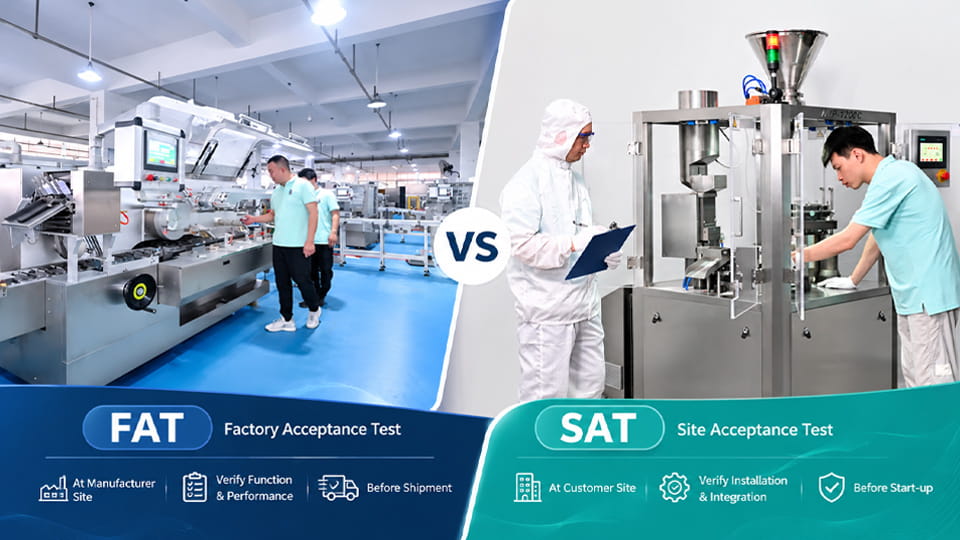
Fabryczne testy akceptacyjne (TŁUSZCZ) i testowanie akceptacji witryny (SOBOTA) to dwa uzupełniające się etapy walidacji sprzętu farmaceutycznego. FAT przeprowadza się w zakładzie producenta sprzętu (przed wysyłką) w celu sprawdzenia, czy wszystkie specyfikacje i funkcje spełniają wymagania klienta. SAT przeprowadzany jest po instalacji u klienta w celu sprawdzenia, czy maszyna działa prawidłowo w rzeczywistym środowisku produkcyjnym. Razem, FAT i SAT pomagają wcześnie wykryć problemy (oszczędność czasu i kosztów) i zapewnić Zgodność z GMP. W tym artykule szczegółowo opisano FAT i SAT – omawiając to, co weryfikuje każdy test, kluczowe różnice, jak pasują do cyklu życia IQ/OQ/PQ, przykładowe listy kontrolne dla linie pakujące (pęcherz, kapsułka, tabletka, kartonowanie), i pytania dotyczące najlepszych praktyk dla kupujących.
Co to jest test akceptacji fabryki (TŁUSZCZ)?
A Fabryczny test akceptacyjny (TŁUSZCZ) jest formalnością, udokumentowana ocena sprzętu w zakładzie producenta, przeprowadzane przed wysyłką urządzenia do klienta. Sprawdza, czy maszyna została zbudowana zgodnie z ustaleniami Specyfikacja wymagań użytkownika (URS) i działa prawidłowo. Podczas TŁUSZCZU, sprzedawcę i klienta (lub ich przedstawiciele) wykonać zatwierdzony protokół FAT przypadków testowych i list kontrolnych. Typowe cele obejmują wykazanie zgodności ze specyfikacjami, wcześnie wyłapywać wady, i zapewnienie kupującemu, że „sprzęt jest gotowy do wysyłki”.
Co weryfikuje FAT?
W GRUPIE, nacisk położony jest na samodzielną wydajność i zgodność z projektem. Na ogół obejmuje:
- Kontrole wizualne i konstrukcyjne: Sprawdź zespół mechaniczny, wyrównanie ramy, okablowanie, i jakość wykonania w porównaniu z rysunkami. Potwierdź numery seryjne i identyfikatory modeli.
- Testowanie elektryczne i kontrolne: Sprawdź połączenia zasilania, Wersje oprogramowania PLC/HMI, czujniki i elementy wykonawcze. Sprawdź te ekrany kontrolne, przepisy, i alarmy reagują prawidłowo.
- Testy funkcjonalne (Praca bez obciążenia lub praca na sucho): Uruchom każdą główną funkcję maszyny (silniki, jeździ, podajniki, grzejniki) w całym jego zakresie. Na przykład, prędkości cyklu na poziomie minimalnym i maksymalnym, przetestować grzejniki/rampy ciśnieniowe, i celowo uruchamiać blokady.
- Kontrole wydajności: Jeśli to możliwe, użyj reprezentatywnych materiałów produkcyjnych. Do wypełnienia lub maszyna pakująca, uruchamiaj próbki produktów i sprawdzaj wydajność, dokładność, zmiana, i inne cele wydajnościowe. (Zdecydowanie zaleca się korzystanie z rzeczywistych produktów klienta podczas FAT w celu wykrycia problemów związanych z konkretnymi materiałami.)
- Bezpieczeństwo i blokady: Przetestuj wyłączniki awaryjne, kurtyny świetlne, gwardia, zawory nadmiarowe ciśnienia, itp., aby potwierdzić, że w warunkach awarii wszystkie systemy bezpieczeństwa reagują zgodnie z oczekiwaniami.
- Przegląd dokumentacji: Potwierdź, że wszystkie wymagane dokumenty są gotowe: instrukcje obsługi, schematy elektryczne i pneumatyczne, przewodniki konserwacji, listy części zamiennych, świadectwa kalibracji, itp.
- Kryteria akceptacji: Wszystkie testy są oceniane według wcześniej ustalonych kryteriów akceptacji (często pobierane z URS). Wszelkie odchylenia lub punkty otwarte są rejestrowane na liście dziurkowania w celu rozwiązania.
Pomyślny FAT kończy się podpisaniem raportu FAT, wyszczególniając zaliczone testy i wymieniając wszelkie problemy do rozwiązania przed wysyłką. Esencjonalnie, FAT zapewnia, że „system jest gotowy do wysyłki”, weryfikując jego podstawowe funkcje w kontrolowanych warunkach fabrycznych.
Kiedy i u kogo występuje TŁUSZCZ?
FAT zwykle odbywa się po całkowitym złożeniu maszyny, ale zanim opuści ona fabrykę producenta. Wynika to z kwalifikacji projektu (jeśli w ogóle) i poprzedza dostawę. Kluczowymi uczestnikami są zazwyczaj inżynierowie i technicy dostawców, oraz przedstawiciele firmy kupującej (Inżynierowie kontroli jakości/walidacji, personel produkcyjny). Zespół kupującego powinien przybyć przygotowany, często przywożąc URS, protokoły testów, oraz wszelkie specjalistyczne materiały do uruchomienia. FAT to ostatnia szansa kupującego na wyłapanie większych rozbieżności pod kontrolą dostawcy.
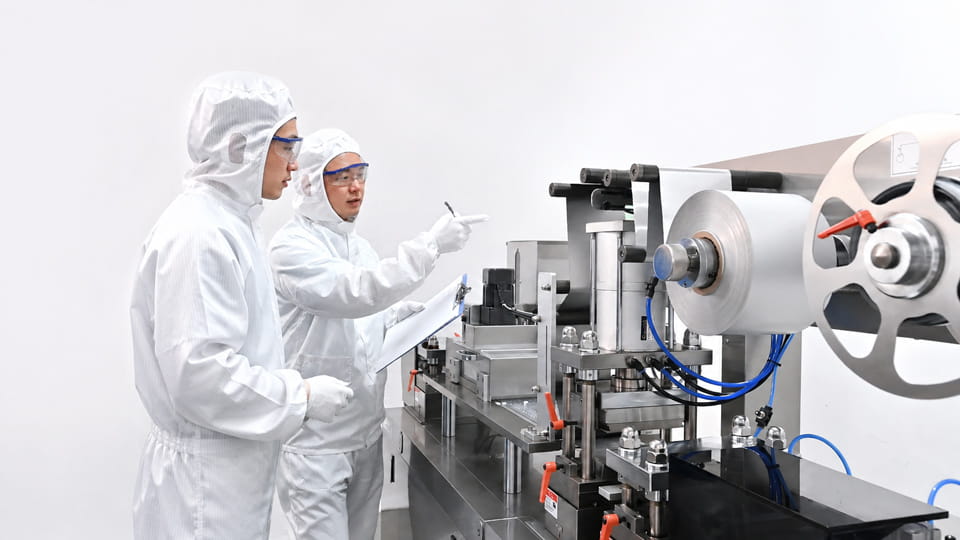
Postać: Farmaceutyczny Blister Packaging Maszyna przechodzi testy akceptacyjne. W rygorystycznym FAT, każdy podsystem (tworzenie się, opieczętowanie, karmienie, sterownica) jest sprawdzany w stosunku do URS. Następnie w ramach kolejnego egzaminu SAT powtarzane są kluczowe testy funkcjonalne po instalacji w środowisku użytkownika końcowego.
Co to jest test akceptacji witryny (SOBOTA)?
A Test akceptacji witryny (SOBOTA) to udokumentowany test przeprowadzany w zakładzie klienta po dostarczeniu i zainstalowaniu sprzętu, ale przed dopuszczeniem go do produkcji. SAT ponownie sprawdza, czy maszyna spełnia wymagania w jej rzeczywistym kontekście operacyjnym. w SAT, sprzęt jest sprawdzany pod kątem prawidłowego montażu, podłączenie mediów, integracja systemu, i końcowy występ.
Co weryfikuje SAT?
SAT zazwyczaj obejmuje:
- Kwalifikacja instalacyjna (ILORAZ INTELIGENCJI) Kontrole: Sprawdź, czy sprzęt jest zainstalowany zgodnie z zatwierdzonym planem. Obejmuje to potwierdzenie prawidłowej lokalizacji, niwelacja, narzędzia (napięcie zasilania, ciśnienie pneumatyczne, woda, itp.), grunt, i warunki otoczenia. Wszystkie elementy maszyny i dokumentacja muszą być obecne i prawidłowo zainstalowane.
- Weryfikacja użyteczności: Upewnij się, że media na miejscu spełniają wymagania maszyny. Na przykład, zmierzyć rzeczywiste napięcie, ciśnienie/przepływ powietrza, temperatura wody lodowej, lub ciśnienie pary z sieci zasilającej. Upewnij się, że mieszczą się w dopuszczalnym zakresie określonym przez maszynę.
- Testowanie integracyjne: Sprawdź interfejsy ze sprzętem poprzedzającym/występującym i systemami budynku. Sprawdź łącza komunikacyjne (np. do LIMS, MES, SCADA) jeśli ma to zastosowanie. Sprawdź, czy przenośniki są wyrównane, przekazywanie informacji między maszynami jest płynne, a wszelkie alarmy sieciowe lub gromadzenie danych działają w warunkach lokalnych.
- Powtórz testy funkcjonalne w rzeczywistych warunkach: Wykonaj ponownie podstawowe funkcje, teraz z maszyną podłączoną do mediów i, jeśli to możliwe, z wykorzystaniem rzeczywistych materiałów produkcyjnych. Na przykład, uruchom partię prawdziwych tabletki lub kapsułki przez maszynę, aby potwierdzić, że nadal spełnia kryteria szybkości i jakości. Upewnij się, że wszelkie dostosowania wprowadzone do warunków panujących w miejscu instalacji są skuteczne.
- Kontrole bezpieczeństwa i ochrony środowiska: Przetestuj ponownie blokady bezpieczeństwa i urządzenia zabezpieczające w rzeczywistych ustawieniach instalacji. Sprawdź, czy wymagania środowiskowe (klasa pomieszczeń czystych, temperatura, wilgotność) są spełnione i nie wpływają negatywnie na działanie maszyny.
- Kryteria ostatecznej akceptacji: Potwierdź, że wszystkie kryteria akceptacji SAT (często pobierane z URS i protokołów witryny) są zadowoleni. Dokumentuj pozostałe odchylenia na liście dziurkowania. Zbieraj podpisy operatorów i formalną dokumentację akceptacji.
Pomyślny egzamin SAT kończy się raportem SAT lub certyfikatem podpisanym zarówno przez dostawcę, jak i klienta. Dostarcza udokumentowanych dowodów na to, że „sprzęt/system został dostarczony w dobrym stanie i nie miał na niego wpływu transport” i obecnie działa prawidłowo na miejscu. W rzeczywistości, dokładny SAT daje pewność, że maszyna jest gotowa do następnej fazy walidacji (IR/WH/PQ) lub rutynowa produkcja.
FAT kontra SAT: 10 Kluczowe różnice
- Lokalizacja: FAT wykonywany jest w siedzibie producenta; SAT u właściciela (klienta) strona.
- Chronometraż: Pojawia się TŁUSZCZ przed wysyłką (po montażu), podczas gdy SAT jest po instalacji (uruchomienie wstępne).
- Środowisko: FAT ma kontrolowane ustawienia fabryczne (czasami nie w warunkach pomieszczenia czystego); SAT znajduje się w rzeczywistym środowisku produkcyjnym z rzeczywistymi warunkami otoczenia.
- Narzędzia: W GRUPIE, narzędzia (powietrze, woda, moc) sprzedawca może symulować wartości nominalne; w SAT, maszyna korzysta z narzędzi dostępnych na stronie (rzeczywiste powietrze, woda, zasilanie elektryczne).
- Integracja: FAT testuje maszynę w izolacji (czasami z atrapami ładunków). Testy SAT obejmują integrację z otaczającym sprzętem (np. ładowarka poprzedzająca, pakowacz poniżej, systemy danych).
- Zakres testu: Skrypty FAT są zwykle bardziej wyczerpujące (pełne kontrole funkcjonalne, maksymalne prędkości) aby „wytrząsnąć” problemy na parkiecie dostawcy. Skrypty SAT skupiają się na potwierdzaniu wydajności rdzenia w warunkach witryny i sprawdzaniu poprawek z FAT.
- Szczegóły dokumentacji: Protokoły FAT są zwykle bardzo szczegółowe w przypadku testów elementów liniowych (często pisany do UW). Protokoły SAT mogą odwoływać się do wyników URS i FAT, dzięki czemu mogą być bardziej usprawnione.
- Kryteria akceptacji: Akceptacja FAT opiera się wyłącznie na kryteriach testów fabrycznych ustalonych z góry. Akceptacja SAT obejmuje wszelkie dodatkowe kryteria witryny (np. integracja pełnoliniowa, czynniki środowiskowe).
- Cel: Celem FAT jest „udowodnienie”, że maszyna została zbudowana prawidłowo. Celem testu SAT jest „potwierdzenie”, że po transporcie i instalacji nadal działa.
- Uderzenie: Problemy wykryte w FAT można rozwiązać u dostawcy (niższy koszt). Problemy wykryte w SAT często wymagają przestojów i mogą opóźnić produkcję. Dokładny FAT minimalizuje kosztowne niespodzianki SAT.
Krótko mówiąc, FAT i SAT to kolejne punkty kontrolne: FAT wychwytuje defekty na wczesnym etapie produkcji; SAT wykryje wszelkie pozostałe problemy, gdy maszyna znajdzie się na miejscu. Obydwa mają kluczowe znaczenie dla zgodności z GMP i zarządzania ryzykiem.
FAT vs SAT w skrócie
| Funkcja |
TŁUSZCZ (Fabryczny test akceptacyjny) |
SOBOTA (Test akceptacji witryny) |
| Gdzie & Gdy |
W zakładzie dostawcy, przed wysyłką. |
U klienta, po instalacji. |
| Zamiar |
Sprawdź, czy maszyna spełnia wymagania projektowe/URS i działa samodzielnie. |
Sprawdź, czy maszyna działa prawidłowo na rzeczywistej linii produkcyjnej (narzędzia, środowisko, integracja). |
| Środowisko |
Kontrolowane warunki fabryczne (narzędzia dostawcy). |
Prawdziwe warunki roślinne (rzeczywiste powietrze, moc, temperatura). |
| Zakres testowania |
Szczegółowe testy funkcjonalne w odniesieniu do specyfikacji kontraktowych; symuluj proces przy użyciu reprezentatywnych materiałów, jeśli to możliwe. |
Sprawdź instalację (ILORAZ INTELIGENCJI), następnie powtórz podstawowe funkcje i wydajność w produkcie końcowym/konfiguracji; integracja testowa z urządzeniami poprzedzającymi/występującymi. |
| Kryteria akceptacji |
W oparciu o wymagania użytkownika i uzgodniony plan testów (np. prędkość, dokładność). |
Potwierdza wydajność dostosowaną do witryny (np. stała jakość produkcji, parametry użytkowe) spełniają kryteria. |
| Dokumentacja |
Formalny protokół FAT, zapisy testów, lista dziurkowania, końcowy raport FAT. |
Formalny protokół SAT (często prostsze), dziennik odchyleń/lista dziurkowania, podpisanie, i identyfikowalność z URS. |
| Wynik |
„Sprzęt zatwierdzony do wysyłki” (lub lista poprawek). |
„Maszyna zaakceptowana na miejscu” (lub listę pozostałych problemów do rozwiązania). |
W tabeli tej przedstawiono najważniejsze różnice: Celem FAT jest udowodnienie, że maszyna jest zbudowana zgodnie ze specyfikacją zanim opuszcza fabrykę, podczas gdy SAT udowadnia, że nadal spełnia wymagania Po instalacji w swoim środowisku pracy. Obydwa są zazwyczaj wymagane zgodnie z GMP/Załącznikiem 15 przewodnictwo.
FAT vs SAT vs IQ vs OQ vs PQ
FAT i SAT są częścią szerszego cyklu życia kwalifikacji sprzętu GMP. W typowym przebiegu projektu, zaczynasz od Specyfikacji Wymagań Użytkownika (URS) i kwalifikacja projektowa (DQ), następnie przejdź do FAT, dostawa, instalacja, SOBOTA, i wreszcie IQ/OQ/PQ na miejscu. Poniższy diagram syreny ilustruje tę sekwencję:
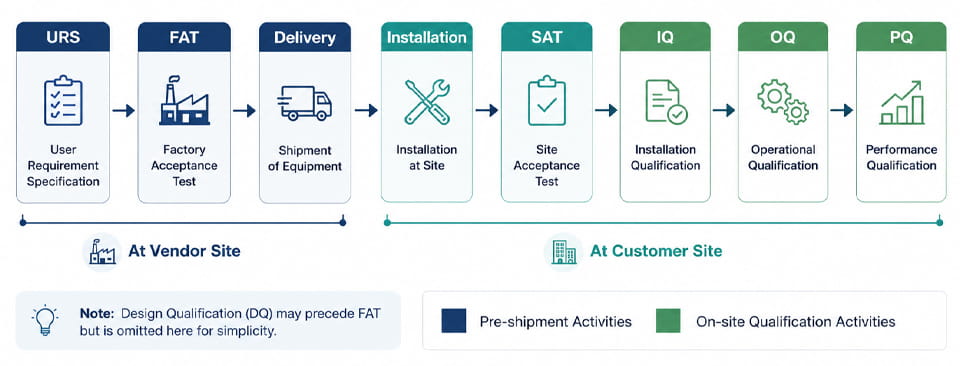
Postać: Przebieg cyklu życia kwalifikacji. Po zdefiniowaniu URS, fabryczny test odbiorczy (TŁUSZCZ) odbywa się w siedzibie dostawcy. Następnie sprzęt jest wysyłany i instalowany, po czym następuje test akceptacji witryny (SOBOTA). Wreszcie, Kwalifikacja instalacyjna (ILORAZ INTELIGENCJI), Kwalifikacja operacyjna (OK), i Kwalifikacja Wykonawcza (PQ) wykonywane są na miejscu (notatka: DQ może poprzedzać FAT, ale jest tutaj pomijany dla uproszczenia).
Przepływ ten jest wspierany przez wytyczne GMP. Na przykład, zgodnie z załącznikiem UE GMP 15 i ISPE C&Praktyki Q, udokumentowane wyniki FAT często można wykorzystać do obliczenia IQ/OQ, ograniczenie powielania. W rzeczywistości, Wytyczne ISO/ISPE stwierdzają, że „działania FAT przyczyniają się bezpośrednio do kwalifikacji projektu (DQ) i Kwalifikacja Instalacyjna (ILORAZ INTELIGENCJI) dowód,”pomagając skrócić ogólny czas kwalifikacji. W rzeczywistości, rygorystyczny FAT z odpowiednią dokumentacją oznacza, że Twój zespół IQ może ponownie wykorzystać te ustalenia (np. kontrole instalacji zostały już wykonane) zamiast ponownie testować te same punkty.
Lista kontrolna protokołu FAT (Opakowania farmaceutyczne)
Kompleksowy protokół FAT dla maszyn pakujących farmaceutyki zazwyczaj obejmuje następujące elementy:
- Wstępnie zatwierdzony protokół FAT: Dokument pisemny (w oparciu o URS) która zawiera listę każdego przypadku testowego, kryteria akceptacji, i odpowiedzialność. Jest to zatwierdzane zarówno przez kupującego, jak i sprzedającego przed testowaniem.
- Kontrola wizualna: Sprawdź, czy maszyna odpowiada ostatecznym zatwierdzonym rysunkom, bez brakujących części i uszkodzeń. Sprawdź numery seryjne i model komponentów.
- Mechaniczny & Inspekcja elektryczna: Potwierdź wszystkie elementy konstrukcyjne (ramki, gwardia, przenośniki) i elementy elektryczne (silniki, kable, panele) są prawidłowo zainstalowane i oznakowane.
- Testy alarmów i blokad: Wywołaj każdy stan alarmowy i sprawdź poprawność reakcji. Aktywuj każdą blokadę bezpieczeństwa (Nie dopuścić, strażnik drzwi, kurtyna świetlna) aby upewnić się, że maszyna zatrzyma się lub uruchomi alert zgodnie z przeznaczeniem.
- Kontrola kontroli/oprogramowania: Potwierdź ustawienia PLC/HMI, wersje oprogramowania, obsługa receptur, i poziomy dostępu użytkowników działają. Testuj interfejsy operatora i logikę sterowania pod kątem wymagań.
- Weryfikacja kalibracji przyrządu: Przed użyciem sprawdź, czy wszystkie czujniki i przyrządy mają ważne certyfikaty kalibracji i są zgodne ze specyfikacjami.
- Wydajność działa z produktem: Uruchom maszynę przy wszystkich określonych prędkościach roboczych, używając reprezentatywnego produktu lub materiałów najgorszych. Zmierz kluczowe wyniki (wypełnić ciężary, przepustowość, jakość uszczelnienia, dokładność liczenia, itp.) wbrew kryteriom akceptacji.
- Demonstracje zmiany: Jeśli wymaganych jest wiele formatów/jednostek SKU, wykazać zmiana procedury i harmonogram zgodnie z umową.
- Symulacja użyteczności: Symuluj warunki użyteczności obiektu (np. uruchamiać silniki przy niższym napięciu, zastosować niższe ciśnienie powietrza) aby upewnić się, że maszyna poradzi sobie z oczekiwanymi odchyleniami w zakresie użyteczności.
- Przegląd dokumentacji: Zapewnij wszystkie instrukcje, schematy, przewodniki konserwacji, i listy części zamiennych są kompletne i przekazane.
- Lista dziurkowania i podpisywanie: Dokumentuj wszelkie otwarte problemy na liście zadań. Po ponownym przetestowaniu poprawek, załączyć końcową stronę podpisu „Akceptacja FAT” w raporcie FAT.
Przestrzeganie tej listy kontrolnej pomaga wykryć odchylenia w fabryce. Na przykład, eksperci branżowi przestrzegają przed niejasnymi zapisami FAT – wyłącznie ilościowymi, należy zaakceptować dane testowe specyficzne dla sprzętu. Akceptowanie samych oświadczeń dostawców lub niekompletnych list kontrolnych może maskować problemy. Zawsze zapisuj zmierzone wartości i powiąż je z konkretnym numerem seryjnym maszyny.
Lista kontrolna protokołu SAT (Opakowania farmaceutyczne)
Zwykle obejmuje protokół SAT dla maszyn pakujących farmaceutyki:
- Kontrole przed instalacją: Sprawdź, czy witryna jest gotowa (pomieszczenie czyste, poziom fundamentów), media są na swoim miejscu (moc, sprężone powietrze, pusty, woda), i rysunki instalacyjne odpowiadają maszynie.
- Weryfikacja instalacji: Upewnij się, że wszystkie elementy mechaniczne zostały prawidłowo zmontowane na miejscu (brak uszkodzeń powstałych w transporcie). Sprawdź, czy media są prawidłowo podłączone (woltaż, ciśnienie, przepływ) oraz te warunki środowiskowe (temperatura, wilgotność, klasyfikacja) spełniać wymagania sprzętowe.
- Testy działania bez obciążenia: Uruchom kluczowe funkcje na pustym urządzeniu lub z imitacją produktu, aby mieć pewność, że okablowanie i silniki pozostaną nienaruszone po transporcie. Jeszcze raz sprawdź blokady bezpieczeństwa w warunkach panujących na miejscu (np. powietrze zakładowe, a nie fabryczne).
- Test podłączenia narzędzia: Zmierz rzeczywiste parametry użytkowe na maszynie (np. potwierdzić, że rzeczywiste ciśnienie powietrza i przepływ są zgodne ze specyfikacją).
- Testowanie integracyjne: Jeśli ma to zastosowanie, przetestuj komunikację pomiędzy tą maszyną a urządzeniami poprzedzającymi/występującymi (np. sprawdzić, czy maszyna licząca prawidłowo sygnalizuje kartoniarzowi konieczność indeksowania).
- Test wydajności produkcyjnej: Uruchom maszynę z prawdziwym produktem lub próbnym produktem (według URS-u). Na przykład, przepuścić przez linię faktyczne blistry lub kapsułki z tabletkami, aby potwierdzić, że wydajność i jakość są zgodne z wymaganiami. Zasadniczo jest to uruchomienie PQ witryny.
- Szkolenie operatora & Przekazanie: Upewnij się, że operatorzy mogą obsługiwać maszynę. Przejrzyj procedury operacyjne i poproś operatorów o wykonanie podstawowych zadań pod obserwacją.
- Rozwiązanie problemu: Zapisz wszelkie odchylenia lub ustalenia SAT w dzienniku i zweryfikuj działania naprawcze. Dopiero po zamknięciu wszystkich punktów krytycznych maszyna uzyskuje formalną akceptację.
- Ostateczne podpisanie: Wypełnij raport SAT lub certyfikat, podpisz to, i uwzględnij końcowe dane przebiegu. Staje się to dowodem zgodności.
Krótko mówiąc, protokół SAT ponownie potwierdza wszystkie krytyczne funkcjonalności w rzeczywistych warunkach. To ostatni punkt kontrolny przed uruchomieniem. Na przykład, Jinlupacking zauważa, że dokładny SAT często generuje dane bazowe, które można przejść bezpośrednio do protokołów IQ/OQ, unikanie ponownego testowania mediów i środowiska.
FAT i SAT dla farmaceutycznych maszyn pakujących
Linie pakujące dla branży farmaceutycznej (pęcherz, kapsułka, tabletka, maszyny kartonowe) mają swój własny nacisk na FAT/SAT. Oto kilka typowych punktów:
- Blister Packaging Maszyna: FAT powinien zweryfikować stanowiska formowania i zgrzewania. Na przykład, zmierzyć równomierność temperatury na płycie termoformującej (±2°C w poprzek formy) i matrycę uszczelniającą (±3°C) przy najgorszych prędkościach. Sprawdź integralność uszczelnienia (testy odrywania zgodnie z ASTM F88). Sprawdź dokładność podawania blistra, indeksowanie, dopasowanie folii, oraz że system odrzucania usuwa zniekształcone pęcherze. SOBOTA następnie powtórzy te testy z rzeczywistą folią blistrową i tabletkami na miejscu i potwierdzi, że maszyna nadal spełnia wymagania dotyczące wytrzymałości uszczelnienia i wydajności w warunkach lokalnej wilgotności/temperatury.
- Maszyna do napełniania kapsułek: Punkty kontrolne FAT obejmują orientację kapsułki i karmienie (sprawdź, czy zatyczki i korpusy są prawidłowo załadowane), dokładność napełniania proszkiem (zmierzyć wypełnienie obciążnikiem w niskim/wysokim zakresie), systemy detekcyjne (sprawdź ustawienie czujnika, czy jest pusty, podwójnie, lub zła orientacja), i blokowanie integralności (upewnić się, że kapsułki są szczelnie zamknięte). Sprawdź indeksowanie wieży i dokładność serwomechanizmu bez produktu. SOBOTA następnie przetestuje dokładność napełniania kapsułkami i mieszanką proszku klienta, i potwierdź, że mechanizm odrzucania na końcu linii działa w przypadku rzeczywistych odrzuceń.
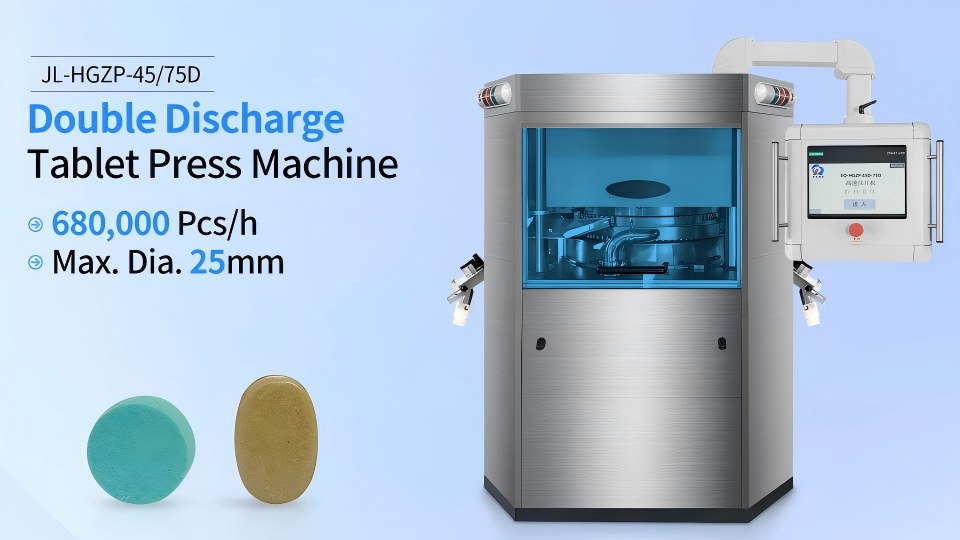
- Maszyna do tabletkowania: Podczas TŁUSZCZU, testy obejmują kalibrację oprzyrządowania (Waga tabletu, grubość, twardość w różnych pozycjach wieży), obsługa ramy podajnika i leja zasypowego, i spójność siły nacisku. Uruchom prasę pod obciążeniem przy najniższej i najwyższej sile ściskającej, aby sprawdzić prędkość tłoka. SOBOTA ponownie weryfikuje specyfikacje tabletek, korzystając z rzeczywistej granulacji przy żądanej wielkości partii, potwierdza, że poziom smarowania i hałasu są akceptowalne, oraz sprawdza na miejscu drzwi ochronne i przekaźniki przeciążeniowe.
- Maszyny liczące i kartonujące: Do maszyn liczących, FAT skupia się na dokładności i szybkości tworzenia próbnych produktów, weryfikacja czujników i zsypów odrzutowych. Dla kartoniarzy, FAT weryfikuje formowanie kartonu, czas podawania, prędkość wyjściowa, i jakość uszczelnienia. SOBOTA przetestuje ciągłą pracę: podawanie rzeczywistych blistrów lub butelek do kartoniarki i sprawdzanie, czy kartony wyjściowe są prawidłowe. Sprawdza także, czy maszyna licząca i kartoniarka prawidłowo się synchronizują (np. żadnych pominiętych butelek).
We wszystkich przypadkach, zarówno FAT, jak i SAT sprawdzają, czy maszyna pracuje z określoną prędkością i zapewnia odpowiednią liczbę/wagę/jakość z rzeczywistym produktem. Pomijanie testów (Na przykład, nie uruchamia prawdziwego produktu w systemie FAT) może prowadzić do niepowodzeń w SAT. Jak ostrzega jeden z ekspertów, „uruchamianie FAT z materiałami generycznymi producenta OEM to nie to samo, co uruchamianie go z twoimi” – jeśli nie testujesz prawdziwych materiałów w FAT, problemy z witryną często pojawiają się później.
Dlaczego maszyna może przejść FAT, ale nie przejść SAT?
Nawet jeśli maszyna przejdzie każdy element listy kontrolnej FAT, nadal może nie zaliczyć egzaminu SAT, jeśli warunki ulegną zmianie. Typowe powody obejmują:
- Różnice w użyteczności: Napięcie, ciśnienie powietrza, lub jakość dostaw w zakładzie może wykraczać poza zakres stosowany w FAT. Silnik przenośnika może wyłączyć się w trybie SAT, jeśli napięcie sieciowe jest nieco niskie, Na przykład.
- Zmiany środowiskowe: Różnice temperatury lub wilgotności mogą mieć wpływ na procesy. W jednym przypadku maszyna blistrowa przeszła proces FAT przy umiarkowanej wilgotności (45% PRAWA) ale nie spełniają one integralności uszczelnienia na miejscu pod adresem 80% PRAWA.
- Warianty produktu: Jeśli dostawca nie użył dokładnie tego samego produktu lub materiału opakowaniowego w serii FAT, maszyna może zachowywać się inaczej niż prawdziwy produkt. (Radzimy nakłonić producenta OEM do uruchomienia materiałów w formacie FAT.)
- Problemy z instalacją: Błędy w konfiguracji, wyrównanie, lub mocowanie podczas transportu może wprowadzić nowe usterki, które SAT musi wychwycić. Na przykład, luźny enkoder lub potrącona szyna prowadząca mogą zostać zauważone dopiero po przeprowadzeniu testów na miejscu.
- Problemy integracyjne: Maszyna może nie komunikować się prawidłowo z innymi urządzeniami liniowymi lub systemem sterowania zakładu, chyba że te interfejsy zostaną przetestowane w teście SAT.
- Niezamknięta lista dziurkaczy: Jeśli sprzedawca dokonał częściowego wydania (np. „naprawimy to po dostawie”), nierozwiązany problem z FAT może ujawnić się dopiero na SAT.
Krótko mówiąc, FAT testuje maszynę w izolacji; SAT sprawdza to w kontekście. Każda różnica w warunkach miejsca lub konfiguracji jest potencjalną przyczyną awarii. Dobrze przeprowadzony SAT, Jednakże, to ostateczna kontrola pozwalająca wykryć takie problemy przed pełną produkcją.
O co kupujący powinni pytać dostawcę o FAT i SAT??
Przy wyborze dostawcy maszyn, nabywcy branżowi często wykorzystują gotowość do obsługi systemu FAT/SAT jako kluczowy kwalifikator. Na przykład, Przewodnik audytu dostawców Jinlu zaleca zapytać:
- Dostępność dokumentu: „Czy możesz dostarczyć pełną dokumentację sprzętu, w tym podręczniki, rysunki, Raporty FAT/SAT, i szablony IQ/OQ?”. (Zgodny dostawca zapewnia je proaktywnie.)
- Wsparcie walidacyjne: „Czy pomożesz montaż i kwalifikacja? Czy zapewniasz wsparcie na miejscu lub szkolenia podczas FAT/SAT??”. (Upewnij się, że wysyłają inżynierów do FAT i SAT.)
- Udział w procesie: „Kto poprowadzi FAT i SAT? Czy mój zespół ds. kontroli jakości/walidacji może uczestniczyć w testach lub być ich świadkiem??”
- Wykorzystanie próbek: „Czy mój produkt i materiały opakowaniowe będą testowane w FAT??” (Jak zauważono, użycie prawdziwych materiałów ma kluczowe znaczenie.)
- Obsługa odchyleń: „Jeśli coś zawiedzie w FAT, jak to zostanie naprawione? Czy przed wysyłką przetestujesz ponownie na miejscu??”
- Zmień kontrolę: „Jak zarządzać zmianami po zamówieniu? Czy w protokołach można uwzględnić drobne aktualizacje URS??”.
- Doświadczenie & Referencje: „Czy dostarczyliście ten model innym klientom z branży farmaceutycznej?? Czy możemy zobaczyć? studia przypadków lub referencje kontaktowe?”.
- Części zamienne i serwis: „Jaka jest Twoja polityka wsparcia w zakresie części zamiennych?? Czy oferujecie przedłużone gwarancje czy serwis lokalny??”.
Pytania te pomagają ocenić dojrzałość walidacyjną dostawcy. Doświadczony sprzedawca powinien od razu odpowiedzieć, że dostarcza maszyny „gotowe do audytu” z kompletnymi pakietami FAT/SAT/IQ/OQ.
Lista kontrolna akceptacji FAT/SAT
Aby zapewnić płynny proces akceptacji, kupujący mogą skorzystać z tej krótkiej listy kontrolnej FAT/SAT:
- Z góry uzgodnij zakres: Uwzględnij plany FAT i SAT w zamówieniu lub URS, dokładne określenie, jakie badania zostaną wykonane i jakie kryteria muszą zostać spełnione.
- Testy świadków: Weź udział w FAT-ie (najlepiej osobiście) w celu sprawdzenia, czy każdy test został wykonany. W przypadku świadczenia na odległość, zapewnić transmisję wideo na żywo z odczytów.
- Użyj końcowych rysunków/specyfikacji: Potwierdź, że maszyna została przetestowana pod kątem najnowszych URS i rysunków (nie starsze wersje).
- Zabierz ze sobą dowód kalibracji: Upewnij się, że przyrządy używane w FAT/SAT są skalibrowane, a ich certyfikaty znajdują się w pakiecie dokumentacji.
- Zbieraj surowe dane: Wymagaj wszystkich zmierzonych wartości (ciężary, wojska, napięcia, itp.) są rejestrowane, nie tylko znaki „zaliczony/niezaliczony”..
- Natychmiast zamykaj odchylenia: Każda znaleziona rozbieżność powinna zostać naprawiona i ponownie przetestowana przed akceptacją. Nie akceptuj stwierdzenia „naprawimy to później” bez dowodów.
- Identyfikowalność: Utrzymuj macierz identyfikowalności łączącą każdy punkt URS z przypadkami i wynikami testów FAT/SAT.
- Ostateczne podpisanie: Nie zwalniaj maszyny, dopóki nie zostaną rozwiązane wszystkie pozycje listy dziurkowanej FAT i podpisany raport FAT. Powtórz dla SAT.
- Kontrola przed wysyłką po FAT: Fakultatywnie, przeprowadzić kontrolę przed wysyłką, aby potwierdzić, że po FAT nic się nie zmieniło (Sugerujemy tę końcową kontrolę po zapakowaniu maszyny).
- Archiwum dokumentacji: Przechowuj kopie wszystkich protokołów i raportów FAT i SAT w swoich plikach walidacyjnych. Stają się one częścią zapisów kwalifikacji sprzętu.
Przestrzeganie takiej listy kontrolnej pozwala uniknąć niespodzianek. Na przykład, Oglądanie zdjęć opakowań dostawcy lub ogólnych notatek dotyczących kontroli jakości po fakcie nie dowód zgodności. Najsilniejszym dowodem jest kompletny zestaw rekordów FAT/SAT powiązanych z konkretną maszyną.
Wniosek
FAT i SAT są niezbędnymi kontrolami zapewniającymi niezawodne działanie maszyn pakujących farmaceutyki i zgodność z GMP. Poprzez dokładne testowanie sprzętu w siedzibie dostawcy (TŁUSZCZ) i jeszcze raz po instalacji (SOBOTA), minimalizujesz kosztowne niespodzianki i potwierdzasz, że wszystkie punkty URS zostały zdobyte.
Gotowy do usprawnienia testów akceptacyjnych? Jinlu Packing dostarcza sprzęt klasy farmaceutycznej (pakowarki blistrowe, Wypełniacze kapsułki, tabletkarki, linie liczące i kartonujące, itp.) z pełną obsługą FAT/SAT. Każda maszyna jest dostarczana z pełnym protokołem FAT/SAT i zestawem IQ/OQ/PQ, aby Twoja kwalifikacja była szybsza i płynniejsza. Skontaktuj się z Jinlu już dziś, aby omówić swój URS i skonfigurować plany FAT/SAT dla nowego sprzętu, lub odwiedź nasze strony produktów Maszyny do napełniania kapsułek, Maszyny pakujące w blistry, Prasy do tabletek, Maszyny liczące, Maszyny kartonowe i więcej. Nasz zespół pomoże Ci zaplanować etapy FAT/SAT i dostarczy dokumentację walidacyjną pod klucz, dzięki czemu Twój projekt będzie realizowany terminowo i zgodnie z przepisami.
Skontaktuj się z ekspertami Jinlu w celu uzyskania wytycznych FAT/SAT i upewnij się, że Twoja nowa linia pakująca jest gotowa do walidacji od pierwszego dnia.
Często zadawane pytania dotyczące FAT vs SAT w branży farmaceutycznej
Jaka jest różnica między FAT i SAT?
TŁUSZCZ (Fabryczny test akceptacyjny) przeprowadza się w zakładzie producenta sprzętu przed wysyłką, aby sprawdzić, czy maszyna spełnia uzgodnione specyfikacje i wymagania funkcjonalne. SOBOTA (Test akceptacji witryny) przeprowadza się w siedzibie klienta po instalacji, aby potwierdzić, że sprzęt działa prawidłowo z rzeczywistymi mediami obiektu, środowisko, i połączone systemy.
Dlaczego FAT jest ważny przed wysyłką sprzętu farmaceutycznego??
FAT umożliwia kupującemu i dostawcy identyfikację projektu, produkcja, kontrola, lub problemy z wydajnością, zanim maszyna opuści zakład producenta. Problemy wykryte na tym etapie są zazwyczaj łatwiejsze do zbadania i skorygowania, ponieważ sprzęt jest odpowiedni, zespół inżynierski, narzędzia, i środowisko testowe są łatwo dostępne. Dobrze zaplanowany FAT może zatem zmniejszyć opóźnienia w uruchomieniu i uniknąć niepotrzebnych przeróbek u klienta.
Czy przed SAT wymagany jest FAT??
FAT jest powszechnie wykonywany przed SAT, ale to, czy jest to obowiązkowe, zależy od projektu, umowa, sprzęt, i wymagania jakościowe. FAT weryfikuje sprzęt przed wysyłką, natomiast SAT weryfikuje sprzęt po instalacji u klienta. Do maszyn farmaceutycznych, te dwa testy mogą się uzupełniać, a nie zastępować.
Czy sprzęt może przejść FAT, ale nie przejść SAT?
Tak. Przejście testu FAT nie gwarantuje, że sprzęt przejdzie test SAT. FAT jest zwykle wykonywany w kontrolowanych warunkach fabrycznych, podczas gdy SAT ocenia maszynę po transporcie, instalacja, podłączenie do rzeczywistych mediów, oraz integrację z innym sprzętem. Różnice w zasilaniu, sprężone powietrze, warunki środowiskowe, karmienie produktem, lub integracja linii może powodować problemy, które nie były widoczne w systemie FAT.
Co powinna zawierać lista kontrolna FAT?
Lista kontrolna FAT sprzętu farmaceutycznego powinna opierać się na uzgodnionych specyfikacjach i może obejmować identyfikację sprzętu, kontrola mechaniczna, systemy elektryczne, Funkcje PLC/HMI, alarmy, blokady bezpieczeństwa, działanie maszyny, testowanie wydajności, dokumentacja, i uzgodnione kryteria akceptacji. Do maszyn pakujących, lista kontrolna może również obejmować prędkość produkcji, dokładność podawania, opieczętowanie, kodowanie, odrzucenie, i inne funkcje specyficzne dla maszyny.
Co powinna zawierać lista kontrolna SAT?
Lista kontrolna SAT powinna koncentrować się na sprzęcie po instalacji w siedzibie klienta. W zależności od maszyny, może obejmować stan instalacji, połączenia elektryczne, sprężone powietrze i inne media, działanie maszyny, urządzenia zabezpieczające, alarmy, komunikację z urządzeniami znajdującymi się powyżej i poniżej, wydajność produkcji, i funkcje operatorskie. SAT powinien stosować kryteria akceptacji uzgodnione przed testowaniem, a nie polegać wyłącznie na nieformalnej demonstracji maszyny.
Kto powinien uczęszczać na FAT i SAT?
W FAT zazwyczaj biorą udział inżynierowie dostawcy i przedstawiciele kupującego (Kontrola jakości/walidacja, inżynieria, operacje). SAT powinien obejmować dostawcę instalacji lub zespół serwisowy, Kontrola jakości/walidacja, oraz personel operacyjny klienta. Czasami włączani są konsultanci lub inspektorzy zewnętrzni.
Jaka dokumentacja jest wymagana dla FAT i SAT?
Każdy wymaga wstępnie zatwierdzonego protokołu, który opisuje wszystkie testy, kryteria akceptacji, i obowiązki. Podczas testowania, uzupełnij protokół danymi i obserwacjami w czasie rzeczywistym. Do zakresu dostawy należy sporządzony protokół, listę ewentualnych odchyleń, oraz podpisany raport końcowy lub certyfikat. Dla SAT, przygotuj także matrycę identyfikowalności łączącą testy z wymaganiami URS.
Jaka jest różnica między FATem, SOBOTA, ILORAZ INTELIGENCJI, i OQ?
FAT i SAT to testy akceptacyjne, podczas gdy IQ i OQ są zazwyczaj częścią strategii kwalifikacji sprzętu. FAT sprawdza sprzęt w zakładzie producenta przed wysyłką; SAT sprawdza to po instalacji u klienta. ILORAZ INTELIGENCJI (Kwalifikacja instalacyjna) koncentruje się na tym, czy sprzęt został zainstalowany zgodnie z zatwierdzonymi wymaganiami, podczas OQ (Kwalifikacja operacyjna) sprawdza, czy działa zgodnie z przeznaczeniem w określonych zakresach roboczych. Dokładna kolejność i dokumentacja zależą od strategii walidacji firmy i wymagań projektu.
Czy FAT jest częścią walidacji GMP??
FAT może wspierać strategię kwalifikacji i walidacji sprzętu farmaceutycznego, jednakże sam FAT nie powinien być automatycznie traktowany jako równoważny kwalifikacji GMP. Jego rola zależy od wyposażenia, wymagania projektu, ocena ryzyka, i obowiązujący system jakości. W niektórych projektach, odpowiednie testy FAT mogą dostarczyć udokumentowanych dowodów, które można wykorzystać podczas późniejszych działań kwalifikacyjnych, potencjalnie ograniczając niepotrzebne powielanie działań, jeśli jest to uzasadnione.
Referencje:
1.Systemy automatyki w przemyśle procesowym – Fabryczny test odbiorczy (TŁUSZCZ), test akceptacji witryny (SOBOTA), i test integracji witryny (SIEDZIEĆ) —— ANSI/ISA-62381-2026 / IEC 62381:2024
2.Inżynieria SOP -FAT : Fabryczny test akceptacyjny & SOBOTA : Test akceptacji witryny —— Akademia Farmaceutyczna
3.Testy FAT i SAT w sprzęcie farmaceutycznym —— Skryb
4.Studia kwalifikacyjne na etapie odbioru SAT myjki pojemników farmaceutycznych —— Brama Badawcza
5.Lista kontrolna testów odbiorowych w fabryce i na miejscu —— Skryb



Jedna odpowiedź
To ciekawe, jak rozróżnienie między FAT i SAT może wpłynąć na działalność farmaceutyczną. Podczas inspekcji u naszych klientów, często odkrywamy problemy z wilgocią, które mogą negatywnie wpłynąć na wydajność sprzętu. Kiedy używamy obrazowania termowizyjnego, znajdujemy ukryte wycieki, które mogą prowadzić do kosztownych przestojów. Zawsze doradzamy właścicielom nieruchomości, aby przed ostatecznym odbiorem sprzętu rozważyli dokładne oceny. Czy zauważyłeś jakieś trendy w sposobie, w jaki firmy radzą sobie z tymi wyzwaniami na etapie testów akceptacyjnych??