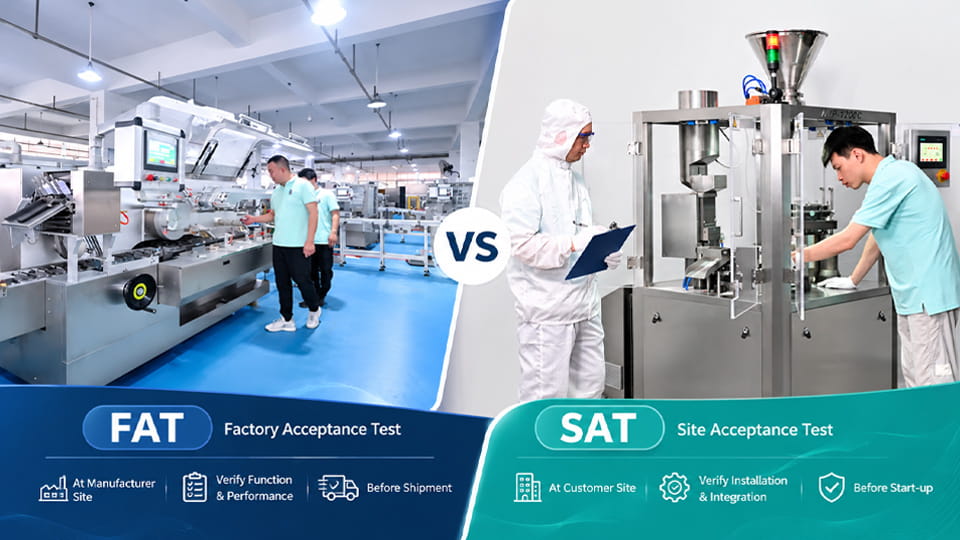
工場での受け入れテスト (脂肪) およびサイト受け入れテスト (土) 製薬機器の 2 つの補完的な検証段階です. FAT は機器メーカーの施設で行われます (出荷前に) すべての仕様と機能が顧客の要件を満たしていることを確認する. SATは、顧客サイトでの設置後に実行され、実際の生産環境でマシンが正しく動作することを確認します。. 一緒に, FAT と SAT は問題を早期に発見するのに役立ちます (時間とコストを節約する) そして確実に GMP準拠. この記事では、FAT と SAT について詳しく説明し、各テストで何を検証するかを取り上げます, 主な違い, IQ/OQ/PQ ライフサイクルにどのように適合するか, サンプルチェックリスト 梱包ライン (水膨れ, カプセル, 錠剤, 箱詰め), 購入者のベストプラクティスに関する質問.
工場受け入れテストとは何ですか (脂肪)?
a 工場受け入れテスト (脂肪) 正式なものです, メーカーサイトでの機器の評価を文書化, ユニットが顧客に出荷される前に実施される. マシンが合意されたとおりに構築されていることを検証します ユーザー要件仕様 (URS) そして正しく機能しています. FAT中, ベンダーと顧客 (またはその代理人) テストケースとチェックリストの承認されたFATプロトコルを実行する. 一般的な目的には、仕様への準拠を実証することが含まれます。, 欠陥を早期に発見する, 購入者に「機器は出荷する準備ができている」という確信を与えます。.
FAT は何を検証しますか?
脂肪中, スタンドアロンのパフォーマンスとデザインの遵守に重点を置いています. 一般的には以下が含まれます:
- 目視および構造のチェック: 機械アセンブリを検査する, フレームの位置合わせ, 配線, 図面に基づいて品質を構築します. シリアル番号とモデルIDを確認する.
- 電気および制御のテスト: 電源接続を確認する, PLC/HMI ソフトウェアのバージョン, センサーとアクチュエーター. コントロール画面を確認してください, レシピ, アラームも正しく反応します.
- 機能テスト (無負荷またはドライラン): 各主要なマシン機能を実行する (モーター, ドライブ, フィーダー, ヒーター) 全範囲にわたって. 例えば, 最小および最大のサイクル速度, テストヒーター/圧力ランプ, 意図的にインターロックを作動させる.
- パフォーマンスチェック: 可能であれば代表的な生産材料を使用する. 詰め物用や、 包装機, 製品サンプルを実行してスループットを検証する, 正確さ, 切り替え, およびその他のパフォーマンス目標. (材料固有の問題を明らかにするために、FAT 中にお客様の実際の製品を使用することを強くお勧めします。)
- 安全性とインターロック: 非常停止をテストする, ライトカーテン, 警備員, 圧力リリーフバルブ, 等, すべての安全システムが障害状況下で意図したとおりに反応することを確認する.
- ドキュメントのレビュー: 必要な書類がすべて揃っていることを確認する: 取扱説明書, 電気および空気圧図, メンテナンスガイド, スペアパーツリスト, 校正証明書, 等.
- 合格基準: すべてのテストは、事前に合意された合格基準に照らして評価されます (多くの場合、URS から抽出されます). 逸脱やオープンポイントは解決のためにパンチリストに記録されます。.
成功した FAT は署名された FAT レポートで終了します。, 合格したテストを項目化し、出荷前に修正すべき問題をリスト化する. 本質的には, FAT は、制御された工場条件下でコア機能を検証することにより、「システムが出荷できる状態にある」ことを保証します.
脂肪はいつ、誰に発生するのか?
FAT は通常、機械が完全に組み立てられた後、製造現場から出荷される前に行われます。. 設計資格に準じます (もしあれば) そして配達前に. 主要な参加者には通常、ベンダーのエンジニアや技術者が含まれます, および購入会社の代表者 (QA/検証エンジニア, 制作スタッフ). バイヤーチームは準備を整えて到着する必要があります, URSを持ってくることが多い, テストプロトコル, および実行するための特殊なマテリアル. FAT は、サプライヤーの管理下でバイヤーが重大な矛盾を発見する最後のチャンスです。.
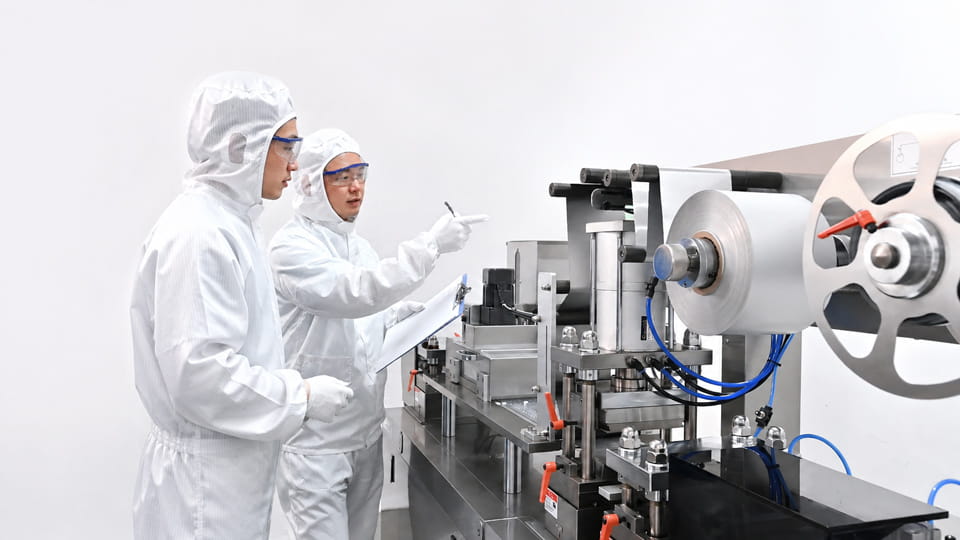
形: 医薬品 ブリスター包装機 受け入れテスト中. 厳しいFATでは, すべてのサブシステム (形にする, 封印, 餌やり, コントロール) URS と照合されます. 後続の SAT は、最終使用環境への設置後に重要な機能テストを繰り返します。.
サイト受け入れテストとは (土)?
a サイト受け入れテスト (土) 機器が納品および設置された後、本番環境にリリースされる前に、顧客の施設で実行される文書化されたテストです。. SAT は、マシンが実際の動作状況で要件を満たしていることを再検証します。. SATで, 機器が適切に設置されているかどうかがチェックされている, 公共事業の接続, システム統合, そして最終パフォーマンス.
SAT は何を検証しますか?
SAT には通常、次のものが含まれます。:
- 設置資格 (IQ) 小切手: 機器が承認された計画に従って設置されていることを確認する. これには、正しい場所の確認も含まれます, レベリング, 公共事業 (電源電圧, 空気圧, 水, 等), 接地, および周囲条件. すべてのマシンコンポーネントとマニュアルが存在し、正しくインストールされている必要があります.
- ユーティリティの検証: サイトのユーティリティがマシンの要件を満たしていることを確認する. 例えば, 実際の電圧を測定する, 空気圧/流量, 冷水温度, または施設供給からの蒸気圧力. 機械が指定する許容範囲内にあることを確認します.
- 統合テスト: 上流・下流の機器やビルシステムとのインターフェースを確認. 通信リンクを検証する (例えば. リムズへ, MES, スカダ) 該当する場合. コンベアが揃っていることを確認する, マシン間のハンドオフがスムーズ, ネットワークに接続されたアラームやデータ収集はサイトの条件下で機能します。.
- 実際の条件下で機能テストを繰り返す: コア機能を再度実行する, 現在、マシンはユーティリティに接続されており、可能であれば実際の生産材料を使用しています. 例えば, 実際のバッチを実行する 錠剤またはカプセル 機械を通して、速度と品質の基準を満たしていることを確認します. 現場の状況に応じて行われた調整が効果的であることを確認する.
- 安全性と環境のチェック: 実際の設置設定で安全インターロックと保護装置を再テストします。. 環境要件を確認してください (クリーンルームクラス, 温度, 湿度) を満たしており、機械の動作に悪影響を及ぼさない.
- 最終的な合格基準: すべての SAT 受け入れ基準を満たしていることを確認する (多くの場合、URS およびサイト プロトコルから抽出されます) 満足しています. パンチリストに残っている逸脱を文書化する. オペレーターの承認と正式な受け入れ文書を収集する.
SAT が成功すると、ベンダーと顧客の両方が署名した SAT レポートまたは証明書が発行されます。. 「機器/システムが良好な状態で納品され、輸送による影響を受けていない」こと、および現在現場で正しく動作していることを文書化した証拠として提供します。. 実際に, 徹底的な SAT により、マシンが検証の次の段階に進む準備ができているという確信が得られます。 (IR/WH/PQ) または日常的な生産.
FAT vs SAT: 10 重要な違い
- 位置: FAT はメーカーのサイトで行われます; オーナー宅のSAT (クライアントの) サイト.
- タイミング: 脂肪が発生する 出荷前に (組み立て後), 一方、SATは インストール後 (試運転前).
- 環境: FAT は制御された工場出荷時の設定にあります (クリーンルーム条件下ではない場合もあります); SAT は、実際の周囲条件を備えた実際の運用環境にあります.
- 公共事業: 脂肪中, 公共事業 (空気, 水, 力) ベンダーによって公称値でシミュレートされる場合があります; SATで, マシンはライブサイトユーティリティを使用します (実際の空気, 水, 電源).
- 統合: FAT はマシンを単独でテストします (時々ダミーロードを使用する). SAT テストには周囲の機器との統合が含まれます (例えば. 上流ローダー, 下流のパッカー, データシステム).
- テスト範囲: FAT スクリプトはより包括的なものになる傾向があります (完全な機能チェック, 最高速度) ベンダーフロアの問題を「解決」する. SAT スクリプトは、サイト条件下でのコア パフォーマンスの確認と FAT からの修正のチェックに重点を置いています。.
- ドキュメントの詳細: FAT プロトコルは通常、ラインアイテムのテストが非常に詳細に行われます。 (UW によく書かれています). SAT プロトコルは URS および FAT の結果を参照する場合があります, より合理化できるように.
- 合格基準: FAT の受け入れは、事前に合意された工場テスト基準に厳密に基づいています. SAT の受け入れには追加のサイト基準が含まれます (例えば. フルライン統合, 環境要因).
- 客観的: FAT の目的は、マシンが正しく構築されたことを「証明する」ことです。. SAT の目的は、輸送および設置後も動作することを「確認」することです。.
- インパクト: FAT で見つかった問題はベンダーで対処可能 (低コスト). SAT で見つかった問題は多くの場合ダウンタイムを必要とし、生産が遅れる可能性があります. 徹底した FAT により、コストのかかる SAT の予期せぬ事態を最小限に抑えます.
要するに, FAT と SAT は順次チェックポイントです: FAT は工場の初期段階で欠陥を発見します; マシンがオンサイトに到着すると、SAT が残りの問題を検出します。. どちらも GMP コンプライアンスとリスク管理にとって重要です.
FAT と SAT の概要
| 特徴 |
脂肪 (工場受け入れテスト) |
土 (サイト受け入れテスト) |
| どこ & いつ |
ベンダーの施設で, 出荷前に. |
お客様の現場で, インストール後. |
| 目的 |
マシンが設計/URS 仕様を満たしており、スタンドアロンで動作することを確認します。. |
実際の生産ラインで機械が正しく機能することを確認します (公共事業, 環境, 統合). |
| 環境 |
管理された工場条件 (ベンダーユーティリティ). |
実際のプラントの状態 (実際の空気, 力, 温度). |
| テスト範囲 |
契約仕様に対する詳細な機能テスト; 可能であれば代表的な材料を使用してプロセスをシミュレーションする. |
インストールの確認 (IQ), その後、最終製品/セットアップでコア機能とパフォーマンスを繰り返します。; 上流/下流の機器とのテスト統合. |
| 合格基準 |
ユーザーの要件と合意されたテスト計画に基づく (例えば. スピード, 正確さ). |
現場で調整されたパフォーマンスを確認 (例えば. 一貫した生産品質, ユーティリティパラメータ) 基準を満たす. |
| ドキュメント |
正式なFATプロトコル, テスト記録, パンチリスト, 最終FATレポート. |
正式な SAT プロトコル (多くの場合、より単純な), 逸脱ログ/パンチリスト, サインオフ, URS へのトレーサビリティ. |
| 結果 |
「出荷が承認された機器」 (または修正のリスト). |
“現場で機械を受け入れます” (または修正すべき残りの問題のリスト). |
この表は主な違いを示しています: FAT の目的は、マシンが仕様どおりに構築されていることを証明することです 前に それは工場から出ます, SAT は依然として要件を満たしていることを証明しています 後 作業環境への設置. 通常、GMP/Annex では両方が必要です 15 ガイダンス.
FAT vs SAT vs IQ vs OQ vs PQ
FAT と SAT は、GMP 機器のより大きな認定ライフサイクルの一部です. 一般的なプロジェクトの流れでは, ユーザー要件仕様から始めます (URS) および設計適格性 (DQ), 次にFATに進みます, 配達, インストール, 土, そして最後に現場でのIQ/OQ/PQ. 以下の人魚図はこのシーケンスを示しています:
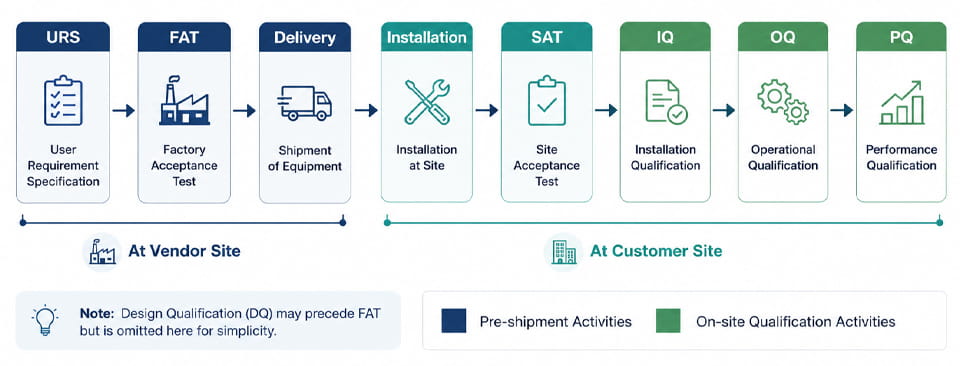
形: 資格ライフサイクルの流れ. 定義後 URS, 工場受け入れテスト (脂肪) ベンダーサイトで実行されます. その後、機器が出荷され、設置されます, 続いてサイト受け入れテスト (土). ついに, 設置資格 (IQ), 運用資格 (OQ), およびパフォーマンス資格 (PQ) 現場で執行される (注記: DQ は FAT の前にある場合がありますが、ここでは簡単にするために省略しています。).
このフローはGMPガイダンスによってサポートされています. 例えば, EU GMP 付属書に基づく 15 およびISPE C&Qの実践, 文書化された FAT 結果は、多くの場合、IQ/OQ に活用できます。, 重複を減らす. 実際には, ISO/ISPE ガイドラインでは、FAT 活動が設計適格性評価に直接貢献すると述べています。 (DQ) および設置資格 (IQ) 証拠,」全体の認定時間の短縮に貢献. 実際に, 適切な文書を備えた厳密な FAT は、IQ チームがそれらの結果を再利用できることを意味します。 (例えば. インストールチェックはすでに完了しています) 同じポイントを再テストするのではなく.
FAT プロトコルのチェックリスト (医薬品包装)
医薬品包装機械用の包括的な FAT プロトコルには通常、次の要素が含まれます。:
- 事前承認されたFATプロトコル: 書面による文書 (URSに基づいて) 各テストケースをリストしたもの, 合格基準, そして責任. これはテスト前に買い手と売り手の両方によって承認されています.
- 目視検査: 機械が承認された最終図面と一致していることを確認する, 欠品や損傷がないこと. コンポーネントのシリアル番号とモデルを確認する.
- 機械式 & 電気検査: すべての構造コンポーネントを確認する (フレーム, 警備員, コンベア) および電気部品 (モーター, ケーブル, パネル) 正しく取り付けられ、ラベルが貼られていること.
- 警報およびインターロックのテスト: 各アラーム条件をトリガーし、適切な応答を確認する. 各安全インターロックを作動させる (非常停止, ドアガード, ライトカーテン) 機械が設計どおりに停止または警告を発することを確認するため.
- 制御/ソフトウェアのチェック: PLC/HMIの設定を確認する, ソフトウェアのバージョン, レシピの取り扱い, ユーザーアクセスレベルが機能する. オペレータインターフェイスと制御ロジックを要件に照らしてテストする.
- 機器の校正検証: 使用前に、すべてのセンサーと機器に有効な校正証明書があり、仕様の範囲内であることを確認してください。.
- 製品とともに実行されるパフォーマンス: 代表的な製品または最悪の材料を使用して、指定されたすべての動作速度で機械を稼働させます。. 主要な出力を測定する (充填ウェイト, スループット, シール品質, カウント精度, 等) 合格基準に反する.
- 切り替えデモンストレーション: 複数のフォーマット/SKU が必要な場合, 実演する 切り替え 契約に基づく手続きとタイミング.
- ユーティリティシミュレーション: サイトのユーティリティ条件をシミュレートする (例えば. モーターをより低い電圧で動作させる, 空気圧を下げてください) マシンが予想されるユーティリティの差異に対処できることを確認するため.
- ドキュメントのレビュー: すべてのマニュアルを確認する, 回路図, メンテナンスガイド, スペアパーツリストが完成し、引き渡されます.
- パンチリストと承認: 未解決の問題をパンチリストに文書化する. 修正を再テストした後, FAT レポートに最後の「FAT Acceptance」署名ページを含める.
このチェックリストに従うと、工場内での逸脱を発見するのに役立ちます. 例えば, 業界専門家は曖昧な FAT 記録に対して警告 – 定量的のみ, 機器固有のテストデータを受け入れる必要があります. 単なるサプライヤーの「合格」声明や不完全なチェックリストを受け入れると、問題が隠れてしまう可能性があります. 測定値を常に記録し、特定のマシンのシリアル番号まで追跡します。.
SAT プロトコルのチェックリスト (医薬品包装)
医薬品包装機の SAT プロトコルには、通常、次の内容が含まれます。:
- インストール前のチェック: サイトの準備ができていることを確認する (クリーンルーム, 基礎レベル), ユーティリティが整備されている (力, 圧縮空気, 空の, 水), 設置図と機械が一致していること.
- インストールの検証: すべての機械コンポーネントが現場で適切に組み立てられていることを確認します (配送によるダメージはありません). ユーティリティが正しく接続されていることを確認してください (電圧, プレッシャー, 流れ) そしてその環境条件 (温度, 湿度, 分類) 機器要件を満たす.
- 無負荷機能テスト: キー機能を空にするか、ダミー製品を使用して実行し、輸送後に配線とモーターが無傷であることを確認します. 現場の状況で安全インターロックをもう一度確認します (例えば. 工場空気ではなく工場空気).
- ユーティリティ接続テスト: 機械で実際のユーティリティパラメータを測定 (例えば. 実際の空気圧と流量が仕様を満たしていることを確認してください).
- 統合テスト: 該当する場合, 本機と上流・下流機器間の通信テスト (例えば. 計数機が箱詰め業者にインデックスを付けるよう正しく信号を送っているかどうかを確認します。).
- 生産性能試験: 実際の製品または模擬製品でマシンを実行します (URSによると). 例えば, 実際の錠剤ブリスターまたはカプセルをラインに供給して、収量と品質が要求どおりであることを確認します. これは基本的にサイト PQ の実行です.
- オペレータートレーニング & 引き渡す: オペレーターが機械を実行できることを確認する. 操作手順を確認し、オペレーターに監視下で基本的な作業を実行してもらいます.
- 問題の解決: SAT の逸脱または検出結果をログに記録し、修正措置を検証します。. すべての重要なポイントが閉じられて初めて、マシンは正式に承認されます。.
- 最終承認: SAT レポートまたは証明書を完成させる, 署名してください, 最終的な実行データが含まれます. これはコンプライアンスの証拠になります.
要するに, SAT プロトコルは、実際の条件下ですべての重要な機能を再確認します。. 試運転前の最後のチェックポイントです. 例えば, Jinlupacking 氏は、徹底的な SAT によって、IQ/OQ プロトコルにそのまま使用できるベースライン データが生成されることが多いと指摘しています。, ユーティリティと環境の再テストを回避する.
医薬品包装機用の FAT および SAT
医薬品包装ライン (水膨れ, カプセル, 錠剤, 箱詰め機) 独自の FAT/SAT 強調点がある. 代表的なポイントをいくつか挙げておきます:
- ブリスターパッケージングマシン: FATは成形ステーションとシーリングステーションを検証する必要があります. 例えば, 熱成形プラテン上の温度均一性を測定する (金型全体で±2°C) そして封止金型 (±3℃) 最悪の速度下で. シールの完全性をテストする (ASTM F88に準拠した剥離試験). ブリスターの供給精度を確認する, インデックス作成, フィルムアライメント, リジェクトシステムが不正なブリスターを除去すること. 土 次に、現場で実際のブリスターフォイルと錠剤を使用してこれらのテストを繰り返し、機械が現地の湿度/温度下でシール強度とスループット仕様を満たしていることを確認します。.
- カプセル充填機: FAT チェックポイントには、カプセルの向きと摂食が含まれます (キャップとボディが正しくロードされていることを確認します), 粉末充填精度 (低域/高域での重量充填を測定する), 検出システム (センサーの位置が空であることを確認してください, ダブル, または間違った方向), およびロックの整合性 (カプセルがしっかりと閉まっていることを確認してください). 製品なしでタレットのインデックスとサーボの精度を検証する. 土 その後、お客様のカプセルと粉末ブレンドの充填精度をテストします, 実際の拒否が発生したときに行末拒否メカニズムが機能することを確認します.
- タブレットプレス機: FAT中, テストには工具の校正が含まれます (タブレットの重量, 厚さ, タレット位置全体の硬度), フィードフレームとホッパーの動作, プレス力の一貫性. 最低および最高の圧縮力で負荷をかけた状態でプレスを運転し、ラム速度を確認します。. 土 希望のバッチサイズで実際の造粒を使用して錠剤の仕様を再検証します。, 潤滑と騒音レベルが許容範囲内であることを確認します, 現場で安全ゲートと過負荷リレーをチェックします.
- 計数および箱詰め機: 計数機用, FAT はモック製品の精度と速度に重点を置いています, センサーとリジェクトシュートの検証. カートナー向け, FAT によるカートン成形の検証, インフィードのタイミング, 出力速度, とシール品質. 土 連続動作をテストします: 実際のブリスターパックまたはボトルをカートナーに供給し、出力されたカートンが正しいことを確認します. また、計数機と箱詰め機が適切に同期しているかどうかもチェックします。 (例えば. ボトルを逃すことはありません).
すべての場合において, FAT と SAT は両方とも、マシンが指定された速度で動作し、正しいカウント/重量/品質が得られることをチェックします。 実際の商品と一緒に. テストをスキップする (例えば, 実際の製品を FAT で実行していない) SAT での失敗につながる可能性があります. ある専門家が警告するように, 「OEM の汎用マテリアルで FAT を実行することは、自社のマテリアルで実行することと同じではありません。」 – FAT で実際のマテリアルをテストしない場合, サイトの問題は後になって判明することが多い.
マシンが FAT に合格しても SAT に失敗するのはなぜですか?
たとえマシンが FAT チェックリストのすべての項目に合格したとしても, 条件が変化すると SAT に失敗する可能性があります. 一般的な理由としては次のようなものがあります。:
- ユーティリティの違い: 電圧, 空気圧, または工場での供給品質が FAT で使用される範囲外である可能性があります. ライン電圧がわずかに低い場合、コンベアモーターが SAT でトリップする可能性があります, 例えば.
- 環境の変化: 温度や湿度の違いがプロセスに影響を与える可能性がある. 1 件のケースでは、適度な湿度でブリスター マシンが FAT を通過しました。 (45% RH) しかし、現場でシールの完全性が損なわれる 80% RH.
- 製品バリエーション: サプライヤーが FAT 実行で正確な製品または梱包材を使用しなかった場合, 機械は実際の製品とは異なる動作をする可能性があります. (OEM に対して、マテリアルを FAT で実行するよう促すことをお勧めします。)
- インストールの問題: セットアップのエラー, アライメント, または、輸送中の締め付けにより、SAT が検出する必要がある新たな障害が発生する可能性があります。. 例えば, エンコーダの緩みやガイド レールの衝突は、現場でテストするまで気付かない可能性があります.
- 統合の問題: これらのインターフェースが SAT でテストされない限り、機械は他のライン機器またはプラントの制御システムと適切に通信できない可能性があります。.
- 未公開パンチリスト: ベンダーが部分リリースを行った場合 (例えば. 「納車後に修正させていただきます」), 未解決の FAT 問題は SAT でのみ表面化する可能性があります.
要するに, FAT はマシンを単独でテストします; SAT はコンテキスト内でテストします. 現場の条件やセットアップのあらゆる違いが潜在的な故障モードになります. 適切に実行されたSAT, しかし, 本格的な本番稼働前にそのような問題を発見するための最終チェックです.
FAT と SAT についてバイヤーがサプライヤーに尋ねるべきこと?
機械サプライヤーを選ぶとき, 業界のバイヤーは、FAT/SAT への対応状況を重要な条件として使用することがよくあります。. 例えば, Jinlu のサプライヤー監査ガイド 尋ねることを勧めます:
- ドキュメントの入手可能性: 「完全な機器のドキュメントを提供していただけますか, マニュアルも含めて, 図面, FAT/SAT レポート, および IQ/OQ テンプレート?」. (準拠したベンダーはこれらを積極的に提供します。)
- 検証サポート: 「手伝ってくれませんか 設置と資格認定? FAT/SAT 中にオンサイト サポートまたはトレーニングを提供しますか??」. (FATとSATにエンジニアを派遣するようにしてください。)
- プロセスへの参加: 「誰がFATとSATを率いるのか」? QA/検証チームはテストに参加または立ち会いできますか?」
- サンプルの使用: 「私の実際の製品と梱包材を FAT で実行してもらえませんか?」?」 (指摘したように, 本物の素材を使用することが重要です。)
- 偏差の処理: 「FAT で何かが失敗した場合, どのように修正されますか? 出荷前に現場で再テストしてもらえますか?」
- 変更管理: 「注文後の変更はどのように管理しますか?? マイナーな URS アップデートはプロトコルに対応できますか?」.
- 経験 & 参考文献: 「このモデルを他の製薬会社の顧客に提供しましたか?? 見えますか ケーススタディ または問い合わせ先へ?」.
- スペアパーツとサービス: 「スペアパーツのサポートポリシーは何ですか?」? 延長保証や現地サービスを提供していますか?」.
これらの質問は、サプライヤーの検証の成熟度を評価するのに役立ちます. 経験豊富なベンダーは、完全な FAT/SAT/IQ/OQ パッケージを備えた「監査対応」のマシンを提供しているとすぐに答えるはずです。.
FAT/SAT 受け入れチェックリスト
スムーズな受付手続きを行うために, 購入者はこの簡単な FAT/SAT チェックリストを使用できます:
- 範囲について事前に同意する: 注文書または URS に FAT および SAT プランを含める, どのテストを実行するか、どの基準を満たす必要があるかを正確に定義する.
- 証人テスト: FATに参加する (理想的には個人的に) 各テストが実行されたことを確認するため. 遠隔証言の場合, 読み出しのライブビデオを確保する.
- 最終的な図面/仕様を使用する: マシンが最新の URS および図面に対してテストされていることを確認する (古いリビジョンではない).
- 校正証明書を持参してください: FAT/SAT で使用される機器が校正されていること、およびその証明書が文書パッケージに含まれていることを確認する.
- 生データの収集: すべての測定値が必要です (重み, 力, 電圧, 等) 記録されています, 「合格/不合格」のマークだけではありません.
- 逸脱を速やかに解決する: 矛盾が見つかった場合は、同意する前に修正し、再テストする必要があります。. 証拠のない「後で解決します」を受け入れないでください.
- トレーサビリティ: 各 URS ポイントを FAT/SAT テスト ケースおよび結果にリンクするトレーサビリティ マトリックスを維持します。.
- 最終承認: すべての FAT パンチリスト項目が解決され、FAT レポートが署名されるまでマシンを解放しないでください。. SAT についても繰り返します.
- FAT 後の出荷前チェック: オプションで, 出荷前検査を実施して、FAT後に何も変化がないことを確認します (機械を梱包した後、この最終チェックを行うことをお勧めします).
- ドキュメントアーカイブ: すべての FAT および SAT プロトコルとレポートのコピーを検証ファイルに保存します。. これらは機器認定記録の一部となります。.
このようなチェックリストに従うことで予期せぬ事態を回避できます. 例えば, サプライヤーの梱包写真や一般的な QC メモを事後的に見ることは、 ない コンプライアンスの証明. 最も強力な証拠は、特定のマシンに関連付けられた FAT/SAT レコードの完全なセットです。.
結論
FAT と SAT はどちらも、医薬品包装機械が確実に動作し、GMP に準拠していることを確認するために不可欠なチェックです。. ベンダーのサイトで機器を徹底的にテストすることにより、 (脂肪) そしてインストール後にもう一度 (土), 費用のかかる予期せぬ事態を最小限に抑え、すべての URS ポイントが満たされていることを検証します.
受け入れテストを合理化する準備ができています? Jinlu Packing がお届けします 製薬グレードの機器 (ブリスターパッカー, カプセル充填剤, 打錠機, ラインのカウントと箱詰め, 等) FAT/SAT を完全にサポート. すべてのマシンには完全な FAT/SAT プロトコルと IQ/OQ/PQ キットが同梱されており、認定をより迅速かつスムーズに行うことができます。. 今すぐ Jinlu に問い合わせて、URS について話し合い、新しい機器の FAT/SAT プランを設定してください。, または製品ページにアクセスしてください。 カプセル充填機, ブリスター包装機, 打錠機, 計数機, 箱詰め機 もっと. 私たちのチームは、FAT/SAT ステップの計画を支援し、ターンキー検証ドキュメントを提供して、プロジェクトが予定どおりに準拠した状態を維持できるようにします。.
連絡する Jinlu の専門家と FAT/SAT ガイダンスに対応し、新しい包装ラインが初日から検証の準備が整っていることを確認します.
製薬業界における FAT と SAT に関する FAQ
FATとSATの違いは何ですか?
脂肪 (工場受け入れテスト) 機械が合意された仕様と機能要件を満たしていることを確認するために、出荷前に機器メーカーの施設で実行されます。. 土 (サイト受け入れテスト) 設置後に顧客の施設で実行され、機器が実際のサイトのユーティリティで正しく動作することを確認します。, 環境, および接続されたシステム.
医薬品機器の出荷前に FAT が重要な理由?
FAT により、バイヤーとサプライヤーはデザインを識別できます, 製造, コントロール, または、機械がメーカーの施設から出荷される前のパフォーマンスの問題. この段階で見つかった問題は、通常、機器の機能が低下するため、調査と修正が容易になります。, エンジニアリングチーム, ツール, およびテスト環境がすぐに利用可能. したがって、綿密に計画された FAT により、試運転の遅延が軽減され、顧客のサイトでの不必要な再作業が回避されます。.
SAT の前に FAT は必要ですか?
FAT は通常、SAT の前に実行されます, ただし、それが必須かどうかはプロジェクトによって異なります, 契約, 装置, と品質要件. FATは出荷前に機器を検証します, 一方、SAT は顧客のサイトでの設置後に機器を検証します. 製薬機械用, 2 つのテストは、互いに置き換えるのではなく、相互に補完できます。.
機器は FAT に合格しても SAT に不合格になる可能性があります?
はい. FAT に合格しても、機器が SAT に合格することは保証されません. FAT は通常、制御された工場条件下で実行されます。, SAT は輸送後の機械を評価します, インストール, 実際のユーティリティへの接続, 他の機器との統合. 電源の違い, 圧縮空気, 環境条件, 製品供給, またはラインの統合により、FAT では発生しなかった問題が発生する可能性があります.
FAT チェックリストには何を含めるべきか?
製薬機器の FAT チェックリストは、合意された仕様に基づいている必要があり、機器の識別が含まれる場合があります。, 機械検査, 電気システム, PLC/HMI機能, アラーム, 安全インターロック, 機械の操作, パフォーマンステスト, ドキュメント, および合意された受け入れ基準. 包装機械用, チェックリストには生産速度も含まれる場合があります, 送り精度, 封印, コーディング, 拒絶, およびその他のマシン固有の機能.
SAT チェックリストには何を含めるべきか?
SAT チェックリストは、顧客のサイトでの設置後の機器に焦点を当てる必要があります。. 機械によっては, インストール状況が含まれる場合があります, 電気接続, 圧縮空気およびその他のユーティリティ, 機械の操作, 安全装置, アラーム, 上流および下流の機器との通信, 生産実績, および演算子関数. SAT は、非公式のマシン デモンストレーションのみに依存するのではなく、テスト前に合意された合格基準を使用する必要があります。.
FAT と SAT に参加すべき人?
FAT には通常、サプライヤーのエンジニアとバイヤーの代表者が関与します。 (QA/検証, エンジニアリング, オペレーション). SAT には設置ベンダーまたはサービス チームが含まれている必要があります, QA/検証, そしてお客様の運用スタッフ. 第三者のコンサルタントや検査官が含まれる場合もあります.
FAT と SAT に必要な書類は何ですか?
それぞれに、すべてのテストの概要を示す事前承認されたプロトコルが必要です, 合格基準, そして責任. テスト中, プロトコルにリアルタイムのデータと観察を記入します. 成果物には実行されたプロトコルが含まれます, あらゆる逸脱のパンチリスト, および署名された最終報告書または証明書. SAT用, テストを URS 要件に結び付けるトレーサビリティ マトリックスも準備します.
FATとの違いは何ですか, 土, IQ, とOQ?
FAT と SAT は受け入れテストです, 一方、IQ と OQ は通常、機器の認定戦略の一部です。. FATは出荷前にメーカーの施設で機器をチェックします; お客様のサイトでの設置後にSATがチェックします. IQ (設置資格) 機器が承認された要件に従って設置されているかどうかに焦点を当てます, OQ中 (運用資格) 指定された動作範囲全体で意図したとおりに動作することを検証します. 正確な手順と文書は、企業の検証戦略とプロジェクトの要件によって異なります。.
FAT は GMP 検証の一部ですか?
FAT は製薬機器の認定および検証戦略をサポートできます, しかし、FAT 自体は自動的に GMP 資格と同等のものとして扱われるべきではありません。. その役割は装備によって異なります, プロジェクトの要件, リスクアセスメント, および適用可能な品質システム. いくつかのプロジェクトでは, 適切な FAT テストにより、後の認定活動で活用される文書化された証拠が得られます。, 正当化されれば不要な重複が削減される可能性がある.
参考文献:
1.プロセス産業の自動化システム – 工場での受け入れテスト (脂肪), サイト受け入れテスト (土), およびサイト統合テスト (座る) —— ANSI/ISA-62381-2026 / IEC 62381:2024
2.エンジニアリング SOP -FAT : 工場受け入れテスト & 土 : サイト受け入れテスト —— ファーマステートアカデミー
3.製薬機器における FAT および SAT テスト —— スクリブド
4.医薬品容器洗浄機のSAT受入段階での資格調査 —— リサーチゲート
5.工場および現場の受け入れテストのチェックリスト —— スクリブド



1 つの応答
FAT と SAT の違いが製薬業務にどのような影響を与えるかは興味深いです. お客様の検査時に, 機器の性能を損なう可能性のある湿気の問題を頻繁に発見します. サーマルイメージングを使用する場合, コストのかかるダウンタイムにつながる可能性のある隠れたリークを発見します. 私たちは不動産所有者に対し、機器の受け入れを最終決定する前に徹底的な評価を検討するよう常にアドバイスしています。. 企業が受け入れテスト段階でこれらの課題にどのように対処しているかについて、何か傾向に気づいたことがありますか??