Qu'est-ce qu'une trieuse pondérale et comment fonctionne-t-elle? Guide complet pour les lignes de conditionnement pharmaceutique
Qu'est-ce qu'une trieuse pondérale et comment fonctionne-t-elle? Guide complet pour les lignes de conditionnement pharmaceutique
juin 26, 2026
Sans commentaires
UN trieuse pondérale est un appareil de pesée en ligne utilisé pour vérifier le poids des produits sur une ligne de production. Il garantit que chaque colis atteint son poids cible, rejet automatique sous- ou unités en surpoids. Ceci est essentiel dans les opérations pharmaceutiques et d’emballage pour la précision du dosage., Conformité BPF, et réduction des déchets. Les trieuses pondérales sont constituées d'un convoyeur, une cellule de pesée de haute précision, un contrôleur/IHM, et un mécanisme de rejet. En pharmaceutique lignes d'embouteillage, les trieuses pondérales sont généralement positionnées immédiatement après le compteur de capsules ou le remplisseur de liquide et avant la machine de capsulage, permettant à chaque bouteille remplie d'être vérifiée avant qu'elle n'entre dans les étapes de conditionnement restantes. Les avantages clés comprennent 100% inspection du poids, cadeaux réduits, et contrôle qualité automatisé. Dans ce guide, nous expliquons ce qu'est une trieuse pondérale, comment ça marche, ses composants, genres, avantages, et comment en choisir un pour votre ligne.
Qu'est-ce qu'une trieuse pondérale?
UN trieuse pondérale(ou une machine de contrôle pondéral) est un système de pesée automatisé placé sur une chaîne de production pour peser chaque article et garantir qu'il correspond à un poids cible. En pratique, 100% des produits sont pesés « à la volée » lors de leur passage sur la balance. Tout colis en sous-poids ou en surpoids est signalé ou supprimé, s'assurer que seuls les articles correctement remplis continuent sur toute la ligne. Ces appareils sont courants dans l'emballage et la fabrication: Par exemple, convoyeurs trieurs pondéraux sont largement utilisés pour le comptage de capsules, embouteillage, lignes d'emballage et de cartonnage sous blister. Contrairement à une balance manuelle ou de table, une trieuse pondérale fonctionne en ligne: les produits restent sur le convoyeur et sont pesés dynamiquement en mouvement. Cela permet une inspection très rapide (souvent des centaines d'unités par minute) sans ralentir la ligne.
En résumé, une trieuse pondérale est essentiellement une bande transporteuse avec une électronique de pesée intégrée et un tri automatique. Il fournit vérification du poids en temps réel et supprime automatiquement tout produit trop lourd ou trop léger, veiller à ce que seuls les colis correctement remplis continuent sur toute la ligne. Ce mécanisme est essentiel pour protéger la cohérence et la conformité des produits dans des secteurs comme celui de l'industrie pharmaceutique..
Trieuse pondérale de haute précision
Pourquoi les trieuses pondérales sont-elles importantes dans la fabrication pharmaceutique?
Les peseuses de contrôle sont critique pour l’industrie pharmaceutique car ils détectent les erreurs de remplissage et garantissent la précision du dosage, protéger à la fois la sécurité des patients et la conformité réglementaire.
Dosage précis et sécurité: Dans la fabrication de médicaments, même un petit écart de poids peut signifier une dose manquée ou supplémentaire de principe actif. Les trieuses pondérales garantissent chaque comprimé, bouteille à capsules, le flacon ou l'emballage contient la quantité correcte. En pratique, cela signifie assurer chaque l'unité est dans des tolérances de poids serrées. Par exemple, si un flacon de comprimés est sous-rempli, la trieuse pondérale le rejette avant son expédition. Cela évite les incidents coûteux de sous-dosage ou de surdosage..
Conformité réglementaire (cGMP/FDA): Organismes de réglementation (FDA aux États-Unis, EMA/GMP en Europe, MHRA au Royaume-Uni, etc.) imposer des tolérances de poids strictes sur les emballages pharmaceutiques. Une trieuse pondérale fournit la preuve documentée que chaque unité a été pesée et qu'il n'y a pas d'insuffisance pondérale (ou en surpoids) produits échappés. Les trieuses pondérales pharmaceutiques modernes sont conçues pour répondre à ces normes avec une construction sanitaire en acier inoxydable et une traçabilité complète.. Par exemple, Jinlu Packing souligne que notre trieuse pondérale aide les entreprises pharmaceutiques à obtenir un emballage « 0 erreur » et à se conformer aux exigences actuelles des BPF/FDA..
Prévenir les rappels et le gaspillage: Détection des erreurs de poids en ligne réduit considérablement le risque de rappels de lots. Les trieuses pondérales garantissent la conformité aux réglementations (MHRA, FDA, Ema) et « minimiser les risques associés au surdosage, erreurs de sous-dosage et d’emballage. Ils éjectent automatiquement toute unité non conforme, l'empêchant d'être expédié. Ce rejet automatisé (via des bras pousseurs, air jets, etc.) maintient la qualité sans ralentir la production. À son tour, moins de mauvais lots et moins de pertes de produits (éviter le trop-plein) des économies moyennes. En bref, les trieuses pondérales protègent la réputation de la marque en garantissant que chaque paquet répond aux allégations de l'étiquette.
Surveillance continue de la qualité: Parce que chaque élément est vérifié, les fabricants obtiennent 100% données de poids. Ce haut niveau de contrôle de qualité (par opposition à un échantillonnage périodique) signifie que les dérives de processus ou les problèmes d'équipement sont détectés immédiatement. Fonctionnalités d'enregistrement des données (21 Partie CFR 11 conformité, pistes d'audit) contribuent également à satisfaire les régulateurs lors des audits.
En résumé, un produit pharmaceutique trieuse pondérale est plus qu'une échelle: c'est un point de contrôle qualité critique garantissant l'exactitude du dosage, conformité réglementaire, et la sécurité des clients dans la production à grande vitesse. En détectant les erreurs de remplissage sur la ligne, cela empêche sous- ou des produits trop remplis de quitter l'usine.
Comment fonctionne une trieuse pondérale?
Une trieuse pondérale fonctionne en continu sur un convoyeur. Voici le flux de travail typique:
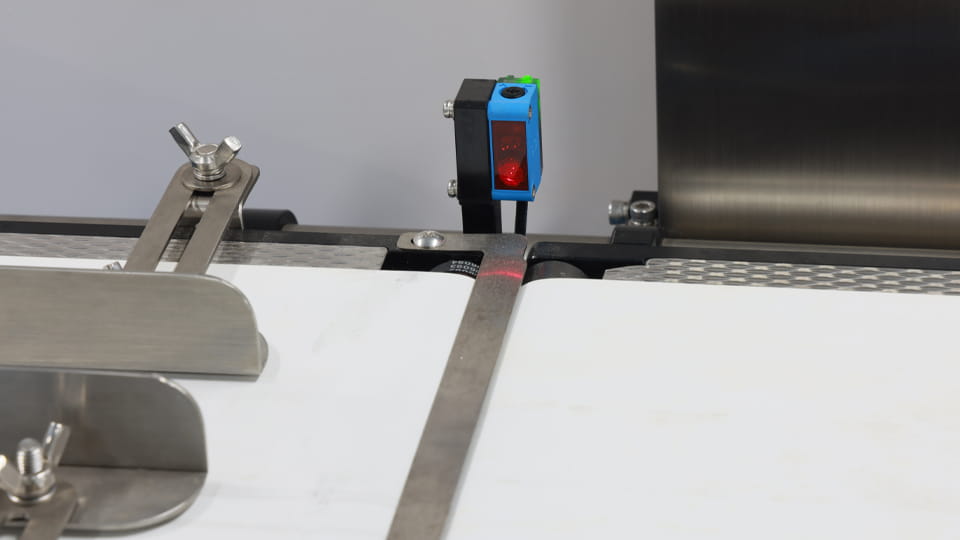
Alimentation & Détection de produits: Les produits sont introduits sur le convoyeur. Un capteur photoélectrique ou un capteur détecte la présence de chaque article et signale au module de pesée de se préparer..
Pesée (Dynamique): Lorsque l'article se déplace sur la section de pesée, haute précision cellules de pesée (plates-formes de capteurs) capturer son poids en temps réel. Ces cellules de pesée convertissent le poids du produit en un signal électronique. La vitesse du convoyeur et les mécanismes de stabilisation garantissent la stabilité de l'article lors du pesage..
Comparaison avec le poids cible: L'unité de contrôle (API) compare instantanément le poids mesuré aux limites prédéfinies (une valeur cible plus/moins tolérance). Ces limites sont généralement programmées via l'IHM à écran tactile. Par exemple, si l'objectif d'un flacon de comprimés est de 150,0 g, le système peut signaler tout ce qui est inférieur à 149,0 g ou supérieur à 151,0 g. Si le poids diminue dans la plage acceptable, le produit continue sur la ligne.
Rejet automatique: Si un article est hors spécifications (trop léger ou trop lourd), le système déclenche immédiatement un mécanisme de rejet. Les dispositifs de rejet courants incluent:
UN bras de poussée qui pivote vers le bas pour détourner ou éjecter des bouteilles ou des cartons.
Un air jet qui souffle les objets légers de la ceinture.
UN rabat rabattable (ou plaque rabattable) qui s'ouvre sous le convoyeur pour déposer l'article dans un bac.
UN convoyeur inverseur qui déplace le mauvais article vers une voie séparée.
Ces rejets sont entièrement automatisés et synchronisés avec le signal du capteur, supprimer les unités défectueuses sans arrêter la ligne.
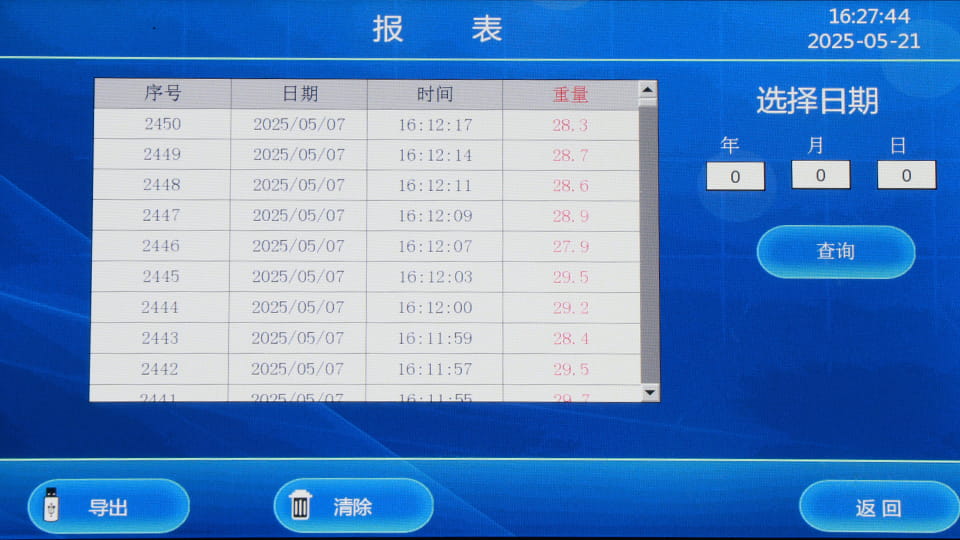
Enregistrement des données & Retour: Chaque événement de poids et de rejet est enregistré pour les enregistrements de qualité. La trieuse pondérale peut également fournir un retour d'informations en temps réel aux équipements en amont.. Par exemple, certains systèmes peuvent envoyer un signal à une machine de remplissage pour ajuster si les poids ont tendance à être lourds ou légers.
L'ensemble de ce processus – de la détection à la pesée jusqu'au rejet – se déroule en une fraction de seconde pour chaque article.. Le résultat est 100% inspection du poids en ligne à pleine vitesse de production. Les peseuses de contrôle fonctionnent dynamiquement sans interrompre la production, permettre aux fabricants de « surveiller le poids des produits sans perturber le flux de production ».
Voici un résumé du flux de travail de la trieuse pondérale:
Capteurs et alimentation: Le convoyeur alimente les produits; des capteurs déclenchent le processus de pesée.
Pesée: Les cellules de pesée mesurent le poids de chaque objet en mouvement.
Comparaison: L'unité de contrôle compare le poids aux limites cibles prédéfinies.
Rejeter: Les produits hors tolérance sont automatiquement éjectés (par poussoir, air jet, etc.).
Enregistrer: Les données de poids et le nombre de rejets sont enregistrés pour le contrôle qualité.
Ce cycle automatisé, répété pour chaque élément, c'est ce qui rend les trieuses pondérales indispensables dans les lignes pharmaceutiques modernes.
Principaux composants d'une trieuse pondérale
Une balance de contrôle automatique typique se compose de plusieurs éléments clés, souvent intégré dans un cadre modulaire (voir les exemples d'images de Jinlu):
Bandes transporteuses: Généralement trois sections – alimentation, zone de pesée, et décharge. Le modèle de Jinlu utilise un convoyeur en trois parties pour une maintenance facile. La bande alimente les produits en douceur et de manière constante sous les cellules de pesée.
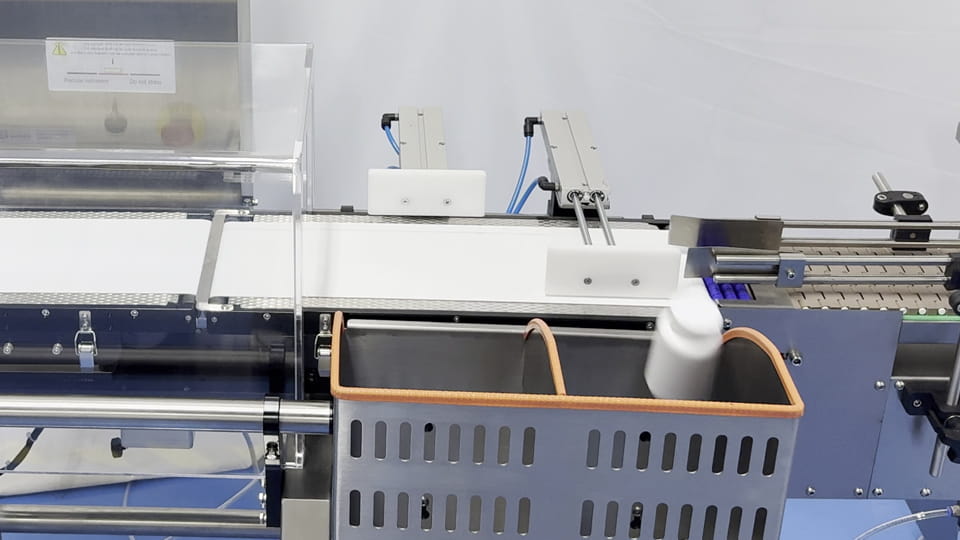
Cellules de charge (Capteurs de pesage): Capteurs de haute précision (type jauge de contrainte ou EMFR) sont montés sous la section de pesée pour mesurer le poids. Chaque fois qu'un produit passe, les cellules de pesée convertissent son poids en un signal électrique. La trieuse pondérale de Jinlu utilise une cellule de pesée de haute précision pour atteindre une précision de ± 0,1 g. Chiffre: Système de bande de trieuse pondérale modulaire de Jinlu (sections de convoyeur encliquetables) simplifie l'entretien. Les cellules de pesée sont installées sous la ceinture, et les produits sont guidés vers la section de pesée.
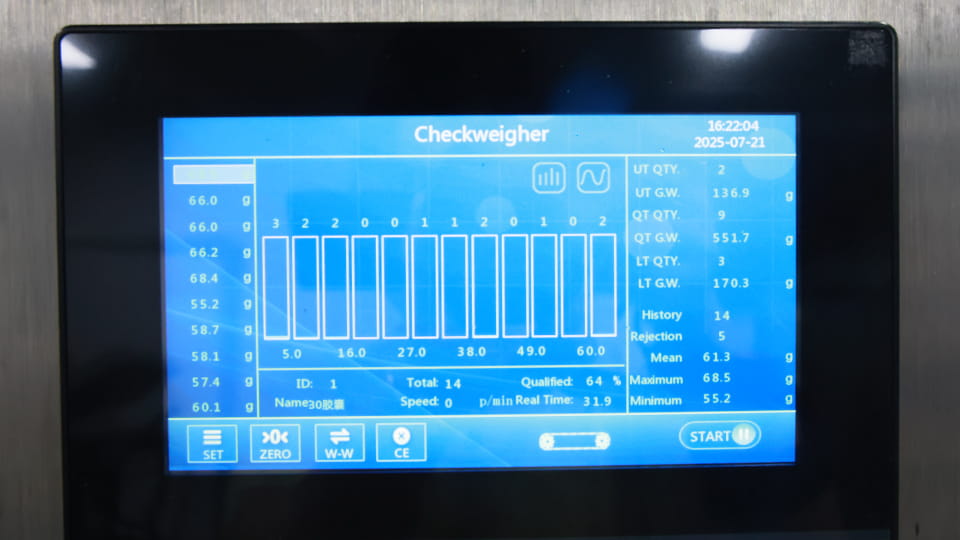
Unité de contrôle et IHM: Un automate (automate programmable) traite les données de poids. Un écran tactile HMI permet aux opérateurs de définir les poids cibles, voir les statistiques, et ajuster les paramètres. La trieuse pondérale à grande vitesse de Jinlu, Par exemple, dispose d'une interface à écran tactile de 7 pouces. L'unité de contrôle contient le micrologiciel qui applique des filtres numériques et une compensation de vitesse pour garantir des lectures de poids précises.
Mécanisme de rejet: Les actionneurs automatisés éliminent les mauvais produits. Selon le modèle et le produit, cela pourrait être une tige de poussée pneumatique, air jet, système de rabat ou de dérivation. Le dispositif de rejet est positionné immédiatement après la section de pesée.
Cadre et couvertures: Construction hygiénique en acier inoxydable (pour le GMPc) forme le cadre. De nombreuses trieuses pondérales incluent un couvercle transparent sur la section de pesée pour la protéger des courants d'air et de la poussière., stabiliser la mesure du poids. Par exemple, La conception de Jinlu utilise un couvercle en plexiglas « coupe-vent et anti-poussière » sur la zone de la cellule de pesée pour empêcher le flux d'air de fausser le poids..
Capteurs et guides: Des photo-yeux ou des capteurs laser détectent la présence du produit. Des rails ou canaux de guidage maintiennent les bouteilles ou les cartons centrés sur la bande pendant le pesage.
Module données/réseau: Les trieuses pondérales modernes incluent des ports de données et un réseau pour exporter les journaux vers des ordinateurs ou des systèmes d'usine.. Ils prennent souvent en charge l'enregistrement ou la connectivité sur carte USB/SD (Ethernet/PROFINET) pour la traçabilité des données.
Chaque composant fonctionne ensemble pour garantir une rapidité, pesée précise. Les sections de bande modulaires (avec conception à clipser) permettre aux opérateurs de retirer et de nettoyer rapidement le convoyeur sans outils. La construction en acier inoxydable et le boîtier étanche rendent la machine facile à laver et répondent aux exigences des salles blanches pharmaceutiques..
Types de trieuses pondérales
Les trieuses pondérales sont disponibles dans différentes configurations pour répondre aux différents besoins de production:
Dynamique (En ligne) Trieuse pondérale: Le type le plus courant, installé directement sur un convoyeur de production. Il pèse les produits en mouvement et éjecte les défauts sans arrêter la ligne. Idéal pour le conditionnement continu à grande vitesse (par exemple. liquides en bouteille, flacons de comprimés). La JL-CW de Jinlu est un exemple de trieuse pondérale en ligne pour les lignes de comptage et d'encartonnage..
Statique (Banc) Trieuse pondérale: Une version manuelle ou sur table utilisée pour l'échantillonnage et le contrôle qualité. Les opérateurs placent manuellement les colis individuels sur la balance. Ceux-ci sont plus lents et ne sont pas utilisés pour 100% inspection, mais bon pour les contrôles de laboratoire ou de dépannage.
Trieuse pondérale multivoies à grande vitesse: Conçu pour les lignes extrêmement rapides, souvent dans les machines à compter les produits pharmaceutiques ou dans le portionnement des aliments. Ceux-ci peuvent avoir plusieurs voies parallèles (pistes) de convoyeurs de pesage pour traiter des milliers d’articles par minute. Par exemple, les lignes de comprimés et de capsules peuvent nécessiter des trieuses pondérales multipistes capables de peser plusieurs articles simultanément.
Trieuse pondérale combinée/combinée: Ceux-ci intègrent une trieuse pondérale avec un autre dispositif d'inspection (par exemple. trieuse pondérale pour détecteur de métaux ou rayons X) dans une seule station. Cela permet d'économiser de l'espace et d'effectuer un double QC en une seule étape.
Conceptions spécialisées: Certaines trieuses pondérales sont personnalisées pour les produits de forme irrégulière (seringues, flacons) ou pour environnements explosifs. Les trieuses pondérales pharmaceutiques sont souvent équipées de moteurs à lavage ou contrôlés par VFD pour une large plage de vitesses.
Chaque type partage le même principe de fonctionnement de base, mais vous choisissez en fonction de la vitesse de la ligne de production et du type de produit. Comprimés et gélules (dose orale solide) nécessiter rapidement, balances dynamiques résistantes aux vibrations. Les liquides ou les poudres peuvent nécessiter une balance avec retour d'information vers les systèmes de remplissage.
Avantages de l'utilisation d'une trieuse pondérale dans les lignes de conditionnement
La mise en œuvre d’une trieuse pondérale sur une ligne de conditionnement présente de multiples avantages:
100% Contrôle de qualité: Chaque colis est vérifié pour l'exactitude du poids. Cela garantit une qualité constante du produit et la précision de l'étiquetage.. Même s’il manque un seul comprimé ou un sachet de poudre, il sera attrapé.
Conformité réglementaire: En vérifiant automatiquement les tolérances de poids, les trieuses pondérales aident les fabricants à répondre aux exigences légales (FDA, Ema, etc.). Ils fournissent des enregistrements électroniques faciles à auditer de chaque pesée, crucial pour la documentation de la libération des lots.
Réduction des déchets et des cadeaux: Emballages trop remplis, déchets et marge bénéficiaire. Les colis sous-remplis risquent d'être rappelés. Une trieuse pondérale minimise les deux en contrôlant étroitement le poids. Comme le note une source, ces systèmes « empêchent les produits inexacts d’atteindre les consommateurs », assurer le respect de la réglementation en matière de poids [et] réduction des déchets ». En pratique, cela signifie moins de cadeaux de trop-plein (économiser sur les matières premières) et moins de sous-remplissages mis au rebut.
Efficacité plus élevée: Le pesage automatisé est plus rapide et plus fiable que l'échantillonnage manuel. Cela permet aux opérateurs de gérer les exceptions au lieu de peser constamment les articles à la main.. Les trieuses pondérales maintiennent la vitesse de la ligne et peuvent même renvoyer des corrections (par exemple. ajuster les paramètres de remplissage si les poids ont tendance à baisser).
Satisfaction client améliorée: Cohérent, un emballage précis signifie que les clients peuvent faire confiance au produit. En évitant les colis sous-poids (et les réclamations clients qui s'ensuivent) une entreprise défend sa réputation. Cela évite également des rappels coûteux; la détection précoce des défauts empêche des lots entiers de se détériorer.
Informations basées sur les données: Les trieuses pondérales modernes collectent des données de poids et de production. Cela peut être analysé pour optimiser les processus, surveiller les tendances, et identifier rapidement les problèmes. Par exemple, si chaque 500ème bouteille est légèrement insuffisante, l'ingénierie peut étudier les dérives de remplissage périodiques. Ces journaux de données soutiennent l'amélioration continue.
Dans l'ensemble, un système de trieuse pondérale sert de puissant point de contrôle qualité. Cela augmente le rendement (en réduisant les déchets) et le respect des garanties. En compétition fabrication pharmaceutique, ces avantages se traduisent directement en économies de coûts et en intégrité de la marque.
Comment choisir la bonne trieuse pondérale
Lors de la sélection d'une trieuse pondérale pour votre ligne de production, Considérez les facteurs clés suivants:
Type et taille du produit: Adaptez la machine à vos produits. Les comprimés ou les capsules nécessitent généralement une vitesse élevée, balances sensibles. Les liquides ou les poudres peuvent nécessiter des trieuses pondérales accompagnées de capteurs de niveau. Bouteilles solides vs. sacs souples vs. les ampoules ont toutes des besoins de manipulation différents. Par exemple, Jinlu conseille de choisir un système adapté au produit (par exemple. multipiste pour tablettes vs. antivibratoire pour poudres).
Plage de poids et précision: Assurez-vous que la plage et la résolution de la trieuse pondérale conviennent à votre application. Le modèle standard de Jinlu couvre 5 à 1 000 g avec une précision de 0,1 g. Si vous emballez des articles très légers (par exemple. <5 g), choisissez une balance plus sensible (cellules de pesée électromagnétiques). Si lourd (plusieurs kg), une trieuse pondérale plus robuste est nécessaire.
Vitesse de production: Adaptez le débit de la machine à la vitesse de votre ligne. Le modèle de Jinlu gère jusqu'à 100 PCS / Min. Si votre ligne court plus vite, envisagez une trieuse pondérale à grande vitesse ou à plusieurs voies. Pour les lignes plus lentes, les modèles à vitesse inférieure suffisent.
Intégration et empreinte: Les trieuses pondérales doivent s’adapter parfaitement. Ils doivent s'aligner sur la largeur et la hauteur de votre convoyeur existant.. De nombreux modèles (comme celui de Jinlu) sont modulaires pour s'adapter à d'autres machines sans modifications coûteuses de la disposition. Tenez également compte des équipements électriques et pneumatiques requis. (pour pneumatique) branchements. Assurez-vous que l'installation permet un accès facile pour le nettoyage et l'entretien..
Précision et résolution: Les applications pharmaceutiques nécessitent souvent des tolérances très strictes. Choisissez une machine dotée d'une technologie avancée de cellule de pesée (jauge de contrainte ou EMFR) et filtrage numérique. Les modèles haut de gamme peuvent atteindre ±0,01 g ou mieux sur de petits poids.
Mécanisme de rejet: Décidez quel type de rejet convient le mieux à votre produit. Les bouteilles ou les cartons fonctionnent bien avec des bras de poussée ou des rabats; articles légers (comprimés, sacs) utilisent souvent des jets d'air. Certaines lignes utilisent les deux. Assurez-vous que le rejet choisi peut retirer le produit de manière fiable sans provoquer de bourrage..
Conformité aux BPF: Recherchez une construction de qualité pharmaceutique. Les fonctionnalités incluent acier inoxydable cadre, conception hygiénique (pas de crevasses), et facile à nettoyer. Tenez également compte des fonctionnalités du logiciel: Le système prend-il en charge 21 Partie CFR 11 (connexions utilisateur, pistes d'audit)? Peut-il générer des rapports CSV ou PDF pour les enregistrements par lots?
Données et connectivité: Si vous devez intégrer des données de poids dans MES/ERP, vérifiez que la machine prend en charge Ethernet/IP, OPC-UA, ou d'autres protocoles industriels. Les cartes USB ou SD pour la sauvegarde des données peuvent également être utiles.
Assistance fournisseur: Choisissez un fournisseur réputé qui peut vous aider Documentation de validation IQ/OQ/PQ, étalonnage, et service. Emballage Jinlu, Par exemple, offre un support IQ/OQ pour leurs trieuses pondérales, avec des manuels détaillés et une garantie.
En considérant ces facteurs – caractéristiques du produit, vitesse, précision, besoins réglementaires, et compatibilité de ligne – vous pouvez sélectionner une trieuse pondérale qui optimise les performances pour votre application spécifique. Par exemple, La trieuse pondérale JL-CW de Jinlu est optimisée pour les lignes de bouteilles et de blisters, avec un faible encombrement et une interface à écran tactile.
Trieuses pondérales dans l'intégration de lignes de conditionnement
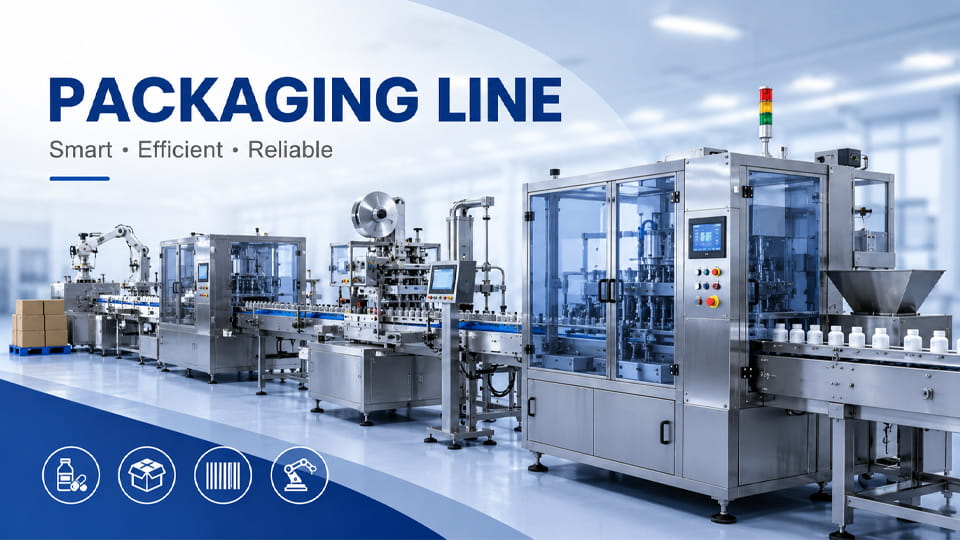
Une trieuse pondérale offre la plus grande valeur lorsqu'elle est installée au bon endroit dans la chaîne de production. Dans un emballage en flacon pharmaceutique, la position la plus courante est immédiatement après le compteur de comprimés, compteur de capsules, ou machine de remplissage de liquide. A ce stade, le système peut vérifier que chaque bouteille contient la quantité correcte de produit avant que des étapes d'emballage supplémentaires n'ajoutent du coût et de la complexité. Les bouteilles qui se situent en dehors de la plage de poids acceptable sont automatiquement rejetées avant d'atteindre la station de capsulage.. Cela permet d'éviter que les produits défectueux ne se déplacent plus loin dans la chaîne et de réduire les déchets inutiles..
Une ligne d'embouteillage pharmaceutique typique peut suivre cette séquence: Démêleur de bouteilles → Compteur de comprimés/capsules (ou Remplisseur liquide) → Trieuse pondérale → Coiffure → Scelleuse à induction → Machine à étiqueter → Encartonneuse. Dans certaines applications, les fabricants peuvent également ajouter un deuxième système de contrôle de pesée vers la fin du processus d'emballage pour vérifier l'intégralité des cartons finis.. Le point d'installation idéal dépend de ce que le fabricant souhaite inspecter : la précision du remplissage du produit., exhaustivité de la bouteille, ou vérification finale du colis.
Conclusion
Une trieuse pondérale est un élément indispensable de toute ligne de conditionnement pharmaceutique moderne. En vérifiant automatiquement le poids de chaque colis, il garantit la précision du dosage, Conformité BPF, et la qualité des produits. Nous avons expliqué le fonctionnement des trieuses pondérales, pourquoi ils sont vitaux en pharmacie, leurs parties principales, genres, et comment choisir le bon. Nous avons également comparé les trieuses pondérales aux balances traditionnelles et mis en évidence leurs principaux avantages.: précision améliorée, réduction des déchets, débit plus rapide, et une traçabilité complète.
Si vous souhaitez ajouter une trieuse pondérale ou mettre à niveau votre ligne, Emballage Jinlu offre une haute précision, Solutions conformes aux BPF. Trieuse pondérale JL-CW de Jinlu, par exemple, fournit 0.1 g précision jusqu'à 100 PCS / Min et est largement utilisé en bouteille, cloque, et lignes de conditionnement de bâtons. Intégré aux autres machines de Jinlu (redresseur, comptoir, capsuleuse, Étiquetage, carton), il peut former un système entièrement automatisé ligne de conditionnement pharmaceutique. Avec des fonctionnalités comme une IHM de 7 pouces, cadre en acier inoxydable, et des systèmes de rejet éprouvés, cela permet d’obtenir un emballage « zéro erreur ».
Pour plus de détails ou pour discuter de vos besoins spécifiques, visitez Jinlu Packing Produit de trieuse pondérale page ou contactez notre équipe commerciale. Nos experts peuvent vous aider à adapter une solution (y compris le support IQ/OQ) pour votre ligne de production, assurer un contrôle pondéral conforme et efficace.
FAQ sur la trieuse pondérale en pharmacie
A quoi sert une trieuse pondérale?
Une trieuse pondérale est utilisée pour vérifier automatiquement le poids des produits circulant dans une ligne de production.. Il aide les fabricants à identifier l'insuffisance pondérale, embonpoint, ou incomplets et les supprime automatiquement de la ligne. Dans un emballage pharmaceutique, une trieuse pondérale peut détecter les bouteilles à faible comptage, conteneurs trop remplis, ou composants manquants avant que les produits n'arrivent sur le marché.
Comment fonctionne une trieuse pondérale?
Une trieuse pondérale utilise une cellule de pesée et un convoyeur de pesée pour mesurer le poids du produit pendant que le produit est en mouvement. Le système compare le poids mesuré aux limites supérieure et inférieure prédéfinies. Si le poids tombe en dehors de la plage acceptable, le mécanisme de rejet automatique retire le produit de la ligne de production.
Où doit-on installer une trieuse pondérale dans une ligne de conditionnement pharmaceutique?
Dans la plupart des lignes d'embouteillage pharmaceutique, la trieuse pondérale est installée immédiatement après le compteur de comprimés, compteur de capsules, ou machine de remplissage de liquide. Cela permet aux fabricants de vérifier l'exactitude du remplissage avant de procéder au bouchage des bouteilles., scellage, étiquetage, et processus d'encartonnage. La détection précoce permet de réduire les déchets et les coûts de reprise.
Une trieuse pondérale peut-elle détecter des comprimés ou des gélules manquants?
Oui. Si un comprimé ou une capsule manquant crée une différence de poids mesurable, la trieuse pondérale peut identifier l'écart et rejeter la bouteille concernée. C'est l'une des principales raisons pour lesquelles les fabricants de produits pharmaceutiques utilisent des balances de contrôle automatiques après le processus de comptage..
Quelles industries utilisent couramment les trieuses pondérales?
Les trieuses pondérales sont largement utilisées dans le secteur pharmaceutique, nourriture et boisson, produits de beauté, nutraceutique, chimique, et secteurs de la logistique. Toute industrie qui nécessite une vérification précise du poids des produits et un contrôle qualité peut bénéficier d'un système de trieuse pondérale en ligne..
Quels sont les principaux composants d’une trieuse pondérale?
Une trieuse pondérale typique se compose d'un convoyeur d'alimentation, convoyeur de pesée, cellule de charge, système de contrôle, interface opérateur, et rejeter l'appareil. Ensemble, ces composants forment un système complet de convoyeur trieuse pondérale capable d'inspecter les produits à des vitesses de production élevées.
Pourquoi certains produits sont-ils rejetés par une trieuse pondérale?
Les produits peuvent être rejetés car leur poids est insuffisant, embonpoint, composants manquants, ou en dehors de la plage de tolérance prédéfinie. Dans certains cas, espacement inapproprié des produits, vibrations excessives, ou des réglages incorrects de la machine peuvent également provoquer de faux rejets, c'est pourquoi un calibrage et une configuration appropriés sont importants.
Une trieuse pondérale peut-elle être intégrée à d'autres machines d'emballage?
Oui. Les trieuses pondérales modernes peuvent être intégrées aux compteurs de tablettes, charges liquides, machines à capsuler, soudeuses par induction, étiqueteuses, encartonneuses, et systèmes de sérialisation. Cela crée une ligne d'emballage entièrement automatisée avec un contrôle qualité et une surveillance de la production en temps réel..
Quels sont les avantages de l'utilisation d'une balance de contrôle automatique?
Une balance de contrôle automatique contribue à améliorer la qualité des produits, réduire les pertes de produits, minimiser les plaintes des clients, soutenir la conformité réglementaire, et augmenter l'efficacité de la production. Il fournit également 100% inspection du poids, s'assurer que chaque colis répond aux normes de qualité avant expédition.
Comment choisir la bonne trieuse pondérale pour ma ligne de production?
Lors de la sélection d'une trieuse pondérale, prendre en compte des facteurs tels que la fourchette de poids du produit, taille du paquet, vitesse de production, précision requise, disposition du convoyeur, méthode de rejet, et les exigences d'intégration. Pour les applications pharmaceutiques, enregistrement de données, aide à la validation, et la conformité aux BPF doit également être évaluée.
Petit Fu, Fondateur de Jinlupacking, amène 20 années d'expertise dans le secteur des machines pharmaceutiques. Sous sa direction, Jinlu est devenu un fournisseur de confiance intégrant la conception, production, et ventes. Petty est passionné par le partage de ses connaissances approfondies de l'industrie pour aider ses clients à naviguer dans les complexités de l'emballage pharmaceutique., s'assurer qu'ils reçoivent non seulement du matériel, mais un véritable partenariat de services à guichet unique adapté à leurs objectifs de production.

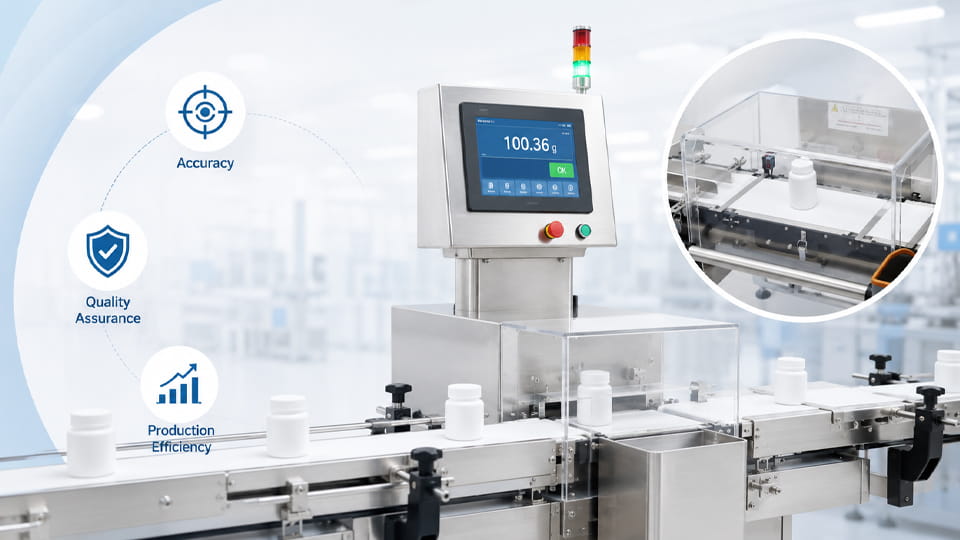

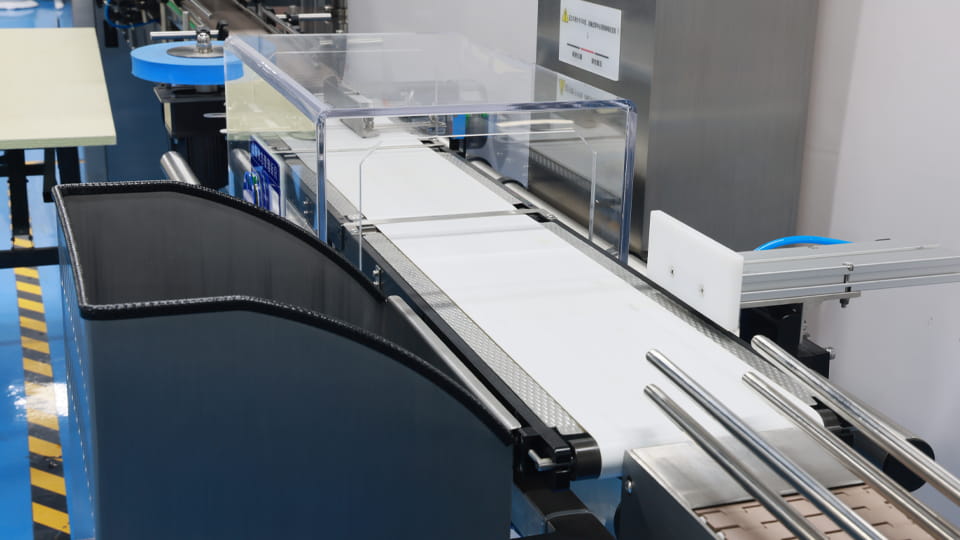
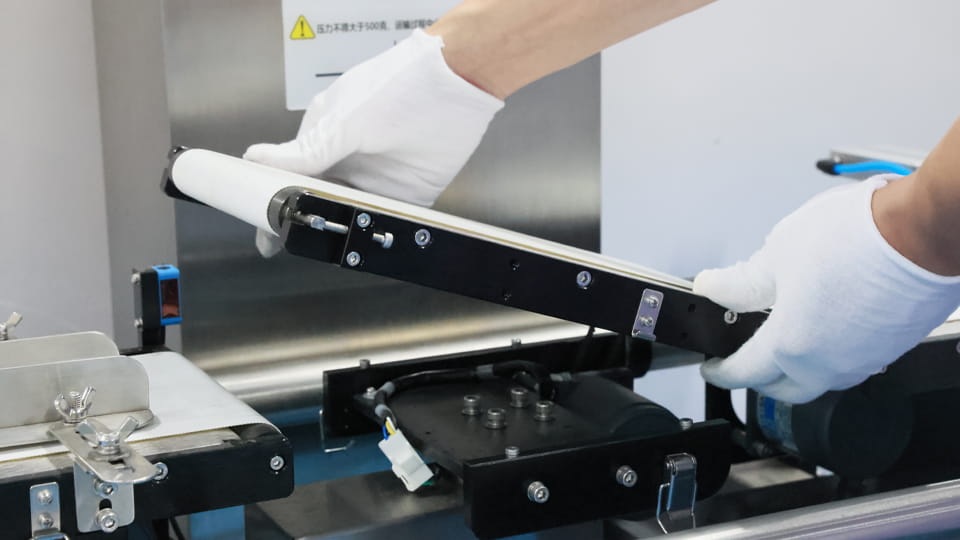 Chiffre: Système de bande de trieuse pondérale modulaire de Jinlu (sections de convoyeur encliquetables) simplifie l'entretien. Les cellules de pesée sont installées sous la ceinture, et les produits sont guidés vers la section de pesée.