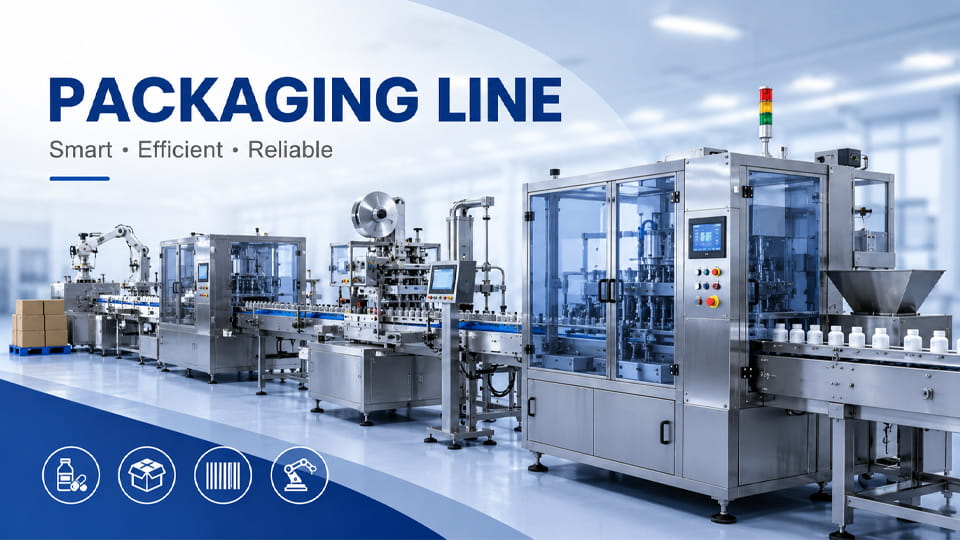
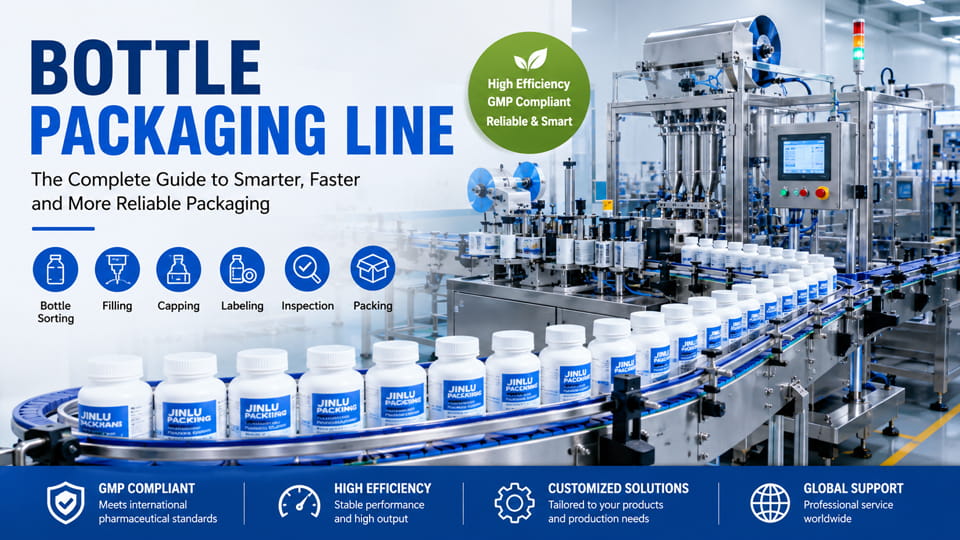
Dans beaucoup lignes de conditionnement, sachets, pochettes, ou des petits sacs sortent des machines en amont dans un fouillis aléatoire – des pieux se chevauchant, orienté de manière incohérente. Les trier à la main est lent et sujet aux erreurs. Les travailleurs doivent séparer et retourner chaque sachet, ce qui demande beaucoup de travail et risque de compter les erreurs (les chevauchements entraînent des erreurs de comptage). Cette incohérence peut alors mourir de faim ou de confiture équipements en aval comme les machines d'encartonnage ou d'emballage de caisses. En plus de ça, la manipulation manuelle augmente le risque de contamination – une préoccupation majeure pour les produits pharmaceutiques et alimentaires.
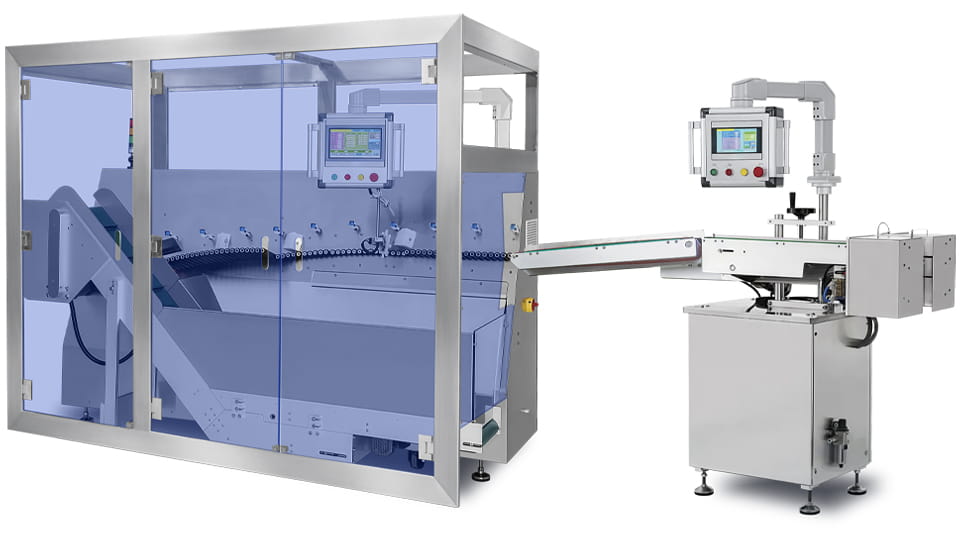
UN machine de tri de sachets résout ces problèmes. Il se sépare automatiquement, aligne, séquences, et compte les sachets ou sachets disposés au hasard avant de les alimenter dans la machine suivante. En vigueur, il transforme un lot chaotique de sacs en un ensemble soigné, flux à fichier unique. Le résultat est fluide, flux continu dans les encartonneuses ou les encaisseuses, avec un minimum de contact humain.
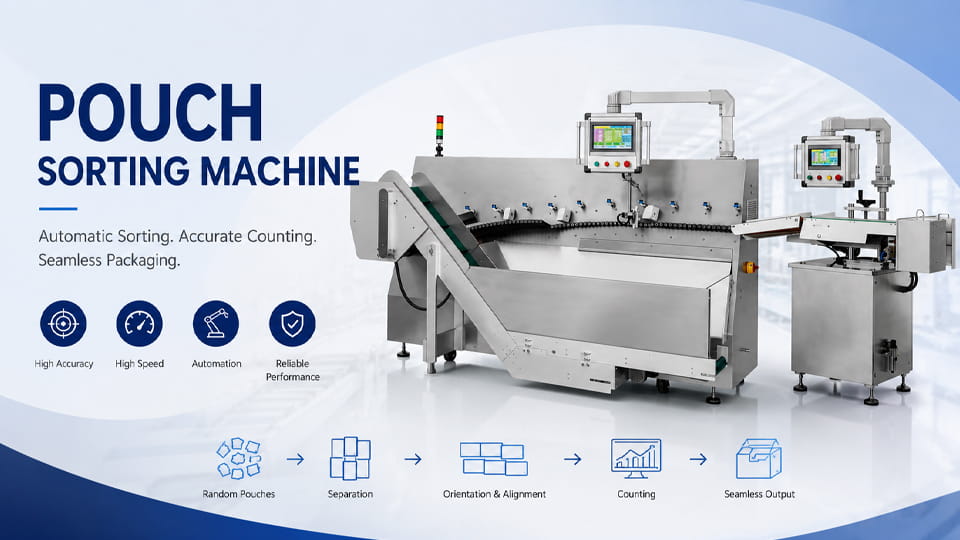
Chiffre: Le tri manuel des sachets demande beaucoup de travail et est sujet aux erreurs. Une automatique machine de tri de sachets gère cette tâche rapidement et avec précision, introduire régulièrement les sachets dans la ligne d'emballage.
Qu'est-ce qu'une machine de tri de sachets?
UN machine de tri de sachets (ou trieur de sachets) est une machine industrielle automatisée conçue pour organiser de petits forfaits flexibles – pochettes, sachets, paquets de bâtons, ou des petits sacs – qui sortent sans commande d’une machine de remplissage ou d’emballage. En termes simples, il faut la sortie d'un machine de conditionnement de pochettes ou de sachets et séquences les articles: séparer les sacs superposés, en les orientant uniformément, les compter, et les nourrir jusqu'à l'étape suivante.
En d'autres termes, c'est un alimentateur/organisateur spécialisé pour la ligne de conditionnement. Il gère des tâches qui nécessiteraient autrement de nombreux opérateurs. Par exemple, Machine de tri de sachets de JinLu « organise automatiquement, oriente, sortes, et compte” sachets non commandés (poudre, liquide, comprimé, types de gels) à des vitesses allant jusqu'à 100 à 420 sacs par minute. Ces machines sont construites pour 24/7 production: la plupart utilisent des écrans tactiles PLC pour une utilisation facile et s'adaptent à la volée aux différentes tailles de sacs.
Un trieur de sachets résout les problèmes courants: il sépare pochettes mélangées, supprime les doubles (deux sacs collés ensemble), corrige l'orientation, et compte chaque pièce avec précision. La sortie est un flux de fichier unique cohérent que les machines en aval peuvent gérer. En pratique, cela signifie que les cartons sont remplis uniformément (aucun sac manquant), et le comptage et l'alimentation manuels sont éliminés. Il s'agit essentiellement d'un tampon et d'un alimentateur automatisés qui remplacent une table de tri manuelle..
Comment fonctionne une machine de tri automatique de sachets?
Une machine de tri de sachets moderne fonctionne en plusieurs étapes, processus entièrement automatisé. Chaque étape est synchronisée par un système d'asservissement et des capteurs haute vitesse. Le flux de travail global ressemble à ceci:
- Alimentation en pochette (Chargement): Les sachets sont d'abord chargés dans une trémie ou une zone d'alimentation, soit manuellement, soit depuis une machine de conditionnement en amont. La trémie a généralement une grande capacité et est discrète pour un chargement facile.. Par exemple, certaines trieuses ont une hauteur réglable, 300-trémie d'un litre qui alimente régulièrement les sacs dans le système. La machine utilise un système d'alimentation synchronisé à plusieurs étages pour sortir les sacs de la trémie sans bourrage ni poches restantes.
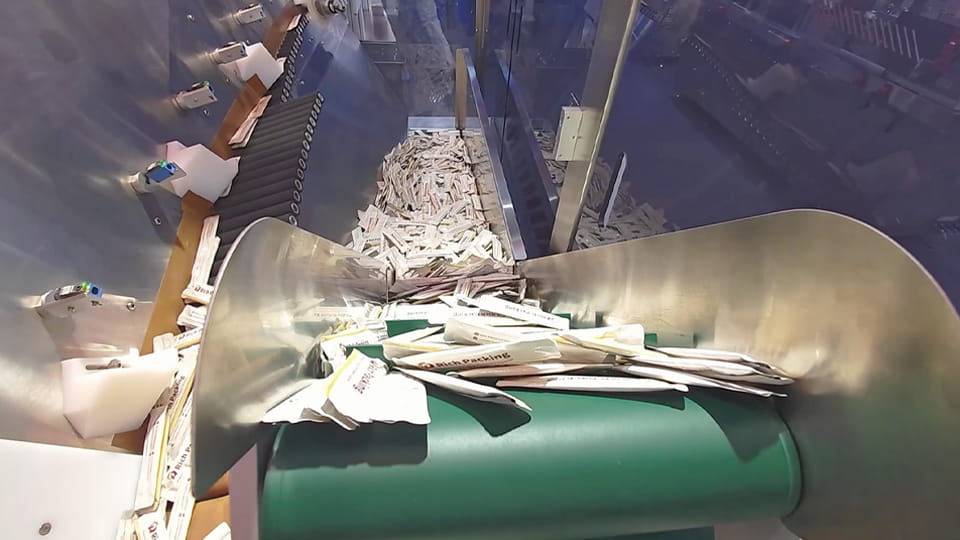
- Séparation des pochettes: Lorsque les sacs sortent de la trémie, ils sortent souvent superposés ou empilés. La machine système anti-empilage les sépare pour qu'une seule pochette passe à la fois. Cela évite les doubles alimentations. Par exemple, La conception de JinLu « garantit qu'un seul sac passe à la fois, éliminant complètement les erreurs causées par le passage simultané de deux sacs ou plus ». La séparation est généralement effectuée à l'aide de rouleaux ou de convoyeurs spécialisés qui séparent doucement les sacs coincés..
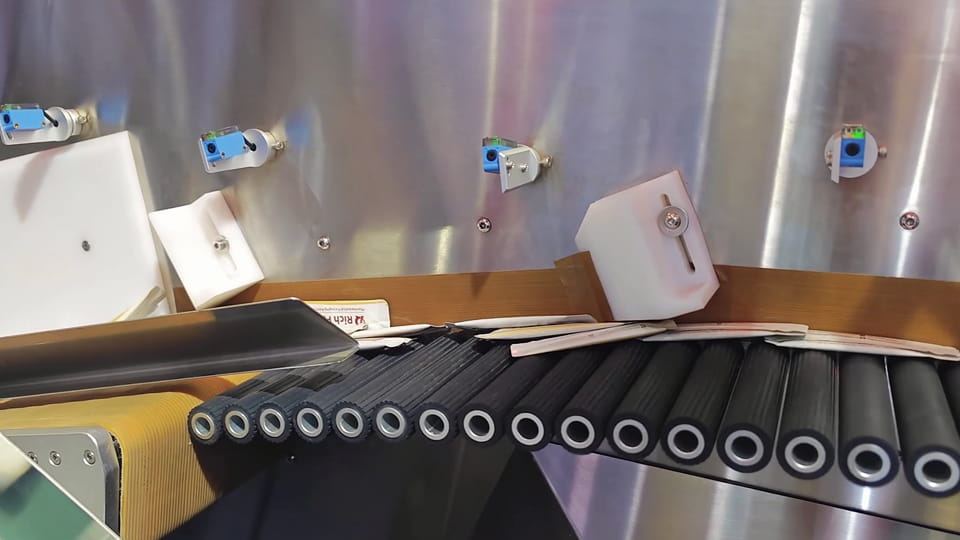
- Orientation et alignement de la pochette: Suivant, la machine oriente chaque pochette dans une direction uniforme (par exemple. toutes les étiquettes vers le haut ou tous les sceaux sur un côté). Cela se fait généralement avec des rouleaux ou des courroies servo-entraînés.. Des servomoteurs de haute précision tournent et positionnent chaque sac pendant son déplacement. Étanche à la poussière, des rouleaux antistatiques saisissent le sac et l'alignent. Par exemple, un modèle utilise 11 servomoteurs à entraînement direct pour synchroniser les mouvements des rouleaux, pour que les sacs « bougent en parfaite synchronisation », sans glisser ni sauter," en les gardant alignés. Le résultat est un flux de pochettes toutes orientées dans la même direction.
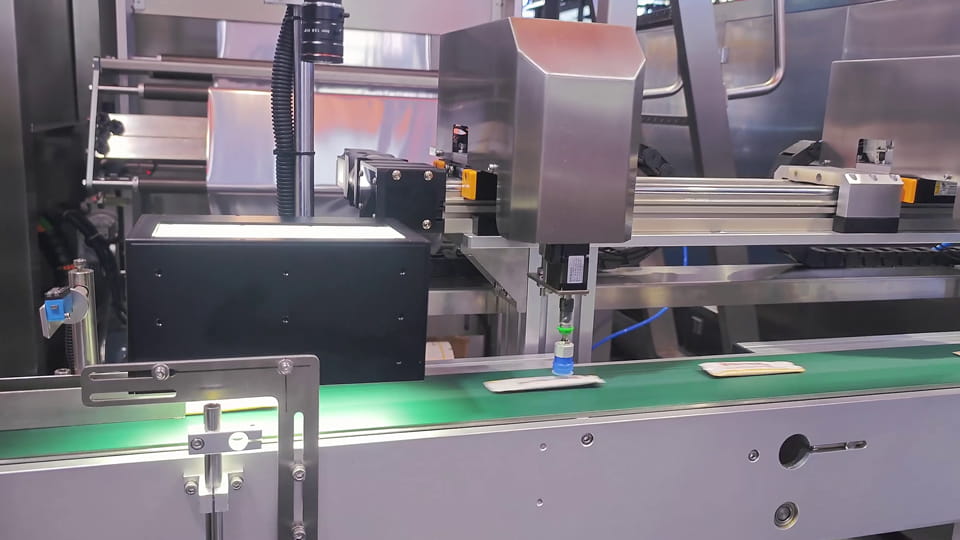
- Détection du capteur: Tout au long du processus, des capteurs photoélectriques ou de vision surveillent chaque pochette. Des capteurs détectent la présence d’un sac, orientation, et toute anomalie (comme un chevauchement parasite ou une alimentation inclinée). Si un sac n’est pas correctement aligné ou s’il est coincé, les capteurs déclenchent immédiatement une réponse. Ces capteurs transmettent des données en temps réel au système de contrôle. Dans une machine de haute qualité, chaque position de la ligne est équipée de capteurs assurant sans angle mort couverture. La boucle de rétroaction maintient le processus de tri sans erreur.
- Trier et compter: Une fois aligné, les sachets passent par une station finale de tri et de comptage. Ici, la machine garantit que les sacs sont introduits un par un dans un convoyeur de déchargement ou une goulotte. Il compte chaque pochette avec une extrême précision – dépassant souvent 99.97% précision. Les systèmes avancés horodatent même ou codent le décompte par code-barres. Le compteur à grande vitesse garantit que le nombre exact de sachets est connu et peut déclencher une alerte en cas de divergence.. Cette précision réduit considérablement les erreurs de comptage en aval.
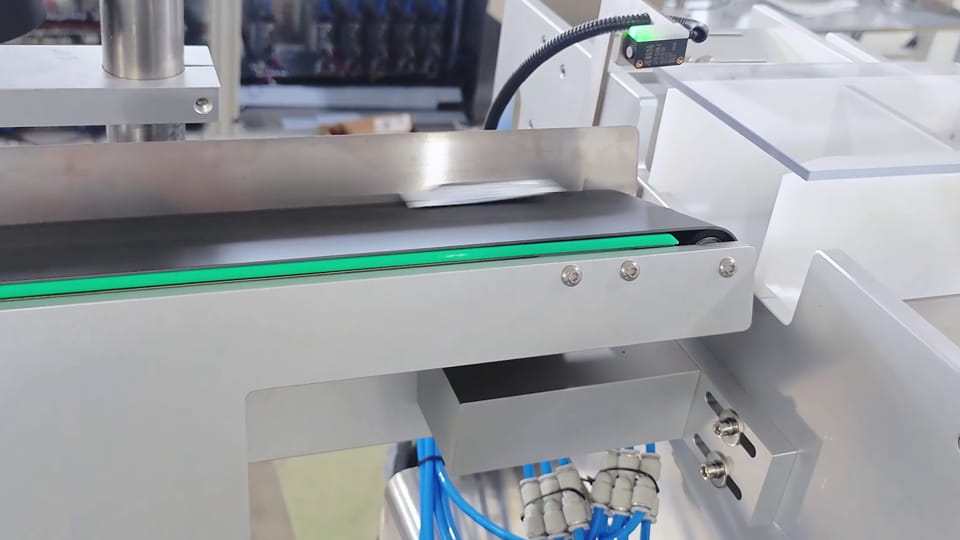
- Rejet des défauts: Toute pochette encore mal alignée, plat (horizontal), ou défectueux est expulsé par un mécanisme de rejet. Par exemple, si une pochette est posée à plat plutôt qu'à la verticale, un système de « rejet horizontal des pochettes » les détournera de la ligne. De la même manière, les capteurs peuvent repérer les sacs déchirés ou mal remplis, déclencher un rejet automatique. Par ici, seulement correctement orienté, les pochettes individuelles continuent. L'ensemble du processus garantit qu'aucun sac coincé ou mal trié n'arrive à l'encartonneuse ou à la machine à cartonner..
Chaque étape est effectuée automatiquement avec une intervention humaine minimale. Les machines modernes combinent ces étapes dans un système compact. Par exemple, un machine de tri à servocommande est construit sur un seul cadre: une trémie alimente les sacs, les courroies d'asservissement et les rouleaux les alignent, plusieurs capteurs les inspectent, et un convoyeur les décharge dans l'ordre – le tout en un seul flux continu.
[jl_youtube src= »https://www.youtube.com/embed/NxTAzsZIx-s »]
Principaux avantages de l'utilisation d'une machine de tri de sachets
La mise en place d'une machine de tri automatique de sachets apporte bénéfices immédiats à n'importe quelle ligne de conditionnement. Les principaux avantages comprennent:
- Efficacité de production supérieure: L’automatisation accélère considérablement le tri. Une trieuse de sachets à grande vitesse peut gérer des centaines de sacs par minute, bien au-delà des capacités humaines. Par exemple, Le trieur de JinLu court jusqu'à 420 sacs / min, et d'autres modèles de poignée 400 ou plus. Cette continue, une production rapide maintient vos machines d'emballage en aval alimentées à pleine vitesse. Le résultat est un débit horaire beaucoup plus élevé. En pratique, les opérations voient les cadences de production augmenter et les délais d’exécution diminuer une fois qu’elles remplacent le tri manuel par un système automatique.
- Précision de tri améliorée: Les trieurs automatiques éliminent les erreurs commises par les humains. Les chevauchements et les bagages manqués deviennent pratiquement inexistants. Les machines haut de gamme offrent une précision de comptage supérieure à 99.9% (taux d'erreur ci-dessous 0.009%). Des fonctionnalités spécialisées telles que les systèmes anti-empilement et les capteurs photoélectriques maintiennent les taux d'erreur à un niveau extrêmement faible.. Cela signifie qu'il n'y a plus de double alimentation, aucun décompte manqué, et très peu de confitures. Dans une ligne automatisée, chaque pochette est suivie et comptée, afin que vos décomptes finaux de colis soient fiables. Par conséquent, les emballeurs évitent les rappels coûteux ou les travaux de réemballage dus à des erreurs de comptage.
- Coûts de main-d'œuvre réduits: En remplaçant les tâches manuelles, ces machines réduisent les besoins en personnel. Les opérateurs qui triaient et comptaient à la main peuvent être redéployés. Par exemple, une usine de nutraceutique a signalé un 90% baisse du travail de tri manuel après avoir installé un trieur automatisé. Moins d'opérateurs sont nécessaires pour superviser le processus – souvent un seul superviseur pour plusieurs machines. Au fil du temps, ce retour sur investissement est significatif: vous économisez sur les salaires et réduisez la fatigue humaine ou les erreurs.
- Meilleure hygiène et conformité: Minimiser le contact humain est particulièrement important dans les lignes pharmaceutiques et alimentaires. Les trieurs de sachets sont conçus pour les environnements propres: les pièces de contact sont généralement 304 ou 316 acier inoxydable et les surfaces sont lisses et faciles à laver. Par exemple, Le trieur de JinLu utilise du 316L pour le contact avec les produits et 304 pour structure, réunion cgMP normes. La conception fermée (souvent avec des fenêtres en verre de sécurité) aide également à maintenir une barrière hygiénique. Les caractéristiques faciles à nettoyer de la machine et ses quelques recoins vous permettent de la désinfecter rapidement. Cela réduit considérablement le risque de contamination par rapport à la manipulation manuelle.
- Intégration facile avec les lignes de conditionnement: Une machine de tri de sachets est conçue pour s'adapter à votre ligne. Il peut décharger les sachets dans différentes orientations (plat, droit, ou empilé) pour correspondre à la prochaine machine. Par exemple, vous pouvez ajuster la hauteur ou l'angle de décharge afin que les sachets soient alimentés directement dans un encartonneuse, un compte/convoyeur d'accumulation, ou un emballeur de caisses. De nombreuses machines sont livrées avec des hauteurs de convoyeur ou des kits de montage standardisés. En pratique, vous pouvez « brancher et utiliser » la trieuse dans un système existant avec un minimum de changement de disposition. Cela rationalise l’ajout d’automatisation: reliez simplement la sortie de la trieuse au convoyeur d’entrée de votre encartonneuse. Le résultat est un, ligne automatisée de bout en bout, du remplissage à l'emballage final.
Applications des machines de tri de sachets
Les trieurs de sachets sont largement utilisés dans tous les secteurs : partout où les petits sachets ou sachets doivent être comptés ou nourris de manière ordonnée. Les principaux domaines d'application comprennent:
- Emballage pharmaceutique: Il s'agit d'un cas d'utilisation majeur. Les lignes pharmaceutiques emballent souvent des poudres, granulés, ou des liquides dans des sachets et des pochettes. Un trieur de sachets assure chaque dose (par exemple. sachet de médicaments, supplément en poudre paquet) est géré correctement. Il fournit la précision et la conformité nécessaires aux médicaments. Par exemple, ces machines traitent régulièrement sachets de médicaments, sachets de vitamines, sachets de liquide oral, et même de petits blisters en aluminium. Parce qu'ils se rencontrent Normes BPF et avoir un comptage précis, ils sont idéaux pour les lignes pharmaceutiques où la précision et la traçabilité sont essentielles. De nombreux fabricants de produits pharmaceutiques utilisent des trieuses pour alimenter les encartonneuses ou emballeurs de blisters sans manipulation humaine.
- Nutraceutique & Emballage du supplément: Pensez aux mélanges pour boissons vitaminées, sachets de protéines en poudre, packs de suppléments de santé, probiotiques, etc.. Ces produits sont souvent en sachet ou stick formulaire. Les trieurs de sachets traitent des produits comme sachets de protéines en poudre, mélanges pour boissons vitaminées, et packs de probiotiques. Ils s'assurent que chaque portion est comptée et alignée avant la boxe. Les lignes nutraceutiques valorisent le débit supplémentaire, puisque la demande peut être élevée. Un trieur permet de maintenir la qualité et la rapidité des produits pour des articles tels que des poudres d'énergie instantanée ou des sachets de collagène..
- Nourriture & Emballage de boissons: Les trieurs de sachets sont courants dans les chaînes alimentaires. Par exemple, ils trient paquets de bâtonnets de café ou de thé, sachets de sucre ou d'assaisonnement, mélanges pour boissons instantanées, sachets de sauces et condiments. Quelques lignes de snacks les utilisent pour des sachets individuels de noix ou d'épices, aussi. La manipulation douce du trieur (rouleaux souples et avances contrôlées) signifie que les sachets alimentaires fragiles ne sont pas endommagés. En pratique, lignes avec emballage à grande vitesse (par exemple. remplisseuses de sachets à plusieurs voies) besoin d'un trieur pour accumuler la production pour l'emballage des cartons/boîtes. En pré-triant, les machines évitent les bourrages en aval et garantissent le décompte exact (par exemple. 10 sachets de thé par boîte) est avec.
- Soins personnels et produits chimiques ménagers: Le tri en sachets n’est pas réservé qu’aux produits alimentaires/pharmaceutiques. Cela s'applique également aux soins personnels et aux produits chimiques. Par exemple, sachets de masques cosmétiques, paquets d'échantillons de shampoing/après-shampooing, dosettes de détergent à lessive en sachets, ou sachets de rince-bouche liquide tout peut être trié, y compris les produits chimiques quotidiens (eau dentifrice, détergent) et cosmétique (masques, lotions) pochettes. Toute industrie utilisant des packs à usage unique – des testeurs de lotion aux mini packs de détergents – peut en bénéficier. La machine de tri assure ces sacs de formes différentes (pochettes zippées, paquets d'oreillers, etc.) sont introduits correctement dans la machine suivante.

Les trieurs de sachets Jinlupacking servent un large éventail d'industries – des sachets de collations et de café aux sachets de détergents et de cosmétiques., reflétant la large applicabilité de la technologie de tri des sachets.
En résumé, si votre produit est en petit sachet, sac, ou une pochette et vous devez les compter et les nourrir de manière fiable, une machine de tri de sachets est une solution candidate. Sa flexibilité couvre presque tous les formats de sachets utilisés aujourd'hui.
Comment choisir la bonne machine de tri de sachets
La sélection du trieur idéal dépend des exigences de votre produit et de votre ligne. Voici les principaux facteurs à considérer:
- Taille de la pochette: Vérifiez la longueur et la largeur acceptées par la machine. Par exemple, Le trieur de JinLu gère les sachets jusqu'à 185 mm de long et 110 mm de large. Si vos pochettes sont nettement plus grandes, tu as besoin d'un modèle différent. Pensez également à la forme: la plupart des trieurs peuvent gérer les pochettes d'oreiller, paquets de bâtons, et sachets rectangulaires, mais les formes très hautes ou inhabituelles peuvent nécessiter une personnalisation.
- Vitesse de production requise: Adaptez la vitesse de la trieuse à votre ligne. Calculez combien de sacs par minute (temporisation) dont vous avez besoin en fonction de vos charges et de vos objectifs d'emballage. Les trieurs se déclinent en différents niveaux: certains fonctionnent entre 100 et 150 BPM, tandis que les modèles haut de gamme font 300 à 400+ BPM. Souviens-toi, une vitesse plus élevée dépend souvent d'une taille de sac ou d'un type de produit plus petit. Si votre ligne est à volume élevé, optez pour un trieur à grande vitesse; si ta ligne est plus petite, une unité à vitesse inférieure peut suffire.
- Matériau de la pochette: Considérez le film ou le matériel. Déjouer, stratifié en plastique, et les pochettes en papier se comportent différemment. Les feuilles et les films enduits peuvent être glissants ou sujets à l'électricité statique. Vérifiez si la machine a caractéristiques antistatiques ou rouleaux texturés (par exemple. étanche à la poussière, rouleaux antistatiques). Certaines trieuses ont une pression de rouleau ou des matériaux de surface réglables pour différentes textures de sacs. Si vos pochettes sont très légères ou très rigides, mentionnez-le lors de la sélection afin que le fabricant puisse ajuster les mécanismes de manutention.
- Équipement en aval: Pensez à ce que le trieur va alimenter. Est-ce une encartonneuse automatique? Un emballeur de caisses? Un convoyeur de comptage? Cela affecte le format de décharge. Par exemple, si vous nourrissez une encartonneuse qui attend des sachets plats en pile, la trieuse doit sortir les sachets à plat. Si vous alimentez un convoyeur de comptage de sachets, vous voudrez peut-être les tenir debout. La plupart des machines permettent de configurer la hauteur et l'orientation de déchargement. Pensez également aux points de connexion (par exemple. hauteur du convoyeur et compatibilité des commandes).
- Exigences d'hygiène et de nettoyage: Pour usage pharmaceutique ou alimentaire, vérifier la construction. Rechercher 304/316 acier inoxydable, moteurs fermés, et des conceptions faciles à nettoyer. Le trieur doit répondre aux normes telles que GMP ou CE si nécessaire. Des fonctionnalités telles que des bandes transporteuses à dégagement rapide, rouleaux scellés, et CIP (nettoyage sur place) la compatibilité peut être importante. En règle générale, moins il y a de crevasses, mieux c'est pour le nettoyage. Si votre industrie est la pharmacie, insister sur une version conforme aux BPF.
En faisant soigneusement correspondre les spécifications de la machine (vitesse, plage de taille, manutention des matériaux) à votre produit et à votre ligne, vous trouverez le modèle le plus efficace. En pratique, les vendeurs vous demanderont les dimensions de votre pochette, débit souhaité, et ce qui vient ensuite – utilisez ces informations pour obtenir le trieur optimal.
Machine de tri automatique de sachets vs tri manuel de sachets
Choisir entre le tri manuel et automatique est une évidence lorsqu'on les compare côte à côte:
| Fonctionnalité |
Tri manuel |
Tri automatique des sachets |
| Exigence de main d'œuvre |
Très élevé (plusieurs personnes) |
Faible (un opérateur ou aucun) |
| Vitesse de tri |
Limité (dizaines de sacs/min) |
Très élevé (100–400+ sacs/min) |
| Précision de comptage |
Dépend de l'opérateur (sujet aux erreurs) |
Haute précision automatisée (99.9%+) |
| Opération continue |
Difficile (fatigue, pauses) |
24/7 fonctionnement continu |
| Contact humain |
Direct (risques de contamination) |
Minimal (machine fermée) |
| Intégration |
Limité (transfert nécessaire) |
Facile (sortie directe du convoyeur) |
Ce tableau met en évidence les principales différences. Le tri manuel peut fonctionner pour des volumes très faibles ou des lignes lentes, mais cela devient vite irréalisable à grande échelle. Automation non seulement accélère la production, mais assure également la cohérence et la traçabilité. Dans presque toutes les usines de conditionnement modernes, investir dans un trieur automatique c'est payant en augmentant la production et en réduisant les erreurs.
Conclusion
UN machine de tri de sachets est un outil d'automatisation clé pour toute industrie qui conditionne des produits dans de petits sacs ou sachets. En organisant automatiquement, aligner, compte, et nourrir vos poches, il supprime les goulots d'étranglement manuels et augmente le débit de production. Vous obtenez un fonctionnement plus rapide (des centaines de sachets par minute), précision de comptage presque parfaite, des coûts de main d'œuvre réduits, et une meilleure hygiène, tout en évitant les bourrages dans les encartonneuses ou encaisseuses en aval..
Si vous avez besoin d'un produit de haute qualité machine de tri automatique de sachets pour sachets pharmaceutiques, sachets alimentaires, bâtonnets de liquide ou autres petits sachets, Considérez les solutions de JinLu Packing. Nous proposons des machines (comme le JL-PA-420) qui gère jusqu'à 420 sacs/min avec >99.97% précision. Nos machines s'intègrent parfaitement aux équipements d'encartonnage et de comptage. Notre équipe d'ingénieurs peut personnaliser un système de tri en fonction de la taille de votre sachet, vitesse, et disposition de la ligne de conditionnement.
Pour une automatisation sur mesure, Contactez-nous pour discuter de vos besoins en matière de tri de sachets. JinLu Packing fournit des solutions complètes pour les lignes d'emballage de sachets/pochettes, du tri au remplissage, mise en carton, et plus. Laissez nos experts concevoir le système de tri et d'alimentation idéal afin que vous puissiez obtenir des résultats cohérents., grande vitesse, fonctionnement entièrement automatisé sur votre ligne.
FAQ sur la machine de tri de sachets
Quels types de sachets une machine de tri de sachets peut-elle gérer?
Les trieurs de sachets modernes sont polyvalents. Ils peuvent trier les sachets plats, paquets de bâtons, se lever (fais) pochettes, sacs à fermeture éclair, pochettes à bec, et même des sacs de forme irrégulière. Par exemple, les machines prennent souvent en charge des sachets scellés sur trois côtés et sur quatre côtés, pochettes à bec, pochettes à fermeture éclair, paquets de bâtons, et pochettes façonnées. Si vos sacs entrent dans la plage de taille de la machine et sont flexibles, il devrait les gérer. Assurez-vous de spécifier toute forme ou épaisseur inhabituelle du sac au fournisseur..
Une machine de tri de sachets peut-elle trier les sachets pharmaceutiques?
Absolument. Sachets pharmaceutiques (pour poudres, granulés, ou liquides) sont une application principale. Ces machines sont construites pour répondre aux normes pharmaceutiques (acier inoxydable, Conformité aux BPF). Ils offrent la haute précision et la conception sanitaire requises pour les médicaments. En pratique, de nombreux fabricants de médicaments utilisent des trieurs de sachets pour introduire les paquets de doses dans les cartonneuses sans intervention manuelle.
Quelle est la différence entre une trieuse de sachets et une compteuse de sachets?
Une machine de tri de sachets non seulement compte mais aligne et séquence également les sachets disposés de manière aléatoire. Cela peut prendre du désordre, chevauchement des entrées et des sorties de manière soignée, flux ordonné. En revanche, une machine à compter les sachets (ou convoyeur de comptage) suppose généralement que les sachets sont déjà alignés en ligne; il les compte et les trie simplement par poids ou par capteurs photoélectriques au fur et à mesure de leur passage. La machine à compter ne séparera ni n’orientera les sacs mélangés. Donc, si vous devez gérer une entrée désordonnée, un trieur est nécessaire; si vos pochettes sont déjà en commande et que vous avez juste besoin de compter, tu peux utiliser une machine à compter.
La machine peut-elle être connectée à une encartonneuse?
Oui. En fait, les trieurs de sachets sont conçus pour alimenter les équipements en aval tels que les encartonneuses automatiques ou les encaisseuses. Vous pouvez souvent monter un convoyeur depuis la trieuse directement dans l'alimentation d'une encartonneuse.. De nombreux trieurs permettent d'ajuster la hauteur ou l'orientation de déchargement (plat vs. droit) pour correspondre à la prochaine machine. Ce transfert transparent crée une ligne continue – par exemple, directement depuis une remplisseuse de sachets → trieuse de sachets → encartonneuse automatique, sans étapes manuelles entre les deux.
À quelle vitesse une machine de tri automatique de sachets peut-elle fonctionner?
Les vitesses varient selon le modèle et la taille du produit. Les plages typiques vont d'environ 100 paquets par minute (ppm) pour petites machines jusqu'à 400+ ppm pour les unités haut de gamme. Par exemple, Le modèle haute performance de JinLu atteint jusqu'à 420 sacs / min. Le trieur de Ruida frappe 400 sacs / min. Machines à faible vitesse (100–150 ppm) existent pour les lignes plus petites ou plus lentes. La vitesse réelle dépend également de la taille des sachets et de la fluidité de leur écoulement.. Assurez-vous de choisir un modèle évalué à ou au-dessus de la vitesse de ligne souhaitée.
Quelles tailles de sachets la machine peut-elle gérer?
Chaque machine a une gamme de tailles spécifiée. Les limites courantes se situent autour de 80 à 185 mm de longueur et de 10 à 110 mm de largeur., mais cela diffère selon le modèle. Par exemple, Le trieur de JinLu gère jusqu'à 185 × 110 mm, et poignées du Keypack d'une longueur de 84 à 168 mm. Vérifiez toujours la fiche technique du fabricant. Si votre pochette est proche du maximum, confirmer qu'il fonctionnera de manière fiable (ou envisagez une version personnalisée).
Comment choisir la bonne machine de tri de sachets pour ma ligne de production?
Reportez-vous à notre section Comment choisir ci-dessus. Bref: définir les dimensions de votre pochette, vitesse cible (sacs/minute), et le type de matériau. Assurez-vous ensuite que les spécifications de la machine correspondent ou dépassent celles. Pensez également à votre équipement en aval – si vous disposez d’une encartonneuse ou d’un convoyeur de comptage, s'assurer que le trieur peut s'y intégrer. Examiner les exigences en matière d'hygiène (304SS pour les lignes pharmaceutiques) et certifications si besoin. Le bon fournisseur doit vous aider à adapter un modèle à vos besoins. (Par exemple, ils peuvent vous demander les mesures de votre pochette, taux de production, et l'équipement en aval pour recommander un trieur approprié.)
Références:
1.Tri d'articles sur un tapis roulant en mouvement. Partie 1: une technique de détection et de classification d'objets —— ScienceDirect
2.Développement d'un système de tri de conception automatisé en fonction des bords extérieurs de l'objet —— Bibliothèque en ligne WILEY
3.Conception et réalisation d'une machine de tri par vision avec alimentation intermittente par un manipulateur —— Porte de recherche
4.Un système de reconnaissance et de tri des emballages alimentaires basé sur la lumière structurée et l'apprentissage profond —— arxiv.org
5.Conception du système de tri de sacs de médicaments basé sur la vision industrielle et le robot parallèle —— qikan.cmes.org